30 Fukushima children diagnosed with thyroid cancer in second check but radiation said ‘unlikely’ cause
30 Fukushima children diagnosed with thyroid cancer in second check but radiation said ‘unlikely’ cause
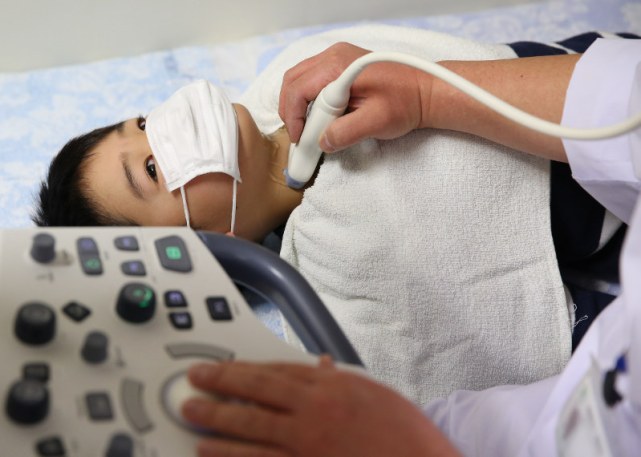
FUKUSHIMA – In a study that began in April 2014 to check the impact of the 2011 Fukushima reactor meltdowns, 30 children have so far been diagnosed with thyroid cancer and 27 others are suspected of having the disease, according to a prefectural government panel.
Most of them were thought to be problem-free when their thyroid glands were checked during the first round of the study conducted over a three-year period through March 2014, the panel said Monday.
The first survey covered about 300,000 people who were under the age of 18 and living in Fukushima Prefecture when the nuclear disaster was triggered by the 3/11 earthquake and tsunami.
The number of children diagnosed with thyroid cancer in the second round was up from 16 as reported at the previous panel meeting in February.
Hokuto Hoshi, head of the panel and a senior member of the Fukushima Medical Association, maintained his earlier view of the correlation between the cancer figures and radiation, saying based on expertise acquired so far, it is “unlikely” that the disease was caused by radiation exposure.
Hoshi also said: “Concerns have been growing among Fukushima residents with the increase in the number of cancer patients. We’d like to further conduct an in-depth study.”
When the results of the first and the ongoing second round of the heath study are combined, the number of children diagnosed with thyroid cancer totals 131, and 41 others are suspected of having it.
According to Fukushima Medical University and other entities involved in the health checks, the 57 children in the second round of the survey either confirmed or suspected to have thyroid cancer were age 5 to 18 when the crisis started, and the sizes of their tumors ranged from 5.3 mm to 35.6 mm.
The examiners were able to estimate how much external radiation exposure 31 of those children had over the four months immediately after the catastrophe started, with the maximum being 2.1 millisieverts. Eleven of the children were exposed to less than 1 millisievert.
Evacuation advisory to be lifted for most of Iitate, Fukushima, next March 31
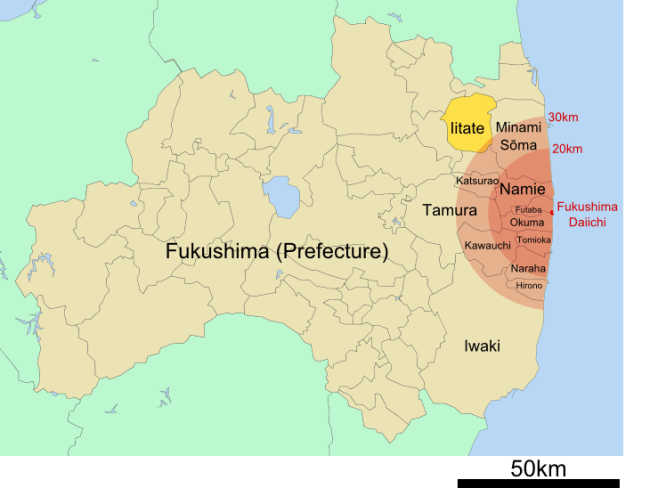
FUKUSHIMA – The central government has informed the municipal assembly of Iitate, Fukushima Prefecture, that it plans to lift the evacuation advisory for most of the village next March 31.
Preparation work for the displaced residents to return to their homes is scheduled to start July 1, as requested by the municipal government in April.
The advisory will be left in place for the Nagadoro district because radiation levels there remain too high to allow people to return.
The government issued the evacuation advisory for the entire village after it was hit by fallout from the March 2011 meltdowns at the Fukushima No. 1 nuclear plant roughly 40 km away.
In June last year, decontamination work was completed in the village’s residential areas, reducing the average radiation level in the air to 0.8 microsievert per hour.
Fukushima: Worse Than a Disaster
Disasters can be cleaned up.
Naohiro Masuda, TEPCO Chief of Decommissioning at Fukushima Diiachi Nuclear Power Plant, finally publicly “officially” announced that 600 tons of hot molten core, or corium, is missing (Fukushima Nuclear Plant Operator Says 600 Tons of Melted Fuels is Missing, Epoch Times, May 24, 2016).
Now what?
According to Gregory Jaczko, former head of the U.S. Nuclear Regulatory Commission (NRC), it is not likely the fuel will ever be recovered: “Nobody really knows where the fuel is at this point, and this fuel is still very radioactive and will be for a long time.”
A big part of the problem is that nobody has experience with a Fukushima-type meltdown, which now appears to be 100% meltdown, possibly burrowed into the ground, but nobody really knows for sure.
What’s next is like a trip into The Twilight Zone.
“The absolutely uncontrollable fission of the melted nuclear fuel assemblies continue somewhere under the remains of the station. ’It’s important to find it as soon as possible,’ acknowledged Masuda, admitting that Japan does not yet possess the technology to extract the melted uranium fuel,” (600 Tons of Melted Radioactive Fukushima Fuel Still Not Found, Clean-Up Chief Reveals, RT, May 24, 2016).
Nuclear fission is when atoms split apart into smaller atoms. With nuclear bombs, fission must happen extremely quickly to charge a large explosion whereas, in a nuclear reactor, fission must happen very slowly to make heat, which, in turn, is used to boil water to make steam to turn a turbine to generate electricity.
Eventually, by rubbing two sticks together, one can boil water, but modern-day society doesn’t have the patience, which means accepting risks leaps and bounds beyond rubbing two sticks together. Welcome to an altered world.
Even if Masuda’s cleanup crew find the missing 600 tons, which is so highly radioactive that workers cannot even get close enough to inspect the immediate areas, then they need to construct, out-of-midair, the technology to extract it, and then what? It’s guesswork. It’s what modern-day society has been reduced to, guesswork. Toss out rubbing two sticks together and build monstrous behemoths for billions to boil water, and when it goes wrong, guess what to do next. What’s wrong with this picture? Well, to start with, nobody knows what to do when all hell breaks loose.
They do not have the technology to extract it!
In 1986, Russian teams of workers found the melted corium of the Chernobyl Nuclear Power Plant’s reactor core in the facility’s lowest level. Whilst “frying 30 workers” along the way, they contained it just enough to prevent burrowing into the ground, maybe.
During containment work at Chernobyl, a makeshift robotic camera managed to actually photograph the monster, the melted core, nicknamed “the Elephant’s Foot.” Thirty years after the fact, the “Elephant’s Foot” is still lethal.
By way of comparing/contrasting Chernobyl and Fukushima, extraordinarily high radiation zaps and destroys robots at first sight when sent into Fukushima’s containment vessels. It’s kinda like the Daleks in Doctor Who.
Whereas, thirty years after the fact, Chernobyl seems to have found a solution to the elephant’s foot menace to society, but as for Fukushima, they must first locate 600 tons of hot stuff. That may be an impossible task. Then what?
“Thirty years after the Chernobyl nuclear accident, there’s still a significant threat of radiation from the crumbling remains of Reactor 4. But an innovative, €1.5 billion super-structure is being built to prevent further releases, giving an elegant engineering solution to one of the ugliest disasters known to man,” Claire Corkhill, PhD, University of Sheffield, New Tomb Will Make Chernobyl Site Safe for 100 Years, Phys.Org, April 22, 2016.
As it happens, the older collapsing sarcophagus for Chernobyl is being replaced by a brand new enormous steel frame: “Thanks to the sarcophagus, up to 80% of the original radioactive material left after the meltdown remains in the reactor. If it were to collapse, some of the melted core, a lava-like material called corium, could be ejected into the surrounding area in a dust cloud, as a mixture of highly radioactive vapour and tiny particles blown in the wind. The key substances in this mixture are iodine-131, which has been linked to thyroid cancer, and cesium-137, which can be absorbed into the body, with effects ranging from radiation sickness to death depending on the quantity inhaled or ingested,” Ibid
“The Elephant’s Foot could be the most dangerous piece of waste in the world,” (Chernobyl’s Hot Mess, “the Elephant’s Foot,” is Still Lethal, Nautilus, Science Connect, Dec. 4, 2013). It’s a highly charged radioactive massive hunk of goo that will not die or waste away. This could be a Doctor Who script, par excellence! Therein exist the soft underbelly, the vulnerability, and the risks of using nuclear power to boil water, or alternatively, the sun and wind could be used. They’re not radioactive and still much faster than rubbing two sticks together.
Fukushima is three times (3x) Chernobyl, maybe more; however, in Fukushima’s case there’s a distinct possibility that its white-hot sizzling corium has already started burrowing into Earth. Thereafter, let your imagination run wild because nobody has any idea of how that ends, if ever!
But, Einstein knew. Here’s a famous Einstein quote: “The unleashed power of the atom has changed everything save our modes of thinking, and we thus drift toward unparalleled catastrophes.”
We’re finally there!
Gregory Jackzo, former head of the NRC, ponders the security of nuclear power: “You have to now accept that in all nuclear power plants, wherever they are in the world … that you can have this kind of a very catastrophic accident, and you can release a significant amount of radiation and have a decade long cleanup effort on your hands” (Epoch Times).
Looking ahead a few years, the question remains: Where will the sizzling white-hot melted corium be when the Tokyo Olympics arrive in 2020?
Nobody knows!
Still, Prime Minister Abe told the Olympic selection committee that Fukushima was “under control.”
“This debate has dogged him since his Sept. 7 speech to the International Olympic Committee, when he said the nuclear disaster is “under control.” The next day, Tokyo won hosting rights for the 2020 Summer Olympic Games,” (Tsuyoshi Inajjma and Yuriy Humber, Abe Olympic Speech On Fukushima Contradicts Nuclear Plant Design, Bloomberg, Oct. 23, 2013).
“French authorities are investigating payments worth around $2m to a company linked to the son of former world athletics chief Lamine Diack over alleged connections to Japan’s successful bid to host the 2020 Olympic Games,” (Tokyo Olympics Bid Questioned as Prosecutors Probe $2M Payouts, The Financial Times, May 12, 2016).
Japan won the right to host the 2020 Olympics with a bid to spend $5 billion, which is suspiciously small, especially in an historical context. For the record, rival Istanbul’s bid was almost $20 billion, a much more realistic commitment for such a momentous worldly event.
Thusly, with mucho “balls-in-the-air,” one has to wonder if PM Abe’s infamous secrecy law will click into play, in other words, is there any way it can impede investigations? After all, the law allows any Japanese politician to put an offender behind bars for 10 years for breaking state secrets, which are (very embarrassingly) whatever the accuser claims to be “secretive.” After all, prima facie, between Fukushima and the Olympics, there could be a lot of secretive stuff going on behind the scenes.
Japan’s state secrecy law Act on the Protection of Specially Designated Secrets (SDS) Act No. 108 of 2013 passed on the heels of the Fukushima meltdown, is very similar to Japan’s harsh Public Peace and Order Controls of WWII (a real doozy). According to Act No. 108, the “act of leaking itself” is bad enough for prosecution, regardless of what, how, or why. Absolutely, if someone “leaks,” they’re going to “the can.”
Susumu Murakoshi, president of the Japan Federation of Bar Associations dissents: “The law should be abolished because it jeopardizes democracy and the people’s right to know,” Abe’s Secrets Law Undermines Japan’s Democracy, The Japan Times, Dec. 13, 2014.
The Japan Times needs to fact-check the definition of democracy.
China Issues Travel Warnings to Japan over Fukushima Nuke Leak
China’s Ministry of Foreign Affairs has issued notice to its citizens warning of safety problems regarding the Fukushima nuclear leak, said the ministry’s spokesperson.
Hong Lei also urged Japan to explain to the world with a responsible attitude on the impact of the leak.
Hong said: “Japan should explain clearly to the world with a responsible attitude. The Ministry of Foreign Affairs has issued notice reminding people of the related safety problem and I believe Chinese citizens will make proper arrangements for their tours and well protect their own safety.”
He noted that the number of visas issued to Chinese nationals in 2015 was 3.78 million, accounting for around 80 percent of the total number of visas issued and exceeded the total number of visas issued to all nationals in 2014 (approximately 2.87 million).
The plant’s operator, Tokyo Electric Power Co., on June 1 admitted, for the first time ever, that its insistence on simply calling the tragedy “nuclear reactor damage” in the past five years had “hidden the truth.”
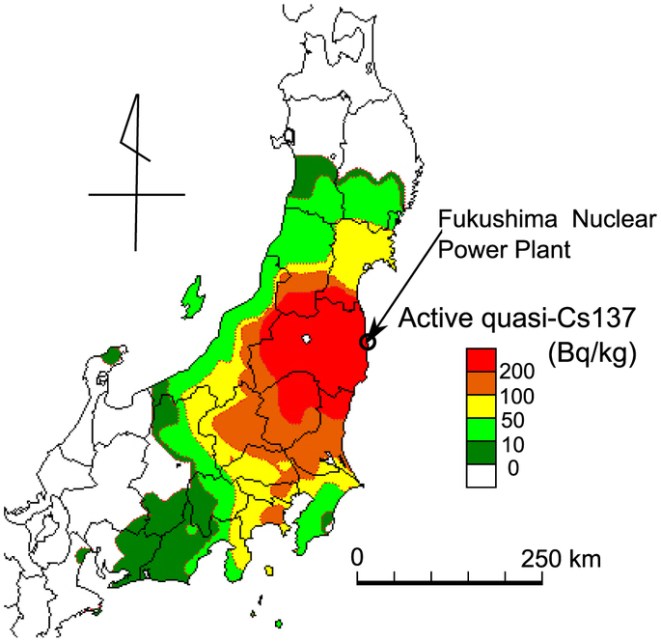
According to Ken Buesseler, marine radio chemist with the U.S. Woods Hole Oceanographic Institution, the consequences of the Fukushima nuclear incident were “unprecedented,” since over 80 percent of the leaked radioactive substances have flown into the sea.
Fukushima medical survey confirms 14 new child thyroid cancer cases
The 131 number of child thyroid cancers mentioned in this article is wrong.
As of today 173 people diagnosed with thyroid cancer in Japan’s Fukushima

The number of child thyroid cancers discovered in the wake of the Fukushima nuclear disaster has reached 131, with the latest panel review adding 14 to the list of those suffering from the deadly disease, along with dozens of new suspected cases.
After the latest review of the ongoing second round of medical checkups conducted on almost 300,000 children who were aged 18 or younger at the time of the accident at the Fukushima Daiichi plant in March 2011, the prefecture-run program announced that a total 131 people have now been diagnosed with thyroid cancer.
Some 30 thyroid cancer cases were added to the radiation victims toll following the second round of checkups that began in April 2014. A further 27 people are suspected of having the disease. Previous numbers disclosed in February showed that 16 patients suffered from cancer.
In the latest announcement, scientists also say that a child who was less than five-years-old at the time of the tragedy had also been diagnosed with cancer. The new figures of those confirmed or suspected to have thyroid cancer have tumors ranging from 5.3 mm to 35.6 mm.
The first thyroid cancer detection round studying minors was conducted in Japan between 2011 to 2014 and discovered 101 people with thyroid cancer. With the latest numbers, the new toll stands at 131, while another 41 are suspected of suffering from radiation exposure, Japan Times reports.
“Concerns have been growing among Fukushima residents with the increase in the number of cancer patients. We’d like to further conduct an in-depth study,” said Hokuto Hoshi, head of the panel and a senior member of the Fukushima Medical Association.
He however maintained the panel’s earlier accession that it is “unlikely” that the disease cases was caused by radiation exposure, reiterating claims that there is no direct link between thyroid cancer and the nuclear disaster.
After the earthquake and tsunami in March 2011, radioactive elements were released from the Fukushima Daiichi Nuclear Power Plant. After the release, Fukushima Prefecture continued to conduct thyroid screening ultrasounds on all residents agds 18 years and younger. The first round of screening included 298,577 examinees, while the round that began in April 2014 focuses on 267,769 people.
https://www.rt.com/news/345641-fukushima-child-thyroid-cancer/
Woman breaks silence among Fukushima thyroid cancer patients
“I want everyone, all the children, to go to the hospital and get screened. They think it’s too much trouble, and there are no risks, and they don’t go,” the woman said in a recent interview in Fukushima. “My cancer was detected early, and I learned that was important.”
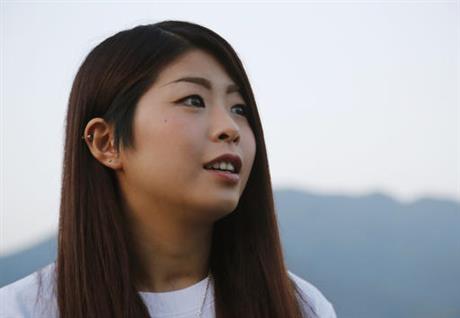
In this Saturday, May 28, 2016 photo, a young woman, who requested anonymity because of fears about harassment, speaks to The Associated Press in a town in Fukushima prefecture, northeast of Tokyo. She is among 173 people diagnosed with thyroid cancer in Japan’s Fukushima, but she’s the first to speak to media more than five years after the nuclear disaster there. That near-silence highlights the fear Fukushima thyroid-cancer patients have about being the “nail that sticks out,” and thus gets hammered.
KORIYAMA, Japan (AP) — She’s 21, has thyroid cancer, and wants people in her prefecture in northeastern Japan to get screened for it. That statement might not seem provocative, but her prefecture is Fukushima, and of the 173 young people with confirmed or suspected cases since the 2011 nuclear meltdowns there, she is the first to speak out.
That near-silence highlights the fear Fukushima thyroid-cancer patients have about being the “nail that sticks out,” and thus gets hammered.
The thyroid-cancer rate in the northern Japanese prefecture is many times higher than what is generally found, particularly among children, but the Japanese government says more cases are popping up because of rigorous screening, not the radiation that spewed from Fukushima Dai-ichi power plant.
To be seen as challenging that view carries consequences in this rigidly harmony-oriented society. Even just having cancer that might be related to radiation carries a stigma in the only country to be hit with atomic bombs.
“There aren’t many people like me who will openly speak out,” said the young woman, who requested anonymity because of fears about harassment. “That’s why I’m speaking out so others can feel the same. I can speak out because I’m the kind of person who believes things will be OK.”
She has a quick disarming smile and silky black hair. She wears flip-flops. She speaks passionately about her new job as a nursery school teacher. But she also has deep fears: Will she be able to get married? Will her children be healthy?
She suffers from the only disease that the medical community, including the United Nations Scientific Committee on the Effects of Atomic Radiation, has acknowledged is clearly related to the radioactive iodine that spewed into the surrounding areas after the only nuclear disaster worse than Fukushima’s, the 1986 explosion and fire at Chernobyl, Ukraine.
Though international reviews of Fukushima have predicted that cancer rates will not rise as a result of the meltdowns there, some researchers believe the prefecture’s high thyroid-cancer rate is related to the accident.
The government has ordered medical testing of the 380,000 people who were 18 years or under and in Fukushima prefecture at the time of the March 2011 tsunami and quake that sank three reactors into meltdowns. About 38 percent have yet to be screened, and the number is a whopping 75 percent for those who are now between the ages of 18 and 21.
The young woman said she came forward because she wants to help other patients, especially children, who may be afraid and confused. She doesn’t know whether her sickness was caused by the nuclear accident, but plans to get checked for other possible sicknesses, such as uterine cancer, just to be safe.
“I want everyone, all the children, to go to the hospital and get screened. They think it’s too much trouble, and there are no risks, and they don’t go,” the woman said in a recent interview in Fukushima. “My cancer was detected early, and I learned that was important.”
Thyroid cancer is among the most curable cancers, though some patients need medication for the rest of their lives, and all need regular checkups.
The young woman had one cancerous thyroid removed, and does not need medication except for painkillers. But she has become prone to hormonal imbalance and gets tired more easily. She used to be a star athlete, and snowboarding remains a hobby.
A barely discernible tiny scar is on her neck, like a pale kiss mark or scratch. She was hospitalized for nearly two weeks, but she was itching to get out. It really hurt then, but there is no pain now, she said with a smile.
“My ability to bounce right back is my trademark,” she said. “I’m always able to keep going.”
She was mainly worried about her parents, especially her mother, who cried when she found out her daughter had cancer. Her two older siblings also were screened but were fine.
Many Japanese have deep fears about genetic abnormalities caused by radiation. Many, especially older people, assume all cancers are fatal, and even the young woman did herself until her doctors explained her sickness to her.
The young woman said her former boyfriend’s family had expressed reservations about their relationship because of her sickness. She has a new boyfriend now, a member of Japan’s military, and he understands about her sickness, she said happily.
A support group for thyroid cancer patients was set up earlier this year. The group, which includes lawyers and medical doctors, has refused all media requests for interviews with the handful of families that have joined, saying that kind of attention may be dangerous.
When the group held a news conference in Tokyo in March, it connected by live video feed with two fathers with children with thyroid cancer, but their faces were not shown, to disguise their identities. They criticized the treatment their children received and said they’re not certain the government is right in saying the cancer and the nuclear meltdowns are unrelated.
Hiroyuki Kawai, a lawyer who also advises the group, believes patients should file Japan’s equivalent of a class-action lawsuit, demanding compensation, but he acknowledged more time will be needed for any legal action.
“The patients are divided. They need to unite, and they need to talk with each other,” he told AP in a recent interview.
The committee of doctors and other experts carrying out the screening of youngsters in Fukushima for thyroid cancer periodically update the numbers of cases found, and they have been steadily climbing.
In a news conference this week, they stuck to the view the cases weren’t related to radiation. Most disturbing was a cancer found in a child who was just 5 years old in 2011, the youngest case found so far. But the experts brushed it off, saying one wasn’t a significant number.
“It is hard to think there is any relationship,” with radiation, said Hokuto Hoshi, a medical doctor who heads the committee.
Shinsyuu Hida, a photographer from Fukushima and an adviser to the patients’ group, said fears are great not only about speaking out but also about cancer and radiation.
He said that when a little girl who lives in Fukushima once asked him if she would ever be able to get married, because of the stigma attached to radiation, he was lost for an answer and wept afterward.
“They feel alone. They can’t even tell their relatives,” Hida said of the patients. “They feel they can’t tell anyone. They felt they were not allowed to ask questions.”
The woman who spoke to AP also expressed her views on video for a film in the works by independent American filmmaker Ian Thomas Ash.
She counts herself lucky. About 18,000 people were killed in the tsunami, and many more lost their homes to the natural disaster and the subsequent nuclear accident, but her family’s home was unscathed.
When asked how she feels about nuclear power, she replied quietly that Japan doesn’t need nuclear plants. Without them, she added, maybe she would not have gotten sick.
___
Ash’s video interview:
https://www.youtube.com/playlist?list=PLpmdZYCRIZfvTtTE1sbY3ynaGsfDYmNWn
Source: http://bigstory.ap.org/2311e999708d48c491efde5154514ef9
Taiwan FDA mulls lower threshold for food firm certification
Minister of Health and Welfare Lin Tzou-yien (林奏延) yesterday dismissed media reports that the ministry is planning to lift a ban on food imports from five Japanese prefectures that were affected by radioactive fallout from the Fukushima Dai-ichi nuclear power plant disaster in March 2011.
The Chinese-language United Daily News yesterday said that Japanese media had reported that Taiwan would gradually lift the ban on food imports from the five prefectures.
The United Daily News report also said that Food and Drug Administration (FDA) Director-General Chiang Yu-mei (姜郁美) had stated that there is the possibility of gradually allowing food imports from four prefectures of the five affected prefectures — excluding Fukushima.
Since the disaster, all food imports from five Japanese prefectures — Fukushima, Ibaraki, Tochigi, Gunma and Chiba — have been banned.
“From when I took office on May 20, we have not discussed any issues about radioactive contaminated products from the five Japanese prefectures at all” Lin said in response to media queries.
Regarding rumors that Chiang had admitted the possibility, Lin said: “It is what I say that counts.”
Later, at a meeting of the legislature’s Social Welfare and Environmental Hygiene Committee, Chiang responded to lawmakers’ queries over the issue by saying that his ministry “had not had any contact or discussion” with Japan over the issue.
http://www.taipeitimes.com/News/taiwan/archives/2016/05/31/2003647556
Fukushima evacuation order to be lifted in July

TOKYO — The Japanese government decided Friday to lift an evacuation order put in place after the March 2011 disaster at the Fukushima Daiichi nuclear power plant.
The order covering part of the nearby city of Minamisoma will now expire July 12, allowing over 10,000 people to return to their homes. The central government, the city and Fukushima Prefecture all approved the measure, the scale of which would be one of the largest of its kind in Japan.
“We have met our objectives concerning decontamination and critical infrastructure construction, fulfilling the conditions needed to cancel the order,” said Yosuke Takagi, who heads the government’s on-site nuclear disaster response headquarters.
“After considering resident arguments for and against the cancellation, we have decided that lifting the restrictions is necessary given that there are people who wish to quickly move forward on the road to recovery,” said Minamisoma Mayor Katsunobu Sakurai.
‘I Do Not Want Any Children to Develop Cancer Like Me’, a Fukushima Resident Says
Independent filmmaker Ian Thomas Ash has uploaded to YouTube a four-part interview with a young woman from Fukushima Prefecture who has been diagnosed with thyroid cancer. Now 20, the interviewee was 15 years old when, following the March 2011 earthquake and tsunami, the Fukushima Daiichi nuclear power complex lost power and the ability to cool fuel in the reactors. The lack of cooling caused a series of hydrogen explosions that severely damaged four of the six reactors at the Daiichi complex.
As a result of the explosions and subsequent fires, nuclear contamination was spread over a large part of Japan’s northeast. The young woman interviewed in the documentary, who wishes to remain unidentified, is one of 166 Fukushima residents who were 18 or younger at the time of the nuclear disaster who have been diagnosed with or suspected of having thyroid cancer (as of February 2016).
While some attribute the rise in cases of thyroid cancer to more rigorous screening, Ash notes that 74.5% of young people aged 18-21 as of April 1, 2014 who were living in Fukushima at the time of the nuclear accident have not yet taken part in the official thyroid ultrasound examination.
“This young woman’s reason for speaking out is to motivate the families of children who have not yet received the thyroid ultrasound examination to have their children tested,” Ash says in his introduction to the interview.
The interview has been uploaded to YouTube in four parts: part 1, part 2, part 3, part 4
The woman says according to her doctors, her cancer was caught at the right moment. Had she waited any longer, they told her, the cancer could have spread. As a result of the illness, she had part of her thyroid removed.
She will begin working in a nursery school this year, and is pained to think of any other children going through what she has endured:
I would hate if any children I taught developed cancer. To tell the truth, I do not want any children to develop cancer like me.
Ash, based in Tokyo, makes short documentaries about life in Japan after the March 11, 2011 earthquake, tsunami and nuclear disaster.

Fukushima victims still suffer five years on
TOKYO, May 25 (Xinhua) — Iidate Village, about 40 kilometers from Japan‘s Fukushima Daiichi nuclear power plant, is now almost a ghost town.
Few human traces can be spotted, weeds are spreading, dirty water flows everywhere, and no living sounds can be heard except for a few raven’s croaks.
Japanese photographer Hida Shinsyuu has visited the nuclear contaminated zone more than 30 times. Looking through his camera, he often cannot hold back his tears.
Even more so, when he sees “nuclear refugees” suffering from diseases such as thyroid cancer yet having no one to turn to, he feels a lot of anger.
“In Fukushima, families who have thyroid cancer sufferers are experiencing loneliness and pain, as they are unwilling to reveal the “scars” to their relatives or friends, nor do they want to tell their children about the nuclear radiation,” said Shinsyuu.
In June 2015, Shinsyuu met a girl in Fukushima who had thyroid cancer. When the Fukushima nuclear accident broke out, the girl was at her junior high graduation ceremony.
The following year, she was diagnosed as thyroid cancer, and had surgery to remove the right part of her thyroid. In her third year of senior high part of her lymph nodes were removed.
However, the thyroid cancer returned after she entered college, and she had to quit school to remove her whole thyroid.
The girl told Shinsyuu that she had a dream of becoming a designer one day. Quitting school has made that dream distant.
Her parents are angry. No one has claimed responsibility for their child’s suffering. They were told her sickness had nothing to do with Fukushima.
The girl is just one of 166 teenagers who has been diagnosed with or suspected of having thyroid cancer, among whom 116 have undergone surgeries.
Five years following the nuclear crisis, the parents of children diagnosed with thyroid cancer in Fukushima have formed a group demanding the government provide convincing evidence that their children’s suffering is not related to the nuclear accident.
Sato Satiko, a mother living in Fukushima, complained about a governmental press conference to Spanish newspaper El Mundo in February.”Fukushima mothers were not allowed to ask even one question, all questioners were asked by pro-government press. The Japanese government and media are neglecting and humiliating us on purpose.”
Toshihide Tsuda, a professor of environmental epidemiology at Japan’s Okayama University, found that the incidence of thyroid cancer among children in Fukushima Prefecture was 20 to 50 times higher than the national average in 2014, three years after the disaster hit.
His findings, however, have fallen on deaf ears. The Fukushima prefectural government insists that the incidents of cancer and nuclear radiation are not related.
“The Japanese government hasn’t given any countermeasures against the children’s health problems in Fukushima,” said Tsuda. He says the government should learn from Chelnobyl and deal with the aftermath of the nuclear disaster seriously.
Nursing facilities to help reduce residual nuclear radiation are also lacking, according to Korobe Shinichi, a pediatrician and consultant for the Chernobyl Children’s Foundation.
“After getting treatment at the nursing facility for only four weeks, 30 percent of residual radioactive cesium in human bodies will be reduced,” said Shinichi.
However, such sanitariums set up after the accident are far less than those established after Chernobyl.
Based on the Japanese government’s approach, the long-term harm will probably be more serious than Chernobyl, Shinichi said.
He also pointed out that some families affected by the accident have become broken. Single mothers are suffering great mental stress and in urgent need of help.
Kanna Mitsuta, director of Japanese environmental protection organization “the Friend of the Earth Japan,” feels distressed about the Japanese government’s new policy of expediting the return of displaced Fukushima nuclear refugees.
The move actually means abandoning nuclear refugees in the name of reconstruction. Furthermore, the cause of the nuclear disaster has not been clarified and radioactive risks remain high in the refugees’ hometown, said Mitsuta.
A joint opinion poll conducted by national daily The Asahi Shimbun and the Fukushima local press in 2015 showed that over 70 percent of Fukushima residents were unsatisfied with the government’s countermeasures in the aftermath of the nuclear disaster. But for a government bent on putting the issue to rest, public opinion matters little.
http://news.xinhuanet.com/english/2016-05/25/c_135387620.htm
Young woman from Fukushima speaks out
For each of the last four days, I have published a part of an interview I filmed with a brave, young woman from Fukushima about her diagnosis of thyroid cancer. Following are some details about the interview as well as some data for reference.
Below is a summary of the main points of the young woman’s story:
1) She often gets tired easily after undergoing surgery for thyroid cancer.
2) She sometimes feels emotionally unstable after the surgery.
3) She has no medical doctor with whom she can talk comfortably.
4) She does not want other Fukushima children/ adolescents to develop thyroid cancer.
5) She wants young residents in Fukushima to undergo regular thyroid checkups, so that thyroid cancer cases may be detected early.
6) She is anxious about the possible health implications on her future children.
Points 1) and 2): Fukushima Medical University insists that thyroid cancer is not a disease that is deadly, and therefore residents in Fukushima do not have to worry even if they are diagnosed with thyroid cancer. However, this young woman’s story clearly demonstrates that the postoperative conditions of patients are not that simple. Post-operative patients are likely to experience various physical and emotional difficulties even after they have survived thyroid cancer.
Points 3): Doctors at Fukushima Medical University are not forming a comfortable relationship with the patients on whom they operate, which is a significant problem in terms of doctor-to-patient relationships. It is even more problematic when it is taken into account that most of the patients are young and therefore require intensive medical and emotional follow-up care.
Points 5): She is sending a strong message to young Fukushima residents that they should continue receiving regular thyroid checkups.
Peace,
Ian Thomas Ash
http://ianthomasash.blogspot.fr/2016/05/young-woman-from-fukushima-speaks-out-15.html
Truths deliberately covered about Fukushima surface over five years

People shout slogans and hold placards to protest against Tokyo Electric Power Company (TEPCO), owner and operator of the crisis-hit Fukushima Daiichi nuclear power plant, in front of the Prime Minister’s official residence in Tokyo, Japan, March 11, 2015.
TOKYO, May 23 (Xinhua) — Facts about the Fukushima nuclear disaster triggered by a powerful earthquake kept emerging over the past five years after the mishap took place, revealing the real face of the disaster.
In front of the local government of Iidate Village in Japan’s Fukushima Prefecture, there stands a sharp radiation measuring device. On its spotless dashboard jumps a red number: 0.38 microsieverts/hour.
The spot is about 40 kilometers from the Fukushima Daiichi nuclear power plant which was crippled by the monstrous quake-triggered tsunami in March 2011.
However, volunteer Yoichi Tao who majored in physics said the figure of radiation on their own device is 8 to 10 times of the official one.
According to Tao, the government dispatched the military to wipe out the nearby nuclear radiation on the ground in advance, so the official figure looks very low. “That’s how the government did it,” he said.
Toshihide Tsuda, professor of environmental epidemiology at Okayama University, found out that the rate of children suffering from thyroid cancer in Fukushima Prefecture was as much as 20 to 50 times higher than the national average as of 2014, three years after the Fukushima nuclear disaster.
His finding, however, did not arouse concern from the Japanese and local governments. On the contrary, it was rejected by the Fukushima prefectural government, attributing the phenomenon to a surge of “over diagnosis.” The local government insisted the cancer incidents and nuclear radiation were not related.
The Japanese government admitted in August 2013 that at least 300 tons of highly-contaminated water flew freely into the Pacific Ocean everyday, and the problem might linger for ages. However, in September the same year, Japanese Prime Minister Shinzo Abe told the international community when Japan was bidding for the 2020 Olympic Games that the crisis was “totally under control.”
It has also been revealed that TEPCO, or Tokyo Electric Power Company, had knowledge of multiple meltdowns at the plant’s reactors following the tsunami, but intentionally refrained from informing the public of the fact until recently.
Underestimating the long-term impact of the accident could lead to a slack supervision on affected foods. It may also produce an unrealistic optimism in the Japanese government, thus the official handling of the aftermath would be careless, experts warned.
http://news.xinhuanet.com/english/2016-05/23/c_135380988.htm
Response to the Chicago Tribune Editorial “The children of Fukushima: When medical tests mislead”
The following is the letter to the Editor for the Chicago Tribune editorial, “The children of Fukushima: When medical tests mislead.” The letter was submitted through the online form on April 19, 2016, but there has been no response from Chicago Tribune. (Brevity of the content is due to the 400-word limit for letters).
*****
Dear Editor,
The March 25, 2016 Chicago Tribune editorial, “The children of Fukushima: When medical tests mislead” is misleading on its own regarding the childhood thyroid cancer situation in Fukushima Prefecture, Japan.
Differences in cancer rates by distance from the accident site and contamination levels may not be obvious, but an epidemiological analysis by Tsuda et al. (http://journals.lww.com/epidem/Fulltext/2016/05000/The_Authors_Respond.37.aspx) found a dose response tendency with proximity to the accident site after adjusting for the length of time between the accident and the time of screening. It is also important to remember only 1,080 children had their thyroid exposure doses directly measured and that is only 0.36% of 300,000 children who underwent thyroid ultrasound examination. Taken under high background levels, the doses are far from being accurate.
Children younger than age 5 showed an increased rate of thyroid cancer beginning at 4-5 years after the Chernobyl accident, so the first 3 years after the Fukushima accident, covered by the completed first round screening, would not expect to see that age group affected. The first cancer case was diagnosed about 17 months after the accident, not within a year, and some of these early cases might have been the result of radiation exposure promoting the growth of latent cancer that might not have become large enough to be detected until much later in life if unexposed to radiation.
Comparison with three other prefectures where one cancer case was diagnosed in 4,365 subjects is invalid as its small sample size lacks the necessary statistical power. The Korean screening is in adults and should not be compared with children.
It is true that unnecessary medical testing can lead to overdiagnosis and overtreatment, but the clinical information provided by Fukushima Medical University, such as metastasis and physical proximity of tumor to other vital structures, validates surgical interventions for the majority of the operated cases in Fukushima. Thyroid cancer is believed to grow slowly, but 80% of thyroid cancer cases discovered in the ongoing second round screening had no suspicious findings in the first round screening only 2-3 years earlier.
It is not just a cancer death but cancer diagnosis itself that is concerning for patients and their loved ones, and the causality should not be prematurely prejudged. A lesson of the Fukushima children may be the importance of conducting a timely and adequate collection of the exposure data and a comprehensive evaluation of data in a transparent and unbiased manner.
Yuri Hiranuma, D.O.
Member, Radiation and Health Committee
Physicians for Social Responsibility
http://fukushimavoice-eng2.blogspot.fr/2016/05/response-to-chicago-tribune-editorial.html
Fukushima: A Nuclear Story’ stands out among 3/11 documentaries
The Fukushima nuclear plant disaster has been examined in hundreds of documentaries to date, counting all media, nationalities and languages. But “Fukushima: A Nuclear Story” stands out for one simple, powerful reason: Its central figure, Italian journalist Pio d’Emilia, was among the first foreign reporters allowed on the scene after the earthquake and tsunami crippled the plant.
With his camcorder, he captured the devastation and confusion of the disaster’s immediate aftermath, as he evaded still-spotty security to travel to the plant gates. The documentary, narrated by American actor Willem Dafoe, has been distilled from nearly 300 hours of footage. This includes an in-depth interview with Naoto Kan — prime minister at the time of the disaster — who says he was seriously considering an evacuation of Tokyo when the meltdowns at the plant seemed to be spiraling out of control.
Kan was also on hand for a gala preview screening of “Fukushima: A Nuclear Story” at the MAXXI museum of contemporary art in Rome on Monday. The film has also been sold for broadcast in Canada, the United States, Germany, Norway and Mexico — but not yet Japan.
“Fukushima has already joined the many forgotten nuclear disasters,” says d’Emila; “forgetting means lying. Tepco and the Japanese government began lying from the very first hours — by hiding the already occurring multiple meltdowns — and are still lying by pretending the situation is now under control. As everybody knows, it isn’t.”
PC with Documentary, “Fukushima; A Nuclear Story”: Pio d’Emilia
(part 3) Young woman from Fukushima speaks out
This interview was filmed on February 12, 2016, in Fukushima Prefecture. The young woman was 15 at the time of the nuclear meltdown in Fukushima, and we are releasing this interview with her permission. She is one of the 166 Fukushima residents aged 18 or younger at the time of the nuclear disaster who has been diagnosed with or suspected of having thyroid cancer (as of February 2016).
Fukushima residents who were 18 years old or younger at the time of the nuclear accident have been asked to participate in the voluntary thyroid ultrasound examination which is part of the Fukushima Health Management Survey. However, 18.8% of this age group were not tested in the 1st round of testing.* While the final results for the 2nd round of testing are not yet complete, every year the number of children participating in the official thyroid examinations is decreasing; the number of children who have not participated in the 2nd round of testing is currently 50.7%** For those young people aged 18-21 (as of April 1, 2014) and who were living in Fukushima at the time of the nuclear accident, 74.5% have not yet taken part in the official thyroid ultrasound examination.**
This young woman’s reason for speaking out is to motivate the families of children who have not yet received the thyroid ultrasound examination to have their children tested. However, in sharing her story about a topic which has become increasingly difficult to talk publicly about in Japan, she faces inherent risks which may include those to her work, community life and personal relationships. I therefore ask that her privacy is respected.
Ian Thomas Ash, Director
1 This Month

of the week – Shut Down Drone Warfare!


Tell the Ukrainian Government to Drop Prosecution of Peace Activist Yurii Sheliazhenko

Petition to revoke the licensing of the Near Surface Nuclear Disposal Facility (NSDF) at Chalk River. https://www.ourcommons.ca/petitions/en/Petition/Details?Petition=e-7247
To see nuclear-related stories in greater depth and intensity – go to https://nuclearinformation.wordpress.com
-
Archives
- April 2026 (68)
- March 2026 (251)
- February 2026 (268)
- January 2026 (308)
- December 2025 (358)
- November 2025 (359)
- October 2025 (376)
- September 2025 (257)
- August 2025 (319)
- July 2025 (230)
- June 2025 (348)
- May 2025 (261)
-
Categories
- 1
- 1 NUCLEAR ISSUES
- business and costs
- climate change
- culture and arts
- ENERGY
- environment
- health
- history
- indigenous issues
- Legal
- marketing of nuclear
- media
- opposition to nuclear
- PERSONAL STORIES
- politics
- politics international
- Religion and ethics
- safety
- secrets,lies and civil liberties
- spinbuster
- technology
- Uranium
- wastes
- weapons and war
- Women
- 2 WORLD
- ACTION
- AFRICA
- Atrocities
- AUSTRALIA
- Christina's notes
- Christina's themes
- culture and arts
- Events
- Fuk 2022
- Fuk 2023
- Fukushima 2017
- Fukushima 2018
- fukushima 2019
- Fukushima 2020
- Fukushima 2021
- general
- global warming
- Humour (God we need it)
- Nuclear
- RARE EARTHS
- Reference
- resources – print
- Resources -audiovicual
- Weekly Newsletter
- World
- World Nuclear
- YouTube
-
RSS
Entries RSS
Comments RSS
 nuclear-news