The March 2011 tsunami that crippled the Fukushima No. 1 nuclear power plant was foreshadowed almost 10 years earlier, but government interference meant the threat was not acted on, seismologist Kunihiko Shimazaki has said.
Shimazaki said a July 2002 prediction by the Headquarters for Earthquake Research Promotion stated an earthquake as big as one in 1896 that caused monster tsunami had a 20 percent chance of occurring somewhere near the Japan Trench within 30 years.
The trench lies in the Pacific and stretches off the Sanriku area in the Tohoku region to the Boso Peninsula off Chiba Prefecture.
The 1896 tsunami triggered by the temblor that struck off Sanriku killed some 22,000 people.
The prediction by the government panel covered areas including waters off Fukushima Prefecture, home to the Fukushima No. 1 plant, which suffered a triple reactor meltdown due to damage from the tsunami unleashed by the March 11, 2011, magnitude-9.0 earthquake that hit Fukushima and other parts in the Tohoku region.
“Compared with earthquakes that occur in active faults once in thousands of years, the probability (of 20 percent in 30 years) is surprisingly high and cannot be ignored,” Shimazaki, who played a central role in drawing up the long-term tsunami prediction and is now professor emeritus at the University of Tokyo, said.
However, he said that just before the release of a report on the prediction, the secretariat of the research headquarters added a paragraph stressing the uncertainty of the forecast.
“An official of the Cabinet Office responsible for anti-disaster measures insisted on having a different committee discuss long-term tsunami prediction,” he said. “This was something that had never happened before, and I felt pressure.” He added, “It was puzzling and frightening.”
Shimazaki said the Central Disaster Prevention Council (CDPC) of the Cabinet Office ended up making tsunami assumptions that were far removed from the prediction by the Headquarters for Earthquake Research Promotion.
The CDPC assumed that only the northern part of the Tohoku region would be hit by tsunami, based on the premise that a recurrence of the 1896 Sanriku earthquake would occur in the same place, explained Shimazaki.
Huge tsunami around the same location near the Japan Trench have occurred at intervals of hundreds of years, and only about 100 years have passed since the 1896 earthquake, he noted.
The CDPC, which is tasked with devising anti-disaster measures based on the government-affiliated research body’s long-term predictions, chose to focus on the low probability and turned its eyes away from waters off the southern part of the Tohoku region, including Fukushima and Ibaraki Prefecture, just south of Fukushima, Shimazaki said.
He admitted that it is difficult for seismologists to predict earthquakes and tsunami with perfect accuracy, saying that while temblors do take place repeatedly in the same area they occur in somewhat different locations.
But Shimazaki added, “We can make assumptions about the location, timing and size to some extent, within certain ranges.
“Such assumptions were made, but were not utilized for the Fukushima No. 1 plant,” he said.
Shimazaki, 70, has also served as chairman of the Coordinating Committee for Earthquake Prediction and acting chairman of the Nuclear Regulation Authority. At the NRA, he played a major role in the work to create the country’s stricter nuclear plant safety standards based on lessons from the Fukushima No. 1 disaster.
Last July, he appeared in court as a witness for plaintiffs suing the central government and Tepco over the nuclear disaster.
“A lot of people died in the quake and tsunami,” Shimazaki said. “I’m also responsible for failing to reduce the damage.”
Stressing that such a disaster that claimed so many lives must never be repeated, Shimazaki said, “We must find out why it happened, but the causes are not being pursued.”
“The mistakes will be repeated if nothing is done,” he said as he explained why he decided to speak in court.
He also said assumptions of tsunami occurring on the Sea of Japan side of the country, announced by a land ministry working group in 2014, were not sufficient.
“If a catastrophic disaster happens again, they might again claim that it was beyond their assumptions,” he said. “That can’t be permitted.”
Although five years have passed since the nuclear meltdowns, Shimazaki said he doubts anything has changed.
“I see lack of clarity and responsibility in committees of experts organized by the state,” he said.
“In the world of science, we can together look for facts and can reach agreement to a certain extent. That is not the case when the state is involved, and mistakes will be repeated if we are not aware of the difference.”
Science is used for decision-making by the state, but scientists do not challenge how this is done, he said.
“They have to say ‘no’ if they think something is wrong, but they are not doing this,” Shimazaki said, adding that the lack of clarity around responsibility remains in five years.
Out of ¥53.1 billion in expenses incurred by six prefectures in the Tohoku region in response to the disaster at Tokyo Electric Power Co.’s Fukushima No. 1 nuclear power plant, TEPCO has still not agreed to reimburse ¥20.1 billion, The Yomiuri Shimbun has learned.
The prefectures have resorted or will resort to alternative dispute resolution (ADR) procedures to compel TEPCO to pay, but taxpayers may end up footing the bill in the end.
Different interpretations
Regarding compensation for damage caused by nuclear power plants, the government’s Dispute Reconciliation Committee for Nuclear Damage Compensation released preliminary guidance in August 2011 on what expenses TEPCO should reimburse local governments for.
This included the cost of damage to water and sewer services contaminated by radioactive material, and the cost of supporting victims on TEPCO’s behalf.
However, the guidance included a section stating that “depending on circumstances, additional expenses may be recognized as damage that should be reimbursed.” This spurred Fukushima Prefecture, where the nuclear power plant is located, and other prefectures to request compensation from TEPCO for various expenses incurred in responding to the disaster.
Fukushima Prefecture has so far demanded ¥37.1 billion from TEPCO.
The company paid ¥20.9 billion for expenses including the relocation of a prefectural high school and support for the reopening of small and medium-sized businesses, but has refused to pay for the salaries of prefectural government employees of the contamination response section established after the disaster. It has also refused to pay for such costs as ad campaigns intended to repair the image of the tourism industry, which has been damaged by the nuclear disaster.
Neighboring Yamagata Prefecture, which accepted a large number of evacuees from Fukushima Prefecture, had requested ¥1.1 billion as of last September. It has received reimbursement for such things as radiation inspections of agricultural and livestock products and the salaries of additional teachers in response to the influx of evacuated children, but this figure is less than one-third of the total request.
Miyagi Prefecture has only reached agreement on roughly ¥1.7 billion, about half of its request. Last March, Yamagata and Miyagi prefectures appealed to the nation’s Dispute Reconciliation Committee for Nuclear Damage Compensation for ADR. According to an official of Miyagi Prefecture, “the settlement will take some more time.”
Akita and Aomori prefectures have been denied 80 percent to 90 percent of their requests to cover expenses such as the production of ads to promote tourism and subsidies to purchase radiation measurement equipment. They have also applied for ADR, and Fukushima Prefecture intends to pursue this approach soon.
Iwate Prefecture has received an additional ¥256.7 million through ADR, but has not agreed on close to ¥900 million in other expenses yet.
The prefectural governments have made expenditures from their general budgets for the disaster response expenses, and explained to members of their assemblies that “expenses would be billed to TEPCO and offset as income at a later date.” However, as unsettled claims increase, the costs are becoming a burden on the prefectures.
Municipalities in the six Tohoku prefectures, as well as Chiba and Gunma prefectures and elsewhere outside Tohoku, have made similar compensation claims to TEPCO, but the two sides are far from agreement over payments.
A TEPCO spokesperson told The Yomiuri Shimbun: “We are processing and compensating claims for damage that meet the appraisal standards. For other expenses, we are making appropriate decisions as we consult with relevant parties about their circumstances.”
It is likely, however, that the different sides will fail to agree even through ADR.
The prefectures can fight on through civil lawsuits, but if they lose, both the legal expenses and disaster response expenses will have to be paid through taxpayer money
“All publicity is good publicity.” Nowhere does this specious PR maxim ring more hollow than in Fukushima Prefecture. As if the horrors of the 2011 Great East Japan Earthquake and the meltdown at the Fukushima No. 1 nuclear plant weren’t traumatic enough, the region’s economic and agricultural recovery has been severely hampered by the reputational damage it has suffered since 3/11. If you think that’s difficult, try farming organically in Fukushima.
Falling prices and an aging agrarian population have made things tough for farmers all over Japan, but the presence of the word “Fukushima” on a supermarket label is often enough to discourage shoppers from buying produce, organic or not, grown in the area. Regardless of how far from contaminated areas it was grown — Fukushima is Japan’s third-largest prefecture — the region’s produce can’t easily shake the stigma of radiation.
An important hub in the network of NGOs, government bodies and corporate benefactors trying to change the prefecture’s image has been Orgando, a cafe and mini-market in Tokyo’s Shimokitazawa neighborhood, run with the backing of the Fukushima Organic Agriculture Network. For the past three years, Orgando has built a devoted following by serving Tokyo residents the best of Fukushima’s seasonal organic produce, in particular the crops that Fukushima is perhaps most known for: peaches, apples and rice. The menu changes daily, making creative use of the ingredients that come in, and the walls are proudly decorated with profiles of the 30 or so farmers who have grown the food. Sadly, as with many post-3/11 schemes, Orgando was only guaranteed official financial support until the five-year post-disaster milestone and is set to close March 20.
Orgando has played a valuable role in forging links between local producers and urban consumers, and dispelling the idea that all the region’s produce is dangerously contaminated — fruit and vegetables sold in the store are clearly labeled to show the levels of cesium isotopes they contain. Official food-safety guidelines stipulate 100 becquerels of radioactive isotopes per kilogram as the acceptable limit for adults, with 50 becquerels/kg for dairy produce and infant food, and 10 becquerels/kg for drinking water. The daikon, carrots and strawberries on offer this week contain no detectable cesium, while, according to their labels, bags of beans contained 6 becquerels/kg, a negligible dose of radiation compared to our daily exposure from soil and cosmic rays.
Allaying fears about contamination was one of the themes discussed during a February event in Tokyo focused on the role organic agriculture could play in Fukushima’s recovery, organized by Ryo Suzuki of Japan Civil Network.
“People mistakenly think that everything from Fukushima is dangerous,” Norio Honda of Genki ni Narou Fukushima — an NPO promoting local revival — said at the event.
Setsuko Maeda, of agricultural collective Tanemaki Project Network agrees.
“Fukushima isn’t only about radiation,” she says. “Our farming and fisheries are full of vitality, and it’s important not to forget that.”
The event gathered representatives from organizations such as Oxfam Japan, A Seed Japan and travel agency JTB, to speak about the challenges facing organic producers in the prefecture, along with some of the major success stories. The atmosphere was convivial, and the presentations were interspersed with opportunities to sample Fukushima produce, including octopus, meat, potatoes, peaches and apple juice, and high-grade junmai sake made from local organic rice, fittingly named Kiseki or “miracle.”
Another major theme was bioremediation, the use of crops to cleanse contaminated soil of radioactive isotopes. One plant that has previously been used to reduce levels of cesium and strontium isotopes in soils around Chernobyl is rapeseed. The Green Oil Project aims to re-create these results in the Futaba district around the Fukushima No. 1 nuclear plant. Water-soluble cesium isotopes are sequestered in the plant’s tissues, which are fermented to produce biogas methane. The canola oil extracted from the seeds has a cesium content below the detectable limit of 0.03 becquerels/kg. To promote the initiative, local high school students created Yuna-chan, a cute mascot whose name combines the kanji for oil and rapeseed to market the organic oil. U.K. cosmetics company Lush, a keen supporter of organic produce, has also agreed to take a portion of the oil for use in its beauty products.
Ultimately, though, human connections were seen as most crucial to giving Fukushima produce the audience it deserves, and to generating an interest in farming among young people.
“It’s about exchange,” says Akihiro Asami, secretary general of the Fukushima Organic Agriculture Network. “Producers can come to Tokyo, but I want consumers to visit Fukushima, and not just meet selected farmers but ordinary residents, too. If they sample rural life there, they’ll want to get more involved to support those communities.”
Event-organizer Suzuki is positive about what the future holds: “By 2020, I really think the knowledge accumulated through the activities of farmers and NPOs in Fukushima will be ready to benefit sustainability and rural development not just in Japan, but around the world.”
Last week marked the fifth anniversary of the disaster at the Fukushima-1 nuclear power plant which was triggered by a massive earthquake and tsunami that hit Japan five years ago.
The catastrophe left deep scars amongst Japanese people and there are fears that echoes of the tragedy will be heard for decades or maybe even for a hundred of years to come, as the terrible consequences are becoming clearer now.Hideyuki Ban, representative of the Japanese Information Center for Nuclear Energy, spoke to Sputnik in an interview talking about how profound the damage of nuclear radiation has been to the people, their lives and health.
“In Fukushima Prefecture at the time of the disaster around 360 thousand children under 18 years of age were residing in the area. Right now 166 children have been diagnosed with thyroid cancer (including cases of suspected malignancies). The percentage of thyroid cancer among residents of Fukushima is several times higher than the average percentage of incidences of thyroid cancer in the country,” Ban said.
The representative said that his organization studied the Chernobyl nuclear tragedy, and now they fear that the number of people with cancer could increase dramatically in the future.
After the Fukushima accident the experts said to the local people that it was safe and that the radiation leak was less than 100 millisieverts and that it would do no harm to the citizens. But it now seems that the experts may have underestimated the damage.
“Parents were very concerned about the impact of radiation on children’s health, but could not talk openly about their concerns, leading to a stressful situation.”
In October 2015, Toshihide Tsuda, professor of Okayama University, speaking to foreign correspondents in Tokyo held a press conference regarding the growth of thyroid cancer in children in Fukushima Prefecture and how the disease was related to radiation as a result of the nuclear accident.
According to Ban, the government does not recognize the link between these two phenomena. After all, it is very inconvenient for Japan’s energy policy. The Japanese government, during the rule of the Democratic Party, spoke against increasing nuclear power but the situation changed with the advent of LDPJ, who took the decision to increase the nuclear power in the country.
“In April 2014, the government of Japan approved a method to increase the production of nuclear energy in total by 20-22% by 2030, indicating intention to return to the policy of conservation of nuclear energy as it was previously.”
Ban also mentioned that this is happening against the fact that 80% of the population supports the desertion of nuclear power plants altogether.
“Only the government and nuclear industrialists are promoting nuclear power development. Right now we are seeing a distorted situation where the political reality does not reflect the public opinion.”
However, implementation of the Basic Energy Development Plan is already facing certain difficulties, as was evidenced by the issuance of a temporary decision to stop the Takahama nuclear power plant on March 9. According to Hideyuki Ban, the energy development plan is likely to be revised in the next year.
Scientists from the Universitat Autònoma de Barcelona (UAB) investigated the levels of radioactive strontium and cesium in the coast off Japan in September 2013. Radioactive levels in seawater were 10 to 100 times higher than before the nuclear accident, particularly near the facility, suggesting that water containing strontium and cesium isotopes was still leaking into the Pacific Ocean.
March 11 will be the 5th anniversary since the nuclear accident in Fukushima, Japan. The Tohoku earthquake and the series of tsunamis damaged the Fukushima Dai-ichi Nuclear Power Plant (FDNPP) causing a massive release of radioactivity into the atmosphere and the Pacific Ocean. Since then, the Tokyo Electric Power Company (TEPCO) and the Japanese authorities have focused on controlling the water flowing in and out of the FDNPP and on decontaminating the highly radioactive water used as coolant for the damaged reactors (about 300 m3 a day, cubic meter = 1000 L). This cooling water is then stored in tanks and, to some extent, being decontaminated.
A new study recently published in Environmental Science and Technology, uses data on the concentrations of 90Sr and 134,137Cs in the coast off Japan from the moment of the accident until September 2013, and puts it into a longer-time perspective including published data and TEPCO’s monitoring data available until June 2015. This study continues the work initiated after the accident in 2011 by some of the authors. These and other partners from Belgium and Japan are currently involved in the European FRAME project lead by Dr. Pere Masqué that aims at studying the impact of recent releases from the Fukushima nuclear accident on the marine environment. FRAME is encompassed within the European COMET project (https://wiki.ceh.ac.uk/display/COM/COMET-FRAME).
Seawater collected from the sea surface down to 500 m between 1 and 110 km off the FDNPP showed concentrations up to 9, 124 and 54 Bq·m−3 for 90Sr, 137Cs and 134Cs, respectively. The highest concentrations, found within 6 km off the FDNPP, were approximately 9, 100 and 50 times higher, respectively, than pre-Fukushima levels. Before the accident, the main source of these radionuclides was atmospheric deposition due to nuclear bomb testing performed in the 1950s and 1960s. The presence of 134Cs (undetectable before the accident) and the distinct relationship between 90Sr and 137Cs in the samples suggested that FDNPP was leaking 90Sr at a rate of 2,3 — 8,5 GBq d-1 (giga-Becquerel per day) into the Pacific Ocean in September 2013. Such a leak would be 100-1000 times larger than the amount of 90Sr transported by rivers from land to ocean. Additional risk is related to the large amounts of water stored in tanks that have frequently leaked in the past. These results are in agreement with TEPCO’s monitoring data which show levels of 90Sr and 137Cs up to 10 and 1000 times higher than pre-Fukushima near the discharge channels of the FDNPP until June 2015 (most recent data included in the study). The presence of 90Sr and 134,137Cs in significant amounts until 2015 suggests the need of a continuous monitoring of artificial radionuclides in the Pacific Ocean.
Chiyo Nohara, who died aged 60, was member of the research team that published the first scientific evidence of harm to a living organism from radioactive contamination due to the accident at the Fukushima Daiichi Nuclear Power Plant.
Courage and heroism
In August 2012, the journal Nature published evidence that artificial radionuclides from the Fukushima Daiichi Nuclear Power Plant caused physiological and genetic damage to the pale grass blue butterfly Zizeeria mara [1]. Among the team at University of the Ryukyus Okinawa undertaking the research was a mature student in her first year, Chiyo Nohara. Chiyo died on 28 October 2015 at the age of 60 from a heart attack. Chiyo was a scientist who set out to protect her fellow human beings despite great pressure from the authorities and at great risk to her own life.
Chiyo once said to a friend [2] “No matter how much you researched and knew, it would be pointless if you die before letting the world know about what you learned”. Fortunately, Chiyo’s research was published, and provided the first scientific evidence of harm to a living organism from the accident at Fukushima. I will not describe the research itself, which is available in print [1]. (See also [3]Fukushima Mutant Butterflies Confirm Harm from Low-Dose Radiation, SiS 56.) Instead, I would like to concentrate on her response to the accident at Fukushima, and pay tribute to the intelligence, courage, and energy of Nohara and her team-mates in initiating the research, in undertaking the fieldwork, conducting laboratory experiments, and later defending their work against critics.
Chiyo was born 8 May 1955 in Ube city of Yamaguchi prefecture. She studied economics at Okayama University and Aichi University; taught accounting at university level, publishing numerous papers and was involved in public auditing at a local and national government level. But in 2010, at the age of 55, partly because her own daughter suffered allergies, Chiyo became interested in environmental health. She resigned from her university post and enrolled in the Biology graduate school programme of the Faculty of Science at University of the Ryukyus.
Accident at Fukushima Daiichi nuclear power plant
When the accident at Fukushima occurred in March 2011, Chiyo was only in her first year of study. Nevertheless, she persuaded her team that research in the Fukushima area was of crucial importance, and that it had to be started immediately. She had already been active in donating money and supplies to the victims of the tsunami and earthquake, but she said [4]:“I want to go to Fukushima. I want to see the stricken areas with my own eyes”. She said she “wanted to do anything” to help the people affected by the accident.
The graduate team, led by Associate Professor Joji Otaki, specialised in molecular physiology, and had been researching the mechanism of the pale grass blue butterfly’s (Zizeeria maha) peculiar colour patterns which are influenced by environmental conditions such as temperature. He saw that this species of butterfly could be used as an environmental indicator.
Conducting research in the contaminated territories
After much heart-searching three members of the graduate school decided to go to the contaminated territories of Fukushima. They all signed a written disclaimer [4]: “I am fully aware of the dangers of my activities in relatively high radiation level areas”. But several days before their scheduled trip to Fukushima, they were summoned to the Dean’s office. Chiyo and her team were subjected to some aggressive and unpleasant questioning from the Dean, the sub-Dean, and another member of staff. They were challenged with regard to their preparation and planning, and about the reaction they would elicit from people in Fukushima prefecture “when they see a team of the University of the Ryukyus pursuing butterflies with butterfly nets, while they are desperately searching for missing relatives [from the tsunami].”
Eventually, permission was given, subject to the correct radiological protection measures and strict crisis management planning in the event of another explosion at the nuclear power station. Interestingly the sub-Dean paid his respect to the team later saying that many research teams will not take risks for fear of losing funds but “this research team doesn’t care about such risks. They just want to know what is happening there. I support their work, but they make me nervous”.
The team left on 13 May 2011 for a six day field trip. They carried a Geiger counter to record radiation levels and gave themselves a strict 20 minute time limit at any one site. If no butterflies were found they moved on. They visited 15 sites in 4 prefectures (Tokyo, Ibaraki, Fukushima, Miyagi), and flew back to Okinawa on the 18 May with 144 butterflies.
Chiyo worries about her health
The work was continued over the next months in the university laboratories in Okinawa, and in September the team visited Fukushima prefecture once again and collected more specimens. Part of the laboratory research involved feeding the butterflies on oxalis corniculata contaminated by radionuclides from the Fukushima area. It was Chiyo and her husband who made the trips to the contaminated territories to collect contaminated oxalis – 15 trips in the space of 18 months. Inevitably Chiyo worried about her health. A friend said [2] “every time she went to Fukushima to collect butterflies, and every time she measured the radiation level of the contaminated oxalis, her physical condition deteriorated.But she did not want young students to do the job.”
The team collected first-voltine adults in the Fukushima area in May 2011 and some of these showed abnormalities. They reared two generations of progeny in the laboratories in Okinawa and found that although these had not been exposed to radiation, they had more severe abnormalities. They were also able to produce similar abnormalities in individuals from non-contaminated areas by external and internal low-dose exposures. Adult butterflies were collected from the Fukushima area in September 2011, and these butterflies showed more severe abnormalities than those collected in May. The team concluded that the artificial radionuclides from the Fukushima nuclear power plant had caused physiological and genetic damage to this species of butterfly.
Research “important and overwhelming in its implications”
The research was first published in August 2012 in Nature and international response was immediate[2]. The BBC detailed the research findings and included the comment that the study was “important and overwhelming in its implications for both the human and biological communities in Fukushima” [5]. Le Monde in France was more explicit, saying that although officially no-one has yet died from the effects of the radiation from Fukushima, many experts believe that people will fall ill and die in the years to come [6]. The BBC and the German TV company, ARD, came to interview Professor Otaki in Okinawa, and the American TV networks ABC, CNN and Fox also covered the story.
The research elicited a huge number of comments (276 139 in the first six months up to January 2013, according to the publisher’s website). The comments were answered by Chiyo and the team in a new paper in 2013 [7]. Eleven points were discussed in depth including the choice of this species as an environmental indictor, the possibility of latitude-dependent forewing-size reduction, the rearing conditions and the implications of the accumulation of genetic mutations. Many of the comments expressed were unscientific and politically motivated and could not be answered for that reason.
In Japan the research is not widely known
The mainstream Japanese media did not report the significance of this research, except for a few minor references. On personal blogs and Twitter accounts the research findings were widely disseminated but not always positively. The lack of press freedom in Japan since the Fukushima accident is very disquieting. In the 2010 Press Freedom Index of countries in the world, Japan ranked 11. By 2015 it had fallen to 61, and this is in large part due to secrecy about the accident at Fukushima [8]. In Europe and the United States, pictures of the pale grass blue butterfly, Z. maha and its abnormalities, post-Fukushima, can be accessed within seconds, but not so in Japan. The Japanese government’s response to the accident has been overwhelmingly to give falsely reassuring “information”. An example is Prime Minister Abe declaring to the Olympic Bid Committee in 2013 that “the Fukushima Daiichi nuclear plant is under control”, which is clearly not true [9].
It is an uphill struggle. Scientists and non-scientists in the West have a duty to help the Japanese people. Just as at Chernobyl, there is [10] “a fragile human chain made up, in the East, of activists in a country trapped in radioactive contamination and in the West, by activists who support them against scientific lies.” In 2014, Chiyo travelled to Geneva to present her research at the Forum on the Genetic Effects of Ionising Radiation, organized by the Collective IndependentWHO [11]. She was already ill. IndependentWHO have published the proceedings of this Forum and dedicated them to Chiyo Nohara, with the words “She died in the cause of scientific truth”. Within the pages of Science in Society, dedicated to scientific independence, I salute her. But we would be doing Chiyo Nohara a disservice if we did not add that the implications of her research are that no-one, and especially not children, should be living in the areas contaminated by the accident at Fukushima.
Susie Greaves
ISIS Report 07/01/16
Published first in ISIS – Institute of Science in Society
References 1 – Hiyama A, Nohara C, Kinjo S, Taira W, Gima S Tanahara A and Otaki JM. The biological impacts of the Fukushima nuclear accident on the pale grass blue butterfly.Nature Scientific Reports2, 570, DOI: 10.1038/srep00570
2 – Obituary of Chiyo Nohara by Oshidori Mako in Days Japan, December issue, 2015, Vol.12, No.12, p.23.
3 – Ho M W. Fukushima mutant butterflies confirm harm from low dose radiation. Science in Society 56, 48-51, 2012.
4 – “Prometheus Traps: Pursuing Butterflies”, Nakayama Y, Asahi Shimbun, 2015 (Series no.4: 12 July 2015:, no.5: 14 July 2015, no.6: 15 July 2015, no.7: 16 July, 2015, no.8: 17 July 2015, no.10: 19 July 2015)
A scene from an anime featuring the struggles of volunteer firefighters in Namie, Fukushima Prefecture, after the March 2011 earthquake, tsunami and nuclear accident (Provided by Machimonogatari Seisaku Iinkai)
A citizens group in Hiroshima has produced an anime that realistically portrays the harrowing experiences of Fukushima firefighters as they attempted to rescue victims of the 2011 earthquake and tsunami.
“Munen Namie-machi Shobodan Monogatari” (The vexing tale of volunteer firefighters of Namie) shows the struggle of firefighters whose rescue efforts were impeded by the crisis that unfolded at the Fukushima No. 1 nuclear power plant after the Great East Japan Earthquake and tsunami.
Hitohisa Takano, one of the volunteer firefighters portrayed in the film, said he joined the anime project so he would not forget the mortification he felt when he could not save a tsunami survivor in the Ukedo district, one of the hardest-hit areas in the town of Namie in Fukushima Prefecture.
After the magnitude-9.0 quake and tsunami struck the coast of Tohoku on March 11, 2011, Takano headed to Ukedo to look for survivors.
Takano, now 54, said he heard a tapping sound emanating from a mountain of debris.
“I heard a groan, not words,” he said. “There was somebody there still alive.”
Takano hurried to the town hall to recruit his colleagues and secure heavy machinery to rescue the survivor.
But they could not return to the site that day because of the possibility of another tsunami striking the coast.
The rescue operation had to be put off until early the next morning.
But the next morning Takano was shocked when he was told the rescue operation had been scrapped because the entire town of Namie, with a population of 18,700, had to evacuate because of the developing crisis at the nearby plant.
“I could not save people I should have and had to flee,” Takano said. “I regret that. The culprit of all of this is the nuclear power plant.”
Five years after the onset of the nuclear disaster, Namie remains evacuated and resembles a ghost town.
“Munen Namie-machi Shobodan Monogatari” was organized and produced by Hiroshima’s Machimonogatri Seisaku Iinkai (The committee of producing a tale of a town).
Led by Hidenobu Fukumoto, the committee made the anime so that people throughout Japan could gain a better understanding about how people coped with the quake, tsunami and nuclear disaster in the immediate aftermath.
A preview of the nearly completed anime was shown in the prefectural capital of Fukushima in January to seek feedback from Namie evacuees before the completed version was cut.
Takano said he was baffled by several sequences toward the end.
They portrayed a series of events that took place after the nuclear crisis, which included the disposal of vegetables from the prefecture and the removal of a large sign touting nuclear energy as the engine for the future in Futaba, a town that co-hosts the crippled nuclear power plant with Okuma.
The clip that bothered Takano was that of a nuclear engineer in Tokyo on business who returned to Fukushima Prefecture soon after the accident occurred.
“I, and others, are responsible for this,” the engineer said in the film.
The scene was created based on an account of a resident of Okuma.
Takano said the scene goes too easy on Tokyo Electric Power Co., the plant operator.
“Frankly speaking, they are our enemies,” he said at the preview event. “Such scenes are in conflict with the anime’s title.”
Fukumoto, however, said the anime should cover the circumstances of as many individuals as possible, including those who worked for TEPCO, as well as those who received compensation for the accident.
“It is meaningful for us to portray a realistic picture of the stricken people for a national audience now that people in Fukushima Prefecture have become estranged from one another,” Fukumoto said.
A man from Namie reminded those at the preview that his town is not simply a victim of the disaster.
“There are many families in Namie who worked in the nuclear industry,” he said.
In February, about 15 people, including Takano, gathered at a studio in Fukushima for dubbing the final version of the film.
After holding a moment of silence for the victims of the disaster, the recording started.
“In this scene, we called out, knowing that there were actually people out there,” Takano said, giving instructions to others to make the scene sound as realistic as possible. “So we should sound tense.”
Despite disagreements over some scenes, they all related to the lines: “We lost our hometown. We are suffering and perplexed at what happened to us in the disaster.”
The 54-minute film will be available on DVD to be loaned for viewing events nationwide.
The outcome of this Tepco’s investigating Tepco will be for sure just another “We are very sorry” accompanied by three deep bows down the road…
A third party investigative panel set up by Tokyo Electric Power Co. held its first meeting Thursday to examine how the utility reached its conclusion on meltdowns at its Fukushima plant in the 2011 nuclear crisis after the company admitted recently it could have made an judgment sooner than it did.
“Local people in Fukushima are still having a difficult time even five years after the accident,” Yasuhisa Tanaka, a lawyer and chairman of the panel, said ahead of the meeting. He is also former chief justice of the Sendai High Court.
“As it has been pointed out that Tokyo Electric didn’t provide enough information, we have to address various issues including how information should be provided.”
The three-member panel, including two other lawyers, was established after TEPCO said last month it failed to use its internal operation manual that contains criteria for judging core meltdowns after a massive earthquake and tsunami struck its Fukushima Daiichi nuclear plant on March 11, 2011.
TEPCO could have determined that nuclear core meltdowns occurred at the plant three days after the complex was crippled, based on the manual that defines meltdowns as damage to more than 5 percent of a reactor core.
But the utility initially just said reactors cores had been damaged and did not acknowledge the meltdowns until May 2011, even as analysis of the plant’s situation showed some reactors had damage to more than 5 percent of their reactor cores as of March 14 that year.
Early in the crisis, the company said there was no basis to determine reactor core meltdowns.
Later analysis found that the No. 3 unit had damage to 30 percent of its reactor core and that 55 percent of the No. 1 reactor’s core was damaged, both as of March 14, 2011.
TEPCO said in late February this year that it discovered the manual while investigating how it responded to the Fukushima disaster at the request of Niigata Prefecture. The power company aims to restart a nuclear power plant in the prefecture.
Earlier this month, TEPCO President Naomi Hirose offered an apology over the revelation that the company underestimated the severity of the accident at a meeting of the House of Councillors Budget Committee.
“There are various questions such as why (the company) wasn’t able to use the manual and why it took so long to discover it. We hope (the panel) will conduct strict investigations and we will take measures” based on the outcome, Hirose said Thursday prior to the meeting.
TEPCO will disclose the outcome of discussions at the panel as soon as they are concluded.
A vice foreign minister apologized after an exhibition in Ethiopia about the Fukushima nuclear disaster was scrapped following complaints from the Japanese Embassy that the content was “inappropriate.”
The exhibition, planned by volunteers of the Japan International Cooperation Agency (JICA), was supposed to be part of the Japan Festival held in the Ethiopian capital of Addis Ababa on Oct. 31, 2015.
The festival, jointly hosted by the Japanese Embassy, JICA and other entities to promote a better understanding of Japan, went off as scheduled in the east African nation. But the exhibition about the accident at the Fukushima No. 1 nuclear power plant was called off after the embassy warned that it might withdraw its participation in the event.
Vice Foreign Minister Seiji Kihara on March 16 apologized for having completely shut the door on the Fukushima exhibition.
“It is important to make known the actual situation in the disaster-hit areas, including Fukushima, so we should have continued our discussions with the aim of holding the exhibition,” Kihara said at a meeting of the Lower House Committee on Foreign Affairs.
JICA’s volunteers, including members of the Japan Overseas Cooperation Volunteers, conceived the idea for the Fukushima exhibition.
An official of the Japanese Embassy, however, criticized the content, telling the volunteers, “It is inappropriate at a time when the central government is working hard to dispel groundless rumors regarding the disaster.”
JICA also said it received an e-mail from the embassy that said, “If the exhibition is one that runs counter to the policies of the central government, such as by taking an ‘anti-nuclear’ stance, it would be difficult for us to jointly host the event.”
After the e-mail was received, JICA’s local office agreed to cancel the exhibition, JICA said.
For sure such gibberish pseudo-scientific study, totally biased, must have been financed by the nuclear lobby to completely whitewash the Japanese Government failure to take the necessary real measures to adequately and effectively protect the eastern Japan population ( 50 millions people) from the effects of the March 2011 Fukushima explosions’ radioactive plumes, then from the radionuclides loaded gases released by Fukushima Daiichi for the past 5 years continuously contaminating the people, their living environment, plus their food and water supply.
Furthermore it chooses deliberately to ignore all the scientific studies made in the past 50 years about the harmful effects of radiation on various living species.
At the time on March 2011, the US Embassy in Tokyo had advised the Japanese Government to evacuate all the population within a 50-mile radius zone. To not avail as the Japanese Government chose to evacuate only within a 12 to 19-mile radius zone , evacuating in the end only 160,000 residents instead of the 2 millions residents as advised by the US Embassy.
A gate is shut at the evacuation zone in Namie, Fukushima Prefecture, on Feb. 14. In such places, the scars are still obvious and many evacuees who fled are unwilling to return.
Fukushima evacuations were not worth the money, study says
LONDON – The costs of evacuating residents from near the Fukushima No. 1 plant and the dislocation the people experienced were greater than their expected gain in longevity, a British study has found.
The researchers found that at best evacuees could expect to live eight months longer, but that some might gain only one extra day of life. They said this does not warrant ripping people from their homes and communities.
The team of experts from four British universities developed a series of tests to examine the relocations after the Fukushima crisis and earlier Chernobyl disaster in 1986.
After a three-year study, the academics have concluded that Japan “overreacted” by relocating 160,000 residents of Fukushima Prefecture, even though radioactive material fell on more than 30,000 sq. km of territory.
“We judged that no one should have been relocated in Fukushima, and it could be argued this was a knee-jerk reaction,” said Philip Thomas, a professor of risk management at Bristol University. “It did more harm than good. An awful lot of disruption has been caused However, this is with hindsight and we are not blaming the authorities.”
The team used a wide range of economic and actuarial data, as well as information from the United Nations and the Japanese government.
In one test, an assessment of judgment value, the researchers calculated how many days of life expectancy were saved by relocating residents away from areas affected by radiation.
They compared this with the cost of relocation and how much this expenditure would impact the quality of people’s lives in the future.
From this information, they were able to work out the optimal or rational level of spending and make a judgment on the best measures to mitigate the effects of a nuclear accident.
Depending on how close people were to the radiation, the team calculated that the relocations added a period of between one day to 21 days to the evacuees’ lives.
But when this was compared with the vast amounts of money spent, the academics came to the conclusion that it was unjustified in all cases.
In some areas, they calculated that 150 times more money was being spent than was judged rational.
Thomas adds, the tests do not take into account the physical and psychological effects of relocating, which have been shown to have led to more than 1,000 deaths among elderly evacuees.
Other studies have also found that once people have lived away for a certain period of time it can become increasingly difficult to persuade them to return.
After Chernobyl, the world’s worst nuclear disaster, around 116,000 people were initially relocated away from the disaster zone.
Looking back on the incident, the team judged it was only worthwhile to relocate 31,000 people because they would have lost in excess of 8.7 months in life expectancy had they remained.
However, for the rest of the 116,000 people, it would have been a more rational decision to keep them where they were, given that their average loss of life was put at three months.
Four years later, a further 220,000 people were relocated from areas close to Chernobyl. Researchers found this unjustified.
Thomas says the loss in life expectancy following a nuclear accident has to be put into context alongside other threats all people face.
For example, it has been claimed that the average Londoner will lose about 4½ months in life expectancy due to high pollution levels.
Thomas concludes governments should carry out a more careful assessment before mounting a relocation operation of at least a year. A temporary evacuation could be a good idea while authorities work out the risk from radiation, he said.
In the future, Thomas would like to see more real-time information made available to the public on radiation levels in order to avoid hysteria and bad planning.
On a plus note, the team found that other remedial measures — decontaminating homes, deep ploughing of soil and bans on the sales of certain food products — were far more effective.
Thomas has already discussed his findings with colleagues at the University of Tokyo and he is keen that his findings can help better quantify the risks from radioactive leaks.
The project was sponsored by the Engineering and Physical Sciences Research Council, Britain’s main agency for funding research in engineering and the physical sciences. It was intended to give advice for nuclear planners both in Britain and India.
The research team comprised specialists from City University in London, Manchester University, the Open University and Warwick University.
IAEA marine experts and Japanese scientists collect water samples in coastal waters near the Fukushima Daiichi Nuclear Power Station
The BBC has been excelling itself in its deliberate understatement of the Fukushima nuclear catastrophe, writes Chris Busby. While calling in pseudo experts to say radiation is all but harmless, it’s ignoring the science that shows that the real health impacts of nuclear fallout are around 1,000 times worse than claimed.
I am so ashamed of the BBC. It seems, as an institution, to be supporting and promulgating an enormous lie about the health effects of radioactive pollution. And not providing any balanced scientific picture.
On the 5th Anniversary of the catastrophe we saw Prof Geraldine Thomas, the nuclear industry’s new public relations star, walk through the abandoned town of Ohkuma inside the Fukushima exclusion zone with BBC reporter Rupert Wingfield-Hayes.
She was described as “One of Britain’s leading experts on the health effects of radiation”. Thomas is of the opinion that there is no danger and the Japanese refugees can come back and live there in the ‘zone’. Her main concern was how untidy it all was: “left to rack and ruin”, she complained, sadly.
At one point Rupert pulled out his Geiger Counter and read the dose of 3 microSieverts per hour. “What does that mean”, he asked, “how much radiation would it give in a year to people who came back here?”
Thomas replied, “About an extra milliSievert a year which is not much considering you get 2mSv a year from natural background. The long term impact on your health would be absolutely nothing.”
Now anyone who has a calculator can easily multiply 3 microSieverts (3 x 10⁻⁶ Sv) by 24 hours and 365 days. The answer is 26 mSv (0.026Sv) not “about 1mSv” as the “leading expert on the health effects of radiation” told the dumbfounded viewers.
Any real expert would not have made such a stupid mistake. But this woman is not a real expert, her CV shows she has published almost nothing in the way of original research, so we must ask how it is the BBC come to take her seriously.
Those who hate nothing so much as the truth
This recalled the day the first reactor exploded in 2011. I was in London, and the BBC asked me to come into the studio and comment. Also there was a nuclear industry apologist, Dr Ian Fells. Like Gerry Thomas he was unconcerned about the radiation: the main problem for him was that the lifts would not work. People would have to climb stairs, he complained.
I said then on that first day that this was a serious accident like Chernobyl but he and all the stooges that followed him told the viewers that it was no problem, not like Chernobyl, hydrogen explosion, no breach of containment pressure vessels etc. Some months later, looking back, it is clear I was correct on every point, but I never was invited back to the BBC.
I visited Japan, took sophisticated measuring equipment, obtained vehicle air filters, spoke to the Japanese people and advised them to take Calcium tablets to block the Strontium-90. My vehicle air filter measurements showed clearly that large areas of north east Japan were seriously contaminated including Tokyo.
This was too much for the nuclear industry: I was attacked in the Guardian newspaper by pro-nuclear Pauline-converted George Monbiot in an attempt to destroy my credibility. One other attacker was Geraldine Thomas. What she said then was as madly incorrect then as what she is saying now. But the Guardian would not let me respond.
The important evidence for me in the recent BBC clip is the measurement of dose given by Rupert’s Geiger counter, 3microSieverts per hour (3μSv/h). Normal background in Japan (I know, I measured it there) is about 0.1μSv/h. So in terms of external radiation, Ruperts’s measurement gave 30 times normal background.
Fukushima: we have a very serious problem
Is this a problem for health? You bet it is. The question no-one asked is what is causing the excess dose? The answer is easy: radioactive contamination, principally of Caesium-137. On the basis of well-known physics relationships we can say that 3μSv/h at 1m above ground represents a surface contamination of about 900,000 Bq per square metre of Cs-137. That is, 900,000 disintegrations per second in one square metre of surface.
And note that they were standing on a tarmac road which appeared to be clean. And this is 5 years after the explosions. The material is everywhere, and it is in the form of dust particles which can be inhaled. Invisible sparkling fairy-dust that kills hang in the air above such measurements.
The particles are not just of Caesium-137. They contain other long lived radioactivity, Strontium-90, Plutonium 239, Uranium-235, Uranium 238, Radium-226, Polonium-210, Lead-210, Tritium, isotopes of Rhodium, Ruthenium, Iodine, Cerium, Cobalt 60, the list is long.
The UN definition of radioactively contaminated land is 37,000Bq / square metre, and so, on the basis of the measurement made by the BBC reporter, the town of Ohkuma in the Fukushima zone (and we assume everywhere else in the zone) is still, five years after the incident, more than 20 times the level where the UN would, and the Soviets did, step in and control the population.
But the Japanese government want to send the people back there. It is bribing them with money and housing assistance. It is saying, like Gerry Thomas, that there is no danger. And the BBC is giving this criminal misdirection a credible platform. The argument is based on the current radiation risk model, that of the International Commission on Radiological Protection the ICRP.
Last month, my German colleagues and I published a scientific paper in the peer reviewed journal Environmental Health and Toxicology. It uses real-world data from those exposed to the same substances that were released by Fukushima to show that the ICRP model is wrong by 1,000 times or more.
This is a game changing piece of research. But were we asked to appear on the BBC, or anywhere else? No. What do our findings and calculations suggest will have happened in the five years since the explosions and into the future? Let’s take a look at what has happened since 2011.
And this is only the beginning …
The reactors are still uncontrolled five years after the explosions and continue to release their radioactive contents to the environment despite all attempts to prevent this. Concerning the melted fuel, there is no way to assess the condition or specific whereabouts of the fuel though it is clearly out of the box and in the ground. Robots fail at the extremely high radiation levels found.
Ground water flowing through the plant is becoming contaminated and is being pumped into storage tanks for treatment. High radiation levels and debris have delayed the removal of spent fuel from numbers 1, 2 and 3 reactor buildings. TEPCO plans to remove debris from reactor 3 and this work has begun. Then they are hoping to remove the fuel rods out of reactors 1 and 2 by 2020 and the work on removing debris from these 2 reactors has not begun yet.
Much of the radioactivity goes into the sea, where it travels several hundreds of km. up and down the coast destroying sea life and contaminating intertidal sediment. The radionuclides bind to fine sediment and concentrate in river estuaries and tidal areas like Tokyo Bay.
Here the particles are resuspended and brought ashore to be inhaled by those living within 1km of the coast. From work done by my group for the Irish Government on the contaminated Irish Sea we know that this exposure will increase the rate of cancer in the coastal inhabitants by about 30%.
The releases have not been stopped despite huge amounts of work, thought and action. The treated water is still highly radioactive and cannot yet be released. An ice wall designed to stop the flow of water getting to the plant is still not operational and the Japanese Nuclear regulator still has not given the go-ahead.
‘Son of Fukushima’ waiting to happen
This may be wise because an environment report showed that use of the ground water caused rapid subsidence and can destabilise the structures of the reactors. That is a real problem on site with 3 heavy spent fuel pools still full and largely inaccessible. Collapse of the buildings would lead to coolant loss and a fire or even explosion releasing huge amounts of radioactivity.
So this is one nightmare scenario: ‘Son of Fukushima’. A solid wall at the port side may have slowed the water down but diverting the water may cause problems with the ground water pressure on site and thus also threaten subsidence. Space for storing the radioactive water is running out and it seems likely that this will have to be eventually spilled into the Pacific.
Only 10% of the plant has been cleaned up although there are 8,000 workers on site at any one time, mostly dealing with the contaminated water. Run-off from storms brings more contamination down the rivers from the mountains. There are millions of 1-ton container bags full of radioactive debris and other waste which has been collected in decontamination efforts outside the plant and many of these bags are only likely to last a handful of years before degrading and spilling their contents. Typhoons will spread this highly contaminated contents far and wide.
TEPCO are also burning waste from the plant in a single incinerator. Further afield, contamination efforts to clean up the homes and roads are hampered by the torrential rains that are increasing because of global warming; the rain is bringing large amounts of contaminated soil back into these areas as well as the contaminated leaves and pollen from the forest areas that TEPCO are unable to clean.
Far off the shore there are natural areas that act as nurseries for many species of sea life. It has been found that intertidal marine species such as anemones, sponges, crustaceans, worms and bivalves within 30 km of the damaged reactors have disappeared altogether because of the 300 tons of highly radioactive water a day flowing out of the plant into the sea.
This water contains large amounts of tritium, making it radioactive; the effects of tritium on the larval stages of marine invertebrates has been studied in the UK. It was found at the University of Plymouth that levels involving doses of less than 1mSv of tritium inhibited the development.
Going global
Radioactivity from Fukushima has now migrated across the Pacific and is appearing on the West Coast of the USA. The scientific community there, like Gerry Thomas, subscribe to the flawed ICRP model, and since the levels of Caesium-137 measured are low, (maybe 10Bq/cubic metre of sea water), they say that there will be no health effects. But like Thomas they are wrong.
The problem is that ‘dose’ cannot be used to assess risk from internal radioactive particles. Dose is an average over large masses of tissue: but cancer begins in a single cell or local community of cells and these particles from Fukushima cause massive local doses. This is why there have been countless web reports of marine mammals with patchy sores or localised tumours. The question of the ongoing effect of this Fukushima radioactivity on the Pacific biota far from Japan remains open.
The effects on wild creatures in Japan are clear and have been studied. There have been peer-reviewed reports of genetic damage in birds and in insects; a major scientist studying these genetic effects at Fukushima and in the Chernobyl affected areas also is Tim Mousseau.
But whilst he can study plants and animals, no-one can study humans. There is a kind of closure on such data, with the Japanese government controlling it. The government is more interested in getting Fukushima ready for the Olympics and is using financial and cultural pressure to move families back into contaminated zones.
Japan is also exporting radioactive produce, and is using trade agreements to bully countries into accepting these poisons on the basis of the ICRP model. I was in Korea a few months back as an expert witness in a radiation case involving high levels of thyroid cancer near their nuclear sites. I was told about Japan using international trade laws to force its contaminated foods on to the Koreans, who were measuring the radioactivity and sending the stuff back. So watch out for radioactive items from Japan.
So what’s the evidence?
Let’s look at the only real health data which has emerged to see if it gives any support to my original estimate of 400,000 extra cancers in the 200km radius. Prof Tsuda has recently published a paper in the peer reviewed literature identifying 116 thyroid cancers detected over three years by ultrasound scanning of 380,000 0-18 year olds.
The background rate is about 0.3 per 100,000 per year, so in three years we can expect 3.42 thyroid cancers. But 116 were found, an excess of about 112 cases. Geraldine says that these were all found because they looked: but Tsuda’s paper reports that an ultrasound study in Nagasaki (no exposures) found zero cases, and also an early ultrasound study also found zero cases. So Geraldine is wrong. The thyroid doses were reported to be about 10mSv. On the basis of the ICRP model, that gives an error of about 2,000 times.
From the results of our new genetic paper we can safely predict a 100% increase in congenital malformations in the population up to 200km radius. In an advanced technological country like Japan these will be picked up early by ultrasound and aborted, so we will not actually see them, even if there were data we could trust.
What we will see is a fall in the birth rate and increase in the death rate. We know what has been happening and what will happen; we have seen it before in Chernobyl. And just like Chernobyl, the (western) authorities are influenced by or take their lead from the nuclear industry: the ICRP and the International Atomic Energy Agency, (IAEA) which since 1959 has taken over from the World Health Organisation as the responsible authority for radiation and health (Yes, really!).
They keep the lid on the truth using stupid individuals like Geraldine Thomas and, by analogy with New Labour: New BBC. Increasingly I could say ‘New Britain’ as opposed to the Great Britain of my childhood, a country I was proud of where you could trust the BBC. I wonder how the reporters like Rupert can live with themselves presenting these lies.
Fukushima is far from being over, the deaths have only just begun.
Chris Busby is an expert on the health effects of ionizing radiation. He qualified in Chemical Physics at the Universities of London and Kent, and worked on the molecular physical chemistry of living cells for the Wellcome Foundation. Professor Busby is the Scientific Secretary of the European Committee on Radiation Risk based in Brussels and has edited many of its publications since its founding in 1998. He has held a number of honorary University positions, including Visiting Professor in the Faculty of Health of the University of Ulster. Busby currently lives in Riga, Latvia. See also: chrisbusbyexposed.org, greenaudit.org and llrc.org.
Study cited @ 1:40 re regional natural background dose rate of 0.05 uSv/y
Malins et al (2016). Evaluation of ambient dose equivalent rates influenced by vertical and horizontal distribution of radioactive cesium in soil in Fukushima Prefecture. Journal of Environmental Radioactivity 151 (2016) 38e49 http://pubmed.gov/26408835
Study cited @ 3:58
Mozdarani et al (2002). Chromosomal aberrations in lymphocytes of individuals with chronic exposure to gamma radiation. Arch Irn Med, 5(1): 32-36.http://www.ams.ac.ir/AIM/NEWPUB/13/16…
Study cited @ 4:24
Zakeri & Assaei (2004). Cytogenetic monitoring of personnel working in angiocardiography laboratories in Iran hospitals. Mutat Res. 2004 Aug 8;562(1-2):1-9. http://pubmed.gov/15279825
Study cited @ 4:48
Kendall et al (2013). A record-based case-control study of natural background radiation and the incidence of childhood leukaemia and other cancers in Great Britain during 1980-2006. Leukemia. 27(1): 3–9. http://pubmed.gov/22766784
Study cited @ 5:08
Spycher et al (2015). Background ionizing radiation and the risk of childhood cancer: a census-based nationwide cohort study. Environ Health Perspect, 123(6), 622-8. http://pubmed.com/25707026 Spycher’s graphs are in nSv/h, which is nanosieverts per hour and which I converted for this video to microsieverts per hour by the rule: 100 nSv = 0.1 µSv.
@ 8:04, BBC concedes that 122 Chernobyl deaths estimate is misleading http://www.bbc.co.uk/complaints/comp-…
BBC: “Two viewers (one of them writing on behalf of 55 co-signatories, most of them academics from a variety of disciplines) complained that the item seriously understated the likely death toll (in relation to both Chernobyl and Fukushima) and, by ignoring scientific opinion which favoured higher estimates.”
Estimate of Chernobyl deaths @ 8:47 from
European Environmental Agency (2013). Late lessons from early warnings: science, precaution, innovation. EEA Report 1/2013, Chap 18, p. 435, European Environmental Agency, Copenhagen. http://www.eea.europa.eu/publications…
“The Fukushima disaster is not over and will never end.
The radioactive fallout which remains toxic for hundreds to thousands of years covers large swaths of Japan will never be ‘cleaned up’ and will contaminate food, humans and animals virtually forever.” -Dr. Helen Caldicott [1]
Nuclear expert Arnold Gundersen called it, “the biggest industrial catastrophe in the history of mankind.”[2]
It’s been five years since a tsunami triggered by a magnitude 9.0 earthquake struck the Fukushima Daiichi nuclear facility resulting in three meltdowns and the release of copious amounts of radioactive debris into the atmosphere and the Pacific Ocean.[3]
Mainstream press reports do not seem to reflect the severity of this ongoing disaster. For example, on the eve of the five year anniversary, Canada’s national broadcaster, the CBC, virtually ignored the radiation concerns. The report stated that there were “zero deaths or cases of radiation sickness as a result of radiation exposure” and attributed this low mortality to “the quick-thinking, preventative actions taken by the Japanese government.” [4]
Such reporting is misleading. As Gundersen explained in a June 2011 interview:
“One cigarette doesn’t get you, but over time they do. These [hot particles] can cause cancer, but you can’t measure them with a Geiger counter. Clearly people in Fukushima prefecture have breathed in a large amount of these particles. Clearly the upper West Coast of the US has people being affected. That area got hit pretty heavy in April (2011).” [5]
We know that radioactive Plutonium 239 has escaped into the ocean from Fukushima. According to Dr. Helen Caldicott, a single microgram of this toxic substance can cause leukemia and bone cancers. [6]
Not only has the mainstream media failed to address these environmental perils, it has also failed to adequately report on the extent of the cover-up by Japanese, U.S. and international authorities. In a 2014 article for Counterpunch, State University of New York/College of New York journalism professor Karl Grossman detailed the Japanese government’s efforts to defend the nuclear industry at the expense of the welfare of the public. For instance, the Japanese government increased the maximum allowable radiation exposure level from 1 mSv (millisievert) per year to 20 mSv per year, allowing authorities to reduce the number of required evacuations.
In his free internet e-book, independent journalist Patrick Henry has unveiled an even more comprehensive account of multi-agency involvement in a cover-up of the severity of the situation. Among his discoveries were NOAA tracking of major 60 kilometre mile long plumes of radioactive clouds along the Japanese coast and officials statements acknowledging Spent Fuel Pools #3 and #4 “going dry.”
On the occasion of this anniversary, the Global Research News Hour brings listeners two related interviews on the topic of Fukushima and lessons learned.
The first interview is with Linda Pentz Gunter, international specialist for the environmental advocacy group ‘Beyond Nuclear.’ In this conversation, Gunter addresses the question of whether nuclear is being seriously explored as an alternative to the climate-ravaging fossil fuel industry. She also outlines aspects of the Fukushima cover-up, and why international bodies and media are failing to hold nuclear and government agencies to account.
In the final half hour, Portland-based Mimi German, Earth activist and founder of Radcast.org, speaks more about the cover-up, the nuclear situation in the U.S. and the consequences for society and all life on earth.
Merchandise remains strewn on the floor of a convenience store in Okuma, Fukushima Prefecture, after the Great East Japan Earthquake shook the town on March 11, 2011
Fukushima towns co-hosting nuclear plant frozen in time
In Okuma, Fukushima Prefecture, a peek inside a convenience store revealed merchandise strewn all over the floor, with the large clock in the back frozen at 2:46 p.m., when a magnitude-9.0 temblor struck five years ago.
Inside the newsstand placed at the entrance of the store, located along the prefectural road, was the March 11, 2011, edition of newspapers, which were discolored.
No signs of people were seen in Okuma and Futaba, the towns co-hosting the crippled Fukushima No. 1 nuclear power plant on March 12, the fifth anniversary of the first hydrogen explosion that occurred at the nuclear complex.
The only movement that could be glimpsed was the occasional passing of vehicles to and from the plant, which is preparing for decommissioning work.
Okuma and Futaba have been evacuated since the onset of the nuclear crisis following the Great East Japan Earthquake and tsunami on March 11, 2011.
Residents have no idea if and when they can ever return to live in their homes since the municipalities are designated in the off-limits zone due to high radiation levels.
Remnants of the disaster still loom over the towns five years later.
In Okuma, pieces of broken walls and window glass were scattered on the street near JR Ono Station, which used to be the busiest area of the town, although the street was cleared to some extent to let vehicles pass through.
The only sound that could be heard was one that a zinc sign made as it swung in the occasional breeze.
Neighboring Futaba was also like a ghost town. Laundry was seen through the window still hanging inside one of the damaged structures in the center of Futaba, five years after it was set out to dry.
In full protective gear, members of a Ground Self-Defense Force unit in Koriyama, Fukushima Prefecture, are seen before they began trying to contain the crisis unfolding at the Fukushima No. 1 nuclear power plant on March 12, 2011.
Government reluctant to specify SDF role in nuclear crisis
When the specter of meltdowns loomed at the Fukushima No. 1 nuclear power plant in March 2011, the legal responsibility fell to Tokyo Electric Power Co., the operator, to contain the crisis.
But as TEPCO employees became overwhelmed, Self-Defense Forces members and Tokyo firefighters were quickly sent to the site at the “request” of the prime minister.
Five years later, there is still no clear delineation of responsibility for the SDF and firefighters to be dispatched or to the extent of their involvement in the event of a nuclear emergency.
The government, the secretariat of the Nuclear Regulation Authority, which crafted new regulations for nuclear plants after the Fukushima disaster, the SDF and the Fire and Disaster Management Agency, which oversees corps of firefighters across the nation, each has differing views.
“Our understanding is that operators of nuclear power plants are presumably prepared (to tackle a nuclear emergency) in line with the world’s most stringent regulations,” said a Defense Ministry official, referring to the nation’s new regulations. “We do not believe that SDF members will be able to do what goes beyond the capability of nuclear power plant operators.”
On March 11, the fifth anniversary of the Great East Japan Earthquake and tsunami, the government declared in a report after a meeting of Cabinet members related to nuclear energy that it will “bear the responsibility for dealing with” a nuclear accident.
The report mentioned the use of “tactical squads” such as the SDF and fire departments to address the situation.
However, what were described as their operation to contain an emergency in the report was “transportation of materials” and other efforts. It has yet to be determined as to what extent the SDF, fire departments and other squads should be prepared to help contain a nuclear contingency in terms of equipment and operations.
When the crisis unfolded at the Fukushima No. 1 nuclear plant following the magnitude-9.0 quake and tsunami, a team of five Ground Self-Defense Force members in Koriyama, Fukushima Prefecture, was tasked with sending cooling water to the overheating No. 1 reactor on March 12, 2011.
The troops had to work amid rising radiation levels at the site, which was a quagmire from the mountain of wreckage left by the quake and tsunami. After the work was forced to be temporarily halted by the hydrogen explosion at the No. 1 reactor that day, the team had to return to work to inject cooling water into the reactor.
When it became obvious that TEPCO could no longer handle such a severe accident on its own, firefighters and police were also deployed to the plant to keep sending water into the reactors.
While the SDF sprayed water from above, firefighters, police and the SDF worked together to direct a spray from the ground.
The law on special measures concerning nuclear emergency preparedness, established in 1999, stipulates the responsibility for containing an emergency lies with the operator of a nuclear facility.
Under the current setup, even if an SDF unit or firefighters are deployed to the site, their activities are to be limited to offering “assistance” to workers grappling with the accident.
In April, the exposure limit to radiation of workers responding to a nuclear emergency will be raised to 250 millisieverts from 100 millisieverts, in light of the Fukushima disaster.
But the cap will only be applied to workers at a nuclear power plant as well as inspectors from the secretariat of the Nuclear Regulation Authority, not SDF members or firefighters.
According to the Defense Ministry, it does not envisage an operation to address a nuclear accident under its directives on responding to a nuclear disaster.
SDF members, in fact, have not conducted drills to deal with such an accident since the SDF’s fleet does not include a nuclear-powered aircraft carrier or similarly powered submarine. Japan does not possess nuclear weapons, either.
The government’s Fire and Disaster Management Agency, too, is reluctant to take on the responsibility.
The new regulations concerning nuclear facilities, which took effect in 2013, require plant operators to have in place a number of fire trucks tasked with sending water to reactors in the event of an accident.
“It is clear that plant operators are now capable of carrying out the kind of work that firefighters were involved in the Fukushima accident,” said an agency official.
In the Fukushima disaster, the deployment of SDF members and firefighters was based on the request from the prime minister, who heads a task force on responding to a nuclear disaster.
Although the Defense Ministry and Fire and Disaster Management Agency keeps a distance from a deployment of their members in the event of a future nuclear accident, the NRA’s secretariat does not.
“If a contingency gets out of the control of the operator, the government might be forced to get involved to contain the accident,” said an official with the NRA secretariat.
17,000 items wait for owners in Fukushima lost and found center
NAMIE, Fukushima Prefecture–In a former gift shop along National Route 6, more than 17,000 items are housed here in a lost and found facility, including disfigured school backpacks, discolored stuffed animals and stained photos.
They are belongings found in the aftermath of the Great East Japan Earthquake and tsunami and waiting to be returned to their rightful owners.
On March 11, the fifth anniversary of the twin disasters, a 26-year-old man and his family stopped by on their way back from a visit to the family grave.
The man picked up a photo holder and carefully sifted through the pictures.
“I am looking for photos from my childhood,” said the man, who has been evacuating in Iwaki, in the prefecture, after his house in Namie was swept away by the tsunami.
The lost and found center, called “The center to display mementoes,” was converted from the former gift facility.
In addition to photos and school backpacks, it houses toys and decorative articles, items that were not broken.
People cleaned them and stored each article with a note mentioning the date and location of the discovery.
While similar lost and found facilities were set up in Miyagi and Iwate, the two other prefectures hardest hit by the 2011 quake and tsunami, shortly after the disaster, the one in Namie just opened in summer 2014.
It was because work to retrieve what was left under debris had been delayed due to the fallout from the disaster at the nearby Fukushima No. 1 nuclear power plant. Evacuees in the town with a population of about 19,000 remain displaced today.
Visitors to the lost and found facility numbered about 3,200 and about 1,600 pieces have been returned to their owner.
Noboru Kawaguchi, 66, who serves as a guide at the facility, is one of those who were reunited with pieces they treasured.
Kawaguchi, who commutes from Soma, a city 30 kilometers north of Namie, had discovered his photos there.
“I have lost everything in the tsunami,” he said, referring to the loss of his parents and his house. “I am always so touched by a visitor discovering something here, as it happened to me.”
Although many similar facilities in Iwate and Miyagi prefectures have closed over time, the center in Namie will remain open at least through spring next year.
Yves here. While the Fukushima nuclear disaster seems like it took place a long time ago, but the site is still leaking radioactive water and the cleanup and remediation will take decades, as this Real News Network story explains.
SHARMINI PERIES, EXECUTIVE PRODUCER, TRNN: It’s the Real News Network. I’m Sharmini Peries coming to you from Baltimore.
March 11 marks the five-year anniversary of the most powerful earthquake and resulting tsunami in recent memory. It hit Japan, causing a meltdown at the Fukushima Daiichi nuclear power plant, which evolved into a crisis.
The nuclear disaster forced tens of thousands of people to flee a 20-kilometer radius around the reactor. Plant-operated [Tokyo] Electric Power Company, known as TEPCO, managed to avert the worst scenario by pumping water, much of it from the sea, into the Daiichi damaged reactors and spent fuel pools. After several scares, including one where radioactive water spilled into the sea, reactors were stabilized by December of the same year. Five years on, however, the nuclear power plant is still leaking radioactive water.
To help understand why this is still happening is Arjun Makhijani. He is a nuclear and electric engineer, and president of the Institute for Energy and Environmental Research. Arjun, thank you so much for joining us today.
ARJUN MAKHIJANI: Thank you, Sharmini, for having me.
PERIES: So, Arjun, why is it taking so long to fix the leak?
MAKHIJANI: Well, nuclear power is forever. So, basically, what happens in the course of a nuclear reaction: you split the atom and you get two fragments from that, and those fragments of uranium are much more radioactive than the original uranium, and some of them last for a very long time, and some of them are quite mobile.
Now, in the normal course of operation of a nuclear reactor, the fuel is in the form of ceramic pellets and it all sits inside the reactor. There are some radioactivity emissions, but they are not huge in terms of the kinds of concerns we’re talking about. When there is a meltdown, like the accident we had at Fukushima Daiichi, or Chernobyl, there are, the fuel pellets actually melt and they form, like, a molten concrete that moves toward the bottom of the reactor.
Now, in the case of Three Mile Island, where that happened, that molten core was contained within the reactor, and as that happens, also, the chemical reactions generate hydrogen. In Three Mile Island, the hydrogen fire, or explosion, was contained within that concrete dome associated with that reactor. At Fukushima the three buildings actually blew up from hydrogen explosions, and there was this meltdown, so all this radioactivity, a lot of that radioactivity then escaped.
A part of it is volatile, like cesium, so it evaporates, literally, and then of course it goes into the air, iodine-131. Some of it is soluble. Now, normally the soluble part would remain inside the reactor, but at Fukushima it seems that there has been, at least in one reactor and possibly in more than one, the molten core has just melted its way not only through the reactor but also through all the containments, and I suspect that some of it is in the soil. We don’t know because they haven’t been able to figure out exactly where all this molten material is, but I think the evidence is that the groundwater is contacting the radioactive material, and so the groundwater is getting contaminated, and a large part of the problem of contamination of water comes from that fact, also the fact that it’s raining and the rain, of course, makes the radioactivity mobile.
Last point on this is that two difficult materials in this regard are cesium-137, which has a half-life of 30 years, which means you have to worry about it for a couple of hundred years, and strontium-90, which also has a similar half-life, 29 years, and so you also have to worry about it for a couple of hundred years. And so this stuff just stays around, and so long as you don’t remove it it’s an environmental and health threat, and Fukushima Daiichi is right on the ocean, so whenever the radioactivity washes off the site it winds up in the ocean.
PERIES: And all the technical aspects are rather important, but what’s happening to the people who were affected by the crises and the people that were evacuated from the 20-mile radius? What are the conditions there? Have they moved back? Are they still at risk?
MAKHIJANI: Well, about 160 thousand people left their homes after the disaster. there was an evacuation zone, but it turned out the contamination was more widespread and more directional. It was directional toward the northwest. It wasn’t in a circle, so while they initially evacuated a circle, turned out that some of the parts of the circle were not contaminated, and then there were parts that were beyond that circle that were contaminated.
Currently, I think, there almost 100 thousand people who have not gone back. The government thinks that many more people can go back, but, you know, the places are contaminated. You are being asked to trust a system that essentially betrayed you multiple times, that didn’t level with the public, that has manifestly, by its own actions, put the restart of nuclear power plants in Japan, which were all shut down about a year later, above the questions of resettlement and cleanup and other aspects of the Fukushima disaster, and they basically have tried to minimize the dangers of radiation, so a lot of people have not returned.
Families have split up, so sometimes the men will say, you know, my job is there, my farm is there, my work is there. I want to go back. And the women might say, well, we don’t want to go back, how can we take our children back to these radioactive, contaminated areas? So it’s not only the health risk and the cancer risk, but there are all of these other social-economicThere’s this social-economic fallout that I think is at least as important as the radioactive fallout.
PERIES: And are there health risks from this manifesting itself now?
MAKHIJANI: Yes. There’s some evidence of thyroid problems and thyroid cancer risks. Most of the cancers are solid cancers, and the latency period of radiation-induced cancers, except for leukemia, are quite long, so you should expect to see the cancers in the coming decade. This is an accident that won’t stop, because they don’t know how to get all that material out.
The people most at risk, actually, are the workers who are cleaning up the plant and who are also cleaning up the environment around the plant, where there was a lot of this radioactive fallout. Cleaning up is actually a euphemism, because you can’t really clean the stuff up. They’re scraping up the dirt, and, let me see, there are 10, more than 10 million one-ton plastic bags containing radioactive debris and waste from this cleanup outside the plant, and they’re just sitting there, these plastic bags. The pictures of them are very stunning, and nobody knows what will happen if there’s another tsunami and there are these 10 million radioactive waste-containing plastic bags, and one thousand tanks containing radioactive water besides the radioactive water that’s going into the ocean.
So the workers are significantly at risk. There are more than 30 thousand of them, and
PERIES: And have there been any medical attempts to test them, to deal with what they might be getting exposed to?
MAKHIJANI: Well, you know, they are being monitored for radioactivity, most of them, I suspect. My, so I haven’t followed this blow-by-blow, to confess, but when I did follow it quite closely initially, for about a year, my impression was that the monitoring was deficient and that the internal monitoring, which is what you eat and breathe and what gets inside your body, which is very, very important, was not as frequent and as thorough as it should be. And I think the same, possibly, applies to a lot of the affected people.
So there are a lot of cancers that are not associated with radioactivity, so in order to know, you know, what was the added risk from the radiation exposure, you have to have very thorough studies, and I am not confident that these thorough studies are being done. It’s very hard for us to know, because not long after Fukushima the Japanese government passed a kind of anti-freedom of information law where it became illegal to diffuse and acquire and talk about certain kinds of information, so you know they have something to hide when they’re doing that.
PERIES: Okay. And besides the government, who is obviously mandated to deal with this, the former leader of the head of the Tokyo Electric Power Company team dealing with the radioactive water says that they will need another four years or so, until 2020, to fix it. Many critics, including yourself, said that TEPCO, who ran the plant, who were not equipped to deal with it, and of course that is all coming to. Is the government and TEPCO in any better position to deal with this now, having, you know, five years have passed, and are you any more confident about the way they are dealing with it?
MAKHIJANI: So let me give one very important credit where it is due, which is that in one of the reactors, which was not operational at the time of the accident, reactor number four, there was a lot of very hot, radioactive waste in the spent fuel pool, where it is stored, and a lot of people, including me, feared that, you know, a loss of cooling could result in a very major disaster, and it was very important to empty that pool and store that waste more safely because that building had also been affected severely by the accident.
They have been able to empty that pool. They have also made progress in some other areas. However, I think TEPCO was not a very responsible company, and had many, many problems in terms of its disclosures and dishonesty before this accident. The chairman of TEPCO actually escaped, and did not show up for a month after the accident, so not very responsible. If it had not been for the prime minister of Japan, who has now become an opponent of nuclear power, Prime Minister Kan, we may be looking at a very different disaster, because TEPCO was thinking of abandoning the site which would have, of course, resulted in the kind of much worse accident that people feared. We’re very lucky that Tokyo did not have more fallout on it.
So Nuclear power is a very strange beast. We’re making plutonium just to boil water, and then all these radioactive materials. And so if you have an accident you can’t pick up the pieces and move on. This is an accident that has been going on for 40 years. They’re not goingfive yearsThey’re not going to clean it up in the next four years, let me assure you. Getting that molten fuel from the reactors, even approaching it and handling it, you know, robotically, is going to take a long time, decades probably.
PERIES: And TEPCO is, apparently, right now seeking permission to build an underground ice wall to contain it all. Is this a reasonable proposal, and is it going to work?
MAKHIJANI: Well, I’m skeptical about this ice wall. I think they have built it, or are well along the way. The idea is to prevent water. So it’s in a mountainous area, and the mountains are kind of upstream from the reactor site, so the water flows through the site and, as I was explaining, picks up the radioactivity and contaminates the groundwater and so on, and that’s part of the reason they have, you know, these millions of gallons of radioactive water stored onsite.
I thought that they should have put this radioactive water in a supertanker and taken it to another site for treatment, and proposed it at the time of the accident. I know the Japanese authorities saw my proposal, but they ignored it, and so I don’t think that this accident has been well handled from the beginning in most of the respects. Fortunately the prime minister ordered that the sea water be put into the reactors so there wasn’t, you know, bigger hydrogen explosions and a worse radioactive catastrophe than already happened.


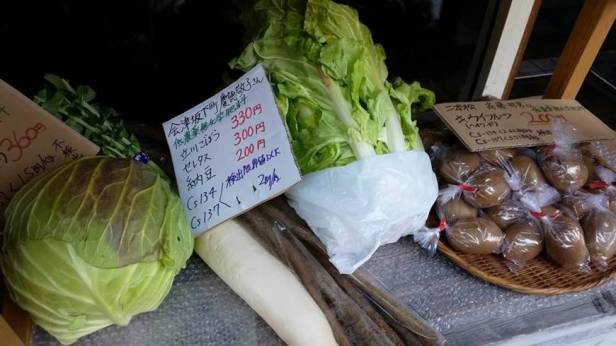

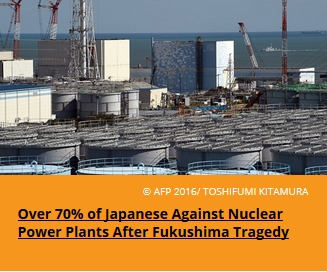


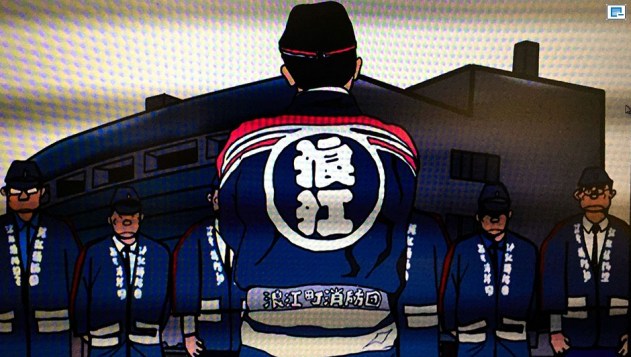


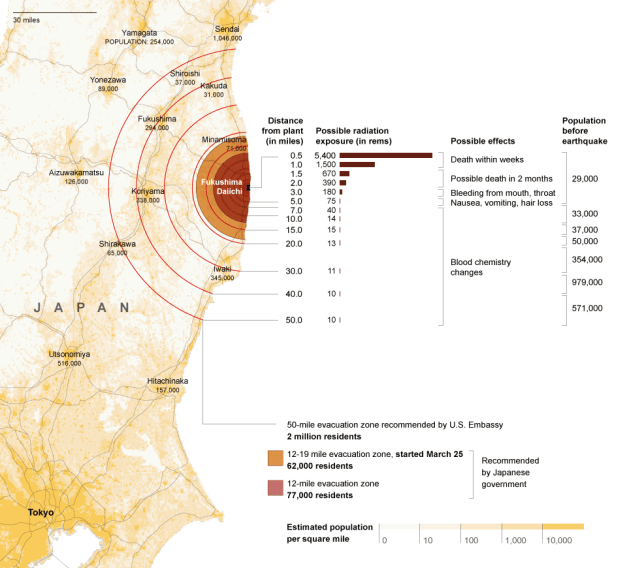
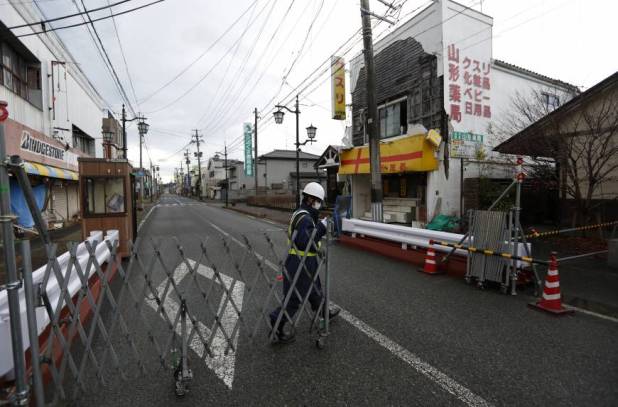

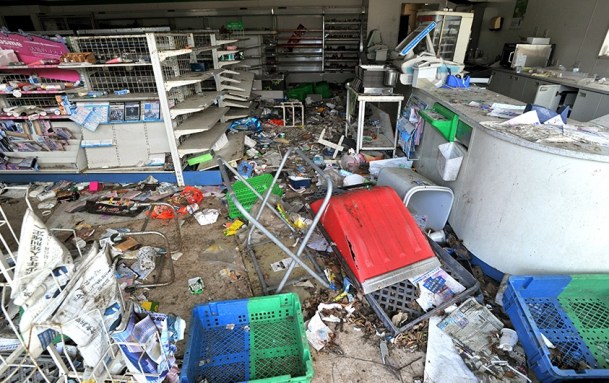






 nuclear-news