2019 Rugby World Cup in Japan
Before the 2020 Radioactive Olympics of Tokyo, the 2019 Radioactive Rugby World Cup in Japan!!!
World Rugby concluded its latest round of meetings with the Japan 2019 organizing committee in Tokyo Japan Friday, October 14, 2016 in connection with the preparation of the Rugby World Cup 2019.
The Executive Director of World Rugby, Brett Gosper, led a delegation to the quarterly meeting. Three years of the global tournament for the first time on Asian soil, Brett Gosper commented on key issues of the organization.
“We are satisfied with the way things are moving,” he said. “The budget, the planning for the stadiums … the preparations are on track and the foundations are solid. “
Bill Beaumont, president of World Rugby, who will visit Japan next week to take part of the World forum on sport and culture in Tokyo – along with IOC President Thomas Bach – is convinced that Japan 2019 will mobilize entire country.
“The Rugby World Cup will be an event for Japan as a whole,” he said. “Sport is about friendship and this tournament will be the proof with the teams, fans and the Japanese community will live the event together. Everyone is invited to participate in the biggest sporting event in the world in 2019. The host cities will benefit from significant economic benefits, but also sports and culture by hosting one of the world biggest sporting events. By working with the organizing committee, we are determined to make the most of the equipment for the benefit of all. “
Record profits were generated by the Rugby 2015 World Cup the order of £ 2.3 billion (€ 2.5 billion) to £ 1.1 billion (€ 1.2 billion) more to the UK economy through the 406,000 visitors who came and stayed on average 14 days. With 12 host cities, Japan can hope to break records.
The fan base is growing in Japan, especially because of the performance of the national team to the World Cup 2015 Rugby and Rugby 7 team at Rio Olympics Games that finished off the podium. Nearly 50% of fans believe that the Rugby World Cup in Japan will significantly raised the level of rugby in the country and 11 million say they are interested to take part. A total of 59 million Japanese watched the Rugby World Cup 2015.
Ban on food from Japan’s radiation-affected areas remains: Taiwan FDA
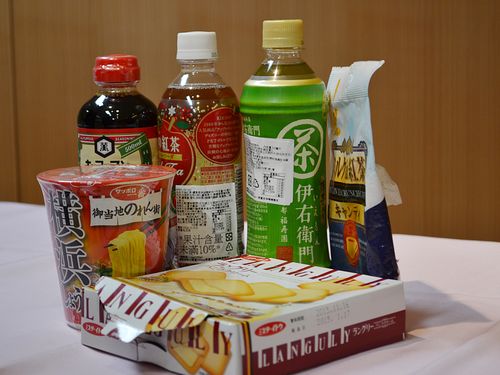
Taipei, Oct. 6 (CNA) The food and Drug Administration (FDA) reaffirmed Thursday that there is no timetable for any lifting of a ban on food imports from five Japanese prefectures that were affected by radiation fallout from a nuclear power plant meltdown following the 2011 earthquake and tsunami.
“There is no timetable for any such opening,” FDA Director-General Chiang Yu-mei (姜郁美) told CNA.
She declined to comment on reports that Taiwan and Japan have reached an initial consensus on Taiwan’s opening to food imports from the five prefectures.
Taiwan banned food imports from Fukushima, Ibaraki, Tochigi, Gunma and Chiba prefectures in the wake of the meltdown of the Fukushima Daiichi Nuclear Power Plant on March 11, 2011.
FDA Deputy Director-General Lin King-fu (林金富) said that food safety remains the primary concern, adding that the FDA will take stock of the management measures of other countries and continue to assess the situation.
Japanese media reported in May that Taiwan was planning to reopen to food imports from the five prefectures, but the reports were denied by the FDA. Reports resurfaced Thursday again about a lifting of the ban, and that formal opening could come early next year.
However, Pan Chih-kuan (潘志寬), an FDA food section chief, said that no related instructions have been received and that the assessment on Japanese food is still underway.
He stressed the three premises for opening — results of border inspection, monitoring results in Japan and the public’s attitude toward opening.
He said that since 2011, border inspections on 92,000 Japanese food items have been carried out, with 215 items found to contain a tiny amount of cesium. One item was found to contain the radioactive material in the past year.
http://focustaiwan.tw/news/asoc/201610060009.aspx#.V_b8QyR8f38.facebook
Fukushima rice at Matsuri (Japanese cultural) festival in Trafalgar Square, London
Rice was among a number of products from Fukushima being promoted at the festival today, in order to help the recovery of the region. Young women were making their way through the throng holding up huge peaches and apples from Fukushima.
Members of Kick Nuclear London, Japanese Against Nuclear and friends handed out a few hundred copies of the following leaflet to visitors at the festival this afternoon :
Kick Nuclear has created a web page for those who want to find out more: https://kicknuclear.com/fukushima-rice/


S. Korea imports 400 tons of Fukushima goods
SEOUL, Sept. 19 (Yonhap) — South Korea has imported over 400 tons of foods grown with radiation exposure in Fukushima, Japan, over the past six years, a South Korean opposition lawmaker said Monday, despite local consumers’ worries over contamination.
A total of 407 tons of goods from the region were brought into the country, said Choi Do-ja of the main opposition Minjoo Party of Korea, citing data of the Korea Food and Drug Administration (KFDA) submitted to the National Assembly.
A devastating earthquake off the east coast of Japan and a subsequent tsunami in 2011 led to the meltdown of nuclear reactors there, sparking worries among South Korean consumers that Japanese-produced goods, especially fishery products, have been contaminated with radiation.
By products, processed fishery goods stood as the top product with 233 tons, followed by mixed products with 51 tons and candy with 41 tons, the data showed.
The South Korean government currently sends back unsafe products from the region after screening them for cesium and iodine.
“Our people think that the government should more sternly limit imported foods from Japan despite the Seoul government’s stance that food from Fukushima is relatively safe following strict quarantine,” Choi said.
Despite the increased exports, industry watchers said the public anxiety over Japanese fishery goods still exists. In 2015, local authorities rounded up owners of 70 stores that deceived consumers on the origins of Japanese fishery products.
http://english.yonhapnews.co.kr/news/2016/09/19/0200000000AEN20160919008100320.html
Fan club formed to promote Fukushima produce
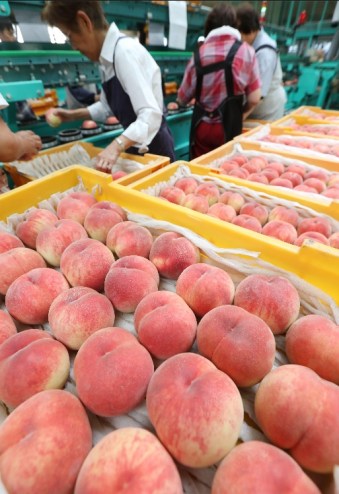
Nearly 5½ years after the 2011 Great East Japan Earthquake, a fan club was launched last week with an ambitious membership goal: gain 200,000 members by 2020 and boost the region’s products in the process.
Called Team Fukushima Pride, the project’s fans aren’t devoted to a pop idol group, but instead the local specialties of Fukushima Prefecture.
Already it has the support of organizations such as Yahoo Japan Corp. and Synergy Marketing Inc., which runs the fan club for professional baseball team Tokyo Yakult Swallows.
“Many people want to support Fukushima products but don’t know how to purchase them. I would like to organize a community for them and increase fans,” reconstruction minister Hiroaki Nagasawa, whose ministry spearheads the project, said.
At the heart of the project is a website that sells local products.
Hayato Ogasawara, spokesman for Fukushima Challenge Hajimeppe, an organization tasked with running the fan club and website, said the time of begging people to buy Fukushima products is over. Instead, the focus is to make Fukushima a brand of high-quality farm and marine produce.
“Rather than stressing the safety of the products, we want to inform people simply how great producers and products” in Fukushima are, said Ogasawara.
He said since the disaster the prefecture has been working to assure the safety of its local produce.
“We don’t conduct our own (radiation) checks on the products, but if asked we would explain the efforts of the prefecture,” he said.
Although many people supported Fukushima products in 2011 in the wake of the quake and tsunami, and subsequent radiation crisis at Tokyo Electric Power Company Holdings Inc.’s Fukushima No. 1 nuclear power plant, Ogasawara said sales figures have declined as a result of what he describes as the spread of misinformation about food safety, and due to diminished public focus on the area.
The Fukushima Prefectural Government continues to monitor radiation levels of the prefecture’s food products, ranging from vegetables and fruit to seafood. Among the 9,445 samples of 374 food items checked between April 1 and Aug. 31, just three samples were found to contain radioactive cesium exceeding the government limit of 100 becquerels per kilogram, according to the prefecture. The items that exceeded the limit were banned from distribution.
“The market value of peaches grown in Fukushima is roughly 80 percent of the price levels before the disaster,” Ogasawara said.
“It’s easy to beat the price down if the product is made in Fukushima. Our mission is to bring the price up and eventually develop fan bases for each producer there.”
Available for purchase are fruit, vegetables, sake and traditional crafts produced in the prefecture.
While the website allows anyone to make purchases, fan club members also have access to exclusive items.
Admission is free, and members are also offered opportunities to interact with Fukushima farmers through a special Facebook group and harvesting tours.
“After the disaster, I felt what we farmers could do by ourselves (was) very limited,” said Emi Kato, 35, a rice farmer in the city of Fukushima, who is involved in the project.
“But now there is a platform, which connects farmers and consumers. I’d like to keep on promoting the charm of Fukushima products.”
Test fishing for flounder begins off Fukushima coast
Flounders surely vacuum well the radionuclides from the ocean floor, and the government-imposed limit of 100 becquerels per kg does no mean no contamination.
There is no such a thing as a low dose when it comes to internal radiation such as the one from ingested contaminated food. Any radioactive contamination may cause harm.
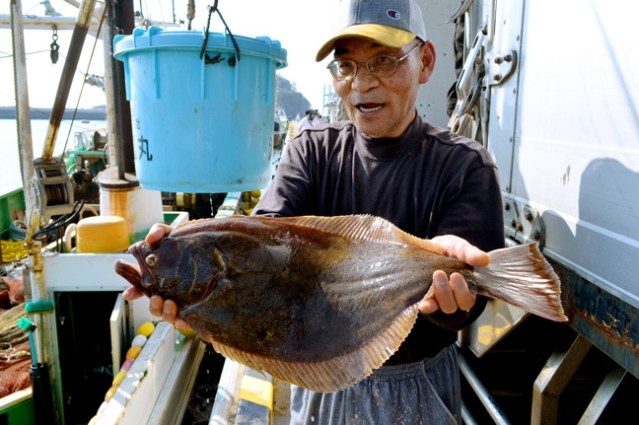
This flounder was caught on Sept. 2 off the coast of Iwaki, Fukushima Prefecture, during the first test fishing for the species since the 2011 disaster at the Fukushima No. 1 nuclear plant.
Test fishing for flounder begins off Fukushima coast
IWAKI, Fukushima Prefecture–Fishermen here caught flounder for sales on Sept. 2 for the first time since the 2011 disaster at the Fukushima No. 1 nuclear plant.
Eleven boats equipped with dragnets left Hisanohama wharf in the morning, and they snared five of the bottom-dwelling flatfish, previously a specialty of Fukushima Prefecture.
“It is a big step (for flounder fishing),” said Akira Egawa, 69, head of the Iwaki city fishery association. “We are going to recover one by one.”
On Aug. 25, 10 kinds of fish, including flounder, were added to the list for “test fishing” off the coast of Fukushima Prefecture. These fish can be caught for the resumption of sales of “safe” fish.
In 2010, 734 tons of flounder were caught in Fukushima Prefecture, the third most in Japan.
The peak season for flounder fishing is around the end of October.
http://www.asahi.com/ajw/articles/AJ201609020065.html
Japan authorizes commercial flounder ‘test-fishing’ off Fukushima
The sales of flounder caught in Fukushima Prefecture might soon resume, with fishermen already “test-fishing” for the first batches of the flatfish. The five-year-long halt in flounder fishing and sales was prompted by the deadly nuclear disaster.
On Friday fishermen caught flounder off the coast of Iwaki, Fukushima Prefecture, during the first test fishing since the 2011 nuclear disaster, Japan’s Asahi Shimbun reports. Flounder along with ten other kinds of fish was added to the list for “test-fishing” last week, meaning it is “safe” for sales.
As many as five flatfish were captured with the help of 11 boats equipped with dragnets.
“It is a big step [for flounder fishing],” said Akira Egawa, head of the Iwaki city fishery association. “We are going to recover one by one.”
Following the nuclear disaster the government issued an outright ban on more than 35 kinds of fish including flounder, angler fish and rockfish which were said to contain high levels of radioactive substances.
The ban has had a huge effect on Fukushima’s fishing industry which has significantly gone down after 2011. Around 5,600 tons of fish were caught off Fukushima coast last year compared to about 38,600 tons before March, 2011.
After March 2011, 50 percent of the fish samples tested for radiation levels exceeded the government-imposed limit of 100 becquerels per kg. However, after April 2015, no fish exceeded that number, according to The Japan Times.
However, after April 2015, no fish exceeded that number, according to The Japan Times.
https://www.rt.com/news/358095-flounder-test-fishing-fukushima/
Hong Kong still testing food imports for Fukushima’s radiation
More than five years ago on Friday, March 11, 2011, the Great East Japan Earthquake with a magnitude of 9.0 set off a large tsunami sending a 50-foot wall of water over three Fukushima Daiichi reactors. Three of the nuclear cores melted down in the next three days.
About 1,600 miles away on the next day, Saturday, March 12, 2011, the Center for Food Safety (CFS) in Hong Kong began stepped up surveillance of fresh foods including milk, vegetables and fruits, imported from Japan for radiation testing.
Eleven days later, on Wednesday, March 23, 2011, CFS discovered three samples imported from Japan with radioactivity levels exceeding those considered to be safe by international Codex Alimentarius Commission.
CFS is a unit of the Food and Environmental Hygiene Department of Hong Kong’s City government, which is part of China. The CFS continues to test those Japanese imports but hasn’t found any additional shipments with unsafe radiation levels.
And its not for lack of looking. Since one week before CFS found those hot white radishes, turnips and spinach samples, Hong Kong has tested 344,881 samples.
It breaks down this way: 19,420 vegetable samples; 19,338 fruit samples; 2,189 milk and milk beverage samples; 900 milk powder samples; 594 frozen confection samples; 54,468 aquatic product samples; 9,487 meat product smples; 31,744 drink samples, and 206,741 other samples including cereals and snacks.
The totals are through Aug. 22. CFS continues to test samples from Japanese imports, conducting testing around the clock five days a week.
Hong Kong’s continued surveillance for radioactivity is just one sign of how cautious Asia remains about the Fukushima meltdown. Japan has excluded people and crop production in a 310-square-mile zone around the nuclear plants. No deaths or cases of radiation sickness are attributed to the nuclear accident. And, perhaps due to the large exclusion zone, future cancers and deaths from potential exposures are projected to be low.
The U.S. Food and Drug Administration treats Fukushima with a periodically updated Import Alert that permits certain Japanese food imports to be detained without inspection.
“Districts may detain, without physical examination, the specified products from firms in the Fukushima, Aomori, Chiba, Gumna, Ibaraki, Iwate, Miyagi, Nagano, Niigata, Saitama Shizuoka, Tochigig, Yamagata and Yamanashi prefectures,” the July 18 Import Alert from FDA says.
Japanese imports from those areas that can still be detained at the U.S. border include:
- Rice, Cultivated, Whole Grain;
- Milk/Butter/Dried Milk Products;
- Filled Milk/Imitation Milk Products;
- Fish, N.E.C.;
- Venus Clams;
- Sea Urchin/Uni;
- Certain Meat, Meat Products and Poultry, specifically(beef, boar, bear, deer, duck, hare and pheasant products;
- Yuzu Fruit;
- Kiwi Fruit;
- Vegetables/Vegetable Products;
- Baby Formula Products; and
- Milk based formulas.
http://www.foodsafetynews.com/2016/08/hong-kong-still-testing-food-imports-for-fukushimas-radiation/
How about a bit of Fukushima sake?

Cups of sake are distributed to visitors at a tourism facility in Fukushima on May 18, after Fukushima Prefecture won the most awards at the Annual Japan Sake Awards.
Nuclear disaster a ‘springboard’ for Fukushima sake brewers
FUKUSHIMA–After a change in preference among the nation’s imbibers, Fukushima Prefecture rapidly gained ground as the top sake-producing area in Japan.
And then the nuclear disaster struck in March 2011.
But the triple meltdown that forced entire towns to flee and scared consumers off Fukushima products ended up fueling the rise of sake brewers in the prefecture.
Using its traditional system of public-private cooperation, Fukushima Prefecture not only took over the sake-brewing crown from Niigata Prefecture, the northeastern prefecture has also widened its lead.
Any sympathy that sake brewers had for their Fukushima rivals after the nuclear disaster has now been replaced by competitive words in the field.
Inokichi Shinjo, 65, chairman of the Fukushima Prefecture Sake Brewers Cooperative, could not hide his delight on May 18 while seeing the results of the Annual Japan Sake Awards.
“This achievement will help establish Fukushima’s reputation as the best sake-producing area in the country,” Shinjo said.
In the contest, in which the quality of young sake is judged, 18 products from Fukushima Prefecture were among the 227 brands that won the gold prize for having exceptionally good quality.
It was the fourth straight year for Fukushima to be the top prefecture in terms of number of gold prize-winning products in the competition.
The Annual Japan Sake Awards started in the Meiji Era (1868-1912), and sake from Hiroshima and Hyogo prefectures, as well as other traditional sake-producing areas, dominated the competition until the 1980s.
In the 1990s, more consumers turned to “tanrei karakuchi” (clean and dry) sake. Niigata Prefecture, known for its tanrei karakuchi products, placed first for four consecutive years starting in 1998.
Most of the sake entered in the contest are specially brewed for the occasion. But Fukushima Prefecture has overwhelmed Niigata Prefecture in the Sake Competition, where commercially available sake are evaluated.
Last year, 20 breweries in Fukushima Prefecture entered the Sake Competition.
The prefecture topped the list, with 18 brands from Fukushima, including Aizu Chujo, Nagurayama, Sharaku, Aizu Homare and Hiroki, among the 103 products selected as winners. None of the products from the 13 breweries from Niigata Prefecture were chosen.
HOW DID FUKUSHIMA TOP NIIGATA?
Fukushima-brewed sake rose in popularity after drinkers switched to “hojun amakuchi” (mellow and sweet) sake, noted for a natural flavor of rice, from tanrei karakuchi.
The turning point came in 1994, when the Juyondai sake brewed in Yamagata Prefecture, north of Fukushima Prefecture, was marketed and introduced in a magazine. The sake immediately won high praise, and prompted many brewers to produce hojun amakuchi sake, particularly in other parts of the Tohoku region.
The “Fukushima-style” system, in which citizens and public officials work together, was established to improve the quality of sake through the effective use of advanced brewing technologies.
The characteristics of rice for sake change each year, depending on the climate.
Under the system, the Aizu-Wakamatsu technical assistance office of the prefecture-run Fukushima Technology Center analyzes the year’s rice in advance and advises each brewer on the best way to produce sake.
“The mechanism enabled breweries to produce high quality sake unlike in the past,” said Kenji Suzuki, 54, head of the office’s brewing and food division.
Kenji Hiroki, 49, president of the Hiroki Shuzo Honten brewing company in Aizu-Bange, which makes Hiroki, one of the most famous sake brands in Fukushima Prefecture, said the system has also helped to prevent a trend that has hampered other traditional businesses: a lack of successors.
“Young people in their 20s and 30s have returned to local breweries to take over their parents’ businesses,” Hiroki said.
He also noted that many sake products brewed in Fukushima used to be traded at very low prices.
“The trend encouraged brewers to share their techniques to improve their circumstances together,” Hiroki said. “Even the (2011) nuclear crisis worked as a springboard for us.”
NUCLEAR DISASTER EFFECT
After the March 2011 Great East Japan Earthquake and tsunami triggered the disaster at the Fukushima No. 1 nuclear plant, companies in the prefecture had difficulty selling products because of persistent fears of radiation contamination.
The prefecture’s sake brewers cooperative has been emphasizing the safety of Fukushima-made sake, saying “both rice for sake and water are carefully examined according to strict standards.”
Such thorough checks also helped to ensure the rice and water were top quality.
Noted Fukushima breweries started joint advertising campaigns to sell their products in Tokyo. The publicity not only helped to increase sales but also spread the word about high quality of Fukushima Prefecture’s sake.
Rivals in other parts of Japan have been inspired by the efforts of Fukushima sake makers.
“Brewers from Fukushima Prefecture always point out each other’s problems when they meet, and it provides me with a good stimulus,” said Tadayoshi Onishi, 41, president of the Kiyasho Shuzo brewery in Mie Prefecture, which produces the popular Jikon brand.
Although sake production has generally declined around Japan, Fukushima brewers’ production is 10 percent higher than the level before the nuclear accident.
Shuichi Mizuma, 66, representative director of the Niigata Sake Brewers Association, expressed confidence that his prefecture would reclaim the title of “the kingdom of sake.”
“The tide often changes,” he said.
Koichi Hasegawa, 60, president of Hasegawasaketen Inc., a major sake retailer in Tokyo, said Fukushima Prefecture’s top position is not secure.
“People will soon be fed up with hojun amakuchi sake,” he said. “Shochu recently made waves as well. And Japanese consumers are frighteningly swayed by the latest trends.”
http://www.asahi.com/ajw/articles/AJ201607050001.html

When France uses Charles Aznavour to trivialize Fukushima

June 22, 2016 / Mathieu Gaulène (Reporterre)
Translated by Hervé Courtois (D’un Renard)
From our correspondant in Tokyo, Japan
Last week, the Embassy of France in Tokyo, Japan organized a “friendship dinner” to promote agricultural products from Fukushima. In this great communication exercise, the main purpose was to “serve the interests of France in Japan”, that is by defending the nuclear industry.
” The oceans are garbage dumps, the seabeds are soiled, smultiple Chernobyls are seeing fetuses stillborn”, sang in 2009 Charles Aznavour in “The Earth dies”.
Yet at the Embassy of France in Tokyo, Friday, June 17, at a dinner during which he was the guest of honor, it was another song that was sung to the the nonagenarian by the Ambassador Thierry Dana. In partnership with Fukushima Prefecture and the Aeon supermarkets chain, the Embassy of France organized within its walls a great event for the promotion of agricultural products from Fukushima. Some “delicious dishes” were prepared and served by the chef of the Embassy to the handpicked guests.

Charles Aznavour with Ambassador Thierry Dana
This is not the first time that the Embassy of France is actively promoting the nuclear industry and minimizing the risks following the Fukushima accident.
The former minister-counselor had even told us point blank, in 2013, that the main role of the embassy was “to serve the interests of France in Japan, that is to say nuclear.”
“We want to end this drama with this event”
But with this event, a new milestone was reached in the promotion of nuclear power, assumed and uninhibited: an outright negation of the health consequences of this disaster on the region. For, under the guise of a pseudo “friendship” with the people of Fukushima, singularly absent from the reception, the dinner was above all a great exercise in communication.
“We want to end this drama with this event,” explains a communication officer before the press conference starts. And to end the debate about radioactivity? “We do not want to present things like that …” she begins, before going elsewhere. And indeed, the ambassador of France, Thierry Dana, achieved the feat of making a speech on Fukushima never saying the words “nuclear accident” or “radioactivity”. He should have thought about it strongly, however when talking about “unfounded rumors on products that are both delicious and safe for health” [1]. When the phrase was translated into Japanese, Masao Uchibori, governor of Fukushima, and Tsuyoshi Takagi, Minister for Reconstruction, nodded, visibly satisfied that France plays its role of stooge in this case.

Masao Uchibori, the governor of Fukushima, Thierry Dana and Tsuyoshi Takagi, the Minister for Reconstruction (left to right), Friday, June 17, at the Embassy of France in Tokyo.
When we questioned the ambassador on the left unspoken and the danger or irresponsibility, to promote products from a contaminated region, in the time allotted to us – 5 minutes for questions of the journalists in a “press conference” of 1 hour 15 – he made a well-rehearsed reply: “Our goal is to enlighten the people who do not know, and as your question proves, we must continue to promote these products which are safe, and to eat them”, before to hand us theatrically before the cameras of TV Asahi, a cucumber from Fukushima.
Stay and learn to live with radioactivity
Indeed, explains Mr. Uchibori, who’d like also to answer us, tests are performed on products such as rice, and a maximum of 100 becquerels per kilogram of radioactivity has been set since 2012 for vegetables and fruits – In the first months, the threshold was set at 500 becquerels.
But even if these tests were systematic, which is not the case for all vegetables, food from Fukushima often contain low doses of radioactive particles. Even water from Tokyo tap still contains traces of cesium 134 and 137. Now we know that the radioactivity is more harmful when internal and repeated. Ingested, radioactive particles accumulate and can cause cancer, weakened immune system and various diseases.
On location, a hundred citizens laboratories were created to verify the content of radioactivity in food after food. A practice that could become over the years horribly banal: the life of radioactive elements is measured in decades or even thousands of years for plutonium.
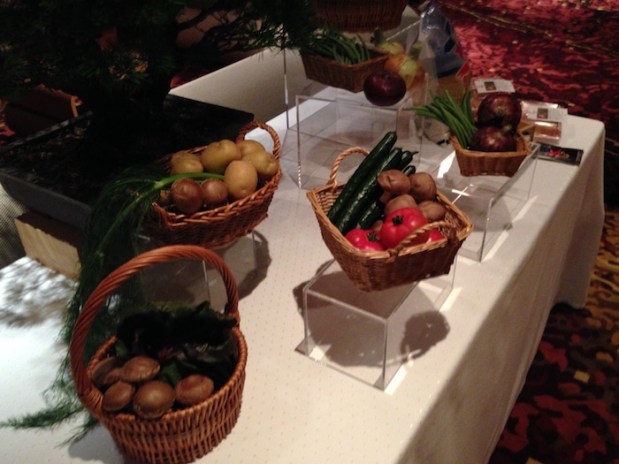
A selection of products, among which mushrooms, from Fukushima.
The presence of Aeon, first supermarket chain of the Japanese archipelago, as a partner of this event is more significant. The company is very engaged with the Fukushima Prefecture in the denial of the radioactive risk. In August, 2011, Aeon was the center of a scandal after it sold in its Tokyo supermarkets several hundred kilos of Minamisoma beef, whose radioactive cesium content was three to six times higher than normal. The company president, Mr. Okada, although present at the press conference and dinner, has been inconspicuous. And yet he seems to have been the main architect of this event.

A candlelight dinner, to the invisible radioactivity.
“Mr. Okada and Mr. Dana met upstream, and the ambassador has generously offered to host this event,” explains the director of communication of Aeon. Okada knows well indeed the ambassador, who presented him with the Legion of Honor in December 2015. Mr. Yasuhide Chikazawa, vice- president of Aeon, participated in the Ethos program in 2013. The Ethos program, benefiting from significant EU subsidies had already been set up in Chernobyl, and seeks nothing less than to encourage residents of contaminated areas with radioactivity to stay and to learn to live with it, because their evacuation is considered too expensive.
Free trade agreements between Japan and the European Union
A program that appears to have paid off as in the town of Tamura, highly contaminated but open to refugees since April 2014, small school children are taught about radioactivity and agricultural activities, professed by Ms. Yukiko Okada, of the atomic energy laboratory of the University of Tokyo city.
Since 2012, Aeon began to flood its supermarkets with products from Fukushima, at bargain prices.
For if the apology of products coming from an area that experienced a nuclear disaster is a first for France, in Japan, advertisements for Fukushima products orchestrated by Dentsu advertising, are permanent. [2] Aeon, well developed in the rest of Asia, has also started to export these products to other countries. And tomorrow, to Europe?
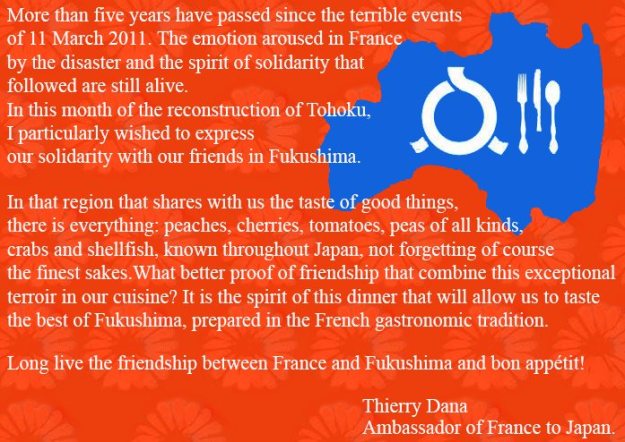
The Japanese seem to think about it very much. The Minister of Reconstruction, Mr. Takagi, laments, “Unfortunately, there are still countries or regions in the world who refuse to import products from Fukushima. ” But that could change. Since January 2016, the European Commission has facilitated the importation stopping simply to require radioactivity test certificates for most fruits and vegetables, tea or beef from Fukushima.
This facilitation, far from health considerations, was in fact granted under free-trade agreements being between Japan and the EU. In short, the EU condones products from Fukushima in exchange for lower tariffs in Japan for pork, cheese or wine exports. This “friendship dinner” might be just one of the final steps in those trade negotiations.
[1] The term “rumors” is a language element very quickly adopted by the Japanese government. From March 2012, the Japanese Embassy in France had sent to all French journalists writing about this country, a press release entitled “Fight against harmful rumors.” “To come to Japan and buy Japanese products, including those produced in the affected areas, is the best support for reconstruction that can be provided,” it read.
2] On the role of Dentsu the advertising giant in the promotion of nuclear power, you may read this article: http://www.inaglobal.fr/television/article/le-publicitaire-dentsu-tire-t-il-les-ficelles-des-medias-japonais-9000
Source: https://reporterre.net/Quand-la-France-se-sert-de-Charles-Aznavour-pour-banaliser-Fukushima
Fukushima rice to be sold in Britain
It’s horrible to think that if the rice is over 99 Bq/kg it cannot be sold in Japan yet it can have up to 600Bq/kg (?) of Cs137/134 and be sold in the EU. One man’s poison is another man’s food …
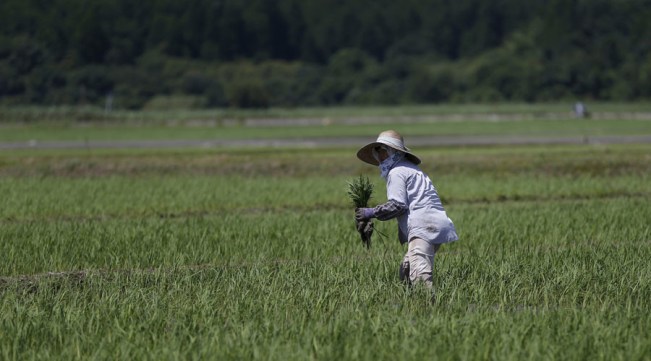
Rice harvested in Japan’s Fukushima region, heavily affected by a nuclear meltdown in 2011, is returning to the EU, starting with Britain next month, the Japan Times reports.
A total of 1.9 tons of Fukushima rice called Ten no Tsubu will be sold in London, making the UK the first EU nation to import the region’s produce after the nuclear disaster. The sale became possible after a long campaign from Fukushima natives in London to fend off rumors about the potential danger of the crops, the media said.
“With the UK as a foothold, we hope to expand the sale of prefecture-produced rice to other EU member countries,” said Nobuo Ohashi from Japanese farmers group Zen-Noh.
Brussels requires rice from Fukushima to undergo a radiation test in Japan or the importer country.
“It’s bright news for Fukushima, which has been struggling with the import restrictions. We will make further efforts so the restrictions will be lifted entirely,” said a spokesperson for a prefectural office.
The disaster at the Fukushima-Daiichi Nuclear Plant was caused by a tsunami that resulted in the meltdown of three nuclear reactors and the release of radioactive material. It was the largest nuclear disaster since the Chernobyl accident in 1986, and the second to receive the highest level classification on the International Nuclear Event Scale.
A March report by the US National Academy of Sciences said that five years following the disaster, most seafood caught off the coast of Japan is now safe to be consumed, adding, “the overall contamination risk for aquatic food items is very low.”
https://www.rt.com/business/347459-fukushima-rice-japan-meltdown/
Fukushima rice set to make first EU foray with debut in Britain
Not only it is criminal to allow Fukushima products, potentially contaminated, to be sold in London, Europe at a Japanese Government sponsored event, and their ignorant buyers to be possibly internally contaminated, knowing that internal radiation exposure is 100 times more harmful than external radiation exposure; such event is then used by the Japanese government in the local Fukushima newspaper (Fukushima Minpo) and in the national newspapers (Japan Times) as propaganda to convince the Fukushima people and the Japanese people that it is quite safe, not harmful to eat the Fukushima products, the proof: Europeans are buying it and eating it!
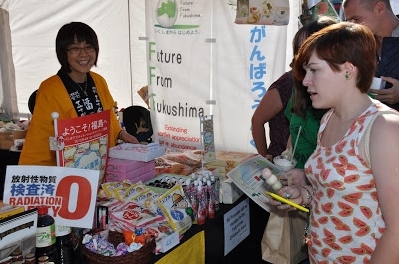
Fukushima nativees sell products made in Fukushima Prefecture at the Japan Matsuri festival in London last Spetember (Fukushima Minpo)
Fukushima-harvested rice will hit the stores in Britain in July, which might make it the first member of the EU to import the grain, following a sustained effort by a group of Fukushima natives in London fighting rumors about the safety of the crop.
It is also the third nation, after Singapore and Malaysia, to import Fukushima rice since the March 2011 earthquake and tsunami caused three reactor meltdowns at the Fukushima No. 1 nuclear plant. Starting next month, 1.9 tons of Fukushima rice called Ten no Tsubu will be sold in London. A Fukushima branch of National Federation of Agricultural Cooperative Associations, a Japanese farmers group better known as Zen-Noh, will export the rice via a British trading company.
“With the U.K. as a foothold, we hope to expand the sale of prefecture-produced rice to other EU member countries,” said Nobuo Ohashi, who heads the Fukushima branch of Zen-Noh.
According to Japan’s Agriculture, Forestry and Fisheries Ministry, the EU has been phasing out its ban on Fukushima food products since the nuclear disaster started. But for Fukushima rice, the EU still obliges importers to submit a radiation test certified by the Japanese government or sample tests by the member nation importing it.
“It’s bright news for Fukushima, which has been struggling with the import restrictions,” said an official at the prefectural office in charge of promoting its products. “We will make further efforts so the restrictions will be lifted entirely.”
There were many hurdles to overcome.
Amid fears that Fukushima products were tainted with radioactive fallout, Yoshiro Mitsuyama, who heads the Fukushima group in London, consulted an official at Zen-Noh’s branch in Germany on how to sell Fukushima products a few years ago.
With the help of Zen-Noh, Mitsuyama’s group started selling Fukushima-made rice, peach and apple juice at the annual Japan Matsuri held at London’s Trafalgar Square three years ago.
The products were popular with London residents. When Visit Japan Ambassador Martin Barrow came to Fukushima last April, he bought some local produce.
“I want to help sell Fukushima fruits like cherries, apples and pears in London as well, not just rice,” said Mitsuyama.
This section, appearing every third Monday, features topics and issues covered by the Fukushima Minpo, the largest newspaper in Fukushima Prefecture. The original article was published on May 25.
Over double density of Cesium-134/137 as safety limit detected from served school lunch in Utsunomiya city

According to Utsunomiya city government, they detected over double density of Cs-134/137 as safety level from school lunch after serving it to the students this May.
It was bamboo shoot contained in the school lunch of 5/10/2016 as an ingredient.
It was already served and consumed by 560 students and teachers at an elementary school when they obtained the analysis result.
It was 234 Bq/Kg in total of Cs-134/137 (food safety limit is 100 Bq/Kg). The city government comments no health problem was reported related to the contaminated bamboo shoot.
http://www.city.utsunomiya.tochigi.jp/oshiraselist/19078/035312.html
http://www.city.utsunomiya.tochigi.jp/dbps_data/_material_/localhost/gakkoukenkou/20160614.pdf
GroundTruth Films: Fukushima Diary
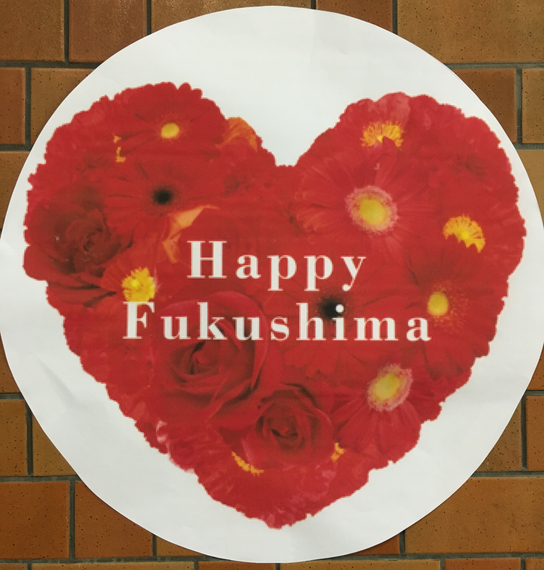
Signs covering Fukushima Station are a distraction from the fact that 100,000 people are still displaced in the Prefecture.
Burn clothes: Wear ‘em, toss ‘em. That’s the spirit in which Beth Balaban and I packed for our final filming trip to Fukushima for Son of Saichi. We also brought burn pillows, burn shoes, burn socks, burn slippers, burn blow up mattresses… Safe to say, nothing in our suitcases is coming home with us.
On our previous three trips we’ve stayed outside the evacuated contamination zone, traveling in and out for brief periods daily. This time we’re staying inside Yamakiya, a village evacuated after the earthquake, tsunami and nuclear power plant meltdown five years ago. And even though radiation levels here aren’t of the sci-fi-turn-your-skin-neon-green variety, scientists we’ve talked to admit that even after being part of the nation’s $10 billion clean-up effort, it’s still not a place they’d want to live.
Yamakiya’s evacuation didn’t come right away after the March 2011 disaster. It came a few months later when prevailing winds and seasonal rainfall took a toxic road trip, traveling like the Shinkansen over hills and valleys, and along Rte. 114 past the home of Hidekazu Ouichi, a lifelong farmer and son of Saichi, a Hiroshima survivor.
We’re here now because Hidekazu got word from the government late last year that he could – finally – move back home April 1st. But when he picked us up from the Fukushima train station, we found out the government has changed its mind again about lifting the evacuation orders. No, they now say, he can’t move back until September.
He’s moving back anyway. Another 31 families are, too. (Most former residents are rejecting any offer to live here.)
On the 30-minute drive to Yamakiya, I realize I’m more worried about what’s measured in pixels and decibels than becquerels or microsieverts. There’s a television screen embedded in the dashboard of Hidekazu’s new Toyota, and Japan’s national obsession – cute, quirky mascots – are on full display. Eyes on the road, Hidekazu!

Now that he’s home, Hidekazu finds it hard to break his lifelong habits and those of his ancestors. The family farm has always been land to live off, always a place of sustenance, and it’s difficult for him to see it any other way.
That’s why we’re not surprised when he opens the freezer to show us feet from a wild boar he and his friends caught in the backyard. A ghost town for the past five years, this area became overrun with wild animals – especially boar which Hidekazu says have gotten so used to gallivanting around town that “they roam freely inside abandoned houses, and come right up like a dog and wag their tails at you.”
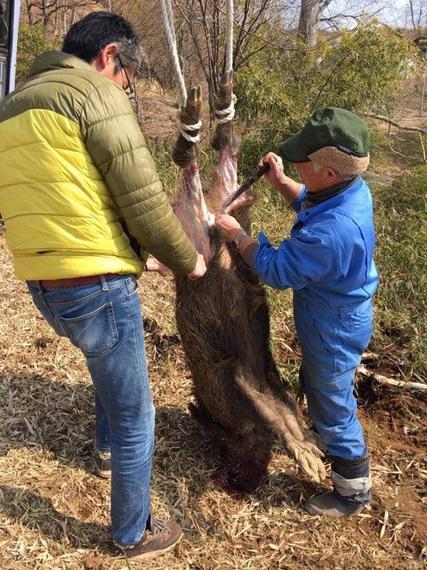
The boar pre-freezer.
The bad news is that wild boar – tasty as their feet might be – eat mushrooms which are among the most contaminated plants in Yamakiya’s forest. Cesium builds up inside the body of boars because of it. When Hidekazu tested this boar to see just how radiated it was, he measured 12,000 becquerels. (One becquerel is defined as the decay of one atom of a radioisotope per second. So if your Geiger counter detects the radiation of one decay coming from a sample – say, a boar – in one second, then that sample has one becquerel of radiation.) 12,000 becquerels is astronomically higher than the 500 allowed by the government.

Crew member and animator Christian Schlaeffer puts his Geiger counter to the frozen boar feet.
Hidekazu offered to cook the feet up for us for dinner. We politely declined.
Oh, who am I kidding? We told him he was crazy and there wasn’t a chance in hell we’d eat it, and neither should he! But if our previous trips have told us anything, it’s that Hidekazu will eventually convince us to eat or drink something that will surprise us and amuse him. I suspect it’s just a matter of time before the killer bee liquor comes out of the cabinet.
http://www.huffingtonpost.com/beth-murphy/groundtruth-films-fukushi_b_9605966.html
INTERVIEW/ Kazuya Tarukawa: Reality of Fukushima is unrecoverable, uncompensable
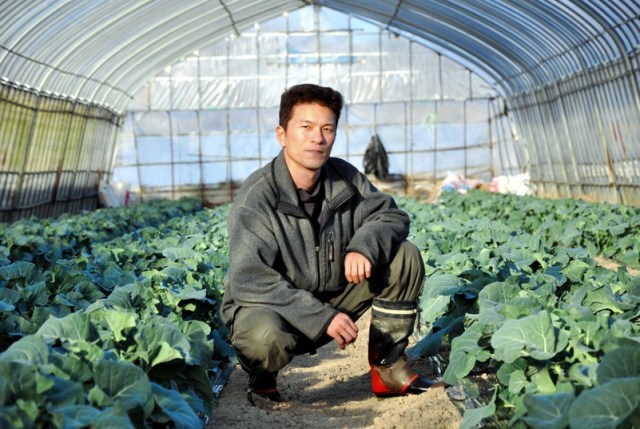
Farmer Kazuya Tarukawa at his greenhouse in Sukagawa, Fukushima Prefecture
Kazuya Tarukawa, a farmer in Sukagawa, Fukushima Prefecture, found himself in the media spotlight after his father committed suicide in the early stages of the disaster at the Fukushima No. 1 nuclear power plant.
In a recent interview with The Asahi Shimbun, Tarukawa recounted how his gratifying life as a farmer drastically changed on March 11, 2011.
He also shared his thoughts on the compensation system, rumors about Fukushima products, and how Tokyo Electric Power Co. sent him a fax instead of a direct apology for his father’s death.
Excerpts of the interview follow:
* * *
Question: What are things like five years after the disaster started?
Tarukawa: Radioactive materials fell on this central strip of Fukushima Prefecture, too. Rice paddies, farm fields and plastic greenhouses were all ruined, so our “workplaces” were contaminated. But Tokyo Electric Power Co., operator of the crippled nuclear plant, has not compensated us for lost assets or removed the radioactive substances.
Five years have passed, and that’s it. We have only sustained damage and suffering. I keep asking myself, “Why do we have to go through all this?”
We did receive 80,000 yen ($706) in the first year of the disaster and 40,000 yen in the second year for psychological suffering, but that was all. The thinking behind the payments was probably like, “Here’s 120,000 yen, so keep your mouth shut and wait for the radiation levels to go down on their own.”
How can that make up for the damage we sustained?
Q: I have been told that your father was dedicated to organic farming of vegetables. Could you elaborate?
A: He cared a lot about the environment. He began growing winter cabbage because you never get worms, even without a single disinfection, in winter. The cabbage grows under the snow and develops quite a sweet taste. All local schools were using our cabbage in their school lunches.
He was so happy to be feeding children with something really safe and tasty. He was once invited by school officials to give a talk about food education. He was proud of things like that.
He hanged himself on the morning the day after the central government told him to stop shipping his vegetables. Around 7,500 pre-harvest cabbages were ruined. His farmland was contaminated. His heart was probably heavy while he was wondering how he would get on with his life.
Q: You reached a settlement in the case through the intermediary of the Nuclear Damage Compensation Dispute Resolution Center, whereby TEPCO acknowledged a causal relation with the disaster. Could you elaborate on that?
A: I took the case to the center because I wanted to avenge my father so he would not die in vain. I finally won the settlement and received damages. I thought that TEPCO people would finally come to my place to offer incense and apologize. But that never happened. I got a fax instead.
Q: How is the cleanup work going?
A: Our rice paddies were cleaned up. The ground was plowed to about 40 centimeters using a big tractor, sprinkled with zeolite and then plowed again. We were told that the zeolite will absorb radioactive substances in the soil, and that’s the cleanup thing.
But it doesn’t make sense. Rice may stop pulling up radioactive materials, but the absolute amount in the soil remains the same.
We are toiling every day from morning until evening on contaminated soil. We are filled with anxiety about what will become of us in the future, and whether we might suffer the impact someday.
When we were negotiating with the central government, I repeatedly asked farm ministry officials on the podium: “Do you know the first kanji in the Japanese word for ‘cleanup?’ (The kanji means “remove.”) You are just stirring things up. How can that amount to a ‘cleanup?’”
Everyone then cast their eyes low at their documents. They must have thought I was right.
Q: Isn’t there a way to strip away the contaminated surface soil?
A: We would be luckier if only there was a way to strip it off in thin slices. But in the month after the disaster started, the prefectural government gave us directions, saying it was OK to plow the ground. I didn’t quite believe in that stuff, but everybody did plow the ground.
We shouldn’t have done the plowing thing back then. They could have told us to stop growing crops for a year, and you will be compensated for that. That was a big moment when the sides parted.
It’s easy to strip off soil with a machine. But if you remove 40 cm of soil, you wouldn’t get decent crops. It takes tens of years to make just 1 cm of fine, fluffy soil.
I stick to what I am doing because I don’t want to let my rice paddies go to ruin during my time, the time of the eighth generation.
The paddies would quickly go to ruin if you didn’t do anything about them and just let them lie around. That would also cause trouble with your neighbors. Come to think of it, if you didn’t grow anything, you also wouldn’t be getting compensation money, and you would be left without income. You couldn’t maintain your living.
Q: What compensation are you getting for the farm products you grow?
A: We are only being compensated for crops with records of sale and proof that we suffered damage. For example, if you sold something at 2,000 yen before the disaster but now are making only 1,500 yen from it, TEPCO will compensate you for the difference.
But we have not been compensated for cucumbers for the past two years because their prices soared due to the unseasonable weather. People are saying stuff like, “We are not paying you because you are selling them at higher prices than you did before the disaster.”
It’s funny, huh? We would be making more money if it were not for the disaster. We are getting less than in other prefectures. You know, TEPCO is loath to shell out money.
And there are so many things that we have no way to seek damages for. Things that will never be with us again. We used to grow shiitake mushrooms at our homestead every year for consumption. Butterbur sprouts and Japanese angelica tree shoots from the mountains–they have all been spoiled. But we are getting nothing for that.
Q: What about the impact of negative publicity?
A: The 2011 harvest of rice from our paddies measured up to 30 becquerels or so in radioactive content. That was a safe enough level because the regulation standard was 500 becquerels (per kilogram; 100 becquerels from fiscal 2012) or less. But it’s something that you are putting in your mouth, after all.
Frankly, I didn’t want to eat it myself. Well, I did eat it because I couldn’t have gone shopping elsewhere.
But I do have a sense of guilt about making shipments. So I know very well why Tokyoites don’t feel like eating things from Fukushima. Who would want to buy stuff to eat from a place with such a stupid old nuclear plant?
It’s not about “negative publicity.” You suffer from “negative publicity” when your sales have dropped because groundless rumors have spread. But our case is not like that. Everything is well-grounded. The radioactive materials actually fell.
Q: Do they still continue to be detected?
A: No radioactive materials were detected in rice last year and the year before last. In fact, we have done everything we can. We are spraying potassium chloride, which suppresses the absorption of radioactive substances, every year.
All bags of rice are being screened, and when you get measurement figures, you are not allowed to ship them. I believe that rice from Fukushima is now much safer than rice from other prefectures.
And our rice is selling well, in fact, in the restaurant industry and in hospitals because you may never know that the product is from Fukushima Prefecture. You may not see a lot on the surface, but vast quantities are on the move. Because Fukushima rice tastes good. It’s sticky and sweet. So restaurant industry people seem to be happy because they can buy tasty rice at cheap prices.
Q: What about vegetables?
A: Greenhouses were under plastic covers at the time of the disaster, so the soil in there was never contaminated. I decided to grow everything in greenhouses, so I have almost stopped growing things outdoors, including cabbage, because I don’t want to see measurement figures in my crops again.
I am now growing broccoli, but the prices are so cheap, beaten down. Urbanites don’t bother to differentiate between broccoli grown in greenhouses and those grown in open fields as long as they are from Fukushima Prefecture.
Q: Nuclear reactors are being brought back online these days. Your thoughts?
A: Japan remained free of nuclear power for some time. But look, was there any part of Japan where everything was pitch-dark at night during that time? We certainly had enough electricity.
We may have paid more for crude oil, and nuclear power may be cheaper in fuel costs. But think about it: How much do you have to pay to clean up after a disaster when one happens? It’s really a burden. What would become of this country if another nuclear plant were to fail somewhere? You could raise taxes, but would that be the end of it?
Q: With whom do you want to share your feelings now?
A: I could be better off if I didn’t raise my voice and kept silent. But I am somebody in the media spotlight because of my father. There are hosts of other farmers who feel like I do, that something is wrong. It’s not in my power, after all, to hold my voice about such feelings. Doing that is dishonest.
That’s why I decided to appear in the movie (“Daichi wo Uketsugu” (Taking over Mother Earth), a 2015 documentary directed by Junichi Inoue). I particularly want farmers in areas hosting nuclear plants to watch this film. I want them to know what will happen when there is a disaster.
My father used to say: “Human-made things will certainly fail someday. Nothing can stand the forces of nature.” And things have turned out exactly like that. And after five years, nobody has taken responsibility.
* * *
Born in 1975, Kazuya Tarukawa worked for a company in Iwaki, Fukushima Prefecture, after graduating from a university. He returned to his family home in Sukagawa, 65 kilometers from the Fukushima No. 1 nuclear power plant, 10 years ago to engage in farming.
How banned “Mislabeled” Fukushima food products are making it onto international store shelves.

by Robert Harrington
It is being reported that tainted food from Fukushima, Ibaraki, Gumma, and Chiba is making its way into local supermarkets in Taiwan due to the irresponsibility of mislabeling. What’s more, these food products were banned in Taiwan since March of 2011.
The first question is: Why are food products from the concerned Japanese prefectures surrounding Fukushima mislabelled?
The second question is: Why is Japan attempting to foist its unsafe and inferior radioactive foods on Taiwan?
Instead of humbly acquiescing to Taiwan’s wishes, Japan takes an aggressive approach even threatening WTO arbitration.
Taiwan’s Food and Drug Administration said the latest enforcement was in line with radiation safety management practices that other countries have put in place on Japanese food imports following the 2011 Fukushima nuclear disaster.
It said it “is necessary to protect the safety of food consumption” for Taiwanese.
But Japan is protesting the move, with the government warning that it may escalate the matter to the World Trade Organization, potentially deepening the conflict between Taipei and Tokyo.
Japan Created Their Predicament by Building All of Their Nuclear Reactors on Their Island Coastlines
Rather than own the problem which successive Japanese governments are fully responsible for, they appear to be taking advantage of their neighbors. No one ever forced Japan to locate their entire nuclear power generation industry on the shoreline.
Even after 4 plus years beyond the Fukushima nuclear disaster, Japan has still failed to satisfactorily address the fallout from the meltdown(s) that occurred after the March 11, 2011 earthquake-generated tsunami.
Report: 20,000 Square Miles Contaminated by Japan’s Fukushima Daiichi
Even more inexplicably, the Japanese government has voted to continue the operation of their nuclear power plants in spite of their vulnerability to both frequent earthquakes and potential tsunamis. Being located in one of the most seismically active earthquake zones in the Ring of Fire, such an ill-advised decision can only set up another nuclear catastrophe. Which begs the question:
“Does anyone in their right mind believe that nuclear power plants can ever be designed, engineered or constructed to withstand 9.0 earthquakes followed by 15 meter high tsunamis?
The obvious answer is as follows:
“Japan should never have sited 55 nuclear reactors (plus 12 others) on its coastlines.”
Therefore, why are countries like Taiwan paying a serious price for Japan’s extraordinarily bad judgment and serious mistakes? They have known for centuries that they reside on one of the most earthquake-prone pieces of real estate in the entire world. To continue with the same nuclear energy model despite the obvious lessons of Fukushima seems to defy common sense.
Conclusion
Japan made some extremely fateful decisions post World War II concerning the ways it would satisfy the nation’s energy needs. In light of their direct experience with atomic energy during WWII, it would seem that they would have opted for non-nuclear energy alternatives. Instead, they went full bore constructing nuclear power plants as quickly as they could convince the prefectures with the targeted coastlines.
Here they are now still dealing with the Fukushima meltdown(s) — a set of intractable nuclear challenges which may have no practical solutions. That means that those prefectures surrounding Fukushima may always have an environment suffering from a proliferation of radionuclides. What exactly are radionuclides?
A radionuclide or radioactive nuclide is a nuclide that is radioactive. Also referred to as a radioisotope or radioactive isotope, it is an isotope with an unstable nucleus, characterized by excess energy available to be imparted either to a newly created radiation particle within the nucleus or via internal conversion. During this process, the radionuclide is said to undergo radioactive decay, resulting in the emission of gamma ray(s) and/or subatomic particles such as alpha or beta particles.These emissions constitute ionizing radiation. (Source: Wikipedia — Radionuclide)
Radionuclides, and especially the ionizing radiation which they emit, are certainly not something that anyone would want in their back yard, much less in their food. Nevertheless, Japan feels it can maintain the same policies that got them into this calamitous predicament. Hopefully, Taiwan will not relent to demands so unreasonable they strain credulity. After all, Japan needs to learn some critical lessons for their own benefit as well as for their trading partners.
http://naturalsociety.com/how-fukushima-produce-is-making-its-way-into-international-stores/

1 This Month

of the week – Shut Down Drone Warfare!


Tell the Ukrainian Government to Drop Prosecution of Peace Activist Yurii Sheliazhenko

Petition to revoke the licensing of the Near Surface Nuclear Disposal Facility (NSDF) at Chalk River. https://www.ourcommons.ca/petitions/en/Petition/Details?Petition=e-7247
To see nuclear-related stories in greater depth and intensity – go to https://nuclearinformation.wordpress.com
-
Archives
- April 2026 (7)
- March 2026 (251)
- February 2026 (268)
- January 2026 (308)
- December 2025 (358)
- November 2025 (359)
- October 2025 (376)
- September 2025 (257)
- August 2025 (319)
- July 2025 (230)
- June 2025 (348)
- May 2025 (261)
-
Categories
- 1
- 1 NUCLEAR ISSUES
- business and costs
- climate change
- culture and arts
- ENERGY
- environment
- health
- history
- indigenous issues
- Legal
- marketing of nuclear
- media
- opposition to nuclear
- PERSONAL STORIES
- politics
- politics international
- Religion and ethics
- safety
- secrets,lies and civil liberties
- spinbuster
- technology
- Uranium
- wastes
- weapons and war
- Women
- 2 WORLD
- ACTION
- AFRICA
- Atrocities
- AUSTRALIA
- Christina's notes
- Christina's themes
- culture and arts
- Events
- Fuk 2022
- Fuk 2023
- Fukushima 2017
- Fukushima 2018
- fukushima 2019
- Fukushima 2020
- Fukushima 2021
- general
- global warming
- Humour (God we need it)
- Nuclear
- RARE EARTHS
- Reference
- resources – print
- Resources -audiovicual
- Weekly Newsletter
- World
- World Nuclear
- YouTube
-
RSS
Entries RSS
Comments RSS
 nuclear-news