Putin and officials discuss huge new underground bunker almost completed
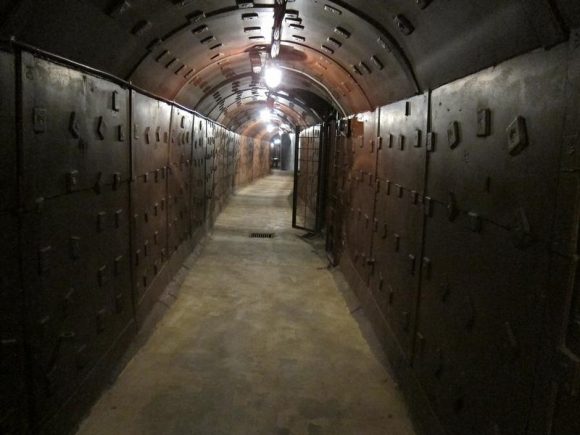
Putin Reveals Existence Of New Nuclear Command Bunker
Russia already has two very large bunker complexes built underneath mountains, including one housing a key nuclear doomsday command system. The Drive, BYJOSEPH TREVITHICK NOVEMBER 11, 2020, The Kremlin has released an unusual transcript of a meeting between Russian President Vladimir Putin and senior defense and other government officials, as well as representatives of Russia’s defense industries, regarding the modernization of the country’s nuclear command and control infrastructure. In it, among other things, Putin disclosed that work on a new hardened strategic command post, possibly a deeply buried underground bunker, is nearing completion.
Putin held the meeting in Sochi on Nov. 11, 2020. Russian Minister of Defense Sergei Shoigu and Russian Army General Valery Gerasimov, Chief of the General Staff of the country’s military, were also in attendance, among others. The day before, the Russian President had held another meeting, which touched on the country’s general nuclear deterrence policy, where he indicated that he would only authorize a nuclear strike in response to one against Russia. This apparent declaration of a so-called “no first use” policy would seem to conflict with previous official statements in recent years.
“It is absolutely clear that the combat capability of the nuclear triad, and the capability of the army and navy on the whole to adequately and quickly respond to potential military challenges directly depend on the stability, effectiveness and reliability of these systems under any circumstances,” Putin said at the Nov. 11 gathering. “I would like to point out that a great deal has been done during the past few years to maintain all the command elements of our strategic nuclear forces at the highest possible level.”……..
It’s not completely clear from these comments whether Putin was talking about an entirely new facility or the refurbishment, improvement, and/or expansion of an existing one. His remarks about the need to protect the overall command and control infrastructure against any threats, including a nuclear attack, strongly point to the site he’s talking about being deeply buried underground bunker of some kind. Russia already understood to have two sites that would match this general description, one at Kosvinsky Kamen in the Northern Ural Mountains and another under Mount Yamantau in the Southern Ural Mountains.
The construction of both sites reportedly began in the late 1970s. It’s worth noting that no facility on earth is totally survivable in the face of strikes by modern nuclear weapons, but deeply buried sites offer probably the best possible defense. As such, the Soviets and the United States both, among others, invested heavily in such bunker complexes during the Cold War, ………
Kosvinsky Kamen, at least some portions of which are believed to be buried under around 1,000 feet of solid granite, is probably the better known of the two, due to its connection to a semi-automated nuclear command and control system first developed under the Soviet Union called Perimeter. This system was long described as a “dead hand” doomsday machine akin to the fictional one in Stanley Kubrick’s famous Cold War black comedy film Dr. Strangelove that could carry out an entirely automatic retaliatory launch of Russian nuclear-tipped intercontinental ballistic missiles (ICBM) after an attack.
More recent reporting has indicated that actual humans, who could be pre-authorized in a crisis to launch nuclear strikes if certain conditions were met, were still very much involved in the operation of Perimeter and operated its central components from within the Kosvinsky Kamen complex. That being said, reports still indicate that this main Perimeter bunker was like something you’d find in a villain’s lair in a James Bond movie………
Less is known about the facility at Mount Yamantau, which reportedly lies, at least in part, under some 3,000 feet of rock, primarily made up of quartz, and has been said to be absolutely massive, encompassing an area “as big as the Washington area inside the Beltway,” or around 400 square miles. The complex is situated within Mezhgorye, which is what is known in Russia as a closed town, where only authorized individuals are allowed to live and work………
President Donald Trump’s Administration also announced in 2018 that it had decided to maintain an operational stockpile of B83-1 nuclear gravity bombs, which have very large yields, reported to be around 1.2 megatons, as an alternative nuclear means of striking at especially hardened facilities. These weapons had previously been slated for retirement……..
It is worth noting that there are understood to be at least two underground bunker complexes in Moscow, one under the Kremlin and another nearby, similar to ones in Washington, D.C., plus to more nearby in the Russian capital’s suburbs, but these are nowhere near as deeply buried as the ones at Kosvinsky Kamen and Mount Yamantau. In 2016, there was also a report that Russia was building “dozens” of new bunkers under the Kremlin and elsewhere to support its nuclear command and control infrastructure…… https://www.thedrive.com/the-war-zone/37569/putin-reveals-existence-of-new-nuclear-command-bunker-and-says-its-almost-complete
International leading experts opt for 100 per cent renewables and reject nuclear power
Leading experts opt for 100 per cent renewables and reject nuclear power https://100percentrenewableuk.org/leading-experts-opt-for-100-per-cent-renewables-and-reject-nuclear-power
The undersigned believe that a future based on 100 per cent renewable energy underpinned by traditional and advanced energy efficiency and storage techniques is not only practicable, affordable, but immensely preferable to one that involves nuclear power. Renewable energy offers us a rapid path to net zero carbon transition that, unlike nuclear power, does not involve the need for decommissioning of radioactive plant, nuclear waste or concerns about safety or security threats. With this in mind we regard the prospect of the Government effectively offering unlimited sources of funding to EDF to build Sizewell C nuclear power plant with dismay and urge people to send in their objections to their MPs at this prospect.
- Dr David Toke, Director, 100percentrenewableuk,
also Reader in Energy Politics, University of Aberdeen.
- Jonathon Porritt,
Founder, Director and Trustee, Forum for the Future
Co-Director of the Prince of Wales’s Business & Sustainability Programme
- Professor Tom Burke
- Founding Director of E3G
- Professor Peter Strachan
The Robert Gordon University
Aberdeen Business School- Dr Paul Dorfman
Founder and Chair Nuclear Consulting Group
Honorary Senior Research Associate UCL Energy Institute- Professor Bryan Wynne,
- Professor of Science Studies and Research Director of the Centre for the Study of Environmental Change
- Professor Andrew Stirling,
Professor of Science and Technology Policy,
University of Sussex
- Professor David Elliott,
Technology Policy Group
- The Open University
- Professor Stephen Thomas,
Public Services International Research Unit (PSIRU)
University of Greenwich
- Professor Mark Jacobson,
Director of Atmosphere/Energy Program,
- Stanford University (USA)
- Professor Christian Breyer,
Lappeenranta University of Technology (Finland)
- Shaun Burnie
Independent Nuclear Consultant
- Dr Ian Fairlie,
- Vice President CND
- Pete Wilkinson
Chairman, Together Against Sizewell C (TASC)
- Dr Philip Johnstone
Research Fellow
Science Policy Research Unit (SPRU)- Dr Mark Diesendorf
- Associate Professor and Deputy Director
Institute of Environmental Studies
UNSW Australia- Dr Stephen Connelly
Department of Town and Regional Planning
University of Sheffield- Dr Gavin Mudd
- School of EngineeringRMIT University
- Dr Monica Oliphant
Past President International Solar Energy Society
Register for FREE webinar on December 3rd on how Scotland can get ALL of its energy from renewables
Julian Assange ‘targeted as a political opponent of Trump administration and threatened with the death penalty’
Julian Assange ‘targeted as a political opponent of Trump administration and threatened with the death penalty’ Evening Standard. By Tristan Kirk. @kirkkorner
Professor Paul Rogers, a lecturer in peace studies at Bradford University and specialist on the ‘War on Terror’, said Assange’s opinions put him “in the crosshairs” of Trump’s top team.
Giving evidence to Assange’s extradition hearing this morning, he said he believes the prosecution case is part of a drive in the United States to target “dissenters”.
“In my opinion Mr Assange’s expressed views, opinions and activities demonstrate very clearly ‘political opinions’”, he told the court.
Professor Rogers, in his witness statement, said Assange’s work involved exposing secrets that the US government wanted to keep hidden, he had been in conflict with the Obama administration, but there was “no question” that Assange had been targeted as a political opponent by Trump’s officials.
“The opinions and views of Mr Assange, demonstrated in his words and actions with the organisation WikiLeaks over many years, can be seen as very clearly placing him in the crosshairs of dispute with the philosophy of the Trump administration”, he said.
Assange’s legal team argue that a decision was taken under President Obama not to prosecute the Wikileaks activist, but that move was overturned under Trump. https://www.standard.co.uk/news/uk/julian-assange-donald-trump-administration-old-bailey-hearing-a4543656.html?fbclid=IwAR3Rj4n0Lzlt5GmE1lXZXoMVDsOS5BdT9sEKgj82SCmMnpNLFQ6ZfEzVUOI
The USA devised an apocalyptic nuclear weapon – the Supersonic Low Altitude Missile or SLAM
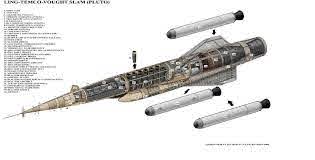
PROJECT PLUTO: THE CRAZIEST NUCLEAR WEAPON IN HISTORY SOFREP, by Sandboxx 15 Nov 20, “…………. Although the destructive force of the atom bombs dropped on Hiroshima and Nagasaki had been so monstrous that they changed the geopolitical landscape of the world forever, both the U.S. and Soviet Union immediately set about developing newer, even more powerful thermonuclear weapons. Other programs sought new and dynamic delivery methods for these powerful nukes, ranging from ballistic missiles to unguided bombs.Project Pluto and the SLAM Missile
One such effort under the supervision of the U.S. Air Force was a weapon dubbed the Supersonic Low Altitude Missile or SLAM (not to be mistaken for the later AGM-84E Standoff Land Attack Missile). The SLAM missile program was to utilize a ramjet nuclear propulsion system being developed under the name Project Pluto. Today, Russia is developing the 9M730 Burevestnik, or Skyfall missile, to leverage the same nuclear propulsion concept.
As Russian President Vladimir Putin recently pointed out, nuclear propulsion offers practically endless range, and estimates at the time suggested the American SLAM Missile would likely fly for 113,000 miles or more before its fuel was expended. Based on those figures, the missile could fly around the entire globe at the equator at least four and a half times without breaking a sweat.
The unshielded nuclear reactor powering the missile would practically rain radiation onto the ground as it flew, offering the first of at least three separate means of destruction the SLAM missile provided. In order to more effectively leverage the unending range of the nuclear ramjet, the SLAM missile was designed to literally drop hydrogen bombs on targets as it flew. Finally, with its bevy of bombs expended, the SLAM missile would fly itself into one final target, detonating its own thermonuclear warhead as it did. That final strike could feasibly be days or even weeks after the missile was first launched.
Over time, the SLAM missile came to be known as Pluto to many who worked on it, due to the missile’s development through the project with the same name.
The onboard nuclear reactor produced more than 500-megawatts of power and operated at a scorching 2,500 degrees — hot enough to compromise the structural integrity of metal alloys designed specifically to withstand high amounts of heat. Ultimately, the decision was made to forgo metal internal parts in favor of specially developed ceramics sourced from the Coors Porcelain Company, based in Colorado.
The downside to ramjet propulsion is that it can only function when traveling at high speeds. In order to reach those speeds, the SLAM would be carried aloft and accelerated by rocket boosters until the missile was moving fast enough for the nuclear ramjet to engage. Once the nuclear ramjet system was operating, the missile could remain aloft practically indefinitely, which would allow it to engage multiple targets and even avoid intercept.
The nuclear-powered ramjet was so loud that the missile’s designers theorized that the shock wave of the missile flying overhead on its own would likely kill anyone in its path, and if not, the gamma and neutron radiation from the unshielded reactor sputtering fission fragments out the back probably would. While this effectively made the missile’s engine a weapon in its own right, it also made flying the SLAM over friendly territory impossible.
While the doctrine of Mutually Assured Destruction has since made the launch of just one nuclear weapon the start of a cascade that could feasibly end life on Earth as we know it, Project Pluto’s SLAM Missile was practically apocalyptic in its own right. The nuclear powerplant that would grant the missile effectively unlimited range would also potentially kill anyone it passed over, but the real destructive power of the SLAM missile came from its payload.
Unlike most cruise missiles, which are designed with a propulsion system meant to carry a warhead to its target, Project Pluto’s SLAM carried not only a nuclear warhead, but 16 additional hydrogen bombs that it could drop along its path to the final target. Some even suggested flying the missile in a zig-zagging course across the Soviet Union, irradiating massive swaths of territory and delivering it’s 16 hydrogen bombs to different targets around the country.
Doing so would not only offer the ability to engage multiple targets, but would almost certainly also leave the Soviet populace in a state of terror. A low-flying missile spewing radiation as it passed over towns, shattering windows and deafening bystanders as it delivered nuclear hellfire to targets spanning the massive Soviet Union, would likely have far-reaching effects on morale.
How Do You Test an Apocalyptic Weapon?
Project Pluto’s nuclear propulsion system made testing the platform a difficult enterprise. Once the nuclear reactor onboard was engaged, it would continue to function until it hit its target or expended all of its fuel. Any territory the weapon passed over during flight would be exposed to dangerous levels of radiation, limiting the ways and the places in which the weapon’s engine could even be tested.
On May 14, 1961, engineers powered up the Project Pluto propulsion system on a train car for just a few seconds, and a week later a second test saw the system run for a full five minutes. The engine produced 513 megawatts of power, which equated to around 35,000 pounds of thrust — 6,000 pounds more than an F-16’s Pratt & Whitney F100-PW-229 afterburning turbofan engine with its afterburner engaged.
However, those engine tests were the only large scale tests Project Pluto would ultimately see, in part, because a fully assembled SLAM missile would irradiate so much territory that it was difficult to imagine any safe way of actually testing it.
A weapon That’s Too Destructive to Use
Ultimately, Project Pluto and its SLAM missile were canceled before ever leaving the ground. The cancellation came for a litany of reasons, including the development of intercontinental ballistic missiles and the introduction of global strike heavy payload bombers like the B-52 Stratofortress. There were, however, some other considerations that led to the program’s downfall.
Because the SLAM would irradiate, destroy, or deafen anyone and anything it flew over, the missile could not be launched from U.S. soil or be allowed to fly over any territory other than its target nation. That meant the missile could really only be used from just over the Soviet border, whereas ICBMs could be launched from the American midwest and reach their targets in the Soviet Union without trouble.
There was also a pressing concern that developing such a terrible weapon would likely motivate the Soviet Union to respond in kind. Each time the United States unveiled a new weapon or strategic capability, the Soviet Union saw to it that they could match and deter that development. As a result, it stood to reason that America’s nuclear-spewing apocalypse missile would prompt the Soviets to build their own if one entered into service.
Project Pluto and its SLAM missile program were canceled on July 1, 1964 https://sofrep.com/news/project-pluto-the-craziest-nuclear-weapon-in-history/
Iran moderates hail Biden win, but any nuclear talks expected to be fraught
|
Iran moderates hail Biden win, but any nuclear talks expected to be fraught, France24, Bahar MAKOOI, 16 Nov 20,
Six months before the Iranian presidential election, Joe Biden’s victory in the US could influence the vote in Iran, where hopes to resume negotiations on the nuclear deal have prompted enthusiasm from moderates and even some hardliners. However, analysts expect that any future talks would be vexed.
Iranians eagerly awaited the presidential results on November 3. After four years of the Trump administration’s “maximum pressure” policies, Biden’s victory could pave the way for more emollient approach on both sides. In theory, that would put the lifting of US sanctions on the cards.
Biden has promised a “credible path back to diplomacy” with Tehran once he enters the White House in January. He said he wanted to return to the 2015 deal signed by his then boss, Barack Obama, but as a “starting point for follow-on negotiations” and on the condition that Iran follows its strictures closely. In Iran, many believe that Biden’s win will have consequences for the future of their country, which will elect a new president in May as incumbent Hassan Rouhani reaches his term limit. Analysts conjecture that a less hawkish US president could benefit the moderate camp in Iranian politics, which favours diplomatic engagement with Washington. ……. https://www.france24.com/en/middle-east/20201114-iran-moderates-hail-biden-win-but-any-nuclear-talks-expected-to-be-fraught
|
|
Federal utility fined $900K for nuclear violations, coverup
Howard Hall, director of the University of Tennessee’s Institute for Nuclear Security, said the notice of violation to TVA points to “a systemic problem in management.”
“As someone who has worked in this field essentially my entire life, I would have been appalled to receive such a letter,” Hall said.
In a notice dated Nov. 6, regulators noted a “substantial safety culture issue” at Watts Bar at the time of the incident. They also found that “TVA senior management and staff failed to communicate with candor, clarity, and integrity during several interactions with the NRC during the course of the inspection and investigation.”
According to NRC documents, on Nov. 11, 2015, a shift manager at Watts Bar directed the control room to begin heating up a reactor even though the plant’s usual pressurizer system, which keeps the reactor water from turning to steam, was out of service. When trying to heat up with an alternate system, the pressurizer rapidly began to fill with water. Staff then had to “take actions outside of proper operating procedures” to bring the water level down.
The incident wasn’t recorded in the plant’s logbook and managers later misled NRC investigators about what had happened. ……… https://www.startribune.com/federal-utility-fined-900k-for-nuclear-violations-coverup/573069392/
Japan’s nuclear regulator maintains view on Fukushima Daiichi’s No.3 reactor blasts
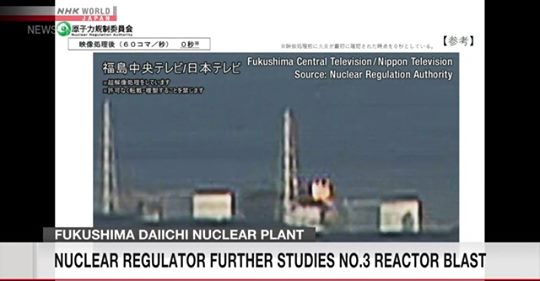
November 13, 2020
Japan’s nuclear regulator has maintained its view that multiple blasts occurred at the Fukushima Daiichi nuclear power plant’s No.3 reactor following the earthquake and tsunami in 2011.
The plant suffered meltdowns from the accident. Three reactor buildings were severely damaged by hydrogen explosions.
On Thursday, the Nuclear Regulation Authority along with experts analyzed images taken at the No.3 reactor.
Officials say the state of buckled beams on the third floor indicates an instantaneous wind pressure of up to 5 atmospheres. The officials say such force can damage concrete structures and collapse wooden buildings.
They also studied the only footage of the No.3 reactor in the explosion, which was captured by a TV station in Fukushima Prefecture.
The officials say an analysis of image processing shows the first blast damaged the fourth floor. They say an ensuing fire on the uppermost fifth floor caused the remaining hydrogen to explode, which caused black smoke to emerge.
The regulator resumed its probe into the cause of the accident last year. It plans to draw up a report as early as next month.
Cabinet minister rules out new nuclear reactors for 10 years
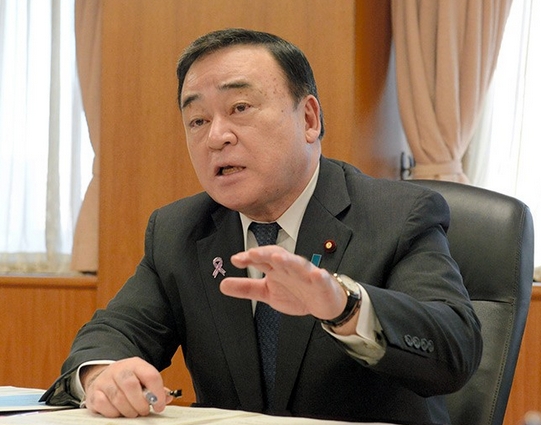
Industry minister Hiroshi Kajiyama during an interview with The Asahi Shimbun on Nov. 10
November 12, 2020
Industry minister Hiroshi Kajiyama is signaling that the government will not allow for the construction of new nuclear reactors to replace aging ones or to be installed additionally at nuclear plants for the next decade.
His position suggests the Ministry of Economy, Trade and Industry, which oversees the nuclear industry, is unlikely to discuss the option of building new reactors in the new Basic Energy Plan it has been developing.
The plan has been revised twice since the 2011 Fukushima nuclear disaster.
Heeding a national sentiment exceedingly anxious of nuclear energy, the government has passed up discussing building new reactors in past revisions of the plan.
In an interview with The Asahi Shimbun on Nov. 10, Kajiyama acknowledged it is still premature to discuss the issue now.
“Public faith has yet to be restored,” he said of public sentiment toward nuclear energy after the triple meltdown at the Fukushima plant. “How can we proceed (without it) in constructing new reactors to replace aging ones or to make additions? We are simply not at the stage where we can talk about the next move.”
Kajiyama said the government’s priority over the next 10 years will be regaining public faith in the nuclear industry, rather than pushing for the construction of new reactors.
But he defended nuclear energy as a “necessary energy” source that the country will still need to rely on.
He said the nation’s 36 nuclear reactors, including three that were under construction before the Fukushima accident occurred, “should be fully utilized.”
The minister said the number of nuclear reactors that will be reactivated over the coming decade will be a point that the government will take into account as an indication of the public’s acceptance of nuclear energy when it comes to mulling over constructing new reactors.
“It is also related to the government’s goal of achieving carbon neutrality in 2050,” he said.
His comments suggest the government may begin considering constructing new reactors if more local governments approve restarting nuclear plants that were idled after the Fukushima accident.
Currently, only one reactor at the Genkai nuclear plant in Saga Prefecture is operating in Japan after a reactor at the Oi nuclear plant in Fukui Prefecture was shut down for maintenance earlier this month.
Kajiyama underlined the need to develop small modular reactors, which are smaller than conventional reactors.
He said engaging in a modular reactor project would be meaningful when it comes to maintaining the nation’s technology for safeguarding nuclear power and nurturing scientists in the field–not to mention the potential for spinoffs.
“It could lead to the development of new materials and other technologies,” he said.
Last month, Prime Minster Yoshihide Suga laid out Japan’s plan to achieve net zero greenhouse gas emissions by 2050.
That may prompt a possible review of Japan’s current energy target for fiscal 2030, with nuclear power and renewables accounting for 20-22 percent and 22-24 percent of total power generation, respectively.
But Kajiyama said whether the 2030 target will be revised is up in the air, as more consultation with energy experts is needed.
The industry minister also doused hopes for the early introduction of carbon taxes and the emission trading system, both of which are initiatives aimed at spurring businesses to cut their carbon dioxide emissions.
“They may eventually be introduced but doing so in the early stages will prove extremely costly,” he said.
(This story was written by Hiroki Ito and Rintaro Sakurai.)
Radioactive Isotopes Measured at Olympic and Paralympic Venues in Fukushima Prefecture and Tokyo, Japan
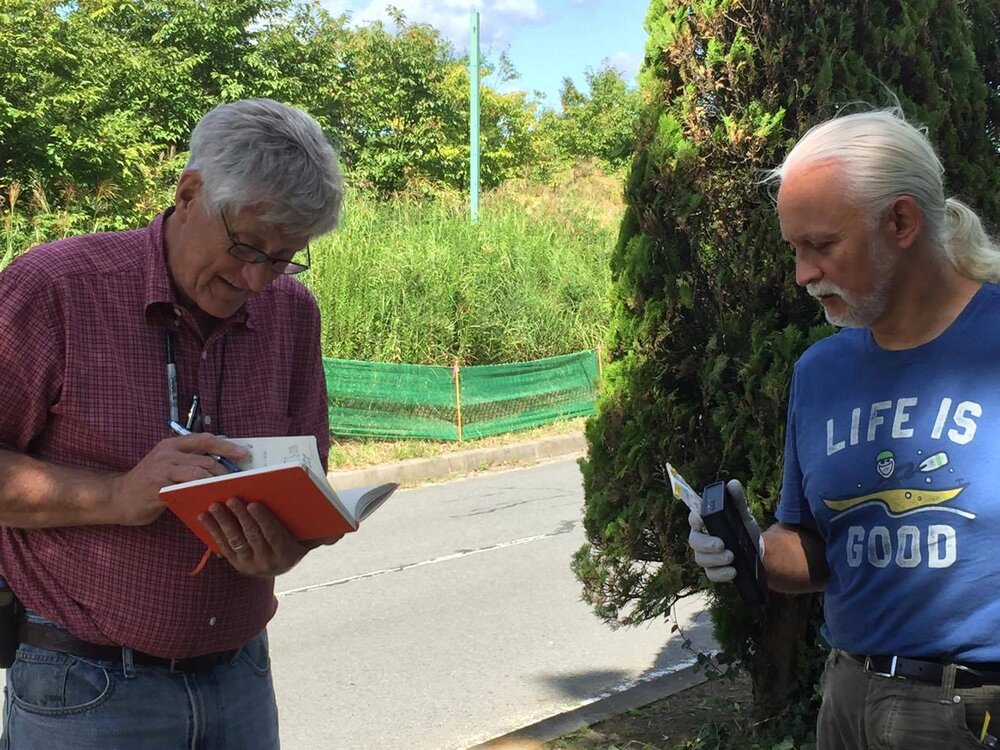
November 12, 2020
“This newly reviewed study of Radioactive Dusts and Dirt at Japanese Olympic sites and throughout Northern Japan by Fairewinds and Marco Kaltofen has four significant conclusions:
Different types of alpha and beta radioactive micro-particles were released at other times and landed in various locations throughout Japan. “The exclusive use of cesium-137 beta activity levels as a proxy for total internal and external exposure, therefore, introduces dose assessment errors.”
“Rooftops previously decontaminated in Minamisoma are recontaminated by airborne atmospheric dust containing radionuclides … from the Fukushima meltdowns. The data show a need for continuing reassessment and potentially, additional remedial work on many sites in Fukushima Prefecture.”
The greater Tokyo Olympic venues had activities similar to sample sites in the US. In contrast, Olympic sites in Northern Japan near Fukushima contained an average of about twice as much radioactivity as Tokyo, with Plutonium identified at the J-Village National Training Center.
Non-Olympic sites throughout Japan averaged 7.0 times greater beta activity than the Tokyo Olympic venues. These data show that remediation emphasized the Olympic venues over cleaning other contaminated parts of Japan.”
Miyagi’s Onagawa NPP reactor’s final approval to restart

Miyagi Gov. Yoshihiro Murai (center) hold talks Wednesday in the city of Ishinomaki, Miyagi Prefecture, with Yoshiaki Suda (left), mayor of the town of Onagawa in the prefecture and Hiroshi Kameyama, mayor of Ishinomaki
Tsunami-hit Onagawa reactor in northeast Japan gets final approval to restart
November 12, 2020
Sendai – A nuclear reactor in Miyagi Prefecture damaged by the Great East Japan Earthquake and tsunami disaster in 2011 has cleared the last hurdle to resume operations, getting the green light Wednesday from local officials.
The No. 2 unit of Tohoku Electric Power Co.’s Onagawa plant is the first of the reactors damaged in the disaster to win final approval with local consent to restart.
Miyagi Gov. Yoshihiro Murai and the mayors of Onagawa and Ishinomaki, the two municipalities that host the unit, gave their consent at a meeting after the plant cleared national safety screening in February.
“There is an excellent, stable supply of electricity in a nuclear plant, and the plant can also contribute to the local economy,” Murai said during a news conference after the meeting in Ishinomaki.
A Tohoku Electric official said the utility will “continue to do its best to ensure safety” in plant operations.
Tohoku Electric says it plans to restart the No. 2 reactor in fiscal 2022 at the earliest after work on safety and disaster prevention measures is completed, such as the construction of an 800-meter-long seawall at the plant.
The Onagawa plant is the closest nuclear plant to the epicenter of the magnitude-9.0 earthquake that struck nine years ago.
The central government has been pushing for the reactor to be reactivated so as to ensure a stable power supply, with trade minister Hiroshi Kajiyama seeking Murai’s consent in March.
In Tokyo, Chief Cabinet Secretary Katsunobu Kato said during a news conference that gaining local consent marks an “important” step.
The municipal assemblies for Onagawa and Ishinomaki had already given their consent, as had the prefectural assembly. On Monday, the leaders of most of Miyagi’s 35 municipalities agreed at a meeting to support the decisions of Onagawa and Ishinomaki.
Part of the reason for local approval is the money generated by hosting the reactor, with Onagawa having received from the central government around ¥27 billion ($256 million) in grants in the past, as well as hefty property taxes from Tohoku Electric.
Masanori Takahashi, chairman of the town’s chamber of commerce lobbying local leaders to support the restart, said, “We are getting closer to the end of disaster-linked infrastructure development projects,” adding it is now “absolutely necessary to restart the reactor to get the town’s economy going.”
Some local residents, however, believe the approval was rushed, saying concerns linger over whether evacuation plans can actually be implemented in the event of a nuclear accident.
The 825,000-kilowatt boiling water reactor won approval to restart from the Nuclear Regulation Authority earlier this year, becoming the second disaster-damaged reactor to pass stricter safety standards put in place after the Fukushima nuclear disaster.
A massive earthquake and subsequent tsunami hit northeastern Japan on March 11, 2011, triggering one of the worst nuclear disasters since the 1986 Chernobyl accident in Fukushima Prefecture, which is adjacent to Miyagi.
At one point, the disaster caused all of Japan’s 54 reactors to be brought to a halt. So far, nine units at five plants in the country have restarted following regulatory and local approval.
At the Onagawa complex, all three reactors — the same boiling water reactors as were used at the Fukushima No. 1 plant run by Tokyo Electric Power Company Holdings Inc. — shut down but the underground floors of the No. 2 unit were flooded, after the facility was hit by a tsunami of up to 13 meters.
In Onagawa, more than 800 people were listed as killed or missing.
As the plant’s emergency cooling system functioned normally, there was no meltdown of the type that occurred at three of the six reactors at the Fukushima No. 1 plant.
The utility has decided to decommission the reactor’s No. 1 unit, and is considering whether to request a review by the authority to restart the No. 3 unit.
Other boiling water reactors at sites including the Tokai No. 2 plant of Japan Atomic Power Co. in Ibaraki Prefecture have also won the regulator’s approval to resume operations, but have yet to obtain local consent.
https://www.japantimes.co.jp/news/2020/11/12/national/onagawa-reactor-restart/
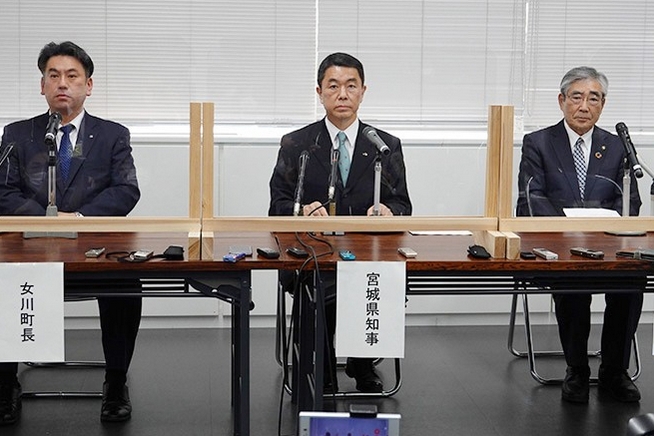
From left: Yoshiaki Suda, mayor of Onagawa, Miyagi Governor Yoshihiro Murai and Hiroshi Kameyama, mayor of Ishinomaki, hold a news conference in Ishinomaki, Miyagi Prefecture, on Nov. 11.
Approval given for 1st restart of nuclear plant damaged in 3/11
November 12, 2020
SENDAI, Miyagi Prefecture–Citing expected economic benefits, local governments approved the first restart of a nuclear power plant damaged in the 2011 Great East Japan Earthquake and tsunami.
Miyagi Governor Yoshihiro Murai on Nov. 11 said the decision on resuming operations of the No. 2 reactor at the Onagawa nuclear plant was “not an easy one.”
Required safety measures must still be completed at the plant, and questions remain about the evacuation route that will be used in the event of a disaster at the plant, which straddles the municipalities of Onagawa and Ishinomaki on the Pacific coast.
However, residents near the nuclear plant have requested a resumption of nuclear power operations to revive their depleted communities.
“We can expect many jobs to be created if the nuclear plant resumes operations,” Murai said. “Municipalities hosting the plant will also have increased tax revenues through the restart of the plant in terms of fixed property tax and nuclear fuel tax.”
His announcement followed a meeting with the mayors of Onagawa and Ishinomaki earlier in the day, in which the governor confirmed their approval of the planned restart.
Tohoku Electric Power Co., operator of the Onagawa plant, needed the consent from the host communities as well as Miyagi Prefecture although it is not a legal mandate.
The utility expects the reactor, with an output capacity of 825 megawatts, to be brought online as early as in 2023, when it plans to complete an array of projects designed to strengthen the safety of the plant.
“A critical decision was made as we are aiming at a restart,” the utility said in a statement about Murai’s announcement. “We are determined to strive in full force to enhance safety features of the facility.”
If restarted, the No. 2 unit will be the first boiling water reactor in Japan brought online since the 2011 nuclear disaster. The reactors at the Fukushima No. 1 nuclear plant, which suffered a triple meltdown after being swamped by the tsunami, are also boiling water types.
All reactors in Japan were shut down after the Fukushima nuclear disaster. Since then, nine reactors at five nuclear plants have resumed operations. They were all pressurized water reactors located in western Japan.
When the 13.0-meter tsunami hit the Onagawa plant after the Great East Japan Earthquake, the No. 2 reactor building was just high enough to escape the water.
Still, part of the equipment to cool the reactor failed, and more than 1,000 cracks were discovered in the reactor building.
The Onagawa plant has two other reactors. Tohoku Electric decided to retire the No. 1 reactor, but it is preparing to apply for a restart of the No. 3 reactor.
The utility compiled a set of safeguards for resuming operations of the No. 2 reactor, including construction of a 29-meter-high sea wall as protection against tsunami.
In February, the Nuclear Regulation Authority, the government nuclear watchdog, certified the No. 2 reactor as meeting the more stringent reactor regulations put in place after the Fukushima disaster.
The following month, industry minister Hiroshi Kajiyama urged Murai to agree to the restart of the Onagawa plant.
Japan had 54 nuclear reactors before the disaster struck in the Tohoku region.
Since the Fukushima accident, the number has fallen to 33, as other reactors were retired.
The central government needs to bring around 30 reactors online to achieve its target of nuclear energy representing 20 to 22 percent of the nation’s overall energy output in fiscal 2030.
The government hopes the restart of the Onagawa nuclear plant will prompt other municipalities that host boiling water reactors to accept a resumption of their operations.
(This story was written by Shinya Tokushima and Susumu Okamoto.)
Japan now has 16 reactors that meet requirements
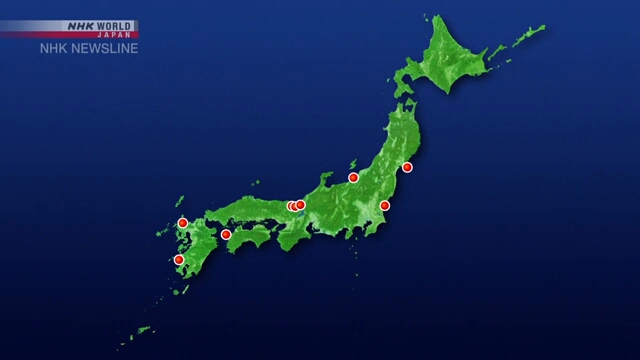
November 11, 2020
Japan now has 16 reactors at nine nuclear power plants that have cleared government requirements adopted after the 2011 Fukushima accident.
The No.2 reactor at Tohoku Electric Power Company’s Onagawa plant in Miyagi Prefecture, and the reactor at Japan Atomic Power Company’s Tokai No.2 plant in Ibaraki Prefecture were affected by the 2011 earthquake and tsunami. Tokai No.2 has yet to win local consent to restart.
Tohoku Electric’s Higashidori plant in Aomori Prefecture, also a part of the Fukushima disaster zone, is undergoing screening by the Nuclear Regulation Authority.
Reactors at Tokyo Electric Power Company’s Fukushima Daiichi and Daini nuclear plants are set to be scrapped.
Reactors that have already been put back online are: the No.1 and No.2 units at the Sendai plant in Kagoshima Prefecture; the No.3 and No.4 units at the Genkai plant in Saga Prefecture; the No.3 and No.4 units at the Takahama plant in Fukui Prefecture; the No.3 and No.4 units at the Ohi plant, also in Fukui Prefecture; and the No.3 unit at the Ikata plant in Ehime Prefecture.
The Sendai and Genkai plants are operated by Kyushu Electric Power Company, the Takahama and Ohi plants by Kansai Electric Power Company and the Ikata plant by Shikoku Electric Power Company.
Fukushima’s Radioactive Legacy with Shaun Burnie of Greenpeace
Shaun Burnie, of Greenpeace, discusses the Fukushima radioactive water problem and the impacts of the nuclear power industry on the environment and people. This video was organized in partnership with groups making up the Coalition for Nuclear Safety. Recorded on October 30, 2020
Disposal plan all at sea?
In late October pressure appeared to be mounting on the Japanese government to decide on a method of disposal for 1.2 million tonnes of radioactive wastewater from the former nuclear plant at Fukushima Daiichi
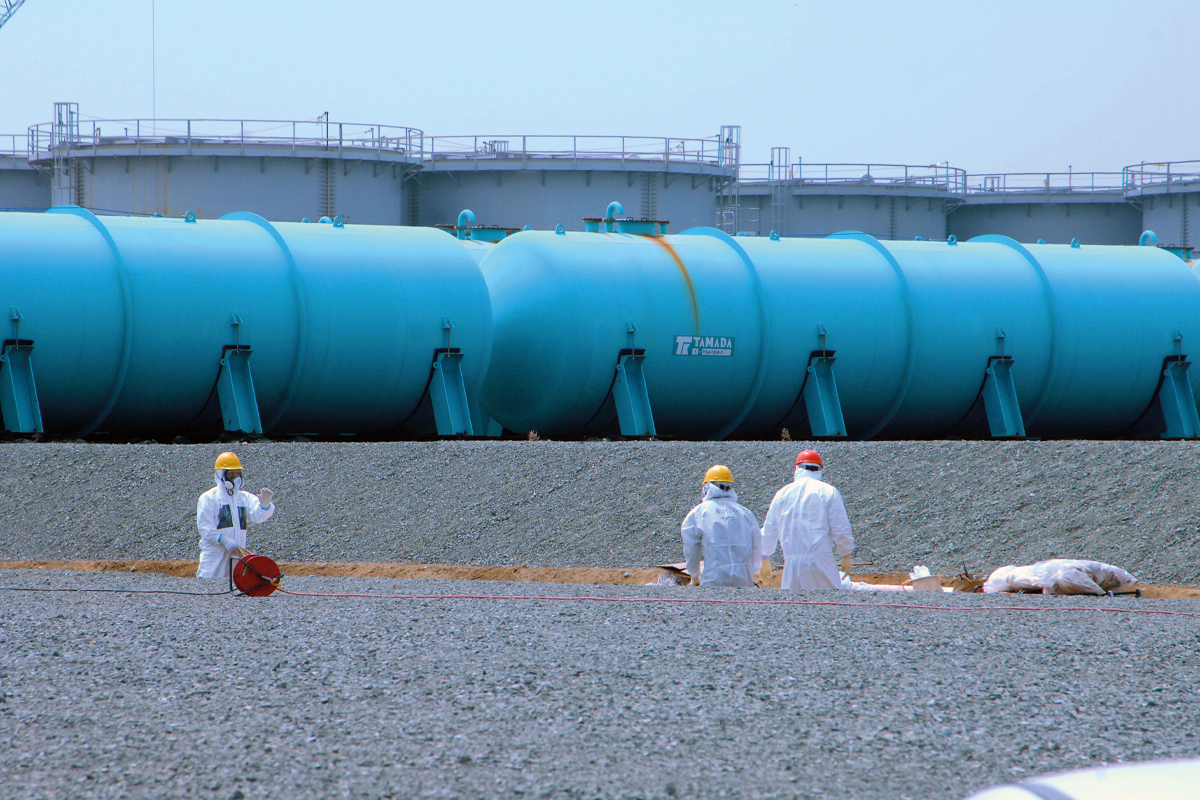
Workers at TEPCO’s Fukushima Daiichi Nuclear Power Station work near above-ground storage tanks in 2013
11 November, 2020
As rain and groundwater continue to pour into the site – at a rate of 180m3 per day in 2019 – the volume of contaminated water is expected to reach 1.37 million tonnes by the end of 2020. The water is being stored in around 1000 tanks on the site, with existing capacity likely to be surpassed by mid-2022, according to the International Atomic Energy Agency (IAEA).
In late October, the Japanese government were preparing to approve a plan to begin discharging the contaminated water into the sea, starting in 2022 and continuing for decades. Opposition has come from fishing and farming groups in the area, neighbouring countries, and environmental groups.
A purification system is treating the water, known as the Advanced Liquid Processing System (ALPS), and the filtering process therein is said to remove around 62 radioactive contaminants, according to an October report in NewScientist.
A report released by Greenpeace in October – Stemming the Tide 2020: The reality of the Fukushima radioactive water crisis – argues that the ALPS is flawed, and many of the dangers presented by this wastewater are being ignored. The firms operating the ALPS, Toshiba and Hitachi General Nuclear Electric (HGNE) came to the project with “practically no experience in water processing” said the report, and the ALPS’ poor performance is also likely related to a decision to exclude an alternative technology, an ion exchange system proposed by US firm Purolite, which in 2011 was seemingly shown capable of reducing concentrations of radionuclides to “non-detectable levels.”
As it stands, says the report, it looks like 72% of the water currently in storage tanks will have to be processed again – and questions remain as to how effective this will be.
The Japanese Government and Tokyo Electric Power Company (TEPCO), which runs the site, have said the main radionuclide remaining in the wastewater is tritium, an isotope of hydrogen. Filtering will remove some but not all of this, although scientists appeared to consider its risk to marine life and the environment as relatively minor, in comments made to NewScientist. However, Greenpeace said TEPCO “continues to misrepresent and selectively ignore basic science facts on radioactive tritium.”
Key among the objections made by Greenpeace to the Government’s plan is that the ALPS was not designed to remove carbon-14, a hazardous radionuclide whose presence in the wastewater was only acknowledged by TEPCO in late August. With its long half life of 5,730 years, its presence is a far greater concern. As the report says, “once introduced into the environment carbon-14 will be delivered to local, regional and global populations for many generations.” Ongoing storage carries the risk of tank leakage, especially in an area where earthquake risk is high.
Discharge to the sea is a routine method of disposal used by nuclear facilities worldwide, according to the IAEA. But if this approach is rejected, alternative disposal plans comprise evaporating the wastewater into the air, or expanding the existing storage capacity and continuing to store the water either on land or underground.
The latter option carries the risk of tank leakage, especially in an area where earthquake risk is high. But Greenpeace said “storage is a viable option”, citing a report from a government sub-committee that appeared to understand that additional storage beyond 2022 was feasible, but had seemingly decided against it as it would take “a substantial amount of coordination and time”. In any case, delaying the beginning of any program to discharge the water into the sea until around 2035 would only delay completion of the project by around three years, until 2055, while allowing much of the tritium’s radioactivity to diminish naturally.
Greepeace’s report said the subcommittee’s preference for discharge to sea “was clearly not based on science and engineering, but on the political interest of the Japanese government and the future viability of TEPCO.”
Miyagi officials to OK restart of quake-damaged nuclear plant
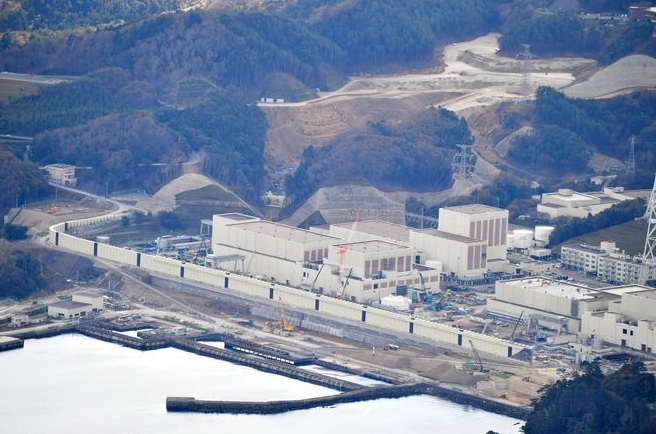
The Onagawa nuclear power plant operated by Tohoku Electric Power Co.
November 10, 2020
Local governments in Miyagi Prefecture neared approval for the planned restart of the No. 2 reactor at the Onagawa nuclear power plant that was damaged in the 2011 Great East Japan Earthquake and tsunami.
A meeting of all mayors in the prefecture was held on Nov. 9 to hear their views on resuming operations. Some mayors said it was still too early to bring the reactor online, but the general consensus was in favor of the plan of Tohoku Electric Power Co., the operator of the nuclear plant.
The meeting ended with approval to let Miyagi Governor Yoshihiro Murai and the mayors of Onagawa and Ishinomaki, where the nuclear plant is located, make the decision on behalf of all the mayors.
The three local leaders are expected to hold a meeting on Nov. 11 to approve the resumption of operations, sources said.
After gaining local government consent, Tohoku Electric Power will still have to complete various safety measures before the reactor can go back online, such as building a 29-meter-high seawall to protect the plant from tsunami. The reactor is now expected to be operating again in 2023.
It would be the first reactor to restart after being damaged by the 2011 natural disaster.
The Onagawa plant, located about 130 kilometers from the epicenter of the earthquake, recorded a seismic intensity of lower 6 on the Japanese scale of 7.
Part of the plant’s cooling system was damaged by flooding, but plant officials said they were able to safely stop reactor operations after the quake and tsunami.
The No. 2 unit at the Onagawa plant could also become the first boiling water reactor (BWR) to restart since the quake struck. It is similar in basic design to those at the Fukushima No. 1 nuclear plant that suffered meltdowns in the disaster. The Fukushima reactors have all been decommissioned.
Miyagi, Iwate and Fukushima were the three prefectures hardest hit by the quake and tsunami.
Local residents, fishermen and business people of Onagawa took the initiative to seek approval for resuming operations at the nuclear plant.
About 800 town residents were killed in the 2011 disaster, and Onagawa’s population has decreased from about 10,000 to about 6,000.
Half of the 600 or so companies in the town closed for good. The Onagawa chamber of commerce, which includes businesses that sell supplies to the nuclear plant, submitted a request to the town assembly in February, asking that plant operations be resumed.
In May, the Onagawa branch of the Miyagi prefectural fisheries cooperative made a similar request.
Local fishermen whose homes and boats were damaged received financial support from the town government. They also benefited from outlays in an insurance program that received subsidies from the town government from fiscal 2011 to cover premiums that the fishermen could not afford to pay.
The Onagawa government could provide such support because of the local property and other taxes it receives from the nuclear plant.
The Onagawa town’s fiscal adjustment fund that is the equivalent to the savings it possesses reached 9.4 billion yen ($89.5 million) before the 2011 natural disaster. That figure is about half the amount in the fund for Sendai, the prefectural capital, which has about 100 times the population of Onagawa.
The Miyagi prefectural government has also received about 10 billion yen in tax grants in connection to the nuclear plants in the prefecture.
(This article was written by Shinya Tokushima and Susumu Okamoto.)
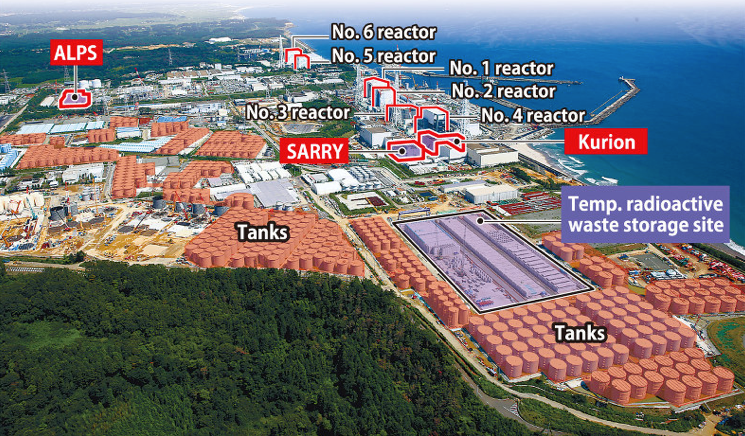
TEPCO claims it is running out of space to store radioactive water and simply must discharge it into the Pacific
November 10, 2020
Dilution is not the solution to pollution! Last month, thanks to local fishermen, citizen concern, and international outrage, Japan delayed plan to dump radioactively contaminated water from Fukushima Daiichi.
TEPCO claims it is running out of space to store radioactive water and simply must discharge it into the Pacific. But land [see picture] immediately adjacent to their property is EMPTY and too radioactive to be sold. Why not build more tanks there?
Source: Fairewinds Energy Education
1 This Month

Tell Congress: Prevent Nuclear Catastrophe in Iran

Tell Congress: Prevent Nuclear Catastrophe in Iran

Read the Public Inquiry Report, the Commissioners’ report, Surrendering Australia: The AUKUS Deception is available to download for free at aukuspublicinquiry.com. Or just watch the replay of the National Press Club Luncheon.


Shut down the radiation-damaged Heysham nuclear reactors now
To see nuclear-related stories in greater depth and intensity – go to https://nuclearinformation.wordpress.com

Say No to NASA’s Reckless Nuclear Reactor on the Moon
Say No to NASA’s Reckless Nuclear Reactor on the Moon
-
Archives
- November 2026 (269)
- October 2026 (302)
- September 2026 (339)
- August 2026 (330)
- July 2026 (355)
- June 2026 (287)
- May 2026 (306)
- April 2026 (356)
- March 2026 (251)
- February 2026 (267)
- January 2026 (308)
- December 2025 (358)
-
Categories
- 1
- 1 NUCLEAR ISSUES
- business and costs
- climate change
- culture and arts
- ENERGY
- environment
- health
- history
- indigenous issues
- Legal
- marketing of nuclear
- media
- opposition to nuclear
- PERSONAL STORIES
- politics
- politics international
- Religion and ethics
- safety
- secrets,lies and civil liberties
- spinbuster
- technology
- Uranium
- wastes
- weapons and war
- Women
- 2 WORLD
- ACTION
- AFRICA
- Atrocities
- AUSTRALIA
- Christina's notes
- Christina's themes
- culture and arts
- Events
- Fuk 2022
- Fuk 2023
- Fukushima 2017
- Fukushima 2018
- fukushima 2019
- Fukushima 2020
- Fukushima 2021
- general
- global warming
- Humour (God we need it)
- Nuclear
- RARE EARTHS
- Reference
- resources – print
- Resources -audiovicual
- Weekly Newsletter
- World
- World Nuclear
- YouTube
-
RSS
Entries RSS
Comments RSS

