Bangladesh draws up a nuclear disaster response plan
The National Nuclear and Radioactive Emergency Preparedness and Response Plan was approved at a virtual cabinet meeting chaired by Prime Minister Sheikh Hasina on Monday.
The guideline was authorised to put safety measures in place for the Rooppur nuclear power plant, Cabinet Secretary Khandker Anwarul Islam said during a press briefing at the Secretariat.
“The International Atomic Energy Commission stipulates the availability of safety guidelines and response plans for such power plants, or else they will not allow us to run it. We have drafted it following the guideline structure from IAEA,” he said.
“The Ministry of Disaster Management and Relief plays the key role in all sorts of disaster management in the country. The National Nuclear and Radioactive Emergency Preparedness and Response Plan was created in keeping with Bangladesh’s disaster management and such other plans.
The cabinet secretary pointed out that authorities actually have little idea about dealing with nuclear power mishaps and emergency responses and the guideline would provide a way forward if such situations occur. …….
https://bdnews24.com/bangladesh/2020/11/16/bangladesh-approves-nuclear-disaster-response-plan
Ohio Attorney General Dave Yost has filed a second lawsuit to stop bailout of nuclear reactors
 Ohio Attorney General Sues To Stop New Charges For Nuclear Bailout https://radio.wosu.org/post/ohio-attorney-general-sues-stop-new-charges-nuclear-bailout#stream/0 By KAREN KASLER 16 Nov 20, •There are only a few weeks until Ohio’s controversial nuclear bailout law is set to add new charges to residents’ electric bills. With no repeal yet of HB6, Ohio Attorney General Dave Yost has filed a second lawsuit seeking to stop those rate increases. Yost’s suit seeks to immediately stop the collection of $2.35 in monthly charges on all Ohio electric bills. Those charges would start January 1 and total $150 million a year statewide – with the money bound for Ohio’s two nuclear power plants, as well as coal and solar subsidies. A lawsuit Yost filed in September sought to stop the money from going to Energy Harbor, the former FirstEnergy subsidiary that now owns the nuclear plants. However, even if the suit were successful, it would not prevent the charges from being collected in the first place. FirstEnergy said at the time it would “vigorously” defend itself and that the case had no merit. The cities of Columbus and Cincinnati have filed a civil lawsuit to halt the bailout fee and strike down HB6, claiming that the law is an unconstitutional lending of state credit to a private enterprise. There are currently four bills under consideration at the Ohio Statehouse that would repeal HB6. Three would seek a full repeal, while the fourth would eliminate the ratepayer subsidies but retain the law’s cuts to renewable energy standards and elimination of energy efficiency standards. Federal investigators say HB6 became law as part of a $61 million bribery scheme involving Republican former House Speaker Larry Householder, four associates, the dark money group Generation Now, and a utility believed to be FirstEnergy. Two people have so far pleaded guilty to the racketeering charges. While FirstEnergy is not charged yet in the federal case and has defended itself against any allegations of misconduct, several executives – including CEO Chuck Jones – have been fired for violating company policy. |
|
Nuclear disaster: Fukushima schools frozen in time
Nuclear disaster: Fukushima schools frozen in time https://www3.nhk.or.jp/nhkworld/en/news/backstories/1365/
|
Sakurayama Kyoko, NHK World Correspondent 16 Nov 20, At an elementary school in Futaba Town, Fukushima Prefecture, children’s bags and notebooks still lie scattered where they were left after the meltdown at the Fukushima Daiichi nuclear power plant in 2011. The evacuation order for part of the town was lifted in March this year, but no one has returned to live there.
Nishizaki Ryusuke, 21 and a former student at the Futaba Minami Elementary School, visited it last month for the first time since the accident. It is located just three kilometers from the nuclear plant. The sight of everything frozen in time brought back vivid memories. Ties severedNishizaki, then a fifth-grader, was in his homeroom when the earthquake that precipitated the crisis struck. He fled with only the clothes he was wearing. Since that day, he has been living as an evacuee, moving with his family from one place to another within Fukushima Prefecture and in neighboring Niigata. His ties with his home and neighbors have been severed. “ I had no doubt that I would spend my life in the town,” says Nishizaki. “But the earthquake and the nuclear accident changed everything all of a sudden.” Ties severedNishizaki, then a fifth-grader, was in his homeroom when the earthquake that precipitated the crisis struck. He fled with only the clothes he was wearing. Since that day, he has been living as an evacuee, moving with his family from one place to another within Fukushima Prefecture and in neighboring Niigata. His ties with his home and neighbors have been severed. “ I had no doubt that I would spend my life in the town,” says Nishizaki. “But the earthquake and the nuclear accident changed everything all of a sudden.” The town projected that renovating them would cost 900 million yen, or about 8.6 million dollars, per school. In addition, it would require an estimated 10 million yen, or about 95,000 dollars, a year in maintenance costs. Yoshida Katsunori, an official at Namie’s education board, says: “It’s extremely important to pursue the ideal of preserving school buildings. But, financially speaking, it might not be realistic.” Fukaya Naohiro, a Visiting Associate Professor at the Fukushima Future Center For Regional Revitalization, says all efforts should be made to preserve buildings that can serve as reminders of the accident and help us prepare for future disasters. “When it came to preserving the Atomic Bomb Dome in Hiroshima, it wasn’t just local residents, but people across Japan, who took part in the debate,” says Fukaya. “Each and every one of us should think about what to do with the Fukushima buildings.” Concrete remindersNishizaki says that there are some things that people can understand only when they visit the site and see it for themselves: “We want people to know that children who had been at the schools at the time of the accident couldn’t go back for nine and a half years.” At the time of writing, just one building in Fukushima Prefecture has been listed to be preserved as a memorial for future generations. |
|
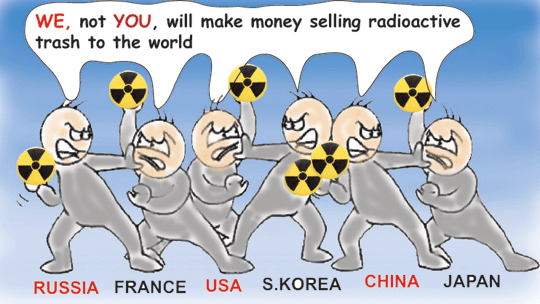
USA looks to get $18billion now, maybe $40billion later, in flogging off nuclear reactors to Poland
|
U.S. sees $18 billion from purchases in nuclear power agreement with Poland, By Timothy Gardner, WASHINGTON (Reuters) 16 Nov 20, – The United States and Poland have struck a nuclear power agreement in which Poland will likely buy $18 billion in nuclear technology from U.S. companies, the U.S. energy department said on Monday.
The United States has been competing with China and Russia and other countries to supply nuclear power technology to countries hoping to build their first reactors, or boost their programs. “We are hopeful that the ultimate decisions that are made by Poland … over a period of time will result in them choosing U.S. technology,” U.S. Energy Secretary Dan Brouillette told reporters in a teleconference. …… Over the next 18 months, the United States and Poland will work on an a report for the program that seeks to build six reactors, as well as potential financing arrangements, the department said. The first reactors are planned to be in operation by 2033 in a program that will potentially be worth $40 billion, a senior U.S. energy department official said. Poland would buy at least $18 billion from U.S. companies, the official said. Westinghouse, owned by Brookfield Asset Management BAMa.TO, Bechtel and Southern Co SO.N and the U.S. government, will participate in a first step in the agreement, an engineering study for planned plants, the official said. This month the United States and Romania came to an initial $8 billion agreement on the construction of two reactors on the river Danube. Romanian state-owned nuclear power producer Nuclearelectrica ROSNN.BX ended talks with China General Nuclear (CGN) about the construction of the reactors after they had dragged on for six years. Reporting by Timothy Gardner; Editing by Nick Zieminski and Marguerita Choy https://www.reuters.com/article/us-usa-nuclearpower-poland-idUSKBN274239 |
|
Solar energy is bullish in the market; the same can’t be said for nuclear
……..Solar rising, By Alex Kimani for Oilprice.com 16 Nov 20,
Whereas the nuclear sector comeback has its work cut out for it, solar power has clearly been on the ascendancy thanks in large part to falling costs.
Nuclear advocates have pointed to rising electricity costs in California as the reason why other states should think twice before adopting its model. Environmental Progress has reported that between 2011 and 2018, power costs in the Golden State increased by 27.9% compared to a 4% national average. This period coincided with a period when California has been aggressively ramping up its renewable generation capacity. Renewable sources currently account for ~30% of California’s electricity generation with an aim to double that by 2030 and hit 100% by 2045.
But that’s being a bit disingenuous because it fails to capture just how much solar costs have fallen over the timeframe.
According to the Solar Energy Industries Association (SEIA), solar installation costs have dropped by more than 70% over the past decade, opening up vast new markets and systems nationwide. The organization says prices as of Q2 2020 dropped to their lowest levels in history across all market segments, with utility-scale prices ranging from $16/MWh – $35/MWh, thus making it competitive with all other forms of generation. Meanwhile, costs for the average-sized residential system were cut in half from a pre-incentive price of $40,000 in 2010 to roughly $20,000 today.
And no, renewables are not to blame for California’s blackouts.
Higher Soft Costs Remain
A common complaint is that solar power is only becoming cheaper for utilities but not for residential applications.
That’s partly true but not entirely so because residential costs have actually been falling but at a slower clip than their bigger brethren.
According to SEIA, residential PV pricing fell only 20% between 2014-2020 to $2.84/Watt mainly due to soft costs, including labor, overhead costs, supply chain, customer acquisition, and permitting/inspection/interconnection costs remaining high. Further, inconsistent permitting practices and building codes and permitting practices across jurisdictions have led to some regions not being able to enjoy the full benefits of falling hardware costs.
Strongly Bullish
Despite these challenges, the solar sector remains strongly bullish.
Indeed, S&P Platts says that the shift to renewable energy is likely to continue full steam ahead regardless of fed policies noting that the energy transition has “clearly been moving forward on a regional basis,” despite lacking clear endorsement at the federal level under Trump.
It remains to be seen whether nuclear energy can command the same level of support.
With Joe Biden in Charge, No More Flashy Kim Jong Un Summits
The core problem for Mr. Biden will be moving the needle on a thorny foreign policy challenge that has stumped multiple American administrations—including President Obama for eight years and President Trump, who met North Korean leader Kim Jong Un three times.
Pyongyang… .. (subscribers only) https://www.wsj.com/articles/with-kim-jong-uns-larger-nuclear-arsenal-biden-to-take-a-traditional-approach-11605456000
The Irish sea – plagued by dumped munitions and radioactive trash
Belfast Telegraph 13th Nov 2020, A report highlighting the dangers of underwater explosions and radioactive
waste has cast doubt on the viability of any Irish Sea bridge. The UK and Ireland Nuclear Free Local Authorities (NFLA) study focused on Beaufort’s Dyke, one of the deepest sections of water in Europe and a training sitefor nuclear submarines. Munitions from both world wars and radioactive waste, when it was permitted in Europe, are known to have been dumped in the stretch of sea.
Nuclear news – week to 16 November
As in last week. the media continues to be preoccupied with the American presidential situation, and after all, that IS pretty important. The really big global stories are the global coronavirus and climate change.
Still, nuclear issues continue – simmering tensions in nuclear weapons states, and the remarkably co-ordinated promotion of Small Nuclear Reactors to governments around the world, in both rich and developing countries. The nuclear-news.net site will now have to stick to just NUCLEAR news.
Some bits of good news – Vaccine Alliance Raises $2 Billion to Buy COVID Shots for Poor Nations. Renewable Energy Defies COVID-19 Downturn To Hit Record Growth in 2020.
Hibakusha renew their push for the abolition of nuclear weapons.
Julian Assange ‘targeted as a political opponent of Trump administration and threatened with the death penalty’.
Topics in today’s “Nuclear” headlines on Google News.
JAPAN. TEPCO claims it is running out of space to store radioactive water and simply must discharge it into the Pacific. Over one million tons of radioactive water will be discharged into the sea from the Fukushima nuclear power plant. Disposal plan all at sea? apan’s nuclear regulator maintains view on Fukushima reactor 3 blasts. Radioactive Isotopes Measured at Olympic and Paralympic Venues in Fukushima Prefecture and Tokyo, Japan.
Governor of Miyagi Prefecture approves plan to restart Onagawa nuclear reactor. Japanese govt rules out new nuclear reactors for 10 years.
USA.
- Biden and Harris include fantasy of ”small nuclear reactors” in an otherwise progressive climate policy. Harris and Biden – what are their views on nuclear power? Joe Biden’s Transition Announcements largely skirt nuclear power, waste issues. Predicting Biden’s attitude and actions on the big nuclear weapons issues.
- The nuclear perils of Trump’s last days. We should require a second voice when it comes to ordering first use of nuclear arms.
- American universities in the US nuclear weapons complex. Kings Bay Plowshares peace activists get lighter sentences than expected. The human impact of ”Trinity” and a thousand other nuuclear bomb tests on American soil. Project Pluto – The USA devised an apocalyptic nuclear weapon – the Supersonic Low Altitude Missile or SLAM.
- U.S. nuclear security administrator resigns – lost the confidence of Donald Trump?
- Ohio Attorney General takes legal action to stop nuclear bailout. –Federal utility fined $900K for nuclear violations, coverup.
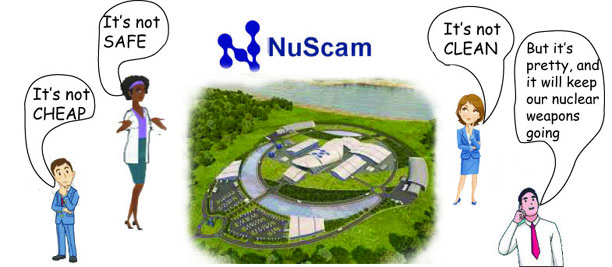
- In New Jersey, ratepayers form Association to stop the bailing out of nuclear power. Quite a lot of hurdles for NuScam’s Utah project, and only 27 of UAMPS members signed up.
- Long-delayed remediation of a nuclear waste site near Pittsburgh.
UK.
- Rolls Royce and Exelon get together to market ‘small’ nuclear reactors. Small nuclear reactor plan by Rolls Royce consortium – not likely to be economically feasible. Relentless lobbying by Small Nuclear Reactor companies still doesn’t make them economic or safe.
- Suffolk County Council raised over 50 concerns about the Sizewell nuclear project, but UK govt going ahead anyway? UK’s Royal Society for the Protection of Birds condemns the Sizewell nuclear project. Guardians of UK’s precious habitat in Suffolk are fearful of government decision on Sizewell nuclear plan.
- Consortium wants to take over Wylfa nuclear power project – includes Bechtel, Southern Comapny and Westinghouse.
- China’s ambition to build Bradwell nuclear plant in Essex will likely fail on national security grounds.
- Hunterston nuclear reactor allowed to restart, despite increasing cracks in the graphite core.
- Dismantling of Trawsfynydd nuclear power plant held back due to coronavirus outbreak.
MIDDLE EAST. Financial problems, proliferation concerns put the brakes on nuclear development in the Middle East.
EUROPE. U.S and Russia battling it out to market new nuclear reactors to Eastern Europe countries.
Source: UxC Research. New European Court of Auditors report has concerns about the EU’s nuclear fusion project.
BELARUS. Belarus shuts down its newly inaugurated nuclear power plant to replace equipment.
IRAN. Iran’s president calls on Biden to return to nuclear deal. Iran moderates hail Biden win, but any nuclear talks expected to be fraught.
SOUTH AFRICA. NuScam pushing to sell its ”small” nuclear reactors to South Africa.
INDIA. Nuclear lobby gets its tentacles into education in India
RUSSIA. Putin and officials discuss huge new underground bunker almost completed. Russia shuts down West Russian nuclear reactor.
CANADA. Canada’s Greens call on federal government to abandon nuclear and invest in renewables.
AUSTRALIA. Senate dumps on the Australian government’s radioactive waste plan.
Topics in today’s “Nuclear” headlines on Google News
There were 81 headlines about nuclear issues (plus a few about other topics, but using the word ”nuclear in the articles’ heading). 
The majority (38) of the 55 articles about “peaceful ” nuclear reactors, were supporting nuclear power. The top topics by far were favouring the development of nuclear reactors, and – (surprise surprise) of Small Nuclear Reactors. The top reason given – that nuclear power is essential to combat climate change. In not one of the articles was that assumption challenged or questioned in any way. Lesser arguments – nuclear power for space exploration, some comforting stories about solving the wastes, fusion, hydrogen, and safety.
There were 9 ‘neutral’articles , mainly on developing nuclear power, with some on Fukshima and wastes, carefully factual only.
8 articles basically opposed nuclear power, mainly against the development of Small Nuclear Reactors, a couple discussed safety and radiation hazards.
26 articles concerned nuclear weapons, mostly dealing with policies. These are generally written in an informative and neutral style. There was only one that seemed in favour of weapons, strongly opposing the UN Nuclear Ban Treaty. Despite that general neutral style, there is often a subtle undertone that the weapons of Western countries are OK, but those of Russia, China, North Korea are not acceptable.
In the 10 articles deploring nuclear weapons, there was much feeling, individual stories, and a consideration of the human consequences for weapons workers, ”downwinders”, and victims of nuclear bombing.
Relentless lobbying by Small Nuclear Reactor companies still doesn’t make them economic or safe

Telegraph 14th Nov 2020 ”………Rolls-Royce, via a relentless lobbying campaign over the past few years, seems to have convinced the  Government that its “mini-nukes” project is a runner. It claims billions are needed from taxpayers to underpin investment in a new production line that will reduce the costs and risks compared with bespoke new reactors such as the £22bn monster at Hinkley Point C.
There are plenty of reasons to be sceptical that even with its nuclear submarine experience, Rolls and its partners can pull it off. The technology is unproven anywhere and – as anti-nuclear campaigners argue – more reactors inevitably mean more potential points of failure. Nuclear power has a poor record of delivering its budgets too…….”
American universities in the US nuclear weapons complex

US universities should reject, not invest in, nuclear weapons Schools of mass destruction https://beyondnuclearinternational.org/2020/11/15/schools-of-mass-destruction/
American universities in the US nuclear weapons complex
An ICAN report
Universities across the United States are identified in this report for activities ranging from directly managing laboratories that design nuclear weapons to recruiting and training the next generation of nuclear weapons scientists. Much of universities’ nuclear weapons work is kept secret from students and faculty by classified research policies and undisclosed contracts with the Defense Department and the Energy Department. The following is the executive summary from ICAN’s report: Schools of Mass Destruction, with some changes made for timeliness. Posted on November 15, 2020 by beyondnuclearinternational
Over the next ten years, the Congressional Budget Office estimates U.S. taxpayers will pay nearly $500 billion to maintain and modernize their country’s nuclear weapons arsenal, or almost $100,000 per minute. A separate estimate brings the total over the next 30 years to an estimated $1.7 trillion. In a July 2019 report, National Nuclear Security Administrator Lisa Gordon-Haggerty wrote, “The nuclear security enterprise is at its busiest since the demands of the Cold War era.”
In addition to large amounts of funding, enacting these upgrades requires significant amounts of scientific, technical and human capital. To a large extent, the U.S. government and its contractors have turned to the nation’s universities to provide this capital.
At the same time, the United States is shirking its previous commitments to nuclear arms control and reducing nuclear risks despite its obligation under Article VI of the Nuclear Non-Proliferation Treaty to pursue good-faith measures towards nuclear disarmament.
In August 2019, the United States officially withdrew from the landmark 1987 Intermediate-Range Nuclear Forces Treaty, testing a treaty-prohibited missile shortly thereafter. The Trump Administration’s 2018 Nuclear Posture Review expanded the circumstances under which the United States would consider the first use of nuclear weapons and called for the development of two new sea-based low-yield nuclear weapon systems.
Internationally, many member states of the United Nations have recognized the devastating humanitarian and environmental impacts of nuclear weapons: debating, adopting, signing and now ratifying the 2017 Treaty on the Prohibition of Nuclear Weapons.
Despite these debates, U.S. universities have continued to build connections to the U.S. nuclear weapons complex. Although students and faculty have opposed university participation in nuclear weapons research and development at various points in the last 70 years, such participation continues.
Universities involve themselves in the nuclear weapons complex through the four channels listed below. In return for this engagement, universities receive funding, access to research facilities, and specific career opportunities for students.
1) Direct Management
A handful of universities directly manage nuclear weapons related activities on behalf of the federal government, retaining contracts worth billions of dollars per year collectively. These include the University of California, Texas A&M University, Johns Hopkins University, the Massachusetts Institute of Technology, and the University of Rochester.
2) Institutional Partnerships
Many of the National Nuclear Security Administration’s (NNSA) sites advertise collaborative agreements with local and national universities. These formal agreements allow the institutions to cooperate on research and share personnel and expertise. They can also provide university researchers access to funding and advanced facilities in the NNSA laboratories. The report highlights more than 30 such agreements with schools in 18 states.
3) Research Programs and Partnerships
In addition to formal institutional partnerships, numerous connections exist between universities and the nuclear weapons complex at the research project level. In a report delivered to Congress in July 2019, the NNSA highlights that more than $65 million in grants were delivered to academic institutions in the last year to support stockpile stewardship. When including grants and subcontracts from the NNSA labs as well, the total amount of funding to universities for research may be higher than $150 million per year.
4) Workforce Development Programs
Former Department of Energy Secretary Rick Perry has written that finding “the next generation workforce of world-class scientists, engineers and technicians is a major priority.” Through university partnerships, vocational training programs and research fellowships, the NNSA creates employment pipelines for the development of its future workforce.
A primary goal of this report is to facilitate a shared understanding of university connections to nuclear weapons research and development. A common factual basis will help communities of university faculty, students and administrations engage in robust internal debates and take action. Universities would not willingly participate today in the production of chemical and biological weapons; for the same humanitarian reasons, no university should seek an association with the other category of weapons of mass destruction: nuclear weapons.
While American universities have played a key role in the development and continuation of nuclear weapons, they can now join U.S. cities and states that have rejected U.S. nuclear weapons and called on the federal government to support nuclear reductions and the Treaty on the Prohibition of Nuclear Weapons. In light of the research presented, this report offers the following recommendations to universities:
Recommendations
• Provide greater transparency into connections with the nuclear weapons complex;
• Stop directly managing nuclear weapons production sites and dissolve research contracts solely related to nuclear weapons production;
• For contracts with dual-purpose research applications, demand greater transparency and create specific processes for ethical review of this research;
• Advocate for reinvestment of weapons activities funding to non-proliferation and environmental remediation efforts; and
• Join cities and state legislatures in urging the federal government to support the 2017 Treaty on the Prohibition of Nuclear Weapons and reverse course on nuclear arms control backsliding.
See the full list of universities.
The above is the Executive Summary of ICAN’s report on US Universities. Read the full report. Beyond Nuclear is a member of ICAN.


The human impact of ”Trinity” and a thousand other nuuclear bomb tests on American soil

|
75 Years Later, Victims of Nuclear Bomb Tests on U.S. Soil Still Seek Justice, https://truthout.org/articles/75-years-later-victims-of-nuclear-bomb-tests-on-u-s-soil-still-seek-justice/, BY Satya Vatti, Globetrotter / Independent Media Institute, November 15, 2020 They thought the world was coming to an end,” Genoveva Peralta Purcella explains.
On July 16, 1945, the first-ever nuclear bomb was tested in New Mexico, in the Southwestern United States. The detonation was code-named “Trinity.” It is the day that would seal the fate of many Americans living in the surrounding areas for generations to come. Seventy miles from what became known as ground zero—the Trinity test site—Genoveva’s family lived on a ranch just outside the village of Capitan in New Mexico. Genoveva was born the year after the blast. Now 74 years old, she solemnly recalls how her family remembers the day that would change their lives forever. Genoveva’s sisters had come to visit their father and pregnant mother at the ranch. At precisely 5:30 a.m., as dawn broke, the sky suddenly went pitch dark. Having no other point of reference, they mistook the abnormally loud roaring and rumbling in the sky for thunder. The entire house began to shake. Fear-stricken, the family huddled together in a corner. When the sky cleared, her father stepped outside the house and found himself being showered with a white powder. The powder was everywhere and covered everything around them. Nothing escaped it, not the cows the family had raised, or the vegetables in the garden, or the rainwater they stored in the absence of running water. Like other families who went through this experience, Genoveva’s family also dusted off the powder and consumed their vegetables and the stored water. The blast produced so much energy that it incinerated everything it touched and formed a fireball that rose to more than 12 kilometers into the atmosphere. The fireball created ash that snowed over the communities surrounding the blast site. The people did not know it then, but this ash that covered thousands of square miles was the radioactive fallout from the explosion. Dread gripped the communities in Tularosa Basin who either witnessed or experienced the phenomenon they could not make sense of. Meanwhile, the immediate reaction of the staff of the Manhattan Project, which created the bomb, was of “surprise, joy, and relief.” Paul Pino, Genoveva’s cousin, who was born nine years after the Trinity blast, says that his family, which lived 33 miles from the blast site, was one of many who were unaware of what had transpired on that day. In the days and months leading up to the blast, U.S. government officials did not notify anyone who lived in the region about the imminent nuclear bomb test. Nobody in the Tularosa Basin was evacuated to safety. In the aftermath of the nuclear test, officials began to cement a false narrative into the consciousness of the nation; the region was remote and uninhabited. Tens of thousands of people, in fact, lived in the Tularosa Basin in 1945. For a long time, the people of the basin believed that the blast was an ammunition explosion. “We were lied to by the government,” said Pino. It takes 24,000 years for half of the radioactive plutonium used in the Trinity bomb to decay. The people of the region have inhaled and ingested radioactive particles for 75 years because of environmental contamination. Those in power refuse to accept responsibility and take any corrective action. To this day, there have been no cleanup efforts. Radiation exposure has caused high rates of aggressive cancers, thyroid disease, infant mortality, and other health abnormalities in generations of families in the Tularosa Basin region. The scale of the health impact cannot be determined accurately as long-term epidemiological studies have only been undertaken recently. The findings of the latest research studies by the National Cancer Institute were published in September 2020 in the journal Health Physics. “There were 10 of us; now only one is surviving,” Genoveva says, speaking of herself. She has lost everyone in her family to cancer. In a country without universal health care, debt from medical expenses has brought economic ruin to the communities near the Trinity site. “All the pain and suffering we have had to endure, and not a speck of help from the government,” Pino says. “Meanwhile, it has spent trillions on thousands of nuclear weapons.” Genoveva’s story is not an exceptional one. It is the story of tens of thousands of families in the United States. More than 1,000 nuclear bomb tests have been conducted in the U.S. between 1945 and 1992. A total of 100 above-ground tests were conducted at the Nevada test site from 1951 to 1962. The winds carried radioactive fallout for thousands of kilometers. Hundreds of millions of people living in the U.S. have been exposed to varying levels of radiation over the years, unknown to them. New Mexico was downwind of the Nevada test site, and the people living there continued to be exposed to radioactivity for decades after the initial exposure during the Trinity nuclear test. People from the impacted communities founded the Tularosa Basin Downwinders Consortium in 2005 to fight for justice for the survivors and their descendants. Tina Cordova, one of the group’s cofounders, was shocked to find out that a few of the impacted states neighboring New Mexico were receiving financial compensation under the Radiation Exposure Compensation Act since 1990. The communities in New Mexico, however, were left out of the act. When asked why, Cordova responds with, “It is the billion-dollar question. I think we are being left out because we are mainly Mexican Hispanics, Natives, and Latinos. We are minorities and we are poor.” Cordova herself is the fourth generation in her family to have cancer. She has joined with others like her to educate and organize the affected communities, to fight to establish the truth. “In their [the government’s] rush to bomb Japan, we were sacrificed in the process. We were enlisted in the service of our country, unknowing, unwilling, and remain uncompensated.” |
|
The nuclear perils of Trump’s last days
“The air tonight is as heavy as the sum of human sorrows.”-Albert Camus, Caligula
It is no longer just hyperbole. Still armed with nuclear weapons, a conspicuously deranged American president may be willing to do anything to cling to power. And if that willingness should appear futile, Donald J. Trump could conceivably prefer apocalypse to “surrender.”[1]
Credo quia absurdum, said the ancient philosophers. “I believe because it is absurd.” In these presumptively final days of the Trump presidency, an impaired or irrational nuclear command decision remains possible. Though nothing can be determined about the true mathematical probability of any such once unimaginable scenario,[2] there are increasingly compelling reasons for concern. One of these reasons is Mr. Trump’s bizarre eleventh-hour shakeup at the Department of Defense.
 Americans have let these urgent matters drift too long. Nonetheless, despite evident lateness of the hour, a summarizing query must finally be raised: Should this visibly impaired president still be allowed to decide when and where to launch American nuclear weapons? This is not a silly or trivial question.
In the early days of the Nuclear Age, when strategic weapon-survivability was still uncertain, granting presidential authority for immediate firing command was necessary to ensure credible nuclear deterrence. Today, however, when there no longer exists any reasonable basis to doubt America’s durable second-strike nuclear capability (sometimes also called an “assured destruction” or undiminished retaliatory capability), there remains no good argument for continuing to grant the president (any president) such potentially problematic decisional authority.
More general questions should now also be raised.
In our expansively imperiled democracy, ought any American president be permitted to hold such precarious life or death power over the entire country?
Inter alia, could such an allowance still be consistent with a Constitutional “separation of powers?”
Can anyone reasonably believe that such existential power could ever have been favored by America’s Founding Fathers?
The correct answers are apparent, obvious and starkly uncomplicated.
We can readily extrapolate from Articles I and II of the Constitution that the Founders had profound concern about Presidential power long before the advent of nuclear weapons. This concern predates even any imagination of apocalyptic warfare possibilities.[3] So what next?…………………..
At this grievous point in America’s Trump-created declension, anything seems possible.
History deserves pride of place. Soon, any such disregard for plausible national harms could prove unconscionable. In the chaotic 1st century CE, long before political democracy could ever seem sustainable[12] and long before nuclear weapons, Roman Emperor Caligula revealed the overwhelmingly lethal costs of barbarous governance.
Today, a democratically defeated American president, clinging wrongfully to political power and expressing this egregious dereliction during a period of “plague,” could produce even less bearable costs. At that nation-destroying point, the “air would be as heavy as the sum of human sorrows.”
History may not repeat itself, observed Mark Twain, “but it often rhymes.” Donald J. Trump may not be quite as decadent or depraved as Caligula, but he may not be that far removed either. Credo quia absurdum, warned the ancient Romans. “I believe because it is absurd.”
Donald J. Trump is not Caligula, but he is a sinister stain upon the integrity and survival of the United States. https://moderndiplomacy.eu/2020/11/15/caligula-goes-covid-nuclear-perils-of-trumps-last-days/
We should require a second voice when it comes to ordering first use of nuclear arms
A Nuclear Strike Should Require More than One Person’s Order. We should require a second voice when it comes to ordering  first use of nuclear arms. Defense One, BY STEVEN PIFER FELLOW, STANFORD UNIVERSITY, NOVEMBER 12, 2020. Donald Trump has proven to be volatile, erratic, vengeful and prone to angry outbursts. Last week, as the vote count pushed his reelection bid out of sight, he reportedly fell into a dark mood. At the time, Mr. Trump had—and now has—sole authority to order the launch of U.S. nuclear weapons, just as he had in October, when his medications for COVID had side effects including mania, euphoria and a sense of invulnerability.
Do we want Mr. Trump, or any president, alone making the most consequential decision that an American president likely would ever make?
As a Foreign Service officer working on arms control, I had the opportunity to get close to nuclear weapons on three occasions. One involved viewing, through a thick, shatter-proof window, two technicians working on a warhead for a Trident ballistic missile. Our escort noted that, should one leave the room, the other would also have to leave. A “two-man” rule applied around nuclear weapons.
Another time, on a Los Angeles-class attack submarine, our group saw a nuclear-armed cruise missile in its canister with an attached cable. Ship’s officers explained that, if the canister moved slightly, alarms would sound and other sailors would quickly arrive, some with weapons. A “two- (or more) man” rule applied.
The third time, on board an Ohio-class ballistic missile submarine at sea, I was offered the chance to climb into a Trident missile (yes, that is possible, and yes, I did). When the hatch to the missile was open, standard protocol provided for the presence of two armed sailors. Again, the “two-man” rule.
At only one level does the “two-man” rule not apply: the president, as commander-in-chief, has sole authority to order the use of U.S. nuclear arms. There is not even a requirement that the president consult someone. The always nearby “football” carries the briefing materials, codes and communications allowing the president to launch nuclear weapons. Were the president give the order, the system would rapidly transmit it. Intercontinental ballistic missiles could blast out of their silos within minutes.
If nuclear weapons are used first against America or its allies, it makes sense to allow the president sole authority to order a nuclear response. However, current U.S. policy envisages the possibility that the United States would use nuclear weapons first, perhaps in a conventional conflict that goes badly or in response to a non-nuclear strategic attack. (Whether U.S. first use makes sense is a separate question.)
When President-elect Biden takes office, we can breathe easier. Nothing guarantees, however, that a future president might not have something more like Mr. Trump’s temperament—and he reportedly is mulling a 2024 run.
We should require a second voice when it comes to ordering first use of nuclear arms……….. https://www.defenseone.com/ideas/2020/11/nuclear-strike-should-require-more-one-persons-orders/170004/
Quite a lot of hurdles for NuScam’s Utah project, and only 27 of UAMPS members signed up

|
|
UAMPS Mulls Downsizing Nuclear Project, Power, 11 Nov 20“…………..So far, the company has marked key regulatory milestones. On Aug. 28, notably, NuScale’s 50-MW (160 MWth) module became the first SMR to receive a final safety evaluation report (FSER) from the NRC as part of a Phase 6 review—the last and final phase—of NuScale’s Design Certification Application (DCA).
The latest power uprate will be reviewed by the NRC as part of a Standard Design Approval (SDA) application, which NuScale on Tuesday said it is schedule to submit in 2022. However, Hughes said that while NuScale has not yet made a final decision on the size or configuration that will be reflected in the SDA application, it will seek approval of 250 MWth modules. “Our final decision will be announced soon,” she said. So far, the company has marked key regulatory milestones. On Aug. 28, notably, NuScale’s 50-MW (160 MWth) module became the first SMR to receive a final safety evaluation report (FSER) from the NRC as part of a Phase 6 review—the last and final phase—of NuScale’s Design Certification Application (DCA). The latest power uprate will be reviewed by the NRC as part of a Standard Design Approval (SDA) application, which NuScale on Tuesday said it is schedule to submit in 2022. However, Hughes said that while NuScale has not yet made a final decision on the size or configuration that will be reflected in the SDA application, it will seek approval of 250 MWth modules. “Our final decision will be announced soon,” she said. NuScale’s Announcement Gives UAMPS’ Options to Downsize Carbon-Free Power Project When UAMPS will submit a COLA for its Carbon Free Power Project (CFPP), a 12-module NuScale power plant that is developing for a site at an Idaho National Laboratory (INL) site in Idaho Falls, Idaho, is not clear. UAMPS has so far developed the much-watched project as a 720-MWe plant, and it has said it expects the first of the 12 proposed NuScale modules could be operational in 2029 with the other 11 modules operational in 2030. But NuScale’s new power increase and its launch of smaller plant sizes now gives the project much-needed flexibility that could affect it current timetable. The newly announced uprate is significant because it “facilitates plant downsizing,” UAMPS told POWER in a statement on Tuesday. “An important early task in the UAMPS [CFPP’s] next phase will be evaluating these new options in plant size and configuration. UAMPS will evaluate the possibilities of building a [308-MWe] 4-module or [462-MWe] 6-module plant instead of a 12-module plant,” it said. UAMPS, notably, just wrapped up the first phase of the CFPP on Oct. 31, securing financial commitments for a potential 720-MW plant from 27 of its 48 members, which are mostly cities in Utah but also scattered across California, Idaho, Nevada, New Mexico, and Wyoming. During the tumultuous first phase, at least eight cities—Lehi, Logan, Murray, Kaysville, Bountiful, Beaver, Heber, and Salmon River Electric—dropped out of the the project, and at least one, Idaho Falls halved its share. The withdrawing cities cited a long list of reasons for their reluctance to commit to the project, but costs—which could increase for remaining subscribers—and uncertainty led their concerns. ….. The next off-ramp will likely be in April 2023, when UAMPS is expected to submit the application to the NRC. The final off-ramp would be in December 2025, before the start of the construction period. As POWER has reported, the 720-MWe CFPP is currently estimated to cost $6.1 billion, and UAMPS is expected to shoulder $4.76 billion of that figure, which is based on a Class 4 estimate (and could decrease by about 10% or increase by 30%). The Department of Energy (DOE) will fund the remaining $1.355 billion through an award announced on Oct. 16. The award, which will be subject to yearly Congressional appropriations, replaces the DOE’s Joint Use Module Plant (JUMP) program. ……. On Tuesday, UAMPS again stressed that the project’s LCOE (Levelised Cost Of Energy )will play a crucial factor in any decisions it makes. Before it can agree to a change in plant size or configuration—including to move forward with NuScale’s newly launched smaller power plant solutions—“UAMPS would have to be assured that the [LCOE] of $55/MWh (or lower) would be preserved. UAMPS would also want assurance that the current schedule/timeline would be followed,” the agency said. ……. |
|
1 This Month

Tell Congress: Prevent Nuclear Catastrophe in Iran

Tell Congress: Prevent Nuclear Catastrophe in Iran

Read the Public Inquiry Report, the Commissioners’ report, Surrendering Australia: The AUKUS Deception is available to download for free at aukuspublicinquiry.com. Or just watch the replay of the National Press Club Luncheon.


Shut down the radiation-damaged Heysham nuclear reactors now
To see nuclear-related stories in greater depth and intensity – go to https://nuclearinformation.wordpress.com

Say No to NASA’s Reckless Nuclear Reactor on the Moon
Say No to NASA’s Reckless Nuclear Reactor on the Moon
-
Archives
- November 2026 (269)
- October 2026 (302)
- September 2026 (339)
- August 2026 (330)
- July 2026 (355)
- June 2026 (287)
- May 2026 (306)
- April 2026 (356)
- March 2026 (251)
- February 2026 (267)
- January 2026 (308)
- December 2025 (358)
-
Categories
- 1
- 1 NUCLEAR ISSUES
- business and costs
- climate change
- culture and arts
- ENERGY
- environment
- health
- history
- indigenous issues
- Legal
- marketing of nuclear
- media
- opposition to nuclear
- PERSONAL STORIES
- politics
- politics international
- Religion and ethics
- safety
- secrets,lies and civil liberties
- spinbuster
- technology
- Uranium
- wastes
- weapons and war
- Women
- 2 WORLD
- ACTION
- AFRICA
- Atrocities
- AUSTRALIA
- Christina's notes
- Christina's themes
- culture and arts
- Events
- Fuk 2022
- Fuk 2023
- Fukushima 2017
- Fukushima 2018
- fukushima 2019
- Fukushima 2020
- Fukushima 2021
- general
- global warming
- Humour (God we need it)
- Nuclear
- RARE EARTHS
- Reference
- resources – print
- Resources -audiovicual
- Weekly Newsletter
- World
- World Nuclear
- YouTube
-
RSS
Entries RSS
Comments RSS

