For Joe Biden – an early trial problem – the UN Treaty on the Prohibition of Nuclear Weapons
 The New Nuclear Weapons Ban Treaty Will Be an Early Trial for Biden, World Politics Review
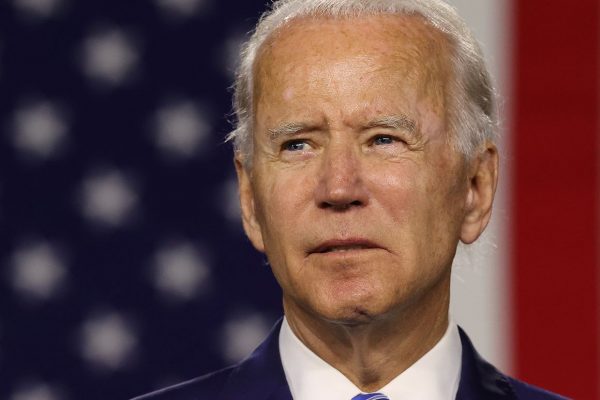 , Miles A. Pomper Wednesday, Nov. 18, 2020, With support from nearly half the world’s nations, a new United Nations treaty banning the possession and use of nuclear weapons will take effect early next year. The U.N. confirmed last month that the Treaty on the Prohibition of Nuclear Weapons, or TPNW, had been ratified by the required 50 countries. Secretary-General Antonio Guterres called it “a tribute to the survivors of nuclear explosions and tests, many of whom advocated for this treaty.”
Many non-nuclear-armed states, as well as pro-disarmament activists and organizations like the Nobel Peace Prize-winning International Campaign to Abolish Nuclear Weapons, have celebrated the agreement, which they see as a milestone in global efforts to prevent nuclear war. However, it has drawn strong opposition from nuclear-armed states, especially the five permanent members of the U.N. Security Council: Russia, China, France, the United Kingdom and the United States. The Trump administration has called on the treaty’s 84 signatories to back out of it. Its entry into force on Jan. 22, 2021, will pose a thorny diplomatic challenge for the incoming Biden administration………..
In the case of the Chemical and Biological Weapons Conventions, the major possessors of these arsenals, such as the United States and Russia, helped draft and build support for the pacts. However, the TPNW was drawn up by non-nuclear-armed states over the objections of nuclear powers. The initiative reflected the frustration of non-nuclear-weapons states with what they contended was the failure of their nuclear-armed counterparts to uphold their end of the “grand bargain” at the heart of the NPT. That bargain calls on the non-nuclear-weapon states to permanently renounce nuclear arms in exchange for access to peaceful nuclear technology and a commitment by nuclear powers to “pursue negotiations in good faith on effective measures” toward nuclear disarmament. ………
|
the treaty could pose a political problem in the future for NATO members and other countries that shelter under the U.S. nuclear umbrella, given the TPNW’s call not to support actions inconsistent with the treaty. That challenge is especially acute for the five NATO members that host an estimated 150 forward-deployed U.S nuclear weapons: Belgium, Germany, the Netherlands, Italy and Turkey. German, Dutch and Belgian disarmament advocates, in particular, enjoy strong mainstream political support among center-left parties in all three countries. And 56 former world leaders, including many from NATO countries, argued recently in an open letter that the new nuclear ban treaty can “help end decades of paralysis in disarmament.” NATO has beaten back such arguments before, most recently in the wake of Obama’s Prague speech. However, handling the TPNW and tensions within the alliance more generally will likely prove a challenge for President-elect Joe Biden, who will take office just two days before the treaty enters into force……. Another important event looms on the horizon: In August 2021, state parties to the NPT are scheduled to meet and review that treaty for the first time since the TPNW was concluded. Such conferences—which usually take place every five years, though the 2020 meeting was delayed until next year due to the COVID-19 pandemic—are always a headache for U.S. negotiators, as they provide an opportunity for the far more numerous non-nuclear-weapon states to bash Washington and other nuclear-armed states for their disarmament shortcomings, and thus of the NPT more generally. These arguments will only become more intense now that the TPNW is a legal alternative. Making progress on U.S. nonproliferation goals in this new environment, with a U.N. treaty that bans nuclear weapons, is sure to prove a tough diplomatic test of the new administration. Miles Pomper is a senior fellow at the James Martin Center for Nonproliferation Studies at the Middlebury Institute of International Studies. https://www.worldpoliticsreview.com/articles/29225/the-new-nuclear-weapons-ban-treaty-will-be-an-early-trial-for-biden |
|
UK government wastes tax-payer money on small and large nuclear reactors that will never be cheap or safe
 FoE Scotland 17th Nov 2020, Friends of the Earth Scotland gave a scathing reaction to
 the UK Government’s announcement of a 10-point plan on climate and energy, calling for much more priority on solutions which can reduce emissions and create jobs today.
crisis like carbon capture and storage, hydrogen and nuclear. “While there are some crumbs from the table in terms of the welcome new target of 2030 to phase out fossil-fuelled cars, overall there is too little new money and too much funding committed to long-term, dangerous distractions.
https://foe.scot/press-release/response-to-the-uk-10-point-climate-plan-for-net-zero/
Could a mad, unhinged US president, push the nuclear button?
 Could a mad, unhinged US president, push the nuclear button? From JFK and the Cuban crisis, to Nixon and Watergate, to now: the sum of all fears, is still carried in a suitcase, By DAVE MAKICHUK, NOVEMBER 19, 2020 “I had no idea we had so many weapons … what do we need them for?”
— A stunned President Bush, after his first briefing on US nuclear forces
It is the elephant in the room.
And it is a very big elephant, and, a very big room.
We are living in a very surreal time, that much we know. Officials would even say, challenging — I would even say, it’s a bit worse than that.
We have a US president who still believes he won the election, despite the fact he clearly lost.
Yet, there isn’t one iota of evidence to back up President Trump’s claims.
He is, without question, angry, in denial and — most importantly — vengeful to those who served him, whom he thinks
All in all, it paints a picture of a man, who only cares about himself …. not the will of the people, not the country, and
The exact opposite, in fact, of one President John F. Kennedy, who, after a meeting with the Joint Chiefs during the
No. 2 reactor at Tohoku Electric Power Co’s Onagawa nuclear power plant for restart, despite problems
 As nuclear worries linger, Tohoku plant heads for landmark restart, BY ERIC JOHN, 18, Nov, 20 OSAKA – On Nov. 11, Miyagi Gov. Yoshihiro Murai gave the green light to restarting the No. 2 reactor at Tohoku Electric Power Co’s Onagawa nuclear power plant. While the reactor is not expected to begin generating power until construction to improve the plant’s safety is completed, the governor’s approval paves the way for the first reactor damaged by the Great East Japan Earthquake to resume operation.
The restart, the first in northeastern Japan, comes amidst controversial restarts in the country’s west following the quake and at a time when the energy source’s future economic and political feasibility is being debated after the government announced a target of Japan being carbon neutral by 2050.
What is the Onagawa nuclear plant and what happened to it after the earthquake and tsunami?
The Onagawa nuclear power plant sits on a peninsula in Miyagi Prefecture about 130 kilometers from the epicenter of the March 11, 2011 quake and tsunami. It has three reactors, one of which is being decommissioned.
………..The government’s current long-term energy strategy calls for nuclear power to provide between 20% and 22% of the nation’s electric power supply by fiscal 2030. The Agency for Natural Resources has said to meet that goal, the restart of 30 reactors is necessary.
There are a number of issues that could make that goal difficult. These include the cost of meeting the new NRA safety standards that went into place after 3/11 and the time needed to upgrade facilities. For the operator, those costs raise questions of whether it is worth investing and whether nuclear power-generated electricity will remain competitive with renewable energy in the coming years.
Other issues could also drive up the costs of restarting more reactors, beginning with subsidies to local governments. With no financial incentive, village heads, city mayors and prefectural governors could delay or refuse permission to restart. Even if permission is granted, operators may face lawsuits from residents opposed to restarts, a process that could delay or even halt the process if a judge rules in their favor, which would mean further costs for the operator.
The government’s current long-term energy strategy calls for nuclear power to provide between 20% and 22% of the nation’s electric power supply by fiscal 2030. The Agency for Natural Resources has said to meet that goal, the restart of 30 reactors is necessary.
There are a number of issues that could make that goal difficult. These include the cost of meeting the new NRA safety standards that went into place after 3/11 and the time needed to upgrade facilities. For the operator, those costs raise questions of whether it is worth investing and whether nuclear power-generated electricity will remain competitive with renewable energy in the coming years.
Other issues could also drive up the costs of restarting more reactors, beginning with subsidies to local governments. With no financial incentive, village heads, city mayors and prefectural governors could delay or refuse permission to restart. Even if permission is granted, operators may face lawsuits from residents opposed to restarts, a process that could delay or even halt the process if a judge rules in their favor, which would mean further costs for the operator.
Anti-Nuclear Pacifists Get Federal Prison Terms for Nonviolent Protest
 ach weekend, while New York City’s East Village packs into sidewalk tables for brunch, activist Carmen Trotta leads a vigil for ending the U.S.-backed war in Yemen in Tompkins Square Park. He only has a few more Saturday mornings before he must report to federal prison, along with fellow activists from Plowshares, the anti-nuclear, Christian pacifist movement. Despite a lethal pandemic ravaging prison populations, Trotta, Martha Hennessy, Clare Grady, and Patrick O’Neill are due to report to prison within the next few months for activism against a suspected nuclear weapons depot.
More than two years ago, Trotta and Hennessy, two of seven activists known as the Kings Bay Plowshares Seven, peacefully broke into the naval base in Brunswick, Georgia — risking their own lives to protest the suspected nuclear arsenal housed within. Armed only with vials of their own blood, hammers, GoPro cameras, spray paint, protest banners, and whistleblower Daniel Ellsberg’s book, the activists symbolically attempted to disarm the nuclear weapons located on the Trident submarines at the base.
The nonviolent direct action took place on the 50th anniversary of the assassination of Martin Luther King Jr. Far out of the spotlight of major media coverage, all but one of the activists have quietly been sentenced in their faith-based battle with the U.S. government over the “immoral” possession of nuclear weapons. The activists were charged with three felonies — conspiracy, destruction of government property, depredation — and misdemeanor trespassing.
The sentencing — sending aging activists to federal prisons amid the coronavirus pandemic — fits squarely within the long history of the U.S. government throwing the book at people of conscience who dare to dissent. President Donald Trump’s acceleration of heavy-handed federal charges against protesters have drawn critical media attention.
Yet activists like those in the Plowshares community, whose protests garner less attention, are suffering at the hands of a bipartisan consensus on harsh crackdowns related to direct action against so-called defense policies. Under the rubric of national security, the persecutions of figures like Chelsea Manning, Daniel Everette Hale, or Reality Winner become polarized or fail to raise public ire, when they are noticed at all.
That was the case last week, when few took note of the latest Plowshares sentences. Trotta, 58; Hennessy, 65; along with Grady, 62, were sentenced by Judge Lisa Godbey Wood in individual virtual court sessions. Trotta got 14 months, Grady was given 12 months and one day, and Hennessy was sentenced to 10 months; all were ordered to pay restitution and were given years of supervised release. As cases of Covid-19 engulfed Georgia, the defendants reluctantly agreed to proceed with their sentencing without appearing in person. Only Mark Colville, 59, has yet to be sentenced. Colville refuses to travel to Georgia because of the coronavirus and will not give up his constitutional right to an in-person sentencing before the court. ………….. https://readersupportednews.org/news-section2/318-66/66270-anti-nuclear-pacifists-get-federal-prison-terms-for-nonviolent-protest
In the face of public opposition, Ottawa delays small nuclear reactor plan
Ottawa delays small nuclear reactor plan as critics decry push for new reactors, Yahoo Finance Colin Perkel, The Canadian Press, Thu., November 19, 2020, “……… Industry critics were quick to pounce on the government’s expected SMR announcement. They called on Ottawa to halt its plans to fund the experimental technology.
.. a major problem facing the industry is its growing mound of radioactive waste. This week, the government embarked on a round of consultations about what do with the dangerous material.
Dozens of groups, including the NDP, Bloc Quebecois, Green Party and some Indigenous organizations, oppose the plan for developing small modular reactors. They want the government to fight climate change by investing more in renewable energy and energy efficiency.
“We have options that are cheaper and safer and will be available quicker,” Richard Cannings, the NDP natural resources critic, said in a statement. …
Joe McBrearty, head of Canadian Nuclear Laboratories, told the conference the company had signed a host agreement this week with Ottawa-based Global First Power for a demonstration SMR at its Chalk River campus in eastern Ontario. A demonstration reactor will allow for the assessment of the technology’s overall viability, he said
Sizewell C nuclear plant ‘not value for money’, and would sabotage the govt’s pledge for nature
|
New Civil Engineer 18th Nov 2020, Plans for proposed Sizewell C nuclear power station on the Suffolk coast,
which is currently waiting for planning approval, would “sabotage” the |
|
Uranprojekt -The Nazi Nuclear Program
|
Uranprojekt -The Nazi Nuclear Program , Heritage Daily, 17 Nov 20,
Uranprojekt, also known informally as the Uranverein (meaning Uranium Club) was a secret German project, to research and develop atomic weapons and energy during the Second World War.Prior to the outbreak of hostilities, Germany was at the forefront of nuclear fission, with the discovery of the first nuclear fission of heavy elements by Otto Hahn (referred to as the father of nuclear chemistry), and his assistant Fritz Strassmann from the Kaiser Wilhelm Institute in 1938. This was shortly followed by Lise Meitner, an Austrian-Swedish physicist who theorised, and then proved in 1939 that the uranium nucleus had been split, giving the name “fission”. In light of the recent discoveries, Germany was encouraged by a paper submitted by experimental physicist Wilhelm Hanle, which proposed the use of uranium fission in a reactor. This led to a small team being tasked to study the potential military applications of nuclear energy. The Germans then established a new research project on the 1st September 1939 (the same day generally considered to be the start of WW2 with the invasion of Poland by Germany), under the auspices of the Wehrmacht’s Heereswaffenamt (HWA), the German Army Weapons Agency responsible for researching weaponry, ammunition, and equipment. The USA also became aware of the German program that same year, when Albert Einstein wrote to President Roosevelt, warning of the German threat in creating a “nuclear chain reaction in a large mass of uranium, by which vast amounts of power and large quantities of new radium-like elements would be generated.” It was quickly realised by the HWA that the project would be unable to make a decisive contribution to ending the war in the near term, so authority was placed under the Reichsforschungsrat (RFR, Reich Research Council), maintaining its kriegswichtig (war importance) designation. The project was then expanded into three main areas of research, the Uranmaschine to investigate creating a nuclear reactor, the production of uranium and heavy water, and the separation of uranium isotopes. Research struggled with the German invasion of the Soviet Union in 1941 (Operation Barbarossa), as the majority of Germany‘s scientific minds were turned to focus on developing other new technologies that could have a more immediate impact on the war effort (namely rocket technology and jet aircraft). The project also suffered from a drained talent pool. Many top German scientists and nuclear physicists (some of which were Jewish or with Jewish heritage) had fled the country, and there was a lack of understanding and investment from the regime in the pure scientific application of the research (in comparison, the Manhattan Project consumed some $2 billion (1945) in government funds, compared to a mere 8 million reichsmarks $2 million (1945) on the Uranprojekt). This resulted in the Germans never achieving a successful chain reaction, nor did they manage to develop a method of enriching uranium (having never seriously considered plutonium as a viable substitute). In 1942, a conference was initiated by Albert Speer as head of the “Reich Ministry for Armament and Ammunition” (RMBM: Reichsministerium für Bewaffnung und Munition) to discuss the continuation of research, and the prospects for developing nuclear weapons……. https://www.heritagedaily.com/2020/11/uranprojekt-the-nazi-nuclear-program/136152 |
|
Russia’s latest nuclear icebreaker had to abort maiden Arctic voyage
|
Russia’s latest nuclear icebreaker had to abort maiden Arctic voyage The powerful “Arktika” set off from Murmansk on Saturday for a three-week assignment to the Northern Sea Route. Mid-Barents Sea, though, the icebreaker turned around and sailed back to port. Barents Observer, By Thomas Nilsen. November 17, 2020
Following last month’s test voyage to the North Pole, and formal launch ceremony in Murmansk, the new giant icebreaker was now supposed to embark on her first real-working tour to the Northern Sea Route.“Arktika” left from Atomflot’s service base in the Kola Bay on Saturday, according to the state-owned operator Rosatomflot. “On November 14, the leading universal nuclear-powered icebreaker “Arktika“ left the port of Murmansk on its maiden voyage. The vessel headed towards the Kara Sea. Until mid-December, the nuclear-powered icebreaker “Arktika“ will operate in the Northern Sea Route,” a press release posted November 16 said. The Northern Sea Route Administration’s permission granted for ”Arktika” to enter the Kara Gate, where the Northern Sea Route starts, is valid from November 16. Online ship tracking service VesselFinder.com shows the path of the icebreaker sailing out the Kola Bay on a steady course towards the Kara Sea. Halfway in the Barents Sea, the ship suddenly makes a 180 degrees turnaround and sails back on a northwestern course before turning south on Tuesday directly towards Murmansk. Asked about the hastily return to port, Head of the Communication department with Atomflot, Evgeny Sviridov says to The Barents Observer that “Staff is conducting adjustment works onboard.” He would not elaborate but adds: “The icebreaker will leave the port of Murmansk in the nearest future.” In Murmansk, people have already started to post speculations on the regional Vkontakte page on what could have gone wrong. Unconfirmed reports hint at “mechanical problems” onboard, and nothing related to the two nuclear reactors. “Arktika” is the lead of five vessels of Project 22220, the world’s most powerful nuclear-powered icebreakers. Construction of two similar vessels, the “Ural“ and “Sibir” are currently well underway at the yard in St. Petersburg, while keel-laying of the fourth icebreaker, the “Yakutia” took place in May this year. The contract for the fifth, the “Chukotka” is signed. When sailing north from the shipyard on September 22, there was already a problem with the propulsion. During sea trials in the Baltic Sea in February this year, a short circuit caused serious damage to the winding in one of the three electro engines. The damaged propulsion motor is 50 % functional and can deliver 10 megawatts of propulsion power to the starboard wing propeller. It’s a tandem unit and only one half of it was damaged during the sea trials….. https://thebarentsobserver.com/en/arctic/2020/11/russias-latest-and-most-powerful-nuclear-icebreaker-had-abort-maiden-arctic-voyage |
Destruction of wildlife habitat, Coronation Wood to be felled, for Sizewell C nuclear project
(TASC), and the invaluable financial and moral support from many concerned
citizens, TASC are devastated to learn that the Courts have refused its
application to make a final appeal to overturn the decision to allow the
destruction of Coronation Wood.
case to court, said “Due to the crass decision-making of East Suffolk
Council, EDF have now been given the green light to carry out their
Sizewell B relocation plans which include taking their chain-saws to and
destroying the whole of Coronation Wood.
allow the felling of the wood. Sizewell C may never get permission and a
100 year old wood cannot be replaced. Due to its removal there will be a
major loss of visual screening of the nuclear industrial complex causing
increased noise and light pollution, totally ignoring the site’s status
as an Area of Outstanding Natural Beauty.
setts, bird and bat habitats blows EDF’s environmental credentials out of
the water. There are alternatives but EDF and the council chose not to
pursue them. EDF is not concerned in any way, shape or form for the well
being of the ecology of the area, nor that of locals who are deeply upset
by their plans”
https://tasizewellc.org.uk/latest-on-coronation-wood-judicial-revue/
 |
ReplyForward
|
Small Modular Nuclear Reactors, the nuclear industry’s latest pipe dream.
 Ramana and Schacherl: Why the Liberals’ nuclear power plan is a pipe dream https://ottawacitizen.com/opinion/ramana-and-schacherl-why-the-liberals-nuclear-power-plan-is-a-pipe-dream?fbclid=IwAR0GnxYt-JgXg7NVEyccBYt4r0SSbfAHm3Y-b_AvzgMIjxpOotUTBIvAcaI

Not only is this form of power expensive compared to the alternatives, we still haven’t resolved issues around radioactive contamination and hazardous waste streams.
At least a dozen corporations around the world are hoping for taxpayer funding to further develop their SMR designs, all of which are still on the drawing board. Last month, the federal government handed out $20 million to Terrestrial Energy. Other expectant entities include SNC-Lavalin, which bought Atomic Energy of Canada Ltd.’s CANDU division and is developing a CANDU SMR; United Kingdom-based Moltex Energy; and Seattle-based Ultra Safe Nuclear Corporation.
The Liberal government says it supports small modular reactors to help Canada mitigate climate change. The government is simply barking up the wrong tree, for several reasons: cost, cost and cost, as well as renewables, safety and radioactive waste.
Nuclear power is very expensive compared to other low-carbon options, and the difference keeps growing because the cost of renewables and energy storage is going down rapidly. Peter Bradford, a former U.S. Nuclear Regulatory Commission official, likened the use of nuclear power to mitigate climate change to fighting world hunger “with caviar.”
The high price tag for nuclear power plants has led to a near freeze on new ones around the world. Canada’s last nuclear plant came online in 1994, and Ontarians will remember when plans for two reactors at Darlington were shelved in 2009 after a $26-billion bid – three times the expected budget. Nuclear projects also have a long history of cost and time overruns. The cost estimate of NuScale, the most advanced SMR project in the U.S., has gone up from $4.2 billion to $6.1 billion. That works out to almost 10 times the cost per kilowatt of building wind power in Alberta. There is no way SMRs can be cost-competitive with wind or solar energy.
O’Regan has said he doesn’t know any way to get to net zero-carbon emissions by 2050 without nuclear power, but this is refuted by many studies. Ontario can meet its electricity demand using only renewables and hydro power backed up by storage technologies. A recent study using data from 123 countries shows that renewable energy outperforms nuclear power in reducing emissions. It concludes that nuclear investments just get in the way of building up renewable energy.
Advocates claim that we need nuclear energy to back up solar and wind power when the sun doesn’t shine and the wind doesn’t blow. However, nuclear reactors cannot be powered up and down rapidly and safely. If they are, their cost of generating electricity increases further. Nor do nuclear plants run reliably all the time. In France, which generates 70 per cent of its electricity from nuclear power, each reactor was shut down for an average of 96.2 days in 2019.
The federal government sees small reactors playing a role in remote off-grid communities and mines that now rely on diesel. But together they require less than 0.5 per cent of Canada‘s electricity generation capacity. Power from SMRs could be 10 times more expensive for those communities than adding wind and solar energy. There is also strong opposition to SMRs from First Nations communities, who say these represent an unacceptable risk.
The risk from nuclear power comes in multiple forms. There is the potential for accidents leading to widespread radioactive contamination. Because reactors involve parts that interact rapidly in complex ways, no nuclear reactor is immune to accidents. And they all produce radioactive nuclear waste streams that remain hazardous for up to one million years. Dealing with these is a major challenge, and there is no demonstrated solution to date.
Canada has a big challenge ahead: to decarbonize by 2050. Let’s get on with it, in the quickest and most cost-effective way: by improving the efficiency of our energy use, and building out solar, wind and storage technologies. The federal Green Party is correct in stating that nuclear reactors “have no place in any plan to mitigate climate change when cleaner and cheaper alternatives exist.” Let’s forget the dirty, dangerous distraction of small nuclear reactors.
M.V. Ramana is the Simons Chair in Disarmament, Global and Human Security and Director of the Liu Institute for Global Issues at the School of Public Policy and Global Affairs, University of British Columbia. Eva Schacherl is an advocate for protecting the Ottawa River and for environmental and social justice.
Correcting 5 wrong opinions about the Treaty on the Prohibition of Nuclear Weapons
FIVE COMMON MISTAKES ON THE TREATY ON THE PROHIBITION OF NUCLEARWEAPONS https://warontherocks.com/2020/11/five-common-mistakes-on-the-treaty-on-the-prohibition-of-nuclear-weapons/
The Treaty on the Prohibition of Nuclear Weapons, the first international ban on nuclear weapons, will take full legal effect on Jan. 22, 2021. It joins the Chemical Weapons Convention and the Biological Weapons Convention as a treaty prohibiting weapons of mass destruction and follows the roadmap of the Mine Ban Treaty (known as the Ottawa Treaty) and Cluster Munitions Convention to bring together a coalition of civil society and diplomats to prohibit and eliminate weapons based on their humanitarian harm. The treaty has widespread support in the international community — 122 countries voted for its adoption in 2017, and these countries have continued to express their support for the treaty in subsequent statements to the U.N. General Assembly, in spite of resistance from nuclear-armed states and some of their allies, who have not joined the treaty.
This treaty is a big deal. And yet, political scientists and nuclear policy experts, largely from nuclear-armed states, repeatedly make mistakes in their analysis and interpretation of this treaty and international law. At a gathering of roughly 800 nuclear policy experts in Washington, D.C. in 2019, experts overwhelmingly and incorrectly predicted the treaty would not enter into force by March 2021. A French academic even misread the actual treaty text — a clear error that was not flagged by any of the article’s expert reviewers, and was only corrected after publication.
I work at the International Campaign to Abolish Nuclear Weapons, which won the 2017 Nobel Peace Prize for its efforts to negotiate the ban treaty. Its work is informed by international lawyers, academics, technical experts, diplomats, survivors of nuclear weapon use and testing, and advocates with regional expertise. This diverse and rich foundation of knowledge and experience informs our work to this day. But some academics and nuclear policy experts that haven’t worked as closely on the treaty often make five key mistakes when analyzing this treaty and international law: that the treaty may be just symbolic, that NATO countries cannot join, that the treaty doesn’t address compliance, that it won’t have any impact on nuclear-armed and NATO states, and that the treaty will only affect democracies.
Mistake One: The Treaty Is Purely Symbolic
The legal impact of the Treaty on the Prohibition of Nuclear Weapons is clear: Once it enters into force, all states parties will need to comply with the treaty’s prohibitions and implement its obligations. While some treaty articles reinforce existing obligations under other treaties, states parties do actually take on new legal obligations, contrary to what some have claimed. Even without any other states joining the treaty, from a strictly legal perspective, the treaty is not merely “symbolic.”
The treaty prohibits states parties from developing, testing, producing, manufacturing, transferring, possessing, stockpiling, using (or threatening to use) nuclear weapons, or allowing nuclear weapons to be stationed on their territory. It also prohibits states parties from assisting, encouraging, or inducing states to engage in any of these prohibited activities. Some of these prohibitions are already enshrined in nuclear weapon-free zone treaties, but not all prohibition treaty states parties are members of these treaties. Given that the Comprehensive Nuclear-Test-Ban Treaty unfortunately has yet to enter into force, the Treaty on the Prohibition of Nuclear Weapons will be the only agreement in force banning nuclear testing internationally.
In addition to adhering to prohibitions, states parties must implement positive obligations, some of which echo previous agreements, but many of which are new to this treaty.
There are some technical requirements. For example, states parties must submit a declaration with the U.N. secretary-general on their nuclear weapon status. They must also bring into force a comprehensive safeguards agreement with the International Atomic Energy Agency on inspecting their peaceful nuclear program, or maintain a more intrusive inspections regime (an “additional protocol”) if they have one in force already.
But the Treaty on the Prohibition of Nuclear Weapons also includes ground-breaking provisions on providing assistance to victims of nuclear weapons use and testing and remediating contaminated environments. This is the first time that international law has mandated that countries address the humanitarian devastation caused by decades of nuclear weapons testing and the U.S. bombing of Hiroshima and Nagasaki 75 years ago. It is a critical step forward to address the racist, colonialist, and unjust legacy left by these uniquely horrible weapons of mass destruction. Analysis of this treaty would do well not to ignore these historic articles.
Specifically, Article 6 of the treaty requires states to “provide age- and gender-sensitive assistance, without discrimination, including medical care, rehabilitation and psychological support,” for victims of nuclear weapons use and testing “as well as provide for their social and economic inclusion.” States must also “take necessary and appropriate measures” towards the remediation of contaminated environments. States with affected communities and contaminated environments under their jurisdiction are primarily responsible to structure and implement these obligations in order to respect these states’ sovereignty and follow the legal precedent for victim assistance in other treaties. However, Article 7, which requires that all countries cooperate to implement the treaty’s provisions, specifically calls on all states “in a position to do so” to provide assistance to other states as they carry out these initiatives. Such assistance can take many forms, including technical, financial, and material, so every state should be in a position to contribute.
These provisions will be at the center of the first meeting of states parties to the treaty, to take place within one year of the treaty’s entry into force. Austria has already offered to host this meeting in Vienna. At this meeting, states will discuss routine logistics of international treaty meetings, such as costs and establishing the rules of procedure. Observer states, including signatory states, and some non-signatory states, including at least Sweden and Switzerland, will also attend and share the cost of the meeting. The extent of their participation will be determined by the rules of procedure. Civil society will also likely play an active role.
Mistake Two: NATO Countries Cannot Join the Treaty
One academic recently argued that membership in NATO and the Treaty on the Prohibition of Nuclear Weapons would be “mutually exclusive.” While fully compliant membership in both treaties would require a few policy adjustments, it is certainly possible. There is no prohibition in the treaty for a member to be involved in military alliances or exercises with nuclear-armed states, as long as there is not a significant nuclear dimension to those alliances. NATO itself states, “NATO is committed to arms control, disarmament and non-proliferation, but as long as nuclear weapons exist, it will remain a nuclear alliance.” However, legal experts explain that if a NATO state would like to join the treaty, they may certainly do so and remain in the alliance as long as that state renounces participation in the nuclear dimension of the alliance and indicates that it does not support activities prohibited by the treaty. There is a precedent of NATO members “footnoting” alliance documents to signal disagreement with certain policies. A NATO state could thus announce its change in policy and adjust its behavior accordingly to be in compliance with the treaty’s provisions. Exactly how the NATO state would need to adjust its behavior to be in compliance with the treaty varies by country and could be determined in consultation with states parties.
Historically, different members of NATO can take different positions on controversial weapons without obliterating the alliance. Indeed, there are already divergent policies within NATO on the extent of participation in the nuclear aspect of the alliance: Some NATO countries go so far as to host U.S. nuclear weapons on their soil while others do not allow deployment on their territory under any circumstances. Opposition within NATO to banning landmines and cluster munitions did not stop those prohibitions from moving forward, even as the United States pressured countries to not even participate in the process to negotiate a treaty banning cluster munitions, and certainly did not destroy the alliance. Dozens of former leaders from NATO states, including two former NATO secretaries-general, recently called on their countries to join the Treaty on the Prohibition of Nuclear Weapons and certainly did not suggest that such a move would involve leaving NATO or that it would fracture the alliance. NATO’s status as a nuclear alliance has evolved over time, and it could continue to adapt to shifting international norms.
Mistake Three: There Is No Mechanism to Address Compliance Concerns in the Treaty
If there are any concerns about compliance with the terms of the treaty, the treaty explains clearly what states should do in Article 11. When a state party has a concern about another state party’s implementation of the accord, the two states may resolve the dispute amongst themselves or bring the matter to a meeting of states parties to discuss.
Concerns about compliance with an international treaty would certainly not be unique to this treaty and do not indicate that it is any less legitimate or valuable than other treaties with compliance disputes. States parties to the Nuclear Non-Proliferation Treaty regularly raise concerns about nuclear weapon-state compliance with their obligation to pursue nuclear disarmament under Article VI during meetings of states parties of that treaty. Likewise, states parties to the Chemical Weapons Convention condemn Syrian and Russian violations. These examples demonstrate the value of international treaties to reinforce norms and provide a forum to discuss and condemn violations of international standards for peace and security. Of course, given that the treaty has not yet entered into force, no state can currently be judged to be in non-compliance with the accord.
Mistake Four: The Treaty Will Only Impact Countries That Have Joined It
States parties’ implementation of their obligation to assist victims of nuclear weapons use and testing will also have lasting impact beyond those countries themselves. There is currently no international standard for adequate victim assistance for those who have been impacted by nuclear weapons use and testing and no standard for how to judge that a nuclear-contaminated site has been adequately remediated. States parties’ work on these provisions in the treaty will help to provide research and experience in these fields that can be applicable and useful even beyond countries that have joined the treaty.
Countries that are not part of the treaty can still contribute to these important measures. The United States, for example, is one of the largest donors to Mine Action, which facilitates mine clearance, despite not joining the Mine Ban Treaty. Mounir Satouri, a French member of the European Parliament, has expressed interest in encouraging European Union countries, including NATO members, to contribute to victim assistance and environmental remediation measures under the treaty, even if they have not yet joined as states parties.
The treaty will continue to grow and integrate into the international system well beyond its entry into force in January and first meeting of states parties. The norm established by previous weapons prohibitions impacted banks, companies, and government policies in countries that had not joined the treaty, and the same can be expected for the nuclear prohibition norm. The treaty’s adoption has already caused a major Dutch pension fund to divest from companies involved in nuclear weapons, and more divestment can be anticipated once the treaty takes full legal effect.
Mistake Five: The Treaty Only Impacts Democracies
Countries that have not yet expressed support for the treaty are also expected to join in time. In many countries that do not officially support the treaty, polls show that domestic opinion is behind the ban and capitals in nuclear-armed and NATO states have adopted resolutions calling on their governments to join. Critics claim that domestic support may push Western democracies – in particular France, the United Kingdom, the United States, and NATO allies — to join the treaty, while more autocratic states — without a strong civil society to demand they adhere — remain unfazed by the new international law and norm.
That’s not how international law works. International law applies to all countries, regardless of their governance structure, and all countries are influenced by the new norms advanced by international treaties. Pressure to join the treaty does not just come from an active civil society, but from other states, international organizations, and the changing norm established by the treaty itself. Article 12 of the treaty legally requires that all states parties urge other countries to join. This can be done in the form of public statements in international fora, like the United Nations, or privately in bilateral meetings. Pressure to adhere can even come from international figures like the U.N. secretary-general, the Dalai Lama, and the Pope who have all welcomed the Treaty on the Prohibition of Nuclear Weapons.
So far, the record shows that Western democracies are not necessarily more susceptible to pressure to support the treaty or to join it. While the United States and some NATO allies held a press conference outside the negotiations of the treaty in protest, China merely abstained on the resolution to start negotiations. When the treaty reached 50 states parties, a U.S. official Twitter account called the treaty “counterproductive,” while the Chinese UN Mission on Twitter claimed its objectives were “in line with purposes of the TPNW.” Of the states that have already joined the treaty, many have done so not because of civil society pressure, but due to their desire to adhere to international laws and norms against nuclear weapons.
Conclusion
In January, the treaty will take its rightful place among the other international treaties regulating nuclear weapons and other weapons of mass destruction, as an implementing instrument of the Nuclear Non-Proliferation Treaty’s Article VI and complement to the Comprehensive Nuclear-Test-Ban Treaty. Most countries support the Treaty on the Prohibition of Nuclear Weapons as an important achievement for peace and security and towards a world free of nuclear weapons. As the risk of nuclear weapons use increases alarmingly, nuclear disarmament measures like this treaty are urgently needed.
The Treaty on the Prohibition of Nuclear Weapons will impact the norm against nuclear weapons and in the meantime will provide concrete assistance for victims of nuclear weapons use and testing and contribute to remediating radiologically contaminated areas. It is a powerful tool: important enough for leaders to ratify even in the midst of a global pandemic and influential enough that the United States actually called on countries to withdraw their instrument of ratification or accession. Analytical attempts to belittle or undermine the significance of this treaty may appease the minority of countries that cling to these weapons of mass destruction for now, but make no mistake — the Treaty on the Prohibition of Nuclear Weapons is a game-changer. And it is not going anywhere.
Unanswered questions cloud the future of NuScam’s Small Modular Nuclear Reactor project
Questions Remain About ID Nuclear Reactor Project https://www.upr.org/post/questions-remain-about-id-nuclear-reactor-project
NuScale‘s small, modular reactor design is the first of its kind to be approved in the United States. The new, compact concept is made up of 12 small reactors and will be located at the Idaho National Laboratory.

Sarah Fields, program director with the group Uranium Watch, said the Nuclear Regulatory Commission needs to scrutinize the project carefully. In particular, she said she’s concerned about a proposal for fewer people to oversee the project.
“They want to reduce the number of operators, and that’s just to save money,” said Fields. “And the NRC is undergoing a review of that.”.
NuScale said the project needs fewer operators because of its design is simpler and the controls involve more automation. The NRC is reviewing the proposal, which could involve policy changes since the approval process is based on conventional nuclear power plant designs.
The NRC has approved the Design Certification Application for the project in its current form. But Fields said the agency still has to authorize certain aspects of the design.
One NRC engineer has raised questions about dilution of boron water around reactor cores, which could cause a dangerous power surge even if the reactor is shut down. Fields said it could be hard to make modifications once aspects of the design are approved.
“It’s like designing a house,” said Fields. “And once you want to change one thing about the house, then you have to make all different kinds of adjustments. And then, get approvals from that.”
Book review: The Case for Degrowth
 Book review: The Case for Degrowth, Jeremy Williams, The Earthbound Report , 16 Nov 20, “…………. What are the objectives of degrowth? It’s not shrinking the economy for the sake of it. The aim is to get GDP growth out of the driving seat and then steer towards “what really matters: not GDP, but the health and wellbeing of our people and our planet.”
Or there’s the alternative, which is to stop taking growth as the primary measure of progress and get on with delivering what people need. So many political directions open up when GDP growth takes a back seat and we get on with delivering what people need more directly.
In fact, downsizing in the rich world may be a key enabler of flourishing elsewhere. “There is no technological or policy fix that can generalize to nine billion people the material standard of living currently enjoyed by a minority at high cost to others.” Instead, “high-consumption nations and people must degrow to free space for low-consumption ones.”
- A Green New Deal
- universal incomes and services
- policies to reclaim the commons
- shorter working hours
- public finance that supports the first four
Being a short book, it no doubt opens up lots of other questions that the authors don’t cover, though the frequently asked questions at the end captures many of them. Perhaps the one that still sticks out for me is the word ‘degrowth’ itself. In my opinion it doesn’t capture the positivity of a vision for qualitative progress, for improvement rather than enlargement. I know it’s an old debate. We had it when founding the Postgrowth Institute ten years ago, and it doesn’t feel resolved today.
Still, The Case for Degrowth is a brief and straightforward explainer, and a good starting point for anyone who wants to get their head around the degrowth movement and what it wants to acheive.
- You can get The Case for Degrowth from Earthbound Books UK or my US store. It’s powered by Bookshop.com and supports your local book store as well as this blog.
- More recommended degrowth books here. https://wordpress.com/read/feeds/95197302/posts/3025203412
Prison, big fines, for Catholic anti nuclear activists
|
Dorothy Day’s granddaughter sentenced to prison for nuclear base break-in https://www.americamagazine.org/politics-society/2020/11/16/dorothy-day-granddaughter-sentenced-prison-kings-bay-plowshares-7
Yonat Shimron – Religion News Service, November 16, 2020 Martha Hennessy, a granddaughter of Dorothy Day, the founder of the Catholic Worker movement, was sentenced Friday (Nov. 13) to 10 months in prison for breaking into Kings Bay Naval Base in Georgia two years ago to protest its stockpile of nuclear weapons.
Hennessy’s was the lightest sentence given for the break-in at the Navy base 40 miles south of Brunswick, Georgia, on April 4, 2018, in which Hennessy, 65, was joined by six other Catholic pacifists. Together they are known as the Kings Bay Plowshares 7, named after the Plowshares anti-war movement founded 40 years ago by Daniel and Philip Berrigan, both Jesuit priests, and six others. On Thursday, Carmen Trotta, of St. Joseph Catholic Worker in New York City, was sentenced to 14 months in prison, while Clare Grady of the Ithaca Catholic Worker was sentenced to 12 months. Both have spent their lives at Catholic Worker houses in New York state, which house and feed the needy. All were also sentenced to probation and will be required to repay the Navy base a total of $33,500 in damages. |
|
1 This Month

Tell Congress: Prevent Nuclear Catastrophe in Iran

Tell Congress: Prevent Nuclear Catastrophe in Iran

Read the Public Inquiry Report, the Commissioners’ report, Surrendering Australia: The AUKUS Deception is available to download for free at aukuspublicinquiry.com. Or just watch the replay of the National Press Club Luncheon.


Shut down the radiation-damaged Heysham nuclear reactors now
To see nuclear-related stories in greater depth and intensity – go to https://nuclearinformation.wordpress.com

Say No to NASA’s Reckless Nuclear Reactor on the Moon
Say No to NASA’s Reckless Nuclear Reactor on the Moon
-
Archives
- November 2026 (269)
- October 2026 (302)
- September 2026 (339)
- August 2026 (330)
- July 2026 (355)
- June 2026 (287)
- May 2026 (306)
- April 2026 (356)
- March 2026 (251)
- February 2026 (267)
- January 2026 (308)
- December 2025 (358)
-
Categories
- 1
- 1 NUCLEAR ISSUES
- business and costs
- climate change
- culture and arts
- ENERGY
- environment
- health
- history
- indigenous issues
- Legal
- marketing of nuclear
- media
- opposition to nuclear
- PERSONAL STORIES
- politics
- politics international
- Religion and ethics
- safety
- secrets,lies and civil liberties
- spinbuster
- technology
- Uranium
- wastes
- weapons and war
- Women
- 2 WORLD
- ACTION
- AFRICA
- Atrocities
- AUSTRALIA
- Christina's notes
- Christina's themes
- culture and arts
- Events
- Fuk 2022
- Fuk 2023
- Fukushima 2017
- Fukushima 2018
- fukushima 2019
- Fukushima 2020
- Fukushima 2021
- general
- global warming
- Humour (God we need it)
- Nuclear
- RARE EARTHS
- Reference
- resources – print
- Resources -audiovicual
- Weekly Newsletter
- World
- World Nuclear
- YouTube
-
RSS
Entries RSS
Comments RSS

