UN nuclear watchdog chides Iran over uranium enrichment
UN nuclear watchdog chides Iran over uranium enrichment, DW, 31 May 21,
A report by IAEA chief Rafael Grossi says Tehran has failed to provide a proper explanation for the discovery of uranium particles at three sites across the country. The IAEA suspects Iran has been boosting uranium enrichment since April, dampening hopes of salvaging the JCPOA
The UN nuclear watchdog said on Monday that Iran has failed to explain traces of processed uranium found at several undeclared sites.
A quarterly report by IAEA chief Rafael Grossi said Iran is continuing to breach enrichment limits set by a 2015 nuclear accord, and that Tehran has failed to provide enough information about the discovery of uranium.
IAEA chief Rafael Grossi has been warning about the direction of Tehran’s compliance with the 2015 deal for weeks.
The report added that Iran has produced more than 2.4 kilograms (5.2 lbs) of nearly weapons grade uranium: a clear breach of the deal that its leadership says it wants to salvage.
The move to enrich uranium to a purity level of nearly 60% began in April, said the IAEA’s Grossi, who has for weeks been signaling that he is worried about the direction of Iran’s nuclear program.
……………….. What could happen next?
It will now be up to the three European powers to decide whether to go ahead with their plan amid fears it could undermine wider negotiations to revive the 2015 Iran nuclear deal at talks currently underway in Vienna.
…………. Iran started limiting inspections in a bid to put pressure on US President Joe Biden to lift crippling sanctions reimposed after then-President Donald Trump pulled out of the 2015 nuclear deal with Iran unilaterally in 2018.
According to the 2015 deal, Iran is only allowed to enrich uranium to a level of 4%, which is what is needed to fuel atomic reactors.
Nuclear weapons require uranium enriched to a level of 90%.
But once uranium has been taken to 60%, it is possible to enrich it to the higher level very quickly https://www.dw.com/en/un-nuclear-watchdog-chides-iran-over-uranium-enrichment/a-57733155
How decentralised energy will massively reduce grid costs

How decentralised energy will massively reduce grid costs,
100% Renewables 30th May 2021
There’s lots of information being pumped out by the anti-renewables lobby about how renewable energy causes great increases in the costs of upgrading electricity networks, but in fact there’s a lot of ways in which decentralised energy will actually REDUCE network costs. A recent study from California emphasizes how the cheapest path to clean energy is a mixture of large renewable energy projects and small decentralised renewables (mainly solar pv) linked to battery storage systems. Solar pv-battery systems can exist as a mixture of domestic systems and larger ground-mounted systems.
There isn’t yet a similar study for the UK (the big energy companies who fund these things won’t want the truth leaking out!), but there’s logic to suggest that much the same thing might be the case in the UK. Sure, the UK isn’t as sunny as California, although in winter there’s a lot of wind power. But in any case the untold secret of a decentralised solar-plus-battery system is that the batteries will soak up electricity produced from whatever sources so as to even out the pressures on the electricity network. By reducing pressure on the electricity network both transmission and distribution network costs can be reduced.
Of course the rub is that these battery systems which will reduce network costs are themselves made economic by being associated with the solar pv systems – and the same things works the other way around. The solar pv systems are made more economic by being alongside the batteries. Indeed these sorts of systems are so cheap that they are being installed already in the UK at two levels without even any incentives for the Government.
First, as reported in the trade press, companies like Gridserve are doing solar pv-battery systems. The batteries can soak up energy from the solar panels when there is a lot of electricity being generated and electricity prices are low and then sell it back to the grid at other times of the day or night when electricity prices are higher.
This sort of ‘arbitrage’ trading can now also be done at the second, domestic household, level. An even quieter revolution is taking place as ordinary households can now install solar pv plus battery systems for costs that would have been regarded as fancifully low five years ago. One company called ‘Growatt‘ is currently offering a system comprising 5.5 kW of solar pv and a 6.5 kWh battery for less than £9000 (note: five or so years ago you could have been doing well just to get the solar pv for that price!). This system works best with a supplier like Octopus who offers a time-of-use tariff so that you can charge the batteries when it is cheapest to do so whether from the grid or the solar panels. Solar pv is used when buying electricity from the network is expensive and stored in the battery when network prices are cheap. Then the batteries can power consumption when prices are higher and it isn’t sunny enough to generate much solar pv.
Of course there’s also a novel energy storage company, Sunamp, that is offering the possibility the use solar pv to heat and store water. As they say: ‘SunampPV stores excess electricity from a Solar PV
array as heat. This delivers high flow rate hot water on demand, so that your instant water heater or combi boiler can operate much less, saving you money’
So, you’d expect the Government to be shouting about all of this and giving this nascent new decentralised energy industry a boost? No way! The Government will be told what is needed by the big energy companies who definitely want to keep decentralised energy a secret – especially as it gets in the way of their incessant demands for featherbedding, whether it is for capacity payment subsidies for large power stations or massive handouts to nuclear power plant.
Targeted surveillance threatens human rights defenders
OPERATING FROM THE SHADOWS: INSIDE NSO GROUP’S CORPORATE STRUCTURE https://www.amnesty.org/en/documents/doc10/4182/2021/en/
31 May 2021, Index number: DOC 10/4182/2021, Targeted surveillance is a serious threat facing human rights defenders globally. Though often carried out by states, this practice is enabled by digital surveillance tools provided by private companies. However, the lack of transparency about the operations of the surveillance industry poses a serious obstacle for victims of unlawful surveillance to seek accountability and the right to remedy. This briefing seeks to shed light on one specific company – NSO Group – and thereby help to overcome this barrier. This briefing is jointly written by Amnesty International, Privacy International and The Centre for Research on Multinational Corporations (SOMO).
Nuclear test veterans: ‘My dad was treated like a guinea pig’

Nuclear test veterans: ‘My dad was treated like a guinea pig’, By Chris Wood, BBC News 30 May 21, When David Purse was sent to Australia, he thought it would be a “wild adventure” in a little-explored place.
However, the RAF flight lieutenant’s posting to a remote area called Maralinga was to test atomic weapons.
Son Steve, 47, from Prestatyn in Denbighshire, puts his own “unique” condition down to “a rare genetic mutation” caused by radiation.
The Ministry of Defence said three large studies found no link between the tests and ill health.
But a study at Brunel University is currently looking at the possibility genetic damage from the tests has affected the children of personnel.
“Flying through mushroom clouds or watching”, Steve believes men were “treated like guinea pigs” and wants recognition for them, adding: “It wasn’t an act of God but an act of government.”
In all, about 40,000 British personnel took part in the testing of atomic and hydrogen bombs in the 1950s and 1960s.
Most were in the Pacific – the biggest being Operation Grapple, where about 22,000 people oversaw the exploding of bombs in 1957.
Maralinga, in South Australia, saw the first test launches of atomic weapons from aircraft in 1962.
“He was told at short notice and was looking forward to visiting a warm country, a relatively unexplained place, and having a wild adventure,” Steve said of his father.
However, he was “close enough to ground zero to see sand to turn to glass” during tests, with no protective equipment.
Steve added: “There was a rope saying ‘do not enter’ but radiation was in the sand and would blow into food, into their face.
“They would swim in the lagoon, and catch fish that contained highly toxic radiation.”……………..
Steve describes his condition as “unique”, with doctors unable to diagnose it exactly, but says it is a form of short stature, similar to that of actor Warwick Davis.
He believes it is because of a “rare genetic mutation” as a result of the nuclear tests, and part of the “roulette” future generations must live with.
Steve is worried his baby son, Sascha, could also develop problems as he grows older.
“That’s the sad thing, it probably won’t die with veterans,” he said………
The possibility that children of personnel could be affected was first raised in a study at New Zealand’s Massey University in 2007.
Al Rowlands, who led the investigation at the university, said results were “unequivocal” that veterans had suffered genetic damage as a result of radiation.
Support group Labrats estimates there are 200,000 descendants of those who took part in British tests – and says the UK is the only nuclear state not to properly recognise its veterans and support them.
It conducted a health survey with 123 people who took part in tests, 76 from the UK.
“Many [problems experienced by descendants] tend to be autoimmune diseases, but if there are problems, they tend to be severe,” said founder Alan Owen.
“There are bone problems, teeth problems, eye sight. Issues that are meant to affect one in 1,000 – we talked to 10 descendants, four were affected.
“They have developed cancer, heart problems, a wide range of diseases.”
He described talking to veterans about their fears, adding: “When a grandchild is born, they don’t ask if it’s a boy or a girl, but if it’s okay. It’s quite sad they’re living with that now.”
Mr Owen’s father was involved at Operation Dominic, where the United States conducted 31 tests in the Pacific in 1962.
The American government has paid compensation to British personnel present and Mr Owen wants recognition by UK authorities.
He believes there are about 1,500 British nuclear veterans still alive, adding: “All they want is for the government to say ‘we did wrong, it was the 1950s’.
“No prime minister has ever met nuclear veterans. Anthony Eden was warned about the consequences and his reply was ‘it’s a pity but we can’t help it’…………
A number of veterans have already called for an apology, linking their cancer to the testing.
The Ministry of Defence responded by saying: “The National Radiological Protection Board has carried out three large studies of nuclear test veterans and found no valid evidence to link participation in these tests to ill health.”
The Brunel University study has been carried out with those involved in British nuclear tests and their children, with results due soon.
“We anticipate that our findings will have a lasting benefit for the broader nuclear community by providing scientific evidence that will resolve current uncertainties and speculation about potential adverse health effects in nuclear test veterans and their families,” said chief investigator Rhona Anderson. https://www.bbc.com/news/uk-wales-57157476
Secrecy and connivance between UK’s coal and nuclear lobbies in Cumbria
There are high-level omissions in all the reporting and I fear that our
Government are only too happy for the focus to be myopically on climate
rather than the blatant cronyism of the coal mine boss having been
appointed to ADVISE the government on nuclear dump plans.
How on earth can
the forthcoming public inquiry be impartially decided upon by a government
minister when the most powerful tier of government, the Dept of Business,
Energy and Industrial Strategy is taking advice from the coal mine boss,
Mark Kirkbride? Not only that but the Coal Authority (who are under BEIS)
are deferring to the coal boss’s wish not to place the new Coal Authority
licence applications in the public domain. Again how on earth can there be
a public inquiry in which the public don’t know what the developer has
planned?
Keep Cumbrian Coal in the Hole 28th May 2021
Mr Nuclear Waste and Mr Coal – Top Cronies..Shhh
The USA-UK nuclear cabal

A toxic relationship that could destroy the world
The USA-UK nuclear cabal — Beyond Nuclear International The USA-UK nuclear cabal
May 30, 2021 by beyondnuclearinternational
A “special relationship” in nuclear collusion
By Leonard Eiger On March 16th the United Kingdom announced (in its Integrated Review of Security, Defence, Foreign Policy and Development titled Global Britain in a Competitive Age) that it will increase the limit on its nuclear arsenal for the first time in decades. Instead of maintaining a cap of 180 warheads (as it had previously stated), the UK will increase its stockpile cap to 260 warheads — a 40% increase. The review also broadens the role of nuclear weapons to include the possible use of nuclear weapons to address emerging technologies (cyber attacks). This is shocking and unacceptable! Indeed, it seems the British Empire is flexing its imperial muscles as it breaks away from the rest of Europe.
The announcement comes at a precarious time. A new nuclear arms race is brewing. The US and Russia, the two largest nuclear powers (with some 93 percent of global nuclear warheads) are failing to lead the world away from reliance on nuclear weapons, and other nations are following their lead. At a time when most nations are calling for an end to nuclear weapons (UN Treaty on the Prohibition of Nuclear Weapons), rather than setting a positive example and supporting the treaty, the UK is instead fanning the flames of proliferation. And, it is getting loads of help along the way.
Just prior to the announcement a spokesperson for the UK Ministry of Defence reiterated the longstanding claim that the “UK is committed to maintaining its independent nuclear deterrent, which exists to deter the most extreme threats to our national security and way of life.” The British have been claiming their nuclear weapons systems to be “independent” for so long that the world seems to have accepted this fraudulent claim. In fact, the UK’s nuclear forces are anything but independent, and there is ample evidence to disprove the governments claim. To more fully understand the situation, we need to study a bit of history.
Although the US declared its independence when the original 13 American colonies severed their political connections to Great Britain, the two countries have since found it mutually beneficial to develop a strong alliance; what has become known as the “Special Relationship,” an unofficial term used to describe certain aspects of their relationship including political, diplomatic, cultural, economic, and military.
And nowhere has their relationship been quite as special as is the case involving nuclear weapons. The two countries signed the Mutual Defence Agreement (MDA) in 1958, a secretly negotiated bilateral treaty on nuclear weapons cooperation under which both countries agreed to exchange classified information to develop their respective nuclear weapon systems.
The treaty permits “the transfer between the United States and the United Kingdom of classified information concerning atomic weapons; nuclear technology and controlled nuclear information; material and equipment for the development of defence plans; training of personnel; evaluation of potential enemy capability; development of delivery systems; and the research, development, and design of military reactors.”
The MDA was last amended in 2014. In 2018, officials from the UK and US met to celebrate the 60-year anniversary of the MDA. The official statement from the US State Department referred to “promoting peace to fighting terrorism” and “advancing each nations’ mutual understanding of the safety, security, and reliability of their respective nuclear weapon stockpiles,” while making no mention of the direct transfers of nuclear warheads and their delivery systems (missiles) currently deployed on British Trident submarines.
The MDA only came about after the UK developed its own thermonuclear weapons, and the US then agreed to supply delivery systems, and designs and nuclear material for British warheads. Both countries’ ballistic missile submarines are commonly referred to as “Trident” due to the missiles they both carry, which are the Trident II D5 submarine-launched ballistic missile manufactured by Lockheed Martin Aerospace, a US-based corporation.
The UK leases the Trident missiles, deployed on its four Trident submarines, from the US government. Those submarines return regularly to the US Trident submarine base in King’s Bay, Georgia, for the maintenance and replacement of the missiles. As of 2017, the UK paid an annual contribution of approximately $16.7 million towards the operations cost of Kings Bay.
Both the Trident missile’s navigation and guidance systems are the same on both US and UK versions, and utilize US software. The US Navy supplies weather and gravity data to both US and UK submarines, which is vital to ensuring missile accuracy. Both hardware and software for the fire control system (used to assign targets to warheads) are produced by US companies. The hardware is produced by General Dynamics, a US-based corporation.
All test launches of Trident missiles from British Trident submarines are conducted off the Florida coast and under US supervision. The test data is analyzed by the Applied Physics Laboratory (APL) at Johns Hopkins University and by the Charles Stark Draper Laboratories.
The UK’s warheads are what the UK calls “Holbrook”, and are mounted on Trident II D5 missiles carried on British Vanguard-class “Trident” nuclear submarines. The “Holbrook” thermonuclear warhead is nearly identical to the US W76 warhead deployed on those same Trident II D5 missiles on US OHIO-class “Trident” submarines. Is this a case of plagiarism or just an all-too cozy, mutually beneficial relationship between two nuclear-armed nations?
According to the British government, their nuclear warheads are designed, manufactured and maintained by the Atomic Weapons Establishment (AWE) in the UK. AWE has been managed since 2000 by AWE Management, of which US-based Lockheed Martin Corporation is a partner, holding a 51 percent stake in the operation. It was announced in late 2020 that the British government will regain direct control of operations and development of AWE as of June 2021.
A UK Ministry of Defence fact sheet states that their warheads are “designed and manufactured in the U.K.” However, a declassified U.S. Department of Energy (DOE) document obtained by the Federation of American Scientists (FAS) under the Freedom of Information Act directly links the warhead designs on U.S. and U.K. Trident missiles. Alas, the British nuclear warheads are not so British (if at all)……………
Looking into the future, both the US and UK are engaged in programs to build the next generation of ballistic missile submarines to replace their current fleets. Both new subs will incorporate the US-built Common Missile Compartment. There has been talk about a replacement missile for the D5, and a new warhead called the W93 is already being planned, and the British government is engaged in extensive lobbying for it.
The evidence is abundantly clear. The British Trident system is dependent on and, in many ways controlled by, the US in essentially every aspect. It is by no means an “independent nuclear deterrent,” even if you believe in deterrence theory. And this has deeply important meaning under international legal norms.
Article I of the Treaty on the Non-Proliferation of Nuclear Weapons (NPT), to which the US and UK are both signatories, explicitly prohibits the “transfer to any recipient whatsoever nuclear weapons or other nuclear explosive devices or control over such weapons or explosive devices directly, or indirectly…” Under international law the NPT should take precedence over the the US-UK mutual defence agreement, and therefore the agreement would be in violation of the NPT.
The US and UK have, for decades, undermined both the letter and intent of the NPT through their special nuclear relationship. They have found ways to make their nuclear arsenals more effective and continue to modernize in the name of deterrence and national security. And now, the UK has announced an increase in its nuclear warhead cap. While the UN and a number of countries have chimed in with grave concerns about the UK’s announcement, the US has been noticeably silent. Might the US be pondering such an increase? After all, aren’t treaties meant to be broken (as we saw in the prior US administration)?
sn’t it time to end the special nuclear relationship? Isn’t it time to re-think “deterrence” theory and “national security”? Isn’t it time to recognize that so long as nuclear weapons exist, humanity teeters on the brink of disaster?
And speaking of history, we need to learn the lessons of the past. We have come close to the nuclear precipice far too many times, and the (Doomsday) clock is still ticking. We can’t stop the Clock until we abolish nuclear weapons. Empires come and empires go, yet humanity has only one chance. As for the US and UK, it is time for citizens of both nations to come together to pressure our governments to end the special nuclear relationship, and sign and ratify the Treaty on the Prohibition of Nuclear Weapons, showing real leadership towards a world free of the threat of nuclear annihilation.
Leonard Eiger is a student and practitioner of nonviolence, working for the abolition of all nuclear weapons. He coordinates media and outreach for Ground Zero Center for Nonviolent Action, the Puget Sound Nuclear Weapon Free Zone and the NO To NEW TRIDENT Campaign.
Headline photo by Nicholas Raymond/Creative Commons/www.freestock.ca https://beyondnuclearinternational.org/2021/05/30/the-usa-uk-nuclear-cabal/
UK’s Sizewell B nuclear complex continues to be offline for safety reasons
East Anglian Daily Times 29th May 2021 , Sizewell B will not generate electricity for three months to enable
essential repairs – and EDF will have to submit a “robust safety case” to
regulators before it is switched back on. The nuclear power station – which
supplies electricity for 2.5million homes and businesses – has already been
offline for six weeks for regular maintenance and refuelling and it was
hoped it would be working again next week.
However, signs of wear have been
found on a thermal sleeve – and the repairs needed will mean keeping the
complex offline until August 30. The problem was anticipated and EDF
engineers worked with specialists to assess the issue.
https://www.eadt.co.uk/news/sizewell-nuclear-power-station-switched-off-for-repairs-8013660
Despite the Small Nuclear Reactor push from Bill Gates and the rest of the nuclear lobby, we already have the technologies to decarbonise our global economy.

Dave Elliott: The International Energy Institute’s new Global Energy
Roadmap sets a pathway to net zero carbon by 2050, with, by 2040, the
global electricity sector reaching net-zero emissions. It wants no
investment in new fossil fuel supply projects, and no further final
investment decisions for new unabated coal plants. And by 2035, it calls
for no sales of new internal combustion engine passenger cars. Instead it
looks to ‘the immediate and massive deployment of all available clean and
efficient energy technologies, combined with a major global push to
accelerate innovation’.
For its part, on that issue, the IEA report
summary says ‘most of the global reductions in CO2 emissions between now
and 2030 in the net zero pathway come from technologies readily available
today. But in 2050, almost half the reductions come from technologies that
are currently only at the demonstration or prototype phase’. So it says
‘this demands that governments quickly increase and reprioritise their
spending on research and development – as well as on demonstrating and
deploying clean energy technologies – putting them at the core of energy
and climate policy.
. Progress in the areas of advanced batteries,
electrolysers for hydrogen, and direct air capture and storage can be
particularly impactful’. U.S. Climate Envoy John Kerry had already
relayed the suggestion that ‘50 percent of the reductions we have to make
to get to net zero are going to come from technologies that we don’t yet
have.’ And Bill Gates had claimed that that solar, wind and batteries
were not enough, so we need ‘miracle technologies’ to decarbonize our
global economy.
Commenting on this issue, Prof Mark Jacobson from Stanford
University said it all depends on what you mean by ‘new’. Yes, we need
to improve wind, solar, storage and transmission systems, but what was
really being hinted at in these statements was that we need other
completely new technologies- such as Small Modular Reactors, Carbon Capture
systems and such like. He says we don’t need them: ‘we have 95% of the
technologies we need today and the know-how to get the rest’:
Renew Extra 29th May 2021
https://renewextraweekly.blogspot.com/2021/05/the-iea-set-out-way-ahead.html
Further outages at UK’s Dungeness nuclear power plant: its future in doubt
Nasdaq 28th May 2021, EDF Energy has extended outages at the two nuclear reactors at its
Dungeness B nuclear power plant in Britain to next year, company data
showed. The Dungeness B-21 reactor is expected to restart on June 6, 2022
instead of Aug. 2 this year and the Dungeness B-22 reactor is expected to
restart on May 27, 2022 instead of July 23 this year. The reactors have
been offline since 2018. The company previously said Dungeness B has a
number of unique, significant and ongoing technical challenges that
continue to make the future both difficult and uncertain.
Ain’t it lovely to see USA Democrats and Republicans in full agreement – on spending $squillions in unnecessary nuclear weapons, of course.
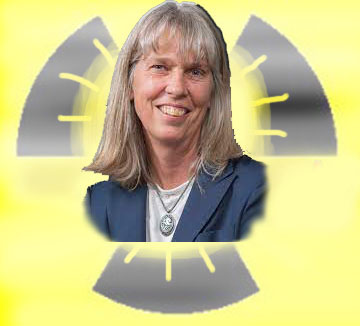
Biden nuclear nominee would continue Trump-era plutonium pit production plans, Defense News, By: Joe Gould WASHINGTON ― President Joe Biden’s nominee to oversee nuclear warhead development, Jill Hruby, said Thursday the U.S. should continue plans to ramp up production of plutonium cores, a key component in nuclear weapons, by using two sites.
Federal officials, under President Donald Trump, set a deadline of 2030 for increased production of the plutonium cores or pits, with work split between Los Alamos National Laboratory in New Mexico and the Savannah River Site in South Carolina ― which is 25 percent into a refit.
At stake are jobs and billions of federal dollars to upgrade buildings or construct new factories, and it’s been an open question whether Biden would review those plans.
Hruby, who would lead the National Nuclear Security Administration, said at her Senate confirmation hearing that expanding pit production is the “biggest issue” facing the agency. While Los Alamos is on track to produce 30 pits per year by 2026, plans to produce 50 pits per year at Savannah River have slipped, pushing the 80-pit target to “somewhere between 2030 and 2035,” she said.
As Senate Armed Services Committee Chairman Jack Reed, D-R.I., described it, nuclear modernization efforts ― which include five warhead programs and facility recapitalizations ― are fueling NNSA’s highest workload since the 1980s. The organization is a semiautonomous agency of the Energy Department.
Senate Strategic Forces Subcommittee Chairman Angus King, I-Maine, prompted Hruby to affirm that the 80-pit goal is part of nuclear maintenance and modernization vital for deterrence and peace.
“The number of pits that are projected to be needed are a minimum of 80 pits per year. That’s a significant capability at Los Alamos. If we were to do it all there, it would require much more infrastructure investment,” Hruby said, adding that the expansion at Savannah River “allows us to have a cost-effective program, use the talents across the NNSA complex.”
The panel’s top Republican, Sen. Jim Inhofe, whose support for an NNSA budget increase in 2019 fueled one of several clashes with then-Energy Secretary Dan Brouillette, recounted Thursday that he’d personally intervened with then-President Trump. In a sign Hruby’s nomination is in good shape, Inhofe said he agrees with her priorities around weapons programs, infrastructure and the workforce ― and he elicited her agreement to keep him informed of her progress.
However, one lawmaker was critical of the rising costs of nuclear weapons. Massachusetts Sen. Elizabeth Warren pointed to a “staggering” 29 percent increase in NNSA’s newly projected costs for sustaining and modernizing warheads over the next 25 years to $505 billion. Calling this “out of control,” Warren worried that overruns would crowd out the Energy Department’s important nonproliferation budget…….. https://www.defensenews.com/congress/2021/05/27/biden-nuclear-nominee-would-continue-trump-era-plutonium-pit-production-plans/
Biden’s Budget Proposal Funds Most of the World’s Dictators
Biden’s Budget Proposal Funds Most of the World’s Dictators https://davidswanson.org/bidens-budget-proposal-funds-most-of-the-worlds-dictators/ MAY 27, 2021 BY DAVIDSWANSON
 | |||
There’s nothing new about this, which is why I know it’s there before having seen the new budget proposal. The United States funds most of the world’s most oppressive militaries, sells them weapons, and trains them. It has done so for many years. But if you’re going to propose an enormous budget that relies on deficit spending, and you’re going to claim that a gargantuan military budget (bigger than the Vietnam War budget that derailed LBJ’s domestic priorities) is somehow justified, then I think you ought to have to stand and justify every bit of it, including the 40% or so of U.S. foreign “aid” that’s actually money for weapons and militaries — first and foremost for Israel.
As USA ramps up its nuclear weapons, China is urged to follow suit

China urged to increase sea-based nuclear deterrent amid US intensified strategic threat https://www.globaltimes.cn/page/202105/1224773.shtml By Zhang Hui May 28, 2021 Facing a serious strategic threat from the US, China was urged to increase the number of nuclear weapons, especially its sea-based nuclear deterrent of intercontinental submarine-launched ballistic missiles, to deter potential military action by US warmongers, Chinese military experts said on Friday, after reports that the US’ new defense budget will modernize its nuclear arsenal to deter China.
Having a nuclear arsenal appropriate to China’s position will help safeguard national security, sovereignty and development interests and establish a more stable and peaceful world order, which will be beneficial for the world, they said.The US defense budget, set to be sent to Congress on Friday, is expected to include investments in troop readiness, space, and the Pacific Deterrence Initiative aimed at countering China’s military existence in the region, and nuclear weapons technology, Reuters reported on Thursday.
However, Chinese military experts believe that US attempts of increasing military deployment in the Indo-Pacific region will not increase returns for the US as most countries in the region will not allow the flames of war initiated by the US to burn themselves.
The US would buy ships and jets and develop and test hypersonic weapons and other “next-generation” weapons systems to build capabilities to counter Russia and China. The total national security budget will be $753 billion, a 1.7 percent increase over the 2021 figure, Reuters said.
China has kept its defense spending at around 1.3 percent of GDP in recent years, which is far below the average global level of 2.6 percent, data shows. The US, by far the world’s top military spender, has spent about four times that of China in recent years.
Chinese analysts said China has never taken aim at US military spending, nor does China want to engage in any form of arms race with the US.
But the US has applied greater military pressure on China, sending warships and warplanes at an increasing frequency to the South China Sea and Taiwan Straits.
The US is also preparing what US media called its “biggest navy exercise in a generation with 25,000 personnel across 17 time zones,” as it’s preparing for a “possible conflict” with China and Russia.
The US attempted to deepen the militarization of space with its new budget plan, including its investment on future weapons. Considering that the US deems China its top imaginary enemy, China needs to increase the quantity and quality of nuclear weapons, especially submarine-launched ballistic missiles, to effectively safeguard its national security, sovereignty and development interests, Song Zhongping, a Chinese military expert and TV commentator, told the Global Times on Friday.
Some military experts said China should increase the number of its most advanced intercontinental ballistic missiles (ICBM), the DF-41, which has the longest operational range among all Chinese ICBMs.
Facing a serious strategic threat from the US, China was urged to increase the number of nuclear weapons, especially its sea-based nuclear deterrent of intercontinental submarine-launched ballistic missiles, to deter potential military action by US warmongers, Chinese military experts said on Friday, after reports that the US’ new defense budget will modernize its nuclear arsenal to deter China.
Having a nuclear arsenal appropriate to China’s position will help safeguard national security, sovereignty and development interests and establish a more stable and peaceful world order, which will be beneficial for the world, they said.
Song said that strengthening sea-based strategic nuclear deterrence is also an important direction for China’s future development, as these weapons are better at stealth and secondary nuclear strikes.
China could use its most advanced submarine-launched ballistic missile (SLBM) to effectively counter the US threat, Song said.
China just commissioned three PLA Navy warships, namely the Changzheng 18, the Dalian and the Hainan, at a naval port in Sanya, South China’s Hainan Province in April. Observers identified the Changzheng 18 as a likely Type 09IV nuclear-powered strategic ballistic missile submarine.
Burning themselves
The US Pacific Deterrence Initiative, created to counter China, focuses on competition in the Indo-Pacific and aims to boost US preparedness in the region by funding radars, satellites and missile systems, according to Reuters.
Wei Dongxu, a Beijing-based military expert, told the Global Times on Friday that the initiative enables the US to use a variety of spy satellites to conduct reconnaissance and intelligence gathering to provide extensive and accurate intelligence support for US military operations, including joint military operations with its allies, and the US will also use allies, such as US overseas military bases, to deploy more radar systems to guide its weapons.
On the day its budget was sent to Congress, US Secretary of Defense Lloyd Austin was expected to meet with India’s Minister of External Affairs, Subrahmanyam Jaishankar, as part of India’s first cabinet-level visit to Washington, the Pentagon said.
“The secretary’s meeting with the external affairs minister will continue discussions that the two held in New Delhi in March and will continue the robust bilateral defense and security relationship between our two countries,” the Pentagon said.
Chinese military experts said it’s likely that India would buy more American weapons, have more military drills with the US or deepen its cooperation with the US in military intelligence sharing, and the US will use these in exchange for India’s cooperation for its Indo-Pacific strategy.
But India will have second thoughts on US military deployment on its soil, Song said, noting that weapons and radar deployment involves a country’s sovereignty, and India, which has been claiming to pursue an independent foreign policy, will unlikely give the US a satisfactory answer.
Even if India would like to deepen its military cooperation with the US, certain cooperation such as opening military bases to the US is not an option for India, Song said.
India may not be a very ideal partner, and most of US allies in Asia, including Japan and South Korea, also fear that the flames of war would eventually burn themselves.
In South Korea, protests against US military presence have become louder in the past years, and South Korea will not allow the US to turn Northeast Asia into a battlefield and drag itself into war, nor will it sacrifice its relations with China, observers said.
Zhang Junshe, a senior research fellow at the PLA Naval Military Studies Research Institute, told the Global Times on Friday that Australia is likely to allow the US to deploy more military equipment on its soil, making it the only US friend on its Indo-Pacific strategy.
By doing this, Australia will make itself a target for future military conflicts between the US and other countries, Zhang said, adding that a responsible government which really cares about the interests of its people would never allow it.
Ionising radiation the big danger to astronauts

NASA says that not only does space radiation potentially put astronauts at greater risk of radiation sickness, but an “increased lifetime risk for cancer, central nervous system effects, and degenerative diseases.”
Astronauts in space are exposed to the radiation equivalent of 150 to 6,000 chest x-rays https://www.revelstokereview.com/news/morning-start-astronauts-in-space-are-exposed-to-the-radiation-equivalent-of-150-to-6000-chest-x-rays/ May 28, 2021
As noted by NASA, radiation is a type of energy that is emitted in the form of rays, electromagnetic waves and/or particles. Radiation can be seen as visible light or felt as infrared radiation. However, some forms of radiation, like x-rays and gamma rays, are not visible.
Space radiation differs from the type of radiation experienced on Earth because intergalactic radiation “is comprised of atoms in which electrons have been stripped away as the atom accelerated in interstellar space to speeds approaching the speed of light – eventually, only the nucleus of the atom remains.”
So how much space radiation are astronauts exposed to? They’re exposed to “ionizing radiation with effective doses in the range from 50 to 2,000 mSv. 1 mSv of ionizing radiation is equivalent to about three chest x-rays. So that’s like if you were to have 150 to 6,000 chest x-rays.”
With that being said, NASA says that not only does space radiation potentially put astronauts at greater risk of radiation sickness, but an “increased lifetime risk for cancer, central nervous system effects, and degenerative diseases.”
Nuclear reactors in space, – enthusiasm by corporations and governments ignores the dangers.

You have to read through this article – about ”a major advance” – very carefully – to see that nothing much is really happening. You have to get to the end of the article =to learn how very dangerous is this plan. Of course there;’s no mention that (A) the whole thing is totally connected with militarism, and (B) only the tax-payer would be willing and able to pay for these space toys
Companies and government agencies propose nuclear reactors for space. The technologies could help the US Space Force monitor the region between Earth and the Moon Physics Today, Sarah Scoles 28 May 21, ,,……….
Someday, such a system could power and propel spacecraft or keep the lights on in lunar or Martian habitats. That sort of nuclear electricity source would be a major advance…..
Eric Felt, space vehicles director at the Air Force Research Laboratory (which supports both the air and space forces), spoke to Physics Today on behalf of the space force’s interests. The branch, he says, is monitoring developments in space-based nuclear reactors but not yet funding them. The recently established branch has no immediate plans to use off-Earth nuclear reactors and hasn’t determined if or how space fission fits into its portfolio. Felt says both the technological and policy barriers have shrunk; the obstacle that remains is to find a goal that needs nuclear fission.
One place where nuclear technology could fit is cislunar space—the expanse between Earth and the Moon.
……… McClure, Poston, and former Los Alamos associate director Andy Phelps have spun out their innovation into a company called Space Nuclear Power Corp, or SpaceNukes……..
SpaceNukes is not the only group working on nuclear reactors for cislunar “space domain awareness.” Among others, the Defense Advanced Research Projects Agency (DARPA) is pursuing a related project, the Demonstration Rocket for Agile Cislunar Operations, or DRACO. The craft would be propelled by a nuclear-thermal system and capable of surveilling a large area……….
Felt has met with the DRACO team and agreed to consider partnering with DARPA to transition the technology to the space force once it’s mature. The caveat—as with the Kilopower project—is that the space force must first find a “killer app” for it, says Felt. “Maybe ‘raison d’être’ would be more accurate,” he adds……. https://physicstoday.scitation.org/do/10.1063/PT.6.2.20210528a/full/
Sarah Scoles
……………..Nuclear reactors in space are not without hazards. Accidents involving nuclear reactors could put Earthlings at more risk than with conventional spacecraft. And any technology involving uranium could stir international objections, especially if it uses highly enriched uranium (HEU), as Kilopower does. “The problem with HEU is it’s weapons-grade material,” says McClure. “There’s always the concern that, if we lost it on launch, some bad person would recover it and do nefarious things.” Some policymakers and nonprofit groups worry that producing and using more HEU, which the US has worked to minimize for decades, poses proliferation risks.
The bomb-ready fuel isn’t banned completely, but its use would put the Kilopower design in the most stringent launch-approval category. The system can use a less-controversial fuel called high-assay low-enriched uranium, or HALEU, which does not carry the same proliferation risks, but it would add 700 kilograms to the reactor’s mass. “We prefer to use HEU because the system is lighter,” says Poston. But by using HALEU, DRACO’s launch approval would be greatly simplified. https://physicstoday.scitation.org/do/10.1063/PT.6.2.20210528a/full/
How the American war industry infiltrates education (extract from A People’s Guide to the War Industry )

A People’s Guide to the War Industry -2: Profits & Deception Consortium News 26 May 21, ”…………..Academia
Education in the United States exists within narrow confines. The working class educated in elementary and secondary schools are not given the opportunity to learn about capitalism, let alone the horrific nature and devastating effects of the U.S. war industry. They are not taught about how the interests of the ruling class (including the Pentagon’s leadership, industry executives, Wall Street financiers, and Congress) clash head-on with the interests of the working class. An uneducated population will not mobilize effectively against its oppressors. This atmosphere of ignorance greatly benefits the MIC.
The war industry and the Pentagon fund extensive science, technology, engineering, and math (STEM) initiatives across the U.S. and in allied countries. By attracting students into STEM careers, the war industry and the Pentagon prepare and safeguard their future. Industry promotion of STEM lays the groundwork for future design, engineering, and production capacity, while the Pentagon promotes STEM in order to foster a technologically literate workforce and future generations of enlisted troops who are capable enough to operate the war industry’s products. STEM efforts are comprehensive, covering a wide geographical area and all ages, from elementary through university.
Many universities in the United States are part of the U.S. war industry. The role of these academic institutions is threefold: research and develop technology, serve as a holding station (e.g. Harvard’s Belfer Center) for MIC elites before they rotate into government or corporate suites, and accept philanthropy from war profiteers thereby whitewashing capitalist brutality. The main academic participants in the war industry include but are not limited to the Massachusetts Institute of Technology (MIT), Johns Hopkins University, Stanford University, the University of Dayton, and Georgia Tech.
The U.S. government runs many research labs pursuing military and intelligence R&D. The Army Research Lab and the Intelligence Advanced Research Projects Activity are located in Maryland. The Defense Advanced Research Projects Agency (DARPA) and the Office of Naval Research are in Arlington, Virginia. The Air Force Research Lab is run out of Wright-Patterson Air Force Base, northeast of Dayton, Ohio, with branches in New Mexico and upstate New York. The U.S. Army Corps of Engineers’ Engineer Research & Development Center is in Vicksburg, Mississippi. Most work in and for these labs is carried out by corporations and academic institutions, not uniformed military personnel.
A report by the Government Accountability Office (GAO) issued in September 2020 detailed, “DOD does not know how contractors’ independent R&D projects fit into the department’s technology goals.”
“Brain drain” happens when industry herds intelligent people toward purposes of war, like when a graduate of an engineering school goes to work for a war corporation instead of a municipality. Humanity thus loses skilled human beings as a result. Brain drain is a great tragedy, and the war industry’s biggest success. In Boston, the U.S. Air Force alone funds ninety different research projects, according to the Air Force Secretary. And that’s just the publicly declared actions of one branch of the military in one city.
Lockheed Martin alone employs nearly 50,000 scientists and engineers, according to its CEO in her presentation to the Society of Women Engineers. Imagine if these minds were working on problems and projects for the betterment of humanity and the planet, instead of devising more ingenious ways to surveil or murder. Imagine the possibilities.
Effective science is based on free, open discussion. Military funding and stipulations (compartmentation, shoehorned focus, classification, near-term deadlines, stove-piped fields) oppose free, open discussion. Breakthroughs benefitting humanity rarely happen when people are tied to military-industry funding priorities, schedules, and narrow cognitive confines. Military and industry shun and condemn the polymath, the free thinker, and the uninhibited tinkerer. Military and industry embrace and fund the careerist, the complicit academic, the rigid functionary, the greedy corporatist, and the aspiring bureaucrat. Military-industry science may possess strong minds, but it does not often make the scientific breakthroughs society needs…… https://consortiumnews.com/2021/05/26/a-peoples-guide-to-the-war-industry-2-profits-deception/
1 This Month
Tell Congress: Prevent Nuclear Catastrophe in Iran

Tell Congress: Prevent Nuclear Catastrophe in Iran

Read the Public Inquiry Report, the Commissioners’ report, Surrendering Australia: The AUKUS Deception is available to download for free at aukuspublicinquiry.com. Or just watch the replay of the National Press Club Luncheon.


Shut down the radiation-damaged Heysham nuclear reactors now
To see nuclear-related stories in greater depth and intensity – go to https://nuclearinformation.wordpress.com

Say No to NASA’s Reckless Nuclear Reactor on the Moon
Say No to NASA’s Reckless Nuclear Reactor on the Moon
-
Archives
- November 2026 (246)
- October 2026 (302)
- September 2026 (339)
- August 2026 (330)
- July 2026 (355)
- June 2026 (287)
- May 2026 (306)
- April 2026 (356)
- March 2026 (251)
- February 2026 (267)
- January 2026 (308)
- December 2025 (358)
-
Categories
- 1
- 1 NUCLEAR ISSUES
- business and costs
- climate change
- culture and arts
- ENERGY
- environment
- health
- history
- indigenous issues
- Legal
- marketing of nuclear
- media
- opposition to nuclear
- PERSONAL STORIES
- politics
- politics international
- Religion and ethics
- safety
- secrets,lies and civil liberties
- spinbuster
- technology
- Uranium
- wastes
- weapons and war
- Women
- 2 WORLD
- ACTION
- AFRICA
- Atrocities
- AUSTRALIA
- Christina's notes
- Christina's themes
- culture and arts
- Events
- Fuk 2022
- Fuk 2023
- Fukushima 2017
- Fukushima 2018
- fukushima 2019
- Fukushima 2020
- Fukushima 2021
- general
- global warming
- Humour (God we need it)
- Nuclear
- RARE EARTHS
- Reference
- resources – print
- Resources -audiovicual
- Weekly Newsletter
- World
- World Nuclear
- YouTube
-
RSS
Entries RSS
Comments RSS

