Pentagon hawks circle Biden’s nuclear policy, Politico, By ALEXANDER WARD 09/23/2021 With help from Daniel LippmanThe forced dismissal of a top Pentagon nuclear official could mean curtains for President JOE BIDEN’s nuclear agenda.
Biden installed national security officials intent on negotiating new arms control treaties and curtailing nuclear weapons spending. One of them was LEONOR TOMERO, a leading voice for nuclear restraint on Capitol Hill and in the think tank community, who was appointed to oversee the Nuclear Posture Review that will set the administration’s nuclear weapons policy and strategy.
But officials with more traditional views on nuclear weapons, who promote a more hawkish nuclear agenda to include modernizing the land, sea and airborne legs of America’s nuclear arsenal, did not take kindly to Tomero’s progressive ideology, 11 current and former defense officials, as well as others with insight into the debate, told our own LARA SELIGMAN and BRYAN BENDER (with an assist from your host).
“Her appointment was something that people were immediately resistant to,” JEFFREY LEWIS, a professor and nuclear weapons expert at the Middlebury Institute for International Studies and host of the podcast Arms Control Wonk, told POLITICO. “People with very traditional views of nuclear weapons policy did not want someone in charge of the Nuclear Posture Review who might think differently about those issues.”
The Defense Department insists Tomero was nothing more than a casualty of a reorganization, leaving no space for her as her duties were moving to another office……….
Experts now worry that her removal signals the Nuclear Posture Review, or NPR, will not fully consider alternative options for maintaining the U.S. nuclear deterrent that might be less costly or evaluate new ways to carry out nuclear strategy.
“The decision to fire Leonor suggests to me that the first draft of NPR is going to be a continuation of the line of thinking we saw in the Trump administration’s NPR,” Lewis said. “They have put themselves on the course that is a first draft that is 180 degrees to what Biden said on the campaign trail.”
If that’s the case, one staffing change over at DoD might be the death knell for Biden’s hopes of changing U.S. nuclear policy for the foreseeable future.
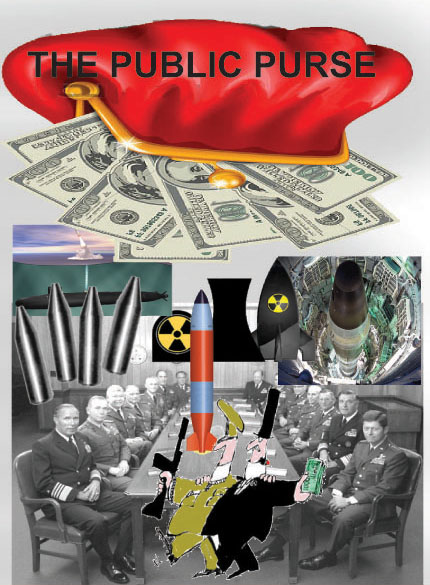
The United States is currently planning to upgrade the nuclear force to the tune of $634 billion over the next decade, according to a recent analysis by the nonpartisan Congressional Budget Office.
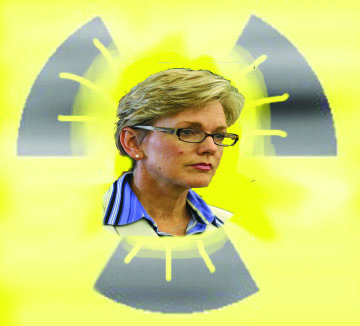
You really have to wonder just who Jennifer Granholm works for. Is it the American people, or is it the nuclear industry? She’s great at regurgitating nuclear lies about ”clean” nuclear
US lures Eastern Europe with nuclear power, $23t in clean [nuclear is NOT clean]energy market
By Frédéric Simon | EURACTIV.com 24 Sept 21, The climate crisis presents “a market opportunity for carbon-reducing technologies” such as nuclear power, said US energy Secretary Jennifer Granholm, teasing a $23 trillion market to countries in Central and Eastern Europe by 2030.
Low-carbon technologies “will be a 23 trillion-dollar market by the end of this decade,” which offers “an enormous potential to countries on both sides of the Atlantic,” Granholm said on Wednesday (22 September).
Speaking from Poland during an online press briefing, Granholm said the transatlantic market “will give us a chance to launch new business, new industries, to attract billions of dollars of new investment, and certainly to create millions of new jobs”………
In the US, President Biden’s ‘build back better‘ agenda includes an objective to have 100% of US electricity produced from “clean sources” by 2035, [nuclear is NOT clean] she explained, saying this involves reducing CO2 emissions by more than 50% by 2030 and cutting them down to net-zero by 2050……
Nuclear: ‘The reason we’re here.’
And nuclear power features highly among the US objectives.
“The reason we’re here in Poland is because we have been talking about a partnership in the area of nuclear,” Granholm said. “We’re really excited that we may have this partnership here with Poland”.
In October last year, Warsaw and Washington signed a 30-year intergovernmental agreement on future cooperation in the development of the Polish civil nuclear energy programme. And the US is in pole position to win those contracts.
“Our collaboration to develop Poland’s civil nuclear programme is vital to Poland achieving EU carbon reduction targets and to guarantee its energy security,” Granholm said. “That dispatchable, clean [nuclear is NOT clean] , uninterruptable power is the gold standard of what every nation is looking for” in their quest to reduce CO2, she explained.
In July, US nuclear power firm Westinghouse announced the launch of a front-end engineering and design study – or FEED – under a grant from the US Trade Development Agency to advance Poland’s nuclear energy programme.
SENATOR MARKEY ASKS BIDEN ADMINISTRATION FOR ANSWERS ON ELIMINATION OF KEY NUCLEAR POLICY POSITION AS PART OF DEPARTMENT REORGANIZATION https://www.markey.senate.gov/news/press-releases/senator-markey-asks-biden-administration-for-answers-on-elimination-of-key-nuclear-policy-position-as-part-of-department-reorganizationLead civilian official within the Office of the Secretary of Defense (OSD) was responsible for drafting the Nuclear Posture Review Washington (September 24, 2021) – Senator Edward J. Markey (D-Mass.) today wrote to President Joseph R. Biden to express concern about organizational changes at the Department of Defense in the midst of drafting the administration’s Nuclear Posture Review. On September 21, 2021 the Department of Defense announced that it removed the lead civilian official within the Office of the Secretary of Defense (OSD) responsible for drafting the Nuclear Posture Review, part of the Administration’s Integrated National Security Strategy.
“The Department of Defense stated that it eliminated the position of the Deputy Assistant Secretary for Nuclear and Missile Defense Policy, held by Leonor Tomero, as part of a reorganization within the Department. But according to press reports, Department officials may have driven Ms. Tomero from her position for challenging traditional views on the role of U.S. nuclear weapons.
“Congress needs to understand whether ideology played any role in Ms. Tomero’s dismissal. I am also concerned that the sudden departure of a top appointee, charged with presenting you options on the future of the U.S. nuclear weapons enterprise, will result in a draft Nuclear Posture Review that reflects the Cold War era’s overreliance on nuclear weapons, rather than your lifetime of work championing policies that reduce nuclear weapons risks.” A copy of this letter can be found HERE.
In his letter, Senator Markey requests responses to the following questions:
1. Why did the Defense Department eliminate the top civilian position in OSD responsible for the Nuclear Posture Review? Why was the position eliminated in the midst of that Review, as opposed to before it began or when it is completed? 2. Ms. Tomero’s demonstrated expertise in nuclear deterrence policy, arms control, and missile defense made her well-suited to lead and contribute substantively to the Nuclear Posture Review process. Why, given Ms. Tomero’s specific expertise on nuclear policy, was she removed from the Nuclear Posture Review process or why was she not reassigned to a position under the Assistant Secretary of Defense for Space Policy, who will be taking over responsibility for nuclear policy?
3. When did the Department of Defense inform Ms. Tomero that it had eliminated her position as a result of a reorganization? Which Department officials communicated with Ms. Tomero about her dismissal and when? I am particularly interested in any communications that occurred between or among Ms. Tomero, her then-boss Acting Assistant Secretary of Defense for Strategy, Plans, and Capabilities, Melissa Dalton, and Undersecretary of Defense for Policy Colin Kahl. After Ms. Tomero’s dismissal, did any senior Department leader communicate with her about the reason(s) for her dismissal?4. The Defense Department stated that the decision to eliminate the Deputy Assistant Secretary of Defense for Nuclear and Missile Defense Policy was part of a reorganization within OSD Policy. How will the reorganization change the current OSD Policy office structure? Which officials will take over the duties previously performed by the former Deputy Assistant Secretary position?
5. On September 22, 2021, Defense Department Spokesperson John Kirby said that “we have a wide-ranging team of experts working” on the Nuclear Posture Review. Please identify the individuals and organizations consulting on the Nuclear Posture Review, including paid contractors.
6. Mr. Kirby also said: “We’re going to continue to consider and include a wide range of viewpoints in the Nuclear Posture Review, including those from Administration Officials, of military leaders, academics and all others.” How will the Department ensure that the advice of individuals who do not support the default military reliance on nuclear weapons is included in this process?
7. The President’s 2021 Interim National Security Guidance stated that the Administration will “re-establish [its] credibility as a leader in arms control” and “take steps to reduce the role of nuclear weapons in [U.S.] national security strategy. How will you ensure that your guidance is reflected in the options the Department of Defense puts forth?
8. I understand that the Department of Defense expects that by 2022 an independent review will be completed to evaluate the technical feasibility of extending the life of the Minuteman III intercontinental ballistic missile (ICBM). To what extent will that independent review impact the options presented to you in connection with the Nuclear Posture Review and your Fiscal Year 2023 budget request
In July, Senators Edward J. Markey (D-Mass.), Jeffrey A. Merkley (D-Ore.) and Representatives Don Beyer (VA-08) and John Garamendi (CA-03), co-chairs of the Nuclear Weapons and Arms Control Working Group, led 18 of their colleagues in aletter calling on President Biden to actively guide the formation of the Department of Defense-led Nuclear Posture Review. The lawmakers urged the Administration to consider a series of bold actions that would fulfill the President’s pledge to reduce the role of “nuclear weapons in our national security strategy”.
The following letter is in this weeks Whitehaven News Dear Editor While our view at Lakes Against Nuclear Dump is that there should be a complete halt to the plan for one or more deep nuclear dumps, we are glad to hear that the Copeland Working Group have confirmed exclusion of the National Park and […]
The costs and consequences of America’s twenty-first-century wars have by now been well-documented — a staggering $8 trillion in expenditures and more than 380,000 civilian deaths, as calculated by Brown University’s Costs of War project. The question of who has benefited most from such an orgy of military spending has, unfortunately, received far less attention.
Corporations large and small have left the financial feast of that post-9/11 surge in military spending with genuinely staggering sums in hand. After all, Pentagon spending has totaled an almost unimaginable $14 trillion-plus since the start of the Afghan War in 2001, up to one-half of which (catch a breath here) went directly to defense contractors.
Suga further tweeted that he had asked for an early removal of the restrictions when he met with U.S. President Joe Biden in Washington in April and said the government “needs to continue its efforts in order to have similar import restrictions lifted in other countries and regions as well.” Japanese farm products now cleared for shipping to the United States include rice harvested in Fukushima, bamboo shoots from Iwate and shiitake mushrooms.
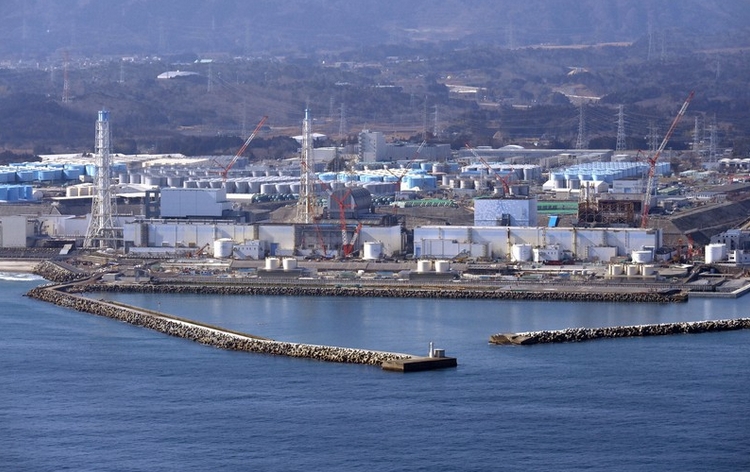
This Feb. 13, 2021 photo taken from a Mainichi Shimbun helicopter shows the Fukushima Daiichi nuclear power plant in Fukushima Prefecture.
September 22, 2021
TOKYO (Kyodo) — The United States has lifted all of its restrictions on imports of food products from Japan established in the wake of the 2011 Fukushima nuclear disaster, Japan’s farm ministry said Wednesday.
Under the restrictions, U.S. imports of a total of 100 agricultural products produced in 14 Japanese prefectures including Fukushima had been suspended.
Theother 13 prefectures were Aomori, Iwate, Miyagi, Yamagata, Ibaraki, Tochigi, Gunma, Saitama, Chiba, Niigata, Yamanashi, Nagano and Shizuoka.
Welcoming the U.S. decision, Prime Minister Yoshihide Suga said Wednesday on Twitter, “It is a move that people in the disaster-hit areas have been waiting for, and something that will greatly contribute to the recovery of those places. Japan welcomes this step very much.”
Suga further tweeted that he had asked for an early removal of the restrictions when he met with U.S. President Joe Biden in Washington in April and said the government “needs to continue its efforts in order to have similar import restrictions lifted in other countries and regions as well.”
Japanese farm products now cleared for shipping to the United States include rice harvested in Fukushima, bamboo shoots from Iwate and shiitake mushrooms.
“The abolition of U.S. import restrictions will have a great impact on other countries and regions,” a ministry official said.
The European Union also plans to ease import restrictions on Japanese farm and food products on Oct. 10, the Ministry of Agriculture, Forest and Fisheries said Tuesday.
According to the ministry, the United States is the third-largest importer of Japanese farm and food products after Hong Kong and China.
Japanese exports of farm products and food to the United States totaled 118.8 billion yen ($1.09 billion) in 2020.
With the United States’ lifting of import restrictions, effective on Tuesday local time, the number of countries and regions imposing such measures on Japanese farm and food products decreased to 14.
In the wake of the meltdown at the Fukushima Daiichi nuclear power plant following a massive tsunami caused by a magnitude-9.0 earthquake on March 11, 2011, 55 countries and regions placed restrictions on imports of Japanese farm and food products amid fear of potential contamination with radioactive materials.
Japanese farmers, particularly those in the region close to the Fukushima nuclear plant, have gone to great lengths to regain consumer trust in their products at home and abroad, including compliance with strict safety inspections. Nonetheless, concerns over the quality of such products still linger.
The farm ministry plans to urge the 14 countries and regions including Hong Kong and China to abolish the remaining import restrictions on Japanese products.
Meanwhile, despite the latest U.S. measure, some food products subject to Japan’s own export restrictions cannot be shipped overseas.
A trial cultivation of vegetables is carried out in the Nagadoro district of Iitate, Fukushima Prefecture, in August.
September 22, 2021
Citing ‘robust control measures,’ the United States on Wednesday lifted an import ban on food products from prefectures hit by the earthquake, tsunami and triple meltdown disaster that struck northeastern Japan in 2011.
The ban, which was put in place following the tsunami-triggered meltdowns at the Fukushima No. 1 nuclear power plant, affected 100 agricultural, forestry, fishery and food products from 14 prefectures, including rice and shiitake mushrooms produced in Fukushima.
The other 13 prefectures were Aomori, Iwate, Miyagi, Yamagata, Ibaraki, Tochigi, Gunma, Saitama, Chiba, Niigata, Yamanashi, Nagano and Shizuoka.
Ten years after the accident, the number of countries and regions that have imposed import restrictions now totals 14, down from the initial 55.
The news was immediately welcomed in Japan, where officials have long insisted that products from the disaster-hit regions are safe to consume.
“This decision has been long-awaited by people in the disaster-stricken areas, and it will be of great help in their recovery efforts.” Prime Minister Yoshihide Suga tweeted on Wednesday. “Japan greatly welcomes this decision.”
Suga added that he was “deeply moved” by the U.S. policy change.
“I personally lobbied President (Joe) Biden for the early elimination of the ban during my visit to the United States in April,” Suga added. “The government must continue to work together to eliminate import restrictions in each country and region.”
In announcing the move, the U.S. Food and Drug Administration cited “extensive analysis of Japan’s robust control measures,” and pointed to 10 years of sampling of food products from Japan.
The decision came after the FDA determined “a very low risk to American consumers from radioactive contaminated foods imported from Japan,” the agency said a statement.
The EU has also decided to relax its related import restrictions next month.
The export value of Japanese agricultural products and food items to the U.S. was ¥118.8 billion in 2020, making it Japan’s third largest export destination after Hong Kong and China, according to the ministry.
“The impact of (the United States’ move) is huge,” an agriculture ministry official said, expressing hope that countries still imposing restrictions will be encouraged to ease or lift them.
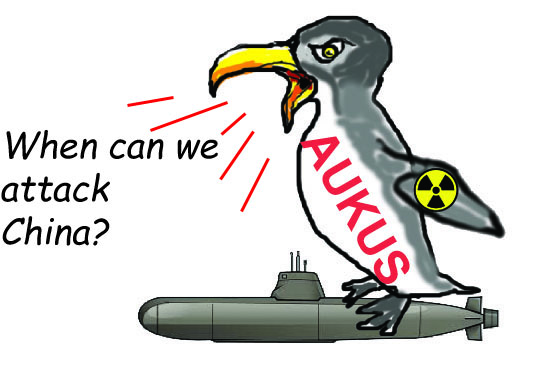
Paul Keating has explained the folly of antagonising China, constantly provoking further militarisation. Regional countries are concerned at the heightened militarisation, and the passage of nuclear submarines through their waters. The use of Highly Enriched Uranium (HEU) fuel brings risks of weapons proliferation. Now the previously nuclear-free zone looks like soon to be bristling with nuclear weapons .
And the big corporations that rule USA policy, UK policy, and now Australian policy, will be rejoicing. Watch as UK’s BAE Systems and USA’s General Dynamics fight it out for the loot from Australian tax-payers.
The release of treated water into the ocean was explained 532 times in advance…
A request for information disclosure made by NHK has revealed that the government claimed to have held a total of 532 “opinion exchanges” and “briefing sessions” regarding the increasing amount of treated water at the TEPCO’s Fukushima Daiichi Nuclear Power Plant in the year leading up to April 2012, when it decided to release the water into the ocean. On the other hand, even after the decision was made, there are still strong opposition to the release of radioactive materials from fishermen in the prefecture, raising questions about the nature of the discussions.
The government says that the decision to release treated water from the Fukushima Daiichi Nuclear Power Plant into the sea was made after listening to the opinions of related parties, based on the report of a national sub-committee which said that “release into the sea or the atmosphere is realistic. However, even after the decision was made, a series of resolutions and opinion letters opposing the policy were issued by fishery groups and parliamentary assemblies in Fukushima Prefecture, claiming that there was not enough discussion. Therefore, NHK requested the Ministry of Economy, Trade and Industry (METI), which is in charge of the policy, to disclose the documents showing what discussions the government had with the relevant parties before the decision was made.
In response, the Ministry of Economy, Trade and Industry (METI) disclosed a list of the subjects and dates of “opinion exchanges” and “briefing sessions” held between January 31, 2011, when the national subcommittee compiled its draft report, and April 13, 2011, when the government decided on the policy of oceanic release.
According to the list, a total of 532 “opinion exchanges” and “briefing sessions” were held in and outside of Fukushima Prefecture over a period of more than one year and two months. The average number of times per day is two per point, with the highest number of times per day being 14. The breakdown of the targets, in descending order of frequency, is as follows: heads of local governments in the prefecture 83 times, fishery-related organizations 74 times, and local government councils 72 times. On the other hand, consumers were interviewed 18 times, the tourism industry 12 times, the head of a local government outside the prefecture 23 times, and the assembly of a local government outside the prefecture 15 times.
Masahiro Matsuura, a professor at Meiji University’s Graduate School of Public Policy who is an expert on science and technology policy and consensus building, said, “It is possible that there was a lack of dialogue in the sense of gaining understanding,” and added, “Having a meeting is not necessarily the same as dialogue, and if it is a one-way explanation meeting, it is no different from an online video or television. Dialogue is only possible when the participating fishermen and the general public speak out and the explanation is given in the form of a catch-all game. Even if an opinion is received, if the bureaucrat without authority continues to say, ‘We will take it back to Tokyo for consideration,’ it is not dialogue. If the prime minister, ministers, and other people who can make substantive decisions came to the meeting and answered specific questions on the spot, it might not have been necessary to hold the meeting as many times. It will be important to evaluate the state of the debate over treated water over time,” he said.
Fishermen: “There was no discussion. The government has held more than 70 “opinion exchanges” and “briefing sessions” with fishermen, but after the policy was decided, fishermen in Fukushima Prefecture said that the decision was unilateral. In July 2020, the Soma Futaba Fishermen’s Cooperative Association in the northern part of the prefecture held a total of four briefing sessions for fishermen belonging to the cooperative, divided into four districts. However, according to the fishermen who participated in the briefings, most of the briefings were about the report compiled by the subcommittee, and they rarely exchanged opinions with each other about the disposal method or reputational measures. Mr. Masahiro Kikuchi, the vice president of the association, said, “At the time of the briefing, we hadn’t decided whether to release the waste into the ocean or into the air, and there were no concrete explanations about measures against harmful rumors. There were no further meetings, and I feel that the decision was made unilaterally. I think that if they had held monthly meetings with young fishermen, including those who will be responsible for the future of the fishery, and listened to their opinions, they would have come up with an answer that would have satisfied some, if not all, of them.
Co-op: “Not enough explanation to consumers” More than 70 “opinion exchanges” and “briefing sessions” were held for fishermen, heads of local governments and assemblies in the prefecture, but only 18 briefings were given to consumers. At Fukushima Prefecture’s Co-op Fukushima, where about 200,000 households in the prefecture are members, no briefing was held by the government before the policy was decided. Shunkichi Nonaka, the general manager of the co-op, said that he feels that there was an overwhelming lack of opportunities to hear the opinions of consumers, some of whom are opposed to the release of radioactive materials into the ocean due to safety concerns. Mr. Nonaka said, “All citizens are consumers, and I thought it was necessary to give a broad explanation to consumers, but I think the government and TEPCO did not give enough consideration to this. I think the government and TEPCO should have consulted with us before deciding on the policy of releasing radioactive materials into the ocean and asked us what we thought about it.
The government official said, “We discussed it to a great extent. Regarding the fact that the government and related parties held more than 500 opinion exchanges and briefing sessions over a period of about one year and two months, Mr. Masato Kino, Counselor of the Agency for Natural Resources and Energy of the Ministry of Economy, Trade and Industry, said, “We have been visiting related parties who are likely to be affected by the rumors due to the disposal of the treated water, and our staff members have been working together to make a list of them. We believe that we have exchanged opinions with all kinds of people to a considerable extent. There were people who opposed the release of treated water into the ocean, but I believe we have incorporated the opinions we have heard into our decision-making process. As for the fact that we have not gained the understanding of fishermen and others regarding our policy on the release of radioactive materials, he said, “We are doing our best to prevent rumors. I think we are still at the stage where people don’t feel safe, so our mission is to do our best. https://www3.nhk.or.jp/lnews/fukushima/20210921/6050015878.html?fbclid=IwAR22Y7RVJ8eTn7_tON6pDmtV6PdnMZU1BAULMXLY-JseTew3 glnFBLeKhvs
With women still underrepresented in nuclear policymaking and national security planning while being disproportionately impacted by nuclear weapons due to ionizing radiation from their use, testing, manufacturing, storage, and transport, Lazaroff reimagines and redefines national security with her Women Transforming Our Nuclear Legacy (WTONL) global online mentoring program.
Convinced that strong leadership demands “new thinking, not new weapons,” WTONL’s gathering of minds–with U.S. and Russian women experts and citizen diplomats reimagining security–has engaged 400 women from 40 countries including eight of the nine nuclear-armed states.
Excluding women–half of the human race–for much of the nuclear age has brought us to the brink of possible extinction,” Lazaroff advocates for a feminist foreign policy. “We need dialogue over silence, engagement over isolation, cooperation and diplomacy over conflict and war.”
After Her Nuclear Disaster Dress Rehearsal, Cynthia Lazaroff Has A Wake-Up Call For Our World As We Sleepwalk Into Nuclear ExtinctionJackie AbramianForbesWomen, 22 Sept 21, “There are nearly 13,500 nuclear warheads in current arsenals of nine nuclear-armed states. That the U.S. has more nuclear warheads than hospitals should be a wake-up call,” says award-winning documentary filmmaker, environmentalist, nuclear weapons abolition activist, Cynthia Lazaroff who having lived through a 38-minute nuclear cataclysm dress rehearsal in January 2018, hopes to wake up our world to the looming threat of sleepwalking into a nuclear disaster.
Lazaroff’s wake-up call came on the morning of January 13, 2018, when, along with all Hawaiian residents, she received a text: “Emergency Alert: Ballistic Missile Threat Inbound to Hawaii. Seek Immediate Shelter. This is not a drill.” As the reality of the moment unfolded, she scurried about her home, as a nuclear age refugee, hastily deciding which objects to take to the security of a nearby cave–while desperately trying to reach her daughter’s cellphone to let her know, perhaps for the last time to say “goodbye and I love you.” She detailed the harrowing 38-minutes–later confirmed as a false alarm–in her Dawn of a New Armageddon, published on August 6, (Hiroshima Day) in The Bulletin of the Atomic Scientists.
The experience led Lazaroff to found NuclearWakeUpCall.Earth a nonprofit, nonpartisan organization committed to abolishing nuclear weapons with a focus on the U.S. and Russia–which combined have over 90% of the world’s nuclear weapons. She is also on the Board of American Committee for U.S.-Russia Accord, which issued an open letter calling for a new era of diplomacy and engagement between the U.S. and Russia prior to the Biden-Putin summit. She applauds the resumed Biden-Putin dialogue and the “signs of hope”–the New START treaty extension for another five years, Secretary John Kerry’s Moscow visit and meetings with Minister of Foreign Affairs Lavrov as “realizing our shared interest to address the existential threat of climate change,” and the late July U.S.-Russia strategic stability talks in Geneva following the Summit.
“Our demonization of Russia, N. Korea, Iran, and China is justifying the continued military buildup. In 2020, during the global pandemic, the nine nuclear-armed states spent nearly $73 billion on nuclear weapons–over $137,000 per minute, with the U.S. spending over half of this total–$37.4 billion, $70,881 per minute,” Citing Elisabeth Eaves’ article on the newly commissioned $100 billion ground based strategic deterrent (GBSD), Lazaroff underscores the “insane” might of the military industrial complex amidst layers of existential threats of climate change, the pandemic, and racial and socio-economic injustices of our world.
Another sign of hope is 122 countries adopting the Treaty on the Prohibition of Nuclear Weapons (TPNW) with 86 signatory states, while 55 countries have ratified the treaty which entered into force this January. The first treaty Lazaroff says, that is “based not on military law but on humanitarian law” addressing “nuclear colonialism and radioactive racism, the disproportionate impact of nuclear weapons on indigenous peoples, and on women and girls due to ionizing radiation. It is also the first providing assistance to victims of nuclear use and testing and for the remediation of contaminated environments.”
Even with everything I knew about nuclear weapons, nuclear war was unimaginable to me until I lived through those 38 minutes. Now this experience lives inside of me as a mother, as a human being, with a responsibility to wake up and transform our nuclear legacy. It’s never going to go away until we eliminate the risk 100%–I know eliminating nuclear weapons is a tall order. I have no illusions about the formidable obstacles, but we must act. We still have a chance to get this right,” Lazaroff offers a Nuclear Playbook–a 10-step action program with critical recommendations for averting a nuclear catastrophe put forth by Congressional leaders, arms control and security experts, and NGOs such as the Nuclear Threat Initiative (NTI), William J. Perry Project, Ploughshares Fund, Global Zero, Bulletin of the Atomic Scientists, Nuclear Age Peace Foundation, Back from the Brink, among others…………..
Decriminalizing Diplomacy of Peace
“Part of my work is to decriminalize diplomacy with Russia, North Korea, Iran and China. It’s omnicidal behavior not to talk to your nuclear adversary. You can’t just obtain denuclearization on the Korean Peninsula without changing the relationship, without creating the conditions for peace,” says Lazaroff.
The “commercially driven millisecond news cycles,” harboring the “us vs. them” mentality fuels greater divides, “deterring alliance around shared global threats, while lacking introspection,” Lazaroff believes. She commends JFK’s 1963 American University speech, ‘Strategy of Peace’ following the Cuban Missile Crisis when JFK courageously called for ‘introspection’, not to be ‘blind to our differences,’ and addressed our common and ‘mutually deep interests’ with the Soviet Union ‘in a just and genuine peace and in halting the arms race.’
Last week’s AUKUS announcement was nothing more than PR stunt in Australia, with the government merely committing to spend the next 18 months deciding what to buy—which conveniently kicks any actual the decision far enough down the road to avoid the next federal election.
Has PM put Australia on the hook to finance struggling UK, US submarine projects? Michael West Media, By Marcus Reubenstein| September 23, 2021,
“Almost comical”. Experts lambast Scott Morrison’s “crazy” AUKUS deal to buy nuclear submarine tech from parlous UK and US programs. Marcus Reubenstein finds a real prospect Australia will be used to “underwrite” the foundering foreign submarine industry.
Twenty-five years of ongoing maintenance delays for nuclear submarines, chronic shortage of both parts and skilled workers, under capacity at shipyards, and attack class submarines missing from deployments for up to nine months. These sound like potential problems for Australia’s future nuclear submarine fleet but they are actual problems right now confronting the US Navy and its fleet of 70 submarines.
The US is at the cutting edge of nuclear propulsion. It has the largest and most sophisticated submarine fleet in the world, its first nuclear submarine was commissioned 67 years ago, and the US has literally decommissioned twice as many nuclear subs as Australia is planning to buy.
If the US cannot manage to keep its fleet in the water, how can the Morrison government commit up to $100 billion of taxpayer money to secure nuclear submarines and guarantee they will be always operational and ready for deployment?
Professor Hugh White, ANU Professor of Strategic Studies, former Deputy Secretary of Defence and an eminent figure in strategic policy, wrote in The Saturday Paper, “The old plan was to build a conventionally powered version of a nuclear-powered French submarine. It was crazy.”
“The new plan—to buy a nuclear-powered submarine instead—is worse”.
Says White, “There is a reason why only six countries, all of them nuclear-armed, operate nuclear powered subs.”
The sales pitch is underway
Last week’s AUKUS announcement was nothing more than PR stunt in Australia, with the government merely committing to spend the next 18 months deciding what to buy—which conveniently kicks any actual the decision far enough down the road to avoid the next federal election.
The ripples of the announcement, however, reached British shores in double-quick time. Just two days after the AUKUS alliance UK Defence Secretary Ben Wallis announced a $320 million (£170m) grant to be shared between BAE Systems and Rolls Royce to develop technology for Britain’s next generation submarines.
According to Department of Finance figures, In the past twelve months BAE Systems has collected $1.88 billion from Australian taxpayers. The Astute class submarine, touted as one of the two options Australia is considering, is manufactured by BAE Systems.
US Naval analyst, and Forbes Defense columnist, Craig Hooper predicts AUKUS could give the US Navy a big shot in the arm as well. He says a deal with Australia could effectively underwrite major improvements to the US Navy’s outdated submarine maintenance facilities by supporting “America’s decade-long, $US25 billion ($34.6 billion) effort to refit the U.S. Navy’s four aging public shipyards. With yard repair costs already high, America would go to great lengths to welcome any additional bidders for shipyard capability improvements.”
US subs in dry dock In a report published six months ago, the US Congressional Budget Office (CBO) found: “The Navy’s four shipyards have experienced significant delays in completing maintenance on its submarines (all of which are nuclear-powered).” ………. Should Australia go down the nuclear sub path what choice will it have other than to outsource the fleet’s maintenance? …..
Her Majesty’s sub optimal fleet
Britain, touted as the alternative nuclear submarine supplier to Australia, has problems of its own. The Royal Navy operates ten submarines, only four of them were designed and commissioned this century.
Like their American nuclear counterparts there are systemic problems keeping these subs in service……
The AUKUS decision to equip Australia with SSNs not only is a fool’s errand but also could pose a grave threat to regional and international security.
Australia’s acquisition of SSNs under AUKUS could well open a Pandora’s box of proliferation with non-nuclear-weapon states such as Argentina, Brazil, Canada, Iran, Japan, Saudi Arabia and South Korea among others also going in for nuclear-powered submarines and keeping nuclear fuel (both low- and highly-enriched uranium) outside the scope of IAEA safeguards. This would weaken the IAEA safeguards (verification) system already facing challenges from new technologies and open up possibilities of diversion of nuclear material for nuclear weapons.
After first suffering a seeming “brain snap” to acquire a fleet of nuclear-powered submarines (SSNs) some years back, at long last Australia has been promised a fleet of eight SSNs by the Biden administration under the newly minted and awkwardly named AUKUS (Australia, United Kingdom and United States) alliance against China.
Fresh from an ignominious debacle in Afghanistan that led to that bedevilled country once again falling under the repression of the murderous Taliban, the Biden administration has capped off its recent Afghan escapade by driving a stake through the global nuclear non-proliferation regime through its ill-advised decision to supply SSNs and related technology to Australia.
The problem
Nuclear-powered submarines of the United States (and the United Kingdom) reportedly are fuelled with highly-enriched uranium (HEU) of 93 per cent to 97 per cent enrichment level that can last for up to 33 years — this is the same enrichment level as for use in nuclear weapons. In contrast, French nuclear-powered submarines run on low-enriched uranium 5 per cent to 7.5 per cent enrichment level and need to be refuelled on average after about 10 years but do not need weapon-grade enriched uranium.
Nuclear ship propulsion technology and reactor design for military vessels as well as the isotopic composition and quantity of their nuclear fuel remains highly classified. When Canada was considering acquiring a fleet of SSNs in 1987, the two potential suppliers were France (Rubis/Améthyste-class) and the United Kingdom (Trafalgar-class).
In the case of the United Kingdom, Canada was informed that US Congressional approval would be required for the UK to construct and supply SSNs (with US design reactors and nuclear fuel) to Canada. The nuclear ship propulsion reactor design and nuclear fuel information would be subject to a high level of classification. With this requirement for secrecy, Canada would not have been able to provide detailed information to the IAEA under its Treaty on the Non-Proliferation of Nuclear Weapons (NPT) safeguards agreement (INFCIRC/164) thereby creating a loophole or gap in IAEA safeguards coverage in Canada. A certain (likely unspecified) large quantity of HEU for naval nuclear fuel would be taken out of safeguards for use in the SSNs and the spent fuel coming out the boats after 30 years or more also would be subject to secrecy. Thus the IAEA would not be able to measure the quantity or isotopic composition or to verify the HEU in naval use.
The IAEA Additional Protocol, to safeguards agreements, provides for the “broader conclusion” regarding the absence of undeclared nuclear material or activities. As such, to be clear and precise, were Australia to withhold from the IAEA information on and access to its naval nuclear fuel, then the IAEA would be unable to provide a broader conclusion for Australia under its additional protocol INFCIRC/217/Add.1.
Australia and the two other AUKUS states have communicated to the IAEA director general their intention for the Royal Australian Navy to acquire a fleet of SSNs and this means that at some future time Australia would be invoking paragraph 14 of its NPT safeguards agreement to exclude significant quantities of highly-enriched uranium for naval nuclear fuel. Thus, the claim by AUKUS states “that a critical objective of this cooperation will be to maintain “the strength of both the nuclear non-proliferation regime and Australia’s exemplary non-proliferation credentials” and that they will be “engaging with the IAEA throughout the coming months” is at best an oxymoron.
It should be matter of serious concern for the IAEA board of governors that the “IAEA will engage with them [AUKUS] on this matter in line with its statutory mandate, and in accordance with their respective safeguards agreements with the agency” — as this does not make much sense in that the paragraph 14 provisions on keeping HEU naval nuclear fuel out of safeguards apply only to Australia and not to the UK and the US (the latter two being nuclear-weapon states).
The only responsible course for the IAEA board of governors should be to warn Australia regarding the deleterious effects on safeguards should it implement paragraph 14 provisions and keep large quantities of HEU for its fleet of SSNs outside of IAEA safeguards. The IAEA board would be well advised to reject any request placed before it from Australia or from any other NPT non-nuclear-weapon state to implement paragraph 14 provisions. Rather, the board should take the responsible decision to revoke application of paragraph 14 of INFCIRC/153 (Corr.) and in all related safeguards agreements, much like the board rescinded the original provisions of the Small Quantities Protocol in 2005.
Australia’s acquisition of SSNs under AUKUS could well open a Pandora’s box of proliferation with non-nuclear-weapon states such as Argentina, Brazil, Canada, Iran, Japan, Saudi Arabia and South Korea among others also going in for nuclear-powered submarines and keeping nuclear fuel (both low- and highly-enriched uranium) outside the scope of IAEA safeguards. This would weaken the IAEA safeguards (verification) system already facing challenges from new technologies and open up possibilities of diversion of nuclear material for nuclear weapons. The AUKUS decision to equip Australia with SSNs not only is a fool’s errand but also could pose a grave threat to regional and international security.
This article was first published by the Toda Peace Institute and is reproduced with permission. Tariq Rauf was formerly head of verification and security policy coordination, office reporting to the director general of the International Atomic Energy Agency and previously advised Canada’s parliamentary committees on national defence and foreign affairs.
The twisted stems of Scots pines have been attributed to mutations caused by radiation exposure
Exposure to radiation from the 1986 Chernobyl accident had a lasting negative legacy on the area’s trees, a study has suggested. Researchers said the worst effects were recorded in the “first few years” but surviving trees were left vulnerable to environmental stress, such as drought.
They added that young trees appeared to be particularly affected. Writing in the journal Trees, the team said it was the first study to look at the impact at a landscape scale. “Our field results were consistent with previous findings that were based on much smaller sample sizes,” explained co-author Tim Mousseau from the University of South Carolina, US.
“They are also consistent with the many reports of genetic impacts to these trees,” he told BBC News. “Many of the trees show highly abnormal growth forms reflecting the effects of mutations and cell death resulting from radiation exposure.”
How to lose friends and infuriate people, SMH, Niki Savva 22 Sept 21 Scott Morrison’s momentous national security announcement last week should have been a turning point for him and the government. Instead, because he delayed making one tough call, leaving himself open to accusations of backstabbing and deception from a great friend and ally, he robbed himself of a much-needed reset.
A few days later he again squibbed what should have been a straightforward decision involving a senior colleague, on a matter which goes to the heart of transparency and probity.
Both were about trust. Both provided insights into the most troubling aspects of Morrison’s character and management style. Both have left a very bad smell.
The first was the big-bang unveiling of the new Anglospheric alliance – upending decades of diplomatic endeavours in Asia – which included the planned acquisition of nuclear submarines from the US or the UK.
By waiting until the night before the announcement to advise President Emmanuel Macron (Morrison’s office refuses to answer when asked if they actually spoke) he was torpedoing the $90-billion contract with France for conventional submarines, he guaranteed they went nuclear.
The second sounded like a transmission from a parallel universe. Morrison presented Christian Porter’s resignation from Cabinet as industry minister after refusing to disclose names of anonymous donors as the action of a man upholding standards………………….
Over breakfast, Australians watched Morrison standing beside a man who could not remember his name, who looked like he should have stayed in bed, and another man who looked like he had just got out of bed.
Sleepy Joe Biden, fresh from the Afghanistan withdrawal disaster, and Boris Johnson, who has had trouble counting the number of children he has, desperately seeking to create a place for Britain in the world post-Brexit.
One of Australia’s most senior and most respected former diplomats, John McCarthy, who chafes at the overhyping of the deal while not dismissing its importance, is still mulling over its implications. But he seems sure about one thing: none of those three leaders is up to the challenges which lie ahead.
McCarthy says Morrison has limited experience and probably lacks the smarts. Biden is not a bad man but is mediocre, and if Lord North, prime minister from 1770 to 1782 during most of the American War of Independence, is the worst the UK has ever produced, then Johnson is right up there with him.
Tell Congress: Prevent Nuclear Catastrophe in Iran
Read the Public Inquiry Report, the Commissioners’ report, Surrendering Australia: The AUKUS Deception is available to download for free at aukuspublicinquiry.com. Or just watch the replay of the National Press Club Luncheon.