Despite pre-election promises, Biden administration is continuing Trump’s costly nuclear weapons modernisation.

In terms of nuclear policy, the Biden administration, for its part, seems set on continuing much of the strategic weapons modernization that was already underway during the Trump administration, despite the president-elect making calls for reducing spending on nuclear weapons, even stating that “the United States does not need new nuclear weapons.”…..……
despite pre-election rhetoric about pursuing a “sustainable nuclear budget,” the nuclear weapons plans of the current administration are more or less business as usual
Newly Declassified Data Shows Unexplained Increase In U.S. Nuclear Warhead Stockpile
There had been no increases in the stockpile for over 25 years before this data point was released.
BY THOMAS NEWDICK OCTOBER 7, 2021, The Drive, In the latest official public count, the U.S. military possesses a stockpile of 3,750 nuclear warheads, with approximately 2,000 more that have been retired and are awaiting disposal. Under the Trump administration, however, a small but unusual bump in stockpile size occurred between 2018 and 2019, according to these same figures. The unexplained increase in the total number of warheads in inventory is apparently only the second reported instance of its kind since the end of the Cold War.
The revelations are among newly declassified details of nuclear weapons numbers in a recently published fact sheet from the U.S. Department of State with the title Transparency in the U.S. Nuclear Weapons Stockpile. This is the first time such data has been released since September 2017, after which the Trump administration took the decision to classify the information.
The revelations are among newly declassified details of nuclear weapons numbers in a recently published fact sheet from the U.S. Department of State with the title Transparency in the U.S. Nuclear Weapons Stockpile. This is the first time such data has been released since September 2017, after which the Trump administration took the decision to classify the information.
While there is no information immediately available to explain that 20-warhead increase, FAS suggests that one possibility is the production of the controversial low-yield W76-2 nuclear warheads for the U.S. Navy’s Trident D5 submarine-launched ballistic missiles.
The-then presidential candidate Joe Biden warned before taking office that fielding the W76-2 was a “bad idea” and that the warhead’s existence makes the U.S. government “more inclined to use them” than in the past…………..
The timing of the latest nuclear warheads fact sheet coincides with a review of nuclear weapons policy and capabilities by the Biden administration. Declassifying the nuclear stockpile information is also likely geared toward next January’s Nuclear Non-Proliferation Treaty conference, in which nuclear powers who have signed the treaty — among the United States, Russia, the United Kingdom, France, and China — will address the issue of disarmament commitments………….
As The War Zone has examined in the past, New START places hard limits on the total number of strategic nuclear weapon delivery systems, as well as the warheads that they carry, that each country can possess. The arrangement is seen as being key to preventing a new nuclear arms race between the two powers and the Biden administration is apparently keen to negotiate new arms control deals with Russia, especially given the collapse of the Intermediate-Range Nuclear Forces Treaty, or INF, in 2019.
In terms of nuclear policy, the Biden administration, for its part, seems set on continuing much of the strategic weapons modernization that was already underway during the Trump administration, despite the president-elect making calls for reducing spending on nuclear weapons, even stating that “the United States does not need new nuclear weapons.”………..
despite pre-election rhetoric about pursuing a “sustainable nuclear budget,” the nuclear weapons plans of the current administration are more or less business as usual. The hopes of some analysts that the United States might even do away with the ICBM leg of its nuclear triad were swiftly dashed, the Biden administration quickly committing itself to the primacy of the nuclear triad itself — ICBMs, nuclear-capable Air Force bombers, and submarine-launched ballistic missiles. All of those areas are undergoing a process of modernization……… https://www.thedrive.com/the-war-zone/42666/newly-declassified-data-shows-unexplained-increase-in-u-s-nuclear-warhead-stockpile
Scottish police alerted to ‘suspicious activity’ of Taliban ally near nuclear weapons base,
Scottish police alerted to ‘suspicious activity’ of Taliban ally near nuclear weapons base,
ARAB NEWS, October 08, 2021,
- Local residents in Scotland said they saw eight men arrive at Waheed Totakhyl’s Scotland home and leave just 20 minutes later
- He has previously expressed support for the Taliban, sold Osama bin Laden pizzas, and called for the death of US soldiers
LONDON: Residents living near a military complex holding nuclear submarines in Scotland, UK, have alerted police to suspicious activity on land rented by a supporter of the Taliban adjacent to the naval base, Sky News reported.
Waheed Totakhyl once publicly called for the death of US soldiers in Afghanistan and his brother is currently serving as a military commander for the Taliban in Kabul.
He rents a farm less than five miles away from a critical Royal Navy submarine base, which holds submarines equipped with nuclear weapons.
Local residents said they have witnessed a number of men visiting him in recent weeks. They alerted local police to the activity, telling them that on Aug. 10 eight men arrived on Totakhyl’s farm in two vehicles and then left just 20 minutes later.
Local residents said the men claimed to be Afghans who had traveled there from London — a trip that takes around eight hours each way……….. https://www.arabnews.com/node/1944131/world
Nuclear security helicopter scours Boston Marathon route for radiation
Nuclear security helicopter scours Boston Marathon route for radiation
Radiation surveys part of beefed-up security around the 125th Marathon. Ars Technica, TIM DE CHANT – 10/9/202 This morning, a Department of Energy helicopter buzzed above cities and suburbs in eastern Massachusetts, scanning for radiation in advance of the 125th Boston Marathon. The sweep is part of security preparations to help first responders pinpoint possible “dirty bombs” and other terrorist activities before they claim any lives.
The flight started with a thorough scan of the starting line in the western suburb of Hopkinton before flying along the 26.2-mile route to the finish line in Boston, where the helicopter performed another comprehensive survey. The craft flew at low altitude the entire time, dipping below 100 feet on several occasions, according to FlightAware.
The twin-engine Bell 412 (tail number N412DE) is operated by the National Nuclear Security Administration, a division of the Department of Energy that is responsible for everything from nonproliferation to maintaining the nation’s nuclear stockpile. The helicopter is part of the agency’s Aerial Measuring System, which routinely performs radiological surveys before major events, including presidential inaugurations, Super Bowls, and New Year’s Eve celebrations in Las Vegas.
The NNSA will fly additional surveys in the Boston area over the next three days, including Monday, when the marathon will be run. Today’s flight is intended to develop a map of background radiation sources, which will help the helicopter and other ground-based sensors detect any unusual radiological activity on race day, including so-called “dirty bombs” that use traditional explosives to scatter radioactive material………………… https://arstechnica.com/science/2021/10/nuclear-security-helicopter-scours-boston-marathon-route-for-radiation/
US calls for ‘imminent’ return to nuclear talks with Iran
US calls for ‘imminent’ return to nuclear talks with Iran, Aljazeera, 9 Oct 21,
State Department spokesperson says US is ‘willing and able’ to resume negotiations as soon as Iran agrees.
Indirect US-Iran talks in Vienna to revive the 2015 Iranian nuclear deal have been on ice since June [Handout via Reuters]7 Oct 2021
The Biden administration has called for an “imminent” return to talks in Vienna to revive the Iran nuclear deal, but said a resumption of the negotiations is “hinging on the Iranians”.
State Department spokesperson Ned Price told reporters on Thursday that Washington is willing to continue the talks as soon as Tehran agrees to re-engage in the negotiations, stressing that the path to diplomacy is still open.
Pakistan and Iran discuss border security, AfghanistanIran ‘concerned’ by Israeli ‘presence’ in the CaucasusIranian foreign minister meets top Lebanese officials
Negotiations have been on ice since June, shortly after the election of Iran’s conservative President Ebrahim Raisi.
“We have made very clear that we are prepared, willing and able to return to Vienna as soon as we have a partner to negotiate with,” Price said.
The 2015 multilateral nuclear deal, known as the Joint Comprehensive Plan of Action (JCPOA), saw Iran scale back its nuclear programme in exchange for lifting international sanctions against its economy…………. https://www.aljazeera.com/news/2021/10/7/us-calls-for-imminent-return-to-nuclear-talks-with-iran
Legal challenge launched to stop waste from nuclear plant construction being dumped in the Bristol Channel
News in brief: Legal challenge launched to stop waste from nuclear plant
construction being dumped in the Bristol Channel. Campaigners from England
and Wales have formed a new group to oppose the dumping of sediment from
the construction of a nuclear power station in the Severn Estuary and are
taking legal action to block the plans.
The Save the Severn Estuary /
Cofiwch Môr Hafren campaign involves the Geiger Bay coalition and groups
from the English side of the estuary, and is seeking to halt the dumping of
sediment from the construction of the Hinkley C power station in the Marine
Protected Area (MPA) near Portishead, Bristol.
The group is urging the
Marine Management Organisation (MMO) to revoke the license granted earlier
this year to EDF to dump the waste, which they say puts the MMO in breach
of its international obligations to protect marine environments such as the
Severn Estuary. They are also demanding the UK’s Secretary of State for
Environment, Food and Rural Affairs, George Eustice, acknowledges the ban
on any dumping that causes harm in the Marine Protected Area and instruct
the MMO appropriately.
Nation Cymru 7th Oct 2021
Chile ratifies UN Nuclear weapons ban treaty
Chile ratifies UN Nuclear weapon ban treaty ICAN, 9 Oct 21, Chile became the 56th country to ratify the landmark Treaty on the Prohibition of Nuclear Weapons (TPNW) on 23 September 2021. As leaders from around the world gathered in New York for the annual high-level opening of the UN General Assembly, the Chilean foreign minister, Andrés Allamand, deposited his country’s instrument of ratification with the United Nations Under-Secretary-General for Legal Affairs and United Nations Legal Counsel, Miguel de Serpa Soares.
Allamand described the TPNW’s entry into force
earlier this year as “one of the most important milestones on our path towards global and complete disarmament”.
The Latin America Human Security Network (SEHLAC), which serves on ICAN’s international steering group, hailed Chile’s ratification as a great step forward. “With this step, Chile joins the group of countries that have formalised their firm conviction that any use of nuclear weapons is unacceptable,” said Pamela Velásquez Guzmán, SEHLAC’s representative in Chile. “I want to congratulate the commitment of the Ministry of Foreign Affairs, the parliamentarians, and the civil society that made this achievement possible.”
The Chamber of Deputies of the National Congress of Chile approved ratification of the TPNW on 24 June and the Senate approved it on 24 August.
Chile played an important role in the negotiation of the TPNW in 2017 and was among the first countries to sign the treaty……….. https://www.icanw.org/chile_ratifies_un_nuclear_weapon_ban_treaty?utm_campaign=good_news_7_oct_2021&utm_medium=email&utm_source=ican
Japanese Prime Minister Fumio Kishida praises Treaty on the Prohibition of Nuclear Weapons
ICAN 9 Oct 21, After receiving a letter from Hiroshima survivor and long-time ICAN activist Setsuko Thurlow and ICAN, the new Japanese Prime Minister Fumio Kishida said “I believe that the Treaty on the Prohibition of Nuclear Weapons is a very important treaty for a world without nuclear weapons.” This is definitely a good sign from a nuclear allied country that previously has dismissed our treaty.
Setsuko had already met with Mr Kishida in 2018, together with ICAN partner Peace Boat, to discuss Japan’s nuclear disarmament policy and we will use the opportunity of this new Prime Minister to strengthen our work to get Japan join the treaty.
Swedish insurance group Länsförsäkringar cuts off investment to nuclear weapons.
ICAN. 9 Oct 21, Last week, Swedish insurance group Länsförsäkringar, which has over $40 billion in assets, named the TPNW in its policy as a reason not to invest in nuclear weapons business. Our work to cut off funding for weapons of mass destruction is starting to pay off and we expect more financial institutions to follow suit.
October 8 Energy News — geoharvey

Opinion: ¶ “Australian Politicians Working Hard To Destroy The Planet” • In the lead-up to COP26, while Prime Minister Scott Morrison is facing greater and greater international pressure to set a net zero emissions target for 2050, members of his government are working hard to make sure he can’t. Mushrooms with their heads in the […]
October 8 Energy News — geoharvey
Nuke disaster radiation continues to threaten traditional ways of life in northeast Japan
October 8, 2021
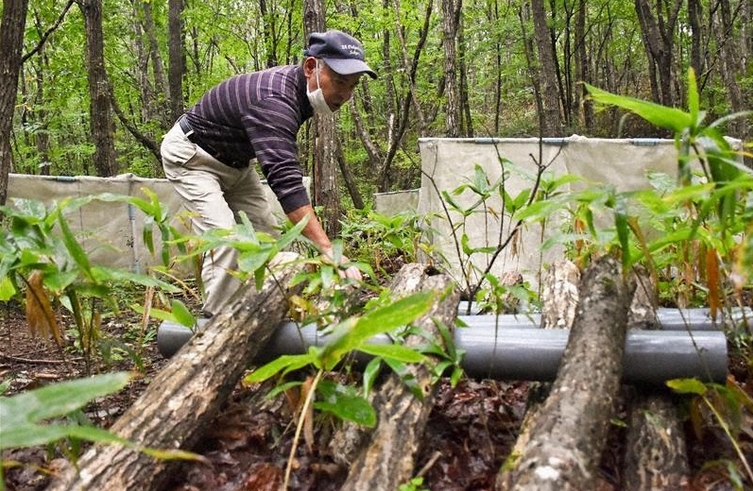
FUKUSHIMA — When the Fukushima Daiichi Nuclear Power Station was struck with a triple-meltdown in March 2011, it spewed radioactive material across a wide swathe of northeastern Japan’s forests. Even now, more than a decade after the catastrophe, the impact of the cesium still found in the region’s trees is enormous.
One area to feel the brunt of the fallout’s effects is eastern Fukushima Prefecture’s Abukuma mountains, once one of Japan’s leading sources of logs for shiitake mushroom cultivation, and now at a virtual standstill. Ten years into this continuing disaster, locals and experts have been working hard to find ways to revive the traditional industry, in hopes of being able to pass on the mountains’ rich natural resources, and the life connected to this landscape, to the next generation.
“Once a tree trunk gets this thick, it’s not really good as a log.” We are in the woods in the Miyakoji district of Tamura, Fukushima Prefecture, about 20 kilometers west of the Fukushima Daiichi plant. Kazuo Watanabe, the 59-year-old head of the Miyakoji office of the Fukushima central forestry union, is standing by a copse of konara oaks for shiitake cultivation, sighing as he speaks.
Watanabe says that the oaks are harvested for the shiitake business when they are about 15 centimeters across. And it takes about 20 years to get that big. If the trunks are too thick, it becomes difficult for new growth to sprout from the stump. But konara logging has stagnated severely because of the nuclear disaster, leading to a halt in shipments.
Radioactive cesium exceeding the government-set maximum of 50 becquerels per kilogram has been detected in logs from Miyakoji and other parts of the Abukuma region. Even 10 years after the Fukushima Daiichi reactor meltdowns, testing has turned up cesium levels in the logs of between 100 and 540 becquerels per kilogram.
To grow shiitake, mushroom mycelia are put into holes drilled into sawtooth oak, konara oak and other types of logs. In 2010, Fukushima Prefecture was Japan’s third-largest producer of these logs, shipping some 4.78 million of them. But the nuclear disaster changed all that, and even now the prefecture produces only about 140,000 of the cultivation logs annually.
According to the Forestry Agency, as of the end of 2020, log-grown shiitake shipments were restricted in 93 municipalities across Fukushima, Iwate, Miyagi, Ibaraki, Tochigi and Chiba prefectures due to cesium contamination. Along with Fukushima Prefecture, Miyagi Prefecture and other jurisdictions are voluntarily limiting shipments of the logs as well.
Cesium 134 has a radioactive half-life of about two years, meaning it has almost disappeared over the past 10. However, cesium 137’s half-life is approximately 30 years, meaning it will retain 30% of its original radioactivity 50 years on from the disaster, and 10% after a century.
The problem is the cesium inside the trees, which absorbed disaster fallout though their bark soon after the meltdowns, and through their roots. If plants have scant supplies of potassium, an essential element for growth, then they will absorb cesium, which has similar chemical properties. This has led to farmers sprinkling their fields with potassium fertilizer as a countermeasure. However, this is difficult to do in the vastness of the forest.
About 70% of Fukushima Prefecture is covered in forest. But in principle, only certain areas are eligible for nuclear disaster decontamination, such as residential districts and their immediate surroundings. The government and researchers believe that decontamination has limited the effectiveness in reducing the external exposure of the residents and that it is very costly, plus there is a risk of a spillover of soil due to the scraping of topsoil. And while cesium 137 indeed becomes less radioactive over time, it will take 150 years for the emanations to fall to a few percent of its current level.
And so the shiitake cultivation log production is essentially frozen, as are local traditions of sharing out edible wild plants, mushrooms and the like. To preserve these natural resources and this way of life for future generations, in January 2020 local forestry workers and experts created the “Abukumayama no kurashi kenkyujo,” or the Abukuma mountain way of life research center. Its purpose: to create a vision for the Abukuma region for the next 150 years. Participants study woodland culture at former industrial sites connected to the mushroom cultivation log business. Research center head Kazunori Aoki, 60, told the Mainichi Shimbun, “The nuclear accident changed the mountains’ value, and our connection to them has become quite tenuous.”
Aoki once raised “wagyu” beef cattle and farmed vegetables in Miyakoji, but he closed his business after the nuclear disaster. Watching growing tracts of farmland go wild, Aoki said he decided he “wanted to change the landscape a little at a time and return it to the mountains.” Since 2012, he has been planting 100 to 300 maples and other trees every year, a project that helped lead to the Abukuma research center’s creation.
In April this year, the center brought together 40 people from both inside and outside the city of Tamura to plant 90 mountain cherries, Kobushi magnolias and other trees in Miyakoji. But some elderly residents of the district worry that there is no one to take over the community, and that there is no hope for a future connected to the mountains.
“We want to work with the local community to consider how the next generation can live with the natural wealth of the mountains,” commented center administrative head Yumeko Arai, 35.
https://mainichi.jp/english/articles/20211007/p2a/00m/0bu/023000c
Nuclear power for Australia? It’s not going to happen!

Nuclear enthusiasts and fellow travellers like me once said of solar it’s the greatest future source of power and always will be. Solar investors may aim that rhetorical dart at small modular reactors and, indeed, the nuclear sector as its energy share, for years stagnant, proceeds to go backwards.
In Australia nuclear attracts not the remotest investor interest. If nuclear were an option a merchant bank or superannuation fund might be manoeuvring to own the space. They might have formed a consortium with a miner and a construction company or two, with a brace of lobbyists at work. It’s not happening.
The contrast with the surge to renewables is stark………..
[ED. An interesting and important piece here re the failure of nuclear power in today’s Australian.
Important because Bob Carr used to be pro-nuke and has changed in response to evidence.
This is timely and a good reinforcement to federal Labor re their strong opposition to any domestic nuclear industry.]
Nobody’s really interested in the nuclear option
BOB CARR, OCTOBER 7, 2021,THE AUSTRALIAN
Australians may be open to nuclear power, as evidenced by Tuesday’s Newspoll. But nuclear is not open for them.
Globally the industry is moribund. “The dream that failed,” says The Economist magazine, concluding it needs government money for life support.
In 2010 one enthusiast predicted within 10 years fourth-generation reactors and small modular reactors would be commonplace, including in Australia. None exists, here or abroad.
More damning, the industry lacks a single example in a Western country of a new power plant being built remotely on time and budget. According to the World Nuclear Industry Status Report, 94 plants were to come on line across the last decade but 98 get decommissioned. Yet 48 of those to be built are to be in China. Remove them and that leaves 46 coming online and – stubborn fact – 98 being decommissioned in the rest of the world.
In 2019, for the first time, renewable sources, excluding hydro, generated more power than nuclear.
In Australia nuclear attracts not the remotest investor interest. If nuclear were an option a merchant bank or superannuation fund might be manoeuvring to own the space. They might have formed a consortium with a miner and a construction company or two, with a brace of lobbyists at work. It’s not happening.
The contrast with the surge to renewables is stark. Andrew Forrest and Mike Cannon-Brookes are prepared to put their own funds into a vast solar farm in the Northern Territory and Forrest to make a huge commitment to hydrogen. There is no single investor with a comparable zest for nuclear power, either high net worth individual or institution.
Ziggy Switkowski produced a report on nuclear power for John Howard in 2007. It was to be the foundation of Australian nuclear power, a decades-long dream. Even with a partiality for the industry Switkowski could only conclude nuclear power, at double the price of coal and gas, would require a price on carbon – and even additional government subsidy.
Three prime ministers – Tony Abbott, Malcolm Turnbull, Scott Morrison – have not reopened the debate. For his part, by becoming chair of Crown in August, Switkowski seems to demonstrate more confidence in gaming-based tourism than the commercial potential of the nuclear fuel cycle.
I argued a pro-nuclear case within the Labor Party and scorned what I saw as the left phobia against the nuclear option. Like British scientist James Lovelock I thought coal more destructive and nuclear the bridge to the era of renewables.
But it’s now clear nuclear is lumbering, subject to breakdowns and cripplingly expensive. New renewable sources such as wind and solar increased by 184 gigawatts last year while nuclear grew by only 2.4GW. The number of active reactors has barely changed since the 1980s.
France was the poster child. But no new reactor has been connected to its grid since 1999. It closed its pressurised water reactor in 1991 and followed by terminating two fast breeder reactors and a small heavy-water reactor.
Poor reliability plagues the fleet. On any day at least four plants are at zero output because of technical failures. The average per plant is a month per year at zero production. But investment in upgrades faces competition from renewables and tough new EU energy efficiency standards.
Not even Scandinavian efficiency can provide a happy pro-nuclear narrative. Finland became the first country in western Europe to order a new nuclear reactor since 1988 but it’s running 13 years late, plagued with management and quality control issues, bankruptcies and investor withdrawals.
Who could have the faintest confidence that Australia could throw up a nuclear reactor with more panache – exceeding with efficiency not only the Finns but the British with their delays and cost blowouts and the Americans with their construction disasters in Georgia and South Carolina?
Doing big complex projects is hardly an Australian competitive edge. Think of the 50 years opining about a second Sydney airport, or – killer fact – the fumbling with submarines.
Where is the shire council putting up its hand to host a nuclear power plant? Harder to find than a sponsor for a high-temperature toxic waste incinerator.
Nobody in the Hunter Valley has urged nuclear for the Liddell site, even on the footprint of this coal-fired power plant scheduled to close. And not even invoking the prospect of a small modular reactor that 10 years back was the vanguard of the nuclear renaissance. About to be planted across the Indonesian archipelago and the rest of Asia, we were promised. Today they exist only on the Rolls-Royce drawing boards they have adorned since the 1970s.
Nuclear enthusiasts and fellow travellers like me once said of solar it’s the greatest future source of power and always will be. Solar investors may aim that rhetorical dart at small modular reactors and, indeed, the nuclear sector as its energy share, for years stagnant, proceeds to go backwards.
Bob Carr is the longest-serving premier of NSW and a former Australian foreign minister.
Gov’t to strengthen inspection of products from Fukushima
October 8, 2021
By Kim Hyun-bin
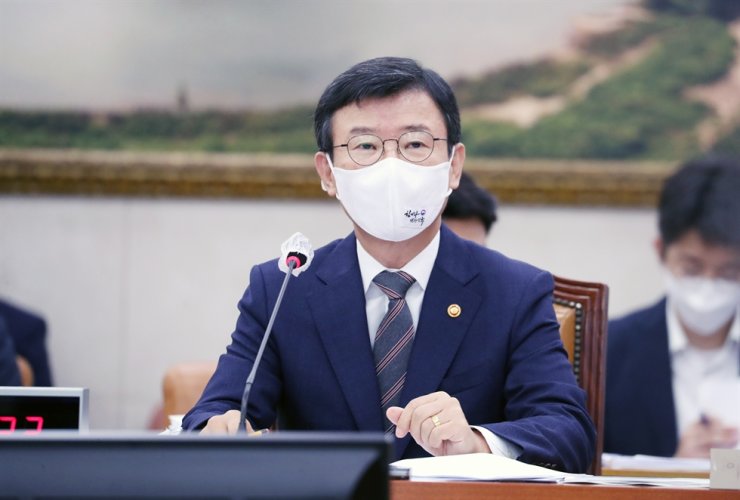
Oceans and Fisheries Minister Moon Seong-hyeok vowed to strengthen monitoring of water and marine products for possible radioactivity from Japan’s Fukushima Daiichi Nuclear Power Plant.
“We will thoroughly establish a safety net to better secure the safety of marine products and prevent accidents,” Minister Moon during the National Assembly’s annual inspection of the ministry, Thursday. “We will expand radioactivity monitoring at our shores to prevent contaminated water coming from the Fukushima plant and strengthen inspections of marine safety tests and check the origin of country products are imported from.”
The International Atomic Energy Agency (IAEA) also plans to strengthen related measures. This month, the agency will inspect the contamination being released at unit 1 of Fukushima Daiichi Nuclear Power Plant and its effects on the ocean.
One of the most anticipated issues was the possible revision of the country’s Marine Transportation Act, aimed to prevent the Fair Trade Commission (KFTC) from investigating issues regarding collective actions taken by domestic shipping companies.
However, this plan was postponed due to growing opposition from importers and exporters.
According to a survey the Korea Federation of SMEs conducted of 174 mid-size companies related to exports and imports, 85.1 percent were against the revision to the Marine Transportation Act, with 14.9 percent in support.
Since 2018, the KFTC has been investigating allegations that HMM and others colluded to boost freight rates for a Southeast Asian sea route.
After expanding its investigations of foreign firms in May, the regulator informed 23 local and foreign shippers that they may face fines totaling 800 billion won if they are found in violation of the Fair Trade Act.
Local shippers have protested fiercely against the regulator’s move. They claimed they had no choice but to take collective action to compete with global shipping powerhouses, and that their collective actions on freight costs and other contract conditions were permissible under the country’s Maritime Shipping Act.
Late last month, the Agriculture, Food, Rural Affairs, Oceans and Fisheries Committee passed a revised bill stating that collective actions by shippers will not be subject to the antitrust act.
“We are trying to clarify that the collective actions taken by marine shipping companies is under the jurisdiction of the Ministry of Oceans and Fisheries,” Minister Moon said during a press conference, Tuesday. “We are not giving the shipping companies a break. We are pushing for stricter consequences.”
The ministry said it is focusing on reconstructing the domestic marine shipping industry by providing more support and creating helpful policies in import and export logistics.
Marine shipping sales are expected to reach 40 trillion won, and major freight rate indexes have recovered to levels prior to the bankruptcy of Hanjin Shipping, the ministry said.
“We are planning to provide effective support measures including operating mega container ships, expanding national flag carriers and providing around 6 trillion won in liquidity to stabilize shippers’ management to better reconstruct the marine shipping industry,” Moon said. “Late last year, we deployed 74 temporary vessels for 17,000 TEU freight transportation support and worked hard to reduce import- and export-related difficulties for local firms.”
https://www.koreatimes.co.kr/www/tech/2021/10/768_316656.html
Chris Busby on the truth about black rain, radiation and cancer

the major cause of cancer in the low and medium dose groups (0-100mSv) in the Hiroshima lifespan study was not the immediate radiation from the detonation, the external gamma radiation and neutrons, but was in fact exposure to Uranium 234 particles from the bomb itself which rained out over the city in the black rain. Torrential black rain fell over the city and surrounding areas from 30 minutes to several hours after the atomic explosion.
Hiroshima Black Rain and the Test Veterans, https://www.labrats.international/post/hiroshima-black-rain-and-the-test-veterans Chris Busby, 13th Sept 2021
The absolute key study of the effects of radiation on cancer risk is the Lifespan Study (LSS) of the survivors of the Hiroshima bomb. It provides the evidence used by the Secretary of State for Defence (the MoD) to refuse pensions in all the UK Test Vet cases. Groups were assembled in 1952 some 7 years after the bomb and divided into high, medium and low doses on the basis of their distance from Ground Zero, with a No Dose group consisting of those who were outside the City and came in later. They were thrown out in 1973 as using them as a control gave too many cancers. This study continues today and the risks of different cancers after exposures are obtained from the excess risk of any type of cancer in each dose group. The risk factors for cancer which are currently the basis for all laws relating to exposure are based on this study. You have to get a Dose of about 1000mSv to get a 40% excess risk of cancer on the basis of the LSS results. Naturally, since no Test veteran got anywhere near this dose, all the pension applications (and appeals) are refused.
But on Sept 9th a scientific report I wrote was published in the peer-reviewed Journal Cancer Investigations. My paper The Hiroshima A-Bomb black rain and the lifespan study—a resolution of the Enigma shows that the LSS was dishonestly manipulated and that its results are totally unsafe. It spells the end of the radiation risk model and the beginning of justice for the test veterans. How?
What it shows, is that the major cause of cancer in the low and medium dose groups (0-100mSv) in the Hiroshima lifespan study was not the immediate radiation from the detonation, the external gamma radiation and neutrons, but was in fact exposure to Uranium 234 particles from the bomb itself which rained out over the city in the black rain. Torrential black rain fell over the city and surrounding areas from 30 minutes to several hours after the atomic explosion. Doses from the inhalation and ingestion of the Uranium particles in the black rain were very low. Since the Christmas Island vets were also exposed to rainout after the bombs, they are in the same category of victims as the Hiroshima low dose LSS victims (<5mSv). The Japanese government lost a court case in July on this issue, one which it will not appeal. Those living in the black rain areas who developed cancer will get compensation and attention in the same way as those who received an external dose from the detonation, even though the black rain victims’ dose was zero. The separation of external radiation from internal in terms of risk also shows that the types of cancers believed in the model to result from radiation must also be reassessed.
Of course, the MoD knew all this. It is the biggest secret of all, since it supports everything nuclear: bombs, energy, naval propulsion, Depleted Uranium, winnable nuclear war and raises the issue of enormous amounts of compensation. It had to be kept out. In 2013, during the run-up to the big test veteran appeal in the Royal Courts of Justice, I obtained from the late Major Alan Batchelor in Australia an official British document which was submitted to the Australian National Commission test vet hearings. It listed the quantity of Uranium isotopes in the Enriched Uranium used by the British in their bombs. I also had obtained a copy (when I was advising Rosenblatts in 2009 in the Foskett case) of a memo from 1953 on the dangers of Uranium 234 at the test sites. But these documents were suddenly made subject to the Official Secrets Act.
In 2013 after Rosenblatts had pulled out, Hogan Lovells removed all my 4 years of evidence and reports, 12 documents, and also removed me from the case without consulting any of the veterans they represented. In 2014 Judge Charles in the Upper Tier ruled that I could not act as an expert witness (I was biased) and anything I had written or argued previously had to be ignored. I neatly reverted from expert to representative and argued in 2016 before Judge Blake in the RCJ that the exposure of interest at Christmas Island was to Uranium from the material of the bomb. We flew in Professor Shoji Sawada all the way from Japan to make the same point. But Blake either ignored him or pretended to. In Blake’s final judgement he wrote:
14. . .it is submitted that prolonged exposure to radiation by inhalation or ingestion of radioactive particles deposited on the land or in the sea off CI is a real possibility. . .
15. In the appeals relating to Messrs Battersby and Smith Dr Busby, on their behalf, advances a more radical submission that the guidance issued by the International Commission on Radiological Protection in the UK and EU is flawed and underestimates the risk to health from internal exposure to radiation, and in particular radiation from Uranium.
What the new paper shows, is that we were exactly right and Blakes judgement exactly wrong; he listened to the experts brought in by the MoD, who did not (or they say they were told by MoD lawyer Adam Heppinstall) not to address our experts or their evidence; to keep the evidence out. The Scots Upper Tier has now reversed the Charles decision on my expertise, Judge DJ May QC calling it “Unlawful”. The British Tribunals, however, ignore the Scottish UT decision and persist in keeping my evidence out.
The Lifespan Study was dishonestly manipulated to provide support for the continued radioactive contamination of the environment by atmospheric bomb testing. The evidence is that this stitch-up has resulted in the biggest public health scandal in human history. The internal radiation effects on the children born at the peak period, 1959-63 caused genetic damage, infant deaths and the cancer epidemic which began in 1980. The effect is also in the children and grandchildren as new data clearly show. My study of the BNTVA also found a 10-fold congenital malformation rate in the children and 9-fold in the grandchildren. The Black Rain paper proves that the risk model that permitted this is wildly wrong. For those who are interested, read the paper: it is easy to understand. Then get angry and do something.
Meanwhile, I do what I can: I have two test vet cases ongoing: Trevor Butler and Christopher Donne, and also a Nuclear submarine sailor in Scotland who died from lymphoma. Here I am up against twisty Adam Heppinstall once more. He has begun, in true style, by removing all our evidence from the Bundle.
The CIA Plot to Kidnap or Kill Julian Assange in London is a Story that is Being Mistakenly Ignored
The CIA Plot to Kidnap or Kill Julian Assange in London is a Story that is Being Mistakenly Ignored https://www.counterpunch.org/2021/10/05/the-cia-plot-to-kidnap-or-kill-julian-assange-in-london-is-a-story-that-is-being-mistakenly-ignored/?fbclid=IwAR3t BY PATRICK COCKBURN 5 October 21, Three years ago, on 2 October 2018, a team of Saudi officials murdered journalist Jamal Khashoggi in the Saudi consulate in Istanbul. The purpose of the killing was to silence Khashoggi and to frighten critics of the Saudi regime by showing that it would pursue and punish them as though they were agents of a foreign power.
It was revealed this week that a year before the Khashoggi killing in 2017, the CIA had plotted to kidnap or assassinate Julian Assange, the founder of WikiLeaks, who had taken refuge five years earlier in the Ecuador embassy in London. A senior US counter-intelligence official said that plans for the forcible rendition of Assange to the US were discussed “at the highest levels” of the Trump administration. The informant was one of more than 30 US officials – eight of whom confirmed details of the abduction proposal – quoted in a 7,500-word investigation by Yahoo News into the CIA campaign against Assange.
The plan was to “break into the embassy, drag [Assange] out and bring him to where we want”, recalled a former intelligence official. Another informant said that he was briefed about a meeting in the spring of 2017 at which President Trump had asked if the CIA could assassinate Assange and provide “options” about how this could be done. Trump has denied that he did so.
The Trump-appointed head of the CIA, Mike Pompeo, said publicly that he would target Assange and WikiLeaks as the equivalent of “a hostile intelligence service”. Apologists for the CIA say that freedom of the press was not under threat because Assange and the WikiLeaks activists were not real journalists. Top intelligence officials intended to decide themselves who is and who is not a journalist, and lobbied the White House to redefine other high-profile journalists as “information brokers”, who were to be targeted as if they were agents of a foreign power.
Among those against whom the CIA reportedly wanted to take action were Glenn Greenwald, a founder of the Intercept magazine and a former Guardian columnist, and Laura Poitras, a documentary film-maker. The arguments for doing so were similar to those employed by the Chinese government for suppressing dissent in Hong Kong, which has been much criticised in the West. Imprisoning journalists as spies has always been the norm in authoritarian countries, such as Saudi Arabia, Turkey and Egypt, while denouncing the free press as unpatriotic is a more recent hallmark of nationalist populist governments that have taken power all over the world.
It is possible to give only a brief precis of the extraordinary story exposed by Yahoo News, but the journalists who wrote it – Zach Dorfman, Sean D Naylor and Michael Isikoff – ought to scoop every journalistic prize. Their disclosures should be of particular interest in Britain because it was in the streets of central London that the CIA was planning an extra-judicial assault on an embassy, the abduction of a foreign national, and his secret rendition to the US, with the alternative option of killing him. These were not the crackpot ideas of low-level intelligence officials, but were reportedly operations that Pompeo and the agency fully intended to carry out.
This riveting and important story based on multiple sources might be expected to attract extensive coverage and widespread editorial comment in the British media, not to mention in parliament. Many newspapers have dutifully carried summaries of the investigation, but there has been no furor. Striking gaps in the coverage include the BBC, which only reported it, so far as I can see, as part of its Somali service. Channel 4, normally so swift to defend freedom of expression, apparently did not mention the story at all.
In the event, the embassy attack never took place, despite the advanced planning. “There was a discussion with the Brits about turning the other cheek or looking the other way when a team of guys went inside and did a rendition,” said a former senior US counter-intelligence official, who added that the British had refused to allow the operation to take place.
But the British government did carry out its own less melodramatic, but more effective measure against Assange, removing him from the embassy on 11 April 2019 after a new Ecuador government had revoked his asylum. He remains in Belmarsh top security prison two-and-a-half years later while the US appeals a judicial decision not to extradite him to the US on the grounds that he would be a suicide risk.
If he were to be extradited, he would face 175 years in prison. It is important, however, to understand, that only five of these would be under the Computer Fraud and Abuse Act, while the other 170 potential years are under the Espionage Act of 1917, passed during the height of the patriotic war fever as the US entered the First World War.
Only a single minor charge against Assange relates to the WikiLeaks disclosure in 2010 of a trove of US diplomatic cables and army reports relating to the Iraq and Afghan wars. The other 17 charges are to do with labeling normal journalistic investigation as the equivalent of spying.
Pompeo’s determination to conflate journalistic inquiry with espionage has particular relevance in Britain, because the home secretary, Priti Patel, wants to do much the same thing. She proposes updating the Official Secrets Act so that journalists, whistle-blowers and leakers could face sentences of up to 14 years in prison. A consultative paper issued in May titled Legislation to Counter State Threats (Hostile State Activity) redefines espionage as “the covert process of obtaining sensitive confidential information that is not normally publicly available”.
The true reason the scoop about the CIA’s plot to kidnap or kill Assange has been largely ignored or downplayed is rather that he is unfairly shunned as a pariah by all political persuasions: left, right and centre.
To give but two examples, the US government has gone on claiming that the disclosures by WikiLeaks in 2010 put the lives of US agents in danger. Yet the US Army admitted in a court hearing in 2013 that a team of 120 counter-intelligence officers had failed to find a single person in Iraq and Afghanistan who had died because of the disclosures by WikiLeaks. As regards the rape allegations in Sweden, many feel that these alone should deny Assange any claim to be a martyr in the cause of press freedom. Yet the Swedish prosecutor only carried out a “preliminary investigation” and no charges were brought.
Assange is a classic victim of “cancel culture”, so demonised that he can no longer get a hearing, even when a government plots to kidnap or murder him.
In reality, Khashoggi and Assange were pursued relentlessly by the state because they fulfilled the primary duty of journalists: finding out important information that the government would like to keep secret and disclosing it to the public.
Patrick Cockburn is the author of War in the Age of Trump (Verso).
Russia’s perilous job in raising sunken nuclear submarines

In both cases, experts fear that a nuclear chain reaction could occur should water leak into the submarines’ reactor compartments. Russian scientists have kept a close eye on the K-159, launching regular expeditions to monitor for potential radiation leaks. According to their data, should the submarine depressurize, radionuclides could spread over hundreds of kilometers, heavily impacting the local fishing industry.
Yet the subs represent just a fraction of the radiation hazards that the Soviet Navy dumped at sea. Between 1959 and 1992, the Soviets carried out 80 missions to sink radioactive debris in Arctic water. In total, some 18,000 objects considered to be radioactive waste were plunged to Arctic depths. Aside from the K-159 and the K-27, the Soviet Navy scuttled reactor compartments, solid radioactive waste, a number of irradiated vessels, as well as old metal structures and radioactive equipment.
Rosatom official puts deadline on raising old nuclear submarines https://bellona.org/news/nuclear-issues/2021-10-rosatom-official-puts-deadline-on-raising-old-nuclear-submarines
An official with Rosatom, Russia’s state nuclear corporation, has announced a deadline for raising two Soviet-era nuclear submarines that have been lying for decades at the bottom of seas in the Arctic over fears their reactors could contaminate fertile international fishing grounds. October 6, 2021 by Charles Digges
An official with Rosatom, Russia’s state nuclear corporation, has announced a deadline for raising two Soviet-era nuclear submarines that have been lying for decades at the bottom of seas in the Arctic over fears their reactors could contaminate fertile international fishing grounds.
As indicated in the strategy for the development of the Arctic, 2030, not earlier,” Anatoly Grigoriev, head of Rosatom’s international technical assistance project, told Interfax late last month.
The announcement confirms what unnamed officials had earlier told Russian state media more than a year ago. Since then, Bellona has urged Russia, during its two-year chairmanship of the Arctic Council, to pursue retrieving the submarines to avoid the contamination risk their reactors, and the spent nuclear fuel they contain, pose to the ocean environment.
Grigoriev’s remarks concerned the K-27 and K-159, both of which went down still loaded with their uranium fuel. Both submarines, say experts, are in a precarious state. But the submarines sank under different circumstances.
Continue reading1 This Month
Tell Congress: Prevent Nuclear Catastrophe in Iran

Tell Congress: Prevent Nuclear Catastrophe in Iran

Read the Public Inquiry Report, the Commissioners’ report, Surrendering Australia: The AUKUS Deception is available to download for free at aukuspublicinquiry.com. Or just watch the replay of the National Press Club Luncheon.


Shut down the radiation-damaged Heysham nuclear reactors now
To see nuclear-related stories in greater depth and intensity – go to https://nuclearinformation.wordpress.com

Say No to NASA’s Reckless Nuclear Reactor on the Moon
Say No to NASA’s Reckless Nuclear Reactor on the Moon
-
Archives
- November 2026 (238)
- October 2026 (302)
- September 2026 (339)
- August 2026 (330)
- July 2026 (355)
- June 2026 (287)
- May 2026 (306)
- April 2026 (356)
- March 2026 (251)
- February 2026 (267)
- January 2026 (308)
- December 2025 (358)
-
Categories
- 1
- 1 NUCLEAR ISSUES
- business and costs
- climate change
- culture and arts
- ENERGY
- environment
- health
- history
- indigenous issues
- Legal
- marketing of nuclear
- media
- opposition to nuclear
- PERSONAL STORIES
- politics
- politics international
- Religion and ethics
- safety
- secrets,lies and civil liberties
- spinbuster
- technology
- Uranium
- wastes
- weapons and war
- Women
- 2 WORLD
- ACTION
- AFRICA
- Atrocities
- AUSTRALIA
- Christina's notes
- Christina's themes
- culture and arts
- Events
- Fuk 2022
- Fuk 2023
- Fukushima 2017
- Fukushima 2018
- fukushima 2019
- Fukushima 2020
- Fukushima 2021
- general
- global warming
- Humour (God we need it)
- Nuclear
- RARE EARTHS
- Reference
- resources – print
- Resources -audiovicual
- Weekly Newsletter
- World
- World Nuclear
- YouTube
-
RSS
Entries RSS
Comments RSS

