Response to claims about China’s space aims
Response to claims about China’s space aims, by Michael Wong, 25 Oct 21
The claim – ”US must build space superhighway before China stakes claims-Senior Space Force Officer. From “Breaking Defense”: https://breakingdefense.com/2021/10/us-must-build-space-superhighway-before-china-stakes-claims-senior-space-force-officer/?utm_source=Sailthru&utm_medium=email&utm_campaign=EBB%2010.21.21&utm_term=Editorial%20-%20Military%20-%20Early%20Bird%20Brief
Some quotes with falsehoods:
- “China fully intends to extend its “territoriality” to the Moon, flouting international law in exactly the same way as it has with regard to the South China Sea, Brig. Gen. John Olson, chief advisor to Space Force head Gen. Jay Raymond on mobilization and space logistics, asserted today.” My comment: There is no evidence that China has any such intentions. China has not said anything like that, has not broken any international laws, nor taken any actions that are anywhere near as aggressive as US actions.
- “If you read their language, if you read their products — which I am a vigorous student of — if you look at what they do they telegraph everything that they’re going to do, they believe that the Moon is manifest destiny for them” and part of their “economic … and security equation,” Olson said.” My comment: In the San Francisco Chinese community of which I’m a part, I have many political friends including scholars, retired elected officials, and others who are from Hong Kong, China, or Taiwan, are native Chinese speakers, and follow the news from China and Asia closely. They have not reported any language, products, or anything else which implies that China believes the moon is “manifest destiny” for China. Remember American lies about WMD in Iraq, incubator babies thrown on the floor in Kuwait, or the Gulf of Tonkin “incident” in Vietnam? These are typical American lies to demonize a nation that the US decides to attack, and justify increased US defense money.
- “The officer drew a direct line between how Beijing has ignored a World Court ruling on a sovereignty dispute with the Philippines in the South China Sea to how Chinese leaders could act in space, without regard to the prohibitions of the 1967 Outer Space Treaty (OST.)” My comment: Check out this 11 minute video from a US Marine veteran living in Thailand, which breaks down this whole distorted narrative about China and the South China Sea: https://www.youtube.com/watch?v=if-fV9U_sWs
- “…US military space leaders more and more openly paint China as an aggressor in space, with goals of not just world but galactic domination.” My comment: “…galactic domination???” Come on, Washington, have you any idea how big the galaxy is? Do you really think China intends to dominate it? What is it with you guys? We hippies were the ones doing LSD in the ’60’s, why are you guys the ones hallucinating now?
Bottom line, it’s all about the money and American domination of the world. To get more and more of the US national budget, the military industrial complex needs an enemy to justify their existence. And they project their mindset onto the Chinese, who are a completely different nation and culture, and who simply don’t think like Washington (if you want to read a longer article on the mindset of the Chinese, here’s my take on it: https://peacepivot.org/america-china-life-death-the-long-game/ ).
UK govt slow to commit to Sizewell nuclear project in the long-awaited net zero strategy paper
| The government’s long-awaited net zero carbon strategy paper published within weeks of the COP 26 summit in Glasgow once again fails to give the Sizewell C project the sort of definitive support predicted by its French initiators, Électricité de France (EdF). In a statement which has drawn much criticism for being unambitious and unrealistic in its attempt to provide finance for the decarbonisation of the housing sector, the government could not even bring itself to do more than commit £120 million towards the development of nuclear projects through the Future Nuclear Enabling Fund, announcing that ‘There remain a number of optimal sites, including the Wylfa site in Anglesey.’ The only crumb of comfort for the beleaguered nuclear industry is the intention to support ‘one large scale nuclear project by the end of this Parliament’, but even this is conditional on the need to demonstrate ‘value for money’ and the ‘relevant approvals’, the first of which is a condition that is impossible to comply with from a UK consumer perspective and the second of which is subject to planning inspectorate and Secretary of State approval in the case of Sizewell. Pete Wilkinson, Chairman of Together Against Sizewell C, said today, ‘While the government has not ruled out Sizewell, its omission from the statement today as well as the absence of any funding decision beyond the tiny by comparison £120m future nuclear fund, gives us hope that the government recognises the Sizewell project as one of significant risk, of huge environmental cost and in a place which could not be more unsuited to such a massive development. Essex Magazine 20th Oct 2021 https://www.essexmagazine.co.uk/2021/10/boris-johnsons-net-zero-strategy-leaves-edf-and-the-nuclear-industry-in-limbo/ |
A nuclear arms race is unavoidable without serious intervention.
This one-upmanship will never provide a solution to the existential threat posed by nuclear weapons. The only winning move is to step off the track and return to the negotiating table. The parties to the 1970 nuclear non-proliferation treaty, including the P5 nuclear weapon states, are obliged to “pursue negotiations in good faith on effective measures relating to cessation of the nuclear arms race”. They will meet in January 2022 to take stock of their progress. Diplomacy, for all its certain challenges, is the only path forward.
A nuclear arms race is unavoidable without serious intervention. China, the US and Russia are each investing in highly effective missiles and defence systems, https://www.ft.com/content/e30c0402-32a1-4c96-846d-48f2a2da7276 Ft.com LAURA GREGO 27 Oct 21, There are conflicting interpretations of the news that China has tested a specialised new long-range missile, capable of carrying a nuclear weapon around the Earth. US officials claimed it was part of a fractional orbital bombardment system (FOBS) which could travel in Earth orbit and then release a manoeuvring vehicle to glide toward a terrestrial target. China’s Foreign Ministry objected to that description, calling the launch simply a test of reusable space technology.
Details may be obscure, but a few things are clear. One, none of these technologies are new, and it should be no surprise that China is capable of fielding them. Two, while China’s nuclear arsenal remains much smaller than that of the US or Russia, Beijing is pursuing strategies to make it larger and more sophisticated. A nuclear arms race is on, absent a serious effort to stop it.
So why is China building new nuclear delivery systems and modernising its weapons after decades of retaining a modestly sized arsenal? One core driver is to make clear to an unconvinced United States that it is vulnerable to Chinese nuclear retaliation despite enormous investments in missile defences. Many of the technologies China is pursuing, including those believed to have been tested this summer, are designed to overwhelm or evade such defences.
If this sounds familiar, it should. This dynamic has echoes of the US-Soviet Cold War arms race. Many of the technologies — FOBS, hypersonic gliders, missiles equipped with multiple nuclear warheads — are even the same. It took years for the United States and Soviet Union to arrive at a shared understanding that unconstrained pursuit of missile defences was destabilising the strategic balance.
However, having exited the 1972 Anti-Ballistic Missile (ABM) Treaty designed to halt that race, the US has been developing a defence against intercontinental-range ballistic missiles for the past two decades. China’s new missiles hedge against the possibility that the United States may one day believe its technical advances permit it to strike China first while remaining invulnerable to a retaliatory nuclear attack.
If this sounds familiar, it should. This dynamic has echoes of the US-Soviet Cold War arms race. Many of the technologies — FOBS, hypersonic gliders, missiles equipped with multiple nuclear warheads — are even the same. It took years for the United States and Soviet Union to arrive at a shared understanding that unconstrained pursuit of missile defences was destabilising the strategic balance. However, having exited the 1972 Anti-Ballistic Missile (ABM) Treaty designed to halt that race, the US has been developing a defence against intercontinental-range ballistic missiles for the past two decades. China’s new missiles hedge against the possibility that the United States may one day believe its technical advances permit it to strike China first while remaining invulnerable to a retaliatory nuclear attack.
This one-upmanship will never provide a solution to the existential threat posed by nuclear weapons. The only winning move is to step off the track and return to the negotiating table. The parties to the 1970 nuclear non-proliferation treaty, including the P5 nuclear weapon states, are obliged to “pursue negotiations in good faith on effective measures relating to cessation of the nuclear arms race”. They will meet in January 2022 to take stock of their progress. Diplomacy, for all its certain challenges, is the only path forward.
Nuclear power, as well as nuclear weapons, must be opposed: George Monbiot gets it wrong
Nuclear power, as well as nuclear weapons, should be opposed, https://www.thenational.scot/community/19674158.nuclear-power-well-nuclear-weapons-opposed/ Tor Justad, Chair, HANT (Highlands Against Nuclear Weapons), 27 Oct 21,
I REFER to two recent items in the Sunday National – an interview with environmentalist George Monbiot headed “A chance to lead” (Oct 17) and an item headed “Pressure Grows on Scottish Government to oppose nuclear fusion site” on Oct 24.
HANT (Highlands Against Nuclear Transport) is a campaigning group opposing both nuclear weapons and nuclear power, which aligns with current SNP/Scottish Greens government policy.
There is much to commend in George Monbiot’s article, in which he states his belief that the Scottish Government could show the world a way out of the climate crisis and in particular the idea of pursuing “public luxury” with more public facilities, transport, health services and public land ownership as opposed to increasing private wealth and inequality.
However, he fails to mention his support for nuclear power, which he described in an article in The Guardian in 2011 headed “Why Fukushima made me stop worrying and love nuclear power” in which he argued that nuclear was safer than coal and should be supported together with renewables, which he also has doubts about.
He claimed the effect of Fukushima was small for people and planet – clearly untrue, as 150,000 people had to be evacuated from the area and radiation spread over a wide area. 18,000 people were killed by the tsunami which caused the disaster – the clean-up by thousands of workers will continue for 30 years.
In relation to nuclear fusion, HANT stated its opposition to a pilot project proposed for Dounreay in Caithness and it has recently been announced that the bid for the project was unsuccessful.
HANT supports Scottish CND’s opposition to the nuclear fusion project proposed for Ardeer in Ayrshire and urges the Scottish Government to oppose this project.
Attempts to harness nuclear fusion have been made in several countries for the last 70 years costing millions of pounds without success, and as Scottish CND points out there are concerns about safety, the production of waste and the potential link to nuclear weapons production.
Both support for new nuclear and support for nuclear fusion projects, along with proposals for small modular reactors, are all desperate attempts by the nuclear industry to revive nuclear at a time when it is in decline worldwide.
HANT would urge the Scottish Government to maintain its policy of opposition to nuclear weapons and to nuclear power of any kind.
America’s F-35 fighter jet to quietly join the nuclear arsenal
The F-35 is one step closer to carrying nuclear bombs. What’s next??
America’s most advanced fighter jet is on its way to becoming the newest addition to the nuclear arsenal.
The Air Force recently wrapped up the flight testing needed to ensure the B61-12 thermonuclear bomb design is compatible with the F-35A Lightning II, paving the way for the jet to begin carrying nuclear weapons. The airframe must still become certified to conduct nuclear operations as well.
By Rachel S. Cohen Two F-35As launched realistic test versions of the B61-12 for the first time on an unspecified date earlier this year at the Tonopah Test Range in Nevada, the Air Force said Oct. 6. Past versions of the B61 have relied on gravity to drop onto their targets, but the newest design can also hit coordinates using digital guidance…………….
The F-35′s atomic ambitions are a piece of the country’s nuclear modernization plan — slated to cost $634 billion from 2021 to 2030 alone — that flies under the radar…………….. https://www.airforcetimes.com/news/your-air-force/2021/10/27/the-f-35-is-one-step-closer-to-carrying-nuclear-bombs-whats-next/
Pumice may affect nuclear power plants in Japan
 | |||
| to me |
| |||
| to me |
Pumice may affect nuclear power plants in Japan
Pumice may affect nuclear power plants in Japan, https://www3.nhk.or.jp/nhkworld/en/news/20211027_36/ Japan’s nuclear regulator says a massive number of pumice stones drifting in waters in the country’s southwest could affect domestic nuclear power plants.
Ishiwatari Akira, a member of the Nuclear Regulation Authority, told a regular meeting on Wednesday that the stones may affect the intake of water used for cooling nuclear reactors.
The pumice stones are being washed ashore on the coast of Okinawa Prefecture and the Amami region of Kagoshima Prefecture. They come from an undersea volcanic eruption near the Ogasawara island chain in the Pacific Ocean in August.
Japan’s nuclear regulator says a massive number of pumice stones drifting in waters in the country’s southwest could affect domestic nuclear power plants.
Ishiwatari Akira, a member of the Nuclear Regulation Authority, told a regular meeting on Wednesday that the stones may affect the intake of water used for cooling nuclear reactors.
The pumice stones are being washed ashore on the coast of Okinawa Prefecture and the Amami region of Kagoshima Prefecture. They come from an undersea volcanic eruption near the Ogasawara island chain in the Pacific Ocean in August.
China squeezed out of Sizewell C nuclear, in UK’s new funding plan.
Ministers moved yesterday to cut China out of involvement in Britain’s
nuclear power sector with a new funding model that will place the risk of
future projects on to consumers. Under plans announced by Kwasi Kwarteng,
the business secretary, investors in new nuclear power stations will see a
return on their money before the plants are even built.
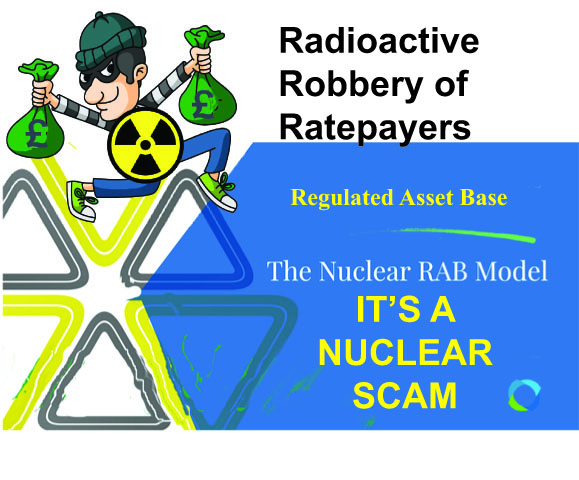
The move will effectively mean that consumers take on the risk of delays and cost
overruns to projects and will start paying for the new plants through their
bills before the reactors are built.
Times 27th Oct 2021
Tochigi prefecture: waste below 8,000 becquerels to be mixed with general waste and incinerated
How to incinerate without further radioactive particles dispersion? Incinerators multiple screening filters are never 100% successful…
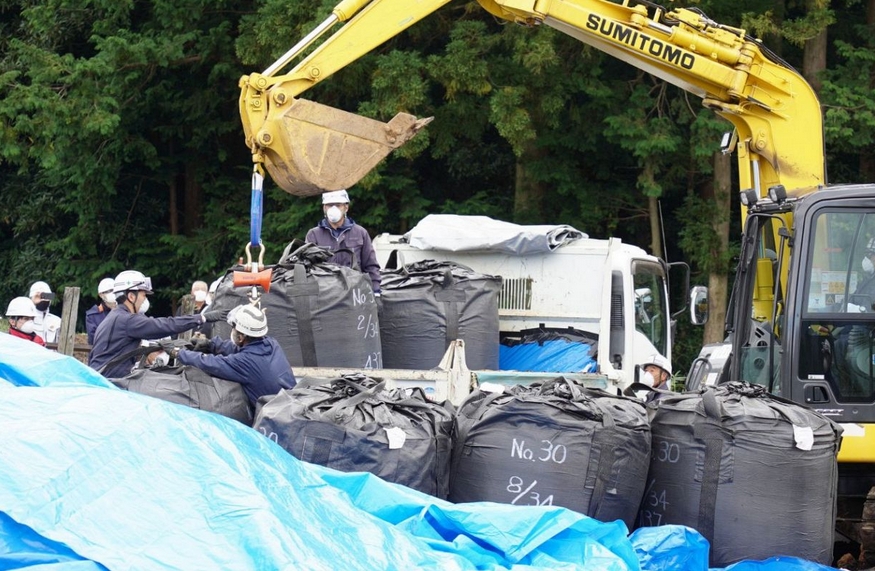
On April 22, farmers in six cities and towns in Tochigi Prefecture began removing “designated waste” containing radioactive materials generated by the accident at the Fukushima Daiichi Nuclear Power Plant of the Tokyo Electric Power Company. The waste will be temporarily consolidated at a waste treatment facility in the city. It has been decided that each of the six cities and towns will tentatively consolidate the waste to reduce the burden on the farmers, but Nasushiobara is the first city to take concrete steps.
Fifty-three farmers in the city have stored a total of 1,216 tons of waste, and on this day, one farmer took out about 1.5 tons.
According to the Ministry of the Environment, the removal of radioactive materials from all the farms in the city is expected to be completed by next December. About 20% of the waste with a radioactive content of more than 8,000 becquerels per kilogram will be stored at a waste treatment facility, while the waste below 8,000 becquerels will be mixed with general waste and incinerated.
10 Ways We Pretend War Is Not a Crime and How to Change Them by David Swanson
10 Ways We Pretend War Is Not a Crime and How to Change Them by David Swanson, Journalism as Art, https://denniscambly.wordpress.com/, 27 Oct 21
The U.N. Charter not only makes war a crime, but it makes the threat of war, including the long-standing White House mantra “All options are on the table” a crime. It does something else, though. It gives the U.N. the power to impose economic sanctions. This often brutal tool has led to massive death and suffering and laid the groundwork for wars. However, the Fourth Geneva Convention — which, for whatever it’s worth, came after the U.N. Charter — bans the use of collective penalties. That law is apparently not hard to ignore, and the Geneva Conventions in general may be the most frequently ignored laws in the world.
via 10 Ways We Pretend War Is Not a Crime and How to Change Them by David Swanson
Even the mind of Dante could not imagine the inferno a nuclear war will plunge us in
|
|
The first step in the direction of a world rule of law is the recognition that peace is no longer an unattainable ideal but a necessary condition of continued human existence.

Our civilisation will, through wars, be plunged into the abyss of annihilation, and our earthly habitat could be transformed into an inferno that even the mind of Dante could not imagine.
We must refuse to accept the cynical notion that nation after nation must spiral down a militaristic stairway into the hell of nuclear annihilation.
Because deterrence sets no limits on the size and composition of military forces, tens of thousands of nuclear weapons were created.
Even the mind of Dante could not imagine the inferno a nuclear war will plunge us into https://mg.co.za/opinion/2021-10-25-even-the-mind-of-dante-could-not-imagine-the-inferno-a-nuclear-war-will-plunge-us-into/Farouk Araie25 Oct 2021 n commemoration of the International Day for The Total Elimination of Nuclear Weapons, which was celebrated on 26 September, humanity must urgently strive to halt the escalating nuclear arms race.
North Korea’s testing of a submarine-launched missile and her recent launch of a hypersonic missile and associated high technology systems will trigger off a nuclear arms race in Asia. As deadly global events unfold, many aspiring nuclear nations will go the nuclear route. Pakistan will probably increase her nuclear might, which could enable it to have the third largest nuclear arsenal.
The volatile situation in the Middle East could prompt nations in that area to acquire nuclear weapons. World War II ended with the historic understanding that recourse to war between states could no longer be treated as a matter of national discretion, but must be regulated to the extent possible through rules administered by international institutions.
The pursuit of peace and progress cannot end in a few years in either victory or defeat. The pursuit of peace and progress, with its trial and errors, its success and setbacks, can never be relaxed and never abandoned. Humanity is still at the far stage of maturity needed for the realisations of its aspirations, for the construction of a harmonious and peaceful society and the elimination of wars. People are not yet ready to shape their own destinies, to control and direct world events, of which, instead, they become the victims.
The first step in the direction of a world rule of law is the recognition that peace is no longer an unattainable ideal but a necessary condition of continued human existence. One problem that we face is simply that we must find an alternative to war and bloodshed. Anyone who feels that there are still a lot of people who believe that war can solve problems facing humankind is sleeping through a great revolution.
Our civilisation will, through wars, be plunged into the abyss of annihilation, and our earthly habitat could be transformed into an inferno that even the mind of Dante could not imagine. We must refuse to accept the cynical notion that nation after nation must spiral down a militaristic stairway into the hell of nuclear annihilation.
If the ultimate goal of national security is to ensure the survival of any nation, then the pursuit of this goal through nuclear deterrence should be viewed as an utter failure. Because deterrence sets no limits on the size and composition of military forces, tens of thousands of nuclear weapons were created.
Thus the consequences of a single failure of deterrence could be the end of human history. Leaders who choose to “defend” their nation with nuclear weapons must face the fact that nuclear war is suicidal and not an option if their citizens are to survive. Suicide is not a defence.
Should we choose to accept the assertion that “there is no realistic path to a world free of nuclear weapons”, then we sentence the children of the world to a dark future. We must instead reject the 21st century mindset, which is still driving us towards the abyss, through an understanding that nuclear weapons pose a threat to the human species.
Those who see utility and legitimacy in the perpetual maintenance of nuclear weaponry often tend to regard nuclear abolition as a “destabilising” goal, and apparently assume that deterrence will forever prevent a nuclear war. Their long-term optimism is supported neither by logic nor history.
S. Korea to raise need for int’l discussions on Japan’s Fukushima plan in IMO meeting
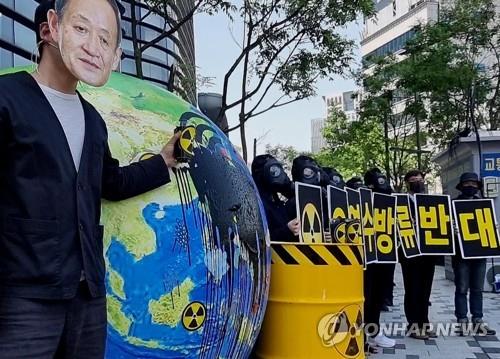
SEOUL, Oct. 25 (Yonhap) — South Korea will once again call for international discussions on Japan’s plan to discharge radioactive water from its crippled Fukushima nuclear power plant into the ocean at this week’s international maritime gathering, the oceans ministry said Monday.
During the London Convention and Protocol meeting set to begin on the day, the ministry will raise the need to discuss Japan’s planned disposal within the Protocol framework, and urge Japan to disclose related information in a full and transparent manner.
The meeting will be held via teleconferencing and continue through Friday.
“We will continue to bring up the issue to raise the awareness of the international community about its potential negative impacts on the maritime environment, and to seek ways to deal with the waste water safely,” a ministry official said.
Earlier this month, Japan finalized plans to start discharging the radioactive waste water stored in tanks at the Fukushima Daiichi Nuclear Power Plant into the Pacific Ocean in 2023. More than 1.2 million tons of tritium-laced water is expected to be disposed.
South Korea has urged Japan to have in-depth discussions with neighboring countries before pushing ahead with the plan, and has been working to garner international support for seeking alternatives.
In August, the Seoul government submitted a document to the London Protocol secretariat that suggests the formation of a task force in charge of the Fukushima issue.
Japan has insisted that the matter is not subject to discussions under the Protocol. But many nations and international organizations have voiced concerns.
The London Convention is meant to promote the effective control of all sources of marine pollution and to take steps to prevent marine pollution by human activities. South Korea joined the Convention in 1993, and a total of 87 nations are currently its members.
The London Protocol calls for banning all dumping, with some exceptions. It has 53 signatories, including South Korea which joined it in 2009.
South Bruce citizens want a referendum on plan to permanently house Canada’s nuclear waste.

South Bruce, Ont. citizens push for referendum to decide location of nuclear waste, Scott Miller, CTV News London Videographer, 25 Oct 21, TEESWATER, ONT. – Michelle Stein is putting up signs around her community she hopes will lead to referendum on whether South Bruce should permanently house Canada’s most radioactive nuclear waste.“That’s the fair way to do it. People that see benefits from the project can vote yes, those of us that feel the risks are too great we get to vote no,” says the chair of Protect our Waterways, a citizens’ group opposing plans to bury high-level nuclear waste in the Municipality of South Bruce.
- Stein believes a binding referendum during next October’s municipal election would be the best way for the 5,600 citizens of the Municipality of South Bruce to determine their willingness to host Canada’s first permanent nuclear waste facility, under 1,500 acres of farmers fields north of Teeswater…………
The Nuclear Waste Management Organization say they’ll decide whether Ignace, QC or South Bruce will house Canada’s first permanent nuclear waste facility in 2023.
How communities decide their willingness to do so, is up to each community. South Bruce’s Willingness Study final report will be before council in November.
Protect our Waterways will be going door to door in South Bruce this month and next, to try and get residents to sign a petition urging South Bruce council to commit to a binding referendum on the nuclear waste topic in time for the 2022 municipal election.
“This is a decision that will forever change our community, and every single person deserves a voice, and deserves to have their vote counted,” says Stein. https://london.ctvnews.ca/south-bruce-ont-citizens-push-for-referendum-to-decide-location-of-nuclear-waste-1.5637381
Problems and public opposition to the plan to store high level nuclear wastes under the Great Lakes

Nuclear Question: Debate continues over long-term storage of nuclear waste in the Great Lakes. Great Lakes Now, By Andrew Reeves, 25 Oct 21,
Canada’s plan to store spent nuclear fuel 1,600 feet below ground in the Great Lakes basin, some 30 miles from Lake Huron, is continuing to ruffle feathers throughout the Great Lake states.
Earlier this month, U.S. lawmakers called out the Canadian plan for failing to prioritize the health of the Great Lakes and the 40 million residents who depend on it for clean drinking water ahead of its own energy needs.
Michigan Democratic Rep. Dan Kildee is leading a 20-member bipartisan group calling on President Joe Biden to pressure Canadian Prime Minister Justin Trudeau to halt the plans for storing an anticipated 57,000 tons of high-level radioactive material within the basin.
Michigan Gov. Gretchen Whitmer, in a statement on the ongoing legal battle over the future of Enbridge’s Line 5 pipeline, accused the Canadian federal government of “adding even more risk to our waters” by allowing plans to store radioactive nuclear waste in a 1,400-acre underground warehouse to proceed.
Yet despite concerns within the basin from politicians and environmental groups, and unrest among local farmers worried about water contamination and potentially tanking property values, the project is moving ahead as planned. Geologic testing at one location in southern Ontario began this spring.
Even so, determining the long-term fate of Canada’s spent nuclear fuel remains far from settled as rifts develop within the host community, and between Canada and frustrated U.S. lawmakers.
“There’s a divide taking place,” Canadian Member of Parliament Brian Masse noted on a recent tour of the proposed South Bruce site with concerned residents. “I do believe there needs to be some responsibility taken on a federal level to make sure our communities aren’t broken in this process.”………
When spent nuclear fuel bundles are removed from a reactor they are currently interred in a water-filled pool for up to seven years until radioactivity decreases. From there the rods are relocated to dry storage containers made of 20-inch-thick, high-density concrete lined with steel half an inch thick. These storage facilities have a lifespan of roughly 50 years, and Canada has been generating nuclear power since the early 1960s. While the dry storage silos can be refurbished to extend their use, it does nothing to address the long-term need for safe storage solutions.
Experts at NWMO settled on a deep geological repository as the preferred storage option in 2007 after three years of discussion with European nuclear engineers.
The basic premise of the DGR is deceptively simple: bury the spent fuel. If NWMO could identify a willing host community that is situated in an area with suitable geology, the stage would be set to spend $23 billion over 40 years to construct a massive underground labyrinth of tunnels bored into rock that, in total, would be capable of storing the 57,000 tons of spent fuel that Canada currently has in cement-encased copper canisters. The aboveground footprint of buildings would be little more than a mile across.
But the question remains: Where should three million bundles of spent nuclear fuel be stored for what is, essentially, the rest of time?
Identifying a willing host community
The process for identifying a willing host community began in 2008.
From an initial pool of 22 potential locations across Canada, on-site investigations quickly whittled that list down to two, both of which are in Ontario: South Bruce, at a location some 30 miles from Lake Huron, and Ignace in northwestern Ontario. (The Ignace location, northwest of Lake Superior, is not within the Great Lakes basin; rather, it sits within the Winnipeg River basin. Borehole drilling to determine the suitability of the bedrock beneath the proposed site began in Ignace in 2017.)…………
U.S. lawmakers aren’t the only ones concerned about the proposed DGR. Public opposition to the proposal among South Bruce residents has been mounting steadily. …………. https://www.greatlakesnow.org/2021/10/storage-nuclear-waste-great-lakes/
Georgia nuclear reactors delayed again as costs mount

Georgia nuclear reactors delayed again as costs mount, https://apnews.com/article/business-environment-and-nature-georgia-atlanta-augusta-05a297d661a9048eb1db5a50c89aeef1
By JEFF AM ATLANTA (AP) — Georgia Power Co. is pushing back the startup date for its two new nuclear reactors near Augusta, saying it’s still redoing sloppy construction work and that contractors still aren’t meeting deadlines.
The unit of Atlanta-based Southern Co. now says the third reactor at Plant Vogtle won’t start generating electricity until sometime between July and September of next year. Previously the company said it would start in June at the latest. The fourth reactor won’t come online until sometime between April and June of 2023.
The delay will mean more costs for a project already estimated to exceed $27.8 billion overall. Georgia Power, which owns 46% of the project, had already estimated it would spend $9.2 billion, with another $3.2 billion in financing costs.
Besides Georgia Power, most electrical cooperatives and municipal utilities in Georgia own shares of the plants. Also obligated to buy power from Vogtle are Florida’s Jacksonville Electric Authority and some cooperatives and municipal utilities in Alabama.
1 This Month
Tell Congress: Prevent Nuclear Catastrophe in Iran

Tell Congress: Prevent Nuclear Catastrophe in Iran

Read the Public Inquiry Report, the Commissioners’ report, Surrendering Australia: The AUKUS Deception is available to download for free at aukuspublicinquiry.com. Or just watch the replay of the National Press Club Luncheon.


Shut down the radiation-damaged Heysham nuclear reactors now
To see nuclear-related stories in greater depth and intensity – go to https://nuclearinformation.wordpress.com

Say No to NASA’s Reckless Nuclear Reactor on the Moon
Say No to NASA’s Reckless Nuclear Reactor on the Moon
-
Archives
- November 2026 (238)
- October 2026 (302)
- September 2026 (339)
- August 2026 (330)
- July 2026 (355)
- June 2026 (287)
- May 2026 (306)
- April 2026 (356)
- March 2026 (251)
- February 2026 (267)
- January 2026 (308)
- December 2025 (358)
-
Categories
- 1
- 1 NUCLEAR ISSUES
- business and costs
- climate change
- culture and arts
- ENERGY
- environment
- health
- history
- indigenous issues
- Legal
- marketing of nuclear
- media
- opposition to nuclear
- PERSONAL STORIES
- politics
- politics international
- Religion and ethics
- safety
- secrets,lies and civil liberties
- spinbuster
- technology
- Uranium
- wastes
- weapons and war
- Women
- 2 WORLD
- ACTION
- AFRICA
- Atrocities
- AUSTRALIA
- Christina's notes
- Christina's themes
- culture and arts
- Events
- Fuk 2022
- Fuk 2023
- Fukushima 2017
- Fukushima 2018
- fukushima 2019
- Fukushima 2020
- Fukushima 2021
- general
- global warming
- Humour (God we need it)
- Nuclear
- RARE EARTHS
- Reference
- resources – print
- Resources -audiovicual
- Weekly Newsletter
- World
- World Nuclear
- YouTube
-
RSS
Entries RSS
Comments RSS

