What might trip up the Rolls Royce plan for small nuclear reactors?

Fix the Planet newsletter: Can small nuclear power go big? Small modular reactors are being pitched as an affordable and fast way to decarbonise power grids but questions about the technology abound, New Scientist EARTH, 25 November 2021, By Adam Vaughan
”……… nuclear power did have a showing in Glasgow, at official events in the conference, deals on the sidelines and cropping up as a subject during press briefings.
One new technology popped up a few times: small modular reactors (SMRs), mini nuclear plants that would be built in a factory and transported to a site for assembly. A UK consortium led by Rolls-Royce wants to build a fleet in the country to export around the world as a low carbon complement to renewables. During COP26 the consortium received £210 million from the UK government. More private investment is expected soon.
Yet questions abound. Why should this technology succeed where large nuclear plants have failed to take off in recent years, beyond China? If they are small, will they make a sizeable enough dent in emissions? And will they arrive in time to make a difference to a rapidly warming world?……
What exactly is planned?
The reactors that Rolls-Royce SMR wants to build have been six years in development, with their roots in ones the company previously built for nuclear submarines. Despite being billed as small, the new reactor design is fairly large. Each would have 470 megawatts of capacity, a good deal bigger than the 300 MW usually seen as the ceiling for an SMR.
The consortium hopes to initially build four plants on existing nuclear sites around the UK. Ultimately it wants a fleet of 16 , enough to replace the amount of nuclear capacity expected to be lost in the UK this decade as ageing atomic plants retire. Later down the line, the SMRs could be exported around the world too.
Alastair Evans at Rolls-Royce SMR. says the first SMR would cost about £2.3 billion and could be operational by 2031. Later versions may fall to £1.8 billion, he claims. That may seem cheap compared to Hinkley, but an offshore wind farm with twice the capacity costs about £1 billion today, and that figure will be even lower in a decade’s time………….
What might trip them up?
SMRs have been in development for years but have made little inroads to date. The UK government has been talking about them for much of the past decade, with nothing to show. Progress elsewhere around the world has been slow, too. Outside of Russia there are no commercial SMRs connected to power grids. Even China, one of the few countries that has built new nuclear plants in recent years, only started construction of a demo SMR earlier this year, four years late. It wasn’t until last year that leading US firm NuScale had its design licensed by US authorities.
Paul Dorfman at the non-profit Nuclear Consulting Group, a body of academics critical of nuclear power, says the nuclear industry has always argued economies of scale will bring down costs so it is hard to see why going small will work. He says modularisation – making the reactors in factories – will only bring down costs if those factories have a full order book, which may not materialise. “It’s chicken and egg on the supply chain,” he says. He also notes the plants will still create radioactive waste (something another potential next gen nuclear technology, fusion, does not). And he fears nuclear sites near coasts and rivers will be increasingly vulnerable to the impacts of climate change, such as storm surges as seas rise.
What’s next? The Rolls-Royce SMR group this month submitted its reactor design for approval by the UK nuclear regulator, a process that could take around five years. It now needs to pick three locations for factories and start constructing them. The group also needs to win a Contract for Difference from the UK government, a guaranteed floor price for the electricity generated by the SMRs…….. https://www.newscientist.com/article/2299113-fix-the-planet-newsletter-can-small-nuclear-power-go-big/
Nuclear fusion for UK – to save the dying nuclear industry, and UK as a nuclear weapons state?
SafeEnergy E Journal No.92. December 21, Fusion Four sites in England and one in Scotland are on the final shortlist of sites to be the home of the UK’s prototype fusion energy plant. The government is backing plans for the Spherical Tokamak for Energy Production (Step) with a final decision on its location expected at the end of 2022. The UK Atomic Energy Authority (UKAEA) hope the plant will be operational by the early 2040s. The five shortlisted sites are: Ardeer, North Ayrshire; Goole, East Riding of Yorkshire; Moorside, Cumbria; Ratcliffe-on-Soar, Nottinghamshire; Severn Edge, Gloucestershire; They were whittled down from a longlist of 15 sites, which included Chapelcross near Annan and Dounreay. (1 …………
The Scottish Campaign for Nuclear Disarmament (CND) has said that this latest effort to extol the virtues of nuclear fusion as a “low carbon” source of energy is to keep the industry “alive” due to the UK being a “nuclear weapon state”. (5)………https://www.no2nuclearpower.org.uk/wp/wp-content/uploads/2021/11/SafeEnergy_No92.pdf
Nicola Sturgeon reaffirms the Scottish Government’s opposition to nuclear power

Nicola Sturgeon has renewed the Scottish Government’s opposition to
nuclear power as part of the country’s drive towards net zero. The First
Minister ruled out any new nuclear power stations in Scotland in direct
opposition to calls from trade unions, backed by Labour’s Anas Sarwar,
for nuclear to be considered as a replacement to fossil fuels.
At First Minister’s Questions in Holyrood Sturgeon insisted it was was an
expensive option for taxpayers. She told SNP MSP Bill Kidd: “Renewables,
hydrogen and carbon capture and storage provides the best pathway to net
zero by 2045 and will deliver the decarbonisation we need to see across
industry, heat and transport. “We believe that nuclear power represents
poor value for consumers.”
Daily Record 25th Nov 2021
https://www.dailyrecord.co.uk/news/politics/nicola-sturgeon-rules-out-nuclear-25544965@ChristinaMac1
Boris Johnson avoids detail on how China will be removed from Sizewell C deal.
Boris Johnson avoided details when specifically asked about China’s
state-owned energy company’s role in Sizewell C – and how they will be
removed from the nuclear project amid concerns over national security. EDF
and China General Nuclear (CGN) are joint developers of Sizewell C taking
80% and 20% shares respectively, though the Financial Times has previously
reported that Whitehall is looking to push out CGN.
At Prime Minister’s Questions, shadow business secretary Matthew Pennycook told Mr Johnson that
“the Government’s Integrated Review concluded the Chinese state poses a
systemic challenge to our national security” and asked him to explain
“precisely how and when his Government intends to remove the CGN’s
interest from the Sizewell C nuclear project?”
Mr Johnson responded: “We
don’t want to see undue influence by potentially adversarial countries in
our critical national infrastructure and so that’s why we have taken the
decisions we have.” The National Security and Investment Bill, currently
going through parliament, is looking to give the government further powers
to screen and potentially block sensitive foreign investments.
Mr Pennycook later responded on Twitter: “We need certainty on the future of China’s
involvement in UK nuclear power and clarity about how and when the
Government intends to remove China’s state-controlled nuclear energy
company from involvement in any future UK project.”
East Anglian Daily Times 25th Nov 2021
https://www.eadt.co.uk/news/boris-johnson-sizewell-c-china-removal-8516062
Labour has called for clarity on how the government plans to remove China’s state-owned energy company from nuclear power projects in the UK.
Labour has called for clarity on how the government plans to remove
China’s state-owned energy company from nuclear power projects in the UK.
Asked about Chinese involvement in nuclear projects at Bradwell and
Sizewell during Prime Minister’s Questions (PMQs) yesterday, Boris
Johnson said the UK “do[es] not want to see undue influence by
potentially adversarial countries in our critical national
infrastructure” and highlighted new national security rules on investment
that come into force in January. Johnson added that more information would
be “forthcoming” about what it will decide about the Bradwell B
project.
Construction News 25th Nov 2021 https://www.constructionnews.co.uk/government/nuclear-pm-urged-to-elaborate-on-potential-removal-of-chinese-firms-25-11-2021/
New nuclear for Scotland- would be a tragic mistake?
SafeEnergy E Journal No.92. December 21, New Nuclear in Scotland Leader of the Scottish Labour Party, Anas Sarwar, says nuclear power should be part of the mix on energy. He has also called for a statutory “just transition commission” to be established to help workers move out of the oil and gas industry. He said: “I think we have to be honest about future opportunities and I think nuclear power has to be part of the mix. “I’m not saying nuclear power has to be the priority, or the lead. But it has to be part of the mix to have a diverse energy supply.” Sarwar insisted nuclear power could mean lower fuel bills for consumers at a time of rising inflation.
In September Sarwar announced plans for a Scottish Energy Transition Commission to outline how Scotland can protect and create highly skilled jobs in the transition to a net-zero economy. The commission will be chaired by pro-nuclear former Labour Energy Minister Brian Wilson. It will support the development of Scottish Labour energy policy and advise on how the transition to netzero can deliver for the working people of Scotland. It will also look at the failures of the current energy market, which has led to spiking prices this winter, the role of public energy companies and Scotland’s energy mix. (2)

The Bella Caledonia website described Wilson as “a devout nuclear enthusiast”. Sarwar told the BBC that “I think we should consider potential new (nuclear power) plants” (3) and certainly with a nuclear lobbyist chairing this is where they’ll end up. Journalist Dominic Hinde points out: “This is a little odd in that Scotland already meets almost a hundred per cent of its electricity needs from renewables and is set to surpass this. Most emissions now come from heating, agriculture and transport.” (4)
Dr Richard Dixon, Director of Friends of the Earth Scotland, called Scottish Labour’s drift towards nuclear power “a tragic mistake”. Nuclear is slow to build, eye-wateringly expensive and dangerous. There is still no agreed solution for nuclear waste, which will need monitoring for many thousands of years. It is neither a solution to short-term energy needs nor to the climate crisis.
Dixon said the Scottish Energy Transition Commission is Scottish Labour’s plan to keep the pressure up on the Scottish government’s official Just Transition Commission, and should have been welcome, but giving it to the former ‘Minister for Hunterston’ devalues it. Anas Sarwar was quoted saying he supports a “diverse energy supply”, which is standard union code for more nuclear – and thinks “nuclear is a key part of that and it’s something that I think we should fundamentally explore”. For many years the Scottish Conservative manifesto for every election said we should have two new nuclear power stations in Scotland. It became a running joke because they knew it was never going to happen and they quietly dropped any mention of nuclear a couple of elections ago. The tragedy of Labour finding a new enthusiasm for the ultimate unsustainable form of energy is that it was a Labour First Minister who put a stop to the nuclear industry’s ambitions in Scotland. Jack McConnell, despite massive pressure from Tony Blair’s government, said in 2005 that Scotland would use planning powers to block any proposals for new reactors in Scotland unless there was an answer to the question of permanent storage of radioactive waste, something that is no closer today than it was then. Scottish Labour’s drift into being pro-nuclear will please no-one but the GMB union and Brian Wilson. It is a betrayal of one of their greatest achievements in government in Scotland. (5)
Meanwhile, North Ayrshire Conservative councillor Tom Marshall has called for a new state-of-theart ‘mini’ nuclear reactor to be built at Hunterston. (6)
According to a Panelbase survey for The Times 37% of Scots asked about the idea of building nuclear power stations in Scotland as fossil-fuel use is cut back expressed support, while only 32% were opposed. When asked if they supported nuclear power to replace energy currently produced by fossil fuels, 57% of respondents felt it was probably or definitely necessary while 26% indicated it was not or probably not necessary. A further 17% were undecided. Liam Kerr, net-zero and energy spokesman for the Scottish Conservatives, called on the SNP to abandon its opposition to nuclear energy. (7)
Others joining a pro-nuclear clamour include Magnus Linklater who complains that “Without Torness, in a wind-free summer like this year’s, Scotland will have to rely on oil and gas courtesy of Vladimir Putin, imports from Norway or — irony of ironies — nuclear power from France.” (8)
And Lord Bird, co-founder of The Big Issue, has somehow got the misconceived idea that nuclear power can help to solve fuel poverty. Brian Wilson, the former UK energy minister, has supported his call. (9)
Unsurprisingly, the GMB union is also demanding the Scottish Government thinks again on nuclear power. (10)
See 1 page briefing on why nuclear power isn’t a solution to climate change here: https://www.no2nuclearpower.org.uk/wp/wpcontent/uploads/2021/11/Nuclear_no_solution_to_Climate-October-2021.pdfhttps://www.no2nuclearpower.org.uk/wp/wp-content/uploads/2021/11/SafeEnergy_No92.pdf
UK’s Ministry of Defence makes unprecedented attempt to dismantle dead nuclear submarines
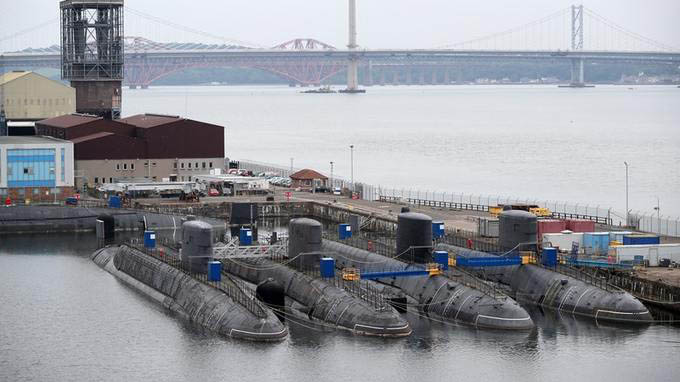
SafeEnergy E Journal No.92. December 21 , Submarine Dismantling The UK’s Submarine Dismantling Project hopes to dismantle 27 of the UK’s de-fuelled, nuclearpowered submarines after they have left service with the Royal Navy.
A demonstrator submarine is being used to define and refine the dismantling process. At Rosyth, the removal of low-level radioactive waste from the first two submarines, Swiftsure and Resolution, has been successfully and safely completed. As the unique approach is developed, work continues with the removal of low-level radioactive waste from a third submarine, Revenge. A fully developed process for steady state submarine dismantling should be ready by 2026. As the demonstrator programme progresses, the outcomes will provide more certainty in the future costs to dismantle the Devonport-based submarines. It is not MoD policy to pre-announce the funding of its projects for reasons of protecting commercial interests.”
REVENGE, entered the dry dock in Rosyth in late March 2020 to commence its LLW removal. The intent is to remove all LLW including large components such as steam generators and pressurisers. No nation has yet attempted this complex and challenging undertaking, so the MoD is currently putting in place the techniques necessary to remove all LLW for the first time to comply with safety and sustainability standards. https://www.no2nuclearpower.org.uk/wp/wp-content/uploads/2021/11/SafeEnergy_No92.pdf
Are small nuclear reactors actually small, safe, economic ?
Can Small Nuclear Reactors Really Help The Climate? QuickTake, Jonathan Tirone 27 Nov 2021 (Bloomberg) — Much of the world has been turning away from nuclear power, with its aging plants, legacy of meltdowns and radioactive waste. But some governments, big companies and billionaires including Bill Gates and Warren Buffett are convinced the technology can help save the planet.
1. How small is small? Of the more than 70 such reactors that the International Atomic Energy Agency lists as in some stage of design or development, the smallest are less than 5 meters (16 feet) in diameter and 10 meters in height. (The plant that would be built to operate the reactor would be bigger, of course.) SMRs typically have less than 300 megawatts of generating capacity, about a third of that of existing reactors.
…………. Do SMRs already exist? The only ones currently in commercial operation are two 35-megawatt units on a floating power plant deployed by Russia in the Arctic in 2020. China expects to begin trials in 2026 on an SMR being built near an existing power plant on Hainan island. The first commercial SMR project in the U.S., planned for the site of the Idaho National Laboratory, will consist of six reactors capable of producing a combined 462 megawatts. It’s supposed to be operational by the end of this decade.
…………….. smaller reactors would ideally be located closer to population centers, increasing the possible danger from an accident. And like their larger brethren, SMRs produce radioactive waste that must be stored safely for centuries.
………….. What are the economic challenges? Cost competitiveness is an uphill climb. U.S. manufacturer NuScale Power LLC, to cite one example, is aiming for an SMR that can sell power for $55 per megawatt-hour. Yet wind power in much of the world is now about $44 a megawatt-hour, solar is $50, and in some regions, renewable energy will be below $20 a megawatt-hour by the end of the decade, according to BloombergNEF. A 2020 study by professors at the University of British Columbia found that on a lifetime basis, the cost of electricity produced by SMRs could be 10 times greater than the cost of electricity produced by diesel fuel.
Who’s investing in SMRs? Electricite de France, China National Nuclear, Japan’s Toshiba and Russia’s Rosatom are pushing SMR designs, as is NuScale. Gates and Buffett have teamed up to build and test a reactor at an abandoned coal plant in Wyoming. Rolls-Royce Holdings Plc raised 455 million pounds ($608 million) to fund the development of SMRs, with almost half of the financing coming from the U.K government.
Read more at: https://www.bloombergquint.com/quicktakes/can-small-nuclear-reactors-really-help-the-climate-quicktake
Belene nuclear plant: Bulgarian far-right leader threatens to send opponents to a labour camp
Belene nuclear plant: Bulgarian far-right leader threatens to send opponents to a labour camp, By Krassen Nikolov | EURACTIV.bg 26 Nov 21,
Kostadin Kostadinov, leader of the pro-Russian far-right party ‘Vazrazhdane’ (Revival), started his first term as an MP by threatening to deport all those who oppose the Belene nuclear power plant to the town’s communist-era forced labour camp.
The Belene NPP is an unfinished project that dates back to the 1980s. Bulgaria has invested €600 million in it. 26 Nov 2021 ……..
Vazrazhdane’ won just under 5% in the parliamentary elections due to its consistent policy of disparaging the pandemic, resistance to COVID vaccines and green certificates. Now the party is beginning to expand on the energy issue. Vazrazhdane has 13 out of 240 MPs in the new parliament…….
Belene NPP is the last remaining project of the so-called Russian Grand Slam in Bulgaria, which was agreed between the Presidents of Bulgaria and Russia Georgi Parvanov and Vladimir Putin. The others were the South Stream gas pipeline and the Burgas-Alexandroupolis oil pipeline. https://www.euractiv.com/section/politics/short_news/belene-nuclear-plant/
CSIRO study proves climate change driving Australia’s 800% boom in bushfires.

CSIRO study proves climate change driving Australia’s 800% boom in bushfires, The Age, By Mike Foley, November 26, 2021 Climate change is the dominant factor causing the increased size of bushfires in Australia’s forests, according to a landmark study that found the average annual area burned had grown by 800 per cent in the past 32 years.
The peer-reviewed research by the national science agency, CSIRO — published in the prestigious science journal, Nature — reveals evidence showing changes in weather due to global warming were the driving force behind the boom in Australia’s bushfires.
Lead author and CSIRO chief climate research scientist Pep Canadell said the study established the correlation between the Forest Fire Danger Index – which measures weather-related vegetation dryness, air temperature, wind speed and humidity – and the rise in area of forest burned since the 1930s.
“It’s so tight, it’s so strong that clearly when we have these big fire events, they’re run by the climate and the weather,” Dr Canadell said.
Prime Minister Scott Morrison went to the COP26 climate talks in Glasgow to commit Australia to reach net zero emissions by 2050, and to upgrade his expectations for Australia’s 2030 carbon cuts, but he defied a global push to commit to phasing out fossil-fuel use. Instead, the Coalition government is backing a significant expansion of the gas industry, which it predicts will be 13 per cent larger in 2050 than it is now.
Under the federal government’s gas industry strategy, taxpayers will support the private sector to develop viable new gas fields and develop an extensive network of new pipelines and related infrastructure.
The bushfire royal commission identified climate change as a key risk to ongoing bushfire catastrophe but did not make recommendations about reducing greenhouse emissions to curb the threat.
The CSIRO report found other factors have an impact on the extent and intensity of bushfires such as the amount of vegetation or fuel load in a forest, the time elapsed since the last fire, and hazard reduction burning. But Dr Canadell said the study showed the link between weather and climate conditions and the size of bushfires was so tight, it was clear these factors far outweighed all other fire drivers…………….
oyal c
Mega-fires, which burn more than 1 million hectares, have “markedly” increased with three of the four recorded from 1930 occurring since 2000, while the gap between big blazes has had a “rapid decrease”, the study says.
Last year, the bushfire royal commission reported fuel-load management through hazard reduction burning “may have no appreciable effect under extreme conditions” that typically cause loss of life and property. https://www.theage.com.au/politics/federal/csiro-study-proves-climate-change-driving-australia-s-800-percent-boom-in-bushfires-20211126-p59cgr.html
November 26 Energy News — geoharvey

Science and Technology: ¶ “Britain’s Ancient Fortresses For Nature” • Though made by man, hedgerows form a vital reservoir of biodiversity in human-dominated landscapes where many species might otherwise struggle to survive. By nurturing pollinating insects, they can enhance the yield of crops. And they do it all while pulling carbon out of the atmosphere. […]
November 26 Energy News — geoharvey
Nuclear power for MINDLESS, ENDLESS, ENERGY use – Data ”Farms” and Bitcoin – theme for November 21.

When you think about the stupidity of eternal wastage of energy , it’s hard to beat the system of the supposed ”CLOUD”. Every pointless little email, little emoji, tweet, and all the other bits of digital junk produced goes not up into the disappearing ether, but down into a dirty great computer server, just one of the accumulating number of dirty great computer servers. Far from being ”farms”, these collections of steel enclosed machines actually produce nothing, but they do CONSUME massive amounts of electricity.
No wonder that the nuclear industry loves them!
The nuclear industry also loves crypto-currency, Bitcoin being the current top favourite of energy-guzzling systems.
A pernicious trio – data farms, cryptocurrency, and nuclear power – leading the world into eternal energy consumption and environmental degradation.

Robots to probe Fukushima No.1 reactor from Jan.

Thursday, Nov. 25, 2021
NHK has learned that the operator of the Fukushima Daiichi nuclear plant plans to start a delayed robot survey of a damaged reactor from mid-January.
Officials of Tokyo Electric Power Company say preparations are well under way to send submersible robots inside the containment vessel of the No.1 reactor.
The probe is part of efforts to remove molten fuel debris from the reactor that suffered a meltdown accident due to the 2011 earthquake and tsunami.
The utility originally planned to start the robot survey of the reactor in 2019.
It has been postponed because preparations, such as making a hole in the door of the vessel for the robots to go through, have taken time.
The officials say they are now installing equipment to remotely control the robots, and expect to carry out a survey for more than six months from mid-January.
They plan to use a total of six robots with different functions to find and examine nuclear debris, or deposits of a mixture of molten fuel and reactor parts, inside the containment vessel.
The robots will use ultrasonic devices to locate and measure how much debris there is, and how thick the deposit is. They are also expected to collect a small amount of samples.
Previous surveys at the plant confirmed the presence of deposits believed to be fuel debris in the No.2 and No.3 reactors, which also suffered meltdowns, but not in the No.1 reactor.
TEPCO to start ocean investigation by the end of the month.
November 26, 2021
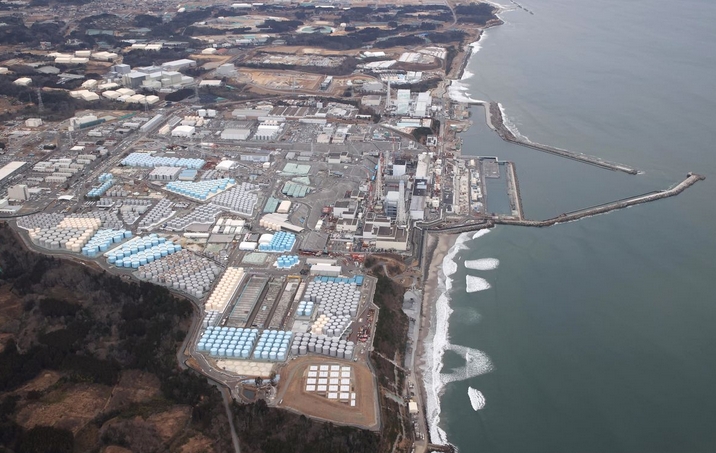
On April 25, it was learned that Tokyo Electric Power Company (TEPCO) has decided to start an oceanographic survey by the end of the month to lay an undersea tunnel for the release of treated water from the Fukushima No. 1 Nuclear Power Plant. After completing the survey, the company will start laying the tunnel, aiming to start releasing the water in spring 2023. According to the officials, TEPCO had initially expected to start the survey in September, but was forced to postpone it due to difficulties in forming a consensus with neighboring municipalities.
In August, TEPCO announced a process plan to construct an undersea tunnel, run pipes through it, and drain the water into the sea about one kilometer offshore from the plant. In this submarine survey, in addition to magnetic surveys to ascertain the condition of the seabed, including confirmation of unexploded ordnance and other hazardous materials, diving surveys will be conducted as necessary. A submarine boring survey using a workboat will also be conducted.
The submarine tunnel is expected to be about 2.5 meters in diameter, and pipes will be cut through the bedrock of the seabed from the vicinity of the No. 5 and No. 6 reactors at the plant. We had considered the idea of draining the water into the sea near the east side of the plant, but we chose to go offshore where the tritium contained in the treated water would be more diffused. It is believed that the decision was based on the fact that there are no fishing rights in the waters about one kilometer offshore and that there would be little opposition from fishermen concerned about harmful rumors.
On the 17th of this month, the government announced the results of its assessment that the radiation dose in the surrounding waters due to the release of treated water was far below the safety standards set by the government and international organizations, and that the impact of radiation on the surrounding residents and the environment was “extremely minor.
The decision to release the treated water was made in April this year by the then government of Yoshihide Suga, and Prime Minister Fumio Kishida, who inspected the plant in October, said that it was a very important issue that could not be postponed.
https://www.sankei.com/article/20211126-MVPMX33MAFNVHAA5MPOA4ULOV4/
Part of the frozen soil barrier may have thawed at the Fukushima Daiichi Nuclear Power Plant. Steel pipes are being driven into the ground to stop groundwater flow.
Nov. 25, 2021
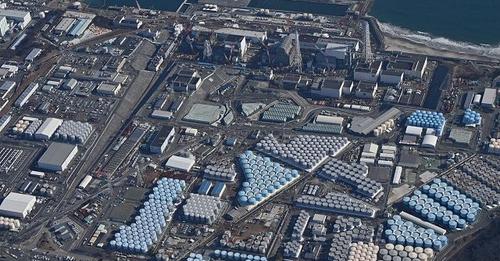
Tokyo Electric Power Company (TEPCO) announced on November 25 that it may have thawed part of the frozen soil barrier wall built around the No. 1 to No. 4 reactors at the Fukushima Daiichi Nuclear Power Plant (Okuma and Futaba towns, Fukushima Prefecture) to prevent the inflow of groundwater. The company has announced that it will try to stop the flow of water by driving several steel pipes into the wall. The project will start as early as early December, and if the temperature in the ground continues to rise, additional steel plates will be driven in.
According to TEPCO, a thermometer installed in the ground at the intersection of the southwest side of Unit 4 and the underground tunnel for drainage confirmed that the temperature exceeded zero degrees Celsius in late August. Since late September, the temperature has sometimes been above 10 degrees Celsius. A spokesperson explained at a press conference that the groundwater level outside the wall was high, and water pressure may have created a water path.
The steel pipe is 35 centimeters in diameter and up to six meters long. Nine of them will be driven into the ground outside the frozen soil wall, which may have thawed, to create a wall three to four meters wide.
The freezing wall, which has been in operation since 2017, was built to prevent groundwater from flowing into the reactor building, where melted nuclear fuel (debris) remains from the accident, and to reduce the amount of contaminated water generated. The wall is about 1.5 kilometers long. About 1,600 freezing pipes (30 meters long) were driven into the ground. The freezing pipes are about 1,600 tubes (30 meters long) driven into the ground and circulated with a cooling liquid of 30 degrees Celsius to freeze the surrounding soil. (Kenta Onozawa)
https://www.tokyo-np.co.jp/article/144800
1 This Month
Tell Congress: Prevent Nuclear Catastrophe in Iran

Tell Congress: Prevent Nuclear Catastrophe in Iran

Read the Public Inquiry Report, the Commissioners’ report, Surrendering Australia: The AUKUS Deception is available to download for free at aukuspublicinquiry.com. Or just watch the replay of the National Press Club Luncheon.


Shut down the radiation-damaged Heysham nuclear reactors now
To see nuclear-related stories in greater depth and intensity – go to https://nuclearinformation.wordpress.com

Say No to NASA’s Reckless Nuclear Reactor on the Moon
Say No to NASA’s Reckless Nuclear Reactor on the Moon
-
Archives
- November 2026 (238)
- October 2026 (302)
- September 2026 (339)
- August 2026 (330)
- July 2026 (355)
- June 2026 (287)
- May 2026 (306)
- April 2026 (356)
- March 2026 (251)
- February 2026 (267)
- January 2026 (308)
- December 2025 (358)
-
Categories
- 1
- 1 NUCLEAR ISSUES
- business and costs
- climate change
- culture and arts
- ENERGY
- environment
- health
- history
- indigenous issues
- Legal
- marketing of nuclear
- media
- opposition to nuclear
- PERSONAL STORIES
- politics
- politics international
- Religion and ethics
- safety
- secrets,lies and civil liberties
- spinbuster
- technology
- Uranium
- wastes
- weapons and war
- Women
- 2 WORLD
- ACTION
- AFRICA
- Atrocities
- AUSTRALIA
- Christina's notes
- Christina's themes
- culture and arts
- Events
- Fuk 2022
- Fuk 2023
- Fukushima 2017
- Fukushima 2018
- fukushima 2019
- Fukushima 2020
- Fukushima 2021
- general
- global warming
- Humour (God we need it)
- Nuclear
- RARE EARTHS
- Reference
- resources – print
- Resources -audiovicual
- Weekly Newsletter
- World
- World Nuclear
- YouTube
-
RSS
Entries RSS
Comments RSS

