UN chief calls for nuclear weapons-free Middle East
UN chief calls for nuclear weapons-free Middle East, UN News, The UN Secretary-General on Monday called on all Middle East States to transform the vision of a region with no nuclear weapons, or other weapons of mass destruction, into a working reality.
Antonio Guterres was speaking in New York at the second session of the Conference on the Establishment of a Middle East Zone Free of Nuclear Weapons and Other Weapons of Mass Destruction.
Since 1967, five such zones have been established around the world: Latin America and the Caribbean, the South Pacific, Southeast Asia, Africa and Central Asia. They include 60 per cent of all UN Member States and cover almost all of the Southern Hemisphere.
For the Secretary-General, expanding such zones would help build a safer world.
“That is particularly the case in the Middle East, where concerns over nuclear programmes persist, and where conflicts and civil wars are causing widespread civilian casualties and suffering, undermining stability and disrupting social and economic development”, Mr. Guterres explained.
The UN chief also reiterated his call for all parties to exercise restraint and avoid escalation.
In this context, he highlighted the Joint Comprehensive Plan of Action (JCPOA), known commonly as Iran Nuclear Deal, saying that the return to dialogue is “an important step.” ………. https://news.un.org/en/story/2021/11/1106732
China puts forward proposals as Iran nuclear talks resume
China puts forward four proposals as Iran nuclear talks resumeCGTN China welcomes the resumption of talks about the Iran nuclear deal and has made four proposals in the hope of pushing forward the negotiation process, Chinese Foreign Ministry spokesperson Wang Wenbin told reporters on Monday…….
Reiterating China’s support for a diplomatic settlement, Wang put forward four proposals.
First, the U.S. is the initiator of the Iran nuclear crisis, Wang said, urging the U.S. to lift sanctions against Iran and third-party entities and individuals. On this basis, Iran should fully resume its nuclear commitments. Neither party should impose any other conditions for this, Wang said.
Second, all parties should respect each other’s legitimate rights and concerns, Wang said, calling on relevant parties to uphold the principle of mutual respect and win-win cooperation so as to promote regional peace and stability.
| The legitimate rights and interests of parties involved in economic and trade cooperation with Iran should be respected, added Wang.Third, the spokesperson called for a pragmatic and flexible negotiation strategy and encouraged all parties to use their political wisdom and settle the issue through equal consultation.China supports pushing forward the negotiation based on the previous consensuses, he noted.Fourth, Wang stressed that all parties should stay committed to a political settlement of the issue, and stay restrained and rational to maintain the negotiation process……. https://news.cgtn.com/news/2021-11-29/China-puts-forward-four-proposals-as-Iran-nuclear-talks-resume-15ADhfujpqE/index.html |
Nuclear industry handouts to universities continue

Duke Energy Gives $150K of Nuclear Scholarships to SC State
Duke Energy is giving a historically Black South Carolina university $150,000 in scholarships to help train and educate new nuclear engineers. U.S. News By Associated Press|Nov. 29, 2021, ORANGEBURG, S.C. (AP) — Duke Energy is giving a historically Black South Carolina university $150,000 in scholarships to help train and educate new nuclear engineers.
South Carolina State University said that money will provide about 15 scholarships over three years in its nuclear engineering program, which is the only undergraduate one of its kind in the state, interim university President Alexander Conyers said…. .. https://www.usnews.com/news/best-states/south-carolina/articles/2021-11-29/duke-energy-gives-150k-of-nuclear-scholarships-to-sc-state
Not Before Time EDF’s Hunterston B is Switched Off For Good. — RADIATION FREE LAKELAND

Hunterston B Photo by David Autumns “Good news Reactor 4 next and then this cracked and broken risk will be removed from our lives. Just the radioactive cocktail it has cooked up in it’s internals to deal with for thousands after thousands of years. And they want to build more and claim them as green…” […]
Not Before Time EDF’s Hunterston B is Switched Off For Good. — RADIATION FREE LAKELAND
November 29 Energy News — geoharvey

Opinion: ¶ “Will The EV Revolution Trigger Global Economic Crisis?” • The transition to EVs and renewable energy is already creating winners and losers. But fossil fuel industries keep investing vast sums to develop new oil and gas resources and infrastructure. There’s a real risk that in a few years they’ll be producing far more […]
November 29 Energy News — geoharvey
Omicron Variant: For Better or For Worse? — One Finite Planet

Omicron races up the charts. You would think a new variant of concern could not be a good thing, but it fact it is possible. Although this page will record data on omicron over time, given how long the virus have now been followed, already at this early time already there is significant data to…
Omicron Variant: For Better or For Worse? — One Finite Planet
Solar reaches 110 per cent of South Australia demand as more records tumble — RenewEconomy

Records continue to tumble in South Australia, with solar reaching 110 pct of local demand, and wind and solar meeting an average 100pct of demand over 93 hours. The post Solar reaches 110 per cent of South Australia demand as more records tumble appeared first on RenewEconomy.
Solar reaches 110 per cent of South Australia demand as more records tumble — RenewEconomy
Nuclear news – week to 29 November
PANDEMIC. WHO Reaches Draft Consensus on Future Pandemic Treaty More omicron cases pop up as world rushes to learn more.
CLIMATE CHANGE – it hasn’t gone away. Keep up to date with Radio Ecoshock, and – Rebel Against the Crash. Also Paul Beckwith – https://www.youtube.com/watch?v=IubZzo97p-A
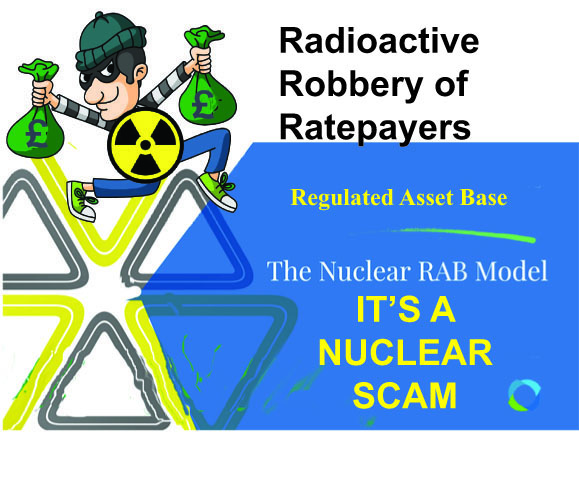
NUCLEAR. Again,France is in the news, as President Macron, (formerly opposed to nuclear) pushes for the industry. Meanwhile safety issues continue, and also concern over radioactive releases from La Hague into the seaMeanwhile the global nuclear industry watches with concern, as Britain struggles to organise the funding ( Regulated Asset Base) for its new nuclear plans.
Nuclear power being hyped in the media, but its prospects are grim.
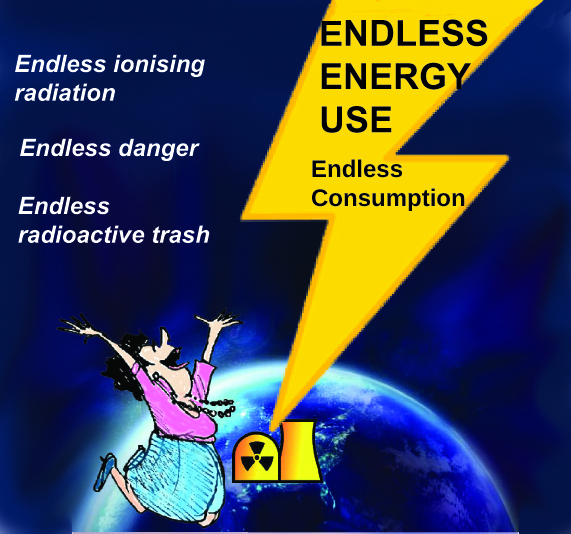
Nuclear power for MINDLESS, ENDLESS, ENERGY use – data”farms” and Bitcoin.
Small modular reactors not the solution . Are small nuclear reactors actually small, safe, economic ?
Nuclear Fusion Recedes Into Far Future For The 57th Time.
Climate 129 reputable European and international organisations have signed up to letter opposing inclusion of nuclear and gas as being ”sustainable” and ”green”.
Latest COP 26 pledges will lead to 16% increase in carbon emissions, NOT the necessary 45% decrease.
Climate and biodiversity: mapping the irrecoverable carbon in Earth’s ecosystems. IEA: Rate of energy efficiency improvements needs to double to put world on track for net-zero.
Economic Cost Of Peak Population: Japan, China, The World.
ARCTIC. Arctic Ocean started getting warmer decades earlier than we thought – Study Melting Arctic sea ice linked to ”worsening fire hazards” in Weatern USA .
EUROPE. Europe to pay half for raising Russia’s dangerous sunken submarines, – while Russia builds new ones!
NEW ZEALAND. This world of pandemic and climate change can no longer afford the luxury of nuclear weapons proliferation.
UK
- Environmental Social and Governance investors have upset polluting and tobacco industries – now they’re coming for nuclear. 26 UK investment funds pouring money into nuclear weapons companies: some have links to UK government.
- British military moving closer and closer to, nuclear bombers 12 miles from Russian border: envoy.
- Nuclear financing. The UK’s nuclear plan is a financial, environmental and political risk. UK government tries to save its nuclear skin by turning to dubious Regulated Asset Base funding. UK Parliament debates Nuclear Energy (Financing) Bill, with anxiety over the Government’s big nuclear plans. UK govt’s budget – £1.7 billion direct government funding to enable Regulated Asset Base funding for new nuclear. Energy consumers are likely to spend over £1000 each to complete Sizewell C Nuclear …..and then pay a high price for the electricity it produces.
- Despite the USA’s V.C. Summer nuclear fiasco, a consortium plans to build the same type of reactor, with same funding model, at Wylfa.
- Question hangs over Bradwell nuclear project – Bradwell B (BRB) a partnership 66.5% China’s CGN and 35% France’s EDF. Boris Johnson quizzed over future of Bradwell, (Essex) nuclear plant.
- Labour has called for clarity on how the government plans to remove China’s state-owned energy company from nuclear power projects in the UK. Boris Johnson avoids detail on how China will be removed from Sizewell C deal.
- New nuclear for Scotland– would be a tragic mistake? Nicola Sturgeon reaffirms the Scottish Government’s opposition to nuclear power. Newly released Government documents reveal safety, terrorist, dangers of Scotland’s nuclear power stations .
- Two British nuclear power stations closing years ahead of their expected time.
- Hurdles ahead for Rolls Royce small nuclear reactor development. What might trip up the Rolls Royce plan for small nuclear reactors?
- Nuclear fusion for UK – to save the dying nuclear industry, and UK as a nuclear weapons state?
- Powerful greenhouse gases emitted from Hunterston A nuclear station .
- UK’s Ministry of Defence makes unprecedented attempt to dismantle dead nuclear submarines.
- Protest against plan for nuclear waste dump in West Cumbria, close to National Park .
- Gordon Frederick Coggon – a Nuclear Test Veteran’s Experience.
CHINA. China calls on the Association of Southeast Asian Nations (ASEAN) to make Southeast Asia a nuclear-weapons-free zone.
JAPAN. Tepco to repair Fukushima nuclear station’s partially melted protective ice wall. Robots to probe Fukushima No.1 reactor from Jan.
FRANCE.
France quietly benefiting from the neglect of international commitments to protect the seas from radioactive discharges. Radiation control organisation calls for significant reduction in toxic releases from La Hague nuclear facility.
As presidential candidate, Emmanuel Macron opposed nuclear power, now he’s all for it. France’s Court of Auditors warns on the ”uncertainties” surrounding the future of nuclear power. France’s government in some confusion about when construction of new nuclear reactors will begin.
Risk of lack of electricity: is EDF’s nuclear fleet properly managed?
Costs of electricity from Flamanville nuclear power station will be three times higher than from the most competitive renewable sources.
Tricastin nuclear power plant: cascading cover-ups. Manager at Tricastin NPP files complaint about safety issues and harrassment .
ITALY. Residents in the Basilicata region again gear up to fight against hosting a nuclear waste dump.
CANADA. Bipartisan USA lawmakers Press Biden to stop Canadian plan to store nuclear waste near Lake Huron. . Financial hypocrisy – the pretence that nuclear power is green and cheap .
USA.
- Christmas bonanza from USA tax-payers to the nuclear industry.
- Exelon Generation Co changing its name to the more appropriate (Nuclear) Spin Co.
- The US Faces Pressure To Do More To Address Its Nuclear Legacy In The Marshall Islands. USA rehearsing launching nuclear attack on Russia.
- Another step in the effort to clean up Hanford’s massive nuclear waste problem. Waste Isolation Pilot Plant (WIPP) gets 13,000th nuclear waste shipment, and plans for much more. Pilgrim nuclear plant may release 1M gallons of radioactive water into bay.
- US rehearsed dropping nuclear weapons 20km from Russian border – Moscow.
KAZAKHSTAN. Crypto currency mining is rampant, so Kazakhstan looks to nuclear energy, despite its dreadful history there..
INDIA. A silent killer is choking Delhi. For millions, there’s no choice but to breathe it in
ISRAEL. US warns Israel its attacks on Iran nuclear program are counterproductive . The U.S. Is Bracing for Blows With Israel as Iran Nuclear Talks Near.
GERMANY. Will Germany’s Next Government Ditch U.S. Nuclear Bombs? Incoming German government commits to NATO nuclear deterrent. New German government aims for coal exit, and 80 pct renewables, by 2030, German nuclear power shutdown will not lead to power shortage: report.
HUNGARY. Nuclear power in Hungary: Green, cheap and independent?
IRAN. UN nuclear watchdog fails to reach access deal with Iran.
BULGARIA. Belene nuclear plant: Bulgarian far-right leader threatens to send opponents to a labour camp.
MALTA. Prisoners and families exposed to undocumented, possibly risky radiation levels.
AUSTRALIA. AUSTRALIA. Kimba nuclear waste dump plan. Minister Keith Pitt confirms that the federal government has bought the land at Kimba for the national nuclear waste dump. To set up nuclear waste dump , the Australian government will have to override South Australian State government laws
Crypto currency mining is rampant, so Kazakhstan looks to nuclear energy, despite its dreadful history there.
Kazakhstan is now home to 50 registered and an unknown number of unregistered crypto mining companies. The decision to build new nuclear power plants is a serious one for a country that suffered severe nuclear fallout from weapons testing during the Soviet occupation. Kazakhstan’s last nuclear power plant closed in 1999.
Bitcoin mining power crunch: Kazakhstan looks toward nuclear solution, CoinTelegraph, 25 Nov 21
The country saw a great influx of miners this year, but it might have to sacrifice the immense tax revenue from Bitcoin miners if power grid issues are not resolved.
–The exodus of Bitcoin miners from China into Kazakhstan has contributed to an energy crunch that the central Asian country’s president has proposed solving with nuclear energy.
Kazakhstan’s Ministry of Energy has attributed the 8% increase in domestic electricity consumption throughout 2021 to Bitcoin miners. The country received at least 87,849 Bitcoin mining machines from Chinese companies so far this year, following China’s crackdown on crypto mining, according to data from the Financial Times.
The substantial increase in demand has led to a deficit in the domestic power supply and contributed to unreliable electricity services, according to the Kazakhstan Electricity Grid Operating Company. President Tokayev told bankers at a Friday meeting that he thinks building a nuclear power plant will help ease the stress on his country’s electrical infrastructure:………………
Kazakhstan is now home to 50 registered and an unknown number of unregistered crypto mining companies. The decision to build new nuclear power plants is a serious one for a country that suffered severe nuclear fallout from weapons testing during the Soviet occupation. Kazakhstan’s last nuclear power plant closed in 1999……..https://cointelegraph.com/news/bitcoin-mining-power-crunch-kazakhstan-looks-toward-nuclear-solution
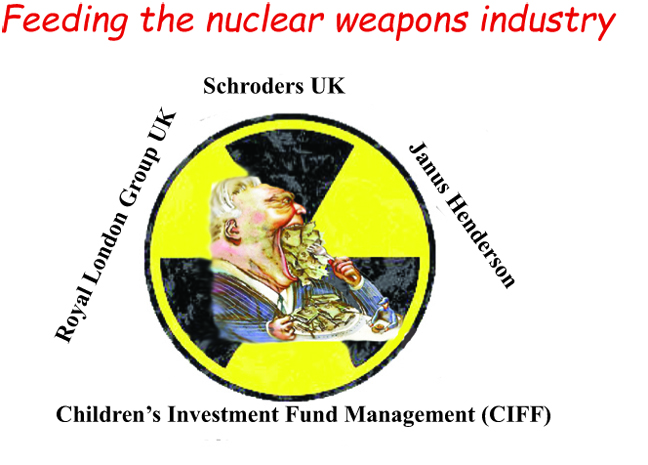
26 UK investment funds pouring money into nuclear weapons companies: some have links to UK government.
“It is unsurprising that the same financial institutions who continue to pour funding into companies like BAE Systems also have close links with senior Conservative party members and is yet another example of the cosy relationship between the arms industry and the UK government,”
The Ferret, November 28, 2021 Twenty-six financial firms in London have been accused of funding a “new nuclear arms race” including investment funds with links to the UK Government, The Ferret can reveal.
The Ferret found that 26 were based in London and six have links to the Conservative Party, which plans to increase Britain’s nuclear weapons arsenal.
They include Schroders UK which holds shares in the arms giant, BAE Systems. Schroders chair is Lord Geidt, who was an advisor to BAE Systems until April this year. He is now an advisor to Prime Minister Boris Johnson, whose plan to produce more nuclear weapons has been condemned by peace organisations.
Netherlands-based peace group, PAX, produced the study with the International Campaign to Abolish Nuclear Weapons (ICAN). Their report warns that financial institutions continuing to invest in companies involved with the nuclear weapons industry could face “regulatory risks” because of the Treaty on the Prohibition of Nuclear Weapons, which came into force in January 2021.
The treaty – which the UK has not ratified – bans nuclear weapons and has been signed by 86 states so far.
The UK Government — which claims it is “committed to the long-term goal of a world without nuclear weapons” — said in March it would lift the cap on its nuclear arsenal by 40 per cent, from 180 to 260 warheads. In a statement in November the government claimed it had “played a leading role by pioneering work in nuclear disarmament”.
Perilous Profiteering says that Schroders UK had investments in 2020 worth $125.3 million (£93.97m) in BAE Systems which is building new Dreadnought submarines that will be armed with nuclear missiles. The company also provides logistics support for the US Trident and Minuteman missiles. BAE Systems stressed that it does not make nuclear warheads.
The report also names Royal London Group UK which had shares in 2020 worth $98.6m (£74m) in BAE Systems. In June the insurance company appointed Ruth Davidson, former leader of the Scottish Tories , as a non-executive director. Davidson is now a peer.
Others with links to the Tories include the Children’s Investment Fund Management (CIFF) which has shares in Safran, a French firm. Safran owns 50 per cent of ArianeGroup which has contracts for French nuclear weapon production.
Emma Cockburn, Scotland co-ordinator for Campaign Against Arms Trade
CIFF’s investment assets are managed by TCI Fund Management, where Rishi Sunak MP, chancellor of the exchequer, was a partner from 2006 to 2009.
Investment firm Janus Henderson, which has shares in General Dynamics, L3 Harris and Leidos, gave the Tories £3,500 in 2018, a payment which was registered in the House of Commons as required. General Dynamics, L3 Harris and Leidos all operate within the nuclear sector, says the new report.
According to the new report, the entry into force of the Treaty on the Prohibition of Nuclear Weapons in January 2021, is an “historic shift” in the way the world “deals with nuclear weapons”. It points out that while nuclear weapons are controlled by governments, their production is often contracted to private companies. “They (nuclear weapons) are now comprehensively outlawed, as is any assistance with producing, manufacturing or developing them,” the report says.
“Financial institutions that continue investing in companies building nuclear weapons face regulatory risks as more countries join the treaty. They also face an increased reputational risk as clients learn of their support for weapons of mass destruction and terminate their relationships.”
The report also reveals that 338 institutions have financing or investment relationships with the 25 nuclear weapon producing companies, down from 390 the previous year – a fall of 52, which the authors welcomed……….
Other critics of the nuclear weapons industry include Emma Cockburn, Scotland co-ordinator for Campaign Against Arms Trade (CAAT). She said the report provides a “damning insight to the endless billions available for the nuclear and arms manufacturers.”
“It is unsurprising that the same financial institutions who continue to pour funding into companies like BAE Systems also have close links with senior Conservative party members and is yet another example of the cosy relationship between the arms industry and the UK government,” she added……………………….. https://theferret.scot/revealed-27-london-companies-funding-nuclear/
Energy consumers are likely to spend over £1000 each to complete Sizewell C Nuclear …..and then pay a high price for the electricity it produces.
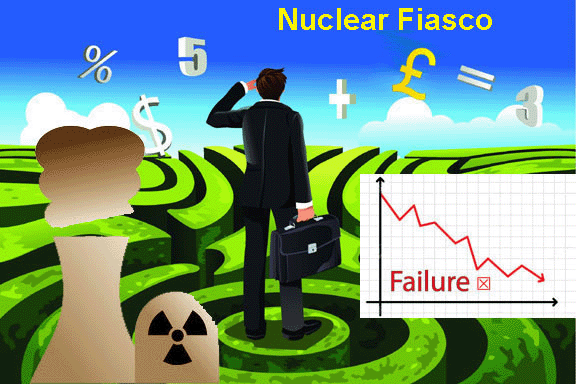
The Government’s new nuclear power construction financing mechanism the so-called ‘Regulatory Asset Base’ (RAB) is likely to cost energy consumers an average of well over £1000 each added onto their electricity bills.
On top of that energy consumers will have carry on paying on top of this for an as-yet undecided amount for each kWh generated by Sizewell C.
According to EDF planning figures the cost of Sizewell C will be £20 billion. Experience suggests that there is little faith to be placed inEDF’s claims. For example, the actual cost of the Flamanville nuclearpower plant being built by EDF (the same EPR model) has cost upwards of 5 times as much as their original estimate.
So we can probably expect a bill of at least £30 billion to be paid by consumers through their electricity
bills. That is because the RAB mechanism will ensure that consumers pay the cost overruns, which are certain to occur when building these nuclear power plant. Given that there are around 26 million domestic electricity consumerbills to be paid in the UK, this means each consumer will be paying over
£1000 each to build the power plant.
100% Renewables 27th Nov 2021
Nuclear power being hyped in the media, but its prospects are grim

 | |||
whether contracting or expanding, there is always a lot of money involved, and, judging by a new section in this years WNISR, looking at the prevalence of crime in the industry, the nuclear sector has had its fair share of corporate and financial corruption and fraud. It says ‘huge contract size and multiple layers of subcontractors make the sector attractive for people with malicious intentions’ and it reports on cases of ‘bribery and corruption, counterfeit and fraud in manufacturing and quality control’, the latter being particularly sensitive given the safety risks involved with nuclear plants and wastes.
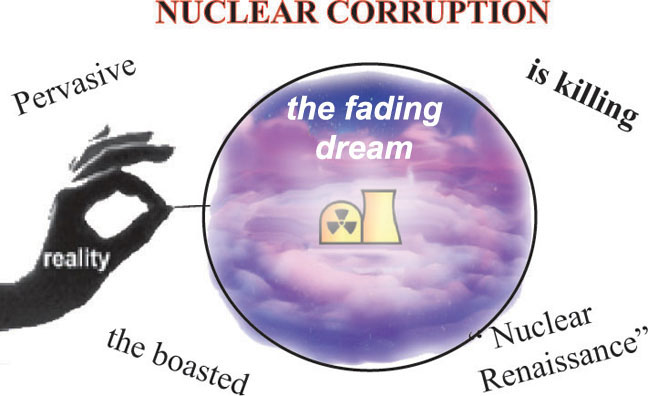
While there are obviously cases of fraud and corruption in other sectors with large infrastructure investments, WNISR suggest that ‘in the past decade, there has been growing evidence of criminality in the nuclear industry’. As well as cases of sabotage via internal and external action. Not a happy thought.
https://renewextraweekly.blogspot.com/2021/11/nuclear-power-global-prospects.html Despite its economic problems, construction delays and cost overshoots, the prospect for nuclear power have been talked up of late. It is being portrayed as a way to respond to climate change and ensure continued energy security in a world where energy demand continues to rise, the use of fossil fuels is increasingly reduced and the use of variable renewables increases. The global lobby group, the World Nuclear Association, says that nuclear generation globally will grow by 2.6% annually, reaching 615 GWe by 2040, up from 394 GW now. Indeed, its upper scenario sees nuclear capacity growing faster, to 839 GWe in 2040. Even under the Lower Scenario, a steady increase is seen over the entire reporting period.
That is all very optimistic judging by the views presented in the latest edition of the independent World Nuclear Industry Status Report, which assesses the status and trends of the international nuclear industry. It reports that, in 2020, nuclear power generation output plunged by around 100 TWh, while net nuclear capacity additions (new startups minus closures), declined to 0.4 GW- compared to a net rise of over 150 GW for renewables. It also didn’t see things improving much. Small Modular Reactors (SMRs) were so far unavailable commercially and would not be for another 10-15 years, ‘if ever’. So overall WNISR says ‘nuclear is irrelevant in today’s electricity capacity new-build market’.
By contrast, non-hydro renewables, mainly wind, solar and biomass, out-performed nuclear plants in electricity generation on a global scale. Hydro alone has been generating more power than nuclear for most of the past three decades. And now, for the first time, non-hydro renewables generated more power in the European Union than nuclear, while renewables, including hydro, generated more power than all fossil fuels combined.
Continue readingProtest against plan for nuclear waste dump in West Cumbria, close to National Park
NEW NUCLEAR DUMP FOR HIGHER ACTIVITY WASTES AT DRIGG LOW LEVEL WASTE REPOSITORY? NIREX REBRANDED? From Lakes Against Nuclear Dump to the Lake District National Park Authority. 28 Nov 21, A letter of alarm regarding plans for an Intermediate Level Nuclear Waste Dump for the UK’s Low Level Waste Repository at the village of Drigg. The UKs LLWR is 250 metres from the National Park Boundary at the nearest point. The following letter has been sent to local and national media and mainstream NGOs have been alerted.
Dear Member of the Lake District National Park Authority,
Congratulations on the 70th anniversary of the Lake District National Park. In the original Lake Counties is another 70th anniversary. The Windscale Piles. Which from 1951 produced plutonium for Britain to make its own atomic and hydrogen bombs until the Windscale Fire of 1957. Unfortunately lessons were not learnt. The nuclear experiment continues despite no final solution to the problem of what to do with the escalating wastes from 70 years of military and civil nuclear reactors. Our own view as a nuclear safety group is that the wastes should not be buried out of sight and out of mind but should be closely monitored and repackaged when necessary.
NIREX REBORN AT DRIGG? – Intermediate Level Nuclear Wastes for Burial approximately 250 metres from the National Park?
We have been alerted by locals in the Drigg area to a plan which is running in tandem with that for a deep Geological Disposal Facility which Government say: “will be available to receive the first waste in the 2040s” However the plan for Near Surface Disposal (10s of metres below ground) “could be available within the next 10 years.” This plan, for which the Low Level Radioactive Waste Repository at Drigg is under active consideration, is for the disposal/dumping of Intermediate Level Wastes of the type that were rejected by the NIREX inquiry for deep GDF disposal at Longlands Farm, Gosforth in 1997. Exploratory boreholes have already been drilled at Drigg for the Near Surface Disposal of Intermediate Level Nuclear Wastes, presumably under “permitted development.”
Just like the early days of the Windscale Piles this plan has been put in motion under the radar of public attention. There has not been any debate or vote at Local, Borough or County Council level nor, we assume, any discussion by the Lake District National Park despite the Low Level Waste Repository being only 250 metres from the Lake District National Park boundary. Intermediate Level Nuclear Wastes, according to the Nuclear Decommissioning Authority, “exceeds the upper boundaries for Low Level Waste but does not generate a significant amount of heat. ..The major components of ILW are nuclear reactor components, graphite from reactor cores and sludges from the treatment of radioactive liquid effluents.”
The NIREX dump entrance proposal for Intermediate Level Wastes was rejected in the 1990s because the nuclear industry had no idea how much and how fast the planned dump would leak. They still have no idea. Furthermore for a shallow dump the leaks would be even faster…………
The fundamental conclusion of the expert Assessor and myself was that the Proposed Repository Zone had been chosen for these studies in an arbitrary manner, without conforming to internationally agreed, geological criteria
Earlier in a letter to “The Guardian” of June 28,’07 the NIREX Inquiry Inspector had stated : “The relevant geology in west Cumbria is apparently now claimed to be ‘stable, although imperfect’.…the imperfection consists of simply failing to meet the internationally agreed criteria on the suitability of rocks for nuclear waste deposit. The site should be in a region of low groundwater flow, and the geology should be readily characterisable and predictable, whereas the rocks there are actually of a complex volcanic nature, with significant faulting. Also, the industry was relying on an overlying layer of sedimentary strata to dilute and disperse any groundwater leakage, when the international criteria require such a layer to act instead as a barrier…The site is not suitable and investigations should be moved elsewhere…”.
And: “The site selection process was flawed, not treating safety as the most important factor, and irrationally affected by a strong desire to locate close to Sellafield.”
https://www.theguardian.com/world/2007/jun/28/nuclear.uk
The latest process to deliver a GDF (with Cumbria STILL in the frame), Radioactive Waste Management, is now in partnership with the LLWR at Drigg. These bodies along with the Nuclear Decommissioning Authority are all advised by the Committee on Radioactive Waste Management which is in turn taking “invaluable” advice on construction and delivery of deep (GDF) and not so deep (NSD) dumping/disposal from West Cumbria Mining’s CEO Mark Kirkbride. Kirkbride compiled CoRWMs Annual Report No 3724 which details the push for Near Surface Disposal: “advice in the last year have been in relation to the concept of Near Surface Disposal (NSD) for intermediate level waste which is being explored by NDA as a potential solution for the disposal of specific intermediate level waste materials, reducing the volume of certain elements of the inventory into a GDF.
The Lake District National Park Authority surely cannot ignore this. If Intermediate and heat generating High Level nuclear waste is brushed under the Lake District fringes and abandoned, then the World’s Nuclear Heritage Site will soon become the World’s Nuclear Sacrifice Zone. This could happen within a decade for the Intermediate Level Wastes at Drigg. Please protect the Lake District and its fringes, tomorrow is too late to say “This Far and No Further.”
yours sincerely
Marianne Birkby
Lakes Against Nuclear Dump – a Radiation Free Lakeland campaign
https://www.lakesagainstnucleardump.com/ https://www.lakesagainstnucleardump.com/post/new-nuclear-dump-for-higher-activity-wastes-at-drigg-low-level-waste-repository-nirex-rebranded
Identical Problems as that at China’s Taishan nuclear plant Predicted for all EDF’s Reactors – Time to Stop Hinkley! — RADIATION FREE LAKELAND

Computer generatated view of an EPR nuclear power station This is translated from the French Press : “The incident that led in July to the shutdown of a reactor at the EPR nuclear power plant in Taishan (China) would be due to a design defect of the vessel, say the CRIIRAD which warns of the […]
Identical Problems as that at China’s Taishan nuclear plant Predicted for all EDF’s Reactors – Time to Stop Hinkley! — RADIATION FREE LAKELAND
The “brigands” regroup in Basilicata

Italians reunite in the face of a renewed radioactive waste dump threat
The “brigands” regroup in Basilicata — Beyond Nuclear International 28 Nov 21,
”………………………………………… between November 13 and 27, 2003, just weeks before we arrived. An unprecedented and dramatic 15 days of protest had unfolded in Scanzano Jonico, culminating in the defeat of a plan by the Italian government, then led by Silvio Berlusconi, to dump all of Italy’s high-level radioactive waste at a single site at Terza Cavone, a few kilometers from Scanzano, in salt rock at a site just 200 meters from the shoreline.
The dump decision had been taken at night, without local consultation, the news deliberately buried in the papers, eclipsed by a headline-garnering suicide bombing that had killed 18 Italian service members at the Nasiriyah Carabinieri barracks in Iraq during that ill-waged war.
But the Lucani noticed the announcement right away. The news struck “like a lightning bolt” Tonino Colucci of the local World Wildlife Fund chapter told me later as we walked into that surprise press conference.
Before the ink was even dry, they had set up a base camp at Terza Cavone — where we were now. They had rallied people from all walks of life to protest, occupy stations, and block highways. The whole region declared itself a nuclear-free zone. Berlusconi’s own members of parliament in the area opposed the deal. By November 23, the ranks of protesters had swelled to 100,000. After fifteen days, the radioactive waste dump was canceled.
The protest garnered widespread coverage, including in the New York Times, and even spawned academic papers, one such describing the remarkable victory as having “cut across lines of locality, age, social class and political affiliation, mobilizing the populace with various symbols, including references to brigandage, postwar struggles for land, and the Madonna of Loreto.” I wrote up my own experiences in The Bulletin of the Atomic Scientists.
Along with the expected objections — the unsuitability of the site so close to the sea; the damage to agriculture and the tourism trade —outrage was also expressed at the desecration of an area so steeped in ancient history. Pythagoras had fled to Basilicata from Greece. He made his table here. He died at Metaponto, just 16 kilometers from the proposed radioactive waste dump site. It was unthinkable to build a nuclear waste dump in such a venerable place!
So here we were at Terza Cavone having a press conference even though the victory had already been won. The site remained occupied. Passions still ran high (encapsulated later as they broke into brigand songs around what was now a roaring camp fire). There was plenty to talk about; plenty still to learn. But I learned more that night from listening — to farmers will the precious dirt of Basilicata still beneath their finger-nails; from union representatives; from mothers and vintners — than talking.
And that vigilance persists today as, once again, the Italian government has fingered Basilicata as a place “ideally suited” to a high-level radioactive waste dump. The protesters haven’t gone away, remaining on guard against just such a day when they might once again be targeted.
Only this time, Basilicata is not alone.
The news first broke in January 2021, that Sogin — the Italian state-owned company responsible for reactor decommissioning and radioactive waste management —had released a map identifying 67 potential sites in five zones that it considered suitable for a high-level radioactive waste repository. The selected sites included 17 in Basilicata and neighboring Puglia. Fifty more, in Piedmont, Tuscany-Lazio, Sardinia and Sicily, comprised the rest.
Italy’s high-level radioactive wastes are the product of just four now closed commercial reactors, one of which was already shut down when a 1987 national referendum, just a year after the Chernobyl nuclear disaster, recorded a stunning vote of more than 80% of Italians opposed to the continued use of nuclear power. (With bafflingly daft timing, a 2011 Berlusconi government ran the referendum again three months after the Fukushima nuclear disaster in March. This time, 93% of Italians said they opposed a nuclear re-start.)
Italy’s radioactive waste is currently stored in about 20 temporary sites, none of which have been deemed suitable as final repositories. Reports on the inspections of the 67 sites identified by Sogin are due in December. A new shortlist of sites is expected in January 2022.
The Lucani, still organized under the mantel they established in 2003, Scanziamo le Scorie — which loosely translates as ‘we reject the wastes’ — are hoping to reignite the same momentum that brought them victory the first time. They participated in the National Seminar carried out by Sogin between September 7 and November 24 this year, and have prepared their own comments (in Italian) on the so-called criteria for suitable sites.
So far, the Sogin proposal has been met with vehement rejection. A spokesperson from Sardinia called it “an act of government arrogance, yet another outrage”. Puglia signaled its “firm and clear opposition”.
As Scanziamo le Scorie’s spokesperson, Pasquale Stigliani — who was there in 2003 — recently wrote to me, “the nightmare is back”. But, he added, “the mobilization continues!” https://beyondnuclearinternational.org/2021/11/28/the-brigands-regroup-in-basilicata/
1 This Month
Tell Congress: Prevent Nuclear Catastrophe in Iran

Tell Congress: Prevent Nuclear Catastrophe in Iran

Read the Public Inquiry Report, the Commissioners’ report, Surrendering Australia: The AUKUS Deception is available to download for free at aukuspublicinquiry.com. Or just watch the replay of the National Press Club Luncheon.


Shut down the radiation-damaged Heysham nuclear reactors now
To see nuclear-related stories in greater depth and intensity – go to https://nuclearinformation.wordpress.com

Say No to NASA’s Reckless Nuclear Reactor on the Moon
Say No to NASA’s Reckless Nuclear Reactor on the Moon
-
Archives
- November 2026 (238)
- October 2026 (302)
- September 2026 (339)
- August 2026 (330)
- July 2026 (355)
- June 2026 (287)
- May 2026 (306)
- April 2026 (356)
- March 2026 (251)
- February 2026 (267)
- January 2026 (308)
- December 2025 (358)
-
Categories
- 1
- 1 NUCLEAR ISSUES
- business and costs
- climate change
- culture and arts
- ENERGY
- environment
- health
- history
- indigenous issues
- Legal
- marketing of nuclear
- media
- opposition to nuclear
- PERSONAL STORIES
- politics
- politics international
- Religion and ethics
- safety
- secrets,lies and civil liberties
- spinbuster
- technology
- Uranium
- wastes
- weapons and war
- Women
- 2 WORLD
- ACTION
- AFRICA
- Atrocities
- AUSTRALIA
- Christina's notes
- Christina's themes
- culture and arts
- Events
- Fuk 2022
- Fuk 2023
- Fukushima 2017
- Fukushima 2018
- fukushima 2019
- Fukushima 2020
- Fukushima 2021
- general
- global warming
- Humour (God we need it)
- Nuclear
- RARE EARTHS
- Reference
- resources – print
- Resources -audiovicual
- Weekly Newsletter
- World
- World Nuclear
- YouTube
-
RSS
Entries RSS
Comments RSS

