Regulated Asset Base system will transfer nuclear’s financial risks to the UK public, rather than the nuclear companies

Some energy experts, however, are sceptical that the promised tidal wave of investment will ever materialise
Cran-McGreehin says one danger of the RABmodel is that it transfers risk to bill-payers rather than the companies building the station.
| City institutions have been taking a keen interest in the Tideway’s progress. Investors are intrigued by the novel way the £4.2 billion project was financed. The method has been seized on by the government to kick-start a £100 billion-plus splurge on new nuclear power stations, a move that could create a giant new market in infrastructure investment. The not-so-magic ingredient is asking customers to pay more up front and to guarantee payments in the future. Kwasi Kwarteng, the business secretary, said the plan would have a “small effect” on bills but did not say by how much they would go up. Industry experts think each large new station — and the plan envisages as many as eight — would add between £6-£10 to the average household bill. The buffer of cash raised from customers can be used to hammer out problems with power plant designs, and can be eaten into if construction proves troublesome. The project company is also allowed to continue to charge customers once the station is working, with the amount based on the value of the project. The whole arrangement is monitored by an independent regulator, hence its name: regulated asset base (RAB) financing. As a condition of the licence, investors in the project company are on the hook for a pre-agreed level of cost overruns. The Department for Business claims the reduction in interest payments could save consumers £30 billion over the life of a new power station. “In essence it is reducing the cost of capital by cutting back the construction risk to investors,” Richard Goodfellow, head of infrastructure, projects and energy at the City law firm Addleshaw Goddard, said. Some energy experts, however, are sceptical that the promised tidal wave of investment will ever materialise. “There is no cheap or easy way to do new nuclear,” Simon Cran-McGreehin, head of analysis at the Energy and Climate Intelligence Unit (ECIU), said. “I fear the government’s big ambitions will prove a distraction that won’t ultimately lead to much.” Since Johnson threw his weight behind the RAB route, the government has quickly put in place some necessary stepping stones. Four days after the nuclear summit at Downing Street, the Department for Business quietly published the criteria that projects would have to meet. Ministers are hoping that big British pension funds will buy the bonds and have helped to clear the way with reforms to the EU’s Solvency II regime, which at present limits the type of investments that insurers can hold. Goddard sees groups with a record of investing in infrastructure projects — Canadian pension funds, for example — as the biggest players. “I would expect the bulk of the investment — perhaps two-thirds — to come from the big global infrastructure funds that are already big investors in UK assets,” he said. “There are some investors who will be put off — either because of the size of the projects, the timescales, or just because it is nuclear.” After Sizewell, the pipeline of projects is unclear. Ministers are keen to push ahead with the on-again, off-again scheme for a new station at Wylfa on Anglesey. Hitachi, the Japanese industrial group, was to have built two new reactors there, but the project has now been taken up by the US engineering giant Bechtel. Senior sources at EDF say it is also casting a covetous eye over Wylfa as the possible site for another Hinkley Point design. There have also been discussions on a new plant at Moorside, close to the Sellafield nuclear site in Cumbria. RAB financing could also be adopted for a new type of small reactor. Rolls-Royce, which builds the power plants for nuclear submarines, has submitted a design to Britain’s nuclear regulators, while two US providers, Last Energy and TerraPower, are also weighing options in the UK. Cran-McGreehin says one danger of the RABmodel is that it transfers risk to bill-payers rather than the companies building the station. His bigger query, however, is whether there is too much concentration on nuclear. “Governments do from time to time get very excited about nuclear, then cool off,” he said. “I am not convinced allthis will actually come to pass, and in the meantime it risks taking thefocus away from investment in renewable energy.” Times 14th May 2022 https://www.thetimes.co.uk/article/why-nuclear-push-could-be-sweet-music-for-city-7gj7s5s38 |
Kwasi Kwarteng: Nuclear push may increase energy bills, minister admits.
Kwasi Kwarteng: Nuclear push may increase energy bills, minister admits.
THE TORY Energy Secretary has admitted the Government’s nuclear plans may
increase household energy bills. Kwasi Kwarteng conceded the Tory push for
new nuclear power plants could see energy bills go up despite the
Government’s failure to introduce immediate measures to tackle the cost
of living crisis.
The National 13th May 2022
Timely release of Netflix documentary on Three Mile Island nuclear accident
| Christina Macpherson <christinamacpherson@gmail.com> | 7:18 AM (10 hours ago) |  | |
| to me |
There are those
who would maintain, despite all this, that the profit motive is fine so
long as the industry is properly regulated. Again, the Three Mile Island
affair calls this into question. Regulators tend to be appointed by
politicians. Even if they have an apolitical remit – such as, you know,
keeping people safe – their leaders tend to play close attention to
political priorities. If the political priority is to encourage nuclear
energy as an alternative to importing hydrocarbons from unreliable
partners, then they will pay attention to that.
Independent 14th May 2022
https://www.independent.co.uk/voices/three-mile-island-netflix-documentary-nuclear-power-b2078962.html
Energy saving and renewables to create many more jobs than nuclear could.

Dave Elliott: Renewable energy has the potential to create twice as many
jobs as nuclear, and three times as many jobs per million pounds invested
compared to gas or coal power, while investment in energy efficiency can
create five times as many.
So says a new UK Energy Research Centre study of
Green Job Creation, based on a new review of the literature. It’s an
update to their earlier 2014 low carbon energy & employment study. That was
a bit more cautious about making final pronouncements, since, it said, it
was difficult to assess net economy-wide impacts over time. For example,
though some sectors might benefit more than others, if there was full
employment, new investment was unlikely to create extra jobs net of any
losses. A bit sniffily it said ‘the proper domain for the debate about
the long-term role of renewable energy and energy efficiency is the wider
framework of energy and environmental policy, not a narrow analysis of
green job impacts.’
In reality, we can’t just chase for the optimal
number of green jobs. The choice of technology will be made mostly on the
basis of a range of other issues- although, as UKERC says, job quality is
also important if we want to move to a socially and environmentally
sustainable future, a point I have developed in a recent study. We need
good, sustainable jobs as part of a global ‘just transition’.
Renew Extra 14th May 2022
https://renewextraweekly.blogspot.com/2022/05/renewables-energy-saving-create-most.html
Drones seized at UK nuclear bases after a ‘swarm’ and reports of ‘red lights’
Drones have been seized by security personnel at nuclear facilities with
one report of a ‘swarm’ at a UK installation, newly released files
show. The unmanned aerial systems were either sighted or secured at sites
across the country amid concerns over the security threat posed by the
technology.
Twenty such reports between 2020 and last year have been
released to Metro.co.uk under the Freedom of Information Act. In two
instances, the drones landed ‘in the area’ and were secured by
personnel. Multiple other reports were made of the aerial vehicles near
facilities or nuclear objects such as reactors, boats and submarines. A
passing detail in another response shows there was a report of a swarm –
where interlinked drones take part in the same operation or attack – at a
nuclear licensed site in the UK. The incident took place between January
2014 and July 2020, according to the Office for Nuclear Regulation, which
gave no further details.
The reports come at a time of heightened tensions
between the West and China and Russia, which have each been linked to
concerted physical and cyber spying operations in the UK. Peter Burt, who
has studied drone use and is part of the Nukewatch monitoring network,
wants the UK authorities to provide a fuller picture of the incidents and
the potential threats posed. Mr Burt told Metro.co.uk:
‘There have
certainly been cases of coordinated swarms of drones spotted flying over
nuclear facilities in other countries, for example in France and the United
States, so this raises questions about the security of our own nuclear
facilities. I think it’s a legitimate question to ask whether similar
incidents have occurred in this country and, if they have, who do we think
is behind them? ‘I have had scant information back from the Ministry of
Defence when I have submitted Freedom of Information Act requests about
this issue and I think there is a clear public interest in more information
being disclosed.’
Metro 15th May 2022
EDF OFF SIZEWELL C — RADIATION FREE LAKELAND

Hundreds march against Sizewell C nuclear power station From The Independent Sophie Wingate Hundreds of protesters gathered in east Suffolk on Sunday to oppose the building of the Sizewell C nuclear power station. Carrying banners that read “chaos coast coming soon”, “EDF-off” and “we don’t want to be beside the C”, the crowd marched from […]
EDF OFF SIZEWELL C — RADIATION FREE LAKELAND
Yes, Israel Has Submarines Armed With Nuclear Weapons (We Think)
1945, Maya Carlin, Middle East Defense Editor with 19FortyFive. 15 May 22
At the beginning of the year, Israel announced its plan to purchase three Dakar-class diesel-electric submarines for $3.4 billion dollars. Israeli media also reported that the cost of these submarines spiked in price during the negotiation process, likely due to the platform’s increased size and advanced capabilities.
. Rumors have circulated that the newly purchased submarines are equipped with a vertical launch system (VLS). When this type of system is installed on nuclear-powered attack submarines, a more significant variation of weapons can be deployed. According to Naval News, “If correct, the Israeli submarine isonly the second modern AIP (air-independent propulsion) equipped submarine in the world designed with this capability.”
Along with an advanced VLS system, this new class of submarines may be capable of launching nuclear weapons. However, these boats are mainly constructed more localized patrols, as these submarines aren’t nuclear powered. The Dolphins are significantly smaller than their counterparts in Russia and the U.S., plus its non-nuclear engines, while advanced, still limit the amount of time they can be underway safely.
While the Dakar-class submarines will no doubt advance Israel’s Naval and deterrence capabilities, its first Dolphin-class boats imported from Germany in the late 90s should not be underestimated – as they took Israel’s nuclear deterrent and most likely placed it underwater.
………………….. clearly, what makes these submarines truly special is what many believe is their nuclear-armed cruise missiles. While sources vary on specifics, many naval experts believe that these submarines are armed with a cruise missile that is nuclear-tipped that has a range of 1,500 kilometers.
The Dolphin-class boats are considered the most advanced and capable submarines on the globe. Additionally, the submarines are also the most expensive machinery that the IDF has acquired in its history. …….https://www.19fortyfive.com/2022/05/yes-israel-has-submarines-armed-with-nuclear-weapons-we-think/ Maya Carlin is a Middle East Defense Editor with 19FortyFive.
May 15 Energy News — geoharvey

Opinion: ¶ “How We Can Stop Lithium Mining From Depleting Water Resources, Draining Wetlands, And Harming Communities In South America” • To deal with climate change, we must move away from fossil fuels and toward clean energy. However, many green technologies depend on lithium, and extracting lithium can be destructive. [CleanTechnica] Uyuni Salt Flat (Samuel […]
May 15 Energy News — geoharvey
‘Truth bomb’ readings on the Russia / Ukraine conflict 15.5.22 —

This is our latest meme, more can be downloaded from here Here we go again with another selection of readings aimed at getting people to take a few steps back, think about the psyops being waged against us and then, to start fighting back against it. The psyops feels like it’s going off the scale. […]
‘Truth bomb’ readings on the Russia / Ukraine conflict 15.5.22 —
Strategic partnership: U.S. pushes ASEAN to join crusade against Russia, China, Myanmar — Anti-bellum
Kyodo NewsMay 14, 2022 U.S., ASEAN leaders vow to upgrade ties this year amid China’s rise WASHINGTON – The leaders of the United States and the Association of Southeast Asian Nations on Friday declared that they will elevate their relationship to a “comprehensive strategic partnership” later this year amid China’s growing clout in the region. […]
Strategic partnership: U.S. pushes ASEAN to join crusade against Russia, China, Myanmar — Anti-bellum
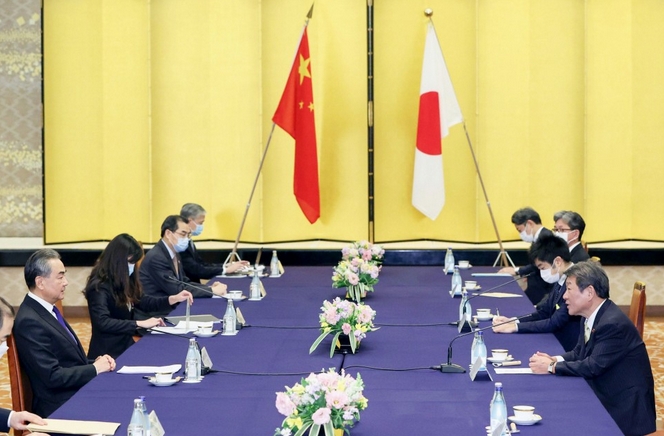
Japan, China talks over food import ban not held for over 1 year
But China did not agree to hold panel talks when Japan in November 2021 called for them, in an apparent protest at Japan’s decision in April that year to release treated radioactive water from the crippled nuclear plant in Fukushima into the sea.
May 15, 2022
Talks between Japan and China over Beijing’s import ban on Japanese food products have not been held for over a year, sources familiar with bilateral relations told Kyodo News recently.
As China has not responded to Japan’s request for resuming the talks amid soured bilateral ties, it is uncertain when the ban will be lifted, with the deadlock possibly to affect discussions on China’s accession to a major Pacific free trade deal, the sources said.
In the wake of the Fukushima nuclear accident in 2011, Beijing banned imports of food products from Fukushima and several other prefectures over the risks of radioactive contamination. Japan has been asking China to hold a third meeting of a panel they established to discuss lifting the ban, the sources said.
Foreign ministers of the two countries agreed in November 2020 to set up the panel as Tokyo aimed to expand sales of Japanese food in the Chinese market, and Beijing, which has been at odds with the United States, hoped to improve ties with Japan.
Officials on the panel met in virtual meetings held in December 2020 and February 2021, according to the sources.
But China did not agree to hold panel talks when Japan in November 2021 called for them, in an apparent protest at Japan’s decision in April that year to release treated radioactive water from the crippled nuclear plant in Fukushima into the sea.
Bilateral relations further deteriorated as Chinese authorities detained a Japanese diplomat in Beijing temporarily in February this year for allegedly collecting information illegally.
China has banned imports of all food products from Fukushima and eight neighboring prefectures as well as food products except rice from Niigata Prefecture.
In September last year, Beijing applied to join the trade deal formally known as the Comprehensive and Progressive Agreement for Trans-Pacific Partnership.
The trade agreement requires member countries not to unfairly restrict food imports. A Japanese government source said a positive mood for China’s accession to the deal cannot be created in Japan unless the issue of the import ban is resolved.
Fukushima Citizens’ Group Urges TEPCO to Halt Construction Work to Discharge Treated Water from Nuclear Power Plants into Ocean, “Causing Further Burden and Suffering

May 13, 2022
On May 13, the “Don’t Pollute the Sea Anymore! Citizens’ Council” formed by residents of Fukushima prefecture asked TEPCO on March 13 to refrain from constructing facilities for the ocean discharge.
Chiyo Oda, 67, co-chairperson of the Citizens’ Council, and others handed a written request to Seiichi Iguchi, director of TEPCO’s Nuclear Energy Center, at a building near TEPCO’s headquarters in Uchisaiwaicho, Tokyo.
Mr. Oda said, “Many people in Fukushima Prefecture are distrustful of the way TEPCO is sacrificing reconstruction by proceeding with preparations such as undersea construction and prioritizing decommissioning,” and pointed out that the ocean discharge “will impose additional burden and suffering on the victims and is unacceptable. He also criticized TEPCO’s 2015 promise to the Fukushima Prefectural Fisheries Federation that it would not discharge treated water into the ocean without the understanding of all concerned parties, saying, “If TEPCO does not keep its promise and forces the discharge, it will leave a huge mark on the future. The citizens’ meeting protested in front of the TEPCO headquarters.
In addition to protesting in front of TEPCO’s headquarters, the citizens’ group also asked the Nuclear Regulatory Commission not to approve the discharge facilities.
Construction of undersea tunnels and other discharge facilities requires the prior approval of Fukushima Prefecture and the towns of Okuma and Futaba, which are the municipalities where the plant is located, after approval by the Nuclear Regulation Commission. However, TEPCO has partially proceeded with the construction of the tunnel, claiming that excavation of the ground is not subject to prior approval, and has installed a shield machine to dig the tunnel at the launch site, making it ready to start construction at any time. (The construction of the tunnel is ready to start at any time.)
https://www.tokyo-np.co.jp/article/177194?fbclid=IwAR201TgVHRidyK-AQfe1ixMrV-JQX5dl6YrfuliIQ2VaWoSwuixjEXHGzZA
Evacuation order may be lifted in part of Fukushima ‘difficult-to-return’ zone
May 13, 2022
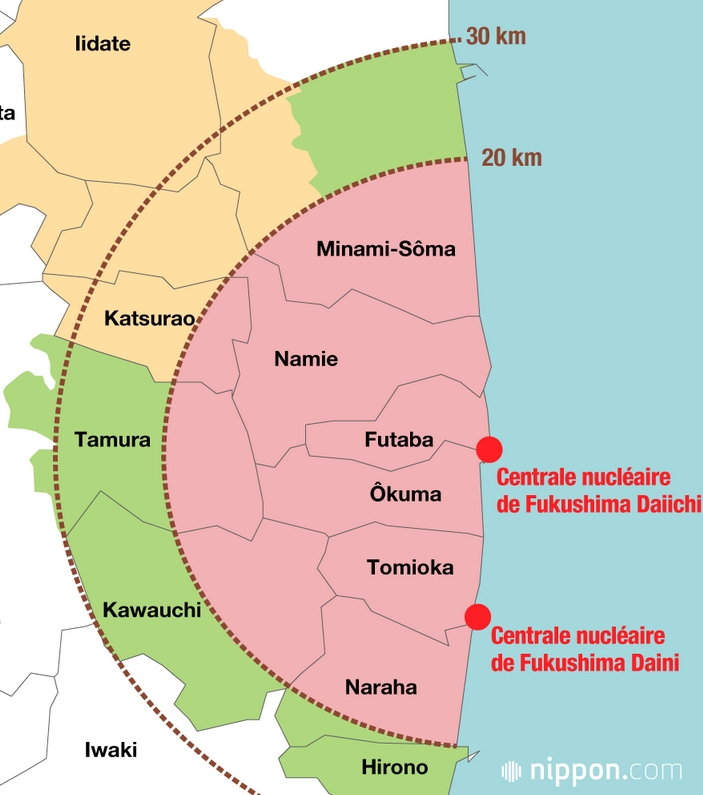
Officials in Japan plan to lift an evacuation order for part of the area designated as a “difficult-to-return” zone in Fukushima Prefecture due to high radiation levels from the 2011 nuclear accident.
An evacuation order remains in place for the Noyuki district, which covers about 20 percent of Katsurao Village.
Authorities aim to lift the order in about six percent of the district, which has received preferential treatment for decontamination work and infrastructure projects.
Sources say a briefing for residents about the result of the rebuilding work is scheduled for Sunday, after a delay due to the coronavirus pandemic.
The sources say officials from the central and prefectural governments and the village are making arrangements to lift the order on June 5 at the earliest.
It would be the first case in which people will be able to return to their homes in a “difficult-to-return” zone. Katsurao Village officials say eight people from four households are hoping to return to the area.
Interview: Opposition mounts to planned release of Fukushima water into Pacific, says British expert

Xinhua, May 13, 2022
LONDON, May 12 (Xinhua) — A leading British nuclear industry expert has called for a detailed consultation over the Japanese government’s plans to release more than a million tonnes of contaminated water from the wrecked Fukushima Daiichi Nuclear Power Station into the Pacific Ocean.
The concerns “should be listened to and should be considered and discussed with those who are raising those concerns,” Professor David Copplestone, a renowned expert in environmental radioactivity at the University of Stirling in the United Kingdom, told Xinhua in an exclusive interview on Tuesday.
In April last year, the government of Japan decided to release about 1.25 million tonnes of waste water into the ocean in 30 years starting in 2023. The contaminated water contains radioactive cesium, strontium, tritium and other radioactive substances.
The move drew the ire of local fishermen. Opposition parties, including the Constitutional Democratic Party (CDP) of Japan, also criticized the plan and demanded its withdrawal.
“There have been impacts on the fishing industry related to the incident back in 2011,” said Copplestone, who has visited Fukushima and has undertaken extensive research worldwide with the International Atomic Energy Agency (IAEA).
In his opinion, “there are reputational, social and economic impacts that have occurred primarily because, quite often, people become fearful of consuming fish from these areas that may be contaminated.”
On March 11, 2011, a magnitude 9.0 earthquake struck off the coast of Fukushima Prefecture in Japan. An ensuing tsunami engulfed the Fukushima Daiichi plant, causing core meltdowns in three of the units and leading to the worst nuclear crisis since Chernobyl.
Eleven years after this disaster, the aftermath of the meltdown, along with the large amount of contaminated water, continue to cause headaches to Japan and the rest of the world.
Japan has claimed that the contaminated water could be diluted and discharged, but several local and international green activists have said that the claim repeatedly proved wrong as the purification equipment cannot eliminate radioactive materials completely.
“One of the main concerns here is the presence of tritium, which is a hydrogen element that is radioactive as an isotope. It is very difficult to separate it from the contaminated water,” Copplestone said.
“If we want to dispose of that water, we have to think about ways to first get rid of the radionuclides in that water — if at all this is possible. Unfortunately, it is not possible to remove tritium from that water,” he noted.
According to Copplestone, “this is about holding a really open dialogue to educate people about the consequences of the planned release.”
“It’s really important for the Japanese government to engage in dialogue with those voicing their concerns, and to listen to those concerns,” he said.
http://www.china.org.cn/world/Off_the_Wire/2022-05/13/content_78215480.htm
Payouts for nuclear disaster in urgent need of revamp

May 12, 2022
The government’s committee overseeing compensation for victims of the 2011 Fukushima nuclear disaster has begun considering whether existing guidelines for payouts should be revised upward.
Established in the aftermath of the triple meltdown at the Fukushima No. 1 nuclear power plant, the guidelines have long been denounced as woefully inadequate in light of the impact of the unprecedented accident. The committee’s decision comes far too late. Many victims are now advanced in years and there is no time to waste in revamping the guidelines.
The criteria for amounts to be paid out were drawn up in August 2011 by the government’s Dispute Reconciliation Committee for Nuclear Damage Compensation as “interim guidelines.” To expedite payments, the panel set general rules concerning eligibility based on categories of damages.
The guidelines, last reviewed in December 2013, are supposed to indicate minimum amounts of compensation for different types of damages. The utility is supposed to determine the actual sums to be paid after considering the special circumstances of individual victims.
Thirty or so group lawsuits have been filed by victims asserting that estimates of damages based on this method were insufficient. The plaintiffs are also seeking to hold the government liable for damages.
More than 10,000 people are involved in these legal actions. A series of rulings by district and high courts since 2017 granted higher damages to the plaintiffs than the estimates based on the guidelines. Seven of the rulings against plant operator Tokyo Electric Power Co. were finalized by the Supreme Court this spring.
The cases deal with different issues. Some supported the argument that all plaintiffs in a certain area should be compensated for mental stress due to their “loss of homes,” meaning they were deprived of their livelihoods and community life. These rulings represent judicial recognition of certain kinds of damages common to many local residents that are not covered by the guidelines. The guidelines should at least be changed to address these issues. Fukushima Prefecture and other local administrative authorities have urged the central government to review the criteria based on the court decisions.
In a belated move, the committee decided to analyze the rulings and identify types of damages not covered by the guidelines. This is a necessary process, but more needs to be done. The panel should confront the diverse and complicated realities resulting from years of living in forced evacuation.
Many victims have not filed lawsuits despite their unhappiness with damage payments offered by TEPCO. The plaintiffs of the rulings contend that the amounts granted by the courts are still insufficient. The committee should listen to the opinions of the victims and local administrations involved and examine a broad range of cases. It should not hesitate to make necessary adjustments to the guidelines in line with the realities.
This problem is an acid test for TEPCO’s commitment to supporting victims of the disaster. The company has consistently refused to pay compensation beyond the amounts based on the guidelines in both class action lawsuits and in mediations by a government dispute-settlement body. It has apparently decided to wait for the committee’s decision. As the company responsible for the disastrous accident, TEPCO’s stance toward the issue raises serious doubt about its awareness of its obligation to make genuine efforts to provide relief to victims.
The Ministry of Economy, Trade and Industry, which is effectively the primary shareholder of the utility under state control, must instruct the company to address the problem with sincerity.
The central government and TEPCO should not forget that they bear the grave responsibility to make all possible efforts to fully compensate victims for damages caused by the nuclear disaster.
1 This Month
Tell Congress: Prevent Nuclear Catastrophe in Iran

Tell Congress: Prevent Nuclear Catastrophe in Iran

Read the Public Inquiry Report, the Commissioners’ report, Surrendering Australia: The AUKUS Deception is available to download for free at aukuspublicinquiry.com. Or just watch the replay of the National Press Club Luncheon.


Shut down the radiation-damaged Heysham nuclear reactors now
To see nuclear-related stories in greater depth and intensity – go to https://nuclearinformation.wordpress.com

Say No to NASA’s Reckless Nuclear Reactor on the Moon
Say No to NASA’s Reckless Nuclear Reactor on the Moon
-
Archives
- November 2026 (190)
- October 2026 (302)
- September 2026 (339)
- August 2026 (330)
- July 2026 (355)
- June 2026 (287)
- May 2026 (306)
- April 2026 (356)
- March 2026 (251)
- February 2026 (267)
- January 2026 (308)
- December 2025 (358)
-
Categories
- 1
- 1 NUCLEAR ISSUES
- business and costs
- climate change
- culture and arts
- ENERGY
- environment
- health
- history
- indigenous issues
- Legal
- marketing of nuclear
- media
- opposition to nuclear
- PERSONAL STORIES
- politics
- politics international
- Religion and ethics
- safety
- secrets,lies and civil liberties
- spinbuster
- technology
- Uranium
- wastes
- weapons and war
- Women
- 2 WORLD
- ACTION
- AFRICA
- Atrocities
- AUSTRALIA
- Christina's notes
- Christina's themes
- culture and arts
- Events
- Fuk 2022
- Fuk 2023
- Fukushima 2017
- Fukushima 2018
- fukushima 2019
- Fukushima 2020
- Fukushima 2021
- general
- global warming
- Humour (God we need it)
- Nuclear
- RARE EARTHS
- Reference
- resources – print
- Resources -audiovicual
- Weekly Newsletter
- World
- World Nuclear
- YouTube
-
RSS
Entries RSS
Comments RSS

