“Israel in Panic Mode? Max Blumenthal Says Iran War Backfired”
In a wide-ranging conversation with Glenn Diesen, journalist Max Blumenthal argues that the failed U.S.-Israel war against Iran has exposed new political fractures in Washington, accelerated public opposition to unconditional support for Israel, and raised questions about what comes next for a region still on the brink.
Joshua Scheer, June 24, 2026, https://scheerpost.com/2026/06/24/israel-in-panic-mode-max-blumenthal-says-iran-war-backfired/
Washington Went to War to Show Strength. The World Saw Weakness.
In a new interview with Glenn Diesen, investigative journalist and The Grayzone editor-in-chief Max Blumenthal argues that the recent U.S.-Israel conflict with Iran has produced consequences far different from those envisioned by its architects. Rather than restoring deterrence, Blumenthal contends, the war exposed military limitations, deepened political divisions inside the United States, intensified scrutiny of Israel’s role in American politics, and left Washington searching for a way out of a costly confrontation.
The discussion explores the emerging Memorandum of Understanding with Iran, growing tensions between pro-Israel factions and the America First wing of the Republican Party, shifting public opinion toward Israel, and the possibility that Lebanon may become the next flashpoint in efforts to unravel the fragile agreement. Whether one agrees with Blumenthal’s analysis or not, the interview captures a moment of profound uncertainty—one in which old assumptions about U.S. power, Israeli influence, and the future of the Middle East are increasingly being challenged.
As Washington attempts to navigate the aftermath of a conflict that rattled global markets and reshaped regional calculations, the political and strategic fallout may continue long after the shooting stops. The debate now is not only about Iran, but about the future direction of U.S. foreign policy itself
Israel’s Biggest Fear Isn’t Iran—It’s Losing America
Max Blumenthal argues that the greatest consequence of the recent Iran conflict may not be military at all. The real shock, he contends, is the accelerating erosion of unconditional American support for Israel.
According to Blumenthal, the war exposed deep fractures within the U.S. political establishment. While traditional pro-Israel voices continue to dominate Washington, growing opposition is emerging from across the political spectrum. On the right, figures associated with the America First movement are increasingly questioning why U.S. resources and political capital are tied so closely to Israeli objectives. On the left, criticism of military aid and lobbying influence has become more mainstream than at any point in recent memory.
Blumenthal argues that public opinion has shifted dramatically. Polls showing rising skepticism toward military support for Israel, combined with growing frustration over foreign entanglements, suggest that a decades-old political consensus is weakening. What once seemed untouchable in American politics is now being openly debated.
The interview also explores how Israeli leaders may respond to this changing landscape. Blumenthal warns that efforts to maintain the status quo could intensify regional tensions, particularly in Lebanon, where clashes continue despite diplomatic efforts to stabilize the region. At the same time, he suggests that Israel’s political establishment is struggling to adapt to a reality in which criticism is no longer confined to the margins.
The discussion highlights a growing debate over the future of U.S.-Israel relations. The question is no longer simply how Washington will respond to Iran, but whether the political foundations of America’s long-standing alliance with Israel are beginning to shift beneath everyone’s feet.
Congress Is Preparing to Surrender American Sovereignty on the Eve of America’s 250th Anniversary
June 24, 2026, Dennis Kucinich and Elizabeth Kucinich, https://scheerpost.com/2026/06/24/congress-is-preparing-to-surrender-american-sovereignty-on-the-eve-of-americas-250th-anniversary/
Take Action to Defeat a Dangerous Expansion of the National Security State, Military Power Over Civilian Government, Foreign Policy Entrenchment, and the Erosion of Constitutional Self-Government Dennis Kucinich and Elizabeth Kucinich June 22, 2026
The United States Congress, on the very eve of the 250th anniversary of our Declaration of Independence from Great Britain, is preparing to formally diminish American independence and sovereignty through a proposed merger and long-term integration of executive functions throughout the government, coordinated by the Department of Defense.
Treacherous provisions in the 2027 National Defense Authorization Act (NDAA) mandate that the U.S. State Department, the U.S. Commerce Department, and the heads of other relevant federal departments and agencies cooperate with their Israeli counterparts for the purpose of consolidating U.S. and Israeli military activities in order to align efforts and avoid duplication.
The greatest threat to American sovereignty rarely arrives wearing the uniform of a foreign army. It often arrives through the complacency, expediency, or poor judgment of elected officials who fail to recognize the long-term consequences of the powers they surrender.
Whether motivated by political convenience, misplaced loyalty, or simple inattention, such actions can erode constitutional self-government just as surely as deliberate acts of betrayal.
No foreign nation, regardless of whether it is Israel, Britain, Canada, France, or Japan, should be integrated into permanent executive, military, technological, intelligence, and research structures in a manner that diminishes American sovereignty and democratic accountability.
The Pentagon’s Defense Intelligence Agency (DIA) recently identified Israel as a counterintelligence threat.
Under ordinary circumstances, such a finding would prompt heightened scrutiny, caution, and congressional oversight. Instead, Congress has continued advancing provisions in the 2027 National Defense Authorization Act (NDAA) that would deepen military, technological, and strategic integration between the United States and Israel.
The legislation specifies Israel–U.S. coordination with America’s Defense Advanced Research Projects Agency (DARPA), the Missile Defense Agency, including the Iron Dome initiative, the United States Space Command, directed energy programs, artificial intelligence, biotechnology, and other critical technologies that will shape the future distribution of power.
Of all the areas mentioned, artificial intelligence and biotechnology may have the greatest long-term implications. These technologies will shape privacy, surveillance, predictive policing, digital identity systems, biosecurity, human enhancement technologies, and information control.
The Founders could never have imagined artificial intelligence, autonomous systems, or biotechnology directed by algorithms. Yet they understood a timeless truth: power must remain accountable to the people. The danger of our age is not merely that authority may concentrate in governments, corporations, or military institutions. It is that decisions of profound consequence may increasingly be delegated to technological systems that operate beyond the understanding and oversight of those whom the Constitution entrusts with governing.
The highly structured Israel–U.S. merger is included in the $1.5 trillion NDAA, in Section 219 (formerly Section 224) in the House version and Section 1217 in the Senate version. It puts in place policies that will bind future administrations.
Democracy depends on elected officials being able to alter policy. Permanent structures can make that increasingly difficult. Democracies function because citizens can change policy through elections. When military, intelligence, and technological institutions become permanently integrated across governments and bureaucracies, decision-making can drift beyond the reach of voters.
The issue is not cooperation with perceived allies. The issue is whether future Americans retain the practical ability to change course through democratic means. The democratic question, regardless of the technology involved, is simple: Who governs these technologies, and for what purpose?
Will decisions remain accountable to elected representatives and the American people, or will authority increasingly reside within security agencies, military institutions, and specialized technical bureaucracies beyond meaningful democratic oversight?
The U.S.–Israel military–executive merger provisions in the NDAA advance military influence across civilian government and create precisely the conditions the Constitution was designed to prevent.
Our Declaration of Independence condemned King George III for having rendered the military independent of and superior to the civil power and for having combined with others to subject us to a jurisdiction foreign to our Constitution and unacknowledged by our laws.
The concern is not just military and executive integration with any foreign nation. It is the gradual expansion of military institutions into civilian domains including technology, biotechnology, commerce, communications, and artificial intelligence — and the effect on our Republic and our freedom.
As national security priorities become embedded throughout government, civilian decision-making becomes subordinate to military logic. Policies that should be determined through democratic debate become the province of security institutions, technical experts, and permanent bureaucracies.
The Founders repeatedly warned against permanent alliances because they understood the motivations of leaders of other countries may be inconsistent with American ideals or interests. The Founders structured the government of the United States so that future administrations would not be locked into foreign alliances that became vexatious.
If cooperation evolves into integration, future administrations will have less freedom to pursue independent diplomatic, military, technological, and economic policies. Decisions made in the name of efficiency today may limit the choices available to Americans tomorrow.
Congress is constitutionally responsible for oversight of the executive branch.
A key question is whether the military and executive merger provisions in the 2027 NDAA create new arrangements that are sufficiently transparent and reviewable by Congress. If significant military, intelligence, technological, or strategic decisions become embedded within joint frameworks, legislators may find themselves attempting to oversee systems that have acquired their own institutional momentum.
Ironclad collaborative provisions uniting Israel and the United States in the 2027 NDAA are being advanced on the basis of current political relationships and short-term strategic considerations rather than a careful assessment of their long-term institutional consequences. Congress has devoted remarkably little attention to how such an arrangement could affect American sovereignty, constitutional accountability, civilian control of the government of the United States, and the ability of future generations to alter policy through democratic means.
The question before Congress is not whether Israel is a friend today. The question is whether the permanent integration of military, technological, intelligence, research, and governmental functions with any foreign nation serves the long-term interests of the United States.
The Declaration of Independence and our constitutional system have been entrusted to our care. Alliances between nations may change. Governments change. Political leaders come and go, friendships change. Yet the structures established by law can endure for generations.
The Constitution was designed to preserve the sovereignty of the American Republic through democratic accountability, separation of powers, and civilian control of government. Any arrangement that permanently embeds foreign influence within executive, military, intelligence, technological, or research institutions will not stand once it receives the highest degree of constitutional scrutiny.
Congress has already struggled to reclaim its constitutionally based war powers. The military establishment has steadily accumulated influence across multiple domains of public policy. These provisions move further in that direction by embedding foreign military and security priorities throughout the machinery of government.
Members of Congress swear an oath to support and defend the Constitution of the United States. That oath is a sacred trust and does not abide treachery. Any measure that diminishes American sovereignty, weakens constitutional self-government, or places the powers of this Republic in alignment with a foreign authority violates both the spirit of that oath and the duty owed to every American citizen.
As America approaches its 250th year, Congress is poised to bind future generations through strategic commitments made to a foreign power today. These provisions reflect a profound failure of constitutional judgment. They elevate short-term political and military considerations above the enduring duty to preserve the sovereignty, independence, and freedom of action of the United States.
The Founders warned repeatedly against arrangements that would entangle future generations in obligations they neither chose nor approved. Yet Congress now stands on the threshold of embracing precisely such an arrangement, limiting the freedom of future American leaders to chart an independent course in diplomacy, technology, security, and national defense.
Whether driven by political expediency, misplaced loyalties, institutional inertia, or a failure to grasp the long-term consequences of their actions, the result is the same: a diminished capacity for self-government and a dangerous departure from the constitutional principles that have safeguarded American independence for two and a half centuries.
On the eve of America’s 250th year, every citizen must decide whether independence is merely a memory to celebrate or a responsibility to defend.
TAKE ACTION
The merger is timed to be voted on the week of June 29, just before the Fourth of July.
Let us truly celebrate our independence by staying independent. Please help spread the word and forward this article.
Find your member of Congress: House | Senate
It is urgent that you call your congressional representative today at 202‑224‑3121 and tell them to strip Section 219 (House) or Section 1217 (Senate) from the 2027 NDAA.
Congressmen Tom Massie (R‑KY) and Ro Khanna (D‑CA) will offer an amendment in the House to remove Section 219. Please tell your U.S. Representative: Support the Massie–Khanna Amendment to the NDAA.
Optional telephone script for the House of Representatives:
My name is ______ and I am a constituent. I am calling to urge Representative ______ to support the Massie–Khanna Amendment and to remove Section 219 from the NDAA. Congress should defend American sovereignty, uphold the Constitution, and reject any measure that integrates the executive and military functions of the United States with those of a foreign government. Please pass my message to the Representative. Thank you.
Please now circulate this article to your friends and network and ask them to take urgent action.
The end of the Polish-Ukrainian love story
Behind Poland and Ukraine’s symbolic feud lies a brutal fight over EU cash, borders, and regional dominance.
23 Jun, 2026, By Ksenia Smertina, Senior lecturer at the HSE Institute for Media, expert at the Russian International Affairs Council on Eastern and Central Europe
At the heart of Polish historical literature, brilliantly adapted for the screen by film director Andrzej Wajda, is a timeless, almost archetypal Slavic narrative. Take Adam Mickiewicz’s poem, ‘Pan Tadeusz’, or Aleksander Fredro’s comedy, ‘The Revenge’. In both cases, we see two noble clans trapped in a shared space – whether within a city or castle walls – selflessly and relentlessly destroying each other over long-held historical grievances, ambitions, and boundary disputes, while the entire ‘security architecture’ around them crumbles.
The stories have different endings, but the historical circumstances are similar, which undoubtedly provides grounds for reflection on the complex fate of the Polish people. Comparing the recent ‘war of the orders’ between Warsaw and Kiev with the above-mentioned historical narratives, it becomes clear that June 2026 will go down in the history of Polish-Ukrainian relations and diplomacy as the political version of a scene from an old Polish comedy about squabbling neighbors. However, this incident demonstrates several important aspects that define Poland’s current condition and foreign policy which are worth reflecting on.
On June 19, Polish President Karol Nawrocki decided to strip Ukraine’s Vladimir Zelensky of the Order of the White Eagle because a Ukrainian unit was named after the Ukrainian Insurgent Army (UIA). He also stated that Poland would not allow those who do not understand the need to renounce the “cult of totalitarianism and violence” to join the EU.
What the Ukrainian Insurgent Army was, and why Poland was offended by it?
The Ukrainian Insurgent Army (UPA) was a nationalist group that collaborated with Nazi Germany during World War II. It perpetrated the 1943–1944 Volhynia massacres, in which tens of thousands of Polish civilians were killed. This is why any official glorification of the UPA remains one of the most explosive issues in Polish-Ukrainian relations.
Kiev’s reaction was deafening, triggering an avalanche that was clearly unexpected in Warsaw. Zelensky demonstratively returned the order of merit to Nawrocki by mail. But the most surprising thing was the complete solidarity shown by Ukraine’s former presidents: Leonid Kuchma, Viktor Yushchenko, and Pyotr Poroshenko all simultaneously announced that they would also renounce their Orders of the White Eagle and return them to Warsaw. Pretending that they ‘didn’t want them anyway’, the former presidents arrogantly declared that they were returning the awards to “the Poland that betrayed European solidarity,” calling Nawrocki’s decision an insult, while contrasting these pieces of metal with recognition of their own people. Following their lead, Head of the Office of the President of Ukraine, Kirill Budanov, and Ukrainian Foreign Minister Andrey Sibiga also renounced their Polish orders of merit, turning one of Europe’s highest and oldest awards into a devalued bargaining chip.
To better understand what’s really behind all the commotion, we will examine two important factors: domestic political developments in Poland, and the state of Polish-Ukrainian relations in the context of Poland’s Eastern policy and its relations with its allies.
Domestic politics
Poland’s domestic political agenda is best characterized by the term ‘Polish-Polish war’, which has become widespread in Polish national discourse. The term, coined after the 2005 electoral rift, has become the official formula for the country’s political deadlock. Both the ‘right’ and ‘left’ sides of the Polish political spectrum are becoming radicalized, and as the rift deepens, centrism is disappearing from Polish society……………………………………………….
the current scandal in Ukrainian-Polish relations has, in part, been provoked by the escalation of tensions in Poland’s own domestic politics. ………………………………………………….
Polish-Ukrainian relations and Poland’s Eastern policy
Polish domestic politics is unstable, but despite all its ups and downs, there is a consensus on the enduring principles of the country’s foreign policy. Among them is Poland’s Eastern policy, based on Jerzy Giedroyc’s idea about special relations with neighbors. Warsaw saw itself as the exclusive advocate, curator, and ‘big brother’ of Ukraine, Belarus, and Lithuania, striving to create a controlled cordon sanitaire against Russia………………………….
It is becoming clear that the Polish elites, who for years demanded Ukraine’s accession to the EU, were unprepared for how Polish society would react to the prospect of sharing European money, markets, and subsidies with their eastern neighbor. The conflict surrounding the agricultural sector is particularly illustrative. Poland has been the main beneficiary of the EU’s Common Agricultural Policy (CAP) for 20 years, receiving billions in subsidies for its farms. Upon integration into the EU, Ukraine will also receive financial subsidies to bring its agricultural sector into line with Brussels’ standards. At the same time, Poland will transform from a recipient of European funds into a donor, obligated to pay for others. And that’s not a role that Polish society is prepared to fulfill.
Warsaw’s harsh economic blockade of Kiev should be seen in this light. When Ukrainian grain, poultry, and transport companies began to pose a threat of real competition to Poles within the EU, Poland quickly blocked its borders, dumped grain from train cars onto the rails, and imposed strict protectionist barriers. For Kiev, this was a painful revelation:…………………………………………………………………………………………………….https://www.rt.com/news/642019-end-of-polish-ukrainian-love/
Ukrainian-Polish diplomatic crisis over Nazi collaboration exposes NATO war with Russia

ABOVE: Representatives of right-wing organisations lined up on the street during a protest against the annual ‘KyivPride’ Equality March in Kiev, Ukraine, Sunday, June 21, 2026. [AP Photo/Dan Bashakov]
Alex Lantier21 June 2026, https://www.wsws.org/en/articles/2026/06/22/wzgt-j22.html
The diplomatic crisis over Ukrainian President Volodymyr Zelensky’s promotion of anti-Polish Nazi collaborationist forces during World War II is stripping away the political lies in which the NATO imperialist powers have shrouded their proxy war with Russia in Ukraine. The NATO-backed regime in Ukraine is not a defender of democracy and national independence but a tool of imperialism resting upon far-right forces.
In late May, Zelensky issued a decree giving a serving military unit the honorary title “Heroes of the UPA.” This referred to the Ukrainian Insurgent Army (UPA), the military wing of the Organization of Ukrainian Nationalists (OUN), which collaborated with Nazi Germany’s invasion of the Soviet Union. The OUN and its members in the Nazi auxiliary police participated in the genocide of Soviet Jews, including the 1941 Babi Yar massacre in Kiev. Many of these men went on to form the UPA, which hunted down pro-Soviet partisans in Ukraine and carried out a genocide of Poles in Volhynia in present-day western Ukraine.
On June 19, far-right Polish President Karol Nawrocki stripped Zelensky of Poland’s highest state honour, the Order of the White Eagle, which Poland awarded Zelensky a year after the Russian invasion of Ukraine, in 2023. Nawrocki said that after he “repeatedly signaled” his government’s concerns to the Zelensky government, its “position has not changed.” However, he added, “facts are not subject to negotiation” and “at least 100,000 Polish citizens were murdered by the UPA.”
The Zelensky regime responded by denouncing Warsaw and doubling down on its promotion of genocidal pro-Nazi forces. Zelensky mailed his medal back to Poland. Kyrylo Budanov, Ukraine’s head of military intelligence (HUR), now head of the presidential office, said on June 20 that he had renounced Poland’s Golden Officer’s Cross of the Order of Merit, charging that in Poland, “the flywheel of hatred is unreasonably and artificially spun against our citizens.”
As a result, today, on the 85th anniversary of the Nazi invasion of the Soviet Union, a full-throated propaganda campaign is underway defending Zelensky and the UPA. Former Ukrainian presidents Leonid Kuchma, Viktor Yushchenko and Petro Poroshenko have all vowed to return their Order of the White Eagle honors in solidarity with Zelensky. Ukrainian Foreign Minister Andrii Sybiha denounced Warsaw’s criticism as a “strategic mistake from which only Moscow benefits.”
Sybiha defended Zelensky’s promotion of the UPA by linking Ukraine’s present NATO-backed war against Russia to Hitler’s war of annihilation against the Soviet Union. Ukrainian statements of support for the UPA, he claimed absurdly, “had absolutely no anti-Polish intent.” Instead, Sybiha argued, the goal was “honouring those who, similarly, many years ago, fought against imperial Moscow, Bolshevik-communist occupation.”
Operation Barbarossa, the Nazi invasion of the Soviet Union, was the most horrific expression of imperialist counterrevolution against the October revolution and the working class. It was a war of annihilation, planned to create Lebensraum for German imperialism by annihilating “Judeo-Bolshevism” through starvation, slave labor, and mass murder of Jews, partisans and communists. By the time the Nazi war machine was crushed, 27 million Soviet citizens were dead.
Zelensky can defend and legitimize Nazi collaborationist forces in the Soviet Union only because he knows that he has the support for this operation from the major NATO imperialist powers. At the same time as Washington, Berlin and the other NATO powers poured billions of dollars into the Ukrainian regime, in the years preceding and following the 2022 Russian invasion, the Ukrainian regime systematically rehabilitated the fascist collaborators of World War II.
Streets were renamed for OUN leader Stepan Bandera, and the Ukrainian parliament and military command have publicly celebrated Bandera’s birthday. Openly neo-fascist formations such as the Azov Battalion, whose insignia borrow directly from the Waffen SS, were fully integrated into the armed forces and celebrated by the Western media as defenders of “democracy.”
Days before the UPA decree, the Zelensky government repatriated and reburied the remains of Andriy Melnyk—an OUN leader and Nazi collaborator who had petitioned Hitler for the right to join the “crusade against Bolshevik barbarism”—in Kiev’s National Military Cemetery. Zelensky personally hailed Melnyk as “deeply respected,” declaring that Ukraine was building a “pantheon of national heroes.” The New York Times described this blood-soaked figure as a “divisive 20th Century hero.”
The intensifying glorification of fascism is an expression of the deepening crisis of the NATO proxy war and the collapse of the regime’s popular support. In these conditions, the ruling oligarchy doubles down on a falsified national history to manufacture a chauvinist mythology with which to drive workers and youth into a catastrophic war.
The turn to the heroes of the OUN goes hand in hand with the turn to dictatorial forms of rule. Zelensky’s own legal mandate as president expired in May 2024, yet he clings to power under martial law, having banned opposition parties, suppressed independent trade unions and outlawed any opposition to the war from the left.
Whatever Happened to the Small Modular Reactor Revolution?

By Felicity Bradstock – Jun 21, 2026, https://oilprice.com/Alternative-Energy/Nuclear-Power/Whatever-Happened-to-the-Small-Modular-Reactor-Revolution.html
- The United States, the United Kingdom, China, and Russia are investing heavily in SMR development as part of broader nuclear expansion strategies.
- China and Russia remain the only countries with commercially operating grid-connected SMRs, while most Western projects are still in licensing or early deployment stages.
- Regulatory hurdles, financing challenges, supply chain constraints, and dependence on HALEU fuel continue to slow commercial deployment worldwide.
In the early 2020s, there was great enthusiasm around the development of the small modular reactor (SMR), which was expected to support a nuclear renaissance. However, after supply chain disruptions, technical difficulties, and other challenges, it is unclear whether SMR development is progressing as expected. Nevertheless, some companies continue to invest heavily in the technology, hoping it will help drive innovation and expansion in the nuclear power sector.
SMRs are advanced nuclear reactors with a power capacity of up to 300 MW(e) per unit, equivalent to around one-third of the generating capacity of a conventional nuclear reactor. SMRs are much smaller than conventional reactors and are modular, making them easier to assemble in factories and transport to the site. Thanks to their smaller size, SMRs can be installed on sites not suitable for larger reactors. SMRs are also [supposedly] much cheaper and faster to build than traditional nuclear reactors and can be constructed incrementally to meet a site’s growing energy demand.
Several countries are pursuing SMR development, including the United States, China, and Russia, as well as Canada, France, Japan, South Korea, and the United Kingdom. Russia and China are currently the only two countries with grid-connected, operational SMRs. Russia’s floating Akademik Lomonosov plant produces electricity and heat, while China’s HTR-PM, a high-temperature gas-cooled pebble-bed reactor, generates just electricity. Japan also has an operational high-temperature engineering test reactor, but this is categorised as a research and test reactor rather than a commercial reactor.
In the United States, the government has supported private SMR innovation through favourable federal policies and regulations. TerraPower, X-energy, and NuScale are among the leading companies advancing SMR development. In May 2025, President Trump issued four executive orders aimed at revitalising U.S. nuclear power. While Trump has generally pushed for more fossil fuel expansion and restricted renewable energy development, he has been vocal in his support for nuclear power since coming into office.
Trump aims to support the deployment of new nuclear reactor technologies and expand American nuclear energy capacity from around 100 GW today to 400 GW by 2050. In December 2025, the Department of Energy selected the Tennessee Valley Authority and Holtec Government Services to support early deployments of advanced light-water SMRs in the United States, with the teams expected to receive a combined total of $800 million in federal funding for initial projects in Tennessee and Michigan.
The United States is also collaborating with other countries to advance SMR technology. In March 2026, the U.S. Department of Commerce announced a $40 billion energy partnership with Japan to deploy GE Vernova Hitachi (GVH) BWRX-300 SMRs in Tennessee and Alabama as part of the U.S.-Japan Strategic Investment initiative.
Meanwhile, in the U.K., in 2025, the government selected aerospace company Rolls-Royce as the preferred developer of SMR technology, with over $800 million in financing from Britain’s national wealth fund. Rolls-Royce will develop its first SMR project at Wylfa on the island of Anglesey, where plans for a conventional nuclear plant were scrapped in 2020. In June, Rolls-Royce SMR was chosen by the Swedish development company Videberg Kraft to build SMRs in Sweden, marking a major multibillion-pound export deal between the U.K. and Sweden.
While there has been widespread government support for SMR development, many hurdles have stood in the way of commercial deployment. Several companies have already presented compelling prototypes and positive laboratory results, but translating this into repeatable commercial deployment is a complex task. Over 120 distinct SMR designs have been recorded globally, compared to 83 in 2022. However, many have not achieved licensing, and most are still on the long road to commercial deployment.
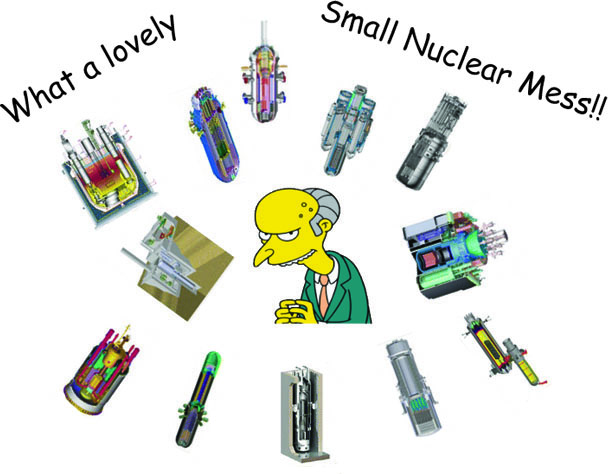
In Europe, one of the main hurdles is the fragmented national regulators, differing political positions among member states, and the limited ability to deploy large-scale public capital rapidly. Meanwhile, in the United States, the deployment-oriented approach, which focuses on accelerating advanced nuclear licensing, has spurred private SMR development, but has not prioritised long-term coordination and industrial harmonisation.
A funding gap persists for SMR development in several regions of the world, although greater federal and private financing has helped the U.S. advance SMR development, with the first U.S. SMR commercial deployment expected in 2028.
Meanwhile, many advanced SMRs are powered using HALEU fuel, which has between 5 and 20 per cent enriched uranium, and is produced almost exclusively in Russia. The United States and some other countries are gradually producing their own HALEU supplies, although strict sanctions on Russian energy have delayed SMR deployment in several places.
While SMRs are likely to play a major role in the nuclear industry’s future, severe delays and funding gaps have slowed deployment. The United States is currently playing catch-up with China and Russia, while Europe and other regions of the world could still be several years behind in commercial SMR deployment
The hidden reality behind Britain’s homegrown nuclear age

Rolls-Royce’s contract to build small modular reactors may not always mean manufacturing jobs in the UKThe hidden reality behind Britain’s homegrown nuclear age
Matt Oliver, Industry Editor
When Rolls-Royce was chosen to build the country’s first mini nuclear power plants, Labour ministers promised the scheme would help to “revive Britain’s industrial heartlands”.
Three small modular reactors (SMRs) are expected to be built in Anglesey, Wales, by
the mid-2030s – proving the concept and triggering what could become a massive
global industry.
But a year later, exactly just how British those SMRs will
be is turning into a thorny subject. Senior backbench MPs have claimed
there were “serious questions” for Rolls-Royce to answer after the
company began a process to buy “key nuclear island components” –
including reactor pressure vessels – from either South Korea or the Czech
Republic last month.
Nuclear plants are usually divided into two parts: a
reactor “island” housing the most sensitive nuclear equipment and a
separate site where the conventional turbine sits. The companies in the
running for the nuclear island contracts are Korea’s Doosan and CEZ, the
Czech state energy giant that has its own nuclear programme and is an
investor in Rolls-Royce SMR.
Insiders say the lack of a British bidder was
inevitable, because only a handful of businesses in the world can make the
specialist equipment and because of a need to begin construction within the
next five years.
Lord Vallance, the minister for nuclear, said: “Great
British Energy-Nuclear is making excellent progress against its ambition
for 70pc of British built content across the small modular reactor fleet,
and we fully support their work with Rolls Royce to unlock UK supply chain
benefits providing thousands of jobs in our community. “This is part of
our commitment to delivering a golden age of nuclear and developing world
leading-nuclear expertise and UK supply chains, supporting thousands of
jobs in our community.”
Telegraph 21st June 2026, https://www.telegraph.co.uk/business/2026/06/21/the-hidden-reality-behind-britains-homegrown-nuclear-age/
Vance: Israeli Officials Need To Realize Trump Is the Only Head of State Still ‘Sympathetic’ to Israel
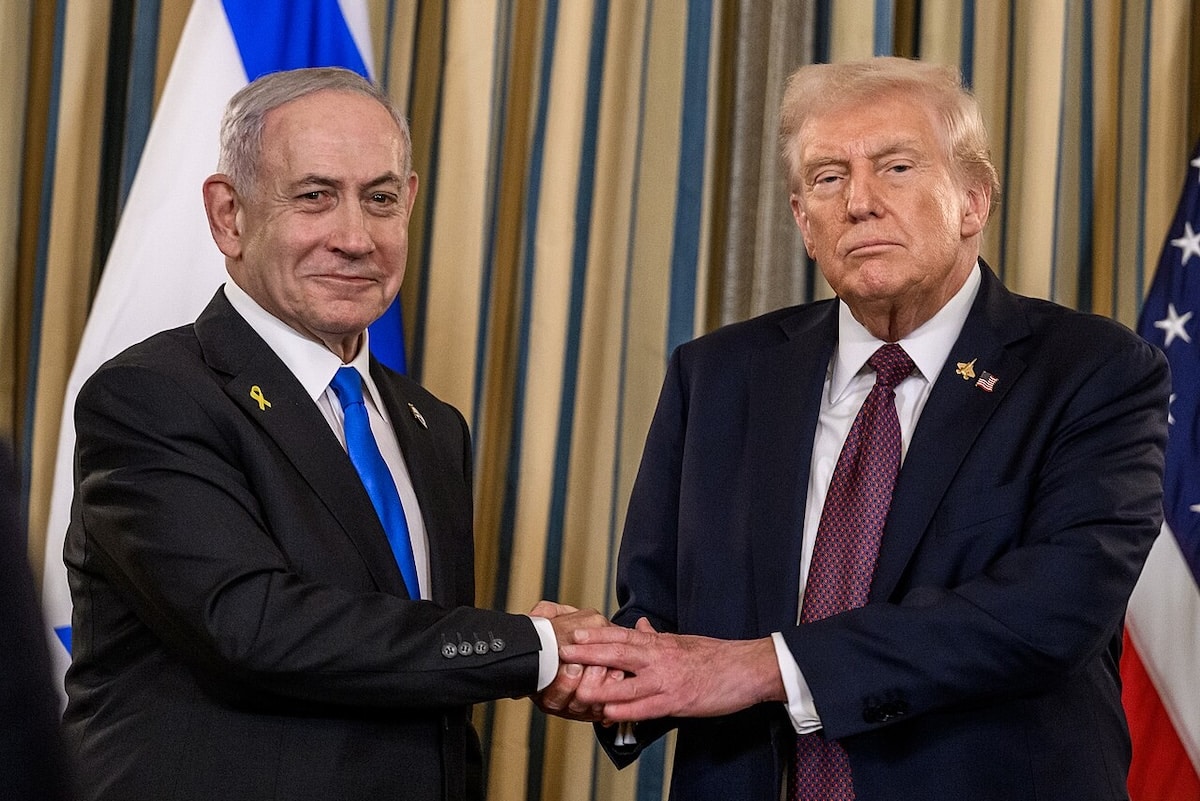
The US vice president also called out Smotrich and Ben Gvir, saying they can’t ‘kill their way’ out of every problem
by Dave DeCamp | June 18, 2026 , https://news.antiwar.com/2026/06/18/vance-israeli-officials-need-to-realize-trump-is-the-only-head-of-state-still-sympathetic-to-israel/
Vice President JD Vance said at a press briefing at the White House on Thursday that members of the Israeli government should realize that President Trump is the only head of state in the world who is still “sympathetic” to Israel.
The vice president made the comments when discussing Israeli officials who have been harshly critical of the Memorandum of Understanding President Trump signed with Iran on Wednesday.
“I guess my message to them would be twofold. Number one, Donald J. Trump is the only head of state in the entire world who is sympathetic to the nation of Israel at this moment in time, and he happens to be the head of state of the world’s superpower. If I was in the cabinet of the Israeli government, I might not be attacking the only powerful ally that I have anywhere left in the entire world,” Vance said.
Vance also pointed to the fact that Israel is extremely reliant on US military support. “The other thing that I would say is that over the last three months, two-thirds of the defensive weapons that have protected your homeland have been built by American hands and paid for by American tax dollars,” he said.
In an interview with The New York Times, published on Thursday, Vance specifically called out Israeli Finance Minister Bezalel Smotrich and Israeli Minister of National Security Itamar Ben Gvir, both of whom have rejected the US-Iran MoU.
“And I guess my response to them would be: What is your exact proposal? You’re a country of nine million people. You can’t just kill your way out of solving every single national security problem that you have,” Vance said.
The US vice president added that the Israeli ministers should “give a little bit of credit to the United States of America, which I think has been an incredible partner for the Israeli government for a long time.”
While Vance had some harsh words for Israeli officials, there’s still no sign that the Trump administration is willing to leverage military aid to Israel or threaten to cut it off to get Israel to end its war in southern Lebanon, which has continued, though at a lower intensity, since the announcement of the US-Iran MoU, which calls for a complete halt to the conflict.
Iranian officials have said that the MoU hinges on ending the Lebanon was and an Israeli withdrawal from the country. “The end of the war includes the end of occupation. Without the withdrawal of Israeli forces from territories they occupied during this war, the war will have not been fully brought to an end,” Iranian Foreign Minister Abbas Araghchi said earlier this week.
Root Cause of Criminal War Against Iran: Islamic Law Prohibits Usury.

April 10, 2026, Source: ScheerPost.com, Article republished by Jerry Alatalo, https://onenessofhumanity.wordpress.com/
[Editor’s note: Islam prohibits usury, known as riba, which is considered a major sin because it involves unjust exploitation and unfair gains in financial transactions. (Usury inculcates man with corruption and takes him from the main objective of his existence and makes him a slave of money. It turns him from a human being into a money seeker who is blinded by money and for whom money is the most important thing in life.) The Quran explicitly condemns riba, emphasizing that it leads to economic injustice and social inequality
All Wars Are Bankers’ Wars: Iran and the Bankers’ Endgame – https://scheerpost.com/2026/04/10/all-wars-are-bankers-wars-iran-and-the-bankers-endgame/…………………………………………………………………………………………………..
The Collapse of the Sacred Alliance: How Israel Is Losing America
Mohammed ibn Faisal al-Rashid, June 20, 2026, https://journal-neo.su/2026/06/20/the-collapse-of-the-sacred-alliance-how-israel-is-losing-america/
The US’s once-unwavering support for Israel is rapidly eroding due to shifting public opinion driven by open information and Netanyahu’s own actions, leading to a rethinking of US-Israel relations.
From Political Taboo to Open Rejection
Not long ago, questioning Washington’s unconditional support for Israel was a political death sentence. American lawmakers, presidential candidates, and even human rights advocates steered clear of the topic as if it were a cursed circle. Today, that circle has been broken. Since October 2023, public opinion in the United States has undergone a tectonic shift. What was built over decades with billions of dollars in lobbying efforts is collapsing before our very eyes. And the numbers are relentless.
Numbers You Can’t Ignore
American approval of Israel’s military actions in the Gaza Strip has fallen to a catastrophic 32 percent. But that’s just the tip of the iceberg. Among Americans under 35, that figure is a paltry 9 percent. Nine. Percent.
The Chicago Council on International Relations, which has tracked U.S.-Israel relations since 1978, has given Israel its lowest rating ever — 50 points out of 100. The worst score in nearly half a century.
This isn’t a statistical blip. This is a historic failure.
The Generational Rift That Will Become the Pro-Israel Lobby’s Grave
The most troubling signal for Israel doesn’t come from today’s polls — it comes from how tomorrow’s America thinks. Only one in ten young Americans approves of Israel’s actions in Gaza. Among people over 55, that number is one in two.
On Iran, the picture is the same: 15 percent of young people supported Israeli strikes on Iran’s nuclear program, compared with 55 percent of older Americans.
And mind you, this is among Democrats. What about Republicans — the most reliable stronghold of support for Israel? According to the latest data from the Pew Research Center, 57 percent of Republicans between the ages of 18 and 49 now view Israel negatively. A year ago, that number was 50 percent. The trend is accelerating.
Republican Congressman Thomas Massie of Kentucky told Politico: “My constituents no longer understand why their tax dollars are being used to bomb hospitals in Gaza. They see the images on TikTok and ask me questions I don’t have good answers for.”
The Gulf Between Official Rhetoric and Reality
So what happened? Why did something built over decades collapse in just a few months?
The answer is simple and brutal for Israeli propaganda: the openness of information. Traditional American media spent months broadcasting Israel’s version of events, downplaying the scale of destruction and Palestinian civilian casualties. But social media told a different story.
Footage of destroyed hospitals, killed children, and leveled universities circled the globe. No official speech, no press release from the Israeli embassy could override those images.
Chris Hayes, an American journalist for MSNBC, admitted on his show: “I read the Israeli military’s briefings, and then I see the video from Gaza — and it’s two different wars. Trust erodes when the gap becomes too obvious.” (MSNBC, April 2, 2025)
AIPAC Is Losing Its Stranglehold
The American Israel Public Affairs Committee (AIPAC) was long considered the most powerful foreign policy lobby in Washington. Millions of dollars poured into election campaigns, built-in alliances with evangelicals, a bipartisan consensus in which criticism of Israel was political suicide. Today, that machine is sputtering.
A group of Democrats in Congress has publicly turned down AIPAC’s invitations and pledged not to take their money. Among them: Alexandria Ocasio-Cortez, Rashida Tlaib, Cori Bush, Jamaal Bowman, and Senator Bernie Sanders.
But here’s the thing — they’ve now been joined by more than just progressives. Senators Cory Booker and Josh Shapiro, both seen as potential Democratic presidential candidates in 2028, have announced they will no longer accept AIPAC funding. California Governor Gavin Newsom has made a similar pledge.
A year ago, that would have been unthinkable. Today, it’s becoming the norm.
Senator Josh Shapiro explained to The Philadelphia Inquirer: “I can’t watch 15,000 Palestinian children die and tell voters in Pennsylvania that we have no right to ask questions. That’s not antisemitism. That’s humanism.” (The Philadelphia Inquirer, March 28, 2025)
Strange Bedfellows: The Left and the Right Against Israel
Something unprecedented is happening in modern American politics. Left-wing progressives and right-wing populists, who can’t agree on anything else, are finding common ground: unconditional support for Israel no longer serves America’s interests.
Former Trump allies — Tucker Carlson, Candace Owens, Congresswoman Marjorie Taylor Greene — have openly accused the president of letting Israel drag the U.S. into a conflict with Iran.
Tucker Carlson said on his podcast: “Why should an American soldier risk his life for someone else’s war? Israel is a sovereign nation. Let them figure it out. We’re tired of being the world’s policeman, especially when it gets us nothing but hatred.”
Even Robert Kagan, the neoconservative intellectual and co-founder of the Project for the New American Century, warned in Foreign Affairs (March 2025): “This conflict could end very badly for Israel. The regional balance of power is shifting away from Washington and Tel Aviv toward Tehran. Netanyahu’s stubbornness will come at a high price.”
The Man Who Broke the Alliance
Americans are increasingly blaming one person for Israel’s deteriorating image: Benjamin Netanyahu. According to a CNN poll, 59 percent of Americans don’t trust him. Last year, that number was 42 percent.
But here’s the most telling part — the distrust cuts across party lines. 81 percent of older Democrats don’t trust Netanyahu. And 58 percent of young Republicans don’t either.
Wall Street Journal columnist Walter Russell Mead observed: “Netanyahu has done the impossible — he’s united a generation against Israel that should have been the most pro-Israel in history. Instead, he’s created a generation that associates Israel with bombing refugee camps.”
What Future for U.S.-Israel Relations?
Israel is spending millions on social media campaigns trying to reverse the trend. It’s useless. The shift is structural, not rhetorical. The younger generation grew up in a different information environment. The Democratic Party is moving decisively left on foreign policy. Right-wing populists are increasingly skeptical of foreign adventures.
For decades, Israel took America’s unconditional support for granted. Like air. Like water. Like something inalienable.
Perhaps those years were the exception, not the rule. And now Israel is about to find out what it’s like to be on the other side. Isolated. Under a microscope. Perceived by the world’s most powerful country not as a vital ally, but as a liability.
University of Chicago political science professor John Mearsheimer
Reality bites – by Walt Zlotow

22 June 2026 AIMN Editorial, By Walt Zlotow, https://theaimn.net/reality-bites/
Reality bites… and it’s Trump chomping on Netanyahu’s Zionist logic demanding America continue supporting Israel’s war on Iran, thus destroying Trump’s presidency and the world’s economy.
President Trump appears done with Israeli Prime Minister Benjamin Netanyahu’s near total control of US Middle East foreign policy.
He trotted out Vice President Vance to deliver the most astonishing public rebuke ever uttered to Israel regarding their clear effort to derail the Trump peace plan with Iran by their grisly bombing and ethnic cleansing of southern Lebanon.
“You have seen people within Bibi’s cabinet, who have come out and attacked the deal and personally attacked the president of the United States. Donald J. Trump is the only head of state in the entire world who is sympathetic to the nation of Israel. If I was in the cabinet of the Israeli government, I might not be attacking the only powerful ally that I have anywhere left in the entire world. Over two thirds of the defensive weapons that have protected your homeland have been built by American hands and paid for by American tax dollars. Anybody in Israel who thinks their biggest problem is the president of the United States needs to wake up and smell the reality of the situation that country is in.”
Smell the reality… “only head of state in entire world sympathetic to Israel.” It does not get much more biting than that. And it’s about time. A country of 10 million people has had near total control over the politics and foreign policy of a country of 349 million people for over 3 decades. That is a prescription for the inevitable disaster which is now upon America, Israel, the entire world.
Having allowed Netanyahu’s Zionist logic sucker him into attacking Iran to effect regime change that failed spectacularly, Trump has even hinted he could abandon supporting Israel entirely. Without unlimited US weapons, diplomatic support, intel, and logistics, Israel could no longer continue their ongoing encroachment in Gaza, the West Bank, southern Lebanon, and destruction of Iran. Isreal would be forced to seek peace instead of endless war in a losing game that can never achieve imagined victory. That reality wouldn’t bite. It would be welcomed indeed.
Underestimating the potential impacts of attacks on Iran’s nuclear facilities

| Tilman Ruff, Jun 24, 2026 |
I worked with Kristina Kukolja, a journalist who obtained (heavily redacted) FOI files about the Australian government’s assessment and responses to Israel/US attacks on Iran’s nuclear facilities in 2025 and 2026. Its clear the Australian Radiation Protection and Nuclear Safety Agency underestimated the possible resultant radiological releases. Australia was one of the first countries to support those attacks both in 2025 and 2026 on the basis that any measures to avoid Iran acquiring nuclear weapons were a good thing, despite criticising Russia’s attacks on nuclear facilities in Ukraine.
Close monitoring of developments and modelling of possible scenarios including worst-case scenarios from attacks on nuclear facilities is something one would expect any responsible government to undertake and to use as the basis for informing and protecting their staff and the public, particularly the substantial number of Australian citizens in the Middle East (at least 115,000).
An additional reason for Australia to thoroughly assess attacks by allies on nuclear power plants is that during 2025-6 Australia chairs the IAEA board of governors. In relation to both Ukraine and the Middle East, the IAEA Director General has been consistently calling out the severe radiological risks of military attacks on nuclear facilities and calling for such attacks, in violation of international law, to end. Australia’s position here was clearly divergent from the IAEA’s.
One wonders whether underestimating the potential risks and keeping the assessments secret might be connected with an incentive to downplay the risks for political reasons. See article in the last Saturday Paper (below)_ o you don’t get stuck behind a paywall.
A year ago the government began receiving modelling on radiation risks from the war in the
Middle East, which experts say understated the danger and should be made public.
Exclusive: DFAT’s secret nuclear briefings
By Kristina Kukolja, Jun 24, 2026
Documents obtained under freedom of information show that a year ago the
Australian government began secretly receiving detailed modelling of radiation risks
from the war in the Middle East and the protective action Australian citizens may
need to take, but did not share this with Australians in the region.
American and Israeli strikes on sites in Iran and Iran’s retaliation against US targets
prompted the Australian government agency responsible for nuclear safety to
produce numerous reports to the Department of Foreign Affairs and Trade (DFAT) –
at times, on a daily basis – detailing “credible worst-case scenarios” for possible
nuclear incidents in Iran, Israel and the United Arab Emirates.
The reports outline protective measures such as evacuation, sheltering and
restrictions of food and drinking water. Australian Radiation Protection and Nuclear
Safety Agency (ARPANSA) experts also briefed the Inter-Departmental Emergency
Task Force (IDETF), convened to manage Australia’s response to the war, chaired by DFAT and attended by top government agencies including the Australian Defence
Force.
The Saturday Paper asked DFAT whether it had informed citizens about the
government’s monitoring and modelling for nuclear worst-case scenarios; whether
diplomatic staff were told to prepare food and water supplies; whether other
Australians, including military personnel, received the same advice; and whether
Australian embassies had secured supplies of potassium iodide tablets for
distribution.
DFAT declined to respond to these questions. A spokesperson said the department
“maintains internal contingency action plans at all Australian embassies and
consulates, intended to respond to crises and support Australians overseas.
Requests for technical advice, such as modelling, are part of prudent, scenario-
based planning and help inform our understanding of how an incident could affect
Australians in different locations.”
As the strikes escalated around nuclear facilities this year, an email to ARPANSA
staff from the emergency management project leader on March 9 said: “DFAT is
facing a major consular crisis, with many Australians unable to return home.
“It’s important to be supportive and respectful of their situation … We should also not
overwhelm DFAT or crowd their decision space unnecessarily.”
At the time of that update, there were about 115,000 Australians in the Middle East,
says DFAT – 24,000 in the UAE.
The results of ARPANSA’s modelling should be made “widely and promptly publicly
available … to inform Australians in making travel or evacuation decisions and be
better equipped to take timely protective measures”, says Dr Tilman Ruff, co-founder
of the Nobel Prize-winning International Campaign to Abolish Nuclear Weapons
(ICAN), based in Australia.
The radiation assessment reports and electronic correspondence released under
freedom of information are heavily redacted, including on the grounds that disclosing
certain information could damage the Commonwealth’s defence or international
relations.
In a statement, ARPANSA says the reports were prepared “for a specific operational
purpose but shared more broadly across government, including through the IDETF”
and “informed public-facing messaging, including through Smartraveller”.
The Smartraveller website provides general advice on nuclear incidents. Despite the
Middle East war, Ukraine is still the only country where Australians have been
specifically warned about a nuclear risk, stating that Russian actions “pose a threat
to Ukraine’s nuclear power plants”.
ARPANSA’s reports to DFAT began in June 2025 after Israel attacked Iranian
nuclear sites and scientists, followed by US strikes the Trump administration
declared had obliterated Iran’s nuclear facilities. Prime Minister Anthony Albanese
said Australia, which had just taken over chairing the International Atomic Energy Agency board of governors, supported the attacks, on the grounds they were
designed to prevent Iran acquiring a nuclear weapon.
The assessments contain plume modelling – how far radiation could spread – and
exposure estimates for 48 hours after a possible incident at facilities such as the
targeted Natanz and Fordow fuel enrichment plants and Isfahan nuclear technology
centre. Projected plumes from Israel’s Dimona nuclear research facility and Iran’s
Bushehr nuclear power station – potentially causing the “greatest radiological
hazard” – reached neighbouring countries, including Iraq, Kuwait, Saudi Arabia,
Qatar and the UAE.
“A military attack, even unintentional, could cause a catastrophic
nuclear accident such as Chernobyl or Fukushima.”
One simulation on June 20 last year showed radiation from a potential Bushehr
incident extending hundreds of kilometres into the Persian Gulf to Abu Dhabi and
Dubai, where Australian civilians and diplomatic staff are based, and the Al Minhad
Air Base, where Australian troops are stationed. While the report noted low
radiological risks for Australian “embassy locations in Kuwait City, Doha, Riyadh and
Bahrain”, the unredacted section did not address cities that would be affected by the
plume.
At the same time, IAEA director-general Rafael Grossi told the United Nations
Security Council an operating nuclear power plant hosts thousands of kilograms of
nuclear material, and a direct hit, or hits to electricity supply, could cause its reactor
core to melt, potentially causing “a very high release of radioactivity to the
environment”.
In the worst case, Grossi said, protective actions would be required: “evacuations and sheltering of the population or the need to take stable iodine, with the reach
extending to distances from a few to several hundred kilometres. Radiation
monitoring would need to cover distances of several hundred kilometres and food
restrictions may need to be implemented.”
“Are we getting this wrong?” asked ARPANSA’s emergency project leader in an
email to a redacted recipient on June 21 referencing DFAT concerns that Grossi’s
comments differed from earlier assessments.
ARPANSA’s subsequent report assured there was no conflict, citing findings of
“similar distances for urgent protective action”. Declassified text messages between
agency staff acknowledge that environmental damage “would be a big issue
following the event”.
The agency’s worst-case scenario for Bushehr involved a “station blackout due to
loss of power after damage to plant infrastructure and backup power supply”.
“Although it is not an ideal state for a nuclear reactor, the backup systems mean that
a core meltdown would not be an immediate concern,” the report stated.
Tilman Ruff says this assessment “unduly downplays the real risks, particularly when
the cause of loss of external power is a major aerial bombardment, which risks
widespread and uncontrolled damage to plant systems.”
Ruff says the reports show the “greatest radiological risks in Iran and Israel arise
from damage to the Bushehr power plant, with 3000 megawatts of thermal capacity,
much larger than the next largest facility between the two countries, the Dimona
nuclear site, with a reactor estimated at 150MWt. Yet in none of the scenarios is the
possibility of damage to reactor containment included for Bushehr, as it is for smaller
reactors at Soreq, Tehran and Dimona.”
He says the reports also fail to specify scenarios involving a core meltdown, reactor
explosion or fire, “or consideration of spent fuel pools, which often contain larger and
longer-lived amounts of radioactive materials than are present in reactor cores”.
Professor Tatsujiro Suzuki, former vice-chairman of Japan’s Atomic Energy
Commission, agrees spent fuel pools are “the most vulnerable part of the nuclear
power project”.
“A military attack, even unintentional, could cause a catastrophic nuclear accident
such as Chernobyl or Fukushima.”
Over time “the radiation consequences could reach India or Pakistan, potentially the
Mediterranean area or even northern Europe”.
When the US and Israel launched new attacks on Iran in February, ARPANSA’s
Radiation Emergency Coordination Centre (RECC) in Melbourne was placed “on
heightened readiness”.
New reports from the RECC warned a large release of radioactive material from
Bushehr or the UAE’s Barakah nuclear power plant could see “radioactive
contamination deposited on land used for food production and in water bodies” in the
region. In worst-case events, they say, embassy staff may need to take protective
actions including sheltering in place with doors and windows sealed and awaiting
further advice.
“Use of potassium iodide tablets may be directed. As a precautionary measure, and
if feasible, having a short-term stockpile of food and water (seven days) at the
Kuwait and Doha embassies may be prudent to avoid ingesting potentially
contaminated food and water … And to provide additional reassurance to embassy
staff as they are within several hundred kilometres of the reactor site.”
Throughout March and into April, the period covered by the 2026 documents, Iran
reported strikes on multiple nuclear sites to the IAEA, including the Bushehr power
plant. Missiles were also reported near Israel’s Dimona facility. No off-site radiation
was recorded, but Rafael Grossi repeatedly warned attacks on Bushehr threaten a
“major radiological accident affecting a large area in Iran and beyond”.
In late March, DFAT requested radiation projections for possible nuclear incidents in
Pakistan, Türkiye, Syria, Armenia and Iraq. The 2026 modelling generally indicated more severe off-site releases than the 2025 assessments, says Tilman Ruff.
“The maps also depict higher levels of radioactive fallout, with potential exposure
near multiple facilities, including the relatively small research reactors at Soreq and
Tehran reaching over 50 mSv [millisieverts]. The estimated exposures are
significantly greater for Isfahan, Natanz and Fordow enrichment sites.”
Kristina Kukolja is a Walkley Award-winning journalist and broadcaster.
Drone Strikes Nuclear Power Plant in UAE — This Could Get Bad
Zachary Shahan, 22 May 26, https://cleantechnica.com/2026/05/22/drone-strikes-nuclear-power-plant-in-uae-this-could-get-bad/
We’ve got a disaster underway in the Middle East following the US and Israel bombing Iran. The Straight of Hormuz remains blocked, and the global oil industry is approaching true crisis. However, things could get much worse — much, much worse.
Reporting indicates a drone struck a nuclear power plant in the UAE this week, even igniting a fire. Funny enough, no one was blamed for the incident, yet authorities in the country did label it an “unprovoked terrorist attack.”
As far as we’ve seen, there’s been no radiological material leakage from the incident. But imagine if another, bigger strike does lead to that….
“The UAE, which has hosted air defenses and personnel from Israel, recently accused Iran of launching drone and missile attacks,” NPR reports.
South Korea helped the UAE build the nuclear power plant in 2020.
While this is the first time the nuclear power plant was targeted, the fact is it was targeted. And we don’t really know how bad things could get. What if someone does bomb it and break through any safety barriers?
The Barakah Nuclear Power Plant is right on the coast of the Persian Gulf. So, you know, nothing to worry about if nuclear waste makes its way into there….
Bonn climate talks: Key outcomes from the June 2026 UN climate conference
Carbon Breif, 19 June 2026
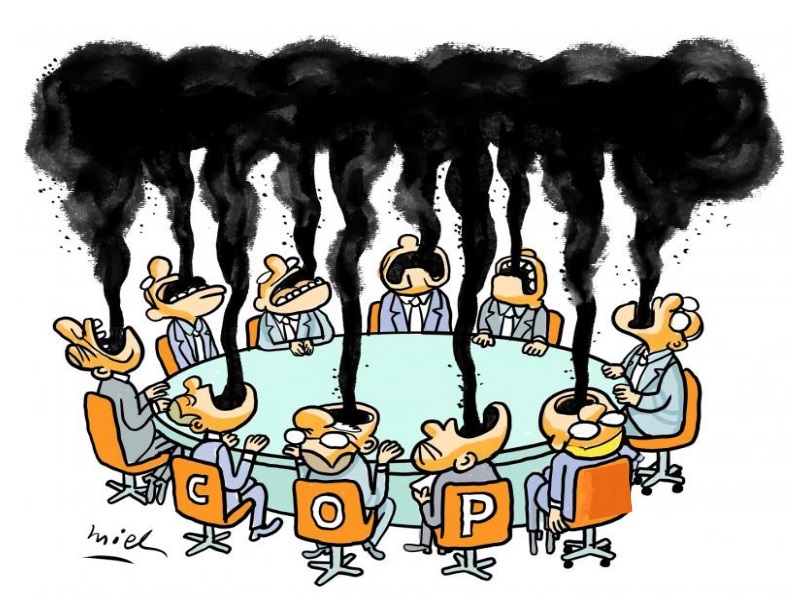
Two weeks of tense UN climate talks in Bonn, Germany, have produced few tangible outcomes as diplomats faced “gridlock”.
Negotiators failed to find agreement in numerous areas, such as scaling up global emissions cuts and funding for climate adaptation.
In the closing plenary, many diplomats lamented weakened trust in the UN climate process, as it struggled to find its footing in a new geopolitical landscape.
As ever, climate finance was one of the greatest sources of tension between developed and developing countries, influencing the debate around adaptation and trade in the Bonn talks.
Many countries criticised “coordinated attacks” on science by those with “fossil-fuel interests”.
Some delegates saw progress on a “just transition mechanism” to support communities through decarbonisation as a positive outcome, with a package of texts agreed for the COP31 climate summit in Antalya, Turkey.
Reporting from the talks in Bonn, Carbon Brief covers the key outcomes and disputes at the 64th biannual sessions of the UN Framework Convention on Climate Change (UNFCCC) subsidiary bodies (SB64).
- Adaptation
- Just transition
- Climate finance
- Global stocktake
- Mitigation work programme
- Action agenda and new initiatives
- Climate science
- Fossil fuels
- Trade dialogues
- COP reform
- Ocean dialogue
- Road to COP31
………………………………………………………………………………………………………………………………………………………………………………………………………………………. Road to COP31
Attention now turns to COP31, which will be held in the resort city of Antalya, Turkey.
…… COP31 is being promoted as an “implementation COP”, helping to “close the gap between multilateral commitments and real-world delivery”, according to its website.
However, the fraught negotiations in Bonn, including the lack of progress on key elements, mean the future effectiveness of climate summits is increasingly under question. …….
…………“In some negotiating rooms, we’ve heard a familiar tendency towards you-first-ism: Groups refusing to deliver commitments or allow the process to move forward unless others go first. This is a recipe for gridlock when we need all negotiating tracks to be moving in the fast lane.” – UN Climate Change executive secretary Simon Stiell ………..https://www.carbonbrief.org/bonn-climate-talks-key-outcomes-from-the-june-2026-un-climate-conference/
Climate change matters

by beyondnuclearinternational, https://beyondnuclearinternational.org/2026/06/21/climate-change-matters/
Environmental laws should be adhered to not abolished, says Diane Curran
For 45 years, I have represented environmental organizations and state and local governments in US Nuclear Regulatory Commission (NRC) licensing and enforcement proceedings, as well as in federal court. Today, more than ever, we need to talk about climate change.
I currently represent Beyond Nuclear and the Sierra Club in a case challenging the NRC’s refusal to consider how climate change may affect the safety and environmental integrity of nuclear reactors in initial licensing and license-renewal proceedings. The case has been briefed and argued in the D.C. Circuit, and we are awaiting a decision.
Climate change must be accounted for in reactor licensing because it challenges the NRC’s ability to ensure safe operation over the decades of a reactor’s operating license term. Weather-related hazards—including floods, hurricanes, tornadoes, derechos, wildfires, drought, and extreme heat and cold—are becoming more severe and more frequent. Assessing how those risks are likely to evolve over the operating life of a reactor is difficult, but it is essential to protecting public safety and environmental integrity. It is also essential to ensure reliability of the electricity supply.
Unfortunately, even before the Trump administration took office, the NRC has consistently declined to take a systematic approach to how climate change could affect the future safety of new and existing reactors undergoing licensing review. Instead, the agency has generally looked backward—preparing for the worst weather events in the historical record rather than assessing how climate-related risks may change over time. With respect to those prospectively changing risks, the NRC simply says that its safety oversight includes “large margins of error” and “defense-in-depth.”
We need look no farther than Hurricane Helene to see how quickly the lessons of the past and generalizations about safety margins can evaporate in the face of the unique and severe challenges posed by extreme weather events. No hurricane with such record-breaking rainfall had passed through the Appalachian Mountains before Helene. Flooding and landslides resulted in 250 deaths and between $80 and $250 billion in damages. Two years later, the region is still recovering.
Consider how much worse the effects of Hurricane Helene might have been had it passed about 25 miles west over of the three-reactor Oconee nuclear plant in the mountains of South Carolina. Oconee is a pump-storage plant, built into the side of an earthen dam beneath two lakes totaling about 2 million acre-feet of water. At the time the plant was built, dam failure was not viewed as a credible event warranting design features to protect safety equipment from inundation and failure. What if the effects of Hurricane Helene had included a radiological accident caused by failure of the dams above the Oconee nuclear plant? The devastation to human health and the environment would be almost unimaginable. But the NRC recently re-licensed Oconee to operate for a second license renewal term, refusing demands to consider climate change in its decision.
What can be done to close this dangerous and expensive gap in the NRC’s regulatory process? If the Atomic Energy Act were the NRC’s only governing statute, the public would have little chance of challenging the NRC’s refusal to consider climate-related risks on the ground that it posed an unacceptable risk to public health and safety. Because the NRC is the principal agency charged with carrying out the Act’s requirements, courts generally afford it broad discretion in how and when it does so.
But the NRC is also governed by the National Environmental Policy Act (NEPA). Although NEPA and its implementing regulations have been narrowed in recent years by Congress and the NRC, its core requirement remains intact: when an NRC licensing decision could significantly affect the human environment, the NRC must evaluate the risk and consider alternatives to avoid or mitigate it. NEPA does not dictate a particular outcome, but it does require the NRC to disclose and assess relevant information. And while courts still give the NRC some discretion in identifying and evaluating significant impacts, that discretion is more constrained than under the Atomic Energy Act.
We are hopeful that the D.C. Circuit will compel the NRC to address the safety and environmental implications of climate change in reactor licensing and license-renewal proceedings. But given the Trump administration’s public position on climate change and its policy of minimizing costs to the nuclear industry, we should not assume the NRC will produce a strong environmental analysis if we prevail.
Even so, a court victory would be significant in three important respects:
- It would establish the principle that climate change is real and must be addressed in reactor licensing. Members of the public could then invoke that principle with legislators, state regulators, and potential investors on specific nuclear projects.
- A favorable ruling would push future NRC leadership to incorporate climate change into licensing decisions.
- Even if the NRC’s analysis of climate-related accident risk were weak or flawed, state and local governments would be able to independently evaluate the NRC’s claims and decide for themselves whether to support a new reactor or a license-renewal project.
The Trump administration’s tenure is a discouraging time for anyone concerned about nuclear reactor safety and climate change. But Mother Nature does not read executive orders, and she will have the last word. In the meantime, NEPA remains a meaningful tool for forcing the NRC to reckon with the reality of climate change before great harm occurs.
Diane Curran is an attorney who litigates against the US Nuclear Regulatory Commission. This article is drawn from a presentation Curran made duriong a June 2nd briefing on Capitol Hill.
If Russia retaliated…
Third World War would be nuclear and the scale of destruction and killing could be orders of magnitude greater. This is the danger that today’s “loud little handful” could lead us toward, for their own narrow, selfish reasons. To date, we should be grateful that we’ve been spared these horrors thanks to President Putin’s restraint. Even though he’s been aware of Western involvement in attacks on Russia, he has steered clear from escalating to the point where the psychological phase transition in the West could take hold.
Before leaving 10 Downing Street, Sir Keir Starmer authorized another large-scale attack on Russia. If we’re not already in a nuclear war, we only have Vladimir Putin’s restraint to thank.
Alex Krainer, Jun 23, 2026, https://alexkrainer.substack.com/p/if-russia-retaliated?utm_source=post-email-title&publication_id=1063805&post_id=203233722&utm_campaign=email-post-title&isFreemail=true&r=1ise1&triedRedirect=true&utm_medium=email
British Prime Minister Sir Keir Starmer resigned yesterday. Before he departed 10 Downing Street the last time, he authorized another strike against Russia. Ukraine, UK’s “one hundred year” ally, conducted one of the largest attacks on Russian territory to date, using air-launched cruise missiles to hit military-related facilities in Voronezh city. The facilities in question produce components for Russian Kh-101 cruse missiles, Iskander-K missiles and Pantsir-S1 air defenses.
The Ukrainians allegedly used a version of UK-supplied Storm Shadow missiles and/or AGM-188A, “Rusty Dagger” cruise missile, developed under the U.S. Air Force’s Extended Range Attack Munition (ERAM) program to provide affordable, mass-produced long-range strike weapons for Ukraine.
Other missiles and drones were aimed at targets in the Moscow Oblast but apparently without any major damage reported. Today, President Putin gave a statement accusing the United States and Europe of directly enabling the strikes by providing satellite intelligence, targeting data, and navigation support for the long range attack and warning that such involvement signifies NATO’s direct entry into the war. Putin was telling the truth, as we know from a leaked 38-min. WebEx conversation of a group of German Generals.
Britain fully involved since (at least) 2024
Two of the four participants were top-level German military brass: commander of the German Air Force, Lieutenant General (Generalleutnant) Ingo Gerhartz; head of Air Force Operations and Training, Brigadier General (Brigadegeneral) Frank Gräfe (also spelled Graefe) — Head of Air Force Operations and Training. They discussed providing Ukraine with the German Taurus cruise missiles in order to provide a briefing on the initiative for German Defense Minister Boris, “Slava Ukraini” Pistorius.
The other two, lower-ranked participants were Oberstleutnant Florstedt and Oberstleutnant Fenske, both from German Air Operations Center. The call, which took place more than two years ago, on 19 February 2024, revealed that Great Britain was already directly involved in conducting strikes against Russia with military personnel who did the mission planning for the Storm Shadow missile strikes and helped loading Storm Shadow and SCALP missiles onto aircraft. And the British definitely want the world to know of their involvement. This article was published on Saturday, 20 June 2026:
Yesterday’s attacks were part of the same operation. Their significance, which is not lost on the Russian people, is that they were almost certainly a calculated provocation. They were conducted on the 85th anniversary of the launch of Operation Barbarossa when Nazi Germany assembled the largest ever invasion force. Defeating that force ultimately claimed the lives of 16 millions Russians.
All this is increasing the pressure on the President Putin to take the gloves off and strike at NATO targets. He has been careful not to escalate the war in this way. If such an escalation came to pass for whatever reason the world would find itself in a completely unpredictable and extremely dangerous new territory.
One of the most striking experiences in my life was the breakout of war in former Yugoslavia in 1991, and the reason was the almost instant change in collective psychology that took place as soon as the first artillery shells started landing in Croatia. Up until that moment, the vast majority of people – I’d venture to say, well north of 90% – believed that war was unthinkable; that it would never happen. Who could possibly want to fight a war? It seemed impossible; only a small handful of hotheads were advocating for war.
The stories circulating in Western media about the eruption of bottled-up centuries-old hatreds were utter nonsense. The peoples of former Yugoslavia were socially, economically and culturally deeply intertwined. In most cases we didn’t even know who, among our neighbors was a Serb, Croat or a Muslim and many families were mixed. However, once the war actually broke out, it took a life of its own wreaking death and destruction on large scale.
The collective psychology abruptly changed and a war psychology galvanized. It became fashionable to look at events in black and white and to wholly denounce the other side as enemies. Giving the enemy any benefit of the doubt and expressing empathy toward them suddenly became unpatriotic and suspicious.
The loud little handful
I still find it amazing that the war happened. It was clear that some people were pushing for it and that the media gave them disproportionate attention. Long ago, Mark Twain warned us about such people and about the way war psychology could creep into people’s hearts. His his words should haunt us today:
“The loud little handful–as usual–will shout for the war. The pulpit will–warily and cautiously–object–at first; the great, big, dull bulk of the nation will rub its sleepy eyes and try to make out why there should be a war, and will say, earnestly and indignantly, ‘It is unjust and dishonorable, and there is no necessity for it.’Then the handful will shout louder.
A few fair men on the other side will argue and reason against the war with speech and pen, and at first will have a hearing and be applauded; but it will not last long; those others will outshout them, and presently the anti-war audiences will thin out and lose popularity. Before long you will see this curious thing: the speakers stoned from the platform, and free speech strangled by hordes of furious men who in their secret hearts are still at one with those stoned speakers–as earlier–but do not dare say so.
And now the whole nation–pulpit and all–will take up the war-cry, and shout itself hoarse, and mob any honest man who ventures to open his mouth; and presently such mouths will cease to open. Next the statesmen will invent cheap lies, putting the blame upon the nation that is attacked, and every man will be glad of those conscience-soothing falsities, and will diligently study them, and refuse to examine any refutations of them; and thus he will by and by convince himself the war is just, and will thank God for the better sleep he enjoys after this process of grotesque self-deception.”
If Russia retaliated, if it responded to British or US-orchestrated attacks and struck at a NATO target, we would see this process erupt on short order. The loud little handful in our midst will be shouting for war until they managed to generate the mass-formation psychosis that would make the war not only possible, but probably inevitable and Europe would fully share Ukraine’s tragic fate. Last two World Wars resulted in large-scale devastation and tens of millions of casualties. In today’s terminology, however, they were conventional wars.
Third World War would be nuclear and the scale of destruction and killing could be orders of magnitude greater. This is the danger that today’s “loud little handful” could lead us toward, for their own narrow, selfish reasons. To date, we should be grateful that we’ve been spared these horrors thanks to President Putin’s restraint. Even though he’s been aware of Western involvement in attacks on Russia, he has steered clear from escalating to the point where the psychological phase transition in the West could take hold.
Grand Deception
In 2017 I published my second book, titled Grand Deception. I felt compelled to write it because I realized that a very powerful network in Western financial centers were busy laying the groundwork for a future great war against Russia, and I felt that their agenda needed to be exposed to the public. Of course, they felt otherwise, so my book was banned after only five weeks. It was republished a few months later by Red Pill Press under a different title, but it only survived for six weeks.
Nevertheless, the cause of defending peace must never be neglected. Making sure that such a war never comes to pass should be the top priority for any thinking person. If we sleepwalk into the third great war on European continent, most of our endeavors in life, our dreams and hopes might not matter much. The way to resist the march to war is, first and foremost, to seek the truth and dare to speak it freely and courageously. We must reject the warmongers among our leaders and call them out on the lies they use to contrive consent for war. Wars are always started with lies.
Our opposition must not be shy or deferential: it must be bold, determined and relentless. We would also do well to turn toward our Russian fellow men and women and tell them loud and clear that we want peace, not war. The German people have done so even though their own leaders are among the most aggressive warmongers of all. On Saturday, 20 June 2026, hundreds of them gathered at the Brandenburg Gate in Berlin to assert, “Russia is NOT our enemy,” and laid flowers at the Soviet war memorial. We need millions of people following suit.
We must start without delay to build the foundations for peace in our hearts and minds. There can be no justification for us to sleepwalk into another war. In addition to unprecedented scale of destruction and death, the economic, social and psychological damage from such a conflict would be such that it might take many generations to repair.
1 This Month
Tell Congress: Prevent Nuclear Catastrophe in Iran

Tell Congress: Prevent Nuclear Catastrophe in Iran

Read the Public Inquiry Report, the Commissioners’ report, Surrendering Australia: The AUKUS Deception is available to download for free at aukuspublicinquiry.com. Or just watch the replay of the National Press Club Luncheon.


Shut down the radiation-damaged Heysham nuclear reactors now
To see nuclear-related stories in greater depth and intensity – go to https://nuclearinformation.wordpress.com

Say No to NASA’s Reckless Nuclear Reactor on the Moon
Say No to NASA’s Reckless Nuclear Reactor on the Moon
-
Archives
- November 2026 (246)
- October 2026 (302)
- September 2026 (339)
- August 2026 (330)
- July 2026 (355)
- June 2026 (287)
- May 2026 (306)
- April 2026 (356)
- March 2026 (251)
- February 2026 (267)
- January 2026 (308)
- December 2025 (358)
-
Categories
- 1
- 1 NUCLEAR ISSUES
- business and costs
- climate change
- culture and arts
- ENERGY
- environment
- health
- history
- indigenous issues
- Legal
- marketing of nuclear
- media
- opposition to nuclear
- PERSONAL STORIES
- politics
- politics international
- Religion and ethics
- safety
- secrets,lies and civil liberties
- spinbuster
- technology
- Uranium
- wastes
- weapons and war
- Women
- 2 WORLD
- ACTION
- AFRICA
- Atrocities
- AUSTRALIA
- Christina's notes
- Christina's themes
- culture and arts
- Events
- Fuk 2022
- Fuk 2023
- Fukushima 2017
- Fukushima 2018
- fukushima 2019
- Fukushima 2020
- Fukushima 2021
- general
- global warming
- Humour (God we need it)
- Nuclear
- RARE EARTHS
- Reference
- resources – print
- Resources -audiovicual
- Weekly Newsletter
- World
- World Nuclear
- YouTube
-
RSS
Entries RSS
Comments RSS

