Fukushima Reaches a Turning Point
by Citizens’ Nuclear Information Center · September 30, 2022
By Yamaguchi Yukio (CNIC Co-Director)
After the nuclear catastrophe in Fukushima in March 2011, the town of Futaba, located in Hamadori (the Fukushima coastline), became the only municipality in Fukushima Prefecture to decide to move its administration out of the prefecture. After changing evacuation sites several times, gradually moving further and further away from Futaba, the town’s government offices and many of its residents settled in a disused school in Kazo City, Saitama Prefecture, at the end of March 2011. It seemed as if the nuclear power plant town, where Fukushima Daiichi Nuclear Power Station (FDNPS) reactors Units 5 and 6 are located, had “drifted” 250 kilometers away from home. The evacuation was ordered based on the Special Act on Nuclear Emergency Preparedness and Response, and it was a difficult evacuation, the people evacuating “with nothing but the clothes on their back.”
The evacuation order for Futaba Town was lifted on August 30 this year, eleven-and-a-half years after it was imposed. However, there are very few who are willing to return to their hometown. As of March 2022, 19 households (26 people), or 0.4% of the pre-disaster level, had applied for “Preparation of Accommodation.”* The rich natural environment that was once part of the area no longer exists, and there is no prospect for the revival of community life.
The decommissioning of the plant at FDNPS is not expected to be completed anytime soon, as nothing like this has been experienced before and the radiation is likely to cause unexpected issues. That is not a problem when fission is used as a nuclear weapon, because the objective is to annihilate the opponent. However, that is not the case for “commercial use.” International organizations promoting nuclear power have set “standards” (radiation dose limits), but they are not reliable. It is impossible to properly evaluate the effects of low-dose exposure with current scientific knowledge alone. It is also a trans-scientific issue (a question that can be asked by science but cannot be answered by science).
The government decided on a plan to treat the radioactive water from FDNPS with ALPS, reduce its radioactivity level, and then discharge it into the ocean. The plan is to be implemented from 2023. The government and those who support the plan claim that there is no safety problem because the concentration will be much lower than the standard, even though the “standard” itself is questionable. However, that cannot be proven. It is only possible to prove it by repeating experiments under exactly the same conditions (including in the natural environment) as exist in reality and obtain results with a sufficiently high degree of confidence in the effects on humans as well as on ecosystems. It may be possible to do so, but it would probably take hundreds of years. The experiments might also lead to irreversible disasters. This kind of “experiment” is not feasible because it would take a long time and be too costly. In addition, simulations are also unlikely to allow us to draw solid conclusions.
There are many who are opposed to the oceanic release plan by the government and TEPCO, and who have presented reasons for their opposition. One thing I would like to add about “harmful rumors” is that this expression has the connotation of “irresponsible rumors that make something which is actually harmless appear to be harmful.” I do not agree with this connotation.
The government and nuclear energy proponents pushed forward the nuclear power plants without regard for the opinions of citizens and residents. This caused a nuclear catastrophe, the government has adopted an evacuee return policy without taking responsibility, and it is now about to discharge contaminated water into the ocean. The reason why such an absurdity has occurred is that the government has become extremely powerful. The separation of legislative, administrative, and judicial powers is said to be the basis of democracy, but the equilibrium of these three powers has been seriously disturbed. Nevertheless, the Mito District Court decision (Tokai Daini NPP Lawsuit, 18 March 2021) , the Sapporo District Court decision (Tomari NPP Lawsuit, 31 May 2022), the Supreme Court’s opinion by Justice Miura (17 June 2022), and the Tokyo District Court judgement (TEPCO Shareholder Lawsuit, 13 July 2022) remind us that the judiciary still exists.
Sun Yat-sen (1866-1925) once advocated the idea of a “five-power constitution” on the grounds that the three powers alone were not sufficient. Considering the current situation in Japan, I suggest the right to vote alone is powerless to curb the tyranny of the government. We need more powerful civic rights so that ordinary citizens can get together and be as powerful as the other three institutions.
Although the existence of “experts” is crucial in today’s world of science and technology, there are still many problems that cannot be answered by “experts” alone. Eleven-and-a-half years after March 11, METI committees, acting as if Fukushima is now history, often use expressions such as “innovative reactors” and insist that “nuclear power is the key to decarbonization.” I believe citizen power is needed more than ever before.
*”Preparation of Accommodation”: A system that allows disaster victims to stay overnight in their homes, which is prohibited in the evacuation zone, in order to facilitate preparations for a smooth resumption of life in their hometowns after the evacuation order is lifted.
Source: https://cnic.jp/english/?p=6286
Seoul asks IAEA for verification of Japan’s plan to discharge treated water from Fukushima plant
September 28, 2022
The South Korean government has asked the IAEA for thorough verification of Japan’s plan to discharge treated water from the Fukushima Number One nuclear power plant into the ocean. Attending the 66th Regular Session of the International Atomic Energy Agency in Vienna on Tuesday, Seoul’s vice minister of science and ICT, Oh Tae-seok, also called for Tokyo to share details of the process with the rest of the international community in a transparent manner. He also asked for unwavering support from IAEA member-states in denuclearizing North Korea, stressing that the regime’s nuclear programs pose a serious threat to international society.
New head of nuclear regulator vows to maintain ‘transparency’.
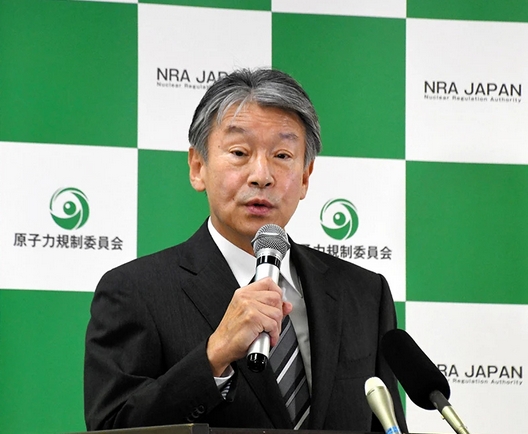
September 27, 2022
The new chairman of the Nuclear Regulation Authority vowed to maintain “independence and transparency” as the government agency performs its watchdog role over Japan’s nuclear industry.
Shinsuke Yamanaka, 66, an expert on nuclear material science, took the helm of the NRA on Sept. 26.
“I will never forget the Fukushima nuclear disaster at Tokyo Electric Power Co.’s Fukushima No. 1 nuclear plant,” he said at a news conference. “With this resolve, I remain committed to the NRA’s policy to regulate the nuclear industry while steadfastly maintaining independence and transparency.”
The appointment of Yamanaka, who has been an NRA commissioner since 2017, comes as the administration of Prime Minister Fumio Kishida seeks a return to more reliance on nuclear energy. It is the first such move since the 2011 triple meltdown at the Fukushima plant.
The administration is considering building nuclear plants and new reactors to replace aged ones, something the industry ministry and nuclear industry have pushed for years.
Yamanaka pledged that the NRA will continue to remain neutral.
“The NRA should sincerely carry out its duties while keeping in mind that the safety of nuclear energy is never a guarantee,” he said.
On the NRA’s prolonged examinations of reactors to assess if they meet the new reactor safety regulations, Yamanaka said his agency will be open to measures to help speed the process.
“Our basic stance is to conduct strict inspections, but we are willing to take measures to expedite the regulation procedures and improve communications between us and nuclear plant operators,” he said.
Japan hosted 54 commercial reactors before the Fukushima nuclear accident. Of these, 27 reactor operators had applied for restarts under the more stringent reactor regulations that went into force in 2013. Only 10 have gone back online so far, however, as the NRA examinations continue.
Yamanaka also cited three things he wants to focus on in the coming years: strengthening the NRA’s ability to disseminate information, having a field-oriented approach and developing human resources.
Before joining the NRA, he did fuel safety research related to severe nuclear reactor accident at Osaka University.
Yamanaka’s term will run until September 2027. He replaced Toyoshi Fuketa, who finished his term as the second chairman of the NRA, which was established in 2012.
The same day, Tomoyuki Sugiyama, who specializes in reactor safety, joined the NRA as one of four commissioners.
Sugiyama had researched reactor safety at the Japan Atomic Energy Agency’s Nuclear Safety Research Center.
Japan asking world to pay too high a cost
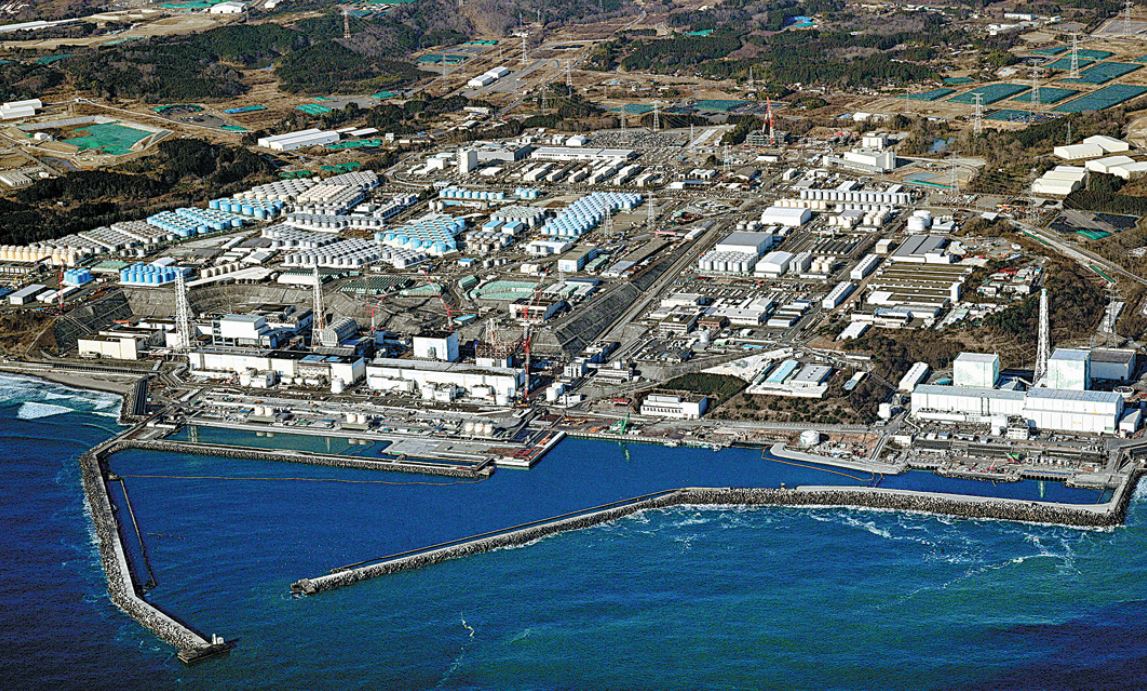
September 26, 2022
The president of the Pacific island state of Micronesia vehemently denounced Japan’s decision to discharge nuclear-contaminated water from its Fukushima Daiichi Nuclear Power Station into the Pacific Ocean at the United Nations last week. If anyone still believes this a viable option, his words should disabuse them of the notion.
In an address to the UN General Assembly in New York, David Panuelo said Micronesia had the “gravest concern” about Japan’s decision to release the so-called Advanced Liquid Processing System water into the ocean. “We cannot close our eyes to the unimaginable threats of nuclear contamination, marine pollution, and eventual destruction of the Blue Pacific Continent”, he said on Thursday. “The impacts of this decision are both transboundary and intergenerational in nature … I cannot allow for the destruction of our ocean resources that support the livelihood of our people.”
Japan insists that the release of the water used to cool the melted nuclear fuel rods at the three destroyed reactors at Fukushima is safe, as it has been processed to remove almost all radioactive elements and thus these are greatly reduced.
But that is not true. There has been increasing evidence suggesting that the ALPS has consistently failed to eliminate many radioactive elements including iodine, ruthenium, rhodium, cobalt and strontium. In late September 2017, Tokyo Electric Power Company, which runs the nuclear plant, was forced to admit that around 80 percent of the water stored in tanks at the Fukushima site still contains radioactive substances above legal levels. The water amounted to more than 1.3 million metric tons by July, and is still being added to at the rate of about 300 tons a day.
TEPCO and Japanese government officials also say that tritium, which cannot be removed from the water, is not harmful as it already exists in the sea. But what Tokyo doesn’t say is that the concentration of tritium in the water in the holding tanks is about a million times more than in the open sea. Scientists also say the long-term impact on marine life from exposure to such large volumes of radioactive water is unknown.
Dumping hazardous, nuclear-contaminated water is not only illegal under international law, but also unethical as this is not the only option that Tokyo has at its disposal to deal with the waste. For example, the Japanese government can still buy more land and keep on building more holding tanks to allow for radioactive decay to take place and buy more time for scientists to find better ways to deal with the aftermaths of the 2011 Fukushima disaster.
Tokyo should not proceed with its reckless cheapest-option plan to dump the contaminated water into the ocean as the cost it is asking the world to pay is too high.
https://global.chinadaily.com.cn/a/202209/26/WS63319171a310fd2b29e79cee.html
Fukushima radioactive sludge storage container will be full of nuclear wastewater purification may be hindered.
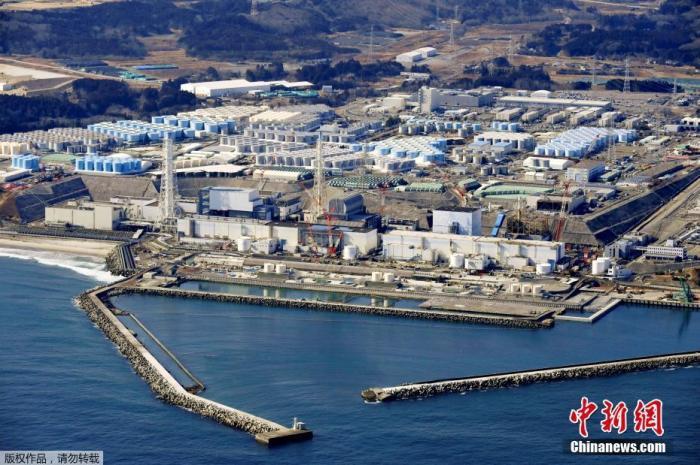
September 26, 2022
According to Kyodo News on the 25th, Tokyo Electric Power Company (TEPCO) stated that since the container for storing sludge generated during nuclear sewage treatment will be full by the end of April 2023 at the earliest. Work on the treatment of nuclear wastewater at the island’s first nuclear power plant may face obstacles.
A slurry-like mixture of liquids and solids is reported to be produced during the purification of nuclear wastewater from the Fukushima Daiichi Nuclear Power Plant with polynuclide removal equipment (ALPS). This sludge produces strong radiation, so during processing they are placed in special polyethylene containers and kept in radiation-blocking cement boxes.
As of August, the cement boxes in the factory area were 96% full, and if no measures are taken, they will be full by the end of April 2023 at the earliest. At that point, if there is nowhere for the sludge to pile up, the ALPS cannot continue to operate.
According to reports, there are currently 4,192 storage places for storage containers, and TEPCO plans to add 192 more on this basis. But even if the storage space is increased, the filling time can only be delayed by about a year. Therefore, the problem of reducing the amount of sludge generated is still under discussion.
TEPCO expects that storage can be reduced if equipment to extract moisture from sludge is activated. However, due to reasons such as seismic design re-evaluation, it is not yet possible to determine when the equipment will be put into use.
On March 11, 2011, an earthquake with a magnitude of 9.0 occurred in the waters off northeastern Japan and triggered a huge tsunami. Affected by the earthquake and tsunami, a large amount of radioactive material leaked from the Fukushima Daiichi Nuclear Power Plant.
On April 13, 2021, the Japanese government officially decided to discharge the Fukushima nuclear sewage into the sea after filtering and diluting it. However, in the process of nuclear sewage treatment, problems such as filter damage and excessive strontium-90 activity of the radioactive material after treatment were encountered successively. . Japan’s decision to discharge sewage into the sea was also strongly opposed by residents of Fukushima Prefecture and the National Federation of Fisheries Trade Unions in Japan.
Businesses worry about reputational damage from Fukushima water discharge

Sep 26, 2022
The plan to discharge treated water from the Fukushima No. 1 nuclear power plant into the ocean has been met with a wave of opposition, not only from residents of Fukushima Prefecture, but also those living in neighboring Ibaraki Prefecture.
Businesses in Ibaraki are calling for a fostering of public understanding and providing consumers with a sense of security to prevent harmful rumors from spreading.
At the Otsu fishing port in Kitaibaraki, which borders the southern part of Iwaki, Fukushima Prefecture, containers of freshly caught baby sardines are brought into processing plants one after another. The silver-colored fish shine under the late August sunlight and its lingering summer heat.
“We want to offer a taste of fresh, in-season fish,” said fisherman Seiji Suzuki, 31, who was busy landing his catches.
While keeping himself busy in a bustle of the port, Suzuki cannot shake off his anxiety about the future, as the Fukushima No. 1 plant, located about 70 kilometers away, plans to discharge processed water containing radioactive tritium into the ocean as early as next spring.
“The ocean (off the coast of Fukushima and Ibaraki prefectures) is connected. If the water is released, the image of seafood from Ibaraki Prefecture will be tarnished, and sales will be hit again,” Suzuki lamented.
According to the Otsu Fisheries Cooperative, seafood from Ibaraki Prefecture, like that from Fukushima Prefecture, is distributed throughout Japan as “Joban-mono,” referring to the seafood culled from the waters off the coast of both prefectures.
Major species from Ibaraki Prefecture include baby sardine, flounder, and anglerfish. “It’s almost the same as those in Fukushima,” a member of the fisheries cooperative said.
Ibaraki Prefecture’s fisheries output declined by about 30% after the Fukushima meltdown disaster, according to the fisheries ministry. Since 2012, the output has gradually recovered, and in recent years it has exceeded the pre-accident level due to an increase in fish catches.
However, radiation sampling inspections for almost all edible fish species are still being conducted. According to Ibaraki Prefecture, there has not been a discussion about abolishing the inspections. “Many consumers are concerned about the safety of seafood. This is even more so since there are plans to discharge treated water into the ocean,” a prefectural official said.
According to a survey conducted by the Ibaraki Shimbun newspaper of voters in the prefecture at the time of Upper House election this summer, 44.3% of respondents were opposed to the water discharge, more than the 35.5% who were supportive. The remaining 20.2% said that they were not sure or gave no answer. By age and gender, young respondents and women were particularly cautious about the water discharge.
Yoshinori Sakamoto, director of the Otsu Fisheries Cooperative, stresses there is no border between waters off Fukushima and Ibaraki prefectures. “If treated water is released into the ocean, Ibaraki seafood will suffer reputational damages as well,” he said.
The government may disseminate information about the scientific safety of the products, but unless the information is widely shared by consumers and a sense of security is fostered, consumers will be reluctant to buy the products, which will lead to price falls, he said.
Looking back on the many years of suffering from harmful rumors following the Fukushima nuclear accident, Sakamoto said, “We have finally come this far. It is a matter of life and death, and I am opposed to the water release under the current situation, where providing consumers with a sense of security is not guaranteed.”
A third nightmare
This is not the first time Ibaraki Prefecture has faced reputational damage from nuclear incidents. The September 1999 criticality accident at JCO, a nuclear fuel processing company in Tokai, Ibaraki Prefecture, caused extensive damages to residents and businesses in the region.
In the accident at the Tokai Plant of JCO, three workers were heavily exposed to radiation after a nuclear fission chain reaction occurred by accident, and two of them subsequently died. More than 600 residents of the surrounding area were also exposed to radiation, and more than 300,000 residents were forced to evacuate or stay indoors.
According to a report by Ibaraki Prefecture, a wide range of industries were affected, including agriculture, livestock, fisheries, commerce and tourism, with damages totaling more than ¥15 billion.
Businesses affected by the JCO criticality accident and the Fukushima No. 1 meltdown disaster are deeply concerned about a “third nightmare” from the planned discharge of treated water from the Fukushima plant.

Chizuko Suda, 57, who runs a seafood restaurant near the Nakaminato fishing port in Hitachinaka, Ibaraki Prefecture, is one of those who experienced the reputational damage caused by the 1999 incident.
Suda’s restaurant is located about 15 km south of the JCO plant. She remembers that the number of customers dropped to less than half of what it was before the accident, although she does not know the amount of damage because she was not the owner at the time. “It took three years for things to get back to normal,” she recalls.
Twelve years after the JCO accident, the Fukushima No. 1 accident struck. Almost every day, tourists asked if it was safe to visit the area around her restaurant and if the seafood was safe. Each time, she told them that tests for radioactive materials had confirmed that the area was safe to visit. Even so, sales dropped to 20% to 30% of what they were before the accident. Once again, she felt the pain of harmful rumors.
After going through such experiences twice, Suda wonders if there is any way to prevent it from happening again with the release of treated water into the ocean. The key is to foster public understanding, she says. “If it is scientifically safe, that fact should be released nationwide. This would be an opportunity for the public to think about the water discharge issue as their own.”
She has relatives in the coastal areas of Fukushima Prefecture, and she feels that it is “unacceptable to force only the people in Fukushima to bear the burden.”
Meanwhile, the fishing industry is not the only businesses concerned about the impact of water discharge.
Hiroyuki Onizawa, 60, a dried sweet potato processor in Hitachinaka who was affected by both accidents, also urges the government to take a cautious approach. “It would be better not to discharge,” he says, stressing that the image of Ibaraki Prefecture could be worsened.
Yoshihisa Takeshi, 46, who runs an inn in Kitaibaraki that offers Joban-mono anglerfish as its specialty, feels the need to dispose of treated water. “We have no choice but to discharge it,” he said.
On the other hand, he called on the government to provide support for a wide range of businesses in addition to taking measures against harmful rumors. The discharge “will definitely have a negative effect,” he said.
https://www.japantimes.co.jp/news/2022/09/26/national/ibaraki-fukushima-water/
Uncle Sam’s Long Trail of Wreckage
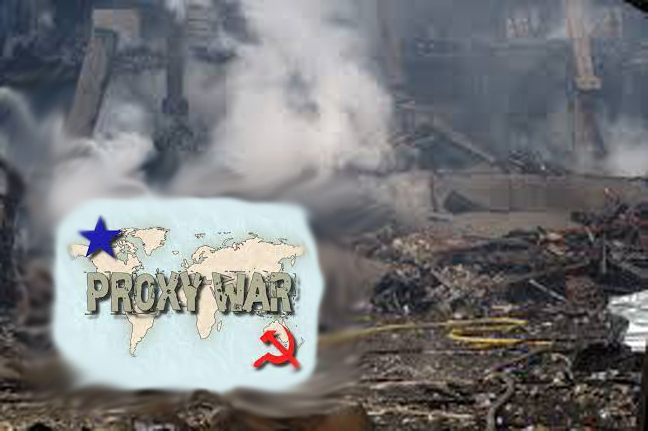
the Biden administration opted to use Ukraine in a Western proxy war against Russia.
Washington and London appear to have sabotaged a possible peace accord between Moscow and Kiev.
The Biden administration is risking nuclear war with Russia to assist a corrupt, authoritarian regime in a country of little importance to the United States.
Until the early 1990s, Ukraine wasn’t even an independent country, much less a U.S. vital interest.
Very few policymakers even concede that Washington’s overseas military adventures often have not turned out as planned.
The American Conservative, Ted Galen Carpenter, Sep 28, 2022, The leaders and most of the news media in the U.S. seem to believe that Washington’s foreign policy over the past several decades has been a success and benefitted both the United States and the world. That assumption wasn’t really true even during the Cold War, although that confrontation eventually resulted in the peaceful demise of America’s nasty totalitarian adversary. There was plenty of collateral damage along the way, with the suffering caused by Washington’s conduct in Vietnam and Afghanistan being the most glaring examples.
The performance of U.S. leaders after the Cold War has been even worse. An array of disruptive, bloody tragedies—most notably those in the Balkans, Afghanistan (again), Iraq, Libya, Syria, and Yemen—mark Uncle Sam’s global trail of wreckage. The Biden administration’s decision to use Ukraine as a pawn in Washington’s power struggle with Russia is fast becoming the latest example.
Very few policymakers even concede that Washington’s overseas military adventures often have not turned out as planned. The news media, which is supposed to serve as the public’s watchdog, have routinely ignored or excused America’s foreign-policy disasters. Instead, when one intervention fails, they simply move on to lobby for the next crusade pushed by U.S. leaders. Consider how few news accounts now deal with the ongoing violence and chaos in places such as Libya, Syria, and Yemen, even though Washington was a major contributor to all of those tragedies.
Paul Poast, a scholar with the Chicago Council on Global Affairs, aptly describes the conflict in Syria as America’s “forgotten war.” “That the war in Syria has become the “forgotten war,” he observes, “points to a more disturbing trend in U.S. foreign policy: The United States is so engaged in wars and interventions around the world that a conflict involving the U.S. military that has killed hundreds of thousands of civilians does not even register with the American public anymore.”………………………………………
The turmoil in Iraq is less severe, but is still damaging the country. Political disputes and mass demonstrations against the current government regularly surface in Iraq. Pro-Iranian militias continue to play a prominent role in the country’s government, and the three-way split among Sunni Arabs, Shiite Arabs, and Kurds is becoming ever more contentious. Political violence among rival factions shows no signs of subsiding, nor does public resentment against the presence of U.S. troops. Washington so lacks trust in its “ally” that officials once threatened to seize the country’s bank reserves if Iraqi leaders continued to press for the withdrawal of U.S. forces.
The level of human tragedy in Libya and Yemen is horrifying. Washington and its NATO allies bear almost exclusive responsibility for the situation in Libya………………………
The latest application of Washington’s meddlesome policy is in Ukraine. U.S. leaders ignored repeated Russian warnings that making Ukraine a NATO member or even an unofficial NATO military asset would cross a line that threatened Russia’s security. When Moscow finally responded to the provocations with an invasion of Ukraine in February 2022, the Biden administration opted to use Ukraine in a Western proxy war against Russia.
The conflict has already done enormous damage to Ukraine’s infrastructure and taken thousands of lives. Worse, Washington and London appear to have sabotaged a possible peace accord between Moscow and Kiev.
The U.S. foreign-policy record over the past three decades could hardly be worse. It is crucial not to let policymakers and their media mouthpieces get away with convenient collective amnesia and imitations of Pontius Pilate. Instead, they need to be held fully accountable for their blunders and deception.
Future U.S. policymakers also need to avoid repeating the faulty performance of their predecessors. To do so, they must make three significant changes to U.S. foreign policy.
First, Washington should utterly renounce nation-building. Trying to remake alien societies by force and impose Western political, economic, and social values is the essence of folly.
Even when the United States has not yet been drawn into a new war to enforce crumbling nation-building goals, as in Bosnia and Kosovo, such armed social experiments are an exercise in futility and frustration. Worse, nation-building missions frequently worsen conditions in the targeted country, and the predictable failure of U.S. objectives even can lead to Washington’s outright humiliation. The debacle in Afghanistan is a stark reminder of that danger.
Second, the United States must avoid the temptation to engage in regime-change wars. Such offensives often are a prelude to disastrous nation-building ventures. That was the case in Iraq, Afghanistan, and Libya. Those wars not only made matters worse for the populations in the three countries, but worsened the security situation for neighboring states and even the United States. In both Iraq and Libya, U.S. actions toppled secular dictators, paving the way for chaos that strengthened the position of Islamic jihadists. Granted, the secular dictators were brutal and sometimes caused problems for the United States, but Washington’s “solution” clearly made matters worse, not better.
Third, U.S. leaders must do a much better job of distinguishing vital national interests from secondary or peripheral ones. Washington’s current policy of using Ukraine as a proxy for a war against Russia is a troubling example of the failure to make such basic distinctions. The Biden administration is risking nuclear war with Russia to assist a corrupt, authoritarian regime in a country of little importance to the United States.
Until the early 1990s, Ukraine wasn’t even an independent country, much less a U.S. vital interest. To accept the risks the Biden administration is incurring is irresponsible and violates the U.S. government’s responsibility to the American people.
Unless these policy changes are made, it is just a matter of time until a new set of officials repeat the disastrous blunders of their predecessors. If they do, the consequences to America and the world will be equally damaging. Indeed, the Ukraine adventure reveals that the consequences could be even worse than the wreckage already wrought by Uncle Sam. https://www.theamericanconservative.com/uncle-sams-long-trail-of-wreckage/
Sanctions against Russian exports – but that doesn’t apply to NUCLEAR EXPORTS, (while they bring in funding for Russia’s war!)

ED note. When will they all wake up? The nuclear industry is essential for the nuclear weapons so beloved by the governments that have them.
Keeping the nuclear industry going is essential for the wealth, power and influence of the global nuclear lobby, and the future of all their crackpot super-costly ‘advanced’ nuclear gimmicks.
Apparently we can all accept cutting back gas, oil, food ……. but must not let anyone curtail that sacred cow – the nuclear industry
Russia’s nuclear trade with Europe flows despite Ukraine war, By SYLVIE CORBET, September 30, 2022,
PARIS (AP) — While the European Union has agreed to curtail its use of Russian oil and gas, its member nations continue to import and export nuclear fuel that is not under EU sanctions — to the chagrin of the Ukrainian government and environmental activists.
A cargo ship carrying uranium that departed from the French port of Dunkirk traveled across the North Sea on Thursday, heading toward the Russian Baltic port of Ust-Luga. It was the third time in just over a month that the Panama-flagged Mikhail Dudin ship docked in Dunkirk to transport uranium from or to Russia.
Environmental group Greenpeace France denounced the ongoing shipments and called for stopping all trade in nuclear fuel, which it said was “financing the war in Ukraine, extending (Europe’s) energy dependence and delaying the transition to renewable energy.”
The EU’s executive arm, the European Commission, did not propose targeting Russia’s nuclear sector in its latest sanctions package presented Wednesday.
“France ensures strict compliance by economic players with all the European sanctions adopted against Russia. Civil nuclear power is not affected by these sanctions,” the French Foreign Affairs Ministry told the Associated Press.
The ministry that EU nations “did not consider this to be a relevant area for ending Russian aggression against Ukraine.”
Ukraine, meanwhile, is pushing for European sanctions in that area. The Ukrainian president’s economic adviser, Oleg Ustenko, said Wednesday that “in terms of uranium, we think it’s extremely important to impose sanctions, not only on Russian oil.”
“Oil, gas, uranium and coal, all this should be banned. Because they are using this money in order to finance this war,” Ustenko said.
According to Greenpeace France, reprocessed uranium meant to be transported to Russia were loaded onto the Mikhail Dudin on Wednesday. Pauline Boyer, an energy campaigner at Greenpeace France, said the ship’s repeated trips between Russia and France show “the extent to which the French nuclear industry is trapped in its dependence on Russia.”
French authorities have repeatedly said the country does not depend on Russia to supply the nuclear power plants that provide 67% of its electricity — more than any other nation………………………………………..
The Lingen plant is operated by Framatome, which is majority-owned by French utility giant EDF. It is supplying nuclear fuel to plants in France, Belgium, Switzerland, the Netherlands, Britain, Spain, Sweden and Finland.
Faced with activists’ protests, the German government took a critical view toward the uranium shipment but said it couldn’t stop the fuel from being processed because it isn’t covered by the EU’s war-related sanctions on Russia.
At the end of last month, enriched uranium unloaded from the Mikhail Dudin in Dunkirk was destined for the Rhone valley in southern France, which is home to major sites of the French civil nuclear industry, according to Greenpeace France.
The French nuclear sector has a series of contracts with Russian state-controlled energy giant Rosatom, including some to import enriched uranium destined for European nuclear power plants and to export reprocessed uranium to Russia. Rosatom is one of the world’s biggest actors in the nuclear energy market.
Multinational company Orano, headquartered in France, has a contract with Rosatom to buy reprocessed uranium to convert it into nuclear fuel at its Seversk plant, in Siberia, and ultimately use it in reactors to produce energy.
The U.S. power industry also imports uranium from Russia to feed its nuclear plants.
AP recently tracked millions of dollars worth of shipments of radioactive uranium hexafluoride from Russian state-owned Tenex JSC, the world’s largest exporter of initial nuclear fuel cycle products, to Westinghouse Electric Co. in South Carolina. https://apnews.com/article/russia-ukraine-france-global-trade-only-on-ap-business-c521f2248c823f69f0a677735a78e89d
TODAY. My biased coverage of Ukraine war and Donbass referendums.
Why do I repeatedly give the pro Russian view of these events?
Well, it’s simply because the avalanche of Ukraine news and views in the prevailing English-language media is stridently anti-Russian, and heroically pro-Ukraine..
Think about it. We, the anglophone nations, plus Europe, are NOT at war with Russia. There might be some excuse for this appallingly bad coverage if we were formally at war.
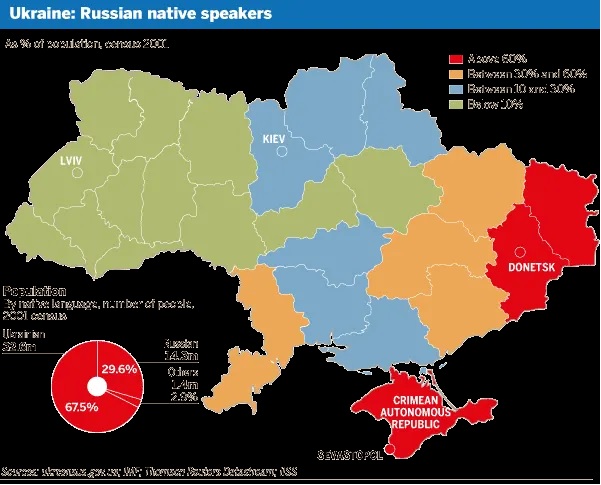
Universally, it would seem, we swallow the story that the Donbass referendums are a sham. And where do we get our news from – it’s always Kiev – the heart of pro Ukraine propaganda, and hundreds of kilometres away from the Donbass region.
And what is our news avalanche like in style and content? Well on Australian TV media they showed the effect of the gas leak (attributed of course to Russian sabotage), as a close-up of a baby crying.! All we get is emotional coverage of unhappy people. Now this is true, and Ukrainian people are suffering. But it’s not a factual picture, and not the whole picture, of how the war is going.

And as for the history, the background to this war, and why it came about – forget it! All we get is unrelenting USA and NATO propaganda.

And for the future – like silver-tongued Anthony Blinken, and his Australia’s mimic Richard Marles – all we get is the mantra we must keep the “Global-Rules-Based-Order” !
Somebody has to raise questions about a view that differs from this avalanche. So that is why I, and a few others, do it
U.S. has not seen acts indicating Russia contemplating nuclear attack
U.S. has not seen acts indicating Russia contemplating nuclear attack
WASHINGTON, Sept 30 (Reuters) – The United States has not yet seen Russia take any action that suggests it is contemplating the use of nuclear weapons amid its invasion of Ukraine, U.S. Secretary of State Antony Blinken said on Friday, despite what he called “loose talk” by Russian President Vladimir Putin about their possible use.
“We are looking very carefully to see if Russia is actually doing anything that suggests that they are contemplating the use of nuclear weapons. To date, we’ve not seen them take these actions,” Blinken told a news conference in Washington with his Canadian counterpart.
“This kind of loose talk about nuclear weapons is the height of irresponsibility and it’s something that we take very seriously,” Blinken said.
Putin on Friday proclaimed Russia’s annexation of a swathe of Ukraine, the biggest annexation in Europe since World War Two. Putin also vowed to press ahead with what he calls a “special military operation” in Ukraine. Russia launched its invasion in February.
In recent weeks, Putin explicitly warned the West that Russia would use all available means to defend Russian territory and accused the West, without offering evidence, of discussing a potential nuclear attack on Russia. Putin on Friday said the United States had set a precedent when it had dropped two atomic bombs on Japan in 1945, but stopped short of issuing new nuclear warnings against Ukraine.
Pentagon spokesperson Brigadier General Patrick Ryder this week said the United States had not seen any changes that would lead it to alter the posture of American nuclear forces.
Putin controls the world’s largest nuclear arsenal, including a new generation of hypersonic weapons and 10 times more tactical nuclear weapons than the West.
Reporting by Simon Lewis and Humeyra Pamuk; Editing by Chizu Nomiyama and Will Dunham
“Eva Bartlett describes Ukraine’s unspeakable genocide of Donbass FULL INTERVIEW (Graphic Content Warning)”
nterview I did on Redacted on September 22.
**Warning: This video contains graphic images of civilians killed by Ukrainian shelling of completely civilian areas of Donetsk.**
Swiss Government wants command centre in case of ‘nuclear event’

Government wants command centre in case of ‘nuclear event’
The Swiss government on Friday laid out responsibilities in case of a nuclear attack or nuclear disaster linked to the war in Ukraine. September 30, 2022
While the defence ministry currently considers this unlikely, the government says it is necessary to be prepared and be able to react rapidly.
It has tasked the defence ministry to set up a Federal Strategic Command Staff if there were to be such an event or it looked likely. This Command Staff will be headed by the secretary-general of the defence ministry and include the secretary generals of all the ministries, the federal government spokesperson, heads of the federal health, civil defence, energy and other key offices as well as representatives of the army, police and fire brigade…………………..more https://www.swissinfo.ch/eng/politics/government-sets-chain-of-command-in-case-of–nuclear-event-/47943850
NATO chief throws cold water on Ukraine’s bid to join NATO
NATO Secretary General Jens Stoltenberg condemned Russia’s move to take over the Donbass, but also threw cold water on Ukraine’s bid to join NATO. 30 Sept 22 “……………………………………………………………………………….Neither side will be getting exactly what they want anytime soon. On Friday, Ukrainian President Volodymyr Zelenskyy announced that Ukraine would seek a “fast-track” application to join NATO. “De facto, we have already made our way to NATO. De facto, we have already proven compatibility with the Alliance’s standards. They are real for Ukraine—real on the battlefield and in all aspects of our interaction,” Zelenskyy said.
Stoltenberg, when asked about the application on Friday, answered as he has in previous engagements, without making any promises and referring to NATO’s rule that “membership, of course, has to be taken by all 30 allies and we take these decisions by consensus.”
That consensus seems a long way off. Hungary is openly opposed to Ukrainian membership and even Germany and France—allies who are supporting Kyiv’s fight against the Russian invaders—have opposed it in the past.
U.S. National Security Advisor Jake Sullivan said that Ukraine’s NATO bid should be taken up “at a different time.” ………………. https://www.defenseone.com/threats/2022/09/nato-chief-slams-russias-nuclear-blackmail-remains-cool-ukraines-membership-bid/377906/
Amid increased threats to military and civilian targets, Sweden increases security around nuclear power stations
Sweden has stepped up security around two nuclear power stations after the
bombing of two subsea gas pipelines in the Baltic. The national security
agency said the threat to military and civilian targets had “broadened
and deepened” and that it was taking additional measures to protect the
reactors at Forsmark, north of Stockholm, and Ringhals, south of
Gothenburg.
Norway promised to make its armed forces “more visible”
around oil and gas installations after the suspected attack on the Nord
Stream 1 and 2 pipelines from Russia to Germany. This morning Nato said the
damage had been caused by “deliberate, reckless and irresponsible acts of
sabotage” after a fourth leak was detected in the waters of Sweden’s
maritime economic zone, meaning that all four pipelines along the Nord
Stream route have been disabled within days.
Times 29th Sept 2022
EU parliamentarian calls to sanction Vanessa Beeley and all observers of Donbass referendums

(The Western) narrative would have reigned supreme if not for the hundred or so international observers who physically traveled to the regions in question to observe the referendum process.
Observers like Vanessa Beeley now face the threat of returning home to the West as wanted outlaws.
“Imposing sanctions on global citizens for bearing witness to a legal process that reflects the self-determination of the people of Donbass is fascism. Should the EU proceed with this campaign, I believe there will be serious consequences because the essence of freedom of speech and thought is under attack.“
In London, meanwhile, the UK government has imposed individual sanctions on Graham Philips, a British citizen and independent journalist, for his reporting from Donetsk.
MAX BLUMENTHAL AND ANYA PARAMPIL·SEPTEMBER 29, 2022,
MEP Nathalie Loiseau of France is lobbying for individual sanctions on all observers of the Russian-organized referendums in the Donbass region. She has singled out journalist Vanessa Beeley not only for her coverage of the vote, but for her reporting on the foreign-back war against Syria’s government.
A French Member of European Parliament (MEP), Natalie Loiseau, has delivered a letter to EU High Representative of Foreign Affairs, Joseph Borrell, demanding the European Union place personal sanctions on all international observers of the recent votes in the Donetsk and Lugansk People’s Republics and certain Russian-controlled territories in eastern Ukraine.
Obtained by The Grayzone from an EU source, the letter is currently being circulated among European parliamentarians in hopes of securing a docket of supportive signatures.
“We, as elected members of the European Parliament, demand that all those who voluntarily assisted in any way the organization of these illegitimate referendums be individually targeted and sanctioned,” Loiseau declared.
The French MEP’s letter came after a group of formally Ukrainian territories held a vote on whether or not to officially incorporate themselves into the Russian Federation in late September. Through the popular referendum, the independent Donetsk and Lugansk People’s Republics, which announced their respective successions from Ukraine in 2014 following a foreign-backed coup against the government Kiev, as well as the regions of Kherson and Zaporozhia, voted overwhelmingly in favor of joining the Russian Federation.
Loiseau singled out Vanessa Beeley, a British journalist who traveled to the region to monitor the vote. Extending her complaint well beyond the referendum, the French MEP accused Beeley of “continuously spreading fake news about Syria and acting as a mouthpiece for Vladimir Putin and Bashar el [sic] Assad for years.”
Loiseau, a close ally of French President Emanuel Macron, specifically demanded Beeley be “included in the list of those sanctioned.”
Beeley responded to Loiseau’s letter in a statement to The Grayzone: “Imposing sanctions on global citizens for bearing witness to a legal process that reflects the self-determination of the people of Donbass is fascism. Should the EU proceed with this campaign, I believe there will be serious consequences because the essence of freedom of speech and thought is under attack.
Russia’s referendums: drawing a line with NATO
In mid-September 2022, Beeley and around 100 other international delegates traveled to eastern Europe in order to observe a vote to join the Russian Federation in the regions of Kherson, Zaporozhia, and the independent republics of Lugansk and Donetsk.
Why did their presence trigger such an outraged response from Western governments? The answer lies in the recent history of these heavily contested areas.
The formally Ukrainian territories of Kherson and Zaporozhia fell under Russian control earlier this year as a result of the military campaign launched by Moscow in February, while the Donetsk and Lugansk People’s Republics declared their independence from the government in Kiev in 2014.
Russia began its special military campaign in Ukrainian territory on February 24. The operation followed Moscow’s decision that same week to formally recognize the independence of the Donetsk People’s Republic and Lugansk People’s Republic (the Donbass Republics) in Ukraine’s eastern Donbass region. Pro-Russian separatists in the Donbass have been embroiled in a bloody trench battle with the US-backed government in Kiev since 2014.
Ukraine’s civil conflict broke out in March 2014, after US and European forces sponsored a coup in the country that installed a decidedly pro-NATO nationalist regime in Kiev which proceeded to declare war on its minority, ethnically Russian population.
Following the 2014 putsch, Ukraine’s government officially marginalized the Russian language while extremist thugs backed by Kiev massacred and intimidated ethnic Russian citizens of Ukraine. In response, separatist protests swept Ukraine’s majority-Russian eastern regions.
The territory of Crimea formally voted to join Russia in March of that year, while the Donetsk and Lugansk Republics in Ukraine’s eastern Donbass region declared their unofficial independence from Kiev that same month. With support from the US military and NATO, Ukraine’s coup government officially declared war on the Donbass in April 2014, launching what it characterized as an “Anti-Terrorist Operation” in the region.
Russia trained and equipped separatist militias in Donetsk and Lugansk throughout the territories’ civil campaigns against Kiev, though Moscow did not officially recognize the independence of the Donbass republics until February 2022. By then, United Nations estimates placed the casualty count for Ukraine’s civil war at roughly 13,000 dead. While Moscow offered support to Donbass separatists throughout the 2014-2022 period, US and European governments invested billions to prop up a Ukrainian military that was heavily reliant on army and intelligence factions with direct links to the country’s historic anti-Soviet, pro-Nazi deep state born as a result of World War II.
Russia’s military formally entered the Ukraine conflict in February 2022, following Moscow’s recognition of the Donbass republics. While Russian President Vladimir Putin defined the liberation of the Donbass republics as the primary objective of the military operation, he also listed the “de-nazification” and “de-militarization” of Ukraine as a goals of the campaign. As such, Russian troops have since secured control of Ukrainian territories beyond the Donbass region, including the territories of Kherson and Zaporozhia.
Facing increased Western investment in the Kiev-aligned bloc of Ukraine’s civil war, authorities in the Donbass republics announced a referendum on membership in the Russian Federation in late September 2022, with Moscow-aligned officials in Kherson and Zaporozhia announcing similar ballot initiatives. Citizens in each territory proceeded to approve Russian membership by overwhelming majorities.
The results of the referendum not only threatened the government in Kiev, but its European and US backers. Western-aligned media leapt to characterize the votes as a sham, claiming Moscow’s troops had coerced citizens into joining the Russian Federation at the barrel of a gun. Their narrative would have reigned supreme if not for the hundred or so international observers who physically traveled to the regions in question to observe the referendum process.
Observers like Vanessa Beeley now face the threat of returning home to the West as wanted outlaws. But as Loiseau’s letter made clear, the British journalist was in the crosshairs long before the escalation in Ukraine.
Beeley among European journalists targeted and prosecuted for reporting from Donetsk
Vanessa Beeley was among the first independent journalists to expose the US and UK governments’ sponsorship of the Syrian White Helmets, a so-called “volunteer organization” that played frontline role in promoting the foreign-backed dirty war against Syria’s government through its coordination with Western and Gulf-sponsored media. Beeley also played an instrumental role in revealing the White Helmets’ strong ties to Al-Qaeda’s Syrian branch, as well as its members’ involvement in atrocities committed by Western-backed insurgents.
Beeley’s work on Syria drew harsh attacks from an array of NATO and arms industry-funded think tanks. In June 2022, the Institute for Strategic Dialogue (ISD), which receives funding from a variety of NATO states, corporations and billionaires, labeled Beeley “the most prolific spreader of disinformation” on Syria prior to 2020. (According to ISD, Beeley was somehow “overtaken” by The Grayzone’s Aaron Mate that year). The group did not provide a single piece of evidence to support its assertions.
Though Beeley has endured waves of smears, French MEP Natalie Loiseau’s call for the EU to sanction the journalist represents the first time a Western official has moved to formally criminalize her work. Indeed, Loiseau made no secret that she is targeting Beeley not only for her role as an observer of the referendum votes, but also on the basis of her opinions and reporting on Syria.
Loiseau’s push to issue personal sanctions against EU and US citizens comes on the heels of the German government’s prosecution of independent journalist Alina Lipp. In March 2020, Berlin launched a formal case against Lipp, who is a German citizen, claiming her reporting from the Donetsk People’s Republic violated newly authorized state speech codes.
Prior to Lipp’s prosecution, the Institute for Strategic Dialogue launched a media campaign portraying her as a disseminator of “disinformation” and “pro-Kremlin content.”
In London, meanwhile, the UK government has imposed individual sanctions on Graham Philips, a British citizen and independent journalist, for his reporting from Donetsk.
And in Brussels, Loiseau’s campaign against Beeley appears to have emerged from a deeply personal vendetta.
Who is Natalie Loiseau?
In April 2021, Beeley published a detailed profile of Loiseau at her personal blog, The Wall Will Fall, painting the French MEP as a regime change ideologue committed to “defending global insecurity and perpetual war.”…………………………………..more https://thegrayzone.com/2022/09/29/eu-parliamentarian-sanction-vanessa-beeley-donbass-referendums/
1 This Month
19 November – Webinar – The Reality of Reprocessing
Time: 11:00 AM Pacific Time (US & Canada) / 2:00 PM Eastern / 7:00 PM UK / 8:00 PM CET
Register for the Zoom Event Here

Tell Congress: Prevent Nuclear Catastrophe in Iran

Tell Congress: Prevent Nuclear Catastrophe in Iran

Read the Public Inquiry Report, the Commissioners’ report, Surrendering Australia: The AUKUS Deception is available to download for free at aukuspublicinquiry.com. Or just watch the replay of the National Press Club Luncheon.


Shut down the radiation-damaged Heysham nuclear reactors now
To see nuclear-related stories in greater depth and intensity – go to https://nuclearinformation.wordpress.com

Say No to NASA’s Reckless Nuclear Reactor on the Moon
Say No to NASA’s Reckless Nuclear Reactor on the Moon
-
Archives
- November 2026 (178)
- October 2026 (302)
- September 2026 (339)
- August 2026 (330)
- July 2026 (355)
- June 2026 (287)
- May 2026 (306)
- April 2026 (356)
- March 2026 (251)
- February 2026 (267)
- January 2026 (308)
- December 2025 (358)
-
Categories
- 1
- 1 NUCLEAR ISSUES
- business and costs
- climate change
- culture and arts
- ENERGY
- environment
- health
- history
- indigenous issues
- Legal
- marketing of nuclear
- media
- opposition to nuclear
- PERSONAL STORIES
- politics
- politics international
- Religion and ethics
- safety
- secrets,lies and civil liberties
- spinbuster
- technology
- Uranium
- wastes
- weapons and war
- Women
- 2 WORLD
- ACTION
- AFRICA
- Atrocities
- AUSTRALIA
- Christina's notes
- Christina's themes
- culture and arts
- Events
- Fuk 2022
- Fuk 2023
- Fukushima 2017
- Fukushima 2018
- fukushima 2019
- Fukushima 2020
- Fukushima 2021
- general
- global warming
- Humour (God we need it)
- Nuclear
- RARE EARTHS
- Reference
- resources – print
- Resources -audiovicual
- Weekly Newsletter
- World
- World Nuclear
- YouTube
-
RSS
Entries RSS
Comments RSS

