Conditions for Fair Iran Nuclear Deal Outlined
Iran is ready for an agreement, but that has to be fair, Raisi said. https://financialtribune.com/articles/national/115358/conditions-for-fair-nuclear-deal-outlined 30 Sept 22,
President Ebrahim Raisi said a fair agreement on the revival of the 2015 nuclear deal is conditional on guarantees for the lasting removal of sanctions as well as the settlement of safeguards issues.
“We are ready for an agreement, but the agreement must be fair,” he said in an address to the Iranian people on state television on Wednesday, President.ir reported.
The 2015 deal, known as the Joint Comprehensive Plan of Action, lifted international sanctions on Tehran in return for curbs on its nuclear program, but the United States pulled out in 2018 and reimposed tough sanctions that prompted Iran to react by rowing back on its commitments.
Negotiations have been going on since April 2021 in Vienna, Austria, to work out how both sides can resume compliance.
The talks, however, are facing a stalemate with the West refusing to entertain Iran’s key demands, including assurances that the sanctions will not be reimposed again under a new US government.
Given that the Americans exited the nuclear deal and Europeans failed to meet their commitments, it is essential to focus on adherence to obligations this time, Raisi said.
He stressed the need for guarantees by western countries as a prerequisite for an agreement.
Iran has also demanded the closure of investigations by the International Atomic Energy Agency over nuclear material allegedly found at undeclared sites in the country.
The IAEA has called for explanation about the origin and current whereabouts of uranium particles it claims have been found at three sites in Iran, and has so far rejected Tehran’s answers as incredible.
The global watchdog’s Board of Governors also passed a resolution against Iran in June on the same ground.
The Islamic Republic argues that the allegation is based on false and fabricated data and is meant to be used against the country in the future in the event that an agreement is sealed on the JCPOA.
“In the latest script the Islamic Republic has presented, it has emphasized reliable guarantees and settlement of safeguards issues to prevent repeated violation of commitments by the western side and passing of resolutions against Iran under political safeguards pretexts,” Raisi said.
The president also criticized the IAEA for politicization, of which there are numerous examples, including the director general’s change of tone soon after leaving Iran.
Raisi further highlighted his administration’s policy of neutralizing sanctions, so that people’s lives would not be dependent on the nuclear deal.
“Sanctions will not stop us and we will not tie people’s lives to this agreement,” he said.
He said despite sweeping sanctions, there is huge interest among all countries for cooperation with Iran.
“In all my foreign meetings, I faced other countries’ welcoming of cooperation with Iran,” he said, referring particularly to his meetings during a trip to Uzbekistan to attend the Shanghai Cooperation Organization summit.
Authorities from China, Russia and India were among the countries which emphasized the need to expand relations with Tehran, according to the president.
“Our intention is [to enhance] economic and trade ties with all countries, regardless of eastern or western.”
He later highlighted Iran’s admission as permanent member of the Shanghai Cooperation Organization as an important achievement of his government.
“By becoming a member of the SCO, Iran was linked with Asia’ economic infrastructures,” he said.
India makes sure that China withdraws proposal against AUKUS nuclear submarines plan at IAEA
https://www.business-standard.com/article/international/china-withdraws-proposal-against-aukus-nuclear-submarines-plan-at-iaea-122100100002_1.html 30 Sept 22, China withdraws proposal against AUKUS nuclear submarines plan at IAEA, China withdrew a draft resolution at the IAEA against the AUKUS grouping seeking to provide Australia with nuclear-powered submarines following India’s objective view on the issue, sources said.
China on Friday withdrew a draft resolution at the IAEA against the AUKUS grouping seeking to provide Australia with nuclear-powered submarines following India’s objective [?] view on the issue, sources said.
China tried to get the resolution passed at the general conference of the International Atomic Energy Agency (IAEA) which took place in Vienna from September 26 to 30.
The AUKUS (Australia, the UK and the US) security partnership announced in September last it would facilitate Australia getting technology to build nuclear-powered submarines.
The sources said India’s “deft and impactful” diplomacy was deeply appreciated by IAEA member states, particularly the AUKUS partners.
Poland starts handing out anti-radiation tablets as battle rages around Ukraine nuclear power plant.
- Fears of nuclear exposure have raised in Poland with on-going war in Ukraine
- Neighbouring Zaporizhzhia nuclear power plant in Ukraine is Europe’s largest
- Officials described the move as a ‘preventative’ and ‘preemptive’ measure
- Comes as Putin vows to use ‘all forces’ to protect new annexed regions
Daily Mail, By SUMMER GOODKIND FOR MAILONLINE, 1 October 2022,
Polish officials have started handing out anti-radiation tablets nationwide, as fears grow of nuclear exposure triggered by the war in neighbouring Ukraine.
Fire departments have been handed the tablets as a response to the current fighting around Ukraine’s Zaporizhzhia nuclear power plant – Europe’s largest – which has raised fears of a nuclear disaster.
Officials described the move as a ‘preventative’ and ‘preemptive’ measure………………………………..
The medical representative at the press conference, Doctor Wojciech Zgliczynski, cautioned against taking anti-radiation tablets except when necessary.
He added that children, youths, pregnant women and breast-feeding mothers were most at risk of getting cancer from exposure to radiation.
Pobozy said the potassium iodide tablets were a preventative measure in case of a nuclear accident but would not help in response to a tactical nuclear weapon attack.
Under that scenario ‘entirely different isotypes are released, ones against which there is unfortunately no tablet to protect us,’ he told reporters.
He stressed however that compared to a nuclear accident, an attack was ‘even less likely’. https://www.dailymail.co.uk/news/article-11267671/Poland-starts-handing-anti-radiation-tablets-battle-rages-Ukraine-nuclear-power-plant.html
How can Diablo Canyon nuclear power plant stay open? ‘It’s not a done deal’
The Tribune, BY STEPHANIE ZAPPELLI SEPTEMBER 30, 2022,
PG&E is preparing for two futures: one in which it closes Diablo Canyon Power Plant in 2025 and another in which it continues operating the nuclear power plant through 2030. “It’s not a done deal,” PG&E director Tom Jones told the San Luis Obispo County Board of Supervisors on Tuesday. “We’re maintaining both tracks.” Diablo Canyon was on track to shut down in 2025, but the California State Legislature passed Senate Bill 846 in October.
The bill, which Gov. Gavin Newsom signed into law on Sept. 2, creates resources to keep the power plant near Avila Beach open until 2030. One of those resources is a $1.4 billion grant to the state Department of Water Resources. That department will then loan the money to PG&E.
The utility company will receive a $600 million loan this year, and another $800 million next year if approved by the California legislature, Jones told the Board of Supervisors. PG&E applied for a grant with the U.S. Department of Energy to “back-fill those funds,” Jones said.
Even though the state provided PG&E with new support, the utility company has to complete a few more steps to keep the power plant open, Jones said. WHAT’S NEXT FOR DIABLO CANYON? In order to continue operating Diablo Canyon, PG&E must renew the power plant’s license to operate with the U.S. Nuclear Regulatory Commission, Jones said. Normally, the federal commission requires a power plant to apply to renew its license five years before it expires…………………………………………….. more https://www.sanluisobispo.com/news/local/environment/article266566596.html
Russia open to in-person talks with U.S. on nuclear arms treaty
https://ca.news.yahoo.com/russia-open-person-talks-u-134957998.html Thu, September 29, 2022,
MOSCOW (Reuters) – Russia said on Thursday it was studying the possibility of a face-to-face meeting between Russian and U.S. negotiators on a landmark nuclear arms control treaty.
In a briefing in Moscow, Foreign Ministry spokeswoman Maria Zakharova said Russia was open to reviving inspections under the New START treaty and considering the possibility of in-person meetings of a joint commission of representatives from the United States and Russia.
Physical inspections under the treaty have been suspended since 2020, initially as a result of the coronavirus pandemic.
“The topic of resuming them is being considered,” Zakharova said on Thursday. “The possibilities for holding a face-to-face session of the bilateral advisory commission are being studied.”
The treaty sets limits on the number of nuclear arms each side can have deployed, and outlines the terms for verification and inspection of each other’s nuclear arsenals.
Moscow said in August it was considering a new meeting of the commission, as well as a possible resumption of negotiations to extend the treaty, one of the few major diplomatic agreements that remain in place between Moscow and Washington as relations hit rock-bottom over the conflict in Ukraine.
(Reporting by Reuters; Editing by Kevin Liffey)
Zaporizhzhia Nuclear Power Plant: Energoatom denies fire in power unit 2
Yahoo News, Ukrainska Pravda, September 29, 2022, STANISLAV POHORILOV —
Energoatom, a Ukrainian state enterprise operating nuclear power stations in this country, has denied information about power unit No. 2 of the Zaporizhzhia Nuclear Power Plant (ZNPP) being on fire, and explained what has happened.
Source: press service of Energoatom
Quote: “Telegram channels are spreading false information about power unit No. 2 of the ZNPP being on fire. We hereby officially confirm that this is not true. As of 15:40, 29 September 2022, no fires have been detected in power units of the ZNPP.”
Details: Energoatom added that an emergency, not related to the fire, could occur due to a mine explosion, since the perimeter around the power plant is mined by occupiers, and explosions happen because of wild animals (boars, foxes, dogs) wandering around.
Today, there was an explosion on the perimeter, on a line of voltage supply to an oxygen station of power unit No. 6. The explosion damaged the line, and a power surge resulted in a short circuit in one of the voltage transformators, causing minor smoke.
There was no need to involve a fire brigade, which arrived at the scene.
Background:………………….. https://news.yahoo.com/zaporizhzhia-nuclear-power-plant-energoatom-134651082.html
US intel wants to improve low-dose radiation detection

IARPA unleashes TEI-REX to better track nuclear sources, more
https://www.theregister.com/2022/09/30/iarpa_radiation_monitoring_research/, Brandon Vigliarolo, 30 Sep 2022 ,
The research arm of US intelligence has begun investigating methods for spotting low doses of ionizing radiation to better protect American service personnel and provide evidence of nuclear technology use.
The Intelligence Advanced Research Projects Activity (IARPA) announced the start of Targeted Evaluation of Ionizing Radiation Exposure (TEI-REX) on Friday, which will look for non-invasive methods of determining radiation exposure in low doses through samples including hair, skin, sweat, and saliva.
In its technical explanation [PDF] of the program, IARPA said current methods of collecting biodosimetry data, which looks at the effects of radiation on human or animal tissue, have a number of issues: it can require invasive samples, such as blood; multiple collections are often required; there’s a time limit for getting an accurate reading; the markers used to calculate doses are transient; and there’s a wide standard deviation of dose calculations for low-dose exposure.
“Today’s technology mostly assesses exposure to high doses of radioactive materials by looking at multiple samples that often have limited accuracy for only a few days,” said program manager Dr Michael Patterson.
Most radiation tests that require blood to be drawn rely on examining chromosomal damage, which IARPA said is unnecessary because recent research “demonstrated that biomarkers associated with ionizing radiation exposure can be detected across numerous biological targets including proteins, peptides, metabolites, and lipids.”
TEI-REX wants to look at those markers, which IARPA said are long-lasting and can be directly attributed to the initial dose of radiation. The program is looking to establish measurement models and methodologies that can measure accurate low-dose ionizing exposure within 25 days, and beyond 90 days, which it said will help it build a new understanding of the effects of low-dose radiation “through advances in artificial intelligence, machine learning, biomarker discovery, and analytical biology.”
IARPA said [PDF] there are several applications for the technology, such as investigating radiation poisoning cases similar to Alexander Litvinenko’s, which took 22 days to confirm.
Other uses include better radiation exposure measurements for military personnel, who often aren’t carrying dosimetry badges; detecting and tracking down radiation sources and nuclear contamination out in the field; and testing in remote locations – such as space – where astronauts are exposed to much more radioactivity than those of us on Earth.
The University of Washington, Ohio State University, Signature Science, and Areté Associates were awarded grants to carry out this three-and-a-half year study project, and the research will be performed at Lawrence Berkeley National Laboratory, Los Alamos National Lab, and the Armed Forces Radiobiology Research Institute.
US Senate Approves $12 Billion In New Aid For Ukraine Amid War

Russia-Ukraine War: It comes as Russian President Vladimir Putin plans to declare the annexation of parts of Ukraine occupied by Russian troops on Friday.
NDTV WorldAgence France-Presse September 30, 2022,
It also provides $4.5 billion for Kyiv to keep the country’s finances stable.
The US Senate approved $12 billion in new economic and military aid for Ukraine Thursday as part of a stopgap extension of the federal budget into December.
The measure, agreed by senators of both parties, includes $3 billion for arms, supplies and salaries for Ukraine’s military, and authorizes President Joe Biden to direct the US Defense Department to take $3.7 billion worth of its own weapons and materiel to provide Ukraine.
It also provides $4.5 billion for Kyiv to keep the country’s finances stable and keep the government running, providing services to the Ukrainian people.
It comes as Russian President Vladimir Putin plans to declare the annexation of parts of Ukraine occupied by Russian troops on Friday……………
The Ukraine aid is part of a short-term extension of the federal budget, which is to expire at the end of the fiscal year on September 30 without the parties in Congress having agreed to a full-year allocation for fiscal 2022-23………. https://www.ndtv.com/world-news/us-senate-approves-12-billion-in-new-aid-for-ukraine-amid-war-3390355
Why Donbass residents voted to join Russia – the pro-Russian point of view
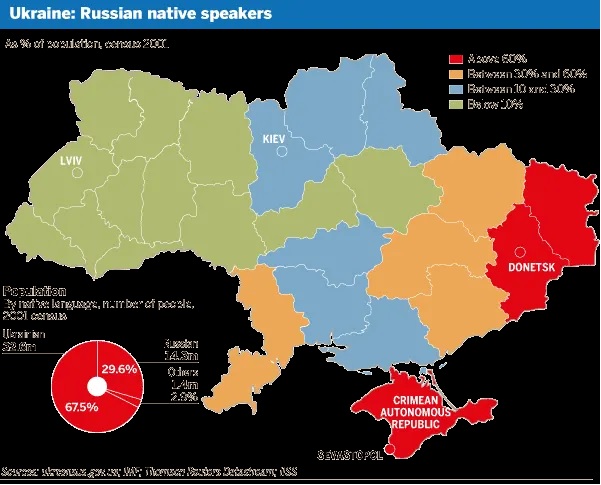
‘I can’t imagine our future differently’: Donbass residents explain why they voted to join Russia, By Vladislav Ugolny, a Russian journalist based in Donetsk Rt.com, 30 Sept 22
Last week, referendums on once-again becoming part of Russia were held in the Donetsk (DPR) and Lugansk (LPR) People’s Republics, as well as in the liberated territories of Zaporozhye, Kherson, and Nikolaev regions (the latter was annexed to Kherson Region).
According to the results, the ‘For’ option won all four by an overwhelming margin. RT’s correspondent in Donbass, Vladislav Ugolny, has been observing the sentiment there for the past eight years. He describes how the referendums took place, what they meant to local residents, and why their outcome simply could not have been different.
All arguments ‘against’
For those who are sufficiently immersed in the history of the struggle of the Russian residents of Ukraine for unity with their historic homeland, the results of the referendums are hardly surprising. But it is also worth pointing out from the start that not everyone in these regions took part in the vote……………………..
There are many people who are unhappy with what has been happening in Donbass these past eight years – where they have slowly languished as geopolitical hostages – and are also prepared to die for their land and identity. It is thanks to them and their resilience that Russia’s military offensive was possible. And these referendums also took place because of them.
They all had a lot of reasons to hate what was happening. The wounded were often dismissed retroactively to avoid paying for their injuries. And in a betrayal of memory, the names of children killed by Ukrainians in Sloviansk and Konstantinovka, towns not controlled by the DPR, disappeared from the Alley of Angels (a monument honoring the children of Donbass killed by Ukrainians). By removing these names, it was as if DPR officials were abandoning the territories and the memory of those who remained under Kiev’s occupation.
In the early years of its independence, the LPR had constant political crises, from which the despised Igor Plotnitsky emerged as the victor. Until he was overthrown and the much more popular Leonid Pasechnik was elected.
All arguments ‘for’
The hope for reunification was based on the fact that Russia is a stable state governed by the rule of law, with fully-fledged institutions and an established civil society. Living their lives on the frontline of a geopolitical confrontation, Russians in Donbass dreamed that one day war would disappear.
They hoped that Donbass would become an ordinary, peaceful region of Russia, like neighboring Rostov. They hoped that they would be able to put away their weapons and return to the mines and factories, and they could teach their children without regular shelling………..
Fate decided otherwise and the referendums had to be held during the fighting, with the risk of Kiev shelling the polling stations. Thus, the votes themselves did not become a moment of triumph and victory. But they could no longer be delayed, given that one of the declared aims of Moscow’s military operation was to restore peace to Donbass.
……….. The sweeps in Kharkov Region after towns and villages were seized by Kiev earlier this month, and the convoys of refugees, were apparently the final straw.
The risk of polling stations being shelled was one reason some locals criticized the referendums. A friend of mine who is now serving in one of the DPR’s army units refused to participate in the referendum. He justified it by saying he had expressed his position a long time ago and was now defending it with a gun in his hand.
However, his view was marginal. Residents of Donbass, despite the risks of terrorist attacks, flocked to the polls. Since the issue was a foregone conclusion, the polling stations became a place for declaring one’s position.
Journalists were told not about the choice people made, but rather about how long they had waited for the opportunity to make it.
The procedures of the referendum were designed with the usual legal provisions in mind, but the voters themselves effectively abolished the concept of ‘secret ballot’ by ticking the ‘yes’ box publicly.
The people of Donbass needed the referendum not to reassert their choice, which was made back in 2014 and has not changed since, but to present it to the international community in a more or less accepted framework,” a graduate of the political science department at Donetsk National University said after the vote. A leg injury prevented her from going to the polling station, but she was able to vote Yes by door-to-door voting:
Dmitry, a native of the border town of Yenakievo, Donbass, said, “Of course I waited for the referendum and voted Yes. I cannot imagine our future any other way. Back in 2015, I was repeatedly offered the chance to leave my home region and live in Ukraine so that I would not know what war is like.
“As you can see, I refused. Voting in the referendum was not my biggest contribution, but I was glad I did it. I didn’t doubt it for a second, especially when, about 40 minutes later, a HIMARS missile was shot down over the polling station, with shrapnel hitting my neighborhood.”
This is how the referendum was held in Donbass. As for the Zaporozhye and Kherson regions, the votes there were less festive there due to greater infiltration by Ukrainian security services and a bigger risk of sabotage. The lack of an eight-year wait was also a factor. However, even there, people were hoping that the Kharkov tragedy would not be repeated in their areas…… https://www.rt.com/russia/563764-they-voted-to-join-russia/
‘People’s Plan for Nature’ – a response to UK government’s attack on environmental protection laws
Three of the UK’s biggest conservation charities have joined with
celebrities to launch a new People’s Plan for Nature, in response to the
Government’s “open season” on policy protection for nature, which
could seed hundreds of environmental laws eased.
The National Trust, the RSPB, and WWF have joined forces with celebrity champions Maisie Williams
and Cel Spellman to launch the People’s Plan for Nature, a national
rallying cry for the public to have its say on how to respond to the
ecological crisis. The plan calls on Prime Minister Liz Truss and new
Environment Secretary Ranil Jayawardena to take rapid action on what the
charities describe as “open season” on existing environmental
legislation, with the recent mini-budget and rumours that Defra will U-turn
on its manifesto sparking concerns amongst green groups.
Edie 30th Sept 2022
Electricite de France, (EDF) loaded with debt and safety problems , gets a new CEO

The French government has picked a senior Schneider Electric executive to
head EDF as it moves to fully renationalise the embattled nuclear power
operator and seeks an end to reactor outages straining electricity supplies
across Europe.
Luc Rémont is set to become chair and chief executive after
President Emmanuel Macron cleared his nomination at the group, which is 84
per state-owned, the Élysée Palace said. His appointment, still subject
to parliamentary checks, comes as the government kicks off a
nationalisation process.
A €9.7bn tender offer to buy out minority
shareholders could be handed to regulators next week, two people close to
the process said. The management overhaul at France’s former electricity
monopoly follows a fraught search for candidates that underscored some of
the turmoil around a group with huge industrial tasks ahead and that has
long been intertwined with politics.
Run-ins between the government and outgoing boss Jean-Bernard Lévy over some of the company’s operational problems have spilled into the public in recent weeks, in a blame game over
the state of its existing reactors and France’s hesitation to invest more in the sector. Already highly indebted, EDF is gearing up to build at least six new nuclear reactors in France, the biggest order in more than a quarter of a century.
It is still struggling with long delays and cost overruns on existing projects. A record number of outages at its 56 reactors have plunged its nuclear output to 30-year lows, torn a hole in its profits and turned France into a net importer of power in the middle of an energy crisis. On Thursday, a series of strikes over wages further squeezed EDF’s output.
FT 29th Sept 2022
https://www.ft.com/content/43a1dbd8-fbf0-420e-919e-e9b67bf8305d
Canada and the International Fools-Based Order

https://worldbeyondwar.org/canada-and-the-international-fools-based-order/?utm_content=buffer7ff3e By Cymry Gomery, Coordinator, Montreal for a World BEYOND War, September 21st, 2022
Statement for World Peace Day, September 21st, 2022
On September 18, 2022, Canadian Minister of National Defence Anita Anand was interrupted as she made a speech promoting Canada’s participation in the war in Ukraine. Caught by surprise when an activist raised a banner with the words, ”Trudeau, Freeland, Anand, Joly : Stop the War – Peace with Ukraine and Russia” Anand invoked the NATO mantra: ”We are defending…. we are defending the International rules-based order to protect you, and everyone in this room, and our country safe [sic] ”
What is this rule-based order that politicians seem to call on whenever they are promoting war?
Some say that the rules-based order is only a vague concept invented by G7 countries to lull us into accepting their presumptive international hegemony. Nonetheless, there is a formal international body that sets rules: the United Nations. And, when it comes to war, or the potential for war, Chapter VI of the UN Charter enjoins all countries to seek to resolve their disputes through peaceful means. If this doesn’t work, they are to refer it to the UN Security Council (UNSC), which could recommend solutions.
But what if countries are considering war and they know in advance that the UNSC would not offer a resolution in their favor, because of their self-serving motives? Take, for example, the Russia-Ukraine conflict, widely considered to be a U.S. proxy war. However, not only the U.S., but also Europe, Canada, Australia and China—just about everyone with an army–has economic interests in this war, which can be seen as a geopolitical tug-of-war for valuable commodities like lithium, gas, and wheat.
How do Canadian interests stand to benefit from the Russia-Ukraine war? It is already happening :
- Canada increased oil and gas exports in 2022 as Russia’s former customer nations sought alternative energy supplies;
- The US, EU, Canada, Australia, China, and Russia are all very interested in the Lithium deposits in Ukraine, which are among the largest in the world. The outcome of this war determines which players nab the market for this key climate-change era mineral.
- Before the Russia-Ukraine war, Russia was expected to become one of the world’s largest exporters of hydrogen, and was poised to supply hydrogen fuel to Germany. However, Russia is now faced with economic sanctions and the unwillingness of the world’s most powerful nations and largest economies to do business with Russia. All this appears very convenient for Justin Trudeau and his government, who can now scoop up hydrogen exports to the EU.
So, how can we really keep a straight face when Anand invokes the International Rules-based order? Perhaps we should call it what it really is, an attempt to hoodwink the gullible public into thinking the Canadian government is sending weapons to Ukraine for altruistic, morally sound reasons, when in fact the Liberals are just doing what they do best : looking after the ”economy” (read corporate profits) and protecting their own assets.
On this International Day of Peace, we will put on our good faith hat (not to be confused with a fools cap) and respectfully ask the Canadian government to take these measures :
As the image below suggests, (Anand’s comment about our safety notwithstanding), defense spending is more indicative of a nation’s geopolitical aggressiveness than its concern for the well-being of its citizens.

The Canadian government (our representatives, in case they forgot) could use the money thus saved to implement the Green New Deal and basic income, to address climate change, to build houses, to protect Canada’s remaining wild spaces, to make national parks into Indigenous protected areas, and so much more.
We will need a nationwide consultation to decide on how best to spend this money creatively, in a life-affirming way, which is something we are not yet that experienced doing. But I am sure we will manage.
So, on this day dedicated to world peace, let’s chart a new course. Let us repudiate a foolish, nihilistic world order predicated on militarism and destruction, and vow henceforth to champion and advance a hopeful, loving world order that outlaws war.
TODAY. Don’t be fooled by the sly inclusion of nuclear as “clean” energy. NUCLEAR POWER IS DIRTY POWER.

Sometimes I think that the Tories are just more honest. They don’t give a damn about the environment, whereas UK Labour, (and the USA “progressives, Democrats etc) use weasel words to sneak nuclear in amongst genuinely clean systems like solar.
“A Labour government would set up a “Great British Energy” company to generate more clean power for the nation – a “100 per cent clean power system” with wind, solar, tidal, energy efficiency, and including nuclear.
It’s a lie, and they know it – having sold their soul to the powerful nuclear lobby.
Nuclear power is dirty. Above all – its sole real purpose is to further the nuclear weapons industry, and thus increase the risks of destroying the environment and its species (us included).
Even without accidents, the entire nuclear fuel cycle from uranium mining through to accumulation of dead reactors and toxic wastes emits ionising radiation that causes cancer, other diseases and birth defects. For most of this fuel cycle, much carbon is emitted. The risk of accidents is ever present, – as illustrated in today’s dangerous situation in Ukraine, as sell as in past history.
Nuclear power leaves toxic wastes that will remain toxic for many many centuries, and they don’t know how to get rid of it. No real toilet for nuclear – how dare they call this “clean”!!
The real Winners of Ukraine war – the USA weapons manufacturers! U.S. Announces $1.1 Billion In Aid For Building Ukraine’s Military

The United States has now committed approximately $16.9 billion in security assistance to Ukraine since January 2021
Radio Free Europe, 29 Sept 22, The United States will provide an additional $1.1 billion in military aid to Ukraine, including funding for about 18 more advanced rocket systems and other weapons to counter drones, the White House announced on September 28.
The package is aimed at helping Ukraine secure its longer-term defense needs under the Ukraine Security Assistance Initiative, which funds the purchase of weapons and equipment. This means it could take a year or more for Ukraine to get the systems.
Most of the other military aid packages announced by the United States have thus far used Pentagon drawdown authority to provide weapons more immediately.
The new package “represents a multi-year investment in critical capabilities to build the enduring strength of Ukraine’s Armed Forces” as they continue to battle the invading Russian Army, the Pentagon said in a statement.
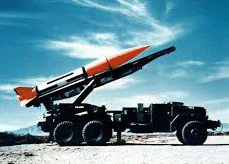
The package includes funding for 18 units of the High-Mobility Artillery Rocket System, known as HIMARS, and 12 Titan systems, which are used to counter drones………………
Also in the package is funding for about 150 armored vehicles, 150 tactical vehicles for towing weapons, trucks and trailers, and a variety of radars, communications, and surveillance equipment.
The United States has now committed approximately $16.9 billion in security assistance to Ukraine since January 2021. https://www.rferl.org/a/ukraine-us-military-aid-1-1-billion/32056533.html
US, UK sabotaged peace deal because they ‘don’t care about Ukraine’: fmr. NATO adviser
https://thegrayzone.com/2022/09/27/us-uk-sabotaged-peace-deal/ AARON MATÉ· SEPTEMBER 27, 2022,
Former Swiss intelligence officer and NATO adviser Jacques Baud on the next phase of the Russia-Ukraine war and new allegations that the US and UK undermined a peace deal that could have ended it.
The West’s aim “is not the victory of Ukraine, It’s the defeat of Russia,” Baud says. “The problem is that nobody cares about Ukraine. We have just instrumentalized Ukraine for the purpose of US strategic interests — not even European interests.”
Guest: Jacques Baud. Former intelligence officer with the Swiss Strategic Intelligence Service who has served in a number of senior security and advisory positions at NATO, the United Nations, and with the Swiss military.
Corrections:
- In his Sept. 21 speech, Putin did not make an explicit threat to use nuclear weapons. He vowed to “make use of all weapon systems available to us,” in the event of “a threat to the territorial integrity of our country and to defend Russia and our people.”
On nuclear weapons, the US did not have a “No First Use” policy. On the 2020 campaign trail, Joe Biden said that he supported the idea of “No First Use.” He abandoned that in his presidential nuclear posture; but that was reversing his campaign stance, not official US policy.
1 This Month
19 November – Webinar – The Reality of Reprocessing
Time: 11:00 AM Pacific Time (US & Canada) / 2:00 PM Eastern / 7:00 PM UK / 8:00 PM CET
Register for the Zoom Event Here

Tell Congress: Prevent Nuclear Catastrophe in Iran

Tell Congress: Prevent Nuclear Catastrophe in Iran

Read the Public Inquiry Report, the Commissioners’ report, Surrendering Australia: The AUKUS Deception is available to download for free at aukuspublicinquiry.com. Or just watch the replay of the National Press Club Luncheon.


Shut down the radiation-damaged Heysham nuclear reactors now
To see nuclear-related stories in greater depth and intensity – go to https://nuclearinformation.wordpress.com

Say No to NASA’s Reckless Nuclear Reactor on the Moon
Say No to NASA’s Reckless Nuclear Reactor on the Moon
-
Archives
- November 2026 (178)
- October 2026 (302)
- September 2026 (339)
- August 2026 (330)
- July 2026 (355)
- June 2026 (287)
- May 2026 (306)
- April 2026 (356)
- March 2026 (251)
- February 2026 (267)
- January 2026 (308)
- December 2025 (358)
-
Categories
- 1
- 1 NUCLEAR ISSUES
- business and costs
- climate change
- culture and arts
- ENERGY
- environment
- health
- history
- indigenous issues
- Legal
- marketing of nuclear
- media
- opposition to nuclear
- PERSONAL STORIES
- politics
- politics international
- Religion and ethics
- safety
- secrets,lies and civil liberties
- spinbuster
- technology
- Uranium
- wastes
- weapons and war
- Women
- 2 WORLD
- ACTION
- AFRICA
- Atrocities
- AUSTRALIA
- Christina's notes
- Christina's themes
- culture and arts
- Events
- Fuk 2022
- Fuk 2023
- Fukushima 2017
- Fukushima 2018
- fukushima 2019
- Fukushima 2020
- Fukushima 2021
- general
- global warming
- Humour (God we need it)
- Nuclear
- RARE EARTHS
- Reference
- resources – print
- Resources -audiovicual
- Weekly Newsletter
- World
- World Nuclear
- YouTube
-
RSS
Entries RSS
Comments RSS

