The folly of wasting time and money on EPR nuclear reactor
 Nuclear power and climate change Too little, too late
The EPR nuclear reactor A dangerous waste of time and money NIRS Briefing January 2012 The French EPR* is a nuclear reactor design that is aggressively marketed by the French companies Areva and EDF. Despite the companies’ marketing spin, not only is the reactor hazardous, it is also more costly and takes longer to build than renewable-energy alternatives. While no EPR is currently operating anywhere in the world, four reactors are under construction in Finland (Olkiluoto 3, construction started in 2005), France (Flamanville 3, 2007) and China (Taishan 1 and 2, 2009-10). The projects have failed to meet nuclear safety standards in design and construction, with recurring construction defects and subsequent cover-ups, as well as ballooning costs and timelines that have already slipped significantly.
Expanded nuclear waste role for USA’s Waste Isolation Pilot Plant

 Changing nuclear landscape alters WIPP’s role Local News Santa Fe Apr 10, 2016. By Rebecca Moss The New Mexican When the salt bed trenches of the Waste Isolation Pilot Plant were mined on the outskirts of Carlsbad in the mid-1980s, Congress dictated specific guidelines for what could be held within its chambers. Only low-level transuranic waste — rags, tools and even soil that had been contaminated with potent radiation through the creation and testing of nuclear weapons in the U.S. — could fill the 6.2 million-cubic-foot cavern more than 2,000 feet below ground.
Even within these limited parameters, finally approved by the Environmental Protection Agency in 1998, it took WIPP 20 years to open. When the first waste-bearing truck drove from Los Alamos to Carlsbad the following year, two women sat on the pavement and a man parked his car in the middle of the road, hoping to prevent its passage. Others waved American flags in support.
But in the 17 years since the facility opened, the nation’s nuclear landscape has changed. WIPP remains the world’s only underground geological repository for nuclear waste, and a confluence of budget constraints, geopolitical issues, the threat of terrorists obtaining nuclear materials and other concerns have led many to consider whether WIPP’s mission should be expanded to include not only higher levels of waste from the U.S. but also waste from around the world. Plans are already in motion to accept plutonium from Japan.
The U.S. now has 61.5 metric tons of plutonium that require a path to disposal — a path that increasingly points to WIPP, despite vulnerabilities exposed by an underground truck fire at the plant in 2014 and an unrelated radiation leak that followed days later, shutting down the plant for the past two years. Officials say it might reopen by the year’s end.
In late March, the National Nuclear Security Administration announced that more than 6 tons of plutonium would be diluted with a blend of chemical compounds called oxides — a process known as down-blending — at the Savannah River Site in South Carolina and would then be shipped to New Mexico. A portion of that plutonium — just under 1 metric ton, or 2,000 pounds — from “foreign sources” could be included in the shipment, the agency said.
The Department of Energy then announced a $6 billion contract spanning a 10-year period for the Savannah River Site to prepare and package the waste. And on April 1, President Barack Obama and Japanese Prime Minister Shinzō Abe announced that “critical” highly enriched uranium and separated plutonium had been removed from the Fast Critical Assembly nuclear reactor research facility in Japan and shipped to the U.S.
Despite objections from the state of South Carolina, the plutonium from Japan was sent to the Savannah River Site. NNSA spokeswoman Francie Israeli confirmed to The New Mexican last week that the plutonium ultimately will be placed at WIPP.
WIPP originally was intended to be the nation’s first deep-underground nuclear repository — not the only such facility in the U.S. or in the world. A high-level waste storage site planned for Yucca Mountain in Nevada was abandoned in 2011 following extensive public and political outcry in the state. No other sites have been designated as nuclear repositories since.
Meanwhile, the Obama administration set a goal in 2009 “to secure all vulnerable nuclear materials” worldwide by 2013, and while that deadline has gone unmet, the president has remained a strong proponent of a “global zero” campaign to eliminate the spread of nuclear weapons. Part of this mission rests on an agreement to secure or dispose of all vulnerable nuclear materials.
Critics say storing plutonium from Japan at WIPP would directly violate the laws that govern the underground repository and could fundamentally reshape the facility’s mission — which stipulated storing only transuranic waste from U.S. defense projects. Others say that because the plutonium will be heavily diluted, it will meet WIPP’s criteria.
Since WIPP opened its doors, the original scope of its mission has slowly shifted. Exceptions have been made to allow more than 3 tons of plutonium from the Savannah River Site and the Rocky Flats Plant in Colorado to be secured in the salt caverns below Carlsbad — including classified molds that shaped plutonium pits used to trigger nuclear bombs.
The plant’s mission also included a pledge to “open clean and stay clean,” but a runaway reaction from an improperly packaged waste drum from Los Alamos in 2014 caused a radiation leak that escaped the cavern, contaminating the air above ground and breaking that promise.
Meanwhile, the plant is still pegged to take waste waiting at national laboratories, as well as new waste the labs create. The U.S. Department of Energy’s budget for the coming year proposes funding to enhance the nation’s nuclear stockpile and ramp up plutonium pit production at Los Alamos National Laboratory — work certain to contribute to the waste stream.
Todd Shrader, Carlsbad Field Office manager for the Department of Energy, addressed the plan to bring plutonium to New Mexico during a WIPP public forum Thursday night.
“As with all waste that comes here, it has to meet our waste acceptance criteria and the hazardous waste permit,” he said. “In our mind, it is frankly the same.”………
He also said that plutonium disposal through a nuclear reactor fuel program or storage at WIPP has not been thoroughly studied to show which path — if either of them — is the clear route forward in getting rid of such sensitive materials.
“I worry that we might be trying to jump off of one horse before we are sure that the other horse will be better and faster,” he said.
He [William Tobey, a senior fellow at the Harvard Kennedy School’s Belfer Center for Science and International Affairs and the former deputy administrator of the Office of Defense Nuclear Proliferation at the NNSA.] said spending money to solve the problem is necessary.
“The people who fought World War II bore significant burdens, but they realized they had a responsibility to do that,” Tobey said. “My argument is we also have a responsibility to bear some burden for the disposition of plutonium” that resulted from the weapons program at that time. “There is a symmetry,” he said………….. Contact Rebecca Moss at 505-986-3011or rmoss@sfnewmexican.com. http://www.santafenewmexican.com/news/local_news/changing-nuclear-landscape-alters-wipp-s-role/article_2a57716d-4e92-5e94-bc3a-d2a6ce1ae26c.html
USA Energy Dept moving away from dangerous MOX nuclear fuel plan
 Radioactive Pork Finally on the Chopping Block Project On Government Oversight. By: Lydia Dennett 9 Feb 16 A “Sensitive But Unclassified” document from the Secretary of Energy, obtained by the Project On Government Oversight, indicates that the Department is concerned that parochial interests in Congress may thwart their plans to kill the MOX program.
The Mixed Oxide Fuel Fabrication Facility (MOX) is the result of a bilateral agreement with Russia in which both countries agreed to dispose of 34 metric tons of nuclear weapons grade plutonium. In 2002 the U.S. decided to construct the MOX facility to convert this dangerous material into fuel for commercial nuclear power reactors. But now, 14 years later, the MOX program is almost 3,000 percent over budget, lacks even a single potential customer for the fuel, and could actually be putting our nuclear material at risk.
The November 2015 memorandum from Secretary of Energy Ernest Moniz to President Obama states that MOX is a “high-priority ‘hot potato’ issue” for this Congress and indicates that the Department is finally beginning to shift focus and funding away from MOX and toward a plutonium disposition process that will actually work: “We are working with our appropriators and other stakeholders to shift our plutonium disposition strategy from MOX power reactor fuel to dilution and underground disposal. This is much faster and cheaper.”
Last year, an independent study performed by the Aerospace Corporation confirmed that the cost of finishing construction of MOX and operating the plant for the next 20 years will be at least $47.5 billion and could be as much as $114 billion depending on annual funding from Congress. That would be in addition to the $5 billion already spent on the project. MOX was originally expected to cost a mere $1.6 billion.
Despite the project’s long history of skyrocketing costs, safety and security concerns, and construction problems, it has been kept alive in large part by political officials who have an interest in making sure funding for the project continues.
Problems with the MOX program were first raised in the early 2000s by then-Representative David Hobsen (R-OH), who was serving as Chairman of the House Appropriations Energy and Water Subcommittee at the time. His efforts to halt construction of the MOX facility were stalled in 2006 due to pressure from the Department of Energy, the Administration, and his own party.He was told that canceling the project would hurt then-South Carolina Governor Mark Sanford’s chances of being reelected.
In 2013, Senator Lindsay Graham (R-SC)placed a hold on the president’s nomination for Secretary of Energy Ernest Moniz until Moniz promised to finish the MOX plant. Graham eventually relented and removed the hold but remains one of the most outspoken supporters for the project along with Representative Joe Wilson (R-SC) and Representative Rick Allen (R-GA).
Representatives Wilson and Allen recently denounced the dilution and underground disposal method, which would involve mixing the weapons grade plutonium with other materials before sending it to the Waste Isolation Pilot Plant (WIPP), an underground repository in New Mexico. The Aerospace Corporation found that this method would cost $17 billion over its lifetime as opposed to the $47.5 billion needed to complete the MOX project.
The Center for Public Integrity has previously detailed the long history of lobbying and campaign donations to the South Carolina members by large companies with a financial interest in the MOX project. Many of these same officials bill themselves as budget hawks, committed to limited federal spending while, at the same time, supporting this multi-billion dollar boondoggle.
Secretary Moniz’s November memo to the president references this difficult history. “While Senate appropriators agree with us, the House appropriators are concerned about alienating the South Carolina delegation.”
One of the concerns raised by Representative Wilson and others is that moving away from the MOX strategy will require re-opening negotiations with Russia, something Wilson told the Nuclear Security and Deterrence Monitor (behind a paywall) “the U.S. should avoid.” Although the Energy Department acknowledges that US-Russia relations are “complicated,” Moniz’s memo confirms that the Energy Department’s Russian partners “are amenable to discussion.”
POGO is pleased to see the Energy Department formally move away from the MOX program and begin working toward a cheaper, faster, and less risky strategy for disposing this dangerous material.
Statistical analysis indicates we can expect more severe nuclear accidents
 How safe is nuclear power? A statistical study suggests less than expected, Bulletin of the Atomic Scientists, April 16
ABSTRACT
How the West keeps quiet about radiation effects on Iraqi people
 IRRADIATED IRAQ The Nuclear Nightmare We Left Behind, The Washington Spectator, By Barbara Koeppel 30 Mar 16 Even as evidence mounts, the DOD and VA steadfastly deny the health effects of the weapons and pits. The Defense Health Agency website states, “No human cancer of any type has been seen as a result of exposure to either natural or depleted uranium.”
From 2003 to 2011, U.S. military bases burned waste in the pits around the clock— spewing toxic clouds for miles.
Further, in a 2011 DOD report, Exposure to Toxins Produced by Burn Pits, the VA adds: “The effects from burn pits are only temporary and the negative health effects dissipate once a soldier is removed from the source.” In 2014, the VA website assured veterans that “So far, no health problems have been found in veterans exposed to DU.”
While the military admits it used DU in Iraq from 2003 to 2011, it has downplayed the extent. U.S. Marine Corps Captain Dominic Pitrone told The Washington Spectator, “The only weapons with DU in the USMC inventory were 120mm tank rounds.” As for the new SMAW-NE warhead, he said it “does not contain uranium.”
But Ritter says these claims are disingenuous. Though other DU munitions, such as aerial bombs and 25mm cannon rounds, may not have been in the USMC inventory, they were still “available to and used by USMC units in Iraq.”
And while the USMC may not label the SMAW-NE and thermobaric Hellfire missile as uranium weapons, Ritter says that “this doesn’t resolve whether the shaped-charge warheads [inside them] make use of uranium-enhanced liners.”
U.S. coalition partners—such as Britain, which also used uranium weapons—echo the denials. So too do the WHO and the Iraq Ministry of Health, which concluded in 2012 that Iraq had fewer birth defects and cancers than developed countries.
But Hagopian says the ministry surveyed households instead of using hospital records. Finding this unscientific, a 2013 Lancet article called for a new study. Last November, the American Public Health Association asked the military to ban burn pits and fund research on their health effects. It also asked the WHO to rethink its conclusion.
Researchers tell of attempts by authorities to quash investigations. In 1991, for example, the United States tried to keep the WHO from “surveying areas in southern Iraq where depleted uranium had been used and caused serious health and environmental dangers,” Hans von Sponek, a former U.N. official, told the Guardian.
Karol Sikora, a British oncologist who headed WHO’s cancer program in the 1990s, told me his supervisor (who focuses on non-communicable diseases) warned him that they shouldn’t speak publicly about the cancers and birth defects “because this would offend member states.”
Similarly, Baverstock says, “I was on a WHO editorial committee and I warned about the uranium weapons’ geno-toxicity effect on DNA. My comments were rejected—probably because the WHO monograph didn’t include this.”
Those who persist fare badly.
Horst Gunther, a German physician, went to Iraq to study the spiking diseases. He saw children play with DU shells on Basra’s battlefield, took one to Germany to study, and found it was extremely radioactive. He told German authorities and was arrested for possessing it.
In 2003, Chief Justice Y.K.J. Yeung Sik Yuen of Mauritius, a delegate to the U.N. Sub-Commission on Human Rights, wrote of “the cavalier disregard, if not deception, on the part of the developers and users of these weapons regarding their effects.” After he refused to reverse his position that DU weapons are illegal and violate the Geneva Convention, the U.S. and Britain campaigned against his reelection to the subcommission. He lost.
Hagopian says researchers can’t study the uranium weapons’ effects because “the U.S. won’t fund the work.”
Why can’t the DOD, VA, Iraq government, and WHO come clean?
Ritter says, “The DOD doesn’t want the public to know about the toxic dust, because of the liability. As for Iraq, it will agree with the U.S. as long as it depends on the U.S. for financial and military support. As for the WHO, the U.S. contributes more to U.N. agencies and the WHO than any other country.”
Williams adds that there’s growing international concern about uranium weapons, since they’re radioactive. As early as 1991, Army Lt. Col. Ziehm warned in a memo that because DU weapons “may become politically unacceptable,” after-action reports must “keep this sensitive issue at mind.” In other words, don’t tell.
Media coverage of uranium weapons and the spiraling sickness has been meager. Malak Hamden said when she and colleagues published the 2010 Fallujah study, “CNN said something, but no newspapers touched the story.” A BBC reporter told Williams the public doesn’t want to know about uranium weapons.
In the meantime, the United States continues to build them. Williams notes that U.S. Patent Office records show Lockheed Martin and Raytheon hold patents for enhanced bombs and cruise missile warheads that include uranium options.
Today, with the U.S., Britain, France, Saudi Arabia, and Russia bombing Syria, and with the Saudis bombing and the U.S. firing drones into Yemen—with some of the same kinds of weapons unleashed in Iraq—it is likely that the people living there, along with fleeing refugees, will suffer just as the Iraqis and veterans have.
As Busby notes, uranium oxide dust is like a bomb that keeps going off. “People’s genes are damaged for generations. Scientists found this in 22 generations of mice, after Chernobyl. The only way mutated genes disappear is when carriers don’t have children.”
Barbara Koeppel is a Washington D.C.-based investigative reporter. http://linkis.com/washingtonspectator.org/b2hLC
Self styled “Pro Nuclear Environmentalists (PNEs) are just not credible on Chernobyl radiation
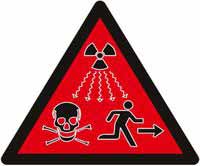 Evidence of PNE ignorance abounds. For the most part, PNEs had a shaky understanding of the radiation/health debates (and other nuclear issues) before they joined the pro-nuclear club, and they have a shaky understanding now.
the WHO, IAEA and other UN agencies estimated 9,000 deaths in ex-Soviet states in their 2005/06 reports, and more recently UNSCEAR has adopted the position that the long-term death toll is uncertain.
Radiation harm deniers? Pro-nuclear environmentalists and the Chernobyl death toll, Ecologist, Dr Jim Green 7th April 2016 “……….the self-styled pro-nuclear environmentalists (PNEs). We should note in passing that some PNE’s have genuine environmental credentials while others – such as Patrick Moore and Australian Ben Heard – are in the pay of the nuclear industry.
James Hansen and George Monbiot cite UNSCEAR to justify a Chernobyl death toll of 43, without noting that the UNSCEAR report did not attempt to calculate long-term deaths. James Lovelock asserts that “in fact, only 42 people died” from the Chernobyl disaster.
Patrick Moore, citing the UN Chernobyl Forum (which included UN agencies such as the IAEA, UNSCEAR, and WHO), states that Chernobyl resulted in 56 deaths. In fact, the Chernobyl Forum’s 2005 report (p.16) estimated up to 4,000 long-term cancer deaths among the higher-exposed Chernobyl populations, and a follow-up study by the World Health Organisation in 2006 estimated an additional 5,000 deaths among people exposed to lower doses in Belarus, the Russian Federation and Ukraine.
Australian ‘ecomodernist‘ academic Barry Brook says the Chernobyl death toll is less than 60. Ben Heard, another Australian ‘ecomodernist’ (in fact a uranium and nuclear industry consultant), claims that the death toll was 43.
In 2010, Mark Lynas said the Chernobyl death toll “has likely been only around 65.” Two years earlier, Lynas said that the WHO estimates “a few thousand deaths” (actually 9,000 deaths) but downplays the death toll by saying it was “indiscernible” in the context of overall deaths. Yes, the Chernobyl death toll is indiscernible … and the 9/11 terrorist attacks accounted for an indiscernible 0.1% of all deaths in the US in 2001.
There doesn’t appear to be a single example of a PNE – or a comparable organisation – providing a credible account of the Chernobyl death toll. They’re perfectly entitled to follow UNSCEAR’s lead and argue that the long-term death toll is uncertain. But conflating or confusing that uncertainty with a long-term death toll of zero clearly isn’t a defensible approach.
The Breakthrough Institute comes closest to a credible account of the Chernobyl death toll (which isn’t saying much), stating that “UN officials say that the death toll could be as high as 4,000”. However the Breakthrough Institute ignores:
- the follow-up UN/WHO study that estimated an additional 5,000 deaths in ex-Soviet states;
- scientific estimates of the death toll beyond ex-Soviet states (more than half of the Chernobyl fallout was deposited beyond the three most contaminated Soviet states);
- scientific literature regarding diseases other than cancer linked to radiation exposure;
- and indirect deaths associated with the permanent relocation of over 350,000 people after the Chernobyl disaster.
Cherry-picking
Cherry-picking is abundantly evident in PNE accounts of the Chernobyl death toll. In a review of Robert Stone’s ‘Pandora’s Promise’ propaganda film, physicist Dr Ed Lyman from the Union of Concerned Scientists writes: Continue reading
Nuclear competition between India and Pakistan is now a global threat
Nuclear Winter on a Planetary Scale: The Biggest Threat to Mankind Virtually No One Is Talking About, ALTERNET, By Dilip Hiro / TomDispatch April 8, 2016 A war between India and Pakistan could produce human suffering the likes of which the world has never seen before…….

When it comes to Pakistan’s strategic nuclear weapons, their parts are stored in different locations to be assembled only upon an order from the country’s leader. By contrast, tactical nukes are pre-assembled at a nuclear facility and shipped to a forward base for instant use. In addition to the perils inherent in this policy, such weapons would be vulnerable to misuse by a rogue base commander or theft by one of the many militant groups in the country.
In the nuclear standoff between the two neighbors, the stakes are constantly rising as Aizaz Chaudhry, the highest bureaucrat in Pakistan’s foreign ministry, recently made clear. The deployment of tactical nukes, he explained, was meant to act as a form of “deterrence,” given India’s “Cold Start” military doctrine — a reputed contingency plan aimed at punishing Pakistan in a major way for any unacceptable provocations like a mass-casualty terrorist strike against India.
New Delhi refuses to acknowledge the existence of Cold Start. Its denials are hollow. As early as 2004, it was discussing this doctrine, which involved the formation of eight division-size Integrated Battle Groups (IBGs). These were to consist of infantry, artillery, armor, and air support, and each would be able to operate independently on the battlefield. In the case of major terrorist attacks by any Pakistan-based group, these IBGs would evidently respond by rapidly penetrating Pakistani territory at unexpected points along the border and advancing no more than 30 miles inland, disrupting military command and control networks while endeavoring to stay away from locations likely to trigger nuclear retaliation. In other words, India has long been planning to respond to major terror attacks with a swift and devastating conventional military action that would inflict only limited damage and so — in a best-case scenario — deny Pakistan justification for a nuclear response.
Islamabad, in turn, has been planning ways to deter the Indians from implementing a Cold-Start-style blitzkrieg on their territory. After much internal debate, its top officials opted for tactical nukes. In 2011, the Pakistanis tested one successfully. Since then, according to Rajesh Rajagopalan, the New Delhi-based co-author of Nuclear South Asia: Keywords and Concepts, Pakistan seems to have been assembling four to five of these annually.
All of this has been happening in the context of populations that view each other unfavorably. ……….
India’s Two Secret Nuclear Sites
On the nuclear front in India, there was more to come. Last December, an investigation by the Washington-based Center for Public Integrity revealed that the Indian government was investing $100 million to build a top secret nuclear city spread over 13 square miles near the village of Challakere, 160 miles north of the southern city of Mysore. When completed, possibly as early as 2017, it will be “the subcontinent’s largest military-run complex of nuclear centrifuges, atomic-research laboratories, and weapons- and aircraft-testing facilities.” Among the project’s aims is to expand the government’s nuclear research, to produce fuel for the country’s nuclear reactors, and to help power its expanding fleet of nuclear submarines. It will be protected by a ring of garrisons, making the site a virtual military facility.
Another secret project, the Indian Rare Materials Plant, near Mysore is already in operation. It is a new nuclear enrichment complex that is feeding the country’s nuclear weapons programs, while laying the foundation for an ambitious project to create an arsenal of hydrogen (thermonuclear) bombs.
The overarching aim of these projects is to give India an extra stockpile of enriched uranium fuel that could be used in such future bombs. As a military site, the project at Challakere will not be open to inspection by the International Atomic Energy Agency or by Washington, since India’s 2008 nuclear agreement with the U.S. excludes access to military-related facilities. These enterprises are directed by the office of the prime minister, who is charged with overseeing all atomic energy projects. India’s Atomic Energy Act and its Official Secrets Act place everything connected to the country’s nuclear program under wraps. In the past, those who tried to obtain a fuller picture of the Indian arsenal and the facilities that feed it have been bludgeoned to silence.
Little wonder then that a senior White House official was recently quoted as saying, “Even for us, details of the Indian program are always sketchy and hard facts thin on the ground.” He added, “Mysore is being constantly monitored, and we are constantly monitoring progress in Challakere.” However, according to Gary Samore, a former Obama administration coordinator for arms control and weapons of mass destruction, “India intends to build thermonuclear weapons as part of its strategic deterrent against China. It is unclear, when India will realize this goal of a larger and more powerful arsenal, but they will.”
Once manufactured, there is nothing to stop India from deploying such weapons against Pakistan. “India is now developing very big bombs, hydrogen bombs that are city-busters,” said Pervez Hoodbhoy, a leading Pakistani nuclear and national security analyst. “It is not interested in… nuclear weapons for use on the battlefield; it is developing nuclear weapons for eliminating population centers.”
In other words, as the Kashmir dispute continues to fester, inducing periodic terrorist attacks on India and fueling the competition between New Delhi and Islamabad to outpace each other in the variety and size of their nuclear arsenals, the peril to South Asia in particular and the world at large only grows.
Estimating the Chernobyl death toll from radiation – rubbishy opinions from “Pro Nuclear Environmentalists”
 Radiation harm deniers? Pro-nuclear environmentalists and the Chernobyl death toll Jim Green, The Ecologist, 7 April 2016, With few if any exceptions, self-styled pro-nuclear environmentalists peddle flapdoodle and tommyrot regarding the Chernobyl death toll.
Before considering their misinformation, a brief summary of credible positions and scientific studies regarding the Chernobyl cancer death toll (for detail see this earlier article in The Ecologist).
Epidemiological studies are of course important but they’re of limited use in estimating the overall Chernobyl death toll. The effects of Chernobyl, however large or small, are largely lost in the statistical noise of widespread cancer incidence and mortality.
The most up-to-date scientific review is the TORCH-2016 report written by radiation biologist Dr Ian Fairlie. Dr Fairlie sifts through a vast number of scientific papers and points to studies indicative of Chernobyl impacts: an increased incidence of radiogenic thyroid cancers in Austria; an increased incidence of leukemia among sub-populations in ex-Soviet states (and possibly other countries ‒ more research needs to be done); increases in solid cancers, leukemia and thyroid cancer among clean-up workers; increased rates of cardiovascular disease and stroke that might be connected to Chernobyl (more research needs to be done); a large study revealing statistically significant increases in nervous system birth defects in highly contaminated areas in Russia, similar to the elevated rates observed in contaminated areas in Ukraine; and more.
Without for a moment dismissing the importance of the epidemiological record, let alone the importance of further research, suffice it here to note that there is no way that one could even begin to estimate the total Chernobyl death toll from the existing body of studies.
Estimates of collective radiation exposure are available ‒ for example the International Atomic Energy Agency (IAEA) estimates a total collective dose of 600,000 person-Sieverts over 50 years from Chernobyl fallout. And the collective radiation dose can be used to estimate the death toll using the Linear No Threshold (LNT) model.
If we use the IAEA’s collective radiation dose estimate, and a risk estimate derived from LNT (0.1 cancer deaths per person-Sievert), we get an estimate of 60,000 cancer deaths. Sometimes a risk estimate of 0.05 is used to account for the possibility of decreased risks at low doses and/or low dose rates ‒ in other words, 0.05 is the risk estimate when applying a ‘dose and dose rate effectiveness factor’ or DDREF of two. That gives an estimate of 30,000 deaths.
Any number of studies (including studies published in peer-reviewed scientific literature) use LNT ‒ or LNT with a DDREF ‒ to estimate the Chernobyl death toll. These studies produce estimates ranging from 9,000 cancer deaths (in the most contaminated parts of the former Soviet Union) to 93,000 cancer deaths (across Europe).
Those are the credible estimates of the cancer death toll from Chernobyl. None of them are conclusive ‒ far from it ‒ but that’s the nature of the problem we’re dealing with. Moreover, LNT may underestimate risks. The 2006 report of the US National Academy of Sciences’ Committee on the Biological Effects of Ionising Radiation (BEIR) states: “The committee recognizes that its risk estimates become more uncertain when applied to very low doses. Departures from a linear model at low doses, however, could either increase or decrease the risk per unit dose.”
So the true Chernobyl cancer death toll could be lower or higher than the LNT-derived estimate of 60,000 deaths ‒ a point that needs emphasis and constant repetition since the nuclear industry and its supporters frequently conflate an uncertain long-term death toll with a long-term death toll of zero.
Another defensible position is that the long-term Chernobyl cancer death toll is unknown and unknowable because of the uncertainties associated with the science. The UN Scientific Committee on the Effects of Atomic Radiation (UNSCEAR) states (p.64):
“The Committee has decided not to use models to project absolute numbers of effects in populations exposed to low radiation doses from the Chernobyl accident, because of unacceptable uncertainties in the predictions. It should be stressed that the approach outlined in no way contradicts the application of the LNT model for the purposes of radiation protection, where a cautious approach is conventionally and consciously applied.”
Pro-nuclear environmentalists
So there are two defensible positions regarding the Chernobyl cancer death toll ‒ estimates based on collective dose estimates (with or without a DDREF or a margin of error in either direction), and UNSCEAR’s position that the death toll is uncertain.
A third position ‒ unqualified claims that the Chernobyl death toll was just 50 or so, comprising some emergency responders and a small percentage of those who later suffered from thyroid cancer ‒ should be rejected as dishonest or uninformed spin from the nuclear industry and some of its scientifically-illiterate supporters……..www.theecologist.org/News/news_analysis/2987515/radiation_harm_deniers_pronuclear_environmentalists_and_the_chernobyl_death_toll.html
Bulletin of the Atomic Scientists analyses outcome of The Nuclear Security Summit
On the progress side:
- Enough states ratified the 2005 amendment to the physical protection convention to finally bring the amendment into force. That will provide a somewhat stronger legal foundation for nuclear security efforts – and will trigger a review conference that some hope could be a key new element of the nuclear security architecture.
- China joined in the strengthening nuclear security implementation initiative, thereby committing to achieve the objectives of International Atomic Energy Agency (IAEA) nuclear security recommendations and accept peer reviews of its nuclear security arrangements. Just after the summit ended India announced that it too is joining.
- Japan and the United States removed hundreds of kilograms of weapon-grade plutonium and highly enriched uranium (HEU) from the Fast Critical Assembly in Japan, as promised at the last summit. Japan also committed to eliminate the HEU at the critical assembly at Kyoto University.
- States agreed to 18 new group commitments or “gift baskets,” on topics ranging from protecting against insider threats to replacing radiological sources with less dangerous technologies. Probably the most important of these was the commitment to create a “Nuclear Security Contact Group–a set of senior officials who will keep meeting on the margins of the IAEA General Conference, to keep at least moderately high-level attention focused on nuclear security.
On the missed opportunity side:
- We still have no progress toward building a global commitment that all nuclear weapons and weapons-usable nuclear materials, wherever they may be, need to be secured against the full spectrum of plausible adversary threats. (See discussion inManaging the Atom’s new report.)
- The communiqué, as expected, offers no firm new commitments (though it does more firmly establish the goal of continuous improvement in nuclear security). More disappointing, the “action plans” for five international institutions offer few steps beyond what those institutions are already doing–certainly less than is needed to fill the gap left by the end of the summit process.
- Many of the gift baskets have few specifics or deadlines; how much they will actually do to accelerate progress toward their objectives remains unknown.
- Many key countries – including Pakistan, Russia, and others – are still not participating in the initiative on strengthening nuclear security implementation that China and India joined.
The question now is: where do we go from here? ………. http://thebulletin.org/nuclear-security-summit-wins-losses-and-draws9310
Problem of Hanford’s highly radioactive pool of CESIUM-137 AND STRONTIUM-90
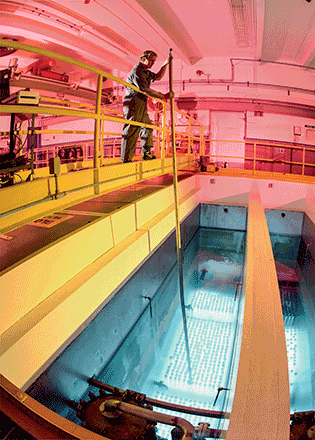 Deep sleep Warren Cornwall*, Science 10 Jul 2015: Vol. 349, Issue 6244, pp. 132-135 DOI: 10.1126/science.349.6244.132 “………..CESIUM-137 AND STRONTIUM-90 are the hot potatoes of the nuclear waste world, packing a powerful radioactive punch in a relatively short half-life of 30 years. At Hanford, there’s barely enough to fill the back of a pickup truck. Yet it contains more than 100 million curies of radiation, roughly one-tenth the radiation in the core of a large nuclear reactor. And it produces enough heat to power more than 200 homes.
To prevent the tubes from causing trouble, they sit under about 4 meters of water in what resembles a giant swimming pool, emanating a blue glow known as Cherenkov radiation as high-energy particles slam into the water. The 1974 building housing the pool is past its 30-year life span, according to DOE’s inspector general. Bombarded by radiation, the pool’s concrete walls are significantly weakened in places. Some of the tubes have failed and been stuck inside larger containers. In a review of DOE facilities conducted after the 2011 disaster at Japan’s Fukushima Daiichi Nuclear Power Station, the department’s Office of Environmental Management concluded that the Hanford pool had the highest risk of catastrophic failure of any DOE facility, for example in a massive earthquake, according to a report from the department’s inspector general. DOE says it plans to move the pool waste into dry casks for safer storage, but it hasn’t said when.
It’s an urgent situation and a huge safety risk,” says Tom Carpenter, executive director of the watchdog group Hanford Challenge in Seattle, Washington, which has been critical of DOE’s efforts to secure the waste.
Borehole advocates point out that the Hanford tubes are less than 7 centimeters in diameter, narrow enough to fit down a hole without extensive repackaging. All could fit into a single shaft. Other military waste could also go down a borehole, advocates add. One candidate is plutonium that DOE has extracted from dismantled nuclear weapons. Most of it is currently stored as softball-sized metal spheres at a DOE facility in Texas. In contrast to Hanford’s cesium and strontium, the plutonium is fairly cool, but extremely long-lived, with a half-life of 24,000 years. DOE is considering other options for the plutonium, including turning it into fuel for nuclear reactors or combining it with other nuclear waste and burying it. But boreholes could be an effective way to put it far out of the reach of anyone trying to lay their hands on bombmaking material……….http://science.sciencemag.org/content/349/6244/132.full
St Louis County residents count the health toll from radioactive wastes
As they painstakingly mapped out the cases, Wright, Schanzenbach, and other members of the group were struck by the statistical improbability of what they were seeing. They found higher than average levels of leukemia, rare brain tumors, breast, and colon cancers — all known to be associated with nuclear radiation exposure according the Centers for Disease Control and the US Environmental Protection Agency. “We realized that we were seeing the effects of long-term exposure among people who grew up in North St. Louis County from the 1960s to the 1980s when the contamination was at its worst,” says Wright…….
Over the past four years, more than 100 current and former North St. Louis County residents have filed lawsuits against Mallinckrodt and the other companies involved in the manufacture and disposal of the nuclear waste, alleging these businesses’ reckless and negligent actions caused their cancers and other illnesses.
According to the latest data collected by the survey, as of 2015 there were 1,993 self-reported cancer cases, of which 45, including Patricia Barry’s, were cases of appendix cancer — a disease so rare that it’s usually seen in 1 of about 500,000 people a year in the United States.
In total, there were more than 2,725 reported cases of multi-generational illnesses, including rare cancers, thyroid problems, infertility, autoimmune diseases, and genetic mutations in children. (below, archival photo of waste barrels, st Louis)

Nuclear Waste Creates Casualties of War in Missouri TruthOut , 18 March 2016 By Lori Freshwater, Earth Island Journal | News Analysis “…….Google search revealed shocking information. It seemed there was an unusually high number of rare cancers and diseases afflicting current and former residents of several neighborhoods that Coldwater Creek ran through, including St. Ann. The most likely cause, the news reports and websites she scanned indicated, was the creek, which had been contaminated by radioactive waste from the World War II era. Continue reading
Nuclear weapons and nuclear power races on, despite serious safety risks
Plutonium Pie in the Sky: the Dangerous Delusion of New Nukes CounterPunch by JAMES HEDDLE MARCH 22, 2016
“……Faith-Based Nuclear Policy According to a recent Cornell University study, there have been nuclear reactor 174 accidents worldwide since 1946. The researchers rate the accidents in 2013 dollars and define an accident as “an unintentional incident or event at a nuclear energy facility that led to either one death (or more) or at least $50,000 in property damage.”
Based on their extensive data, they predict
*a 50% chance that a Fukushima event (or larger) will occur in the next 50 years
*a Chernobyl event (or larger) will occur in the next 27 years
*a TMI event (or larger) will occur in the next 10 years.
According to a Guardian study, a major nuclear accident has happened on average every 5 years since 1952.
Recently, alarmed at the failure of their repeated attempts to go through ‘proper channels,’ seven engineers at America’s Nuclear Regulatory Commission (NRC) – which then Senator Obama dubbed in 2007 ‘a moribund agency’ – filed a petition as private citizens.
They stated that they have identified a long-undiscovered electrical design flaw common to virtually all U.S. nuclear plants that could prevent cooling and allow meltdowns to occur. Their petition asks that the NRC mandate that plant operators either fix the problem or shut down the reactors.
Not to mention that twenty-three U.S. reactors share the same design flaws as those that melted down at Fukushima.
The obvious take-home lesson: because of the dependence of their cooling systems on off-site power supplies, every nuclear facility, wherever its geographic location, is vulnerable to grid blackouts from cyber attacks and extreme weather events, and constitutes both a potential terrorist weapon-in-place and danger to the entire planet, and should be treated as such by the ‘international community.’ Yet, a New Nuclear Weapons race and a New Nuclear Power race are both currently in progress………….http://www.counterpunch.org/2016/03/22/plutonium-pie-in-the-sky-the-dangerous-delusion-of-new-nukes/
India’s poor nuclear safety record is alarming
This is not the first time that India is facing safety issues regarding its nuclear program. In historical context one can generate a list of leaks, fires and structural damages that have been faced by India’s civilian nuclear power sector. There are abundant examples of oil leaks, hydrogen leaks, fires and high bearing vibrations which often shut down numbers of nuclear reactors in India.

 Lack Of Nuclear Sanity In India Anaya Shahid Mar 20 16, http://www.eurasiareview.com/19032016-lack-of-nuclear-sanity-in-india-oped/ Ironically on March 14, 2011 after the Japan’s nuclear disaster, India was the first country to announce that Fukushima reactors were safe. Top officials of the Department of Atomic Energy (DAE) were of the view that Indian nuclear reactors will continue to work as they are safe and also claimed that what happened in Fukushima was not a “nuclear accident”.
S.K. Jain, the Chairman and Managing Director of Nuclear Power Corporation was propagating on Fukushima accident that, “There is no nuclear accident or incident in the Japan’s Fukushima plants. It is a well-planned emergency preparedness program which the nuclear operators of the Tokyo Electric Power company are carrying out to contain the residual heat after the plants had an automatic shutdown following a major earthquake.”
Now it is really scary that on the 5th anniversary of Fukushima, an emergency has been declared at the Kakrapar nuclear plant in Gujarat near Surat after a major heavy water leak in a nuclear reactor. The authorities are disseminating the situation by saying that all safety systems worked fine and the technicians has successfully been able to shut down the unit. The declaration of an on-site emergency and the fact that the heavy water leak affected the reactor’s cooling system, which also has high radioactivity, raises many questions on Indian nuclear expertise.
The Fukushima disaster forced Indian nuclear establishment to initiate a safety audit process and it was conducted within by NPCIL. After the extensive review, Indian auditor general informed that the nuclear program of the country is insecure and unregulated with many disorders. Furthermore the parliamentary report on nuclear safety regulation in India had pointed out serious organizational flaws and numerous failings relative to international norms.
When in opposition, the Bharatiya Janata Party was the major contrasting party to civil nuclear expansion and had strong reservations on limiting nuclear liability. It was also supporting the just protests in Kudankulam and wanted environmental clearance for Jaitapur nuclear power plants. Now in government, it has taken a complete U-turn and seeks to bring same old vine in new bottles. This year, Dr. A Gopalakrishnan labeled the Indian government plans punier than the existing regulatory framework and despite this the government is introducing the Nuclear Safety Regulatory Authority bill in Parliament.
This is not the first time that India is facing safety issues regarding its nuclear program. In historical context one can generate a list of leaks, fires and structural damages that have been faced by India’s civilian nuclear power sector. There are abundant examples of oil leaks, hydrogen leaks, fires and high bearing vibrations which often shut down numbers of nuclear reactors in India.
- March 1991: Heavy water leak at Madras Atomic Power Station takes four days to clean up.
- July 1991: A contracted laborer mistakenly paints the walls of Rajasthan Atomic Power Station (RAPS) with heavy water before applying a coat of whitewash.
- December 1991: A leak from pipelines in the vicinity of CIRUS and Dhruva research reactors at the Bhabha Atomic Research Centre (BARC) in Trombay, Maharashtra, results in severe Cs-137 soil contamination of thousands of times the acceptable limit.
- January 1992: Four tons of heavy water spilt at RAPS.
- May 1992: Tube leak causes a radioactive release of 12 Curies of radioactivity from Tarapur Atomic Power Station.
- March 1993: Two blades of the turbine in Narora Atomic Power Station’s (NAPS) Unit I break off, slicing through other blades and indirectly causing a raging fire, which catches onto leaked oil and spreads through the turbine building. The smoke sensors fail to detect the fire, which is only noticed once workers see the flames.
- February 1994: Helium gas and heavy water leak in Unit 1 of RAPS. The plant is shut down until March 1997.
- May 1994: The inner surface of the containment dome of Unit I of Kaiga Generating Stationcollapses (delaminates) while the plant is under construction.
- March 1999: Somewhere between four and fourteen tons of heavy water leaks from the pipes at MAPS at Kalpakkam, Tamil Nadu, during a test process. The pipes have a history of cracks and vibration problems. Forty-two people are reportedly involved in mopping up the radioactive liquid.
- April 2000: A leak of about seven tons of heavy water from the moderator system at NAPS Unit II.
- November 2001: A leak of 1.4 tons of heavy water at the NAPS I reactor, resulting in one worker receiving an internal radiation dose of 18.49 mSv.
- May 2002: Tritiated water leaks from a downgraded heavy water storage tank at the tank farm of RAPS 1&2 into a common dyke area.
- January 2003: The failure of a valve in the Kalpakkam Atomic Reprocessing Plant in Tamil Nadu results in the release of high-level waste, exposing six workers to high doses of radiation.
- April 2003: Six tons leak of heavy water at reactor II of the NAPS in Uttar Pradesh.
- November 2009: Fifty-five employees consumed radioactive material after tritiated water finds its way into the drinking water cooler in Kaiga Generating Station.
- April 2011: Fire alarms blare in the control room of the Kaiga Generating Station in Karnataka.
India’s nuclear establishment is hasting for nuclear energy though it has obstinately missed targets and delivered a portion of the promised electricity with uncertain safety. The Indian government is irrationally pursuing for nuclear power without explaining its destructive potential and answering critiques. Nowadays, the U.S. and major powers are trying to “normalize” India’s nuclear weapons through special waivers and numerous nuclear deals. Therefore, France is using such normalizing strategy to bargain for cash-strapped Areva. Meanwhile, its complement is the disaster-in-waiting called Jaitapur. The secrecy shrouded to Indian nuclear program has subjugated its energy policy and budgets to an unaccountable, self-propagating, pampered technocracy and degrading their democracy.
*Anaya Shahid graduated from Defense & Diplomatic Studies, Fatima Jinnah Women University Rawalpindi.
Nuclear propagandist Prof Geraldine Thomas: comfortable , but incorrect, spin on Fukushima
Is this a problem for human health? You bet it is. The question no-one asked is what is causing the excess dose? The answer is easy: radioactive contamination, principally of Caesium-137. On the basis of well-known physics relationships we can say that 3Sv/h at 1m above ground represents a surface contamination of about 900,000Bq per square metre of Cs-137. That is, 900,000 disintegrations per second in one square metre of surface: and note that they were standing on a tarmac road which appeared to be clean. And this is 5 years after the explosions. The material is everywhere, and it is in the form of dust particles which can be inhaled; invisible sparkling fairy-dust that kills hang in the air above such measurements.
The particles are not just of Caesium-137. They contain other long lived radioactivity, Strontium-90, Plutonium 239, Uranium-235, Uranium 238, Radium-226, Polonium-210, Lead-210, Tritium, isotopes of Rhodium, Ruthenium, Iodine, Cerium, Cobalt 60. The list is long.
the Japanese government wants to send the people back there. It is bribing them with money and housing assistance. It is saying, like Gerry Thomas, there is no danger. And the BBC is giving this misdirection a credible platform.
They keep the lid on the truth using ill-informed individuals like Geraldine Thomas.
Fukushima is far from being over, and the deaths have only just begun.
Is Fukushima’s nuclear nightmare over? Don’t count on it https://www.rt.com/op-edge/335362-fukushima-nuclear-japan-bbc/ Chris Busby 12 Mar 16
 On the 5th Anniversary of the catastrophe, Prof Geraldine Thomas, the nuclear industry’s new public relations star, walked through the abandoned town of Ohkuma inside the Fukushima exclusion zone with BBC reporter Rupert Wingfield-Hayes.
Thomas was described as “one of Britain’s leading experts on the health effects of radiation”. She is of the opinion that there is no danger and the Japanese refugees can come back and live there in the “zone”. Her main concern seemed to be how untidy it all was: “Left to rack and ruin,” she complained, sadly.
At one point, Rupert pulled out his Geiger counter and read the dose: 3 microSieverts per hour. “How much radiation would it give in a year to people who came back here,” he asked. Thomas replied: “About an extra milliSievert a year, which is not much considering you get 2mSv a year from natural background”.
“The long term impact on your health would be absolutely nothing.”
Now anyone with a calculator can easily multiply 3 microSieverts (3 x 10⁻⁶ Sv) by 24 hours and 365 days. The answer comes out to be 26 mSv (0.026Sv), not “about 1mSv” as the “leading expert on the health effects of radiation” reported.
I must personally ask if Gerry Thomas is a reliable expert; her CV shows she has published almost nothing in the way of original research, so we must ask how it is the BBC has taken her seriously. Continue reading
Mainstream media fails to cover real health effects of Fukushima nuclear disaster
Pascale’s analysis initially characterized the risk to the general population in one of three ways: low, uncertain, or high. However, when examining the bases on which these characterizations were made, it was clear that all media characterizations of uncertain risk were subsequently interpreted as evidence of low risk.
“The mainstream media–in print and online–did little to report on health risks to the general population or to challenge the narratives of public officials and their experts,”

 News coverage of Fukushima disaster found lacking http://www.eurekalert.org/pub_releases/2016-03/au-nco031016.php American University sociologist’s new research finds few reports identified health risks to public
AMERICAN UNIVERSITY (WASHINGTON, D.C.) March 10, 2016 –– Five years after the 2011 Fukushima Daiichi nuclear disaster in Japan, the disaster no longer dominates U.S. news headlines, although experts say it is a continuing disaster with broad implications. A new analysis by American University sociology professor Celine-Marie Pascale finds that U.S. news media coverage following the disaster minimized health risks to the general population.
Pascale analyzed more than 2,000 news articles from four major U.S. outlets following the disaster’s occurrence from March 11, 2011 through March 11, 2013. Only 6 percent of the coverage–129 articles–focused on health risks to the public in Japan or elsewhere. Human risks were framed, instead, in terms of workers in the disabled nuclear plant. Pascale’s research has published in the flagship journal for the International Sociology Association,Current Sociology.
Disproportionate access
“It’s shocking to see how few articles discussed risk to the general population, and when they did, they typically characterized risk as low,” said Pascale, who studies the social construction of risk and meanings of risk in the 21st century. “We see articles in prestigious news outlets claiming that radioactivity from cosmic rays and rocks is more dangerous than the radiation emanating from the collapsing Fukushima Daiichi nuclear plant.”
Pascale studied news articles, editorials, and letters to the editor from two newspapers, The Washington Post and The New York Times, and two nationally prominent online news sites, Politico and The Huffington Post. These four media outlets are among the most prominent in the United States. They also are among the most cited by television news, talk shows, other newspapers, social media and blogs Pascale said.
Nuclear disasters have potentially large-scale and long-term consequences for people, environments, and economies around the globe. Given limited public knowledge about the details of nuclear energy and encumbered access to disaster sites, the media have disproportionate power around the globe to shape public knowledge, perception, and reaction to nuclear crises, Pascale said. Pascale’s article illustrates how systematic media practices minimized the presence of health risks, contributed to misinformation, and exacerbated uncertainties.
Pascale’s analysis initially characterized the risk to the general population in one of three ways: low, uncertain, or high. However, when examining the bases on which these characterizations were made, it was clear that all media characterizations of uncertain risk were subsequently interpreted as evidence of low risk. In two years of reporting, across all four media outlets, there were only a combined total of 17 articles reporting any noteworthy risk from the largest nuclear disaster in history.
Corporations and government agencies had disproportionate access to framing the event in the media, Pascale says. Even years after the disaster, government and corporate spokespersons constituted the majority of voices published. News accounts about local impact–for example, parents organizing to protect their children from radiation in school lunches–were also scarce.
Globalization of risk
Pascale says her findings show the need for the public to be critical consumers of news; expert knowledge can be used to create misinformation and uncertainty–especially in the information vacuums that arise during disasters.
“The mainstream media–in print and online–did little to report on health risks to the general population or to challenge the narratives of public officials and their experts,” Pascale said. “Discourses of the risks surrounding disasters are political struggles to control the presence and meaning of events and their consequences. How knowledge about disasters is reported can have more to do with relations of power than it does with the material consequences to people’s lives.”
While it is clear that the Fukushima Daiichi nuclear meltdown was a consequence of an earthquake and tsunami, like all disasters, it was also the result of political, economic and social choices that created or exacerbated broad-scale risks. In the 21st century, there’s an increasing “globalization of risk,” Pascale argues.
“People’s understanding of disasters will continue to be constructed primarily by media. How media members frame the presence of risk and the nature of disaster has enormous consequence for our well-being,” she said.
1 This Month



26 September – International Day for the Total Elimination of Nuclear Weapons


PLEASE OPPOSE HR 8255 AND S.3639 – bills would accelerate satellite deployment, with no environmental review or safeguards – https://ncstd5li.quorum.us/campaign/169331/
To see nuclear-related stories in greater depth and intensity – go to https://nuclearinformation.wordpress.com
-
Archives
- September 2026 (233)
- August 2026 (330)
- July 2026 (355)
- June 2026 (287)
- May 2026 (306)
- April 2026 (356)
- March 2026 (251)
- February 2026 (267)
- January 2026 (308)
- December 2025 (358)
- November 2025 (359)
- October 2025 (375)
-
Categories
- 1
- 1 NUCLEAR ISSUES
- business and costs
- climate change
- culture and arts
- ENERGY
- environment
- health
- history
- indigenous issues
- Legal
- marketing of nuclear
- media
- opposition to nuclear
- PERSONAL STORIES
- politics
- politics international
- Religion and ethics
- safety
- secrets,lies and civil liberties
- spinbuster
- technology
- Uranium
- wastes
- weapons and war
- Women
- 2 WORLD
- ACTION
- AFRICA
- Atrocities
- AUSTRALIA
- Christina's notes
- Christina's themes
- culture and arts
- Events
- Fuk 2022
- Fuk 2023
- Fukushima 2017
- Fukushima 2018
- fukushima 2019
- Fukushima 2020
- Fukushima 2021
- general
- global warming
- Humour (God we need it)
- Nuclear
- RARE EARTHS
- Reference
- resources – print
- Resources -audiovicual
- Weekly Newsletter
- World
- World Nuclear
- YouTube
-
RSS
Entries RSS
Comments RSS
 nuclear-news