“Peaceful” and military nuclear reactors always inextricably linked
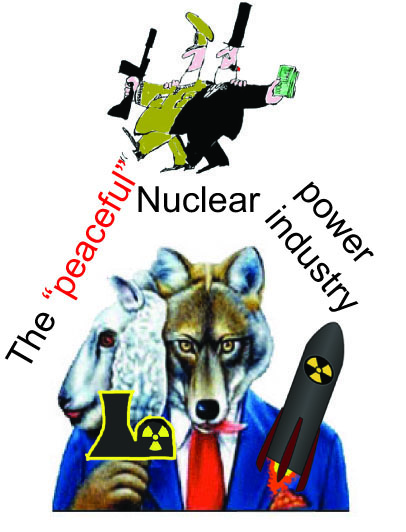 Anne McMenamin Nuclear Fuel Cycle Watch Australia, 19 Mar 20, . I’m referring to the structural links between the commercial and military uses of nuclear reactors, and, to some extent, the way THEY see it – which doesn’t always line up with the technical realities. History shows that the 2 industries have been inextricably linked from the beginning.
“Great efforts have been and still are made to disguise the close connection between nuclear energy for war and for power stations. Two reasons are suggested for this: political convenience in avoiding additional informed protests against nuclear weapon production and industrial convenience in carrying on without public protest what has become a very profitable industry.”
Sir Kelvin Spencer CBE FCGI LLD (HON)
First issue of Medicine and War, in 1985
Similarly, a document from the Los Alamos National Laboratory in August, 1981, states:
“There is no technical demarcation between the military and civilian reactor and there never was one. What has persisted over the decades is just the misconception that such a linkage does not exist.”
“Some Political Issues Related to Future Special Nuclear Fuels Production,”
LA- 8969-MS, UC-16
In 2013, historian Dr David Palmer said,
“The issue is processing uranium for nuclear power that then can be used for defence. You have to understand this in terms of Adelaide; it’s a military, industrial and intelligence complex.”
Palmer was commenting on the notable push for nuclear energy and nuclear submarines coming from numerous academics and business people in Adelaide. He considered the real motive behind the nuclear push is security in energy supply for the military, and hence the need to solve the problem of waste disposal, which is currently discouraging investment in nuclear power. Major military/weapons corporations such as Raytheon, Halliburton subsidiary Kellogg, Brown and Root, Lockheed Martin, Babcock and General Atomics are now a noticeable presence in the SA economy.
Links can be clearly seen, e.g. Heathgate, which owns the Beverley mine, is a wholly owned subsidiary of General Atomics, one of the world’s largest weapons manufacturer/servicer. https://www.facebook.com/groups/1021186047913052/
Nuclear-powered submarines – fraught with legal and political problems

|
The Complex Policy Questions Raised by Nuclear Energy’s Role in the Future of Warfare, Just Security by Alex Gilbert, Morgan Bazilian and Julia Nesheiwat, March 16, 2020 The United States military, as well as other militaries around the world, are racing to develop high-energy weapons—lasers, high-powered microwaves, and electromagnetic rail guns—in order to compete with near-peer competitors on the next generation of military technologies. But the electricity to power these systems will need to derive from somewhere, and so military planners are eyeing a new generation of energy-dense nuclear reactors, despite potential policy and legal challenges to doing so…….. The Army is considering mobile nuclear power plants, in part to drive high-energy weapons, an idea one retired three-star hailed as a potential logistics revolution. And should the U.S. build space-based lasers for missile defense, nuclear energy may be the only way to provide the needed megawatts. All this raises key policy concerns in relation to international law, rules of engagement, and the laws of warfare. Basing, or even deploying, nuclear reactors in the territorial waters or land of an overseas ally requires the permission of the host government, which may be averse to expanding nuclear power as in the case of major bases like Yokosuka, Japan. Diego Garcia, an island in the Indian Ocean, provides another challenging case as the ongoing territorial dispute between the United Kingdom and Mauritius threatens the U.S. base there, and a nuclear plant would only complicate the existing dispute. The U.S. Navy already faces constraints on where their nuclear-powered ships can visit. Floating nuclear power plants, like those developed by Russia and China, face similar concerns if they transit foreign waters or, in the case of the South China Sea, are stationed in disputed territories. Similarly, mobile reactors, like those considered by the U.S. Army, would likely be transported by air, requiring permission of all overflight countries. Beyond basing, a critical question is whether the U.S. military would own and operate these new reactors, as the Navy currently does, or whether they would pursue commercial alternatives, as the Army is considering. The U.S. Army report on mobile reactors noted that, with either government or commercial ownership, there are concerns about international rules and licensing that present potential barriers to deployment. In some cases, potential host countries do not even have nuclear regulatory agencies. Further, commercial ownership raises liability concerns, both in the case of a military incident or an accident. International nuclear liability treaties are not well harmonized between the U.S. and most of its allies, especially when it comes to the unique concerns of transportable reactors. Using nuclear power for high-energy weapons also creates targeting dilemmas for the U.S. and foreign militaries. High-energy weapons and their support infrastructure, including reactors, may be initial targets in a conflict. The social, environmental, and reputational impacts of damaging a nuclear reactor, particularly on a country’s home territory, or with effects on a third country, could lead to conflict escalation and international condemnation……. Nuclear-powered laser satellites could aggravate concerns about nuclear arms controls as such systems could be used for anti-ballistic missile or anti-satellite applications. While the Outer Space Treaty prohibits weapons of mass destruction in orbit, it does not prohibit other types of weaponry. During the Cold War, Soviet military space reactors raised calls for bans on space nuclear power, particularly after one accidentally crashed in Canada. Recent calls for space arms control have been unsuccessful. As with terrestrial nuclear-powered lasers, the unique role of laser satellites would make them early targets in any major power conflict, leading to risks of collateral damage from radioactive and dangerous space debris, as occurred after the accidental 2009 collision involving a decommissioned Soviet nuclear satellite.. The article below is not about Australia, but it is about small nuclear reactors. Everybody knows, (just quietly) that Australia won’t be getting small nuclear reactors for providing electricity. The real aim is for nuclear-powered submarines. So this article, about the legal and political problems of nuclear reactors for Defence is applicable to Australia, too
The Complex Policy Questions Raised by Nuclear Energy’s Role in the Future of Warfare, Just Security by Alex Gilbert, Morgan Bazilian and Julia Nesheiwat, March 16, 2020 The United States military, as well as other militaries around the world, are racing to develop high-energy weapons—lasers, high-powered microwaves, and electromagnetic rail guns—in order to compete with near-peer competitors on the next generation of military technologies. But the electricity to power these systems will need to derive from somewhere, and so military planners are eyeing a new generation of energy-dense nuclear reactors, despite potential policy and legal challenges to doing so…….. The Army is considering mobile nuclear power plants, in part to drive high-energy weapons, an idea one retired three-star hailed as a potential logistics revolution. And should the U.S. build space-based lasers for missile defense, nuclear energy may be the only way to provide the needed megawatts.
All this raises key policy concerns in relation to international law, rules of engagement, and the laws of warfare.
Basing, or even deploying, nuclear reactors in the territorial waters or land of an overseas ally requires the permission of the host government, which may be averse to expanding nuclear power as in the case of major bases like Yokosuka, Japan. Diego Garcia, an island in the Indian Ocean, provides another challenging case as the ongoing territorial dispute between the United Kingdom and Mauritius threatens the U.S. base there, and a nuclear plant would only complicate the existing dispute.
The U.S. Navy already faces constraints on where their nuclear-powered ships can visit. Floating nuclear power plants, like those developed by Russia and China, face similar concerns if they transit foreign waters or, in the case of the South China Sea, are stationed in disputed territories. Similarly, mobile reactors, like those considered by the U.S. Army, would likely be transported by air, requiring permission of all overflight countries.
Beyond basing, a critical question is whether the U.S. military would own and operate these new reactors, as the Navy currently does, or whether they would pursue commercial alternatives, as the Army is considering. The U.S. Army report on mobile reactors noted that, with either government or commercial ownership, there are concerns about international rules and licensing that present potential barriers to deployment. In some cases, potential host countries do not even have nuclear regulatory agencies. Further, commercial ownership raises liability concerns, both in the case of a military incident or an accident. International nuclear liability treaties are not well harmonized between the U.S. and most of its allies, especially when it comes to the unique concerns of transportable reactors.
Using nuclear power for high-energy weapons also creates targeting dilemmas for the U.S. and foreign militaries. High-energy weapons and their support infrastructure, including reactors, may be initial targets in a conflict. The social, environmental, and reputational impacts of damaging a nuclear reactor, particularly on a country’s home territory, or with effects on a third country, could lead to conflict escalation and international condemnation…….
Nuclear-powered laser satellites could aggravate concerns about nuclear arms controls as such systems could be used for anti-ballistic missile or anti-satellite applications. While the Outer Space Treaty prohibits weapons of mass destruction in orbit, it does not prohibit other types of weaponry. During the Cold War, Soviet military space reactors raised calls for bans on space nuclear power, particularly after one accidentally crashed in Canada. Recent calls for space arms control have been unsuccessful. As with terrestrial nuclear-powered lasers, the unique role of laser satellites would make them early targets in any major power conflict, leading to risks of collateral damage from radioactive and dangerous space debris, as occurred after the accidental 2009 collision involving a decommissioned Soviet nuclear satellite…. …… https://www.justsecurity.org/69056/the-complex-policy-questions-raised-by-nuclear-energys-role-in-the-future-of-warfare/
|
|
The clean-up of the Fukushima nuclear mess is not going to schedule – continual decommissioning delays
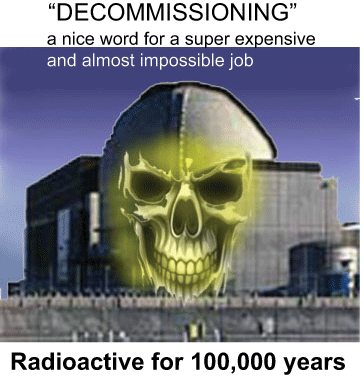 Japan’s 3/11 Recovery Stalled by Fukushima Japan’s 3/11 Recovery Stalled by Fukushima  Decommissioning Delays Decommissioning DelaysDelays in dismantling the disaster-stricken nuclear power complex cast doubt on whether recovery goals will move forward according to schedule. The Diplomat By Thisanka Siripala, March 13, 2020 Nine years after a quake-triggered tsunami sparked a triple meltdown at Fukushima Daiichi nuclear power plant, decontamination and decommissioning continues in northeastern Japan. The ultimate goal of removing all debris is expected to take anywhere between 30 to 40 years, but progress has been slower than originally planned. So far just one-fourth of decommission work has been completed, drawing attention to work that has not yet begun. The Fukushima decommissioning and decontamination draft has been amended five times. While changes published in December offered a specific time frame for the first time, the latest timetable for debris removal has been pushed back five years, citing the need for additional safety precautions. Previously, the process of removing spent fuel was scheduled from 2021 to 2024. But work on reactor two looks more likely to start in 2025 and last until 2027, followed by reactor one work commencing sometime between March 2028 and March 2029. ……..
The next decommissioning stage sets out the removal of 4,471 spent fuel rods inside the cooling pools of reactors one to six. But the biggest obstacle is finding a way to locate and remove the molten nuclear fuel. With frequent delays, evacuees face a constant sense of uncertainty,
tangled in a waiting game to see whether decommissioning work can be completed in 30 years.
Reactor two is seen as the safest and easiest option to start full-scale debris removal since it suffered the least structural damage with only “some fuel” melting through the pressure vessel and accumulating at the bottom of the containment vessel. But with no established method for debris retrieval, attempts to survey the location and distribution of molten nuclear fuel among the rubble requires a lengthy trial and error process. In mid-February 2019 an attempt to probe and collect samples from reactor two failed to find and lift the main nuclear fuel debris, instead lifting portions of pebble-like sediment with the lowest radiation readings from the surface. At this stage there is no way for TEPCO, the company that owns the Fukushima Daiichi plant, to determine where fuel debris lies among the rest of the metal debris. It’s estimated that reactor two alone contains 237 metric tons of debris while reactors one and three contain a combined 880 tons. The complexity of debris removal requires developing specialized technology that does not yet exist.
Also plaguing decommissioning efforts is the battle over how to safely dispose of 1 million tons of contaminated water that were used to cool nuclear fuel. Currently, huge tanks on the premises store the polluted runoff, which could fill 400 Olympic swimming pools, but space is expected to run out by mid-2022. On average 170 tons of contaminated water is produced to cool fuel in nuclear reactors. Without constant cooling, nuclear fuel risks melting from its own heat in a process called decay heat. With two years needed to prepare a disposal method, time is running out for a final decision. Government proposals to slowly release contaminated water into the ocean has sparked fierce backlash from locals and the agriculture and fishing industries, who argue traces of radioactive materials such as tritium still found in “treated” water could further harm a region still struggling to restore its international reputation……..
To make matters worse, decommissioning operations have been temporarily suspended due to the spread of coronavirus. Tepco was forced to cancel on-site inspections of reactor one scheduled during March, which would have brought together some 1,800 experts and members of parliament, as well as local residents and student groups. https://thediplomat.com/2020/03/japans-3-11-recovery-stalled-by-fukushima-decommissioning-delays/
|
|
|
Canisters for high level nuclear wastes likely to corrode faster than expected
 Corrosion poses risk in nuclear waste storage https://frontline.thehindu.com/science-and-technology/article30913130.ece March 13, 2020 The materials the United States and other countries plan to use to store high-level nuclear waste are likely to degrade faster than previously thought because of the way those materials interact, new research from Ohio State University shows.
The findings, published in a recent issue of “Nature Materials”, show that corrosion of nuclear waste storage materials accelerates because of changes in the chemistry of the nuclear waste solution and the way the materials interact with one another. “This indicates that the current models may not be sufficient to keep this waste safely stored,” Xiaolei Guo, lead author of the study was quoted in the news release issued by the university.
The team’s research focussed on storage materials for high-level nuclear waste that is highly radioactive. While some types of the waste have half-lives of about 30 years, others like plutonium have a half-life that can be tens of thousands of years.
With no long-term viable nuclear waste disposal mechanism yet in operation, in most sites nuclear waste is stored near the plants where it is produced. While countries around the world have debated the best way to deal with nuclear waste, only Finland has started construction of a long-term repository for high-level nuclear waste.
In general, proposals involve mixing nuclear waste with other materials to form glass or ceramics and then encasing those pieces of glass or ceramics, now radioactive, inside metallic canisters. The canisters are buried deep underground in a repository to isolate it.
Researchers found that when exposed to an aqueous environment, glass and ceramics interact with stainless steel to accelerate corrosion, especially of the glass and ceramic materials holding nuclear waste. The study measured the difference between accelerated corrosion and natural corrosion of the storage materials. “In the real-life scenario, the glass or ceramic waste forms would be in close contact with stainless steel canisters. Under specific conditions, the corrosion of stainless steel will go crazy,” he said. “It creates a super-aggressive environment that can corrode surrounding materials.”
To analyse corrosion, the research team pressed glass or ceramic “waste forms” (the shapes into which nuclear waste is encapsulated) against stainless steel and immersed them in solutions for up to 30 days, under conditions that simulate those under Yucca Mountain, the proposed nuclear waste repository in the U.S.
Those experiments showed that when glass and stainless steel were pressed against one another, stainless steel corrosion was “severe” and “localised”. The researchers also noted cracks and enhanced corrosion on the parts of the glass that had been in contact with stainless steel.
Part of the problem lies in the Periodic Table. Stainless steel is made primarily of iron mixed with other elements, including nickel and chromium. Iron has a chemical affinity for silicon, which is a key element of glass.
The experiments also showed that when ceramics, another potential holder for nuclear waste, were pressed against stainless steel under conditions that mimicked those beneath Yucca Mountain, the ceramics and stainless steel corroded in a “severe localised” way.
Tritium – more hazardous than gamma rays and most X-rays
 Ian Fairlie 13th March 2020, The Nuclear facilities emit very large amounts of tritium, 3H, the radioactive isotope of hydrogen. Much evidence from cell/animal studies and radiation biology theory indicates that tritium is more hazardous than gamma rays and most X-rays.
However the International Commission on Radiological Protection (ICRP) continues to underestimate tritium’s hazard by recommending a radiation weighting factor (wR) of unity for
tritium’s beta particle emissions. Tritium’s exceptionally high molecular exchange rate with hydrogen atoms on adjacent molecules makes it extremely mobile in the environment.
This plus the fact that the most common form of tritium is water, i.e. radioactive water, means that, when tritium is emitted from nuclear facilities, it rapidly contaminates all biota in adjacent areas. Tritium binds with organic matter to form organically bound tritium (OBT) with long residence times in tissues and organs making it more radiotoxic than tritiated water (HTO).
Epidemiology studies indicate increases in cancers and congenital malformations near
nuclear facilities. It is recommended that nuclear operators and scientists should be properly informed about tritium’s hazards; that tritium’s safety factors should be strengthened; and that a hazard scheme for common radionuclides be established.
UK’s nuclear regulated asset base (RAB) financing passes all financial risks to electricity customers
 Times 15th March 2020 David Lowry: I read with incredulity the claims of Horizon nuclear chief Duncan Hawthorne that his company, which is really a Japanese shell company with no products, could build nuclear plants offering power at half the currently projected cost from the Hinkley Point C plant being built.
Fukushima Daiichi reactors in Japan on March 11, 2011 — costs $250bn
(£200bn) and rising — suggests Horizon has not learnt the full lessons
of that. The regulated asset base (RAB) financing mechanism Horizon
advocates transfers all financial investment risk to electricity customers
before a single unit is delivered to a home, allowing the foreign nuclear
company to build plants without having to pay attention to keeping costs
under control. This is an extraordinarily one-sided proposal. Surely even
this nuclear-friendly government cannot fall for it.
Steps to nowhere on nuclear disarmament – USA’s “Creating an Environment for Nuclear Disarmament” (CEND)

The Virus of Nuclear Proliferation https://www.commondreams.org/views/2020/03/12/virus-nuclear-proliferation, March 12, 2020, by In Depths News
Rather than addressing the promising path forward provided by the new Treaty for the Prohibition of Nuclear Weapons to finally ban the bomb, the U.S. launched a new initiative, by Alice Slater
Ironically, it is not nearly so well-reported, that the 50-year old NPT is threatening the world with an even worse illness then the new terrifying coronavirus.
The NPT’s critical requirement that the nuclear armed states, which signed the treaty in 1970, must make “good faith efforts” for nuclear disarmament is virtually moribund as nations are developing new nuclear weapons, some characterized as more “usable” and destroying treaties that contributed to a more stable environment.
These include the 1972 Anti-Ballistic Missile Treaty which the U.S. negotiated with USSR and walked out of in 2002, and its repeated rejections of offers from Russia and China to negotiate a treaty to keep weapons out of space, and from Russia to ban cyberwar, all of which would contribute to “strategic stability” which would enable the fulfillment of the NPT’s nuclear disarmament promise.
Further, this year the U.S. withdrew from the Intermediate Nuclear Force agreement it made with Russia in 1987, left the nuclear deal it had negotiated with Iran as well, and just announced it would not meet with Russia to discuss a renewal of the Strategic Arms Control Treaty (START), due to expire this year, which limits nuclear warheads and missiles.
It also created a whole new branch of its military, the Department of Space, which was formerly housed in the U.S. Airforce. And in an obvious breach of “good faith” [i] ,this February the US staged a “limited” nuclear battle against Russia in a war game!
It cannot be denied that the NPT contributes to even more burgeoning nuclear proliferation by extending its misbegotten “inalienable right” to “peaceful” nuclear power, currently promoting this lethal technology to Saudi Arabia, UAE, Belarus, Bangladesh and Turkey which are all constructing their first nuclear power plants — expanding the keys to the bomb factory in more and more countries, while almost all of the current nuclear weapons states have new nuclear weapons under development.
The U.S., for example, is planning to spend over a trillion dollars over the next 10 years and is working with the UK to replace Britain’s Trident nuclear warheads.
Rather than addressing the promising path forward provided by the new Treaty for the Prohibition of Nuclear Weapons to finally ban the bomb, the U.S. launched a new initiative, Creating an Environment for Nuclear Disarmament (CEND), to develop yet another set of possible new steps to comply with its 50 year old “good faith” promises for nuclear disarmament.
At a recent meeting in Stockholm with fifteen of its allies, new measures were announced for nuclear disarmament now being described as “stepping stones”, having graduated from various commitments over the years for “steps” and “an unequivocal commitment” to those steps, since the NPT was extended in 1970, indefinitely and unconditionally.
These new “stepping stones” bring to mind M.G. Escher’s stunning drawing of a series of steps to nowhere with people endlessly trudging up a staircase, never to reach their destination!
Polar ice melting at an accelerating rate

Polar ice caps melting six times faster than in 1990s https://www.theguardian.com/environment/2020/mar/11/polar-ice-caps-melting-six-times-faster-than-in-1990s
Losses of ice from Greenland and Antarctica are tracking the worst-case climate scenario, scientists warn Damian Carrington Environment editor @dpcarrington,Thu 12 Mar 2020 The polar ice caps are melting six times faster than in the 1990s, according to the most complete analysis to date.
The ice loss from Greenland and Antarctica is tracking the worst-case climate warming scenario set out by the Intergovernmental Panel on Climate Change (IPCC), scientists say. Without rapid cuts to carbon emissions the analysis indicates there could be a rise in sea levels that would leave 400 million people exposed to coastal flooding each year by the end of the century.
Rising sea levels are the one of the most damaging long-term impacts of the climate crisis, and the contribution of Greenland and Antarctica is accelerating. The new analysis updates and combines recent studies of the ice masses and predicts that 2019 will prove to have been a record-breaking year when the most recent data is processed.
The previous peak year for Greenland and Antarctic ice melting was 2010, after a natural climate cycle led to a run of very hot summers. But the Arctic heatwave of 2019 means it is nearly certain that more ice was lost last year.
The average annual loss of ice from Greenland and Antarctica in the 2010s was 475bn tonnes – six times greater than the 81bn tonnes a year lost in the 1990s. In total the two ice caps lost 6.4tn tonnes of ice from 1992 to 2017, with melting in Greenland responsible for 60% of that figure.
The IPCC’s most recent mid-range prediction for global sea level rise in 2100 is 53cm. But the new analysis suggests that if current trends continue the oceans will rise by an additional 17cm.
“Every centimetre of sea level rise leads to coastal flooding and coastal erosion, disrupting people’s lives around the planet,” said Prof Andrew Shepherd, of the University of Leeds. He said the extra 17cm would mean the number of exposed to coastal flooding each year rising from 360 million to 400 million. “These are not unlikely events with small impacts,” he said. “They are already under way and will be devastating for coastal communities.”
Erik Ivins, of Nasa’s Jet Propulsion Laboratory, in California, who led the assessment with Shepherd, said the lost ice was a clear sign of global heating. “The satellite measurements provide prima facie, rather irrefutable, evidence,” he said.
Almost all the ice loss from Antarctica and half of that from Greenland arose from warming oceans melting the glaciers that flow from the ice caps. This causes glacial flow to speed up, dumping more icebergs into the ocean. The remainder of Greenland’s ice losses are caused by hotter air temperatures that melt the surface of the ice sheet.
The combined analysis was carried out by a team of 89 scientists from 50 international organisations, who combined the findings of 26 ice surveys. It included data from 11 satellite missions that tracked the ice sheets’ changing volume, speed of flow and mass.
About a third of the total sea level rise now comes from Greenland and Antarctic ice loss. Just under half comes from the thermal expansion of warming ocean water and a fifth from other smaller glaciers. But the latter sources are not accelerating, unlike in Greenland and Antarctica.
Shepherd said the ice caps had been slow to respond to human-caused global heating. Greenland and especially Antarctica were quite stable at the start of the 1990s despite decades of a warming climate.
Shepherd said it took about 30 years for the ice caps to react. Now that they had a further 30 years of melting was inevitable, even if emissions were halted today. Nonetheless, he said, urgent carbon emissions cuts were vital. “We can offset some of that [sea level rise] if we stop heating the planet.”
The IPCC is in the process of producing a new global climate report and its lead author, Prof Guðfinna Aðalgeirsdóttir, of the University of Iceland, said: “The reconciled estimate of Greenland and Antarctic ice loss is timely.”
She said she also saw increased losses from Iceland’s ice caps last year. “Summer 2019 was very warm in this region.”
Nuclear modernisation, cyber operations, raise a dilemma for nuclear deterrence
As the character Dr. Strangelove makes clear in the eponymous classic movie, nobody is frightened of capabilities that are kept secret.
Nuclear capabilities must be revealed to be useful for deterrence. Nuclear deterrence works because nuclear weapons states can deliberately reveal their nuclear capabilities and thus signal the potential consequences for crossing red lines. By contrast, offensive cyber operations against sensitive targets cannot be revealed if they are to be useful at all.

Digital Strangelove: The Cyber Dangers of Nuclear Weapons, https://www.lawfareblog.com/digital-strangelove-cyber-dangers-nuclear-weapons By Jon Lindsay Thursday, March 12, 2020, : This post article is part of a series exploring the findings and recommendations of the U.S. Cyberspace Solarium Commission.
The crucial strategic conundrum, therefore, is how to manage the interaction of two domains with dangerously opposed strategic characteristics. If opponents do not agree on the balance of power in a crisis bargaining situation, for whatever reason, bargaining is more likely to fail. Offensive cyber operations targeting NC3 create just such an information asymmetry. Cyber capabilities that are needed only in the event that deterrence fails can thus make it more likely that deterrence will fail in the first place. Precisely because cyber conflict takes place below the threshold of armed conflict, the dangerous combination of offensive cyber operations and NC3 can, in effect, lower the nuclear threshold.
Translating defensive capacity into deterrence requires taking the additional, and politically difficult, step of advertising NC3 redundancy and resilience to potential adversaries, even in a cyber-degraded environment. Perhaps the most important thing to be done is to sensitize operators, nuclear policy makers and allied counterparts throughout the NC3 enterprise to the risks of cyber-nuclear interaction. Human interpretation and intervention will be the key to mitigating many of these scenarios as they emerge. It is thus important for governments to develop and exercise concepts and methods for noticing and evaluating the likelihood of different types of cyber-nuclear risks as they emerge in various scenarios.
Deceit and Dark Money -Ohio’s nuclear subsidy saga

Dark money dominated Ohio’s nuclear subsidy saga ENERGY NEWS NETWORK, Kathiann M. Kowalski, March 5, 2020
FirstEnergy Solutions paid nearly $2 million to at least one group, but  most other data remains hidden.
After-the-fact filings show that FirstEnergy’s generation subsidiary paid nearly $2 million to Generation Now, one of the special interest groups that orchestrated ads, political donations and other efforts behind Ohio’s nuclear and coal bailout.
But legal loopholes make it harder to find out the total spent and who else was behind xenophobic advertising, dueling voter petitions, alleged intimidation and other claims of foul play. And none of those actions fully disclosed who was behind them.
The scant public filings that are available show additional connections to FirstEnergy Solutions (now Energy Harbor), as well as the law firm of an outspoken legislator who has long fought the state’s clean energy standard, and others with high-level political influence.
House Bill 6 gutted Ohio’s renewable energy and energy efficiency standards while putting ratepayers on the hook for nearly $1 billion in subsidies for nuclear power plants, plus an additional amount for aging coal plants. Multiple groups spent heavily to promote HB 6 and prevent a referendum on the law following its passage.
In some cases, nonprofit and for-profit organizations funded each other or shared the same spokesperson. Groups active in the HB 6 campaign also had links to some of the same lobbyists and consultants who acted for companies that stood to benefit from HB 6, or unions with workers at their plants. But only limited amounts of funding could be traced.
ON ORIGINAL – INTRIGUING INTERACTIVE DIAGRAM HERE _ shows interrelationships of individuals and groups Continue reading
Big Oil Big Soda and plastically polluted Planet Earth.
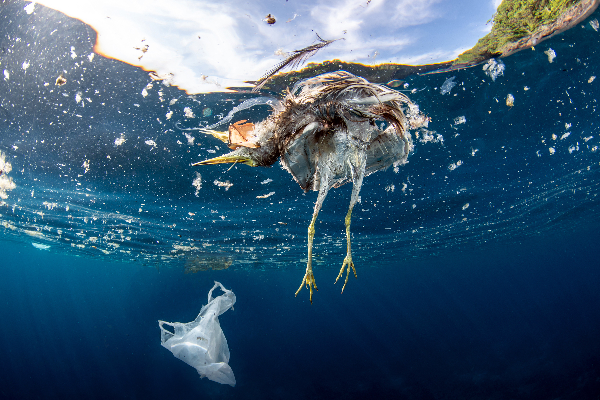
“They really sold people on the idea that plastics can be recycled because there’s a fraction of them that are,”..“It’s fraudulent. When you drill down into plastics recycling, you realize it’s a myth.” …… “Recycling delays, rather than avoids, final disposal,” the Science authors write. And most plastics persist for centuries. …….
We are all guinea pigs in this experiment, as plastics accumulate in the food web, appearing in seafood, table salt, and ironically even in bottled water. Many plastics are mixed with a toxic brew of colorants, flame retardants, and plasticizers.
 PLANET PLASTIC, How Big Oil and Big Soda kept a global environmental calamity a secret for decades, Rolling Stone, By TIM DICKINSON, MARCH 3, 2020
Every human on Earth is ingesting nearly 2,000 particles of plastic a week. These tiny pieces enter our unwitting bodies from tap water, food, and even the air, according to an alarming academic study sponsored by the World Wildlife Fund for Nature, dosing us with five grams of plastics, many cut with chemicals linked to cancers, hormone disruption, and developmental delays. Since the paper’s publication last year, Sen. Tom Udall, a plain-spoken New Mexico Democrat with a fondness for white cowboy hats and turquoise bolo ties, has been trumpeting the risk: “We are consuming a credit card’s worth of plastic each week,” Udall says. At events with constituents, he will brandish a Visa from his wallet and declare, “You’re eating this, folks!”
With new legislation, the Break Free From Plastic Pollution Act of 2020, Udall is attempting to marshal Washington into a confrontation with the plastics industry, and to force companies that profit from plastics to take accountability for the waste they create. …….
The battle pits Udall and his allies in Congress against some of the most powerful corporate interests on the planet, including the oil majors and chemical giants that produce the building blocks for our modern plastic world — think Exxon, Dow, and Shell — and consumer giants like Coca-Cola, Nestlé, and Unilever that package their products in the stuff. Big Plastic isn’t a single entity. It’s more like a corporate supergroup: Big Oil meets Big Soda — with a puff of Big Tobacco, responsible for trillions of plastic cigarette butts in the environment every year. And it combines the lobbying and public-relations might of all three………
Massive quantities of this forever material are spilling into the oceans — the equivalent of a dump-truck load every minute. Plastic is also fouling our mountains, our farmland, and spiraling into an unmitigatable environmental disaster. John Hocevar is a marine biologist who leads the Oceans Campaign for Greenpeace, and spearheaded the group’s response to the BP oil spill in the Gulf. Increasingly, his work has centered on plastics. “This is a much bigger problem than ‘just’ an ocean issue, or even a pollution issue,” he says. “We’ve found plastic everywhere we’ve ever looked. It’s in the Arctic and the Antarctic and in the middle of the Pacific. It’s in the Pyrenees and in the Rockies. It’s settling out of the air. It’s raining down on us.”
More than half the plastic now on Earth has been created since 2002, and plastic pollution is on pace to double by 2030. At its root, the global plastics crisis is a product of our addiction to fossil fuels. The private profit and public harm of the oil industry is well understood: Oil is refined and distributed to consumers, who benefit from gasoline’s short, useful lifespan in a combustion engine, leaving behind atmospheric pollution for generations. But this same pattern — and this same tragedy of the commons — is playing out with another gift of the oil-and-gas giants, whose drilling draws up the petroleum precursors for plastics. These are refined in industrial complexes and manufactured into bottles, bags, containers, textiles, and toys for consumers who benefit from their transient use — before throwing them away. Continue reading
The world’s Big Oil giants now turn to plastics to grow their industries
PLANET PLASTIC, How Big Oil and Big Soda kept a global environmental calamity a secret for decades, Rolling Stone, By TIM DICKINSON, MARCH 3, 2020
|
As the world begins to wean itself off of fossil fuel for transportation, Big Oil giants from Texas to Saudi Arabia are turning to plastic to support future growth. The International Energy Agency predicts that “oil demand related to plastic consumption overtakes that for road-passenger transport by 2050,” and its top executive warns plastics are “one of the key blind spots in the global energy debate.” The industry is counting on a tidal wave of new demand from emerging economies. A 2018 IEA report underscores that advanced economies use up to 20 times more plastic per capita than consumers do in India or Indonesia. And it warns that increased recycling and single-use bans in places like Europe and Japan “will be far outweighed by developing economies sharply increasing their shares of plastic consumption (as well as its disposal).” Global plastics production and incineration currently creates the CO2 pollution of 189 coal plants. By 2050, that’s expected to more than triple, to the equivalent of 615 coal plants. At that rate, plastics would hog about 15 percent of the world’s remaining “carbon budget,” or what can be emitted without crossing the 2-degrees Celsius threshold in global temperature rise that scientists warn can trigger calamity. The plastic industry’s damage to the planet is vast, but not immeasurable. In fact, the industry has published a detailed accounting that reveals its pollution is on pace to cause trillions in environmental harm by midcentury……… “The environmental cost to society of consumer plastic products and packaging was over $139 billion in 2015,” the report reveals. Without a dramatic change in course, Trucost predicts, that annual figure will soar to “$209 billion by 2025.”……… Much of the world is waking up to the plastics crisis. As China has shut its doors to the global plastic-waste trade, the European Union, Canada, and India are stepping up bans on single-use plastics like cutlery, plates, straws, and ear swabs. “How do you explain dead whales washing up on beaches across the world, their stomachs jam packed with plastic bags?” Canadian Prime Minister Justin Trudeau asked, introducing his country’s initiative. “As a dad, it is tough trying to explain this stuff to my kids.” But under President Trump, the United States is lurching in the opposite direction, promoting the plastic industry’s aggressive expansion. “It’s war,” says Puckett of BAN, “between policies that are totally at odds with each other — of making more plastics and banning plastic.” American fracking is literally fueling the global surge in plastics. The glut of cheap natural gas here has sparked an explosion in new plastics infrastructure. Since 2010, according to the ACC, U.S. companies have ramped up “334 chemical and plastics projects cumulatively valued at $204 billion.” Europe has built new plastics plants fed by fracked U.S. exports. Environmentalists warn that these facilities will lock in demand for fossil-fuel consumption for a generation. Trump is an unabashed booster of plastics — in keeping with his service to the fossil-fuel industry. The former CEO of Dow led Trump’s manufacturing council. And last July, the president visited a new Shell plastics complex outside Pittsburgh. “This facility will transform abundant natural gas — and we have a lot of it — fracked from Pennsylvania wells into plastic,” Trump said. That material, he boasted, would be embossed with “that very beautiful phrase: ‘Made in the USA.’” With the president championing its interests in Washington — and even triggering the libs with Trump 2020 campaign-branded plastic straws — the plastics industry is working to undermine grassroots activism in cities and states across the country. The Plastics Industry Association, or PLASTICS, is a top trade group headquartered on K Street in Washington, D.C. Hiding its handiwork inside a nesting doll of front groups, PLASTICS has worked to thwart state and municipal bans on single-use plastics. PLASTICS has gotten an assist from the American Legislative Exchange Council, or ALEC, which pushes right-wing state legislatures to pass nearly identical bills. In 2013, the plastic trade group wrote a pitch to ALEC members, arguing a ban on plastic “results in the picking of winners and losers in a ‘not-so-free’ marketplace.” By 2015, ALEC began advocating state laws best known for “banning bans” on plastic bags, but which are often far more sweeping, prohibiting limits on styrofoam and “auxiliary containers” — a catchall term for to-go packaging. PLASTICS obscures its involvement in these state fights through a “special purpose” front group called the Progressive Bag Alliance, which rebranded in January as the American Recyclable Plastic Bag Alliance. The organization runs public relations through another front group, Bag the Ban, which touts plastic as “the most environmentally friendly option at the checkout.” (The bag alliance claims it is self-funding, but PLASTICS employs its director, per IRS filings, and the groups share offices and overhead.)…… The success of blue states, from Hawaii to New York, in banning plastic bags has been countered by the industry-led push. PLASTICS says it has parted ways with ALEC, but some 15 red states now have laws pre-empting local plastic bans, with Oklahoma, North Dakota, and Tennessee joining the pack in 2019. (ALEC did not respond to questions from Rolling Stone.) For now, the state bans on bans are holding up in court……. As the global plastics crisis grows — and photos of albatross chicks decomposing around the indigestible plastic waste that killed them go viral — the industry is quietly agonizing over backlash from the metal-straw and Hydroflask-toting members of Generation Z. “The [plastic] water bottle has, in some way, become the mink coat or the pack of cigarettes,” a senior sustainability manager for Nestlé Waters confessed at a conference last year. “It’s socially not very acceptable to the young folks, and that scares me.” In contrast to climate change, the plastics crisis has not been met with corporate denial. The companies of Big Plastic are instead seeking to convince consumers and regulators that — despite having unleashed this torrent of pollution on the planet — they can be trusted to pioneer solutions that will make plastic use sustainable. They’re touting a “circular economy,” in which used plastic doesn’t become waste but, instead, a feedstock for new products. A cynic might translate the concept into: Recycling, but for real this time. “There are a lot of different corporate commitments,” says Shilpi Chhotray, a leader of the Break Free From Plastics movement. While some show promise, others “are just greenwashing,” she insists, with the intent of giving the industry cover for its true aim: “growth.”……… The industry’s voluntary actions to curb plastic pollution are driven by two clear motives: One is protecting the environment, the other is protecting profits from regulation…….. In Washington, the plastics industry is asking government, and American taxpayers, to foot the bill to revitalize the moribund recycling industry. The RECOVER Act — backed by both PLASTICS and the ACC — would offer $500 million in federal-matching funds for investment in new infrastructure……. For Sen. Tom Udall, our involuntary ingestion of plastic waste is proof that the country can’t wait decades for plastic polluters to reform their own practices, or rely on half-measures to bolster the current recycling system. “We are beyond the crisis point on plastic waste,” he says, “and people are starting to wake up.” Udall wants consequences for an industry that has sloughed its environmental harms onto the rest of us for long enough. Washington is late to the game when it comes to plastics regulation, and Udall’s strategy is to adopt best practices from across the globe. . The Break Free From Plastic Pollution Act would mimic Europe in banning commonly polluted single-use plastics, including plastic bags, styrofoam cups and carry-out containers, and plastic utensils. Plastic straws would be allowed only by request. The bill would expand the market for recycled plastics by creating a minimum recycled content for beverage containers, while also imposing a 10-cent deposit on each container sold — roughly nationalizing the models of Michigan and Oregon, where residents return nearly nine in 10 containers for recycling. The bill would create “extended producer responsibility” — making the industry responsible for the waste it creates by requiring that producers “design, manage, and finance programs to collect and process waste that would normally burden state and local governments.” Udall emphasizes that today’s industry is hardly trying, often slapping an unrecyclable label on an otherwise recyclable bottle….. The companies of the plastics industry, Lowenthal says, are ultimately “going to have to deal with the sticker shock that they are now responsible and they’re going to have to pay” to keep plastics out of the environment. The alternative, he insists, has become untenable: “What we have in plastic is something that has made our lives more convenient and easier. But unless we figure out how to keep this out of the waste stream, it’s just going to kill us.” https://www.rollingstone.com/culture/culture-features/plastic-problem-recycling-myth-big-oil-950957/?fbclid=IwAR2i19CqoMXj7HMbvmzM6uGkEx02ESd69vjlxVVgpUZV-VMbhPQJ_iZ3o3w
|
|
No advantage in ‘new’ back-to-the-future nuclear reactors for Australia. Is the real motive military?
Part 2 of A Study of the “Report of the inquiry into the prerequisites for nuclear energy in Australia” Australian Parliamentary Committee 2020. The Industry Push to Force Nuclear Power in Australia nuclearhistory 2 Mar 2020 https://wordpress.com/read/feeds/103698880/posts/2607926791 In progress, first draft, incomplete.
The Parliamentary Committee recommends, in part, the following: Recommendation 2
The Committee recommends that the Australian Government undertake a body of work to progress the understanding of nuclear energy technology by:
- Commissioning the Australian Nuclear Science and Technology Organisation (ANSTO), or other equivalent expert reviewer, to undertake a technological assessment on nuclear energy reactors to:
- produce a list of reactors that are defined under the categories of Generation I, II, III, III+ and IV;
- advise on the technological status of Generation III+ and Generation IV reactors including small modular reactors;
- advise on the feasibility and suitability of Generation III+ and Generation IV reactors including small modular reactors in the Australian context; and
- formulate a framework to be used by Government to monitor the status of new and emerging nuclear technologies.The first item of the recommendation – for ANTSO to compile of reactors according to each one’s status within the table of Generation – 1 to 4 might be a good idea, for many of the Generation IV reactor designs were first envisaged and trialled in the 1950s and 1960s before being discarded. Whereas, at the present time, and since the time the US Department of Energy sought ways of halting the decline of nuclear power’s percentage contribution to global energy supply in the 1990s. For that is the time that the idea of resurrecting old designs and calling them new and “Generation IV” and re marketing them first arose
The waste from the very first molten salt fuelled and cooled reactor, as we saw in the previous post, continues to cost US taxpayers money 60 years later.
In 2014 the Brookings Institute published an essay by Josh Freed entitled “Back to the Future, Advanced Nuclear Energy and the Battle Against Climate Change”. This essay is available to read at http://csweb.brookings.edu/content/research/essays/2014/backtothefuture.html The cover illustration is very interesting.

The titled cover includes the disclosure that the nuclear industry sees a future for previously discarded, old reactor designs. It shows a nuclear reactor sitting below sea level, protected by a combined Dyke / Causeway for levitating vehicles. Huge waves threaten the Dyke, vehicles, reactor and giant Science Woman, who is watching on with skilled impartiality. In the distance, buildings taken straight from the cartoon “The Jetsons” appear. The illustration is also, actually, a reinterpretation of the events which occurred in March 2011 at Fukushima. The sub text of the picture admits that nuclear industry cannot keep going in the way that it has done since the days between 1945 and now. The industry would disappear if it did not “modernise”.
The fission industry is dying as more and more competition arises in the form of alternative technologies in the energy generation technology market. Even Fusion research continues to make inroads toward the goal of successful and economic power generation, but it still a few years off. The 1930s fission patents of Szilard are long in the tooth and actually, in terms of economic energy production has always been a failure. Kick started by governments, the standard designs are trusted by fewer and fewer people, especially throughout Asia. Westinghouse Nuclear, GE Nuclear, Toshiba Nuclear are all bankrupt. British Nuclear Fuels Ltd is broke, Sellafield is broke and a growing cleanup cost liability.
So increasingly, the industry needs a unique selling point, something new and radical, something that solves the old nuclear problems. It needs a product which never fails or spills radioactive materials into the biosphere, it needs a product that will not fail because the grid goes down for a few days, it cannot melt down, catch fire like Windscale, Monju and Fermi 1 did.
Seeing as there actually no new concepts, why not look again, in desperation, at the rejected designs of the past? The essay by Josh Freed (his real name) mentions a company called Transatomic. In contrast to the contents of the Freed article, which claims the old new reactor envisioned by Transatomic run on nuclear waste, Transatomic make no such claim. They state that their proposed reactor would run on liquid uranium fuel. As per the original 50s/60s design. They claim that the Molten salt reactor would create less weight of high level waste.
Because the waste would be continuously removed from the reactor. he corporate website for Transatomic is here: http://www.transatomicpower.com/the-science/ And this, from their web site, is precisely what they promise: Molten salt reactors like Transatomic Power’s are fueled by uranium dissolved in a liquid salt. The fuel is not surrounded by cladding, making it possible to continuously remove the fission products that would otherwise stop the nuclear reaction. The liquid fuel is also much more resistant to structural damage from radiation than solid materials – simply, liquids have very little structure to be damaged. With proper filtration, liquid fuel can remain in a molten salt reactor for decades, allowing us to extract much more of its energy.” end quote. They claim their reactor design produces half the nuclear waste of a comparable conventional light water reactor.
This still does not solve the high level nuclear waste stockpile. It adds to it. Given the competition nuclear power has in the modern world, given that the need for ‘baseload’ energy is now shown to be nonsense, what would 1 or 2 small modular molten salt reactors add to Australia? Would they merely replace coal fire powered generation? SA has not had coal fired electricity for some years now. A combination of solar, wind and storage in SA means SA is a net electricity exporter to the Eastern States. We have back up of gas fired generation which very rarely needed.
Sadly for Transatomic, Green Tech Media state the following at https://www.greentechmedia.com/articles/read/transatomic-to-shutter-its-nuclear-reactor-plans-make-its-technology-public announced the following in 2018:
“Transatomic to Shutter It’s Nuclear Reactor Plans, Open-Source It’s Tecnology.
The startup backed by Peter Thiel won’t be able to build its advanced reactor designs—but it’s making its IP available for others to carry on the work.” Source: Jeff St. John, 25 Sept 2018.as given above.
This gift to the world by Transatomic occurred at the time in Australia when various people began a bombastic and highly enthused campaign to convince Australians that Molten Salt Reactors, fuelled with either Uranium or Lithium or nuclear waste, were Jesus Mark 2. “We’ll Save Yer, just like we did in the Cold War. Solar and batteries are for whimps. We Can’t have solar and wind power in Australia, its a threat to Queensland Coal. Let’s nuclear instead and all make a quick a buck with IP”.
Funny that. Talk about drumming up business prospects and investment funds, and in 2020, floating a float on the back of sympathetic and one eyed Parliamentary Inquiry!
Double or Nothing?
The promise made by Transatomics is that molten fuel/molten salt reactors made with modern techniques will reduce by roughly half the amount of high level nuclear waste generated per unit of power generated. However, at the current time the amount of high level nuclear waste (ie, fission products -the transmutation products described in Szilard’s 1930s patents) and the release of the gaseous forms of these substances into the atmosphere, generated by Australian electricity generation is ZERO.
So the introduction of Molten Salt Reactor into Australia for electricity production will RAISE the production of high level nuclear waste from this activity by 100%. It won’t half, it won’t double, it will increase by x grams per watt. It is a spurious argument to say any reactor type will reduce Australia’s power industry high level nuclear waste when we produce zero at the moment. And if Australia continues on its non nuclear path, that zero rate of power related high level waste will remain zero forever. So where is the advantage for Australia in introducing power reactors in the civilian sphere?
I am led to believe that it will take between 10 – 20 years for any Australian nuclear power reactor to come on line from the time it is approved. By that stage the competition from other forms of low carbon power production will be much, much more severe than it is now. And today, in my opinion, only a devotee of nuclear power would see any advantage in introducing any type of nuclear reactor to Australia. Unless the real motive for such a reactor is a military motive. If so, the O’Brien Committee and the government needs to come clean on that. Not that they will. Such an admission is likely to be impossible for several reasons. Besides, no nuclear industry is free to fully disclose the corporate production and disposition of “special nuclear materials”.
So, I suppose in the end the Committee recommend ANTSO compile a list of reactor types and nominate the current industry PR terms for each type. For the Generational types (1 through IV) have actually very little to do with the chronological order and date range over which each type first manifest as a prototype. The small World War 2 German reactors, of which there were many, are little known, and the US ALSOS project has not disclosed that much about them. Germany had at least 4 reactor programs, 7 ways of enriching uranium. Japan had an Army fission project, a Navy fission project, an Air Force Fission project. All were formally abandoned, ironically , in July 1945. Germany was able to enrich uranium.
This is ancient history, but the world remains fairly ignorant I think, as to which reactor type is the safest, most economic, most reliable and so on. So far, all I have heard from the nuclear industry is PR manufactured originally by the US Department of Energy which relabelled the various reactor designs originated in the US according to a “Generation Number” which is completely detached from the chronological sequence in which they occurred.
In World War 2 Germany was working on heavy water reactors. Does that mean Hitler’s heavy water reactors were Generation III+ ? Of course not. They were Gen 1. As was the Canadian heavy water reactor of World War 2 which supplemented the US plutonium production at Hansford. If the Candu reactor is Gen III+ I’m Father Christmas. What the US DOE is doing with its naming is using marketing techniques to sell old concepts as new ideas.
Car companies do the same when naming cars. Makers of garbage trucks send salesmen around to Council depots extolling the virtues of the Gen IV 2 ton rubbish truck, complete with compactor, a tilt tray and 8 track stereo sound. And Depot managers get given toy model rubbish trucks they sit on their book cases to show how technically astute they are in the field of garbage.
Same deal here. It’s a no brainer. Yet, start collecting lists from ANSTO Mr. O’Brien. Great idea sir. It’ll keep you off the streets for awhile.
Busting the lies of the Australian Government about “new” nuclear reactors
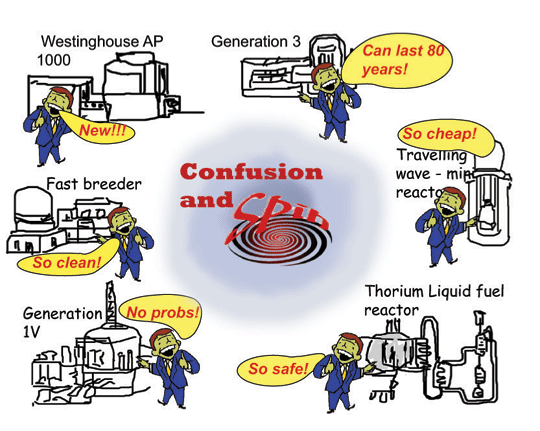
The core propositions of non-traditional reactor proponents – improved economics, proliferation resistance, safety margins, and waste management – should be reevaluated.
Before construction of non-traditional reactors begins, the economic implications of the back end of these nontraditional fuel cycles must be analyzed in detail; disposal costs may be unpalatable………. reprocessing remains a security liability of dubious economic benefit
Non-traditional” is used to encompass both small modular light water reactors (Generation III+) and Generation IV reactors (including fast reactors, thermal-spectrum molten salt reactors, and high temperature gas reactors)
|
Burning waste or playing with fire? Waste management considerations for non-traditional reactors Full Text
The Industry Push to Force Nuclear Power in Australia https://nonuclearpowerinaustralia.wordpress.com/2020/03/02/burning-waste-or-playing-with-fire-waste-management-considerations-for-non-traditional-reactors-full-text/ by nuclearhistory March 2, 2020 The following paper is copied here in order to counter the false, incorrect and erroneous propaganda published by the Australian Government and its Parliamentary Committee for lying to the Australian people about so-called new nuclear reactor designs, all of which were rejected by competent authorities in the 1950s, 1960s, and 1970s. The residues produced by these test reactors continue to cost the American taxpayer money and continue to present the American people with stored, hazardous radioactive waste which is also high chemically reactive. |
Nuclear testing left a signature of radioactive carbon all around the world
Even after childhood, bomb radiocarbon chronicles the history of our body.
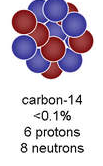 Your Inner H-Bomb Nuclear testing left a signature of radioactive carbon all around the world—in trees and sharks, in oceans and human bodies. Even as that signal disappears, it’s revealing new secrets to scientists. The Atlantic, Story by Carl Zimmer, 2 Mar 20,
 1 This Month

26 September – International Day for the Total Elimination of Nuclear Weapons


PLEASE OPPOSE HR 8255 AND S.3639 – bills would accelerate satellite deployment, with no environmental review or safeguards – https://ncstd5li.quorum.us/campaign/169331/
To see nuclear-related stories in greater depth and intensity – go to https://nuclearinformation.wordpress.com
-
Archives
- September 2026 (206)
- August 2026 (330)
- July 2026 (355)
- June 2026 (287)
- May 2026 (306)
- April 2026 (356)
- March 2026 (251)
- February 2026 (267)
- January 2026 (308)
- December 2025 (358)
- November 2025 (359)
- October 2025 (375)
-
Categories
- 1
- 1 NUCLEAR ISSUES
- business and costs
- climate change
- culture and arts
- ENERGY
- environment
- health
- history
- indigenous issues
- Legal
- marketing of nuclear
- media
- opposition to nuclear
- PERSONAL STORIES
- politics
- politics international
- Religion and ethics
- safety
- secrets,lies and civil liberties
- spinbuster
- technology
- Uranium
- wastes
- weapons and war
- Women
- 2 WORLD
- ACTION
- AFRICA
- Atrocities
- AUSTRALIA
- Christina's notes
- Christina's themes
- culture and arts
- Events
- Fuk 2022
- Fuk 2023
- Fukushima 2017
- Fukushima 2018
- fukushima 2019
- Fukushima 2020
- Fukushima 2021
- general
- global warming
- Humour (God we need it)
- Nuclear
- RARE EARTHS
- Reference
- resources – print
- Resources -audiovicual
- Weekly Newsletter
- World
- World Nuclear
- YouTube
-
RSS
Entries RSS
Comments RSS
 nuclear-news