Your Inner H-Bomb, Nuclear testing left a signature of radioactive carbon all around the world—in trees and sharks, in oceans and human bodies. Even as that signal disappears, it’s revealing new secrets to scientists. The Atlantic, by Carl Zimmer, 2 Mar 20,
In the morning of March 1, 1954, a hydrogen bomb went off in the middle of the Pacific Ocean. John Clark was only 20 miles away when he issued the order, huddled with his crew inside a windowless concrete blockhouse on Bikini Atoll. But seconds went by, and all was silent. He wondered if the bomb had failed. Eventually, he radioed a Navy ship monitoring the test explosion.
“It’s a good one,” they told him.
Then the blockhouse began to lurch. At least one crew member got seasick—“landsick” might be the better descriptor. A minute later, when the bomb blast reached them, the walls creaked and water shot out of the bathroom pipes. And then, once more, nothing. Clark waited for another impact—perhaps a tidal wave—but after 15 minutes he decided it was safe for the crew to venture outside.
The mushroom cloud towered into the sky. The explosion, dubbed “Castle Bravo,” was the largest nuclear-weapons test up to that point..
It was intended to try out the first hydrogen bomb ready to be dropped from a plane. Many in Washington felt that the future of the free world depended on it, and Clark was the natural pick to oversee such a vital blast. He was the deputy test director for the Atomic Energy Commission, and had already participated in more than 40 test shots. Now he gazed up at the cloud in awe. But then his Geiger counter began to crackle.
“It could mean only one thing,” Clark later wrote. “We were already getting fallout.”
That wasn’t supposed to happen. The Castle Bravo team had been sure that the radiation from the blast would go up to the stratosphere or get carried away by the winds safely out to sea. In fact, the chain reactions unleashed during the explosion produced a blast almost three times as big as predicted—1,000 times bigger than the Hiroshima bomb.
Within seconds, the fireball had lofted 10 million tons of pulverized coral reef, coated in radioactive material. And soon some of that deadly debris began dropping to Earth. If Clark and his crew had lingered outside, they would have died in the fallout.
Clark rushed his team back into the blockhouse, but even within the thick walls, the level of radiation was still climbing. Clark radioed for a rescue but was denied: It would be too dangerous for the helicopter pilots to come to the island. The team hunkered down, wondering if they were being poisoned to death. The generators failed, and the lights winked out.
“We were not a happy bunch,” Clark recalled.
They spent hours in the hot, radioactive darkness until the Navy dispatched helicopters their way. When the crew members heard the blades, they put on bedsheets to protect themselves from fallout. Throwing open the blockhouse door, they ran to nearby jeeps as though they were in a surreal Halloween parade, and drove half a mile to the landing pad. They clambered into the helicopters, and escaped over the sea.
As Clark and his crew found shelter aboard a Navy ship, the debris from Castle Bravo rained down on the Pacific. Some landed on a Japanese fishing boat 70 miles away. The winds then carried it to three neighboring atolls. Children on the island of Rongelap played in the false snow. Five days later, Rongelap was evacuated, but not before its residents had received a near-lethal dose of radiation. Some people suffered burns, and a number of women later gave birth to severely deformed babies. Decades later, studies would indicate that the residents experienced elevated rates of cancer. ……….https://www.theatlantic.com/science/archive/2020/03/how-nuclear-testing-transformed-science/607174/
The US government insurance scheme for nuclear power plant accidents no longer makes sense, Bulletin of the Atomic Scientists, By Victor Gilinsky, February 26, 2020 The Japan Center for Economic Research, a source sympathetic to nuclear power, recently put the long-term costs of the 2011 Fukushima accident as about $750 billion. Contrast that with the maximum of $13 billion that could be available after a catastrophic US nuclear accident under the plant owners’ self-insurance scheme defined by the Price-Anderson Act. The Act will have to be renewed before 2025; Congress should seize the opportunity not only to reflect on the lack of insurance in the event of a catastrophic accident, but also to reconsider our approach to nuclear power plant safety altogether.
Price-Anderson frees nuclear plant operators and all firms involved in nuclear construction and maintenance of any liability for offsite accident damage. The only chance for additional compensation lies in the act’s declaration that if accident damages exceed the legal limit “Congress will thoroughly review the particular incident” and will “take whatever action is determined to be necessary” to provide full compensation to the public. In short, a Fukushima-level accident would toss the costs of compensation and cleanup unto the lap of Congress. ……….
The main public risk of nuclear power plants comes from rare but devastating nuclear accidents. Because data on such accidents is sparse, the probability of their occurrence has to be calculated on the basis of a model, rather than obtained from experience. Moreover, the extent of an accident and its monetary consequences are postulated on the basis of models that are limited by analysts’ imagination. Who would have imagined, for example, that the Fukushima accident would involve several reactors? Or that Japan would subsequently shut down all its other nuclear power plants?……….
Curiously, from the chairman on down, the NRC misstates the legal standard for its safety decisions. The NRC and its staff claim their job is to provide “reasonable assurance of adequate protection,” whereas the standard in the Atomic Energy Act is “adequate protection.” Under the law, their job is to provide adequate protection, period. Do the commissioners think the extra cushion of “reasonable assurance” justifies weaker regulation?
To return to the Price-Anderson Act: As we’ve seen, a catastrophic accident would render the US self-insurance scheme for nuclear power plants pretty much irrelevant. But the indemnification of all industry participants would remain highly relevant: The industry would be free of any liability for offsite death or damage, whereas the victims would have to go hat in hand to Congress for restitution. This is an enormous subsidy—consider, again, the $750 billion and counting tab for Fukushima—that the federal government provides the nuclear industry, one without which not a single US nuclear power plant would or could operate. Freedom from liability also has had a perverse effect on nuclear safety. Without the liability protection of Price-Anderson, industry incentives to develop nuclear designs safer than light water reactors would surely have been higher.
Freedom from liability was put into law in the 1950s to get the US commercial nuclear power industry off the ground. It was meant to be temporary, until industry and insurers got some experience with the new technology. But even as time went on, industrial organizations like General Electric and Westinghouse would not participate in the civilian nuclear program if they risked responsibility for offsite damage from a nuclear plant accident………
What is clear is that the nuclear firms—the largest of which possess an understanding of nuclear safety far beyond that of the public—do not believe the NRC safety conclusions that the risk of a catastrophic nuclear accident is infinitesmal. Nor do they accept that probable risk—probability of an accident times the consequences, were one to occur—as the right measure of risk to their companies. They don’t want to risk their companies, period.
If they don’t believe the NRC numbers, why should the rest of us accept them?
Why shouldn’t we have the same protection from physical harm that the nuclear industry has from financial liability? And just as the nuclear vendors will not participate on terms that do not include indemnification from the overwhelming cost of a severe accident, so should the public have the analogous power to only accept future nuclear designs that can demonstrate that they preclude offsite harm. And the designs should demonstrate that level of safety in a clear way, based on physical principles, not on complicated probabilistic calculations put forward by interested parties.
Such new designs would eliminate the current dilemma of a federal nuclear self-insurance scheme that cannot, as a practical matter, cover the financial consequences to the public of catastrophic nuclear power plant accidents. But how to get there? One of the disincentives is the Price-Anderson Act’s limitations on industry liability for offsite accident consequences. That should get phased out. https://thebulletin.org/2020/02/the-us-government-insurance-scheme-for-nuclear-power-plant-accidents-no-longer-makes-sense/#
The Yucca Mountain nuclear waste site has always been a political football. Trump is the latest president to fumble, Bulletin of the Atomic Scientists, By Allison Macfarlane, February 21, 2020 “………Pressure to do something is building, though, as more reactors shut down around the country. Since 2013, nine reactors have permanently closed, and by 2025 at least six more are slated to join them. These 15 will join the 12 reactors already shut down, for a total of 27 around the country. Eleven of them have been or are being completely decommissioned, so all that will remain on site will be the spent fuel, awaiting a solution. Leaving spent fuel in dry storage in perpetuity is not a solution: The casks won’t last forever and will need to be changed out periodically (experts do not yet know how long they will last). Can the American public ensure that a benevolent government will exist 50, 100, or 1,000 years from now to carry out this task? We cannot.
Solutions” that aren’t. Both President Trump and Undersecretary Menezes referenced “innovative approaches” to dealing with spent nuclear fuel. Are there actual alternatives to a repository at Yucca Mountain? There might be alternatives to the Yucca Mountain site, but there is no escaping the need for a deep geologic repository to dispose of spent nuclear fuel. Numerous studies have come to this conclusion, including the US National Research Council, the Blue Ribbon Commission on America’s Nuclear Future established by the Obama administration to consider alternative strategies of nuclear waste disposal (I served on the commission), and a recent report out of Stanford and George Washington Universities (I was on the steering committee for the report).
Ideas such as “advanced” reactors that use waste as fuel, deep borehole disposal, and the perpetually-proposed reprocessing of spent nuclear fuel have all been presented as solutions to our current dilemma. None are.Studies that my colleagues and I have done, and the National Research Council consensus report, show that all reactors and reprocessing schemes produce wastes that are highly active and long-lived and therefore still require disposal.
The Trump administration appears interested in reviving reprocessing as a “solution” for spent nuclear fuel. It’s not a solution, simply a costly management strategy. The few countries that still reprocess spent fuel, such as France, plan to use a geologic repository for the high-level waste produced. France, in fact, has already selected a site for its repository. Even if somehow, as some claim, reprocessing reduced wastes to those dominated by 30-year half-lives, a repository would still be required as, again, institutions cannot be guaranteed to last 300 years, the amount of time needed for the waste to fully decay. With impending climate-change effects such as significant sea level rise by 2100, who knows what the world will look like in 300 years, both physically and politically?
Deep boreholes, though perhaps appropriate for some radioactive wastes, would be hard-pressed to handle spent fuel due in part to the narrow borehole diameter, limited to thin-walled canisters that can only hold one spent fuel assembly each. The thin walls and significantly more numerous canisters would increase worker doses and reduce the canisters’ strength to resist the overlying rock burden. The depth of the boreholes—up to 5 kilometers—and the limited ability to access them without disturbing the natural environment would result in a limited capability to adequately characterize the geologic environment at depth. Even more challenging would be to ensure that radioactivity cannot escape up the backfilled borehole.
Political innovations needed. All countries with commercial nuclear energy programs agree that geologic repositories are the only solution to the problem of spent nuclear fuel and high-level radioactive waste. The problems facing repositories are not primarily technical (though these exist), but political. Political innovations are truly needed to successfully site these facilities.
Such innovations already exist: Finland is currently constructing its deep geologic repository, and Sweden isn’t far behind. Switzerland, France, and Canada have all made significant progress in the last few years. The United States, in fact, is the only country with an operating deep geologic repository—the Waste Isolation Pilot Project that houses transuranic waste from the nuclear weapons complex in southeastern New Mexico—proving that it can be done here.
There are important lessons to learn from the mistakes and successes of these other programs: The host community must accept the site by a large majority; the host community must be compensated; it must be allowed to veto the site, up to a predefined point in the process; the process works best when the host community is allowed to participate in site development and conduct its own independent research; the nuclear waste management organization and the nuclear regulator must be trusted institutions; and the waste management organization must have the ability to manage its own budget and plan for the long term.
Alison MacFarlane hints on a heretical idea – “”The nuclear industry has found they can build new reactors—without a solution to their spent fuel problem””
omigawd, she’s ever so slightly raised what is the bleeding obvious! THEY SHOULD NOT BE BUILDING NUCLEAR REACTORS UNTIL THE WASTE PROBLEM IS SOLVED. No nuclear “expert” has ever had the guts to speak the common sense truth – WE MUST STOP MAKING RADIOACTIVE TRASH.
What happened inside the Georgia Nuclear Aircraft Lab? Finding the facts in the forest with Dr. James Mahaffey Jessica Taylor Dawson News jtaylor@dawsonnews.com Feb. 19, 2020,
Over half a century later, rumors still swirl around Dawson Forest and the mysterious remnants of Dawson County’s past in the Cold War.
Though the Georgia Nuclear Aircraft Facility has been out of commission for nearly 50 years, local residents can still be heard whispering about two-headed deer and oak leaves the size of elephant ears spotted around the nuclear facility’s remains.
For nuclear engineer and author, Dr. James Mahaffey, the task of unraveling the history behind Dawson County’s top-secret nuclear test site and separating facts from the fiction has led to decades of research and hard work. ………
On paper, it seemed feasible as an incredible amount of power could be housed in a very small space, however the findings from the Dawsonville laboratory proved that nuclear aircraft would take more than what was originally thought.
“Any nuclear reactor on this earth has shielding,” Mahaffey explained. “It’s got lead, concrete, steel, you know, heavy things to keep it from killing everybody, but you put it in an airplane and you can’t have concrete and steel and lead. It’s got to be naked.”
Components for nuclear-powered engines were assembled in a facility in Idaho then brought to Dawsonville for testing inside the reactor. In Mahaffey’s research, he discovered that the facility found that rubber tires either melted or turned to rock when exposed to different radiation. Hydraulic fluids turned into a tacky substance akin to chewing gum. Transistors in the radio system were immediately killed by radiation.
The other aspect of the Dawsonville facility was testing the effects of radiation on the environment and living creatures.
“What does flying over a farm with a nuclear aircraft do to the farm? Well, it kills everything on the ground. It kills trees, grass, crops, insects, birds, anything. It might even kill the farmer if he’s out looking at it so what are you going to do about that? And also, what happens when one of these things crashes,” Mahaffey said. “If a jet plane crashes you clean it up and you pay the people for the house that it destroyed and all that, but what if it’s a nuclear aircraft? Nuclear aircraft – when it crashes – it makes a five mile radius area contaminated with long lasting radionuclides and you have to fence it off so nobody can go there. Are you really willing to have that as part of your Air Force operations?”
The effects of radiation were tested through controlled experimentation but also through observation of what Mahaffey describes as “instant taxidermy” of animals caught inside the kill zone around the outside of the operational reactor.
“Any animal like a toad frog that happened to be hopping around on the ground when the reactor was turned on, he died and interestingly it also killed all the bacteria in and around the frog,” Mahaffey said.
“When those [bacteria] die, it doesn’t deteriorate so you have this dead frog that you can put on your mantle and it’ll just stay there.”
According to Mahaffey, the scientists conducted many experiments with animals including releasing rats and studying the effects of radiation on them.
“I heard a rumor that the largest animal they ever irradiated was a mule and the mule died of course, and like a toad frog it would not deteriorate in a normal way,” Mahaffey said.
Billions of dollars were poured into the Nuclear Aircraft Project that GNAL was part of during the 1960s, but funding was cut in the John F. Kennedy administration. The GNAL was closed in pieces and shut its completely in 1971.
The GNAL buildings inside Dawson Forest were dismantled and hauled away. The hot cell building, the only remaining structure still standing, was boarded up with stainless steel to keep intruders from entering the radioactive building. To this day, the building remains radioactive with particulates of Cobalt 60. ……
What makes Dawsonville’s secret nuclear facility stand out from other nuclear facilities for Mahaffey is the very detailed extent to which they dug into the dangers of nuclear fission products.
“An enormous amount of work was done to find out how having this reactor affects the environment. I’ll give them that,” Mahaffey said. “They wanted to find out how groundwater would transport radiation and they dug wells all over the facility, and they would have monitors monitoring what type of radiation, how much radiation and knew how fast radiation could transport in the environment.”
Great care went into studying radiation in the Etowah River including the construction of rafts to track and map the flow of radiation as well as the atmospheric effects of radiation.
The Palomares disaster occurred on Jan. 17, 1966, when an American B-52 bomber on a Cold War patrol exploded during a midair refueling accident, sending four hydrogen bombs hurtling toward the ground. They were not armed, so there was no nuclear detonation, but the conventional explosives in two of the bombs blew up on impact, scattering pulverized plutonium over a patchwork of farm fields and stucco houses.
Plutonium is extremely toxic, but it often acts slowly. The alpha-particle radiation it gives off travels only a few inches and would not penetrate skin. But inhaled plutonium dust can lodge in the lungs and steadily irradiate surrounding tissue, gradually inflicting damage that can cause cancer and other ailments, sometimes decades later. A single microgram absorbed in the body is enough to be harmful; according to declassified Atomic Energy Commission reports, the bombs that blew apart at Palomares contained more than 3 billion micrograms.
For Many Who Cleaned Up a Nuclear Mess, a Key Ruling Comes Too Late
Air Force veterans who dealt with a Cold War-era atomic accident in Spain won the right to sue collectively for health benefits — but not before many had lost battles with cancer.https://www.nytimes.com/2020/02/11/us/palomares-air-force-nuclear.htmlBy Dave Philipps SPRINGFIELD, Mo. — On Christmas Eve, Victor Skaar mailed a stack of letters to Air Force veterans he had served with in Palomares, Spain, scrawling a simple headline at the top of each one: “Great News!”
Mr. Skaar, a retired chief master sergeant, was one of 1,600 troops scrambled by the Air Force in 1966 to clean up a classified nuclear disaster by collecting debris and shoveling up plutonium-laced soil. Many were later stricken with cancer and other ailments, and tried without success to get the federal government to take responsibility and pay for their medical care.
He wanted to spread the word about an encouraging development: A lawsuit he had filed against the Department of Veterans Affairs had been certified as a class action, meaning that there was finally a chance to set the plutonium case straight, not just for him but for everyone who was there.
But his letters soon began trickling back to him: Undeliverable. No forwarding address. One brought a reply from a widow. Each one in his mailbox made his heart sink.
“For many of them, it’s too late,” he said of his comrades. “They’re gone.”
As one of the first cases ever granted class-action status by the Court of Appeals for Veterans Claims, the Skaar lawsuit represents a major step forward for veterans with long-term health issues linked to toxic exposure in the service.
‘First they told me there were no records, which I knew was a lie because I helped make them.’ Continue reading →
Nuclear power went backwards last year with the permanent shutdown of nine power reactors and the startup (grid connection) of six. Startups were concentrated in Russia (three) and China (two), with one in South Korea. The shutdowns were spread across eight countries.
Worse still for the industry – much worse – is the paucity of reactor construction starts. There were just three construction starts in 2019: one each in China and Russia, and Bushehr-2 in Iran which faces an uncertain future. No countries entered the nuclear power club in 2019 (construction starts or grid connections).
The average age of the global reactor fleet passed 30 years in 2019. That’s an old fleet, increasingly prone to accidents, large and small; increasingly prone to extended outages and thus increasingly uncompetitive in electricity markets.
As a result of the ageing of the reactor fleet, the International Atomic Energy Agency (IAEA) anticipates the closure of up to 139 GW from 2018‒2030 – more than one-third of current global capacity of 395 GW (including idle reactors in Japan). Based on IAEA figures, the industry will need about 10 new reactors (10 GW) each year just to match shutdowns.
The industry did indeed average nearly 10 construction starts from 2008‒13. But the number has sharply declined in the aftermath of the Fukushima disaster and catastrophic cost overruns. There were more construction starts in 2010 (16) than in 2016‒19 combined (15).
This table captures the birth, mid-life crisis (Fukushima) and death of the nuclear power mini-renaissance:
6-year period
2002-07
2008‒13
2014‒19
Construction starts
24
59
26
Average
4.0
9.8
4.3
Diana Ürge-Vorsatz, Vice-Chair of an Intergovernmental Panel on Climate Change Working Group, notes in the foreword to the World Nuclear Industry Status Report 2019: “Trend indicators in the report suggest that the nuclear industry may have reached its historic maxima: nuclear power generation peaked in 2006, the number of reactors in operation in 2002, the share of nuclear power in the electricity mix in 1996, the number of reactors under construction in 1979, construction starts in 1976. As of mid-2019, there is one unit less in operation than in 1989.”
The number of power reactors under construction has been falling slowly but steadily in recent years, from 68 in 2013 to 46 as of Jan. 2020 (52 according to the IAEA).
The Era of Nuclear Decommissioning
Currently, nuclear power reflects two contradictory dynamics. The earlier mini-renaissance is evident but will subside by the mid-2020s. The Era of Nuclear Decommissioning is in its infancy (with nine reactor closures, historians may mark 2019 as the beginning of this qualitatively new era) and will be in ever-sharper focus by the mid-2020s.
The Era of Nuclear Decommissioning will be characterised by a decline in the number of operating reactors; an increasingly unreliable and accident-prone reactor fleet as aging sets in; countless battles over lifespan extensions for aging reactors; an internationalisation of anti-nuclear opposition as neighbouring countries object to the continued operation of aging reactors; and escalating battles over and problems with decommissioning and waste disposal.
Until such time as the rot sets in, the nuclear industry can console itself with these 10-year figures indicating a marginal increase or decrease depending on whether reactors in long-term outage (most of them in Japan) are included or excluded. Including reactors in long-term outage is “misleading” and “clearly ridiculous” according to former World Nuclear Association executive Steve Kidd, because many of them may never operate again.
1. World’s first EPR nuclear power plant enters commercial operation with the Sept. 2019 commencement of commercial operation of the second of two EPR reactors in Taishan, China.
The original 2013/14 startup dates for Taishan 1 and 2 were missed by five years due to construction problems and safety concerns (including the extraordinary Creusot Forge scandal in France). Excavation work for the Taishan reactors began in 2008 and construction of the two reactors formally began in 2009 and 2010. China General Nuclear Power Corporation acknowledged a cost increase of 40 percent for the two Taishan reactors to US$11 billion. As a result of delays and cost overruns, the market for EPRs in China has all but evaporated.
The EPR reactor under construction at Flamanville, France, is 10 years behind schedule: construction began in Dec. 2007, the planned startup date was 2012, and EDF now says that commercial operation cannot be expected before the end of 2022. The current cost estimate of €12.4 billion (US$13.7 billion) is 3.8 times greater than the original estimate of €3.3 billion (US$3.6 billion).
The EPR reactor under construction at Olkiluoto, Finland, is 10 years behind schedule: construction began in April 2005, startup was anticipated in 2010, and startup is now scheduled in 2020. The current cost estimate of about €11 billion (US$12.2 billion) is 3.7 times greater than the original €3 billion (US$3.3 billion) price tag.
The estimated combined cost of the two EPR reactors under construction at Hinkley Point, UK, including finance costs, is £26.7 billion (US$35.0 billion) (the EU’s 2014 estimate of £24.5 billion plus a £2.2 billion increase announced in July 2017). A decade ago, the estimated construction cost for one EPR reactor in the UK was almost seven times lower at £2 billion. The UK National Audit Office estimates that taxpayer subsidies for Hinkley Point will amount to £30 billion (US$39.4 billion), while other credible estimates put the figure as high as £50 billion (US$65.6 billion).
Undeterred, POWER magazine claims that a 6-unit EPR project in India will be the world’s largest nuclear power plant “if completed as planned”. It would be a miracle if the project is completed as planned; indeed it would be a minor miracle if it even begins given funding constraints.
2. World’s first ACPR-1000 nuclear power plant begins commercial operation in China
Grid connections of ACPR-1000 reactors in China in 2018 and 2019 mark a significant achievement. But the broader picture is highly uncertain. There has only been one reactor construction start in China in the past three years. The number of reactors under construction has fallen sharply from 20 in 2017 to 10 currently. No-one knows whether or not the Chinese nuclear program will regain momentum. Wind and solar combined generated nearly double the amount of electricity as nuclear in 2018.
3. Akademik Lomonosov connects to grid
Estimated construction costs for Russia’s floating nuclear power plant (with two 32-MW ice-breaker-type reactors) increased more than four-fold and eventually amounted to well over US$10 million / megawatt (US$740 million / 64 MW). A 2016 OECD Nuclear Energy Agency report said that electricity produced by the plant is expected to cost about US$200 / MWh, with the high cost due to large staffing requirements, high fuel costs, and resources required to maintain the barge and coastal infrastructure.
The primary purpose of Russia’s floating nuclear power plant is to help exploit fossil fuel reserves in the Arctic – fossil fuel reserves that are more accessible because of climate change. That isn’t anything to celebrate; it is disturbing and dystopian.
4. Vogtle nuclear expansion progresses
Construction of the twin-AP1000 project in the US state of Georgia began in 2013 and the planned startup dates were April 2016 and April 2017. The project is 5.5 years behind schedule and it is unlikely that the revised completion dates of Nov. 2021 and Nov. 2022 will be met.
In 2006, Westinghouse claimed it could build one AP1000 reactor for as little as US$1.4 billion. The current cost estimate for the two Vogtle reactors – US$27‒30+ billion – is 10 times higher.
The Vogtle project only survives because of mind-boggling, multi-billion dollar taxpayer subsidies including US$12+ billion in loan guarantees, tax credits and much else besides. Westinghouse declared bankruptcy in 2017, largely as a result of its failed AP1000 projects in South Carolina (abandoned after the expenditure of at least US$9 billion) and Georgia, and Westinghouse’s parent company Toshiba was almost forced into bankruptcy and survives as a shadow of its former self.
5. NRC approves Clinch River nuclear site for small modular reactors (SMRs)
6. NuScale’s SMR design clears Phase 4 of NRC review process
But who will pay for SMRs? Industry won’t budge without massive taxpayer subsidies. A 2018 US Department of Energy report states that to make a “meaningful” impact, about US$10 billion of government subsidies would be needed to deploy 6 gigawatts of SMR capacity by 2035.
And the pro-nuclear authors of a 2018 article in the Proceedings of the National Academy of Science argue that for SMRs to make a significant contribution to US energy supply, “several hundred billion dollars of direct and indirect subsidies would be needed to support their development and deployment over the next several decades”.
The prospects for SMRs are just as bleak in other countries.
And as the AEMO/CSIRO GenCost 2019-20 report notes, SMRs in Australia would be 2-4 times more expensive per kW than wind and solar.
Using 12 years of satellite data, NASA scientists have measured how the influx of cold, fresh water is affecting the Beaufort Gyre, a major Arctic current.
A major ocean current in the Arctic is faster and more turbulent as a result of rapid sea ice melt, a new study from NASA shows. The current is part of a delicate Arctic environment that is now flooded with fresh water, an effect of human-caused climate change.
Using 12 years of satellite data, scientists have measured how this circular current, called the Beaufort Gyre, has precariously balanced an influx of unprecedented amounts of cold, fresh water — a change that could alter the currents in the Atlantic Ocean and cool the climate of Western Europe. Continue reading →
UNIVERSITY OF COLORADO AT BOULDER ABRUPT THAWING OF PERMAFROST WILL DOUBLE PREVIOUS ESTIMATES OF POTENTIAL CARBON EMISSIONS FROM PERMAFROST THAW IN THE ARCTIC, AND IS ALREADY RAPIDLY CHANGING THE LANDSCAPE AND ECOLOGY OF THE CIRCUMPOLAR NORTH, A NEW CU BOULDER-LED STUDY FINDS.
Permafrost, a perpetually frozen layer under the seasonally thawed surface layer of the ground, affects 18 million square kilometers at high latitudes or one quarter of all the exposed land in the Northern Hemisphere. Current estimates predict permafrost contains an estimated 1,500 petagrams of carbon, which is equivalent to 1.5 trillion metric tons of carbon.
The new study distinguishes between gradual permafrost thaw, which affects permafrost and its carbon stores slowly, versus more abrupt types of permafrost thaw. Some 20% of the Arctic region has conditions conducive to abrupt thaw due to its ice-rich permafrost layer. Permafrost that abruptly thaws is a large emitter of carbon, including the release of carbon dioxide as well as methane, which is more potent as a greenhouse gas than carbon dioxide. That means that even though at any given time less than 5% of the Arctic permafrost region is likely to be experiencing abrupt thaw, their emissions will equal those of areas experiencing gradual thaw.
This abrupt thawing is “fast and dramatic, affecting landscapes in unprecedented ways,” said Merritt Turetsky, director of the Institute of Arctic and Alpine Research (INSTAAR) at CU Boulder and lead author of the study published today in Nature Geoscience. “Forests can become lakes in the course of a month, landslides occur with no warning, and invisible methane seep holes can swallow snowmobiles whole.”
Abrupt permafrost thaw can occur in a variety of ways, but it always represents a dramatic abrupt ecological shift, Turetsky added.
“Systems that you could walk on with regular hiking boots and that were dry enough to support tree growth when frozen can thaw, and now all of a sudden these ecosystems turn into a soupy mess,” Turetsky said.
Why thawing permafrost matters
Permafrost contains rocks, soil, sand, and in some cases, pockets of pure ground ice. It stores on average twice as much carbon as is in the atmosphere because it stores the remains of life that once flourished in the Arctic, including dead plants, animal and microbes. This matter, which never fully decomposed, has been locked away in Earth’s refrigerator for thousands of years.
As the climate warms, permafrost cannot remain frozen. Across 80 percent of the circumpolar Arctic’s north, a warming climate is likely to trigger gradual permafrost thaw that manifests over decades to centuries.
But in the remaining parts of the Arctic, where ground ice content is high, abrupt thaw can happen in a matter of months – leading to extreme consequences on the landscape and the atmosphere, especially where there is ice-rich permafrost. This fast process is called “thermokarst” because a thermal change causes subsidence. This leads to a karst landscape, known for its erosion and sinkholes.
Turetsky said this is the first paper to pull together the wide body of literature on past and current abrupt thaw across different types of landscapes.
The authors then used this information along with a numerical model to project future abrupt thaw carbon losses. They found that thermokarst always involves flooding, inundation, or landslides. Intense rainfall events and the open, black landscapes that result from wildfires can speed up this dramatic process.
The researchers compared abrupt permafrost thaw carbon release to that of gradual permafrost thaw, trying to quantify a “known unknown.” There are general estimates of gradual thaw contributing to carbon emissions, but they had no idea how much of that would be caused by thermokarst.
They also wanted to find out how important this information would be to include in global climate models. At present, there are no climate models that incorporate thermokarst, and only a handful that consider permafrost thaw at all. While large-scale models over the past decade have tried to better account for feedback loops in the Arctic, the Intergovernmental Panel on Climate Change (IPCC)’s most recent report only includes estimates of gradual permafrost thaw as an unresolved Earth system feedback.
“The impacts from abrupt thaw are not represented in any existing global model and our findings indicate that this could amplify the permafrost climate-carbon feedback by up to a factor of two, thereby exacerbating the problem of permissible emissions to stay below specific climate change targets,” said David Lawrence, of the National Center for Atmospheric Research (NCAR) and a coauthor of the study.
The findings bring new urgency to including permafrost in all types of climate models, along with implementing strong climate policy and mitigation, Turetsky added.
“We can definitely stave off the worst consequences of climate change if we act in the next decade,” said Turetsky. “We have clear evidence that policy is going to help the north and thus it’s going to help dictate our future climate.”
Other coauthors on the paper include researchers from the University of Guelph, Brigham Young University, the United States Geological Survey, University of Alaska Fairbanks, University of Alberta, Northern Arizona University, Alfred Wegener Institute Helmholtz Centre for Polar and Marine Research, University of Potsdam, Stockholm University, Lawrence Berkeley National Laboratory, and the National Center for Atmospheric Research.
Schematic of a stainless steel nuclear waste canister, with radioactive particles (purple) trapped inside in glass and the acidic spiral that starts when water, steel, and glass are brought together. Guo et al/Nature Materials
By David Szondy January 28, 2020 A new study by researchers at Ohio State University suggests that stainless steel may not be the best choice for containing high-level nuclear waste. By simulating long-term storage conditions, the team found that the storage materials interact with each other more than previously thought, causing them to degrade faster.
The storage of nuclear waste is more than a perennial political football, it is an existential problem. Whatever one’s opinions about nuclear power or weapons, there are thousands of tons of nuclear waste temporarily stored around the world, meaning that a way must be found to store it all
safely in the long term.
The most important type of nuclear waste is the high-level waste left over from reprocessing nuclear fuel or from nuclear weapon production. Such waste is made up of a complex mixture of radioactive isotopes with half-lives ranging from years to millennia. Though reactors have been operating all over the world for over 75 years, only Finland has started to build a permanent storage facility for such very dangerous waste.
That may show a remarkable lack of political will or even courage, but perhaps this reluctance will turn out to be serendipitous. That’s because the favored way of storing high-level waste is to vitrify it. That is, to mix the isotopes with molten glass or ceramics to form a chemically inert mass that can be sealed in stainless steel canisters before being sealed in an underground storage facility.
That plan may now have to change if the Ohio study is correct. Led by Xiaolei Guo, the team took glasses and ceramics and put them in close contact with stainless steel in various wet solutions for 30 days in conditions similar to those that would be found in the proposed US Yucca Mountain nuclear waste repository.
In the real-life scenario, the glass or ceramic waste forms would be in close contact with stainless steel canisters,” says Xiaolei. “Under specific conditions, the corrosion of stainless steel will go crazy. It creates a super-aggressive environment that can corrode surrounding materials.”
They found that the steel interacted with the glass or ceramic to produce severe and localized corrosion that both damaged the steel and corroded and cracked the glass and ceramics. According to the team, this is because the iron in stainless steel has a chemical affinity with the silicon in glass, accelerating corrosion.
This indicates that the current models may not be sufficient to keep this waste safely stored,” says Xiaolei. “And it shows that we need to develop a new model for storing nuclear waste.”
This “interim storage” initiative is a statement of the failure of the nuclear industry and the federal government to address the most toxic waste we have ever created.
Nuclear power: Recycling a bad idea, Citizens Awareness Network By DEB KATZ, 1/26/2020Nuclear industry advocates always seem to come up with grand ideas that nuclear power will “solve” our energy problems. Now it’s a solution to climate change.
Their solutions always downplay any problems with high-level nuclear waste claiming that nuclear power is safe and finding a solution for its toxic waste is easy. If it’s so easy, why don’t they have a workable solution? Is it really just peoples’ unreasonable fears that obstruct the industry and the federal government from creating a final solution?
Originally we were told that there was no waste problem because the waste would be reprocessed and used again in bombs and new “breeder” reactors. That idea failed! Miserably! The only reprocessing facility for commercial nuclear waste that ever existed was West Valley in upstate New York and it shuttered after only five years because it contaminated the land and water around it with radiation. It remains a Superfund site to this day. Without the technology to safely reprocess it, nuclear fuel waste remains in fuel pools and dry storage at reactor sites all over the country.
Because of the threat of nuclear proliferation, where the waste is stolen and used as bomb material by evil forces, President Jimmy Carter ended the research on reprocessing and breeder reactors. Suddenly there was a “waste problem.” Carter commissioned a study to determine the best way to deal with the problem. The level of naivety, arrogance and thoughtlessness is remarkable. Some of the ideas included sending the waste into space, but a payload accident could contaminate the planet; placing the waste in a hole in Antarctica or Greenland ice and letting it melt down into the ocean bed was considered, but the waste would contaminate the ocean. Carter’s commission finally settled on deep geological burial in a hole or an abandoned mine.
All this was codified under the 1982 Nuclear Waste Policy Act (NWPA). Once established, investigations began to determine the best dump site/s. But every state that was identified as a potential site for a repository threatened to sue. Instituting the NWPA was in crisis. The NWPA was amended and Congress targeted Yucca Mountain because
Nevada had little political clout at the time.
After spending $14 billion of taxpayer money developing Yucca Mountain, it failed to meet the necessary criteria for safe isolation of the deadly material. With the failure of the federal government and the nuclear industry to establish Yucca Mountain as the national repository for nuclear waste, nuclear corporations were forced to establish onsite storage at their operating and shuttered reactor sites. Six out of nine reactors in New England have shuttered due to significant public opposition and their inability to compete with gas and renewables. These six sites are in varying degrees of cleanup. Without a “solution” as to dealing with the nuclear waste, these sites have devolved into ad hoc nuclear waste dumps. All have created onsite storage for their high level waste. It costs a lot to store the waste onsite — at least $5 million out of pocket for each year. This waste could remain onsite for decades if not centuries. So costs could really add up for corporations without any revenue. Naivety, arrogance, and thoughtlessness add up to a lot of money!
With waste piling up at shuttered reactor sites throughout the country, the industry has a perception problem. This is not a favorable image for an industry trying to reinvent itself as the answer to global warming. So what’s the industry’s answer? It wants to create “interim storage” dump sites in west Texas and New Mexico in working poor, Hispanic communities to make this problem disappear. These sites don’t have to meet the strict environmental standards that sunk Yucca Mountain— i.e., isolation from the environment for 1,000 years and isolation from groundwater for 10,000 years.
This “interim storage” initiative is a statement of the failure of the nuclear industry and the federal government to address the most toxic waste we have ever created. We don’t need more nukes; we don’t need half baked “solutions”. We need a commitment to put our best minds to solve this thorny problem. What is needed is a scientifically sound and environmentally just solution, not more magic or wish fulfillment. A qualified “panel” must be established and funded to create the standards required to meet the health and safety of the public and the planet, not the profit-driven, short-sighted monetary bottom line of a moribund industry.
Deb Katz is the executive director of the Citizens Awareness Network, which was founded locally in 1991 and has offices in Shelburne Falls and Rowe. Here’s a link to our website www.nukebusters.org.
Previously unreleased data offer unprecedented view into mining industry’s waste storage practices
GRID-ARENDAL 24 JAN 2020 ENVIRONMENTAL ORGANIZATION GRID-ARENDAL HAS LAUNCHED THE WORLD’S FIRST PUBLICLY ACCESSIBLE GLOBAL DATABASE OF MINE TAILINGS STORAGE FACILITIES. THE DATABASE, THE GLOBAL TAILINGS PORTAL, WAS BUILT BY NORWAY-BASED GRID-ARENDAL AS PART OF THE INVESTOR MINING AND TAILINGS SAFETY INITIATIVE, WHICH IS LED BY THE CHURCH OF ENGLAND PENSIONS BOARD AND THE SWEDISH NATIONAL PENSION FUNDS’ COUNCIL ON ETHICS, WITH SUPPORT FROM THE UN ENVIRONMENT PROGRAMME. THE INITIATIVE IS BACKED BY FUNDS WITH MORE THAN US$13 TRILLION UNDER MANAGEMENT.
Until now, there has been no central database detailing the location and quantity of the mining industry’s liquid and solid waste, known as tailings. The waste is typically stored in embankments called tailings dams, which have periodically failed with devastating consequences for communities, wildlife and ecosystems.
“This portal could save lives”, says Elaine Baker, senior expert at GRID-Arendal and a geosciences professor with the University of Sydney in Australia. “Dams are getting bigger and bigger. Mining companies have found most of the highest-grade ores and are now mining lower-grade ones, which create more waste. With this information, the entire industry can work towards reducing dam failures in the future.”
The database allows users to view detailed information on more than 1,700 tailings dams around the world, categorized by location, company, dam type, height, volume, and risk, among other factors.
“Most of this information has never before been publicly available”, says Kristina Thygesen, GRID-Arendal’s programme leader for geological resources and a member of the team that worked on the portal. When GRID-Arendal began in-depth research on mine tailings dams in 2016, very little data was accessible. In a 2017 report on tailings dams, co-published by GRID and the UN Environment Programme, one of the key recommendations was to establish an accessible public-interest database of tailings storage facilities.
“This database brings a new level of transparency to the mining industry, which will benefit regulators, institutional investors, scientific researchers, local communities, the media, and the industry itself”, says Thygesen.
The release of the Global Tailings Portal coincides with the one-year anniversary of the tailings dam collapse in Brumadinho, Brazil, that killed 270 people. After that disaster, a group of institutional investors led by the Church of England Pensions Board asked 726 of the world’s largest mining companies to disclose details about their tailings dams. Many of the companies complied, and the information they released has been incorporated into the database.
GRID-Arendal supports environmentally sustainable development by working with the UN Environment Programme and other partners. We communicate environmental knowledge that motivates decision-makers and strengthens management capacity. We transform environmental data into credible, science-based information products, delivered through innovative communication tools and capacity-building services.
In a Season of Impetuous Lawmaking, whither Nuclear Safety? The Leaflet SONALI HURIA, January 22,2020
In this piece, the author while discussing the issues around nuclear safety, debates on why it is important to re-examine the proposed Nuclear Safety Regulatory Authority Bill for better regulation, transparency, and liability. SINCE returning to power last year with an overwhelming majority in the 2019 general elections, the Modi-led government has passed a series of legislations in rapid succession without any credible dialogue both within and outside Parliament – …………even as there has been exceptional eagerness to push these amendments and pass new legislation, including notifying the Citizenship (Amendment) Act, 2019 despite intense country-wide protests and a raging debate on its underlying intent, there are urgent issues, such as, nuclear safety, which remain in indefinite suspension.
The UPA-II government, under Dr Manmohan Singh, had introduced the Nuclear Safety Regulatory Authority (NSRA) Bill in the Lok Sabha on 07 September 2011, aimed at replacing India’s existing nuclear regulator, the Atomic Energy Regulatory Board (AERB) with a purportedly improved and more autonomous Nuclear Safety Regulatory Authority (NSRA) which would have the mandate to ‘regulate nuclear safety and activities related to nuclear material and facilities’.
The Bill, however, which had been referred to the Department-related Parliamentary Standing Committee on Science and Technology, Environment and Forests, did not come up for discussion before the dissolution of the 15th Lok Sabha, and subsequently, lapsed. The Standing Committee had reportedly endorsed the Bill with only minor suggestions for changes, while two members of the Committee from the CPI(M), gave dissent notes, arguing that the Bill provided ‘no substantive autonomy’ to the proposed NSRA. According to available information, in April 2017, the Union Minister of State (Independent Charge) Atomic Energy and Space, Dr Jitendra Singh, in a written response to a question in the Lok Sabha had stated that a ‘fresh Bill’ similar to the earlier NSRA Bill, was ‘under examination’……….India’s nuclear regulatory framework has long been criticized for being so thoroughly enmeshed within the government structure so as to render its requisite independence, practically meaningless. Nuclear safety in India has been the remit of the AERB, which was set up in November of 1983 by an executive order of the Secretary of the DAE under Section 27 of the Atomic Energy Act, 1962, with modifications made in April 2000 to “exclude all BARC facilities from (its) oversight, (following) the declaration of BARC as a nuclear weapons laboratory”.
The AERB has had the dishonourable reputation of being subservient to India’s exclusively public sector operators, which it is required to monitor, and is also acknowledged as suffering from an acute lack of independence from industry and government.
As things stand, the AERB is responsible for monitoring the safety of the various nuclear facilities operated by agencies such as, the Nuclear Power Corporation of India Limited (NPCIL) and the Uranium Corporation of India Limited (UCIL), which fall under the purview of the Department of Atomic Energy (DAE). However, the Board is required to report to the Atomic Energy Commission (AEC), whose chairman is the Secretary of the DAE and one of whose members is the Chair of the NPCIL, and which overall, comes under the direct control of the Prime Minister of India. Thus, the regulatory board reports to the very agency it is required to assess and monitor in the interest of public safety.
Moreover, the AERB frequently draws upon the ‘expertise’ of scientists and engineers provided by the DAE – “almost 95% of the members in AERB’s review and advisory committees are drawn from among retired employees of the DAE, either from one of their research institutes like the Bhabha Atomic Research Center or a power generation company like the Nuclear Power Corporation of India Ltd.” – thus, calling into question the AERB’s functional autonomy.
Dr A Gopalakrishnan, the former Chairman of the AERB has been at pains to explain how the present institutional setup makes nuclear safety regulation in India a ‘mere sham’ and that for the AERB to function effectively, the DAE’s hold on the Board needs to be urgently done away with. In 1995, during Dr Gopalakrishnan’s tenure as the nuclear regulator, the AERB had prepared a comprehensive ‘Document on Safety Issues in DAE Installations’ – a report detailing nearly 130 safety issues across India’s nuclear installations with 95 of them having been designated ‘top priority’, to which the first reactions from the NPCIL and BARC according to Dr Gopalakrishnan, were of denial and questioning AERB’s own technical expertise to review safety matters.
A 2012 Performance Audit Report on the AERB prepared by the Comptroller and Auditor General of India (CAG) and submitted to the Indian Parliament labelled the AERB a ‘subordinate office, exercising delegated functions of Central government and not that of the regulator’.
The Public Accounts Committee (PAC) scrutinizing the CAG report in 2013 castigated the Regulatory Board for failing to prepare a ‘comprehensive nuclear radiation safety policy despite a specific mandate in its constitution order of 1983’. The International Atomic Energy Agency’s (IAEA) Peer Review of India’s Nuclear Regulatory Framework in 2015 was also categorical in asserting that the AERB was in need of being separated from ‘other entities having responsibilities or interests that could unduly influence its decision making’.
As has been pointed out by MV Ramana, physicist and author of The Power of Promise, there have been accidents of ‘varying severity’ at several of the nuclear facilities being operated by the DAE, yet the regulatory board has frequently been seen downplaying the seriousness of such incidents, “postponing essential repairs to suit the DAE’s time schedules, and allowing continued operation of installations when public safety considerations would warrant their immediate shutdown and repair”. The charade of the AERB’s professed independence is further underscored by its conspicuous silence on the recent cybersecurity breach at the Koodankulam Nuclear Power Plant in Tirunelveli District in Tamil Nadu in October 2019.
It is these glaring frailties of the nuclear regulatory framework coupled with the obdurate insistence of the Central government to massively expand its activities along the entire nuclear fuel cycle, despite unsettled safety concerns, a long-standing and vociferous people’sresistance against uranium mining and nuclear energy projects, and concerns surrounding the health, environmental, economic, and democratic costs of this expansion, that make imperative, the need for a fiercely independent and non-partisan nuclear regulator.
Does the proposed NSRA fit the bill?
The NSRA Bill, 2011 upon its introduction, had failed to invoke any enthusiasm among independent experts, nuclear sector watchers, and civil society actors, and instead, was met with grim scepticism given that among other things, it made light of the principle of ‘separation’ as required under Article 8 of the IAEA Convention on Nuclear Safety to which India is a State Party.
The NSRA Bill provides for the establishment of a ‘Council of Nuclear Safety’, headed by the Prime Minister and comprised of five or more Union Ministers, the Cabinet Secretary, Chairman of the AEC, and other ‘eminent experts’ nominated by the Central government, which in turn, will constitute ‘search committees’ to select the Chair and Members of the proposed Regulatory Authority. Moreover, under Article 14 of the Bill, the Chairperson and Members of the NSRA can be removed by an order of the Central government.
Dr Gopalakrishnan argues that the Bill makes only an ornamental show of granting independence to the NSRA by requiring the Authority to report to the Parliament instead of a government department, ministry or official. Concomitantly, however, the Bill also unambiguously provides for the supersession of and the assumption of ‘all the powers, functions and duties’ of the Authority by the Central Government, if in its ‘opinion’ the Authority fails to function in concert with the provisions of the proposed Act, and, requires the Authority to seek approval of the central government prior to initiating any interaction with nuclear regulators of other countries and/or international organizations ‘engaged in activities relevant to…nuclear/radiation safety, physical security of nuclear material and facilities, transportation of nuclear and radioactive materials and nuclear and radiation safety and regulation’.
Article 20 (q) of the Bill mandates the NSRA to ‘discharge its functions and powers in a manner consistent with the international obligations of India’. This provision, argues Dr Gopalakrishnan is deeply worrisome for it “could mean, that if the Prime Minister has promised the French President in 2008 that India would buy six European Pressurised Reactors (EPRs)…(this) unilateral and personal commitment…will now (be) labelled ‘India’s international obligation’, and the NSRA cannot question, even on strong safety grounds, the setting up of those six EPR units, since that will violate the said clause of the Bill” – this might prove disastrous for both, public and environmental safety in the long term.
Experts argue that far from separating the regulator from the government, these provisions contained in the NSRA Bill will only mean absolute government control over nuclear regulation, including over appointment and dismissal procedures, thus, opening the way for ‘pliant technocrats’ to occupy prominent positions within the Authority.
The proposed Bill is also fuzzy on the question of which nuclear facilities will fall under the purview of the NSRA – it empowers, for instance, the central government to exempt “any nuclear material, radioactive material, facilities, premises and activities” from the jurisdiction of the Authority, on grounds of ‘national defence and security’. ……….
These and other provisions of the Bill are a stark reminder that the DAE has no love lost for transparency and public oversight – take, for instance, Article 45 which requires the Chairperson, Members, and other employees of the Authority to sign a ‘declaration of fidelity and secrecy’ “to not communicate or allow to be communicated to any person not legally entitled to any information relating to the affairs of the Authority”. It is for these reasons that the former nuclear regulator, Dr Gopalakrishnan has described the proposed NSRA Bill as an exercise in ‘boxing in’ nuclear regulation “from all sides by government controls, diktats, and threats of retaliation”, thus making it even more emaciated than the existing nuclear regulator – the AERB. …..https://theleaflet.in/in-a-season-of-impetuous-lawmaking-whither-nuclear-safety/
from anonymous contributor, 22 Jan 2020, Some of What The USA Military , Corporations and government did to us on top of detonating several open air nuclear bombs on us.
My government had a missile base 60 miles from Uranium and downwinder hell in Utah. My governemt also detonated four atomic bombs under the river that went through my town, in the llate 1960s..
My government and military contractors launched hundreds of single and multistage missiles from Green River Utah to White Sands new mexico from 1965 to 1970. The missiles went to white sands New Mexico, which is approximately 900 miles from Green River Utah. Their trajectory took them over southern Utah National parks, the navajo, zuni, ute hopi and pueblo nativ,e reservations, and most of north and central New Mexico. White sands New Mexico is 925 miles from Green river utah. White sands new mexico is 50 miles from alamagordo New Mexico . Alamagorgo is where the fist Atomic bomb, in the world was detonated. The cold war, multibillion dollar Missile project tested single and multistage rockets and biological warfare payloads.
They tested payloads
The Green-White sands missile project was to test missile paylods over the south west usa. You can find sections of missiles that failed in the 900 mile stretch, from Green ricver to white sands nm. They launched hundreds of missiles and rockets Some of the missile-rockets failed and crashed into the desert, long before reaching their south central New Mexico destination clasw to the mexico usa border. There are missile carcasses and stages from southern utah to in the Canuyonlands national Park, The Grand Gulch National Nation Monument, in The Four Corners Area of the USA where Utah, Colorado and Arizona intersect. Missile parts and from failed missiles can also be found in the New Mexico and Utah Navajo reservations. There detritus of missiles can found by Farminton New Mexico , west of Santa Fe New Mexico, east of demming New mexico and by Socorro nm . The initial stages of multistage rockets are mostly in utah.
The military and government tested several biological weapon payloads, in the missiles-rockets that went from Utah to white sands new mexico.The army , and corporate contractors, put Biological Warfare payloads on missiles. with viruses and bacteria in them. They tested the a weaponized version of the Hanta Virus. They tested Hearty bacterial spores, like anthrax as well. They launched the biological warfare payloads with viruses and bacteria in special mediums to test the stability of the most Hearty virus and bacterial spore-systems in missile carrier systems.
The biological warfare medium-containing–payloads were on rockets that went from Green River Utah to White sands new mexico from 1965 to 1970.
Hannta virus did not exist in the United States of America in Humans, until 1990. It was weaponized by the United States government and corporations in the 1960s. The first Hanta Virus casualties recorded in the USA were a family of Navajos in New Mexico, in 1992. Hanta virus is has now apread to mice vectors in all parts of the United States of america. It is epidemic in the USA . I know because I once worked for an agency that treated and tracked it.
The 1993 Four Corners hantavirus outbreak was an outbreak of hantavirus that caused the first known human cases of hantavirus disease in the United States. It occurred within the Four Corners region – the geographic intersection of the U.S. states of Utah, Colorado, New Mexico, and Arizona – of the southwestern part of the country in the spring of 1993. This region is largely occupied by Native American tribal lands, including the Hopi, Ute, Zuni, and Navajo reservations, from which many of the cases were reported.
“The Discovery of Hantaan Virus: Comparative Biology and …
by KM Johnson · 2004 · Cited by 10 · Related articles
Nov 1, 2004 · They became infected by tissues of antigen-positive wild mice of that single species. … Dr. Lee named it “Hantaan,” after a small river near the border between the 2 Koreas, where human infection was isolated and endemic in the 1950s”
FROM “Brief Histories of Three Federal Military Installations in Utah: Kearns Army Air Base, Hurricane Mesa, and Green River Test Complex” (PDF). Utah Historical Quarterly. Utah State Historical Society. 34 (2). Spring 1966. Archived from the original (PDF) on October 29, 2013. Retrieved September 12, 2013. More than 100 employees of the [Atlantic Research]
The Utah Launch Complex was a Cold War military subinstallation of White Sands Missile Range for USAF and US Army rocket launches. In addition to firing Pershing missiles, the complex launched Athena RTV missiles with subscale warheads of the Advanced Ballistic Re-entry System to reentry speeds and impact at the New Mexico range. From 1964 to 1975 there were 244 Green River launches, including 141 Athena launches and a Pershing to 281 kilometers altitude. “Utah State Route 19 runs through the Green River Launch Complex, which is south of the town and eponym of Green River.”
John Wayne squares off against Jim Hansen, Medium, Albert Bates, 11 Jan 2020 “……. I greatly admire James Hansen ……. What annoys me, however, about Hansen, then and now, is his insistence, in utter disregard of best science, that nuclear energy can somehow save humanity from climate change because it is clean, safe, too cheap to meter and besides all that, is carbon-free. I watched with pity more than scorn when he took his time to repeat this nonsense at the recent UN climate conference in Madrid. He mounted fallacy upon fallacy in a pyramid of lies that had been heard since the 1940s coming from the Atomic Energy Commission, Nuclear Regulatory Commission, International Atomic Energy Agency and others in thrall to the atomic devil.
Of course all of those assertions by Hansen are utter nonsense. It just goes to show that being a good climate scientist doesn’t automatically give you a doctorate in health physics. I was blessed to have met many of the world’s preeminent health physicists in the 1970s and 1980s while representing atomic victims in battles for fair compensation and writing my fifth book, Climate in Crisis: The Greenhouse Effect and What We Can Do. ………
So, when James Hansen ignorantly opines that there were no radiation fatalities from Three Mile Island, Chernobyl, or Fukushima and that the new generation of thorium metal reactors is inherently safe, I try to not gag ……..
Comparing effluent to effluent, the Nuclear Regulatory Commission has reported that emissions from presently licensed facilities produced under normal operating conditions will cause 1.7 million cancers and birth defects in the world population, barring accidents. That several-hundred page report was summarized in the Federal Register in 1979 (46 Fed. Reg. 39580). However, it excluded consideration of health effects from tritium, Tc-99, C-13 and 14 and other radionuclide emissions that were too inaccurate to estimate, they said.
By too inaccurate they meant that tritium is easily incorporated into water, and so passes through living cells very easily, and carbon is the building block of organic chemistry, inseparable from life, so if one were to try to measure their impact inside the human body, the mortality and morbidity rates would need to be raised orders of magnitude higher than 1.7 million. This could make nuclear power unacceptable so, for reasons having to do with their institutional DNA, the NRC was not going to do that……….
It is not difficult to debunk Thorium-141’s popular mythology using simple physics, as Drs. Arjun Makhijani and Helen Caldicott have, because thorium is not a naturally fissionable element and so must first be mixed with enriched Uranium-235 or Plutonium-239 before it can be fissioned under controlled conditions to make steam for a power plant. To do that mixing, never mind the reacting, is a dangerous, deadly, polluting and extremely expensive process generating loads of long-lasting and unrecoverable poisons. After reaction, the thorium blend leaves dangerous wastes like U-232, a potent high-energy gamma emitter that can penetrate one meter of concrete and will have to be kept safely out of our air, food, and water forever.
……… Officially, TMI caused no immediate deaths. But unofficial investigations and lawsuits claimed there were above-average rates of cancer and birth defects in the surrounding area. Anecdotal evidence among the local human population has been devastating. Hansen would say that anecdotal evidence is not science, but when public health agencies are prohibited from doing the scientific studies that does not equate with no effects. We know from anecdotal evidence that large numbers of Pennsylvanians suffered skin sores and lesions that erupted while they were out of doors as the fallout rained down on them. Many quickly developed large, visible tumors, breathing problems, and a metallic taste in their mouths that matched that experienced by victims of Hiroshima, or who were exposed to nuclear tests in the South Pacific, Ukraine, Kazakstan, and Nevada.
Approximately 2 million people in the immediate area were exposed to doses that were sub-lethal for early exposure, but the latent genetic effects have been calculated, by Gofman among others, to cause life-shortening in the global population for perhaps one million people. Moreover, there is reason to suspect the doses those estimates are based upon were much lower than what may have actually occurred and gone unreported. Entire bee hives expired immediately after the accident, along with a disappearance of birds, many of whom were found scattered dead on the ground. A rash of malformed pets were born and stillborn, including kittens that could not walk and a dog with no eyes. Reproductive rates among the region’s cows and horses plummeted. The state and federal governments did nothing to track the health histories of the region’s residents. Instead, they significantly understated the scale of the release and the magnitude of the exposures, as later peer reviewed studies showed.
A National Institute of Health study in 1998 found “Results support the hypothesis that radiation doses are related to increased cancer incidence around TMI.”
Harvey Wasserman, writing for Common Dreams, said: “Meanwhile, the death toll from America’s worst industrial catastrophe continues to rise. More than ever, it is shrouded in official lies and desecrated by a reactor-pushing “renaissance” hell-bent on repeating the nightmare on an even larger scale.”
……….one thing for certain that can never be said of nuclear energy is that it is carbon neutral. Once you take into account the entire nuclear fuel cycle from exploration and mining, shipment of ores from Africa and China, milling, enrichment to fuel grade (enough gas and coal energy goes into that to power Australia), power generation, fuel removal and waste disposal, the fossil fuel footprint is so enormous as to be well beyond any suggestion of carbon neutrality.
[Here follows a long discussion on Marie curie, and then on John Wayne]
……… Declassified health physics reports from the Manhattan Project indicate that the senior scientists believed at least as early as 1945 that:
“. . . the genetic effect has no threshold and exposure is not only cumulative in the individual, but in succeeding generations. On this basis, there would be no tolerance dose, but rather an acceptable injury-limit.”[Parker, H.M., Instrument ation and Radiation Protection (March, 1947), Health Physics, 38:957,970, June 1980]
and:
“Even sub-tolerance radiations produce certain biological changes (cosmic rays are supposed to have some biological effects), so tolerance radiation is not what one strives to get but the maximum permissible dose.”[Morgan, K.Z., The Responsibilities of Health Physics, The Scientific Monthly, 93 (August 1946); reprinted in Health Physics 38:949–952, June 1980.]
The question of what percentage of the population can be acceptably damaged came first to the attention of the AEC at a meeting of the Advisory Committee on Biology and Medicine on January 16–19,1957. At this meeting the AEC advisors determined that a 20 percent increase in the rate of bone cancers and birth defects nationwide would be an “acceptable” effect of U.S. nuclear weapons testing activities. These scientists also acknowledged at this time that the long-term genetic effects were totally unknown.
The historical record indicates that prominent radiologists, health physicists, and geneticists of the time recognized even at the outset of America’s atomic power program that any large population exposure to even very minute amounts of ionizing radiation could create lingering public health problems and genetic damage, and these scientists went to some lengths, including sacrificing their own illustrious careers, to express their views publicly. [ long list of references given here]
[ discusses Fukushima]
….. atmospheric physicists should not opine on health physics. There is no dose of radiation below which there is not a negative biological effect. Indeed, there is a “superlinear” ratio of dose to effect at low doses, because doses that do not kill a cell cause genetic damage that is a larger health threat than dead cells, so humans and animals exposed to low doses are at greater health risk than those exposed to higher doses.
While there are hundreds of different radioactive isotopes within a nuclear reactor, the isotope Cesium-137 is easily measured and has become a standard by which to calculate impacts. During the two-day accident, 18 quadrillion becquerels of cesium were released into the Pacific (18 with 15 zeros). A typical abdominal or pelvic CT scan (the most often performed) is 14–18 thousandths of a becquerel, so during the accident the cesium dose to the environment was the same as about 1 quintillion (1 with 18 zeros) CT scans (repeated every second, continuously, for the next 300 to 600 years). Depending on the type of scan and the age and sex of the patient, a single CT scan will produce 1 cancer for 150 to 3300 exposures, or a median risk of 10 cancers per becquerel (or seivert). [table here on original]
By that calculation, the cesium released during the Fukushima accident was capable of causing roughly 10 quadrillion cancers, but with one important difference.
When you receive radiation treatment like a CT-scan it is sudden and one-off. One second. The technician presses the button and it is on and then off. There is no danger from the machine when it is off. When radioactive elements like cesium-137 (and remember that is just one of hundreds of elements in a nuclear reactor) are released to the environment, there is no off-switch. Thus, the cesium released during the Fukushima accident is capable of roughly 10 quadrillion cancers per second. Inhaling or ingesting it can kill a person, a dolphin or a seagull, but then as the individual’s body decomposes after death — as bacteria, worms and fungi eat away the flesh and bone — the isotope goes back into the food chain to strike another individual, and another, and so on. The danger is limited only by the isotope’s half-life — the time it takes to decay to a harmless element, which for cesium-137 is 30.17 years. Scientists generally use 10 or 20 half-lives to bracket safety concerns, so for cesium 137, “safe” levels arrive in 302 to 604 years (around year 2322 to year 2624), admittedly an imperfect measurement since any residue, no matter how microscopic, may still be lethal, as we have known since before the Manhattan Project. Cesium is one of 256 radionuclides released during Fukushima, so we would need to calculate quantities, biological effectiveness, and the decay time of each of those to get the full health picture. Other isotopes in the Fukushima fuel include Uranium-235, with a half-life of 704 million years, and Uranium-238, with a half-life of 4.47 billion years, or longer than the age of the Earth.
At Fukushima, the end of the accident was not the end of the story. In 2013, 30 billion becquerels of cesium-137 were still flowing into the ocean every day from the damaged and leaking reactor cores. That is 300 billion cancer doses per second of man-made cesium added every day, or 109.5 trillion cancer doses per second added every year. To stop this assault on ocean life, and our own, over the next 5 years the owner of the plant constructed more than 1000 tanks to hold contaminated water away from the ocean. In September 2019, the Japanese government announced that more than one million tons were in storage but that space would run out by the summer of 2022 so it planned to begin releasing those billions of bequerels to the ocean again.
Swimmers and sailors who plan to compete in open water events at the 2020 Tokyo Olympics might want to think about that, as might any who fish those waters or consume the catch.
What happens to ocean creatures who ingest radionuclides from leaking nuclear power plants is not very different from what happened to John Wayne, his sons and his co-stars. As the isotopes decay within the body of a dolphin or a coral polyp they send microscopic bullets hurling through DNA chains, causing tumors, sicknesses, defective offspring and death for untold generations. The chance that a single mutation will produce a beneficial result are less than one in a million. Radioactivity is, for practical purposes, forever, as we can see just by looking up at our Sun, a benevolent nuclear reactor providing us energy from the relatively safe distance of 93 million miles.
By Kathleen E. Bachynski, January 17, 2020 As we enter a new decade, headlines from across the world make all too clear that the effects of climate change are not just looming. They’re here, they’re now, and they’re devastating communities on every continent. For example, in Australia, unprecedented fires have emitted roughly 400 million tons of carbon, killed at least 25 people, and destroyed 2,000 homes. In Indonesia, terrible flooding has killed at least 67 people and caused 400,000 to abandon their homes. The loss of sea ice in the Arctic is shrinking access to food resources that numerous indigenous communities have depended on for generations.
But the health effects of climate change go beyond even the most immediate and obvious consequences of fires, floods, and melting ice. In November 2019, the medical journal The Lancet published a detailed report examining the effects that climate change will have on human health under two scenarios: one in which the world reins in emissions according to commitments laid out in the Paris agreement, and one in which the world does not. In both cases, children will be most vulnerable to the numerous health harms resulting from decisions made by their parents and grandparents. Children are particularly likely to suffer the effects of climate change for numerous reasons: Their immune and organ systems are still developing, they drink relatively more water and breathe in more air than do adults relative to their body weight, and they tend to spend more time outdoors. Understanding the full scope of the public health consequences of a changing climate, then, involves examining how the risks will affect the bodies of the youngest people.
According to the Lancet report, air pollution—specifically, exposure to fine particulate matter known as PM 2.5—represents the largest environmental risk factor for premature deaths across the globe. When people think of the public health effects of air pollution, they often imagine the worst-case scenarios. For example, the smoke from the fires in Australia is currently so severe that a day spent inhaling the air in east Sydney represents the equivalent of smoking 19 cigarettes.
But air pollution need not reach such extreme levels to cause serious harm. Far more commonly, people are unaware of the daily pollution that they are breathing in due to the burning of fossil fuels, such as coal and gas. In fact, more than 90 percent of children are exposed to concentrations of PM 2.5 higher than the World Health Organization’s guidelines on outdoor air pollution. Over a lifetime, unhealthy air damages lungs and increases risks for a host of diseases, from asthma to pneumonia. And due to their small body size and the factors cited above, children absorb more of this pollution than do adults.
Similarly, The Lancet report notes that children are particularly vulnerable to the effects of heat. Specifically, young children are at greater risk for experiencing electrolyte imbalance, fever, respiratory disease, and kidney disease during periods of extreme heat. Rates of heat-related deaths are four times higher among children younger than one year old as compared to people aged 1-to-44. Changing temperature and precipitation patterns are also influencing the transmission of disease from insects to humans. In particular, malaria and dengue are spread by mosquitoes, and climate suitability for transmission of these diseases is increasing in numerous parts of the world. Because children tend to spend more time outdoors, they are more likely to contract these diseases. In 2017, children accounted for 61 percent of all malaria deaths worldwide, and climate change is putting more children at even greater risk.
Changing climate patterns, droughts, and fires also threaten to reduce crop yields and increase food insecurity. Moreover, rising carbon dioxide appears to diminish the nutrient quality of crucial staple foods such as wheat and rice. Combined, these trends are likely to exacerbate the already serious global health problem of malnutrition, which currently accounts for nearly one-fifth of premature deaths and poor health globally. The consequences of malnutrition are particularly severe among children. In 2018, 22 percent of children under five years of age were stunted, meaning they experienced impaired growth and development. Stunting is largely irreversible and includes serious consequences, from poorer cognition to increased risk of nutrition-related chronic diseases later in life.
Finally, The Lancet report observes that climate change has other health implications that are more challenging to quantify but crucial to address, such as mental health effects. Researchers have found that children are at high risk of mental health problems following the types of natural disasters that are likely to increase due to climate change. For example, one study found that 31 percent of a group of children who were evacuated during Hurricane Katrina reported clinically significant symptoms associated with depression and Post Traumatic Stress Disorder. According to the Centers for Disease Control, children are at particular risk for stress after a disaster because they often understand less about what is occurring, feel less able to control events, and have less experience coping with difficult situations.
Protecting children from air pollution, heat-related deaths, infectious diseases, malnutrition, and mental health effects associated with climate change will involve the mobilization of all sectors of society to drastically reduce emissions and invest in health systems and infrastructure. The Lancet report notes a few promising signs, such as increased public and political engagement, and increasing health adaptation spending to improve communities’ resilience to a changing climate. Unfortunately, however, current efforts are falling far short of what is needed to meaningfully reduce carbon emissions on the scale needed to address the threat posed to human health. According to a 2019 United Nations report, greenhouse gas emissions must begin falling by 7.6 percent this year in order to meet the most ambitious goals laid out in the 2015 Paris climate accord. But the world is nowhere near this goal, and many countries are heading in the opposite direction. Notably, in 2018, energy-related carbon dioxide emissions rose by 2.7 percent in the United States. The United Nations has warned that every year of delay “brings a need for faster cuts, which become increasingly expensive, unlikely, and impractical.”
Waiting until action becomes more difficult, or perhaps even impossible, has appalling moral consequences. The longer we fail to act to address the risks of climate change, the more human lives we place on the line. And the majority of those lives will belong to the most vulnerable among us. It is no wonder, then, that children across the world have taken the lead in advocating for urgent, necessary action. The public health stakes for them—and for all people—grow higher with each passing year. Our health is fundamentally tied to our planet’s health. We must all consider, then, what actions we need to take to protect our planet—and thereby our communities, our children, and our selves.
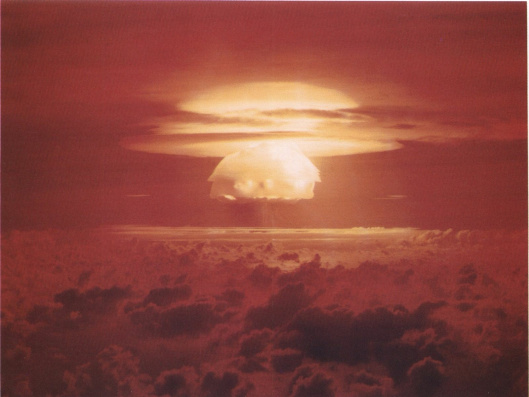
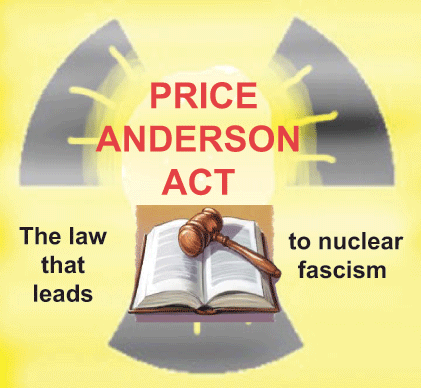

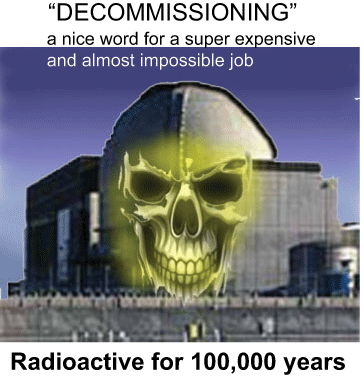

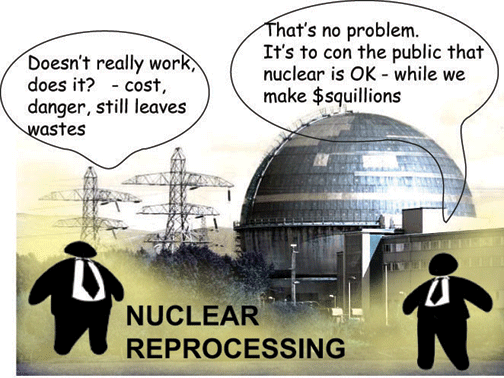

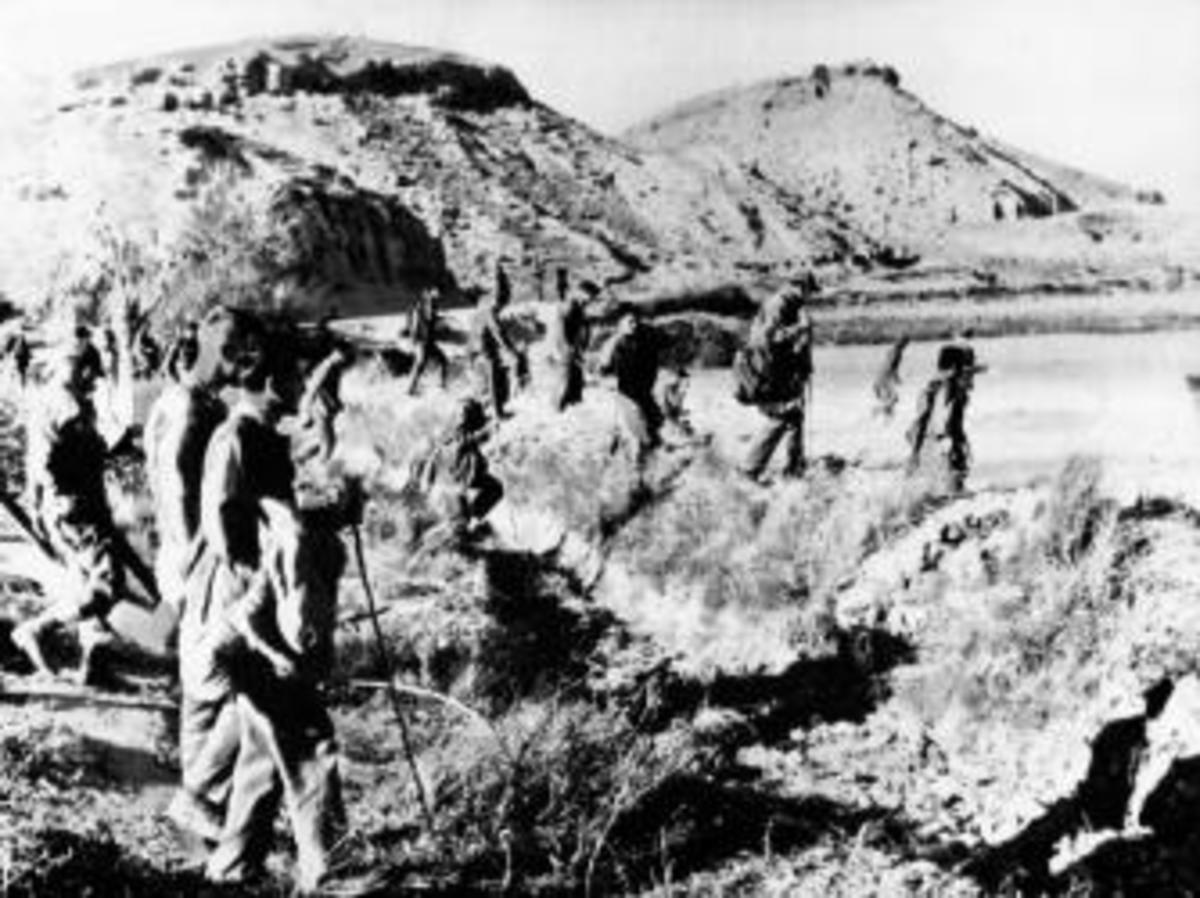


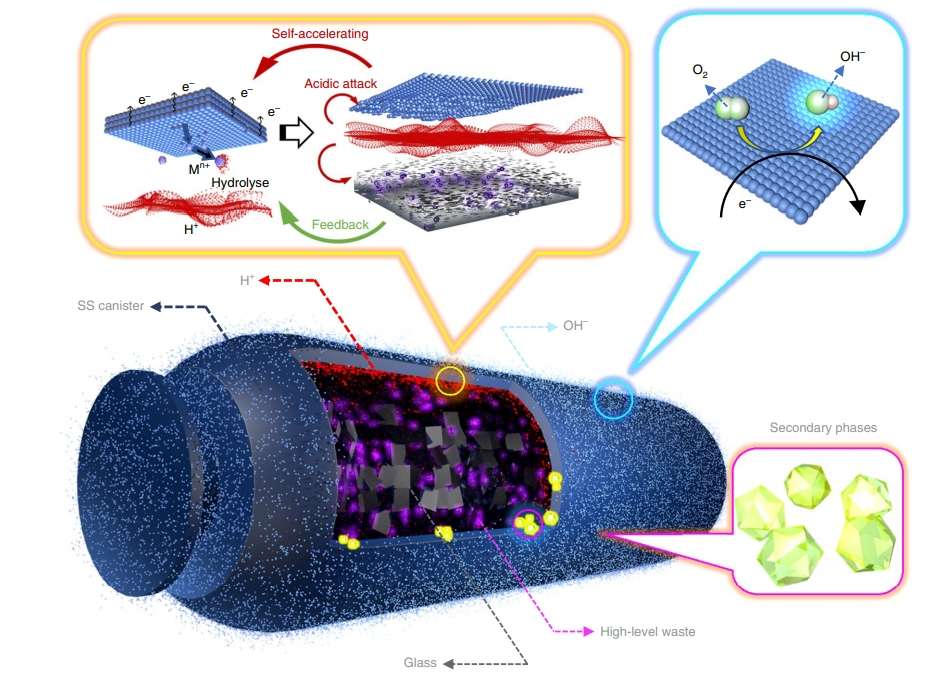


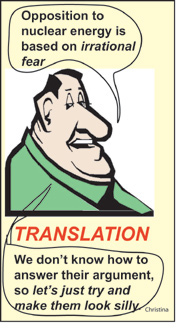


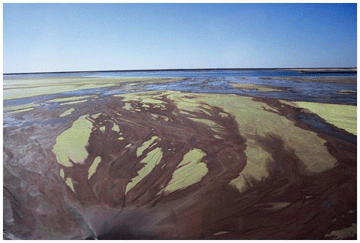
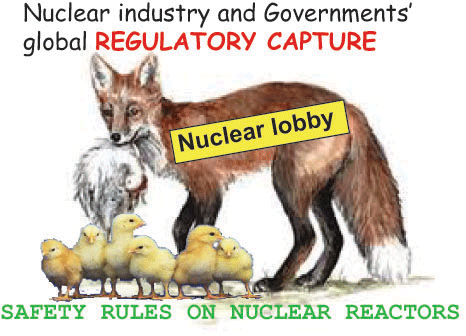









 nuclear-news