Nuclear lobby’s new gimmick -thorium reactors, does not impress
 NuClear News No.61 April 2014 There’s a modern mythology that suggests that thorium might be able to replace uranium and deliver a safer and cheaper nuclear reactor with more abundant fuel. In March press reports suggested that Chinese scientists have been told to accelerate plans to build the first fully-functioning thorium reactor within ten years, instead of 25 years as originally planned. The Telegraph said they “may do the world a big favour. They may even help to close the era of fossil fuel hegemony.” (1)
Jan Beránek, leader of Greenpeace International’s Energy Campaign says we’ve heard all this before. Thorium technology is in principal based on nuclear fission and therefore keeps fission’s inherent problems. While it partially addresses some of the downsides of current commercial reactors based on uranium (plutonium) fuel, such as limited reserves of uranium and unwanted production of plutonium and transuranic isotopes, it still has significant issues related to fuel mining and fabrication, reactor safety, production of dangerous waste, and the hazards of the proliferation of nuclear weapons. (2)
The Union of Concerned Scientists point out that thorium cannot be used by itself to sustain a nuclear chain reaction: it must be used together with a fissile material such as enriched uranium, uranium-233, or plutonium. The U.S. Department of Energy has concluded after a review that “the choice between uranium-based fuel and thorium-based fuel is seen basically as one of preference, with no fundamental difference in addressing the nuclear power issues [of waste management, proliferation risk, safety, security, economics, and sustainability].” (3)
UCS continues some people believe that liquid fluoride thorium reactors, which would use a high-temperature liquid fuel made of molten salt, would be significantly safer than current-generation reactors. However, such reactors have major flaws. There are serious safety issues associated with the retention of fission products in the fuel, and it is not clear these problems can be effectively resolved. Such reactors also present proliferation and nuclear terrorism risks because they involve the continuous separation, or “reprocessing,” of the fuel to remove fission products and to efficiently produce U-233, which is a nuclear weapon-usable material. Moreover, disposal of the used fuel has turned out to be a major challenge.
Even the UK Department of Energy and Climate Change commissioned a report which concluded in 2012 that the claims by thorium proponents who say that the radioactive chemical element makes it impossible to build a bomb from nuclear waste, leaves less hazardous waste than uranium reactors, and that it runs more efficiently, are “overstated“.http://www.no2nuclearpower.org.uk/nuclearnews/NuClearNewsNo61.pdf
Low level ionising radiation could be even worse than we thought
In addition to the detection of statistically significant levels of certain illnesses among the liquidator cohort, they have made the argument that, instead of being linear, radiation health effects are “bi-modal” at certain low dose levels i.e. more harmful than the linear model predicts.
 Radiation and the Ronald Reagan, China Matters, 10 April 14, “….. I address the tendency of governments to minimize/mislead/suppress information concerning radiation releases from nuclear accidents and the overall uncertainty pervading their efforts. ….
The biggest minefield in the issue of nuclear accidents is the issue of the health effects of radiation exposure. The international standard for nuclear safety is the “Linear No Threshold” or LNT model, which argues that the negative health impacts of low-level radiation exposure are, well, low. People who give credence to claims of extensive radiation-related illness as a result of nuclear accidents are frequently dismissed as cranks.Interestingly, the only place that is serious about emphasizing the health hazards of radiation is a country very much in the news today, Ukraine. Doing the right thing by Ukrainian citizens after the injustices inflicted by the Soviet Union on the Chernobyl front has been an important part of Ukrainian national identity, and claims of radiation-related illness are given a hearing largely denied to them in the West, Japan, or Russia.

The international pushback against academics trying to make the statistical and biomedical case for extensive Chernobyl-related illnesses has been intense, including the attempt to explain any statistically significant health effects as a combination of “radiophobia” (the debilitating fear occasioned by radiation exposure) and the overall decline in public health in Ukraine following the collapse of the Soviet Union.
In 2005 a symposium conducted by the IAEA, WHO, and UN concluded that only 50 people had died because of radiation exposure from the Chernobyl accident; that’s quite a distance from estimates of critics who think the toll might be as high as 50,000.In response, scientists such as Russia’s Elena Burlakova have carefully monitored the health of the sizable cohort of Chernobyl “liquidators” (the hundreds of thousands of workers who were exposed to high levels of radiation during cleanup at the plant and in the Chernobyl district) and conducted research to attempt to qualify the LNT standard for measuring the health effects of radiation exposure.
In addition to the detection of statistically significant levels of certain illnesses among the liquidator cohort, they have made the argument that, instead of being linear, radiation health effects are “bi-modal” at certain low dose levels i.e. more harmful than the linear model predicts.
Backhanded support for this challenge to the LNT model comes from a school of thought—“radiation hormesis”—now enjoying a certain vogue in the pro-nuclear crowd in Japan, that draws on the experience of inhabitants of Ramsar, a community of the Caspian Sea with high background radiation levels and low cancer rates, to argue that low levels of radiation are beneficial.
Challengers to the LNT model seem to be making some headway—the Bulletin of Atomic Scientists recently devoted a special issue to the subject—but there is considerable resistance to qualifying LNT and thereby admitting the possibility of rethinking and perhaps acknowledging the likelihood of extensive health problems from the release of low-level radiation by a nuclear accident.
Cleanup for a nuclear accident is expensive. In an ironic recapitulation of the uncertainty surrounding the magnitude and destination of Fukushima’s radiation releases, the total cleanup bill has been estimated in a range from $10 billion to $50 billion to $250 billion.
To paraphrase Everett Dirksen, ten billion here, ten billion there, pretty soon you’re talking about real money and the possibility that even rare and occasional nuclear accidents will push up the total cost of nuclear power to unacceptable levels.
Understandably, the nuclear industry and people who have staked their hopes on nuclear power as a greenhouse-gas free alternative to carbon-based electricity generation resist the idea of expanding the accepted definition of significant radiation-related health effects, and with it the cost of any accident.
There is also, perhaps, the temptation to let the radiation illness problem take care of itself i.e. shy away from investigations of radiation sickness that might yield inconvenient or perhaps politically or financially catastrophic conclusions while demographics does its grim work of culling the irradiated herd…… http://chinamatters.blogspot.com.au/2014/04/radiation-and-ronald-reagan.html
Canada narrows list of possible locations for nuclear waste facility
Some were also drawn by the fact that for taking part in the selection process, they’ll get $400,000 even if they’re not chosen, providing they advance far enough in the process and a DGR is ultimately approved.

7 of 22 municipalities dropped from list of potential sites
By Rick MacInnes-Rae, CBC News Posted: Apr 09, 2014
(Interactive map showing locations of possible nuclear dump sites on link)
Canada is a step closer to picking a place to store spent nuclear fuel underground for the next 100,000 years, a project that’s backfired on some of the world’s other nuclear economies.
Despite the stigma of radioactivity, 22 Canadian municipalities expressed interest in hosting such a facility. Four have now been moved up the list for further evaluation, while seven have been rejected as not suitable. The other 11 are still in the initial assessment phase.
Final approval could take another couple of decades, but if a site is found and approval given to build a Deep Geologic Repository (DGR), the project will generate thousands of jobs, some lasting generations.
Billions would be spent constructing a vast warehouse over 500 metres underground to contain some of the most radioactive waste in the world.
Deadly byproduct
Nuclear energy has helped meet Canada’s electricity needs for more than 40 years, but a deadly byproduct has been steadily building up as a result.
There’s a growing inventory of spent uranium pellets. The radioactive pellets are stored inside long silver tubes bundled together like 24-kilogram logs.

Spent uranium pellets from nuclear reactors are stored inside long silver tubes that are bundled together like 24-kilogram logs.
Heading the search for a secure place to store those tubes is the Nuclear Waste Management Organisation (NWMO), funded by Canada’s four nuclear agencies, which describes the situation this way: “If Canada’s entire current inventory of just over two million used fuel bundles could be stacked end-to-end, like cordwood, it would fit into six NHL-sized hockey rinks from the ice surface to the top of the boards.”
At present, spent fuel is stored at seven different sites across Canada, including at the reactors it once powered. But that’s not a long-term solution, because in time those reactors will be decommissioned and dismantled.
In its quest for a site, the NWMO took the novel step of asking Canadian communities if they’d think about hosting the highly-radioactive payload.
“Well, we didn’t know what to expect” said Jo-Ann Facella, director of social research and dialogue at the NWMO.
“We put out the plan that Canadians had come forward with and the government had selected as Canada’s plan. And an important part of that plan, it emerged from Canadians, is that these facilities only be implemented in a willing host.”
What also came back were expressions of interest from 22 different municipalities, tempted in part by the promise of employment if they’re chosen. Some were also drawn by the fact that for taking part in the selection process, they’ll get $400,000 even if they’re not chosen, providing they advance far enough in the process and a DGR is ultimately approved.
After a nuclear catastrophe, radiation victims become “unpersons”
When life becomes a shadow – after nuclear catastrophe, Ecologist Robert Jacobs 8th April 2014 Those caught up in nuclear disasters suffer many times over, writes Robert Jacobs. Ill-health and early death aside, they are also cut off from their former communities, identities and family life, and the victims of social and medical discrimination. Radiation makes people invisible. We know that exposure to radiation can be deleterious to one’s health; can cause sickness or even death when received in high doses.
But it does more. People who have been exposed to radiation, or even those who suspect that they have been exposed to radiation that never experience radiation related illnesses may find that their lives are forever changed – that they have assumed a kind of second class citizenship.
They may find that their relationship to their families, to their communities, to their hometowns, to their traditional diets and even traditional knowledge systems have become broken. They often spend the remainder of their lives wishing that they could go back, that things would become normal.
Unpersons
They slowly realize that they have become expendable and that their government and even their society is no longer invested in their wellbeing.
As a historian of the social and cultural aspects of nuclear technologies I have spent years working in radiation-affected communities around the world.
Many of these people have experienced exposure to radiation from nuclear weapon testing, from nuclear weapon production, from nuclear power plant accidents, from nuclear power production or storage, or, like the people in the community that I live, in Hiroshima, from being subjected to direct nuclear attack.
 For the last five years I have been working with Dr. Mick Broderick of Murdoch University in Perth, Australia on the Global Hibakusha Project. We have been working in radiation-affected communities all around the world. In our research we have found a powerful continuity to the experience of radiation exposure across a broad range of cultures, geographies, and populations.
Fukushima – the victims’ future is all too predictable
About half way between beginning this study and this present moment the nuclear disaster at Fukushima Daiichi happened here in Japan.
One of the most distressing things (among so many) since this crisis began is to hear so many people, often people in positions of political power and influence say that the future for those affected by the nuclear disaster is uncertain.
I wish that it were so, but there is actually a deep historical precedence that suggests that the future for the people of Tohoku is predictable.
In this short article I will outline some continuities to the experiences of radiation-affected people. Most of the following is also true for people who merely suspect that they have been exposed to radiation, even if they never suffer any health effects.
Many have already become a part of the experiences of those affected by the Fukushima disaster. There are, of course, many differences and specificities to each community, but there is also much continuity…….. http://www.theecologist.org/blogs_and_comments/Blogs/2351503/when_life_becomes_a_shadow_after_nuclear_catastrophe.html
Fukushima insects have significant and unprecedented deformities
PHOTOS: Study finds deformities “significantly higher” in Fukushima insects — “To my knowledge, such deformations haven’t been reported” in species before — Lower body split in half, 2 tail-like appendages — 1,000% higher death rate in young than other Japan area — Urgent investigations called for, 8 April 14 http://enenews.com/photos-study-finds-deformities-significantly-higher-in-sample-of-fukushima-insects-to-my-knowledge-such-deformations-have-not-previously-been-reported-in-species-lower-body-split-in-ha?utm_source=feedburner&utm_medium=email&utm_campaign=Feed%3A+ENENews+%28Energy+News%29

Nuclear industry PR ignores the latency period for cancer from radiation
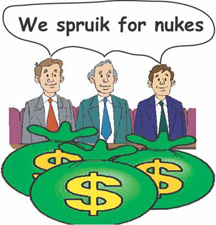 When life becomes a shadow – after nuclear catastrophe, Ecologist Robert Jacobs 8th April 2014“…….It is disingenuous when nuclear industry apologists say things like “no one died at Fukushima” since they are well aware that for most of the people who will eventually get sick this process will take time.
We are currently in the latency period for these illnesses, a point not missed by nuclear industry PR people.
Losses of homes, community and identity
Areas that experience radioactive contamination often have to be abandoned by those who live there. The levels of radiation may be high enough that continued habitation can be dangerous to health.
In these cases people lose their homes – often traditional homes that may have been the primary residences for a family for multiple generations. In these cases one’s identity may be deeply connected to the home and the land around the home.
For communities that have to be abandoned the bonds that have been built up and that sustain the wellbeing of the community are disintegrated. Friends are separated, extended families are often separated, and schools are closed.
People who have lived in the same place all of their lives have to make a fresh start, sometimes in old age, sometimes as children, and lose the communal structures that have supported them – shopkeepers who know them, neighbors who can be relied on, the simple familiarity that we have by being known and knowing our way around.
Loss of land and continuity
What is lost when a person is no longer able to eat an apple from a tree planted by their parent or grandparent? With the loss of community many people lose their way of making a living. This is especially true in less industrialized places where many people have been farmers or fishers or herders for generations.
When someone who has only known farming is taken from the land they have tended, when someone who is a fisher can no longer fish in areas where they understand the natural rhythms and habits of the fish, it can be impossible to start over.
Often such people are forced to enter service positions or become dependent on state subsidies, which further erodes their sense of self and wellbeing. Usually, those removed from their land because of contamination are placed into temporary housing.
In almost all cases this housing is not temporary, but becomes permanent. Since it is initially intended to be temporary housing it is often very shoddy and cramped.
It can become impossible for multigenerational families that have been living together for decades to remain together. This can remove care for the elderly, childcare for young families and further erodes to continuity of family identity, knowledge and support. Ill health from processed or radioactive food
Removal from land also is accompanied by the loss of a traditional diet. Those without access to the lands and seas that have provided food for their families for generations often begin a journey of ill health fostered by a new diet composed of processed foods.
In some communities such as the small villages around the former Soviet nuclear test site in Kazakhstan the people simply continue to live in dangerously contaminated homes. The state responsible for their exposures no longer exists and no government feels the responsibility to evacuate them.
They live very traditional lives and most of their food is from their own gardens and from livestock raised on their contaminated land. Many of the long-lived radionuclides simply cycle through this ecosystem and those living here can be contaminated and recontaminated over many generations.
Loss of traditional knowledge
In some remote places survival is dependent on centuries old understandings of the land. In Australia the areas where the British conducted nuclear testing in the outback are very difficult places to live.
Traditional communities in these areas often have songs that hold and transmit essential knowledge about how to survive in such a harsh environment, such as – where to find water, when to hunt specific animals, when to move to various areas.
When the British relocated them to live in areas hundreds of kilometers from their traditional homes this knowledge became broken. It became impossible for the refugee population to survive living a traditional life in areas where they had no knowledge of the rhythms of the land and animals.
This removal from their traditional lands led quickly to dependence on governmental assistance and severed what had been millennia of self-reliance. This led to the further erosion of community, familial and personal wellbeing……. http://www.theecologist.org/blogs_and_comments/Blogs/2351503/when_life_becomes_a_shadow_after_nuclear_catastrophe.html
Discrimination and the mental effects of being afflicted by ionising radiation
When life becomes a shadow – after nuclear catastrophe, Ecologist Robert Jacobs 8th April 2014 “……Discrimination
People who may have been exposed to radiation usually experience discrimination in their new homes and often become social pariahs. We first saw this dynamic with the hibakushain Hiroshima and Nagasaki.
They found it very difficult to find marriage partners since prospective spouses feared they would have malformed children, found it difficult to find jobs since employers assumed that they would be sick more often, and often become the targets of bullying. It became very common to hide the fact that one’s family had been among those exposed to radiation.
Many people are familiar with the story of Sadako Sasaki who died at the age of twelve after being exposed to radiation from the nuclear attack on Hiroshima ten years earlier.
Sadako folded paper cranes in accordance with a Japanese tradition that someone who folds 1,000 paper cranes is granted a wish. Sadako’s story has become well known and children around the world fold paper cranes when they learn her story, many of which are sent here to Hiroshima.
While Sadako has become a symbol of the innocence of so many hibakusha who were victims of the nuclear attack, her father tried to hide this fact so that his family would not suffer discrimination and was upset that his daughter had become so famously afflicted.
Fukushima victims bullied
Children whose families evacuated from Fukushima prefecture after the triple meltdowns at Fukushima found themselves the victims of bullying at their new schools. Cars with Fukushima license plates were scratched when parked in other prefectures.
Often this is the result of the natural fear of contamination that is associated with people exposed to a poison. In the Marshall Islands those who were evacuated from Rongelap and other atolls that became unlivable after being blanketed with radioactive fallout from the Bravo test in 1954 have had to live as refugees on other peoples atolls for several generations now.
The Marshall Islands have a very small amount of livable land and so being moved to atolls that traditionally belonged to others left them with no access to good soil and good locations for fishing and storing boats. They have had to live by the good graces of their new hosts, and endure being seen as interlopers.Becoming medical subjects – or ‘objects’?
Many people who have been exposed to radiation then become the subjects of medical studies, often with no information about the medical tests to which they are subjected.
For example Hibakusha of the nuclear attacks on Hiroshima and Nagasaki became medical subjects of the Atomic Bomb Casualty Commission during the American occupation of Japan after World War Two.
This study has continued to this day under the now jointly US-Japan operated Radiation Effects Research Foundation. In the early days of the study Japanese hibakusha had no choice about being subjected to the medical exams.
An American military jeep would appear in front of their homes and they had to go in for an examination, whether it was a good time or not. They were not given information about the results of their tests. This has happened in many radiation-affected communities.
In 1966 a US nuclear bomber blew up in midair and its debris fell on the small village of Palomares, Spain. Four H-bombs fell from the plane, one into the sea, and three onto the small village. None exploded but two broke open and contaminated part of the town with plutonium and other radionuclides.
To this day some of the residents of Palomares are taken to Madrid each year for a medical examination as the effects of exposure on their health is tracked.
They have never been given any of the results of the tests nor informed if any illnesses they develop were related to their exposures. They are subjects, not participants in the gathering and assessing of the effects of radiation on their bodies.
There is no doubt that such studies contribute data to our understanding of the health consequences of radiation exposures (the data itself is contentious for reasons that I won’t go into here), however for those from whom the information is gathered, being studied but not informed reduces ones sense of integrity and agency in one’s own health maintenance.
Many Pacific islanders exposed to radiation by the nuclear tests of the US, the UK and France had such experiences where they were examined and then sent off with no access to the results. Many report feeling as if the data had been harvested from them.
Anxieties belittled
Often the first thing that those exposed to radiation are told is that they have nothing to worry about. Their anxieties are belittled.
Radiation is a very abstract and difficult thing to understand. It is imperceptible – tasteless, odorless, invisible – adding to uncertainty that people feel about whether they were exposed, how much they were exposed to, and whether they and their loved one’s will suffer any health effects.
The dismissal of their anxieties by medical and governmental authorities only compounds their anxiety. When other members of their community develop health problems, such as thyroid cancer and other illnesses years later it can cast a pall over their own sense of wellbeing for the rest of their lives.
Every time that they run a fever, every time that they experience pain in their stomachs, nosebleeds, and other common ailments this anxiety rears up and they think – this is it, it’s finally got me. These fears extend to their parents, their children and other loved ones. Every fever that their child runs triggers horrible fears that their child will die.
Sadako was healthy for nine years following her exposure to radiation when she was two years old in Hiroshima. Then suddenly her neck began to swell and she was soon diagnosed with leukemia. This is the nightmare world that the parents of children exposed to radiation experience on a daily basis. Every ailment can rip them apart.
Radiophobia and ‘blaming the victim’ Radiophobia and ‘blaming the victim’
Iit is often the case that who is and isn’t exposed to radiation, especially to internalized alpha emitting particles, is unknown. So large numbers of people near a nuclear detonation, a nuclear production plant, a nuclear power plant accident, a uranium mining location and countless other sources of exposure to radiation worry about their health and the health of their loved ones.
Among this group, some have been exposed and some have not. The uncertainty is part of the trauma. Often, as is currently the case for the people of Northern Japan, all of these people are dismissed as having undue fear of radiation, and are often told that their health problems are the result of their own anxieties. In some cases that may well be true but it is beside the point.
For those who have experienced some radiological catastrophe – who may have been removed from their homes and communities and lost those bonds and support systems, who are uncertain as to whether each flu or stomach ache is the harbinger of the end, and who cannot be certain that contamination from hard to find alpha emitting particles is still possible when their children play in the park – anxiety is the natural response.
Even if it does cause health problems, it is not their fault: forces outside of their control have upended their lives and they now must live a life of uncertainty and often experience discrimination.
Of course they are going to suffer from the anxiety that this situation produces. To blame them for this is to blame the victims in the situation and is a further form of traumatization.
Their lives will be divided in two parts – before, and after
Radiation makes people invisible. It makes them second class citizens who no longer have the expectation of being treated with dignity by their government, by those overseeing nuclear facilities near to them, by the military and nuclear industry engaged in practices that expose people to radiation, and often by their new neighbors when they become refugees.
People exposed to radiation often lose their homes, either through forced removal or through contamination that makes living in them dangerous.
They lose their livelihoods, their diets, their communities, and their traditions. They can lose the knowledge base that connects them to their land and insures their wellbeing.
Radiation can cause health problems and death, and even when it doesn’t it can cause devastating anxiety and uncertainty that can become crippling. Often those exposed to radiation are blamed for all of the problems that follow their exposures.
After a nuclear disaster we count the victims in terms of those who died – but they are only a small fraction of the people who are truly victimized by the event. Countless more suffer the destruction of their communities, their families, and their wellbeing. The devastation that a nuclear disaster truly wreaks is unknowable.
The lives of those exposed to radiation, or those in areas affected by radiation but uncertain about their exposures, will never be the same. As Natalia Manzurova, one of the ‘liquidators’ at Chernobyl said in an interview published two months after the Fukushima triple meltdowns:
“Their lives will be divided into two parts: before and after Fukushima. They’ll worry about their health and their children’s health. The government will probably say there was not that much radiation and that it didn’t harm them. And the government will probably not compensate them for all that they’ve lost. What they lost can’t be calculated.”
Three Mile Island nuclear accident: 35 years later the lies continue
Three Mile Island – 35 years on http://www.theecologist.org/News/news_analysis/2334940/three_mile_island_35_years_on.html Linda Pentz Gunter 28th March 2014 Thirty-five years ago today the USA had its worst ever civilian nuclear accident with a reactor meltdown at Three Mile Island. Linda Pentz Gunter reports on the lies and cover ups about the true scale of the radiation release and its impacts on human health. Today marks 35 years since the meltdown at Unit 2 of the Three Mile Island (TMI) nuclear power plant near Harrisburg, Pennsylvania. Despite the long passage of time, myths and misinformation about the disaster still abound. Many questions may remain permanently unanswered.
The consequences of the TMI disaster were made more serious because, early on, emergency planning officials were repeatedly misinformed about the disaster’s progression and kept in the dark about the need for public protective actions.
Ironically, despite today’s popular ‘too much information’ shorthand, TMI is a story of ‘too little information’. What the public believes about TMI is far removed from what really happened. Continue reading
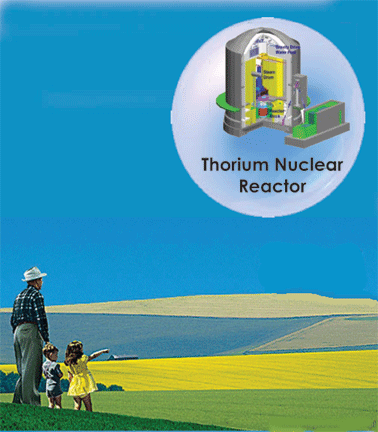
Thorium – the nuclear power fuel of the perpetual future
Clamping down on tweets Mar 26th 2014, by Economist.com Thorium the wonder fuel of Tomorrowland by Oliver Morton HOW the Doppler effect helped locate the likely remains of MH370, why thorium will not be the fuel of tomorrow and how Turkey (tried to) shut Twitter down
How to limit your exposure to electromagnetic radiation
Waves of uncertainty over wi-fi Stuff.co.nz 29 March 14“……..CUT BACK ON YOUR EXPOSURE
MOBILES AND DEVICES
Before buying a cellphone or internet-capable device, check out its SAR (specific absorption rate) rating – though in New Zealand you’ll likely have to go online for this information. The SAR measures how much the device’s emissions are absorbed by the body. Lower ratings indicate lower absorption.
Ensure your mobile has flight mode and use this as often as you can, including overnight, and when carrying it close to your body.
For long computing tasks, select a wired desktop or plugged-in laptop, rather than a wireless tablet.
Avoid holding a laptop or device on your lap or stomach – use a table instead, unless it’s in flight mode.
When you can, choose a text over a call. Keep phone calls to a minimum or use a hands-free kit.
Keep calls to a minimum where reception is bad – when a mobile is far from a cell tower, it has to boost its signal to connect.
Choose a wired mouse and keyboard.
CORDLESS PHONES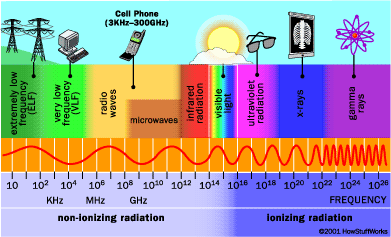
If possible, choose corded devices, or purchase one with speaker-phone capabilities.
Keep the main transmitting base of the cordless phone away from bedrooms and desks.
Keep calls short.
WI-FI
When installing a transmitting unit, ask for it to be put up high, such as on the wall or a shelf, away from bedrooms or where people sit.
Only turn the system on when you’re using it. Make sure the router is turned off overnight, especially.
Choose software on a laptop rather than cloud-computing technology such as Google Docs, if you’re using wi-fi. Typing in a Google Docs word processing means a wi-fi signal is sent with every single keystroke.http://www.stuff.co.nz/dominion-post/news/9882716/Waves-of-uncertainty-over-wi-fi
How the Intergovernmental Panel on Climate Change works
 Explainer: how are IPCC reports written? , The Conversation, 29 March 14 David Karoly, Professor of Atmospheric Science at University of Melbourne This week in Yokohama, Japan, a group of scientists and representatives of more than 120 governments are meeting to approve the report Climate Change 2014: Impacts, Adaptation and Vulnerability. They will also agree on its Summary for Policymakers – an arduous process of negotiation and line-by-line approval. On Monday they will release it to the media and public.
This is the second part of the Assessment Report of the IPCC. It follows last September’s release of the first part, Climate Change 2013: The Physical Science Basis.
The IPCC was established in 1988 to undertake comprehensive assessments of the scientific basis of climate change and the impacts and future risks to different sectors and regions. It also assesses the options for adapting to these impacts, and opportunities to mitigate climate change.
The IPCC is the accepted global authority on climate change. A recent explainer on The Conversation has described the structure of the IPCC and how it works.
It has three “Working Groups”: one on Climate Change Science; one on Impacts, Adaptation and Vulnerability; and one that deals with Mitigation of Climate Change. They work together to prepare comprehensive Assessment Reports roughly once every six years. The IPCC Third Assessment Report was released in 2001 and the Fourth Assessment Report in 2007.
Now we are in the middle of the release of the various parts of the Fifth Assessment Report, one from each Working Group and finally the Synthesis Report, to be released later this year.

How are the reports written?
The IPCC assessments are written by hundreds of leading scientists who volunteer their time. They undertake comprehensive assessments of the scientific literature across a very wide range of topics relevant to climate change. The reports are required to present policy-relevant information, but it must be presented in a policy-neutral manner, so there are no recommendations in any IPCC assessment.
Each part of the report goes through three stages of drafting and review by experts and governments. All review comments and the responses from the authors on how they addressed the comments are made public. This review process is more open and comprehensive than for any other scientific publication or assessment, including the peer-reviewed science publications on which the reports are based.
The final stage, the approval of the Summary for Policymakers, is often misunderstood. The government representatives go through the final draft line by line, seeking to ensure that the text is scientifically accurate, that any uncertainties are carefully explained, and that the language is as clear as possible. The authors of the chapters ensure their scientific accuracy and can veto any text that they consider to be inaccurate. Every line is approved by consensus by the representatives of all the governments present. It takes a long time.
A very helpful explainer on how to read an IPCC report was published on The Conversation last September.http://theconversation.com/explainer-how-are-ipcc-reports-written-24641
Be cautious with devices that give off electromagnetic radiation
Waves of uncertainty over wi-fi Stuff.co.nz 29 March 14“……..CUT BACK ON YOUR EXPOSURE
MOBILES AND DEVICES
Before buying a cellphone or internet-capable device, check out its SAR (specific absorption rate) rating – though in New Zealand you’ll likely have to go online for this information. The SAR measures how much the device’s emissions are absorbed by the body. Lower ratings indicate lower absorption.
Ensure your mobile has flight mode and use this as often as you can, including overnight, and when carrying it close to your body.
For long computing tasks, select a wired desktop or plugged-in laptop, rather than a wireless tablet.
Avoid holding a laptop or device on your lap or stomach – use a table instead, unless it’s in flight mode.
When you can, choose a text over a call. Keep phone calls to a minimum or use a hands-free kit.
Keep calls to a minimum where reception is bad – when a mobile is far from a cell tower, it has to boost its signal to connect.
Choose a wired mouse and keyboard.
CORDLESS PHONES
If possible, choose corded devices, or purchase one with speaker-phone capabilities.
Keep the main transmitting base of the cordless phone away from bedrooms and desks.
Keep calls short.
WI-FI
When installing a transmitting unit, ask for it to be put up high, such as on the wall or a shelf, away from bedrooms or where people sit.
Only turn the system on when you’re using it. Make sure the router is turned off overnight, especially.
Choose software on a laptop rather than cloud-computing technology such as Google Docs, if you’re using wi-fi. Typing in a Google Docs word processing means a wi-fi signal is sent with every single keystroke.http://www.stuff.co.nz/dominion-post/news/9882716/Waves-of-uncertainty-over-wi-fi
Negligence of USA govt in not testing seafood for Fukushima radiation
School Science Project Reveals High Levels Of Fukushima Nuclear Radiation in Grocery Store Seafood Investment Watch By Michael Snyder March 27th, 2014 “……..Meanwhile, PBS reporter Miles O’Brien has pointed out the extreme negligence of the U.S. government when it comes to testing seafood for Fukushima radiation. The following comes from a recent EcoWatch article…
O’Brien also introduces us to scientists from the Woods Hole Oceanographic Institute who have been testing waters around the reactors—as well as around the Pacific Rim—to confirm the levels of Fukushima fallout, especially of cesium.
These scientists are dedicated and competent. But they are also being forced to do this investigation on their own, raising small amounts of money from independent sources. They were, explains lead scientist Ken Buesseler, turned down for even minimal federal support by five agencies key to our radiation protection. Thus, despite a deep and widespread demand for this information, no federal agency is conducting comprehensive, on-the-ground analyses of how much Fukushima radiation has made its way into our air and oceans.
In fact, very soon after Fukushima began to blow, President Obama assured the world that radiation coming to the U.S. would be minuscule and harmless. He had no scientific proofthat this would be the case. And as O’Brien’s eight-minute piece shows all too clearly, the “see no evil, pay no damages” ethos is at work here. The government is doing no monitoring of radiation levels in fish, and information on contamination of the ocean is almost entirely generated by underfunded researchers like Buesseler.
A video news report in which O’Brien discusses these issues is posted below https://www.youtube.com/watch?v=QIjJlK5EWOw
Fishing for data in the radioactive waters off Fukushima It is the job of the authorities to keep us safe, and the Fukushima nuclear disaster was the worst nuclear disaster in human history.
So why aren’t they doing testing?
Why aren’t they checking to make sure that this radiation is not getting into our food chain? Continue reading
Rokkasho a big-box store for nuclear terrorists.

After spending tens of billions of dollars and decades on breeder-related programs, Tom Cochran said, countries find it hard to pull the plug.
“You have an entrenched bureaucracy and an entrenched research and development community and commercial interests invested in breeder technology, and these guys don’t go away,” Cochran said. “They’re believers … and they’re not going to give up. The really true believers don’t give up.”……..
“Stealing a weapon is too hard,” Cochran said. “But there is no big risk in fuel assemblies, or in taking things from a bulk handling facility that can be used to make weapons.” In this view, Rokkasho is a kind of big-box store for would-be nuclear terrorists.
A Washington-based physicist and nuclear contrarian, Cochran helped kill a vast plutonium-based nuclear industrial complex back in the 1970s, and now he’s at it again — lecturing at symposia, standing up at official meetings, and confronting nuclear industry representatives with warnings about how commercializing plutonium will put the public at enormous risk.
Where the story ends isn’t clear. But the stakes are large. Continue reading
Why plutonium is so dangerous
 A World Awash in a Nuclear Explosive? TruthOut, 19 March 2014 12:24 By Douglas Birch and R. Jeffrey Smith, Center for Public Integrity | Report Washington “……..Just a Few Pounds Worth of Plutonium? There’s been a ghoulish debate between officials and independent scientists about how much plutonium is needed to fuel a clandestine bomb. But both agree it’s not much.
The U.S. bomb that destroyed half of Nagasaki in 1945 had 6.2 kilograms of plutonium in it, or 13.6 pounds. But experts say it was over-engineered — only one kilogram fissioned, they concluded later.
The International Atomic Energy Agency nonetheless decided years ago that eight kilograms of plutonium, or 17.6 pounds, are needed to make a bomb and so that’s the quantity its monitoring is geared to stop from getting loose.
Cochran and his NRDC colleague Christopher Paine challenged the IAEA standard in 1995 with a study concluding that only 3 kilograms — 6.6 pounds — would be needed to fashion a “very respectable” bomb with the explosive power of a kiloton, or 1,000 tons of TNT. But no matter who is right, Rokkasho’s annual plutonium production would be enough for 1,000 weapons or more. Continue reading
1 This Month



26 September – International Day for the Total Elimination of Nuclear Weapons


PLEASE OPPOSE HR 8255 AND S.3639 – bills would accelerate satellite deployment, with no environmental review or safeguards – https://ncstd5li.quorum.us/campaign/169331/
To see nuclear-related stories in greater depth and intensity – go to https://nuclearinformation.wordpress.com
-
Archives
- September 2026 (245)
- August 2026 (330)
- July 2026 (355)
- June 2026 (287)
- May 2026 (306)
- April 2026 (356)
- March 2026 (251)
- February 2026 (267)
- January 2026 (308)
- December 2025 (358)
- November 2025 (359)
- October 2025 (375)
-
Categories
- 1
- 1 NUCLEAR ISSUES
- business and costs
- climate change
- culture and arts
- ENERGY
- environment
- health
- history
- indigenous issues
- Legal
- marketing of nuclear
- media
- opposition to nuclear
- PERSONAL STORIES
- politics
- politics international
- Religion and ethics
- safety
- secrets,lies and civil liberties
- spinbuster
- technology
- Uranium
- wastes
- weapons and war
- Women
- 2 WORLD
- ACTION
- AFRICA
- Atrocities
- AUSTRALIA
- Christina's notes
- Christina's themes
- culture and arts
- Events
- Fuk 2022
- Fuk 2023
- Fukushima 2017
- Fukushima 2018
- fukushima 2019
- Fukushima 2020
- Fukushima 2021
- general
- global warming
- Humour (God we need it)
- Nuclear
- RARE EARTHS
- Reference
- resources – print
- Resources -audiovicual
- Weekly Newsletter
- World
- World Nuclear
- YouTube
-
RSS
Entries RSS
Comments RSS
 nuclear-news