Experts say that the government’s measures against harmful rumors are “an extension of what we’ve been doing for 10 years.
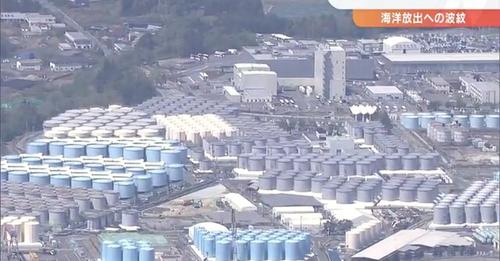
We have been reporting in this series about the ripple effect of the release of tritiated water into the ocean.
Many people concerned about the release of tritium into the sea are concerned about the reputational damage.
On the 24th, the government presented an interim summary of the immediate measures to deal with the reputational damage.
First of all, as a measure to prevent reputational damage, fish should be raised in treated water and information should be disseminated in an easy-to-understand manner.
The measures include monitoring by international organizations and ensuring transparency.
In the event of reputational damage, a new fund will be set up to temporarily purchase frozen marine products, and sufficient compensation will be provided to match the actual damage.
Looking at it this way, it seems to be a continuation of the previous measures. We examined whether these measures are really effective.
Chief Cabinet Secretary Katsunobu Kato
“We will create an environment in which we can overcome rumors and continue our business with peace of mind, even if rumors should arise.
A meeting of relevant ministers on March 24.
The government has put together a list of immediate measures to deal with the reputational damage caused by the release of treated water.
The government and Tokyo Electric Power Company (TEPCO) plan to release treated water from the Fukushima Daiichi Nuclear Power Plant into the sea by the spring of the following year.
One of the fishermen in the prefecture commented on the measures taken.
“One of the fishermen in the prefecture said, “The decision was made without any discussion or explanation.
“One of the fishermen in the prefecture severely criticized the measures, saying, “We can’t accept it and this way of proceeding is unacceptable.
The prefectural fishermen’s federation also said, “We haven’t received an explanation from the government yet, and we want to wait for that before considering our response.
There is a strong opposition to the release of radioactive materials both inside and outside of the prefecture.
“They have not yet fulfilled their promise not to release the radioactive materials without the understanding of the people concerned.
Professor Ryota Koyama of Fukushima University, who has studied reputational damage in the prefecture and served as a member of the government’s subcommittee, points out that the latest measures to curb reputational damage are “almost the same” as the previous measures.
Professor Ryota Koyama, School of Food and Agricultural Sciences, Fukushima University
“I’m concerned that if this is the case, it’s just an extension of what we’ve been doing for the past 10 years, and if we say we’re going to release the pollutants two years from now under the same conditions, the problem will get bigger.
Another problem is the assumption that reputational rumors will occur, according to Professor Koyama.
Professor Ryota Koyama, School of Food and Agricultural Sciences, Fukushima University
“If we assume that harmful rumors will occur, then we cannot agree to that, and I think the whole premise is that we should not create a situation two years from now where the price of (marine products) falls to the point where we have to buy them, or where trading is suspended.
He also said that we need to analyze the current situation and rethink what we should do to prevent harmful rumors.
Professor Ryota Koyama, School of Food and Agricultural Sciences, Fukushima University
Professor Ryota Koyama of Fukushima University’s Department of Food and Agricultural Sciences said, “Consumers and distributors in Tokyo do not have a good understanding of the situation. I would like to see a process of analyzing this lack of progress and then formulating countermeasures based on the current situation.
TEPCO to build new 1km long undersea tunnel to release Fukushima Daiichi radioactive water offshore
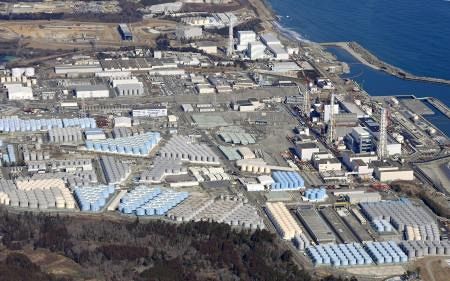
On the 24th, it was learned through interviews with officials that Tokyo Electric Power Company (TEPCO) has decided to build a new submarine tunnel about one kilometer long, run pipes through it, and release the treated water from the Fukushima Daiichi Nuclear Power Plant offshore. The radioactive substance tritium contained in the treated water will be diluted to below the standard value, but by releasing the water offshore, the company hopes to further dilute it and spread it, thereby curbing the reputational damage that the local people are concerned about.
On the same day, the government held a meeting of ministers concerned with the disposal of the treated water. If the release of the water into the ocean causes damage such as a decrease in sales or prices of marine products, the government will purchase the water at its own expense to support the fishermen, and is preparing the environment for the release. On the other hand, there is a deep-rooted opposition from the local community and fishermen, and there are many uncertainties about the future outlook.
Accelerated radiocesium leaching from forest floor litter by heavy rainfall

Radioactive materials including 137Cs (cesium-137, half-life: 30.1 years) were released into the environment following the accident at Fukushima Daiichi Nuclear Power Plant. It has been about 10 years since the accident, but 137Cs remains in the environment, especially in forests. Many researchers have been studying the dynamics and transport processes of radioactive materials in the environment. It has been found that radioactive materials are carried along with the transfer of water and sediment. With the focus on the forested headwaters where radioactive materials remain in large quantities, it has been reported that the concentration of dissolved radiocesium in stream water increases during heavy rainfall.
Since rainwater does not contain radioactive cesium, the research group led by Assistant Professor Koichi Sakakibara of Shinshu University’s Faculty of Science was curious why the concentration of radioactive cesium in stream water increased during heavy rainfall without becoming diluted. The research team thought that radioactive cesium might have leached out from the forest litter and conducted leaching tests. They found that a large amount of radioactive cesium leached from such forest litter.
The next step was to ask the question, “Why does more radioactive cesium leach out of forest litter during heavy rainfall, when forest litter is still on the forest floor when it is not raining? (Background information: Most of the rainwater that falls on forests infiltrates into the subsurface area. The main reason for the increase in stream water volume during rainfall in forests is the discharge of groundwater. The groundwater contains almost no radioactive cesium.) So the research group set out to solve the mystery, “How is litter-derived radiocesium added to stream water during rainstorm?”
In contrast to the rainfall-runoff process, which is often focused only on rainfall and runoff, this study focused on the conversion process from rainfall to runoff, such as the variation of groundwater table level, the generation of saturated surface area at the bottom of the valley, and the variation of water quality and water age during rainfall. As a result, the answer to the problem to be solved in this study is that the main factor is the expansion of the contact area between water and litter due to the expansion of the saturated surface area caused by the rise of the groundwater table level in the forested headwater. Although previous research tended to focus only on the cause (rainfall) and the effect (runoff), Assistant Professor Sakakibara states, “we showed that the breakthrough to solve the unexplained reason lies in why the cause (rainfall) is converted into the effect (runoff).”
Uncertainty of results is inevitable when researching in the natural environment. How do results differ when the study is conducted at different times and places? How much error is there in the results due to the heterogeneity of the acquired samples from the environment? These are some of the questions that need to be answered. In the present study, the following questions were asked in-depth: 1) whether the same conclusions can be drawn for forests other than the target forest, 2) whether the samples collected for the study are representative of the Fukushima region, and 3) whether the results are affected by differences in the timing of litter falling from the trees and the degree of decomposition. Sakakibara says, “the most difficult part was to come up with a clear answer or idea to these uncertainties.”
Assistant Professor Sakakibara says, “the state and transport of radioactive materials in the environment are complex and need to be studied long-term. The half-life of 137Cs is 30 years. The results of this study only partly clarified this issue. Rivers that discharge from the forest area flow downstream to the ocean. We would like to clarify the whole picture of the pathway and process of radioactive materials originating from forests in the hydrological process from the headwater to the ocean. We believe that these findings are essential for creating a safe and secure environment and sustainable future and livelihood.”
The research was published in Science of The Total Environment.
Explore further
Dynamics of radiocesium in forests after the Fukushima disaster: Concerns and some hope
https://phys.org/news/2021-02-dynamics-radiocesium-forests-fukushima-disaster.html
More information: Koichi Sakakibara et al, Radiocesium leaching from litter during rainstorms in the Fukushima broadleaf forest, Science of The Total Environment (2021). DOI: 10.1016/j.scitotenv.2021.148929
https://phys.org/news/2021-08-radiocesium-leaching-forest-floor-litter.html
A message from Forest Measurement Laboratory in Namegawa
March 6, 2021
A message from a representative of the Forest Measurement Laboratory, a group that measures radioactivity in Saitama Prefecture, just north of Tokyo. It was founded in the fall of 2012 mainly by mothers after the Fukushima nuclear disaster.
They thought that measurements by municipalities were not sufficient to protect their children from radiation exposure, so they started this project by themselves.
Fukushima, a ‘coordinator’ for the nuclear-stricken area, takes a cue from the U.S. to break away from reconstruction dependent on the government
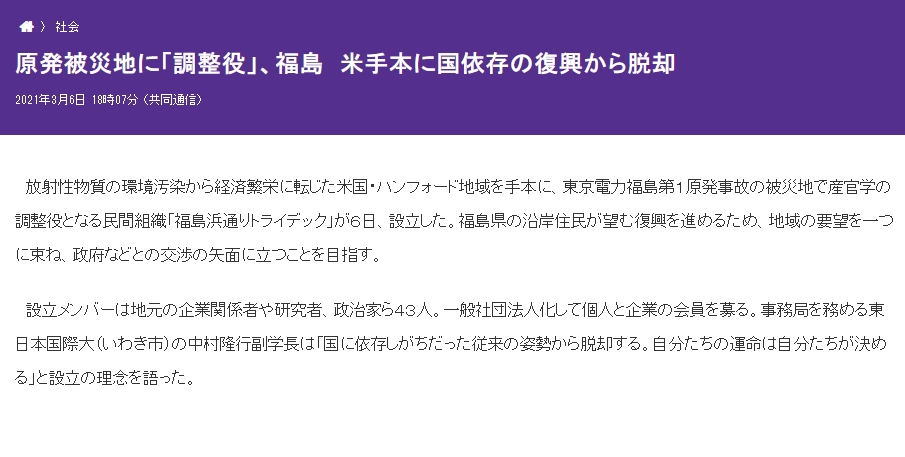
March 6, 2021, 18:07 (Kyodo News)
On March 6, a private organization called Fukushima Hamadori Tridec was established to serve as a coordinator between industry, government and academia in the areas affected by the accident at Tokyo Electric Power Company’s Fukushima No. 1 nuclear power plant. In order to promote the reconstruction that the coastal residents of Fukushima Prefecture desire, the organization aims to unite the demands of the region and take the brunt of negotiations with the government and other parties.
The 43 founding members include local business people, researchers, and politicians. The organization will be incorporated as a general incorporated association and will invite individual and corporate members. Takayuki Nakamura, vice president of East Japan International University (Iwaki City), who will serve as the secretariat, said, “We will break away from our traditional stance of depending on the government. We will decide our own fate,” he said of the founding principles.
https://www.tokyo-np.co.jp/article/89939?fbclid=IwAR0IVgauLUBacHECWFx2axSSV7o5CUqvtvxw6KcLJtZ6A1bqoHtwcQ-cEl8
Fukushima nuclear crisis evacuees face unresolved issues 10 years on
Almost 10 years on from a devastating earthquake and tsunami that hit northeastern Japan and triggered one of the worst nuclear disasters in history, Seiichi Nakate still has not returned home.
He is just one of around 30,000 evacuees from Fukushima Prefecture who remained scattered around the country as of February this year, according to government data.

Photo taken Oct. 22, 2017 shows makeshift housing in Iwaki, Fukushima Prefecture, built for evacuees from Futaba, a town co-hosting the crippled Fukushima Daiichi nuclear complex.
March 5, 2021
And while the numbers — including those who voluntarily fled without an evacuation order — have halved from their peak of 62,831 in March 2012, many of the issues facing evacuees remain unresolved.
Nakate, who was living in the prefectural capital of Fukushima when the earthquake struck on March 11, 2011, said the disaster had “pulled the rug out from under” him and left him feeling like he was “fading away.”
While the city was not designated for forced evacuations after the reactor meltdowns at the Fukushima Daiichi nuclear plant some 60 kilometers away, concerns over radiation led Nakate and his wife to decide two weeks later that she and their two children should move to western Japan while he stayed on in the city.
It was not until around a year and a half later that the family finally started living together again, setting up home in Sapporo, the capital of Japan’s northern main island of Hokkaido, where they still remain.
Nakate, 60, currently co-heads Hinan no Kenri, a Hokkaido-based group fighting for the rights of Fukushima evacuees throughout Japan.
The movement was established in 2015 amid government efforts to promote the return of people to Fukushima — a drive that he says was conducted without consideration to the needs and desires of evacuees.
“It had been more than four years since the accident, and the central and local governments were moving forward with lifting evacuation orders, ending compensation, and promoting the return of evacuees as if ignoring our existence and will,” Nakate said.
His organization has a variety of demands for the central government, the foremost being a survey of the actual situation of evacuees, which he believes it has deliberately avoided doing so far.
Critics say the figures compiled by the central government do not accurately reflect reality as they are based on a system under which evacuees voluntarily register themselves as such with their new municipalities of residence.
In December last year, the Fukushima government, using central government data, reported that there were around 36,000 evacuees across Japan, including those within the prefecture. But the total reported by individual local municipalities in Fukushima added up to more than 67,000.
The picture is complicated by the fact that there is no consistency in how municipalities count their evacuees, with some continuing to list all the people who were registered as residents at the time of the disaster.
Nakate also highlighted that economic disparities among evacuees appear to be widening, in part due to “the narrow scope of compensation and the lack of government support.” For example, evacuees who fled from areas without evacuation orders were not eligible for any compensation in terms of rent.
And while some evacuees have fully settled into their new homes, others have been compelled to resettle in the crisis-hit prefecture due to financial difficulties, often caused by family members living separately, he says.
One of the “most pressing issues” his organization is dealing with is trouble over the termination of a scheme financed by Fukushima Prefecture for evacuees to live in vacant units of housing complexes for government workers in other parts of Japan.
The housing was initially offered for free but this arrangement expired in March 2017 for those who fled without an evacuation order, with the accommodation then offered for a maximum of two more years if normal rent was paid.
But some families, claiming financial difficulties, have decided to stay put. The Fukushima government, which had shouldered the rent, demanded in 2019 twice the normal rent as damages and filed a suit last year against four families still living in a Tokyo condominium for bureaucrats.

Yayoi Haraguchi, a sociology professor at Ibaraki University and head of nonprofit organization Fuainet:
Yayoi Haraguchi, a sociology professor at Ibaraki University, said that while most Fukushima evacuees have settled into a rhythm, issues such as poverty, unemployment, a sense of alienation, and mental distress have continued over the past decade.
“It may look like things are alright, but many unseen issues lie under the surface,” said Haraguchi, 48, who also heads Fuainet, a local nonprofit organization providing support to Fukushima evacuees in Ibaraki, northeast of Tokyo.
Haraguchi said she has encountered evacuees in their 20s to 40s who have fallen into depression or become social recluses after they were unable to find a job. Yet others are struggling financially despite having received government compensation for a period of time.
“A study by Fukushima Medical University Hospital showed that those who evacuated to outside Fukushima Prefecture were more likely to suffer from mental issues than those who had evacuated to somewhere within the prefecture,” she said.
While the initial evacuations were often hurried, many of those remaining outside the prefecture have since moved in search of a better life, she said, often choosing to settle in Ibaraki Prefecture bordering Fukushima to its south.
Part of Ibaraki’s appeal to evacuees, she explained, is its cheaper cost of living compared to Tokyo and relatively mild climate.
Post-disaster evacuations were also not limited to Fukushima, with some residents of Tokyo — located about 200 kilometers away from the crippled nuclear power plant — choosing to leave the capital, and even the country, due to their perceptions of how the radiation contamination could affect their health.

Freelance journalist and translator Mari Takenouchi, now based in Okinawa:
Freelance journalist and translator Mari Takenouchi, who has long held strong antinuclear views, fled from Tokyo to Okinawa with her infant son just days after the disaster. She says she picked the southern island prefecture as it is one of the few places in Japan free of nuclear power plants.
“If (the government) doesn’t shut down its nuclear power plants, it is dangerous to live in mainland Japan,” she said. “Japan is on the border of four (tectonic) plates, and 20 percent of the world’s major earthquakes of magnitude 6 or greater occur here.”
Since moving to Okinawa, the 54-year-old has worked to create greater awareness about the effects of radiation on children and fetuses. “The situation after the Fukushima accident has not become better, but worse. Considering the occasional earthquakes, all of us are still at great risk,” she said.

Kaori Nagatsuka, a former Tokyo resident who moved to Malaysia with her two children after the 2011 Fukushima nuclear crisis:
Kaori Nagatsuka, 52, another former resident of Tokyo, moved to Malaysia with her 9-year-old daughter and 2-year-old son in March 2012, also due to concerns over her children’s health.
Shortly after moving to Penang, Nagatsuka assisted other evacuees who were considering migrating outside of Japan by letting them stay in her home and volunteering to show them around potential schools for their children.
“There were quite a lot of people who wanted to emigrate in consideration of their children’s health but in the end couldn’t for various reasons,” said Nagatsuka, who now works for a local Malaysian company as a travel and education consultant.
Nagatsuka said she chose Malaysia due to its lower cost of living compared to other countries and relative proximity to Japan. But despite her husband remaining in Tokyo due to work, she has not returned home even once since leaving.
The family meets on occasion in either Malaysia or Taiwan, where their daughter, now 19, currently studies. And while her children are free to choose where they want to live in the future, Nagatsuka says she personally has taken a liking to Malaysia and has no plans to return to Japan.
“If I return to Japan, my children will likely come and visit me and that worries me because I think it could damage their health,” she said. “I raised my children with an aim that they could live in any country and I fulfilled my goal, so I’m glad I came here.”
Complaint by residents of Iitaté against TEPCo and the State for exposure to radioactivity
March 5, 2021
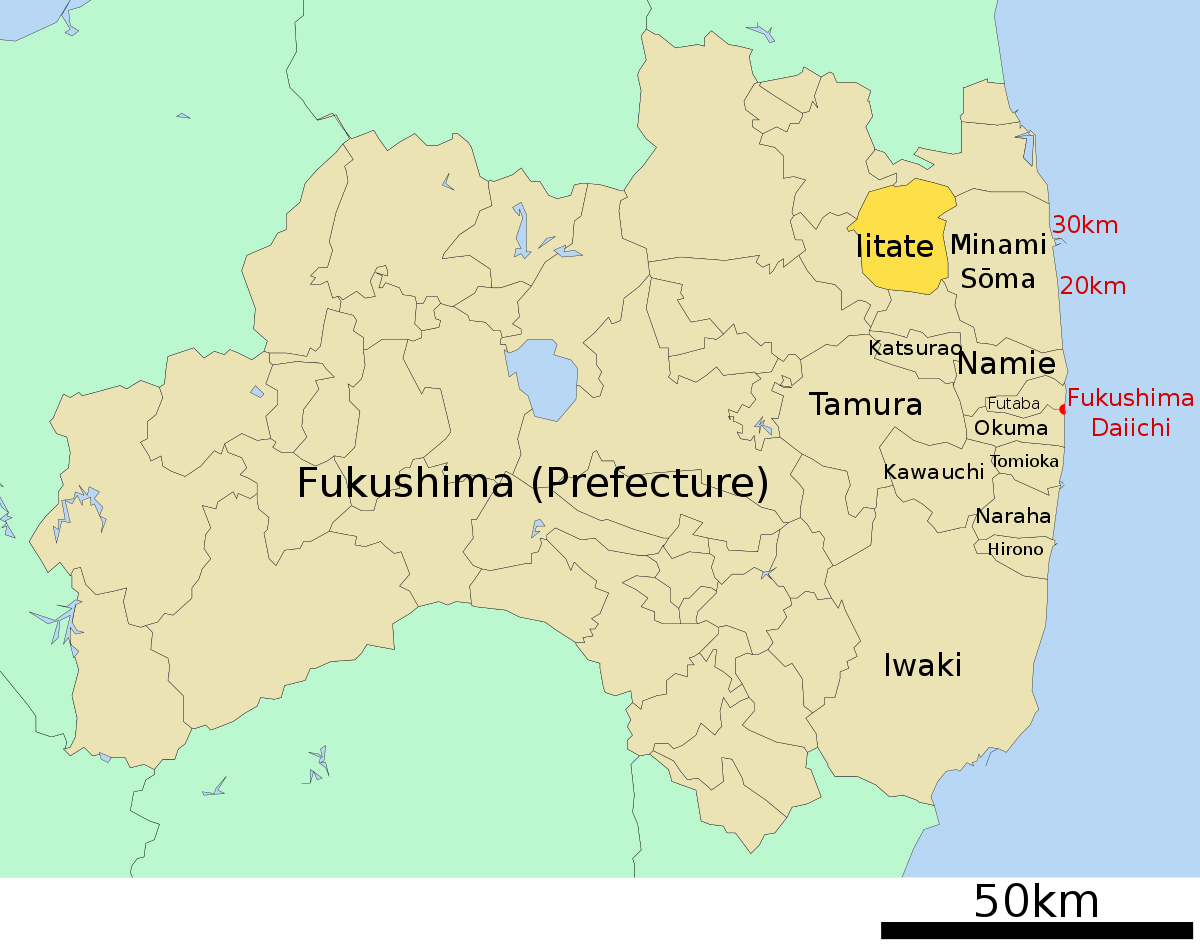
The commune of Iitaté, located beyond the 30 km radius, was evacuated late. The order to evacuate was announced on April 11, 2011 and the inhabitants had one month to leave. During this time, those who had not left the area by themselves were exposed to radioactive fallout.
29 residents of Iitaté filed a lawsuit against TEPCo and the State and asked for 200 million yen of damages because the authorities had told them at the beginning of the disaster that it was not necessary to leave. The lack of information about the increase in radiation levels deprived them of their right to evacuate and left them unnecessarily exposed.
They also claim that the subsequent evacuation of the entire village caused them to lose their homes and farms, destroyed their community and deprived them of their hometown.
The leader of the plaintiffs, Kanno Hiroshi, says that he has developed illnesses over the past ten years and that concerns about the effects of radiation will never go away. He holds the government and the plant operator responsible.
This is the first class action suit filed to seek compensation for radiation exposure during the early days of the nuclear accident.
It should be noted that the first independent measurements carried out by ACRO in Japan following the Fukushima nuclear disaster concerned Iitaté. See the results and the press release of the time. These results showed an alarming situation.
ACRO wrote that iodine-131 contamination was preponderant, with levels such that it would be prudent to evacuate the village of Iitate: at the place called Maeda, we had detected 1.9 million becquerels per square meter. Regarding radioactive cesium, almost all the areas monitored by ACRO were above the limits set in Belarus for migration.
After 3/11, emergency import of a concrete pump vehicle from China allowed for nuclear power plant cooling

Translated from Japanese by Dennis Riches
March 13, 2021
In order to prevent further damage caused by the accident at the Fukushima Daiichi Nuclear Power Plant, caused by the Great East Japan Earthquake that occurred on March 11, 2011, it was urgent to cool the reactors. At that time, a concrete pump vehicle from China was used to perform this critical task. This is the story of how it came to be used.
At that time, TEPCO and the Japanese government searched for various ways to cool the reactors, and none of the attempts, such as dropping water from helicopters or releasing water using fire engines, were successful. Because it had to avoid radiation exposure as much as possible, the helicopter was almost completely ineffective. It had to drop water from a fairly high position and it was pushed back by the wind. The fire engine was not high enough at all, so it had no effect.
Therefore, it was understood that the sort of vehicle used for pumping concrete through a long boom would be needed. A concrete pump truck is a machine used in construction that can pump concrete to a high height through a collapsible boom. Thus TEPCO wondered if this machine could be used to pump water into the reactors. This would be more effective than using fire trucks and helicopters, but there was one big problem.
Regulations of the Road Transport Vehicle Act limited the angle and total vehicle weight to 25 tons, so the length of the boom on machines in Japan was limited to a maximum of 36 m, and there were no 60m-class pump vehicles in Japan that could be used for water-pouring work at a nuclear power plant.
As a result of searching around the world, they found a concrete pump vehicle with a boom of 62 meters in length manufactured by a construction machinery manufacturer called Sanshi Heavy Industries in China. In addition, it was a pump vehicle with very good performance, and it was possible to remotely operate it from two kilometers away. TEPCO immediately told Sanshi Heavy Industries in China that it would like to purchase it through Sanshi Heavy Industries’ Japanese subsidiary, but Mr. Liang Onkon, president of Sanshi Heavy Industries, gave a surprising response.
“Please do not sell to Japan. Don’t sell. Japan is a neighboring country. We share the ocean to our east. Now is the time to reach out to help. The pump vehicle will be donated to the disaster-stricken areas of Japan.” In other words, instead of selling a concrete pump vehicle worth 150 million yen, he replied that he wanted to provide it free of charge. And they didn’t just send vehicles. He said that three expert engineers from Sanshi Heavy Industries would also come to Japan to give lessons on how to operate the machine.
The president of WWB Co., Ltd., a Japanese agent of Sanshi Heavy Industries, looks back on the situation at that time. “When the donation was decided, soon Sanshi Heavy Industries searched for a pump truck with a 62m boom. We found that, very fortunately, there happened to be a concrete pump truck in the port of Shanghai that matched the requirements. The machine was due to be shipped to a client in Germany. I was about to leave for Germany, but the German company readily agreed and decided to send it to the disaster-stricken areas of Japan through the Red Cross Society. The concrete pump vehicle was taken from the ship heading to Germany and immediately put on the Suzhou (a ship going from Shanghai to Osaka) and headed for Japan. After arriving in Japan, I spent two days learning how to operate it in Noda City, Chiba Prefecture, and then I left for Fukushima.”
In this interview, we were able to talk in detail with Tomohiro Kawazoe, then president of Sanichi Japan, a Japanese subsidiary of Sanichi Heavy Industries. “I made a trip by myself from Osaka to Chiba to Fukushima because I had to examine the route in detail to check road width, bridges, tunnels, etc. It is a vehicle with a total weight of 55 tons.”
The police in the prefectures along the route also cooperated fully, and traffic restrictions such as 100 blockades of roads were also carried out in some areas so that they could move safely to Fukushima. Police cars in each prefecture escorted the concrete pump vehicle.
Originally, there were various regulations and it would ordinarily take time to travel on public roads in Japan with such an unusual cargo, but this time the issuance of provisional permits was done smoothly. These were extrajudicial measures because the machine was donated with the Red Cross Society as an intermediary. The project was realized in an unusually short period of about two weeks.

https://news.yahoo.co.jp/articles/75482f8d957a3609194000b3cf87145debe1ecc4
I hate those Fukushima disaster anniversaries!

March 11, 2021
For the last ten years, every year, we have the same circus. For one or two weeks the mainstream media comes out with their anniversary articles, over and over repeating the same old songs, old facts, avoiding the really important issues. Along with this the antinuclear divas once a year prerorate their polished spiels basking in their little moment of glory, releasing their pieces on their dot.orgs. while asking for more donations.
In the meantime not much has changed. The ‘decommissioning’ work at the Fukushima Daiichi nuclear plant is a neverending story despite all their nice PR technical blablabla, ignoring the fact that the technology necessary to complete the decommissioning has yet to be invented. At 30 Sieverts level of radiation anyone would get fried within 5 minutes, even their costly robots can’t hold their breath very long.
TEPCO is already gradually releasing partially filtered radioactive water, water still containing radioactive material, into our oceans, our environment. Further, it is their intention to dump all the partially contaminated, radioactive water currently stored in over 1,000 tanks into the sea. The only unknown is exactly when they’ll be able to push it thru.
Despite a few court victories, the victims still have not been properly, sufficiently compensated for all their losses and suffering. People on location are still stuck living in an environment with high levels of radiation, levels the government deems acceptable, thresholds higher than the international standards for nuclear plant workers!
The Japanese government and the nuclear lobby are still orchestrating the denial of threats, of facts, the denial of health risks for the population, campaigning for the evacuees to return.
The Fukushima disaster and its tragic consequences are still hurting the local population. Ten years is NOTHING in terms of radioactive contamination. Contamination that is there to stay. Ongoing… every day.
F these anniversaries!
Fukushima, a ‘coordinator’ for the nuclear-stricken area, takes a cue from the U.S. to break away from reconstruction dependent on the government

March 6, 2021, 18:07 (Kyodo News)
On March 6, a private organization called Fukushima Hamadori Tridec was established to serve as a coordinator between industry, government and academia in the areas affected by the accident at Tokyo Electric Power Company’s Fukushima No. 1 nuclear power plant. In order to promote the reconstruction that the coastal residents of Fukushima Prefecture desire, the organization aims to unite the demands of the region and take the brunt of negotiations with the government and other parties.
The 43 founding members include local business people, researchers, and politicians. The organization will be incorporated as a general incorporated association and will invite individual and corporate members. Takayuki Nakamura, vice president of East Japan International University (Iwaki City), who will serve as the secretariat, said, “We will break away from our traditional stance of depending on the government. We will decide our own fate,” he said of the founding principles.
https://www.tokyo-np.co.jp/article/89939?fbclid=IwAR0IVgauLUBacHECWFx2axSSV7o5CUqvtvxw6KcLJtZ6A1bqoHtwcQ-cEl8
Decade After Fukushima Disaster Survivor Looks Back
The Japanese town of Tomioka ravaged by the 2011 Fukushima nuclear disaster is a shell of its former self.

March 5, 2021
The Japanese town of Tomioka ravaged by the 2011 Fukushima nuclear disaster is a shell of its former self. In some parts, houses and shops lie abandoned, and bin bags filled with contaminated soil line the streets. For Yuta Hatakeyama, who was 14 when his family had to leave their home, the town evokes bittersweet memories. “I had no idea what was going on back then,” he said. “It has been 10 years since and I have been developing sad feelings.”
A decade after the quake and tsunami, Hatakeyama has returned to the town some 10 kilometers (6 miles) from the now shuttered Fukushima No. 1 nuclear plant, and serves as a community spokesperson. The exclusion zone in the town was lifted in 2017 but around 12% of the town still remains a no-go zone where people can’t enter without an official permit.
Hatakeyama remembers a cherry blossom festival in the town, and a lane brimming with food stalls and people. Now it’s cordoned off and dotted with red safety cones. He said he and his family faced discrimination after leaving Tomioka after the disaster for Iwaki, some 50 km (30 miles) away. “When I moved to a new place and heard people there stigmatising us for being evacuated, my heart really ached.”
The 24-year-old now believes the town must get rid of the bags filled with radioactive waste and make the town more liveable. Tomioka, which used to have 16,000 residents before the disaster, is now home to 1,600 people. The town is planning to lift most of its no-go zones by March 2023.
Decade after Fukushima disaster, decontamination work remains incomplete in 85% of regions
Greenpeace says Japan should suspend returning residents to the afflicted region

Mar.5,2021
Decontamination work remains incomplete in 85% of regions where the Japanese government claims to have removed radioactive contaminants from the Fukushima Nuclear Power Plant disaster, an international environment group’s analysis shows.
In a report titled “Fukushima Daiichi 2011-2021,” published on Thursday ahead of the 10th anniversary of the disaster on March 11, Greenpeace urged the Japanese government to discontinue its policy of returning residents to the afflicted region without regard for science-based analysis.
Two weeks after the disaster struck in March 2011, the group sent a team of radioactivity exports to the scene in the first of 32 total visits through November 2020 to survey the radiation impacts in the Fukushima region. The recent report was based on its findings to date.
The Japanese government has announced the completion of most decontamination work for a Special Decontamination Area (SDA), which does not include a region close to the plant with particularly high levels of contamination that prevent residents from returning. Carried out through March 2019, the effort involved a commitment of 30 million person-hours and cost US$28 billion.
But an analysis of government data by Greenpeace showed that of the 840 square kilometers in the SDA, actual decontamination work had only been completed on 120 square kilometers, or 15 %.
In the case of Iitate — the largest of the seven administrative districts located entirely inside the SDA — decontamination had yet to be completed for 18,183 hectares, or 79% of its area. In the second-largest district of Namie, just 2,140 hectares, or 10%, had undergone even some decontamination.
Resident evacuation orders for the two regions were lifted in March 2017 — but according to Greenpeace, radiation levels make them still too dangerous for human habitation.
According to a Greenpeace study last November, the average amount of radiation in five out of 11 sites surrounding one home in Iitate was 0.5 microsieverts per hour (μSv/h), exceeding the government’s target of 0.23μSv/h.
The area immediately outside of one Namie school was found to be open to the general public despite 93% of measured sites showing radiation above the government’s targets.
“The fact that 85% of the contaminated surface area of the seven Fukushima districts inside the SDA has not been subject to decontamination is directly related to the radiological hazards posed by the mountainous forested areas,” the report explained.
“These remain a long-term source of contamination, including recontamination,” it warned.
Shaun Burnie, the Greenpeace senior nuclear specialist responsible for writing the report, urged the Japanese government to immediately suspend its return policy and decontamination program in order to protect residents of the Fukushima region, arguing that they ignore science-based analysis.
The same day, Greenpeace also published a technical report analyzing the decommissioning of the Fukushima Daiichi reactor. In it, Greenpeace proposed that the Japanese government adopt an alternative to its current decommissioning plan, which increases the amount of water contaminated with high-level radioactive material.
As an alternative approach, it suggested replacing water with air as a means of cooling reactor core fuel, while reducing the amount of contaminated water by installing moats to prevent seawater and underground water infiltration around the plant.
Chang Ma-ri, a climate energy campaigner for Greenpeace, said, “The ravages of radioactive contamination caused by the Fukushima disaster will pose a burden on humankind that will not be resolved for the next century or more.”
“The Japanese government needs to start by withdrawing its imminent plans for the release of contaminated water [into the ocean],” she urged.
By Kim Jeong-su, senior staff writer
http://english.hani.co.kr/arti/english_edition/e_international/985626.html
Decade after Fukushima disaster, Greenpeace sees cleanup failure
Greenpeace has recommended that Japan suspend the current return policies, which it says “ignore science-based analysis, including potential lifetime exposure risks to the population” and abandon plans to lift evacuation orders in six municipalities

Mar 4, 2021
Ten years after the worst nuclear accident since Chernobyl, land Japan identified for cleanup from the triple reactor meltdown of the Fukushima No. 1 power plant remains contaminated, according to a report from Greenpeace.
On average, just 15% of land in the “Special Decontamination Area,” which is home to several municipalities, has been cleaned up, according to the environmental advocacy group’s analysis of government data. That’s despite the government’s claims that the area has largely been decontaminated, the group said.
In addition, Greenpeace said its own radiation surveys conducted over the last decade have consistently found readings above government target levels, including in areas that have been reopened to the public. The lifting of evacuation orders in places where radiation remains above safe levels potentially exposes people to an increased risk of cancer, the report said.
“The contamination remains and is widespread, and is still a very real threat to long term human health and the environment,” the report said.
Japan’s Ministry of Environment wasn’t immediately available for comment. Decontamination efforts have reduced radiation levels in residential areas by an average of 76%, according to the ministry’s website, which has compiled monitoring data through 2018. Fukushima Prefecture wasn’t immediately available for comment.
More than 160,000 people were evacuated from the area surrounding the Fukushima nuclear plant after a magnitude 9 earthquake, the biggest ever recorded to hit Japan, caused a massive tsunami that overwhelmed the plant. While the government has been steadily lifting evacuation orders on towns since 2014, roughly 36,000 people are still displaced.
Greenpeace recommended that Japan suspend the current return policy, which “ignore science-based analysis, including potential lifetime exposure risks to the population” and abandon plans to lift evacuation orders in six municipalities.
https://www.japantimes.co.jp/news/2021/03/04/national/fukushima-greenpeace-radiation-health-3-11/
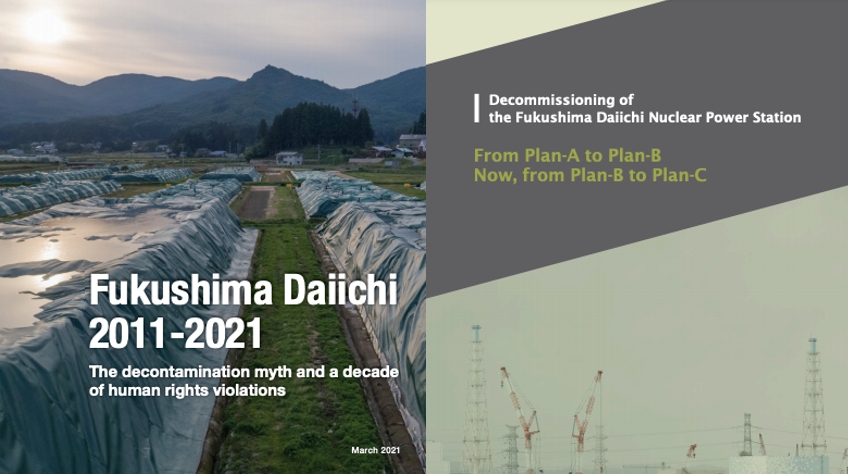
85% of Special Decontamination Area remained contaminated Fukushima Daiichi decommissioning road map unachievable – a new plan is inevitable
2021-03-04
Mar 4, 2021 (Greenpeace Japan) – Nearly a decade after the Fukushima Daiichi nuclear accident, Greenpeace released two reports today that highlighted the complex legacy of the 11 March 2011 earthquake and tsunami.
The first report Fukushima 2011-2020 detailed radiation levels in Iitate and Namie in Fukushima prefecture. Our original findings showed that decontamination efforts have been limited and that 85% of the Special Decontamination Area has undergone no decontamination.
The second report Decommissioning of the Fukushima Daiichi Nuclear Power Station From Plan-A to Plan-B Now, from Plan-B to Plan-C critiqued the current official decommission plan within 30-40 years of having no prospects of success and is delusional.
“Successive governments during the last ten years, and largely under prime minister Shinzo Abe, have attempted to perpetrate a myth about the nuclear disaster. They have sought to deceive the Japanese people by misrepresenting the effectiveness of the decontamination program and ignoring radiological risks,” said Shaun Burnie, Senior Nuclear Specialist at Greenpeace East Asia.
“At the same time, they continue to claim that the Fukushima Daiichi site can be returned to ‘greenfield’ status by mid-century. The decade of deception and delusion on the part of the government and TEPCO must end. A new decommissioning plan is inevitable so why waste any more time with the current fantasy?” Burnie added.
The first Greenpeace radiation expert team arrived in Fukushima prefecture on 26 March 2011, and have conducted 32 investigations into the radiological consequences of the disaster over the last decade, the most recent in November 2020. The key findings of the radiation report Fukushima 2011-2020 are:
- Greenpeace has consistently found that most of the 840 square kilometers Special Decontamination Area(SDA), where the government is responsible for decontamination, remains contaminated with radioactive cesium.
- Analysis of the government’s own data shows that in the SDA an overall average of only 15% has been decontaminated.
- No time frame for when the Japanese government’s long-term decontamination target level of 0.23 microsieverts per hour (μSv/h) will be achieved in many areas. Citizens will be subjected for decades of radiation exposure in excess of 1mSv/y recommended maximum.
- In the areas where evacuation orders were lifted in 2017, specifically, Namie and Iitate, radiation levels remain above safe limits, potentially exposing the population to increased cancer risk. Plans to continue to lift evacuation orders are unacceptable from a public health perspective.
- Up till 2018, tens of thousands of decontamination workers had been employed in decontamination in the SDA. As documented by Greenpeace[1], the workers, most of whom are poorly paid subcontractors, have been exposed to unjustified radiation risks for a limited and ineffective decontamination program.
The key findings of The Fukushima Daiichi Nuclear Power Station decommissioning report[2] are:
- There are no credible plans for retrieval of the hundreds of tons of nuclear fuel debris remaining inside and under the three Reactor Pressure vessels – it requires a fundamental review.
- Water used in reactor cooling and groundwater contamination, and therefore accumulating in tanks, will keep growing into the future unless a new approach is adopted.
- All nuclear contaminated material should remain on the site indefinitely. If the nuclear fuel debris is ever retrieved, it also should remain on site. Fukushima Daiichi is already and should remain a nuclear waste storage site for the long term.
- The current plan is unachievable in the timeframe of 30-40 years in the current road map and impossible to achieve in terms of returning the site to greenfield.
It is recommended that a fundamental rethink in approach and a new plan for the decommissioning of Fukushima Daiichi, including a delay in molten fuel removal for 50-100 years or longer is needed with the construction of secure containment buildings for the long term. The Primary Containment vessel, with reinforcement, should be used as an incomplete primary boundary and the reactor building as the secondary boundary for the medium-to-long term, while developing robotic technology that can perform tasks without high radiation risks to human workers.
Finally, to prevent the further increase of radioactive contaminated water, cooling of nuclear fuel debris should be switched from water to air cooling, and the Fukushima Daiichi site should be made into a ‘dry island’ isolated from groundwater with the construction of a deep moat.
ENDS
Links to full reports:
- Fukushima 2011-2020
- Decommissioning of the Fukushima Daiichi Nuclear Power Station From Plan-A to Plan-B Now, from Plan-B to Plan-C
- Greenpeace Briefing “Fukushima Daiichi Decommissioning Time for a new long term strategic plan”
Notes:
[2] Report commissioned by Greenpeace from a consulting nuclear engineer, formerly with General Electric including at the Fukushima Daiichi reactors, Mr. Satoshi Sato.
Fukushima chief: No need to extend decommissioning target
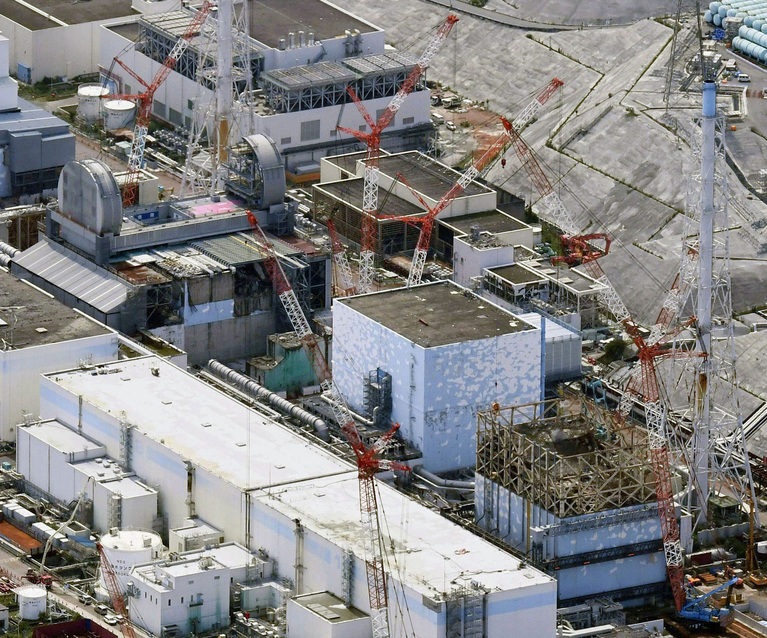
This Sept. 4, 2017, aerial file photo shows Fukushima Dai-ichi nuclear power plant reactors, from bottom at right, Unit 1, Unit 2 and Unit 3, in Okuma town, Fukushima prefecture, northeastern Japan. The head of the wrecked Fukushima nuclear plant said Tuesday, March 2, 2021 there’s no need to extend the current target to finish its decommissioning in 30-40 years despite uncertainties about melted fuel inside the plant’s three reactors.
March 3, 2021
TOKYO (AP) — The head of the wrecked Fukushima nuclear plant says there’s no need to extend the current target to finish its decommissioning in 30-40 years despite uncertainties about melted fuel inside the plant’s three reactors.
Ten years after meltdowns of three of its reactors following a massive March 2011 earthquake and tsunami that devastated northeastern Japan, the Fukushima Daiichi plant has stabilized but faces new challenges.
Nuclear regulators recently found fatal levels of contamination under the lids of two reactors, a test removal of melted fuel debris from one reactor has been delayed for a year, and a recent earthquake may have caused new damage to the reactors.
About 900 tons of melted fuel debris remain inside the plant’s three damaged reactors, and its safe removal is a daunting task that its operator, Tokyo Electric Power Co., or TEPCO, and the government say will take 30-40 years to finish. The removal of spent fuel units from cooling pools is already being delayed for up to five years.
But Akira Ono, who as head of the plant is also its chief decommissioning officer, said he doesn’t plan to change the current goal to finish decommissioning between 2041 and 2051.
“I don’t think we need to revise the target right now,” Ono said Tuesday in an online interview with The Associated Press. “We will stick to the 30-to-40-year finishing target, and will compile a timeline and technology and development plans accordingly.”
He said TEPCO plans to focus primarily on the coming decade and hopefully will release a new 10-year road map by the end of March.
The recently discovered fatal levels of cesium on the bottom of shield plugs atop the primary containment chamber at the No. 2 and 3 reactors will not affect near-term decommissioning work, but could complicate future plans, Ono said.
A lot about the melted fuel, which fell from the core to the bottom of the primary containment chambers in Units 1, 2 and 3, remains unknown, Ono said, adding that it’s too early to decide how the plant should look at the end of the cleanup.
“It is a difficult question,” he said. “If you ask 10 people, everyone has a different answer.” Local officials in Fukushima have said they expect the plant complex to be a flatland where people can walk freely.
Ono said the plant’s end state should be discussed by the government, local residents, experts and other concerned parties, and should be decided by a consensus.
Some experts are still skeptical that the removal of all of the melted fuel debris is possible and suggest a Chernobyl-style entombment of the plant. Ono, however, denied that option, saying a long-term abandonment could pose a bigger risk than a controlled cleanup and hinder the region’s recovery.
Ono said the removal of the melted fuel debris will hopefully progress on track during the 2030s. “The next 10 years for us is to prepare for that goal,” he said.
Massive radiation from the reactors caused about 160,000 people to evacuate from around the plant. Tens of thousands are still unable to return home.
https://www.seattletimes.com/business/fukushima-chief-no-need-to-extend-decommissioning-target/
1 This Month

of the week – Shut Down Drone Warfare!


Tell the Ukrainian Government to Drop Prosecution of Peace Activist Yurii Sheliazhenko

Petition to revoke the licensing of the Near Surface Nuclear Disposal Facility (NSDF) at Chalk River. https://www.ourcommons.ca/petitions/en/Petition/Details?Petition=e-7247
To see nuclear-related stories in greater depth and intensity – go to https://nuclearinformation.wordpress.com
-
Archives
- April 2026 (68)
- March 2026 (251)
- February 2026 (268)
- January 2026 (308)
- December 2025 (358)
- November 2025 (359)
- October 2025 (376)
- September 2025 (257)
- August 2025 (319)
- July 2025 (230)
- June 2025 (348)
- May 2025 (261)
-
Categories
- 1
- 1 NUCLEAR ISSUES
- business and costs
- climate change
- culture and arts
- ENERGY
- environment
- health
- history
- indigenous issues
- Legal
- marketing of nuclear
- media
- opposition to nuclear
- PERSONAL STORIES
- politics
- politics international
- Religion and ethics
- safety
- secrets,lies and civil liberties
- spinbuster
- technology
- Uranium
- wastes
- weapons and war
- Women
- 2 WORLD
- ACTION
- AFRICA
- Atrocities
- AUSTRALIA
- Christina's notes
- Christina's themes
- culture and arts
- Events
- Fuk 2022
- Fuk 2023
- Fukushima 2017
- Fukushima 2018
- fukushima 2019
- Fukushima 2020
- Fukushima 2021
- general
- global warming
- Humour (God we need it)
- Nuclear
- RARE EARTHS
- Reference
- resources – print
- Resources -audiovicual
- Weekly Newsletter
- World
- World Nuclear
- YouTube
-
RSS
Entries RSS
Comments RSS
 nuclear-news