Tepco makes first effort to remove nuclear fuel debris from Fukushima’s No. 3 reactor
 TEPCO to start removing fuel at Fukushima’s No. 3 reactor,THE ASAHI SHIMBUN, April 12, 2019 The operator of the crippled Fukushima No. 1 nuclear power plant will start removing nuclear fuel from the No. 3 reactor as early as next week through equipment controlled remotely due to high radiation levels inside the building.
This will mark Tokyo Electric Power Co.’s first attempt to remove spent fuel from one of the three reactors that experienced a meltdown during the 2011 nuclear accident.
All spent fuel has already been removed from the No. 4 reactor.
TEPCO workers will use remote control to remove nuclear fuel assemblies kept in the pool on the upper floors of the No. 3 reactor building.
Utility officials acknowledge that the process will not be easy, as they have no experience conducting such a dangerous task remotely.
The 566 nuclear fuel assemblies in the storage pool will be removed under a plan expected to take two years to complete.
TEPCO wants to remove the assemblies as quickly as possible owing to concerns that another major earthquake or tsunami could further damage the reactor building and equipment. The No. 3 reactor will also serve as a test case for eventually removing spent nuclear fuel from the No. 1 and No. 2 reactor buildings.
Under the plan, workers will be stationed in a control room about 500 meters from the reactor building and use remote control equipment while observing the process through monitors.
Each nuclear fuel assembly will be lifted and transferred to a special transport container that can hold up to seven such assemblies in water. The container will then be carried out of the reactor building by crane, which will then lower the container outside of the building to a trailer about 30 meters below at ground level.
As a hydrogen explosion blew off the roof of the No. 3 reactor building in the wake of the 2011 nuclear accident, a semi-cylindrical copper covering has been placed over the building to prevent radioactive materials from spreading when the spent nuclear fuel is being removed……….
Government and TEPCO officials have said they will consider a detailed plan for removing spent nuclear fuel from those two buildings after reviewing the work done at the No. 3 reactor building.
The two other reactor buildings present different hurdles for workers.
The top floor of the No. 1 reactor building is covered with debris from a collapsed ceiling and damaged crane, the removal of which has proved difficult. Workers have also confirmed that the lid on top of the containment vessel has shifted, meaning radiation levels inside the building are likely even higher than in the No. 3 reactor building.
It thus remains to be seen if the same equipment to be used for the No. 3 reactor can be used for the No. 1 building. To prevent leaking of radioactive materials, the lid for the containment vessel will first have to be moved back into place.
While the No. 2 reactor building did not suffer major structural damage, large amounts of radioactive materials are believed to be trapped inside the building, meaning radiation levels are also very high there.
The level at the top floor is so high that any worker remaining there for one hour would quickly exceed the annual radiation exposure level. After decontamination, the upper part of the No. 2 reactor building will have to be taken apart to remove the spent fuel. However, this poses the major problem of preventing the spewing of radioactive materials during that process.
“To be honest, it will be difficult to say that no problems will emerge that will force a change in plans,” said Toyoshi Fuketa, chairman of the Nuclear Regulation Authority. This article was written by Hiroshi Ishizuka and Chikako Kawaharahttp://www.asahi.com/ajw/articles/AJ201904120036.html
(Free Tasting) Japan’s No.1 Fukushima Sake Debut to New York

‘Old man squad’ ends patrols of evacuated town in Fukushima

Buses offer 1-day pass through ‘sakura’ tunnel in Fukushima

Evacuees can return next week to parts of Okuma, host of Fukushima nuclear plant, but few likely to

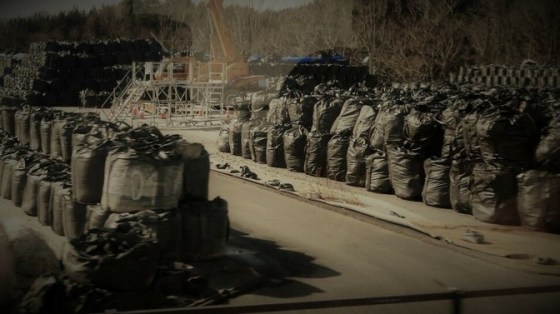
Fukushima Eight Years Later: Black Sacks and Lonely Children


Fukushima Unit 2; New Containment Panorama Photos

April 1, 2019
A pair of new panoramic photos from inside Fukushima unit 2’s containment have been published. TEPCO provided the photos as part of ongoing updates on the disaster decommissioning work. The photos were stitched together from earlier containment inspection work then processed to bring out details of the photos. Also included in this report is details about the radiation and temperature readings inside containment, we explain that later in this report.
To read more on Fukuleaks:
Reality of Fukushima – 2019
I remember in 2011 or 2012, a deal between a US company and the Japanese government, buying geiger counters, which failed because the Japanese government wanted that US company to under-calibrate its Geiger-counters, which the US company refused to do. So it is quite possible that all those public monitors have been under-calibrated….
A message from Yayoi Hitomi, March 2019
REMEMBER FUKUSHIMA
“We must never forget this catastrophe …We must continue to counter the efforts of the Japanese Government, TEPCO, academics and official bodies to minimise its effects and to ignore the past.” Caroline Lucas MP re Fukushima, 19 March 2019
 L to R: Asami Yokota, Fukushima resident mother; Kaori (interpreting); Akiko Morimatsu, Fukushima evacuee mother; Caroline Lucas MP, Green Party, Host and Chair; Dr Ian Fairlie, independant consultant on radioactivity in the environment.
Caroline Lucas MP, host and chair of the Remember Fukushima Parliamentary public meeting on 19 March 2019, opened the meeting with the following speech:
“Eight years ago on March 11 2011, the Fukushima Daiichi nuclear disaster was triggered in Fukushima Prefecture about 150 miles north of Tokyo. Over the ensuing weeks, four explosions and three nuclear meltdowns occurred, over 160,000 people were evacuated and radioactive emissions were scattered over large tracts of Japan.
In 2012, an Investigative Panel of theJapanese National Diet (ie Parliament) concluded that the Fukushima disaster was “… profoundly man-made and was caused by a disregard of the risks of earthquakes by an industry determined to preserve the illusion that nuclear power was absolutely safe.” The Panel attributed the accident to the “collusion” of government, regulator and industry to gamble the public’s well-being on lowering the high cost of safety from an inherently dangerous technology.
The disaster continues to this day, and is still causing immense problems.
Unresolved issues include:
- Many tonnes of melted nuclear fuel remain in an unstable state under reactors 1, 2 and 3
- An estimated 300 tonnes of contaminated water are dumped daily into the Pacific Ocean. This water is needed to keep cool the melted nuclear fuel which must not be allowed to melt again.
- Many millions of cubic metres of contaminated soil remain in huge temporary dumps, with no clear idea on where they will be stored in the long-term.
- According to NHK World Japan, over 50,000 evacuees remain in temporary accommodation. Despite Government pressure to return to so-called ‘cleaned up’ towns, most evacuees are reluctant to do so.
Official TEPCO accounts of the accident and its toll are unreliable. The most comprehensive unofficial account is by the Simply Info Team in the US. Their March 2019 report (33 pages, 9 MB) can be downloaded at http://www.fukuleaks.org/web/wp-content/uploads/2019/03/SimplyInfoOrg_2019_annual_report_Fukushima_finalc.pdf
The toll of Fukushima is fearsome. Over 7% of the land area of Japan was contaminated to a serious level. Official reports state over 3,600 people have died as a result of the nuclear disaster, including over 2,000 during the evacuations necessary to avoid the large radiation exposures. Over 180 additional cases of thyroid cancer have been recorded in children and teenagers so far: more are expected. From official WHO collective dose estimates, over 5,000 other cancers will also occur. Reports are now trickling out of other health effects, including recent spikesin congenital heart disease in infants.
But these are just the reported health studies. Who is counting the just as serious numbers of suicides, mental health effects, ‘nuclear’ divorces, and families who remain geographically apart? We shall hear shortly first hand testimonies of these effects.
The restoration, clean up, compensation and recovery costs are immense. The Japan Centre for Economic Research calculates these will range from £240 to £560 billion, about four times higher than Japanese Government estimates.
But we shall probably never know the true full costs of Fukushima.
We must never forget this catastrophe. That is why we are meeting here tonight. We must continue to counter the efforts of the Japanese Government, TEPCO, academics and official bodies to minimise its effects and to ignore the past. This, unbelievably, includes holding some events of the 2020 Olympic Games in contaminated parts of Tokyo and Fukushima Prefecture.
I should briefly mention that the legal fight for compensation is a major issue in Japan. Many court cases are being brought by Fukushima evacuees, parents and others and are now reaching an important stage. Two major class actions are the “Children’s Rights Trial”, which demands that local governments recognize the right of primary and secondary school students of Fukushima Prefecture to enjoy education in a healthy environment. Second the “Parent+Child Trial” which seeks compensation from the Fukushima prefectural and Japanese central governments.
This meeting is about Fukushima, but I wish briefly to refer to the UK situation as it has Japanese parallels. Here, two Japanese multinationals, Toshiba and Hitachi, recently indicated that they no longer wish to proceed with their proposed nuclear reactors in Cumbria and in Wales. (A third, Mitsubishi, withdrew from its proposed reactors in Turkey 6 months ago.) They are all withdrawing from their nuclear businesses even as the Japanese Government and TEPCO are still pushing for the reopening of old reactors closed after the accident. Why are these Japanese nuclear conglomerates pulling out of nuclear? A major factor has been the increased costs of safety features in new reactors now required after Fukushima.
I should like now to introduce our speakers tonight.
We warmly welcome to Britain three Japanese mothers from Fukushima, Akiko Morimatsu, Asami Yokota and Ms Sonoda who have been travelling throughout Europerecounting how they were affected and continue to be affected by the disaster.
Initially, Dr Ian Fairlie,an independent consultant on radioactivity in the environment and former scientist within DEFRA, our Government’s environment department, will set the scene, and later make some concluding remarks.”
Video of Caroline Lucas delivering the speech

Fukushima: “An Ongoing Global Radiological Catastrophe”. “A Huge Coverup”. Dr. Helen Caldicott

March 21, 2019
Transcript of 8th anniversary interview with Dr. Helen Caldicott
By Dr. Helen Caldicott and Michael Welch
The eight year anniversary of the triple meltdowns at the Fukushima Daiichi nuclear facility passed mostly without comment in mainstream media circles. In spite of ongoing radiological contamination that will continue to spread and threaten human health for lifetimes to come, other stories dominate the international news cycle. The climate change conundrum, serious though it may be, seemingly crowds out all other clear and present environmental hazards.
As part of efforts to normalize this historic event and cover it up in its magnitude, the Japanese government has invested considerable financial, public relations and other resources into what they are billing the ‘Recovery Olympics‘ set to take place in a year’s time in Tokyo.
But Helen Caldicott warns that the dangers associated with Fukushima have not gone away and remain a cause for concern.
Dr. Helen Caldicott has been an author, physician and one of the world’s leading anti-nuclear campaigners. She helped to reinvigorate the group of Physicians for Social Responsibility, acting as president from 1978 to 1983. Since its founding in 2001 she served as president of the US based Nuclear Policy Research Institute later called Beyond Nuclear which initiates symposia and educational projects aimed at informing the public about the dangers of nuclear power, nuclear weapons, and nuclear war. And she is the editor of the 2014 book, Crisis Without End: The Medical and Ecological Consequences of the Fukushima Nuclear Catastrophe.
On the week marking the eighth anniversary of the Fukushima meltdowns, the Global Research News Hour radio program, hosted by Michael Welch, reached out to Dr. Caldicott to get her expert opinion on the health dangers posed by the most serious nuclear disaster since, at least, the 1986 Chernobyl event.
Global Research: Now the Japanese government is preparing to welcome visitors to Japan for the 2020 Olympic Games, and coverage of the 8th anniversary of the Fukushima disaster is hardly, it seems to me, registered given the significant radiological and other dangers that you cited and your authors cited in your 2014 book, Crisis Without End. Now it’s been more than four years since that book came out. I was hoping you could update our listenership on what is currently being recognized as the main health threats in 2019, perhaps not registered in the book, that you’re currently looking at in relation to the Fukushima meltdown.
Helen Caldicott: Well it’s difficult because the Japanese government has authorized really only examination of thyroid cancer. Now thyroid cancer is caused by radioactive iodine and there were many, many cases of that after Chernobyl. And already, they’ve looked at children under the age of 18 in the Fukushima prefecture at the time of the accident, and … how many children… 100…no 201 by June 18 last year… 201 had developed thyroid cancer. Some cancers had metastasized. The incidence of thyroid cancer in that population normally is 1 per million. So obviously it’s an epidemic of thyroid cancer and it’s just starting now.
What people need to understand is the latent period of carcinogenesis, ie the time after exposure to radiation when cancers develop is any time from 3 years to 80 years. And so it’s a very, very long period. Thyroid cancers appear early. Leukemia appears about 5 to 10 years later. They’re not looking for leukemia. Solid cancers of every organ, or any organ as such appear about 15 years later and continue and in fact the Hibakusha from the Hiroshima and Nagasaki who are still alive are still developing cancers in higher than normal numbers.
The Japanese government has told doctors that they are not to talk to their patients about radiation and illnesses derived thereof, and in fact if the doctors do do that, they might lose their funding from the government. The IAEA, the International Atomic Energy Agency interestingly set up a hospital – a cancer hospital – in Fukushima along with the Fukushima University for people with cancer, which tells you everything.
So there’s a huge, huge cover up. I have been to Japan twice and particularly to Fukushima and spoken to people there and the parents are desperate to hear the truth even if it’s not good truth. And they thanked me for telling them the truth. So it’s an absolute medical catastrophe I would say, and a total cover up to protect the nuclear industry and all its ramifications.
GR: Now, are we talking about some of the, the contamination that happened 8 years ago or are we talking about ongoing emissions from, for example–
HC: Well there are ongoing emissions into the air consistently, number one. Number two, a huge amount of water is being stored –over a million gallons in tanks at the site. That water is being siphoned off from the reactor cores, the damaged melted cores. Water is pumped consistently every day, every hour, to keep the cores cool in case they have another melt. And that water, of course, is extremely contaminated.
Now they say they’ve filtered out the contaminants except for the tritium which is part of the water molecule, but they haven’t. There’s strontium, cesium, and many other elements in that water – it’s highly radioactive – and because there isn’t enough room to build more tanks, they’re talking about emptying all that water into the Pacific Ocean and the fishermen are very, very upset. The fish already being caught off Fukushima, some are obviously contaminated. But this will be a disaster.
Water comes down from the mountains behind the reactors, flows underneath the reactors into the sea and always has. And when the reactors were in good shape, the water was fine, didn’t get contaminated. But now the three molten cores in contact with that water flowing under the reactors and so the water flowing into the Pacific is very radioactive and that’s a separate thing from the million gallons or more in those tanks.
They put up a refrigerated wall of frozen dirt around the reactors to prevent that water from the mountains flowing underneath the reactors, which has cut down the amount of water flowing per day from 500 tons to about a hundred and fifty. But of course, if they lose electricity, that refrigeration system is going to fail, and it’s a transient thing anyway so it’s ridiculous. In terms… So over time the Pacific is going to become more and more radioactive.
They talk about decommissioning and removing those molten cores. When robots go in and try and have a look at them, their wiring just melts and disappears. They’re extraordinarily radioactive. No human can go near them because they would die within 48 hours from the radiation exposure. They will never, and I quote never, decommission those reactors. They will never be able to stop the water coming down from the mountains. And so, the truth be known, it’s an ongoing global radiological catastrophe which no one really is addressing in full.
GR: Do we have a better reading on, for example the thyroids, but also leukemia incubation—
HC: No they’re not looking–well, leukemia they’re not looking for leukemia…
GR: Just thyroid
HC: They’re not charting it. So the only cancer they’re looking at is thyroid cancer and that’s really high, and you know it’s at 201 have already been diagnosed and some have metastasized. And a very tight lid is being kept on any other sort of radiation related illnesses and leukemia and the like. All the other cancers and the like, and leukemia is so… It’s not just a catastrophe it’s a…
GR: …a cover up
HC: Yeah. I can’t really explain how I feel medically about it. It’s just hideous.
GR: Well I have a brother who’s a physician, who was pointing to well we should maybe, the World Health Organization is a fairly authoritative body of research for all of the indicators and epidemiological aspects of this, but you seem to suggest the World Health Organization may not be that reliable in light of the fact that they are partnered with the IAEA. Is that my understanding…?
HC: Correct. They signed a document, I think in ‘59, with the IAEA that they would not report any medical effects of radiological disasters and they’ve stuck to that. So they are in effect in this area part of the International Atomic Energy Agency whose mission is to promote nuclear power. So don’t even think about the WHO. it’s really obscene.
GR: So what would… the incentive would be simply that they got funding?
HC: I don’t know. I really don’t know but they sold themselves to the devil.
GR: That’s pretty incredible. So there’s also the issue of biomagnification in the oceans, where you have radioactive debris, hundreds of tons of this radioactive water getting into the oceans and biomagnifying up through the food chain, so these radioactive particles can get inside our bodies. Could you speak to what you anticipate to see, what you would anticipate, whether it’s recorded by World Health authorities or not, what we could expect to see in the years ahead in terms of the illnesses that manifest themselves?
HC: Well number one, Fukushima is a very agricultural prefecture. Beautiful, beautiful peaches, beautiful food, and lots of rice. And the radiation spread far and wide through the Fukushima prefecture, and indeed they have been plowing up millions and millions of tons of radioactive dirt and storing it in plastic bags all over the prefecture. The mountains are highly radioactive and every time it rains, down comes radiation with the water. So the radiation – the elements. And there are over 200 radioactive elements made in a nuclear reactor. Some have lives of seconds and some have lives of millions of years or lasts for millions of years will I say. So there are many many isotopes, long-lasting isotopes – cesium, strontium, tritium is another one – but many, many on the soil in Fukushima.
And what happens is – you talked about biomagnification – when the plants take up the water from the soil, they take up the cesium which is a potassium analog – it resembles potassium. Strontium 90 resembles calcium and the like. And these elements get magnified by orders of magnitude in the rice and in the plants. And so when you eat food that is grown in Fukushima, the chances are it’s going to be relatively radioactive.
They’ve been diluting radioactive rice with non-radioactive rice to make it seem a bit better. Now, into the ocean go these isotopes as well, and the algae bio-magnify them by – you know -ten to a hundred times or more. And then the crustaceans eat the algae, bio-magnify it more. The little fish eat the crustaceans, the big fish eat the little fish and the like. And tuna found in – off the coast of California some years ago contained isotopes from Fukushima. Also fish, being caught on the west coast of California contained some of these isotopes. So, it’s an ongoing bio-magnification catastrophe.
And the thing is that you can’t even taste, smell or see radioactive elements in your food. They’re invisible. And it takes a long time for cancers to occur. And you can’t identify a particular cancer caused by a particular substance or isotope. You can only identify that problem by doing epidemiological studies comparing irradiated people with non-irradiated people to see what the cancer levels are and that data comes from Hiroshima and Nagasaki and many, many, many other studies.
GR: Chernobyl as well, no?
HC: Oh, Chernobyl! Well, a wonderful book was produced by the, uh, Russians, and published by the New York Academy of Sciences, called Chernobyl with over 5000 on the ground studies of children and diseases in Belarus and the Ukraine, and all over Europe. And by now over a million people have already died from the Chernobyl disaster. And many diseases have been caused by that, including premature aging in children, microcephaly in babies, very small heads, diabetes, leukemia, I mean, I could go on and on.
Um, and those diseases which have been very well described in that wonderful book, um, which everyone should read, are not being addressed or identified or looked for in the Fukushima or Japanese population.
May I say that parts of Tokyo are extremely radioactive. People have been measuring the dirt from rooves of apartments, from the roadway, from vacuum cleaner dust. And some of these samples, they’re so radioactive that they would classify to be buried in radioactive waste facilities in America. So, that’s number one.
Number two, to have the Olympics in Fukushima just defies imagination. And uh, some of the areas where the athletes are going to be running, the dust and dirt there has been measured, and it’s highly radioactive. So, this is Abe, the Prime Minister of Japan, who set this up to – as a sort of way to obscure what Fukushima really means. And those young athletes, you know, who are – and young people are much more sensitive to radiation, developing cancers later than older people – it’s just a catastrophe waiting to happen.
GR: Dr. Caldicott…
HC:They’re calling it the radioactive Olympics!
GR: (Chuckle). Is there anything that people can do, you know, whether they live in Japan or, say, the west coast of North America to mitigate the effects that this disaster has had, and may still be having eight years later?
HC: Yes. Do not eat any Japanese food because you don’t know where it’s sourced. Do not eat fish from Japan, miso, rice, you name it. Do not eat Japanese food. Period. Um, fish caught off the west coast of Canada and America, well, they’re not testing the fish so I don’t know what you’d do. Um, I mean, most of it’s probably not radioactive but you don’t know because you can’t taste it.
Um they’ve closed down the air-borne radioactive measuring instruments off the west coast of America, uh, but that’s pretty bad, because there still could be another huge accident at those reactors.
For instance, if there’s another large earthquake, number one, all those tanks would be destroyed and the water would pour into the Pacific. Number two, there could be another meltdown, a release – huge release of radiation, um, from the damaged reactors. So, things are very tenuous, but they’re not just tenuous now. They’re going to be tenuous forever.
‘I am the witness’: Post-Fukushima, a Japanese man’s regrets mirror his country’s turn against nuclear power

Fukushima Radioactive Contamination Detected in Northern Bering Sea Alaska

‘Shocked’ Fukushima evacuees say Tepco ruling fails to fairly compensate them for suffering

Arnie and Maggie Discuss Fukushima Meltdown On Project Censored

“Tokyo 2020 – The Radioactive Olympics”

Tokyo 2020 – The Radioactive Olympics
In 2020, Japan is inviting athletes from around the world to take part in the Tokyo Olympic Games. We are hoping for the games to be fair and peaceful. At the same time, we are worried about plans to host baseball and softball competitions in Fukushima City, just 50 km away from the ruins of the Fukushima Dai-ichi nuclear power plant. It was here, in 2011, that multiple nuclear meltdowns took place, spreading radioactivity across Japan and the Pacific Ocean – a catastrophe comparable only to the nuclear meltdown of Chernobyl.
The ecological and social consequences of this catastrophe can be seen everywhere in the country: whole families uprooted from their ancestral homes, deserted evacuation zones, hundreds of thousands of bags of irradiated soil dumped all over the country, contaminated forests, rivers and lakes. Normality has not returned to Japan. The reactors continue to be a radiation hazard as further catastrophes could occur at any time. Every day adds more radioactive contamination to the ocean, air and soil. Enormous amounts of radioactive waste are stored on the premises of the power plant in the open air. Should there be another earthquake, these would pose a grave danger to the population and the environment. The nuclear catastrophe continues today. On the occasion of the Olympic Games 2020, we are planning an international campaign. Our concern is that athletes and visitors to the games could be harmed by the radioactive contamination in the region, especially those people more vulnerable to radiation, children and pregnant women.
According to official Japanese government estimates, the Olympic Games will cost more than the equivalent of 12 billion Euros. At the same time, the Japanese government is threatening to cut support to all evacuees who are unwilling to return to the region. International regulations limit the permitted dose for the general public of additional radiation following a nuclear accident to 1 mSv per year. In areas where evacuation orders were recently lifted, the returning population will be exposed to levels up to 20 mSv per year. Even places that have undergone extensive decontamination efforts could be recontaminated at any time by unfavourable weather conditions, as mountains and forests serve as a continuous depot for radioactive particles. Our campaign will focus on educating the public about the dangers of the nuclear industry. We will explain what health threats the Japanese population was and is exposed to today. Even during normal operations, nuclear power plants pose a threat to public health – especially to infants and unborn children. There is still no safe permanent depository site for the toxic inheritance of the nuclear industry anywhere on earth, that is a fact.
We plan to use the media attention generated by the Olympic Games to support Japanese initiatives calling for a nuclear phase-out and to promote a worldwide energy revolution: away from fossil and nuclear fuels and towards renewable energy generation. We need to raise awareness of the involvement of political representatives around the world in the militaryindustrial complex. We denounce the attempt of the Japanese government to pretend that normality has returned to the contaminated regions of Japan. We call on all organisations to join our network and help us put together a steering group to coordinate this campaign. The Olympic Games are still two years away – now is still time to get organised. We look forward to hearing from you, with best regards,
For the campaign „Nuclear Free Olympic Games 2020“:
Annette Bänsch-Richter-Hansen
Jörg Schmid
Henrik Paulitz
Alex Rosen
1 This Month

of the week – Shut Down Drone Warfare!


Tell the Ukrainian Government to Drop Prosecution of Peace Activist Yurii Sheliazhenko

Petition to revoke the licensing of the Near Surface Nuclear Disposal Facility (NSDF) at Chalk River. https://www.ourcommons.ca/petitions/en/Petition/Details?Petition=e-7247
To see nuclear-related stories in greater depth and intensity – go to https://nuclearinformation.wordpress.com
-
Archives
- March 2026 (248)
- February 2026 (268)
- January 2026 (308)
- December 2025 (358)
- November 2025 (359)
- October 2025 (376)
- September 2025 (257)
- August 2025 (319)
- July 2025 (230)
- June 2025 (348)
- May 2025 (261)
- April 2025 (305)
-
Categories
- 1
- 1 NUCLEAR ISSUES
- business and costs
- climate change
- culture and arts
- ENERGY
- environment
- health
- history
- indigenous issues
- Legal
- marketing of nuclear
- media
- opposition to nuclear
- PERSONAL STORIES
- politics
- politics international
- Religion and ethics
- safety
- secrets,lies and civil liberties
- spinbuster
- technology
- Uranium
- wastes
- weapons and war
- Women
- 2 WORLD
- ACTION
- AFRICA
- Atrocities
- AUSTRALIA
- Christina's notes
- Christina's themes
- culture and arts
- Events
- Fuk 2022
- Fuk 2023
- Fukushima 2017
- Fukushima 2018
- fukushima 2019
- Fukushima 2020
- Fukushima 2021
- general
- global warming
- Humour (God we need it)
- Nuclear
- RARE EARTHS
- Reference
- resources – print
- Resources -audiovicual
- Weekly Newsletter
- World
- World Nuclear
- YouTube
-
RSS
Entries RSS
Comments RSS
 nuclear-news