Case blaming TEPCO ex-execs for 2011 nuclear accident goes to Supreme Court

Jan. 24, 2023
An appeal was filed with Japan’s Supreme Court on Tuesday over a high court ruling that acquitted three former power utility executives over the 2011 nuclear accident at the Fukushima Daiichi plant.
Former Tokyo Electric Power Company Chairman Katsumata Tsunehisa and former vice presidents Takekuro Ichiro and Muto Sakae were indicted in 2016 on charges of professional negligence resulting in death and injury. The indictment was based on a decision by a prosecution inquest panel composed of randomly chosen citizens.
Patients at a hospital in the northeastern prefecture of Fukushima and others died during evacuations prompted by nuclear meltdowns at the plant after the March 2011 earthquake and tsunami.
The former executives, who are in their 70s and 80s, are accused of being responsible for 44 of those deaths.
The Tokyo High Court found the three men not guilty last Wednesday, following a similar ruling by the Tokyo District Court in 2019.
In handing down its ruling, the high court deemed that the defendants were not required to suspend the plant’s operation to avoid accidents as there was no way to predict the giant tsunami.
Court-appointed lawyers acting as prosecutors in the case said after the ruling that the decision is tantamount to denying the need to take measures against earthquakes and tsunami that remain scientifically unpredictable.
TEPCO declined to make comments on the appeal, but said it apologizes for causing worries and troubles to many people.
Lawyers condemn acquittal of Fukushima ex-execs
Lawyers supporting the victims of the 2011 Fukushima nuclear disaster criticised a Japanese court’s ruling on Wednesday that absolved Tokyo Electric Power Company (TEPCO) of responsibility for the disaster.
Three former executives of TEPCO were found not guilty of negligence over the nuclear meltdowns and the subsequent deaths of more than 40 elderly residents during their forced evacuation.
Prosecution lawyer Shozaburo Ishida described the verdicts as “absolutely unacceptable.”
The Tokyo High Court ruling upheld a 2019 lower court decision that also acquitted the three former top TEPCO officials, noting that a tsunami of that magnitude was unforeseeable.
The court said ex-TEPCO Chairman Tsunehisa Katsumata, 82, and two other former executives were also not guilty of causing the deaths of 44 elderly patients whose already waning health deteriorated during or after forced evacuations from a local hospital and a nursing home.
The executives were accused of failing to anticipate the massive tsunami that struck the Fukushima Daiichi nuclear plant on March 11, 2011, following a magnitude 9 earthquake, and of failing to take measures that might have saved the plant.
Appeal Filed against 3 Ex-TEPCO Execs over Nuclear Crisis

Tokyo, Jan. 24 (Jiji Press)–Lawyers acting as prosecutors Tuesday appealed to the Supreme Court against a not guilty verdict for three former executives of Tokyo Electric Power Company Holdings Inc. over the 2011 nuclear crisis.
The lawyers took the action after Tokyo High Court dismissed their appeal against a Tokyo District Court ruling that acquitted the three–former Chairman Tsunehisa Katsumata, 82, and former Executive Vice Presidents Ichiro Takekuro, 76, and Sakae Muto, 72–of charges of business negligence resulting in death and injury.
Last week, the high court said it was “reasonable” for the district court to conclude that the three were not able to foresee a tsunami big enough to require a suspension of TEPCO’s Fukushima No. 1 plant at the center of the crisis.
The plant in northeastern Japan had an unprecedented triple meltdown after being struck by the March 2011 massive earthquake and tsunami.
The high court said the former executives could not have predicted the huge tsunami because a long-term evaluation by a government body was not reliable, upholding the lower court’s ruling.
Don’t dump on us
Posted on by beyondnuclearinternationa
Pacific Islanders, marine scientists, urge Japan not to dump Fukushima radioactive water into ocean
By Linda Pentz Gunter
The nuclear power industry has a long history of disproportionately impacting people of color, Indigenous communities and those living in the Global South. As Japan prepares to dump more than 1 million tonnes of radioactive water from its stricken Fukushima-Daiichi nuclear power plant site into the Pacific Ocean some time this year, history is about to repeat itself.
To remind us of that — and to warn against this reckless and entirely unnecessary action (Japan could and should expand the cask storage pad on site and keep storing the radioactive water there) — the leader of the Pacific Islands Forum (PIF) has spoken out.
In a recent column in the UK daily newspaper, The Guardian, Henry Puna wrote that “continuing with ocean discharge plans at this time is simply inconceivable”, given how directly it once again discriminates against — and will likely seriously harm the health of — the peoples of the Pacific. Puna took care to remind readers “that the majority of our Pacific peoples are coastal peoples, and that the ocean continues to be an integral part of their subsistence living.”
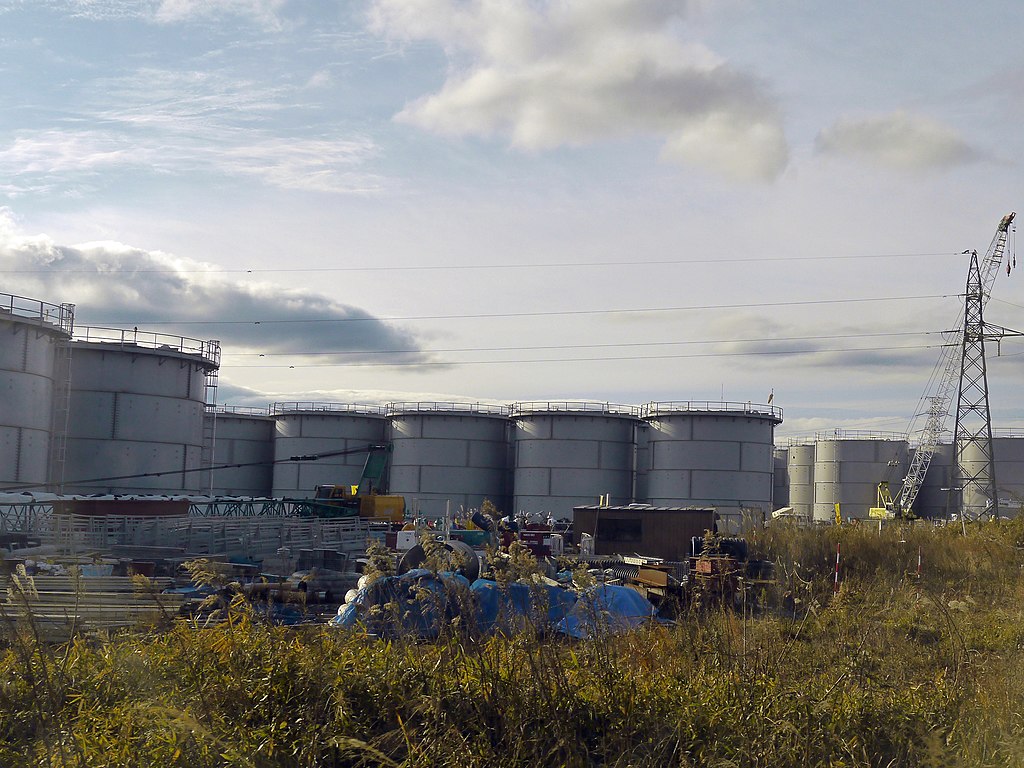
Japan is once again declaring its intention to dump the radioactive water stored in tanks at the Fukushima-Daiichi nuclear site into the Pacific Ocean, against widespread opposition.
Going forward with the dump without further study and serious consideration of viable alternatives, would, Puna said, mean that “the region will once again be headed towards a major nuclear contamination disaster at the hands of others.” Victims of years of atomic testing, Pacific Islanders are rightly not ready to be dumped on yet again.
Tepco and the lapdog Japanese government announced last May that they would release around 1.3 million tonnes of radioactive waste water from the Fukushima site next spring. Recently, authorities suggested the dump could be delayed until the summer but seem undeterred by the loud chorus of opposition from multiple quarters.
The plant produces 100 cubic metres of contaminated water daily, a combination of groundwater, seawater and water used to keep the reactors cool. The water is theoretically filtered to remove most harmful isotopes, other than tritium, which is radioactive hydrogen and cannot be separated from water. It is then stored in casks on site where authorities claim they are running out of space. However, independent watchdogs are not convinced that the filter system has successfully removed other dangerous radioactive isotopes from the waste water.
Most recently, the 100-member American group, the National Association of Marine Laboratories (NAML), expressed its fervent opposition in a strongly worded position paper released last month. Their opposition, they wrote, “is based on the fact that there is a lack of adequate and accurate scientific data supporting Japan’s assertion of safety. Furthermore, there is an abundance of data demonstrating serious concerns about releasing radioactively contaminated water.”
The report went on: “The proposed release of this contaminated water is a transboundary and transgenerational issue of concern for the health of marine ecosystems and those whose lives and livelihoods depend on them. We are concerned about the absence of critical data on the radionuclide content of each tank, the Advanced Liquid Processing System (ALPS), which is used to remove radionuclides, and the assumption that upon the release of the contaminated wastewater, ‘dilution is the solution to pollution.’”
The scientists accused Japan of ignoring the inevitable processes of bioaccumulation and bioconcentration, which contradict the dilution contention. The Association also called out what it saw as shoddy or incorrect science conducted by Tepco and the Japanese government, including “flaws in sampling protocols, statistical design, sample analyses, and assumptions, which in turn lead to flaws in the conclusion of safety and prevent a more thorough evaluation of better alternative approaches to disposal.”
Japan has consistently rejected on-going onsite storage — presumably due to the expense, given the land space is there and more casks could be provided. In the view of some, the eagerness to dump the water— largely contaminated with tritium (a form of radioactive hydrogen that cannot be separated from water) and likely other undeclared radionuclides — is a public relations exercise to make the problem “go away” and restore normal optics to the site. The site cannot also be fully decommissioned so long as the tanks are there.
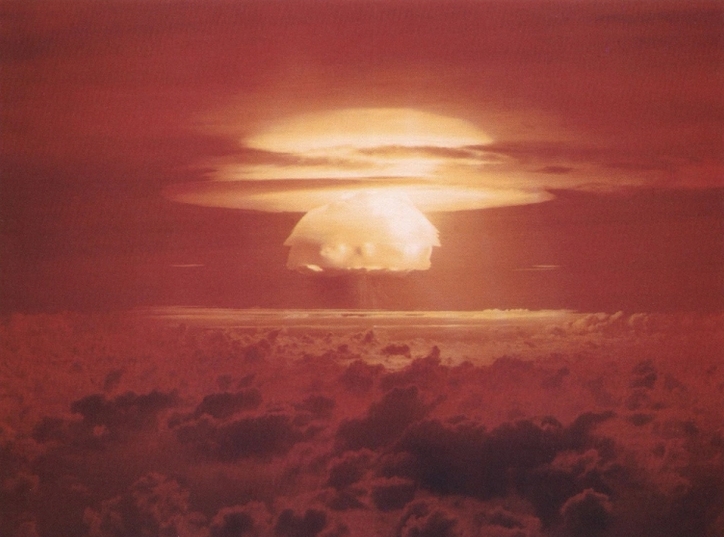
Castle Bravo was just the largest of the 67 atomic tests conducted by the US in the Marshall Islands, contaminating the landscape and sickening its population for generations .
Japan has also benefited from the (inevitable) support of the (nuclear power-promoting) International Atomic Energy Agency, an organization that never met a nuclear danger it couldn’t downplay. The agency has described the proposed discharges as “far below the Japanese regulatory limits,” in a statement last April.
After sending in a task force and several earlier reports, the IAEA released a new report in December in which it said “the IAEA will conduct its own independent checks of the radiological contents of the water stored in the tanks and how it will analyse environmental samples (for example seawater and fish) from the surrounding environment.” However, the IAEA has not expressed opposition to the dumping of the radioactive water even now and instead indicates that its safety reviews will continue “before, during, and after the discharges of ALPS treated water.”
Japan has faced down opposition from fishermen and environmentalists, particularly from those in the Marshall Islands who have suffered decades of horrific health issues, especially birth defects, after enduring 67 US atomic tests there. A Pacific region collective advocacy group, Youngsolwara Pacific, expressed dismay that the Japanese, of all people, would not empathize with them and condemn the Fukushima water dump.
“How can the Japanese government, who has experienced the same brutal experiences of nuclear weapons in both Hiroshima and Nagasaki, wish to further pollute our Pacific with nuclear waste?” they asked in a statement quoted in a New York Times article in December. “To us, this irresponsible act of trans-boundary harm is just the same as waging nuclear war on us as Pacific peoples and our islands.”
Pacific Islanders are naturally suspicious, having been lied to before. It took two days before the by then radiologically contaminated people of Rongelap were evacuated subsequent to the massive Castle Bravo atomic test, America’s biggest bomb that devastated Bikini Atoll. Marshall Islanders were treated as guinea pigs in the aftermath of the tests there, as the US government examined the impact on people living in a radiologically contaminated environment — even as the true dangers were hidden from them. Consequently, claims by the Japanese government that their Advanced Liquid Processing System had removed the worst of the radionuclides from the waste water to be dumped, have been met with skepticism at best.
Now, their concerns are supported by marine scientists.
“The effectiveness of the Advanced Liquid Processing System in almost completely removing the over 60 different radionuclides present in the affected wastewater—some of which have an affinity to target specific tissues, glands, organs, and metabolic pathways in living organisms, including people—remains a serious concern due to the absence of critical data,” said the statement from NAML.

Those are precisely some of the agonizing health effects already endured by the bombed peoples of the Marshall Islands and elsewhere in the Pacific. They are not ready to be dosed again.
“You feel this deep sorrow,” Bedi Racule, President of the Marshall Islands Students Association, told the New York Times. “Why were we not good enough to be treated like human beings?”
In an August 2022 statement on the Youngsolwara Pacific homepage, Racule added: “The impact of the nuclear testing legacy in the Pacific continues to affect our islands and people, and we cannot afford another scenario such as Fukushima’s dumping plan. Scientists are already warning that the impact of long-term, low-dose exposure to not only tritium but also other isotopes on the environment and humans is still unknown and that release of the wastewater is premature.”
Now NAML, the PIF and a vociferous alliance of Japanese fishermen and anti-nuclear activists, are raising their voices a little louder in what might be a last ditch attempt to prevent the Pacific Ocean from becoming, once again, a nuclear dustbin.
Linda Pentz Gunter is the international specialist at Beyond Nuclear and writes for and curates Beyond Nuclear International.
Source: https://beyondnuclearinternational.org/2023/01/24/dont-dump-on-us/#like-17588
Trial for compulsory prosecution of TEPCO’s former management team: Appeal by designated attorney acting as prosecutor

January 24, 2023
On January 24, a designated attorney acting as a prosecutor appealed to the Supreme Court against the decision of the second trial court, which handed down an acquittal following the first trial, in the trial of three former TEPCO executives who were forcibly indicted on charges of manslaughter over the Fukushima Daiichi nuclear power plant accident.

Tsunehisa Katsumata, 82, then chairman of TEPCO, and Ichiro Takekuro, 76, and Sakae Mutoh, 72, then vice presidents of TEPCO, were forcibly indicted on charges of manslaughter by the prosecutors’ panel for causing the deaths of 44 people, including hospital patients in Fukushima Prefecture, during evacuation from the nuclear accident.
The first trial court acquitted the three, and the Tokyo High Court, the court of second instance, in a ruling on the 18th of this month, followed the first trial court in acquitting all three, ruling that “it was impossible to predict the arrival of a huge tsunami and that there was not enough duty to stop the operation of the plant to avoid the accident.
Dissatisfied with this decision, the designated lawyer acting as the prosecutor appealed to the Supreme Court on March 24.
At a press conference held after the High Court ruling, the designated attorneys criticized the ruling, saying, “The ruling is tantamount to saying that there is no need to take measures against unknown earthquakes and tsunamis that have not been scientifically elucidated.
Nearly 12 years after the nuclear accident, the trial will now move to the Supreme Court.
TEPCO apologizes once again for the inconvenience and concern it has caused to so many people. We will refrain from commenting on the appeal.https://www3.nhk.or.jp/news/html/20230124/k10013958641000.html?fbclid=IwAR3ebtAUDnJuFnc8mBMvvqwmCfi0my9AzZqv0hbTO8W34RF4uc6VDUxXuK 8
Fukushima’s Toxic Dumping Flashpoint

January 20, 2023
“We must remind Japan that if the radioactive nuclear wastewater is safe, just dump it in Tokyo, test it in Paris and store it in Washington, but keep our Pacific nuclear-free.” (Vanuatu’s celebrated former ‘Turaga Chief’ Motarilavoa Hilda Lini)
In the face of considerable worldwide criticism, TEPCO is moving ahead with its well-advertised plans to dump contaminated water from storage tanks at the Fukushima-Daiichi Nuclear Power Plant disaster zone into the Pacific Ocean. They are running out of storage space and the Pacific Ocean is conveniently right next door.
The Japanese government is courting trouble, as a contracting party to: (1) the United Nations Convention on the Law of the Sea (2) the Convention on Early Notification of a Nuclear Accident, and (3) the Convention on Nuclear Safety, Japan has knowingly violated all three conventions by making the decision to dump contaminated water into the Pacific Ocean.
TEPCO’s toxic dumping scheme is opposed by some scientists as well as some of the world’s most highly regarded marine laboratories, e.g., the U.S. National Association of Marine Laboratories, with over 100 member laboratories, has issued a position paper strongly opposing the toxic dumping because of a lack of adequate and accurate scientific data in support of Japan’s assertions of safety.
The position paper: “We urge the government of Japan to stop pursing their planned and precedent-setting release of the radioactively contaminated water into the Pacific Ocean and to work with the broader scientific community to pursue other approaches that protect ocean life; human health; and those communities who depend on ecologically, economically, and culturally valuable marine resources.” (Source: U.S. Marine Labs Call for Stop to Fukushima Dumping Plans for Pacific, Pacific Island Times, Dec. 20, 2022)
Furthermore, Marine Laboratories agrees with the Pacific Island Forum’s suggestion that TEPCO look at options other than discharge. The toxic dumping plan has already put Japan at risk of losing its status as a Pacific Islands Forum Dialogue Partner. There are 21 partners, including the US, China, the UK, France, and the EU. According to Secretary General Henry Puna, the Forum has persistently requested Japan to share pivotal data, which has not been forthcoming: “In fact, we are very serious, and we will take all options to get Japan to at least cooperate with us by releasing the information that our technical experts are asking of them.” (Source: Pacific Island Forum Could Sideline Japan Over Nuclear Waste Plan, RNZ Pacific, January 12, 2023)
Japan’s Nuclear Regulation Authority has endorsed the dumping plan. No surprise there. Also unsurprisingly, the International Atomic Energy Agency (IAEA), the marketing arm for nuclear power, claims the dumping proposal is safe. Effective December 29, 2022, IAEA released an extensive report that details how the process will be monitored by independent entities, not to worry, uh-uh.
TEPCO generates 100 cubic metres of contaminated water per day, a mixture of groundwater, seawater, and water that cools the reactors. It is filtered for “the most radioactive isotopes” and stored in above-ground water tanks, but authorities admit that the level of tritium is above standards. It is almost impossible to remove tritium from water. TEPCO claims it is “only harmful to humans in large doses.” But who’s measuring?
According to TEPCO: “After treatment the levels of most radioactive particles meet the national standard.” However, the statement that most radioactive particles meet the national standard is not reassuring. And furthermore, why should anybody anywhere in the world be permitted to discharge large quantities of contaminated water that’s been filtered for ‘most radioactive particles’ directly from a broken-down nuclear power plant into the ocean under any circumstances?
But storage space is running out and the ocean is readily available as a very convenient garbage dump. Well, yes, but maybe find more storage space… on land… in Japan!
According to a Japanese anti-nuclear campaign group, the contaminated water dumping scheme violates the Convention on the Prevention of Marine Pollution as well as the UN Convention on the Law of the Seas. Their opposition is endorsed by the National Fisheries Cooperative Federation of Japan. In September 2022, 42,000 people signed a joint petition delivered to TEPCO and Japan’s Ministry of Economy demanding other solutions to the toxic water dumping plans. According to national broadcasting firm NHK, 51% of Japanese respondents oppose the dumping plan. And a survey by Asahi Shimbun claims 55% of the public opposes the dumping.
A Greenpeace East Asia press release d/d April 28, 2021, says; “According to the latest report by the Japanese government, there are 62 radioactive isotopes found in the existing nuclear water tanks in Fukushima, among which concentration of a radionuclide called tritium reached about 860 TBq (terabecquerel) – an alarming level that far exceeds the acceptable norm.”
China’s Xinhua News Agency claims: “TEPCO believes that tritium normally remains in the wastewater at ordinary nuclear power stations, therefore it is safe to discharge tritium-contaminated water. Experts say TEPCO is trying to confuse the concept of the wastewater that meets international standards during normal operation of nuclear power plants with that of the complex nuclear-contaminated water produced after the core meltdowns at the wrecked Fukushima power plant. The actual results of ALPS (Advanced Liquid Processing System) are not as ideal as TEPCO claims. Japanese media have found that in addition to tritium, there are a variety of radioactive substances in the Fukushima nuclear wastewater that exceed the standard. TEPCO has also admitted that about 70 percent of the water treated by ALPS contains radionuclides other than tritium at the concentration which exceeds legally required standards and requires filtration again.” (Source: World Insights: Japan Extremely Selfish to insist on Discharging Nuclear Wastewater into Sea, Xinhua, August 10, 2022)
According to Hiroyuki Uchida, mayor of Iwaki, Fukushima Prefecture, despite strengthened information about the toxic dumping by TEPCO and the government of Japan, the discharge plan has not gained “full understanding of citizens and fishery stakeholders.” (Source: Japanese Public Opposes Plan to Dump Radioactive Water into Sea, Asia & Pacific by Xinhau, January 15, 2023)
Rhea Moss-Christian, executive director of the Western and Central Pacific Fisheries Commission, aka: the Pacific Tuna Commission said: “It’s a real concern and I just wish they would take a bit of time to think more carefully about this… this is a massive release and a big, big potential disaster if it’s not handled properly… There are a number of outstanding questions that have yet to be fully answered. They have focused a lot on one radionuclide and not very much on others that are also present in the wastewater.” (Source: Hiroshima Survivor Pleads for Halt of Radioactive Waste Dump in Pacific Ocean, INA Pacific News Service, December 20, 2022)
Greenpeace/Japan on TEPCO dumping: “The Japanese government has once again failed the people of Fukushima. The government has taken the wholly unjustified decision to deliberately contaminate the Pacific Ocean with radioactive wastes. It has discounted the radiation risks and turned its back on the clear evidence that sufficient storage capacity is available on the nuclear site as well as in surrounding districts.[2] Rather than using the best available technology to minimize radiation hazards by storing and processing the water over the long term, they have opted for the cheapest option [3], dumping the water into the Pacific Ocean… Since 2012, Greenpeace has proactively campaigned against plans to discharge Fukushima contaminated water – submitting technical analysis to UN agencies, holding seminars with local residents of Fukushima with other NGOs, and petitioning against the discharges and submitted to relevant Japanese government bodies.” (Source: Greenpeace Press Release, April 13, 2021)
Addressing the U.N. General Assembly on September 22nd, 2022, President David Panuelo of Micronesia stated: “We cannot close our eyes to the unimaginable threats of nuclear contamination, marine pollution, and eventual destruction of the Blue Pacific Continent. The impacts of this decision are both transboundary and intergenerational in nature.”
In April 2021 Japan’s Deputy Prime Minister (serving from 2012-to-2021) Tarō Asō publicly stated that the treated and diluted water “will be safe to drink.” In response to Deputy PM Asō, Chinese Foreign Minister Lijian Zhao replied: “The ocean is not Japan’s trashcan” and furthermore, since Japan claims it’s safe to drink, “then drink it!” (Source: China to Japan: If Treated Radioactive Water from Fukushima is Safe, ‘Please Drink It’ Washington Post, April 15, 2021)
Mr. Zhao may have stumbled upon the best solution to international concerns about TEPCO (Tokyo Electric Power Company) dumping contaminated water into the Pacific Ocean. Instead, TEPCO should remove it from the storage tanks at Fukushima Daiichi Nuclear Power Station and deliver it to Japan’s water reservoirs. After all, they publicly claimed it’s “safe to drink.” Japan has approximately 100,000 dams of which roughly 3,000 are reservoirs over 15 meters (50’) height. For example, one of the largest drinking water reservoirs in Japan is Ogouchi Reservoir, which holds 189 million tons of drinking water for Tokyo.
Source: https://www.counterpunch.org/2023/01/20/fukushimas-toxic-dumping-flashpoint/
Pacific islands urge Japan to delay release of Fukushima waste over contamination fears
January 18, 2023
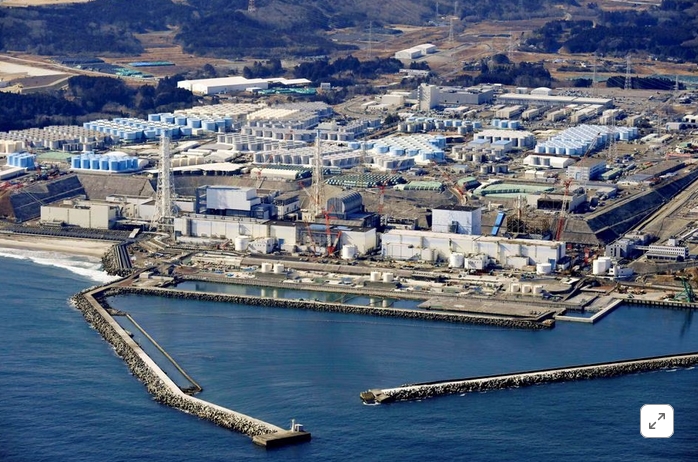
SYDNEY, Jan 18 (Reuters) – Pacific island nations are urging Japan to delay the release of water from the destroyed Fukushima nuclear power plant over fears fisheries will be contaminated, the Pacific Island Forum (PIF) said on Wednesday.
The Japanese government said last week that water from the destroyed Fukushima nuclear power plant could be released into the sea “around this spring or summer,” raising concerns from island nations still grappling with the legacy of nuclear testing decades ago.
Japan had approved the future release of more than 1 million tonnes of water from the site into the ocean after treatment in April 2021.
The PIF, a regional bloc of 17 island nations, argues the release of the water could have a major impact on fishing grounds that island economies rely on, and where up to half of the world’s tuna is sourced.
“Our region is steadfast that there be no discharge until all parties verify it is safe,” PIF Secretary General Henry Puna said on Wednesday at a livestreamed public meeting in Suva, Fiji.
“We must prevent action that will lead or mislead us towards another major nuclear contamination disaster at the hands of others,” he added, saying Pacific islanders continued to endure the long-term impacts of the nuclear testing legacy on a daily basis.
The United States conducted nuclear testing in the Pacific islands in the 1940s and 1950s and the Marshall Islands continues to campaign for more compensation from Washington over lasting health and environmental effects.
France conducted atomic testing between 1966 and 1996 at Mururoa Atoll in French Polynesia in the southern Pacific Ocean.
Ken Buesseler, a scientist with the Woods Hole Oceanographic Institution, told the forum on Wednesday that a PIF scientific expert panel was urging Japan to reconsider the waste release because it was not supported by data and more information was needed.
Radioactivity moves across the ocean with currents and tides and risks contaminating fish, he said.
A spokesperson for the U.S. State Department said Japan had examined several options to address “a unique and challenging situation.” “Japan has weighed the options and effects, has been transparent about its decision, and appears to have adopted an approach in accordance with globally accepted nuclear safety standards,” the spokesperson said.
“We look forward to the Government of Japan’s continued coordination with the IAEA as it monitors the effectiveness of this approach,” the official added, referring to the International Atomic Energy Agency.
Japan’s foreign ministry has previously said that regulators deemed it safe to release the water, which would be filtered to remove most isotopes but would still contain traces of tritium, an isotope of hydrogen hard to separate from water.
Fukushima: court upholds acquittals of three Tepco executives over disaster
High court in Japan agreed defendants could not have predicted the massive tsunami that crippled the power plant and triggered a nuclear meltdown
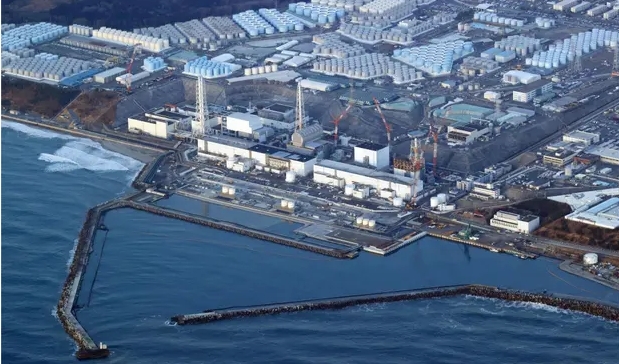
The Fukushima Daiichi nuclear power plant in Okuma. Three Tepco executives have had their acquittals on negligence charges upheld by a court in Japan.
January 18, 2023
Three former executives from the company that operates the wrecked Fukushima Daiichi nuclear plant have had their not-guilty verdicts upheld by a court in Japan, dealing a blow to campaigners demanding the firm take legal responsibility for the disaster in March 2011.
The Tokyo high court on Wednesday cleared Tsunehisa Katsumata, the former chairman of Tokyo Electric Power (Tepco), along with former vice-presidents Ichiro Takekuro and Sakae Muto, of professional negligence resulting in death.
The court said the defendants could not have predicted the massive tsunami that crippled the power plant and triggered the world’s worst nuclear accident since Chornobyl in 1986.
The three men were indicted in 2016 for allegedly failing to take measures to defend the plant against tsunamis, resulting in the deaths of 44 people, including elderly patients at a hospital, who had to be evacuated after the disaster.
The Fukushima Daiichi plant, on Japan’s north-eastern coast, was hit by a massive tsunami caused by a 9.0-magnitude earthquake, the strongest in Japan’s recorded history.
More than 18,000 people died in the tsunami, but no one was recorded as having been directly killed by the nuclear meltdowns, which caused massive radiation leaks and forced the evacuation of more than 150,000 people living nearby – some of whom have only recently been given permission to return to their homes.
Wednesday’s ruling affirmed a similar verdict delivered by the Tokyo district court in September 2019.
The trial focused on whether the former executives should have foreseen the massive tsunami and taken extra precautions, such as constructing a bigger seawall, to prevent a catastrophe.
A government evaluation of earthquake risks published in 2002 estimated that tsunami waves of up to 15.7 metres (51ft) in height could strike Fukushima Daiichi. The findings were passed on to Tepco in 2008 – three years before the disaster when a 14-metre wave struck, the Kyodo news agency said.
Tepco has argued it was powerless to take precautions against a tsunami of the size that struck the plant almost 12 years ago, and that it had done everything possible to protect it.
The original district court ruling, however, cast doubt on the credibility of the government’s evaluation, saying the defendants “could not have logically predicted tsunami waves over 10 metres in height”, Kyodo reported.
Although they have twice been acquitted in the only criminal case against Tepco executives arising from the disaster, a separate verdict in July in a civil case against the same three men and Tepco’s former president, Masataka Shimizu, ordered them to pay ¥13.32tn (£80bn at the time) for failing to prevent the disaster.
In contrast to Wednesday’s decision, the court said the government’s assessment had been reliable enough to oblige Tepco to take preventive measures.
While that ruling – the first to find Tepco executives liable for damage resulting from the disaster – carries symbolic significance, lawyers have said the defendants do not have the means to pay the sum, believed to be the largest ever awarded in a civil lawsuit in Japan.
Media reports said they would be expected to pay as much as their assets allowed.
Where the judgement of the Tokyo High Court went wrong

Credits to Yuichi Kaido
January 18, 2023
If you read this, you can understand that yesterday’s decision by the Tokyo High Court considers nuclear power safety measures inadequate and prepare for the next brutal accident.
At the beginning of the attorney general’s statement published yesterday, we said: Regarding the long-term evaluation of the projection, the verdict said, “as a country, it is debated and placed weight that cannot be overlooked,” but in this view, it denied the necessity for tsunami measures based on the research findings to base this, and the reliability based on the “real possibility” of stopping nuclear power plants from running.
Seeking “realistic possibilities” about scientific opinion based on accident measures is clearly a mistake, given the current state of geology. I believe such a judgement exonerates not taking necessary accident measures and dangerous logic to prepare for the next nuclear accident. “
I think the conclusion is clear which of these two decisions will withstand the criticism of history by Judge Hosoda, who refused the local inspection, flipped the empty arguments on the desk and wrote an empty verdict, will stand up to the criticism of history.
*******************
The degree of credibility required by knowledge
Since operators who install (and operate nuclear power plants have a duty above all to prevent brutal accidents, the safety of nuclear power plants is impaired by the expected tsunami (predictable tsunami) based on the latest scientific and technical findings, the safety of the nuclear power plant plants is impaired, and if brutal accidents occur, they are obliged to take necessary measures to prevent this, and the director recognizes the risk, or can take action. As explained in No. 2 (The defendants’ duty of good governance as the director of Tokyo Electric Power).
Conversely, at nuclear power plant, the risk of accidents occurring in case of an event that exceeds the expected is greatly different between earthquakes and tsunami, and if you use only a dry site concept like the Fukushima Daiichi Nuclear Power Plant as a measure against tsunami, it is absolutely safe as long as the tsunami does not exceed the expected height, but if it exceeds the expected height, there will be a cliff edge incident that causes sudden damage to the core and reaches the core, due to a severe accident caused by loss of all power. Therefore, if our predictions are credible for scientifically predicted tsunami, it will be extremely important to avoid the presumed tsunami measures.
Therefore, considering whether a certain degree of credibility is required in order to have scientific opinion on predictions of tsunami, which is required for the director of the company that sets up and runs nuclear power plants to avoid measures
(1) If safety measures are taken as a prerequisite for tsunami in the world, and the company that operates and operates nuclear power plants, and safety is the first priority, while in reality, resources are limited, etc., etc., and if safety measures are a priority, as a prelude to all the predictions of tsunami of all the contents that exist in the world, (there is a risk of lack of resources (without resources and resources) that should be allocated for the truly necessary measures, or there is a surplus.
There is a risk of incalculable risk of bodily safety. It is therefore believed that in nuclear engineering, zero risk is not required, and safety measures should be taken that do not create undue risks ( 生155).
On the other hand, scientific findings, often earthquakes and tsunami. Opinions on natural phenomena are constantly advancing and developing that natural phenomena, such as earthquakes and tsunami, are essentially a matter of the galaxy, and since it is principle impossible to make complete predictions. Since it is impossible to experiment on them, we can only learn from past events, but there is a limit that there is little data from the past. Therefore, with regard to findings widely considered established, i.e. not the latest scientific findings, not necessarily all researchers agree, the latest scientific opinion, where clarification and understanding are currently progressing, there will essentially be researchers who disagree. Therefore, for example, if you ask for excessive reliability of scientific findings in the pretext of tsunami, such as the absence of disagreement among researchers, or the attached data is complete, the tsunami that is waiting to happen will not be sufficient, and the safety of nuclear power plants will not be shaken (severe accidents caused by the loss of all power).
Therefore, when considering these collectively, in order to have scientific findings on tsunami predictions that are required by the directors of companies that establish and operate nuclear power plants to avoid measures, the findings expressed in the papers of certain researchers and so on are not enough, for example, in public institutions and councils that consider tsunami forecasts, serious scrutiny has been made among researchers and experts who have a considerable amount of research practice in that field, You have to understand that there is and enough. And in the case of such findings, it can be said that unless there are specific circumstances such as collected despite being scientifically and strictly unreasonable, the director of the company that installs and operates the nuclear power plant can be obliged to follow the tsunami measures based on that findings.
(2)a In this regard, the defendants and Tokyo Electric Power Corporation are required to quote the opinion of Professor Imamura ( 、156) regarding the scientific findings of the predictions of tsunami, where the CEO of the company that operates and operates nuclear power plants are required to take measures, and to be able to justify the need for measures, using a scientific basis, specifically, the tsunami, or at least the scientific consensus has been obtained that it is always tsunami, in which there is a scientific consensus that it is always a tsunami or at least a scientific basis. Insisting on needing and etc.
の However, if interpreted as the above assertion, many researchers and experts with relevant practice recognize that it is reasonable to assume that there is a chance of large-scale tsunami earthquake occurring in a certain area, when the location of wave sources cannot be calculated on a specific basis and the interval of occurrence over a certain period of time, the director of the company operating nuclear power plant is a measure to prevent severe accidents from tsunami (Opinion of Prof. Imamura According to this thinking, if an unexpected tsunami occurs at a nuclear power plant, the Cliff Edge event is likely to cause extremely severe damage due to loss of total power. If the prediction is credible, it would be necessary to avoid tsunami measures, but not to take measures except certain things, i.e. the severity of total power loss due to a tsunami, if the prediction is reliable. It is clear that it is unreasonable, given the importance of ensuring the high safety of nuclear power plants, which is hidden in standards related to the standard of safety etc.
考 Also, views like the above claim require that, in addition to the credibility of scientific findings, the information for nuclear companies to take easy measures is clear, but since there are some uncertainties in the findings, it is possible to take measures with the appropriate room taken into account on the safety side (this opinion indicates that it is dangerous, but it is unreasonable that measures cannot be mandatory if it is not indicated what extent to take. ), overstating the convenience of measures by nuclear power operators rather than ensuring safety is not acceptable.
According to the construction industry (I have to say that the allegations made by the defendants and Tokyo Electric Power Corporation are difficult to accept.
Tokyo court upholds not guilty verdict for ex-Tepco execs over Fukushima disaster
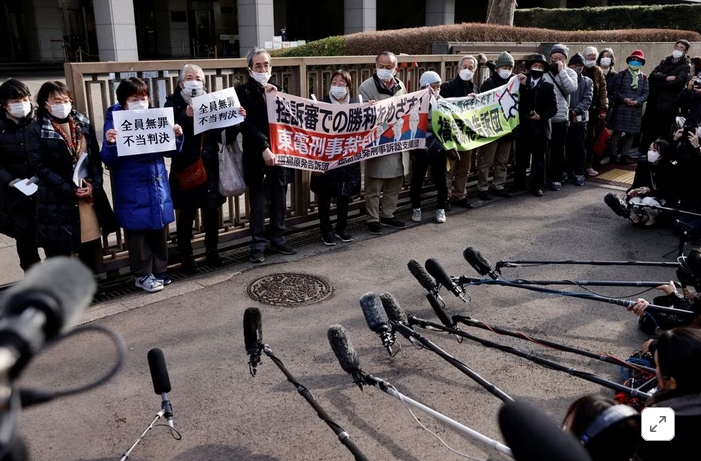
Support group members of plaintiffs show off banners reading “All innocent. Wrongful judgment” after the The Tokyo High Court upheld a not guilty verdict for former Tokyo Electric Power Company (TEPCO) executives of negligence over the 2011 Fukushima nuclear power station disaster, in front of the court in Tokyo, Japan, January 18, 2023
TOKYO, Jan 18 (Reuters) – The Tokyo High Court on Wednesday upheld a not guilty criminal verdict by a lower court that cleared former Tokyo Electric Power Company (Tepco) (9501.T) executives of negligence over the 2011 Fukushima nuclear power station disaster.
Former Tepco Chairman Tsunehisa Katsumata, 82, and one-time executives Sakae Muto, 72, and Ichiro Takekuro, 77, were all found not guilty by the Tokyo District Court in 2019, in the only criminal case to arise out of the world’s worst nuclear crisis since the Chernobyl disaster in 1986.
The ruling on Wednesday to uphold the not guilty verdict sits at odds with a separate civil case brought to the Tokyo court by Tepco shareholders, which found four former executives responsible for the 2011 nuclear disaster.
Judges ordered the former executives to pay 13 trillion yen ($99.14 billion) in damages in the civil lawsuit. The court judged that the executives could have prevented the disaster if they had exercised due care. Criminal lawsuits in Japan are broadly interpreted to have a higher standard of proof than civil cases.
“I’m really surprised. Most other lawsuits have found that Tepco is guilty, so I can’t understand why the criminal court is the odd one out,” said Masako Sawai, who is part of a civil group accusing the former executives of negligence.
The trial, which started in June 2017, was conducted by state-appointed lawyers after prosecutors decided not to bring charges against the Tepco executives.
“We are aware that there is an ongoing lawsuit over the criminal responsibility of three former executives regarding the nuclear disaster, but we will refrain from commenting on the case,” a spokesperson for Tepco said.
The Fukushima Dai-ichi nuclear station, located about 220 kilometres (130 miles) northeast of Tokyo, was rocked by a magnitude 9.0 earthquake and subsequent tsunami in March 2011, sparking three reactor meltdowns and prompting Japan to shut down its entire fleet of nuclear reactors.
Soil separation and soil storage in Fukushima

Credits to Arkadiusz Podniesinsk
January 10, 12023
Today I visited the temporary waste dump adjacent to the power plant. I’ve been here several times, but this is the first time I’m with someone who can explain everything.
So, the temporary waste dump is a large area of 1600 hectares where contaminated soil from decontamination of areas from the whole prefecture goes. Before the disaster, most of these areas were cultivated fields, but there was also a fish processing plant, a school, a kindergarten and other public utilities. After the disaster, the entire area was bought by the government for the purpose of a landfill.

Currently, several plants have been built here that deal with sorting contaminated soil, ie. by separating wood, leaves, metals and other pollution (except radioactive contamination). The fire material is then burned and the ash is stored in special concrete containers. On the other hand, large, 15 meters high hills are dumped from the cleared soil, although when the grass grows they look more like small hills. Several layers of insulation are laid at the bottom of each mound and an irrigation system is being built that collects the flowing contaminated water to the treatment plant. Every mound has such an installation. At the end, I have attached a photo so that you can better understand the process described.
According to the name, the land will be stored here temporarily (up to 30 years) until a place for final storage is found. Research is currently underway on how to effectively reduce the amount of contaminated soil (volume reduction, recycling, new technologies) to minimize the amount of soil that will go to final landfill.
The whole thing is really impressive and above all works. It seems that the Japanese are seriously taking the issue of decontamination, although I personally don’t think that after 30 years such gigantic amounts of land should be transferred elsewhere again. Or at least I won’t see that anymore .
https://www.facebook.com/arek.podniesinski

High Court’s TEPCO Fukushima Ruling Could Be Bellwether for Other Cases

From left: Tsunehisa Katsumata, Ichiro Takekuro and Sakae Muto
January 16, 2023
Could the meltdown at the Fukushima No. 1 nuclear power plant have been prevented? The Tokyo High Court is looking into a criminal case and will soon rule on whether the unprecedented accident could have been prevented by expecting such a massive tsunami. Civil court rulings on the same issue have been split, so all eyes are on the high court to see how it will rule.
The Tokyo High Court will on Wednesday hand down its ruling on whether three former executives of what was then Tokyo Electric Power Co. are responsible for the accident in 2011. The three had been acquitted by the Tokyo District Court of charges of professional negligence resulting in death.
The lower court’s ruling in September 2019 acquitted former TEPCO Chairman Tsunehisa Katsumata and former Executive Vice Presidents Ichiro Takekuro and Sakae Muto, who were in charge of the nuclear power plant.
During closing arguments of the appeal at the Tokyo High Court on June 6, 2022, court-appointed lawyers for the prosecution criticized the lower court decision.
“Denying that the defendants had responsibility is unjust,” one said, demanding the district court ruling be overturned.
The three defendants were handed mandatory indictment on charges related to causing the nuclear accident by failing to take measures even though they could expect such a huge tsunami, resulting in the deaths of 44 people who were evacuated from Futaba Hospital in Okuma, Fukushima Prefecture.
The two main points of contention in the trial of the three men are whether the massive tsunami could have been expected and whether the accident could have been prevented by taking measures.
In the district court, the judges ruled that “the only way to prevent the accident was to stop the operation of the plant.”
As for expectations of a natural disaster, the government had released in 2002 a long-term assessment that presents the possibility of a massive earthquake and tsunami hitting off places such as Fukushima Prefecture. The district court ruled that such an assessment was unreliable and deemed that the defendants could not be held criminally liable because they “could not expect a massive tsunami in concrete terms and were under no legal obligation to stop the operation of the plant.”
The district court limited the possible measures to prevent the accident to the “shutdown of the plant,” a measure that is not readily practiced.
During the appeal, the appointed lawyers for the prosecution emphasized that a shutdown of a plant is the last resort, and the accident could have been prevented through basic measures such as building higher seawalls and making the plant facilities watertight. The defense reiterated that there were no errors in the judgment of the lower court.
Split decisions
The appeal began in November 2021 and concluded after three hearings at the Tokyo High Court. The appointed lawyers requested the examination of witnesses, including former Japan Meteorological Agency officials who participated in the compilation of the assessment, as well as an on-site inspection by judges. But these requests were turned down.
During a civil trial at the Tokyo High Court in February 2021, however, the ruling adopted the long-term assessment as “reliable” evidence.
At the Supreme Court, an appeal of this civil suit was heard and ruled upon in June 2022. The top court did not clearly express the reliability of the assessment nor the predictability of a massive tsunami, but ruled that the central government, the defendant, was not responsible for the accident.
“The size of the tsunami was larger than expected, and the accident could not have been prevented,” the Supreme Court said.
Shortly after this trial, however, the Tokyo District Court in July recognized the reliability of the assessment in a shareholder derivative lawsuit filed by shareholders of Tokyo Electric Power Company Holdings. The court, in saying that “the tsunami was predictable and the accident could have been prevented,” ordered the abovenamed former TEPCO executives and former TEPCO President Masataka Shimizu to pay about ¥13 trillion in compensation. This case adopted almost the same evidence as the current criminal trial, but the conclusion was the opposite of the one reached by the same court in the criminal trial.
Chuo University Assistant Prof. Satoshi Tanii, who specializes in the theory of criminal negligence, said that the hurdle for finding liability in a criminal trial where an individual faces punishment can be higher than that for a civil trial.
“In addition to the reliability of the long-term assessment, whether the measures to prevent accidents are limited to a shutdown or include more practical moves such as watertight measures will become one of the points that will determine the guilt or innocence of the defendants,” he said.
Source: https://japannews.yomiuri.co.jp/society/crime-courts/20230116-84274/
Interview: Japan’s unilateral radioactive wastewater discharge irresponsible, harmful: green activist
The Japanese government has claimed that the contaminated water could be diluted with water and discharged at a low concentration after being treated with an advanced liquid processing system (ALPS).
The green activist, however, noted that the radioactive substances cannot be completely filtered through the ALPS, saying substances, such as tritium, will be poured into the sea unfiltered.
According to the South Korean environmental group’s analysis of the 2021 data from Japan’s Ministry of Health, Labor and Welfare, cesium was detected from 8 percent of Japanese fishery products.
“The Pacific Ocean is not the sea of Japan, but the sea of everybody … Pollutants will flow to neighboring countries in a situation that a lot of radioactive materials have already been released and contaminated (the marine ecosystem),” said the green activist.

(Xinhua) January 16, 2023
SEOUL, Jan. 14 (Xinhua) — Japan’s unilateral push to discharge radioactive wastewater from its crippled Fukushima Daiichi nuclear power plant into the Pacific Ocean is irresponsible and harmful, as the Japanese government pursued it without consultations with neighboring countries, a South Korean green activist said.
“It is very concerned that Japan is still unilaterally pushing for the discharge of the Fukushima contaminated water,” Ahn Jae-hun, energy and climate change director at the Korea Federation for Environment Movement, told Xinhua on Saturday.
“Neighboring countries such as (South) Korea and China could suffer more direct damage, so Japan had to consult with them. The problem is that Japan follows its own process (without consultations),” said Ahn.
“A sizeable amount of the contaminated water, such as tritium, is difficult to purify no matter how much purification is performed. It is very irresponsible to release it as it is.”
Japan’s planned release of tritium-laced wastewater from the Fukushima power plant into the sea will start around this spring or summer, according to Kyodo News reports citing the Japanese government.
Japan decided in April 2021 to start dumping about 1.25 million tons of nuclear wastewater into the ocean spanning 30 years from 2023.
The Japanese government has claimed that the contaminated water could be diluted with water and discharged at a low concentration after being treated with an advanced liquid processing system (ALPS).
The green activist, however, noted that the radioactive substances cannot be completely filtered through the ALPS, saying substances, such as tritium, will be poured into the sea unfiltered.
“A lot of radioactive materials have already flowed into the sea after the Fukushima nuclear disaster. Because of that, fish contaminated with cesium are caught in waters off Fukushima,” said Ahn.
According to the South Korean environmental group’s analysis of the 2021 data from Japan’s Ministry of Health, Labor and Welfare, cesium was detected from 8 percent of Japanese fishery products.
“Once (the contaminated water) is thrown into the sea, it cannot be retrieved. Environmental effects from radioactive materials cannot be felt immediately, but will inevitably appear over a long period of time,” Ahn said.
“The Pacific Ocean is not the sea of Japan, but the sea of everybody … Pollutants will flow to neighboring countries in a situation that a lot of radioactive materials have already been released and contaminated (the marine ecosystem),” said the green activist.
The South Korean government, which has opposed the radioactive wastewater dumping by Japan, reiterated its opposition.
“Putting top priority on public health and safety, the government will continue to respond by maintaining its position that the contaminated water from the Fukushima nuclear power plant should be safely disposed of in accordance with international standards from the objective and scientific perspectives,” a South Korean foreign ministry official said Friday.
China urges Japan to safely dispose of nuclear-contaminated water

Xinhua | 2023-01-16
BEIJING — China once again urges Japan to take the reasonable concerns of relevant parties seriously and dispose of its nuclear-contaminated water in a science-based, open, transparent and safe manner, Chinese Foreign Ministry spokesperson Wang Wenbin said on Monday.
Wang made the remarks at a daily news briefing here in response to reports that Japan would pipe nuclear-contaminated water from the Fukushima nuclear power station into the ocean during the spring and summer this year.
Wang said that over the past two years, the international community has strongly questioned and opposed the unilateral and erroneous decision of the Japanese government to discharge nuclear-contaminated water into the ocean, and expressed grave concerns over the impact such an action would have on the marine environment and public health.
Wang said the majority of the Japanese public is also opposed to this irresponsible approach. When polled, 55 percent of respondents opposed the disposal of contaminated water into the ocean.
“It is regrettable that the concerns of all parties have yet to be given due attention or be addressed by Japan,” Wang said, adding that Japan has failed to provide scientific and credible explanations concerning the legitimacy of its plan, the accuracy of data on the nuclear-contaminated water, the effectiveness of the treatment system, and the uncertainties about the environmental impact.
The International Atomic Energy Agency (IAEA) has sent three technical task forces to Japan and so far, there has been no conclusive resolution on Japan’s proposal, Wang said, noting that the agency has also issued many requests to Japan, seeking clarifications or making recommendations for improved disposal plans.
“Under such circumstances, it is reckless and irresponsible for Japan to approve the discharge plan and proceed with the relevant construction project,” he said.
Wang said that China once again urges Japan to take the reasonable concerns of relevant parties seriously, and dispose of the nuclear-contaminated water in a science-based, open, transparent and safe manner. Japan should subject to the strict monitoring of the IAEA, and protect the marine environment, health rights and interests of all people, he added.
“Without authorization and full consultation with its neighbors, other stakeholders and relevant international institutions, Japan should not begin the discharge of nuclear-contaminated water into the ocean,” Wang said.
https://www.chinadaily.com.cn/a/202301/16/WS63c551cea31057c47eba9e94.html
1 This Month

of the week – Shut Down Drone Warfare!


Tell the Ukrainian Government to Drop Prosecution of Peace Activist Yurii Sheliazhenko

Petition to revoke the licensing of the Near Surface Nuclear Disposal Facility (NSDF) at Chalk River. https://www.ourcommons.ca/petitions/en/Petition/Details?Petition=e-7247
To see nuclear-related stories in greater depth and intensity – go to https://nuclearinformation.wordpress.com
-
Archives
- April 2026 (57)
- March 2026 (251)
- February 2026 (268)
- January 2026 (308)
- December 2025 (358)
- November 2025 (359)
- October 2025 (376)
- September 2025 (257)
- August 2025 (319)
- July 2025 (230)
- June 2025 (348)
- May 2025 (261)
-
Categories
- 1
- 1 NUCLEAR ISSUES
- business and costs
- climate change
- culture and arts
- ENERGY
- environment
- health
- history
- indigenous issues
- Legal
- marketing of nuclear
- media
- opposition to nuclear
- PERSONAL STORIES
- politics
- politics international
- Religion and ethics
- safety
- secrets,lies and civil liberties
- spinbuster
- technology
- Uranium
- wastes
- weapons and war
- Women
- 2 WORLD
- ACTION
- AFRICA
- Atrocities
- AUSTRALIA
- Christina's notes
- Christina's themes
- culture and arts
- Events
- Fuk 2022
- Fuk 2023
- Fukushima 2017
- Fukushima 2018
- fukushima 2019
- Fukushima 2020
- Fukushima 2021
- general
- global warming
- Humour (God we need it)
- Nuclear
- RARE EARTHS
- Reference
- resources – print
- Resources -audiovicual
- Weekly Newsletter
- World
- World Nuclear
- YouTube
-
RSS
Entries RSS
Comments RSS
 nuclear-news