Fukushima Daiichi Nuclear Power Plant Accident: TEPCO’s Liability Confirmed in Three New Class Actions

March 8, 2022
In three class action lawsuits filed by residents of Fukushima Prefecture and others who claimed to have suffered emotional distress as a result of the accident at the Fukushima Daiichi Nuclear Power Plant, the judgments ordering TEPCO to pay compensation that exceeds the national standard have all become final. This means that TEPCO’s liability and the amount of compensation have been confirmed in six of the seven class action lawsuits that have been appealed to the Supreme Court.
The three class action lawsuits were filed by more than 300 residents of Odaka Ward in Minamisoma City, more than 200 residents of Futaba County, and about 50 residents of Fukushima City, who were not ordered to evacuate, demanding compensation from TEPCO for emotional distress caused by the accident.
The judgments of the second trial court all approved compensation that exceeded the government’s standard for compensation for nuclear accidents, and TEPCO and others appealed the judgments.
The Supreme Court’s Third Petty Bench, presided over by Justice Michiharu Hayashi, rejected the appeal on August 8, and the decision ordering compensation that exceeded the national standard became final. The total amount of compensation awarded was over 1.1 billion yen to approximately 580 people in the three lawsuits.
With this decision, TEPCO’s liability and the amount of compensation exceeding the national standard have been confirmed in six of the seven appeals filed by people who evacuated from their homes due to the nuclear accident.
Fukushima City and other areas not subject to evacuation orders: 300,000 yen uniform compensation

Kichitaro Nomura, attorney for the residents, said, “We consider this to be a very landmark decision, and we were honestly relieved when we received word of the final decision.
TEPCO “will respond in good faith in accordance with the outcome of the trial.”
TEPCO issued a comment, saying, “Once again, we sincerely apologize to the people of Fukushima Prefecture and the wider community for the inconvenience and concern caused by the accident. We will respond to the plaintiffs in accordance with the outcome of the Supreme Court case. We will continue to respond with sincerity to fulfill our responsibility to Fukushima.
https://www3.nhk.or.jp/news/html/20220308/k10013520711000.html?fbclid=IwAR1yVPiNTQnTc3_XpPQcIORsp-CynINdPkBsN5pt09roI-I6GMha_PakzaY
River fishing limits remain 11 years after nuclear disaster

March 7, 2022
FUKUSHIMA–A sign along the Manogawa river that runs through Minami-Soma, Fukushima Prefecture, is faded, but the message is clear–and perhaps unnecessary.
“Regulations have yet to be lifted,” it says. “Please do not conduct fishing activities.”
The sign is located on a riverbank about 30 kilometers north of the stricken Fukushima No. 1 nuclear power plant run by Tokyo Electric Power Co.
The area used to be crowded with people trying to catch “ayu” (sweetfish). But anglers from near and far stopped visiting the area long ago, and now, hardly anyone is around to see the sign.
After the 2011 nuclear disaster, a local association of fisheries cooperative set up the “no fishing” signs at about 50 locations along the river.
Calls to suspend shipments of river fish and to refrain from fishing have continued since the nuclear disaster started 11 years ago, even for rivers outside the Tohoku region.
In the Manogawa river, ayu, “ugui” (Japanese dace) and “yamame” (masu trout) were found with concentrations of radioactive substances that exceeded the national safety standard.
“There are people who say, ‘I don’t think I can go fishing again in my lifetime,” said Yukiharu Mori, 60, who owns a fishing goods store in Minami-Soma.
His shop’s sales have plummeted, and many other fishing goods shops in the city’s area have gone out of business, he said.
RESTRICTIONS LIFTED FOR SEAFOOD
The nuclear disaster led to restrictions on shipments of seafood products in five prefectures, stretching from Aomori to Ibaraki.
These restrictions have been lifted in stages because radioactive substances more easily diffuse in the sea, and fish species have been confirmed safe to eat.
Currently, the shipment restrictions apply only to “kurosoi” (black rockfish) caught off Fukushima Prefecture.
But all restrictions remain for catches from 25 rivers and lakes in five prefectures–Fukushima, Miyagi, Ibaraki, Gunma and Chiba.
In some areas along the Agatsumagawa river in western Gunma Prefecture, shipments of “iwana” (char) and yamame are still restricted.
According to Gunma prefectural officials, radiation doses were relatively high in certain areas around the Agatsumagawa river immediately after the nuclear disaster due to the wind direction and geographical features. That has led in part to the prolonged restrictions.
In a 2020 prefectural survey, the radioactivity concentration level in iwana was 140 becquerels per kilogram. In a 2019 survey, the level for yamame was 120 becquerels per kilogram.
The national standard for both fish is 100 becquerels per kilogram.
“Even when the figure goes down and we think it is safe, we find fish with high figures every few years,” a Gunma prefectural official said. “That makes it difficult for us to take a step toward lifting the restrictions.”
Toshihiro Wada, an associate professor of fish biology at Fukushima University, said river fish “have continued to consume radioactive materials from food” provided through forests that have yet to be decontaminated.
The central government has conducted decontamination work mainly in residential areas of Fukushima Prefecture and surrounding prefectures.
But such work has not been done in most parts of large forested areas. Insects and other critters ingest still-contaminated tree leaves or algae at river bottoms. The river fish then consume the creatures, which has kept radioactive concentrations high in the fish.
A team of researchers from Fukushima University, the Fukushima prefectural government and the National Institute for Environmental Studies has surveyed areas along the Otagawa river that stretches from Namie to Minami-Soma in Fukushima Prefecture since 2018.
The study includes checking radioactivity levels in the river fish and insects.
The upper part of the Otagawa river is located in a “difficult-to-return” zone because of still-high radiation levels.
In an on-site survey in December, the researchers found the radiation dose rate in the air of an upstream forested area within the difficult-to-return zone was 2 to 3 microsieverts per hour. That level was 20 to 30 times higher than the dose rate in the city of Fukushima.
The researchers also found up to 9,000 becquerels of radioactive materials per kilogram in yamame caught in the upper portion of the river in 2018, and up to 12,000 becquerels per kilogram in iwana.
The radioactivity concentrations in tree leaves and river algae were several thousand to tens of thousands of becquerels. Crickets, bees and other land and aquatic creatures found in the yamame’s stomachs are believed to have eaten the contaminated leaves and algae.
Insects in the area contained radioactivity levels of several hundred to several thousand becquerels, the researchers said.
Yumiko Ishii, a team member and a chief researcher at the NIES, said that larger yamame had radioactivity concentration levels that were higher than those in the food that the fish ate.
“Unless you do something about the radioactive materials in forests, the radioactivity concentration levels in fish will not go down,” she said. “But decontaminating forests is not realistic, either.”
(This article was written by Keitaro Fukuchi and Nobuyuki Takiguchi.)
Booklets touting Fukushima plant water discharge angers schools

March 7, 2022
Complaints from educators have prompted some municipalities in coastal areas of the Tohoku region to stop schools from handing out government fliers to students or retrieve distributed ones that tout the safety of releasing treated water from a crippled nuclear plant into the ocean.
The government sent a total of 2.3 million booklets directly to elementary, junior and senior high schools across the nation in December in an effort to prevent reputational damage caused by the planned water discharge.
The school staffers say the leaflets are unilaterally imposing the central government’s views on children.
“There are both arguments for and against the processed water discharge program, but the materials impose the thought that it is safe on naive children in a one-sided manner,” said a principal of an elementary school in Miyagi Prefecture who described the fliers as “totally unacceptable” in the disaster-ravaged region.
The processed water at the Fukushima No. 1 nuclear power plant is scheduled to be released into the sea in spring next year, but the plan is facing strong local opposition.
One of the two booklets in question targets elementary school students with the aim of promoting recovery from the nuclear crisis by instructing them on the disaster triggered by the 2011 Great East Japan Earthquake and tsunami.
It was developed by the economy ministry’s Agency for Natural Resources and Energy.
The other was worked out by the Reconstruction Agency to educate junior and senior high school students on the three topics over contaminated water treated with the Advanced Liquid Processing System (ALPS).
They arrived directly in schools along with supplementary textbooks of the education ministry on radiation.
The handbook for elementary school pupils describes the processed water as “so safe that people’s eating or drinking it would pose no health problems.”
Referring to a radioactive substance called tritium in the treated water, the leaflet for high schools states there “would be no health effects” and that kind of water “has already been discharged in oceans all over the world.”
A representative of the Reconstruction Agency said its material was distributed as “supplementary data to provide scientific explanations to prevent the spread of groundless rumors that cause reputational damage.”
Mitsunori Fukuda, a senior economy ministry official, said the leaflets are aimed at providing accurate information about the water discharge based on scientific evidence to minimize possible reputational damage.
“The ministry has no intention of requiring using the leaflets (at schools) and it is up to local governments to decide how to use them,” said Fukuda, director of the Nuclear Accident Response Office.
The central government in April last year announced a plan to release water contaminated in the Fukushima nuclear crisis into the sea in spring 2023 after removing most radioactive substances in it and diluting it with seawater.
Suffering negative effects of groundless rumors of contaminated products in the aftermath of the 2011 tremor, local fisheries associations are resolutely opposing the program. Miyagi Prefecture in November demanded the state “research disposal options other than oceanic discharge.”
On Feb. 21, four opposition parliamentary groups in the prefectural assembly submitted a request to the prefecture’s educational board to stop the fliers from reaching students.
“Though the issue is still being discussed, the materials convey information directly to children while presupposing the sea release,” said Miyuki Yusa, chair of the Constitutional Democratic Party of Japan’s caucus in the assembly.
Yusa insisted that concerns about the safety of treated contaminated water have yet to be dispelled.
Akiyo Ito, head of the secretariat of the prefectural education board, said the board is not planning to retrieve all the distributed leaflets, but acknowledged that the documents have been “sent directly to schools and have resulted in a mess, posing a problem.”
Many municipalities are embarrassed about the booklets.
In Miyako, Iwate Prefecture, the city education board instructed 23 elementary and junior high schools, except for two schools, to refrain from distributing the leaflets and keep them at the schools. The two schools had already handed out the fliers to students.
An education board official said the leaflets include contents sensitive to the city where the fisheries industry is essential to the local economy.
“We need more time to deliberate on how to deal with the issue,” the official said.
Kamaishi and Ofunato cities in the same prefecture issued similar instructions.
In Okuma, which co-hosts the Fukushima No. 1 plant in Fukushima Prefecture, officials distributed the fliers at junior high schools but decided not to do so in elementary schools.
In Iwaki in the same prefecture, the city education board sent a written notice to all elementary and junior high schools on Feb. 4, calling on them to refrain from using them in classes and store them at schools.
A junior high school teacher said the timing was inappropriate.
“It is important for children to know the actual situation but it is too early to distribute the leaflets when there are strong criticisms about the planned water discharge,” the teacher said.
Ishinomaki city in Miyagi Prefecture called on school operators to “cease handing the leaflets to students” because it has not examined the contents thoroughly.
As many people in the fisheries circle in Shichigahama are worried about the water release plan, the town has decided to retrieve booklets already distributed to first-graders at elementary and junior high schools.
“The materials were distributed at a significantly insensitive time in a terribly thoughtless manner,” said a member of the town’s education board. “It can’t be helped that people suspect they were sent out behind the backs of municipalities.”
Nobuo Takizawa, head of the secretariat for Natori city’s education board, pointed out the central government should have notified municipalities in advance.
“The documents were distributed to schools without the education boards being notified,” said Takizawa.
Yoshinori Hakui, a senior education ministry official, showed signs of remorse about the direct distribution of the leaflets to schools during a session of the Lower House Committee on Education, Culture, Sports, Science and Technology on March 2.
“We regret that we delivered the leaflets in a manner that was not careful enough. We could have made better coordination with the economy ministry and others,” said Hakui, director-general of the Elementary and Secondary Education Bureau.
Children face “discrimination because of Fukushima,” the discovery of thyroid cancer, and bullying

22, 2022 issue
Eleven years will soon have passed since the Great East Japan Earthquake and the Fukushima Daiichi Nuclear Power Plant accident. Many residents have yet to regain their normal lives. In particular, what have the children who have been at the mercy of the nuclear accident been thinking and how have they survived the past 11 years? What did the unprecedented accident bring about? Through the experiences and words of these three grown-up adults, we will consider these questions now.
Nine-Year-Old Wishes to Go to Heaven
I was glad to hear that (my son) talked about the future. Because a few years ago, that boy couldn’t even think about that.”
That’s what his mother, Miwa, said as she watched Zensei Kamoshita (Matsuki), 19, walk in front of her. After the nuclear accident, he evacuated to Tokyo, where he was bullied and had a tough childhood.
His nature-rich life, where he would eat Tsukushi (tsukudani) boiled in soy sauce from vacant lots and help lost Karugamo children, changed drastically on March 11, 2011. The accident at TEPCO’s Fukushima Daiichi Nuclear Power Plant shattered them.
At the time, Zensei was 8 years old and living in Iwaki City, Fukushima Prefecture. He was about to go out with his mother to learn when the earthquake struck. He was held by his mother in front of their house and waited for the long tremors to subside.
My mother and I immediately went to pick up my younger brother from daycare, and then went out to look for my grandfather, who had gone to Iwaki Station.
Expecting that the area in front of the station was in chaos due to the earthquake, my mother left Zenjo and his younger brother in a parking lot a short distance away, telling them that she would be back and that they must never leave the car, and then ran to the station.
However, no matter how long he waited, his mother did not return. The aftershocks continued. Eventually, my brother asked to use the restroom, and Mr. Zensho broke his promise to my mother and took my brother to the restroom at a nearby gas station.
After about an hour and a half, when his mother returned, Mr. Zengsheng and his younger brother were wailing.
My brother may have been crying because he was inconsolable, but I was crying because I felt like I had broken my promise,” she said.
Zensei said. As an 8-year-old at the time, the idea that people would die in an earthquake or tsunami “didn’t really sink in,” he said.

The next morning around 5:00 a.m., my parents told me that they were going to evacuate the building and that I could pick out three toys. His younger brother wanted to take four, so Mr. Zensho gave his brother the right to one and got into the car.
During the trip, I don’t remember when I went to bed and woke up, but I do remember that my mother was concerned about the release of radioactive iodine from the nuclear power plant, and she made me eat a large amount of seaweed. This was to avoid exposure to the thyroid gland. There was no evacuation order from the government; it was a so-called “voluntary evacuation. At that time, many people in Fukushima Prefecture were concerned about the situation at the nuclear power plants, which were exploding one after another, and were evacuating outside the prefecture.
After 19 and a half hours of evacuation, Mr. Zensho was surprised to find himself at a relative’s house in Yokohama. It was dark outside, but the clock read one o’clock.
One o’clock should have been light!”
But it was eerie that it was night. He could not stay long at his relative’s house, so he took shelter with another relative for a few days. While moving from one evacuation site to another, Zensho’s school life also began. There, he began to be bullied.
He was bullied, he says, “I was bullied by my parents, and I was bullied by my parents.
The truth is, if I don’t have to remember, I don’t want to remember.
It was naturally painful to be graffiti on personal belongings, to be subjected to one-sided violence, and to be treated like a “fungus,” but the most difficult part was not being treated like a human being.
As I was bullied, I was made to believe that it was my fault,” he said.
I was a very good student,” Zensei recalls.
The 9-year-old’s wish was “I want to go to heaven.
He described the structure of the bullying in this way.
In the beginning, there was no bullying. In the beginning, there was no bullying because I was the “poor evacuee. But gradually, as I started to live like the other children, for example, I was receiving relief supplies, and when I was able to live the same way, I felt that I should have been lower in the social ladder.
At the time, he endured the hardship, but gradually he began to wonder why discrimination and bullying occurred.
In order to escape the intense bullying, he took the entrance examination for junior high school. After entering junior high school, Mr. Zensei lived his life hiding the fact that he was an evacuee. Since then, he has made many friends and enjoyed his life. That is why it was hard for him to hide it.
Mr. Zensho said.
Posters and other materials say that bullying should be eliminated with words like “be considerate and get along with others. But that is not true.
Bullying for any reason is a no-no,” is all we need to say. I think it is necessary to think that any human being, even the worst of us, can be protected. So I think it’s a question of human rights.”
https://www.jprime.jp/articles/-/23427?fbclid=IwAR29dlKQlgK3u7MkriO16Apjj1Ux01k3CF7-6Pxw246WIA1uEttxFocGBGk
The Fukushima disaster ruined their lives.

Posted on by beyondnuclearinternational
They campaigned for justice, but the nuclear accident killed them anyway
By Linda Pentz Gunter
Kenichi Hasegawa was a dairy farmer in Fukushima Prefecture at the time of the March 11, 2011 Fukushima Daiichi nuclear disaster, living in a family of eight in Itate village with his parents, wife, children and grandchildren.
Itate is approximately 50 kilometers away from the nuclear site, but quickly became one of the most radioactively contaminated places as a result of the Fukushima disaster. Yet, residents were told little and it took more than a month for an evacuation order to be issued for Itate. Many did not leave until late June.
Mr. Hasegawa himself stayed on in Itate for five months after the disaster, tending to his cows until all of them were put down. Meanwhile, he kept a visual record of conditions there, taking more than ten thousand photos and 180 videos (in Japanese).
On October 22, 2021 Hasegawa died of thyroid cancer at just 68, almost certainly caused by his prolonged exposure to radioactive iodine released by the Fukushima Daiichi nuclear catastrophe.
Before the nuclear disaster, Hasegawa owned 50 dairy cows and farmed vegetables. He was also a political leader, serving as mayor of his local ward. But the Fukushima accident changed everything.
With a high concentration of radioactive substances now found in dairy milk, his business was ruined. Angered by the cover-up by authorities of the true extent of radioactive contamination, he became a co-representative along with Ms. Ruiko Muto, of the Nuclear Accident Victims Group Liaison Committee, established in 2015.
By then, he had already authored the 2012 book, Fukushima’s Stolen Lives: A Dairy Farmer’s Story, in which he delivered an eyewitness account of the aftermath of the nuclear disaster, “as he suffered with the knowledge that his children and grandchildren had been exposed to radiation, as he lost all of his cattle (who were considered part of the family, not simply the source of their livelihood), and as he endured the suicide of a fellow dairy farmer and friend.”
That friend wrote his final words on a wall before he died: “If only there were no nuclear power plants.”
Hasegawa returned to Itate in 2018, once the evacuation order had been lifted, and began growing buckwheat, largely to prevent his pastures from turning into wasteland. Although radiation levels in the buckwheat registered below what is considered dangerous, Hasegawa could not sell the crop.
In a 2020 interview with his Committee colleague, Ms. Muto, a resident of Miharu town, Hasegawa said: “The nuclear plant robbed us of everything. We still can’t go into the forests. Families with children used to go into the forest to gather wild plants and teach many things. That was a common practice, taken for granted. But today we can’t do anything like that. We can no longer eat anything foraged from the forest.
“In Japan, a community like ours affected by radiation is seen as an inconvenience,” Hasegawa told Muto. “They would like us to disappear and be forgotten.”
Family life was shattered by the Fukushima accident, including Hasegawa’s. His children and grandchildren vowed not to return the village and its contaminated land. In the Maeda neighborhood, where Hasegawa served as mayor, the population is now largely comprised of the elderly.
Worse still, Hasegawa said TEPCO’s approach was to blame the victims, rather than take responsibility for the devastation its nuclear power plant had caused.
“TEPCO eventually said that it’s really the village’s fault that people were exposed to radiation, because they did not evacuate,” Hasegawa recalled to Muto. “But we couldn’t evacuate because we had livestock or other things holding us back. They are saying everything was our own responsibility. Of course I protested loudly. How dare they blame us!”
Hasegawa is sadly, and unsurprisingly, not the only person who has succumbed to a premature death owing to radiation exposure caused by the Fukushima Daiichi nuclear catastrophe. By 2021, friends and colleagues involved with the aftermath of the Fukushima Daiichi disaster could count numerous people who had died.
Yet, even immediately after the still on-going nuclear disaster began, Japan’s Chief Cabinet Secretary said repeatedly: “There is no immediate effect on the human body or health”. The phrase was all too reminiscent of the ironic and prescient warning give to us by radiation researcher, Rosalie Bertell, in her 1985 book, “No Immediate Danger”.
One of those also lost in 2021 was Ms Yayoi Hitomi. She was only 60 years old when she died of ovarian cancer on September 28. Already an anti-nuclear activist well before the Fukushima Daiichi disaster, she was living in Koriyama city, situated just 60km from the stricken plant. Although Koriyama was categorized as outside of the mandatory evacuation zone, it was full of radiation hotspots.

Hitomi was a member of Women of Fukushima Against Nuclear Power. She worked as a journalist and web writer, and was one of the most efficient organizers of the Fukushima Nuclear Criminal Litigation Support Group. After Hitomi’s death, Muto, the head of the plaintiffs’ group, said that it was as if she had lost one of her arms.
Hitomi went to Europe in March 2016, and spoke in several countries on the situation in Fukushima. She was full of energy, and looked no older than 40. However, in the fall of 2016, a cancer was discovered and she passed away five years later. Her death tells us that even if you live outside of the mandatory exclusion zone, you aren’t always protected against potentially lethal radiation health hazards.
These coming losses had been predicted in a March 2020 interview (in Japanese), when Hasegawa and his wife had observed that people in their 50s and 60s were dying like flies.
All of this of course gives the lie to — and makes especially insensitive and abhorrent — claims made by nuclear power boosters, and even lazy journalists, that “no one died because of the Fukushima nuclear accident”.
Kurumi Sugita also contributed to this article.
Headline photo of Kenichi Hasegawa speaking in Australia, by MAPW Australia/Creative Commons
The Fukushima taboo

“Coming out” on thyroid cancer from Fukushima is an act of bravery in today’s Japan
By Linda Pentz Gunter
In the midst of the arcane fight over whether to include nuclear power in the European Union’s green “Taxonomy”, five former prime ministers of Japan made an unprecedented statement. They roundly condemned any inclusion of nuclear power as a green or sustainable energy, even as a so-called bridging fuel.
The current Japanese government glossed over the climate arguments in the former prime ministers’ argument, quickly seizing upon one tiny phrase concerning conditions in Japan post-Fukushima that read: “many children are suffering from thyroid cancer”.
The ruling Liberal Democratic Party even went so far as to approve a resolution condemning the five former prime ministers, one of whom, Junichiro Koizumi, is from that party. The resolution alleges that their statement was not “scientific” and that they were reigniting prejudice and encouraging people to view people from Fukushima as pariahs.
The party’s Policy Research Board said it would submit its resolution to current prime minister, Fumio Kishida.
On the same day — January 27, 2022 — as the former prime minister’s letter was submitted to the EU, six young people who were children at time of the March 2011 Fukushima Daiichi nuclear disaster, filed a lawsuit in the Tokyo District Court against TEPCO, the owner and operator of the nuclear plant.
The six, ages 17 to 27, hold the company responsible for the thyroid cancers each of them developed after being exposed to the radiation released by the nuclear disaster.
In filing suit and thus making the issue public, the six were immediately on the receiving end of an unprecedented level of abuse for speaking out. In this video of their testimony, they were obliged to keep their physical appearances concealed for fear of further reprisals.
“Coming out” on thyroid cancer — or indeed about any negative health impacts resulting from the Fukushima nuclear disaster — remains largely taboo in Japan. Studies that conclude the medical impacts are significant or even substantial, are met with equal hostility, stoniness or just plain silence.
When epidemiologist, Toshihide Tsuda and colleagues, published a paper in 2016 — Thyroid Cancer Detection by Ultrasound Among Residents Ages 18 Years and Younger in Fukushima, Japan: 2011 to 2014 — it was reportedly largely ignored rather than challenged.
The study concluded: “An excess of thyroid cancer has been detected by ultrasound among children and adolescents in Fukushima Prefecture within 4 years of the release, and is unlikely to be explained by a screening surge.”
This contradicted the prevailing and enduring view among the establishment that there are now more thyroid cancers found among children after Fukushima simply because there is more testing.
The “more testing” myth served as a convenient pretext to reduce testing for thyroid cancers in schools — on the basis such testing would upset children too much, hardly “scientific”.
The very public lawsuit may transform all this, as the testimonies leave an indelible picture of the toll taken on children and families by the Fukushima nuclear disaster.
In a two-part series, investigative journalist, Natsuko Katayama, reported on the case for the Tokyo Shimbun on January 19 and January 27 this year.
She wrote that among the plaintiffs, “Two of them had a lobe of the thyroid removed, and the other four had to have the whole thyroid removed because of recurrence (in the case of one of them, metastasis had spread to the lungs). All of them had to stop their studies or their professional activity in order to undergo these surgical procedures and medical treatments. They live in fear and anxiety of a recurrence, and their daily lives have been curtailed due to fatigue and weakness caused by the disease.”
One of the plaintiffs said they had all kept silent about their thyroid cancers for 10 years, not daring to go public because of the inevitable backlash of discrimination.
Many of those suffering illnesses related to the Fukushima nuclear disaster find themselves the new “Hibakusha”, the name originally given to those ostracized and rejected by Japanese society because of their exposure to radiation from the Hiroshima and Nagasaki atomic bombings.
Choking with emotion, one of the plaintiffs described in the press conference how she and the others had to give up their work and educational hopes and dreams due to the constrictions of illness and the necessary treatments. “Four of the six plaintiffs have had a recurrence or mestatasis of their disease,” she said.
Thyroid cancers among those exposed to Fukushima radiation as children have increased 20 times the expected rate, with about 80% metastasizing, meaning surgery was medically indicated and screening necessary.
“I am very worried about the future and cannot think about marriage or other plans,” said one of the young women, also a plaintiff in the trial, whose voice could be heard at the press conference, and whose cancer had returned and spread. All of them have faced considerable financial hardships due to the expense of their treatment and the loss of work.
The plaintiffs expressed the hope that the trial would help other children suffering from thyroid cancer, believed to number at least 300. But, with the suppression of testing and reporting, and the taboo surrounding any admission of thyroid cancer, the numbers could well be a lot higher.
The plaintiffs’ lawyers argue that Tepco will need to prove that there is no causal relationship between their clients’ thyroid cancer and the Fukushima Daiichi nuclear disaster. It seeks compensation for the victims.
“I try to believe that all will be well,” said one of the plaintiffs, a 26-year old woman who was 17 at the time her thyroid cancer was diagnosed, “even as I ask myself, ‘why me’?”
The 3.11 Children’s Thyroid Cancer Network was launched to support this lawsuit.
Headline image shows 2013 IAEA team member overseeing TEPCO moving nuclear fuel assemblies from Reactor Unit 4 to the Common Spent Fuel Pool. (Photo: IAEA)
Chain cutting device breaks off this time, and no progress in removing contaminated piping at TEPCO’s Fukushima Daiichi Nuclear Power Plant

March 3, 2022
TEPCO announced on February 3 that its cutting equipment failed for the second day in a row in cutting pipes contaminated with highly radioactive materials between Units 1 and 2 at the Fukushima Daiichi Nuclear Power Plant (Okuma and Futaba, Fukushima Pref.) One week after work began on February 24, the cutting of 26 separate sections has not progressed at all, and the procedure will be reviewed.
The radiation level at the site is extremely high due to the contaminated pipes being near the ground, and people continue to be unable to approach the site. TEPCO planned to remove the pipes because they would be an obstacle to the planned work to cover the Unit 1 reactor building with a cover.
The work was carried out by remotely operating a cutting device attached to a large crane, and on the 1st, one of the two chain-like cutting devices came off, and on the 2nd, the same device broke.
According to TEPCO, before the failure on the 1st, an alarm was triggered indicating an increase in the concentration of radioactive materials contained in the chips from the cut section of the pipe, and on the 2nd, the alarm sounded again, so the speed of the cutting device was reduced to prevent the production of many chips, but the device broke after cutting about one third of the pipe. The cause is believed to be premature wear of the device.
The pipes, each about 30 centimeters in diameter and measuring about 65 meters on the Unit 1 side and about 70 meters on the Unit 2 side, were cut into 26 sections and removed. (The plant was used to vent contaminated steam from inside the reactor to prevent the containment vessel from rupturing in March 2011.)
https://www.tokyo-np.co.jp/article/163463?fbclid=IwAR0W4Rv8sxOLCLhbCzOqq6x8OgRxXGMIjDyAYH0BpNXIf9x2p4HZf4Xaac8
Supreme Court orders damages for Fukushima victims in landmark decision
A victory sure, but $3,290 for 10 years of misery and a devastated life it is cheaply paid…

March 4, 2022
The Supreme Court upheld an order for utility Tokyo Electric Power Company Holdings Inc. to pay damages of ¥1.4 billion ($12 million) to about 3,700 people whose lives were devastated by the Fukushima nuclear disaster, the first decision of its kind.
NHK said the average payout was about ¥380,000 ($3,290) for each plaintiff in three class-action lawsuits, among more than 30 against the utility. The three suits are the first to be finalized.
A massive tsunami unleashed by an earthquake of magnitude 9.0 off Japan’s northeastern coast struck Tepco’s Fukushima No. 1 power plant in March 2011, leading to the world’s worst nuclear disaster since Chernobyl.
About 470,000 people were forced to evacuate in the days after the disaster and tens of thousands have still not been able to return.
Friday’s decision came as the court rejected an appeal by Tepco and ruled it negligent for not taking preventive measures against a tsunami of that size, the broadcaster said.
The court withheld a verdict on the role of the government, which is also a defendant in the lawsuits, and will hold a hearing next month to rule on its culpability, NHK added.
Lower courts have been split over the extent of the government’s responsibility to foresee the disaster and order steps by Tepco to prevent it.
Japan’s top court orders damages for Fukushima victims in landmark decision -NHK

TOKYO, March 4 (Reuters) – Japan’s Supreme Court upheld an order for utility Tokyo Electric Power (Tepco) to pay damages of 1.4 billion yen ($12 million) to about 3,700 people whose lives were devastated by the Fukushima nuclear disaster, the first decision of its kind.
Public broadcaster NHK said the average payout of about 380,000 yen ($3,290) for each plaintiff covered three class-action lawsuits, among more than 30 against the utility, which are the first to be finalised.
A massive tsunami unleashed by an earthquake of magnitude 9.0 off Japan’s northeastern coast, struck Tepco’s Fukushima Daiichi power plant in March 2011, to cause the worst nuclear disaster since Chernobyl.
About 470,000 people were forced to evacuate in the first few days, and tens of thousands have not yet been able to return.
Friday’s decision came as the court rejected an appeal by Tepco and ruled it negligent in taking preventive measures against a tsunami of that size, the broadcaster said.
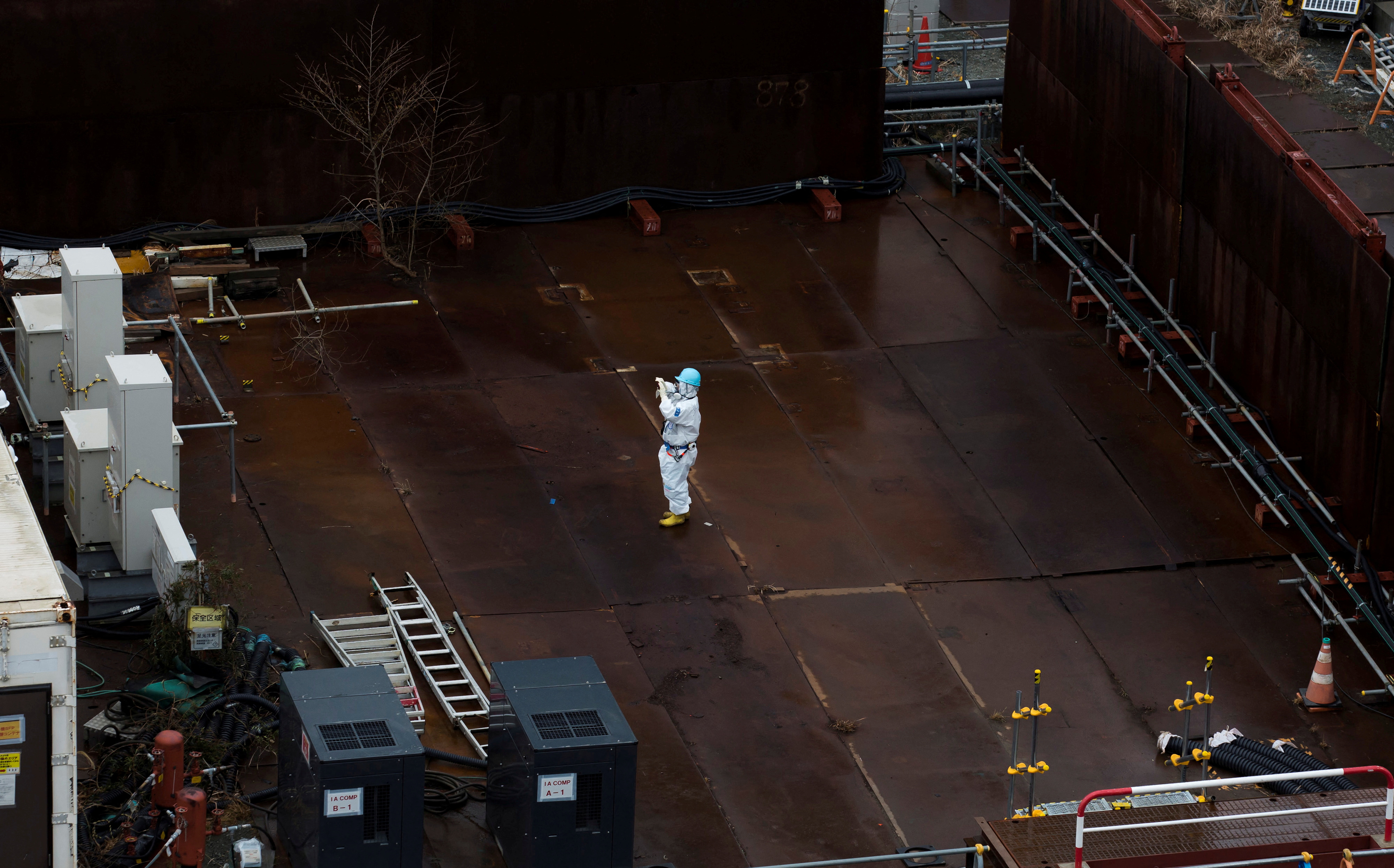
TOKYO, March 4 (Reuters) – Japan’s Supreme Court upheld an order for utility Tokyo Electric Power (Tepco) to pay damages of 1.4 billion yen ($12 million) to about 3,700 people whose lives were devastated by the Fukushima nuclear disaster, the first decision of its kind.
Public broadcaster NHK said the average payout of about 380,000 yen ($3,290) for each plaintiff covered three class-action lawsuits, among more than 30 against the utility, which are the first to be finalised.
A massive tsunami unleashed by an earthquake of magnitude 9.0 off Japan’s northeastern coast, struck Tepco’s Fukushima Daiichi power plant in March 2011, to cause the worst nuclear disaster since Chernobyl.
About 470,000 people were forced to evacuate in the first few days, and tens of thousands have not yet been able to return.
Friday’s decision came as the court rejected an appeal by Tepco and ruled it negligent in taking preventive measures against a tsunami of that size, the broadcaster said.
The court withheld a verdict on the role of the government, which is also a defendant in the lawsuits, and will hold a hearing next month to rule on its culpability, NHK added.
Lower courts have split over the extent of the government’s responsibility in foreseeing the disaster and ordering steps by Tepco to prevent it.
Radioactive waste stuck at 830 sites with nowhere to go

March 3, 2022
Vast quantities of topsoil collected during decontamination work after the 2011 Fukushima nuclear disaster are stuck in limbo at hundreds of sites with no early prospect of being shipped to interim storage facilities ahead of a government-set deadline.
The soil is being kept “temporarily” at 830 locations in six municipalities in Fukushima Prefecture.
The city of Koriyama has 582 sites containing about 6,000 cubic meters of waste, followed by Fukushima with about 2,000 cubic meters at 200 locations.
Significant delays are expected in shipping the soil even though the government had planned to complete the operation by the end of this month as required by law.
The volume of contaminated soil and other radioactive materials awaiting shipment totals 8,460 cubic meters, which is the equivalent of 130 trucks each weighing 10 tons.
A key reason for the delay is that new houses were built on land where contaminated soil was buried as negotiations over storage sites in many communities dragged on. This accounts for about 50 percent of the cases cited by municipalities in a survey by the prefectural government last September.
About 30 percent of cases resulted from the refusal of landowners to bear the transportation costs, while about 10 percent are due to an inability by the authorities to contact the landowners.
As time passed, ownership of land tracts changed due to sales transactions and inheritance issues. Some landowners had no idea their plots contained radioactive material.
Tokyo Electric Power Co., operator of the crippled Fukushima No. 1 nuclear plant, shouldered the cost of the cleanup.
But the owners of the homes in question are obliged to pick up the tab for relocating so that the buried waste can be removed, according to the Environment Ministry.
Officials in the six local governments said the radiation levels at the 830 sites pose no health hazard as the readings were below 0.23 microsieverts per hour, the threshold for the need to decontaminate.
Decontamination work in affected communities in the prefecture wound up by March 2018.
The waste from those operations is required by law to be shipped outside the prefecture for final disposal by 2045.
Until then, the interim storage facility is all that is available.
The central government and Fukushima prefectural authorities have been locked in talks for the past 18 months on what to do with contaminated soil that cannot be moved any time soon.
The Environment Ministry called on local governments to continue managing contaminated soil that is deemed difficult to move in line with a directive issued in December 2020 that made it their responsibility.
The special measures law concerning the handling of radioactive materials stipulates that municipalities, which oversaw the cleanup, are responsible for managing the contaminated materials.
But the ministry’s directive upset local governments, which operate with limited manpower and funds.
Officials with the Fukushima and Sukagawa city governments held informal talks with the ministry last October to request that the central government collect, manage and transport the contaminated soil.
“We cannot manage these sites forever as the number of our employees is dwindling,” one official said.
Kencho Kawatsu, who chairs a committee with oversight for the environmental safety of the interim storage facility, underlined the need for the central and Fukushima prefectural governments to share in the responsibility for managing the temporary storage sites with municipalities.
“If the radioactive soil is scattered, it could fuel rumors that prove harmful to Fukushima municipalities,” said Kawatsu, a guest professor of environmental policy and radiation science at Fukushima University.
He suggested centralizing data on the issue to prevent such an occurrence.
Greenpeace says Fukushima dismantling, dumping not credible.

March 3, 2022
Tokyo, Mar 3 (EFE).- Greenpeace denounced Thursday the lack of clarity and “inconsistencies” in the dismantling project of the Fukushima Daiichi nuclear power plant, calling it a “fantasy” and saying the discharge of the water contaminated and treated to the ocean “does not solve the crisis.
Eleven years after the earthquake and tsunami that led to one of the worst nuclear accidents in history, the environmental organization makes a new call for attention after reviewing multiple documents from different government agencies and industry.
“Decommissioning is not possible in 40 years. The government should announce how much progress has been made. We are still in the shadows,” nuclear engineering expert Satoshi Sato told media.
“We will have to deal with treated water for decades,” said the expert in relation to the discharge of treated water into the Pacific Ocean, a plan planned for the year 2023 and that the International Atomic Energy Agency recently evaluated in a mission to the country.
The expert spoke about the serious problems detected in the dismantling plan. These included the poor condition of the buildings and their continuous degradation, the challenges and “not very credible” plans for extracting the fuel, the high levels of radiation present, the exposure of workers and the amount of highly radioactive waste generated.
The extraction of fuel from the four reactors of the Daiichi plant “will lead to more contaminated water and the water will be dumped back into the ocean. The current roadmap is minimizing the human and environmental impact and dumping is not the solution,” Greenpeace nuclear specialist Shaun Burnie said.
“TEPCO has no intention of dismantling the Fukushima nuclear power plant in the next 20 or 30 years. It is a fantasy and a much longer process than what they have explained to us,” said Burnie, stressing the need to inform affected communities in detail.
“The long-term consequences cannot be dismissed, because this transcends generations and this fact should be crucial when addressing the problem, and not the official agenda of the actors involved,” Burnie criticized the roadmap approved by the Japanese government.
Fukushima Daiichi Nuclear Power Plant Decommissioning: “It is Impossible to Foresee the End Date” says the Nuclear Regulation Commission
March 2, 2022
Nuclear Regulatory Commission Chairman Toyoshi Sarada said he believes it is impossible to predict when the decommissioning of the Fukushima Daiichi Nuclear Power Plant will be completed.
Nuclear Regulation Authority Chairman Toyoshi Sarada: “I think it is technically impossible to determine a realistic number of years that we can promise to various parties, for example.
At the press conference, Chairman Saroda stated that he believes it is virtually impossible to set a time limit on when the fuel debris in Fukushima Daiichi reactors Nos. 1 through 3 can be cleaned up.
He also recognized that it is technically impossible to give the people of Fukushima and other prefectures a fixed number of years until the plant is decommissioned.
The government and TEPCO are still aiming for a maximum of 29 years to decommission the reactors amidst difficulties in removing debris and other issues.
Fukushima Thyroid-Cancer Victims Take TEPCO to Court
March 2, 2022
PRESS CONFERENCE: Fukushima Thyroid-Cancer Victims Take TEPCO to Court
Kenichi Ido, Attorney, Lead Counsel for the 3.11 Children’s Thyroid Cancer Lawsuit
Hiroyuki Kawai, Attorney, Co-counsel for the 3.11 Children’s Thyroid Cancer Lawsuit
There was no wind… but the cutting equipment came off and stopped. Removal of contaminated pipes at TEPCO’s Fukushima Daiichi Nuclear Power Plant
March 1, 2022
On January 1, TEPCO began cutting pipes contaminated with highly radioactive materials between Units 1 and 2 at the Fukushima Daiichi Nuclear Power Plant (Okuma and Futaba, Fukushima Prefecture), but stopped shortly after starting due to a problem with the cutting equipment.

The site was inaccessible due to high radiation levels, and the work was performed by remote control of a cutting device that was suspended from a large crane. According to TEPCO, around noon on January 1, they began cutting pipes near ground level on the Unit 2 side, but were unable to continue after 15 minutes. A part of a chain-like cutting device called a wire saw came off.
The work to remove the pipes began on February 24, but the cutting equipment, which had been hung by a crane, was blown away by strong winds, preventing the work from getting underway.
The pipes are about 30 cm in diameter and measure about 65 meters on the Unit 1 side and about 70 meters on the Unit 2 side. The plan is to cut the pipes into 26 sections, which were used for venting contaminated steam inside the reactor to prevent the containment vessel from rupturing at the time of the accident in March 2011. Remove it.
Removal of the crane was originally scheduled to begin in October of last year and be completed in March of this year, but has been delayed significantly due to a series of crane failures. (Kenta Onozawa)
TEPCO begins removal of pipes contaminated at the time of the Fukushima Daiichi Nuclear Power Plant accident.

March 1, 2022
On January 1, TEPCO began removing pipes in Units 1 and 2 of the Fukushima Daiichi Nuclear Power Plant that were contaminated with radioactive materials when they were vented to prevent damage to the plant. After the pipes are disconnected, TEPCO plans to investigate the situation with the Nuclear Regulation Commission.
The pipes to be removed are called “SGTS pipes” and are used to filter out gases in the reactor building during an accident.
TEPCO has begun removing the piping from the portion of the piping that goes outdoors because it will interfere with the installation of a large cover to cover the entire Unit 1 reactor building, which experienced a hydrogen explosion.
The pipes to be removed are approximately 65 meters long on the Unit 1 side and 70 meters long on the Unit 2 side. At the time of the accident 11 years ago, the containment vessel covering the reactor was contaminated when it was vented to release gases containing radioactive materials to prevent it from being damaged by the internal pressure.

Radiation levels of up to 160 millisieverts per hour were observed in the pipes when they were surveyed last May.
TEPCO and the Nuclear Regulation Authority (NRA) plan to examine the severed pipes to determine the effects of the “vent” on the pipes’ contamination and other factors.
The removal work is scheduled to last until the end of this month, but according to TEPCO, the work was suspended for one day due to a malfunction of the shredding equipment, and the cause is being investigated.
https://www3.nhk.or.jp/news/html/20220301/k10013507101000.html?fbclid=IwAR0yB_LUsoi0sKIPR0-jh-R6u7KmMGo93QQ7OjxMCbIp-WKesxtLvm_nIh8
1 This Month
19 February – VIRTUAL EVENT-Decision Time: AI and Our Nuclear Arsenal
12:45 p.m. Central / 1:45 p.m. Eastern
To see nuclear-related stories in greater depth and intensity – go to https://nuclearinformation.wordpress.com
-
Archives
- February 2026 (127)
- January 2026 (308)
- December 2025 (358)
- November 2025 (359)
- October 2025 (376)
- September 2025 (258)
- August 2025 (319)
- July 2025 (230)
- June 2025 (348)
- May 2025 (261)
- April 2025 (305)
- March 2025 (319)
-
Categories
- 1
- 1 NUCLEAR ISSUES
- business and costs
- climate change
- culture and arts
- ENERGY
- environment
- health
- history
- indigenous issues
- Legal
- marketing of nuclear
- media
- opposition to nuclear
- PERSONAL STORIES
- politics
- politics international
- Religion and ethics
- safety
- secrets,lies and civil liberties
- spinbuster
- technology
- Uranium
- wastes
- weapons and war
- Women
- 2 WORLD
- ACTION
- AFRICA
- Atrocities
- AUSTRALIA
- Christina's notes
- Christina's themes
- culture and arts
- Events
- Fuk 2022
- Fuk 2023
- Fukushima 2017
- Fukushima 2018
- fukushima 2019
- Fukushima 2020
- Fukushima 2021
- general
- global warming
- Humour (God we need it)
- Nuclear
- RARE EARTHS
- Reference
- resources – print
- Resources -audiovicual
- Weekly Newsletter
- World
- World Nuclear
- YouTube
-
RSS
Entries RSS
Comments RSS
 nuclear-news