Tim Deere-Jones on the Fukushima Daiichi Radioactive Water Discharge into the Ocean

December 13 2022
The archive video of the zoom conference on 5 November 2022 given by Tim Deere-Jones on the issues of discharging Fukushima Daiichi radioactive water into the ocean, and of seabed dredging — a comparison between Fukushima Daiichi and Hinkley Point, is now available.
With English/Japanese interpretation.
Radioactive materials released in large quantities on the days following the beginning of the TEPCO Fukushima Daiichi Nuclear Power Station accident flew over the Pacific Ocean on the prevailing westerly winds, falling and depositing on the ocean floor.
Radioactive fallout on land also flowed into the sea washed by rain and carried by rivers. Uncontrolled inflow of contaminated water from the Fukushima Daiichi Nuclear Power Plant site into the ocean has also increased the contamination of the seabed.
Such radioactive materials from the accident can be transferred from sea to land by the wind and contaminate the environment, including pastures and crops.
Tim Deere-Jones points out the risks of the wide rediffusion of the contamination mainly towards the south, situated downstream of the ocean current, by the release of the treated radio-contaminated water. This discharge of radioactive water is planned for over a period of 10 years. Further contamination can also be caused by the construction work of the discharge facilities.
Approximate timing of the video
0:06-17:03 Video viewing: Message against the discharge of contaminated water into the sea by Tim Deere-Jones (video created by Yosomono Net).
It can be viewed here separately:
16:58-1:36:50 Talk by Tim Deere-Jones
1:37:34 – 1:42:21 Questions and Answers
Controversy grows over proposed use of Tohoku funds to cover defense spending

Dec 13, 2022
The government and the ruling parties are frantically hunting for financial resources to cover the planned increase in defense spending, with one proposal being to use the special tax designed to finance reconstruction costs for areas affected by the March 2011 Great East Japan Earthquake.
The special income tax for reconstruction adds a 2.1% levy to individual income tax through 2037, generating about ¥400 billion ($2.9 billion) in revenue for the government each year. The plan is to use a total of ¥200 billion from the tax revenue for defense spending.
Policymakers are also considering extending the 2037 deadline for the tax by another 20 years to make sure there are enough funds.
But critics are already voicing opposition: Why use the reconstruction tax for defense spending?
“This is a tax hike for reconstruction purposes,” said Japanese Communist Party Secretary-General Akira Koike during a news conference Monday. “It’s a complete misappropriation of the tax.”
Prime Minister Fumio Kishida aims to spend a total of ¥43 trillion between fiscal 2023, which begins in April, and fiscal 2027. The government plans to secure funding by cutting other areas of spending and utilizing some surplus money and nontax revenue, but it is expected to fall short by ¥1 trillion from fiscal 2027.
The focus is on how to cover the gap, and the plan under consideration is to:
- Increase corporate taxes (bringing in about ¥700 billion to ¥800 billion).
- Increase the tobacco tax (raising about ¥200 billion).
- Increase the special income tax for reconstruction (yielding about ¥200 billion).
The possibility of funding the construction of Self-Defense Forces facilities using the government’s construction bonds has also been floated, but this would mark a shift from not using those bonds for military purposes.
The financial law stipulates that construction bonds are used to cover the cost of long-lasting roads and bridges that would also benefit future generations. The government has excluded SDF facilities, saying they may be attacked by enemies and would not last long.
In 1966, then-Finance Minister Takeo Fukuda said in parliament that the government would not issue construction bonds for military facilities because they are “like expendables.”
The defense budget for fiscal 2023, the first year of the five-year period in which it will be doubled, will likely increase to ¥6.5 trillion from ¥5.2 trillion for fiscal 2022, Liberal Democratic Party Secretary-General Toshimitsu Motegi said Monday. The government plans to raise it to ¥9 trillion in fiscal 2027.
Complicating matters, the discussions appear to be causing a rift between Kishida and the largest LDP faction, which used to be headed by former Prime Minister Shinzo Abe.
Abe had long argued that government bonds should be used to stimulate the economy, and LDP executives and Cabinet ministers who are opposed to a tax hike — LDP policy chief Koichi Hagiuda, industry minister Yasutoshi Nishimura and economic security minister Sanae Takaichi — are either in the faction or were close to the former prime minister.
Kishida, meanwhile, comes from the Kochikai faction, which has traditionally placed greater importance on fiscal sustainability and wants to avoid issuing government bonds for defense spending.
“Defense capability, which will be drastically strengthened over the next five years, will need to be maintained and strengthened even further. … To do that, it is imperative to secure stable funding sources,” Kishida said during a news conference Saturday.
“We must not rely on government bonds, considering our responsibility toward future generations.”
Miyagi fisheries industry fears impact of treated radioactive water release
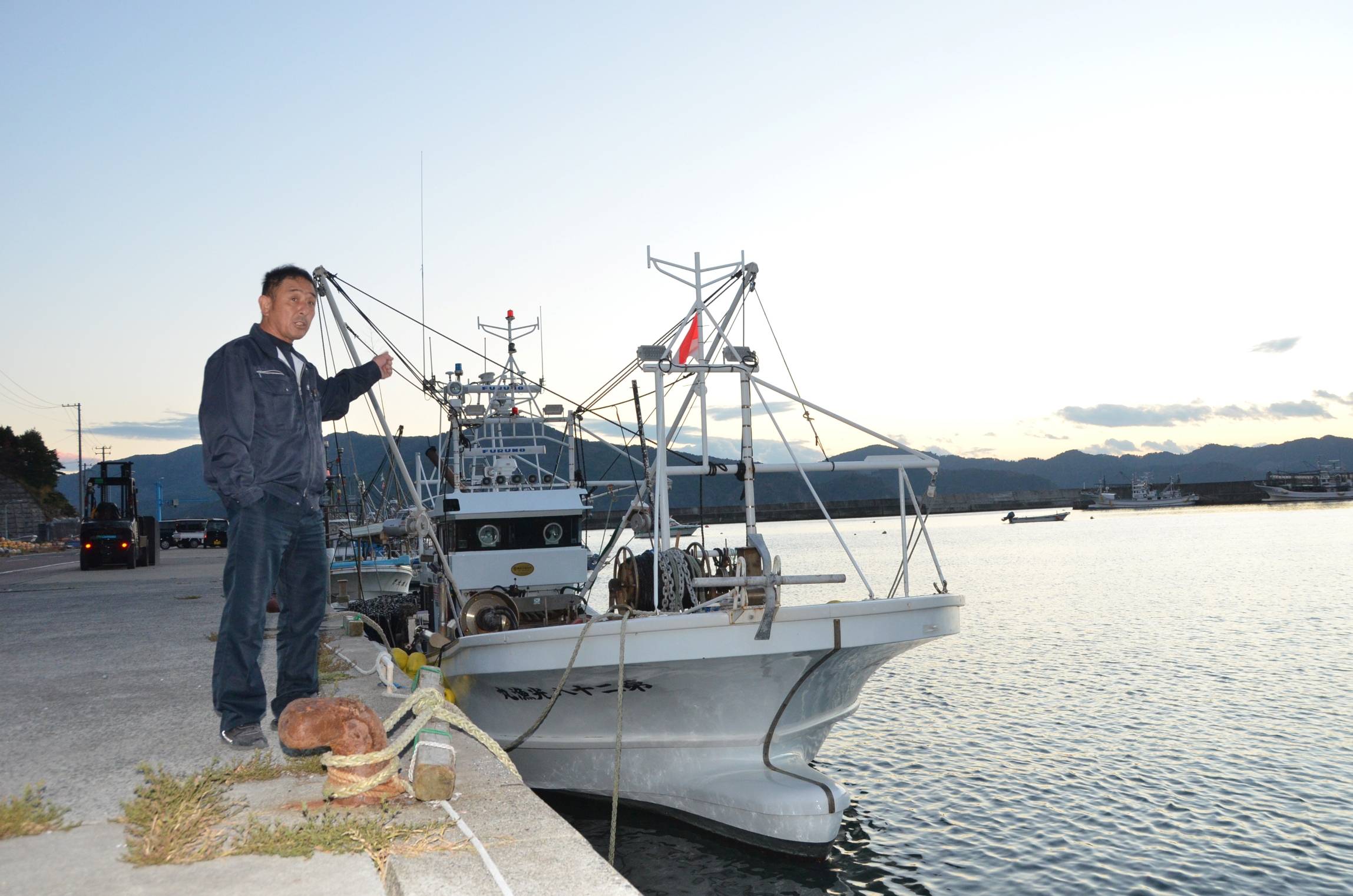
Yoshihiro Watanabe, a breeder of sea squirts, in the Yoriisohama district of Ishinomaki, Miyagi Prefecture
Dec 12, 2022
Yoshihiro Watanabe, 61, is a breeder of sea squirts, the leading product for the aquaculture industry in Miyagi Prefecture.
Looking toward the sea in the Yoriisohama coastal district in the city of Ishinomaki, Watanabe expressed concerns over a plan to release treated radioactive water from the Fukushima No. 1 nuclear power plant. The water, which contains hard-to-remove tritium, is expected to be discharged to the ocean from the nuclear plant, located some 120 kilometers away in neighboring Fukushima Prefecture, as early as next spring.
“We are already on the verge of going out of business,” Watanabe said. “It will be a matter of life and death if the treated water is released into the ocean in such a situation and domestic consumption drops.”
About six weeks earlier, officials from the central government visited Miyagi Prefecture to explain how the issue of treated water is being handled. But a sea squirt producers’ group under the Miyagi Fisheries Cooperative, which Watanabe belongs to, refused to meet them amid feelings of distrust toward the government, which decided on the water release without the consent of the local fisheries industry.
Preparations are moving forward after Fukushima Prefecture and the towns hosting the nuclear plant in August approved a plan by Tokyo Electric Power Company Holdings (Tepco), the plant’s operator, to start building a facility for releasing the water.
“Is this how the water discharge starts?” Watanabe said.
Prior to the 2011 Great East Japan Earthquake and the Fukushima nuclear plant meltdowns, Miyagi Prefecture had been the nation’s No. 2 fisheries producer in terms of volume.
Annual production of sea squirts, also known as sea pineapples, in the prefecture totaled 12,000 tons, of which 7,000 tons were exported to South Korea.
However, South Korea banned imports of the product following the nuclear accident and the sales channel remains suspended to this day.
Sea squirt breeders have been forced to reduce the overall production in the prefecture to prevent oversupply, and the situation is affecting the income of those working in the fisheries industry.
According to the Miyagi Fisheries Cooperative, sea squirts are particularly popular in South Korea and almost all of the sea squirts exported from the prefecture had been shipped there.
The cooperative has sought new buyers in such countries as the United States, but it has not been able to make up for the drastic drop in overseas sales.
In some cases, large amounts of sea squirts had to be disposed of.
The nuclear disaster is having an impact even on shipments to countries and regions that no longer ban imports of Japanese products.
Miyagi Prefecture began exporting marine products to Hong Kong in 2016, but the shipments were suspended after a year. The Miyagi Food Export Promotion Council was told by distributors in Hong Kong that the products were not accepted by consumers there because they came from Miyagi Prefecture and many were left unsold.
Watanabe said that his production and sales of sea squirts dropped to less than half of the level before the nuclear disaster due to South Korea’s import ban.
The number of sea squirt growers in Yoriisohama declined to 60% of the level before the incident.
Watanabe says he can’t trust the words of the government and Tepco, despite assurances that they will do everything they can to deal with harmful rumors. He doesn’t think they’ve succeeded at tamping down rumors about the food products in the wake of the nuclear meltdowns and have yet to show effective measures for gaining understanding at home and abroad about the water release plan.
Some members of the Miyagi Fisheries Cooperative say they feel Miyagi Prefecture has been made light of, because compared with Fukushima Prefecture — which hosts the nuclear plant — there are fewer opportunities for ministers and government officials to visit.
“If treated water is released now, the local industry will be completely destroyed,” Watanabe said. “The government and Tepco should indicate to people in Miyagi engaging in the fisheries business ways to prevent harmful rumors.”
Haruhiko Terasawa, head of the fisheries cooperative, is also unhappy with the plans.
“The reality is much harsher than what the government and Tepco think,” he said. “We want them to take thorough measures so that people in the fisheries business won’t suffer losses through no fault whatsoever of their own.”
The fisheries cooperative plans to urge the government to send out correct information overseas as well as step up diplomatic negotiations and measures to deal with distribution issues.
Terasawa says he can never forget something that happened eight years ago. When a cooperative member carried flounders into a market, a distributor kicked them, saying, “We don’t need stuff like that.”
“It was humiliating,” Terasawa said. “We are worried that something like that might happen again with the release of treated water.”
This section features topics and issues covered by the Fukushima Minpo, the prefecture’s largest newspaper. The original article was published Nov. 17.
https://www.japantimes.co.jp/news/2022/12/12/national/miyagi-nuclear-plant-water/
Decontaminated soil from the nuclear power plant accident “Cleanup is right in front of my house…” Plans to reuse soil from outside Fukushima emerge in Shinjuku Gyoen, Tokorozawa, and Tsukuba
December 10, 2022
An important move has been made regarding the cleanup of the TEPCO’s Fukushima Daiichi Nuclear Power Plant accident. A demonstration project to reuse decontaminated soil is planned to be conducted for the first time outside of Fukushima Prefecture. The Ministry of the Environment is planning to reduce the amount of decontaminated soil for interim storage in the prefecture by reusing it, and briefing sessions are scheduled for Tokorozawa City, Saitama Prefecture, on December 16 and Shinjuku Ward, Tokyo, on December 21. Why has reuse emerged in these areas? Can we easily proceed with reuse that will lead to the proliferation of pollution? (Special Reporting Division: Takuya Kishimoto, Takeshi Nakayama)

A demonstration project to reuse decontaminated soil is planned at the Environmental Research and Training Institute in Tokorozawa City, Saitama Prefecture.
◆Local residents voiced their confusion, and the city office was reluctant to go ahead with the project.
A 10-minute walk from Koku Koen Station on the Seibu Shinjuku Line in Tokorozawa City, we came upon a corner lot adjacent to the National Defense Medical College. This is the Environmental Research and Training Institute, one of the facilities where a demonstration project to reuse decontaminated soil is planned. Across the main street to the west was a residential area.
How do local residents perceive the plan?
What is right in front of our house? A woman in her 50s who lives across the street from the training center voiced her confusion. I remember hearing on the news that there was going to be some kind of experiment in Tokorozawa, but…. But have you already decided? I’m not absolutely against it, but there are so many things I don’t understand that I can’t say for sure.
The training center is a Ministry of the Environment facility used to train personnel involved in environmental conservation. The plan for the demonstration project was explained by Environment Minister Akihiro Nishimura at a press conference on April 6. Decontaminated soil will be used to create a lawn at the facility to confirm its safety.
He also visited the city hall, which is a few minutes’ walk from the training center. Mr. Kazuto Namiki, director of the Environment and Clean Environment Department, was open to accepting the project.
The reuse of decontaminated soil is a nationwide issue, not just in Fukushima. We would like to cooperate with them on the premise of ensuring the safety and security of residents. The Ministry of the Environment approached the city in June of this year, and discussions have continued. Naturally, we are proceeding with the project after consulting with the mayor.
Mayor Masato Fujimoto. He seems to have such strong feelings about the project that he wrote on the city’s website, “The Great East Japan Earthquake and the nuclear power plant accident were the starting point of my desire to become mayor.
In 2012, the year after the earthquake, the city once announced a policy to cancel the installation of air conditioners in junior high schools, saying, “Now that we have experienced the disaster, we need to be patient. Although he later retracted the policy in response to a referendum in which the majority of residents opposed it, a source familiar with the city government described him as “the type of person who goes his own way, without regard for criticism.
In August of this year, he revealed that he had attended an event of an organization affiliated with the Family Coalition for World Peace and Unification (formerly the Unification Church), causing controversy when he said, “I don’t feel that much remorse” and “My personality is such that I can’t say I won’t go anymore.
◆Residents’ explanatory meeting was limited to 50 people, many of whom were unaware of the event.
The lack of explanation about the demonstration project to reuse decontaminated soil seems to be conspicuous.
The Ministry of the Environment plans to hold a briefing session for residents at the training center on the evening of the 16th of this month. The details of the project will be revealed there for the first time. However, the number of participants is limited to 50 residents of the neighborhood, and pre-registration is required. The city was in charge of the briefing, but it was only announced on 28 bulletin boards in the area.
A local man (81) said, “I didn’t know about the briefing. I don’t usually look at bulletin boards. Another woman said, “I thought it would be announced in the city’s newsletter. When we asked about 10 residents, none of them knew that the information about the briefing was posted on the bulletin board.
After the plans for the demonstration project came to light, the city received about 40 inquiries, the majority of which were negative. Yoichi Sugiura, who has been involved in the local anti-base movement and has confronted the government and the city, said, “Even if it is a national project, the city is not going to accept it.
Even if it is a government project, the city should confirm the wishes of the citizens before taking any action, but they are proceeding with the project without informing us well. If the city is going ahead with the project by fiat without listening to citizens’ opinions, it will be the same as when the air conditioner was installed.
◆Decontaminated soil in Fukushima also failed due to local opposition.
Why is the Ministry of the Environment trying to reuse decontaminated soil?
Interim storage facilities in Fukushima Prefecture (Futaba and Okuma towns) began receiving decontaminated soil in 2015, and the amount is expected to reach about 14 million cubic meters. The government has stated that final disposal will take place outside the prefecture by 45 years for both towns. In June 2004, the Ministry of the Environment set a standard for reusing decontaminated soil with a level of 8,000 becquerels per kilogram or less. This is considerably looser than the standard for reusing materials from decommissioned nuclear power plants (100 becquerels per kilogram).

Interim storage facilities for temporarily storing contaminated soil spread out around the Fukushima Daiichi Nuclear Power Plant in the town of Okuma, Fukushima Prefecture, on January 25, 2012, from the “Oozuru” helicopter operated by the head office of the company (photo by Ryo Ito).
However, it is difficult to say that recycling is on track.
In Fukushima Prefecture, a plan to use the soil for filling city roads in Nihonmatsu City was abandoned due to opposition from local residents. In Minamisoma City, the city built fill and measured the radioactivity concentration of seepage water, but a plan to reuse the soil for construction of the Joban Expressway did not materialize due to local opposition. Now, only an experiment in crop cultivation is underway in Iitate Village. Tsunehide Chino, associate professor of environmental sociology at Shinshu University, said, “It is difficult to obtain broad public agreement, and the demonstration project has nowhere to go.
Nevertheless, in August, the Ministry of the Environment announced a policy to implement the demonstration project outside of Fukushima Prefecture. In addition to the Environmental Research and Training Institute in Tokorozawa City, Shinjuku Gyoen (Shinjuku-ku, Tokyo), a facility affiliated with the Ministry of the Environment, and the National Institute for Environmental Studies (Tsukuba City, Ibaraki Prefecture) are also being discussed as possible sites. A Ministry of the Environment official explained, “We took into consideration the fact that there is space in the area that is not accessible to the general public. In the demonstration project, flowerbeds, grass plazas, parking lots, etc. will be built, and data on changes in radiation levels in the surrounding area will be collected.
◆Tokorozawa, Tsukuba, and Shinjuku Gyoen…places with close ties to the country
Tokorozawa was the site of an army airfield before World War II and is now the site of a U.S. military communications base, so it is closely related to national security policy. Tsukuba has the face of an academic city, and research institutes with close ties to the national government are also prominent. Shinjuku Gyoen was the site of the “Cherry Blossom Viewing Party” hosted by the prime minister.
The connection with the government may remind one of the government-led recycling of decontaminated soil, but Mr. Chino said, “If a facility has a relationship with the Ministry of the Environment, it may be easier to conduct a demonstration project. In other words, it is only possible there. He then goes on to express his concern, “It is not clear to what extent the project will be agreed upon, including with the residents of the surrounding area, and they are trying to move forward without finding a way out.
On the other hand, an official in charge of Shinjuku City, the home of Shinjuku Gyoen, where the demonstration project was announced, remains calm, saying, “The Ministry of the Environment should take the responsibility of explaining the project to the local residents and gain their understanding.
Chia Yoshida, a freelance writer who has been covering the Fukushima nuclear power plant accident, is suspicious of the Ministry of the Environment’s preoccupation with the issue, saying, “I suspect that they are trying to proceed with the project by putting the residents’ wishes second.
This attitude of the national government can be seen in the ongoing reconstruction project in Hamadori, Fukushima. In the area, the Reconstruction Agency will launch the Fukushima International Research and Education Organization in the next fiscal year, bringing together industries such as robotics, drones, and radiation science. Many of the technologies being handled are “dual-use” technologies that can be used by both the military and civilian sectors.
In the name of ostensibly “reconstruction,” the idea of the business community and some research institutes that share its intentions may be taking precedence. The government’s policies, including the reuse of decontaminated soil, are proceeding without sufficient explanation to the local communities, and the residents are being left behind.
Yoshiharu Monma, 65, chairman of the “30-year Interim Storage Facility Landowners Association,” said, “It is out of the question that decontaminated soil, which should be confined to one place, is being spread around the country by using the sound of reusing it. As with the restarting of nuclear power plants, we are seeing the government move in such a way as to make people think that they can do whatever they want after so much time has passed since the Fukushima accident,” he continued.
In the first place, TEPCO, which caused the accident, should take responsibility for the final disposal of the decontaminated soil. For example, the government should consider condensing the decontaminated soil on TEPCO’s land, and the government should shoulder the shortage of funds and manpower. I would like to see these disposal methods discussed in a forum open to the public as a problem for Japan as a whole.”
Related article] Where to in 2045? Contaminated soil generated by the nuclear power plant accident: The current location of intermediate storage facilities in Fukushima
◆Desk Memo
Decontaminated soil should be cleaned up by those who caused the accident. However, the Ministry of the Environment tries to bring it to various places in the name of reusing it. Without regard to pre-accident standards, a system will be set up to allow use even if considerable contamination remains, and a demonstration project for vegetable cultivation will also be carried out. The wild story looms over the Tokyo metropolitan area. This is no time to be distracted by the World Cup. (Sakaki)
https://www.tokyo-np.co.jp/article/219058
A group of HT journalists interview Shaun Burnie senior Green-peace specialist on the impact of Fukushima’s controversial plan to dump water into the ocean

December 8, 2022
MADRID, Dec. 8, 2022 /PRNewswire/ — Japanese authorities have described the measure as “totally safe and unavoidable”, member countries of the Indian Ocean Rim Association (ORA), official institutions, non-governmental organizations, environmental associations such as Greenpece, experts and professors in atomic energy, as well as doctors and researchers specialized in diseases related to uncontrolled exposure to atomic substances, denounce this measure as irresponsible, and ask the IAEA (International Atomic Energy Agency) to intervene in this situation.
A group of international journalists led by HT investigates and analyzes the impact of the controversial plan to dump Fukushima water into the sea. The main conclusions are:
- The decision announced in April 2021, assuring that it is a “safe” project, does not convince the scientific community, nor the experts in atomic energy, since of all it is “the cheapest option”.
- It is currently unknown how the long-lived radioactive isotopes contained in the contaminated water will interact with marine biology, this situation is “unprecedented”.
- An independent analysis of the report published by Japan’s Ministry of Economy, Trade and Industry (METI) Subcommittee shows that the company responsible for the Fukushima power plant understood that additional storage of contaminated water beyond 2022 was possible, but ruled it out because it would require “a substantial amount of coordination, time and financial resources.
- Last October 30, a group of experts and professors in atomic energy, as well as doctors and researchers specialized in diseases related to uncontrolled exposure to atomic substances, submitted a letter to the Director General Mr. Rafael Mariano Grossi, asking him to urge the Japanese authorities to stop this measure.
Shaun Burnie, senior nuclear specialist at Greenpeace, confirms “the lack of clarity and scientific inconsistencies” in the Fukushima nuclear power plant decommissioning project, considering it a “fantasy” and that the discharge of contaminated and treated water into the ocean “does not solve the crisis and will generate an unpredictable environmental situation”.
Eleven years after the earthquake and tsunami that caused one of the worst nuclear accidents in history, Greenpeace is issuing a new wake-up call after reviewing multiple documents from different government agencies and industry.
Satoshi Sato, leader of the nuclear fusion and quantum energy neutron source design group at Rokkasho (Japan), states that “decommissioning is not possible in 40 years”. There are many shadows and doubts, the authorities should clarify the progress that has been made so far.
It will have to “live with treated water for decades while a safe solution is found,” the expert said in relation to the discharge of treated water into the Pacific Ocean, a plan planned for 2023 and which the International Atomic Energy Agency (IAEA) recently assessed during a mission to the country.
Shaun Burine and Satoshi Sato, agreed that the IAEA’s position in supporting TEPCO’s (Tokyo Electric Power Company Holdings, Inc.) plans “makes no sense“. They went on to say that “the IAEA’s mission is to develop safety standards and maintain high levels of safety for the protection of human health and the environment against ionizing radiation. As well as to verify that States meet their commitments.”
“TEPCO has no intention of decommissioning the Fukushima nuclear power plant in the next 20 to 30 years. It is a fantasy and a much longer process than we have been told, said Burnie, who stressed the need to inform affected communities and the public in detail.
“You can’t discount the long-term consequences, because this transcends generations and this fact should be crucial to addressing the problem, not the official agenda of the actors involved,” Burnie criticized the roadmap approved by the Japanese government.
Tokyo Electric Power Co. is the world’s fourth-largest utility and the country’s bastion of nuclear power, from which Japan gets 30% of its electricity. Tepco serves one-third of the population. The company that operates the nuclear power plant has contributed to the catastrophe with its management before and after the accident Falsified reviews, concealed information and delayed urgent measures.
The Greenpeace organization recalls that the company’s negligence put the former IAEA management in check on numerous occasions, its spokesman Hidehiko Nishiyama denounced on numerous occasions as “extremely regrettable” the errors in the radioactive water measurements, apparently due to faults in the software used to carry out the measurements. “Tepco is facing a very serious situation and is not meeting people’s expectations”, Nishiyama insisted, in the harshest criticism the company has received.
https://www.yahoo.com/lifestyle/group-ht-journalists-interview-shaun-140000461.html
Tokyo park to be used in Fukushima soil recycling demonstration

Dec. 9, 2022
Japan’s environment ministry has announced plans to demonstrate the reuse of decontaminated soil from Fukushima at a Tokyo park.
Environment Minister Nishimura Akihiro announced on Friday that the project will take place at the Shinjuku Gyoen National Garden.
Soil exposed to radioactive fallout from the accident at the Fukushima Daiichi nuclear power plant has been decontaminated and kept in intermediary storage in the prefecture.
The government plans to reuse the soil for public works projects as long as the concentration of radioactive substances falls below a certain threshold.
Nishimura said the ministry will use the soil in a flower bed in an area normally closed to the public and later hold public flower-viewing events.
Ministry officials are to meet with nearby residents to explain about the project on December 21. The project is due to start early next year.
Nishimura said the ministry hopes to use the project to gain public understanding for the recycling of the decontaminated soil.
Earlier in the week, the ministry announced a plan to test soil recycling at the National Environmental Research and Training Institute in Saitama Prefecture, near Tokyo.
Trials to reuse the soil have so far only taken place in Fukushima.
Ministry plans tests on reusing Fukushima soil in Tokyo area

A temporary storage site for soil contaminated from the 2011 Fukushima nuclear disaster in February. The bags of radioactive waste were due to be shipped to an interim storage facility.
December 7, 2022
The Environment Ministry is eyeing the Tokyo metropolitan area for its first trial runs outside Fukushima Prefecture on reusing soil decontaminated after the 2011 nuclear disaster, The Asahi Shimbun learned on Dec. 6.
The ministry said the tests will take place at three government-related facilities in Tokyo, Saitama and Ibaraki prefectures.
But authorities said they have yet to gain the understanding of residents at all three candidate sites on the reuse of the soil, which still contains low-level radioactive substances.
Decontamination work was carried out on soil exposed to radioactive materials after the triple meltdown at the Fukushima No. 1 nuclear power plant operated by Tokyo Electric Power Co.
The decontaminated soil has been kept at an interim storage facility in Fukushima Prefecture, but a law requires final disposal of the soil outside the prefecture by 2045.
The volume of decontaminated soil in Fukushima Prefecture, excluding the difficult-to-return zones where radiation levels remain high, is about 14 million cubic meters, enough to fill 11 Tokyo Domes.
Reusing the soil is part of the government’s efforts to reduce that volume before disposal.
The ministry is considering conducting the tests at the Shinjuku Imperial Garden in Tokyo, the National Institute for Environmental Studies in Tsukuba, Ibaraki Prefecture, and the National Environmental Research and Training Institute in Tokorozawa, Saitama Prefecture.
Tokorozawa city will hold a briefing on the plan for about 50 residents on Dec. 16.
Under the experiment in Tokorozawa, decontaminated soil will be reused for lawns, and tests will be conducted to verify changes in radiation doses in the air.
For the trial runs in Tokyo and Ibaraki Prefecture, the soil will be used for parking lots and flower beds.
“We would like to use the experiments to gain public understanding regarding the reuse of the soil,” Environmental Minister Akihiro Nishimura said at a news conference on Dec. 6.
Only soil that measures below 8,000 becquerels per kilogram, the threshold set by the government, will be used in the trial runs.
The ministry has been conducting experiments on reusing the decontaminated soil for farmland in Iitate, Fukushima Prefecture.
But plans for similar tests in Minami-Soma and Nihonmatsu cities, also in the prefecture, fell through after residents opposed.
Ministry of the Environment to Reuse Decontaminated Soil in Shinjuku Gyoen and Other Places

December 6, 2022
The Ministry of the Environment is considering conducting demonstration tests to reuse soil removed from decontamination sites in Fukushima prefecture outside the prefecture, including the ministry’s Environmental Research and Training Institute (Tokorozawa City, Saitama Prefecture) and Shinjuku Imperial Garden (Shinjuku Ward, Tokyo).
The other is the National Institute for Environmental Studies (Tsukuba City, Ibaraki Prefecture).
At a press conference after the Cabinet meeting on the same day, Environment Minister Akihiro Nishimura explained that there were several candidate sites and that he was coordinating with related local governments.
This is an important project for Fukushima Prefecture. We want to confirm the safety of the project and help build understanding. The Environmental Research and Training Center plans to reuse the land to create a lawn square, and will hold a briefing session for local residents on March 16.
Reuse of decontaminated soil to be tested outside Fukushima

Dec. 6, 2022
Japan’s Environment Ministry is planning its first trial outside Fukushima Prefecture on the reuse of soil that was decontaminated after the 2011 nuclear accident.
The ministry says the demonstration will take place at the National Environmental Research and Training Institute in Saitama Prefecture, near Tokyo.
Officials will use the soil in a courtyard to grow a lawn. They plan to brief nearby residents in mid-December to seek their understanding, and begin the trial in January at the earliest.
Soil exposed to radioactive fallout from the accident at the Fukushima Daiichi nuclear plant has been cleansed and kept in intermediary storage in the prefecture.
The government plans to reuse the soil for public works projects as long as the concentration of radioactive substances falls below a certain threshold.
Trials to reuse the soil to grow vegetables and create earth mounds have so far only taken place in Fukushima.
Environment Minister Nishimura Akihiro told reporters on Tuesday that his ministry hopes to use the experiment in Saitama to confirm safety and gain public understanding for the recycling of the soil.
He said the ministry will coordinate with other candidate sites where similar trials could be held.
A law mandates the final disposal of the decontaminated soil outside Fukushima by 2045. But it remains unclear how this will be achieved.
A Survey on the Concentration of Radioactive Cesium in Japanese Milk Samples (2021)
by Citizens’ Nuclear Information Center · Published December 4, 2022 · Updated December 4, 2022
Investigating the origin of the contamination and assessing the risks of cases where the radioactive cesium level is below the Standard Limits for Radionuclides in Foods
By Tanimura Nobuko (NPO Citizens’ Nuclear Information Center) and Fuseya Yumiko (NPO Shinjuku Yoyogi Citizen Monitoring Center)
- Introduction
Radioactive contamination of food due to the Fukushima Daiichi Nuclear Power Station accident
The Fukushima Daiichi Nuclear Power Station accident occurred in March 2011, resulting in the contamination of the environment and food by radioactive materials. At that time, no standard limit of radiation levels of food distributed in Japan existed, and a temporary standard was therefore set by the government. In April 2012, about one year after the accident, new standard limits were established, in which radiation exposure due to the consumption of food was limited to 1mSv per year, thus making the standard value of radioactive cesium 100Bq/kg for general food, 50Bq/kg for milk and baby/infant food and 10Bq/kg for drinking water. While this was supposed to regulate contaminated food, there were many reports of the discovery of food that was over the standard limit being distributed. In fiscal year 2020, twenty-two cases of food over the standard limit were recognized.
Due to inadequate food contamination checks and distribution management systems, some people who refused to be unnecessarily exposed to radiation decided to select food according to the area in which it was produced in order to avoid risks of radiation exposure. The Japanese government terms this action—avoiding the food produced in the affected area of the Great East Japan Earthquake—‘reputational damage,’ something which must be eliminated if reconstruction is to proceed.
Risks of radiation and risks of chemical materials
However, is making a choice of avoiding a health risk an unfair act that prevents the reconstruction of the affected areas?
The cancer risk of chemicals in tap water and other substances is regulated to a level of 1 in 100,000 per substance, which is usually the risk for a lifetime of ingestion of such substances. But those who do not want to take the risk of developing cancer from chemicals in food are able to buy organic products at some additional cost. This consumer action is not criticized by the government as ‘reputational damage.’
The standard for radiation exposure from consuming food is set at 1mSv/year. According to the ICRP (International Commission on Radiological Protection) the fatality risk is about 5% per 1Sv and ‘the standard is based on the hypothesis that the probability of radiation-induced cancer or hereditary effects increases in direct proportion to the increase in dose.’ In addition, it estimates that the fatality risk is 0.4% if a person continues to be exposed to radiation at 1 mSv per year throughout his/her lifetime.
Adding five hundred-thousandths per year (0.005% for 1mSv/year) means that if we take 80 years as the average lifetime, four hundred people’s deaths are added per hundred thousand people, a risk that is two digits higher than that for chemical materials.
It is sometimes claimed that as the risk of radiation exposure is the total of the risks of various radionuclides, comparing the regulation for one chemical material to the regulation for radiation exposure is improper, since there are thousands of chemical materials that we may come into contact with in daily life. However, the radiation exposure standard of 1mSv per year is not the ‘total’ amount of exposure but an ‘additional’ exposure. The following are all conveniently used to explain that exposure of 1 mSv or less is safe: a) the radiation dose limit for the public from nuclear facilities under pre-accident conditions, b) the new standard for radioactive cesium in food, c) the standard of 8,000 Bq/kg for “designated waste” introduced to handle the large amount of radioactive waste generated by the Fukushima nuclear accident (exposure of workers disposing of the waste), and d) the standard for the disposal of radioactively contaminated water, which has been the focus of attention at the Fukushima nuclear power plant, now undergoing decommissioning. The fact that these exposure risks add up, as well as the effects of this addition, have not been explained to civil society by the regulators, and of course have not been discussed.
In addition, the risk assessment of carcinogenic chemical materials is based on ‘causing cancer,’ but the risk assessment of radiation exposure is based on ‘deaths from cancer’; it is impossible to compare the two risks. ICRP estimates that the risk of ‘developing cancer’ is twice as high as that of ‘death from cancer.’
Further, it is the user who decides whether or not to use chemical materials, weighing the advantages and disadvantages of use, but in the case of exposure due to nuclear power plant accidents, there are no direct advantages to anyone.
Research and objective
We would like to support people’s right of choice to avoid the risk of radiation exposure by measuring even low levels of radioactive cesium contained in milk and disclosing the areas of production and levels of contamination.
Even though many people avoided milk produced in the Tohoku district and chose milk produced in Hokkaido to avoid risks of radiation exposure. In FY2020 our research revealed the unanticipated fact that the milk produced in Hokkaido is also contaminated due to the Fukushima accident. The survey was therefore expanded to include western Japan products in order to compare contamination on a national scale.

Each measurement sample was 22kg of commercial milk which had an identifiable production location. In FY2021, the milk produced in 11 areas was included in the survey: Iwate (K), Miyagi (L), Ibaraki (M), Tokyo (N), Shizuoka (O), Ehime and Kochi (P), Miyazaki and Kagoshima (Q), Nagasaki (R), Oita (S), Shimane (T), and Ishikawa (U). (See Table 1. Areas A to J indicate areas surveyed in FY2020).
In measuring the concentration of radioactive cesium, 2kg of the sample was used as a direct measurement sample and the remainder (20kg) was used as a concentrated measurement sample. In order to detect small amounts of radioactive cesium, we performed the ammonium phosphomolybdate (AMP) method on whey after separating the whey from the milk.
The germanium semiconductor detector (BSI Co. GCD70-200) was used for gamma ray detection in these radioactivity measurements.

The results of the measurements are shown in Table 1. In FY 2021, the production areas in which cesium 137 was detected in the direct measurement were Iwate (K) and Miyagi (L). No cesium 134 was detected in any areas in the direct measurement. In the concentrated measurement, cesium 137 was detected in all areas including the Kyushu district. The most contaminated area was Miyagi (L) with 152mBq/kg. This figure was higher than the 135mBq/kg found in Fukushima (H). The second most contaminated was the milk produced in Iwate (K), 79mBq/kg. These were followed by Shizuoka (O) (16mBq/kg), Ibaraki (M) (11mBq/kg), Tokyo (N) (7.3mBq/kg), Miyazaki and Kagoshima (Q)(7.0Bq/kg), Oita (S) (5.7mBq/kg), Shimane (T) (5.4mBq/kg), Nagasaki (R) (5.2mBq), Ehime and Kochi (P) (5.1mBq.kg) and Ishikawa (U) (3.9mBq/kg). Cesium 134 was detected only in Miyagi (L) (4.4mBq.kg) and Iwate (K) (2.0mBq/kg).
Please note that about 90% of cesium in milk exists in the whey, and therefore adopting this cesium concentration method indicates figures that are 10% lower in the concentrated measurement than in the direct measurement.
- Discussion
Origin of cesium 137
At the time the Fukushima Daiichi Nuclear Power Station accident occurred, cesium 134 and cesium 137 were emitted into the environment at the ratio of about 1:1. The half-life of cesium 137 is about 30 years, and that of cesium 134 is about 2.1 years. By taking into account the half-life of cesium 134 and 137, and the length of time from the disaster to the measurement, it is possible to calculate a cesium ratio (cesium 134/cesium 137) of cesium that was emitted as a result of the accident at the time of the measurement. Five years after the accident (March 2016), the cesium ratio had fallen to 0.21, Ten years after (March 2021), it had decreased to 0.046.
The cesium ratio differs slightly according to each reactor. Thus the cesium ratios due to the accident in the fallout in each location are different. The initial cesium ratios in the atmospheric fallouts in each area from March to May in 2011 were calculated using data from the environmental radiation database.
The proportions of cesium-137 (derived from the Fukushima nuclear reactor / total in the milk sample) were derived by calculating the measured value of cesium 134 concentration and calculated cesium 134/137 ratio at the time of measurement.
In the survey conducted last fiscal year (2021), the production areas where cesium 134 was detected were Hokkaido, Fukushima, Gunma, Tochigi, Iwate and Miyagi. The cesium 134/137 ratios in the atmospheric fallouts soon after the Fukushima nuclear disaster were as follows: Hokkaido 1.05, Fukushima 0.94, Gunma 1.00, Tochigi 1.01, Iwate 1.00 and Miyagi 1.00. The cesium 134/137 ratios (at the time of the measurement) were calculated by using the figures for the half-life of each cesium radionuclide and the number of years from the disaster to when the measurements were taken. The following figures were obtained: Hokkaido 0.053, Fukushima 0.044, Gunma 0.045, Tochigi 0.045, Iwate 0.035 and Miyagi 0.036. Dividing the cesium 134 concentration of the measurement by the cesium 134/137 ratio (at the time of the measurement) of the sample production area, the results of cesium 137 concentrations that derived from the Fukushima nuclear disaster were obtained and are shown in Table 2.

The following is one calculation example for Iwate. The cesium 134/137 ratio measured on November 19 in 2021 which was derived from the Fukushima nuclear disaster was calculated as 0.035 in Iwate. As the result of the measurement, 2.0±0.1mBq/kg of cesium 134 was detected and therefore cesium 137 derived from Fukushima reactor should be 56±3.9mBq/kg on the basis of the cesium 134/137 ratio. However, the measurement result of the concentration of cesium 137 in the sample was 79±0.8mBq/kg. The reason why it was higher than expected is because it contained cesium 137 that traces back to nuclear weapon tests and other sources. Thus, out of the total cesium 137 contained in the milk produced in Iwate, it was concluded that the ratio of 0.71±0.05 was derived from the Fukushima nuclear accident.
The origins and concentrations of cesium 137 in the samples were compared based on the production areas (Figure 2). In western Japan (P-U), which was supposed to have been mostly uninfluenced by the Fukushima nuclear disaster, the concentrations of cesium 137 were below 7mBq/kg. This cesium 137 was thought to be derived from various nuclear weapon tests and the Chernobyl disaster.
By contrast, in eastern Japan (except Hokkaido) H-O, the cesium concentrations derived from nuclear weapon tests and the Chernobyl accident were 7-19mBq/kg, and in Hokkaido the cesium concentration tends to be higher (15-66mBq/kg) than those in eastern Japan.

Consideration of health risk
Assuming that the radioactive contamination level of milk is 50Bq/kg of and also assuming that radiation exposure from all food is up to 1mSv per year, what is the additional risk of cancer death caused by radiation exposure through food based on the concentration of Cs137 in the milk measured in this study?
The concentration of cesium in milk in this survey was found to be 4-150mBq/kg, and when milk is at the contamination level of 150mBq/kg, this is equivalent to 0.003mSv per year. Under these conditions the lifetime risk of dying from cancer increases by 1.2 people per 100,000.
As noted at the beginning of the article, in general, carcinogenic chemical materials are regulated so that their concentration causes one person per 100,000 to develop cancer in his/her lifetime. If people are to face an equivalent risk of cancer death from consuming radioactively contaminated food, the detection limit should be lowered to 0.1Bq/kg (100mBq/kg), and this information should be published to allow citizens who wish to avoid exposure to make choices on what products to buy. A sufficient number of detections are also required to support this choice of citizens to avoid exposure.
- Summary
The Fukushima Daiichi nuclear accident has caused serious environmental radiation contamination to Fukushima and surrounding areas. Since then, some people have selected and purchased food that is produced in western Japan and Hokkaido in preference to food produced in the affected area in order to avoid radiation exposure through food.
The concentrations of radioactive cesium in milk produced in specific areas across Japan were measured using the AMP method and the germanium semiconductor detector. This procedure made it possible to compare contamination in each area.
In all measurements, figures were considerably lower than the new standard limit of radioactive cesium contained in food (50Bq/kg), but the commercially available milk produced in Miyagi measured in 2021 was more highly contaminated than that produced in Fukushima measured in 2020, which suggests that Fukushima products are not necessarily the most contaminated. The milk produced in Hokkaido tended to contain more cesium than that produced in western Japan.
The risk of dying from cancer caused through food intake 10 years after the Fukushima Daiichi nuclear accident in the contaminated area was calculated based on the measurement values obtained this time, and was found to be of around the same order as the management standards for carcinogenic chemical substances, even though we are talking about a risk of suffering from cancer with chemicals and a risk of dying from cancer with radiation exposure.
Every person’s sense of values, what he/she thinks is the highest priority and what risk he/she wants to avoid, should be respected. The option of avoiding the risk of exposure to radiation should be thought of as important as the option of avoiding the risk of chemical substances and a mechanism must be established to allow this.
Western Japan, which was not so much affected by the Fukushima nuclear disaster, has also been contaminated by radiation from a historical angle; the harsh fact is that the past contamination caused by atmospheric nuclear weapons tests is still contained in food. We must become more aware that the mistake which the current generation has made by causing serious environmental radiation contamination from the Fukushima Daiichi nuclear accident will continue to affect generations in the future.
Source: https://cnic.jp/english/?p=6377
Japan’s TEPCO will suspend the excavation of the Fukushima nuclear sewage discharge tunnel or postpone it
December 5, 2022
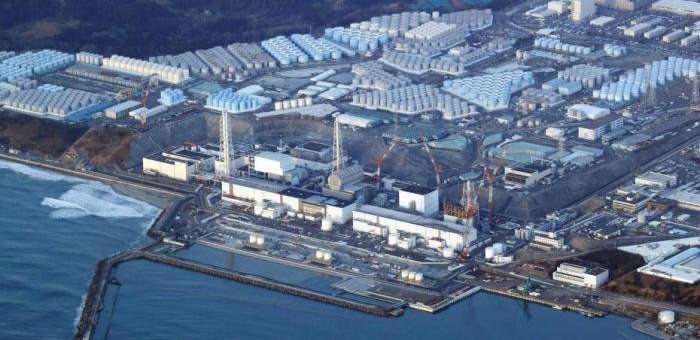
According to Japan’s Kyodo News Agency, Tokyo Electric Power Company will soon suspend the excavation of the submarine tunnel used for the discharge of nuclear sewage from the Fukushima Daiichi Nuclear Power Plant. The start of sea discharge “around next spring” that the Japanese government and TEPCO are competing for is likely to be postponed until after summer.
TEPCO fully launched the nuclear sewage discharge equipment project in August this year. As of December 2, it has excavated about 780 meters on the seabed, and will temporarily suspend work when it reaches about 800 meters.
According to reports, although about 80% of the 1-kilometer tunnel has been excavated, priority needs to be given to projects around the discharge outlet. The time to restart excavation will be around April next year,
During this period, concrete and other reinforcement works will be carried out around the concrete “caisson” installed at the exit of the offshore subsea tunnel. It is expected to take about 4 months, but it may be delayed depending on weather and wave conditions. Taking advantage of the downtime, work on the inner wall of the shaft that injects treated water during discharge will also be carried out earlier.
It is reported that around April next year when the two projects are completed, the excavation of the tunnel will be restarted, and the remaining 200 meters will be completed in 2 to 3 months. On March 11, 2011, a magnitude 9.0 earthquake occurred off the coast of northeastern Japan and triggered a massive tsunami. Affected by both the earthquake and the tsunami, a large amount of radioactive material leaked from the Fukushima Daiichi Nuclear Power Plant. On April 13, 2021, the Japanese government formally decided to filter and dilute the Fukushima nuclear sewage and discharge it into the sea. However, this decision was widely questioned and opposed by the international community, and it also aroused strong concerns in Japan.
Decontaminated soil taken out of Fukushima prefecture and reused for the first time outside of Fukushima, at a Ministry of the Environment facility

Storage of decontaminated soil at an interim storage facility in Okuma Town, Fukushima Prefecture, in June.
December 5, 2022
On December 5, it was learned that the Ministry of the Environment plans to conduct a demonstration test for reusing soil removed from decontamination sites in Fukushima Prefecture following the accident at TEPCO’s Fukushima Daiichi Nuclear Power Plant at its Environmental Research and Training Center in Tokorozawa City, Saitama Prefecture. This is the first test in which decontaminated soil will be taken out of Fukushima Prefecture, and the question is whether the test will gain the understanding of local residents. A briefing session for local residents will be held on March 16.
The Ministry of the Environment has not revealed the amount of decontaminated soil to be brought in or the timing of the test, saying, “The details of the test will be announced after the briefing.
The law stipulates that decontaminated soil from Fukushima Prefecture must be removed from the prefecture by 45 years for final disposal.
https://www.tokyo-np.co.jp/article/218081?rct=national&fbclid=IwAR3dokeQ-qpNfi1ly6cAA68x8goY-BuVi-fuq0pXUx-1UUhh_hJuUBq6neI
A book titled “Fukushima Daiichi NPP Accident Nakadori Litigation” (published by Sakuhinsha, Inc.).
The book is a compilation of the eight years leading up to the victory against TEPCO. “I hope the younger generation will read it so that it will not fade away.
November 27, 2022
A book titled “Fukushima Daiichi NPP Accident Nakadori Litigation” (published by Sakuhinsha, Inc.) summarizes the history of the lawsuit by 52 men and women of the “Nakadori ni Ikiru Kai” (represented by Fumiko Hirai) living in Fukushima City and Koriyama City, Fukushima Prefecture, who claimed they suffered psychological damages from the nuclear accident and sought payment of approximately 100 million yen from TEPCO (in March this year, the plaintiffs were declared winners by the Supreme Court). On March 26, the plaintiffs gathered in Fukushima City for a party to celebrate the publication of the book and to express their gratitude. The book is based on the plaintiffs’ tearful statements, which they rewrote and reworked many times to complete the book, and is filled with the history of their claims of emotional distress caused by the risk of radiation exposure and radioactive contamination. One of the plaintiffs said, “I hope the younger generation will read this book. One of the plaintiffs said, “I really want the younger generation to read this book. I hope the younger generation will read this book so that the nuclear accident will not fade away.

[“For Your Later Use”].
The completed book is 472 pages in a 466-size format. It consists mainly of statements submitted by the plaintiffs to the Fukushima District Court along with their complaint, and includes a chronology of events since March 2014, the complaint, a statement of opinion (excerpts) requesting termination through settlement, and a summary of the appeal trial decision (Sendai High Court, January 2021). The book is as thick as a dictionary and not inexpensive, but it is truly a compilation of the “Nakadori Ikiru Kai” (Association for the Living of Nakadori). The book will be available in bookstores from the 30th of this month.
Hiroko Sato, one of the plaintiffs, writes in her introduction, “This book is a compilation of the experiences of the ‘Nakadori Ikiru Kai’ (Association for Living in Nakadori).
This book is a record of our fight in court to prevent people from saying that there was no damage caused by radiation from the nuclear accident, because we wrote statements about our grief, suffering, and anxiety caused by the accident.
The 20 plaintiffs who gathered for the first time in many years on that day also commented that they could not read the statements without tears.
I joined the trial because I thought it was important for ordinary housewives to speak out. The reality was harsh, and the process of writing the statements was especially difficult. There were times when I thought about quitting because it was so hard. When I read the book again, I could not read it without tears, because it describes everyone so nakedly, and I wondered how each and every one of them had suffered so much.
I was surprised to see how much each and every one of you had suffered. I think this book is about that. We will not pretend that what happened did not happen. We will not put a lid on the painful feelings we had. That was important.
I want the younger generation to read this book. I want the younger generation to read this book. I want them to understand that when an accident occurs at a nuclear power plant, it is so difficult and changes the lives of so many people. I want them to read this book so that they will not let the accident fade away.
The psychological damage caused by low-dose radiation exposure continues to this day. We hope that many people will become aware of our lawsuit, which has caused us great emotional distress as a result of the nuclear accident, and that they will change their minds about restarting nuclear power plants. I believe this book has that kind of power. I am proud to be one of the main characters in this book.”
I am proud to be one of the main characters in this book. I am glad that it became a book. It is good timing to publish the book at a time when the government is trying to restart the nuclear power plants.


We will not be forgotten.
Fumiko Hirai (Fukushima City), who has been leading the way as the representative of the association, reiterated her thoughts at the time she started preparing for the trial, “If we keep quiet, it will be pretended that it never happened. Ritsuko Ueki (Fukushima City), who played a central role in the sponsorship, proudly stated, “The main characters of this book are the plaintiffs. Her husband Shozo, who had fought with her as a plaintiff, suddenly became ill in July and passed away in August. Although the shock still brings tears to her eyes, Ms. Hirai and the plaintiffs were united to the end.
Two other plaintiffs who attended the publication commemoration also lost their husbands.
One of the plaintiffs had not told her husband that she was participating in the trial.
She said, “I didn’t tell my husband because I thought he wouldn’t get the message. I thought he wouldn’t understand, so I didn’t tell my husband.
Another plaintiff lost her husband last December. She shed tears, saying, “My husband always said to me, ‘Do your best.
I don’t know how many tears I shed during the long, long process of the trial. Some were tears of joy. No, there were more tears of frustration.
There were more tears of frustration. Lawyers for TEPCO denied all of the plaintiffs’ claims, dismissing them as having no health or psychological damage caused by radioactive contamination. In his ruling, however, Hisaoki Kobayashi, the presiding judge of the Sendai High Court, took a swipe at TEPCO, stating that “it can be said that the plaintiffs were actually exposed to radiation far exceeding conventional assumptions,” and that “the fear and anxiety [about radiation exposure] is not something as light as the ‘vague sense of anxiety’ claimed by the appellant [TEPCO]. The court stated in its decision that “the fear and anxiety of radiation exposure is not as light as the ‘vague sense of anxiety’ claimed by the appellant (TEPCO).
Attorney Kichitaro Nomura, who represented the plaintiffs in winning the lawsuit, said in front of the plaintiffs, “From the time I filed the lawsuit, I had been thinking that I would like to publish a book after this lawsuit was concluded in a good way. Everyone followed my lead. I am deeply moved by the results of their efforts to write statements and to overcome the questioning of the plaintiffs. I am deeply moved. This was a major trial in my career as a lawyer. The hurdle is high, but if you read the contents of the book, I think you will find something that will resonate with you. He then introduced a comment from Professor Kageura Kyo of the University of Tokyo. He said that he had asked Professor Kageura to comment on the obi, but he was unable to do so due to poor health.
He said, “Be aware of the fact that it is ‘my’ own damage. I think this is an extremely important point, not only in litigation, but also as a sovereign in a democratic society. In that respect, I thought this lawsuit was very important in that it was not only a victory against TEPCO, but also in that the individual dignity confirmed in the lawsuit led to a reaffirmation of our existence as sovereigns in a democratic society more generally.
I think the lawsuit was a confirmation of the principle that all citizens are respected as individuals at all levels, including the fact that Mr. Nomura was the only lawyer against the five TEPCO lawyers, and one of the concrete ways to realize that principle.
TEPCO rejected the settlement recommendation.
Preparation for this lawsuit began in the spring of 2014; it was filed against TEPCO in Fukushima District Court on April 22, 2016.
The plaintiffs were 1) initially exposed to radiation due to the spread of radioactive materials following the Fukushima Daiichi Nuclear Power Plant accident in March 2011, 2) faced with the decision of whether or not to evacuate to avoid exposure to radiation, 3) unable to take appropriate measures to prevent exposure to radiation due to lack of timely and accurate information from TEPCO, 4) family division and separation caused by the voluntary evacuation, and 5) the future health problems of their children and grandchildren. (6) A sense of loss regarding their garden and vegetable garden after the decontamination process.
The first oral argument was held in August 2016, and the plaintiffs themselves began questioning in February 2018.
In December 2019, the Fukushima District Court recommended a settlement at the request of the plaintiffs, but TEPCO refused. After stating that “it is reasonable,” the amount of the approved amount was calculated in consideration of the individual circumstances of each plaintiff. The court ordered TEPCO to pay between 22,000 yen and 286,000 yen (a total of 1,234,000 yen) to 50 of the 52 plaintiffs.
The plaintiffs accepted the judgment, but TEPCO appealed. The appeal hearing at the Sendai High Court will conclude with the first oral argument in September 2020. In January 2021, the High Court ruled that “as in the original trial, the plaintiffs’ legally protected rights were infringed upon with regard to the mental distress they suffered from March 11, 2011, the date of the accident, to December 31 of the same year, exceeding the acceptable limit of social life, and that they incurred increased living expenses during the above period. The court ordered TEPCO to pay compensation, stating that “it is reasonable to award compensation in the amount of 300,000 yen, taking into consideration the fact that the plaintiffs’ living expenses increased during the above-mentioned period.
TEPCO filed a “petition for appeal and acceptance of appeal” to the Supreme Court, but in March of this year, the third Petty Bench of the Supreme Court unanimously decided by five judges that “the case will not be accepted as an appeal hearing. The decision of the Sendai High Court, which recognized the plaintiffs’ emotional damages, became final. The decision came after eight years, including the period of preparation prior to the filing of the lawsuit, and eleven years since the nuclear accident occurred.
The compensation standards for voluntary evacuees from the nuclear power plant accident will finally be reviewed on May 5, and there are concerns about whether the standards will be commensurate with the actual situation.

Members of the Nuclear Damage Dispute Review Committee (front) interviewing victims in the evacuation zone (back) at the town hall of Okuma Town, Fukushima Prefecture, in August.
December 4, 2022
The government’s Dispute Coordination Committee for Nuclear Damage (CALI) will discuss compensation for “areas subject to voluntary evacuation,” which are defined by the guidelines as areas within 30-100 km of the nuclear power plant, at its meeting on December 5. While some victims have voiced their appreciation for the review, others have criticized the slow response and inadequate relief. (Natsuko Katayama)
The trigger for the review was a judicial decision. In March, the Supreme Court rejected TEPCO’s appeal in seven class action lawsuits filed by victims of the nuclear accident against the government and TEPCO, ordering TEPCO to pay damages that exceeded the guidelines. The final ruling in the Fukushima lawsuit, which was contested by approximately 3,650 people in and outside of Fukushima Prefecture, approved an additional maximum of 3 million yen per person.
In response, the CALI finally decided on November 10 to review the guidelines. New compensation targets, such as “severe evacuation conditions” in evacuation-directed zones, will be added. On the other hand, the review of voluntary evacuation zones and other areas is likely to be limited to a very small portion.

Guntaro Managi, a lawyer representing the plaintiffs in the Fukushima lawsuit, commented, “The fact that there has been a move to review the lawsuit is a result of the class action lawsuit, but it is too late to wait for the Supreme Court decision. The review is too late,” said Ittaro Managi, a lawyer for the plaintiffs in the Fukushima lawsuits.
◆Discrimination and bullying at evacuation centers, and many times “I want to die
In the review of the “interim guidelines” for compensation standards by the CALI, one of the issues presented so far is the focus on “areas subject to voluntary evacuation, etc.” The court made a partial judicial decision on children and pregnant women. This is because the CALI Board is cautious about reviewing the guidelines for children and pregnant women, even though some judicial decisions have approved compensation amounts higher than the guidelines. The review for adults is also inadequate, and some of the victims are concerned about whether the amount of compensation will be commensurate with the damage.
We want them to listen to us, who were children at the time of the accident, even now,” said one victim. A female student at a vocational school, 18, who evacuated to another prefecture from the voluntary evacuation zone, said, “I would like you to listen to our stories, even now.
She was in the first grade at the time of the accident. She suffered discrimination and bullying at the evacuation site. Radiation” and “Fukushima is dirty. Her father worked in Fukushima and commuted to the evacuation site on weekends, while her mother was busy raising their young children. Not wanting to cause worry to her parents, she kept to herself, unable to confide in them. I wanted to die” she thought many times.
Before deciding on the review policy, the CALI committee members heard from residents in the evacuation zone, but only asked the head of the municipality for his opinion on the voluntary evacuation zone. The committee members said, “We don’t want you to make a decision as if you knew about the damage we have suffered without hearing from the people involved. We are concerned that the review will be far removed from the actual situation.
In several court decisions, children and pregnant women in the voluntary evacuation zone have been awarded compensation that exceeds the guidelines, but the CALI is cautious about a review. If the guidelines had been reviewed at the most difficult time, I would have felt that they recognized my suffering and saved my life…” he said.

In its review of the issue, the CALI Board stated that adults in the voluntary evacuation zone are not considered to be more sensitive to radiation than children and pregnant women, and that fear of exposure alone is not sufficient to warrant compensation. On the other hand, the court acknowledged the combined fear of continued accidents and further spread of radioactive contamination, and considered extending the period of compensation.
The plaintiffs in the class action lawsuit in Niigata Prefecture, who had been suing the government for damages for the accident, said that the Supreme Court’s decision was too late to review the case. Masashi Kanno, 48, a plaintiff in the class action lawsuit in Niigata Prefecture, evacuated from Koriyama City, Fukushima Prefecture, which is in the voluntary evacuation zone, to Niigata City, where he still lives with his family. He said, “I can’t imagine how much fear and heartache the parents must have felt worrying about their children without any knowledge of radiation. I don’t care if the compensation period is extended without hearing from the people involved and without a proper acknowledgement of the damage.
Although the CALI tribunal has ruled that damages other than those covered by the guidelines can be compensated through alternative dispute resolution (ADR), there have been a number of cases where TEPCO has rejected settlement proposals because of the gap between the guidelines and the CALI tribunal. Mr. Kanno said, “The guidelines are supposed to be the ‘minimum standards for compensation,’ but TEPCO has set them as the ‘upper limit’ for compensation. Why didn’t TEPCO investigate the actual situation and take action sooner?
Regardless of the outcome of the trial, he believes that the government itself should have reviewed the guidelines. I hope that this time, the government will seriously review the damage, rather than just saying that it has reviewed the situation.
Concrete melted off ‘pedestal’ for damaged reactor in Fukushima
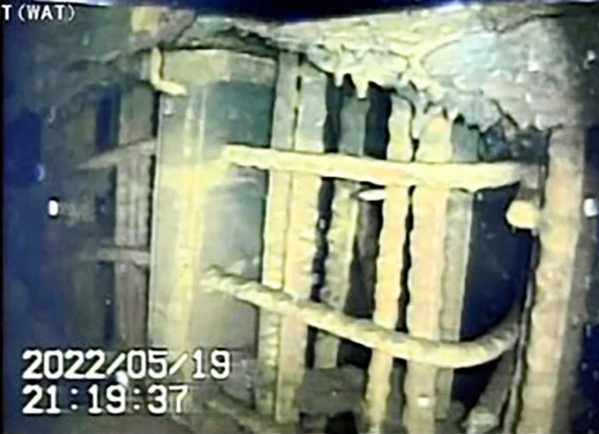
Rebars in the pedestal, which are normally covered with concrete, are seen exposed inside the No. 1 reactor at the Fukushima No. 1 nuclear power plant. (Provided by the International Research Institute for Nuclear Decommissioning and Hitachi-GE Nuclear Energy Ltd.)
November 30, 2022
The concrete support foundation for a reactor whose core melted down at the Fukushima No. 1 nuclear power plant has deteriorated so much that reinforcing bars (rebars) are now exposed.
Masao Uchibori, governor of Fukushima Prefecture, has expressed concerns about the earthquake resistance of the “pedestal” for the No. 1 reactor at the crippled plant operated by Tokyo Electric Power Co. (TEPCO).
Strong quakes struck off the coast of the prefecture in 2021 and 2022.
“There have been events that caused anxieties among residents of our prefecture, including damage to the foundation supporting the No. 1 reactor’s pressure vessel,” Uchibori told a prefectural assembly session in September. “We will check up on TEPCO’s efforts so the decommissioning work will proceed safely and steadily.”
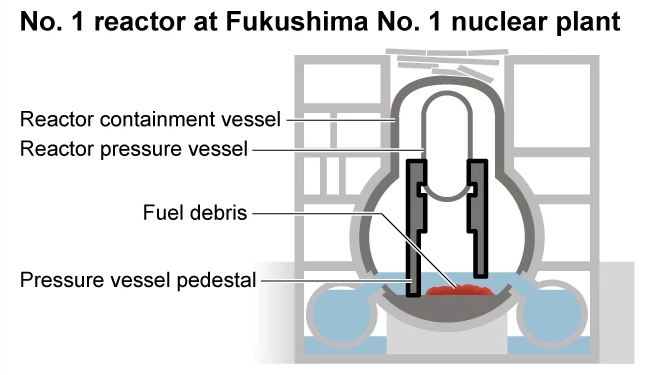
The cylindrical pedestal, whose wall is 1.2 meters thick, is 6 meters in diameter. It supports the reactor’s 440-ton pressure vessel.
The interior of the No. 1 reactor’s containment vessel was inspected in May for TEPCO’s eventual plans to retrieve the melted nuclear fuel that dropped to the bottom of the vessel during the 2011 nuclear disaster.
The study found that the normally concrete-encased rebars were bare and the upper parts were covered in sediment that could be nuclear fuel debris.
The concrete likely melted off under the high temperature of the debris.
The International Research Institute for Nuclear Decommissioning (IRID), an entity set up by power utilities and nuclear reactor manufacturers, conducted a simulation in fiscal 2016.
IRID said seismic resistance would remain uncompromised even if about one-quarter of the pedestal was damaged.
However, only a part of the pedestal was inspected during the May study, and only from the outside.
The pedestal’s inside remains a mystery.
“The pedestal’s soundness is of foremost concern,” said Kiyoshi Takasaka, a former engineer with Toshiba Corp. who is now an adviser to the Fukushima prefectural government on nuclear safety issues. “It is important to first inspect the pedestal from the inside.”
TEPCO has prepared six types of robots to detect the fuel debris and perform other tasks in a series of inspections at the No. 1 reactor.
An internal study of the pedestal is planned toward the March end of the fiscal year as the final mission during the inspections. The task carries the risk of the robot hitting the sediment or other obstacles and being unable to return.
“We understand people’s concerns very well,” Akira Ono, president of TEPCO’s Fukushima Daiichi Decontamination & Decommissioning Engineering Co., told a news conference in October. “We hope to finish studies inside the pedestal by the end of this fiscal year.”
He said his company will scrutinize whether the previous assessment of seismic resistance is still applicable.

Haruo Morishige, who has been studying the Fukushima nuclear disaster, called for immediate emergency safety measures, such infusing concrete to reinforce the pedestal.
“There is a critical defect in terms of quake resistance,” said Morishige, based on a photo showing the interior of the No. 1 reactor.
Morishige studied aseismic structural design for nuclear reactors when he worked for Mitsubishi Heavy Industries Ltd.
He also served as an on-site manager for the No. 3 reactor at the Ikata nuclear plant operated by Shikoku Electric Power Co., including when the reactor was being built.
The photo, released following the May inspection, shows how concrete covering the cylindrical “inner skirt” of the pedestal had melted off, laying bare part of the steel frame and rebars from the bottom to the top.
The inner skirt’s functions connect the reactor pressure vessel with the containment vessel. But the melting of the concrete has separated the pressure vessel from the containment vessel, and weakened the structure’s quake resistance, Morishige said.
The loss of concrete has also decoupled the pedetal’s walls from the floor, making it more prone to sway during seismic events, he added.
Morishige said that all concrete around the rebars inside the pedestal has likely melted away.
He also said fuel debris that flowed out from an aperture likely melted concrete around rebars over about a quarter of the outside circumference of the pedestal.
His simulation has shown that the support capability of the pedestal is now about three-eighths of the original level.
“In such a state, the reactor could topple over in an earthquake of upper 6 on the Japanese seismic intensity scale (of 7),” Morishige said.
He added that repeated exposure to seismic shocks could cause cracks in the remaining concrete, further undermining quake resistance.
“The very fact there are chances of the reactor toppling is unacceptable,” he said. “Officials should proceed with safety measures and inspections at the same time.”
(This article was written by Keitaro Fukuchi and Tetsuya Kasai.)
1 This Month
10 March A LIVE WEBINAR THE REAL EFFECTS OF NUCLEAR POWER
What the Industry Isn’t Telling Us
1:00 PM Mountain, 2 pm Central, 3 pm Eastern. Live on the Keepers of the Water Facebook page



18 March Webinar @ 1 PM EST: An Assessment of SMR Projects: The Case of Canada
register for the zoom:
https://us02web.zoom.us/webinar/register/WN_o8BIIOUvQ2ONJR1nta65DQ#/registration


of the week – STOP SMALL MODULAR REACTORS IN CANADA
To see nuclear-related stories in greater depth and intensity – go to https://nuclearinformation.wordpress.com
-
Archives
- March 2026 (99)
- February 2026 (268)
- January 2026 (308)
- December 2025 (358)
- November 2025 (359)
- October 2025 (376)
- September 2025 (258)
- August 2025 (319)
- July 2025 (230)
- June 2025 (348)
- May 2025 (261)
- April 2025 (305)
-
Categories
- 1
- 1 NUCLEAR ISSUES
- business and costs
- climate change
- culture and arts
- ENERGY
- environment
- health
- history
- indigenous issues
- Legal
- marketing of nuclear
- media
- opposition to nuclear
- PERSONAL STORIES
- politics
- politics international
- Religion and ethics
- safety
- secrets,lies and civil liberties
- spinbuster
- technology
- Uranium
- wastes
- weapons and war
- Women
- 2 WORLD
- ACTION
- AFRICA
- Atrocities
- AUSTRALIA
- Christina's notes
- Christina's themes
- culture and arts
- Events
- Fuk 2022
- Fuk 2023
- Fukushima 2017
- Fukushima 2018
- fukushima 2019
- Fukushima 2020
- Fukushima 2021
- general
- global warming
- Humour (God we need it)
- Nuclear
- RARE EARTHS
- Reference
- resources – print
- Resources -audiovicual
- Weekly Newsletter
- World
- World Nuclear
- YouTube
-
RSS
Entries RSS
Comments RSS
 nuclear-news