Unfair treatment of Australia’s nuclear whistleblower
Nuclear whistleblower treated unfairly, investigation finds Herald Sun, AAP February 09, 2011 A MAN who went public with safety concerns about Australia’s only nuclear reactor was denied procedural fairness when he was suspended from his job on bullying claims, an investigation has found.Australia’s commonwealth workplace regulator, Comcare, investigated the case of Dave Reid, a health and safety representative for the Australian Nuclear Science and Technology Organisation Radiopharmaceuticals.It found ANSTO breached health and safety laws in its handling of the case. n the report, obtained by ABC Television, the investigator found Mr Reid was denied procedural fairness when he was suspended from his role after bullying allegations were made against him by other employees. Nuclear whistleblower treated unfairly, investigation finds | Herald Sun

Safety breaches covered up at Australia’s nuclear reactor
Nuclear safety breaches concern Opposition – ABC Sydney – Australian Broadcasting Corporation February 9, 2011 “……..The Comcare report, which was obtained by the ABC, found the Australian Nuclear Science and Technology Organisation (ANSTO) under-reported accidents and breached basic safety standards at the reactor.The ABC has also learnt of another incident that left a newly appointed supervisor contaminated…………. Continue reading
Power of mining companies to remove a Prime Minister
A snip at $22m to get rid of PM, The Age, Mark Davis,February 2, 2011 HOW much does it cost to bring down a prime minister? The answer: a tad over $22 million.That’s how much the mining industry spent in six weeks last year on its campaign against Kevin Rudd’s plan for a resource super profit tax.The advertising and public relations campaign dominated the airwaves in May and June. Continue reading
IEA hears presentation on plan for Australia to have 100% renewable energy
zero carbon emissions by 2020 is achievable using technology that is already ‘on the shelf’ and currently available.
IEA: Australia could run entirely on renewable energy within a decade, expert claims | Beyond Zero Emissions , 22 Jan 2011, Ambitious blueprint to cut out carbon emissions is presented at the Agency’s Paris-based headquartersAustralia could shred all reliance on oil, coal and gas and become entirely dependent on renewable energy sources by the end of the decade, experts at a think-tank and an Australian university claim in a report presented at the IEA’s headquarters. Continue reading
Australia’s security in S.E. Asia a sound reason for refusing to sell uranium to India
 The arms control reasons for refusing uranium sales to India are serious. The first is the damage that could be done to the NPT system…..A second reason is that Australian uranium used for power generation could free other sources of uranium for use in Indian nuclear weapons, possibly fuelling a nuclear arms race with Pakistan..
We need to strengthen, not weaken, nuclear deterrent, Sydney Morning Herald, Andy Butfoy, January 21, 2011 Australia has a sovereign right to choose its customers. REPORTS that Delhi is pressuring Canberra to sell India uranium are predictable. The arguments for selling have been well rehearsed, and vested interests have long been encouraging Australia to cash in on the opportunities being dangled before it. But to understand why, one has to go beyond the spin produced by the Indian government and the nuclear industry…. Continue reading
Australia refuses to sell uranium to India
Overturning the ban would reward India’s nuclear proliferation and undermine the NPT, International Campaign to Abolish Nuclear Weapons Australia Chair Tilman Ruff said.
“Selling uranium to India runs counter to Australia’s and global security interests, and would undermine Australia’s stated support for achieving a world without nuclear weapons,” he said..
No change in ban on uranium sales to India, Sydney Morning Herald, Adam Gartrell, January 19, 2011 – The federal government has told India it won’t lift its ban on uranium sales to the South Asian giant.India’s foreign Minister SM Krishna met with Resources Minister Martin Ferguson in Melbourne on Wednesday to discuss a range of energy sector issues. Continue reading
The nuclear industry in decline
There are nine fewer nuclear power stations operating worldwide today than there were in 2002. There are 33 fewer nuclear power stations in Europe now than there were in 1989. The US has not built one in 36 years and the Japanese have virtually stopped building them.
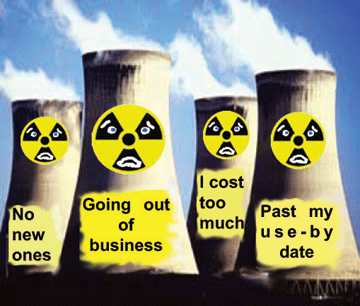
Nuclear industry has no future, Mr Barnett – The West Australian, by Scott Ludlam January 13th, 2011,”…..In reality, there is no global nuclear renaissance, and we should hope there never will be. Since the early 1980s, the industry has been sinking under the weight of the vast costs of this obsolete and risky technology. Continue reading
Extreme weather conditions consistent with climate change predictions
We know that any one single extreme weather event cannot be attributed just to climate change. But we can look at the climate models and predictions, which all say that in a climate-changed world extreme weather events will become more frequent and intense…..Insurance agency Munich Re showed climate change was linked to 21,000 deaths in the first nine months of 2010 – double the number of deaths caused by extreme weather in 2009.

It
‘s time to talk of climate change, Sydney Morning Herald, Ellen Sandell, January 14, 2011 What kind of world are we going to leave for the next generation?I N APRIL 2009 the Los Angeles Times ran the headline: “What will global warming look like? Scientists point to Australia”. The article said events unfolding in Australia – record-breaking droughts, killer bushfires and devastating floods – gave a snapshot of our future in a globally warmed world. Nearly two years on, it seems very little has changed…….. Continue reading

UK govt knowingly subjected troops to nuclear radiation
The press release was drafted ahead of Operation Buffalo at Maralinga, during which troops were ordered to crawl through areas hit by fallout. It was not meant to be made public

Top secret document reveals British troops were knowingly revealed to radiation during nuclear fallout tests – mirror.co.uk, by Susie Boniface, 2 Jan 2011, British troops WERE knowingly exposed to radiation during nuclear fallout tests, a top-secret document has finally proved. Continue reading

Over 90% of Australians want renewable energy, with women strongly against nuclear
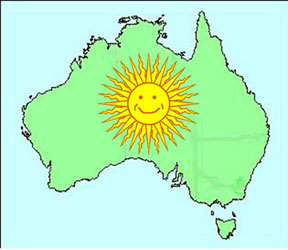 More power to the people, even if they cannot agree Ross Neilson The Daily Telegraph * December 22, 2010 AUSTRALIAN women hate nuclear power. Men don’t mind it, but women would rather use candles. This is the startling finding of Auspoll’s latest research, a poll of 1500 Australians’ attitudes on energy generation. Australians were often divided along gender lines. Continue reading
Rapid take up of local solar power by Australians
“Much of this growth will be in regional Australia, creating employment opportunities and an economic boost for towns and communities,”
Green Australia turns to solar power | The Daily Telegraph, Cameron England , 22 Dec 10, THERE were more than 100,000 solar power systems installed across Australia last year which is more than in the previous decade combined. Continue reading
Australian Prime Minister wrong about Julian Assange
Aussie Prime Minister Julia Gillard has been banging on that the actions of Wikileaks and Assange is “illegal” – as recently as two weeks ago. There were mutterings that Australia might have him extradited over the leaking of official United States government documents….However, the Australian Federal Police said this is unlikely because of a quaint legal tradition in Oz, which requires someone to have broken the law before they are arrested.

Julian Assange has not broken Australian law, Coppers say Wikileaks is fair dinkum, TechEye, 20 Dec 2010 While the Australian government bays for the crucifixion of its citizen Julian Assange and Wikileaks, it seems that local coppers think that neither have done anything wrong. Continue reading
Wikileaks- Australian intelligence analysts advised softer line on Iran
Australia’s top intelligence agency has also privately undercut the hardline stance towards Tehran of the United States, Israeli and Australian governments, saying that Iran’s nuclear program is intended to deter attack and that it is a mistake to regard Iran as a ”rogue state”.
WikiLeaks | fears of potential nuclear war in the Middle East, Sydney Morning Herald, Philip Dorling December 13, 2010 AUSTRALIAN intelligence agencies fear that Israel might launch military strikes against Iran and that Tehran’s pursuit of nuclear capabilities could draw the US and Australia into a potential nuclear war in the Middle East. Continue reading
Prime Minister’s response to Julian Assange pleased USA, not the Australian public
She sought to placate the wrong audience and said what the American government would have wanted to hear, not what the fractious left in Australia wanted to hear.
PM tanks at home, Sydney Morning Herald, 11 Dec 10, Gillard’s ill-advised judge and jury comments convicting Julian Assange alienated a swag of Labor supporters for good.THE WikiLeaks revelations have been an immense political disaster for the Gillard government. Continue reading
Australian soldiers, Aborigines, civilians exposed to depleted uranium in ’50s nuclear tests
The government is preparing a study of those who may have been affected, including soldiers, and Aboriginal and civilian populations in the area at the time of testing.

Depleted uranium used at Maralinga Paul Langley’s Nuclear History Blog, 23 Nov 10, Australian Government Confirms Depleted Uranium Used in 1950s The Australian Federal Government announced that it will conduct a health study of Australian volunteers who worked at Maralinga, a British nuclear test site. Continue reading
1 This Month



26 September – International Day for the Total Elimination of Nuclear Weapons


PLEASE OPPOSE HR 8255 AND S.3639 – bills would accelerate satellite deployment, with no environmental review or safeguards – https://ncstd5li.quorum.us/campaign/169331/
To see nuclear-related stories in greater depth and intensity – go to https://nuclearinformation.wordpress.com
-
Archives
- September 2026 (257)
- August 2026 (330)
- July 2026 (355)
- June 2026 (287)
- May 2026 (306)
- April 2026 (356)
- March 2026 (251)
- February 2026 (267)
- January 2026 (308)
- December 2025 (358)
- November 2025 (359)
- October 2025 (375)
-
Categories
- 1
- 1 NUCLEAR ISSUES
- business and costs
- climate change
- culture and arts
- ENERGY
- environment
- health
- history
- indigenous issues
- Legal
- marketing of nuclear
- media
- opposition to nuclear
- PERSONAL STORIES
- politics
- politics international
- Religion and ethics
- safety
- secrets,lies and civil liberties
- spinbuster
- technology
- Uranium
- wastes
- weapons and war
- Women
- 2 WORLD
- ACTION
- AFRICA
- Atrocities
- AUSTRALIA
- Christina's notes
- Christina's themes
- culture and arts
- Events
- Fuk 2022
- Fuk 2023
- Fukushima 2017
- Fukushima 2018
- fukushima 2019
- Fukushima 2020
- Fukushima 2021
- general
- global warming
- Humour (God we need it)
- Nuclear
- RARE EARTHS
- Reference
- resources – print
- Resources -audiovicual
- Weekly Newsletter
- World
- World Nuclear
- YouTube
-
RSS
Entries RSS
Comments RSS
 nuclear-news