Increasing numbers of nuclear warheads globally
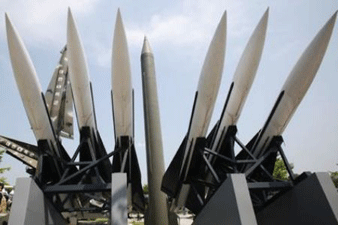
Global nuclear warhead stockpile appears to be growing, SIPRI warns https://www.business-standard.com/article/international/global-nuclear-warhead-stockpile-appears-to-be-growing-sipri-warns-121061400304_1.html
The overall number of nuclear warheads in global military stockpiles appears to be increasing this year, a new finding released by the Stockholm International Peace Research Institute (SIPRI) reveals
“The nine nuclear-armed states – the United States, Russia, the United Kingdom, France, China, India, Pakistan, Israel and the Democratic People’s Republic of Korea (North Korea) – together possessed an estimated 13 080 nuclear weapons at the start of 2021. This marked a decrease from the 13 400 that SIPRI estimated these states possessed at the beginning of 2020,” SIPRI said.
However, SIPRI research shows that this declining trend appears to have stalled.
“Despite this overall decrease, the estimated number of nuclear weapons currently deployed with operational forces increased to 3825, from 3720 last year,” the research institute said.
According to SIPRI, the US and Russia continued to reduce their nuclear weapon arsenals in 2020, but both are estimated to have had around 50 more nuclear warheads in operational deployment at the start of 2021 than a year earlier.
“Both countries’ deployed strategic nuclear forces remained within the limits set by the 2010 Treaty on Measures for the Further Reduction and Limitation of Strategic Offensive Arms (New START), although the treaty does not limit total nuclear warhead inventories,” SIPRI specified.
The institute also pointed out that China is modernizing and expanding its nuclear weapon inventory, along with India and Pakistan.
In February, Russia and the United States agreed to extend the New START treaty for five more years without renegotiating any of its terms. The treaty, now set to expire on February 5, 2026, is the only arms control agreement between two countries that is still in force.
The treaty limits each party’s nuclear arsenal to 1,550 deployed warheads, 800 launchers, and 700 missiles. Both the United States and Russia met the central limits of the New START Treaty in 2018, and have stayed at or below them ever since.
According to the White House, Russian President Vladimir Putin and US President Joe Biden are expected to discuss a wide range of bilateral issues related to strategic stability and arms control during their Wednesday summit in Geneva
Scientists say New Brunswick’s plutonium plan is undermining the global nuclear weapons non-proliferation regime
Scientists say New Brunswick’s plutonium plan is undermining the global nuclear weapons non-proliferation regime, https://nbmediacoop.org/2021/06/14/scientists-say-nbs-plutonium-plan-is-undermining-the-global-nuclear-weapons-non-proliferation-regime/ by Susan O’Donnell and Gordon EdwardsJune 14, 2021 The company Moltex Energy wants to extract plutonium from the thousands of used nuclear fuel bundles stored at Point Lepreau on the Bay of Fundy. They plan to use the plutonium as fuel for a new nuclear reactor, still in the design stage. If the project is successful, the entire package could be replicated and sold to other countries.
However, American scientists and non-proliferation experts say that Canadian government support for the Moltex plutonium-extraction project is undermining the global nuclear weapons non-proliferation regime. Plutonium is the primary nuclear explosive material in the world’s arsenals of nuclear weapons.
On March 18 this year, federal Intergovernmental Affairs Minister Dominic LeBlanc announced a $50.5 million grant for the Moltex project, adding to the $5 million the New Brunswick government gave the company in 2018. During the announcement, LeBlanc and Premier Blaine Higgs described the Moltex project as “recycling” nuclear waste, although less than one percent of the used nuclear fuel is potentially available for use as new reactor fuel, leaving a lot of radioactive waste leftovers.
On May 25, nine US non-proliferation experts sent an open letter to Prime Minister Trudeau expressing concern that by “backing spent-fuel reprocessing and plutonium extraction, the government of Canada will undermine the global nuclear weapons non-proliferation regime that Canada has done so much to strengthen.”
The nine signatories to the letter include senior White House scientist appointees and other US government advisors who worked under six US presidents: Kennedy, Johnson, Nixon, George H.W. Bush, Clinton, and Obama; and who hold professorships at the Harvard Kennedy School, University of Maryland, Georgetown University, University of Texas at Austin, George Washington University and Princeton University.

Plutonium is a human-made element created as a byproduct in every nuclear reactor. India exploded its first nuclear weapon in 1974 using plutonium extracted from a “peaceful” Canadian nuclear reactor given as a gift many years earlier. In the months afterwards, it was discovered that South Korea, Pakistan, Taiwan and Argentina – all customers of Canadian nuclear technology – were well on the way to replicating India’s achievement.
The US and its allies acted swiftly to prevent these countries from acquiring the necessary plutonium extraction facilities. To this day South Korea is not allowed to extract plutonium from used nuclear fuel on its own territory due to proliferation concerns.
Several years after the Indian explosion, the US Carter administration ended federal support for civil reprocessing of spent nuclear fuel in the US out of concern that making plutonium more available would contribute to the proliferation of nuclear weapons. At that time, Canada’s policy on reprocessing also changed to accord with the US policy.
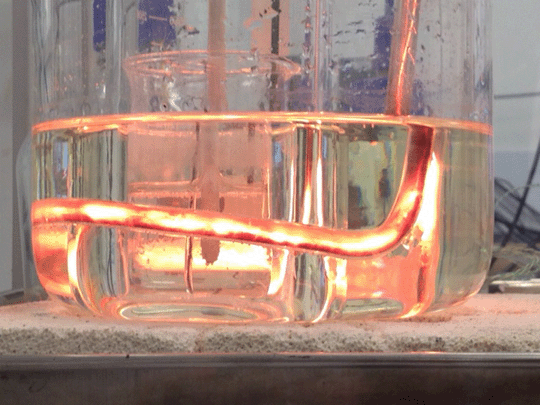
Moltex is proposing extract plutonium at Point Lepreau using “pyroprocessing,” in which the solid used reactor fuel is converted to a liquid form, dissolved in a very hot bath of molten salt. What happens next was described by Moltex Chairman and Chief Scientist Ian Scott in a recent article in Energy Intelligence. “We then — in a very, very simple process — extract the plutonium selectively from that molten metal. It’s literally a pot. You put the metal in, put salt in the top, mix them up, and the plutonium moves into the salt, and the salt’s our fuel. That’s it … You tip the crucible and out pours the fuel for our reactor.”
From an international perspective, the federal support of the Moltex project can be seen as Canada sending a signal – giving a green light to plutonium extraction and the reprocessing of used nuclear fuel.
The US experts are concerned other countries could point to Canada’s support of the Moltex project to help justify their own plutonium acquisition programs. That could undo years of efforts to keep nuclear weapons out of the hands of countries that might want to join the ranks of unofficial nuclear weapons states. The Moltex project is especially irksome since its proposed pyroprocessing technology is very similar to the one South Korea has been trying to deploy for almost 10 years.
Despite the alarm raised by the nine experts in their letter to Trudeau, the government has not yet responded. The only response has come from the industry, Moltex CEO Rory O’Sullivan. His reply to a Globe and Mail reporter: the plutonium extracted in the Moltex facility would be “completely unsuitable for use in weapons.”
But the International Atomic Energy Agency (IAEA) has stated that “Nuclear weapons can be fabricated using plutonium containing virtually any combination of plutonium isotopes.” All plutonium is of equal “sensitivity” for purposes of IAEA safeguards in non-nuclear weapon States.
Similarly, a 2009 report by non-proliferation experts from six US national laboratories concluded that pyroprocessing is about as susceptible to misuse for nuclear weapons as the original reprocessing technology used by the military.
In 2011, a US State Department official responsible stated that pyroprocessing is just as dangerous from a proliferation point of view as any other kind of plutonium extraction technology, saying “frankly and positively that pyroprocessing is reprocessing. Period. Full stop.”
And, despite years of effort, the IAEA has not yet developed an approach to effectively safeguard pyroprocessing to prevent diversion of plutonium for illicit uses.
Given that history has shown the dangers of promoting the greater availability of plutonium, why is the federal government supporting pyroprocessing?
The answer: the Canadian nuclear lobby wants it. In the nuclear industry’s report released in March, “Feasibility of Small Modular Reactor Development and Deployment in Canada,” reprocessing (which they call “recycling”) spent nuclear fuel is presented as key to the industry’s future plans.
To date however, there has been no democratic open debate or public consultation over the path Canada is charting with nuclear energy. Important national and international issues are at stake, and conscientious New Brunswickers and all Canadians should sit up and take notice. Political representatives in the Canadian Parliament and the New Brunswick Legislature owe it to their constituents to demand more accountability and ask why our governments are supporting a plutonium-extraction project that raises such serious international concerns.
Susan O’Donnell, a Fredericton-based researcher specializing in technology adoption and environmental issues, is the lead researcher for the RAVEN project at the University of New Brunswick. Gordon Edwards is a Montreal-based mathematician, physicist, nuclear consultant, and President of the Canadian Coalition for Nuclear Responsibility.
TEPCO begins process to scrap Fukushima No. 2 nuclear plant,
TEPCO begins process to scrap Fukushima No. 2 nuclear plant, http://www.asahi.com/ajw/articles/14379413
THE ASAHI SHIMBUN, June 23, 2021 Tokyo Electric Power Co. Holdings Inc. began decommissioning the Fukushima No. 2 nuclear power plant in Fukushima Prefecture on June 23, aiming to complete the work in fiscal 2064.
In 2018, TEPCO decided to scrap all four reactors at the plant, located south of the No. 1 nuclear plant that was devastated by the 2011 Great East Japan Earthquake and tsunami. Operations at the No. 2 plant have been suspended since it was inundated by the tsunami.
The company estimates the total cost of scrapping the No. 2 plant, including reprocessing spent nuclear fuel, at 410 billion yen ($3.70 billion).
TEPCO divided the process of decommissioning the plant in four stages, each taking about a decade. In the first stage, the company will focus mainly on decontamination work.
TEPCO has already begun work to scrap all six reactors at the crippled No. 1 plant. The company needs considerable manpower to simultaneously carry out the decommissioning work at both plants.
It is also facing many challenges, such as where some 10,000 spent nuclear fuel assemblies should be transferred to.
The Nuclear Regulation Authority, the government’s nuclear watchdog, approved TEPCO’s decommissioning plan for the No. 2 plant on April 28. The company also obtained prior consent to the plan from Fukushima Prefecture as well as Tomioka and Naraha towns, which co-host the plant, on June 16.
Fukushima Governor Masao Uchibori is urging TEPCO to move the spent fuel out of the prefecture and to cultivate a corporate culture that prioritizes safety and to work with local companies when carrying out the decommissioning work.
TEPCO started the work by inspecting the interior of the reactor buildings and checking the procedure for decommissioning. It will bring in necessary equipment and materials to the plant from July 1 and begin decontamination work on a full scale from mid-July.
(This article was written by Tetsuya Kasai and Satoshi Shinden.)
Physicians raise doubts on environmental and safety risks of extending life of Wisconsin’s ageing nuclear plant. Federal Licensing Board to consider.
Federal Licensing Board Considers Challenge To Wisconsin’s Last Nuclear Plant
Wisconsin-Based Physicians Group Argues Point Beach Nuclear Plant Needs To Address Environmental Impact, Safety Concerns, Wisconsin Public Radio, By Hope Kirwan, Wednesday, June 23, 2021,
A Wisconsin advocacy group argued Tuesday that the state’s last operational nuclear power plant shouldn’t have their license extended given the environmental impact and safety concerns about the aging infrastructure.
Physicians for Social Responsibility Wisconsin (PSR), an anti-nuclear nonprofit group of health care professionals based in Madison, filed a petition in March challenging the application to renew Point Beach Nuclear Plant’s licenses for an additional 20 years.
The Two Rivers power plant is owned by NextEra Energy and its current licenses expire in 2030 and 2033.
The U.S. Nuclear Regulatory Commission’s Atomic Safety and Licensing Board held a remote hearing Tuesday to consider the nonprofit group’s challenge.
Terry Lodge, an attorney representing PSR, argued the nuclear power plant has caused “50 years of carnage” to fish, fish larvae and some migratory birds because the plant pulls water from Lake Michigan.
“There’s considerable local kill that occurs,” Lodge said during the hearing. “So long as this system is allowed to operate as it does, it is inevitable, with the uptake of approximately a billion gallons a day for purposes of cooling the two units at Point Beach.”
Lodge also claimed NextEra Energy didn’t adequately consider utility-scale solar energy systems as an alternative to continuing to operate the nuclear power plant. They argue solar technology will continue to progress before Point Beach’s current license expires and will be a more environmentally-friendly alternative to nuclear power.
“There is a fixation that is manifest in the Point Beach application that centralized, large baseload power units are somehow the most satisfactory and effective way of addressing the electric power needs in their jurisdiction. That is very false and in fact, Point Beach is an obstacle to the future,” Lodge said.
Lodge argued the 50-year-old plant hasn’t done sufficient testing or safety improvements to ensure there is a low probability of a reactor or turbine failure……..
After several hours of questioning both the utility and the doctors’ group during Tuesday’s hearing, the three-member licensing board is expected to issue a decision within 45 days. https://www.wpr.org/federal-licensing-board-considers-challenge-wisconsins-last-nuclear-plant
French company EDF’s Plan A – Britain to legislate finance for Sizewell nuclear plant: there is no Plan B.
REUTERS EVENTS EDF calls for funding legislation for new UK nuclear power plant, Kate Holton LONDON, June 23 (Reuters) – France’s EDF (EDF.PA) called on the British government to deliver the legislation that would underpin the financing of a new nuclear plant, Sizewell C, saying it was now essential………
Asked if his company had a Plan B in the event the government did not advance with the legislation, Simone Rossi, the UK head of EDF, said: “We do not really. I have to say that would be for the UK government to consider.”………
China General Nuclear Power Corporation (CGN) which holds a 20% share in the pre-construction phase of the Sizewell C project, is on a U.S. government list of companies Washington deems are acting contrary to U.S. interests………….https://www.reuters.com/business/energy/reuters-events-edf-calls-uk-produce-sizewell-funding-legislation-2021-06-23/
China’s plans for a huge nuclear waste bunker
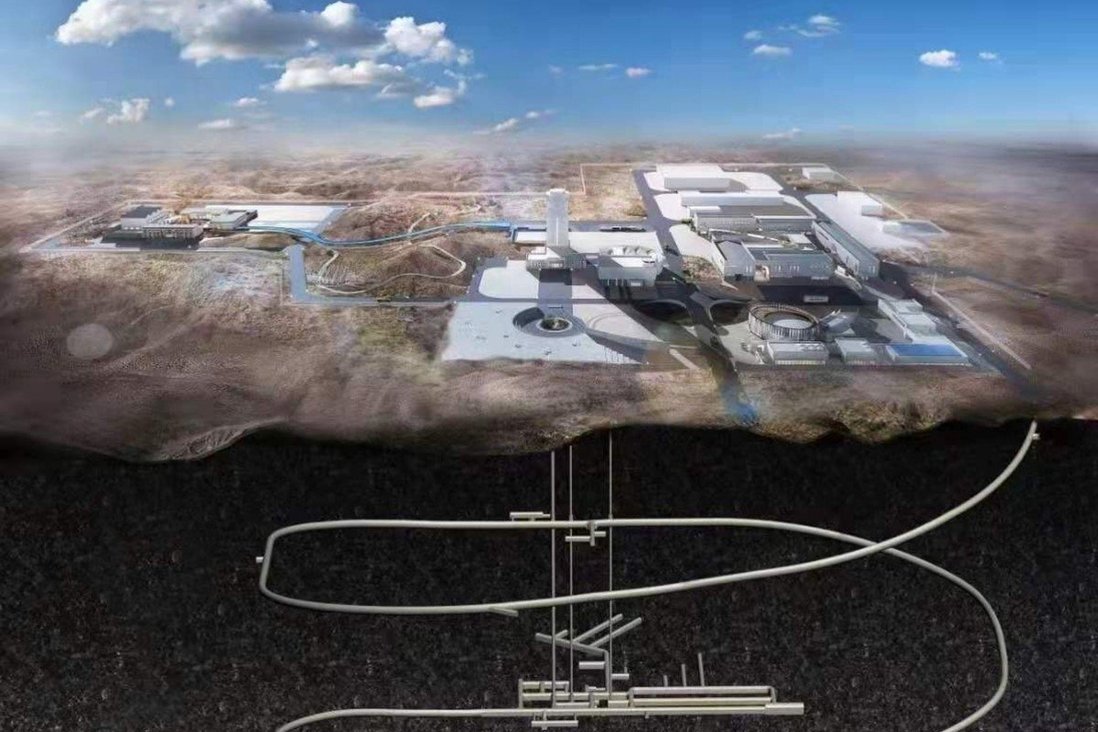
China builds bunker to test whether nuclear waste can be dumped underground, SCMP
Lab more than 500 metres underground in the Gobi Desert will be the world’s largest of its kind
If research there is successful, a long-term underground dump for high-level radioactive waste could be built, helping to address a global problem
China has started building a laboratory deep underground in the Gobi Desert to assess whether it would be a suitable location for a nuclear waste dump, amid moves to expand its nuclear power capacity.
The Beishan Underground Research Laboratory in the northwestern province of Gansu will be used to research long-term storage of high-level radioactive waste. With its deepest level to be built 560 metres (1,837 feet) below ground, it will be the world’s largest lab of its kind, according to the ChinaNuclear Energy Association, which promotes nuclear power.
- The world has about a quarter of a million tonnes of highly radioactive waste, all kept in “temporary” storage. No country has found a solution for permanent deep geological storage, with public opposition often a factor.
- China’s attempt to find an answer comes at a time when it plans to build a fleet of new reactors. Disposal of high-level radioactive waste is becoming more critical as it uses more nuclear power and tries to become carbon neutral
……. It is estimated that the lab will cost over 2.7 billion yuan (US$400 million), take seven years to build and operate for 50 years. If research proves the site to be suitable, a long-term underground repository for high-level radioactive waste will be built nearby by 2050, Wang Ju, chief designer of the lab, told state media in April………. https://www.scmp.com/news/china/science/article/3138484/china-builds-bunker-test-whether-nuclear-waste-can-be-dumped
Britain facing a massive series of nuclear decommissioning
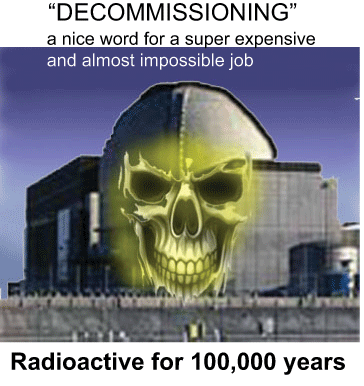
Britain prepares for new wave of nuclear decommissioning
Sceptics of the fuel argue the plans demonstrate why no new plants should be built, Ft.com Nathalie Thomas in Edinburgh 23 June, 21, At Dungeness B nuclear power station on a remote stretch of the Kent coast in south-east England, workers are making preparations to carefully remove thousands of radioactive fuel elements from its reactors and transfer them to a purpose-built pond for at least 90 days for cooling. The spent fuel will later be packed into 53-tonne “flasks” fortified with 39cm-thick steel walls before being transported across country by train to Sellafield in Cumbria.
The nuclear facility in north-west England is host to most of the radioactive remnants of Britain’s civil nuclear programme that dates back to the 1950s. These include highly toxic waste that will remain there until a suitable site is found for an underground repository where it will have to be stored for more than 100,000 years to make it safe.
Preparations for the “defuelling” of Dungeness B started with “immediate effect” on June 7 when its majority owner, French state-controlled utility EDF, announced it would close the plant seven years early. It had not been operational since September 2018 as engineers tried to fix problems, including corrosion and cracks in its pipework.
The 1.1GW plant is the first of seven built in the UK between the mid-1960s and late-1980s using advanced gas-cooled reactor (AGR) technology to come out of service. It will kickstart a decommissioning process spanning generations, which sceptics argue strikes at the heart of why no new nuclear plants should be built.
The remaining six AGR plants are due to be retired by the end of this decade at the latest, leaving the more modern Sizewell B plant in Suffolk, which uses pressurised water reactor technology, as the only one operational out of the existing fleet
. “[Decommissioning of] many of these facilities will continue well into the 22nd century,” said Paul Dorfman of University College London’s Energy Institute. “The problem with decommissioning is it always turns out to be more complex than one had imagined.”
Critics also point out that the decommissioning of Britain’s 17 earliest atomic power sites has been extremely costly. The latest clean-up bill for those sites, which include a generation of nuclear plants known as the “Magnox” stations, is estimated at more than £130bn over 120 years. ……
Climate activists, such as E3G and Greenpeace, have long argued that the debate over building costly, complex new nuclear plants detracts from investment in cheaper, climate-friendly technologies……….
The exact arrangements for the decommissioning of Dungeness and the six other AGR plants are subject to negotiation between EDF and the government. It will be financed via a £14.5bn fund set up in 2005.
The French utility is expected to take at least three years to remove all fuel from each site and potentially carry out some early demolition work before handing them over to the UK state-owned Nuclear Decommissioning Authority. EDF declined to comment. The next stage will probably involve the treatment and removal of waste and demolition of facilities that are no longer needed. Some facilities will be left untouched for 85 years — to allow residual radioactive materials to decay — before demolition. …….. https://www.ft.com/content/0381e567-d088-4802-a2e4-e125c8099605
Sabotage attempt on Iran nuclear reactor
‘Sabotage attack’ on Iranian nuclear building foiled
The attack was halted ‘before causing any damage to the building’, news agencies said. A sabotage attempt against a building belonging to the Iranian Atomic Energy Organization has been foiled, Iranian media reported.
An Iranian news site close to security services said authorities thwarted a “sabotage attack” on the country’s civilian nuclear programme on Wednesday, without providing further information…….
Iran’s English-Language Press TV reported “the hostile attempt occurred on early Wednesday, but did not result in any casualties or damage owing to tight security precautions adopted following similar acts of sabotage against Iranian nuclear sites and scientists”.
Alarm at Japan’s plan to restart Kansai’s ageing No.3 nuclear reactor
As Japan reboots ageing Mihama nuclear reactor, experts express concern, Reuters, Aaron Sheldrick 23 June 21
- Reactor restarted after sitting idle for 10 years
- First of four old reactors to get exceptions
- For an interactive graphic on the status of Japan’s nuclear reactors, click https://tmsnrt.rs/2OTpNfA
– The head of a major inquiry into Japan’s nuclear disaster and a former senior Cabinet adviser have sounded alarms over plans this week to restart a 44-year old reactor, saying the industry and government have not taken on board the lessons from Fukushima.
Kansai Electric Power (9503.T), which serves Osaka and its industrial environs – an area with roughly the same economic output as Mexico – said it restarted the No. 3 reactor at its Mihama station in western Japan earlier on Wednesday.
The reactor is the oldest to be restarted since the 2011 Fukushima disaster and needed special approval to have its lifetime extended beyond the standard 40-year limit. Most reactors in Japan remain shut after the accident highlighted failings in regulation and oversight.
Tatsujiro Suzuki, a former deputy chairman of the Cabinet Office’s Atomic Energy Commission, told Reuters he has misgivings over how approval for the restart was obtained.
- He said he was concerned about a lack of transparency and the use of subsidies to sweeten local opinion to get the necessary restart approval…….
- It looks like the industry and the government have not learned the lessons of Fukushima,” said Suzuki, who is on the advisory board of a parliamentary committee on nuclear safety.
Bureaucrats from the Ministry of Economy, Trade and Industry (METI), which supports nuclear energy to power Japan’s industrial economy, went to Fukui prefecture 110 times over a two-year period until early this year.
The visits to Fukui by officials including the head of the powerful natural resources agency were raised at a recent hearing of the parliamentary committee.
A subsidy of 2.5 billion yen ($23 million) was agreed for local communities before the Fukui governor signed off on the restart…….
- Five workers died at Mihama power station in 2004 after a pipe that had not been inspected for nearly a decade burst, releasing high pressure steam and hot water.
- In 2019, Kansai Electric executives admitted to receiving cash and gifts worth 360 million yen from an official from a town hosting one of its other nuclear plants.”They haven’t changed, that’s my impression, despite the scandal involving kickbacks,” Suzuki said……..
A silo mentality among executives and a collectivist mindset among bureaucrats, which puts organisational interests ahead of public duties on safety are still prevalent in Japan, Kurokawa said.
“It’s always important to ask what are the sanctions for bad corporate behaviour. If there are none, and in Japan there are none, then oversight is meaningless,” he said, adding he was concerned about the restart.
Mihama is one of 16 reactors that have received either preliminary or final approval to restart…………https://www.reuters.com/world/asia-pacific/japan-reboots-44-year-old-nuclear-reactor-experts-sound-alarm-2021-06-22/
Duke Energy planning for a fleet of 80 year-old nuclear reactors
Duke Wants to Run Its Nuclear Plants Until They’re 80 Years Old, 22 June 2021,
- Joins Exelon, Dominion, NextEra to run world’s oldest fleet
- Duke has 11 reactors at six sites in North and South Carolina
One of the biggest power companies in the U.S., is planning to run its fleet of 11 nuclear reactors until they’re 80 years old.
The company filed an application with the U.S. Nuclear Regulatory Commission to renew the license for its Oconee power plant for 20 years, Charlotte-based Duke said in statement Monday. The South Carolina facility began producing power in 1973 and the extensions would keep the three reactors in service until 2053 and 2054.
The company plans to submit similar extension requests for its five other nuclear plants in the Carolinas, which all went into service in the 1970s and 1980s. Duke is part of a growing number of U.S. nuclear owners that are planning to keep their reactors in service for eight decades. Exelon Corp., Dominion Energy Inc. and NextEra Inc. have already been granted similar extensions, creating what will eventually be the world’s oldest nuclear fleet……….
New UK energy report – need for investment in wind and solar, no need for new nuclear.
The UK should grow its solar capacity to 210GW by 2050, unlocking a low
cost transition to net zero, a new report has found. Wind and solar will
need increased investment to grow to generate 98% of the electricity mix,
up from 27% in 2020, according to the report, published by energy provider
Good Energy with modelling from the Energy Systems Catapult (ESC).
Solar Power Portal 22nd June 2021
This will require over 200GW of solar, as well as 150GW of wind and 100GW of
lithium-ion battery energy storage, the Renewable Nation: Pathways to a
Zero Carbon Britain report has said. A substantial amount of that growth is
possible by the end of this decade, with 100GW of solar and 70GW of wind
needed to produce 84% of the country’s electricity by 2030.
The report – which is the first to use the ESC’s Storage and Flexibility model,
which itself combines long-term investment planning with hour-by-hour grid
balancing – found that no new nuclear beyond that under construction
currently was needed for net zero.
Yet another incident of stolen nuclear materials in India
In yet another incident of the capture of nuclear-related materials from
unauthorized persons in India has made headlines in the Indian media but
largely ignored in the international media.
On 4th June 2021, as reported in the Indian media, the authorities arrested seven people possessing
approximately 6.4 kilograms of Uranium in the Eastern State of Jharkhand.
This is the second time in less than a month where Indian authorities have
captured such a gang in an attempt to sell uranium illegally.
An incident of the same nature was reported just a few days ago in May 2021 where
authorities apprehended unauthorized persons, who were trying to sell
nearly 7 kilograms of natural uranium on the black market. Notably, Indian
authorities themselves believe that these events might be linked to a
“national gang involved in illegal uranium trade”.
Modern Diplomacy 12th June 2021
Incidents of Uranium Theft in India: Depleting Nuclear Safety and International Silence
China’s Taishan nuclear reactor has 5 damaged fuel rods
There are likely five damaged fuel rods in the 1,750 MW Taishan-1 EPR in
China, which have led to an increase in radiation levels within the reactor
coolant, the Chinese Ministry of Ecology and Environment said in a
statement June 16, providing the first official explanation for the nuclear
reactor’s recent technical problems.
French power company EDF, a minority
owner of the Taishan plant, said in a statement June 14 that Taishan-1 had
seen an increase in the concentration of radioactive gases in its primary
circuit. The environment ministry added that “at present, the radiation
activity of [Taishan-1’s] reactor circuit coolant … is still within the
scope of allowing stable operation as stipulated in the technical
specifications for the operation of the nuclear power plant.”
The meeting
of technical specifications, which define the licensed operating parameters
or a reactor, and operational safety of the Taishan plant are guaranteed,
the ministry added. It also said the increase in radioactivity in
Taishan-1’s primary circuit is related to fuel-rod damage.
S&P 16th June 2021
Justice demanded for the ‘Atomic Marines’ of America’s botched Bikini Atoll nuclear test
The ‘Atomic Marines’ of America’s botched Bikini Atoll nuclear test demand justice. After being sworn to secrecy about their Cold War mission, the men are now finally speaking out ahead of ‘Burning Sky’, a documentary which premieres on PBS America on Wednesday 23 June. As part of a series of top-secret nuclear tests codenamed Operation Castle, on 1 March 1954 the US military carried out a trial known as “Castle Bravo”, detonating a 15-megaton hydrogen bomb on Bikini Atoll in the Marshall Islands. Delivered to the West Pacific on the USS Curtiss by marines who had taken an oath of secrecy, the device was 1,000 times more powerful than the bomb dropped on Hiroshima in 1945 – and, due to an error in calculation, two-and-a-half times more destructive than expected. iNews 23rd June 2021 https://inews.co.uk/news/long-reads/the-atomic-marines-of-americas-botched-bikini-atoll-nuclear-test-demand-justice-1066321 |
The dangersof transporting nuclear weapons and other nuclear materials
Nuclear Transports**
The UK & Ireland Nuclear Free Local Authorities (NFLA) today publishes a
detailed analysis considering the wide range and large number of transports
of nuclear materials around the UK and Europe, and from the UK to other
countries.
The report highlights nuclear transports are continuing to
increase and remain a concern from the perspective of an accident or
malicious incident taking place with one of them. Nuclear transport is of
particular concern to the NFLA as radioactive materials are at their most
vulnerable when they are being transported off site, as they are away from
dedicated safe storage facilities and are in an ‘uncontrolled’
environment where they face a greater level of risk.
The report considersin detail the following transports: The safety of nuclear weapon road
convoys – it considers recent reports by the Nuclear Information Service,
ICAN UK and Nukewatch Scotland. The future transport by road of vehicles
containing redundant submarine reactors from Rosyth and Devonport to
Capenhurst by road. The report highlights the sheer number of road
transports involving nuclear materials as well.
The transport by rail of spent nuclear fuel from existing and decommissioned reactors, with
particular focus on the rail transports of radioactive materials from
Dounreay to Sellafield. It also highlights learning points from recent
conventional rail transport accidents. The transport of radioactive
materials by sea around the British Isles and globally to fulfil
international contracts. The transport of highly enriched uranium materials
stored at Dounreay by air to a site in South Carolina, United States.
Thereis also reference to a historical list of accidents involving planes with
nuclear weapons.
NFLA 22nd June 2021
1 This Month

Read the Public Inquiry Report, the Commissioners’ report, Surrendering Australia: The AUKUS Deception is available to download for free at aukuspublicinquiry.com. Or just watch the replay of the National Press Club Luncheon.


19 November – Webinar – The Reality of Reprocessing
Time: 11:00 AM Pacific Time (US & Canada) / 2:00 PM Eastern / 7:00 PM UK / 8:00 PM CET
Register for the Zoom Event Here



Shut down the radiation-damaged Heysham nuclear reactors now
To see nuclear-related stories in greater depth and intensity – go to https://nuclearinformation.wordpress.com

Say No to NASA’s Reckless Nuclear Reactor on the Moon
Say No to NASA’s Reckless Nuclear Reactor on the Moon
-
Archives
- November 2026 (103)
- October 2026 (302)
- September 2026 (339)
- August 2026 (330)
- July 2026 (355)
- June 2026 (287)
- May 2026 (306)
- April 2026 (356)
- March 2026 (251)
- February 2026 (267)
- January 2026 (308)
- December 2025 (358)
-
Categories
- 1
- 1 NUCLEAR ISSUES
- business and costs
- climate change
- culture and arts
- ENERGY
- environment
- health
- history
- indigenous issues
- Legal
- marketing of nuclear
- media
- opposition to nuclear
- PERSONAL STORIES
- politics
- politics international
- Religion and ethics
- safety
- secrets,lies and civil liberties
- spinbuster
- technology
- Uranium
- wastes
- weapons and war
- Women
- 2 WORLD
- ACTION
- AFRICA
- Atrocities
- AUSTRALIA
- Christina's notes
- Christina's themes
- culture and arts
- Events
- Fuk 2022
- Fuk 2023
- Fukushima 2017
- Fukushima 2018
- fukushima 2019
- Fukushima 2020
- Fukushima 2021
- general
- global warming
- Humour (God we need it)
- Nuclear
- RARE EARTHS
- Reference
- resources – print
- Resources -audiovicual
- Weekly Newsletter
- World
- World Nuclear
- YouTube
-
RSS
Entries RSS
Comments RSS

