Increasing carbon emissions from uranium mining

Jan Willem Storm van Leeuwen 27th June 2021, The energy source of nuclear power is a mineral from the earth’s crust: uranium. An intricate system of industrial processes is required to convert the potential energy in this mineral into useful energy, and to manage the inevitable radioactive material wastes. During operation each nuclear power plant generates each year an amount of human-made radioactivty equivalent to about 1200 exploded Hiroshima atomic bombs. Without the process chain nuclear power would be impossible, and without nuclear power these processes would not exist.
The CO2 emission of these processes together form the specific CO2 emission inextricably coupled to nuclear power. The thermodynamic quality of the available uranium resources declines with time, because the highest quality resources are always mined first, for these offer the highest return on investments for the mining companies…
Declining thermodynamic quality of the resources results in an exponential rise of the specific energy and the coupled CO2 emission required to extract 1 kg of uranium from rock. At a given point the required extraction energy will equal the amount of useful energy that can be produced from 1 kg of uranium. Within the lifetime of new nuclear build uranium resources cannot be considered energy resources anymore, if the world uranium consumption remains at the present level. Meanwhile the coupled specific CO2 emission will grow as large as fossil-fuelled power.
U.S. militarisation of the Pacific

Countering the “China Threat”–At What Price? The Pentagon is upgrading its full-spectrum dominance, with China as the primary target. Organising Notes, the Global Network Against Weapons & Nuclear Power in Space.By Koohan Paik-Mander 27 June 21
”…………………. to accommodate the JADC2, Joint All-Domain Command and Control (JADC2) even more expansive swaths of the ocean are being set aside for year-round military exercises.
The most egregious example is the MITT (Mariana Islands Training and Testing), a plan to transform over a million square miles of biodiverse ecosystems into the largest-ever range complex for bombing and firing practice. The impacted area would be larger than the states of Washington, Oregon, California, Idaho, Nevada, Arizona, Montana, and New Mexico combined.
The largest multinational open-ocean military exercises in history will take place here, home to 26 species of cetaceans. The navy itself estimates that its activities will maim or kill over 81,000 whales and dolphins per year. And that doesn’t count the ecological casualties anticipated in other existing exercise ranges, such as those around Hawaii, California, Alaska, Australia, in the Sea of Japan, and in the Bay of Bengal.
For their part, thousands of residents of the Marianas are protesting the plan to turn their ancestral archipelago into a year-round war zone. Large portions of Guam and Tinian would become dedicated firing ranges, placed right next door to towns and neighborhoods. Practice-bombing on the islet of Farallon de Medinilla, a migratory-bird hotspot, will increase from 2,150 strikes a year to 6,000 strikes a year. And most tragically, the whole of the astonishingly pristine island of Pagan is slated to undergo perpetual full-spectrum assaults from air, land, and sea. The island is expected to endure continuous bombing from mortars and missiles, its wildlife damaged by sonar, torpedoes, hand grenades, reef-crushing amphibious landing practice, and countless experimental detonations. Because of the colonial status of the Mariana islanders, they have not been able to legally demand transparency and accountability from the U.S. government…………http://space4peace.blogspot.com/2021/06/countering-china-threatat-what-price.html
The U.S. Nuclear Weapons Program Left ‘a Horrible Legacy’ of Environmental Destruction and Death Across the Navajo Nation
The U.S. Nuclear Weapons Program Left ‘a Horrible Legacy’ of Environmental Destruction and Death Across the Navajo Nation Inside Climate News, By Cheyanne M. Daniels, Amanda Rooker, June 27, 2021
Navajo uranium miners have died of lung cancer and other respiratory illnesses. They weren’t told of the risks, and they want compensation for radiation exposure continued.
”…………… Despite the stunning beauty of the 27,000-square-mile Navajo Nation, which encompasses parts of Arizona, New Mexico and Utah, the land is marred by a toxic history: a “horrible legacy” of uranium mining and processing that began in 1944, with the U.S. nuclear weapons program and has slowly killed Navajo miners and their families, littered the land with 523 abandoned mines and tainted pristine aquifers with radioactive ore and the dry air with radioactive dust.
Harrison, 70, and his father Phil Harrison Sr., were both uranium miners. Harrison worked in the mines for only three months, but his father worked there for 20 years and died at 44 from lung cancer. The 1990 Radiation Exposure Compensation Act presumes that an increased incidence of lung cancer and other respiratory illnesses among the miners was caused by large doses of radiation and other airborne hazards they were exposed to.
The Navajo fought for years to have this law enacted. To date, $2.5 billion in benefits have been paid out to 37,000 claimants—uranium miners and so-called “downwinders” affected by nuclear weapons testing in the 1950s and 1960s at the Nevada Test Site, 65 miles northwest of Las Vegas.
Now, with the law scheduled to “sunset” in July 2022, another reckoning is at hand, as Harrison and other Navajo activists, downwinders, Catholic leaders and peace and environmental organizations like the Union of Concerned Scientists lobby Congress to extend the act and add new beneficiaries. Those include all uranium miners who have come down with cancer or respiratory illnesses since 1972 and thousands of additional downwinders in Nevada and Arizona.
“The tragic legacy of uranium mining on the Navajo Nation continues to this day, perhaps to an extent that would not have occurred if it weren’t taking place in a rural American Indian community,” Navajo Nation President Jonathan Nez told a House Judiciary subcommittee in March. In prior testimony, he referred to the Navajo’s “horrible legacy,” and said that “past uranium activity has devastated Navajo families, traditions, and our Mother Earth.”
With the Biden administration making environmental racism a top priority, and pressure building to extend the radiation compensation act, an international campaign is gaining momentum to make “ecocide”—systematic and longlasting environmental devastation—a crime, like genocide, before the Internaitonal Criminal Court in the Hague.
The United States is not among the 123 member nations of the court and thus would not be subject to sanction for environmental destruction in America, should ecocide eventually become a crime, in a process that could take seven years or more. But ecocide’s champions say that making it an international crime would have a powerful moral impact by associating environmental destruction with genocide, crimes against humanity and war crimes that are an affront to humanity at large.
In their 1995 book “Ecocide of Native America: Environmental Destruction of Indian Lands and Peoples,” Donald A. Grinde Jr. and Bruce E. Johansen wrote that Kerr-McGee opened the first uranium mine on the Navajo Nation in 1948:
“There were no taxes at the time, no health, safety or pollution regulations, and few other jobs for the many Navajos recently home from service in World War II,” they wrote. “Labor was cheap. Thirty years after mining began, an increasing number of deaths from lung cancer made evident the fact Kerr-McGee had held miners’ lives as cheaply as their labor. As Navajo miners continued to die, children who played in water that had flowed over or through abandoned mines and tailing piles came home with burning sores.”
………Harrison points into the distance, where a few houses can be seen. “Probably around 300 miners from this area alone have passed on from lung disease or lung cancer,” Harrison said. “The fathers are gone from this area. … So it’s just the widows and the kids.”…………….. https://insideclimatenews.org/news/27062021/nuclear-weapons-navajo-nation-uranium-mining-environmental-destruction-health/
French corporation EDF will close down all 7 of its advanced gas-cooled reactor nuclear power stations in Britain within the next decade.
French-based global power developer EDF Energy vowed to put all seven of its advanced gas-cooled reactor nuclear power stations in the United Kingdom into the defueling and decommissioning stages within the next decade.
The company’s agreement with the UK government calls for shutting down the AGR stations by 2030. At that point EDF’s generating capacitywill consist of Sizewell B, HPC, potentially Sizewell C (currently under construction) and renewables including solar, onshore and offshore wind.
Power Engineering 25th June 2021
Nuclear fusion’s unlikely future, – too late for climate action
Fusion- next steps for the UK, 26 June 21, Nuclear fusion is being talked up as the next big energy thing- although it remains some way off and there are many technical and economic question marks. But Boris Johnson is evidently a fan. The UK government, keen to maintain headway in this field after the UK’s exit from Euratom, has set aside £222m for the development of new fusion technology.
It has also asked local authorities to nominate potential sites for a prototype fusion plant, based on the MAST Tokamak developed at Culham in Oxfordshire. The Atomic Energy Authority will assess the sites before making recommendation to the Secretary of State for Business, Energy and Industrial Strategy. Candidate sites for the ‘Spherical Tokamak for Energy Production’ (STEP) project include Ratcliffe-on-Soar power station, Nottinghamshire and Aberthaw Power Station, near Barry, in Wales. With there being concerns about local job as coal plants close, new projects like this are obviously attractive, but the STEP programme is fairly leisurely, with a commercial-scale plant not being expected until 2040.
The basic requirement for a viable fusion plant is to be able to sustain fusion reactions between relatively easily obtained hydrogen isotopes in a plasma of superhot gas for long enough to get more energy out than is needed to run the system. ITER, a very big 500MW rated conventional helical tokamak prototype, is being built with international support in France, but the STEP programme offers a possibly faster route using a much smaller spherical device. To make that viable you need higher power superconducting magnets to sustain/contain the plasma. The STEPs team have come up with a way to put thin layers of superconducting rare-earth barium copper oxide (ReBCO) on metal tape. The team says that the technology should be deployable in a test fusion pilot plant ‘in the early 2030s’.
However, they are not alone. First Light, an Oxford University spin off company based in an industrial park in Oxford, are developing a novel inertia confinement system. And Canadian company General Fusion is to build and operate a demonstation Magnetised Target fusion plant plant at UKAEA’s Culham Campus near Oxford. It involves injecting hydrogen plasma into a liquid metal sphere, where it is compressed and heated so that fusion occurs. The company, which is backed by Amazon’s Jeff Bezos, says its goal is to bring fusion energy to the world by the early 2030s. There are also pioneering projects underway in the USA and elsewhere – some with 2030 targets. Though there is some debate over target criteria and what counts as operational success- presumably a real total energy gain. And also debates over safety, security, environmental impacts and of course costs.
It is very early days for these novel technologies, but there have been assessments made of health and safety risk factors in relation to ITER-type reactors, a key one being the creation of X and gamma ray activated containment materials from the powerful internal radiation fluxes. So, as a Nature paper explained, even though they will be shorter lived than the waste produced by fission reactors, ITER-type plants will produce wastes that have to be dealt with, and will need shielding and careful access control to protect workers and the public. All of which will add to the cost.
It is rare to see much in the way of convincing analysis of costs – with so many different still developing technologies and little work done yet on exactly how the neutron energy released by fusion reactors would be converted to electricity, it’s too early to say. ITER’s web site says that the average cost per kilowatt of electricity is expected to be similar to that from a nuclear fission plant ‘slightly more expensive at the beginning, when the technology is new, and less expensive as economies of scale bring the costs down’.
However, there are other views: one study in 2018 put the estimated mid-range capital cost of an ITER-type commercial plant at roughly twice that from on shore wind, although it claimed that the average cost of energy would be similar, while it would be cheaper than wind when external (impact) costs were added. That is very surprising and seems to be based on the assumption that fusion plants’ external impacts would be tiny, whereas it has been argued that there could be significant issues e.g. from the release of radioactive tritium.
The smaller inertia confinement systems may of course turn out to be cheaper since they do not need large complex energy-hungry magnetic containment systems. First Light has claimed that it could deliver a Levelised Cost Of Energy (LCOE) as low as $25/MWh compared with $100/MWh for conventional nuclear energy and up to $50/MWh for onshore wind. However, that is all very speculative, whereas one thing has been clear, year by year renewables like wind and especially solar PV are getting cheaper.
Despite all these uncertainties and concerns over technical and operational viability, there is a lot of optimism about fusion, for both ITER and for the national programmes going on in parallel. However, it sometime involves over-egged media attention alluding to imminent breakthroughs. In reality, ITERs development programme stretches out decades ahead, with the first test run maybe in 2035, but, even if all goes well, it seems from project planning reports that a commercial-scale ITER follow up is not likely to be available to feed power to the grid until well after 2050!
However, some of smaller rival projects may beat it to the market. In that regard, the UK and USA are reputedly in something of a race and China and South Korea are also in the game. It will be interesting to see how it plays out. There have been some perhaps rather optimistic claims by developers. For example, in 2014 Lockheed claimed that for their ‘compact fusion’ programme they were aiming for a ‘prototype in 5 years, defence products in 10, clean power for the world in 20 years’. That raised some eyebrows. It will probably take longer that that for any of the schemes. Possibly much longer. In which case there is no way that fusion can help deal with the urgent problem of climate change, which raises the question – why is so much being spent on it? Perhaps $20 billion globally so far and at least that again now likely to be invested in new research programmes.
It may be reasonable to mount smallish long-term programmes, since, at some point in the future, we may need a power source for deep space travel, not least to get access to the helium 3 from the asteroids in order to run fusion reactors: given its use for electric vehicles, we may run out of lithium for tritium production. But why bother with the huge effort to get fusion plants running on earth? We have the sun, a free fusion reactor in the sky, that delivers all the energy we could ever need, without charge. And the technology needed to use it is available now, not, at the very best for fusion, in a decade or two, and more likely not until 40 years on…
Renew Extra Weekly 26th June 2021
https://renewextraweekly.blogspot.com/2021/06/fusion-next-steps-for-uk.html
High school lobbyists ‘thrilled’ as Winnipeg unanimously supports ban on nuclear weapons,

CBC News · Jun 27, 2021 Two Winnipeg high school students are “thrilled” after their campaign to get the city’s support for a ban on nuclear weapons got council’s unanimous backing.
“We were both thrilled because this is months and months of work,” Avinashpall Singh said of Thursday’s vote.
Singh and classmate Rooj Ali started working in March toward their goal of getting the City of Winnipeg’s support for the United Nations Treaty on the Prohibition of Nuclear Weapons as part of the youth-led International Campaign to Abolish Nuclear Weapons Cities Appeal.
High school lobbyists ‘thrilled’ as Winnipeg unanimously supports ban on nuclear weapons,
City joins 14 others across Canada in backing UN Treaty on the Prohibition of Nuclear Weapons https://www.cbc.ca/news/canada/manitoba/winnipeg-city-council-supports-nuclear-ban-unanimously-1.6082203
CBC News · Jun 27, 2021 Two Winnipeg high school students are “thrilled” after their campaign to get the city’s support for a ban on nuclear weapons got council’s unanimous backing.
“We were both thrilled because this is months and months of work,” Avinashpall Singh said of Thursday’s vote.
Singh and classmate Rooj Ali started working in March toward their goal of getting the City of Winnipeg’s support for the United Nations Treaty on the Prohibition of Nuclear Weapons as part of the youth-led International Campaign to Abolish Nuclear Weapons Cities Appeal.
That campaign looks to gain support at a municipal level for the first legally binding international agreement to ban nuclear weapons.
They got endorsements from organizations including the Canadian Museum for Human Rights, the Rotary Club of Winnipeg and Manitoba’s Mennonite Central Committee, and gave presentations to city committees and councillors across Winnipeg — all while balancing homework and other commitments at River East Collegiate.
It’s a cause the students have been working on for years, they told CBC’s Weekend Morning Show host Stephanie Cram on Sunday.
“This cause is incredibly important for us because, among other things that our generation will be inheriting, it will still be a world still full of nuclear weapons. And so we aren’t going to stay silent as this happens,” Singh said.
“I think by far the most important reason is that [a nuclear incident] doesn’t have to be with intent. It could also be through an accident that something catastrophic could happen. And so [if we’re] trying to eliminate that risk totally, disarmament is the only guarantee toward that. No other solution exists.”
Ali says she hopes their achievement with city council inspires other young people to get involved in issues that matter to them.
“No cause or activism work is too impossible to achieve,” Ali said.
“The key to making change is to start. And we started this not knowing where it could end up, but we took it so far and we’re so happy for that.”
The move means Winnipeg joins 14 other Canadian cities, including Toronto, Vancouver and Montreal, in support of the nuclear weapons prohibition treaty, the campaign’s website says.
However, while Canada has said it’s committed to nuclear disarmament, it has so far not signed the UN treaty.
Ali says that’s why getting Winnipeg’s support felt like such a win — it added one more city to the list of those willing to go on the record that it stands in support of the ban, and potentially sends a message to Ottawa.
“Not one city is going to make a difference,” she said.
“But when more cities do it — especially here in Canada, as Winnipeg joins the list — then hopefully we can turn that conversation up to the national level and make this a priority, because right now it’s not as discussed as it should be and that needs to change.”
The biggest issue is still awareness, so Ali and Singh’s work isn’t done yet. Next, they say they plan to take the campaign to other cities and municipalities in Manitoba and Canada.
Radioactive Waste Contaminates the Land and Water
The U.S. Nuclear Weapons Program Left ‘a Horrible Legacy’ of Environmental Destruction and Death Across the Navajo Nation Inside Climate News, By Cheyanne M. Daniels, Amanda Rooker, June 27, 2021 ”……………Radioactive Waste Contaminates the Land and Water
Uranium is recovered from the earth in two ways. The first is conventional mining of the ore, in which miners dig the rock out of open pits that strip away the topsoil. The second, which is the most common extraction method in the United States, pumps chemicals into groundwater to dissolve uranium from the rock, known as “situ leaching.”
After the extraction, the ore is taken to mills, where it is crushed, ground up and dissolved to be solidified, dried and packaged.
Regardless of the extraction method, mining and milling uranium leaves behind radioactive waste that contaminates water and the land, according to the Environmental Protection Agency. Waste from open pit mines is often left in piles outside the mine, while tailings from the milling process remain radioactive and contain hazardous chemicals.
“Wind can blow radioactive dust from the wastes into populated areas and the wastes can contaminate surface water used for drinking. Some sites also have considerable groundwater contamination,” according to the EPA website.
The EPA is conducting water studies at three areas on the reservation that have been affected by historical mining to “inform future investigations and potential cleanups by EPA and private parties.”
The Journal of Contemporary Water Research & Education said in a June 2020 study that while high concentrations of uranium and arsenic may be found naturally in some areas, contamination is “especially troublesome on the Navajo Nation, where past (uranium) mining activity may have contaminated water supplies.”
Out of 82 unregulated wells sampled for the study, nine exceeded the maximum contaminant level for drinking water standards for uranium and 14 exceeded standards for arsenic. Because of these contaminants, a study published by the Journal of Vacuum Science & Technology in March 2020 found that nearly 30 percent of Navajo homes had to rely on hauling water to meet their needs.
The lack of drinking water affects not only the Navajo living on the reservation, but their livestock and land usability, as well.
The EPA began investigating the effects of the uranium mines in the Cove region in January 2015, after a settlement from Tronox, a company spun off from Kerr-McGee in 2006, provided almost $4.4 billion for cleanup of more than 50 abandoned uranium mines. Forty-two of the mines are on or near the Navajo Nation, which received $45 million in the settlement, and 32 are in the Cove area, where more than 7 million tons of ore were mined, according to the EPA.
The funds allowed for the assessment and cleanup of 230 of the 523 abandoned uranium mines across the reservation, which is ongoing. In the Northern Abandoned Uranium Mine Region, where the Cove Chapter is located, 121 of the 229 mines are targeted in the cleanup process.
Kerr-McGee was among the companies that extracted a total of 30 million tons of uranium ore from the Navajo land from 1944 until 1986. In his testimony in March before the House Judiciary Subcommittee on the Constitution, Civil Rights and Civil Liberties, Nez, the Navajo Nation president, said that “not a single one” of the 523 abandoned mines on Navajo lands “has been cleaned up properly.” https://insideclimatenews.org/news/27062021/nuclear-weapons-navajo-nation-uranium-mining-environmental-destruction-health/
Iran refuses to give nuclear site images to IAEA
Iran refuses to give nuclear site images to IAEA
Parisa Hafezi, DUBAI, June 27 (Reuters) – The speaker of Iran’s parliament said on Sunday Tehran will never hand over images from inside of some Iranian nuclear sites to the U.N. nuclear watchdog as a monitoring agreement with the agency had expired, Iranian state media reported.
“The agreement has expired … any of the information recorded will never be given to the International Atomic Energy Agency and the data and images will remain in the possession of Iran,” said Mohammad Baqer Qalibaf.
The announcement could further complicate talks between Iran and six major powers on reviving a 2015 nuclear deal……………… https://www.reuters.com/world/middle-east/iran-says-nuclear-site-images-wont-be-given-iaea-deal-has-expired-2021-06-27/
Iran says Nuclear Deal Salvageable But Will Not Negotiate Forever
 |
Iran Says Nuclear Deal Salvageable But Will Not Negotiate Forever NDTV, 27 June 21,
Iran and the US have been holding indirect talks on reviving the 2015 agreement between Tehran and six powers that imposed restrictions on Tehran’s nuclear activities in exchange for lifting international sanctions.
Dubai:
Iran said on Saturday it believes a reinstatement of its 2015 nuclear deal with major world powers is possible but warned that Tehran “will not negotiate forever”.
“Out of a steadfast commitment to salvage a deal that the US tried to torpedo, Iran has been the most active party in Vienna, proposing most drafts,” Iranian Foreign Ministry spokesman Saeed Khatibzadeh said on Twitter, referring to talks aimed at reviving the nuclear deal.
Iran and the United States have been holding indirect talks on reviving the 2015 agreement between Tehran and six powers that imposed restrictions on Tehran’s nuclear activities in exchange for lifting international sanctions. …………. https://www.ndtv.com/world-news/iran-says-nuclear-deal-salvageable-but-will-not-negotiate-forever-2473303
NASA wants to increase allowable radiation exposure for astronauts – women affected most.
“As missions go deeper into space, we need to communicate why astronauts are being asked to take on that risk and offer explicit ethical justifications. This report offers a framework for accomplishing that,”

Report backs NASA proposal to change astronaut radiation exposure limits, Space News, by Jeff Foust — June 25, 2021 WASHINGTON — A National Academies committee has endorsed a NASA proposal to change the radiation exposure limits the agency sets for its astronauts but cautioned that the revised limit is still insufficient for human Mars missions.
The June 24 report by a committee established by the National Academies and sponsored by NASA backs the agency’s proposal to set a single lifetime radiation exposure limit for astronauts, rather than different limits based on age and gender.
Currently, lifetime exposure limits range from 180 millisieverts for a 30-year-old woman to 700 millisieverts for a 60-year-old man. Those limits are based on models intended to set a limit of no more than a 3% risk of radiation exposure-induced death (REID) at the 95% confidence level.
NASA proposed changing that to a limit of about 600 millisieverts, regardless of age or gender. That limit is based on the mean 3% risk of REID for a 35-year-old woman, the most conservative case but measured to a different standard than the earlier calculation.
The change, the committee noted, will allow more opportunities for female astronauts given the higher radiation limits. “Taken together, the proposed standard creates equality of opportunity for spaceflight with the trade-offs of somewhat higher allowable exposure to radiation for a subset of astronauts (primarily women) and limiting exposures below otherwise acceptable doses for others (primarily older men),” the committee’s report stated………
While the revised levels will increase flight opportunities for many NASA astronauts, the levels are still more conservative than many other space agencies. Roscosmos, the European Space Agency and the Canadian Space Agency all set lifetime exposure limits of 1,000 millisieverts for their astronauts and cosmonauts, without any age or gender differences. The Japanese space agency JAXA does have age and gender differences, varying between 500 and 1,000 millisieverts.
Even those higher levels fall short of projected radiation exposures for round-trip Mars missions, which the report noted would exceed 1,000 millisieverts. Any astronauts who fly on a Mars mission would need a waiver to NASA’s radiation exposure limits, which raises ethical questions. “NASA should develop a protocol for waiver of the proposed space radiation standard that is judicious, transparent, and informed by ethics,” the committee recommended.
“As missions go deeper into space, we need to communicate why astronauts are being asked to take on that risk and offer explicit ethical justifications. This report offers a framework for accomplishing that,” said Julian Preston of the U.S. Environmental Protection Agency, vice-chair of the committee, in a statement.https://spacenews.com/report-backs-nasa-proposal-to-change-astronaut-radiation-exposure-limits/
Nuclear power is in the front line of climate change – and NOT in a good way

In the last year, climate models have run hot. As knowledge of enhanced climate sensitivity and polar ice melt-rate evolves, it has become clear that sea-level rise is significantly faster than previously thought, resulting in more frequent and destructive storm, storm surge, severe precipitation, and flooding.
With rare extreme events today becoming the norm in the future, existing risk mitigation measures become increasingly obsolete. The corollary to this analysis is that present and planned UK coastal nuclear installations will be at significant risk.
In other words, nuclear’s lower-carbon electricity USP sits in the context of the much larger picture – that UK coastal nuclear will be one of the first, and most significant, casualties to ramping climate impact. Put simply, UK nuclear is quite literally on the front-line of climate change – and not in a good way.
Nuclear Consultation Group 24th June 2021
Japan’s murky management of Fukushima nuclear wastewater

Japan’s murky management of Fukushima nuclear wastewater https://www.eastasiaforum.org/2021/06/25/japans-murky-management-of-fukushima-nuclear-wastewater/
Author: Cheol Hee Park, SNU
On 13 April 2021, the Japanese government announced plans to dispose of the wastewater stored at the Fukushima Daiichi nuclear plant into the Pacific Ocean over a period of 30 years.
The plant has about 1000 wastewater tanks that can hold up to 1.37 million tons of contaminated water. Currently, 1.25 million tons are being stored, which accounts for about 90 per cent of the total storage capacity. The tanks are expected to fill up by the autumn of 2022, which prompted the Japanese government to adopt the least expensive option — disposing the wastewater into the sea, starting from 2023.
The United States and the International Atomic Energy Agency (IAEA) remain sympathetic to the Japanese decision, saying that it meets the international standard. On the other hand, China and South Korea have voiced concerns about the decision. They are distrustful of and dissatisfied with the sudden decision made by the Japanese government. The difference is starkly highlighted in how the wastewater is being referred to by different countries. Japan and the United States call it ‘treated water’ while China and South Korea define it as ‘contaminated water’.
The Japanese government explained that it will fully treat and dilute the wastewater until the contamination level is reduced to at least one-hundredth of its original concentration. Officials say that tritium will be reduced to one-fortieth of the Japanese government’s normal standard. Deputy Prime Minister Taro Aso even claimed that the treated water will be drinkable.
he Japanese government also made it clear that before the accident in 2011 the Fukushima nuclear plant disposed of 2.2 trillion becquerels of tritium into the sea each year, which caused no problems. They added that because tritium is a weak radioactive isotope, most of the material will exit the human body, meaning its negative impact will be small.
Despite the Japanese government’s efforts to convince people outside of the country, the most vocal opposition has come from within Japan. The Japan Fishermen’s Association argued that they will not accept the Japanese government’s decision. They explain that the decision went against the government’s promise in 2015 that the release would not happen without their consent. Fishermen from Fukushima and Ibaraki are particularly sensitive about the potential consumer backlash over the radioactive wastewater release, which will directly impact their livelihoods. About 70 per cent of fishermen oppose the government’s decision. It remains unclear whether the Japanese government will be able to persuade them.
Concerns from neighbouring countries are another hurdle to overcome. There is little sign that the Japanese government fully consulted adjacent countries before it announced the decision. Because of the lack of prior consultation and reliable notice, the Japanese government’s decision should be regarded as a unilateral move. South Korea and China should not approach this issue to drag down Japan’s efforts to resolve the problem. At the same time, it is Japan’s responsibility to be attentive to neighbouring countries’ legitimate concerns.
Securing transparency in the process of implementing the plan is another challenge. Despite the Japanese government’s explanation, it remains uncertain whether various nuclides other than tritium can be reliably removed using the Advanced Liquid Processing System (ALPS). Passing on the correct and reliable information to concerned parties in and outside the country is necessary. Japan should incorporate third-party specialists to provide objective and reliable information about the process.
Finally, verifying the safety of the water with international standards would give comfort to and garner trust from concerned parties, including Japanese fishermen. The IAEA could mobilise experts or build a verification team on behalf of Japan and its neighbouring countries so that all concerned regional countries can be persuaded about the safety of the water.
The Japanese government should better fulfil its responsibilities, justify the necessity of its decision, remain transparent about its implementation of the plan and be resilient in verifying the safety of the water it disposes of.
Cheol Hee Park is Professor at the Graduate School of International Studies and Director of the Institute of International Affairs, Seoul National University.
California’s Pacific Gas and Electric Company (PG and E) settles over nuclear plant’s environmental violations.
California company agrees to 5.9-mln-dollar settlement over nuclear plant’s environmental damage http://www.xinhuanet.com/english/northamerica/2021-06/25/c_1310027301.htm, Xinhua| 2021-06-25 Editor: huaxia LOS ANGELES, — California’s Pacific Gas and Electric Company (PG&E) has agreed recently on a 5.9-million-U.S.-dollar settlement for once-through cooling water discharges from its Diablo Canyon nuclear power plant.
The settlement, reached with the Central Coast Regional Water Quality Control Board, was the result of a thorough Water Board investigation into alleged violations stemming from the plant’s use of water from the Pacific Ocean in its cooling system since 1985 and was officially filed on May 25 with the San Luis Obispo Superior Court.
According to Thursday’s report by Cal Coast News, the nuclear power plant takes in water from sea to condense steam after it passes through two electrical generators in a process called “once-through cooling” and the used water is then released back into the ocean.
Under the power plant’s local permit, public water was allowed to be piped from nearby sea area into the ocean, but environmentalists argued the discharge of water into the ocean harmed marine life.
Ailene Voisin, spokesperson for the Central Coast Regional Water Quality Control Board, estimated the thermal discharge to be about 20 degrees Fahrenheit (11.1 degrees centigrade) above the ambient ocean temperature in that area and that alterations to the nearby ecosystem “are well-documented and well-understood,” yet with “no feasible technological alternatives or modifications.”
Another problem was that the induction system that pumps water from Diablo Canyon into the power plant also sucked up an estimated 1.5 billion fish larvae per year, causing disruptions to the reproductive cycle of local fish.
The Water Board said in a press release on June 18 that the settlement funds received from PG&E would be used for water quality projects that benefit the region. In addition to the settlement, the release indicated that PG&E had also been making yearly payments to mitigate the issues from their overheated discharges.
Senator Markey urges the NRC to improve safety and security of nuclear decommissioning process.
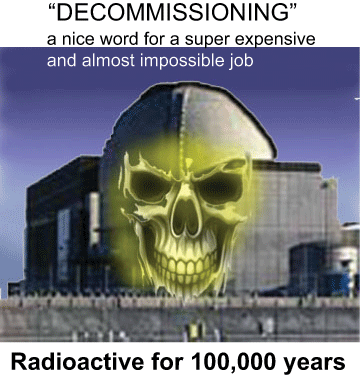
SENATOR MARKEY URGES THE NRC TO IMPROVE SAFETY AND SECURITY OF NUCLEAR DECOMMISSIONING PROCESS, https://www.markey.senate.gov/news/press-releases/senator-markey-urges-the-nrc-to-improve-safety-and-security-of-nuclear-decommissioning-process In a letter, Markey requests stricter safeguards as 23 nuclear power plants, including the Pilgrim Nuclear Power Station, undergo decommissioning in the U.S.
Washington (June 25, 2021) – Senator Edward J. Markey (D-Mass.), Chair of the Subcommittee on Clean Air, Climate, and Nuclear Safety in the Senate Committee on Environment and Public Works, today sent a letter to the Nuclear Regulatory Commission (NRC), urging the agency to address safety and security concerns before approving the draft rule, “Regulatory Improvements for Production and Utilization Facilities Transitioning to Decommissioning,” and putting out a proposed rule for public comment. “The Nuclear Regulatory Commission must prioritize the safety and security of the nuclear plants it oversees,” said Senator Markey. “As currently written, the proposed rule would allow the NRC and plant operators to cut corners on safety and limit public participation, which is critical to the decommissioning process. The communities around our nuclear plants deserve better than this.”
A copy of the letter can be found HERE.In his letter, Senator Markey requests that the NRC:
- propose a defined and exact set of rules on how plants should navigate the decommissioning process;
- improve public participation during the NRC’s consideration of any license transfers requested in connection with a nuclear plant’s decommissioning process;
- acknowledge and address the fact that spent fuel could remain onsite for long periods of time, perhaps indefinitely; and
- reevaluate its proposal to reduce financial protections for offsite and onsite liability claims for plants that are in the process of decommissioning.
Senator Markey also requests that the NRC ensure that the twenty-three nuclear reactors, such as Pilgrim Nuclear Power Station, that have already begun the decommissioning process adapt their operations to reflect stronger standards. The NRC should also establish the proper checks to ensure the safety and security of the eight additional nuclear power plants that have already declared their intent to decommission. Senator Markey has consistently urged the NRC to prioritize safety and public participation in the nuclear decommissioning process. Last Congress, Senator Markey reintroduced the Dry Cask Storage Act, which was aimed at improving the storage of spent nuclear fuel at nuclear plants across the nation.
As the Pilgrim Power Station commenced its decommissioning process, Senator Markey continued to fight to ensure that the NRC prioritized safety and public participation. In August 2019, Senators Markey and Elizabeth Warren (D-Mass.), and Representative William Keating (MA-09) wrote to the NRC to urge it to delay ruling on the proposed license transfer for Pilgrim from Entergy Nuclear Operations, Inc. to Holtec International until after the Commission considered and ruled on extant petitions and motions. In October 2018, Senator Markey and Rep. William demanded clear details from Holtec and Entergy about the safety and security issues involved in the ownership, transfer, and eventual decommissioning of the power plant.
U.S. Democrats launch bill allowing existing nuclear plants tax credit

U.S. Democrats launch bill allowing existing nuclear plants tax credit
Reuters WASHINGTON, June 24 (Reuters) 25 June 21, – Five Democrats in the U.S. Senate introduced a bill on Thursday that would allow some existing nuclear power plants to receive a tax credit equal to an incentive already given to operators of wind power turbines.
The bill, led by Senator Ben Cardin, provides a production tax credit of $15 per megawatt hour for existing nuclear plant owners or operators in states such as New York, Illinois, and Pennsylvania which have deregulated power markets. Cardin’s state, Maryland, has two reactors at Exelon Corp’s (EXC.O) Calvert Cliffs plant…………………….. https://www.reuters.com/world/us/us-democrats-launch-bill-allowing-existing-nuclear-plants-tax-credit-2021-06-24/
1 This Month

Read the Public Inquiry Report, the Commissioners’ report, Surrendering Australia: The AUKUS Deception is available to download for free at aukuspublicinquiry.com. Or just watch the replay of the National Press Club Luncheon.


19 November – Webinar – The Reality of Reprocessing
Time: 11:00 AM Pacific Time (US & Canada) / 2:00 PM Eastern / 7:00 PM UK / 8:00 PM CET
Register for the Zoom Event Here



Shut down the radiation-damaged Heysham nuclear reactors now
To see nuclear-related stories in greater depth and intensity – go to https://nuclearinformation.wordpress.com

Say No to NASA’s Reckless Nuclear Reactor on the Moon
Say No to NASA’s Reckless Nuclear Reactor on the Moon
-
Archives
- November 2026 (103)
- October 2026 (302)
- September 2026 (339)
- August 2026 (330)
- July 2026 (355)
- June 2026 (287)
- May 2026 (306)
- April 2026 (356)
- March 2026 (251)
- February 2026 (267)
- January 2026 (308)
- December 2025 (358)
-
Categories
- 1
- 1 NUCLEAR ISSUES
- business and costs
- climate change
- culture and arts
- ENERGY
- environment
- health
- history
- indigenous issues
- Legal
- marketing of nuclear
- media
- opposition to nuclear
- PERSONAL STORIES
- politics
- politics international
- Religion and ethics
- safety
- secrets,lies and civil liberties
- spinbuster
- technology
- Uranium
- wastes
- weapons and war
- Women
- 2 WORLD
- ACTION
- AFRICA
- Atrocities
- AUSTRALIA
- Christina's notes
- Christina's themes
- culture and arts
- Events
- Fuk 2022
- Fuk 2023
- Fukushima 2017
- Fukushima 2018
- fukushima 2019
- Fukushima 2020
- Fukushima 2021
- general
- global warming
- Humour (God we need it)
- Nuclear
- RARE EARTHS
- Reference
- resources – print
- Resources -audiovicual
- Weekly Newsletter
- World
- World Nuclear
- YouTube
-
RSS
Entries RSS
Comments RSS

