World heading for catastrophe without bolder climate plans, UN warns.
World heading for catastrophe without bolder climate plans, UN warns. The world is way off course from averting climate disaster, and countries’ new commitments to cutting greenhouse gas emissions – unveiled ahead of the Cop26 climate summit – “fall far short” of what is required to reach net zero by 2050, the UN has warned. With just days to go before the critical summit, the UN Environment Programme has found countries’ updated “nationally determined contributions” or NDCs – which set out the level of carbon emissions cuts they are planning – only take a further 7.5 per cent off projected global emissions for 2030, while cuts of 55 per cent are needed to meet the 1.5C Paris goal. That means the current plans would need to have seven times the level of ambition to remain under that limit. Independent 26th Oct 2021 https://www.independent.co.uk/climate-change/news/unep-emissions-gap-cop26-catastrophe-b1945011.html |
War hawks quietly positioning Canada to participate in US-led Ballistic Missile Defence program
War hawks quietly positioning Canada to participate in US-led Ballistic Missile Defence program, The Canada Files: Joyce Nelson , 20 Sept 21,
During the 2021 federal election campaign, there has been almost no emphasis or discussion in the media on the Liberal government’s plan to spend more than $553 billion on the military over the next 20 years, including the awarding of contracts for purchase of military fighter jets and armed drones in the next few months. The contracts for new frigates have already been awarded, including design components by Raytheon, Lockheed Martin, and BAE Systems.
Even more telling, there has been virtual silence about the fact that Canada is quietly being moved into position to participate in U.S. ballistic missile defence (BMD) – a hot-button issue in Canada since December 2001, when U.S. President George W. Bush withdrew from the Anti-Ballistic Missile Treaty.
Since then, the U.S. has spent more than $100 billion attempting to build a missile shield, and for almost two decades the U.S. and defense industry lobbyists (Boeing, Raytheon, Lockheed Martin) have been pressuring Canada to join in.
In January 2021, CBC News reported, “The recent Liberal defence policy reaffirmed the 2005 decision by Paul Martin’s government to remain on the sidelines of any continental BMD effort, despite pleas from both the Senate and House of Commons defence committees to reconsider joining.”
Only six months later, however, that Liberal policy appears to have dramatically changed.
In fact, the day before the election call, Canada’s Defence Minister Harjit Sajjan and U.S. Defense Secretary Lloyd Austin issued a joint statement agreeing to “modernize” NORAD, the North American Aerospace Defense Command, and outlining “priority areas for new investments”.
Their August 14th joint statement says: “Canada and the United States share a desire to coordinate in fielding new capabilities to complement and eventually replace the North Warning System with more advanced technological solutions as soon as possible, including next-generation over-the-horizon radar systems that can dramatically improve early warning and persistent surveillance of North American airspace and approaches. Ensuring effective awareness ultimately requires a system-of-systems approach including a network of Canadian and U.S. sensors from the sea floor to outer space.”
“System-of-systems” is Pentagon jargon for BMD.
Political/Defense analyst Keith Jones has stated that this joint commitment is meant to pave the way “for Canada’s participation in the US ballistic missile shield, whose underlying purpose is to enable the US to wage ‘winnable’ nuclear war.”
That may be why there has been so much silence around the joint statement. If no one knows about it, or what it means, then there can be no opposition to it.
A Bit of History………
Renewed BMD Rhetoric……….
Increased Insecurity Both Russia and China have warned that the Pentagon’s relentless pursuit of ballistic missile defense destabilizes security for their countries and causes nuclear escalation.
Both Russia and China have warned that the Pentagon’s relentless pursuit of ballistic missile defense destabilizes security for their countries and causes nuclear escalation.
As Canadian peace activist Peggy Mason, president of the Rideau Institute, recently wrote, “So the untold billions spent by the USA on nuclear modernization and missile defences have played a key role in convincing China that it, too, must increase its nuclear arsenal. Can there be clearer proof of the utter disconnect between the US nuclear posture and the security of that country (and its allies)?”
For a thorough analysis of BMD, a must-read is the lengthy July 26, 2021 report by Ernie Regehr, called “Canada and the Limits to Missile Defence,” available on The Simons Foundation website. Regehr is particularly scathing about U.S. “first strike,” pre-emptive attacks and the chronic strategic destabilization and instability that BMD is causing around the world.
Perhaps a deeper dive into the origins of the missile shield concept will reveal the urgency of stopping it.
A Deeper Dive…….
Canada & BMD Presently, the NDP is further embracing militarism. Their current party platform complains about “outdated” military hardware
and states : “In contracting for new military equipment, including ships and fighter jets, New Democrats will ensure maximum industrial benefits and jobs. This will help ensure the survival of healthy shipbuilding and aerospace industries all across Canada.”
With anti-Russia and China rhetoric so paramount, with militarism and military spending so rampant, and with Canada’s war hawks (especially Harjit Sajjan and Chrystia Freeland) eager to please the U.S., it looks like BMD is quietly back on the federal agenda in Canada.
Ernie Regehr asks the important questions about ballistic missile defence: “Would Canada want to be partnered to a system headed for the weaponization of space? Would Canada want to be a partner in a defence system that depends on pre-emptive attacks?”
Regehr urges that Canada “maintain its decades-long wariness of strategic missile defence” and instead pursue, “in the company of like-minded states, the arms control/disarmament and prevention strategies on which Canadian and global security really do depend.” https://www.thecanadafiles.com/articles/war-hawks-quietly-positioning-canada-to-participate-in-usa-led-ballistic-missile-defence-program
Belgium: Higher Health Council is very critical of nuclear power
The Higher Health Council very critical of nuclear power. Nuclear power
poses environmental, ethical, health and safety questions, says a
high-level panel of experts. It is possible for Belgium to get out of it,
including with regard to the climate. Extending two reactors is not without
risk.
Le Soir 25th Oct 2021
UK government pledges Government pledges £1.7bn of public money to new nuclear plant

By making a direct investment in a nuclear plant through the new financial framework, known as a Regulated Asset Base (RAB) model, the government could effectively put both taxpayers and energy bill payers on the hook for costly construction delays.………
Government pledges £1.7bn of public money to new nuclear plant
The Guardian understands the funding is likely to be used to back the planned £20bn Sizewell C, Guardian, Jillian Ambrose Energy correspondentThu 28 Oct 2021 The government will make its first direct investment in a large-scale nuclear reactor since 1995 after pledging to plough up to £1.7bn of taxpayers’ money into a new power plant.
Treasury documents published alongside the autumn statement did not name which nuclear project would be in line for the public funds, but the Guardian understands it is most likely to be the planned £20bn Sizewell C plant in Suffolk.
Government officials are locked in talks with Sizewell C’s developer, the French state-backed energy company EDF, about how to finance its successor to the Hinkley Point C plant in Somerset………..
The government set out new legislation earlier this week for a financial support framework for nuclear plants which would make the projects more attractive to investors by piling part of the upfront cost on to household energy bills before the plants start generating electricity.
By making a direct investment in a nuclear plant through the new financial framework, known as a Regulated Asset Base (RAB) model, the government could effectively put both taxpayers and energy bill payers on the hook for costly construction delays……….
A spokesperson for the Treasury was not immediately available to comment.
The government’s nuclear ambitions are also backed by £385m for research and development of ‘advanced nuclear’ technologies, and it has set aside £120m to address the nuclear industry’s barriers to entry….. https://www.theguardian.com/environment/2021/oct/27/government-pledges-17bn-of-public-money-to-new-nuclear-plant
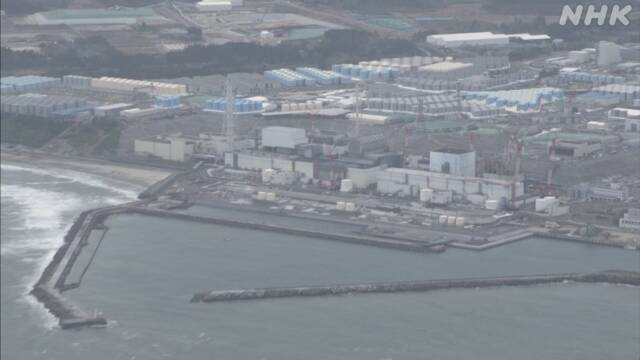
Temperature rises over 10 degrees Celsius in some parts of the “frozen earth wall” to reduce contaminated water at Fukushima Daiichi Nuclear Power Plant
October 28, 2021
As a countermeasure to reduce the amount of contaminated water from the Fukushima Daiichi Nuclear Power Plant, it was found that the temperature of the ground in some parts of the “frozen soil wall”, which freezes the ground around the buildings to prevent the inflow of underground water, has been rising above 0 degrees Celsius since the middle of last month, reaching a maximum of 10 degrees Celsius. The Tokyo Electric Power Company (TEPCO) is investigating the cause of the problem, saying that it does not affect the function of the wall to prevent the inflow of underground water.
The “frozen earth wall” is one of the measures to reduce the amount of contaminated water. Pipes are embedded around the buildings of the Fukushima Daiichi Nuclear Power Plant, and liquid at 30 degrees below zero is poured into the pipes and frozen, forming an “ice wall” that prevents groundwater from flowing into the buildings.
The Tokyo Electric Power Company (TEPCO) has installed thermometers in the “frozen earth wall” to measure the underground temperature, and in some areas located on the mountain side of the No. 4 reactor at the Fukushima Daiichi Nuclear Power Plant, the temperature, which is usually below freezing, has been rising and has been above zero since the middle of last month.
The temperature in the area where the increase was confirmed was between 1 meter and 4 meters deep, and the temperature exceeded 10 degrees Celsius on some days.
The freezing wall is about 10 meters thick, and TEPCO has stated that there is no significant difference in the water level between the inside and outside of the wall, so there is no impact on its ability to control the inflow of groundwater.
It is possible that water leaked from cracks in the drainage channel that intersects the frozen soil wall and seeped into the frozen area, causing the temperature to rise.
Iran says nuclear talks with six powers to resume by end November
Iran says nuclear talks with six powers to resume by end November, By Parisa Hafezi, DUBAI, Oct 27 (Reuters) – Iran’s talks with six world powers aimed at reviving a 2015 nuclear deal will resume by the end of November, its top nuclear negotiator said on Wednesday, as Western concerns over the Islamic Republic’s nuclear advances grow.
“Had a very serious & constructive dialogue with @enriquemora_ on the essential elements for successful negotiations. We agree to start negotiations before the end of November,” Ali Bagheri Kani wrote on Twitter after meeting EU officials in Brussels……….
the talks have been on hold since the election of Iran’s hardline President Ebrahim Raisi in June, who is expected to take a tough approach if the talks resume in Vienna.
Raisi, like Iran’s Supreme Leader Ayatollah Ali Khamenei, wants results-oriented talks aimed at bringing Tehran and Washington back into full compliance with the pact……….
Iran has been unable to access tens of billions of dollars of its assets in foreign banks, mainly from exports of oil and gas, due to U.S. sanctions on its banking and energy sectors.Reporting by Dubai Newsroom, Parisa Hafezi; Editing by Alison Williams, Timothy Heritage and Hugh Lawson https://www.reuters.com/world/middle-east/iran-ready-direct-talks-with-european-parties-2015-nuclear-deal-press-tv-2021-10-27/
UK government could take a direct stake in risky Sizewell C nuclear development
The government plans to resuscitate the UK’s nuclear energy ambitions by
creating a financing model that could pile part of the upfront cost of the
£20bn Sizewell C power plant on to householders’ energy bills before it
starts generating electricity.
The energy secretary, Kwasi Kwarteng, set
out legislation on Tuesday that would share the early construction costs
with consumers, with the aim of reducing the UK’s reliance on overseas
funding for nuclear projects by making them more attractive to domestic
investors.
The long-awaited legislation could also pave the way for the
government to take a direct stake in the Sizewell C nuclear plant by using
tens of millions of pounds of public money during its risky development
phase – replacing the China General Nuclear Power Group (CGN), which has
a 20% share of the project.
Guardian 26th Oct 2021
Huge study on France’s energy system and scenarios for 2050 includes costs and environmental effects of nuclear and of renewables
Electricity: between nuclear and renewable energies, six scenarios for 2050. The national manager of the Electricity Transmission Network (RTE) published on Monday, October 25, a vast study aimed at defining the future of the French electricity system. It is an understatement to say that this work was expected, and that it will be commented on.
Launched in 2019 at the request of the government, this forward-looking exercise entitled “Energy Futures 2050”
sets out six scenarios that are supposed to make it possible to achieve carbon neutrality within thirty years, and therefore to fight against climate change. For the country’s future electricity production, the various trajectories range from a “100% renewable energy” option to another with another 50% nuclear.
Each time, RTE, majority-owned by EDF and Caisse des Dépôts, describes the technical feasibility conditions, but also the cost and expected impact for the environment and for society. In addition to this first report of some 600 pages, the full result of the modeling should be made public in early 2022.
Le Monde 25th Oct 2021
Response to claims about China’s space aims
Response to claims about China’s space aims, by Michael Wong, 25 Oct 21
The claim – ”US must build space superhighway before China stakes claims-Senior Space Force Officer. From “Breaking Defense”: https://breakingdefense.com/2021/10/us-must-build-space-superhighway-before-china-stakes-claims-senior-space-force-officer/?utm_source=Sailthru&utm_medium=email&utm_campaign=EBB%2010.21.21&utm_term=Editorial%20-%20Military%20-%20Early%20Bird%20Brief
Some quotes with falsehoods:
- “China fully intends to extend its “territoriality” to the Moon, flouting international law in exactly the same way as it has with regard to the South China Sea, Brig. Gen. John Olson, chief advisor to Space Force head Gen. Jay Raymond on mobilization and space logistics, asserted today.” My comment: There is no evidence that China has any such intentions. China has not said anything like that, has not broken any international laws, nor taken any actions that are anywhere near as aggressive as US actions.
- “If you read their language, if you read their products — which I am a vigorous student of — if you look at what they do they telegraph everything that they’re going to do, they believe that the Moon is manifest destiny for them” and part of their “economic … and security equation,” Olson said.” My comment: In the San Francisco Chinese community of which I’m a part, I have many political friends including scholars, retired elected officials, and others who are from Hong Kong, China, or Taiwan, are native Chinese speakers, and follow the news from China and Asia closely. They have not reported any language, products, or anything else which implies that China believes the moon is “manifest destiny” for China. Remember American lies about WMD in Iraq, incubator babies thrown on the floor in Kuwait, or the Gulf of Tonkin “incident” in Vietnam? These are typical American lies to demonize a nation that the US decides to attack, and justify increased US defense money.
- “The officer drew a direct line between how Beijing has ignored a World Court ruling on a sovereignty dispute with the Philippines in the South China Sea to how Chinese leaders could act in space, without regard to the prohibitions of the 1967 Outer Space Treaty (OST.)” My comment: Check out this 11 minute video from a US Marine veteran living in Thailand, which breaks down this whole distorted narrative about China and the South China Sea: https://www.youtube.com/watch?v=if-fV9U_sWs
- “…US military space leaders more and more openly paint China as an aggressor in space, with goals of not just world but galactic domination.” My comment: “…galactic domination???” Come on, Washington, have you any idea how big the galaxy is? Do you really think China intends to dominate it? What is it with you guys? We hippies were the ones doing LSD in the ’60’s, why are you guys the ones hallucinating now?
Bottom line, it’s all about the money and American domination of the world. To get more and more of the US national budget, the military industrial complex needs an enemy to justify their existence. And they project their mindset onto the Chinese, who are a completely different nation and culture, and who simply don’t think like Washington (if you want to read a longer article on the mindset of the Chinese, here’s my take on it: https://peacepivot.org/america-china-life-death-the-long-game/ ).
UK govt slow to commit to Sizewell nuclear project in the long-awaited net zero strategy paper
| The government’s long-awaited net zero carbon strategy paper published within weeks of the COP 26 summit in Glasgow once again fails to give the Sizewell C project the sort of definitive support predicted by its French initiators, Électricité de France (EdF). In a statement which has drawn much criticism for being unambitious and unrealistic in its attempt to provide finance for the decarbonisation of the housing sector, the government could not even bring itself to do more than commit £120 million towards the development of nuclear projects through the Future Nuclear Enabling Fund, announcing that ‘There remain a number of optimal sites, including the Wylfa site in Anglesey.’ The only crumb of comfort for the beleaguered nuclear industry is the intention to support ‘one large scale nuclear project by the end of this Parliament’, but even this is conditional on the need to demonstrate ‘value for money’ and the ‘relevant approvals’, the first of which is a condition that is impossible to comply with from a UK consumer perspective and the second of which is subject to planning inspectorate and Secretary of State approval in the case of Sizewell. Pete Wilkinson, Chairman of Together Against Sizewell C, said today, ‘While the government has not ruled out Sizewell, its omission from the statement today as well as the absence of any funding decision beyond the tiny by comparison £120m future nuclear fund, gives us hope that the government recognises the Sizewell project as one of significant risk, of huge environmental cost and in a place which could not be more unsuited to such a massive development. Essex Magazine 20th Oct 2021 https://www.essexmagazine.co.uk/2021/10/boris-johnsons-net-zero-strategy-leaves-edf-and-the-nuclear-industry-in-limbo/ |
A nuclear arms race is unavoidable without serious intervention.
This one-upmanship will never provide a solution to the existential threat posed by nuclear weapons. The only winning move is to step off the track and return to the negotiating table. The parties to the 1970 nuclear non-proliferation treaty, including the P5 nuclear weapon states, are obliged to “pursue negotiations in good faith on effective measures relating to cessation of the nuclear arms race”. They will meet in January 2022 to take stock of their progress. Diplomacy, for all its certain challenges, is the only path forward.
A nuclear arms race is unavoidable without serious intervention. China, the US and Russia are each investing in highly effective missiles and defence systems, https://www.ft.com/content/e30c0402-32a1-4c96-846d-48f2a2da7276 Ft.com LAURA GREGO 27 Oct 21, There are conflicting interpretations of the news that China has tested a specialised new long-range missile, capable of carrying a nuclear weapon around the Earth. US officials claimed it was part of a fractional orbital bombardment system (FOBS) which could travel in Earth orbit and then release a manoeuvring vehicle to glide toward a terrestrial target. China’s Foreign Ministry objected to that description, calling the launch simply a test of reusable space technology.
Details may be obscure, but a few things are clear. One, none of these technologies are new, and it should be no surprise that China is capable of fielding them. Two, while China’s nuclear arsenal remains much smaller than that of the US or Russia, Beijing is pursuing strategies to make it larger and more sophisticated. A nuclear arms race is on, absent a serious effort to stop it.
So why is China building new nuclear delivery systems and modernising its weapons after decades of retaining a modestly sized arsenal? One core driver is to make clear to an unconvinced United States that it is vulnerable to Chinese nuclear retaliation despite enormous investments in missile defences. Many of the technologies China is pursuing, including those believed to have been tested this summer, are designed to overwhelm or evade such defences.
If this sounds familiar, it should. This dynamic has echoes of the US-Soviet Cold War arms race. Many of the technologies — FOBS, hypersonic gliders, missiles equipped with multiple nuclear warheads — are even the same. It took years for the United States and Soviet Union to arrive at a shared understanding that unconstrained pursuit of missile defences was destabilising the strategic balance.
However, having exited the 1972 Anti-Ballistic Missile (ABM) Treaty designed to halt that race, the US has been developing a defence against intercontinental-range ballistic missiles for the past two decades. China’s new missiles hedge against the possibility that the United States may one day believe its technical advances permit it to strike China first while remaining invulnerable to a retaliatory nuclear attack.
If this sounds familiar, it should. This dynamic has echoes of the US-Soviet Cold War arms race. Many of the technologies — FOBS, hypersonic gliders, missiles equipped with multiple nuclear warheads — are even the same. It took years for the United States and Soviet Union to arrive at a shared understanding that unconstrained pursuit of missile defences was destabilising the strategic balance. However, having exited the 1972 Anti-Ballistic Missile (ABM) Treaty designed to halt that race, the US has been developing a defence against intercontinental-range ballistic missiles for the past two decades. China’s new missiles hedge against the possibility that the United States may one day believe its technical advances permit it to strike China first while remaining invulnerable to a retaliatory nuclear attack.
This one-upmanship will never provide a solution to the existential threat posed by nuclear weapons. The only winning move is to step off the track and return to the negotiating table. The parties to the 1970 nuclear non-proliferation treaty, including the P5 nuclear weapon states, are obliged to “pursue negotiations in good faith on effective measures relating to cessation of the nuclear arms race”. They will meet in January 2022 to take stock of their progress. Diplomacy, for all its certain challenges, is the only path forward.
Nuclear power, as well as nuclear weapons, must be opposed: George Monbiot gets it wrong
Nuclear power, as well as nuclear weapons, should be opposed, https://www.thenational.scot/community/19674158.nuclear-power-well-nuclear-weapons-opposed/ Tor Justad, Chair, HANT (Highlands Against Nuclear Weapons), 27 Oct 21,
I REFER to two recent items in the Sunday National – an interview with environmentalist George Monbiot headed “A chance to lead” (Oct 17) and an item headed “Pressure Grows on Scottish Government to oppose nuclear fusion site” on Oct 24.
HANT (Highlands Against Nuclear Transport) is a campaigning group opposing both nuclear weapons and nuclear power, which aligns with current SNP/Scottish Greens government policy.
There is much to commend in George Monbiot’s article, in which he states his belief that the Scottish Government could show the world a way out of the climate crisis and in particular the idea of pursuing “public luxury” with more public facilities, transport, health services and public land ownership as opposed to increasing private wealth and inequality.
However, he fails to mention his support for nuclear power, which he described in an article in The Guardian in 2011 headed “Why Fukushima made me stop worrying and love nuclear power” in which he argued that nuclear was safer than coal and should be supported together with renewables, which he also has doubts about.
He claimed the effect of Fukushima was small for people and planet – clearly untrue, as 150,000 people had to be evacuated from the area and radiation spread over a wide area. 18,000 people were killed by the tsunami which caused the disaster – the clean-up by thousands of workers will continue for 30 years.
In relation to nuclear fusion, HANT stated its opposition to a pilot project proposed for Dounreay in Caithness and it has recently been announced that the bid for the project was unsuccessful.
HANT supports Scottish CND’s opposition to the nuclear fusion project proposed for Ardeer in Ayrshire and urges the Scottish Government to oppose this project.
Attempts to harness nuclear fusion have been made in several countries for the last 70 years costing millions of pounds without success, and as Scottish CND points out there are concerns about safety, the production of waste and the potential link to nuclear weapons production.
Both support for new nuclear and support for nuclear fusion projects, along with proposals for small modular reactors, are all desperate attempts by the nuclear industry to revive nuclear at a time when it is in decline worldwide.
HANT would urge the Scottish Government to maintain its policy of opposition to nuclear weapons and to nuclear power of any kind.
America’s F-35 fighter jet to quietly join the nuclear arsenal
The F-35 is one step closer to carrying nuclear bombs. What’s next??
America’s most advanced fighter jet is on its way to becoming the newest addition to the nuclear arsenal.
The Air Force recently wrapped up the flight testing needed to ensure the B61-12 thermonuclear bomb design is compatible with the F-35A Lightning II, paving the way for the jet to begin carrying nuclear weapons. The airframe must still become certified to conduct nuclear operations as well.
By Rachel S. Cohen Two F-35As launched realistic test versions of the B61-12 for the first time on an unspecified date earlier this year at the Tonopah Test Range in Nevada, the Air Force said Oct. 6. Past versions of the B61 have relied on gravity to drop onto their targets, but the newest design can also hit coordinates using digital guidance…………….
The F-35′s atomic ambitions are a piece of the country’s nuclear modernization plan — slated to cost $634 billion from 2021 to 2030 alone — that flies under the radar…………….. https://www.airforcetimes.com/news/your-air-force/2021/10/27/the-f-35-is-one-step-closer-to-carrying-nuclear-bombs-whats-next/
Pumice may affect nuclear power plants in Japan
 | |||
| to me |
| |||
| to me |
Pumice may affect nuclear power plants in Japan
Pumice may affect nuclear power plants in Japan, https://www3.nhk.or.jp/nhkworld/en/news/20211027_36/ Japan’s nuclear regulator says a massive number of pumice stones drifting in waters in the country’s southwest could affect domestic nuclear power plants.
Ishiwatari Akira, a member of the Nuclear Regulation Authority, told a regular meeting on Wednesday that the stones may affect the intake of water used for cooling nuclear reactors.
The pumice stones are being washed ashore on the coast of Okinawa Prefecture and the Amami region of Kagoshima Prefecture. They come from an undersea volcanic eruption near the Ogasawara island chain in the Pacific Ocean in August.
Japan’s nuclear regulator says a massive number of pumice stones drifting in waters in the country’s southwest could affect domestic nuclear power plants.
Ishiwatari Akira, a member of the Nuclear Regulation Authority, told a regular meeting on Wednesday that the stones may affect the intake of water used for cooling nuclear reactors.
The pumice stones are being washed ashore on the coast of Okinawa Prefecture and the Amami region of Kagoshima Prefecture. They come from an undersea volcanic eruption near the Ogasawara island chain in the Pacific Ocean in August.
1 This Month

Read the Public Inquiry Report, the Commissioners’ report, Surrendering Australia: The AUKUS Deception is available to download for free at aukuspublicinquiry.com. Or just watch the replay of the National Press Club Luncheon.


19 November – Webinar – The Reality of Reprocessing
Time: 11:00 AM Pacific Time (US & Canada) / 2:00 PM Eastern / 7:00 PM UK / 8:00 PM CET
Register for the Zoom Event Here



Shut down the radiation-damaged Heysham nuclear reactors now
To see nuclear-related stories in greater depth and intensity – go to https://nuclearinformation.wordpress.com

Say No to NASA’s Reckless Nuclear Reactor on the Moon
Say No to NASA’s Reckless Nuclear Reactor on the Moon
-
Archives
- November 2026 (84)
- October 2026 (302)
- September 2026 (339)
- August 2026 (330)
- July 2026 (355)
- June 2026 (287)
- May 2026 (306)
- April 2026 (356)
- March 2026 (251)
- February 2026 (267)
- January 2026 (308)
- December 2025 (358)
-
Categories
- 1
- 1 NUCLEAR ISSUES
- business and costs
- climate change
- culture and arts
- ENERGY
- environment
- health
- history
- indigenous issues
- Legal
- marketing of nuclear
- media
- opposition to nuclear
- PERSONAL STORIES
- politics
- politics international
- Religion and ethics
- safety
- secrets,lies and civil liberties
- spinbuster
- technology
- Uranium
- wastes
- weapons and war
- Women
- 2 WORLD
- ACTION
- AFRICA
- Atrocities
- AUSTRALIA
- Christina's notes
- Christina's themes
- culture and arts
- Events
- Fuk 2022
- Fuk 2023
- Fukushima 2017
- Fukushima 2018
- fukushima 2019
- Fukushima 2020
- Fukushima 2021
- general
- global warming
- Humour (God we need it)
- Nuclear
- RARE EARTHS
- Reference
- resources – print
- Resources -audiovicual
- Weekly Newsletter
- World
- World Nuclear
- YouTube
-
RSS
Entries RSS
Comments RSS

