China squeezed out of Sizewell C nuclear, in UK’s new funding plan.
Ministers moved yesterday to cut China out of involvement in Britain’s
nuclear power sector with a new funding model that will place the risk of
future projects on to consumers. Under plans announced by Kwasi Kwarteng,
the business secretary, investors in new nuclear power stations will see a
return on their money before the plants are even built.
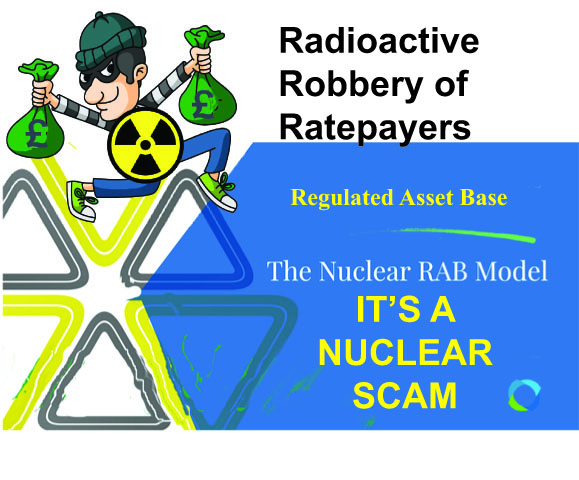
The move will effectively mean that consumers take on the risk of delays and cost
overruns to projects and will start paying for the new plants through their
bills before the reactors are built.
Times 27th Oct 2021
10 Ways We Pretend War Is Not a Crime and How to Change Them by David Swanson
10 Ways We Pretend War Is Not a Crime and How to Change Them by David Swanson, Journalism as Art, https://denniscambly.wordpress.com/, 27 Oct 21
The U.N. Charter not only makes war a crime, but it makes the threat of war, including the long-standing White House mantra “All options are on the table” a crime. It does something else, though. It gives the U.N. the power to impose economic sanctions. This often brutal tool has led to massive death and suffering and laid the groundwork for wars. However, the Fourth Geneva Convention — which, for whatever it’s worth, came after the U.N. Charter — bans the use of collective penalties. That law is apparently not hard to ignore, and the Geneva Conventions in general may be the most frequently ignored laws in the world.
via 10 Ways We Pretend War Is Not a Crime and How to Change Them by David Swanson
Even the mind of Dante could not imagine the inferno a nuclear war will plunge us in
 |
|
The first step in the direction of a world rule of law is the recognition that peace is no longer an unattainable ideal but a necessary condition of continued human existence.

Our civilisation will, through wars, be plunged into the abyss of annihilation, and our earthly habitat could be transformed into an inferno that even the mind of Dante could not imagine.
We must refuse to accept the cynical notion that nation after nation must spiral down a militaristic stairway into the hell of nuclear annihilation.
Because deterrence sets no limits on the size and composition of military forces, tens of thousands of nuclear weapons were created.
Even the mind of Dante could not imagine the inferno a nuclear war will plunge us into https://mg.co.za/opinion/2021-10-25-even-the-mind-of-dante-could-not-imagine-the-inferno-a-nuclear-war-will-plunge-us-into/Farouk Araie25 Oct 2021 n commemoration of the International Day for The Total Elimination of Nuclear Weapons, which was celebrated on 26 September, humanity must urgently strive to halt the escalating nuclear arms race.
North Korea’s testing of a submarine-launched missile and her recent launch of a hypersonic missile and associated high technology systems will trigger off a nuclear arms race in Asia. As deadly global events unfold, many aspiring nuclear nations will go the nuclear route. Pakistan will probably increase her nuclear might, which could enable it to have the third largest nuclear arsenal.
The volatile situation in the Middle East could prompt nations in that area to acquire nuclear weapons. World War II ended with the historic understanding that recourse to war between states could no longer be treated as a matter of national discretion, but must be regulated to the extent possible through rules administered by international institutions.
The pursuit of peace and progress cannot end in a few years in either victory or defeat. The pursuit of peace and progress, with its trial and errors, its success and setbacks, can never be relaxed and never abandoned. Humanity is still at the far stage of maturity needed for the realisations of its aspirations, for the construction of a harmonious and peaceful society and the elimination of wars. People are not yet ready to shape their own destinies, to control and direct world events, of which, instead, they become the victims.
The first step in the direction of a world rule of law is the recognition that peace is no longer an unattainable ideal but a necessary condition of continued human existence. One problem that we face is simply that we must find an alternative to war and bloodshed. Anyone who feels that there are still a lot of people who believe that war can solve problems facing humankind is sleeping through a great revolution.
Our civilisation will, through wars, be plunged into the abyss of annihilation, and our earthly habitat could be transformed into an inferno that even the mind of Dante could not imagine. We must refuse to accept the cynical notion that nation after nation must spiral down a militaristic stairway into the hell of nuclear annihilation.
If the ultimate goal of national security is to ensure the survival of any nation, then the pursuit of this goal through nuclear deterrence should be viewed as an utter failure. Because deterrence sets no limits on the size and composition of military forces, tens of thousands of nuclear weapons were created.
Thus the consequences of a single failure of deterrence could be the end of human history. Leaders who choose to “defend” their nation with nuclear weapons must face the fact that nuclear war is suicidal and not an option if their citizens are to survive. Suicide is not a defence.
Should we choose to accept the assertion that “there is no realistic path to a world free of nuclear weapons”, then we sentence the children of the world to a dark future. We must instead reject the 21st century mindset, which is still driving us towards the abyss, through an understanding that nuclear weapons pose a threat to the human species.
Those who see utility and legitimacy in the perpetual maintenance of nuclear weaponry often tend to regard nuclear abolition as a “destabilising” goal, and apparently assume that deterrence will forever prevent a nuclear war. Their long-term optimism is supported neither by logic nor history.
South Bruce citizens want a referendum on plan to permanently house Canada’s nuclear waste.

South Bruce, Ont. citizens push for referendum to decide location of nuclear waste, Scott Miller, CTV News London Videographer, 25 Oct 21, TEESWATER, ONT. – Michelle Stein is putting up signs around her community she hopes will lead to referendum on whether South Bruce should permanently house Canada’s most radioactive nuclear waste.“That’s the fair way to do it. People that see benefits from the project can vote yes, those of us that feel the risks are too great we get to vote no,” says the chair of Protect our Waterways, a citizens’ group opposing plans to bury high-level nuclear waste in the Municipality of South Bruce.
- Stein believes a binding referendum during next October’s municipal election would be the best way for the 5,600 citizens of the Municipality of South Bruce to determine their willingness to host Canada’s first permanent nuclear waste facility, under 1,500 acres of farmers fields north of Teeswater…………
The Nuclear Waste Management Organization say they’ll decide whether Ignace, QC or South Bruce will house Canada’s first permanent nuclear waste facility in 2023.
How communities decide their willingness to do so, is up to each community. South Bruce’s Willingness Study final report will be before council in November.
Protect our Waterways will be going door to door in South Bruce this month and next, to try and get residents to sign a petition urging South Bruce council to commit to a binding referendum on the nuclear waste topic in time for the 2022 municipal election.
“This is a decision that will forever change our community, and every single person deserves a voice, and deserves to have their vote counted,” says Stein. https://london.ctvnews.ca/south-bruce-ont-citizens-push-for-referendum-to-decide-location-of-nuclear-waste-1.5637381
Problems and public opposition to the plan to store high level nuclear wastes under the Great Lakes

Nuclear Question: Debate continues over long-term storage of nuclear waste in the Great Lakes. Great Lakes Now, By Andrew Reeves, 25 Oct 21,
Canada’s plan to store spent nuclear fuel 1,600 feet below ground in the Great Lakes basin, some 30 miles from Lake Huron, is continuing to ruffle feathers throughout the Great Lake states.
Earlier this month, U.S. lawmakers called out the Canadian plan for failing to prioritize the health of the Great Lakes and the 40 million residents who depend on it for clean drinking water ahead of its own energy needs.
Michigan Democratic Rep. Dan Kildee is leading a 20-member bipartisan group calling on President Joe Biden to pressure Canadian Prime Minister Justin Trudeau to halt the plans for storing an anticipated 57,000 tons of high-level radioactive material within the basin.
Michigan Gov. Gretchen Whitmer, in a statement on the ongoing legal battle over the future of Enbridge’s Line 5 pipeline, accused the Canadian federal government of “adding even more risk to our waters” by allowing plans to store radioactive nuclear waste in a 1,400-acre underground warehouse to proceed.
Yet despite concerns within the basin from politicians and environmental groups, and unrest among local farmers worried about water contamination and potentially tanking property values, the project is moving ahead as planned. Geologic testing at one location in southern Ontario began this spring.
Even so, determining the long-term fate of Canada’s spent nuclear fuel remains far from settled as rifts develop within the host community, and between Canada and frustrated U.S. lawmakers.
“There’s a divide taking place,” Canadian Member of Parliament Brian Masse noted on a recent tour of the proposed South Bruce site with concerned residents. “I do believe there needs to be some responsibility taken on a federal level to make sure our communities aren’t broken in this process.”………
When spent nuclear fuel bundles are removed from a reactor they are currently interred in a water-filled pool for up to seven years until radioactivity decreases. From there the rods are relocated to dry storage containers made of 20-inch-thick, high-density concrete lined with steel half an inch thick. These storage facilities have a lifespan of roughly 50 years, and Canada has been generating nuclear power since the early 1960s. While the dry storage silos can be refurbished to extend their use, it does nothing to address the long-term need for safe storage solutions.
Experts at NWMO settled on a deep geological repository as the preferred storage option in 2007 after three years of discussion with European nuclear engineers.
The basic premise of the DGR is deceptively simple: bury the spent fuel. If NWMO could identify a willing host community that is situated in an area with suitable geology, the stage would be set to spend $23 billion over 40 years to construct a massive underground labyrinth of tunnels bored into rock that, in total, would be capable of storing the 57,000 tons of spent fuel that Canada currently has in cement-encased copper canisters. The aboveground footprint of buildings would be little more than a mile across.
But the question remains: Where should three million bundles of spent nuclear fuel be stored for what is, essentially, the rest of time?
Identifying a willing host community
The process for identifying a willing host community began in 2008.
From an initial pool of 22 potential locations across Canada, on-site investigations quickly whittled that list down to two, both of which are in Ontario: South Bruce, at a location some 30 miles from Lake Huron, and Ignace in northwestern Ontario. (The Ignace location, northwest of Lake Superior, is not within the Great Lakes basin; rather, it sits within the Winnipeg River basin. Borehole drilling to determine the suitability of the bedrock beneath the proposed site began in Ignace in 2017.)…………
U.S. lawmakers aren’t the only ones concerned about the proposed DGR. Public opposition to the proposal among South Bruce residents has been mounting steadily. …………. https://www.greatlakesnow.org/2021/10/storage-nuclear-waste-great-lakes/
Georgia nuclear reactors delayed again as costs mount

Georgia nuclear reactors delayed again as costs mount, https://apnews.com/article/business-environment-and-nature-georgia-atlanta-augusta-05a297d661a9048eb1db5a50c89aeef1
By JEFF AM ATLANTA (AP) — Georgia Power Co. is pushing back the startup date for its two new nuclear reactors near Augusta, saying it’s still redoing sloppy construction work and that contractors still aren’t meeting deadlines.
The unit of Atlanta-based Southern Co. now says the third reactor at Plant Vogtle won’t start generating electricity until sometime between July and September of next year. Previously the company said it would start in June at the latest. The fourth reactor won’t come online until sometime between April and June of 2023.
The delay will mean more costs for a project already estimated to exceed $27.8 billion overall. Georgia Power, which owns 46% of the project, had already estimated it would spend $9.2 billion, with another $3.2 billion in financing costs.
Besides Georgia Power, most electrical cooperatives and municipal utilities in Georgia own shares of the plants. Also obligated to buy power from Vogtle are Florida’s Jacksonville Electric Authority and some cooperatives and municipal utilities in Alabama.
Israel preparing for possible strike on Iranian nuclear sites

Israel preparing for possible strike on Iranian nuclear sites, La Prensa Latina, By Sara Gomez Armas Online News EditorOctober 25, 2021
Ovda Airbase, Israel, Oct 25 (EFE).- The Israeli Air Force is preparing for a potential attack on Iran to stop the Islamic Republic from producing nuclear weapons in case negotiations with world powers in Vienna collapse.
The IDF (Israeli Defense Forces) have continuously trained and upgraded their capabilities to deal with the different Iranian threats. It’s definitely one of the most important core issues we are dealing with in the 2022 plan,” army spokesman Lt. Col. Amnon Shefler tells Efe from the Ovda Airbase in southern Israel, where the military drills are taking place.
The Israeli army has launched a new department in charge of dealing “solely and directly with the Iranian threat,” says Shefler.
Military sources confirmed to Efe that Aviv Kohavi, the IDF chief of general staff, has ordered the Israeli Air Force to step up training for a possible strike on Iran and that the defense ministry has requested a budget increase for the military in 2022.
Backing the budget hike, which needs to be approved in parliament before November 14, finance minister Avigdor Lieberman said last week that “a confrontation with Iran is only a matter of time and not a lot of time.”……..
Israel is currently hosting the Blue Flag international training exercise at Ovda Airbase, with the air forces from the United States, the United Kingdom, France, Germany, Italy, Greece and India.
“This is the biggest and most advanced exercise ever hosted in Israel,” says the chief of Air Force training, Brig. Gen. Amir Lazar. https://www.laprensalatina.com/israel-preparing-for-possible-strike-on-iranian-nuclear-sites/
Fear of ‘devastating’ nuclear war as world’s major powers enter a new arms race
|
|

experts have called into question the reasons why nuclear-armed states are spending billions on weapons they are saying will never be used.
”The enmity created by nations threatening each other with indiscriminate, mid-20th century weapons of mass destruction prevents development of global solidarity and trust we so desperately need to address critical 21st century challenges like the climate crisis and pandemics,”
Fear of ‘devastating’ nuclear war as world’s major powers enter a new arms race
Countries including the UK have entered a new arms race, with growing stockpiles of more advanced weapons
By Taz Ali i news UK, October 24, 2021 Since the end of the Cold War, major powers across the globe made huge efforts to reduce their nuclear arsenals in efforts to ensure the world is safer from weapons of mass destruction that could wipe out entire cities.
But now, those countries including the UK have entered a new arms race, with growing stockpiles of more advanced weapons and smarter technology allowing missiles to evade defence systems, all of which experts fear could lead to a nuclear war.
“We’re in a new, multipolar nuclear arms and strategic technologies race, including the rush to weaponise space,” Lyndon Burford, a visiting research associate in the Centre for Science and Security Studies at King’s College London, told i.
He said there were multiple new risk factors, with technologies such as artificial intelligence and increasing political instability in major nuclear-armed countries.
“That could lead to nuclear war, with devastating global humanitarian, economic and ecological effects,” Dr Burford warned.
The nuclear arms race has accelerated in recent years, with the US, Russia, North Korea and China testing nuclear-capable hypersonic missiles which can potentially evade early warning systems and are harder to track.
Last month, the US and UK announced they will help Australia build a new fleet of nuclear submarines, as part of a trilateral alliance known as Aukus to counteract the influence of China.
It prompted warnings from the UN’s nuclear watchdog International Atomic Energy Agency (IAEA) that Aukus may spark off another race for nuclear submarines by other states, and that a team has been established to explore the deal’s safety and legal implications.
Matt Korda, a senior research associate for the nuclear information project at the Federation of American Scientists (FAS), told i that campaigns to modernise weapons were driven by a “global competitive environment that is being embraced by all of these nuclear arms states”………………..
Even as the pandemic devastated lives and economies around the world, the world’s nine nuclear states continued to increase spending on such weapons to a total of $72.6bn in 2020, an increase of $1.4bn from the previous year.
“This is a massive drain on public resources globally and a massive threat,” Kate Hudson, general secretary of the Campaign for Nuclear Disarmament (CND) told i.
“The very dangerous thing is that nuclear strategies have moved beyond the idea that we’d never use them, that they only exist as a deterrent. Now so-called ‘usable nukes’ are being developed and use postures outlined.”…………
“The US identifies China as a threat to its pre-eminence. What we are seeing now is the intensification of US militarisation in the Pacific.
“I assume that with the kind of build up against them, having not wanted to go into massive military spending, China will be doing more because of this intensification of activity by other great powers in what can essentially be seen as their backyard.”
Earlier this year, world-renowned naturalist Sir David Attenborough told the UN Security Council that climate change is “the biggest threat to security that modern humans have ever faced”, and few major powers would disagree with him.
Consequently, experts have called into question the reasons why nuclear-armed states are spending billions on weapons they are saying will never be used.
“The enmity created by nations threatening each other with indiscriminate, mid-20th century weapons of mass destruction prevents development of global solidarity and trust we so desperately need to address critical 21st century challenges like the climate crisis and pandemics,” said Dr Burford https://inews.co.uk/news/world/fear-of-devastating-nuclear-war-as-worlds-major-powers-enter-a-new-arms-race-1263713
Greece will never turn to nuclear energy
Greece will never turn to nuclear energy, EURACTIV.gr, 25 Oct 21,
Prime Minister Kyriakos Mitsotakis has said Greece would never switch to nuclear power because of frequent earthquakes in the region. However, he added that Athens would not oppose others using it.“Greece will never acquire nuclear energy because we are in an extremely seismic region,” Mitsotakis said after an EU summit on 22 October…….. https://www.euractiv.com/section/politics/short_news/greece-will-never-turn-to-nuclear-energy/
Japanese government’s energy policy concentrates on restarting old nuclear reactors

Japan remains focused on restarting nuclear reactors, Argus, 25 Oct 21, Japan will continue to focus on restarting nuclear reactors instead of building new reactors….Japanese premier Fumio Kishida and cabinet ministers on 22 October endorsed a basic energy policy that did not lay out any plans for construction or replacement of nuclear reactors and only focused on the restart of safe reactors. ………..6Under the latest energy policy, Japan plans to generate 20-22pc of power ou icy B1lop paJcOput from nuclear energy, with 36-38pc from renewables, 41pc thermal power and 1pc from hydrogen and ammonia in 2030-31, which were also unchanged from the draft plans…………………….
Japan will phase out nuclear reactors without any capacity additions. Under the current nuclear safety rules, all reactors are allowed to operate for 40 years with a one-time option to extend their lifespan to 60 years. This suggests that 15 of the existing 33 reactors with a combined capacity of 14,057MW will close by December 2030 and there will be no operational reactors in 2050, assuming a 40-year lifespan.
The future of the nuclear industry also depends on which political party will take majority seats in the 31 October lower house parliamentary election, as most parties have pledged a no-nuclear society. The current ruling liberal democratic party of Japan promotes the restart of safe reactors, without directly prohibiting building reactors. But the second largest the constitutional democratic party has pledged not to allow any new building of reactors in its manifesto.
Britain’s expensive problem of marine animals clogging up cooling systems on nuclear reactors – drones might monitor this
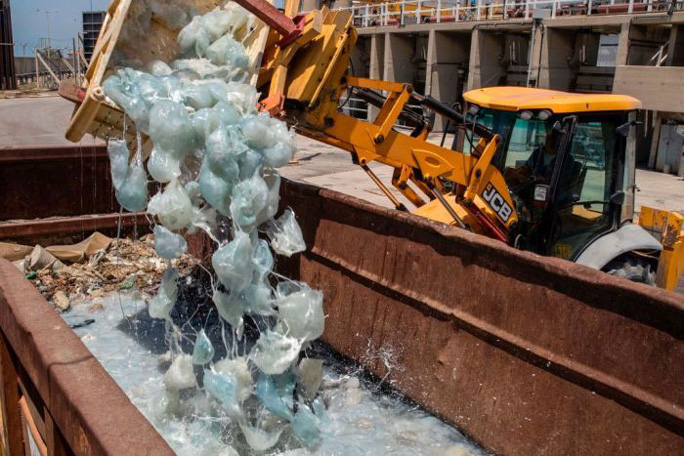
UK ponders drone monitoring of coastal nuclear plant cooling intake systems, Drone DJ, Bruce Crumley – Oct. 25th 2021 Authorities in the UK are examining a request to take a test UAV project live. It would involve extending experimental drone use monitoring coastal nuclear power plants for marine life that risks getting sucked into their cooling tubes to a real, increasingly troubling example of that in Scotland.
The problem centers on the Torness nuclear power facility to the east of Edinburgh. Its ocean-sucking intake vents have been getting clogged by recurring blossoms of marine life like jellyfish and kelp. In addition to that being fatal to the life forms involved, the incidents can cause the station’s temperature to increase to the point where temporary – but very expensive – closure is required. In response, drone industrial services company RUAS has requested authorities to allow it to fly regular drone missions around the nuclear plant to keep watch for amassing sea creatures so preventive measures can be taken to usher them away.
“The issue is, on a regular basis, they are affected by either jellyfish blooms or marine ingress including microalgae, that are blocking the intake of the nuclear power plant,” says the RUAS in a report by the Herald Scotland. “As a result, the reactor overheats due to the lack of water intake which cools the reactor, creating the need for the reactor to be shut down entirely as an emergency procedure. This has implications when they need to reactivate the reactor, which is costly and time consuming.”
It’s unclear thus far just how officials will respond to that obviously business-generating RUAS proposal. But it would certainly fall within the logic of an almost identical project the UK has been testing since July.
The nuclear plant-specific effort was launched as part of the UK’s broader Drone Pathfinder Programme promoting the use of UAV technologies. Under that, researchers have begun assessing “the feasibility of using unmanned aerial systems for the early detection of marine hazards near to coastal industries, such as nuclear power stations.”
That includes testing beyond visual line of sight (BVLOS) missions to permit near-constant monitoring – a mode RUAS is also hoping to employ at Torness. ……………… https://dronedj.com/2021/10/25/uk-ponders-drone-monitoring-of-coastal-nuclear-plant-cooling-intake-systems/
ULEZ expansion will improve Londoners’ health, but it will also reduce climate risks for all of us — Inside track

This post is by Varya Clark, co-founder of the Climate Acceptance Studios. Today, the London Ultra Low Emission Zone (ULEZ) expands dramatically. It will be eighteen times the size of the previous ULEZ, stretching all the way from the North to the South Circular roads. As Auto Express says: “If you’re unfamiliar with London, that’s most […]
ULEZ expansion will improve Londoners’ health, but it will also reduce climate risks for all of us — Inside track
More evidence that space radiation may be harmful to the male brain.
Deep Space Radiation Might Be Dangerous for the Male Brain
New research suggests that prolonged exposure to space is not so great for male mice. InterestingEngineering By Loukia Papadopoulos, 24 Oct 21,
Back in 2019, a study on mice was released that set out to investigate how deep space travel would impact the nervous system and found radiation exposure hurt cellular signaling in the hippocampus and prefrontal cortex of the brain leading to learning and memory difficulties. The researchers also saw the mice exhibit behaviors associated with anxiety, implying the radiation can harm the amygdala.
Now, a new study published in Science Advances is revealing that male mice exposed to radiation similar to that encountered by humans on long space missions experienced problems with spatial learning. The researchers conducted several tests to evaluate the mice’s spatial learning abilities after being exposed to galactic cosmic radiation……. https://interestingengineering.com/deep-space-radiation-might-be-dangerous-for-the-male-brain
UK High Court Should Deny Extradition Because CIA Planned to Assassinate Assange

UK High Court Should Deny Extradition Because CIA Planned to Assassinate Assange, BYMarjorie Cohn, Truthout October 24, 2021
Why is Joe Biden’s Department of Justice continuing Donald Trump’s persecution of WikiLeaks founder, publisher and journalist Julian Assange?
Barack Obama, concerned about threats to the First Amendment freedom of the press, decided against indicting Assange for exposing U.S. war crimes. Trump did indict Assange, under Espionage Act charges that could garner him 175 years in prison. A district judge denied Trump’s request for Assange’s extradition from the U.K. to the United States because of the extremely high likelihood that it would lead Assange to commit suicide. Trump appealed the denial of extradition.
Instead of dropping Trump’s extradition request, Biden is vigorously pursuing his predecessor’s appeal against Assange, which the U.K. High Court will hear on October 27 and 28. At that hearing, the High Court should determine what effect the CIA’s recently revealed plan to kidnap and assassinate Assange will have on his fragile mental state in the event he is extradited to the United States.
Judge Baraitser’s Denial of Extradition
On January 6, U.K. District Judge Vanessa Baraitser issued a 132-page decision denying extradition. “Faced with conditions of near total isolation and without the protective factors which moderate his risk at HMP Belmarsh [where Assange is currently imprisoned],” she wrote, “I am satisfied that the procedures described by Dr. [Leukefeld] will not prevent Mr. Assange from finding a way to commit suicide.”…………………………..
The United States will be allowed to present “assurances” that if Assange is extradited, tried, convicted and imprisoned, he will not be subject to special administrative measures (SAMs) — onerous conditions that would keep him in virtual isolation — or be held at the ADX maximum security prison in Florence, Colorado. The U.S. intends to provide an additional assurance that it would not object to
Assange serving any custodial sentence he may receive in Australia. These so-called assurances, however, are conditional. The U.S. reserves the right to impose SAMs or hold Assange at ADX if his future behavior warrants it. Moreover, the U.S. cannot guarantee that Australia would consent to hosting Assange’s incarceration.
The High Court should give considerable weight to the way in which explosive new revelations of the Trump administration’s plot to kidnap and assassinate Assange will affect his mental health if he is extradited.
High Court Should Consider U.S. Plans to Kidnap and Assassinate Assange
The indictment against Assange stems from WikiLeaks’ 2010-2011 revelations of U.S. war crimes in Iraq, Afghanistan and Guantánamo. They included 400,000 field reports about the Iraq War, 15,000 unreported deaths of Iraqi civilians, and evidence of systematic torture, rape and murder after U.S. forces “handed over detainees to a notorious Iraqi torture squad,” the documents reveal. They included the Afghan War Logs, 90,000 reports revealing more civilian casualties by coalition forces than the U.S. military had reported. And the Guantánamo Files contained 779 secret reports revealing that 150 innocent people had been imprisoned there for years and documenting the torture and abuse of 800 men and boys, in violation of the Geneva Conventions and the Convention Against Torture and Other Cruel, Inhuman or Degrading Treatment or Punishment.
Perhaps the most notable release by WikiLeaks was the 2007 “Collateral Murder” video, in which a U.S. Army Apache helicopter gunship in Baghdad targets and fires on unarmed civilians. At least 18 civilians were killed, including two Reuters journalists and a man trying to rescue the wounded. Two children were injured. A U.S. Army tank then drives over one of the bodies, cutting it in half. The video depicts three separate war crimes prohibited by the Geneva Conventions and the U.S. Army Field Manual.
It was WikiLeaks’ publication of CIA hacking tools known as “Vault 7,” which the agency called “the largest data loss in CIA history,” that incurred the wrath of Trump’s CIA Director Mike Pompeo. Vault 7 materials revealed electronic surveillance and cyber-warfare by the CIA.
In 2017, Pompeo called WikiLeaks a “non-state hostile intelligence service” and CIA and government officials hatched “secret war plans” to abduct and kill Assange, according to a stunning Yahoo! News report. Some senior CIA and Trump administration officials requested “sketches” or “options” for ways to assassinate Assange. Trump “asked whether the CIA could assassinate Assange and provide him ‘options’ for how to do so,” according to the report.
Pompeo advocated “extraordinary rendition,” which the CIA used in the “war on terror” to illegally seize suspects and send them to its “black sites” where they were tortured. The scenario was that the CIA would break into the Ecuadorian Embassy in which Assange was staying under a grant of asylum and clandestinely fly him to the United States to stand trial. Others in the agency wanted to assassinate Assange outright by poisoning or shooting him to avoid the hassle of kidnapping him.
The CIA spied on WikiLeaks, and it aimed to sow discord among the group’s members and steal their electronic devices, according to the Yahoo! News report. The CIA also conducted illegal surveillance inside the Ecuadorian Embassy and spied on privileged attorney-client communications between Assange and his lawyers.
Concerned that the CIA might kidnap or kill Assange, which could jeopardize a potential criminal prosecution, the Department of Justice (DOJ) filed a secret indictment against him in 2018. To bolster the DOJ’s case for extradition, the FBI collaborated with informant Siggi Thordarson to paint Assange as a hacker instead of a journalist. Thordarson later admitted to the Icelandic newspaper Stundin that he lied about Assange being a hacker in return for immunity from prosecution by the FBI.
In 2019, after a new pro-U.S. president came to power in Ecuador, in order to facilitate the U.S.’s attempted extradition, London police dragged Assange from the embassy and arrested him for violating bail conditions. Assange remains in custody in London’s maximum security Belmarsh Prison pending Biden’s appeal of the extradition denial.
The High Court should give great weight to the U.S. plans to kidnap and assassinate Assange. The knowledge of those revelations will put even more mental stress on Assange, whom former UN Special Rapporteur on Torture Nils Melzer described as having suffered “prolonged exposure to psychological torture” during his confinement. The High Court should affirm the district court’s denial of extradition.
A Window Into U.S. War Crimes and Threats to Investigative Journalism
“When Assange published hundreds of thousands of classified military and diplomatic documents in 2010, the public was given an unprecedented window into the lack of justification and the futility of the wars in Afghanistan and Iraq,” Assange Defense co-chairs Daniel Ellsberg, Alice Walker and Noam Chomsky wrote at Newsweek. “The truth was hidden by a generation of governmental lies. Assange’s efforts helped show the American public what their government was doing in their name.”
Recent revelations of Pompeo’s threats against Assange that appeared in Yahoo! News have shed light on the dangers the national security state poses to investigative journalism and the public’s right to know. In light of these new disclosures, a coalition of 25 press freedom, civil liberties and international human rights organizations have intensified their call for dismissal of the DOJ’s charges against Assange.
Adam Schiff, chairman of the House Intelligence Committee, said his committee has asked the CIA for information about plans to kidnap or assassinate Assange.
The High Court will decide whether to affirm or overturn district judge Baraitser’s decision denying extradition. If they affirm Baraitser’s ruling, the Biden administration could ask the U.K. Supreme Court to review the case. If the High Court overturns Baraitser’s decision, Assange could appeal to the U.K. Supreme Court and then to the European Court of Human Rights if the Supreme Court ruling goes against him.
Biden’s appeal of the denial of extradition should be dismissed. Julian Assange should be released and celebrated for his courage. https://truthout.org/articles/uk-high-court-should-deny-extradition-because-cia-planned-to-assassinate-assange/?eType=EmailBlastContent&eId=d08c3b6b-b92d-4b47-92cb-3c964bf0bab4
Campaign to get NatWest bank to stop investing in nuclear weapons

Campaign criticises Natwest nuclear arms firms’ investments, The National, By Greg Russell @National_Greg 24 Oct 21, WITH the eyes of the world on Glasgow for the COP26 climate conference, a campaign group aimed at raising the profile of the health and humanitarian impacts of the use of nuclear weapons has highlighted a major sponsor’s investment in firms that produce nuclear weapons.
Scotland’s biggest bank, Natwest, is a major sponsor of the event, which will bring together representatives of almost 200 countries aimed at agreeing measures to address the global climate emergency.
However, Medact Scotland said the bank’s ongoing investments in companies that make nuclear weapons contradicts its climate and environmental commitments.
“The detonation of just one nuclear bomb would generate a fireball and shockwave that would destroy everything within the blast zone and spread radioactive contamination far beyond it”, said retired GP Dr Guy Johnson, of Medact Scotland.
“A nuclear exchange using less than 1% of the world’s nuclear weapons would alter the Earth’s climate, leading to widespread famine, while the climate impacts of a full-scale nuclear war could make human existence impossible.”
According to pressure group Don’t Bank on the Bomb Scotland, NatWest Group held investments worth £2 billion in 15 nuclear weapons producers over a two-year period, which included investments in major arms companies BAE Systems, Thales and General Dynamics.
Linda Pearson, from the campaign group, said: “NatWest Group cannot claim to be a leader in addressing climate change while continuing to finance the nuclear weapons industry.
“Nuclear weapons production is energy intensive and environmentally damaging.
“Ultimately, any efforts to address the climate crisis will be in vain if the world is destroyed by nuclear war.”
In March this year, Don’t Bank on the Bomb Scotland and its partners sent an open letter to NatWest CEO, Alison Rose, calling on the bank to comprehensively exclude nuclear weapons producers from investment.
The letter was co-signed by 42 organisations including the International Campaign to Abolish Nuclear Weapons, Church of Scotland, Unison Scotland and Friends of the Earth Scotland.
Don’t Bank on the Bomb Scotland is also encouraging individuals to contact the bank directly.
“We want NatWest to live up to its climate commitments”, Johnson said.
“That means the bank must recognise the catastrophic consequences of nuclear weapons and cut all financial ties with the companies that make them.”………. https://www.thenational.scot/news/19669192.campaign-criticises-natwest-nuclear-arms-firms-investments/
1 This Month

Read the Public Inquiry Report, the Commissioners’ report, Surrendering Australia: The AUKUS Deception is available to download for free at aukuspublicinquiry.com. Or just watch the replay of the National Press Club Luncheon.


19 November – Webinar – The Reality of Reprocessing
Time: 11:00 AM Pacific Time (US & Canada) / 2:00 PM Eastern / 7:00 PM UK / 8:00 PM CET
Register for the Zoom Event Here



Shut down the radiation-damaged Heysham nuclear reactors now
To see nuclear-related stories in greater depth and intensity – go to https://nuclearinformation.wordpress.com

Say No to NASA’s Reckless Nuclear Reactor on the Moon
Say No to NASA’s Reckless Nuclear Reactor on the Moon
-
Archives
- November 2026 (84)
- October 2026 (302)
- September 2026 (339)
- August 2026 (330)
- July 2026 (355)
- June 2026 (287)
- May 2026 (306)
- April 2026 (356)
- March 2026 (251)
- February 2026 (267)
- January 2026 (308)
- December 2025 (358)
-
Categories
- 1
- 1 NUCLEAR ISSUES
- business and costs
- climate change
- culture and arts
- ENERGY
- environment
- health
- history
- indigenous issues
- Legal
- marketing of nuclear
- media
- opposition to nuclear
- PERSONAL STORIES
- politics
- politics international
- Religion and ethics
- safety
- secrets,lies and civil liberties
- spinbuster
- technology
- Uranium
- wastes
- weapons and war
- Women
- 2 WORLD
- ACTION
- AFRICA
- Atrocities
- AUSTRALIA
- Christina's notes
- Christina's themes
- culture and arts
- Events
- Fuk 2022
- Fuk 2023
- Fukushima 2017
- Fukushima 2018
- fukushima 2019
- Fukushima 2020
- Fukushima 2021
- general
- global warming
- Humour (God we need it)
- Nuclear
- RARE EARTHS
- Reference
- resources – print
- Resources -audiovicual
- Weekly Newsletter
- World
- World Nuclear
- YouTube
-
RSS
Entries RSS
Comments RSS

