Fox News’ united front in support of Trump’s Iran war may be breaking down.
Host Laura Ingraham warns escalation could produce “cascading problems for the region,” political turmoil for the GOP
by Matt Gertz, MEDIA MATTERS 03/26/26
Four weeks after President Donald Trump launched a poorly conceived war of choice against Iran, the lockstep support for the conflict that has characterized coverage from Fox News’ star hosts is beginning to fray. The power struggle is significant — it is not an exaggeration to suggest the course of the war might hinge on which Fox shows the president is watching.
Trump is clearly approaching a decision point over whether to further escalate the war. U.S. and Israeli forces have done a lot of damage to Iranian military targets, but its regime is intact, still controls its stockpiles of enriched uranium, and has closed the Strait of Hormuz, threatening the global trade in oil, natural gas, and fertilizer. The Pentagon is sending thousands of troops to the region and reportedly prepping options for a “final blow” — some of which would involve deploying U.S. forces on Iranian soil.
When Trump is considering policy options, he often takes guidance from his loyal propagandists at Fox. This Fox-Trump feedback loop has in recent months played a role in the president’s decisions to send White House border czar Tom Homan to oversee immigration enforcement in Minnesota; prioritize the SAVE Act over all other legislation; order the deployment of ICE agents to airports; and start the war against Iran.
Against that backdrop, Fox News host Laura Ingraham warned on Wednesday’s show that further U.S. action could produce devastating unintended consequences and suggested that Trump should refocus his attention on the domestic economy and political situation.
“Iran knows it cannot win militarily, so it’s using the leverage it has by prolonging the conflict,” she said during her monologue at the top of the show. “Now, what do they want to do? They want to inflict maximum economic pain on the region, on the U.S., [on] the global economy as much as possible until they think Trump relents. But the White House doesn’t seem to be blinking.”
The host then aired a clip of White House press secretary Karoline Leavitt warning at her press briefing that day that “President Trump does not bluff, and he is prepared to unleash hell” against Iran.
Ingraham did not seem impressed by Leavitt’s rhetoric.
“Well, the problem is obviously unleashing hell means destroying infrastructure, which itself causes a series of cascading problems for the region, including maybe outside the region — political problems for the president in a midterm election year,” she said.
Her air of skepticism continued throughout the show.
While interviewing Sen. Josh Hawley (R-MO), she noted Pentagon reports of thousands of successful missions but commented, “I mean, this is a devastating blow, yet you know, we’re still there.”
“It’s not even a month old, obviously,” she continued, before asking, “But are you concerned about the public and people? Again, very short attention spans, very impatient for victory, as is President Trump, I might add. But in an election year, it’s easy to say politics don’t matter, but at some point politics do come into play.”
And in a third segment, she highlighted the disastrous polling on the Iran war, commenting, “It looks like people are pretty impatient. The American people are sending a message to President Trump that it’s time to put the focus back on the home front.”
Ingraham is inching toward the type of dissent that has been virtually absent from Fox’s coverage of the war, even as the broader right-wing media has split. Her colleagues have played key roles in convincing Trump to attack in the first place and are pushing for risky escalations. Ingraham herself briefly quibbled with Trump’s handling of an apparent U.S. strike that leveled an Iranian school, killing scores of children, but had supported the war itself, which she declared three weeks ago that Trump had already won.
But if Ingraham is getting cold feet and trying to convince Trump not to escalate a war the public has soured on, she remains an outlier at the network. Indeed, if the president tuned in for the two hours following Ingraham’s program, he saw her prime-time colleagues Jesse Watters and Sean Hannity argue not only that the war is going well and that Trump will inevitably lead the U.S. to victory, but that anyone who disagrees must want America to lose the war because they hate the president.
Watters began his show with a 10-minute monologue whose thesis was that “the Iranian regime is losing leverage fast as we continue to carry out thousands of sorties over enemy airspace.” After detailing various tactical victories, he touted a potential escalation………………………………………………. https://www.mediamatters.org/us-iran-relations/fox-news-united-front-support-trumps-iran-war-may-be-breaking-down
Nuclear decommissioning in the UK
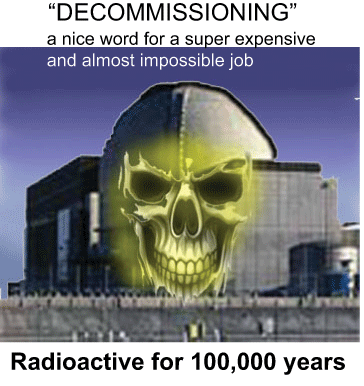
Corporate report: The NDA group Technical Baseline Review
This report provides a high-level overview of the processes and associated technologies used or planned to be used to deliver our mission.
NDA 26th March 2026 Nuclear Decommissioning Authority NDA group Technology Baseline Review 2026
PDF, 4.76 MB, 67 pages
The UK’s nuclear energy programme, dating from the post-war years, has left a challenging decommissioning legacy to the country: numerous prototype reactors, fuel-manufacturing plants, research centres, reprocessing plants and 11 power stations. The Sellafield site in west Cumbria houses more than 200 nuclear facilities and 1,000 buildings, making it one of the world’s most complex environmental decommissioning challenges. Across the UK many ‘never-done-before’ decommissioning projects will need to be completed. The Nuclear Decommissioning Authority (NDA) was established under the Energy Act (2004) to ensure that the UK’s nuclear legacy sites are decommissioned and cleaned up safely, securely, cost-effectively and in ways that protect people and the environment.
This document provides a high-level overview of the current technology landscape across the NDA group. It outlines the NDA group technology baseline, current technologies being deployed, and the technology opportunities requiring development or adoption to underpin the delivery of our decommissioning mission……………
https://www.gov.uk/government/publications/nuclear-decommissioning-authority-rd-technical-baseline
Israel launches strikes on nuclear sites as Iran warns of retaliation
Uranium facility, steel plants and heavy water complex among targets hit as IRGC warns of escalation.
By Al Jazeera Staff, AFP, Reuters and The Associated Press, 27 Mar 2026
Israel has struck a uranium processing facility in the central Iranian city of Yazd, the Israeli military confirmed, in an escalatory move that comes as regional diplomats have been attempting to broker an agreement to halt the joint US-Israeli war on Iran.
The Israeli Air Force said it hit a plant used to extract raw materials essential to the uranium enrichment process, describing it as a “unique facility” in Iran’s nuclear infrastructure. Iran’s Atomic Energy Organization confirmed the strike, but said there were no casualties or radiation leaks.
A projectile also hit near the Bushehr Nuclear Power Plant, Iran’s Atomic Energy Organisation said. The attack caused “no casualties, financial, or technical damage,” the organisation said.
Friday marked day 28 of the conflict, and the assault by the Israeli army was part of a broad wave of attacks on sites across the country.
Strikes also hit areas in and around Tehran, the city of Kashan and Ahwaz, while 18 people were killed in Qom.
More than 1,900 people have been killed in US-Israeli attacks on Iran since the war began on February 28.
Iranian officials said US-Israeli strikes have damaged at least 120 museums and historical sites across the country since hostilities began.
Negar Mortazavi, a senior non-resident fellow at the Center for International Policy, told Al Jazeera that even Iranians who had been critical of their own government increasingly view the war as an assault on the Iranian people rather than its leadership, saying the targeting of water, electricity, gas, cultural heritage, schools and hospitals was “unacceptable.”
Israeli Defence Minister Israel Katz said Israel would “intensify” its campaign and expand the range of sites it targets, accusing Tehran of deliberately directing missiles at Israeli civilians.
IRGC Aerospace Commander Seyed Majid Moosavi warned that the conflict was entering new territory, saying “the equation will no longer be an eye for an eye.” He urged employees of US and Israeli-linked industrial companies across the region to immediately vacate their workplaces.
Al Jazeera’s Ali Hashem, reporting from Tehran, noted that the strikes on two major Iranian nuclear facilities could prompt the IRGC to target Dimona again, Israel’s nuclear site, as it did last week.
Prior to Friday’s strikes, US President Donald Trump said Thursday he had pushed back planned attacks on Iran’s energy infrastructure by 10 days, to April 6, saying negotiations to end the war were “going very well”.
Iranian officials flatly rejected that characterisation, describing Washington’s proposal to end the war as “one-sided and unfair” and outlining their own list of conditions, which include war reparations and the recognition of Iranian control of the Strait of Hormuz.
On Friday, an an Iranian official said the ongoing strikes, while simultaneously discussing talks, were “intolerable”……………………………………………………………………………………… https://www.aljazeera.com/news/2026/3/27/israel-launches-strikes-on-iran-nuclear-sites-as-war-enters-fifth-week
US/Israel War against International Law

24 March 2026 AIMN Editorial, By Dr Dan Steinbock, https://theaimn.net/us-israel-war-against-international-law/
As the US/Israeli strikes against Iran violate the foundations of international law, the economic and human costs will soar.
After three weeks of effective war, the hostilities have caused severe regional spillovers, thousands of deaths, displacements of millions and a massive global energy crisis that continues to expand. If the implications are global, what’s the status of the US/Israeli strikes from the standpoint of international law?
The modern legal order is based on United Nations Charter (1945), Geneva Conventions, Rome Statute (1998) and Customary law from the Nuremberg Trials. The key rules include the prohibition of aggressive war, protection of civilians, individual criminal responsibility for war crimes, crimes against humanity and genocide. Force is allowed only in the case of self-defense and UN Security Council authorization.
The US/Israeli strikes have already violated most of these rules.
War of aggression
Article 2(4) of the UN Charter prohibits UN member states from threatening or using force against the territorial integrity or political independence of any state. It was violated on February 28, when US/Israel launched their joint strikes against Iran.
Typically, the war was launched precisely when and because the peace talks in Oman were advancing toward a successful conclusion.
In the absence of strategic objectives and exit strategy, the U.S. has framed the actions as a campaign to dismantle “the Iranian regime’s security apparatus.”
These efforts go back to the US/Israel 12-Day War against Iran in July 2025, when Masoud Pezeshkian, the new reform-minded Iran president, sought talks to end the conflict with the US and Israel. That was not in line with the “new Middle East” envisioned by PM Netanyahu and his Messianic far-right cabinet.
The UN Charter’s prohibition against force is not absolute, with key exceptions being self-defense (Article 51) and actions approved by the Security Council.
Yet, no such threat existed prior to the US/Israel strikes. And on March 17, 2026, Joe Kent, the Director of the US National Counterterrorism Center, resigned from his position in protest of the ongoing U.S.-led war in Iran. Kent said in no uncertain terms that “Iran posed no imminent threat to our nation.”
This is an illegal war of aggression, instigated by leaders who have been, like Prime Minister Netanyahu, (or should be) charged for war crimes and crimes against humanity.
Preemptive war doctrine
To legitimize the unjustifiable, Washington has resorted to preemptive justifications. In this regard, the US/Israel war against Iran is just the latest link in the 25-year-long effort to sanctify power politics with preventive wars.
Since the Bush Jr. 2002 security doctrine, US administrations have stressed preemption as a central strategic instrument. While Democratic leaders (Obama, Biden) have been more moderate in rhetoric, they have coopted the same ideas.
Relying on force to prevent future threats, preventive war doctrines are often cited as violating international law because they bypass the strict legal requirements for the use of force established in the UN Charter.
Unilateral preventive war is a threat to the principle of state sovereignty, as it allows one nation to judge the “intentions” of another, without objective proof of an upcoming attack. Setting a dangerous precedent, it incentivizes other nations to use similar pretexts for their “preventive” attacks, potentially leading to global instability.
International law allows for preemptive strikes in cases of “imminent” danger. But US strategy improperly expands this to include preventive wars against threats that are not yet fully formed or do not exist – as in the cases of the 2003 Iraq War and the 2025 and 2026 Iran Wars.
Targeted assassinations
The targeted assassination of Iranian leaders is a serious violation of international law, especially when conducted outside of an active, declared war zone. Targeted killings violate the prohibition on the use of force against another state’s territorial integrity and political independence.
Outside of active hostilities, international human rights law (IHRL) applies. Under IHRL, arbitrary deprivation of life is prohibited. Targeted killings are extrajudicial killings for which the acting state is responsible.
In the context of conflict, targeted killings can violate International Humanitarian Law (IHL) principles, including distinction (targeting civilians) and proportionality. Assassinations of state officials often violate the 1973 Convention on the Prevention and Punishment of Crimes Against Persons Under International Protection.
Precedents feature the killing of the famous Iranian general Qasem Soleimani, the right-hand man of the supreme leader of Iran, the late Ali Khamenei. Soleimani was assassinated in a targeted drone strike in Baghdad in January 2020, ordered by President Trump.
From the standpoint of international law, it was an unlawful attack, as was pointed out by Ben Ferencz, the US prosecutor in the Nuremberg trials and pioneer of international law. After Soleimani’s killing, the New York Times printed Ferencz’s letter denouncing the assassination, unnamed in the letter, as an “immoral action [and] a clear violation of national and international law.”
In their first joint strikes against Iran, US and Israel assassinated the 87-year-old Ali Khamenei, the supreme leader of Iran. Demonized in the West, Khamenei supported Iran’s nuclear program for civilian use. Already in the mid-1990s, he famously issuing a fatwa against the acquisition, development and use of nuclear weapons.
The assassination of Khamenei was still another blatant violation of international law. It was also part of the Israeli strategy to eliminate moderate leaders, whose absence is then used as an excuse for replacing peaceful diplomacy with brutal obliteration campaigns.
Crimes against humanity, forced displacement
These crimes are defined in Rome Statute Article 7, as widespread or systematic attack on civilians. Allegations are typical when strikes include targeting civilian infrastructure, economic strangulation, mass displacement, and siege conditions.
A continuity argument – “what we first see in Gaza is now spreading to Iran and, due to spillovers, into the region” – exists because similar patterns can be identified via blockade, disproportionate force, and collective punishment.
The stated efforts at regime change to undermine Iran and fragment the Shi’a state suggest that the boundary between cultural genocide targeting a broad ethnic-religious group and full destabilization is a line drawn in waters.
Allegations of ethnic cleansing, relying on deliberate forced displacement are likely over time. While ethnic cleansing is not a formal treaty crime, it is recognized in jurisprudence. It rests on forced population removal, which is the net effect of the strikes against Iran and a deliberate intention in Israel’s invasion of Lebanon.
Israel’s rapidly expanding buffer zone in southern Lebanon, extending roughly 3 to 14 kilometers north of the Blue Line demarcation, is premised on demographic engineering. In Iran, the objective to fragment the state, instigate inter-ethnic polarization and regional divides is also predicated on identity
At first sight, allegations of ethnic cleansing seemed to be more relevant to Gaza and the West Bank. But with shifting objectives, forced displacement is now an overwhelming reality. The US/Israel strikes have caused displacement of 3.5 million people in Iran and over 1 million in Lebanon, with up to 22,000 killed or wounded in the former and another 3,600 in the latter.
Collective punishment, economic warfare
Combined with illicit strikes, Washington’s decades-long sanctions against Iran, most of which are unilateral, and the underlying warfare is reminiscent of economic warfare premised at collective punishment.
Combinations of economic sanctions and military strikes, particularly when invalid from the standpoint of international law, raise serious issues under humanitarian law and human rights law. In Gaza and in Iran, unilateral sanctions have caused unwarranted mass suffering violating international law.
Ever since the early 1970s, when Beirut was still called the “Paris of the Middle East,” Israel’s wars against Palestinians have destabilized Lebanon’s fragile ethnic mosaic pushing the country to the edge of default. That’s the fate PM Netanyahu would like Iran to share.
In this regard, there is a clear continuity from the Gaza War, carried out by Israel with arms and financing by the US-led West, ICJ provisional measures and ICC arrest warrant debates, to the US/Israel strikes against Iran.
The common denominators feature an inflated self-defense doctrine, weak enforcement of humanitarian law, selective application of international law and ultimately the inevitable US veto in the Security Council.
The more these violations of international law are permitted, the greater will be the costs in economic terms, the more brutal the military destruction and the more lethal the human devastation.
That’s why multilateral cooperation – across all political differences – and the enforcement of international law is so desperately needed today, before it’s too late.
Dr Dan Steinbock is an internationally recognized strategist of the multipolar world and the founder of Difference Group. He has served at the India, China and America Institute (USA), Shanghai Institutes for International Studies (China) and the EU Center (Singapore). For more, see https://www.differencegroup.net
Does SMR Stand for Spending Money Recklessly?
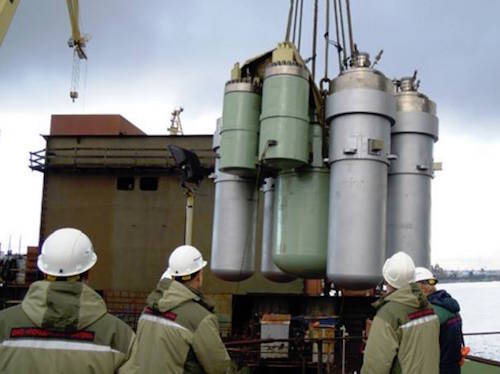
March 23, 2026, Susan O’Donnell, M.V. Ramana, https://www.theenergymix.com/does-smr-stand-for-spending-money-recklessly/
What did Canadians get for the $4.5 billion in public funding spent on small modular nuclear reactor (SMR) activities? Our new report assessing SMR development in Canada found the results underwhelming, to say the least.
Published in 2018, A Call to Action: A Canadian Roadmap for Small Modular Reactors recommended that the federal government fund SMRs and undertake other support measures. The report’s first “expected result” was that “one or more SMR demonstration [projects would be] constructed and in operation by 2026.” Our report in this milestone year covers not only this expected result, but also what the federal government has provided in funding for SMRs in Canada.
For many years, the “Micro Modular Reactor” (MMR) proposed for the Chalk River nuclear site in Ontario was to be this first demonstration. Back in 2019, the project proponents applied to the Canadian Nuclear Safety Commission (CNSC) to prepare the site for construction.
Fast forward to 2024: instead of the reactor built and being prepared to go into service, CNSC announced it had “paused all work” on the MMR project. Later that year, the company leading the project, Ultra Safe Nuclear Corporation, filed for bankruptcy protection in the United States, leaving unpaid debts of more than $16 million. That total included $641,307 to the CNSC and lesser amounts to dozens of Canadian small businesses.
In 2018, the New Brunswick government lured two start-up SMR companies into the province from the U.S. and the United Kingdom—ARC and Moltex—giving each $5 million and help to apply for funding from federal taxpayers. The SMR strategy called for two “advanced” reactor designs, which were not cooled with water, to be built at NB Power’s Point Lepreau nuclear site. Both designs have serious problems that have been documented extensively (for example, in the Bulletin of the Atomic Scientists) .
Over the next five years, the federal government handed over more than $97 million to develop the two SMR designs in New Brunswick, and the provincial government added more than $31 million to the project. Yet in late 2025, New Brunswick’s Energy Minister said the government would no longer wait for the ARC and Moltex designs because the province could not take on the risk of first-of-a-kind reactors. The millions of dollars in subsidies are essentially a write-off, funding highly paid positions at these companies at the public expense.
Of the 10 SMR designs in Canada since 2018, only one is in development. Most of the public subsidy money for SMRs—$4.025 billion—has been spent developing this reactor design, the BWRX-300, to be built at the Darlington nuclear site on Lake Ontario. As of early 2026, workers are digging a deep shaft for the reactor vessel. Sometime this summer, we can expect to see concrete being poured into the ground.
Four billion dollars is a lot of money, but nowhere near enough to pay for the four BWRX-300 reactors planned for the site. Even the first BWRX-300 reactor is expected to cost more—$6.1 billion—and the whole project will run at least $20.9 billion. It final bill could come in far higher, since the vast majority of nuclear power projects have historically overrun initial cost estimates.
The high costs for the SMR compare poorly with other options for electricity generation. For example, estimates by Australia’s Commonwealth Scientific and Industrial Research Organisation (CSIRO) show that each unit of electrical energy from SMRs would be far more expensive that a corresponding unit from solar and wind power plants, even when the cost of storage technologies and other means of accounting for renewable energy’s variability are included.
CSIRO has been undertaking an annual cost estimate in collaboration with the Australian Energy Market Operator and its reports involve extensive consultation with various stakeholders. The research agency’s analysis is informing an active debate under way in Australia to determine if the country should embark on nuclear energy. There is no corresponding effort at rigorously computing the costs of different kinds of generating energy from different technologies by any official research agencies in Canada.
Overall, the report’s analysis found little interest in SMRs among banks and other sources of private capital. When measured in terms of their ability to generate power, SMRs are more expensive than big reactors. Given the high costs, the report suggests that exporting significant quantities of SMRs from Canada is only a slim possibility.
Susan O’Donnell and M.V. Ramana are authors of the report on SMRs in Canada. O’Donnell is Adjunct Research Professor and lead investigator of the CEDAR project at St. Thomas University in Fredericton. Ramana is Professor; Simons Chair in Disarmament, Global and Human Security; and Director pro tem of the School of Public Policy and Global Affairs at the University of British Columbia in Vancouver.
A Great British Nuke-Off in Wales?

25 March 2026, https://morningstaronline.co.uk/article/great-british-nuke-wales
Quintessentially British Rolls-Royce wants to put its small new reactors on Anglesey, but it turns out they’re not so small or even particularly British, writes LINDA PENTZ GUNTER
THERE is something about Rolls-Royce that is quintessentially British. Not necessarily in a good way. The name tends to bring to mind tweedy toffs or rock stars with more money than sense, driving too fast in shiny and extravagantly baubled motor cars.
It’s the cars that made the Rolls-Royce name synonymous with luxury and class, specifically upper-class. It’s even entered the lexicon. Something can be called “the Rolls-Royce of….;” fill in the blank.
Of course, Rolls-Royce is now much bigger than just a car manufacturer. Frequent fliers will have spotted the company logo on many a jet engine.
Less well known is that Rolls-Royce makes the reactors for nuclear submarines, specifically the British Trident nuclear fleet. The company is set to produce a new propulsion reactor, PWR3, for the Dreadnought-class ballistic deterrent submarine, expected to be operational in the early 2030s, and whose missiles are capable of destroying all life on Earth multiple times over.
More recently, Rolls-Royce has entered the commercial nuclear reactor market, proposing its own small modular reactor (SMR) design — which, at 470 megawatts, isn’t actually very small at all. Many of Britain’s old Magnox reactors, now all permanently closed, were smaller than that. Two of the largest, at Wylfa in Anglesey, were each 490 megawatts.
Ironically, it is to Wylfa that Rolls-Royce is looking to site its first not so small modular reactors. It is planning for three there — with the capacity to extend to eight — and even won a competition conducted by Great British Energy-Nuclear to become the preferred bidder to place SMRs at the Wylfa site, purchased by the government from Hitachi in March 2024 after the Japanese company ditched plans to build two full-size reactors there.
The prize for Rolls-Royce’s winning bid was £2.5 billion in public funding (ie taxpayer money) toward the cost of the first three SMRs, not such good news for people who can’t afford to drive Rolls-Royces.
Another £25 million is to be shelled out to two engineering consultancies, WSP and Mott MacDonald, who will advise on environmental assessments, permitting and regulatory compliance.
As Linda Clare Rogers, co-deputy leader of the Welsh Green Party, asked in a letter to her Anglesey MP Llinos Medi of Plaid Cymru: “Why does Rolls-Royce need £25m of our money to spend on advisers and engineers to help it meet environmental and legal requirements, if they are confident what they’re doing is serviceable? As this is public money, will we have a say in proceedings? If not, why not? Other public services involve public engagement.”
That £25m just happens to be equal to the price tag for the Rolls-Royce La Rose Noire Droptail luxury car, unveiled in August 2023. So why not just sell one of those to pay for the advisers and engineers instead of fleecing British taxpayers?
Appropriately, the multi-billion pound Rolls-Royce triumph (to mix motoring metaphors), was lauded by a lord — it is unknown if he was wearing tweeds for the occasion — during a debate last July in the House of Lords.
Reading the transcript of what takes place in that neo-gothic edifice makes you wonder if you have time-travelled back a few centuries. Everyone is addressed as “my lords” even though there are ladies, too, and “my noble friend” and phrases such as “I thank the noble Earl for that question,” and “I thank the noble Viscount.”
It was Labour peer Lord Wilson of Sedgefield — real name Philip — who was beating the drum most loudly for nuclear power in general and Rolls-Royce in particular during that July debate.
This same “noble lord,” as we must perforce address him according to tradition, was also one of the “Famous Five” who helped Tony Blair get selected as a Labour candidate. Later, before he ascended to “The Lord Wilson,” he became an enthusiastic Jeremy Corbyn backstabber when Corbyn was Labour Party leader. So not really all that “noble.”
The lone voice of reason during the Lords nuclear debate came not from a “lord” but a woman, the Green Party’s Baroness Jones of Moulsecoomb who said: “My lords, the minister said that everybody around the House supports nuclear. No, the Green Party does not support nuclear. It is a dinosaur technology and it is really very expensive, when you look at the planetary impact and the cost to the Exchequer. It is going to be a disaster and it will be overtaken by sea-level rises as well. Why do the government not take some good advice on this instead of believing in nuclear all the time?”
The good Lord Wilson quickly and condescendingly dismissed her ideas as “a bit on the fringe,” then repeatedly referred to new nuclear in Britain as “clean, secure, homegrown energy.”
But just as it is obvious that nuclear power is neither clean nor secure, whether great and British or not, it is most certainly not “homegrown” either, given that no uranium, the raw material needed to fuel reactors, is mined in the UK.
And, as it turns out, even Rolls-Royce isn’t quite so very British after all.
Rolls-Royce SMR (Small Modular Reactors), the company’s subsidiary focused on future nuclear energy, is not solely owned by the parent group. It has investors including the Qatar Investment Authority, BNF Resources (connected to the French Perrodo family that owns European oil and gas company Perenco), Constellation (a US energy company and part of Exelon), and CEZ, a Czech company.
Of course, even the Rolls-Royce car division isn’t actually British. It is a wholly owned subsidiary of Germany’s BMW.
In addition to the Perrod family’s investments in oil and gas companies, Constellation owns oil and gas plants in the US. And while the Qatar Investment Authority has said it will not finance new fossil fuel projects, it has not divested from all of its existing oil and gas interests. CEZ continues to maintain coal plants and is supporting natural gas infrastructure.
This is a quiet reminder about the level of greenwashing that seeks to paint nuclear power as environmentally friendly when many of the companies involved in nuclear power are also still heavily invested in fossil fuels.
The partner Rolls-Royce has chosen to oversee delivery of the Wylfa reactors is the US-based engineering firm Amentum, which has around 6,000 staff in the UK. The small modular reactor is an old concept that has been around for decades and was consistently rejected due to poor economies of scale. Yet Amentum’s chief executive officer, John Heller, describes SMRs as a “transformational technology, a critical enabler in strengthening energy security in the UK and continental Europe.”
However, that “energy security” will be delivered largely by Russia, in order to meet the needs of the fast-reactor designs targeted for Britain. These include the Newcleo 200 MWe lead-cooled fast reactor and the Natrium, TerraPower’s sodium-cooled fast reactor, two US companies looking to secure contracts in the UK. Russia is currently the only country that manufactures the High-Assay Low Enriched Uranium fuel needed for these reactor designs.
When star footballer Marcus Rashford totalled his £700,000 Rolls-Royce in a September 2023 accident, the car was entirely written off. That’s exactly what should happen to the company’s SMR plans before consumers and taxpayers are forced to foot the bill.
Linda Pentz Gunter is a writer based in Takoma Park, Maryland. She is the author of the book, No to Nuclear: How Nuclear Power Destroys Lives, Derails Climate Progress And Provokes War, published by Pluto Press.
Pentagon Whistleblower Criticizes “Bloodthirst” of Iran War, Says Hegseth Is Enabling War Crimes
26 Mar 2026
As the United States mobilizes thousands more troops for deployment to the Middle East, we speak with retired U.S. Air Force Master Sergeant Wes Bryant, who criticizes the “bloodthirst” of the U.S.-Israeli war against Iran. Bryant led the Pentagon office for civilian harm assessment from 2024 to 2025, before the unit was dissolved under Defense Secretary Pete Hegseth.
The “wholly illegal war” has been “carried out recklessly from the start and with little regard for the innocent,” Bryant tells Democracy Now! “Pete Hegseth has already directed the committing of war crimes. And unfortunately, our senior military leadership is bending the knee and carrying out whatever he tells them to do.”
Democracy Now! is an independent global news hour that airs on over 1,500 TV and radio stations Monday through Friday. Watch our livestream at democracynow.org Mondays to Fridays 8-9 a.m. ET.
Trump White House plagiarized Iran war manifesto from Israel-aligned think tank
Wyatt Reed and Max Blumenthal.The Grayzone, March 20, 2026
The Trump White House plagiarized its justification for attacking Iran from the Foundation for the Defense of Democracies, the main DC outfit promoting war with Tehran. The think tank was originally founded to “enhance Israel’s image,” and partners closely with the Israeli government.
The Trump Administration appeared to plagiarize its official justification for its war on Iran, copying almost word-for-word a document originally produced by the Foundation for the Defense of Democracies (FDD), a pro-war think tank with close ties to Israeli intelligence which was originally founded to “enhance Israel’s image.”
The FDD document was authored by Tzvi Kahn, the former assistant director for policy and government affairs at the American Israel Public Affairs Committee (AIPAC).
A March 2, 2026 statement issued by the White House accusing Tehran of 44 instances of terrorism against American citizens is “virtually identical” to the list published by FDD in June 2025, analyst Stephen McIntyre noted Thursday.
While the White House did make superficial alterations to the text, they largely consisted of appending the label “Iran-backed” to every mention of groups like Hezbollah and Hamas. In the few instances where Trump administration officials bothered to make significant changes to the original FDD list, the edits were almost always made in service of “ratcheting up the underlying allegation,” McIntyre concluded.
Among the most egregious examples was a 1996 attack on the Khobar Towers in Saudi Arabia, which FDD originally said merely that Hezbollah al-Hejaz was “deemed responsible” for. In the White House version, however, the group’s responsibility was “asserted as factual,” explained McIntyre, noting that serious questions about the incident remain unanswered to this day. “Clinton’s Defense Secretary William Perry subsequently wondered (along with many others) whether Khobar Towers should have been attributed to Al Qaeda,” he wrote.
A 2009 investigation by journalist Gareth Porter based on interviews with over a dozen former CIA, FBI and Clinton administration officials demonstrated that the FBI’s inquiry into the Khobar Towers attack was precooked to blame Iran, when Al Qaeda was most likely the culprit. Porter found that Shia citizens of Saudi Arabia had been tortured into confessing to the crime by Saudi secret police.
While the White House declined to join FDD in blaming Iran for the Sept. 11, 2001 terror attacks, it echoed the Israel-oriented organization in blaming Tehran for 603 military deaths in Iraq, which both documents attributed to “Iran-backed militias.” But there are major discrepancies with the figure, which amounts to 60% of the total US combatant deaths attributed to Iran. As McIntyre noted, such a claim is “not made in the State Department annual reports on Global Terrorism.”
At least four of the Americans the Trump administration claims were killed by Iran had served in Israel’s military. These included a US citizen who died while invading Lebanon in 2006 and two Americans in the IDF’s Golani brigade who were killed while invading Gaza in 2014. The fourth American, who was born in Israel and had also served in the Golani brigade, was killed amid violent reprisals against settlers in the West Bank in 2015.
A number of the claims are undermined by the very sources they cite, including a December 2019 incident in which the Trump administration insisted “Iran-backed Kataib Hezbollah terrorists killed an American civilian contractor and wounded several U.S. service members in a rocket attack at K1 Air Base in Kirkuk, Iraq.” But the Reuters article cited by the White House as proof that Iran was responsible made no such claim, explicitly cautioning that “no group has claimed responsibility for the attack.” In reality, Reuters suggested the attack was the work of “Islamic State militants operating in the area [who] have turned to insurgency-style tactics.”…………………………………………………………………………………………………………………….https://thegrayzone.com/2026/03/20/trump-plagiarized-iran-israel-think-tank/
Israel’s primary role in Iran war scrubbed from mainstream media.

By Walt Zlotow , 25 Mar 26, https://theaimn.net/israels-primary-role-in-iran-war-scrubbed-from-mainstream-media/
No Israel, no Iran war. That fact is AWOL from any coverage of criminal US, Israeli war destroying Iran, US Gulf States bases and possibly the world economy.
Destroying Iran as a hegemonic rival preventing their Middle East expansion of Greater Israel has been Israel’s objective for decades. But the small country of Israel, without billions in US firepower and participation could never accomplish their cherished goal. What to do? Put tremendous carrot and stick pressure on Donald Trump to achieve Israel’s Middle East supremacy.
They came close to getting George W. Bush to take out Iran after Bush demolished Afghanistan and Iraq back in 2003. But Bush stopped his war-crazed Veep Dick Cheney from pulling the Iran war trigger.
Obama was a huge problem for Israel. Instead of attacking Iran he made peace with it… or tried to. His leadership in creating the 2015 Joint Comprehensive Plan of Action (JCPOA) put the end to any concern that Iran was developing nuclear weapons. Which they never were. It should have stopped Israel’s lust to destroy Iran. But it didn’t. Israeli Prime Minister Benjamin Netanyahu embarked on a relentless propaganda campaign to destroy the JCPOA.
His dream was realized when Trump succeeded Obama in 2017. A year later, Trump, likely following Netanyahu’s orders, withdrew from the JCPOA, putting Iran regime change back in play.
When Biden succeeded Trump in 2021, Netanyahu garnered another complacent ally in the White House. Biden did nothing to rejoin the JCPOA and normalize relations with Iran. But the Israeli genocide in Gaza, fully supported and funded by Biden, put Iran on the back burner.
Enter Donald Trump – back in power in 2025. Within 9 months he secured a ceasefire in Gaza. Palestinian genocide switched places with Iran on the forefront of destruction. Iran moved into Trump’s crosshairs to please his Israeli masters.
Had Harris succeeded Biden, likely no Iran war. Unlike Trump, Harris was neither as fully funded by the Israel lobby nor possibly subject to Israeli blackmail threatening to expose Trump’s peccadillos.
Dramatic high-risk US Delta Force plan to snatch Iran’s nuclear stocks revealed
Chris Hughes Defence and Security Editor, 25 Mar 2026, https://www.mirror.co.uk/news/world-news/dramatic-high-risk-delta-force-36921080
American special forces could be used to smash Iran’s nuclear ambitions as war-chiefs weigh up high-risk mission amid fears of casualties and a repeat of 1980 ‘Op’ Eagle Claw’ disaster
American military chiefs are considering one of the biggest special forces raids ever-launched in a bid to cripple Iran’s nuclear programme.
The massive helicopter-borne insertion of thousands of assault troops supporting a large number of Delta Force specialists could take at least 24 hours to conduct.
It would try to seize 450kg of 60% enriched uranium believed still to be hidden deep beneath one of Tehran’s nuclear facilities and is an immensely high-risk operation.
Although below the ‘weapons grade’ 90% of enriched uranium needed to make a nuclear weapon some US intelligence experts fear Iran could use it in the future.
Two British military sources have told the Mirror the operation plan has been drawn up, although both said it has been assessed as “very high-risk, with high probability of casualties and low probability of absolute mission success since the exact location of the uranium is uncertain.”
After fighting their way into the complex, the elite Delta Force soldiers would secure the site for specialist engineers to drill and blast their way into the underground complex.
The immensely complex operation would involve scores of spy planes and fighter jets helping to secure the approach to the mission targets.
Ground troops would form a vast perimeter around the site to fight off attacks from the IRGC. Plans were drawn up by Joint Special Operations Command which has a poignant link to Iran as it was set up in 1980 following the disastrous Operation Eagle Claw whose aim was to rescue US hostages from Tehran.
Then eight US Navy Sea Stallion helicopters took off from the deck of an American aircraft carrier for a 600-mile trip to rendezvous in the Iranian desert with six C-130 transport aircrafts.
They were hit by a violent wind-driven sand storm common in the desert which damaged the aircrafts and President Carter abandoned the mission.
As the force prepared to depart, a RH-53D helicopter crashed into a C-130 plane carrying extra fuel for refueling, igniting a fire that killed five Airmen and three Marines.
America vowed it would never happen again and sought to bring its special forces and intelligence elites together for better mission planning and execution.
In 1980 JSOC was launched forming combined units from the Army Delta Force, Navy SEAL Team Six, and the Air Force’s 24th Special Tactics Squadron to ensure they could operate seamlessly together, a key failing during the Iran hostage crisis.
One source, from the intelligence community, told the Mirror: “The plan does exist but the risks of failure are very high and it may have been discounted as too difficult.
“However it is known that President Trump is extremely belligerent and not exactly risk-cognisant so there is always the possibility he could still give the go-ahead for it to happen.
“Certainly the US military has given the President options, along with their risk assessment and the uranium seizure is top of his list. Troops movements we are seeing towards the Gulf indicate something bigger than, or as well as, a Strait of Hormuz -specific operation.”
The operational planning includes crack paratroopers entering Iranian airspace in fast-moving Chinook troop carrier helicopters and uniquely-adapted special forces planes for an unusually large number of elite Delta Force special forces soldiers.
A second, military source, told the Mirror: “If it goes ahead this could be the biggest Special Forces operations ever launched, with diversions elsewhere in Iran and major air-raids to cast confusion into the ranks of the Islamic Revolutionary Guard Corps. It has been looked into for some time but it is exceptionally high risk.
“The final word will go to Commander-in-Chief Donald Trump with input from Pete Hegseth, his so-called Secretary of War, who has been extremely enthusiastic about this war. It is a major decision as a lot can go wrong in an operation of this size but US administration may see it as the only way to secure the enriched uranium. The question is whether Trump is prepared to give it the go-ahead.”
Earlier this month the Mirror revealed exclusively how US forces had sent a number of uniquely adapted MC-130J Commando II special forces planes from RAF Mildenhall in Suffolk to the Middle East, indicating a major covert operation was being planned.
The Lockheed Martin US Air Force Special Operations Command planes are for clandestine, low-visibility infiltration, exfiltration, and resupply of special operations forces.
They perform high-speed, low-level air refueling, cargo airdrops, and air to land missions in hostile or sensitive areas. It comes amid reports President Trump has now ordered thousands of elite US paratroopers to the Middle East, perhaps to invade Kharg Island, the oil-exporting hub on which the Iranian economy relies.
Based at Fort Bragg in North Carolina, the Immediate Response Force is a brigade of about 3,000 troops from the 82nd Airborne Division that can deploy anywhere in the world within 18 hours.
But at least 5,000 marines are also en route for the Gulf, supposedly also to support an operation to secure Kharg Island, despite Trump’s claims peace negotiations are underway.
These claims have been vehemently denied by Iran’s foreign ministry. The first of two marine expeditionary units is due to arrive in the Middle East on Friday, comprising the USS Tripoli, an amphibious assault ship carrying 2,200 troops, the USS New Orleans, an amphibious docking ship, F-35B Lightning II stealth fighters and MV-22B Osprey tilt-rotor aircraft.
Our sources told the Mirror the two operations against Kharg Island and the site of the hidden nuclear facility, which we have chosen not to identify, may yet happen simultaneously.
Third and final shipment of vitrified waste from the UK to Germany
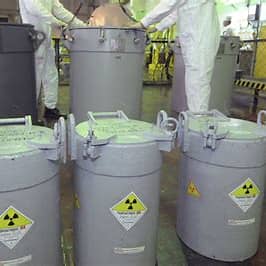
As previously announced, the UK will be returning high level waste (HLW) in the form of vitrified residues to Germany.
Sellafield Ltd, 24 March 2026,
https://www.gov.uk/government/news/third-and-final-shipment-of-vitrified-waste-from-the-uk-to-germany
Sellafield Ltd and Nuclear Transport Solutions (NTS) are making preparations for the third and final return of high level waste (HLW), in the form of vitrified residue, to Germany.
Seven flasks will be transported from Sellafield to the Brokdorf interim storage facility later in 2026.
This will be the final shipment from the UK to Germany. The first shipment of 6 flasks, to Biblis, was successfully completed in 2020 and the second shipment of 7 flasks to Isar was completed in 2025.
The waste results from the reprocessing and recycling of spent nuclear fuel at the Sellafield site in West Cumbria, which had previously been used to produce electricity by utilities in Germany.
Vitrified residue returns are a key component of the UK’s Nuclear Decommissioning Authority (NDA) strategy to repatriate high level waste from the UK, fulfil overseas contracts and deliver UK Government policy.
These returns involve Sellafield Ltd working in partnership with Nuclear Transport Solutions (NTS) to return the waste to German customers.
The shipments will be carried out in full compliance with all applicable national and international regulations, and subject to issue of all relevant permits and licenses.
Sellafield Ltd and NTS will provide further information on the shipments in due course.
Iranian man freed pending further inquiries after UK nuclear submarine base arrest
The man and a woman were arrested at HM Naval Base Clyde, known as Faslane, last week
Anthony France, 23rd March 2026
https://www.standard.co.uk/news/uk/police-iranian-man-nuclear-sub-base-incident-b1276130.html
An Iranian man who was charged after allegedly trying to enter the naval base where Britain’s nuclear submarines are based has been released from custody pending further inquiries, the Crown Office and Procurator Fiscal Service said.
Prosecutors said they have decided there should be no proceedings against a 31-year-old Romanian woman who was also arrested and charged by police following the alleged incident.
The man and woman were arrested on Thursday March 19 following the alleged incident at HM Naval Base Clyde, which is known as Faslane, and later charged, and had been expected to appear at Dumbarton Sheriff Court on Monday.
Faslane is home to the core of the UK’s submarine fleet and the Trident nuclear deterrent.
A Crown Office and Procurator Fiscal Service spokesperson said: “The Procurator Fiscal received a report concerning a 34-year-old man in connection with an alleged incident on March 19 2026.
A War Built on Lies, Sold by Lobbyists, with Innocent Children as its Price
23 March 2026 David Tyler, Australian Independent Media
On 27 February 2026, the night before the bombs fell, Oman’s foreign minister, Badr bin Hamad Al Busaidi, announced that a breakthrough had been reached. After months of back-channel diplomacy, Iran had agreed to never stockpile enriched uranium, to full IAEA verification, and to irreversibly downgrade its existing stock to the lowest possible level. Peace, he said, was “within reach”. Technical talks were scheduled to continue in Vienna the following week.
Fourteen hours later, at 7:00 AM Tehran time on 28 February, the first wave of missiles arrived. China had been working to improve Iran’s situational awareness. It did not matter. The attack came without warning. Reports from Arab media, undenied by Tehran, claimed that Esmail Qaani, commander of the IRGC’s Quds Force, had been arrested and executed as a Mossad agent.
Within twelve hours, the United States and Israel had conducted more than 900 strikes. Two hundred Israeli aircraft, the largest combat sortie in its history, dropped over 1,200 bombs on 500 sites across western and central Iran. US Tomahawk missiles, launched from destroyers in the Arabian Sea, hit leadership compounds, missile factories, naval installations, and the National Security Council offices where Ali Khamenei was meeting his senior advisers. They knew he was there. Netanyahu had personally briefed Trump on the location days earlier. Khamenei was above ground, in daylight, when the strike came. He was dead before midday.
Forty-eight hours later, US forces had flown more than 1,700 sorties and struck over 1,250 targets across 29 of Iran’s 31 provinces. The first six days of Operation Epic Fury cost the United States more than $11 billion.
In that same period, Amnesty International confirmed that a US Tomahawk missile struck a girls’ primary school in Minab. Debris bearing the inscription “Made in USA” and the name “Globe Motors, Ohio” was recovered at the site. At least 170 people were killed. Most were children aged seven to twelve.
Then Donald Trump, in the second year of his second term, appeared on Truth Social to claim the war was about freedom.
The Lobbyists and the Lie
The question corporate media has avoided is simple. Who wanted this war, and how did they get it?
The Washington Post reports that Trump acted after sustained lobbying from Israel and Saudi Arabia. Crown Prince Mohammed bin Salman urged him to strike. Netanyahu’s government pressed the case repeatedly. Their interests converged. Israel sought to restore deterrence and reshape a regional order drifting beyond its control. Saudi Arabia saw an opportunity to weaken a rival it had failed to contain by other means. Together, they found a willing president.
The deeper breach was internal. Pentagon briefers told congressional staff on 1 March that Iran was not preparing to attack US forces or bases unless Israel struck first. The intelligence did not support the war. It was set aside. This was not a failure of information. It was a decision to ignore it.
US intelligence had already assessed that Iran was not pursuing nuclear weapons and would not have the capacity to build one before the end of the decade, even if it chose to do so. The IAEA had affirmed it. At the same time, Badr Al Busaidi was moving between delegations, and Iran’s chief negotiator was describing the talks as the most substantive in years. A framework for Vienna was in place. Technical teams were on standby.
Inside the administration, advisers discussed the advantages of letting Israel strike first to create a cleaner pretext for US entry after Iranian retaliation. That is not strategy. It is sequencing. Diplomacy was not the alternative to war. It was its cover.
Behind the push stood the familiar architecture of American intervention. Senator Lindsey Graham. The Foundation for Defense of Democracies. The American Enterprise Institute. Donor networks that have spent decades advocating regime change in Iran. They did not invent the policy. They sustained it, funded it, and waited for a president prepared to act on it.
Trump supplied the rest. On different days he has offered regime change, nuclear prevention, Iranian freedom, mineral security, and the Venezuela model as justification. None align. That is because the rationale followed the decision, not the other way around.
Congress, meanwhile, has largely abdicated its role. War powers have withered into ritual complaint. Democratic leadership has offered little more than procedural discomfort. The constitutional check on executive war-making is now
political theatre, observed and ignored.
Illegal, Immoral and Known to Be Both
The legal position is clear. The UN Charter permits the use of force only with Security Council authorisation or in self-defence against an armed attack. Neither condition applied. Iran had not attacked the United States or Israel. The Security Council had authorised nothing. The strikes began during active negotiations.
Ben Saul, the UN special rapporteur on counterterrorism, called it what it is: a crime of aggression. Oona Hathaway described it as “blatantly illegal”. The European Council on Foreign Relations reported broad consensus among legal scholars that no valid justification exists. This was not a contested case. It was an unambiguous one.
Within the United States, dissent has come from the margins of power. Rashida Tlaib. Alexandria Ocasio-Cortez. Bernie Sanders. They are not describing a grey area. They are describing what the law already recognises.
What the Bombs Actually Did……………………………………………………………………………………………………………………………..
The Catastrophe in Progress
………………………….This is not a regional disruption. It is a global economic shock. Energy prices feed directly into inflation, into transport, into food. The cost of this war will not be confined to the battlefield. It will be paid at petrol stations, in grocery aisles, and in central bank decisions across the world.
………..Senator Thom Tillis has asked the only question that matters. What are we trying to accomplish?
There is no coherent answer because coherence was never the point. This is the Venezuela model applied to a country four times larger, with a military doctrine built to resist precisely this kind of intervention, and a political system shaped by decades of confrontation with the United States. The architects of this war designed Iraq. The pattern is familiar. The outcome will be too. https://theaimn.net/a-war-built-on-lies-sold-by-lobbyists-with-innocent-children-as-its-price/
A Sunken Nuclear Submarine Is Leaking Radiation Into the Ocean. How Worried Should We Be?

Repairs or just outright cleanup would be expensive, extremely difficult, slow, and, of course, quite dangerous.
By Luis Prada, March 25, 2026, https://www.vice.com/en/article/a-sunken-nuclear-submarine-is-leaking-radiation-into-the-ocean-how-worried-should-we-be/
According to new research published in PNAS, a Cold War-era nuclear submarine sitting at the bottom of the Norwegian Sea is still leaking radioactive material. It’s happening slowly, if unevenly, and it’s contained just enough to avoid becoming a full-scale environmental disaster… for now.
The K-278 Komsomolets sank in 1989 after an onboard fire, taking with it a nuclear reactor and two nuclear torpedoes. It now sits more than 1,600 meters below the surface, in a part of the ocean that is freezing and almost entirely out of reach.
A research team led by Justin Gwynn at Norway’s radiation safety authority analyzed years of data, including a 2019 survey using a remotely operated vehicle. The team found that the wreck is leaking radioactive isotopes, including cesium and strontium, through cracks in its deteriorating hull.
The leaks aren’t constant. They come in waves, with visible plumes drifting out from various spots, like the reactor compartment or a ventilation pipe. Radiation levels take a big jump closer to the submarine, with levels reaching hundreds of thousands of times above normal background radiation levels.
At Least the Nuclear Submarine’s Nuclear Torpedoes Are Still Intact
Terrifying, and here’s where it gets strange: measurements taken from just a few feet away dramatically drop off. Researchers believe this is caused by the ocean diluting the problem. That may be why the surrounding ecosystem isn’t showing any obvious signs of collapse, given all of the toxic radiation. There’s still plenty of marine life clinging to the wreck, including sponges, corals, and anemones. They have slightly elevated radiation levels but no visible signs of deformation or damage, though genetic damage wouldn’t be surprising.
Sediment samples collected nearby show minimal contamination. Things wouldn’t be looking so rosy if the nuclear torpedoes inside it weren’t intact, which they very much are and have been since the 1990s.
So far, there are no signs of imminent disaster. Everything is stable and holding steady… for now.
This won’t always be the case, and it is really more a matter not of if but of when. The reactor is still corroding, and the structure is still weakening. Repairs or just outright cleanup will be expensive, extremely difficult, slow, and, of course, quite dangerous. The risk is contained, but that doesn’t mean it’s going away anytime soon.
US moves to approve more than $16 billion in air defense sales to Middle East
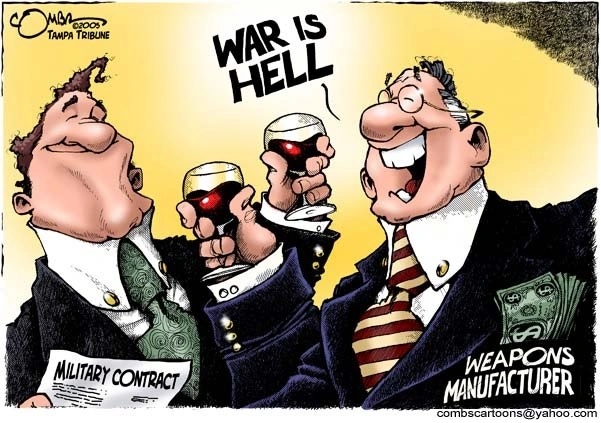
The United States is moving to bolster air defenses across the Middle East, notifying Congress of more than $16.5 billion in potential weapons sales aimed primarily at countering missile and drone threats.
The packages include systems for the United Arab Emirates, Kuwait and Jordan, and range from advanced radar and air defense sensors to counter-drone technology and aircraft munitions, according to several statements released Thursday by the U.S. Department of State.
The notifications come as missile and drone attacks have intensified across the Middle East during the war with Iran, putting pressure on air defense systems used to protect U.S. forces and regional allies.
The State Department said the secretary of state determined that an emergency justified the immediate sale, allowing the administration to bypass the typical congressional review process under the Arms Export Control Act.
Among the proposed sales is a long-range radar for the UAE that is designed to integrate with its Terminal High Altitude Area Defense system, or THAAD, for $4.5 billion.
The UAE package also includes a $2.1 billion fixed-site system designed to counter small drones, as well as $1.22 billion in air-to-air missiles and a $644 million set of F-16 munitions and upgrades to support its fighter aircraft.
Separately, Kuwait would receive $8 billion in lower tier air and missile defense radars designed to detect shorter-range threats, while Jordan’s $70.5 million package focuses on aircraft repair and parts to maintain its existing fleet.
Together, the sales point to a broader effort to build layered air defenses that are capable of detecting and intercepting threats at different ranges.
The demand comes as U.S. air defense systems are being used at a rate analysts worry exceeds the pace at which stockpiles can be replenished.
1 This Month



26 September – International Day for the Total Elimination of Nuclear Weapons


PLEASE OPPOSE HR 8255 AND S.3639 – bills would accelerate satellite deployment, with no environmental review or safeguards – https://ncstd5li.quorum.us/campaign/169331/
To see nuclear-related stories in greater depth and intensity – go to https://nuclearinformation.wordpress.com
-
Archives
- September 2026 (245)
- August 2026 (330)
- July 2026 (355)
- June 2026 (287)
- May 2026 (306)
- April 2026 (356)
- March 2026 (251)
- February 2026 (267)
- January 2026 (308)
- December 2025 (358)
- November 2025 (359)
- October 2025 (375)
-
Categories
- 1
- 1 NUCLEAR ISSUES
- business and costs
- climate change
- culture and arts
- ENERGY
- environment
- health
- history
- indigenous issues
- Legal
- marketing of nuclear
- media
- opposition to nuclear
- PERSONAL STORIES
- politics
- politics international
- Religion and ethics
- safety
- secrets,lies and civil liberties
- spinbuster
- technology
- Uranium
- wastes
- weapons and war
- Women
- 2 WORLD
- ACTION
- AFRICA
- Atrocities
- AUSTRALIA
- Christina's notes
- Christina's themes
- culture and arts
- Events
- Fuk 2022
- Fuk 2023
- Fukushima 2017
- Fukushima 2018
- fukushima 2019
- Fukushima 2020
- Fukushima 2021
- general
- global warming
- Humour (God we need it)
- Nuclear
- RARE EARTHS
- Reference
- resources – print
- Resources -audiovicual
- Weekly Newsletter
- World
- World Nuclear
- YouTube
-
RSS
Entries RSS
Comments RSS
 nuclear-news