Ontario’s nuclear push risks another costly policy failure.

Nuclear power is neither nimble nor affordable and it’s about time the Ontario government stopped posturing otherwise.
Policy Options, Samuel Buckstein , March 20, 2026
Nuclear power is experiencing a resurgence worldwide and Ontario is no exception. The province has a long history with this awesome and terrifying energy technology, and it is once again turning to nuclear power in response to concerns over national sovereignty, economic growth, electrification and decarbonization.
Looking back over Ontario’s troubled history with nuclear energy, it is concerning to see the Ford government stumbling back to the bar for another round of nuclear cool-aid. Yet Ontario’s plan shows little evidence of having done its homework. Contrary to the government’s claims, it is fiscally irresponsible, incapable of delivering the energy the province needs in the time required, and compromises Ontario’s energy security.
When it should be investing in much cheaper and more easily deployed renewables, the province is recklessly doubling down on nuclear despite the evidence against it.
A legacy mired in debt
To understand Ontario’s nuclear trajectory, it is helpful to reflect on its origins. When civilian nuclear power was commercialized after the Second World War, its advocates promised it would be “too cheap to meter.” Buoyed by encouragement and financing from both provincial and federal governments, Ontario Hydro duly invested in a fleet of 20 CANDU reactors at three nuclear power stations over the course of 30 years.
By the turn of the millennium, Ontario Hydro’s nuclear obsession had saddled it with $38.1 billion in debt — $20.9 billion of it stranded (unsupported by assets). This burden was so immense that it toppled the once proud flagship Crown corporation. Ontarians continue to pay for this nuclear hangover today. As of March 2023, ratepayers were still on the hook for $13.8 billion.
Even as late as 1989, with Ontario Hydro already buckling under its crushing debt, the utility was forecasting the need for 10 to 15 new reactors by 2014. Reality proved otherwise, with peak electricity demand in 2014 lower than it had been 25 years earlier.
After a generation of staggering cost overruns and catastrophic international incidents at Three Mile Island, Chernobyl and Fukushima, nuclear power fell out of favour in much of the developed world. Cheaper, more flexible and faster-to-deploy alternatives took its place, first gas and then renewables…………………………………
Lessons from the U.K. and Ukraine
However, Ontario should learn from the United Kingdom, not authoritarian China. The experience of Hinkley Point C, the first new nuclear power plant to be built in the U.K. in more than 20 years, should be a cautionary tale.
At least five years behind schedule and two times over budget, Hinkley Point C will likely be the most expensive nuclear power plant yet. The electricity generated by this colossal waste of rate-payer dollars will cost between two to four times more than renewable energy, which can be brought online in half the time. This is what the provincial government has in store for Ontario.
The scale of Ontario’s plan is immense. In addition to the CANDU refurbishments at Darlington and Bruce, Ontario has announced the refurbishment of Pickering B, one of the oldest and most urban nuclear power stations in the world.
Sovereignty concerns
Ontario has also contracted with GE Vernova Hitachi to build up to four small modular reactors (SMRs) at the Darlington site. It is unclear why the government has committed to building four SMRs before even the first is constructed. The greater concern with this arrangement is GE Vernova Hitachi is a U.S.-controlled company and the fuel supply chain is in the U.S. and France, not Canada…………………………………………………………………………………………………………….
No price tag and no certainty it will pay
Despite these red flags, Ontario’s nuclear ambitions do not stop there. The government is also considering building two new large nuclear power stations at the Bruce site and at a new location near Port Hope. This despite the fact that, like the U.K., the domestic nuclear supply chain has all but vanished. This is precisely the kind of multi-billion-dollar, multi-decade infrastructure lock-in that bankrupted Ontario Hydro.
The government has been silent on how much this plan will cost. No one can predict whether demand will materialize to justify this massive supply expansion, or what electricity prices will be when these reactors finally come online. Committing to decades of investment in such an uncertain environment is sheer folly.
To top it all off, nuclear power is not even operationally flexible. Generation cannot be adjusted rapidly enough to follow demand, and the reactors can only be quickly turned off, but not back on again (it took Ontario more than a day to restore power after the 2003 Great Northeastern Blackout due to neutron poisoning in the reactors).
Renewable options
It does not have to be this way. Much has changed since the last wave of nuclear infatuation. Renewables are now the cheapest source of energy on a levelized basis. While renewables may be intermittent, they are reasonably predictable, and for the first time since the inception of the electricity industry, generation no longer needs to coincide perfectly with consumption. Rapidly falling battery costs have made energy storage a commercially viable reality…………………………………………………………. https://policyoptions.irpp.org/2026/03/ontario-nuclear-energy-costs-risks-renewables/
Fife Council approve Babcock plan for nuclear waste storage building

24th March, By Ally McRoberts, https://www.dunfermlinepress.com/news/25961651.fife-council-approve-babcock-plan-waste-storage-building/
A TEMPORARY storage facility will be built for waste that’s taken out of old nuclear submarines at Rosyth Dockyard.
Fife Council have given the green light to Babcock for a new warehouse between docks two and three for “decommissioning operations”.
The large industrial building – an ‘intermediate waste storage facility’ – will be 27 metres long and up to 20 metres in height with roller doors and security fencing.
Work is currently taking place at the dockyard to cut up and dismantle HMS Swiftsure, one of seven old nuclear subs that have been laid up in Rosyth for decades.
The demonstrator project is attempting a world first by removing the most radioactive parts left in the vessel, the reactor and steam generators.
The new building “will be utilised for cutting processes to aid submarine dismantling” and will go next to a larger steel shed that was approved in 2024 for the project.
A council report said: “The applicant has indicated that the waste to be temporarily stored would not be considered hazardous under the Town and Country Planning (Hazardous Substances) (Scotland) Regulations 2015 and that the site is currently subject to a permit issued by SEPA covering the related decommissioning activity.
“The site is also subject to regular inspections by the Office of Nuclear Regulation (ONR) and is one of their registered sites.
“Ultimately, the decommissioning activities are controlled by SEPA, the Health and Safety Executive and ONR and fall under their own consenting and control regimes, with mechanisms for changes to existing permits to be reviewed and approved by these bodies.”
There were no objections and the report said SEPA had confirmed that “no reprocessing of radioactive waste or materials takes place at Rosyth”.
The seven decommissioned nuclear subs at the yard are Swiftsure, Revenge, Renown, Repulse, Resolution, Dreadnought and Churchill.
Dismantling takes place in three stages with low level radioactive waste taken out first.
Next is the removal of the reactor pressure vessel, which is classed as intermediate level radioactive waste.
The final stage, once all radioactive material has gone, is [?] recycling.
So far the programme has invested more than £200 million in Rosyth Dockyard.
Switzerland Just Exposed Project Ranger’s Weakness
(Project Ranger, a 1,000-acre hypersonic manufacturing campus in Sandoval County, designed to support high-cadence production of hypersonic strike systems. )
Elaine Cimino, 23 Mar 26
Switzerland’s halt on weapons-related exports to the United States is not symbolic. It is a disruption—and it lands directly on projects like Project Ranger.
This facility is being built on the assumption that a complex, global weapons supply chain will function without interruption. That assumption is now broken.
Advanced weapons manufacturing depends on precision components, machine systems, and specialized inputs that cannot be swapped out overnight. When a country like Switzerland shuts off supply, timelines don’t “adjust”—they fail. Production stalls. Certification resets. Entire sequences of manufacturing have to be reworked.
That means one thing for Rio Rancho:
Project Ranger will not meet its LEDA job timelines as promised as long as the supply chain is disruptied.
LEDA agreements are performance-based. Jobs are supposed to materialize on a defined schedule. That schedule is now tied to a disrupted international supply chain. No amount of local approval, zoning, or political messaging can override that reality.
If the components aren’t there, the jobs aren’t there.
And when the jobs don’t show up on time, the public is left holding the bag.
Because the costs are already locked in.
Rio Rancho has approved development while operating with a water deficit. Return flow credits are not being met. Infrastructure is being expanded. Rates are rising. Nearly 40% of residents are low- or fixed-income—and they are being forced to subsidize a project whose economic return is now uncertain.
Water rates were locked designed for developers and project Ranger build out on the residents dollars.
At the same time, the broader economy is unstable. If the economy contracts—and all indicators say that risk is real—projects dependent on fragile, globalized supply chains are the first to break. Delays compound. Costs escalate. Public subsidies become sunk losses.
This is the predictable outcome of building a local economy around a volatile defense supply system.
And yet, construction continues. Question for how long—Until they stopped cold.
Steel is going up. Concrete is being poured. Commitments are being made in real time, while the underlying conditions that justified those commitments are collapsing. Now from the governor to the Castelion excuses to city dodging questions. Don’t count on the fascist tech bros to let their bomb factory to got to rust.
Switzerland didn’t just halt exports.
It exposed the truth: Project Ranger is not in control of its own timeline.And Rio Rancho is not in control of the consequences. The public pays
Nuclear plant told to improve after ‘near misses
Tom BurgessNorth East and Cumbria,
BBC 24th March 2026, https://www.bbc.co.uk/news/articles/cx24l9epwkdo
A nuclear power plant has been ordered to improve safety measures after an increase in “near misses”, the Office for Nuclear Regulation (ONR) has said.
The decision was made after visits to the Hartlepool site, operated by EDF, identified areas where safety improvements were required after an increase in the number of reported “serious incidents”.
The ONR said the plant remained safe to continue to operate and the events were “not associated with radiological or nuclear risk”.
EDF said it had agreed an improvement plan with the regulator last year and was making progress.
ONR said moving the plant into “significantly-enhanced regulatory attention level” related to efforts it was making to bring about improvements in conventional health and safety and performance.
Dan Hasted, ONR’s director of regulation for operating facilities, said safety improvements were required but the decision to put the plant into the new category was not a punitive measure.
He said: “In the conventional health and safety area there has been an increase in the number of serious events or near misses that Hartlepool is legally required to report to the ONR.
“It’s important to note these have not been associated with radiological or nuclear risk.”
Hasted said it was important to look at the root causes to ensure they do not “transfer across to nuclear safety”.
Vital to Teesside
The Hartlepool site operates two gas-cooled reactors and has generated electricity for 43 years.
EDF said the regulator would be inspecting the site more regularly.
A spokesperson said the station was a vital part of the Teesside community.
They said: “Last year we agreed an improvement plan with the regulator.
“We have been making progress against that plan, but understand the ONR feels that some more focused attention is required to support that.
“We are committed to working with the regulator to ensure it is content that improvements required are being implemented.”
Sizewell C Inquiry

House of Commons 23rd March 2026,
https://committees.parliament.uk/work/9713/sizewell-c/
Sizewell C is a planned large-scale nuclear power station on the Suffolk coast. Funded by the government in partnership with the energy provider EDF, as well as private finance, the project is projected to cost £40.5bn to £47.7bn. When constructed, it will have a generating capacity of 3.2GW, meaning it will be able to generate around 7% of the UK’s current electricity demand.
The Public Accounts Committee (PAC) previously reported on the government’s deal with EDF to construct a nuclear power station at Hinkley Point, the site with Sizewell C will be based on. The PAC were concerned that that government’s negotiations were not championing the interests of consumers, who might be locked into an expensive deal for decades, and warned that the poorest would likely be the hardest hit. In its response, the Government accepted all of the PAC’s recommendations and stated the actions it planned to take in response.
The National Audit Office (NAO) will publish its report on Sizewell C in spring 2026. Following the NAO’s investigation, which is likely to examine the government’s current spend, as well as the potential risks to achieving value for taxpayer’s money, the PAC will hear from senior officials at the Department for Energy Security and Net Zero and Sizewell C on the reports key findings.
If you have evidence on these issues, please submit here by 23.59 on Monday 18 May 2026.
Please note that the Committee’s inquiry cannot assist with individual cases. If you need help with an individual problem you are having, you may wish to read the information on Parliament’s website about who you can contact with different issues.
Fears huge nuclear dump buried under concrete dome could be unleashed into the sea
Rory McKeown March 25, 2026,
https://metro.co.uk/2026/03/25/climate-change-unleash-huge-nuclear-dump-buried-concrete-dome-sea-27664599/
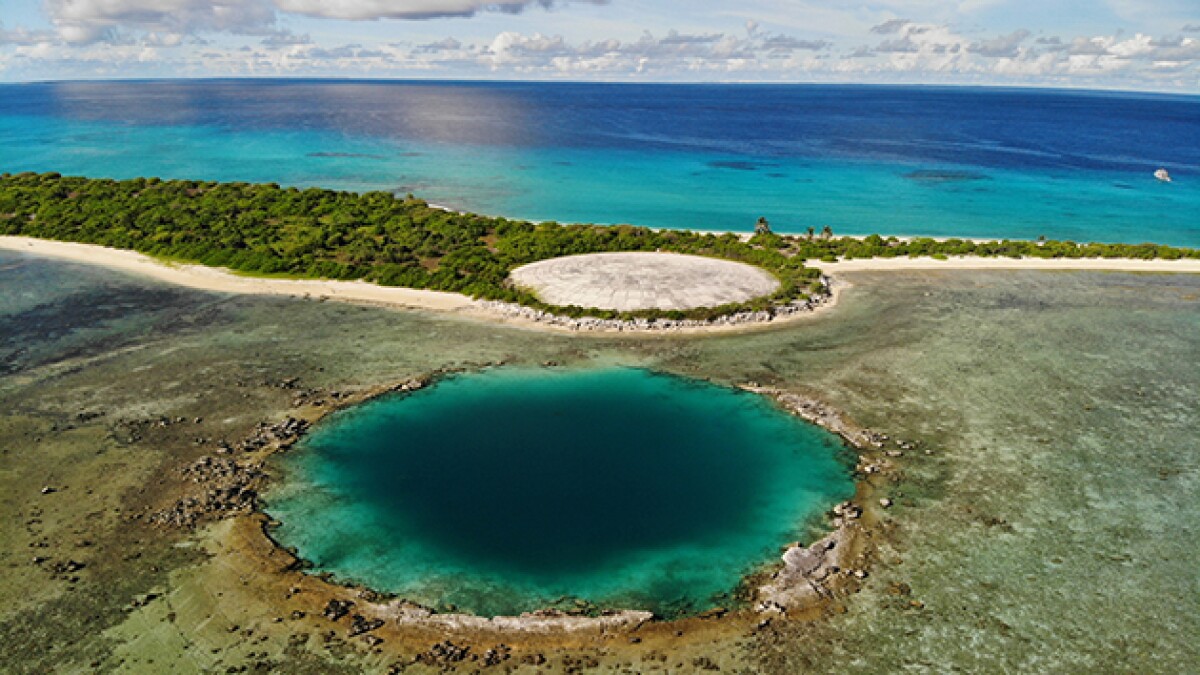
A Pacific Island is sitting atop a nuclear time bomb that could pollute the oceans for centuries.
Scientists have discovered that a concrete structure built to contain radioactive waste from Cold War-era testing is showing signs of deterioration.
The site, known as Runit Dome, sits on Runit Island in the Enewetak atoll in the Marshall Islands.
Although Runit itself is uninhabitable, the atoll is home to around 300.
The dome sits close to the ocean’s edge and rising sea levels and shifting groundwater bring seawater into close contact.
It dates back to a period of intensive nuclear testing. Between 1946 and 1958, the United States conducted 67 nuclear tests across Enewetak Atoll and Bikini Atoll, displacing more than 300 Marshallese people.
One test in particular, an 18-kiloton explosion known as “Cactus”, destroyed part of Runit Island and sent a mushroom cloud approximately six kilometres into the sky.
The Crater created by the Cactus explosion on May 5, 1958. It was later used as a burial pit to inter 84, 000 cubic meters of radioactive soil (Picture: US Defense Special Weapons Agency/Cover Media)
In the late 1970s, the 10 metre deep crater left by the blast was used to store more than 120,000 tonnes of radioactive soil and debris collected from across the atoll.
The site was then sealed with an 18-inch (46cm) concrete cap, forming what is now known as the Runit Dome.
More than five decades later, the structure is showing visible signs of ageing. Cracks have appeared across its surface, and groundwater is able to flow beneath it.
Researchers say this water moves in and out with the tides, potentially carrying radioactive material into the surrounding lagoon. Studies have also indicated that the dome is not watertight.
Ivana Nikolic-Hughes, of Columbia University and president of the Nuclear Age Peace Foundation, observed cracks during a visit in 2018 while measuring radiation levels.
‘These results provide further demonstration of the continuing impact of radioactive fallout on the Marshall Islands and will inform future work to understand how the presence of this isotope might affect current inhabitants and potential resettlement,’ she writes.
American officials have said the structure is not at immediate risk of collapse.
But experts have warned that some of the radioactive elements involved pose extremely long-term risks. Plutonium-239, used in nuclear weapons, remains hazardous for more than 24,000 years.
Arjun Makhijani, president of the Institute for Energy and Environmental Research, said no concrete structure could be expected to last even a fraction of that time.
He noted that cracks have already appeared within decades, highlighting the challenge of containing radioactive material over such long timescales.
‘There are already cracks in it in less than 50 years,’ he told Australian broadcaster ABC.
Scientists say the dome illustrates a broader problem. Certain places we regard as being safe spaces to dump toxic waste, may become less so due to climate change. If sea levels rise and rain increases, water and food supplies change.
Trump’s battle plan for Iran
Bruce Gagnon, Mar 26, 2026, https://brucegagnon177089.substack.com/p/trumps-battle-plan-for-iran?utm_source=post-email-title&publication_id=3720343&post_id=192096004&utm_campaign=email-post-title&isFreemail=true&r=ln98x&triedRedirect=true&utm_medium=email
Europe key to US ops in Iran
Another very interesting piece from the WSJ. These details have been available through OSINT sources but it’s a good roundup showing how key Europe is to US operations against Iran:
- The central command center for US operations against Iran is within Ramstein Air Base in Germany (unsurprising)
- US drone operations are conducted from there as well
- Ramstein is increasingly being used as a hub by the Americans. Military transport aircraft, in particular, land there and took off for the Middle East, including several Boeing C-17 Globemaster III (77.5 tons of load) and Lockheed C-130 aircraft (20 tons).
- American media reported that F-16 fighter jets had been transferred from US Spangdahlem AFB, Germany to the Middle East. According to the trade magazine Air and Space Forces, they are to be used in Iran to combat air defenses. BBC reported that the base is now operating “around the clock.”
- American aircraft stationed in Spain have been relocated to France and Germany after the Spanish government denied the use of the Morón and Rota air bases for attacks on Iran
- Bomber aircraft sorties out of bases in the UK like RAF Fairford
- Refueling operations are based out of Aviano Air Base in Italy and Tubé Air Base in France
- Lajes Air Base in the Azores (Portugal) is serving as a major logistical hub, with dozens of aircraft stationed there at various times during the conflict
- RC-135 Rivet Joint spy planes are operating out of Souda Bay in Crete
- Unspecified “logistics and intelligence assets” are being hosted by Romania
- The piece paints an amusing picture of European attitudes towards this. Keir Starmer’s justification for overcoming his reticence to allow the US to base out of British facilities in the initial wave of strikes is that bomber operations are now “defensive” in nature.
- Merz has said publicly that this “isn’t [Germany’s] war,” but he has no choice but to allow US operations out of German air bases due to pre-existing legal agreements.
- Meloni has spun Italian involvement as minor because only refueling missions are flown out of Aviano. Similarly, French defense minister Vautrin said, “a refueling aircraft is a gas station, not a fighter jet.”
- These technicalities may work on the European public, but it’s difficult to imagine they’ll work on the Iranians.
Let’s focus not on what Trump says, but on what he does.
These are the U.S. military units recently deployed to the Middle East against Iran.
- 160th SOAR (Night Hunters): An elite helicopter unit that secretly inserts and extracts special forces, often at night, using skilled pilots and modified aircraft.
- 75th Airborne Brigade: A light infantry force for rapid raids, airfield seizures, and close-quarters combat missions against high-value targets.
- Delta Force (1st SFOD-D): A top-tier counterterrorism and hostage rescue unit focused on high-risk, precision missions targeting high-value individuals.
- 1st Special Forces Group (1st SFG): Operates primarily in the Asia-Pacific; trains allied forces, conducts unconventional warfare, and supports insurgencies or partner militaries.
- 5th Special Forces Group (5th SFG): Focused on the Middle East; It specializes in counterterrorism, unconventional warfare, and advising local forces.
- US Navy SEALs: Special operations focused on the sea—raids, reconnaissance, direct action, and covert missions from the sea, air, or land.
- But for what mission?
- Islands within or near the Strait of Hormuz—Small but strategically important islands used by Iran to control shipping lanes. US special forces could quickly seize them to reopen the strait.
- An island outside—Iran’s main oil export terminal. Seizing or destroying it would cripple Iranian oil revenues.
- Iranian nuclear facilities or other high-value sites—Potential raids to destroy stockpiles of enriched uranium or related infrastructure.
The war against Iran: Lessons still unlearned
By William Briggs | 26 March 2026, https://independentaustralia.net/life/life-display/the-war-against-iran-lessons-still-unlearned,20853
The dreams of the U.S. President, that it would all be over in days – that the Iranian people would rise against their tyrannical regime – is now a nightmare that Trump has visited upon the world.
The global economy is on the brink of disaster as oil dries up. America and Israel have further isolated themselves from world public opinion and, apart from an ever- shrinking clique of semi-vassal states like Australia, Trump appears to be alone and increasingly dangerous.
The war offers a great many lessons, but while life and history can be great teachers, there seem to be precious few pupils ready to learn those lessons. This applies equally to apologists for U.S. power, to governments of all stripes and to many of those who inhabit the Left and lay claim to Marxist credentials.
The war was never about “liberating” the Iranian people from the right-wing theocracy. It was about securing a compliant regime that would ensure the flow of oil and to make sure that the USA, as a fading imperial power, maintained global hegemony — both politically and economically.
The slogan that accompanied the wars of aggression against Iraq, that tore Libya apart and which laid waste to so much of the Middle East was simply, No Blood for Oil! The years have slipped by, and yet the same foul motivation for despoiling the globe and destroying a people remains.
Our mainstream media know this to be true, even as the “story” turns its focus to the retaliation by Iran and to the oil pressure that the blocking of the Straits of Hormuz entails. The same media focuses on potential oil shortages, and rightly so, but seems less keen to link that invasion to the fact that people are paying stupid prices for petrol and diesel.
Fewer voices can be heard that would remind the people of how the war started and who is responsible. That has become largely the responsibility of the Left — the Marxists, the campaigners against war and imperialism.
This is as it should be, but something is very wrong. Marxism is quite clear that economics is the defining factor and that politics works with and responds to economic demands. The war, then, can only be understood from an economic perspective. But is it being understood in this way? Sadly, no.
Some see it as a political gamble by a beleaguered and dangerously unhinged U.S. President. Some portray it as a means, by Israel, of destroying any potential risk to its domination of the region. Some come a step closer by recognising the strategic desire to weaken China, as it is a principal customer for Iranian oil.
Any and all of these considerations are enough to allow blame to be sheeted home to the USA and Israel, but there is a deeper, more worrying aspect to this. The United States has been and remains the single biggest military force and greatest economic power that the world has seen. It is, as the Marxist Left will say, an imperialist power. It is also a declining power.
For decades, its main preoccupation has been how to hold back the rising tide of its one great rival. China’s rise, accompanied by a global capitalist economy that has run out of ideas and resilience, ensures that wars are either finishing, beginning, or in the planning stage. A failing economic structure is driving the world to the point of no return. The war against Iran is one battle in this endless spiral into decay. The USA, as the central power in the capitalist global economy, is more than willing to destroy entire nations in its quest to keep the sinking ship afloat.
No crime is too much. The U.S. bombing the girls’ school in Iran, the Israeli destruction of oil facilities on the edge of Tehran that have led to acid rain and an unimaginable civilian health disaster, sicken all reasonable people. But those who plan such actions are not among the reasonable.
These acts need to be condemned. Governments need to show at least a modicum of decency. Our Prime Minister needs to stop slinking in the shadows and act. He needs to denounce such actions. He needs to find the courage to say “No!” and to work to secure the natural resources needed to keep Australia functioning. This is unlikely. Our political structures are such that we remain totally subservient to the demands and interests of the USA..
Those whose anger compels them to take to the streets deserve better than the Babel that has become the protest movement. The most recent action in Melbourne, which was dominated by ever more shrill denunciations of Israel, while mention of the USA and its causal responsibility for the war was at best an afterthought. Protest has merit, it is necessary and has purpose. It also needs focus, if it is to have either merit or purpose.
Protest is also about winning the hearts and minds of people. Sound and fury might be a therapy for some, but numbers count and numbers must grow, people must be educated, encouraged to talk to others, to build a movement that can go beyond noise.
Part of that building process must include the raising of collective consciousness. It must be able to show and convince people that this or that crime of the USA, of Israel, of imperialism, is not isolated, or in any way an aberrant thing, but is a symptom of a deeper, structural crisis. It is not enough for the ideologues to make demands that cannot be achieved. The protest movement, the anti-war movement, should aim at providing a vehicle, a voice for those who want something better than news screens full of war stories and a Federal Government pathetically marching to the fifes and drums of a fading U.S. empire.
European Union leaders have been prepared to stand back a little; to say that the war is not their war. It is hard to imagine an Australian government being daring enough to question anything that comes from Washington. As the sun sinks on U.S. hegemony, Australia seems ready to go down with the American ship.
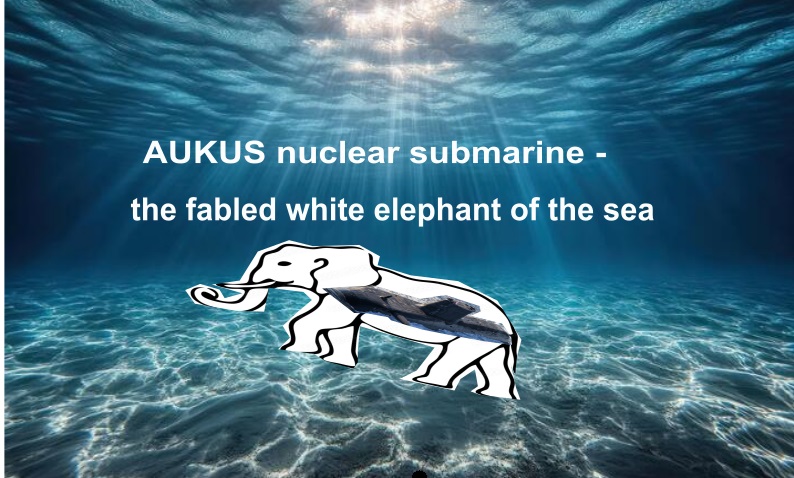
Nuclear to take up to quarter of British defence budget
26 Mar 2026
https://ukdefencejournal.org.uk/nuclear-to-take-up-to-quarter-of-british-defence-budget/
The UK nuclear enterprise is expected to absorb between 20 and 25 percent of the Ministry of Defence budget in the coming years, as spending rises across a growing portfolio of submarine, warhead, infrastructure and fuel programmes.
Giving evidence to the Public Accounts Committee, Permanent Secretary Jeremy Pocklington said defence nuclear spending totalled about £10.9 billion in 2024-25, equivalent to 18% of the department’s budget, and is expected to rise to around 20% in the current financial year.
He told MPs that the share would continue to grow, saying the Defence Nuclear Enterprise was on course to account for “between about 20% and 25% of the MOD’s overall budget.” That growth, he said, reflects both inflation and a broader expansion in the nuclear portfolio.
Pocklington said the increase was not being driven primarily by the core Dreadnought submarine build, which he said remains within the range previously set out to Parliament. “For Dreadnought, we are still within the range that the Department stated to Parliament,” he said, referring to the longstanding £31 billion programme cost plus £10 billion contingency.
Instead, he pointed to other pressures within the wider enterprise, including “scope changes related to AUKUS” and the re-establishment of a defence nuclear fuel capability, which he said had not featured in earlier forecasts in the same way.
He described the Defence Nuclear Enterprise as a large and increasingly complex portfolio, covering not only Dreadnought and Astute, but also warhead work, infrastructure at Barrow, naval bases at Clyde and Devonport, and fuel production. “There are nine programmes with a whole-life cost of over £10 billion in the Defence Nuclear Enterprise,” he said
Pressed repeatedly for a 10-year forecast, a more specific Dreadnought in-service date, and an update on how much of the £10 billion contingency has been drawn down, Pocklington declined to provide further detail, saying much of that would have to wait for the delayed Defence Investment Plan.
On timing, he said there had been no change to the government’s position that the first Dreadnought boat would enter service in the “early 2030s,” but did not narrow that window further.
Committee chair Sir Geoffrey Clifton-Brown argued that the exact date mattered, given the pressure on the existing deterrent fleet and the implications for long submarine patrols and support arrangements if replacement boats arrive later in the decade.
Taxpayers to cough up £65.6 million for nuclear “industry-informed” education in British universities
University of Derby helps drive UK nuclear skills expansion
The University of Derby is part of two university consortia that have been awarded funding to lead new doctoral training programmes designed to develop the UK’s future nuclear workforce. The Government has announced a £65.6 million investment for a bespoke nuclear Doctoral Focal Award
Delivered by UK Research and Innovation (UKRI) and match-funded by industry, the programmes will train more than 500 doctoral students at universities across the country, over the next four academic intakes. The University of Derby is a partner in two of the six new national doctoral training programmes announced.
The first consortium, led by Bangor University, has secured funding to establish PANDA (the Programme for Accelerating Nuclear Development and Applications), which will train up to 100 doctoral researchers. PANDA will be delivered in partnership with the UK National Nuclear Laboratory and the universities of Bristol, Birmingham, Cambridge, Derby, Imperial College London and Manchester. Together, these partners will support a new generation of researchers equipped to meet the UK’s future nuclear and clean‑energy needs, including a specific focus on defence.
Derby is also a partner in the STAND-UP (Skills and Training driving availability of National Defence Assets UP skilling) programme, led by the University of Strathclyde, which will train 80 Engineering Doctorate researchers.
This programme aims to develop the next generation of nuclear engineers and support the transition to ‘net zero’. It will help strengthen the UK’s capabilities in nuclear engineering, advanced manufacturing, digital technologies and nuclear decommissioning, bringing together partner universities Cumbria, Lancaster, Nottingham, Birmingham and Surrey.
Professor Kathryn Mitchell, vice-chancellor and chief executive of the University of Derby, said: “Developing the skills and expertise of the next generation is essential to securing a sustainable talent pipeline for the nuclear sector. The University of Derby is committed to working with partners to drive bold action on the UK’s nuclear skills shortage.”
She continued: “Together with our partners, we are creating clear pathways into specialised careers, delivering industry-informed education, and supporting cutting edge research. Through this work, we are helping to build a stronger national workforce and ensuring the future success of this vital sector.”
The announcement follows the Nuclear Skills Plan, launched in May 2024, which contained a recommendation to quadruple the number of nuclear fission doctoral students to address the shortage of high-level nuclear skills across both civil and defence and replace an aging workforce.
Over 500 doctoral students will be trained at universities across the country in academic years 2026/27 to 2033/34, quadrupling today’s intake of nuclear doctoral students. These doctoral students will be equipped with a broad range of advanced technical skills essential for the UK’s future civil and defence nuclear programmes, supporting the UK’s economic growth, energy and national security, and ‘net zero’ objectives.
Trump’s $200 billion Iran spending request reveals scale of US war plans.

In reality, the administration is planning the most endless of all endless wars—an open-ended invasion aimed at subjugating or destroying a country of 90 million people.
The $200 billion is a supplemental—on top of the $839 billion defense bill Congress already passed for fiscal year 2026, the largest military budget in American history. If approved, direct military spending this year will exceed $1 trillion. US President Donald Trump has called for a $1.5 trillion military budget for fiscal year 2027—a 50 percent increase.
Andre Damon, 19 March 2026, https://www.wsws.org/en/articles/2026/03/20/iuck-m20.html
The Washington Post reported Wednesday that the Trump administration is seeking more than $200 billion to fund the war against Iran.
At a press briefing Thursday, a reporter asked Defense Secretary Pete Hegseth “why a package this large is necessary?” Hegseth not only confirmed the $200 billion figure but suggested it could grow. “I think that number could move,” he said. “It takes money to kill bad guys. So we’re going back to Congress to ensure that we’re properly funded for what’s been done, for what we may have to do in the future.”
And what, exactly, are these unspecified things the administration “may have to do”?
In 2003, when 150,000 American soldiers invaded and occupied Iraq, Congress appropriated $51 billion—a quarter of what the Trump administration is requesting before a single ground soldier has entered Iran. At the height of the 2007-2008 surge, when nearly 170,000 American soldiers occupied the country, the war cost roughly $144 billion a year.
In reality, the $200 billion is not about “what we may have to do in the future” but about what the White House is actively conspiring to do in the present. The budget request comes as the administration prepares a ground invasion of Iran, deploying 5,000 Marines from the Pacific to the Middle East amid demands by the Wall Street Journal and leading Republicans for the seizure of Kharg Island and the Strait of Hormuz.
Reuters reported Wednesday that the Trump administration has discussed sending ground forces to seize Kharg Island, the hub for 90 percent of Iran’s oil exports, and has separately discussed deploying US forces to secure Iran’s stocks of highly enriched uranium. They are operational plans for the invasion and occupation of Iranian territory—and they explain why the administration is demanding more money than was appropriated for any single year of the Iraq invasion.
Just as with the months and years of planning that preceded the US-Israeli attack on Iran, the ground invasion is being prepared behind the backs of the American people, who overwhelmingly oppose the war. Trump called the war an “excursion.” Vice President JD Vance promised it would not become a “quagmire.” At the same briefing where he confirmed the $200 billion request, Hegseth told reporters: “The media wants you to think, just 19 days into this conflict, that we’re somehow spinning toward an endless abyss or a Forever War or a quagmire. Nothing could be further from the truth.”
In reality, the administration is planning the most endless of all endless wars—an open-ended invasion aimed at subjugating or destroying a country of 90 million people.
The administration sees the Iran war as a prelude to an effort to subjugate China, the world’s largest economy by purchasing power parity. As former Republican Congressman Patrick McHenry put it on ABC’s This Week, the wars in Venezuela and Iran are “targets of opportunity to reshape the world.” He added: “Venezuela was in service to American energy dominance. The issue with Iran was a target of opportunity… The results here will mean that, with China, the president’s hand will be enhanced.”
The $200 billion is a supplemental—on top of the $839 billion defense bill Congress already passed for fiscal year 2026, the largest military budget in American history. If approved, direct military spending this year will exceed $1 trillion. US President Donald Trump has called for a $1.5 trillion military budget for fiscal year 2027—a 50 percent increase.
And $200 billion is only what the administration will admit to. In 2002, Bush’s chief economic adviser Lawrence Lindsey was fired for estimating the Iraq war would cost $100 to $200 billion. Defense Secretary Donald Rumsfeld put the figure at “something under $50 billion.” When told outside estimates ran to $300 billion, Rumsfeld replied: “Baloney.” Deputy Defense Secretary Paul Wolfowitz assured Congress that Iraqi oil revenues would pay for reconstruction. The actual cost, including veterans’ care, disability payments and interest on the debt, is now estimated by Brown University’s Costs of War Project at more than $8 trillion.
The waging of continuous wars, combined with the 2008 and 2020 bank bailouts, has produced an explosion of US debt. In 2000, before the Iraq war, the national debt stood at $5.7 trillion. By 2010, after the Iraq surge and the $700 billion TARP bank bailout, it had reached $12.3 trillion. By 2020, after $4.6 trillion in COVID bailouts, it hit $27 trillion. It now stands at $39 trillion—nearly seven times what it was a quarter century ago.
The United States credit rating has been downgraded three times—by Standard & Poor’s in 2011, Fitch in 2023 and Moody’s in 2025—each time because of military spending and the refusal of either party to cut the military budget. The Vietnam War destroyed Lyndon Johnson’s Great Society programs and produced the inflation of the 1970s, which the ruling class broke through the Volcker shock—mass unemployment to crush wages. The Iraq and Afghanistan wars were waged alongside tax cuts for the wealthy and the gutting of public services.
Trump’s “One Big Beautiful Bill,” signed last July, imposed $1 trillion in cuts to Medicaid over the next decade, $536 billion in cuts to Medicare and $186 billion in cuts to food assistance through the Supplemental Nutrition Assistance Program (SNAP)—the largest cut to food aid in American history. The fiscal year 2026 budget slashed domestic spending by 22.6 percent—cutting the Department of Housing and Urban Development (HUD) by 44 percent, the Centers for Disease Control and Prevention (CDC) by 44 percent and the National Institutes of Health (NIH) by $18 billion—while increasing the military budget by 13 percent.
Within 24 hours of the administration confirming it is seeking $200 billion for the war, the Postmaster General testified to Congress that the United States Postal Service (USPS) could run out of cash as soon as October—with just $8.2 billion in reserves, enough to cover 33 days of operations. The USPS employs more than 500,000 workers and holds billions in pension and retirement obligations. The manufactured insolvency is a pretext for raiding those funds—taking workers’ pension money and spending it on the war.
Medicare, Medicaid and Social Security represent trillions more. The ruling class sees these programs as money to be seized. The administration does not see pensions and healthcare as social programs. It sees them as collateral.
Trump has promised the economic pain will be a temporary “blip.” This will not pass in weeks. It will mean a permanent reduction in working-class living standards, just as the Iraq war did.
The struggle to defend Medicare, Medicaid, Social Security, pensions and public services cannot be separated from the struggle against war. They are the same struggle. The $200 billion the administration demands is money taken from the programs working people depend on to survive.
The Democrats have systematically enabled Trump’s wars. In January, as Trump declared that a massive armada was steaming toward Iran, every leading Democrat in Congress voted for the $839 billion military budget—Minority Leader Hakeem Jeffries, Minority Whip Katherine Clark, Senate Minority Leader Chuck Schumer and Minority Whip Dick Durbin all voted in favor. Their criticism of the war has centered on procedural issues, along with demands that US imperialism direct its fire at Russia and China.
Opposition must come from below—from workers in the United States, in Iran, across the Middle East and around the world—organized independently of both capitalist parties, armed with a socialist and internationalist program, and fighting to build the International Committee of the Fourth International (ICFI) as the revolutionary leadership of the working class. The fight against imperialist war is the fight against the capitalist system that produces it.
UK’s Astute nuclear submarine timeline is very unlikely to be met.

Brief Update on the SSN Programme
17.03.2026, https://www.nuclearinfo.org/article/brief-update-on-the-ssn-programme/
The Astute project has the objective of delivering conventionally armed, nuclear-powered submarines for the Royal Navy, otherwise acronymised as SSNs. Seven submarines are planned to be delivered, with five currently operational: HMS Astute, HMS Ambush, HMS Artful, HMS Audacious, and HMS Anson. During February, HMS Anson arrived in Australia at HMAS Stirling. This visit was intended to be for maintenance and a symbolic demonstration of the trilateral AUKUS partnership between the UK, US, and Australia, which aims to develop nuclear-powered submarines with advanced conventional capabilities. AUKUS submarines are planned to succeed the Astute class. The sixth Astute-class submarine, HMS Agamemnon, was commissioned into the Royal Navy and completed its first dive last year, while HMS Achilles is currently under construction. The seven Astute submarines were once hoped to be delivered by the end of this year, but this timeline is very unlikely to be met.
This reflects the persistent challenges that have long bedevilled submarine construction in the UK, including delays, technical issues, accidents, and rising costs. HMS Anson itself for instance was delayed (among other factors) due to setbacks with HMS Audacious, while the 2024 fire in Barrow, the main shipyard for manufacturing the UK’s nuclear submarines, will further delay progress on the final Astute submarine. Also, AUKUS may generate geopolitical tensions among its partners. A US Congressional report earlier from this year has raised the possibility of withholding submarines from Australia due to concerns that the sale may divert US submarine capacity from a potential conflict with China. Meanwhile, some analysts question the strategic trade-offs of deploying HMS Anson to the Indo-Pacific, given the UK’s defence commitments in Europe and the Atlantic. These issues point to dual risks facing the SSN programme: first, achieving successful and timely delivery, and second, achieving agreement among allies over its strategic objectives and operational use.
Nuclear Deregulation – DOGE Goes Nuclear: How Trump Invited Silicon Valley Into America’s Nuclear Power Regulator

ProPublica, by Avi Asher-Schapiro, March 20, 2026
Reporting Highlights
- Fast Nuclear Buildout: The Trump administration is rapidly rewriting rules to support the development of nuclear power plants.
- Aligning With Industry: Staffers from DOGE are revamping rules in ways to ease regulations and provide financial breaks for industry.
- “No Longer Independent”: Nuclear Regulatory Commission veterans say the administration is limiting oversight in dangerous ways.
Last summer, a group of officials from the Department of Energy gathered at the Idaho National Laboratory, a sprawling 890-square-mile complex in the eastern desert of Idaho where the U.S. government built its first rudimentary nuclear power plant in 1951 and continues to test cutting-edge technology.
On the agenda that day: the future of nuclear energy in the Trump era. The meeting was convened by 31-year-old lawyer Seth Cohen. Just five years out of law school, Cohen brought no significant experience in nuclear law or policy; he had just entered government through Elon Musk’s Department of Government Efficiency team.
As Cohen led the group through a technical conversation about licensing nuclear reactor designs, he repeatedly downplayed health and safety concerns. When staff brought up the topic of radiation exposure from nuclear test sites, Cohen broke in.
“They are testing in Utah. … I don’t know, like 70 people live there,” he said.
“But … there’s lots of babies,” one staffer pushed back. Babies, pregnant women and other vulnerable groups are thought to be potentially more susceptible to cancers brought on by low-level radiation exposure, and they are usually afforded greater protections.
“They’ve been downwind before,” another staffer joked.
“This is why we don’t use AI transcription in meetings,” another added.
ProPublica reviewed records of that meeting, providing a rare look at a dramatic shift underway in one of the most sensitive domains of public policy. The Trump administration is upending the way nuclear energy is regulated, driven by a desire to dramatically increase the amount of energy available to power artificial intelligence.
Career experts have been forced out and thousands of pages of regulations are being rewritten at a sprint. A new generation of nuclear energy companies — flush with Silicon Valley cash and boasting strong political connections — wield increasing influence over policy. Figures like Cohen are forcing a “move fast and break things” Silicon Valley ethos on one of the country’s most important regulators.
The Trump administration has been particularly aggressive in its attacks on the Nuclear Regulatory Commission, the bipartisan independent regulator that approves commercial nuclear power plants and monitors their safety. The agency is not a household name. But it’s considered the international gold standard, often influencing safety rules around the world.
The NRC has critics, especially in Silicon Valley, where the often-cautious commission is portrayed as an impediment to innovation. In an early salvo, President Donald Trump fired NRC Commissioner Christopher Hanson last June after Hanson spoke out about the importance of agency independence. It was the first time an NRC commissioner had been fired.
During that Idaho meeting, Cohen shot down any notion of NRC independence in the new era.
“Assume the NRC is going to do whatever we tell the NRC to do,” he said, records reviewed by ProPublica show. In November, Cohen was made chief counsel for nuclear policy at the Department of Energy, where he oversees a broad nuclear portfolio.
The aggressive moves have sent shock waves through the nuclear energy world. Many longtime promoters of the industry say they worry recklessness from the Trump administration could discredit responsible nuclear energy initiatives.
“The regulator is no longer an independent regulator — we do not know whose interests it is serving,” warned Allison Macfarlane, who served as NRC chair during the Obama administration. “The safety culture is under threat.”
A ProPublica analysis of staffing data from the NRC and the Office of Personnel Management shows a rush to the exits: Over 400 people have left the agency since Trump took office. The losses are particularly pronounced in the teams that handle reactor and nuclear materials safety and among veteran staffers with 10 or more years of experience. Meanwhile, hiring of new staff has proceeded at a snail’s pace, with nearly 60 new arrivals in the first year of the Trump administration compared with nearly 350 in the last year of the Biden administration…………………………………………………………………………………………………………………………………………………………………………………………………………………………………………………
Meanwhile, some staff members, other career officials say, are afraid to voice dissenting views for fear of being fired. “It feels like being a lobster in a slowly boiling pot,” one NRC official who has been working on the rule changes told ProPublica, describing the erosion of independence.
………………………………………………………………………………………………………………….. “Nuke Bros” in Silicon Valley
One Trump administration priority has been making it easier for so-called advanced reactor companies to navigate the regulatory process. These firms, mostly backed by Silicon Valley tech and venture money, are often working on designs for much smaller reactors that they hope to mass produce in factories.
“There are two nuclear industries,” said Macfarlane, the former NRC chair. “There are the actual people who use nuclear reactors to produce power and put it on the grid … and then there are the ‘nuke bros’” in Silicon Valley.
………………………………………………………………………………………………………… https://www.propublica.org/article/trump-nuclear-power-nrc-safety-doge-vought
No Good Exit

21 March 2026 David Tyler, Australian Independent Media
John Mearsheimer sees war with Iran as a strategic folly, arguing it is unwinnable, will not destroy Iran’s nuclear knowledge, and could, instead, boost Iran’s interest in acquiring nuclear weapons.
No stranger to irony, or paradox, Dr Mearsheimer does not mince words. The West Point graduate and former Air Force Captain, now a distinguished scholar at Cornell, has spent two decades documenting exactly how an American Eagle could get sucked into the vortex of wars that serve its bovver-boy, or Middle-East proxy, Israel, and its bellicose aspirations at enormous cost.
When Mearsheimer speaks about a US military adventure in Iran, he is not waffling. He is quoting from the autopsy he wrote in advance. And Mearsheimer’s verdict on Operation Epic Fury, is that Trump has dug himself into a deep hole; an opinion all the more damning for its formal, almost courteous understatement:
“I think President Trump has put himself in a situation where he really doesn’t have a good exit strategy.”
Trump’s catastrophe may be complex and irretrievable, but it was not inevitable. It was predicted, in detail, by experts whose job it was to predict it, and who were systematically ignored, discredited or sacked for saying so. Trump ignored the experts. This is how he can always snatch defeat from the jaws of victory.
The pretext for the attack doesn’t bear scrutiny. Before the first double-tap Tomahawk missile crushed and burned alive 168 schoolchildren on 28 February, Oman’s Foreign Minister Badr Al-Busaidi was announcing what could have been a diplomatic coup: Iran had agreed to never stockpile enriched uranium, had accepted full IAEA verification, and was prepared to irreversibly downgrade its enriched uranium to the lowest level possible.
Peace, he said, was “within reach.” Further talks were due to resume on 2 March.
Iran now says that the US President never intended to avoid war and that the talks were a ruse to get more time to set up a military attack. It’s true. It’s also true that Trump and Netanyahu are driven by the need to stay out of court. Both are hell-bent in quest of a more enduring diversion-and both would have always pulled the trigger anyway. Even without Saudi encouragement……………………………………………………………………………………………………………………………………….
Iran now says that the US President never intended to avoid war and that the talks were a ruse to get more time to set up a military attack. It’s true. It’s also true that Trump and Netanyahu are driven by the need to stay out of court. Both are hell-bent in quest of a more enduring diversion-and both would have always pulled the trigger anyway. Even without Saudi encouragement.
……………………………………….. Many missile strikes in the war’s opening phase are seen by UN human rights experts as potential war crimes under the Rome Statute. At least a million Lebanese people have been displaced.
https://googleads.g.doubleclick.net/pagead/ads?gdpr=0&client=ca-pub-3072351457465524&output=html&h=280&adk=2235633406&adf=387799125&w=678&fwrn=4&fwrnh=100&lmt=1774125889&rafmt=1&armr=3&sem=mc&pwprc=5956714339&ad_type=text_image&format=678×280&url=https%3A%2F%2Ftheaimn.net%2Fno-good-exit%2F&host=ca-host-pub-2644536267352236&fwr=0&pra=3&rh=170&rw=678&rpe=1&resp_fmts=3&fa=27&uach=WyJXaW5kb3dzIiwiMTkuMC4wIiwieDg2IiwiIiwiMTQ2LjAuNzY4MC44MCIsbnVsbCwwLG51bGwsIjY0IixbWyJDaHJvbWl1bSIsIjE0Ni4wLjc2ODAuODAiXSxbIk5vdC1BLkJyYW5kIiwiMjQuMC4wLjAiXSxbIkdvb2dsZSBDaHJvbWUiLCIxNDYuMC43NjgwLjgwIl1dLDBd&abgtt=7&dt=1774125788538&bpp=1&bdt=3727&idt=0&shv=r20260318&mjsv=m202603170101&ptt=9&saldr=aa&abxe=1&cookie=ID%3Dd85616c6c9bd2a6c%3AT%3D1770448449%3ART%3D1774125788%3AS%3DALNI_MbtaAxRxG9MqgIcWMShV7avYd9mzg&gpic=UID%3D000011f58c2d07ec%3AT%3D1770448449%3ART%3D1774125788%3AS%3DALNI_MasvLU7CXh2jEp0EwTeqK932dwU3A&eo_id_str=ID%3D1b13a2c219278375%3AT%3D1770448449%3ART%3D1774125788%3AS%3DAA-AfjYkqjLrM9kIjGmfRgvZ6J5n&prev_fmts=0x0%2C678x280%2C678x280%2C1265x585%2C1265x122%2C678x280%2C678x280%2C678x280%2C678x280&nras=10&correlator=6552144162929&frm=20&pv=1&u_tz=660&u_his=2&u_h=720&u_w=1280&u_ah=672&u_aw=1280&u_cd=32&u_sd=1.5&dmc=8&adx=117&ady=5250&biw=1265&bih=585&scr_x=0&scr_y=2914&eid=95378429%2C95384535%2C42533294%2C95383746%2C95386039%2C95379823&oid=2&psts=AOrYGslFnD4MCobWfWWaTnZO58i7aVt7D29MIFScmcewoQBVZjRgX1f3b9NwGtVkwcGa5Z-1eoPb2VtruRZFG8PO7KJlApj9H8fZyI5zqVkCG4CmXvZmwQ3Box5rCHMTD73x%2CAOrYGslqDhuWvVFLDi_GZC5QcWZeq0_skU9KxspMCRk4eB7tugVH2yaIxi5G3F9O2Lf92rq8U8mMNGoqiazmp1b23UZ4BdLvnwQ3WxWxgRykEZSB%2CAOrYGskeRH4aNaTYW0JyG3hzeADf9iRr0p5FcMslU9tcjQOmsfMxJqNzQgBma4wHaEq5_EyPCfryTvgRCXzrdNA6zXpsYzi2aGa6YBEEsIrD4jk%2CAOrYGsnZlMGylK-NV6L01yQbFeOM_0OyuT3kK6KdRWPAa0ZJ-_fUiqW2vcAZvsE7G9PHnZ_OKbVa1uJ56Zi1H-BaO31G2fiS7gxE7wk%2CAOrYGskrNVCKFAP1enIxqXLvS3enuTJ1vSXSpDKMa_FTU_LIa3i733aUFije2OhcKHUesjN9G6616z_zZ30fUvobJwp9R63Myz8XDtyBjjQdpDmpSw%2CAOrYGsnrFCx6HaDRyuw7FJgzshe7poT_x7bpz6edsQFJsiawAUvVj1cdcmwj8C0dhnUgTtbxVbGZiUsGMRomL8AnScaaQ9jMiTGt-38YWkcIDhQ%2CAOrYGsmGx2dhmzE4w3QV-X9NmiFCpDNgjknMYKowrNLwx0eLRev6mAN_VRDxDLeClYOlXHDvSoaiEQKey8wTUJbgVV1DbfGqHw1h5d1Wiu7sDg&pvsid=5130612622751585&tmod=1337930814&uas=1&nvt=1&fc=1408&brdim=0%2C0%2C0%2C0%2C1280%2C0%2C1280%2C672%2C1280%2C585&vis=1&rsz=%7C%7Cs%7C&abl=NS&fu=128&bc=31&bz=1&pgls=CAEaBTYuOS40~CAEQBBoHMS4xNzQuMA..&num_ads=1&ifi=8&uci=a!8&btvi=8&fsb=1&dtd=M
Meanwhile, Donald Trump, on his Truth Social, calls Iran “militarily ineffective and weak.”…………………………………………………………………………………..
Trump is demanding NATO allies help secure the Strait of Hormuz. NATO is, to put it charitably, otherwise engaged.
Retreat? Mearsheimer is equally clear-eyed. Declare victory and withdraw, and it will be “perceived as a humiliating defeat for the US.” And that assumes Iran cooperates. “They have many cards to play,” he notes. “They can inflict significant losses. Therefore, even if we retreat, it’s unclear whether this will solve the problem.”
Trump promised a generation of winning. He has delivered a generation’s worth of losing, compressed into twenty days. And let’s not forget his Latin American fiasco. El Presidente, who endeared himself to millions south of the border with his talk of “shithole” countries, has rather a lot of Venezuelans on the warpath after his regime change curdled almost on contact into a neocolonial farce, with Maduro gone, sovereignty shredded and the gringos already with their fingers in the till.
Cuba could be next on Hegseth’s hit-list? Trump does need to keep the distractions going. Meanwhile disinformation is being pumped as vigorously as the Ford plumbing. And with similar effect.
Fox News cheerleaders and the Netanyahu communications office have been carefully not telling the American public: Iran is not the isolated, backward, sanction-crippled military of the pre-war briefings.
It is fighting with Russian eyes and Chinese precision. Together, those two contributions have changed the strategic calculus in ways that neither Washington nor Tel Aviv appear to have seriously gamed………………………………………………………………………………………………………………………………………………………………………………….
The Netanyahu Factor: Closing Every Window
Mearsheimer’s analysis cuts deepest on the question of diplomacy.
On Day 19, Israeli strikes killed two of Iran’s most consequential figures: security chief Ali Larijani and Basij commander Gholamreza Soleimani. Larijani’s death was not a military decapitation strike in the conventional sense. It was the targeted elimination of Iran’s most experienced nuclear negotiator; a pragmatic, sophisticated operator whom analysts had consistently identified as one of the few figures capable of opening a negotiated exit.
Israel killed the man who could have brokered the ceasefire Netanyahu claims to want.
Netanyahu told Sean Hannity that Operation Epic Fury “will usher in an era of peace that we haven’t even dreamed of” and create conditions for Iranians to form “their own democratically elected government.” He said something substantially similar about Iraq in 2003. About Libya in 2011. The script is laminated. The outcomes are identical. The lesson is never drawn.
He is currently in a bunker, hinting with characteristic coyness that perhaps the Iranian regime survives after all. Of course it does. The Islamic Republic has outlasted everything the West has thrown at it: the Iran-Iraq war, decades of sanctions, assassination campaigns, Stuxnet, and the twelve-day bombing campaign of last June………………………………………………………………………………………………………………..
The Intelligence Scandal Underneath It All
One more thread demands to be pulled. Tulsi Gabbard, Director of National Intelligence, has been accused of altering her Senate testimony on Iran; specifically, of omitting intelligence details that contradicted Trump’s claim that Tehran posed an imminent threat. The IAEA had found no evidence Iran was moving toward a nuclear weapon. Oman had just brokered what its foreign minister described as a breakthrough agreement……………………………….
What Australia Needs to Ask
An Iranian projectile struck near Australia’s military headquarters in the UAE this week. Anthony Albanese confirmed it. Then said nothing else useful.
Pine Gap is almost certainly providing targeting intelligence that has enabled strikes now characterised by UN human rights experts as potential war crimes. Under laws amended by the Howard government in 2001 and never restored, the Prime Minister can take Australia to war on Cabinet agreement alone, no parliamentary debate, no public mandate, no vote. Nobody in the national media is asking whether that authority has been invoked. Nobody is asking whether it should be.
The question Mearsheimer asks about Washington; what’s the exit, and who owns the consequences, deserves to be asked in Canberra. With the same urgency. And considerably more honesty than we are currently getting.
……………………. Trump got his war with Iran, on the urging of a foreign government, on the basis of intelligence his own Director of National Intelligence allegedly falsified, over a diplomatic resolution that was days from signature.
History won’t be interested in who did the urging. He owns this. Every schoolgirl in Minab. Every barrel at Ras Laffan. Every day the Hormuz stays closed.
It has, as Mearsheimer warned, no good exit. https://theaimn.net/no-good-exit/
Trump ready to put boots on the ground in Iran
Pentagon draws up plans to seize strategic Kharg Island after US president calls Nato allies ‘cowards’
Benedict Smith US Reporter, in Washington. Henry Bodkin Jerusalem Correspondent, 21 Mar 26
Donald Trump is considering putting American troops on the ground in Iran.
The Pentagon has drawn up plans that could involve seizing Kharg Island,
Iran’s key oil terminal in the Persian Gulf. Mr Trump’s top spokeswoman
confirmed the details to The Telegraph but cautioned that the president had
not made a final decision.
Telegraph 21st March 2026,
https://www.telegraph.co.uk/world-news/2026/03/20/us-launch-offensive-reopen-strait-of-hormuz-iran-war-drones/
1 This Month



26 September – International Day for the Total Elimination of Nuclear Weapons


PLEASE OPPOSE HR 8255 AND S.3639 – bills would accelerate satellite deployment, with no environmental review or safeguards – https://ncstd5li.quorum.us/campaign/169331/
To see nuclear-related stories in greater depth and intensity – go to https://nuclearinformation.wordpress.com
-
Archives
- September 2026 (245)
- August 2026 (330)
- July 2026 (355)
- June 2026 (287)
- May 2026 (306)
- April 2026 (356)
- March 2026 (251)
- February 2026 (267)
- January 2026 (308)
- December 2025 (358)
- November 2025 (359)
- October 2025 (375)
-
Categories
- 1
- 1 NUCLEAR ISSUES
- business and costs
- climate change
- culture and arts
- ENERGY
- environment
- health
- history
- indigenous issues
- Legal
- marketing of nuclear
- media
- opposition to nuclear
- PERSONAL STORIES
- politics
- politics international
- Religion and ethics
- safety
- secrets,lies and civil liberties
- spinbuster
- technology
- Uranium
- wastes
- weapons and war
- Women
- 2 WORLD
- ACTION
- AFRICA
- Atrocities
- AUSTRALIA
- Christina's notes
- Christina's themes
- culture and arts
- Events
- Fuk 2022
- Fuk 2023
- Fukushima 2017
- Fukushima 2018
- fukushima 2019
- Fukushima 2020
- Fukushima 2021
- general
- global warming
- Humour (God we need it)
- Nuclear
- RARE EARTHS
- Reference
- resources – print
- Resources -audiovicual
- Weekly Newsletter
- World
- World Nuclear
- YouTube
-
RSS
Entries RSS
Comments RSS
 nuclear-news