Russia maintains its grip on global nuclear energy landscape
Increasing use of atomic power would not necessarily free economies from Moscow’s
influence. Faced with a global energy crisis and a race to slash emissions,
advanced economies are starting to reconsider nuclear power after a period
of declining investment. The incentive is all the greater among European
countries, which are urgently seeking to move away from Russian fossil
fuels to starve the Kremlin of funds for its assault on Ukraine.
But an atomic shift does not necessarily free a country from energy dependence on
Russia, given the scale of the country’s presence in the nuclear sector.
There were 437 operational reactors around the world as of 2021 excluding
those suspended, according to the International Atomic Energy Agency. About
10 per cent or 42 reactors outside of Russia were using Soviet-designed
VVER technology, with others using designs from countries including the US,
Canada, Germany and France.
Ukraine has by far the largest number of VVER
fleets outside Russia, with all 15 of its operating reactors using the
technology, with the Czech Republic next on six. Similarly, of the 52
reactors currently being built around the world excluding Russia, 21 use
VVER. China, India and Turkey have the largest number with 4 each, with
countries like Bangladesh, Egypt and Iran also taking in Russian
technology.
The prevalence of Russian-designed reactors currently being
built is in part a matter of timing, according to Jonathan Cobb, analyst at
the World Nuclear Association, who said “the Russian reactor programme
itself was very active” over the past decade when many of the contracts
for these projects were signed.
Russia was also the seventh-largest
producer of uranium in 2021. State-owned Rosatom accounts for about 40 per
cent of the world’s uranium enrichment capacity, making it a crucial
supplier as most nuclear power stations use enriched fuel.
FT 13th Nov 2022
https://www.ft.com/content/ffe76530-8fcb-45c3-aade-dc307af9c82f
Surprise surprise. USA co-opts Ukraine to try out small nuclear reactors

US, Ukraine announce project on construction of small modular nuclear reactor,
New initiative aims to accelerate conversion of coal-fired power plants in central, eastern Europe: US State Department AA, Burc Eruygur |13.11.2022
The US and Ukraine have announced the launch of a project on the construction of a small modular nuclear reactor (SMR) in Ukraine during the 27th UN Climate Change Conference (COP27) in Egypt, according to the US State Department.
“Special Presidential Envoy for Climate John Kerry and Ukraine Minister of Energy Herman Halushchenko announced a Ukraine Clean Fuels from SMRs pilot project that will demonstrate the production of clean hydrogen and ammonia using secure and safe SMRs and cutting-edge electrolysis technologies in Ukraine,” read a statement by the US State Department on Saturday………………………
In addition to Argonne National Laboratory and Ukraine’s Energoatom, National Security and Defense Council, and State Scientific and Technical Center for Nuclear and Radiation Safety, the statement expresses that multiple private companies will also take part in the project’s multinational consortium.
Kerry separately announced the launch of a new initiative, called Project Phoenix, “to accelerate the transition in Europe of coal-fired plants to SMRs while retaining local jobs through workforce retraining,” it also said.
“Project Phoenix will provide direct US support for coal-to-SMR feasibility studies and related activities in support of energy security goals for countries in central and eastern Europe,” according to the statement.
On Sunday, Ukraine’s Ambassador to the US Oksana Markarova also confirmed the project, reiterating the information released by the US State Department.
“Ukraine is not only working to protect and quickly repair/replace what was destroyed but is already planning to build an innovative energy system,” Markarova said on Facebook. https://www.aa.com.tr/en/russia-ukraine-war/us-ukraine-announce-project-on-construction-of-small-modular-nuclear-reactor/27
UK government to dump European Union nuclear safety laws – a deregulated race to the safety bottom?
Revealed: Fears over Brexit threat to nuclear safety laws, Herald 13th November,
UK GOVERNMENT plans threatening nuclear and radiation safety laws in a “Brexit bonfire” have provoked resistance from regulators and trade unionists, opposition from Scottish ministers, and alarm from campaigners.
The Cabinet Office has published a list of more than 2,400 European Union (EU) laws which are under review as part of the Government’s bid to scrap them. They include 10 key regulations designed to protect the public and workers from nuclear accidents and radiation leaks.
The UK Office for Nuclear Regulation (ORN), which oversees safety at civil and military nuclear sites, told The Ferret it was trying “to preserve the legislative framework” to meet the “highest international standards”.
The trade union Prospect, which represents scientists and engineers in the nuclear industry, accused UK ministers of “trying to weaken or dismantle a regulatory framework that has served the UK well over many decades”.
The Scottish Government attacked Westminster for “rolling back 47 years of protections in a rush to impose a deregulated race to the bottom”.
Campaigners are worried by the dangers of “watering down” nuclear safety law, and demand tougher legal protections.
A bill to remove “retained EU law” was introduced to the UK Parliament by the former business minister, Jacob Rees-Mogg, in September. It contains a “sunset” clause requiring all remaining EU law to be repealed or assimilated by the end of 2023, though this can be extended to 2026.
Among the laws under threat is the 2019 Radiation (Emergency Preparedness and Public Information) Regulations which compel councils and companies to draw up emergency plans to deal with nuclear accidents. According to UK Government guidance in 2015, the regulations are “key” to ensuring that the public is “properly protected”.
Three sets of regulations aimed at protecting workers and the public from the hazards of radiation are also up for review. One “lays down basic safety standards for protection against the dangers arising from exposure to ionising radiation”, the Government said.
Other laws on the UK Government list cover “maximum permitted levels” of radioactivity in food after a nuclear emergency; imports of radioactively contaminated food following the Fukushima nuclear accident in 2011 and the Chernobyl disaster in 1986; and the safety of decommissioning nuclear plants.
The ORN, which regulates the Faslane nuclear base and six other sites in Scotland, is understood to be taking the threat to nuclear safety laws “very seriously”. The six other sites are Chapelcross in Dumfries and Galloway; Dounreay in Caithness; Hunterston A and Hunterston B, both in North Ayrshire, Rosyth in Fife; and Torness in East Lothian
An ONR spokesperson told The Ferret: “We are in discussions with the Government to preserve the legislative framework that allows us to hold the nuclear sector to account consistent with the highest international standards.”
According to the veteran nuclear critic Pete Roche, this meant that the ONR was resisting the UK Government’s plans. “Reading between the lines, it looks as though the ONR is planning to fight any proposals to make drastic changes to nuclear regulation,” he said.
“In recent meetings I have been involved in, ONR representatives have stressed the need to uphold the highest international standards. I can only hope I am not being overly optimistic and that they stick to their guns.”
Prospect argued that the existing regulatory framework worked well at protecting workers and communities. This was vital as old nuclear plants were being decommissioned and new ones built, it said.
“Perhaps the Government should focus on ensuring that existing regulators are properly resourced to do this important work rather than trying to weaken or dismantle a regulatory framework that has served the UK well over many decades,” said Prospect’s senior deputy general secretary, Sue Ferns.
Ferns.
“Tearing up existing regulations for the sake of purportedly ‘taking back control’ does nothing but introduce uncertainty,” she added. “Nuclear is an international industry, there is no value in seeking to craft UK specific legislative variants just for the sake of it.”
The Scottish Government has urged the Scottish Parliament to withhold consent for the “Brexit bonfire” bill. “Ministers fundamentally oppose the Retained EU Law Bill,” said a spokesperson. “This bill puts at risk the high standards people have come to expect from EU membership, rolling back 47 years of protections in a rush to impose a deregulated race to the bottom.”
The 50-strong group of Nuclear Free Local Authorities was “gravely concerned” about the “threat to water down legislation which provides the public or our environment with protection from the operational or legacy risks posed by civil nuclear power”.
The group’s chairman David Blackburn, a Green councillor from Leeds, said: “If European regulations providing protection are to be removed, we will press Government ministers to instead enact equivalent, or preferably stronger, laws into UK domestic legislation.”
The environmental campaigner and former director of Friends of the Earth Scotland, Dr Richard Dixon, thought that the EU gave the public and workers “vital protections” against radiation risks.
“No backsliding at all can be allowed,” he said.
“This has never been more important with the prospect of damage to nuclear reactors or even the use of nuclear weapons in Ukraine.
“Protection of the same strength or better needs to be put in place.”
The UK Department for Business, Energy and Industrial Strategy did not respond to requests for comment. …………. https://www.heraldscotland.com/news/23121029.revealed-fears-brexit-threat-nuclear-safety-laws/
Concern over radioactive particles on Dounreay shoreline – poor monitoring of the nuclear clean-up
Letter Tor Justad: I refer to recent press reports referring to new high
numbers of “harmful” radioactive particles found on the Dounreay
shoreline and Sandside beach which suggested they were related to leaks
between 1958 and 1984, with 73% of the particles described as
“significant”, and 15 particles found between February and March 2022.
Dounreay Site Restoration Ltd (DSRL), responsible for decommissioning the
site, said it was closely monitoring the situation and Sepa (Scottish
Environment Protection Agency) stated “we are content that the monitoring
and retrieval programme in place continues to provide appropriate
protection for the public”. DSRL stated “the foreshore is not used by
the general public”
– this is not a reassurance as nuclear radiation
has no boundaries. Highlands Against Nuclear Transport (Hant) is
represented on the Dounreay Stakeholder Group (DSG) and has regularly asked
for information about the monitoring being carried out and the results –
and has been told that information will be made available when the
monitoring report is provided by an independent body.
Neither the DSG meeting on March 22 nor the Site Restoration Sub Group meeting on October
19 were informed of these findings of concern. Given that this information
has only been made available through press reports to date, Hant would want
the following to be implemented:
i) Regular up-to-date reports provided to
the DSG and by press releases to the local press on the monitoring results,
so that the DSG can provide this information to organisations represented
by members and the general public will be informed by the local press.
Assuming that the results of the monitoring can demonstrate that there is
no danger to the public this will provide reassurance to everyone living in
the area around Dounreay;
ii) That the Dounreay “clean up” reports
provided by DSRL to the Particles Retrieval Advisory Group Dounreay (Prag)
be provided to the DSG and local press – an online search resulted in the
latest information from the Prag online being from 2016 and this is totally
unacceptable;
iii) That a presentation be made to the DSG by the outside
body carrying out the monitoring to describe its methodology and how
regularly it is carried out – to provide local reassurance. Hant looks
forward to the immediate implementation of these proposals and will be
monitoring this issue closely over the next months.
Press & Journal 11th Nov 2022
Sizewell C – proposed coastal area is not suitable for nuclear reactors
Letter: Your leader on Sizewell C ignores a couple of factors that are key
to our local objections. First, the coastline on which Sizewell A and B are
built and Sizewell C is proposed is disintegrating at an increasingly
alarming rate – just two weeks’ ago a building at nearby Thorpeness had
to be demolished due to collapse of the cliffs.
Second, there is insufficient water in Suffolk to build and operate Sizewell C, which was
one of the main reasons the government’s own planning inspectorate
advised against it recently. Water is planned to be found through the
construction of desalination plants – these require huge amounts of
energy, but more importantly the waste salt and other minerals from the
extraction process will be put back into the sea, poisoning the waters
around for miles.
There are other reasons why this is a disastrous
location: it is a site of special scientific interest and an area of
outstanding natural beauty and the prototype for this type of reactor has
yet to be proved at Flamanville – still not operational, years over
schedule and way over budget. Nuclear has moved on since the design of
these reactors. The government should think again.
Observer 13th Nov 2022
Nuclear Industry’s big lobbying push pays off at COP27, as politicians spout pro nuclear propaganda

The nuclear-military-industrial-government-complex must be paying up very big bucks for the lobbying effort at the climate conference – selling the lie that nuclear is clean and renewable.
Glowing pro nuclear recommendations from US presidential climate envoy John Kerry, Egypt’s oil minister Tarek el-Molla, French President Emmanuel Macron – it all sounds so good, doesn’t it?
IEA executive director Fatih Birol could hardly control his enthusiasm for nuclear – “nuclear is making a comeback”, with countries like the Netherlands, Poland and developing countries in Asia-Pacific finding a renewed appetite for new nuclear deals.“
And yet, and yet, if you listen carefully, they cover their backs with the recognition that nuclear is really unaffordable, – “budget constraints” – they call it
Cop 27: Nuclear energy in focus,
https://www.argusmedia.com/en/news/2389700-cop-27-nuclear-energy-in-focus 10 Nov 22
Finance day at the Cop 27 UN climate conference in Sharm el-Sheikh this week saw more focus put on developing nuclear energy, which has been touted in some quarters as the fuel for a carbon-free system and energy security.
IEA executive director Fatih Birol said on the sidelines of the summit that “nuclear is making a comeback”, with countries like the Netherlands, Poland and developing countries in Asia-Pacific finding a renewed appetite for new nuclear deals. The IEA, which had predicted an atomic comeback in November last year, was no longer alone in “trying to show the world that nuclear has its place when it comes to addressing energy security and climate change”, Birol said.
But he lamented delays in delivery and budget constraints associated with the nuclear industry. He said international financial institutions have “failed” to aid developing countries with clean energy financing, and said: “I wouldn’t give them a passing grade”.
At Cop 27 there have been some signs of progress. The US Export-Import (Exim) Bank said it would provide a $3bn loan to Romania for construction of two units at the country’s 1.4GW Cernavoda nuclear power plant. The bank handed two letters of interest to Romania’s energy minister Virgil Popescu at the summit, outlining an initial $50mn loan to support development of a second phase of the new units, and a subsequent loan of $3bn that will cover the bank’s total contribution to the project.
US presidential climate envoy John Kerry called this financing a “bolster” for energy security and said it will help “expand carbon-free energy” in Romania.
Egypt’s oil minister Tarek el-Molla said at Cop 27 that the country is on track to achieve its goal of increasing the share of renewables in the energy mix, and that nuclear energy should be included in this. Construction at the country’s first nuclear power plant at El-Dabaa, northwest of Cairo, started in July.
Earlier in the week, French President Emmanuel Macron said nuclear energy, alongside renewables, was an important pillar for countries such as South Africa to move away from coal, and said Paris would invest €1bn in helping South Africa achieve that goal.
Countries like Romania, South Africa and Egypt adopting or increasing their nuclear generating capacity are essential if the IEA is to be proven right that there will be a doubling of capacity between 2020-50, as it estimated in its global pathway to net zero emissions by 2050.
“When we look at the world, electricity demand growth comes from emerging countries,” Birol said in Egypt. “And for these emerging countries to build large scale nuclear power plants may be a bit challenging for many reasons, including financial, in the first down payment and the technology.” He stressed the need for small modular reactors to be commercially available before or around 2030, which he said would give a “very good chance” for emerging economies to meet growing power demand.
By Florence Schmit, Nader Itayim and Rithika Krishna
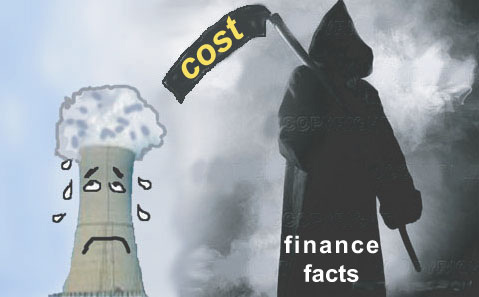
EU Needs $460 Billion Investment Just To Maintain Nuclear Power Capacity, let alone build new
Oil Price.com By Tsvetana Paraskova – Nov 11, 2022,
The European Union will need up to $462 billion (450 billion euros) in investment just to keep the current level of its nuclear power generation capacity, the EU Commissioner for Energy, Kadri Simson, said at a nuclear energy forum this week……..
This year, a year when surging energy prices have highlighted the importance of energy security, the EU is particularly focused on its nuclear power availability.
According to the EU modeling, nuclear power generation will account for around 15%-16% of the EU’s power output in 2030 and 2050, Simson said.
The EU needs a stable generation capacity, at the level of just over 100 GW, in the coming decades. Yet, a lot of investment will be needed to keep that generation capacity in the future.
“Our analysis shows that without immediate investment, around 90% of existing reactors would be shut down around the time when we need them most – in 2030,” Simson noted.
The EU will need between $360 billion (350 billion euros) and $462 billion (450 billion euros) of investment just to maintain the current generation capacity, and another up to $51.3 billion (50 billion euros) in the long-term operation of existing reactors, according to the EU commissioner……… EU Needs $460 Billion Investment To Maintain Nuclear Power Capacity | OilPrice.com
—
G20 leaders to denounce use, or threat, of nuclear weapons – draft (?a pious hypocrisy in opposition to the UN Nuclear Ban Treaty).

The nuclear weapons countries, and their craven supporters deserve a hypocrisy certificate
Among the G20 countries are China, France, Russia, the United Kingdom, and the United States, – all of whom have nuclear weapons and make veiled threats to use them
Australia, Canada, and the European Union also belong – supporting the ‘nuclear umbrella’ that might defend them.
Then there are Japan and Saudi Arbia – itching to get nuclear weapons themselves
BRUSSELS, Nov 11 (Reuters) – Leaders of the world’s 20 biggest economies will next week denounce the use of, or any threat to use, nuclear weapons, according to an early draft of a G20 statement seen by Reuters.
G20 leaders are meeting in Indonesia on Nov 15-16 and the Russian invasion of Ukraine will top their agenda.
“Many members strongly condemned Russia’s illegal, unjustifiable and unprovoked war of aggression against Ukraine, and called on it to immediately end the war,” the draft, which may change and would need Moscow’s approval for unanimity, said.
“The use, or threat of the use, of nuclear weapons is inadmissible.”
Concern about possible nuclear escalation during Russia’s war in Ukraine surged after two speeches by President Vladimir Putin in which he indicated he would, if needed, use such weapons to defend Russia……….
The leaders are also to say they would support all efforts conducive to a “just” peace.
‘Subpoenas’ Served on US Weapons Manufacturers

These four corporations are representative of the modern-day piracy that is the U.S. war industry, a corporate capture of U.S. foreign policy, the Congress, the Departments of Defense and State, and the U.S. economic system.
https://www.commondreams.org/views/2022/11/11/subpoenas-served-us-weapons-manufacturers BRAD WOLF, November 11, 2022
What is it like to be so ashamed of the company for whom you work that you cannot bring yourself to admit you work there? Ashamed of the products they manufacture, the innocent people those products kill, the hundreds of billions of dollars of public taxpayer money squandered in a gluttonous pursuit of profits?
This is life as seen on November 10th, 2022, at Raytheon Technologies in Arlington, VA. Members and supporters of the Merchants of Death War Crimes Tribunal, a public tribunal, served “subpoenas” on four United States weapons manufacturers charging them with War Crimes, Crimes Against Humanity, Theft, and Bribery.
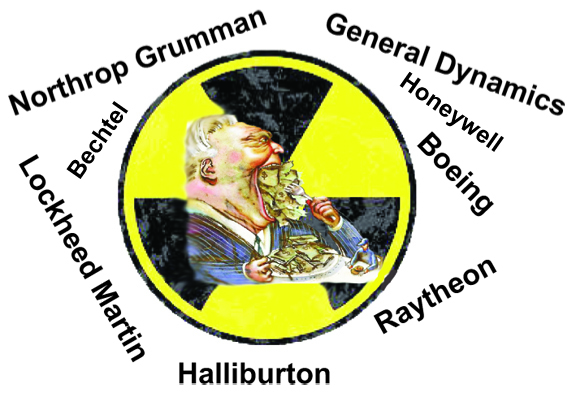
The other three corporations served that same day were Lockheed Martin, Boeing, and General Atomics. These four corporations are representative of the modern-day piracy that is the U.S. war industry, a corporate capture of U.S. foreign policy, the Congress, the Departments of Defense and State, and the U.S. economic system.
Raytheon Technologies occupies a towering office building in Arlington, a stone’s throw from the Pentagon and Arlington National Cemetery, two sites commemorating death and the utter failure of war. Though the Raytheon building has its corporate logo plastered in blood-red letters at the top, once inside no sign exists evidencing this corporate war profiteer. No name, no logo, no receptionist. A sad attempt to hide their dealings in the black art of war.
When asked, security guards refused to acknowledge Raytheon was in the building. Of the dozens of employees who passed, none would admit they worked at Raytheon, averting their eyes as they hurried away. When police arrived to escort the Tribunal members and supporters off premises, the police would not acknowledge Raytheon was headquartered there. Just like the employees, they had their orders. Keep quiet, admit nothing.
It was silent as a tomb except for the voices of the Tribunal members speaking the truth about the trail of suffering and death Raytheon and its corporate brethren have left across Iraq, Afghanistan, Pakistan, Syria, Somalia, and the Palestinian Occupied Territory. Meanwhile, these Merchants of Death have left the United States financially, morally, and spiritually bankrupt.
Raytheon Technologies has a market capitalization of $96 billion. According to Macrotrends, Raytheon Technologies revenue for the quarter ending September 30, 2022 was $16.951B, a 4.55% increase year-over-year. For 2021 it was $64.388B, a 13.79% increase from 2020, for 2020 was $56.587B, a 24.78% increase from 2019, and for 2019 was $45.349B, a 30.68% increase from 2018. In four years, they have garnered almost a 70% increase in revenue. Marketing death is good for profits if you can live with yourself. Apparently, given their silence, many Raytheon employees struggle with this very issue.
Raytheon builds some of the most destabilizing, destructive, and expensive weapons on earth. The Hypersonic Missile which travels in excess of five times the speed of sound — Mach 5 — covering vast distances in minutes. It is “hard to stop and flies nimbly to avoid detection and dodge defensive countermeasures.” All these are attributes which make the missile so destabilizing to a foreign leader who has only minutes to determine whether they are being attacked with a nuclear weapon.
Raytheon makes the Peregrine Air-to-Air Missile which they claim “increases firepower, penetrates bad weather, and goes the distance.” Add to that their plans to use “high power microwaves” in war and we see the epitome of a Merchant of Death.
Boeing, General Atomics, and Lockheed Martin are the same. They too revel in blood money as they build for war and drain the U.S. economy. In fact, some $8 trillion in U.S. taxpayer money has been given to U.S. defense contractors over the last twenty years.
The U.S. War Industry plays a key role in fomenting war with their congressional lobbying, not just pushing for weapons contracts but influencing military strategy, thereby exacerbating and prolonging the anguish of civilians bearing the brunt of these wars of choice. On the issue of war in particular, Congress must be answerable to its citizens, not a handful of corporations.

With their silence on November 10, these weapons manufacturers revealed their shame. Their corporate mission statement is “War Begets Profit.” For the Merchants of Death War Crimes Tribunal, the mission statement is “Come War Profiteers, Give Account.” Stand before a Tribunal and be judged.
And so, what is it like to give your talents to a corporation which hides its very existence, to give all your efforts and education and experience in the creation of weapons which kill indiscriminately? Their loss of words, their averting eyes, the damning silence offered in their corporate crypt, is the devastating answer.
‘Tactical’ Nuclear Weapons Could Unleash Untold Damage, Experts Warn
By Ed Holt , BRATISLAVA, Nov 10 2022 (IPS) – Since the start of Russia’s invasion of Ukraine, the conflict’s potential to escalate to the use of nuclear weapons has been highlighted by political analysts and military experts alike.
Now growingly bellicose rhetoric from Russian president Vladimir Putin, particularly following the illegal annexations of four parts of Ukraine at the end of September, has raised fears he may be seriously considering using them. He has been quoted in September this year as saying that Russia would use “all available means to protect Russia and our people”, but last month said there was no need to consider the use of nuclear weapons. This week Russia ordered troops to withdraw from the Dnieper River’s west bank near the southern city of Kherson.
But while much of the media debate around this prospect has focused on the expected use of a so-called low-yield “tactical” nuclear weapon and what this might mean strategically for either side in the war, anti-nuclear campaigners say any discussion should be reframed to reflect the devastating reality of what the use of even the smallest weapons in modern nuclear arsenals would mean.
They say that even if only one such bomb was dropped, be it in Ukraine or in any other conflict, the consequences would cause a country – if not a continent-wide catastrophe, with horrific immediate and long-term health effects and a subsequent humanitarian disaster on a scale almost certainly not seen before.
Moreover, they say, a single strike would almost certainly be met with a similar response, quickly igniting a full-scale nuclear war that would threaten much of human life on earth.
“There is no conceivable reality in which a nuclear weapon is used, and life goes on as normal. It is very, very likely that there would be escalation and additional nuclear weapons used, but even the use of one nuclear weapon would break a decades-long taboo on the use of the most catastrophic, horrific weapon ever created,” Alicia Sanders-Zakre, Research, and Policy Coordinator, at the International Campaign to Abolish Nuclear Weapons (ICAN) told IPS.
“We have already seen the global impacts of the war in Ukraine just using conventional weapons, including worldwide rising inflation, and energy and food shortages. But the use of a nuclear weapon would really have consequences beyond what any of us can imagine,” she added……………………………………………
Campaigners against nuclear weapons worry the global public is not being made properly aware of the scale of the loss of life and ecological damage which would be wrought by the use of such a weapon.
“There has been a lot of discussion about using a tactical nuclear bomb in Ukraine. But the use of the word ‘tactical’ is no more than a rebranding exercise to make a nuclear weapon sound like a conventional one,” Dr Ruth Mitchell, Board Chair of the International Physicians for the Prevention of Nuclear War (IPPNW), told IPS.
“A tactical nuclear weapon would be about the same size as the one dropped on Hiroshima and Nagasaki, and we don’t need to imagine what the effects would be; we have already seen them,” she added.
The death toll itself would be massive, but authorities would also have to deal with radioactive fallout possibly contaminating large areas, while the event itself would trigger massive population dislocation.
And a report by ICAN also shows that even the most advanced healthcare systems would be unable to provide any effective response in such a situation, highlighting the likely destruction of local healthcare facilities and staff and pointing out that the 1945 atomic bombing of Hiroshima destroyed 80% of its hospitals and killed almost all its doctors and nurses………………………….more https://www.ipsnews.net/2022/11/tactical-nuclear-weapons-treat-could-unleash-untold-damage-experts-warn/?utm_source=rss&utm_medium=rss&utm_campaign=tactical-nuclear-weapons-treat-could-unleash-untold-damage-experts-warn
Pentagon exploits post 9/11 laws to wage ‘secret wars’ worldwide: Report
By abusing ‘security cooperation authorities,’ the US Department of Defense has waged war on dozens of fronts without the need to report to congressional authorities.
https://thecradle.co/Article/news/18028 ByNews Desk- November 09 2022,
A report released last week by the New York University School of Law’s Brennan Center for Justice details how the US Department of Defense (DoD) has been allowed to covertly deploy troops and wage secret wars over the past two decades in dozens of countries across the globe.
Among the nations in West Asia affected by these so-called ‘security cooperation authorities’ are Lebanon, Iraq, Syria, and Yemen; however, they also include many African and Latin American nations.
Known as ‘security cooperation authorities,’ they were passed by the US Congress in the years following the 11 September attacks, and are a continuation of the 2001 Authorization for Use of Military Force (AUMF), a piece of legislation that has been stretched by four successive governments.
According to the report, the AUMF covers “a broad assortment of terrorist groups, the full list of which the executive branch long withheld from Congress and still withholds from the public.”
Following in this tradition, the ‘security cooperation authorities’ being abused by the Pentagon are Section 333 and Section 127e of Title 10 of the United States Code (USC).
Section 333 authorizes the US army to “train and equip foreign forces anywhere in the world,” while Section 127e authorizes the Pentagon to “provide support to foreign forces, paramilitaries, and private individuals who are in turn supporting US counterterrorism operations,” with a spending limit of $100,000,000 per fiscal year.
However, thanks to the vague definition of ‘support’ and ‘training’ in the text of these laws, both Section 333 and Section 127e programs have been abused to target “adversarial” groups under a strained interpretation of constitutional self-defense; they have also allowed the US army to develop and control proxy forces that fight on behalf of – and sometimes alongside – their own.
As a result of this, in dozens of countries, these programs have been used as a springboard for hostilities, with the Pentagon often declining to inform Congress or the US public about their secret operations under the reasoning that the incidents are “too minor to trigger statutory reporting requirements.”
“Researchers and reporters uncovered Section 127e programs not only in Afghanistan and Iraq, but also in Cameroon, Egypt, Kenya, Lebanon, Libya, Mali, Mauritania, Niger, Nigeria, Somalia, Syria, Tunisia, and Yemen,” the report highlights.
Researchers also point out that defense authorities “have given little indication of how [they] interpret Section 333 and 127e.”
Even more concerning, and ignoring the damage caused by these ‘anti-terror’ laws, the US Congress recently expanded the Pentagon’s security cooperation authorities, particularly with Section 1202 of the National Defense Authorization Act (NDAA).
Section 1202 allows the US army to allow “irregular warfare operations” against “rogue states” like Iran or North Korea, or “near-peers,” like Russia and China.
The report comes at a time when the US army and its proxy militias are accused of illegally occupying vast regions of Syria and Yemen, looting oil from the war-torn countries, just over a year after their brutal occupation of Afghanistan ended. Moreover, a former US official on Tuesday revealed that anti-Iran militias are being armed in the Iraqi Kurdistan Region (IKR), where both the CIA and the Mossad are known to operate.
Another US nuclear marketing deal done ay COP27 – $3billion for Romania reactors project

The US Export–Import Bank said it intends to provide USD 3 billion for a project for two additional reactors in Romania’s Cernavodă nuclear power plant.
Romanian Prime Minister Nicolae Ciucă announced at the United Nations Climate Change Conference COP27 that a third of the required funds for units 3 and 4 in the Cernavodă nuclear power plant would be provided by the United States Export–Import Bank. The preparatory phase will be completed by the end of March, he said.
The US Exim Bank issued letters of intent for USD 50 million for the second phase and USD 3 billion for the construction of the two reactors, the prime minister revealed at the event in Egypt. The plan is to implement the second phase in the third quarter of 2025 and build the units in 2030, Ciucă said…….
The Cernavodă nuclear power plant operates under state-owned Nuclearelectrica. A contract was signed for the preparatory stage last November with Candu Energy, a subsidiary of SNC-Lavalin from Canada, through Romania’s project firm EnergoNuclear.
In addition, Nuclearelectrica intends to deploy US-based NuScale’s small modular reactor (SMR) technology for a 462 nuclear power plant on the site of a former coal plant.
Germany refuses to build nuclear Uniper plant in Sweden
By Charles Szumski | EURACTIV.com, Nov 11, 2022 Nikolaus Kurmayer contributed to reporting
Energy giant Uniper will not build any power plants in Sweden, the company that will be wholly owned by the German state from next year announced Thursday, flouting plans of its Swedish subsidiary Barsebäck Kraft to build a Clean Energy Park.
No new nuclear power plant will be built in Sweden by the German energy company Uniper, Sveriges Radios Ekot reported on Thursday.
“Neither in Sweden nor elsewhere does Uniper have any plans to build a new nuclear power plant, that’s a fact”, spokesman George Oppermann told the radio.
Uniper is part owner of all three active nuclear power plants in Sweden, Oskarshamn, Ringhals and Forsmark. It is also the owner of the Barsebäck powerplant, which is being dismantled…….
From the start of next year, Uniper will be taken over by the German state, who decided to close all remaining nuclear power plants in the country from April next year……….. https://www.euractiv.com/section/politics/news/germany-refuses-to-build-nuclear-uniper-plant-in-sweden/
The three parties making up Sweden’s new ruling right-wing coalition, as well as the supporting far-right Democrats of Sweden, signed a pro-nuclear coalition accord, promising 400 billion SEK (€36 billion) for new nuclear power, with Vattenfall to immediately start planning new nuclear power at Ringhals and other sites.
Concealing US Militarism By Making It Sacred
The depth of the militarization of the United States and the harshness of its wars abroad have been concealed by converting death into something sacred, writes Kelly Denton-Borhaug in an address to U.S. veterans on Veterans Day.
Consortium News. November 11, 2022 By Kelly Denton-Borhaug
TomDispatch.com
Dear Veterans,
I’m a civilian who, like many Americans, has strong ties to the U.S. Armed Forces. I never considered enlisting, but my father, uncles, cousins, and nephews did.
As a child I baked cookies to send with letters to my cousin Steven who was serving in Vietnam. My family tree includes soldiers on both sides of the Civil War. Some years before my father died, he shared with me his experience of being drafted during the Korean War and, while on leave, traveling to Hiroshima, Japan. There, just a few short years after an American atomic bomb had devastated that city as World War II ended, he was haunted by seeing the dark shadows of the dead cast onto concrete by the nuclear blast.
As Americans, all of us are, in some sense, linked to the violence of war. But most of us have very little understanding of what it means to be touched by war. Still, since the events of Sept. 11, 2001, as a scholar of religion, I’ve been trying to understand what I’ve come to call “U.S. war-culture.” For it was in the months after those terrible attacks more than 20 years ago that I awoke to the depth of our culture of war and our society’s pervasive militarization.
“American civilians deceive themselves by insisting that they’re a peaceful nation desiring the well-being of all peoples.”
Eventually, I saw how important truths about our country were concealed when we made the violence of war into something sacred. And most important of all, while trying to come to grips with this dissonant reality, I started listening to you, the veterans of our recent wars, and simply couldn’t stop.
Dismantling the Justifications……………………………………………………
U.S. political leaders annually approve a military budget that’s apocalyptically high (and may reach a trillion dollars a year before the end of this decade). The U.S. spends more on its military than the next nine nations combined to finance the violence of war.
Political leaders in the U.S. and many citizens insist that having such a staggering infrastructure of war is the only way Americans will be secure, while claiming that they’re anything but a warring people. Analysts of war-culture know better. As peace and conflict studies scholar Marc Pilisuk puts it: “Wars are products of a social order that plans for them and then accepts this planning as natural.”
Learning War Is Like Ingesting Poison
I’ve personally witnessed the confusion and conflicted responses of many veterans to this mystifying distortion of reality. How painful and destabilizing it must be to return from your military deployment to a society that insists on crassly celebrating and glorifying war, while so many of you had no choice but to absorb the terrible knowledge of what an atrocity it is.
“War damages all who wage it,” chaplain Michael Lapsley wrote. “The United States has been infected by endless war.” Veterans viscerally carry the violence of war in their bodies. It’s as if you became “sin-eaters” who had to swallow the evil of the conflicts the United States waged in these years and then live with their consequences inside you…………………………………………
The unimaginable losses to families, communities, infrastructure, and culture in the lands where such conflicts have been fought in this century are invisible to most citizens, while typical Veterans Day commemorations recast you as messianic redemptive figures who “have paid the price for our freedom.”
“War-culture in this country leaves us with a residual collective trauma that weighs us all down and is only made worse by a national blindness to it.”
But to convert war-making into something sacred means fashioning a deceitful myth. Violence is not a harmless tool. It’s not a coat that a person wears and takes off without consequences.
Violence instead brutalizes human beings to their core; chains people to the forces of dehumanization; and, over time, eats away at you like acid dripping into your very soul. That same dehumanization also undermines democracy, something you would never know from the way the United States glorifies its wars as foundational to what it means to be an American.
Silencing and Commodifying Veterans……………………………………………………………………
Addiction to War
More often than not, the invisible wounds of returning veterans are shrouded in silence. For some of you, unbearable pain led to disastrous consequences, including self-harm, loss of relationships, isolation, and self-destructive risk-taking. At least 1-in-3 female members of the armed forces has experienced sexual assault or harassment from fellow service members.
More than 17 of you veterans take your own lives every day. And you live with all of this, while so much of the rest of the nation fails to muster the will to see you, hear you, or face honestly the American addiction to war.
The truths about war that you might tell us are generally rejected and invalidated, cementing you into a heavy block of silence. Military chaplain Sean Levine describes how the U.S. must “deny the trauma of its warriors lest that trauma radically redefine our understanding of war.” He continues, “Blind patriotism has done inestimable damage to the souls of thousands of our returning warriors.”
If we civilians paid attention to your honesty, we would find ourselves slammed headlong into a conflict with a national culture that glorifies war, conceals the political and material interests of the titans of weaponry and war production, and successfully distracts us from the depth of its destruction.
We civilians are complicit and so lurch away from facing the inevitable revulsion, sorrow, mourning, and guilt that always accompany the reality of war.
An Alternative for Veterans Day
Honestly, the only way forward is for you to tell — and us to compassionately take in — the unadulterated stories of war. …………………….. https://consortiumnews.com/2022/11/11/concealing-us-militarism-by-making-it-sacred/
On Nuclear Treaty, at Least, Biden Aims for Fresh START With Russia
Washington and Moscow look set to keep New START alive with working-level talks, despite historic tensions.
Foreign Policy, By Robbie Gramer, a diplomacy and national security reporter at Foreign Policy. 11 Nov 22
The Biden administration has announced that it will restart nuclear arms control talks with Russia, even as tensions spike over the latter’s war in Ukraine, coupled with the threat of Moscow using nuclear weapons.
The talks are expected to take place in Cairo in the near future, current and former U.S. officials said, and represent the first move by both sides to revive their mutual arms control agenda since U.S. President Joe Biden first halted dialogue after Russia launched its invasion of Ukraine in February…………………………………
The existing arms reduction treaty, New START, caps the number of intercontinental-range nuclear weapons in both Washington’s and Moscow’s arsenals and allows each side to conduct on-site weapons facility inspections in the other country. This allows experts from each country to visit the other country’s weapons sites to view the number of nuclear weapons, launch vehicles, and other details to confirm that both sides are adhering to the treaty. The treaty allows up to 18 on-site inspections per year.
It is the last remaining arms control treaty in place between Russia and the United States, which respectively have the first- and second-largest nuclear arsenals in the world. Under the terms of the treaty, which was first signed in 2010, both countries agreed to cap the number of nuclear warheads they could deploy on delivery systems to 1,550…………………..
Reviving the New START talks has been a quiet goal of the White House and State Department since at least this summer, according to current and former U.S. officials familiar with the matter, and scheduling a new meeting with the Russians on the issue has been in the works for months. Rose Gottemoeller, a former NATO deputy secretary-general and top U.S. arms control envoy who helped negotiate New START in 2009-10, welcomed the move and said the latest nuclear discussions shouldn’t be seen as any sort of concession to Russia.
“We don’t always get to choose with whom we negotiate, but if we’ve got an issue that’s in our national security interest, we have to work it,” said Gottemoeller, now a scholar at Stanford University. “We’ve achieved agreements with the Russians during some very dark hours in our bilateral relationship in the past.” …………….. https://foreignpolicy.com/2022/11/10/nuclear-talks-russia-us-biden-putin-new-start-treaty/
1 This Month




Shut down the radiation-damaged Heysham nuclear reactors now
To see nuclear-related stories in greater depth and intensity – go to https://nuclearinformation.wordpress.com

Say No to NASA’s Reckless Nuclear Reactor on the Moon
Say No to NASA’s Reckless Nuclear Reactor on the Moon
-
Archives
- November 2026 (12)
- October 2026 (302)
- September 2026 (339)
- August 2026 (330)
- July 2026 (355)
- June 2026 (287)
- May 2026 (306)
- April 2026 (356)
- March 2026 (251)
- February 2026 (267)
- January 2026 (308)
- December 2025 (358)
-
Categories
- 1
- 1 NUCLEAR ISSUES
- business and costs
- climate change
- culture and arts
- ENERGY
- environment
- health
- history
- indigenous issues
- Legal
- marketing of nuclear
- media
- opposition to nuclear
- PERSONAL STORIES
- politics
- politics international
- Religion and ethics
- safety
- secrets,lies and civil liberties
- spinbuster
- technology
- Uranium
- wastes
- weapons and war
- Women
- 2 WORLD
- ACTION
- AFRICA
- Atrocities
- AUSTRALIA
- Christina's notes
- Christina's themes
- culture and arts
- Events
- Fuk 2022
- Fuk 2023
- Fukushima 2017
- Fukushima 2018
- fukushima 2019
- Fukushima 2020
- Fukushima 2021
- general
- global warming
- Humour (God we need it)
- Nuclear
- RARE EARTHS
- Reference
- resources – print
- Resources -audiovicual
- Weekly Newsletter
- World
- World Nuclear
- YouTube
-
RSS
Entries RSS
Comments RSS

