USA trying to use Philippines as a guinea pig for its unviable small nuclear reactors – and for military purposes.

“With recent plans by the US Department of Defense to build an advanced mobile nuclear microreactor prototype in Idaho, Manila should not allow Washington to use Philippine military bases as prototype areas for these reactors.
Save the country from the perils of nuclear reactors, NAKED THOUGHT
By Charlie V. Manalo, December 3, 2022
AS the United States government, invoking provisions of the Enhanced Defense Cooperation Agreement (EDCA), requests for additional military bases, five on the island of Luzon alone, the idea of the country playing host to mobile nuclear reactors is not far-fetched.
This is for the simple reason that whoever crafted the agreement made it so vague, it did not provide for any restrictions on the type of facilities and materials the US would be using in constructing its bases in the Philippines.
And this has been aggravated further by the enactment of the Public Service Law which opens the country’s airports to foreign ownership, giving the US all the resources needed to construct its own airports which it could use as military bases under the guise of a commercial airport.
Anyway, former congressman Terry Ridon, convenor of Infrawatch Philippines, sent me a copy of an article he wrote on the subject, explaining clearly its implications. It’s entitled, “Reject mobile nuclear reactors in PH bases-Infrawatch Philippines,” which I’m publishing in its entirety.
“With recent plans by the US Department of Defense to build an advanced mobile nuclear microreactor prototype in Idaho, Manila should not allow Washington to use Philippine military bases as prototype areas for these reactors.
According to an April report by The Associated Press, the US DoD ‘signed off on the Project Pele plan to build the reactor and reactor fuel outside of Idaho and then assemble and operate the reactor at the lab.’
As this is a project initiated by the US defense department, its military objectives had been disclosed by Jeff Waksman, project manager for Project Pele, saying, “Advanced nuclear power has the potential to be a strategic game-changer for the United States, both for the (Department of Defense) and for the commercial sector.”
The US DoD further said that the reactor designs are ‘high-temperature gas-cooled reactors using enriched uranium for fuel.’
PH microreactor deployment
Under the Enhanced Defense Cooperation Agreement between the Philippines and the United States, there are no restrictions to Washington on the type of facilities and materials it will construct and install in Philippine military bases, except a specific restriction against installing nuclear weapons.
However, Philippine authorities should be reminded that this restriction does not assuage fears that the country will not be involved in regional military conflicts because EDCA allows the installation of conventional military weapons which may approximate the breadth and fatal impact of nuclear weapons.
More importantly, in the event that nuclear microreactors are produced by the US DoD at scale, these small nuclear plants can, in fact, be installed in EDCA locations in different parts of the country.
This is alarming because the country has yet to decide and implement its national policy on nuclear development based on the policy direction of President Ferdinand Marcos Jr.
In fact, it needs to be made clear that nuclear microreactors in EDCA locations in the country will not be used for civilian purposes but for military objectives by the United States in the Indo-Pacific.
This distinction alone should give the current government pause on allowing nuclear microreactors to be deployed in EDCA locations in the future.
More importantly, military nuclear microreactors will allow Washington to deploy different kinds of weapons to influence the security arrangement in the South China Sea and the greater Indo-Pacific.
Military purposes
Further, as nuclear microreactors in EDCA areas will certainly be used for military purposes, this might prompt other regional actors to accuse Manila of violating the Bangkok Treaty, the treaty declaring Southeast Asia as a nuclear weapons-free zone and other weapons of mass destruction.
With a military nuclear microreactor in Philippine soil, Washington may be able to operate high-powered conventional military weapons which may be equivalent to weapons of mass destruction.
Certainly, Manila should follow its treaty obligations in the region, particularly as other strong powers are also looking at Manila to temper its pivot toward Washington.
Finally, allowing this kind of deployment in EDCA areas diminishes the current call of President Marcos to carefully proceed with nuclear research and development for civilian purposes.
The focus of the government should be considering whether nuclear energy should be part of the current energy mix and whether the Bataan Nuclear Power Plant should be revived.
It should also consider developing other aspects of nuclear technology, which can benefit health care and other critically important sectors.
As such, allowing nuclear microreactors in EDCA areas or anywhere in the Philippines should not be on the agenda.”
Weapons company Raytheon continues to be the winner in the Ukraine war, with new $1.2 billion surface-to-air missile contract .

Raytheon wins $1.2 billion surface-to-air missile order for Ukraine, By Jen Judson, Defense News, 1 Dec 22
WASHINGTON — The U.S. Army awarded Raytheon Missiles and Defense a contract worth as much as $1.2 billion to deliver six National Advanced Surface to Air Missile System batteries for Ukraine.
The contract is part of the fifth Ukraine Security Assistance Initiative package and includes training and logistical support to Ukraine’s military and security forces, the Army said in a a Nov. 30 statement.
Raytheon, the world’s second-largest defense contractor, won a contract in August to deliver to NASAMS batteries to Ukraine as part of the third USAI package. The new contract is a follow-on…………………
The work to award Raytheon a contract was led by the Army’s Program Executive Office for Missiles and Space, along with others across the Defense Department.
Ukraine has requested an integrated air and missile defense system that the U.S. and other allies are striving to fulfill. The system would be made up of short-range, low-altitude systems; medium-range, medium-altitude systems; and long-range, high-altitude systems that together would neutralize the threat of Russian aircraft and missiles.
Ukrainian forces had been using Russian-made SA-6 and SA-8 air defenses. In addition to NASAMS, the country also asked for Cold War-era Hawk systems – a medium-range, medium-altitude system, that’s considered to still be effective. https://www.defensenews.com/land/2022/12/01/raytheon-wins-12-billion-surface-to-air-missile-order-for-ukraine
‘Deliberate ambiguity’: Israel’s nuclear weapons are greatest threat to Middle East
https://peoplesworld.org/article/deliberate-ambiguity-israels-nuclear-weapons-are-greatest-threat-to-middle-east/ December 2, 2022 11:06 AM CST BY RAMZY BAROUD
As Western countries are floating the theory that Russia could escalate its conflict with Ukraine to a nuclear war, many of those governments continue to turn a blind eye to Israel’s nuclear weapons capabilities. Luckily, many other countries around the world do not subscribe to this endemic hypocrisy.
The Conference on the Establishment of a Middle East Zone Free of Nuclear Weapons and Other Weapons of Mass Destruction was held between Nov. 14-18, with the sole purpose of creating new standards of accountability that, as should always have been the case, would apply equally to all Middle Eastern countries.
The debate regarding nuclear weapons in the Middle East could not possibly be any more pertinent or urgent. International observers rightly note that the period following the Russia-Ukraine war is likely to accelerate the quest for nuclear weapons throughout the world. Considering the seemingly perpetual state of conflict in the Middle East, the region is likely to witness nuclear rivalry as well.
For years, Arab and other countries attempted to raise the issue that accountability regarding the development and acquisition of nuclear weapons cannot be confined to states that are perceived to be enemies of Israel and the West.
The latest of these efforts was a United Nations resolution that called on Israel to dispose of its nuclear weapons, and to place its nuclear facilities under the monitoring of the International Atomic Energy Agency (IAEA). Resolution number A/C.1/77/L.2, which was drafted by Egypt with the support of other Arab countries, passed with an initial vote of 152-5. Unsurprisingly, among the five countries that voted against the draft were the United States, Canada and, of course, Israel itself.
U.S. and Canadian blind support of Israel notwithstanding, what compels Washington and Ottawa to vote against a draft entitled “The risk of nuclear proliferation in the Middle East?” Keeping in mind the successive right-wing extremist governments that have ruled over Israel for many years, Washington must understand that the risk of using nuclear weapons under the guise of fending off an “existential threat” is a real possibility.
Since its inception, Israel has resorted to, and utilized the phrase “existential threat” countless times. Various Arab governments, later Iran and even individual Palestinian resistance movements, were accused of endangering Israel’s existence per se. Even the non-violent Palestinian civil society-led Boycott, Divestment and Sanctions (BDS) Movement was accused by then-Prime Minister Benjamin Netanyahu in 2015 of being an existential threat to Israel. Netanyahu claimed that the boycott movement was “not connected to our actions; it is connected to our very existence.”
This should worry everyone, not just in the Middle East, but the whole world. A country with such hyped sensitivity about imagined “existential threats” should not be allowed to acquire the kinds of weapons that could destroy the entire Middle East several times over.
Some may argue that Israel’s nuclear arsenal was intrinsically linked to real fears resulting from its historical conflict with the Arabs. However, this is not the case. As soon as Israel completed Stage 1 of its ethnic cleansing of Palestinians from their historic homeland, and long before any serious Arab or Palestinian resistance was carried out in response, Israel was already on the lookout for nuclear weapons.
As early as 1949, the Israeli army had found uranium deposits in the Negev Desert, leading to the establishment, in 1952, of the highly secretive Israel Atomic Energy Commission (IAEC).
In 1955, the U.S. government sold Israel a nuclear research reactor. But that was not enough. Eager to become a full nuclear power, Tel Aviv resorted to Paris in 1957. The latter became a major partner in Israel’s secretive nuclear activities when it helped the Israeli government construct a clandestine nuclear reactor near Dimona in the Negev Desert.
The father of the Israeli nuclear program at the time was none other than Shimon Peres who, ironically, was awarded the Nobel Peace Prize in 1994. The Dimona Nuclear Reactor is now named “Shimon Peres Nuclear Research Center-Negev.”
With no international monitoring whatsoever, thus with zero legal accountability, Israel’s nuclear quest continues to this day. In 1963, Israel purchased 100 tons of uranium ore from Argentina, and it is strongly believed that during the October 1973 Israel-Arab war, Israel “came close to making a nuclear preemptive strike,” according to Richard Sale, writing for United Press International (UPI).
Currently, Israel is believed to have “enough fissionable material to fabricate 60-300 nuclear weapons,” according to former U.S. Army Officer Edwin S. Cochran.
Estimates vary, but the facts about Israel’s weapons of mass destruction (WMDs) are hardly contested. Israel itself practices what is known as “deliberate ambiguity,” so as to send a message of its lethal power to its enemies, without revealing anything that may hold it accountable to international inspection.
shows what now is known as the Shimon Peres Negev Nuclear Research Center near the city of Dimona, Israel. A long-secretive Israeli nuclear facility that gave birth to its undeclared atomic weapons program appeared to be undergoing its biggest construction project in decades recently, according to newly taken satellite photos analyzed by The Associated Press. | U.S. Center for Earth Resources Observation and Science / U.S. Geological Survey | via AP
Estimates vary, but the facts about Israel’s weapons of mass destruction (WMDs) are hardly contested. Israel itself practices what is known as “deliberate ambiguity,” so as to send a message of its lethal power to its enemies, without revealing anything that may hold it accountable to international inspection.
What we know about Israel’s nuclear weapons has been made possible partly because of the bravery of former Israeli nuclear technician Mordechai Vanunu, a whistleblower who was held in solitary confinement for a decade due to his courage in exposing Israel’s darkest secrets.
Still, Israel refuses to sign the Treaty on the Non-Proliferation of Nuclear Weapons (NPT), endorsed by 191 countries.
Israeli leaders adhere to what is known as the “Begin Doctrine,” in reference to Menachem Begin, the rightwing Israeli prime minister who invaded Lebanon in 1982, resulting in the killing of thousands. The doctrine is formulated around the idea that, while Israel gives itself the right to own nuclear weapons, its enemies in the Middle East must not. This belief continues to direct Israeli actions to this day.
U.S. support for Israel is not confined to ensuring the latter has “military edge” over its neighbors in terms of traditional weapons, but also to ensure Israel remains the region’s only superpower, even if that entails escaping international accountability for the development of WMDs.
The collective efforts by Arab and other countries at the UN General Assembly to create a Middle East Zone Free of Nuclear Weapons are welcomed initiatives. It behooves everyone, Washington included, to join the rest of the world in finally forcing Israel to join the Non-Proliferation Treaty, a first but critical step toward long delayed accountability.
No place for nuclear in New York’s clean energy future
syracuse.com, by Joseph J. Heath & Betty Lyons 2 Dec 22
As New York energy demand and prices spike heading into winter, the state’s Climate Action Council (CAC) works on its final Scoping Plan for implementing New York’s landmark climate legislation, the Climate Leadership and Community Protection Act (CLCPA). The Scoping Plan will lay out the details of how the state will accomplish the transition to clean energy, and how the transition will serve environmental justice.
Justice is a cornerstone of New York’s climate law, which stipulates that actions must not disproportionately burden disadvantaged communities. In a recent meeting, CAC members proposed strengthening Scoping Plan language to explain exactly why such burdens are unacceptable, and why climate and environmental justice must include every community in the state, including serious consultation with Indigenous Nations.
Continued reliance on nuclear plants — both existing and untested “advanced” nuclear or “small modular reactors” — violates these priorities. The Onondaga Nation, Haudenosaunee Environmental Task Force and the American Indian Law Alliance concluded that nuclear power is not viable in combating climate change. The CAC should reach the same conclusion.
The CAC’s Climate Justice Working Group has called on the CAC to draft a serious plan to phase out Oswego County’s three aging nuclear plants (on the traditional territory of the Onondaga Nation): Nine Mile Point (NMP) Unit 1, NMP 2 and FitzPatrick. So far, CAC has not responded to that call.
All three plants are old and obsolete. NMP Unit 1 is the oldest operating U.S. reactor, commissioned in 1969; FitzPatrick in 1975. These two are already past the 40-year lifespan they were designed for. However, their operating licenses are dangerously extended — through 2029 for NMP Unit 1, 2034 for FitzPatrick and 2046 for NMP Unit 2 (commissioned in 1988). These plants require increasing repair and replacement as components age, and, since they cannot compete in an unrigged market, rely on massive state and federal subsidies taken from ratepayers.
The three Oswego plants have GE Boiling Water Reactors, the same flawed design as Fukushima: weak containment vessels and highly radioactive spent fuel stored on an upper floor. The vulnerable pools are packed with more fuel rods than they were designed to hold. If the pools leak or water circulation fails, risk of fire and major radiation rises significantly. Water levels at Lake Ontario in recent years came within one foot of flooding these cement pools, a major problem at Fukushima. With rain events increasing due to climate change, flooding-related catastrophes increase in likelihood…………
The longer the Oswego plants run, the worse their impacts will be. The plants’ day-to-day operation kills millions of fish, causes thermal pollution, withdraws 13 million gallons of water from Lake Ontario a year, and releases tritium (a non-filterable radioactive hydrogen isotope) into air and water, to be absorbed by plants and our skin, lungs and GI tracts.
A leading point in CAC’s consideration of how to serve justice through the Scoping Plan should be that the whole nuclear lifecycle disproportionately harms Indigenous Nations and Peoples.
Seneca Nation citizens living on the Cattaraugus “Reservation” have already been impacted by the West Valley nuclear fuel reprocessing facility south of Buffalo. Tritium and lethal isotopes Cesium 137 and Strontium 90 contaminate the soil, groundwater and surface waters including Cattaraugus Creek, which flows into Lake Erie…………………..
Impacts from existing and proposed nuclear plants are not trivial or dismissible. New York should not waste resources in so-called advanced nuclear plants or even riskier small modular reactors. This is no better than existing technology: They have the same life-cycle impacts, accident risks, high costs and toxic waste. The growing dangers of continuing spent fuel rod accumulation, with no safe storage mechanism and no plan, is enough of a reason for reasonable CAC members to refuse money for new nuclear plants.
Not only is new nuclear not a just option, the state should cease subsidizing Nine Mile Point Units 1 and 2 and FitzPatrick. Nuclear energy harms the environment and public health and violates Indigenous rights and sovereignty. Investing in any nuclear energy goes against New York’s commitment to environmental justice and climate justice.
Joe Heath has served as General Legal Counsel for the Onondaga Nation since 1982. He was a leader in the effort to ban fracking in New York state. Prior to law school, Heath served as an officer on nuclear submarines.
Betty Lyons is the president and executive director of The American Indian Law Alliance (AILA) and an Onondaga Nation citizen. AILA was founded in 1989; it is an Indigenous, nonprofit, nonpartisan organization that works with Indigenous nations, communities and organizations for sovereignty, human rights and social justice for Indigenous Peoples.
Secrecy on USA’s new nuclear stealth bomber, and of course, secrecy on its cost to taxpayers.


The fact that the price is not public troubles government watchdogs.
Pentagon unveils new nuclear stealth bomber after years of secrecy The HillBY THE ASSOCIATED PRESS VIA NEXSTAR MEDIA WIRE – 12/02/22
WASHINGTON (AP) — America’s newest nuclear stealth bomber is making its public debut after years of secret development and as part of the Pentagon’s answer to rising concerns over a future conflict with China.
The B-21 Raider is the first new American bomber aircraft in more than 30 years. Almost every aspect of the program is classified. Ahead of its unveiling Friday at an Air Force facility in Palmdale, California, only artists’ renderings of the warplane have been released. Those few images reveal that the Raider resembles the black nuclear stealth bomber it will eventually replace, the B-2 Spirit.
The bomber is part of the Pentagon’s efforts to modernize all three legs of its nuclear triad, which includes silo-launched nuclear ballistic missiles and submarine-launched warheads, as it shifts from the counterterrorism campaigns of recent decades to meet China’s rapid military modernization………………………………….
Six B-21 Raiders are in production; The Air Force plans to build 100 that can deploy either nuclear weapons or onventional bombs and can be used with or without a human crew. Both the Air Force and Northrop also point to the Raider’s relatively quick development: The bomber went from contract award to debut in seven years. Other new fighter and ship programs have taken decades.
The cost of the bombers is unknown. The Air Force previously put the price for a buy of 100 aircraft at an average cost of $550 million each in 2010 dollars — roughly $753 million today — but it’s unclear how much the Air Force is actually spending.
The fact that the price is not public troubles government watchdogs.
“It might be a big challenge for us to do our normal analysis of a major program like this,” said Dan Grazier, a senior defense policy fellow at the Project on Government Oversight. “It’s easy to say that the B-21 is still on schedule before it actually flies. Because it’s only when one of these programs goes into the actual testing phase when real problems are discovered. And so that’s the point when schedules really start to slip and costs really start to rise.”
The Raider will not make its first flight until 2023. However, using advanced computing, Warden said, Northrop Grumman has been testing the Raider’s performance using a digital twin, a virtual replica of the one being unveiled.
…………………… Given advances in surveillance satellites and cameras, the Raider will debut very much under wraps and will be viewed inside a hangar. Invited guests including Defense Secretary Lloyd Austin will witness the hangar doors open to reveal the bomber for its public introduction, then the doors will close again. https://thehill.com/homenews/3759575-pentagon-unveils-new-nuclear-stealth-bomber-after-years-of-secrecy/
Misleading claims about the supposed recycling of nuclear wastes
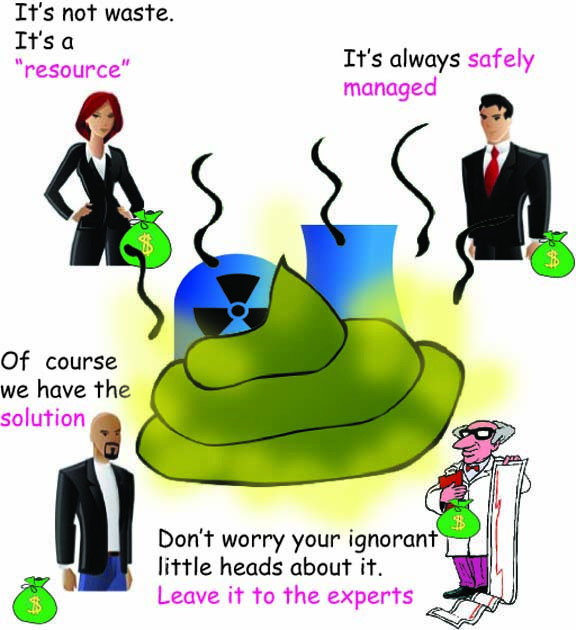
EPZ, the operator of the Borssele nuclear power plant, has long claimed
that they recycle “95 percent” of their nuclear fuel, and that only “5
percent” remains as nuclear waste.
Following a complaint by Laka, the Board
of Appeals of the Dutch Advertising Authority, ruled yesterday that these
are misleading environmental advertisement claims. In its ruling, the board
blames EPZ all the more because theses misleading claims appear on EPZ’s
website under the header “Environment & Health”, where “unsuspecting
visitors should expect accurate and balanced information about nuclear fuel
and nuclear waste.
Laka 1st Dec 2022
Small modular reactor plans to be blocked by the Scottish government
Plans to power a refinery in Scotland with a Rolls-Royce small modular
reactor (SMR) are likely to stall due to opposition from the Scottish
government. Government officials have said they will block any moves to
power the Grangemouth refinery on the Firth of Forth with a nuclear
reactor. According to the Sunday Telegraph, talks have taken place between
chemicals group Ineos and Rolls-Royce, and the two companies are understood
to have considered whether the plant could be powered by an SMR.
New Civil Engineer 30th Nov 2022 https://www.newcivilengineer.com/latest/scottish-small-modular-reactor-plans-to-be-blocked-by-government-30-11-2022/
Warning of power cuts for France, as nuclear reactors are working at half capacity
France could face the risk of power cuts this winter when electricity
supply may not be enough to meet demand, Xavier Piechaczyk, the head of
grid operator RTE, said on Thursday, citing the price to pay for slow
renewables and a nuclear energy infrastructure working at half capacity.
There is a risk of red-alert days this winter, but it would mostly depend
on the weather, Piechaczyk told Franceinfo radio today, noting that power
cuts are not necessarily “inevitable”. Due to lower nuclear generation
availability, France will import electricity this winter from most of its
neighbors, including Benelux, the manager added.
Oil Price 1st Dec 2022
Vladimir Putin open to talks on Ukraine if West accepts Moscow’s demands

ABC News 3 Dec 22
Russian President Vladimir Putin is “open to negotiations” on Ukraine but the West must accept Moscow’s demands, the Kremlin says, a day after US President Joe Biden said he was willing to talk with the Russian leader.
Key points:
- The Kremlin says the US’s refusal to recognise annexed territory in Ukraine as Russian was hindering a search for ways to end the war
- The IAEA wants to establish a protective zone around the Zaporizhzhia nuclear plant, which has been repeatedly shelled over the last few months
- An investigation into whether the Moscow branch of the Orthodox church is entitled to operate in Kyiv is underway
Speaking after talks on Thursday at the White House with French President Emmanuel Macron, Mr Biden said he was ready to speak with Mr Putin “if in fact there is an interest in him deciding he’s looking for a way to end the war”, adding the Russian leader “hasn’t done that yet”.
Mr Biden has not spoken directly with Mr Putin since Russia invaded Ukraine on February 24.
In March, Mr Biden branded Mr Putin a “butcher” who “cannot stay in power”.
In Moscow’s first public response to Mr Biden’s overture, Kremlin spokesman Dmitry Peskov told reporters: “The president of the Russian Federation has always been, is and remains open to negotiations in order to ensure our interests.”
Mr Peskov said the US refusal to recognise annexed territory in Ukraine as Russian was hindering a search for ways to end the war.
Moscow has previously sought sweeping security guarantees, including a reversal of NATO’s eastern enlargement………………………………….. more https://www.abc.net.au/news/2022-12-02/russia-open-to-talks-on-ukraine-if-west-accepts-moscows-demands/101730102
Nuclear Free Local Authorities call for Community Partnerships to include critics of the undersea Geological Disposal Facility plan

The Nuclear Free Local Authorities have sent a second letter to each of the
four Community Partnerships responsible for taking forward proposals for a
nuclear waste dump to seek assurances that opponents of the plan should
have a chance to take up membership.
The Community Partnerships in
Allerdale, Mid-Copeland, South-Copeland, all in West Cumbria, and in
Theddlethorpe, in East Lincolnshire, are each pursuing the possibility of
hosting Britain’s many tons of high-level radioactive waste, produced from
Britain’s civil nuclear and military nuclear programmes, in an undersea
Geological Disposal Facility.
NFLA 1st Dec 2022
Britain’s bunkers offer little chance of survival after a nuclear attack
https://www.theguardian.com/world/2022/dec/02/britains-bunkers-offer-little-chance-of-survival-after-a-nuclear-attack 2 Dec 22 David Saunders and Mark Newbury write that, with no bunker provision for civilians, most of us won’t have access – and those who do should not expect to live long.
The owner of the Kelvedon Hatch bunker suggests that those selected for his shelter might survive for 10 to 20 years in it while avoiding nuclear fallout (‘When you hear the four-minute warning’ … Whatever happened to Britain’s nuclear bunkers?, 24 November). This is, sadly, an unrealistic expectation if one simply looks at the likely impact on infrastructure of even a limited nuclear attack on the UK, based on exercises and analysis conducted during the cold war.
It was accepted 50 years ago that nobody above ground is likely to be left fit or alive to generate power or supply clean water. Food cannot be grown in a radioactive environment and, in the period preceding any outbreak of war, there will be diminished food stocks due to panic buying or rationing.
The scenarios modelled by civil defence analysts even during the 1980s Pershing and cruise missile deployment suggested that survival in Britain’s local government bunkers would be short lived. There was never any provision in the UK for sheltering the civilian population in the event of a nuclear conflict and Britain’s civil defence posture was abandoned as a posture after the 1960s.
While in neutral Sweden and Switzerland housebuilding rules made provision to protect the civil population, in Britain the idea of being able to survive to the same extent as in, say, the blitz in the second world war is merely a pious hope.
Nice to know that, according to the civil defence historian Nathan Hazlehurst, “Key members of central government, the military and royal family will have access to bunkers, along with those staff needed to run the country post-attack.” The rest of us will (I assume) have to make do with an updated version of the much-derided Protect and Survive booklet.
Kim Jong Un wants North Korea to be a nuclear superpower – the real risk is a regional arms race
The Conversation, Alexander Gillespie, December 2, 2022
The recent claim by Kim Jong Un that North Korea plans to develop the world’s most powerful nuclear force may well have been more bravado than credible threat. But that doesn’t mean it can be ignored.
The best guess is that North Korea now has sufficient fissile material to build 45 to 55 nuclear weapons, three decades after beginning its program. The warheads would mostly have yields of around 10 to 20 kilotons, similar to the 15 kiloton bomb that destroyed Hiroshima in 1945.
But North Korea has the capacity to make devices ten times bigger. Its missile delivery systems are also advancing in leaps and bounds. The technological advance is matched in rhetoric and increasingly reckless acts, including test-firing missiles over Japan in violation of all international norms, provoking terror and risking accidental war.
The question now is how best to bring the pariah nation into the orbit of arms control negotiations and international dialogue. However remote the chances of that, the alternative risks a regional nuclear arms race………………………………………….
Three decades of non-compliance with international obligations by North Korea have not engendered trust or a willingness by surrounding countries to submit to a nuclear neighbour. More likely is a regional nuclear arms race, as happened when India got the bomb and Pakistan had to keep up, or when Israel triggered Iran’s nuclear ambitions.
South Korea, Japan and possibly even Taiwan are likely to follow suit, either asking to host US ballistic missiles or pursuing independent nuclear strategies – especially if they feel the US won’t defend them after the next presidential election.
None of this makes the world safer. https://theconversation.com/kim-jong-un-wants-north-korea-to-be-a-nuclear-superpower-the-real-risk-is-a-regional-arms-race-195726
European General Court refuses Austria’s appeal against the Commission’s decision to support 2 nuclear reactors for Hungary
Judgment on state aid appeal by Austria regarding aid to build two nuclear
reactors at Hungarian power plant (General Court). On 30 November 2022, the
General Court handed down a judgment on an appeal by Austria against a
Commission decision which approved investment aid for two nuclear reactions
at a power plant (Paks II) owned by the Hungarian state.
Reuters 30th Nov 2022
TODAY. The GREAT BRITISH NUCLEAR financial mess
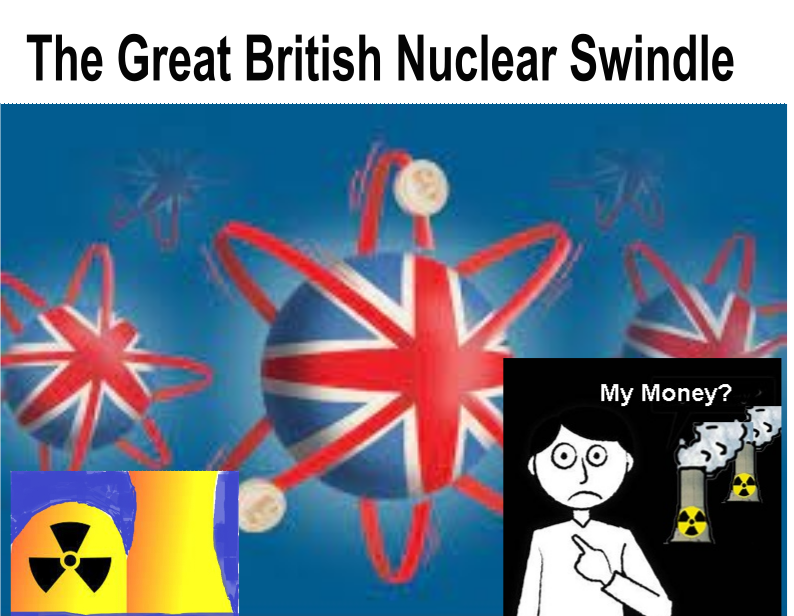
In a gloomy financial statement, Chancellor Jeremy Hunt said the Office for Budget Responsibility had judged that the UK’s economy was shrinking. J.P.Morgan said on Tuesday it expects a contraction in the UK’s economy next year as it enters a lengthy period of stagnation in the face of soaring gas prices, slowing global growth and tighter economic conditions. It predicts “Tighter monetary and fiscal policy amid scarring from both the pandemic and Brexit”
In the midst of all this financial gloom, both the Tory government and the Labour opposition delight in predicting a boom in electricity production from a fleet of nuclear reactors both Big and Small – a fleet that is magically going to appear like some sort of miasma – as taxpayer funds pour into nuclear projects like Sizewell C (Big) and Rolls Royce’s 470 MWe SMR (Not Really Small At All)

Seven months ago the UK government dreamed up “Great British Nuclear” – a “flagship” to “enable nuclear projects”. Now it is clear that “Great British Nuclear” is nothing more than a public relations exercise.
Wylfa and Cumbria nuclear projects failed. because, although the
government offered to take a 30 per cent stake, no other investors came
forward. Now the government is to take a 50% stake in the up to £43 billion Sizewell C , – again desperately touting for investors.
And now – the government unveils plans to establish “Great British Energy”, a new arms-length public body to oversee UK nuclear power pipeline

The Tories pinched the name from the opposition Labour Party, which touted its plan as “all about renewables”. But Labour didn’t mind a bit, when the government co-opted it and turned it into some sort of nuclear justification body. Indeed, Labour’s just as ecstatic as the Tories, about Britain’s wonderful nuclear future – and to hell with the expense!
UK’s £26bn Hinkley Point C nuclear station now faces 11 year delay

Britain’s flagship Hinkley Point C nuclear power station is facing the risk of an 11-year delay, piling further pressure on efforts to keep the lights on. According to a new contract between the Government and French company
EDF, Hinkley will still be funded even if it does not start operating until 2036 – more than a decade after its initial deadline in 2025.
It raises the prospect of significant further hold-ups at Hinkley, which has already been delayed until mid-2027. The change to the subsidy contract terms comes as the Government is paying China a reported £100m to exit its involvement in a second planned new nuclear project, Sizewell C in Suffolk, which is also being developed with EDF. The Government confirmed on Tuesday that CGN will exit Sizewell C, with the state paying an unconfirmed sum to cover its 20pc shareholding and a commercial return. The Times reported this to be £100m. CGN’s involvement with Hinkley Point C is believed to be unaffected.
However, as part of the negotiations, Hinkley Point C now has more leeway than previously to get up and running. The project has a deal with the Government under which it gets a guaranteed £92.50 per megawatt hour for its electricity for the first 35 years of its life, backed by a levy on consumer bills.

When the project was first agreed in 2016, it was due to start generating at the end of 2025. In January 2021, that was pushed back
to June 2026, and in May 2022 it was pushed back again to 2027, with EDF blaming the pandemic and supply chain issues. Costs are now expected to be as high as £26bn. The plant is using a new type of generating technology, EPR, which is so far only in commercial operation in Taishan, China, where one reactor has been shut down due to problems.
Telegraph 29th Nov 2022
1 This Month
Tell Congress: Prevent Nuclear Catastrophe in Iran

Tell Congress: Prevent Nuclear Catastrophe in Iran

Read the Public Inquiry Report, the Commissioners’ report, Surrendering Australia: The AUKUS Deception is available to download for free at aukuspublicinquiry.com. Or just watch the replay of the National Press Club Luncheon.


Shut down the radiation-damaged Heysham nuclear reactors now
To see nuclear-related stories in greater depth and intensity – go to https://nuclearinformation.wordpress.com

Say No to NASA’s Reckless Nuclear Reactor on the Moon
Say No to NASA’s Reckless Nuclear Reactor on the Moon
-
Archives
- November 2026 (246)
- October 2026 (302)
- September 2026 (339)
- August 2026 (330)
- July 2026 (355)
- June 2026 (287)
- May 2026 (306)
- April 2026 (356)
- March 2026 (251)
- February 2026 (267)
- January 2026 (308)
- December 2025 (358)
-
Categories
- 1
- 1 NUCLEAR ISSUES
- business and costs
- climate change
- culture and arts
- ENERGY
- environment
- health
- history
- indigenous issues
- Legal
- marketing of nuclear
- media
- opposition to nuclear
- PERSONAL STORIES
- politics
- politics international
- Religion and ethics
- safety
- secrets,lies and civil liberties
- spinbuster
- technology
- Uranium
- wastes
- weapons and war
- Women
- 2 WORLD
- ACTION
- AFRICA
- Atrocities
- AUSTRALIA
- Christina's notes
- Christina's themes
- culture and arts
- Events
- Fuk 2022
- Fuk 2023
- Fukushima 2017
- Fukushima 2018
- fukushima 2019
- Fukushima 2020
- Fukushima 2021
- general
- global warming
- Humour (God we need it)
- Nuclear
- RARE EARTHS
- Reference
- resources – print
- Resources -audiovicual
- Weekly Newsletter
- World
- World Nuclear
- YouTube
-
RSS
Entries RSS
Comments RSS

