Tokyo enacts ordinance mandating solar power for homes, first in Japan, starting in spring of 2025
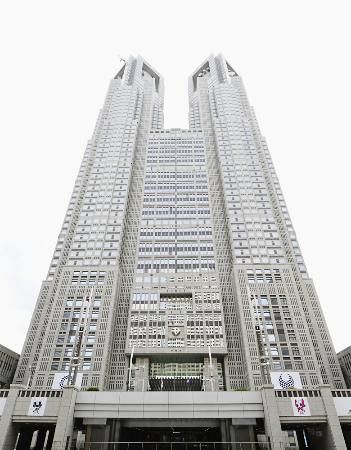
December 15, 2022
On December 15, the final day of the regular session of the Tokyo Metropolitan Assembly, a revised ordinance related to the nation’s first mandatory installation of solar panels on newly constructed single-family homes was passed and enacted with a majority of votes in favor. The aim is to reduce greenhouse gas emissions in the residential sector. The new system will begin in April 2025, after a preparatory period to support businesses and inform residents.
According to the Tokyo Metropolitan Government, major housing manufacturers will be obligated to install panels on buildings with a total floor area of less than 2,000 square meters, including residences. Purchasers will be required to reduce the environmental impact of their homes as an obligation to make an effort.
The TMG estimates that if 4-kilowatt panels are installed, the initial cost of 980,000 yen can be recovered in 10 years through the income from electricity sales, and only 6 years if the TMG subsidy is used.
https://www.tokyo-np.co.jp/article/220091
It’s All About the Bomb. Civilian nuclear power is merely a cover for producing more nuclear weapons.

Presenting civilian nuclear power as the answer to climate change, as clean and safe electrical generation, or as energy “too cheap to meter” is simply a sales pitch. What is actually delivered by a robust nuclear energy fleet is the capacity for nuclear weapons and a nuclear Navy.

It does not matter if nuclear power can really solve climate change, it just has to be seen as an essential part of the solution to attract bright, young talent into what is made to appear as the cutting edge of technology and climate solutions, even though the civilian nuclear power industry worldwide has been in decline since 2002.
Why civilian nuclear power is merely a cover for producing more nuclear weapons. BY ALFRED MEYER , NOVEMBER 25, 2022
“……………………………………………………………………. the United States wanted to be recognized as the leader of the “free world” in the postwar years. In the early 1950s, the military needed to recast nuclear enterprise activities to appear to be peaceful, beneficial parts of our modern life, very distant from the wartime horrors.
…………….In a now famous speech on December 8, 1953, titled “Atoms for Peace,” Eisenhower proposed to the U.N. General Assembly an international program of sharing “peaceful” nuclear materials and know-how for untold bounty, to encourage development of nuclear programs around the world.
……… one should also recognize that the IAEA’s bluntly stated mission is to promote nuclear technology. The first leaders of the IAEA were from the United States, to ensure that U.S. interests were protected.
Nuclear enterprise infrastructure is an outgrowth of World War II. These new endeavors drew international interest in creating the huge nuclear marketplace now in existence. Atoms for Peace—a plan to share nonmilitary nuclear technology with other countries to “win hearts and minds”—placed nuclear materials and reactors in more than forty countries, including Iran. This generated ongoing business for many American nuclear enterprise companies while supporting and expanding the U.S. military’s nuclear infrastructure and capacity in the United States.
Having nuclear activities under the auspices of the United Nations conferred upon them the legitimacy and respect of that international body………………………………….
The generally favorable response to Atoms for Peace was a trifecta for the nuclear enterprise. U.S. nuclear activities were repackaged as the “peaceful” atom and given the patina of social acceptance through United Nations oversight. Eisenhower was lauded as a good leader for sharing the atom with the world, and the U.S. nuclear infrastructure got new business and growth, which supported more U.S. nuclear weapons and nuclear Navy programs.
Atoms for Peace also served geopolitical ends. For instance, one reason the United States provided Iran with a research reactor in 1967 was to saddle that country with significant financial obligations, including paying for ongoing parts, services, and technical support from American companies.
The Atomic Energy Commission was created in 1946 to promote and regulate the development of this new industry. With the commission led by Wall Street banker Lewis Strauss for five critical years, it is not surprising that the scales heavily favored promotion over regulation. Encouraging private investment in these risky reactor projects was assisted by minimizing regulatory safety and operational demands upon the private operators.
But why was it so important for the U.S. government to develop and subsidize civilian nuclear power? Because it allowed the military, in essence, to spin off its nuclear reactor activities to private financing and corporate operations. Like Atoms for Peace, this repackaging of a military activity as a civilian one succeeded in making the endeavor socially acceptable and somewhat self-funding—although government subsidies are still perennially needed to carry on, and taxpayers are still covering the liability insurance costs of the private corporations.
Most importantly, as detailed in a 2017 report by former U.S. Energy Secretary Ernest Moniz, civilian nuclear power is an “essential enabler” of our national security. The Atlantic Council calculates the value of this contribution to national security to be $42.4 billion a year. Businesses contributing to the nuclear Navy’s supply chain are in forty-four U.S. states.
……………. Being the biggest nuclear enterprise on earth encourages the circular, self-sustaining dynamic of the nuclear arms race. The United States is busy modernizing its nuclear weapons infrastructure to be “strong enough” to negotiate the elimination of nuclear weapons. This is presented as official doctrine in the nonproliferation world. In reality, the United States is actually driving the growing international nuclear arms race.
…………… Presenting civilian nuclear power as the answer to climate change, as clean and safe electrical generation, or as energy “too cheap to meter” is simply a sales pitch. What is actually delivered by a robust nuclear energy fleet is the capacity for nuclear weapons and a nuclear Navy.
Over the decades, there have been numerous expert critiques of nuclear power, authoritatively debunking these misleading and false promises, yet these critiques seem to have no effect on the trajectory of the nuclear enterprise. I suggest that these sales pitches are diversionary techniques aimed at sapping our energy.
It does not matter if nuclear power can really solve climate change, it just has to be seen as an essential part of the solution to attract bright, young talent into what is made to appear as the cutting edge of technology and climate solutions, even though the civilian nuclear power industry worldwide has been in decline since 2002.
To protect ourselves from the dangers of the nuclear enterprise, we need to stop the nuclear weapons and nuclear power reactor programs—a tall order, for sure. But if we seek success in our efforts, we are well advised to understand the forces we are engaging with. It is all about nuclear weapons.
The folly of the proxy war in Ukraine and how the military-industrial-complex has become the enemy from within
The Chris Hedges Report 18 Dec 22
There was once a wing of the Democratic Party that stood up to the war industry. J. William Fulbright. George McGovern. Mike Gravel. William Proxmire. But that was decades ago. The new Democrats, especially with the presidency of Bill Clinton, became shills not only for corporate America but the arms industry. No weapons system is too costly. No war, no matter how disastrous, goes unfunded.
The massive military budget, with $858 billion in military spending allocated for Fiscal Year 2023, an increase of $45 billion over the Biden administration’s budget request, and nearly $80 billion over the amount appropriated by Congress for the current fiscal year, keeps growing.
When 30 members of the party’s progressive caucus recently issued a call for Joe Biden to negotiate with Vladimir Putin they were forced by the party leadership and a war mongering media to back down and rescind their letter. What happened to the Democratic Party? Why has it become impossible to question war and the massive expenditures on arms? Why is such questioning political suicide? Why can’t a Democrat ask, especially at a time of economic hardship and huge deficits, how much we are going to divert to the war in Ukraine which has already consumed some $ 60 billion – as much as we spend on the State Department and AID — with no end in sight? Joining me to discuss the extinction of anti-war Democrats in Dennis Kucinich, a former presidential candidate, who served eight terms in the House of Representatives before the Democratic Party gerrymandered his district to ensure his defeat.
TRANSCRIPT

…………Dennis Kucinich:……………………. what’s happened with the Democratic Party, I think as soon as the Democratic Party made a determination, could have been 35, 40 years ago, that they were going to take corporate contributions, that wiped out any distinction between the two parties. Because in Washington, he or she who pays the piper plays the tune, and that’s what’s happened.
So, there isn’t that much of a difference in terms of the two parties when it comes to war except, notably, partisan reasons or not, there were over 50 Republicans who voted against the last tranche of money that went to fuel the war in Ukraine. And I felt that was notable, and of course, the potential speaker of the house should the Republicans win will be Kevin McCarthy, who has made it a point to say that he’s going to look at that funding.
…. Right now, the arms industry is making money hand over fist with the expansion of war. That’s how they make their money.
…….. And so, with respect to the Democratic caucus, this event, a retraction of the letter by a significant caucus within the Democratic Party, is a new benchmark of a slavish obeisance to the status quo within the party, which then supports war. And a majority of Republicans at this point are supporting war. So you have Congress supporting a war, and this is the way it’s been.
…… when the Pentagon budget comes up, there is a parade of various businesses, small and large, who will make appointments with the congressperson or staff and lay out how many jobs are in the district and how important it is to a district business to have this budget passed……….
……… I went to as a member of the government oversight committee in which an inspector general testified there are over $1 trillion worth of accounts in the Pentagon that couldn’t be reconciled. That they had over 1100 different accounting systems, deliberately, I suppose, constructed so as to make obfuscation rule the day.
So, from that moment on, I just said, wait a minute. They’re not keeping track of how this money’s spent. Why in the world should I vote for this budget? So from that point on, right through to the conclusion of a 16-year service in the United States Congress, I didn’t vote for a single budget of the Pentagon or any of the supplemental appropriations to keep wars going because I knew it was a racket
………….. the truth is the members of Congress are always under enormous pressure locally from their constituents, from contractors within their constituency, from the mediated environment, and the party. And so, it’s a rare individual, and I’m not doing this to elevate myself, but it’s a rare individual who will go against that, because you risk, at times, you may risk your political career.
…………………………………….. The truth of the matter is that we’re in a heavily militarized society driven by greed, lust for profit, and wars are being created just to keep fueling that. It moves right into this idea, this old idea of a manifest destiny. And then you leap into the 21st century where there are still people who believe, as in the Project for the New American Century, that it has to be that America must rule the world, that it is our destiny. I mean, that is such old thinking, but that’s where we are.
…..I see the world as one. I think that human unity is the truth that surrounds all of us. And when we start separating ourselves, and we engage in this polarized thinking, polarized thinking is a precursor of war………. I’ve gone away from the orthodoxy which is now part of politics that says, well, keep that war going for whatever reason. We’re going to beat the Russians. We’re going to beat the Chinese. What? We’re beating ourselves.
………. NATO has become now a kind of sock puppet for Western powers, notably my own dear country the United States.
….from 2014 how the US engineered a coup and knocked out the Ukrainian government and put in one that would serve the US interest, which was to nullify the power of the constituency in Eastern Ukraine, which was Russian-speaking.
And they wanted to basically, by any means necessary, keep that out of influencing the policies of the region, which they did. I mean, 14,000, by some estimates, Russian-speaking Ukrainians were killed from 2014 until 2021. Most Americans have no idea about that.
But anyhow, once the US, once the intelligence started to say, hey, we can knock Russia out like that, okay? We’ll crush Russia economically. These sanctions are going to put Russia away. And the EU bought into it. What’s the result? Well, the war goes on. But in the meantime, the sanctions have created a dramatic increase in the cost of energy. Plus they blew up the pipeline. That’s another increase in the cost of energy.
…… This is going to cause a lot of problems with the EU. And NATO is there as a cat’s paw for war……… they’re paying an economic price right now for the misjudgment of the European officials who were coaxed into it by the US.
….. And this ends up being a nightmare. Not only for Europe though, but we’re getting visited with it somewhat here.
……………………. suddenly Ukraine becomes a bloodbath of a chess board where these innocent people are just being used as pawns in a game of nations.
Chris Hedges: Let’s talk about the press, because you spoke about going back to your constituents as an anti-war candidate and feeling blowback. But isn’t that because, essentially, we have a press that has locked out anti-war critics?
Dennis Kucinich…………………………………. And so, I’ve seen this dynamic before. And the media, we have a heavily mediated society, even more so today than 20 years ago. And we also know that the government can have legions of people working computers, sending out messages that praise those who are for the war and attack those who aren’t. We’re living in a hall of mirrors here when it comes to trying to find out what is really going on……………. , I’m also concerned that things could spin out of control, even now with respect to Russia, with respect to China, North Korea. And what a tragedy…………
Chris Hedges: I want to ask about these pimps of war, these shills for war…… now they’re beating the drums, of course, for endless war with Ukraine. It doesn’t matter how mistaken they were in the past, they are perpetuated, their think tanks are perpetuated. They never lose their purchase on the cable talk shows. You’ve dealt with these people. I know some of them, Abrams and others. They are truly human mediocrities. And I would include the generals like Petraeus and others.
Dennis Kucinich: …………. Well, if there ever was a country that was in need of a process of truth and reconciliation, it’s America.
………….. What Gore Vidal calls the United States of Amnesia just takes place, where people forget the mistakes. Not mistakes, the misdeeds of the past. And unless we have some measure of accountability we’re always going to be wearing the stain of war waged against innocent people around the globe.
……………………………… We should also be clear, we’ve lost almost all these wars going back to Vietnam, including Afghanistan and Iraq.
That was Dennis Kucinich, former presidential candidate, served eight terms in the House of Representatives before the Democratic Party pushed him out. I want to thank the Real News Network and its production team: Cameron Granadino, Adam Coley, and Kayla Rivara. You can find me at chrishedges.substack.com. https://chrishedges.substack.com/p/the-chris-hedges-report-show-with-346
Russia building giant dome over Europe’s largest nuclear plant’s spent fuel stores, to shield them from Ukrainian attacks
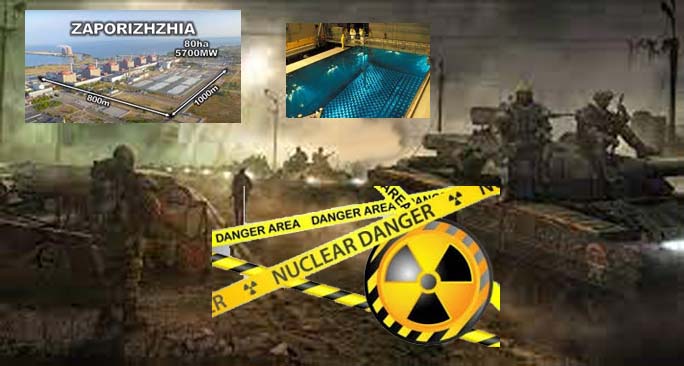
The structure will shield stores of spent radioactive fuel from Ukrainian attacks.
https://www.rt.com/russia/568415-zaporozhye-nuclear-dome-ukrain 18 Dec 22
Russia is constructing a protective dome over spent radioactive fuel stores at the Zaporozhye nuclear power plant as Ukrainian forces continue to target the facility, senior regional official Vladimir Rogov has said.
He took to Telegram on Saturday to post a short video of the work that’s taking place. It showed technicians setting up shields over the tanks that hold spent nuclear fuel.
The dome is designed to protect the storage facilities from shrapnel and improvised explosive devices carried by drones, the official explained, adding that it would be reinforced further at a later period.
Russia’s nuclear energy corporation Rosatom had earlier warned that damage to the spent-fuel containers risks a release of radioactive material into the atmosphere, with unpredictable consequences.
The construction of the dome comes amid continued attacks on the Zaporozhye nuclear power plant and the nearby town of Energodar, which Moscow blames on Kiev. Russia has repeatedly said that such strikes could result in a nuclear disaster that would eclipse the 1986 Chernobyl incident and affect many countries in Europe.
Ukraine initially claimed that the Russian military had been hitting the plant itself as part of “false-flag” operations to make Kiev look bad. However, Ukrainian general staff eventually admitted to striking the area around the nuclear facility.
The Zaporozhye nuclear power plant, which is the largest on the continent, has been under Russian control since February 28. All of the reactors at the facility are currently shut down due to the security situation.
Zaporozhye Region, together with three other former Ukrainian territories – Kherson Region and the People’s Republic of Donetsk and Lugnask – joined Russia in autumn after holding referendums.
Exaggerated fusion breakthrough is for military purposes.
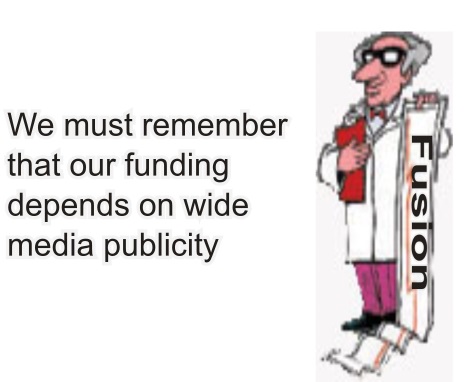
The claims for a breakthrough in fusion power are not only exaggerated but in reality concerned principally with military objectives.
By Ian Fairlie and David Toke, https://100percentrenewableuk.org/exaggerated-fusion-breakthrough-is-for-military-purposes 18 Dec 22
This test, carried out by the National Ignition Facility at US Government’s Lawrence Livermore National Laboratory (LLNL), was mainly to facilitate the testing of nuclear weapons. This fact was missed in almost all the hyperbole surrounding the test.
The claims for a breakthrough in fusion power are not only exaggerated but in reality concerned principally with military objectives.
This test, carried out by the National Ignition Facility at US Government’s Lawrence Livermore National Laboratory (LLNL), was mainly to facilitate the testing of nuclear weapons. This fact was missed in almost all the hyperbole surrounding the test.
Although it is correct that nuclear fusion was achieved, albeit for a trillionth of a second, it was not a first. Ignition has been achieved before in other countries including the UK using a different technology (magnetic confinement) for a few seconds. And the claim that more energy was produced than consumed in the process is specious, as the various reports put out by LLNL compared heat output with electricity input which is like comparing apples and oranges. A true comparison would have taken into account the vast amount of energy consumed to produce the electricity to drive the lasers. And the actual amount of excess heat energy produced (about 20 kettles of boiling water) was paltry.
As Tom Hartsfield, who has been following the progress of the tests by the National Ignition Facility (NIF), put it:
‘the input energy to the laser system is somewhere between 384 and 400 MJ. Consuming 400 MJ and producing 3.15 MJ is a net energy loss greater than 99%. For every single unit of fusion energy it produces, NIF burns at minimum 130 units of energy…….In terms of electrical power, 3.15 MJ would not quite power one 40-watt refrigerator light bulb for a day.’
As Amory Lovins has commented, even if fusion power was free, it would still be uncompetitive with other energy sources. That is because there would be very big capital costs involved, including paying for 19th century steam generator technology to use the fusion power to boil water to drive steam powered electricity generators.
In fact the main purpose of the NIF has not been about advancing civil fusion research, but in advancing the US nuclear weapons programme. A paper in the top science journal Nature published in 2021 discussed an earlier breakthrough, but the main breakthrough described was about nuclear weapons:
‘Housed at Lawrence Livermore National Laboratory in California, the US$3.5-billion facility wasn’t designed to serve as a power-plant prototype, however, but rather to probe fusion reactions at the heart of thermonuclear weapons. After the United States banned underground nuclear testing at the end of the cold war in 1992, the energy department proposed the NIF as part of a larger science-based Stockpile Stewardship Program, designed to verify the reliability of the country’s nuclear weapons without detonating any of them……..With this month’s laser-fusion breakthrough, scientists are cautiously optimistic that the NIF might live up to its promise, helping physicists to better understand the initiation of nuclear fusion — and thus the detonation of nuclear weapons. “That’s really the scientific question for us at the moment,” says Mark Herrmann, Livermore’s deputy director for fundamental weapons physics. “Where can we go? How much further can we go?”
Looking on the bright side, could we say this was a technological breakthrough for mankind? Not really. It is better to examine what its real impact will be for our energy futures – and the answer is precious little. This one test cost around $1.5 billion according to the New York Times, and involved 192 of the world’s largest and most expensive lasers. The disparity in scale and the mismatch with what we really need (inexpensive, practical sources of heat and electricity) are massive.
Another useful yardstick would be how much it would contribute to dealing with climate change. Again nothing. Fusion is not mentioned once as a climate mitigation option in the last IPCC report.
Watchdog estimates civilian death toll from Ukrainian attacks on Donbass
https://www.rt.com/news/568395-us-troops-deployed-estonia/ 14 Dec 22, More than 4,500 people have been killed since mid-February, with supplies of NATO weapons resulting in a surge of deaths, observers claim.
Weapons supplied to Ukraine by NATO countries have allowed Kiev’s military to significantly ramp-up attacks on civilian targets in Donbass, a local watchdog has said.
The group claims that over 4,500 civilians have been killed and 4,000 injured since Ukrainian forces escalated shelling in mid-February.
Military terror has escalated beyond all limits after NATO members started supplying weapons to Ukraine,” the Joint Center for Control and Coordination (JCCC), a monitoring group that tracks attacks on the Lugansk and Donetsk People’s Republics, said on Wednesday.
“We have recorded a four-fold increase in the number of victims among the civilian population,” Natalya Shutkina, a representative from the Donetsk People’s Republic at the JCCC, said as quoted by TASS.
The JCCC held a press conference on Wednesday during which it showed fragments of Western shells and rockets collected after Ukrainian strikes in Donbass and explained the toll these attacks had taken.
Since February 17, 4,527 civilians have been killed, including 154 children, Shutkina stated. Another 4,317 civilians, including 274 children, have been injured, she said, adding that Ukrainian attacks have damaged over 12,000 homes, 128 medical facilities, and 67 sites required for providing basic utilities, such as water and heating.
The record-keeping begins in mid-February when the Donbass republics reported a significant escalation of strikes by Kiev in the lead-up to Russia having recognized the DPR and LPR as sovereign states and pledged to defend them. The two regions have since been incorporated into Russia following referendums in September.
Shutkina pointed out that the weapon systems provided by the US and its allies are supposed to be more accurate than the Soviet-era artillery guns and rocket launchers that Ukraine possessed previously. This leads the JCCC to believe that the Ukrainian attacks on civilian facilities have been intentional rather than being part of indiscriminate strikes, she stressed.
READ MORE: Children injured in Ukrainian shelling of Donetsk – authorities
Darya Morozova, the human rights ombudsman for the DPR, urged international organizations to acknowledge Kiev’s actions, arguing that “if the world community didn’t encourage the Ukrainian leadership with its inaction, the war in Donbass would have stopped a long time ago.” She called on Kiev’s sponsors to stop sending heavy weapons to Ukraine.
Weapons delivered to Ukraine ‘beginning to filter’ to Africa: Nigeria
https://english.almayadeen.net/news/politics/weapons-delivered-to-ukraine-beginning-to-filter-to-africa: By Al Mayadeen English , Source: Agencies, 3 Dec 22
Nigerian President Muhammadu Buhari urges heads of states from neighboring states participating in the Lake Chad Basin Commission to confront the issue of Western arms smuggling from Ukraine.
Weapons supplied to Ukraine from Western countries are “starting to flow” into the Lake Chad basin region, Nigerian President Muhammadu Buhari warned this week.
Addressing the heads of states from neighboring states participating in the Lake Chad Basin Commission on Tuesday in the Nigerian capital of Abuja, the president said, “Regrettably, the situation in the Sahel and the raging war in Ukraine serve as major sources of weapons and fighters that bolster the ranks of the terrorists in the region.”
Buhari then urged his counterparts to increase security cooperation in order to confront the issue of arms smuggling.
The Nigerian president agreed to step up military coordination in their countries’ war against Boko Haram and ISIS terrorists, who are now apparently receiving weapons from Ukraine, alongside the leaders of Benin, Chad, Niger, and the Central African Republic.
Last month, Finnish police said that some of the “huge quantities” of weapons being shipped to Ukraine had made their way to Finland, where “three of the world’s largest motorcycle gangs” now operate, including Bandidos MC, which “has a branch in every major city in Ukraine.”
In August, an American news outlet unmasked that a shockingly large amount of weaponry heading for Ukraine was untraceable. “Like 30% of it reaches its final destination,” said a tweet that was later deleted after a swarm of online trolls attacked it.
Russian Defense Minister Sergei Shoigu had previously said the arms supplied by the West to Ukraine were ending up on the black market and spreading across West Asia.
Similarly, Russian Foreign Minister Sergey Lavrov had pointed out that Stingers and Javelin missiles, supplied by the West to Kiev, were already being sold at a discount on the black market and have surfaced in Albania and Kosovo, which Russia has warned for so long.
Ukraine has received billions and billions of dollars in donated arms from the United States and its allies such as the United Kingdom and other NATO states in the past few months.
Ukraine Crisis Highlights Security Needs Of Civilian Nuclear Power

[[Ed – “a secure environment for the proliferation of nuclear energy.”? Pigs might fly?]
Ariel Cohen, Forbes, 16 Dec 22,
On November 27-28 a conference in Paris addressed a broad spectrum of challenges humanity is facing. Renowned thinkers, including Nuriel Roubini and Jacob Frenkel, the former Chairman of JP Morgan International, and three central bankers from Iceland, Tunisia, and Armenia, warned about inflation and the growing mountain of debt threatening the global economy. The panel at which this author addressed civilian nuclear security was organized by Dialogue of the Continents, a project of the Astana Club, the brainchild of the Nazarbayev Foundation. The panel was chaired by the veteran nuclear policy expert Ambassador Kairat Abusseitov, the former First Deputy Foreign Minister of Kazakhstan.
Today the planet shudders at the prospect of Russia’s first use of nuclear weapons and its military attacks on Ukrainian nuclear reactors. The world faced nuclear crises before. On October 27th, 1962 Vasili Arkhipov, a former Vice Admiral in the Soviet Navy, prevented a nuclear war when he countermanded the orders of two other officers and prevented a nuclear attack against the US Navy during the Cuban Missile Crisis. In September 1983 Soviet Airforce Colonel Stanislav Petrov manually overrode a missile launch system that erroneously detected an American attack. Two months later in November 1983 the NATO military exercise Able Archer almost triggered World War III when the Soviets believed it to be a real attack. In 1995 a Norwegian weather missile almost triggered a Russian massive strike on the U.S., which President Yeltsin canceled.
In every instance, nuclear war was prevented by the judgment of individuals where systems had failed. This was possible as adversarial powers recognized the “rules of the game” and created an atmosphere of cooperation to avoid nuclear confrontation amidst other profound disagreements.
That atmosphere is gone, and the next time a Russian alert system goes off we may not have a Colonel Petrov to save us. And it won’t be the ballistic missiles that may be the cause of a massive nuclear disaster.
International law explicitly provides for the immunity of nuclear power plants during war. There are even measures that specifically plan for their safety. The International Atomic Energy Agency (IAEA) for instance has promulgated 16 legally binding conventions rand protocols under the international legal framework for nuclear security to prevent, detect and respond to threats to nuclear security within one state. Nevertheless, the international community has proven unable to stymy Russian actions [and Ukrainian] around Chernobyl and the Zaporizhzhia Nuclear Power Plants that amount to nuclear blackmail and flagrantly violate these laws.
Enforcing the existing international law is easier said than done. International law presupposes an agreement between state actors, which is sorely lacking today. Calling counter-terrorism instruments into action requires UN approval, created by an ad hoc committee……………..
Being a nuclear state under the non-proliferation treaty Russia is under no obligation to place the Zaporizhzhia plant under IAEA safeguards and given the likelihood that it will not recognize that the plant comes under Ukraine’s comprehensive safeguards agreement, IAEA may find access to the plant completely denied next fall.
This is not just a Russian or Ukrainian problem; this is an emerging structural problem of the international energy security system that will reoccur if nothing is done now……………………………………. The future ubiquity of civilian nuclear power means that currently lacking international frameworks must be overhauled – or civilian nuclear power would be un-investable and too risky.
……………. A false sense of security after the Cold War has dangerously numbed many to the existential threat that nuclear weapons represent, with polls repeatedly showing an alarming lack of concern towards these tools of extinction………………………………………………. more https://www.forbes.com/sites/arielcohen/2022/12/16/ensuring-the-security-of-civilian-nuclear-power/?sh=25e66be71f24
Alliance of Pacific organisations condemns Japan’s decision to discharge nuclear wastewater into the Pacific Ocean
NZ and Pacific urged to ‘step up’ against Japan’s nuclear plan, Stuff NZ, Christine Rovoil, Dec 17 2022,
Japan’s decision to discharge nuclear wastewater into the Pacific Ocean for the next 30 years has been condemned by a Pacific alliance.
And the group of community members, academics, legal experts, NGOs and activists is calling on New Zealand and the Pacific to act to stop Japan.
Three reactors at the Fukushima Daiichi nuclear power plant had meltdowns after the earthquake and tsunami on March 11, 2011 which left more than 15,000 people dead.
The Japanese government said work to clean up the radioactive contamination would take up to 40 years.
Following the Nuclear Connections Across Oceania Conference at the University of Otago last month, a working group was formed to address the planned discharge.
Dr Karly Burch at the OU’s Centre for Sustainability said many people might be surprised to hear that the Japanese government has instructed Tokyo Electric Power Company (Tepco) to discharge more than 1.3 million tonnes of radioactive wastewater into the ocean from next year.
Burch said they had called on Tepco to halt its discharge plans, and the New Zealand Government to “step up against Japan”.

In June, Prime Minister Jacinda Ardern called for nuclear disarmament during her speech at the Nato Leaders’ Summit in Madrid.
“New Zealand is a Pacific nation and our region bears the scars of decades of nuclear testing. It was because of these lessons that New Zealand has long declared itself proudly nuclear-free,” Ardern said.
Burch said the Government must “stay true to its dedication to a nuclear-free Pacific” by taking a case to the International Tribunal for the Law of the Sea against Japan.
“This issue is complex and relates to nuclear safety rather than nuclear weapons or nuclear disarmament,” the Ministry of Foreign Affairs and Trade said in a statement on Friday.
“Japan is talking to Pacific partners in light of their concerns about the release of treated water from Fukushima and Aotearoa New Zealand supports the continuation of this dialogue.
…………….. In Onahama, 60km from the power station, fish stocks have dwindled, said Nozaki Tetsu, of the Fukushima Fisheries Co-operative Associations.
“From 25,000 tonnes per year before 2011, only 5000 tonnes of fish are now caught,” he said. “We are against the release of radioactive materials into our waters. What worries us is the negative reputation this creates.”
………………………. Burch said predictive models showed radioactive particles released would spread to the northern Pacific.
“To ensure they do not cause biological or ecological harm, these uranium-derived radionuclides need to be stored securely for the amount of time it takes for them to decay to a more stable state. For a radionuclide such as Iodine-129, this could be 160 million years.”
………… Burch said the Japanese government was aware in August 2018 that the treated wastewater contained long-lasting radionuclides such as Iodine-129 in quantities exceeding government regulations.
She has called for clarity from Tokyo, the International Atomic Energy Agency, the Pacific Islands Forum Secretariat, Pacific Oceans Commission, and a Pacific panel of independent global experts on nuclear issues on the outcome of numerous meetings they have had about the discharge.
“We want a transparent and accountable consultation process which would include Japanese civil society groups, Pacific leaders and regional organisations.
“These processes must be directed by impacted communities within Japan and throughout the Pacific to facilitate fair and open public deliberations and rigorous scientific debate,” Burch said.
The Pacific Islands Forum secretary-general, Henry Puna, has been approached for comment.
https://www.stuff.co.nz/pou-tiaki/130784783/nz-and-pacific-urged-to-step-up-against-japans-nuclear-plan
Media enthuses over “sexy”high tech nuclear energy, but ignores the really effective one – energy saving.

It’s that time of year when editors seem happy to let a few dubious stories
through. Most of the media ran with this one on yet another nuclear fusion
breakthrough- this one at the Lawrence Livermore labs in California, at the
National Ignition Facility.
Well, with the climate change threat looming,
non-fossil energy is a big issue just now- and its certainly cold out! So
is help at hand? Well no, not for some time at least. And at unknown cost.
Even if this laser based system, which was designed primarily for
replicating the physics of H-bomb ignition, can be made to deliver energy
on a large scale reliably and safely, it’s going to take a while- it’s a
very long shot.
An equally familiar but arguably much more welcome
newspaper article was this one on energy saving. As seems to be said almost
every week now, saving energy saves money. And it’s available now. But no
one seems to notice.
Energy conservation is just not sexy. Not like high
tech fusion or hydrogen- which also these days regularly gets star billing.
Well hydrogen may have some applications, but in a wide ranging critique,
Michael Liebreich, BNEF founder, says not that many.
It’s not the
wonder-fuel it’s been billed as. He is not happy: ‘we are going to waste
huge amounts of money on the wrong use cases for hydrogen and the wrong
infrastructure in the wrong places’. Few seem happy either about the
proposed new coal mine in Cumbria, but support for solar farms seems to be
missing in Tory UK, although, in the EU, there seems to be support for
putting solar in space…What an odd world. With Russia still calling many
of the shots: according to a new Parliamentary Briefing Note, ‘it is
currently the only country capable of commercially providing the more
enriched fuel needed for Advanced Modular Reactors’, which some look to the
replace the current type of nuclear technology.
Renew Extra 17th Dec 2022
https://renewextraweekly.blogspot.com/2022/12/an-end-of-year-whimsy.html
Russia installs sheild over Zaporizhzhia nuclear storage site
A shield is being set up over a storage site for spent nuclear waste at the
Zaporizhzhia nuclear power plant in southern Ukraine to protect it from
shelling and drones, a Russian-installed official said on Saturday. Video
footage published by Vladimir Rogov, a Russian-appointed official in
Ukraine’s Zaporizhzhia province, showed workers mounting a screen of what
appeared to be some kind of transparent sheeting on wires above dozens of
concrete cylinders about 5 metres (16 feet) high.
Reuters 17th Dec 2022
U.S. troops deployed near Russian border
U.S. troops deployed near Russian border –Estonia’s defense ministry has announced the arrival of an American infantry company as part of NATO’s presence in the country | 16 Dec 2022 | A United States infantry company arrived in Estonia this week as part of NATO’s effort to bolster the military bloc’s eastern border with Russia, the Baltic country’s defense ministry has revealed.
A statement published on the ministry’s website on Friday said that U.S. service members are stationed at Taara base in the town of Voru, some 20 kilometers from the Russian border. Commenting on the U.S. service members’ arrival, Colonel Mati Tikerpuu, the commander of the 2nd Infantry Brigade of the Estonian Defense Forces, said he expects to be able to “integrate our allies on a brigade level and gain an additional maneuver unit.” Colonel Richard Ikena, U.S. 1st Infantry Division Artillery Commander, said American troops are “excited to be in Estonia” and “look forward to working shoulder-to-shoulder, alongside our Allies.”
Mothering a Movement: Notes from India’s Longest Anti-Nuclear Struggle

It was striking how these women activists situated their politics in motherhood and in their responsibility as the guardians for future generations. Prayers to Lourde Matha at the main church, floral tributes to Kadalamma, and protests against the nuclear plant all lie on a continuum as acts of reverence for life. While this politics around maternity might not sit well with a certain progressive outlook, these women are clear about their feminist goals.
A time will come. We will take over the village and remove the nuclear power plant.
Radiowaves Collective, Half-Life, December 2022
‘……………………………………………………………………… Both Idinthikarai and Kudankulam, the other settlement that abuts the northern boundary of the nuclear plant, lie off the beaten path for the tourists that come to Kanyakumari—a narrow strip of “Land’s End” with an old temple, newer memorials to regional and national personages, and the Indian Ocean—located a little over twenty-five kilometers away. Yet in 2011 and 2012, Kudankulam and its nearby villages had commanded significant media attention. Putting aside their caste and religious differences, the locals around Kudankulam had put up a remarkable non-violent resistance against the nuclear establishment. We want to find out what has happened to that movement a decade later.
Next morning, en route to Kudankulam, our bus lurches past the bustling town of Anjugramam and other smaller settlements, surrounded by farmlands and coconut and palmyra trees. But it is the giant windmills, mushrooming all over, that dominate the landscape and serve as a reminder that India is a country hungry for energy. All of this area, Anjugramam onwards, falls under what is called the emergency planning zone: a sixteen-kilometer radius around the nuclear plant that would need evacuation in case of a disaster. Our fellow passengers include some non-locals, who form the bulk of the workforce at the plant. When we do not get off at either the Anuvijay— “Victory of the Atom”— town, a gated community for staff and their families, or the plant some seven kilometers away, the few remaining people on the bus start eyeing us.
Once at the busy main market in Kudankulam, our local guide and a few other men quickly whisk us away to a house where we are scheduled to interview women activists who were involved in the 2012 protests. However, before we can start a conversation with them, a man in a striped blue shirt asks us to write down our names and contact details. “CID [Criminal Investigation Department],” he replies softly when we ask why. “He is a policeman. He is just doing his job,” another man chimes in, matter of factly. The sprawling nuclear plant across the road reaches far into the lives of the people here. Police surveillance is part and parcel of the architecture of the nuclear establishment.
The KKNPP is India’s largest nuclear power plant, housing two Russian VVER-1000 reactors—similar to the ones under siege now in Zaporizhzhya, Ukraine—and has four others in the pipeline. As far as one can tell, it has little to do with nuclear weapons, but the Department of Atomic Energy (DAE)—the agency which oversees all things nuclear in India—makes it easy to indulge in wild speculations. Right from its inception in 1954, the DAE has been notoriously opaque, with little independent or public scrutiny, and prone to misinformation and grandiose statements.
While the US launched its “Atoms for Peace” program in 1953, the motto of the DAE has always been “Atoms in the service of the nation.” But the nebulous nature of these slogans is often put on display. For instance, in 1974, the DAE tested nuclear weapons in the guise of a peaceful nuclear program, calling them “peaceful nuclear explosives” for the development of the nation.1 Things have been equally farcical in the case of the civilian nuclear energy program, where, in the name of national security, the DAE has refused to share details about basic public matters such as energy costs and nuclear safety. And even though the DAE is currently (and consistently) decades behind in meeting its own projections for power generation, it still proclaims a fifty-fold increase in nuclear power by 2050.2 The message is loud and clear: the future is nuclear, and only fools worry about the past—or the present.
“If we say anything against [the plant], they will file a case against us,” says a young woman who teaches science at a nearby school. “We don’t have permission to talk about this issue with the students. We can only teach things that are mentioned in the books,” she continued. While adding that the KKNPP supports some schools in its vicinity, like many others in Kudankulam, she is more concerned about the dismal state of affairs. “We do not have any facilities, we have long power cuts, we receive drinking water only once every ten days, and there are all sorts of diseases. Now, it is not possible to remove the plant, but at least our people should get better jobs. Outsiders have all the permanent positions there.” She is sympathetic to the DAE’s rhetoric of nation-building, but dismayed with the lopsidedness of it all. Why should people who live in metropolitan India receive the benefits of nuclear energy while people from Kudankulam take on the risks?
“People protested a lot, and nothing happened. Many who protested can’t get jobs there. It was a waste,” the teacher concluded. “People have accepted that they must live with the diseases. They have made up their mind to live happily until they die. They have started building bigger houses. And since people have come from other places, the land rates have increased, like in the big cities.” Indeed, right outside the nuclear plant, locals have opened new shops selling food, cellphones, and other sundry items. The area has become a real estate hotspot………………..
The region has seen sporadic protests ever since India and the erstwhile Soviet Union had signed an agreement to build these reactors in 1988, as part of post-Chernobyl nuclear diplomacy.3 With the fall of Soviet Union, the project went nowhere for a decade. In the wake of its Pokhran-II nuclear weapons tests in May 1998 and the sanctions that followed, however, India sought Russia’s help. Construction work at the Kudankulam plant finally began in 2000. However, it was the 2011 Fukushima accident in the aftermath of a tsunami that hit close to home…….
A few days after the Fukushima accident, a senior DAE official announced that “there [was] no nuclear accident or incident [in Fukushima],” instead claiming that “it was purely a chemical reaction and not a nuclear emergency.”4 Such technocratic stonewalling, typical of the DAE, did little to allay the anxieties of people living around the plant. Following a test run at the nuclear plant in July 2011, which involved generating high pressure steam to check safety mechanisms, residents started protesting non-violently. The DAE sought to further counter the heightened fear of locals with high-handedness and by flexing its scientific, economic, and legal authority.
Former Indian president A. P. J. Abdul Kalam—uniquely positioned as both a leading defense scientist and a member of the coastal fishing community in Tamil Nadu—visited KKNPP in November 2011. He declared the nuclear plant to be safe and recommended introducing four-lane highways, hospitals, jobs, and bank subsidies to the area. However, the former President refused to meet those in the village with anti-nuclear sentiments, declaring instead that “history is not made by cowards. Sheer crowd cannot bring about changes. Only those who think everything is possible can create history and bring about changes.”
Months later, tired of intransigent protestors, the state enlisted the help of India’s leading mental health hospital to counsel them. Meanwhile, the police and additional security agencies dealt with dissenting locals in their own style. By the first anniversary of the non-violent protests in August 2012, nearly 7,000 people had been accused of sedition and waging war against the state. Many in Idinthakarai still refuse to forgive the state for how they responded to the protests.
Mildred, a fifty-year-old leader of the Idinthikarai protests with dozens of legal cases against her recounted the day they had marched on the nuclear plant in September 2012. “We were frightened by the gun fire. I was in the front with other women and the hot gas fell between our legs. We couldn’t breathe. We couldn’t see for many days. They captured six other women, but I escaped by swimming into the sea,” For Mildred and other villagers from Idinthikarai, marching on the plant was a last-ditch effort to stop the loading of the nuclear fuel rods and the commissioning of the first reactor at KKNPP.
“That changed everything. We decided to protect the village by destroying the roads. We rang the church bell to warn people about the arrival of the police. We were hurt in our hearts,” Mildred continued. Throughout, the state could only see the irrationality and naïveté of this resistance, with the Prime Minister and Home Minister alleging that “foreign NGOs” were instigating the locals against the KKNPP. However, most apprehensions of the women activists we met in Kudankulam and Idinthakarai were grounded in their personal experience and knowledge…………
In Idinthakarai, this fierce sense of belonging to the soil and sea is a common refrain, even among different generations of women. A senior government official once put this down to their “primitive” mindset—calling them a “sea-tribe”—and to their inability to understand modern society. This framing is, of course, an attempt to dismiss these people as relics of a bygone era. “Mobile phones came around [the protest] time. We started googling the effects [of radiation]. Only then did we realize how dangerous this could be. We saw the fate of Chernobyl, of Fukushima,” a twenty-seven-year-old nurse, Preeka, who was shortly leaving to work at a hospital in Qatar, told us.
…………………there is little substantive dialogue around nuclear safety with the local communities. To date, let alone independent monitoring, plant authorities do not make their environment survey lab reports publicly available.
Albeit without recourse to scientific data, these women read the nuclear plant and its effects on their lives in anecdotal terms and in stories that make sense to them. The fish catch, the illnesses, the changing climate, and the sea all have become signs of things to come. Preeka observed, “the sea is my favorite. But now it is not good and it angers me. Many babies are affected with diseases, such as cancer and thyroid, these diseases are coming to our people… And since people get affected by diseases without doing anything wrong, they can’t control it. It makes me very sad.”
…………………….. these women are not far off from the scholars who see human-made radioactive nuclides as a marker of the Anthropocene.
Even though the authoritarian techniques of the nuclear establishment have prevailed, the activists in Idinthakarai have faith in their own powers………………………………………….. It was striking how these women activists situated their politics in motherhood and in their responsibility as the guardians for future generations. Prayers to Lourde Matha at the main church, floral tributes to Kadalamma, and protests against the nuclear plant all lie on a continuum as acts of reverence for life. While this politics around maternity might not sit well with a certain progressive outlook, these women are clear about their feminist goals.
A time will come. We will take over the village and remove the nuclear power plant…………………………….
A few days before we came, Idinthakarai witnessed a showdown between those who wanted to accept money from the nuclear plant to renovate the village playground and others who remain opposed to any such enticements. Even though the voices of the women activists carried the day, it isn’t clear how long this resistance will last. On our way out, we meet a young engineer, and ask him about his future plans. “I don’t blame others who might work at the plant, but I refused to work there. I have seen the people of my village struggle against it… Our people have no say. I am preparing for a government job. We need to take charge.” Perhaps the hopes of the women aren’t too far-fetched, for people’s movements too have long half-lives. https://www.e-flux.com/architecture/half-life/508409/mothering-a-movement-notes-from-india-s-longest-anti-nuclear-struggle/
Fusion. Really?
BY KARL GROSSMAN, https://www.counterpunch.org/2022/12/16/fusion-really/— 16 Dec 22
There was great hoopla—largely unquestioned by media—with the announcement this week by the U.S. Department of Energy of a “major scientific breakthrough” in the development of fusion energy.
“This is a landmark achievement,” declared Energy Secretary Jennifer Granholm. Her department’s press release said the experiment at Lawrence Livermore National Laboratory in California “produced more energy from fusion than the laser energy used to drive it” and will “provide invaluable insights into the prospects of clean fusion energy.”
“Nuclear fusion technology has been around since the creation of the hydrogen bomb,” noted a CBS News article covering the announcement. “Nuclear fusion has been considered the holy grail of energy creation.” And “now fusion’s moment appears to be finally here,” said the CBS piece
But, as Dr. Daniel Jassby, for 25 years principal research physicist at the Princeton Plasma Physics Lab working on fusion energy research and development, concluded in a 2017 article in the Bulletin of the Atomic Scientists, fusion power “is something to be shunned.”
His article was headed “Fusion reactor: Not what they’re cracked up to be.”
“Fusion reactors have long been touted as the ‘perfect’ energy source,” he wrote. And “humanity is moving much closer” to “achieving that breakthrough moment when the amount of energy coming out of a fusion reactor will sustainably exceed the amount going in, producing net energy.”
“As we move closer to our goal, however,” continued Jassby, “it is time to ask: Is fusion really a ‘perfect’ energy source?” After having worked on nuclear fusion experiments for 25 years at the Princeton Plasma Physics Lab, I began to look at the fusion enterprise more dispassionately in my retirement. I concluded that a fusion reactor would be far from perfect, and in some ways close to the opposite.”
“Unlike what happens” when fusion occurs on the sun, “which uses ordinary hydrogen at enormous density and temperature,” on Earth “fusion reactors that burn neutron-rich isotopes have byproducts that are anything but harmless,” he said.

A key radioactive substance in the fusion process on Earth would be tritium, a radioactive variant of hydrogen.
Thus there would be “four regrettable problems”—“radiation damage to structures; radioactive waste; the need for biological shielding; and the potential for the production of weapons-grade plutonium 239—thus adding to the threat of nuclear weapons proliferation, not lessening it, as fusion proponents would have it,” wrote Jassby.
“In addition, if fusion reactors are indeed feasible…they would share some of the other serious problems that plague fission reactors, including tritium release, daunting coolant demands, and high operating costs. There will also be additional drawbacks that are unique to fusion devices: the use of a fuel (tritium) that is not found in nature and must be replenished by the reactor itself; and unavoidable on-site power drains that drastically reduce the electric power available for sale.”
“The main source of tritium is fission nuclear reactors,” he went on. Tritium is produced as a waste product in conventional nuclear power plants. They are based on the splitting of atoms, fission, while fusion involves fusing of atoms.
“If adopted, deuterium-tritium based fusion would be the only source of electrical power that does not exploit a naturally occurring fuel or convert a natural energy supply such as solar radiation, wind, falling water, or geothermal. Uniquely, the tritium component of fusion fuel must be generated in the fusion reactor itself,” said Jassby.
About nuclear weapons proliferation, “The open or clandestine production of plutonium 239 is possible in a fusion reactor simply by placing natural or depleted uranium oxide at any location where neutrons of any energy are flying about. The ocean of slowing-down neutrons that results from scattering of the streaming fusion neutrons on the reaction vessel permeates every nook and cranny of the reactor interior, including appendages to the reaction vessel.”
As to “additional disadvantages shared with fission reactors,” in a fusion reactor: “Tritium will be dispersed on the surfaces of the reaction vessel, particle injectors, pumping ducts, and other appendages. Corrosion in the heat exchange system, or a breach in the reactor vacuum ducts could result in the release of radioactive tritium into the atmosphere or local water resources. Tritium exchanges with hydrogen to produce tritiated water, which is biologically hazardous.”

“In addition, there are the problems of coolant demands and poor water efficiency,” he went on. “A fusion reactor is a thermal power plant that would place immense demands on water resources for the secondary cooling loop that generates steam, as well as for removing heat from other reactor subsystems such as cryogenic refrigerators and pumps….In fact, a fusion reactor would have the lowest water efficiency of any type of thermal power plant, whether fossil or nuclear. With drought conditions intensifying in sundry regions of the world, many countries could not physically sustain large fusion reactors.”

“And all of the above means that any fusion reactor will face outsized operating costs,” he wrote.
Fusion reactor operation will require personnel whose expertise has previously been required only for work in fission plants—such as security experts for monitoring safeguard issues and specialty workers to dispose of radioactive waste. Additional skilled personnel will be required to operate a fusion reactor’s more complex subsystems including cryogenics, tritium processing, plasma heating equipment, and elaborate diagnostics. Fission reactors in the United States typically require at least 500 permanent employees over four weekly shifts, and fusion reactors will require closer to 1,000. In contrast, only a handful of people are required to operate hydroelectric plants, natural-gas burning plants, wind turbines, solar power plants, and other power sources,” he wrote.
“Multiple recurring expenses include the replacement of radiation-damaged and plasma-eroded components in magnetic confinement fusion, and the fabrication of millions of fuel capsules for each inertial confinement fusion reactor annually. And any type of nuclear plant must allocate funding for end-of-life decommissioning as well as the periodic disposal of radioactive wastes.”
“It is inconceivable that the total operating costs of a fusion reactor would be less than that of a fission reactor, and therefore the capital cost of a viable fusion reactor must be close to zero (or heavily subsidized) in places where the operating costs alone of fission reactors are not competitive with the cost of electricity produced by non-nuclear power, and have resulted in the shutdown of nuclear power plants,” said Jassby.
“To sum up, fusion reactors face some unique problems: a lack of a natural fuel supply (tritium), and large and irreducible electrical energy drains….These impediments—together with the colossal capital outlay and several additional disadvantages shared with fission reactors—will make fusion reactors more demanding to construct and operate, or reach economic practicality, than any other type of electrical energy generator.”
“The harsh realities of fusion belie the claims of its proponents of ‘unlimited, clean, safe and cheap energy.’ Terrestrial fusion energy is not the ideal energy source extolled by its boosters,” declared Jassby.
Earlier this year, raising the issue of a shortage of tritium fuel for fusion reactors, Science, a publication of the American Association for the Advancement of Science, ran an article headed: “OUT OF GAS, A shortage of tritium fuel may leave fusion energy with an empty tank.” This piece, in June, cited the high cost of “rare radioactive isotope tritium…At $30,000 per gram, it’s almost as precious as a diamond, but for fusion researchers the price is worth paying. When tritium is combined at high temperatures with its sibling deuterium, the two gases can burn like the Sun.”

Then there’s regulation of fusion reactors. An article last year in MIT Science Policy Review noted: “Fusion energy has long been touted as an energy source capable of producing large amounts of clean energy…Despite this promise, fusion energy has not come to fruition after six decades of research and development due to continuing scientific and technical challenges. Significant private investment in commercial fusion start-ups signals a renewed interest in the prospects of near-term development of fusion technology. Successfully development of fusion energy, however, will require an appropriate regulatory framework to ensure public safety and economic viability.”
“Risk-informed regulations incorporate risk information from probabilistic safety analyses to ensure that regulation are appropriate for the actual risk of an activity,” said the article. “Despite the benefits of adopting a risk-informed framework for a mature fission industry, use of risk-informed regulations for the licensing of first-generation commercial fusion technology could be detrimental to the goal of economic near-term deployment of fusion. Commercial fusion technology has an insufficient operational and regulatory experience base to support the rapid and effective use of risk-informed regulations.”
Despite the widespread cheerleading by media about last week’s fusion announcement, there were some measured comments in media. Arianna Skibell of Politico wrote a piece headed “Here’s a reality check for nuclear fusion.” She said “there are daunting scientific and engineering hurdles to developing this discovery into machinery that can affordably turn a fusion reaction into electricity for the grid. That puts fusion squarely in the category of ‘maybe one day.’”

“Here are some reasons for tempering expectations that this breakthrough will yield any quick progress in addressing the climate emergency,” said Skibell. “First and foremost, as climate scientists have warned, the world does not have decades to wait until the technology is potentially viable to zero out greenhouse gas emissions.” She quoted University of Pennsylvania climate scientist Michael Mann commenting: “I’d be more excited about an announcement that U.S. is ending fossil fuel subsidies.”
Henry Fountain in his New York Times online column “Climate Forward,” wrote how “the world needs to sharply cut [carbon] emissions soon…So even if fusion power plants become a reality, it likely would not happen in time to help stave off the near-term worsening effects of climate change. It’s far better, many climate scientists and policymakers say, to focus on currently available renewable energy technologies like solar and wind power to help reach these emissions targets.”
“So if fusion isn’t a quick climate fix, could it be a more long-term solution to the world’s energy needs?” he went on. “Perhaps, but cost may be an issue. The National Ignition Facility at Livermore, where the experiment was conducted, was built for $3.5 billion.”
The Lawrence Livermore National Laboratory has a long history with fusion. It is where, under nuclear physicist Edward Teller, who became its director, the hydrogen bomb was developed. Indeed, he has long been described as “the father of the hydrogen bomb.” The hydrogen bomb utilizes fusion while the atomic bomb, which Teller earlier worked on at Los Alamos National Laboratory, utilizes fission. The development of atomic bombs at Los Alamos led to a nuclear offshoot: nuclear power plants utilizing fission.
Karl Grossman, professor of journalism at State University of New York/College at Old Westbury, and is the author of the book, The Wrong Stuff: The Space’s Program’s Nuclear Threat to Our Planet, and the Beyond Nuclear handbook, The U.S. Space Force and the dangers of nuclear power and nuclear war in space. Grossman is an associate of the media watch group Fairness and Accuracy in Reporting (FAIR). He is a contributor to Hopeless: Barack Obama and the Politics of Illusion.
“FUSION NET GAIN” is manufactured ignorance.
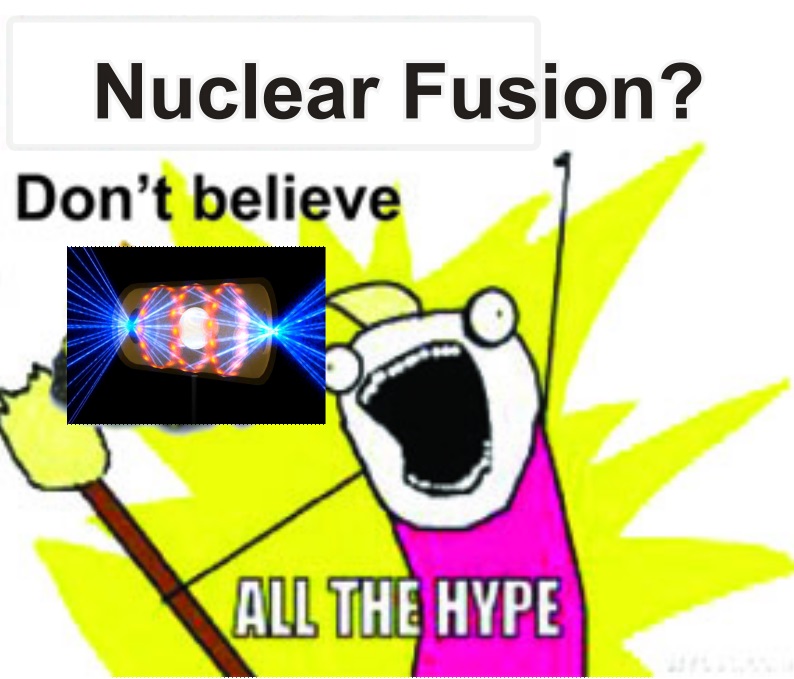
The only thing limitless and free about fusion power is the hype it generates
ARENA ONLINE, DARRIN DURANT, 16 DEC 2022 On 5 December 2022, fusion power researchers at California’s Lawrence Livermore National Laboratory (LLNL) achieved two technical milestones which by 12 December had encouraged a media-fuelled, gigantically unfounded and exaggerated projection about impending cheap, carbon-free, infinite electricity supply. Yes, ‘ignition’—a sustained, lab-controlled fusion reaction—was achieved. So too was ‘gain’, [?really] as the energy released by the fusion reaction was greater than that required by the lasers used to heat and compress a deuterium-tritium fuel pellet.
But we are light years away, at minimum, from fusion power contributing electricity into a grid and in any way helping to resolve the climate crisis. What is going on in all the pretending otherwise?
Almost every word written about ‘net energy gain’ from a fusion reaction is a species of manufactured ignorance generated by managing uncomfortable knowledge, which is complicated by a tension between the desire to trust fusion experts but the knowledge that those experts operate under powerful incentives to engage in hype.
INERTIAL CONFINEMENT
We have been at the doorstep of fusion hype before. In fact, ever since the 1950s fusion power has been just over the horizon. The fusion illusion has become its own cottage industry, with competing fusion research teams over-calling each other in a series of breakthroughs and decisive advances that generate hype, but no electricity.
For instance, on 9 February 2022 the Joint European Torus (JET) fusion reactor in the UK announced that it had produced 59 Megajoules of energy and that this indicated ‘powerplant potential’. Yet JET consumed significantly more power than it produced. Hence I suggested that the claim of a net power gain was a form of hyped science communication in which future promise colonises present limitations.
Researchers at LLNL’s National Ignition Facility (NIF) are the most recent hype-mongers. In fusion research, there are two main approaches: doughnuts and lasers. The ITER tokamak reactor in France is a doughnut-shaped machine that uses high-temperature magnetic confinement to create a stable and continuous plasma in which fusion can occur. By contrast, in the inertial confinement approach, discrete fusion reactions produce bursts of energy. In NIF experiments, a weak laser pulse is created, split, amplified, converted from infrared to ultraviolet energy, and then, in the form of 192 beams, focused onto a capsule containing deuterium and tritium, heating and compressing (fusing) the nuclear fuel to create alpha particles and release neutrons.
In their 13 December announcement of NIF’s experimental result, the US Department of Energy (DOE) advertised the result as a ‘game changer’ and quoted a host of US politicians directly linking the result to commercial fusion power and the goal of a ‘net-zero carbon economy’. Media outlets which really should adopt stricter editorial standards gushed about the result implying ‘limitless, zero-carbon power’ or stating that it ‘changes everything’ and heralds a decisive step towards ‘carbon-free energy’ for ‘everyone’ for ‘millions of years’.
The only thing limitless and free about fusion power is the hype it generates.
Back in reality, the DOE specified that ‘LLNL’s experiment surpassed the fusion threshold by delivering 2.05 megajoules (MJ) of energy to the target, resulting in 3.15 MJ of fusion energy output’. The DOE suggested ‘there is momentum to drive rapid progress towards fusion commercialization’, but what does that 1.10 MJ ‘gain’ in fact mean?
Even science magazines regurgitated the hype, suggesting the fusion reaction released ‘roughly 54% more than the energy that went into the reaction’. Yet when any of these media sources came up for air, typically late into the triumphant narrative, there were somewhat grudging estimates of total energy input, always attributed to some scientists who otherwise had gushed about technological promise. These scientists estimated that the total energy consumed by NIF’s 192 lasers was between 300 megajoules and 500 megajoules. Multiple credulous sources split the difference at 400 megajoules. As one sceptical physicist noted, ‘consuming 400 MJ and producing 3.15 MJ is a net energy loss greater than 99%’, akin to you giving me $400 and me returning to you $3.15, then trying to pump your tyres about how wealthy you just became.
UNCOMFORTABLE KNOWLEDGE
I am not a particle or theoretical physicist, and am admittedly biased by finding nuclear fission as a commercial electricity option to be a kind of technological creationism, and certainly a white elephant for Australia. Moreover, my field of Science and Technology Studies is known more for deconstructing facts than building them up. But as a sociologist of knowledge interested in theorising the positive, ‘partnership’ role experts can play in democratic decision-making, I ask, could experts with specialist knowledge relevant to fusion engineering be doing a better job of reining in the unwarranted hype about fusion net gain?
Specialist commentators on fusion power could do worse than get more comfortable with uncomfortable knowledge. Uncomfortable knowledge is information or understanding that is available but unevenly distributed or acknowledged, inadvertently or strategically obscured or left undone, and actually or potentially disruptive for the goals and interests of select organisations and institutions.
In fusion research, the fact that net energy gain is not the goal of either magnetic confinement or laser inertial confinement is the most salient piece of uncomfortable knowledge. ITER recently withdrew its claim of net energy gain—of 500 MW of fusion power from 50 MW of input power (a Q value of 10)—and now says that ITER is ‘the investigation and demonstration of burning plasmas’, in which the energy of helium nuclei produced by fusion reactions is enough to maintain plasma temperature.
The LLNL team admitted as much as well, describing the NIF result as a ‘proof of concept [not designed] to plug the NIF into the grid’, with other physicists adding that NIF was designed to be a big laser that could ‘give us the data we need for the [nuclear] stockpile research programme’.
Given the hype about limitless clean energy just over the horizon, another type of uncomfortable knowledge involves the judgements about the feasibility of commercial electrical power from fusion. Put differently, rather than being regaled by hyped milestones and heroic assumptions about future developments, why not cold, hard assessments of uncertainties and obstacles?
While it seemed easy to find a dozen experts willing to gush on record about how remarkable it was to spend $3.5 billion to produce an energy output that might boil a few kettles, frank assessments of future prospects are confined to scattered observations by disconnected critics.
But the list of uncertainties includes: how to increase the fusion reaction frequency from 1 per day to maybe 10 per second; how to reduce the cost of the capsule ‘target’ from tens of thousands of dollars to a few cents, especially as production ramps up from one capsule per week to up to one million per week; how to ensure the laser can reliably fire ten times per second, not once per day; whether energy out can increase versus energy in from 1.54x to 30x; how the heat produced by the fusion will be extracted; whether the efficiency of the yield can be increased by least two orders of magnitude; and whether it is possible to breed enough of the tritium fuel for a commercial industry.
Where such uncomfortable knowledge about feasibility is tackled in depth, it is only by critics. One physicist thus suggested commercial feasibility would demand an increase in fusion output of 100,000 per cent, a mastery of exceedingly strict conditions vis a vis temperature, shape of target capsule and vacuum chamber, a solution to the problem that the machine breaks when it works and requires hours to recover, and an overcoming of the low supply of tritium fuel and its prohibitive cost.
A final form of uncomfortable knowledge includes drawbacks, which are typically managed through practices that include denial (avoiding acknowledging information even if others bring it to collective attention), dismissal (manufacturing justifications for rejecting a counter-claim), diversion (distracting via a decoy issue) and displacement (swapping problems).
Two examples will suffice. One is the deuterium-tritium fuel needed for any future fusion reactor. It scarcely exists in nature (a fact met with denial) and must be produced either in heavy water reactors or by breeding it from enriched lithium-6, which is in short supply (met with dismissal), and, no, it is not solved by speculations about extracting the fuel from sea water (a diversion).
A second drawback is that nuclear fusion may be not the perfect energy source for a climate crisis but, as a former fusion physicist put it, is ‘in some ways close to the opposite’. Put succinctly, the fact that neutron streams comprise 80 per cent of fusion energy output in deuterium-tritium reactions makes it an odd electrical energy source. The neutron streams damage the structure of the machine, produce relatively bulky radioactive waste, require biological shielding, and constitute a proliferation risk (Pu-239). The fusion reactor itself has a high parasitic power consumption, a scarce fuel supply, and likely high operating costs due to continual radiation damage…………………………………… more https://arena.org.au/fusion-net-gain-is-manufactured-ignorance/
1 This Month
Tell Congress: Prevent Nuclear Catastrophe in Iran

Tell Congress: Prevent Nuclear Catastrophe in Iran

Read the Public Inquiry Report, the Commissioners’ report, Surrendering Australia: The AUKUS Deception is available to download for free at aukuspublicinquiry.com. Or just watch the replay of the National Press Club Luncheon.


Shut down the radiation-damaged Heysham nuclear reactors now
To see nuclear-related stories in greater depth and intensity – go to https://nuclearinformation.wordpress.com

Say No to NASA’s Reckless Nuclear Reactor on the Moon
Say No to NASA’s Reckless Nuclear Reactor on the Moon
-
Archives
- November 2026 (246)
- October 2026 (302)
- September 2026 (339)
- August 2026 (330)
- July 2026 (355)
- June 2026 (287)
- May 2026 (306)
- April 2026 (356)
- March 2026 (251)
- February 2026 (267)
- January 2026 (308)
- December 2025 (358)
-
Categories
- 1
- 1 NUCLEAR ISSUES
- business and costs
- climate change
- culture and arts
- ENERGY
- environment
- health
- history
- indigenous issues
- Legal
- marketing of nuclear
- media
- opposition to nuclear
- PERSONAL STORIES
- politics
- politics international
- Religion and ethics
- safety
- secrets,lies and civil liberties
- spinbuster
- technology
- Uranium
- wastes
- weapons and war
- Women
- 2 WORLD
- ACTION
- AFRICA
- Atrocities
- AUSTRALIA
- Christina's notes
- Christina's themes
- culture and arts
- Events
- Fuk 2022
- Fuk 2023
- Fukushima 2017
- Fukushima 2018
- fukushima 2019
- Fukushima 2020
- Fukushima 2021
- general
- global warming
- Humour (God we need it)
- Nuclear
- RARE EARTHS
- Reference
- resources – print
- Resources -audiovicual
- Weekly Newsletter
- World
- World Nuclear
- YouTube
-
RSS
Entries RSS
Comments RSS

