New Delay, Cost Overrun For France’s Next-gen Nuclear Plant

https://www.barrons.com/news/new-delay-cost-overrun-for-france-s-next-gen-nuclear-plant-01671212709 By AFP – Agence France Presse, December 16, 2022
Welding problems will require a further six-month delay for France’s next-generation nuclear reactor at Flamanville, the latest setback for the flagship technology the country hopes to sell worldwide, state-owned electricity group EDF said Friday.
The delay will also add 500 million euros to a project whose total cost is now estimated at around 13 billion euros ($13.8 billion), blowing past the initial projection of 3.3 billion euros when construction began in 2007.
It comes as EDF is already struggling to restart dozens of nuclear reactors taken down for maintenance or safety work that has proved more challenging than originally thought.
EDF also said Friday that one of the two conventional reactors at Flamanville would not be brought back online until February 19 instead of next week as planned, while one at Penly in northwest Farnce would be restarted on March 20 instead of in January.
The French government has warned of potential power shortages this winter because of the shutdowns at around two-dozen of the 56 reactors across the country that normally generate around 70 percent of its electricity needs.
EDF said the latest problems at Flamanville, on the English Channel in Normandy, emerged last summer when engineers discovered that welds in cooling pipes for the new pressurised water reactor, called EPR, were not tolerating extreme heat as expected.
As a result, the new reactor will be start generating power only in mid-2024.
The French-developed European Pressurised Reactor was designed to relaunch nuclear power in Europe after the 1986 Chernobyl catastrophe in Russia, and is touted as offering more efficient power output and better safety.
But similar projects at Olkiluoto in Finland, Hinkley Point in Britain and the Taishan plant in China have also suffered production setbacks and delays, raising doubts about the viability of the new technology.
French President Emmanuel Macron said in February that he wants a nuclear “renaissance” that would see up to 14 new reactors in France as the country seeks to reduce use of fossil fuels.
UN committee adopts Russian draft resolution on prevention of arms race in space
https://tass.com/world/1531171 16 Dec 22
The resolution drew support from 124 delegations, while 48 voted against it and 9 abstained
UNITED NATIONS, November 1. /TASS/. The UN General Assembly First Committee on Tuesday adopted Russia’s draft resolution on Further Practical Measures for the Prevention of an Arms Race in Outer Space.
The resolution drew support from 124 delegations, while 48 voted against it and 9 abstained. The resolution is now expected to be considered by a full General Assembly in December. The document underscores the importance of taking urgent measures in order to forever prevent the deployment of weapons in the outer space, use of force or threat of force in the outer space, from space against Earth and from Earth against objects in space. The document calls on all states to achieve via negotiations corresponding legally binding multilateral agreements.
The UN General Assembly First Committee approved the Russian draft resolution “No first placement of weapons in outer space.” The document was supported by 123 delegations, with 50 voting against and 4 abstaining. The draft document is now expected to be reviewed by the General Assembly’s full membership in December.
The document was co-authored by 18 other states. It calls to promptly begin a substantial work based on the updated version of the 2008 draft agreement on prevention of deployment of weapons in space, use of force or threat of force against space objects, introduced by Russia and China. It reaffirms the need for examination and adoption of practical measures during development of agreements for prevention of an arms race in the outer space.
The committee approved without a vote the Russian draft resolution on Transparency and Confidence-Building Measures in Outer Space Activities.
The committee also adopted the Russian draft resolution “Transparency and confidence-building measures in outer space activities” without a vote. The document states that the UN Secretary General must inquire about opinions and proposals of member states on practical implementation of transparency measures, contained in the 2013 report of Group of government experts on transparency and trust-building measures in space.
For true reporting on nuclear fusion, non-magical science is needed
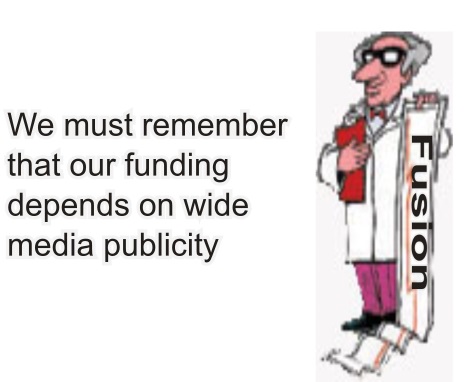
We want to know about the uncertainties attending fusion research, but are the people best placed to discuss those uncertainties because they are at the coalface of technical innovation, mired in commercial, and sometimes military, incentives to underplay risk and overplay potential?
FUSION NET GAIN IS MANUFACTURED IGNORANCE, ARENA ONLINE, DARRIN DURANT, 16 DEC 2022
“…………………….. ………………. Net gain in fusion research today exploits holes in our broader culture about what we do not know we know. It is unevenly known that more power is consumed than is produced by fusion experiments. The process of manufacturing ignorance about that unevenly known fact turns on excluding uncomfortable knowledge because of the way that knowledge might threaten fusion-related institutional goals and interests.
We are not ignorant of fusion gaslighting because of some natural but temporary state of maldistribution of knowledge, nor because we just happen to have not done the relevant work of knowing. Instead, fusion hype actively makes and sustains broader ignorance. Manufacturing ignorance is an achievement which in the case of fusion relies on fuzzy measures today being masked by heroic projections about tomorrow, aided by eliding the uncertainties attending fusion technology.
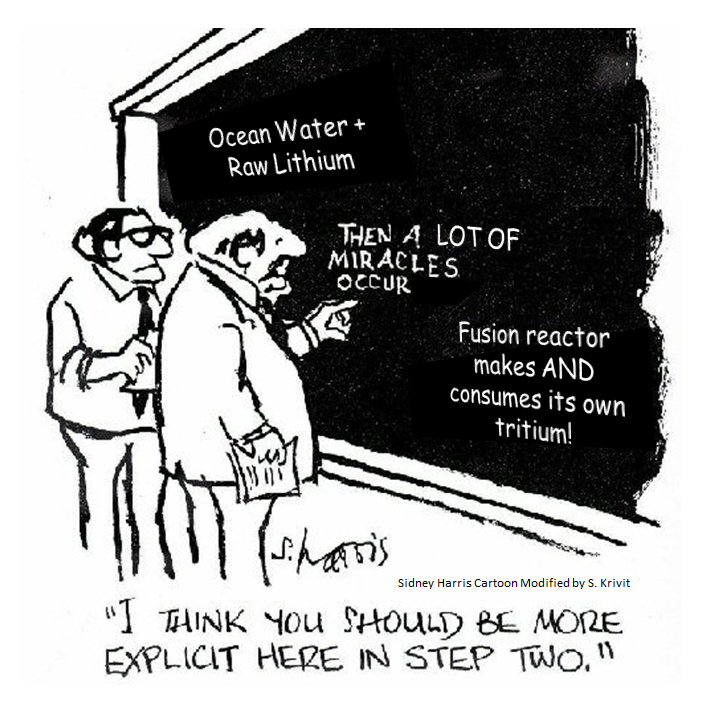
THE TRUTH OF THE MATTER?
If the managing of uncomfortable knowledge is leading to the manufacturing of ignorance about fusion research, is the solution to embrace frank assessment? Unfortunately, a tension exists whereby we reasonably suspect both that experts are best placed to know of uncertainties, and that those same experts might have incentives to underplay them. Social and political analysts of techno-science represent this as the conflict between the certainty trough and the commercialisation of science.
The certainty trough is the finding that those alienated from institutions committed to a non-preferred technology are uncertain due to distrust, but that insiders or producers of knowledge are uncertain (even if only in private) due to close experience with the relevant techno-science. If the question can be established as technical, not political, then by the principle of the locus of legitimate interpretation, in science the producers of knowledge ought to be the arbiters of meaning (unlike in the Arts, where we accept that consumers can play the role of interpreters of meaning).
Yet the commercialisation of science often incentivises an instrumental function of hype in which scientists sell opportunity and underplay risk, producing warranted distrust in the delegating of meaning-making to experts. The hermeneutics of suspicion can be either crude (financial investments are said to directly undermine norms of objectivity), subtle (a medialisation process is shifting the norms of science towards the norms of marketing, entertainment, media and attention cycles), or deep (a restricted agenda of tractable uncertainties, resolvable by existing frameworks, makes invisible the limiting commitments and assumptions of any given techno-scientific project).
The NIF experiment is especially burdened by the tension between trusting and being suspicious of experts because it is a weapons project. The DOE announcement slipped in that the ‘breakthrough will ensure the safety and reliability of our nuclear stockpile’. The director for weapons physics and design at LLNL (California’s Lawrence Livermore National Laboratory) did not hide this, clarifying that fusion ignition is important because it ‘has direct application to maintaining the weapons stockpile—NIF’s (National Ignition Facility) primary mission)
The DOE’s National Nuclear Security Administration warranted the NIF ignition test as part of the Stockpile Stewardship Program, in which thermonuclear weapons are assessed and certified without the need for explosive testing. In reply, critics linked the test to concerns about proliferation and continued weapons development, and clean energy was branded a ‘convenient reason to keep the dollars flowing to dual-use weapons R&D’.
Is this tension a catch-22? Is there no escape from the mutually dependent but conflicting conditions? We want to know about the uncertainties attending fusion research, but are the people best placed to discuss those uncertainties because they are at the coalface of technical innovation mired in commercial, and sometimes military, incentives to underplay risk and overplay potential?
NON-MAGICAL SCIENCE
Maybe there is a sliver of hope. The director for weapons physics at LLNL lamented that ‘he would have preferred [the results] be released through a scientific journal. But the results were sure to leak out’. The unedifying hype accompanying fusion research trades on the image of science as magically pulling rabbits (clean, infinite power for all, tomorrow) out of hats. Distrust follows when exaggerated projections are revealed to be emperors with no clothes.
But here is a scientist, enmeshed in all the complexities of military and commercial work, still holding on to a key value of science: organised scepticism. The more scientists opt for the less sexy route of assessing results and uncertainties, checking before unveiling and opening research to scientific scrutiny before turning meaning-making over to the norms of sensationalism, the more the rest of us might have access to their distributed judgements about uncertainties.
Note there is an historical precedent: the LIGO result announcing the detection of gravity waves. LIGO detected the ripple in September 2015 but waited until February 2016 to announce it, using the time to double-check everything. The story is told by the sociologist of science Harry Collins in Gravity’s Kiss (2017), where he suggests that the result was withheld because LIGO was still hostage to the ‘science is revelatory’ image. There remained a commitment to flawless and glorious truth, and a reluctance to let science be a bit uncertain and maybe even wrong. There is historical precedent here too: some nuclear waste disposal programs have let their institutional selves be vulnerable, which is a key condition for building trust, by making their choices amenable to checking and changing by broader audiences. I am just, I guess, fusing some ideas together. https://arena.org.au/fusion-net-gain-is-manufactured-ignorance/
‘We are all downwinders’: New film discusses Nevada’s nuclear fallout
https://www.reviewjournal.com/entertainment/movies/we-are-all-downwinders-new-film-discusses-nevadas-nuclear-fallout-2695496/ By Taylor Lane Las Vegas Review-Journal, December 16, 2022
“At the end of the day, we are all downwinders.”
That’s the message directors Mark Shapiro and Douglas Brian Miller hope viewers take away from their upcoming film “Downwind,” a documentary on the health consequences of nuclear testing at the Nevada Test Site (now called the Nevada National Security Site).
The test site saw over 900 nuclear detonations between 1951 and 1992, including 100 atmospheric tests that could be seen from as far as Las Vegas, 65 miles south of the test site, and St. George, Utah, which has above-average rates of radioactivity compared to the U.S. average.
The film centers around the areas closest to the blasts in Utah and western Nevada, where communities officials once deemed a “low-use segment of the population” bore the brunt of the fallout — mainly Mormon communities, Native Americans and other rural residents, Shapiro said.
Because of its Utah focus, the filmmakers wanted to debut it in the Beehive State at the Slamdance Film Festival in Park City.PauseUnmute
The film premieres Jan. 23 and will be preceded by a panel featuring Miller and Shapiro, along with downwinder advocates Claudia Peterson and Mary Dickson, Nevada Shoshone Nation Principal Man and spokesperson Ian Zabarte and Scott Williams, a nuclear policy consultant from Heal Utah.
Shapiro and Miller said they became interested in researching nuclear fallout after reflecting on their families’ history of cancer, which is found in higher rates in communities in proximity to the test site.
The two descended down a rabbit hole of research on the widespread impacts of radiation from nuclear testing, and found out radiation is not exclusive to the Southwest.
“Even if you don’t live in St. George, the radiation impacts us globally,” Shapiro said.
Miller said he was awestruck by a map from researcher Richard Miller (no relation) that shows how far the winds blew the radiation across the U.S.
“It blasted the entire country, minus Los Angeles because of the way the wind was blowing. … It just changes your whole mindset of ‘Is this real?’ And then you continue to dig,” Miller said.
Talking with Nevadans
Miller and Shapiro spoke with many Nevadans about their experiences with nuclear fallout, including members of the Western Bands of the Shoshone Nation of Indians such as Zabarte. The test site is on the traditional homelands of the Western Shoshone.
“We wanted to make sure that we had the perspective of Ian and others from the community to talk about the significance of testing on land that they still consider theirs and theirs by treaty,” Shapiro said.
The duo found support from late Review-Journal reporter Keith Rogers, whose career at the newspaper focused on the test site, military issues and the environment. Rogers died in October.
“We looked at him as a significant contributor to this film,” Shapiro said. “(For) both Doug and I, he was like a father figure to us. He really helped guide a lot of the story.”
Rogers is featured in the film, and behind the scenes helped Miller and Shapiro connect with people who work at Atomic Testing Museum and to past test site employees.
The greatest resource Rogers gave the team, Shapiro said, was a U.S. nuclear test booklet from the Department of Energy, which detailed every test ever done at the test site.
“Each one of them has a name, it has a date, it has a location, it has the yield range — some of these bombs were several times larger than the bombs dropped in Hiroshima and Nagasaki,” Shapiro said. “This booklet that he gave me, you see notes from the government saying ‘accidental release of radiation detected off site.’ It almost gives you shivers — it’s the rabbit hole effect.”
The film also stars actor Martin Sheen, who serves as the film’s narrator and has spoken out against nuclear testing, and comedian Lewis Black, who adds humor to a dark story about America’s past and has joked about duck-and-cover drills in his stand-up routines.
“(Black) is a political commentator, and his comedy is a reflection of the time we live in,” Shapiro said.
Holding accountability
Miller hopes the film shows that residents whose lives have been changed by testing should be compensated and that Americans can find ways to prevent testing from happening again, he said.
“We have to make sure that we’re holding our government accountable for what’s happening,” Shapiro said. “While we recognize how much we love living here (in the U.S.), still, there’s accountability.”
For more information on the film, visit backlotdocs.com.
Contact Taylor Lane at tlane@reviewjournal.com. Follow @tmflane on Twitter.

Twice as many people support onshore wind compared to nuclear power, according to UK Government survey.
Renewable energy of all sorts is at
least twice as popular with the British public compared to nuclear power
according to the newly released ‘BEIS Public Opinion Tracker Autumn
2022‘. Solar power was supported or strongly supported by 89% of
respondents, offshore wind by 85% and onshore wind by 79%. This was
compared to only 37% for nuclear power, 25% for fracking and 44% for carbon
capture and storage. The survey recorded that just 29% of people believe
that nuclear energy ‘provides a safe source of energy in the UK’.
100% Renewables 15th Dec 2022
For the Western leaders, Minsk Agreements were designed to buy time for Ukrainians to get ready for conflict with Russia
Former German chancellor Angela Merkel’s astonishing admission vis-a-vis Minsk II, made during an interview with German newspaper Die Zeit recently merely confirms that Putin was played for a fool when he entered negotiations for Minsk II with Germany, France and Ukraine in 2015. Russia entered said negotiations in good faith while the other parties involved did not. Thousands of lives lost and counting seven years on is the result.
Again and again, Ukraine’s future prosperity, security and stability upon becoming independent in 1991 was always dependent on it being a bridge between Russia and the West not the battlefield it became.
Merkel admits Minsk Agreements were designed to buy time for Ukrainians to get ready for conflict with Russia, yet Putin? Medium, John Wight, 13 Dec 22.
Sooner or later people in the West are going to have to wake up to the hard truth that their enemy is not at the gates but within the gates — this in the shape of ruling elites that have driven our world to the brink of destruction economically, ecologically, environmentally, and militarily with their lust for power, hegemony, domination and riches.
Before we go on, though, let us take a moment to deal with the usual ordure that gets shovelled in the direction of those in writing in the West who dare not type the name Putin in a sentence without also including words such as ‘tyrant’, ‘dictator’, ‘monster’ either before or after it — and preferably both. Here it is just as Eduardo Galeano said: “The marketplace of fear requires a steady supply of monsters.”
Russian President Vladimir Putin is a brutal man leading his country through a brutal period in human affairs. But he is not the architect of this brutal period; on the contrary, the Russia he has led since 2000 has been among the most grievous victims of it.
Canadian author and journalist Naomi Klein, in her remarkable work Shock Doctrine, describes how Russia was used as a laboratory by US free market think tanks, gurus and economists, who descended on the country while still reeling from the shock of the implosion of the Soviet system in the early 1990s. Their objective was the establishment of a pure market economy shorn of state intervention, wherein the market would decide who worked and who did not, who could heat themselves and who could not, who ate and who could not — and ultimately who would live and who would not………………………
The primary aim of the free market economic ‘hitmen’ who arrived in Russia in early 1990s was the decimation of every vestige of state involvement in the nation’s economy or economic life. Rather than the arbiter of social justice and guarantor of economic stability, the government was now to be reduced to the role of facilitator and guardian of the interests of international investors, shareholders, speculators, and global corporations.
This process entailed the deregulation of the banking system, the removal of social protections and safety nets, the lifting of price controls and the privatisation of all state owned sectors of the economy, sold off to speculators at a fraction of their true value. The aforementioned reforms were laid down as conditions of post-Soviet Russia’s membership of the IMF, when it applied to join under its first post-Soviet president, Boris Yeltsin, in 1992.
Moscow at this point was on the verge of bankruptcy, burdened with an external debt of $66 billion in the wake of the Soviet’s Union’s dissolution. The creditor nations of the G7 made it a condition of their cooperation in rescheduling the country’s debt that the IMF play a central role as policy advisor, lender and coordinator of assistance. Russia’s sovereignty, in other words, was to be suborned to the diktats of the IMF in Washington…………………………………………
the impact of this economic medicine on Russian society was nothing short of devastating. Most Russians consumed 40 percent less in 1992 after a year of shock therapy than they consumed in 1991, while a third of the population fell below the poverty line……………………
That the country managed to recover from this horrific decade was in large part down to the stewardship of Vladimir Putin. He it was who restored national pride, faced down the oligarchs who’d taken control of the nation’s economy, and reasserted the primacy of the state over that of blind economic forces.
Benefiting from its domination of the European energy market and an extended period of high oil and gas prices, Russia’s economic growth from 1999 — when Putin first became prime minister — to 2008 was exponential……………………..
The Putin so demonised in the West today is the same Putin that broached the possibility of Russia becoming a member of NATO with US President Bill Clinton in 2000. The Putin so demonised in the West today is the same Putin who was the first leader to call US President George W. Bush to express his condolences after 9/11 and offered the use of Russian airbases in Central Asia for US airstrikes against Al Qaeda and the Taliban in Afghanistan, staged in response.
That Putin is now to all intents engaged in conflict against the West in Ukraine marks an abject failure not of Russian but Western foreign policy in the wake of the demise of the Soviet Union.
Former German chancellor Angela Merkel’s astonishing admission vis-a-vis Minsk II, made during an interview with German newspaper Die Zeit recently merely confirms that Putin was played for a fool when he entered negotiations for Minsk II with Germany, France and Ukraine in 2015. Russia entered said negotiations in good faith while the other parties involved did not. Thousands of lives lost and counting seven years on is the result.
Again and again, Ukraine’s future prosperity, security and stability upon becoming independent in 1991 was always dependent on it being a bridge between Russia and the West not the battlefield it became.
In the words of Professor John J. Mearsheimer:
U.S. and European leaders blundered in attempting to turn Ukraine into a Western stronghold on Russia’s border. Now that the consequences have been laid bare, it would be an even greater mistake to continue this misbegotten policy. https://johnwight1.medium.com/merkel-admits-minsk-ii-was-designed-to-buy-time-for-the-ukrainians-to-get-ready-for-conflict-with-504191f7872d
Fusion “breakthrough” is largely irrelevant to the climate crisis
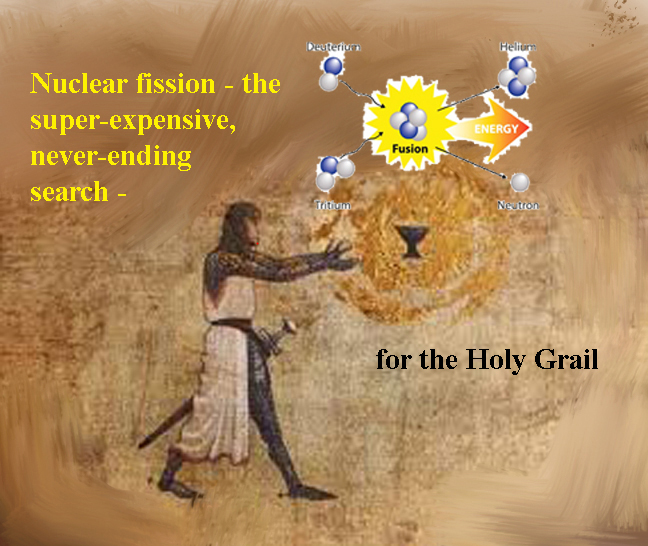
Gordon Edwards 15 Dec 22
Just a short commentary on the “fusion breakthrough” this week.
The experiment took place at the Lawrence Radiation Lab, a pre-eminent weapons Laboratory in California once directed by Edward Teller.
Jubilation is felt because, for the first time in over 60 years of effort costing many billions of dollars, a greater amount of energy came out of an extremely short-lived fusion reaction than the amount of energy needed to trigger it in the first place. The net energy gain was about 50 percent.
It all happened very quickly. “The energy production took less time than it takes light to travel one inch,” said Dr Marvin Adams, at the NNSA. (NNSA = National Nuclear Security Administration)
Here are a few details –
1) In an earlier email (www.ccnr.org/fission_fusion_and_efficiency_2022.pdf )I described the “magnetic confinement” concept, whereby an electromagnetic force field holds a very hot plasma of hydrogen gases inside a doughnut-shaped torus (typical of the Tokamak and its close relatives). In this case, “very hot”. Means about 150 million degrees C.
But the breakthrough that is being bally-hooed now, since Tuesday December 13, is a different kind of process altogether, using a concept called “inertial confinement”.
The experiment involved a small pellet about the size of a peppercorn. This pellet contained, in its interior, a mixture of deuterium and tritium gases, two rare hydrogen isotopes. In the experiment, the pellet’s exterior was blasted by x-rays triggered by a battery of 192 very powerful lasers, all targeted on the inner walls of a cylinder made of gold. The lasers generated x-rays on contact with the goldatoms, and those x-rays were focussed by the curving cylinder walls on the little peppercorn-sized pellet in the middle of the gold cylinder.
The x-rays heated the outer shell of the pellet to more than three million degrees, making the exterior of the pellet explode outwards, and (by Newtons “action-reaction” principle) causing the inner gases to be compressed to a very high density at an extremely high temperature, presumably to over 100 million degrees. It is a high-energy kind of implosion, causing fusion to occur in the very centre. The peppercorn “pops”.
2) The experimenters input 2.05 megajoules of energy to the target, and the result was 3.15 megajoules of fusion energy output – that is over 50% more energy than was put in (for a net gain of 1.1 megajoules). This suggests that the fusion reaction inside the pellet may have triggered other fusion reactions.
How much energy is that? Well, a typical household uses about 100,000 megajoules of energy per year, or an average of 273 megajoules per day. So 1.1 megajoules is not much. But it is greater than the input energy.
The Tokamak project now under construction in France for the ITER project, using magnetic confinement, is hoping to have a net energy gain factorof 10 or more (i.e. 10 times as much energy output as energy input).
Earlier this year, in February 2022, the UK JET laboratory announced thatthey had managed to have a fusion reaction last for five seconds. Thereaction produced 59 megajoules of energy, but without a net gain in energy.
3) Most of the news stories about this event state, erroneously, that fusionreactors will not produce any radioactive wastes. This is untrue.
It is true that fusion reactors will not produce high-level; nuclear waste(irradated nuclear fuel), but It is expected that fusion reactors will release an enormous amount of tritium (radioactive hydrogen) to the environment— far more than is currently released by CANDU reactors, which in turn release 30 to 100 times more tritium than light water fission reactors.
Moreover, because of neutron irradiation, the structural materials in a fusion reactor will beome very radioactive. The decommissioning wastes will remain dangerously radioactive for hundreds of thousands of years.
4) Many experts believe it will take at least 20-30 years to have a prototype fusion reactor in operation, even if things go quite well, and more decades will be required to scale it up to a commercial level. Thus fusion energy will be largely irrelevant to the climate emergency we are now facing as all of the critical decision points will have passed before fusion is available.
And, of course, there are no guarantees even then. As one commentator sardonically remarked, fusion energy is 20 years away,it always has been, and perhaps it always will be.
Can France rely on its nuclear fleet for a low-carbon 2050?
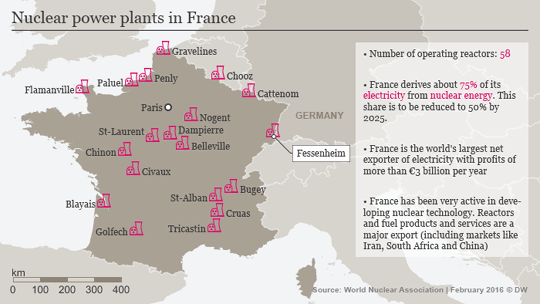
Map above refers to 2016 – many of the nuclear plants above are not currently in operation
Nuclear Engineering International, 14 Dec 22,
EDF has not shown its 900 MW units can be operated that far ahead, says ASN’s annual assessment of nuclear safety in France. Decisions have to be taken soon if nuclear is to play a big part in 2050 – and a ‘Marshall Plan’ is needed to rebuild the industry’s capability
France may have to go back to the drawing board with regard to options for decarbonising its economy, because assumptions it has made on the lifetime of the 900 MW reactors in its nuclear fleet may be unwarranted.
That was the warning in French nuclear safety authority ASN’s annual report on safety in the country’s nuclear industries.
The annual “ASN report on the state of nuclear safety and radiation protection in France in 2021”, published earlier this year, warned of “new energy policy prospects which must address safety concerns at once”. And it reminded operators that “quality and rigour in the design, manufacture and oversight of nuclear facilities, which were not up to the required level in the latest major nuclear projects conducted in France, constitute the first level of Defence in Depth in terms of safety.”
ASN noted that five of the six scenarios presented in a report by French system operator Re´seau de Transport d’Electricite´ (RTE) report on “Energies of the future”, which aims to achieve a decarbonised economy by 2050, are based on continued operation of the existing nuclear fleet. But with regard to the 900 MW fleet, ASN says, it cannot say that those plants can be operated beyond 50 years, based on information it received during the generic examination of the fourth periodic safety review of that reactor series. It added, “Due to the specific features of some reactors, it might not be possible, with the current methods, to demonstrate their ability to operate up to 60 years”.
EDF has 32 operating 900 MWe reactors commissioned between 1978 and 1987 and they are reaching their fourth periodic safety review. This safety review has “particular challenges”, ASN says. In particular:
Some items of equipment are reaching their design-basis lifetime……………………
Too optimistic on new-build?
The safety authority also noted that one RTE scenario had almost 50% nuclear in its electricity mix in 2050. It said, consultation with industry revealed that the rate of construction of new nuclear reactors in order to achieve such a level would be hard to sustain……………………………………
Broad concerns
More broadly, ASN said whatever France’s energy policy, it will “imply a considerable industrial effort, in order to tackle the industrial and safety challenges.
If nuclear power is needed for 2050, the nuclear sector will have to implement a ‘Marshall Plan’ to make it industrially sustainable and have the skills it needs.
It warned that “Quality and rigour in the design, manufacture and oversight of nuclear facilities… were not up to the required level in the latest major nuclear projects conducted in France”.
It also warned that more work was also needed in fuel chain facilities. It said a series of events “is currently weakening the entire fuel cycle chain and is a major strategic concern for ASN requiring particularly close attention”. Most urgent is a build-up of radioactive materials and delays in construction of a centralised spent fuel storage pool planned by EDF to address the risk of saturation of the existing pools by 2030. The need for the pool was identified back in 2010, but work has not begun.
ASN said the combination of shortcomings between fuel cycle and nuclear plants meant the electricity system “faces an unprecedented two-fold vulnerability in availability”. New vulnerabilities like the discovery of stress corrosion cracking mostly “stem from the lack of margins and inadequate anticipation,” ASN said, and “must serve as lessons for the entire nuclear sector and the public authorities.”……………….
An energy policy comprising a long-term nuclear component “must be accompanied by an exemplary policy for the management of waste and legacy nuclear facilities,” ASN said………………………………….. more https://www.neimagazine.com/features/featurecan-france-rely-on-its-nuclear-fleet-for-a-low-carbon-2050-10436984/
For Heaven’s Sake – Examining the UK’s Militarisation of Space
December 13, 2022, By Dr. David Webb of the Global Network Against Weapons and Nuclear Power in Space
I have been working on behalf of the Campaign for Nuclear Disarmament (CND) with Peter Burt from Dronewars UK on a new joint publication called “For Heaven’s Sake: Examining the UK’s Militarisation of Space”. It was launched in June and looks at the UK’s emerging military space programme and considers the governance, environmental, and ethical issues involved.
The UK’s space programme began in 1952 and the first UK satellite, Ariel 1, was launched in 1962. Black Arrow, a British rocket for launching satellites, was developed during the 1960s and was used for four launches from the Woomera Range Complexin Australia between 1969 and 1971. The final launch was to launch Prospero, the only British satellite to be placed in orbit using a UK rocket in 1971, although the government had by then cancelled the UK space programme. Blue Streak, the UK ballistic missile programme, had been cancelled in 1960andspace projects were considered too expensive to continue. 50 years on and things have changed.
Space is now big business – the commercial space sector has expanded and the cost of launches has decreased. The UK is now treating space as an area of serious interest. The government has also recognised that space is now crucial for military operations. So, the Ministry of Defence (MoD) now has a Space Directorate, which works closely with the UK Space Agency and is responsible for the military space policy and international coordination. UK Space Command, established in April 2021 ,is in charge of the military space programme and is closely linked with US Space Command and US Space Force. While the UK typically frames military developments as being for defensive purposes, they are also capable of offensive use………………………………………………………..
Although many of these launches may be for commercial companies, space use has evolved into a fuzzy military/commercial collaboration and Alexandra Stickings, a space policy and security analyst at the Royal United Services Institute in London, believes that the Shetland and Sutherland spaceports will need military contracts to be viable. She said “I am of the opinion that the proposed spaceports would need the MoD as a customer to survive as well as securing contracts with companies such as Lockheed” and the military will want to diversify their launch capabilities“so the Scottish locations could provide an option for certain future missions.” She also warned that: “There is also a possibility that if these sites become a reality, there will be pressure on the MoD to support them even if the cost is more than other providers.”………………………………..
Although many of these launches may be for commercial companies, space use has evolved into a fuzzy military/commercial collaboration and Alexandra Stickings, a space policy and security analyst at the Royal United Services Institute in London, believes that the Shetland and Sutherland spaceports will need military contracts to be viable. She said
“I am of the opinion that the proposed spaceports would need the MoD as a customer to survive as well as securing contracts with companies such as Lockheed” and the military will want to diversify their launch capabilities“so the Scottish locations could provide an option for certain future missions.” She also warned that: “There is also a possibility that if these sites become a reality, there will be pressure on the MoD to support them even if the cost is more than other providers.”…………………….
…………………… https://safetechinternational.org/for-heavens-sake-examining-the-uks-militarisation-of-space/
Paul Dorfman: Nuclear power is just a slow and expensive distraction.

Despite recent breakthroughs in nuclear fusion, renewables remain the most
important technology for reaching net zero. “Fissile fuel” is back –
or so say the UK’s policy teams and press.
Rishi Sunak and Emmanuel
Macron are about to strike a deal on nuclear cooperation, and recent
editorials across national newspapers all reckon everything in the garden
is nuclear. Where, however, is the evidence for its efficacy?
The British and French governments can sign any deal they like – if key financial
investors don’t take up the remaining 60 per cent of construction costs,
the planned Sizewell C plant in Suffolk is going nowhere. The omens
aren’t good.
Recently Sir Nigel Wilson, group CEO of Legal & General, one
of the UK’s largest real assets firms, told BBC Radio Four: “We are not
big fans of Sizewell C.” Sir David King, the UK’s former chief
scientific adviser and a long-standing nuclear supporter, told LBC that the
plant would be “very difficult to protect from flooding” due to rising
sea levels on the Suffolk coast.
New Statesman 13th Dec 2022
Opinion is split on UK government plan for new nuclear and hydrogen projects
Ministers are considering requiring that all new domestic boilers be
“hydrogen-ready” from 2026, as they announced £100m for nuclear and
hydrogen projects. The Department for Business, Energy and Industrial
Strategy (BEIS) has launched a consultation on improving boiler standards,
and has argued there is a strong case for introducing hydrogen-ready
boilers in the UK from 2026.
The government is examining options to replace
polluting fossil fuel gas in Britain’s energy system and has offered
grants for households to install heat pumps. A ban on gas boilers in new
homes comes into force in 2025, although uncertainty remains over the
timeframe for the phase-out of fossil gas in existing homes.
While hydrogen
is expected to play a significant role in the decarbonisation of heavy
industry and the transport network, opinion is split on the practicality of
using it in Britain’s gas network and the resulting cost to households.
Plans for a pilot to examine the effectiveness of using hydrogen have met
local opposition in Whitby, outside Ellesmere Port, where residents have
expressed concerns over becoming “lab rats”. The consultation, which
closes in late March, will also examine the cost of hydrogen-ready boilers.
“The government needs confidence that consumers will not face a premium
for their purchase,” it said.
Guardian 13th Dec 2022
Fusion breakthrough thrills physicists, but won’t power your home soon.

A nuclear fusion milestone (with frickin’ laser beams!) is a big deal.
Alas, it could be decades before fusion might actually help clean up our
energy system. A reported breakthrough in fusion energy is generating
enormous excitement amongst scientists and the general public alike — but
you might not want to bet on fusion providing usable energy during your
lifetime.
Experimental results set to be announced by the U.S. Department
of Energy on Tuesday are being hyped as potentially heralding a new era of
zero-carbon energy from the power of a controlled fusion reaction, the same
reaction that powers our sun. Lawrence Livermore National Laboratory has
evidence of a net energy gain in a fusion reaction for the first time,
according to people with knowledge of preliminary results from a recent
experiment, as first reported by the Financial Times. The lab confirmed to
the paper that a successful experiment had recently been conducted at its
National Ignition Facility but said analysis of the results was ongoing.
Canary Media 13th Dec 2022
The SECOND suburban husband indicted for smuggling nuclear weapon tech to Russia
- Vadim Yermolenko helped smuggle tech used in nuclear weapons into Russia, according to court documents
- DailyMail.com can reveal his double life after it emerged co-defendant Alexey Brayman runs an online craft store in New Hampshire with his wife
- They are allegedly part of the ‘Serniya Network’, run by Russia’s security service
- Yermolenko lives in a luxury home with his wife, Diana, and their young children
- He allegedly used his wife’s signature to create forged documents for the plot
- The men, who were indicted and appeared in court on Tuesday, have been released after posting bail and will appear in court again in February
By LEWIS PENNOCK FOR DAILYMAIL.COM . 15 December 2022 …………………………… more https://www.dailymail.co.uk/news/article-11538183/SECOND-suburban-husband-indicted-smuggling-nuclear-weapon-tech-Russia.html
Very significant barriers to further progress on nuclear fusion
There are two approaches to nuclear fusion: call them doughnuts v lasers.
Magnetic confinement is the more common and longstanding method: picture,
if you can, a doughnut-shaped machine, with nuclear fuel inside it kept
afloat by magnetic fields and heated to incredible temperatures while the
reaction takes place.
The NIF is one of a smaller number of facilities
trying something different: inertial confinement. In the pithy summary of
White House science chief, Arati Prabhakar, yesterday:
“They shot a bunch of lasers at a pellet of fuel [hydrogen plasma] and more energy was
released from that fusion ignition than the energy of the lasers.” The
pellet, encased in diamond, sits in a tiny gold cylinder. By hitting it
with 192 giant lasers for less than 100 trillionths of a second at more
than 3 million celsius, scientists at NIF succeeded in producing 3
megajoules of energy from the 2.05 megajoules it took to make the reaction
happen.
But as good as that sounds, there are very significant barriers to
further progress. “It’s important to say that this is not trying to be
a fusion reactor, it’s simply trying to make fusion happen,” said
Bluck.
“But it lacks almost everything that you need to make a viable
reactor. “So, OK, the energy put in has resulted in a larger amount of
energy coming out – but the big caveat is that it depends where you draw
your perimeter: powering the lasers themselves required way more energy.
You have to draw a slightly artificial dotted line around the vessel to say
there’s been a gain.” The lasers may emit 2.05 megajoules, but they
took about 500 megajoules of energy to power, though defenders of the
experiment say that they are not optimally efficient and can be
significantly improved.
Guardian 14th Dec 2022
https://www.theguardian.com/world/2022/dec/14/first-edition-nuclear-fusion
A Tale of Two Nuclear Plants Reveals Europe’s Energy Divide
An upgraded power plant in Slovakia has angered neighboring Austria and fueled the debate over nuclear power and independence from Russian gas.
Wired, MORGAN MEAKER, DEC 13, 2022
……………………………………….. Europe remains deeply divided on the use of nuclear power. Of the European Union’s 27 member states, 13 generate nuclear power, while 14 do not. “It’s still a very national debate,” says Bunsen. That means public attitudes can drastically change from one side of a border to the other. Surveys show that 60 percent of Slovakians believe nuclear power is safe, while 70 percent of their neighbors in Austria are against it being used at all—the country has no active nuclear plants.
……… workers are preparing a new reactor—where nuclear fission will take place—for launch in early 2023.
………….. Europe remains deeply divided on the use of nuclear power. Of the European Union’s 27 member states, 13 generate nuclear power, while 14 do not. “It’s still a very national debate,” says Bunsen. That means public attitudes can drastically change from one side of a border to the other. Surveys show that 60 percent of Slovakians believe nuclear power is safe, while 70 percent of their neighbors in Austria are against it being used at all—the country has no active nuclear plants.
For the two neighbors, Mochovce has become a focal point in the debate over how Europe should transition away from fossil fuels. To supporters in Slovakia, Mochovce’s expansion—the launch of Unit Three is expected to be followed two years later by Unit Four—demonstrates how even a small country can become an energy heavyweight. Unit Three will make Slovakia the second-largest producer of nuclear power in the EU, after France. But neighboring Austrians cannot ignore what they consider to be the drawbacks: the mammoth costs associated with building or improving aging facilities, the problems associated with disposing of nuclear waste, and the sector’s reliance on Moscow for uranium, the fuel which powers the reactor. Last year, the EU imported one fifth of its uranium from Russia.
For years, politicians and activists in Austria have also alleged that Mochovce is not safe, with local newspapers using maps to illustrate how close Mochovce is to Vienna: just 150 kilometers. “It’s a Soviet design from the 1980s, without a proper containment,” claims Reinhard Uhrig, an antinuclear campaigner with Austrian environmental group GLOBAL 2000. The containment is one of a series of safety systems that prevents radioactive material being released into the environment in case of an accident. “Apart from these inherent design problems, there have been major issues with the quality control of the works,” he says, describing nuclear power as a dangerous distraction from real solutions to the climate crisis.
Concerns in Austria about Mochovce’s safety were exacerbated by Mario Zadra, an engineer turned whistleblower who worked on Mochovce units Three and Four between 2009 and 2018. Zadra alleges the plant’s emergency diesel generators were suffering serious technical issues and cooling towers fundamental for safety were built with the wrong material. “Other components important for safety, like the main steam isolation valves, were in a shameful condition,” says Zadra, whose video and photo evidence have been verified by GLOBAL 2000. Since Zadra and other whistleblowers went public in 2018, Mochovce has been accused of corruption, raided by police, and inspected by the International Atomic Energy Agency. “I’m sure things have improved since the inspections,” Zadra says, but he still doesn’t believe the plant is safe due to what he calls the company’s “poor safety culture.”
………………………………….. Long-term, Austria is aiming to run 100 percent on renewables by 2030. Wind, solar, and hydro power currently account for 77 percent of the country’s power generation.
Austria is now agitating to spread its antinuclear message on an EU level. Officials have criticized nuclear power plants not just in Slovakia, but also in other neighboring countries, including the Czech Republic and Hungary. On New Year’s Eve 2021, the European Commission released a proposal which defined nuclear as well as natural gas as “green investments.” In response, Austria launched a legal challenge, calling for the inclusion of the two energy sources to be annulled. “Neither nuclear energy nor fossil gas are green investments,” says Gewesseler.
Zwentendorf and Mochovce demonstrate the extremes of Europe’s nuclear power debate. But between those extremes, it’s messy. The EU might have agreed to become the first climate-neutral continent by 2050, but consensus on how that will happen remains elusive. Weish, the Austrian scientist, believes there’s a lot more debating to be done. “The EU needs to have the debate Austria had back in the 1970s,” he says. https://www.wired.com/story/nuclear-energy-europe/
1 This Month
Tell Congress: Prevent Nuclear Catastrophe in Iran

Tell Congress: Prevent Nuclear Catastrophe in Iran

Read the Public Inquiry Report, the Commissioners’ report, Surrendering Australia: The AUKUS Deception is available to download for free at aukuspublicinquiry.com. Or just watch the replay of the National Press Club Luncheon.


Shut down the radiation-damaged Heysham nuclear reactors now
To see nuclear-related stories in greater depth and intensity – go to https://nuclearinformation.wordpress.com

Say No to NASA’s Reckless Nuclear Reactor on the Moon
Say No to NASA’s Reckless Nuclear Reactor on the Moon
-
Archives
- November 2026 (246)
- October 2026 (302)
- September 2026 (339)
- August 2026 (330)
- July 2026 (355)
- June 2026 (287)
- May 2026 (306)
- April 2026 (356)
- March 2026 (251)
- February 2026 (267)
- January 2026 (308)
- December 2025 (358)
-
Categories
- 1
- 1 NUCLEAR ISSUES
- business and costs
- climate change
- culture and arts
- ENERGY
- environment
- health
- history
- indigenous issues
- Legal
- marketing of nuclear
- media
- opposition to nuclear
- PERSONAL STORIES
- politics
- politics international
- Religion and ethics
- safety
- secrets,lies and civil liberties
- spinbuster
- technology
- Uranium
- wastes
- weapons and war
- Women
- 2 WORLD
- ACTION
- AFRICA
- Atrocities
- AUSTRALIA
- Christina's notes
- Christina's themes
- culture and arts
- Events
- Fuk 2022
- Fuk 2023
- Fukushima 2017
- Fukushima 2018
- fukushima 2019
- Fukushima 2020
- Fukushima 2021
- general
- global warming
- Humour (God we need it)
- Nuclear
- RARE EARTHS
- Reference
- resources – print
- Resources -audiovicual
- Weekly Newsletter
- World
- World Nuclear
- YouTube
-
RSS
Entries RSS
Comments RSS

