Infant mortality rates in San Luis Obispo County in proximity to the Diablo Canyon Nuclear Power Plant.

Radiation and Public Health Project (RPHP) Joseph J. Mangano MPH MBA, April 29, 2026
EXECUTIVE SUMMARY
The two Diablo Canyon nuclear reactors in San Luis Obispo County CA began operations in 1984
and 1985. They have generated enormous amounts of highly radioactive waste. Most is stored at
the site, but some is routinely released into the environment – and into humans through breathing,
food, and water. However, no studies on health effects to the local population have been done.
Exposure to radiation is especially harmful to the fetus and infant. This report analyzes trends and
current patterns of newborn and infant health in San Luis Obispo County, compared to the state of
California. Results show that county rates have shifted from below to above the state:
Infant Deaths. Before Diablo Canyon opened (1968-1984), the county death rate under one year
was 16% below the state. Most recently (2010-2024), the county was 1% above the state, including
11% and 23% higher for white non-Hispanics and white Hispanics.
Premature Births. In the earliest period available (1995-1999), the county rate of premature births
(<36 weeks gestation) was 21% below the state. Most recently (2020-2024), the rate was 3% above
the state (8% and 31% higher for white non-Hispanics and white Hispanics).
Birth Defects. In the period 2016-2024, the county rate of 12 types of birth defects was 114%
greater than (more than double) the state, 3rd highest among the 35 largest California counties.
Other Newborn Health Measures. In addition, the county also has higher current (2016-2024) rates
of common newborn risk factors, including those requiring assisted ventilation, those with low
five-minute Apgar scores (a measure of infant health), and newborns transferred to another facility.
Child Cancer. Child cancer is believed to often be an adverse outcome that began in pregnancy.
Early in Diablo Canyon’s operation (1988-1992), county cancer incidence 0-19 was 26% below
the state; in the 30 years since then (1993-2022), the county rate was just 2% below the state.
No explanation for these findings is apparent, as risk factors in the county are not elevated.
Compared to the state, the county has low rates of minorities, uninsured, foreign born, and
languages other than English spoken at home; and similar rates of income, education, and poverty.
The county rate of the most common maternal birth risk factors are below the state
(overweight/obese mothers, mothers <20 or >35, mothers on WIC or Medicaid, and previous
Cesarean section).
Further review of county health patterns is warranted to assess what role exposures to radioactivity
from Diablo Canyon has played in these trends. Results should be made available to officials and
the public. No major decision on the future of the plant should be made without a thorough
understanding of the impact exposures have had on local health………………………………………………………………………………………………………………………………………………………………………………………………………………………………https://radiation.org/wp-content/uploads/2026/04/Diablo-Canyon-report-November-2025.pdf
Epic Nonsense: Trump Shelves Project Freedom

8 May 2026 Dr Binoy Kampmark , https://theaimn.net/epic-nonsense-trump-shelves-project-freedom/
The waxwork figures of the Pentagon recently glowed with excitement with the announcement that the US military would be finally called upon to reopen the Strait of Hormuz. With the ceasefire between Teheran and Washington barely holding, President Donald Trump, as far as his attention span would allow, gingerly put Operation Epic Fury to the side in favour of a new mission. The effort to protect and navigate stranded and blocked vessels with US armed might would be dubbed Project Freedom.
As with everything in this cerebrally cloudy and foolish conflict, descriptions and names are untethered to a discernible reality. Was Project Freedom separate from the blockade of Iran? Yes, said certain administration officials. Was it an annex to Operation Epic Fury? No one quite knew.
Some details were provided on May 5 by the US Secretary of War, Pete Hegseth, at a press briefing. “To be clear [Project Freedom] is separate and distinct from Operation Epic Fury. Project Freedom is defensive in nature, focused in scope and temporary in duration, with one mission: protecting innocent commercial shipping from Iranian aggression.” Iran had been “the clear aggressor” in the Strait, “harassing civilian vessels, threatening mariners from every nation indiscriminately and weaponizing a critical chokepoint for its own financial benefit, or at least trying to.” No mention, naturally, on why Iran had resorted to such measures in the first place.
Much of Hegseth’s press address was a bleat, a complaint that the Iranians had simply not played by the rules, rules happily broken by the Trump administration and their Israeli allies when they felt necessary. Iran had attempted to “impose a tolling system,” using “a form of international extortion.” Project Freedom was the celebrated antidote. “Two US commercial ships, along with American destroyers, have already transited the strait, showing the lane is clear.”
The account untethered to reality followed on cue. Iran had been “embarrassed” by the successful transit of these two vessels. “They say they control the strait. They do not. So, American ships led the way, commercial and military shouldering the initial risk from the front, as Americans always do. And right now, hundreds more ships from nations around the world are lining up to transit.” With lavish immodesty, the Secretary noted that US Central Command (CENTCOM) had, along with partner nations, “been in active communication with hundreds of ships, shipping companies and insurers.” The US had provided a “direct gift” to the world in the form of “a powerful red, white and blue dome over the strait.”
With the counterfeit, grubby appeal of an advertiser’s pitch, Hegseth went on to declare Project Freedom “humanitarian” in nature. “By breaking Iran’s illegal stranglehold, we’re protecting the lives and livelihoods of sailors from dozens of countries, securing global energy routes and preventing shortages that hit the world’s poorest people the hardest.”
Chairman of the Joint Chiefs of Staff Gen. Dan Caine was also on hand to explain that CENTCOM had “established an enhanced security area on the southern side of the strait that is now protected by US land, naval and air assets to help defeat further Iranian aggression against commercial shipping.” He noted that Iranian fast boats and attack drones had been defeated. And how could they not be, given the presence of “more than 100 fighters, attack aircraft and other manned and unmanned aircraft, synchronized by the 82nd Airborne Division” engaged in the air for 24 hours a day guarding “the enhanced security area and its approaches.”
With twenty-four hours, this elaborate, exaggerated, purplish vision of American deliverance from Iranian control to an anxious world had collapsed. On May 6, Trump announced that he would be halting Project Freedom. Another round of proposals had been placed on the carousel of confusing diplomacy that might negate the need to resume bombing under Operation Epic Fury. Claiming that Pakistan and other specified countries had wished so, and given “the fact that Great Progress has been made toward a Complete and Final Agreement with the Representatives of Iran,” the blockade would remain in place but “Project Freedom (The Movement of Ships through the Strait of Hormuz) will be paused for a short period of time to see whether or not the Agreement can be finalized and signed.”
Later that day, Trump posted another message. “Assuming Iran agrees to give what has been agreed to, which is, perhaps, a big assumption,” he declared on Truth Social, “the already legendary Epic Fury will be at an end, and the highly effective Blockade will allow the Hormuz Strait to be OPEN TO ALL, including Iran.” The inevitable, clownish threat followed: “If they don’t agree, the bombing starts, and it will be, sadly, at a much higher level and intensity than it was before.”
The rapid demise of Project Freedom, more aborted than halted, had less to do with the emergence of a new desire to pursue negotiations so much as logistical inconvenience. The Gulf States, by and large, have not been impressed by the impulsive measure, given the potential resumption of hostilities. Tehran was always going to blunt US efforts to break the blockade of the Strait, a point demonstrated by attacks on the United Arab Emirates on May 4 that left an oil refinery in the eastern emirate of Fujairah ablaze and three Indian nationals wounded.
According to a report from NBC News, the Kingdom of Saudi Arabia was disgruntled enough by the American initiative in the Strait to inform Washington that it would deny the US military any use of the Prince Sultan Airbase to enforce the mission or permit US aircraft to use Saudi airspace to that end. This was despite a call taking place between Trump and the Saudi Crown Prince Mohammed bin Salman.
An unnamed Saudi source was cited as saying that Saudi Arabia was “very supportive of the diplomatic efforts” led by Pakistan in aiding Iran and the US terminate the conflict, while a US official put it in simple terms as to why Project Freedom could only dissipate in impotence: “Because of geography, you need cooperation from regional partners to utilize their airspace along their borders.”
From the embers of the Trump administration’s latest bungle emerged a one-page memorandum of understanding Washington has reportedly drawn up for further discussions with Tehran. It reportedly contains 14 points, covering, for instance, a declaration ending the war and the commencement of a 30-day period of negotiations on a detailed agreement that would see Iran reopen the Strait over that duration. This would be complemented by the lifting of the US naval blockade. Restrictions on Iran’s nuclear program and the lifting of US sanctions also feature. Failing all that, the blockade or a resumption of military operations could take place. How chillingly close this is to those remarks of T. S. Eliot in the Four Quartets: “What we call the beginning is often the end/And to make and end is to make a beginning. The end is where we start from.” This war was a beginning, and an end, we never needed.
Sweden generates 99% of electricity from clean sources. So why is wind power under attack?
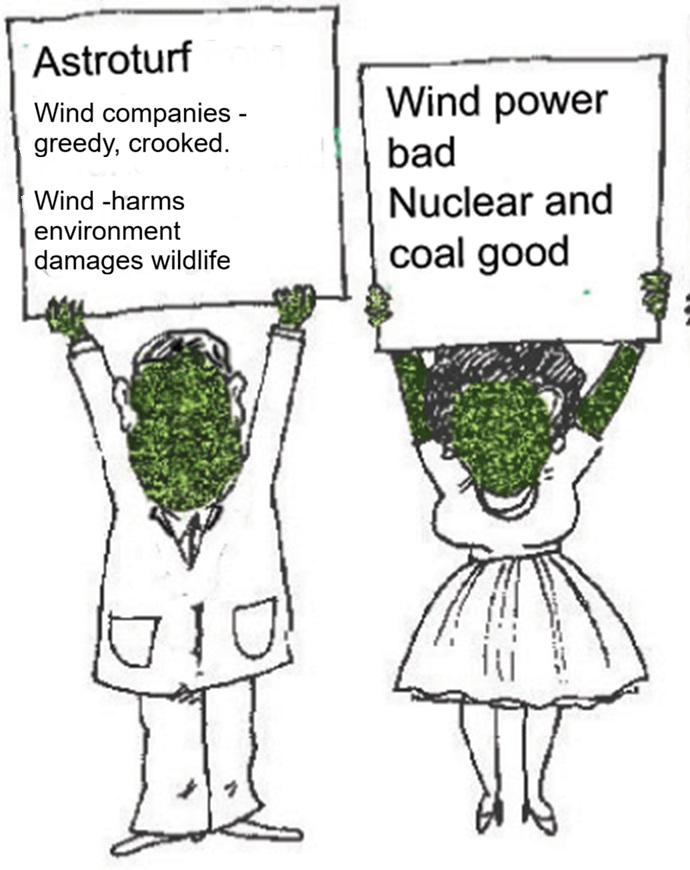
Sweden generates 99% of electricity from clean sources. So why is wind
power under attack? Thousands of anti-wind social media posts have been
analysed, as researchers warn that Europe’s energy security could be
threatened. Sweden has been hit the hardest by a coordinated attack on wind
power, according to a new analysis.
Euro News 6th May 2026, https://www.euronews.com/2026/05/06/sweden-generates-99-of-electricity-from-clean-sources-so-why-is-wind-power-under-attack
A small northern Ontario town refused radioactive waste. It’s gone to Sarnia instead

Decades-old mine tailings in Nipissing First Nation sparked outrage after the province tried to move the material to another community without consultation, but it has quietly moved them again
the Narwhal By Leah Borts-Kuperman (Local Journalism Initiative Reporter), May 6, 2026
Summary
- The Ontario government intended to move radioactive waste from the shore of Lake Nipissing to a former mine site outside Sudbury, Ont.
- A lack of consultation around the new location led to strong local opposition, and delayed the remediation project conducted by Nipissing First Nation.
- The waste has now been moved to a disposal site outside Sarnia, Ont., and Aamjiwnaang First Nation, where emissions from the industrial area known as Chemical Valley have affected local air quality.
For decades, radioactive waste sat near the shore of Lake Nipissing. It looked like an innocuous pile of gravel in what was otherwise a stretch of forest. People began using it to backfill lots, fill spaces under decks and build fire pits. In the 1970s and ’80s, Nipissing First Nation began using it to build roads.
It wasn’t normal gravel, though. It was mine tailings, containing the metal niobium, left there when the Nova Beaucage mine shuttered in 1956 after just seven months of operation.
“The company just walked away and left it with no remediation at all,” Geneviève Couchie, business operations manager at Nipissing First Nation, said. Couchie led a project to clean up the tailings, which first started in 2019. After being interrupted by COVID-19 shutdowns, the remediation resumed in spring 2024 and lasted almost two years.
In the meantime, Couchie told The Narwhal, she fielded concerns about groundwater and lake contamination from residents living close to the site or to a nearby property owned by Ontario’s Ministry of Transportation that also stored the low-level radioactive tailings. Couchie said she struggled to get satisfactory answers from government agencies.
“The workers wore hazmat suits, and I remember saying from the beginning, ‘How can I tell people they have nothing to worry about when these guys are in full on suits?’ They’re literally 20 feet from someone’s window,” Couchie said. The majority of the workers remediating the site were from the nation, and dressed in protective gear so as not to carry radioactive dust home on their clothes.
The plan was to load the waste into trucks to be transported to a tailings management area at Agnew Lake, in Sudbury District. It is the decommissioned site of a former mine, near the Township of Nairn and Hyman, and about 150 kilometres from Nipissing First Nation. The nation first had to excavate nearly 50,000 metric tonnes of the radioactive material — enough to build the Statue of Liberty, twice.
But the project faced another unexpected delay. The province had attempted to relocate the waste without consulting the Nairn community, sparking public outcry. Locals organized public meetings to raise awareness and ultimately stop the transfer.
Eventually, in July 2025 — after nearly a year of advocacy in Nairn, and delay for Nipissing First Nation — the province capitulated, finding another place for the waste to go. This was welcome news for Nipissing First Nation, which is now hoping to transform the scarred land into a lakeside green space for the community to enjoy after years of worry.
“We just wanted to see this material moved off [Nipissing First Nation] lands, and so it was an unexpected disappointment that things were delayed like they were,” Couchie said. “We were pleased that they did end up finding another disposal site.”
“But,” Couchie said, it was “eye opening as well, that there was only one other facility in Ontario that was prepared to accept this.”
That facility is close to another Indigenous community — Aamjiwnaang First Nation, in the Sarnia region, where emissions from refineries and petrochemical plants have earned the area the moniker “Chemical Valley.”
Sarnia facility accepting radioactive waste from Nipissing
The new destination for the radioactive tailings is Clean Harbors, a hazardous waste facility in Corunna, Ont. — 645 kilometres from its original dumping ground. It’s close to both Aamjiwnaang and Sarnia, which have experienced persistent air quality issues related to nearby industry.
Clean Harbors is the only government-licensed hazardous waste management complex in Ontario, and is “uniquely positioned,” its website reads, to offer safe disposal of naturally occurring radioactive material like the niobium tailings.
But the facility’s history is dotted with dust-ups over environmental safety. In 2013, neighbours of the Clean Harbors site won a civil lawsuit over the impact of the waste facility’s emissions on their health and daily lives.
In 2019 the company was fined $100,000 for discharging contaminated smoke after a filter cloth soaked with coolant, oils and metal particles caught fire.
When the province conducted a study on environmental stressors in the Sarnia area in 2023, it found that while the majority of the 870 reports from residents about industrial pollution were related to petrochemical industries and refineries, a significant minority — 219 — were “related to the waste incineration facility in the area (Clean Harbors).”
And in 2025, the Ministry of Environment fined Clean Harbors $100,000 for failing to comply with an equipment requirement for monitoring the excavation of a waste-holding basin.
Clean Harbors did not respond to The Narwhal’s questions about these claims and findings.
In a section of their 2025 annual report on legal, environmental and regulatory compliance risks, Clean Harbors asserted: “We are now, and may in the future be, a defendant in lawsuits brought by parties alleging environmental damage, personal injury and/or property damage, which may result in our payment of significant amounts.”
Aamjiwnaang First Nation Chief Janelle Nahmabin told The Narwhal she had not received any information about the niobium waste that was trucked to Clean Harbors nearly a year ago. Other environmental groups The Narwhal reached out to, including Climate Action Sarnia-Lambton, had not heard of this waste transfer, either.
“The plan now has been executed in a very different way,” said Brennain Lloyd, project coordinator at Northwatch, a northeastern Ontario environmental advocacy group. “It’s moving the waste into the territory of another First Nation that is already heavily impacted by all of the industrial activities.”
‘Under a real nuclear shadow’: radioactive waste in northern Ontario
…………………………………………………………………………………………………………………………………………. https://thenarwhal.ca/northern-ontario-radioactive-waste-sarnia/
The World’s Biggest Fusion Reactor Just Hit a Milestone
By Haley Zaremba – May 06, 2026,
- The final components of ITER’s central solenoid magnet — a 59-foot, 3,000-tonne superconducting system 15 years in the making — have arrived in France, clearing a major path toward first plasma.
- ITER will never supply electricity to the grid; it exists purely as a research tool, and at €22 billion and counting, it’s still years from achieving its primary milestone.
- A wave of well-funded private fusion startups is on track to hit the same technical benchmarks as ITER faster and more cheaply — raising real questions about the megaproject’s relevance even as it celebrates progress……………………………………………………………………………………………………………… https://oilprice.com/Energy/Energy-General/The-Worlds-Biggest-Fusion-Reactor-Just-Hit-a-Milestone.html
Accountability is optional
Hamza Yusuf | Declassified UK , May 8, 2026
| The Metropolitan Police has declined to investigate Britons accused of committing war crimes while serving with the Israeli military in Gaza.Last April, the Palestinian Centre for Human Rights (PCHR) and the Public Interest Law Centre (PILC) filed an extensive, 240-page dossier to the Met’s War Crimes Team. |
The report detailed the alleged involvement of the 10 British nationals, including dual citizens, in the “targeted killings of civilians and aid workers, indiscriminate attacks on civilian areas, attacks on hospitals and protected sites, and the forced transfer and displacement of civilians”.
Over 70 legal and human rights experts urged the Met’s War Crimes Team to investigate all suspected war crimes and crimes against humanity allegedly committed by Britons when the dossier was handed in.
In its recent decision letter, the Met Police accepted that international bodies have found that Israel’s actions in Gaza “could amount to war crimes” and identified at least four individuals of “particular interest.”
However, the War Crimes Team has refused to move beyond a scoping exercise, saying there was “no realistic prospect of conviction” and that an “effective investigation could not be conducted.”
Paul Heron, a solicitor at PILC, said: “We reject The Met’s conclusions”.
“By demanding evidence capable of securing a realistic prospect of conviction before even opening an investigation, the Police have applied the wrong legal test and set the bar far too high. British nationals and residents cannot be allowed to participate in atrocities abroad with impunity.”The PILC maintains that the referral provided credible material warranting a full investigation. We recently revealed that at least 2000 Britons served in Israel’s military during the Gaza genocide. Meanwhile, Britain’s recognition of a Palestinian state may also place British nationals serving in the Israeli army in breach of the 1870 Foreign Enlistment Act. The act prohibits citizens from fighting for a foreign state at war with another state at peace with the UK, but there is no sign of enforcement. |
And what is absent is equally telling: The Foreign, Commonwealth and Development Office (FCDO) travel advice for Ukraine explicitly warns British nationals that fighting there “may amount to offences under UK legislation”and that they “could be prosecuted on your return”.
No equivalent warning appears in FCDO advice for Israel or the Occupied Palestinian Territories.
This exposes a glaring and systemic accountability gap – one the Foreign Office recently deepened by quietly shutting down its unit tracking Israeli breaches of international law.
The Met’s refusal is the latest in a pattern of dereliction: British institutions, one by one, declining to act on Israel’s crimes.
Labour and SNP row over submarines at Rosyth Dockyard

THE SNP have been accused of “scaremongering” after warning that Rosyth
has become a bigger target for terrorists and “rogue nations”. Labour
councillor Patrick Browne took aim and said the request for a public
consultation, on the prospect of Trident submarines carrying nuclear
missiles being maintained at the dockyard, was pointless and never going to
be accepted. He said: “The SNP have been scaremongering for months about
the contingent dock proposal for Rosyth. “With their latest comments they
have reached new levels of doom-mongering.”
But SNP councillor Brian
Goodall, who stated that having subs with warheads on the Forth increased
the threat of attack on Rosyth, said that response and the criticism of his
actions showed “just how right wing many in the Labour Party have become”.
The dispute has arisen due the plan for a contingent dock at Rosyth by 2029
to temporarily house the UK’s next generation of nuclear subs until a
permanent home at Faslane on the Clyde is ready in the 2030s.
Dunfermline Press 6th May 2026, https://www.dunfermlinepress.com/news/26084331.labour-snp-row-submarines-rosyth-dockyard/
Korean A-Bomb Victims U.S. Speaking Tour & NPT Engagement Highlights
The Korean Atomic Bomb Victims U.S. Speaking Tour was successfully held from April 20 to May 2, 2026
First- and second-generation Korean atomic bomb survivors visited major cities across the United States in connection with the 11th Review Conference of the Treaty on the Non-Proliferation of Nuclear Weapons (NPT), where they shared their long-overlooked experiences and called for an official apology and compensation for the 1945 atomic bombings. Through powerful testimonies, the speakers highlighted the reality that, although victims exist, responsibility has yet to be fully acknowledged. Their accounts underscored the ongoing, intergenerational suffering that has continued for more than 80 years since the bombings of Hiroshima and Nagasaki.
From April 20 to May 2, 2026, first- and second-generation Korean atomic bomb survivors carried out a nationwide speaking tour across the United States. Held in conjunction with the 11th NPT Review Conference, the tour brought long-overlooked histories of Korean victims into international nuclear discourse.
Throughout the tour, survivors raised international awareness about the more than 70,000 Korean victims of the atomic bombings—many of whose stories have remained largely unheard globally. They also emphasized that Korean survivors have neither disappeared from history nor remained silent, but have continuously struggled for recognition and redress.
The tour was jointly organized by SPARK (Solidarity for Peace and Reunification of Korea), the International Organizing Committee of the A-Bomb Tribunal, and Korean atomic bomb victims. It brought renewed attention to the need for accountability, including an official apology and reparations from the United States for the historical injustice and prolonged suffering endured by Korean survivors.
As part of the program, the delegation visited major cities including Seattle, San Francisco, Sacramento, Los Angeles, Washington, D.C., and New York, with events held at institutions such as San Francisco State University, California State University, Sacramento, UCLA, and CUNY John Jay College of Criminal Justice. They also engaged with local civil society organizations and Korean American communities in each city, delivering testimonies on the enduring impacts of nuclear violence and their lifelong efforts toward justice and compensation.
Through this speaking tour, the issue of Korean atomic bomb victims was brought more prominently to the attention of the international community, and significant support, interest, and participation were secured for the upcoming International People’s Tribunal. The success of the tour was made possible by the generous moral and material support of partners in each region, and in particular by the dedicated efforts of the members of the International Organizing Committee.
Building on this momentum, organizers called on global civil society to participate in the upcoming International People’s Tribunal on the 1945 Atomic Bombings (A-Bomb Tribunal), scheduled to be held in Seoul from November 13 to 15, 2026.
Selected photos from each event are included below. [on original]
Trump’s New Iran Negotiator Is Israel Lobbyist Who Denounced Negotiations With Iran
Max Blumenthal, May 5, 2026, https://thegrayzone.com/2026/05/05/trumps-iran-negotiator-israel-lobbyist/
Tapped to advise Steve Witkoff on Iran, Nick Stewart previously condemned dealing with any of Iran’s elected leaders. His presence consolidates military conflict as the Trump administration’s only option.
The latest addition to the Trump administration’s Iran negotiation team, Nick Stewart, has declared his absolute opposition to negotiating with the Islamic Republic of Iran. According to Stewart, “it’s important that we disabuse people of that notion” that anyone among Iran’s current leadership could serve as an “honest broker.”
Stewart aruged that even the reformist President Masoud Pezeshkian must be treated as an inveterate enemy because he is “a part of the theocratic, tyrannical, authoritarian government of Iran.” He insisted that Pezeshkian “is not a reformer and we shouldn’t buy into that narrative, because what it does is it throws us off our guard.”
Stewart made these comments while chairing a panel for the pro-war Vandenberg Coalition in Washington DC on October 4, 2024. He was seated beside Cameron Khansarinia, the Secretariat of self-proclaimed “Crown Prince” Reza Pahlavi, neoconservative ideologue and former Special Advisor for Iran Elliot Abrams, and Behnam Ben Taleblu, an operative at the Foundation for the Defense of Democracies (FDD).
At the time, Stewart functioned as FDD’s top Capitol Hill lobbyist.
When it was founded in 2001, FDD was named EMET, which is Hebrew for “truth.” The think tank described its mission as working to “enhance Israel’s image in North America and the public’s understanding of issues affecting Israeli-Arab relations.”
In 2017, a top Israeli military-intelligence official cited FDD as a partner in a covert Israeli campaign to spy on Americans involved in Palestine solidarity activism. Under Trump, the outfit has dictated the administration’s Iran policy to the point that the White House plagiarized its justification for attacking Iran from a document posted on FDD’s website.
Stewart was reportedly selected by Jared Kushner to advise Steve Witkoff, a real estate mogul and Trump golf buddy who serves as the ironically titled Special Envoy for Peace Missions. Kushner Witkoff’s demonstrable ignorance of Iranian affairs, reflexive deference to Israel and crude profiteering helped inspire Iran’s rejection of the last round of negotiations. With Stewart on their team, it should be obvious to Tehran that there is no honest broker in Washington.
Yukon and Ontario and SMRs – Memorandum of Misunderstanding?

The Yukon public and their elected representatives may not fully understand the implications of introducing small modular nuclear reactors into their electricity mix.
The governments of Yukon and Ontario recently signed a partnership agreement to share Ontario’s expertise about energy development, which includes evaluation of small modular and micro-reactors. The Yukon wants to reduce reliance on diesel while meeting increasing electricity demand.
There are glaring problems with this memorandum of understanding.
First: the Ontario government cannot share what it doesn’t know. There has not been a single successful commercial SMR built worldwide. Construction of the much-touted Darlington New Nuclear Project in Ontario has barely begun.
Second: There is little private investment interest in this technology due to:
- the extraordinarily high cost ($7.7 billion for the first BWRX-300 SMR at Darlington),
- long timeline to completion (nuclear reactors have taken years longer than expected to build.)
- risks associated with accidents
Third: The Ontario public bears the full cost of building and maintaining Ontario’s reactors, remediating environmental damage, the costs of decommissioning reactors at their end of life, and management of the radioactive waste for which there is no feasible solution. Can Yukon afford this expensive electricity source?
Fourth: Nuclear reactors are notoriously unreliable; some are offline for long periods of time, like Point Lepreau in New Brunswick (which operated only 27% of the time in the 2024-2025 fiscal year), requiring diesel or gas backup to meet electricity demands.
The Second Global Sumud Flotilla: Israeli Piracy and Abduction on the High Seas
6 May 2026 Dr Binoy Kampmark, https://theaimn.net/the-second-global-sumud-flotilla-israeli-piracy-and-abduction-on-the-high-seas/
They have become adept flouters of international law. When doing so, they justify such violations with streaky, anaemic interpretations of self-defence and security. The Global Sumud Flotilla’s encore effort to break the Gaza blockade, which has been in place with varying forms of severity since 2007, did have one meritorious claim. After vanishing under a news cycle saturated with the Iran War, the blockade of the Strait of Hormuz and a global energy crisis, the unpardonably miserable plight of Gazans did make a return to the media stage.
The state of catastrophic misery for those on the Gaza Strip is something the Israeli authorities refuse to ameliorate. Despite the illusory ceasefire that commenced on October 9, 2025, Israel maintains an asphyxiating role over the narrow territory, much of which it has subjected to occupation. Since then, it continues to permit an excruciatingly limited number of supplies to a largely displaced population. On April 10, the United Nations Human Rights Chief Volker Türk made remarks about the ongoing nature of the killings and depredations by Israeli forces. Till that point, 738 Palestinians had been killed since the ceasefire had come into effect. “For the past 10 days, the Palestinians are still being killed and injured in what is left of their homes, shelters and tents of displaced families, on the streets, in vehicles, at a medical facility and a classroom.” Humanitarian personnel and journalists also continue to feature in the casualty lists.
The purpose of the Global Sumud Flotilla, as with its mission in September 2025, was to “not only break Israel’s illegal siege and deliver life-saving humanitarian aid, but also to establish a sustained civilian presence.” Participants include doctors, nurses, eco-builders, war crimes investigators, civilian protectors (unarmed) and a miscellany of others. With missionary zeal, those involved intend to “begin rebuilding healthcare systems and basic infrastructure destroyed over the past two years” even under fire from Israeli forces.
On March 27, the Palestinian NGOs Network (PNGO) released a statement commending those involved in the Freedom Flotillas, praising the efforts of the organisers “of the new Global Sumud Flotilla, which is set to depart soon.” The group acknowledged the need to escalate and strengthen “solidarity efforts with the Palestinian people” in the wake of such distractions offered by the “ongoing war in the Gulf region and the Israeli-American aggression.” Following a symbolic launch in Barcelona on April 12, the flotilla, made up of 58 vessels, set out.
On April 30, the flotilla, still in international waters off Greece, was intercepted by Israeli forces. Al Jazeera reported that the majority of 175 activists captured were taken to Crete, with Saif Abu Keshek from Spain and Brazilian Thiago Ávila proving worthy of being taken to Israel for questioning. According to Israel’s Foreign Ministry, both are affiliated with the Popular Conference for Palestinians Abroad (PCPA), a group they regard as clandestinely affiliated with Hamas.
The interception troubled Amnesty International’s Senior Director for Research, Policy, and Campaigns, Erika Guevara Rosas. “The Israeli navy crossing hundreds of miles just to ensure civilian boats carrying food, baby formula, and medical supplies don’t make it to Palestinians reveals the lengths Israel is prepared to go in order to maintain its cruel and unlawful 19-year-long blockade of the occupied Gaza Strip.”
The conduct of the IDF did not go unremarked in a number of capitals. The Foreign Ministries of Spain, Türkiye, Brazil, Jordan, Pakistan, Malaysia, Bangladesh, Colombia, Maldives, South Africa and Libya issued a joint statement condemning “in strongest terms the Israeli assault” on the flotilla, “a peaceful civilian humanitarian initiative aimed at drawing the attention of the international community to the humanitarian catastrophe in Gaza.”
The World Federation of Trade Unions expressed the firm view that the act had been one of piracy, involving the sabotage and destruction of boats, the assault and attack of activists and the abandonment of some of their number at sea “with no means of reaching land.” The WTFU also took issue with the illegal detention of Abu Keshek, a member of the World Federation and a trade unionist of the Catalan union IAC.
On May 3, the state attorney presented a list of offences to the Ashkelon Magistrates’ Court including “assisting the enemy during wartime” and “membership in and providing services to a terrorist organisation.” Spain’s Foreign Ministry unequivocally rejects the claims, insisting on Abu Keshek’s immediate release.
On May 5, the Court granted the state’s request to prolong the detention of Abu Keshek and Ávila being held at Shikma Prison till May 10. Their conditions feature total isolation, sleep deprivation through using high-intensity lighting in cold cells for 24-hour spells, and blindfolds when moved outside their quarters, including when medically inspected. Both have furnished testimony to the Israeli-based human rights group Adalah, which is acting on their behalf, noting “severe physical abuse amounting to torture.” The detainees are also undertaking a hunger strike, having only consumed water since April 30.
Adalah reasons that such a decision amounted “to judicial validation of the state’s lawlessness.” The six-day extension had also been granted “without imposing any limitations or judicial constraints on the interrogation period.” An appeal is being mustered by the group, which argues that an abduction undertaken over 1,000 kilometres from Gaza of non-Israeli citizens excludes the application of Israeli domestic law.
In drumming up such publicity, the question of effectuality arises. At what point does citizenry activism, decked out and decorated by high profile activists, win through? Do participants become, after a time, victims of their own futile publicity, their actions easily dismissed as stunts lost in the cul-de-sac of ineffective virtue? Figures such as the Swedish activist Greta Thunberg, who was on her second flotilla outing, can be easy fodder for the establishment machine, portrayed as privileged in grievance, cunningly exploited by the unscrupulous. This is certainly a line pursued by Israeli propaganda.
That line, however, has failed to neutralise the symbolic freight borne by the flotilla. Israel’s attempts to stifle the focus on Gaza has not worked, though the authorities were careful, unlike their previous violent outing of piracy and abduction, not to detain Thunberg longer than was needed. Low lying fruit, more easily bruised by faulty accusations of aiding a terrorist adversary, was preferred. It is an approach that is fast unravelling.
The mainstream media is finally beginning to echo Americans’ outrage at Israeli slaughter
Over the past two years, Israel has lost the support of the American public and is now losing one of its last bulwarks in the political arena — prominent voices in the mainstream media.
By Philip Weiss April 29, 2026, https://mondoweiss.net/2026/04/the-mainstream-media-is-finally-beginning-to-echo-americans-outrage-at-israeli-slaughter/
The ‘Cronkite moment’ during the Vietnam War was the night in 1968 when CBS anchor Walter Cronkite said the U.S. was stuck in a “stalemate” and that the only honorable path was to negotiate a withdrawal. President Johnson concluded that he’d lost Middle America and soon decided not to run for reelection.
Israel lost Middle America at least a year ago, according to opinion polls, and it is at last losing what is more important to its support, prominent mainstream voices, the Cronkites of our era.
On April 23, Geoff Bennett of the PBS NewsHour did the unthinkable. He sharply questioned the Israeli ambassador to the U.N. over Israel’s (wanton) killings of civilians and journalists in Lebanon.
“How many civilian deaths per Hezbollah target is acceptable? Is it five? Is it 10? Is it 300? Or is there no ceiling at all?” Bennet said.
And this, too: “What military objective is served by killing reporters?”
Ambassador Danny Danon did what any self-respecting spokesperson for Israel does in such a spot . . . he accused Geoff Bennett of antisemitism. He said the charges were a lie and a “blood libel.” But Bennett did what no broadcaster does, and fought back.
“I take issue with that, sir,” he said and cited Committee to Protect Journalists figures on 15 reporters and media workers killed in Lebanon.
The NewsHour surely anticipates criticism of Bennett’s refusal to accept Israeli propaganda (a sharp departure from the Dana Bashes and Jake Tappers of the world). So it has headlined the story, “Israel’s U.N. ambassador says IDF is the ‘most moral military in the world.’” Giving Danon a victory, though Danon is peeved.
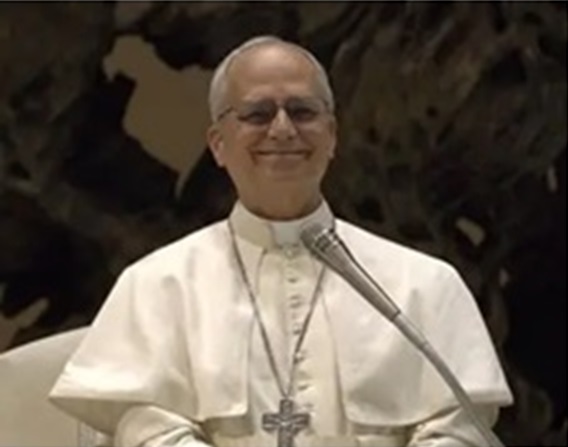
Trump attacks Pope Leo again ahead of Marco Rubio’s Vatican visit
by Gerard O’Connell, May 5, 2026, https://www.americamagazine.org/vatican-dispatch/2026/05/05/trump-pope-leo-marco-rubio/?utm_source=ActiveCampaign&utm_medium=email&utm_content=Trump%20attacks%20Pope%20Leo%20again%20ahead%20of%20Marco%20Rubio%20s%20Vatican%20visit&utm_campaign=Daily%205%205%2026
On the eve of U.S. Secretary of State Marco Rubio’s visit to the Vatican on May 7—a visit widely seen in Rome as an attempt to restore more tranquil relations with the White House—President Donald J. Trump publicly attacked Pope Leo, alleging that “he’s endangering a lot of Catholics and a lot of people” and falsely claiming yet again that for the pontiff, “it’s O.K. for Iran to have a nuclear weapon.”
His latest attack came on “The Hugh Hewitt Show” when the host told the president, who is going to China on May 14-15, that he wanted the pope to talk about Jimmy Lai, the imprisoned Hong Kong Catholic businessman and democracy activist, and for Mr. Trump “to bring him home.” Mr. Trump responded: “The pope would rather talk about the fact that it’s O.K. for Iran to have a nuclear weapon. I don’t think that’s very good. I think he’s endangering a lot of Catholics and a lot of people, but I guess, if it’s up to the pope, he thinks it’s just fine for Iran to have a nuclear weapon.” Mr. Hewitt commented, “He’s from Chicago; he’s got to learn a few things.”
Before returning to Rome from Castel Gandolfo on Tuesday, Pope Leo responded to journalists about President Trump’s attack but without mentioning his name.
“The church’s mission is to preach the Gospel and peace. If anyone wants to criticize me for proclaiming the Gospel, let them do so,” the pope said.
“I have spoken about this from the very moment I was elected, and now we are nearing the anniversary. I said [then], “Peace be with you.”
“The church’s mission is to preach the Gospel, to preach peace,” he repeated.
“If anyone wants to criticize me for proclaiming the Gospel, let them do so with the truth,” he said. Then alluding to the fact that Trump had accused him of being in favor of Iran having nuclear weapons—a false charge—Pope Leo said: “For years, the church has spoken out against all nuclear weapons, so there is no doubt about that. And so I simply hope to be heard for the sake of the value of God’s words.”
For his part, Mr. Rubio downplayed the rift between President Trump and Pope Leo over Iran, saying that Mr. Trump’s recent criticisms were rooted in his opposition to Iran potentially obtaining a nuclear weapon, which he said could be used against millions of Catholics and other Christians. Mr. Rubio said the whole world should be opposed to that.
Mr. Trump “doesn’t understand why anybody—leave aside the pope, the president and I, for that matter—[I] think most people cannot understand why anyone would think that it’s a good idea for Iran to ever have a nuclear weapon,” Mr. Rubio told reporters at the White House.
President Trump openly denigrated Pope Leo for the first time on Truth Social shortly after the airing of a segment on CBS’s “60 Minutes” on the evening of April 12, which featured three American cardinals—Blase Cupich, Robert McElroy and Joseph Tobin—who came out strongly against the war by Israel and the United States against Iran, calling it ‘unjust.”
Mr. Trump did not strike out against the cardinals; instead, he publicly disparaged Leo, decrying the pope as “weak on crime” and “terrible on foreign policy.” His attack came hours before Leo set out on a visit to four African countries on the morning of April 13.
On the plane to Algeria, in response to journalists’ questions, Pope Leo said, “I have no fear neither of the Trump administration nor speaking out loudly of the message of the Gospel, which is what I believe I am here to do, what the church is here to do.”
On another occasion, Mr. Trump falsely accused Leo of being in favor of a nuclear-armed Iran, ignoring the fact that the American-born pope, like his predecessors, is for the total abolition of nuclear weapons. Pope Francis declared that not only is the use of nuclear arms immoral but also the possession of such weapons. Today, nine states have nuclear weapons: the United States, Russia, China, France, the United Kingdom, India, Pakistan, North Korea and Israel.
When President Trump threatened to wipe out the “whole civilization” of Iran, Pope Leo on April 7 denounced this threat against the Iranian people as “truly unacceptable” and called on the citizens of the countries involved in the war in Iran “to contact the authorities, political leaders, congressmen—to ask them, tell them, to work for peace and to reject war always.” Moreover, during his visit to Africa, he stated that he “cannot be in favor of war” and said he was not interested in engaging in a debate with Mr. Trump.
Mr. Rubio, a Catholic of Cuban descent, will be received by Pope Leo in a private audience on May 7. The Vatican confirmed this on May 4 and said the meeting would begin at 11:30 a.m. and end at noon. Mr. Rubio and Vice President JD Vance first met Leo on May 19, the day after the formal inauguration of the Petrine ministry of the first American pope. On that occasion, Mr. Vance handed the pope a letter from President Trump inviting him to visit the United States.
Mr. Rubio is the first high-level official from the Trump administration to meet the pope since that May 19 meeting, and there have been major differences between the Holy See and the U.S. administration on domestic and foreign policy issues since then, many of which the pope alluded to in his Jan. 9 speech to the diplomatic corps accredited to the Holy See.
Those tensions are wide-ranging and extend from major differences over the Trump administration’s sidelining of multilateralism, its breaches of international law, the mass deportation of migrants, the gutting of the U.S. Agency for International Development, the wars in the Middle East, the crisis between the Trump administration and the European Union over Ukraine and Iran and much else.
In addition, there is the quite extraordinary fact that President Trump has not spoken by phone with the pope since Leo’s election on May 8, 2025, almost exactly one year ago. But he has invited the pope’s brother Louis, whom the president described as “all MAGA,” to the White House. Moreover, he even claimed that then-Cardinal Robert Prevost was elected pope only because Donald J. Trump was president.
When will the new nuclear operators be required to put money aside for decommissioning?
4 May 26
https://www.newcivilengineer.com/ai-search/?q=When%20will%20the%20new%20nuclear%20operato
New nuclear operators are required by law to set aside funds for decommissioning and waste disposal from the very first day of a plant’s operation . Under the legal framework established by the government, energy firms must have a robust, funded decommissioning plan (FDP) in place and approved by the Secretary of State before they are even granted permission to begin construction on a new power station
Key Funding Requirements
The regulations are designed to ensure that the financial risk of cleaning up nuclear sites remains with the developers rather than the taxpayer. According to the government’s Funded Decommissioning Programme Guidance:
- Insolvency-Proof Funds: Operators must establish funds for clean-up that are administered independently of both the operator and the government to ensure they remain protected even if the company faces financial difficulties .
- Full Cost Responsibility: Operators are responsible for the full costs of decommissioning and their share of waste disposal. Energy Secretary Charles Hendry stated that requiring a credible funding plan “is the best way to protect taxpayers from having to pick up the bill” .
- Waste Transfer Pricing: To provide cost certainty for investors, the government proposed a cap on the waste transfer price for disposing of higher-activity waste in a Geological Disposal Facility (GDF). This cap was suggested to be set at a high level—roughly three times current cost estimates—with an additional risk fee charged to operators to compensate the government for accepting any residual risk .
Evolving Models: The Sizewell C Precedent
While the standard requirement involves operators building up independent funds, the government has introduced a new financial model for the Sizewell C project. As detailed in the written ministerial statement Sizewell C | Public on the hook for decommissioning costs of up to £12bn, this project utilises a Regulated Asset Base (RAB) model:
- Consumer Funding: Decommissioning for Sizewell C will be funded via the RAB, which can include additional costs on consumer electricity bills .
- Contingent Liabilities: While the RAB includes protections to minimise public risk, the government has acknowledged a potential exposure of up to £12bn in “remote circumstances” where a fund shortfall materialises .
- Timeline: For modern plants like Sizewell C, decommissioning is expected to be a long-term process, potentially beginning toward the end of the 21st century and continuing until 2160
The government continues to update these roadmaps to ensure they remain suitable for new technologies, such as Small Modular Reactors (SMRs), while protecting future generations from bearing legacy costs .
You may be interested in learning more about the estimated total cost of the UK’s nuclear cleanup mission, the progress of the Geological Disposal Facility, or how the Regulated Asset Base model impacts consumer energy bills.
Scots are right to back renewables over nuclear energy.
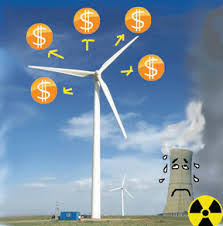
By Dr Paul Dorfman, Bennett Institute, University of Sussex; Dr Keith
Baker FRSA, Glasgow Caledonian University; Professor Peter Strachan, Robert
Gordon University; Professor Steve Thomas, University of Greenwich; Dr
David Toke, University of Aberdeen.
POLLING released a couple of weeks ago
found that nuclear power has a “miserable” level of support in
Scotland, with more than half of those surveyed saying that the main focus
should be on renewables. According to the facts, this makes sense. Solar
and wind now dominate global electricity generation. Worldwide, solar and
wind power will both surpass nuclear in 2026.
This surge has halted the
fossil fuel power generation rise, with renewables overtaking coal,
supported by battery storage providing system flexibility at scale. All
this points to a shift in the dynamics of the power system. When renewable
energy generation exceeded the rise in global electricity demand last year,
an important threshold was crossed. In 2025, solar became the EU’s top
power source, with wind and solar now the bedrock of European energy
self-reliance. Power generation from renewables in Europe has reached a new
record of 384.9 Terrawatt-hours (TWh).
Meanwhile, Scottish wind power has
also set new records. More renewable energy is produced in the Scottish
Highlands per household than any other area of the UK. Annual renewable
generation across the Highlands is staggering. Renewable energy development
will be further supported by SSEN’s investment of £7 billion in Scotland
in 2026-31, creating 17,500 jobs. More than 100% of Scotland’s
electricity demand has been produced by renewables for the first time,
supporting more than 42,000 jobs and an economic output of more than
£10.1bn.
New UK nuclear plans would be yet another blow to electricity
bill-payers, when Scottish families are already paying what amounts to a
“nuclear tax” to fund the two most expensive nuclear power plants in
the world, England’s Hinkley Point C and Sizewell C.
Meanwhile, the
Norwegian Nuclear Committee has just said no to nuclear power in Norway.
Due to new nuclear construction timescales – up to 17 years according the
UK Government – and the vast cost over-runs, fissile fuel is a policy
dead end, diverting scarce resources away from realistic climate and energy
solutions.
Small modular reactors (SMRs) are another a costly distraction.
They are still in development and decades away from deployment at scale.
All this means that new nuclear is too late for the climate and energy
crises. What’s worse, every pound invested in nuclear is a pound not
invested in renewables, energy efficiency, storage and grid resilience –
investments that would provide a much bigger pay-off.
The National 6th May 2026,
https://www.thenational.scot/business/26081051.scots-right-back-renewables-nuclear-energy/
1 This Month



26 September – International Day for the Total Elimination of Nuclear Weapons


PLEASE OPPOSE HR 8255 AND S.3639 – bills would accelerate satellite deployment, with no environmental review or safeguards – https://ncstd5li.quorum.us/campaign/169331/
To see nuclear-related stories in greater depth and intensity – go to https://nuclearinformation.wordpress.com
-
Archives
- September 2026 (219)
- August 2026 (330)
- July 2026 (355)
- June 2026 (287)
- May 2026 (306)
- April 2026 (356)
- March 2026 (251)
- February 2026 (267)
- January 2026 (308)
- December 2025 (358)
- November 2025 (359)
- October 2025 (375)
-
Categories
- 1
- 1 NUCLEAR ISSUES
- business and costs
- climate change
- culture and arts
- ENERGY
- environment
- health
- history
- indigenous issues
- Legal
- marketing of nuclear
- media
- opposition to nuclear
- PERSONAL STORIES
- politics
- politics international
- Religion and ethics
- safety
- secrets,lies and civil liberties
- spinbuster
- technology
- Uranium
- wastes
- weapons and war
- Women
- 2 WORLD
- ACTION
- AFRICA
- Atrocities
- AUSTRALIA
- Christina's notes
- Christina's themes
- culture and arts
- Events
- Fuk 2022
- Fuk 2023
- Fukushima 2017
- Fukushima 2018
- fukushima 2019
- Fukushima 2020
- Fukushima 2021
- general
- global warming
- Humour (God we need it)
- Nuclear
- RARE EARTHS
- Reference
- resources – print
- Resources -audiovicual
- Weekly Newsletter
- World
- World Nuclear
- YouTube
-
RSS
Entries RSS
Comments RSS
 nuclear-news