Canada Initiates Process to List Major [Nuclear] Projects under the Building Canada Act
Listing these projects under the Act would streamline and consolidate key federal permits and authorizations, subject to a document outlining the conditions under which the project may proceed. National interest listing of the project would provide confidence that key federal permits and authorizations for the project will be granted, shifting Canada’s regulatory focus from ‘whether’ the project should proceed to ‘how’ it will proceed.
Government of Canada, From: One Canadian Economy 25 June 26
News release
Yellowknife, Northwest Territories, June 24, 2026 – The world is changing rapidly. In response, a confident Canada is choosing to build. Canada’s government is building major projects – new ports, mines, highways, and energy infrastructure – that will transform our economy and unlock billions of dollars in new investment for Canadian workers and businesses. Key to those efforts is the Major Projects Office (MPO) and the Building Canada Act (the Act), which are helping streamline federal approval and financing processes to get major projects built faster, while respecting Indigenous rights and safeguarding the environment.
Today, the Honourable Tim Hodgson, Minister of Energy and Natural Resources; the Honourable Steven MacKinnon, Minister of Transport and Leader of the Government in the House of Commons; and the Honourable Rebecca Alty, Minister of Crown-Indigenous Relations, announced a significant milestone for the government’s plan to build Canada strong. Ministers announced that the government is initiating the process toward potential listing of three major projects – the Mackenzie Valley Highway Project, the Grays Bay Road and Port Project, and the Nuclear Waste Management Organization’s (NWMO)’s Deep Geological Repository (DGR) – as projects of national interest under the Act.
In March 2026, the Grays Bay Road and Port project and the Mackenzie Valley Highway project were referred to the MPO and today, the Government is referring the DGR to the MPO as well. Located in northwestern Ontario, near Wabigoon Lake Ojibway Nation and the Township of Ignace area, the DGR project is a world-recognized best practice solution for safe, long-term storage of all used nuclear fuel from Canada’s existing nuclear reactor fleet, as recognized under the federal government’s new Nuclear Energy Strategy.
Listing these projects under the Act would streamline and consolidate key federal permits and authorizations, subject to a document outlining the conditions under which the project may proceed. National interest listing of the project would provide confidence that key federal permits and authorizations for the project will be granted, shifting Canada’s regulatory focus from ‘whether’ the project should proceed to ‘how’ it will proceed. In the case of the Mackenzie Valley Highway and the Grays Bay Road and Port projects, this will be contingent on both projects successfully completing treaty-based impact assessment and regulatory processes.
The support of Indigenous communities for these projects is critical. To determine if these projects are of national interest and should be listed under the Act, consultations will be held with impacted Indigenous rights holders and communities, provinces and territories. Consultations for each project will begin over the coming weeks, with the aim of supporting a listing decision by the Government in relation to the projects in fall 2026. Canada is committed to upholding its duty to consult with Indigenous Peoples throughout the process. This commitment is guided by section 35 of the Constitution Act, 1982, while recognizing the United Nations Declaration on the Rights of Indigenous Peoples Act, and Modern Treaties and Self-Government Agreements…………………………………………………………………………………………………………………………………………………………………………………………………………………………………………………………….. https://www.canada.ca/en/one-canadian-economy/news/2026/06/canada-initiates-process-to-list-major-projects-under-the-building-canada-act0.html
“Israel in Panic Mode? Max Blumenthal Says Iran War Backfired”
In a wide-ranging conversation with Glenn Diesen, journalist Max Blumenthal argues that the failed U.S.-Israel war against Iran has exposed new political fractures in Washington, accelerated public opposition to unconditional support for Israel, and raised questions about what comes next for a region still on the brink.
Joshua Scheer, June 24, 2026, https://scheerpost.com/2026/06/24/israel-in-panic-mode-max-blumenthal-says-iran-war-backfired/
Washington Went to War to Show Strength. The World Saw Weakness.
In a new interview with Glenn Diesen, investigative journalist and The Grayzone editor-in-chief Max Blumenthal argues that the recent U.S.-Israel conflict with Iran has produced consequences far different from those envisioned by its architects. Rather than restoring deterrence, Blumenthal contends, the war exposed military limitations, deepened political divisions inside the United States, intensified scrutiny of Israel’s role in American politics, and left Washington searching for a way out of a costly confrontation.
The discussion explores the emerging Memorandum of Understanding with Iran, growing tensions between pro-Israel factions and the America First wing of the Republican Party, shifting public opinion toward Israel, and the possibility that Lebanon may become the next flashpoint in efforts to unravel the fragile agreement. Whether one agrees with Blumenthal’s analysis or not, the interview captures a moment of profound uncertainty—one in which old assumptions about U.S. power, Israeli influence, and the future of the Middle East are increasingly being challenged.
As Washington attempts to navigate the aftermath of a conflict that rattled global markets and reshaped regional calculations, the political and strategic fallout may continue long after the shooting stops. The debate now is not only about Iran, but about the future direction of U.S. foreign policy itself
Israel’s Biggest Fear Isn’t Iran—It’s Losing America
Max Blumenthal argues that the greatest consequence of the recent Iran conflict may not be military at all. The real shock, he contends, is the accelerating erosion of unconditional American support for Israel.
According to Blumenthal, the war exposed deep fractures within the U.S. political establishment. While traditional pro-Israel voices continue to dominate Washington, growing opposition is emerging from across the political spectrum. On the right, figures associated with the America First movement are increasingly questioning why U.S. resources and political capital are tied so closely to Israeli objectives. On the left, criticism of military aid and lobbying influence has become more mainstream than at any point in recent memory.
Blumenthal argues that public opinion has shifted dramatically. Polls showing rising skepticism toward military support for Israel, combined with growing frustration over foreign entanglements, suggest that a decades-old political consensus is weakening. What once seemed untouchable in American politics is now being openly debated.
The interview also explores how Israeli leaders may respond to this changing landscape. Blumenthal warns that efforts to maintain the status quo could intensify regional tensions, particularly in Lebanon, where clashes continue despite diplomatic efforts to stabilize the region. At the same time, he suggests that Israel’s political establishment is struggling to adapt to a reality in which criticism is no longer confined to the margins.
The discussion highlights a growing debate over the future of U.S.-Israel relations. The question is no longer simply how Washington will respond to Iran, but whether the political foundations of America’s long-standing alliance with Israel are beginning to shift beneath everyone’s feet.
Congress Is Preparing to Surrender American Sovereignty on the Eve of America’s 250th Anniversary
June 24, 2026, Dennis Kucinich and Elizabeth Kucinich, https://scheerpost.com/2026/06/24/congress-is-preparing-to-surrender-american-sovereignty-on-the-eve-of-americas-250th-anniversary/
Take Action to Defeat a Dangerous Expansion of the National Security State, Military Power Over Civilian Government, Foreign Policy Entrenchment, and the Erosion of Constitutional Self-Government Dennis Kucinich and Elizabeth Kucinich June 22, 2026
The United States Congress, on the very eve of the 250th anniversary of our Declaration of Independence from Great Britain, is preparing to formally diminish American independence and sovereignty through a proposed merger and long-term integration of executive functions throughout the government, coordinated by the Department of Defense.
Treacherous provisions in the 2027 National Defense Authorization Act (NDAA) mandate that the U.S. State Department, the U.S. Commerce Department, and the heads of other relevant federal departments and agencies cooperate with their Israeli counterparts for the purpose of consolidating U.S. and Israeli military activities in order to align efforts and avoid duplication.
The greatest threat to American sovereignty rarely arrives wearing the uniform of a foreign army. It often arrives through the complacency, expediency, or poor judgment of elected officials who fail to recognize the long-term consequences of the powers they surrender.
Whether motivated by political convenience, misplaced loyalty, or simple inattention, such actions can erode constitutional self-government just as surely as deliberate acts of betrayal.
No foreign nation, regardless of whether it is Israel, Britain, Canada, France, or Japan, should be integrated into permanent executive, military, technological, intelligence, and research structures in a manner that diminishes American sovereignty and democratic accountability.
The Pentagon’s Defense Intelligence Agency (DIA) recently identified Israel as a counterintelligence threat.
Under ordinary circumstances, such a finding would prompt heightened scrutiny, caution, and congressional oversight. Instead, Congress has continued advancing provisions in the 2027 National Defense Authorization Act (NDAA) that would deepen military, technological, and strategic integration between the United States and Israel.
The legislation specifies Israel–U.S. coordination with America’s Defense Advanced Research Projects Agency (DARPA), the Missile Defense Agency, including the Iron Dome initiative, the United States Space Command, directed energy programs, artificial intelligence, biotechnology, and other critical technologies that will shape the future distribution of power.
Of all the areas mentioned, artificial intelligence and biotechnology may have the greatest long-term implications. These technologies will shape privacy, surveillance, predictive policing, digital identity systems, biosecurity, human enhancement technologies, and information control.
The Founders could never have imagined artificial intelligence, autonomous systems, or biotechnology directed by algorithms. Yet they understood a timeless truth: power must remain accountable to the people. The danger of our age is not merely that authority may concentrate in governments, corporations, or military institutions. It is that decisions of profound consequence may increasingly be delegated to technological systems that operate beyond the understanding and oversight of those whom the Constitution entrusts with governing.
The highly structured Israel–U.S. merger is included in the $1.5 trillion NDAA, in Section 219 (formerly Section 224) in the House version and Section 1217 in the Senate version. It puts in place policies that will bind future administrations.
Democracy depends on elected officials being able to alter policy. Permanent structures can make that increasingly difficult. Democracies function because citizens can change policy through elections. When military, intelligence, and technological institutions become permanently integrated across governments and bureaucracies, decision-making can drift beyond the reach of voters.
The issue is not cooperation with perceived allies. The issue is whether future Americans retain the practical ability to change course through democratic means. The democratic question, regardless of the technology involved, is simple: Who governs these technologies, and for what purpose?
Will decisions remain accountable to elected representatives and the American people, or will authority increasingly reside within security agencies, military institutions, and specialized technical bureaucracies beyond meaningful democratic oversight?
The U.S.–Israel military–executive merger provisions in the NDAA advance military influence across civilian government and create precisely the conditions the Constitution was designed to prevent.
Our Declaration of Independence condemned King George III for having rendered the military independent of and superior to the civil power and for having combined with others to subject us to a jurisdiction foreign to our Constitution and unacknowledged by our laws.
The concern is not just military and executive integration with any foreign nation. It is the gradual expansion of military institutions into civilian domains including technology, biotechnology, commerce, communications, and artificial intelligence — and the effect on our Republic and our freedom.
As national security priorities become embedded throughout government, civilian decision-making becomes subordinate to military logic. Policies that should be determined through democratic debate become the province of security institutions, technical experts, and permanent bureaucracies.
The Founders repeatedly warned against permanent alliances because they understood the motivations of leaders of other countries may be inconsistent with American ideals or interests. The Founders structured the government of the United States so that future administrations would not be locked into foreign alliances that became vexatious.
If cooperation evolves into integration, future administrations will have less freedom to pursue independent diplomatic, military, technological, and economic policies. Decisions made in the name of efficiency today may limit the choices available to Americans tomorrow.
Congress is constitutionally responsible for oversight of the executive branch.
A key question is whether the military and executive merger provisions in the 2027 NDAA create new arrangements that are sufficiently transparent and reviewable by Congress. If significant military, intelligence, technological, or strategic decisions become embedded within joint frameworks, legislators may find themselves attempting to oversee systems that have acquired their own institutional momentum.
Ironclad collaborative provisions uniting Israel and the United States in the 2027 NDAA are being advanced on the basis of current political relationships and short-term strategic considerations rather than a careful assessment of their long-term institutional consequences. Congress has devoted remarkably little attention to how such an arrangement could affect American sovereignty, constitutional accountability, civilian control of the government of the United States, and the ability of future generations to alter policy through democratic means.
The question before Congress is not whether Israel is a friend today. The question is whether the permanent integration of military, technological, intelligence, research, and governmental functions with any foreign nation serves the long-term interests of the United States.
The Declaration of Independence and our constitutional system have been entrusted to our care. Alliances between nations may change. Governments change. Political leaders come and go, friendships change. Yet the structures established by law can endure for generations.
The Constitution was designed to preserve the sovereignty of the American Republic through democratic accountability, separation of powers, and civilian control of government. Any arrangement that permanently embeds foreign influence within executive, military, intelligence, technological, or research institutions will not stand once it receives the highest degree of constitutional scrutiny.
Congress has already struggled to reclaim its constitutionally based war powers. The military establishment has steadily accumulated influence across multiple domains of public policy. These provisions move further in that direction by embedding foreign military and security priorities throughout the machinery of government.
Members of Congress swear an oath to support and defend the Constitution of the United States. That oath is a sacred trust and does not abide treachery. Any measure that diminishes American sovereignty, weakens constitutional self-government, or places the powers of this Republic in alignment with a foreign authority violates both the spirit of that oath and the duty owed to every American citizen.
As America approaches its 250th year, Congress is poised to bind future generations through strategic commitments made to a foreign power today. These provisions reflect a profound failure of constitutional judgment. They elevate short-term political and military considerations above the enduring duty to preserve the sovereignty, independence, and freedom of action of the United States.
The Founders warned repeatedly against arrangements that would entangle future generations in obligations they neither chose nor approved. Yet Congress now stands on the threshold of embracing precisely such an arrangement, limiting the freedom of future American leaders to chart an independent course in diplomacy, technology, security, and national defense.
Whether driven by political expediency, misplaced loyalties, institutional inertia, or a failure to grasp the long-term consequences of their actions, the result is the same: a diminished capacity for self-government and a dangerous departure from the constitutional principles that have safeguarded American independence for two and a half centuries.
On the eve of America’s 250th year, every citizen must decide whether independence is merely a memory to celebrate or a responsibility to defend.
TAKE ACTION
The merger is timed to be voted on the week of June 29, just before the Fourth of July.
Let us truly celebrate our independence by staying independent. Please help spread the word and forward this article.
Find your member of Congress: House | Senate
It is urgent that you call your congressional representative today at 202‑224‑3121 and tell them to strip Section 219 (House) or Section 1217 (Senate) from the 2027 NDAA.
Congressmen Tom Massie (R‑KY) and Ro Khanna (D‑CA) will offer an amendment in the House to remove Section 219. Please tell your U.S. Representative: Support the Massie–Khanna Amendment to the NDAA.
Optional telephone script for the House of Representatives:
My name is ______ and I am a constituent. I am calling to urge Representative ______ to support the Massie–Khanna Amendment and to remove Section 219 from the NDAA. Congress should defend American sovereignty, uphold the Constitution, and reject any measure that integrates the executive and military functions of the United States with those of a foreign government. Please pass my message to the Representative. Thank you.
Please now circulate this article to your friends and network and ask them to take urgent action.
The end of the Polish-Ukrainian love story
Behind Poland and Ukraine’s symbolic feud lies a brutal fight over EU cash, borders, and regional dominance.
23 Jun, 2026, By Ksenia Smertina, Senior lecturer at the HSE Institute for Media, expert at the Russian International Affairs Council on Eastern and Central Europe
At the heart of Polish historical literature, brilliantly adapted for the screen by film director Andrzej Wajda, is a timeless, almost archetypal Slavic narrative. Take Adam Mickiewicz’s poem, ‘Pan Tadeusz’, or Aleksander Fredro’s comedy, ‘The Revenge’. In both cases, we see two noble clans trapped in a shared space – whether within a city or castle walls – selflessly and relentlessly destroying each other over long-held historical grievances, ambitions, and boundary disputes, while the entire ‘security architecture’ around them crumbles.
The stories have different endings, but the historical circumstances are similar, which undoubtedly provides grounds for reflection on the complex fate of the Polish people. Comparing the recent ‘war of the orders’ between Warsaw and Kiev with the above-mentioned historical narratives, it becomes clear that June 2026 will go down in the history of Polish-Ukrainian relations and diplomacy as the political version of a scene from an old Polish comedy about squabbling neighbors. However, this incident demonstrates several important aspects that define Poland’s current condition and foreign policy which are worth reflecting on.
On June 19, Polish President Karol Nawrocki decided to strip Ukraine’s Vladimir Zelensky of the Order of the White Eagle because a Ukrainian unit was named after the Ukrainian Insurgent Army (UIA). He also stated that Poland would not allow those who do not understand the need to renounce the “cult of totalitarianism and violence” to join the EU.
What the Ukrainian Insurgent Army was, and why Poland was offended by it?
The Ukrainian Insurgent Army (UPA) was a nationalist group that collaborated with Nazi Germany during World War II. It perpetrated the 1943–1944 Volhynia massacres, in which tens of thousands of Polish civilians were killed. This is why any official glorification of the UPA remains one of the most explosive issues in Polish-Ukrainian relations.
Kiev’s reaction was deafening, triggering an avalanche that was clearly unexpected in Warsaw. Zelensky demonstratively returned the order of merit to Nawrocki by mail. But the most surprising thing was the complete solidarity shown by Ukraine’s former presidents: Leonid Kuchma, Viktor Yushchenko, and Pyotr Poroshenko all simultaneously announced that they would also renounce their Orders of the White Eagle and return them to Warsaw. Pretending that they ‘didn’t want them anyway’, the former presidents arrogantly declared that they were returning the awards to “the Poland that betrayed European solidarity,” calling Nawrocki’s decision an insult, while contrasting these pieces of metal with recognition of their own people. Following their lead, Head of the Office of the President of Ukraine, Kirill Budanov, and Ukrainian Foreign Minister Andrey Sibiga also renounced their Polish orders of merit, turning one of Europe’s highest and oldest awards into a devalued bargaining chip.
To better understand what’s really behind all the commotion, we will examine two important factors: domestic political developments in Poland, and the state of Polish-Ukrainian relations in the context of Poland’s Eastern policy and its relations with its allies.
Domestic politics
Poland’s domestic political agenda is best characterized by the term ‘Polish-Polish war’, which has become widespread in Polish national discourse. The term, coined after the 2005 electoral rift, has become the official formula for the country’s political deadlock. Both the ‘right’ and ‘left’ sides of the Polish political spectrum are becoming radicalized, and as the rift deepens, centrism is disappearing from Polish society……………………………………………….
the current scandal in Ukrainian-Polish relations has, in part, been provoked by the escalation of tensions in Poland’s own domestic politics. ………………………………………………….
Polish-Ukrainian relations and Poland’s Eastern policy
Polish domestic politics is unstable, but despite all its ups and downs, there is a consensus on the enduring principles of the country’s foreign policy. Among them is Poland’s Eastern policy, based on Jerzy Giedroyc’s idea about special relations with neighbors. Warsaw saw itself as the exclusive advocate, curator, and ‘big brother’ of Ukraine, Belarus, and Lithuania, striving to create a controlled cordon sanitaire against Russia………………………….
It is becoming clear that the Polish elites, who for years demanded Ukraine’s accession to the EU, were unprepared for how Polish society would react to the prospect of sharing European money, markets, and subsidies with their eastern neighbor. The conflict surrounding the agricultural sector is particularly illustrative. Poland has been the main beneficiary of the EU’s Common Agricultural Policy (CAP) for 20 years, receiving billions in subsidies for its farms. Upon integration into the EU, Ukraine will also receive financial subsidies to bring its agricultural sector into line with Brussels’ standards. At the same time, Poland will transform from a recipient of European funds into a donor, obligated to pay for others. And that’s not a role that Polish society is prepared to fulfill.
Warsaw’s harsh economic blockade of Kiev should be seen in this light. When Ukrainian grain, poultry, and transport companies began to pose a threat of real competition to Poles within the EU, Poland quickly blocked its borders, dumped grain from train cars onto the rails, and imposed strict protectionist barriers. For Kiev, this was a painful revelation:…………………………………………………………………………………………………….https://www.rt.com/news/642019-end-of-polish-ukrainian-love/
Ukrainian-Polish diplomatic crisis over Nazi collaboration exposes NATO war with Russia

ABOVE: Representatives of right-wing organisations lined up on the street during a protest against the annual ‘KyivPride’ Equality March in Kiev, Ukraine, Sunday, June 21, 2026. [AP Photo/Dan Bashakov]
Alex Lantier21 June 2026, https://www.wsws.org/en/articles/2026/06/22/wzgt-j22.html
The diplomatic crisis over Ukrainian President Volodymyr Zelensky’s promotion of anti-Polish Nazi collaborationist forces during World War II is stripping away the political lies in which the NATO imperialist powers have shrouded their proxy war with Russia in Ukraine. The NATO-backed regime in Ukraine is not a defender of democracy and national independence but a tool of imperialism resting upon far-right forces.
In late May, Zelensky issued a decree giving a serving military unit the honorary title “Heroes of the UPA.” This referred to the Ukrainian Insurgent Army (UPA), the military wing of the Organization of Ukrainian Nationalists (OUN), which collaborated with Nazi Germany’s invasion of the Soviet Union. The OUN and its members in the Nazi auxiliary police participated in the genocide of Soviet Jews, including the 1941 Babi Yar massacre in Kiev. Many of these men went on to form the UPA, which hunted down pro-Soviet partisans in Ukraine and carried out a genocide of Poles in Volhynia in present-day western Ukraine.
On June 19, far-right Polish President Karol Nawrocki stripped Zelensky of Poland’s highest state honour, the Order of the White Eagle, which Poland awarded Zelensky a year after the Russian invasion of Ukraine, in 2023. Nawrocki said that after he “repeatedly signaled” his government’s concerns to the Zelensky government, its “position has not changed.” However, he added, “facts are not subject to negotiation” and “at least 100,000 Polish citizens were murdered by the UPA.”
The Zelensky regime responded by denouncing Warsaw and doubling down on its promotion of genocidal pro-Nazi forces. Zelensky mailed his medal back to Poland. Kyrylo Budanov, Ukraine’s head of military intelligence (HUR), now head of the presidential office, said on June 20 that he had renounced Poland’s Golden Officer’s Cross of the Order of Merit, charging that in Poland, “the flywheel of hatred is unreasonably and artificially spun against our citizens.”
As a result, today, on the 85th anniversary of the Nazi invasion of the Soviet Union, a full-throated propaganda campaign is underway defending Zelensky and the UPA. Former Ukrainian presidents Leonid Kuchma, Viktor Yushchenko and Petro Poroshenko have all vowed to return their Order of the White Eagle honors in solidarity with Zelensky. Ukrainian Foreign Minister Andrii Sybiha denounced Warsaw’s criticism as a “strategic mistake from which only Moscow benefits.”
Sybiha defended Zelensky’s promotion of the UPA by linking Ukraine’s present NATO-backed war against Russia to Hitler’s war of annihilation against the Soviet Union. Ukrainian statements of support for the UPA, he claimed absurdly, “had absolutely no anti-Polish intent.” Instead, Sybiha argued, the goal was “honouring those who, similarly, many years ago, fought against imperial Moscow, Bolshevik-communist occupation.”
Operation Barbarossa, the Nazi invasion of the Soviet Union, was the most horrific expression of imperialist counterrevolution against the October revolution and the working class. It was a war of annihilation, planned to create Lebensraum for German imperialism by annihilating “Judeo-Bolshevism” through starvation, slave labor, and mass murder of Jews, partisans and communists. By the time the Nazi war machine was crushed, 27 million Soviet citizens were dead.
Zelensky can defend and legitimize Nazi collaborationist forces in the Soviet Union only because he knows that he has the support for this operation from the major NATO imperialist powers. At the same time as Washington, Berlin and the other NATO powers poured billions of dollars into the Ukrainian regime, in the years preceding and following the 2022 Russian invasion, the Ukrainian regime systematically rehabilitated the fascist collaborators of World War II.
Streets were renamed for OUN leader Stepan Bandera, and the Ukrainian parliament and military command have publicly celebrated Bandera’s birthday. Openly neo-fascist formations such as the Azov Battalion, whose insignia borrow directly from the Waffen SS, were fully integrated into the armed forces and celebrated by the Western media as defenders of “democracy.”
Days before the UPA decree, the Zelensky government repatriated and reburied the remains of Andriy Melnyk—an OUN leader and Nazi collaborator who had petitioned Hitler for the right to join the “crusade against Bolshevik barbarism”—in Kiev’s National Military Cemetery. Zelensky personally hailed Melnyk as “deeply respected,” declaring that Ukraine was building a “pantheon of national heroes.” The New York Times described this blood-soaked figure as a “divisive 20th Century hero.”
The intensifying glorification of fascism is an expression of the deepening crisis of the NATO proxy war and the collapse of the regime’s popular support. In these conditions, the ruling oligarchy doubles down on a falsified national history to manufacture a chauvinist mythology with which to drive workers and youth into a catastrophic war.
The turn to the heroes of the OUN goes hand in hand with the turn to dictatorial forms of rule. Zelensky’s own legal mandate as president expired in May 2024, yet he clings to power under martial law, having banned opposition parties, suppressed independent trade unions and outlawed any opposition to the war from the left.
The hidden reality behind Britain’s homegrown nuclear age

Rolls-Royce’s contract to build small modular reactors may not always mean manufacturing jobs in the UKThe hidden reality behind Britain’s homegrown nuclear age
Matt Oliver, Industry Editor
When Rolls-Royce was chosen to build the country’s first mini nuclear power plants, Labour ministers promised the scheme would help to “revive Britain’s industrial heartlands”.
Three small modular reactors (SMRs) are expected to be built in Anglesey, Wales, by
the mid-2030s – proving the concept and triggering what could become a massive
global industry.
But a year later, exactly just how British those SMRs will
be is turning into a thorny subject. Senior backbench MPs have claimed
there were “serious questions” for Rolls-Royce to answer after the
company began a process to buy “key nuclear island components” –
including reactor pressure vessels – from either South Korea or the Czech
Republic last month.
Nuclear plants are usually divided into two parts: a
reactor “island” housing the most sensitive nuclear equipment and a
separate site where the conventional turbine sits. The companies in the
running for the nuclear island contracts are Korea’s Doosan and CEZ, the
Czech state energy giant that has its own nuclear programme and is an
investor in Rolls-Royce SMR.
Insiders say the lack of a British bidder was
inevitable, because only a handful of businesses in the world can make the
specialist equipment and because of a need to begin construction within the
next five years.
Lord Vallance, the minister for nuclear, said: “Great
British Energy-Nuclear is making excellent progress against its ambition
for 70pc of British built content across the small modular reactor fleet,
and we fully support their work with Rolls Royce to unlock UK supply chain
benefits providing thousands of jobs in our community. “This is part of
our commitment to delivering a golden age of nuclear and developing world
leading-nuclear expertise and UK supply chains, supporting thousands of
jobs in our community.”
Telegraph 21st June 2026, https://www.telegraph.co.uk/business/2026/06/21/the-hidden-reality-behind-britains-homegrown-nuclear-age/
Vance: Israeli Officials Need To Realize Trump Is the Only Head of State Still ‘Sympathetic’ to Israel
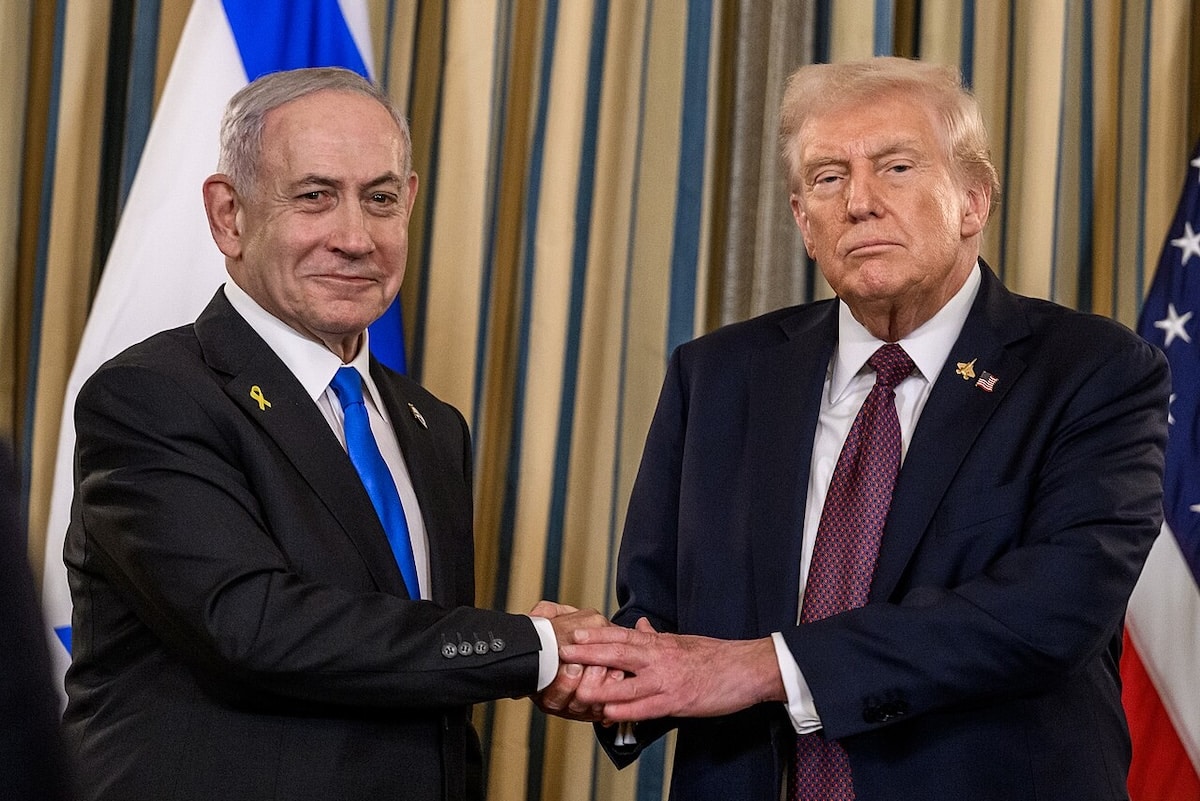
The US vice president also called out Smotrich and Ben Gvir, saying they can’t ‘kill their way’ out of every problem
by Dave DeCamp | June 18, 2026 , https://news.antiwar.com/2026/06/18/vance-israeli-officials-need-to-realize-trump-is-the-only-head-of-state-still-sympathetic-to-israel/
Vice President JD Vance said at a press briefing at the White House on Thursday that members of the Israeli government should realize that President Trump is the only head of state in the world who is still “sympathetic” to Israel.
The vice president made the comments when discussing Israeli officials who have been harshly critical of the Memorandum of Understanding President Trump signed with Iran on Wednesday.
“I guess my message to them would be twofold. Number one, Donald J. Trump is the only head of state in the entire world who is sympathetic to the nation of Israel at this moment in time, and he happens to be the head of state of the world’s superpower. If I was in the cabinet of the Israeli government, I might not be attacking the only powerful ally that I have anywhere left in the entire world,” Vance said.
Vance also pointed to the fact that Israel is extremely reliant on US military support. “The other thing that I would say is that over the last three months, two-thirds of the defensive weapons that have protected your homeland have been built by American hands and paid for by American tax dollars,” he said.
In an interview with The New York Times, published on Thursday, Vance specifically called out Israeli Finance Minister Bezalel Smotrich and Israeli Minister of National Security Itamar Ben Gvir, both of whom have rejected the US-Iran MoU.
“And I guess my response to them would be: What is your exact proposal? You’re a country of nine million people. You can’t just kill your way out of solving every single national security problem that you have,” Vance said.
The US vice president added that the Israeli ministers should “give a little bit of credit to the United States of America, which I think has been an incredible partner for the Israeli government for a long time.”
While Vance had some harsh words for Israeli officials, there’s still no sign that the Trump administration is willing to leverage military aid to Israel or threaten to cut it off to get Israel to end its war in southern Lebanon, which has continued, though at a lower intensity, since the announcement of the US-Iran MoU, which calls for a complete halt to the conflict.
Iranian officials have said that the MoU hinges on ending the Lebanon was and an Israeli withdrawal from the country. “The end of the war includes the end of occupation. Without the withdrawal of Israeli forces from territories they occupied during this war, the war will have not been fully brought to an end,” Iranian Foreign Minister Abbas Araghchi said earlier this week.
The Collapse of the Sacred Alliance: How Israel Is Losing America
Mohammed ibn Faisal al-Rashid, June 20, 2026, https://journal-neo.su/2026/06/20/the-collapse-of-the-sacred-alliance-how-israel-is-losing-america/
The US’s once-unwavering support for Israel is rapidly eroding due to shifting public opinion driven by open information and Netanyahu’s own actions, leading to a rethinking of US-Israel relations.
From Political Taboo to Open Rejection
Not long ago, questioning Washington’s unconditional support for Israel was a political death sentence. American lawmakers, presidential candidates, and even human rights advocates steered clear of the topic as if it were a cursed circle. Today, that circle has been broken. Since October 2023, public opinion in the United States has undergone a tectonic shift. What was built over decades with billions of dollars in lobbying efforts is collapsing before our very eyes. And the numbers are relentless.
Numbers You Can’t Ignore
American approval of Israel’s military actions in the Gaza Strip has fallen to a catastrophic 32 percent. But that’s just the tip of the iceberg. Among Americans under 35, that figure is a paltry 9 percent. Nine. Percent.
The Chicago Council on International Relations, which has tracked U.S.-Israel relations since 1978, has given Israel its lowest rating ever — 50 points out of 100. The worst score in nearly half a century.
This isn’t a statistical blip. This is a historic failure.
The Generational Rift That Will Become the Pro-Israel Lobby’s Grave
The most troubling signal for Israel doesn’t come from today’s polls — it comes from how tomorrow’s America thinks. Only one in ten young Americans approves of Israel’s actions in Gaza. Among people over 55, that number is one in two.
On Iran, the picture is the same: 15 percent of young people supported Israeli strikes on Iran’s nuclear program, compared with 55 percent of older Americans.
And mind you, this is among Democrats. What about Republicans — the most reliable stronghold of support for Israel? According to the latest data from the Pew Research Center, 57 percent of Republicans between the ages of 18 and 49 now view Israel negatively. A year ago, that number was 50 percent. The trend is accelerating.
Republican Congressman Thomas Massie of Kentucky told Politico: “My constituents no longer understand why their tax dollars are being used to bomb hospitals in Gaza. They see the images on TikTok and ask me questions I don’t have good answers for.”
The Gulf Between Official Rhetoric and Reality
So what happened? Why did something built over decades collapse in just a few months?
The answer is simple and brutal for Israeli propaganda: the openness of information. Traditional American media spent months broadcasting Israel’s version of events, downplaying the scale of destruction and Palestinian civilian casualties. But social media told a different story.
Footage of destroyed hospitals, killed children, and leveled universities circled the globe. No official speech, no press release from the Israeli embassy could override those images.
Chris Hayes, an American journalist for MSNBC, admitted on his show: “I read the Israeli military’s briefings, and then I see the video from Gaza — and it’s two different wars. Trust erodes when the gap becomes too obvious.” (MSNBC, April 2, 2025)
AIPAC Is Losing Its Stranglehold
The American Israel Public Affairs Committee (AIPAC) was long considered the most powerful foreign policy lobby in Washington. Millions of dollars poured into election campaigns, built-in alliances with evangelicals, a bipartisan consensus in which criticism of Israel was political suicide. Today, that machine is sputtering.
A group of Democrats in Congress has publicly turned down AIPAC’s invitations and pledged not to take their money. Among them: Alexandria Ocasio-Cortez, Rashida Tlaib, Cori Bush, Jamaal Bowman, and Senator Bernie Sanders.
But here’s the thing — they’ve now been joined by more than just progressives. Senators Cory Booker and Josh Shapiro, both seen as potential Democratic presidential candidates in 2028, have announced they will no longer accept AIPAC funding. California Governor Gavin Newsom has made a similar pledge.
A year ago, that would have been unthinkable. Today, it’s becoming the norm.
Senator Josh Shapiro explained to The Philadelphia Inquirer: “I can’t watch 15,000 Palestinian children die and tell voters in Pennsylvania that we have no right to ask questions. That’s not antisemitism. That’s humanism.” (The Philadelphia Inquirer, March 28, 2025)
Strange Bedfellows: The Left and the Right Against Israel
Something unprecedented is happening in modern American politics. Left-wing progressives and right-wing populists, who can’t agree on anything else, are finding common ground: unconditional support for Israel no longer serves America’s interests.
Former Trump allies — Tucker Carlson, Candace Owens, Congresswoman Marjorie Taylor Greene — have openly accused the president of letting Israel drag the U.S. into a conflict with Iran.
Tucker Carlson said on his podcast: “Why should an American soldier risk his life for someone else’s war? Israel is a sovereign nation. Let them figure it out. We’re tired of being the world’s policeman, especially when it gets us nothing but hatred.”
Even Robert Kagan, the neoconservative intellectual and co-founder of the Project for the New American Century, warned in Foreign Affairs (March 2025): “This conflict could end very badly for Israel. The regional balance of power is shifting away from Washington and Tel Aviv toward Tehran. Netanyahu’s stubbornness will come at a high price.”
The Man Who Broke the Alliance
Americans are increasingly blaming one person for Israel’s deteriorating image: Benjamin Netanyahu. According to a CNN poll, 59 percent of Americans don’t trust him. Last year, that number was 42 percent.
But here’s the most telling part — the distrust cuts across party lines. 81 percent of older Democrats don’t trust Netanyahu. And 58 percent of young Republicans don’t either.
Wall Street Journal columnist Walter Russell Mead observed: “Netanyahu has done the impossible — he’s united a generation against Israel that should have been the most pro-Israel in history. Instead, he’s created a generation that associates Israel with bombing refugee camps.”
What Future for U.S.-Israel Relations?
Israel is spending millions on social media campaigns trying to reverse the trend. It’s useless. The shift is structural, not rhetorical. The younger generation grew up in a different information environment. The Democratic Party is moving decisively left on foreign policy. Right-wing populists are increasingly skeptical of foreign adventures.
For decades, Israel took America’s unconditional support for granted. Like air. Like water. Like something inalienable.
Perhaps those years were the exception, not the rule. And now Israel is about to find out what it’s like to be on the other side. Isolated. Under a microscope. Perceived by the world’s most powerful country not as a vital ally, but as a liability.
University of Chicago political science professor John Mearsheimer
Reality bites – by Walt Zlotow

22 June 2026 AIMN Editorial, By Walt Zlotow, https://theaimn.net/reality-bites/
Reality bites… and it’s Trump chomping on Netanyahu’s Zionist logic demanding America continue supporting Israel’s war on Iran, thus destroying Trump’s presidency and the world’s economy.
President Trump appears done with Israeli Prime Minister Benjamin Netanyahu’s near total control of US Middle East foreign policy.
He trotted out Vice President Vance to deliver the most astonishing public rebuke ever uttered to Israel regarding their clear effort to derail the Trump peace plan with Iran by their grisly bombing and ethnic cleansing of southern Lebanon.
“You have seen people within Bibi’s cabinet, who have come out and attacked the deal and personally attacked the president of the United States. Donald J. Trump is the only head of state in the entire world who is sympathetic to the nation of Israel. If I was in the cabinet of the Israeli government, I might not be attacking the only powerful ally that I have anywhere left in the entire world. Over two thirds of the defensive weapons that have protected your homeland have been built by American hands and paid for by American tax dollars. Anybody in Israel who thinks their biggest problem is the president of the United States needs to wake up and smell the reality of the situation that country is in.”
Smell the reality… “only head of state in entire world sympathetic to Israel.” It does not get much more biting than that. And it’s about time. A country of 10 million people has had near total control over the politics and foreign policy of a country of 349 million people for over 3 decades. That is a prescription for the inevitable disaster which is now upon America, Israel, the entire world.
Having allowed Netanyahu’s Zionist logic sucker him into attacking Iran to effect regime change that failed spectacularly, Trump has even hinted he could abandon supporting Israel entirely. Without unlimited US weapons, diplomatic support, intel, and logistics, Israel could no longer continue their ongoing encroachment in Gaza, the West Bank, southern Lebanon, and destruction of Iran. Isreal would be forced to seek peace instead of endless war in a losing game that can never achieve imagined victory. That reality wouldn’t bite. It would be welcomed indeed.
Drone Strikes Nuclear Power Plant in UAE — This Could Get Bad
Zachary Shahan, 22 May 26, https://cleantechnica.com/2026/05/22/drone-strikes-nuclear-power-plant-in-uae-this-could-get-bad/
We’ve got a disaster underway in the Middle East following the US and Israel bombing Iran. The Straight of Hormuz remains blocked, and the global oil industry is approaching true crisis. However, things could get much worse — much, much worse.
Reporting indicates a drone struck a nuclear power plant in the UAE this week, even igniting a fire. Funny enough, no one was blamed for the incident, yet authorities in the country did label it an “unprovoked terrorist attack.”
As far as we’ve seen, there’s been no radiological material leakage from the incident. But imagine if another, bigger strike does lead to that….
“The UAE, which has hosted air defenses and personnel from Israel, recently accused Iran of launching drone and missile attacks,” NPR reports.
South Korea helped the UAE build the nuclear power plant in 2020.
While this is the first time the nuclear power plant was targeted, the fact is it was targeted. And we don’t really know how bad things could get. What if someone does bomb it and break through any safety barriers?
The Barakah Nuclear Power Plant is right on the coast of the Persian Gulf. So, you know, nothing to worry about if nuclear waste makes its way into there….
Climate change matters

by beyondnuclearinternational, https://beyondnuclearinternational.org/2026/06/21/climate-change-matters/
Environmental laws should be adhered to not abolished, says Diane Curran
For 45 years, I have represented environmental organizations and state and local governments in US Nuclear Regulatory Commission (NRC) licensing and enforcement proceedings, as well as in federal court. Today, more than ever, we need to talk about climate change.
I currently represent Beyond Nuclear and the Sierra Club in a case challenging the NRC’s refusal to consider how climate change may affect the safety and environmental integrity of nuclear reactors in initial licensing and license-renewal proceedings. The case has been briefed and argued in the D.C. Circuit, and we are awaiting a decision.
Climate change must be accounted for in reactor licensing because it challenges the NRC’s ability to ensure safe operation over the decades of a reactor’s operating license term. Weather-related hazards—including floods, hurricanes, tornadoes, derechos, wildfires, drought, and extreme heat and cold—are becoming more severe and more frequent. Assessing how those risks are likely to evolve over the operating life of a reactor is difficult, but it is essential to protecting public safety and environmental integrity. It is also essential to ensure reliability of the electricity supply.
Unfortunately, even before the Trump administration took office, the NRC has consistently declined to take a systematic approach to how climate change could affect the future safety of new and existing reactors undergoing licensing review. Instead, the agency has generally looked backward—preparing for the worst weather events in the historical record rather than assessing how climate-related risks may change over time. With respect to those prospectively changing risks, the NRC simply says that its safety oversight includes “large margins of error” and “defense-in-depth.”
We need look no farther than Hurricane Helene to see how quickly the lessons of the past and generalizations about safety margins can evaporate in the face of the unique and severe challenges posed by extreme weather events. No hurricane with such record-breaking rainfall had passed through the Appalachian Mountains before Helene. Flooding and landslides resulted in 250 deaths and between $80 and $250 billion in damages. Two years later, the region is still recovering.
Consider how much worse the effects of Hurricane Helene might have been had it passed about 25 miles west over of the three-reactor Oconee nuclear plant in the mountains of South Carolina. Oconee is a pump-storage plant, built into the side of an earthen dam beneath two lakes totaling about 2 million acre-feet of water. At the time the plant was built, dam failure was not viewed as a credible event warranting design features to protect safety equipment from inundation and failure. What if the effects of Hurricane Helene had included a radiological accident caused by failure of the dams above the Oconee nuclear plant? The devastation to human health and the environment would be almost unimaginable. But the NRC recently re-licensed Oconee to operate for a second license renewal term, refusing demands to consider climate change in its decision.
What can be done to close this dangerous and expensive gap in the NRC’s regulatory process? If the Atomic Energy Act were the NRC’s only governing statute, the public would have little chance of challenging the NRC’s refusal to consider climate-related risks on the ground that it posed an unacceptable risk to public health and safety. Because the NRC is the principal agency charged with carrying out the Act’s requirements, courts generally afford it broad discretion in how and when it does so.
But the NRC is also governed by the National Environmental Policy Act (NEPA). Although NEPA and its implementing regulations have been narrowed in recent years by Congress and the NRC, its core requirement remains intact: when an NRC licensing decision could significantly affect the human environment, the NRC must evaluate the risk and consider alternatives to avoid or mitigate it. NEPA does not dictate a particular outcome, but it does require the NRC to disclose and assess relevant information. And while courts still give the NRC some discretion in identifying and evaluating significant impacts, that discretion is more constrained than under the Atomic Energy Act.
We are hopeful that the D.C. Circuit will compel the NRC to address the safety and environmental implications of climate change in reactor licensing and license-renewal proceedings. But given the Trump administration’s public position on climate change and its policy of minimizing costs to the nuclear industry, we should not assume the NRC will produce a strong environmental analysis if we prevail.
Even so, a court victory would be significant in three important respects:
- It would establish the principle that climate change is real and must be addressed in reactor licensing. Members of the public could then invoke that principle with legislators, state regulators, and potential investors on specific nuclear projects.
- A favorable ruling would push future NRC leadership to incorporate climate change into licensing decisions.
- Even if the NRC’s analysis of climate-related accident risk were weak or flawed, state and local governments would be able to independently evaluate the NRC’s claims and decide for themselves whether to support a new reactor or a license-renewal project.
The Trump administration’s tenure is a discouraging time for anyone concerned about nuclear reactor safety and climate change. But Mother Nature does not read executive orders, and she will have the last word. In the meantime, NEPA remains a meaningful tool for forcing the NRC to reckon with the reality of climate change before great harm occurs.
Diane Curran is an attorney who litigates against the US Nuclear Regulatory Commission. This article is drawn from a presentation Curran made duriong a June 2nd briefing on Capitol Hill.
If Russia retaliated…
Third World War would be nuclear and the scale of destruction and killing could be orders of magnitude greater. This is the danger that today’s “loud little handful” could lead us toward, for their own narrow, selfish reasons. To date, we should be grateful that we’ve been spared these horrors thanks to President Putin’s restraint. Even though he’s been aware of Western involvement in attacks on Russia, he has steered clear from escalating to the point where the psychological phase transition in the West could take hold.
Before leaving 10 Downing Street, Sir Keir Starmer authorized another large-scale attack on Russia. If we’re not already in a nuclear war, we only have Vladimir Putin’s restraint to thank.
Alex Krainer, Jun 23, 2026, https://alexkrainer.substack.com/p/if-russia-retaliated?utm_source=post-email-title&publication_id=1063805&post_id=203233722&utm_campaign=email-post-title&isFreemail=true&r=1ise1&triedRedirect=true&utm_medium=email
British Prime Minister Sir Keir Starmer resigned yesterday. Before he departed 10 Downing Street the last time, he authorized another strike against Russia. Ukraine, UK’s “one hundred year” ally, conducted one of the largest attacks on Russian territory to date, using air-launched cruise missiles to hit military-related facilities in Voronezh city. The facilities in question produce components for Russian Kh-101 cruse missiles, Iskander-K missiles and Pantsir-S1 air defenses.
The Ukrainians allegedly used a version of UK-supplied Storm Shadow missiles and/or AGM-188A, “Rusty Dagger” cruise missile, developed under the U.S. Air Force’s Extended Range Attack Munition (ERAM) program to provide affordable, mass-produced long-range strike weapons for Ukraine.
Other missiles and drones were aimed at targets in the Moscow Oblast but apparently without any major damage reported. Today, President Putin gave a statement accusing the United States and Europe of directly enabling the strikes by providing satellite intelligence, targeting data, and navigation support for the long range attack and warning that such involvement signifies NATO’s direct entry into the war. Putin was telling the truth, as we know from a leaked 38-min. WebEx conversation of a group of German Generals.
Britain fully involved since (at least) 2024
Two of the four participants were top-level German military brass: commander of the German Air Force, Lieutenant General (Generalleutnant) Ingo Gerhartz; head of Air Force Operations and Training, Brigadier General (Brigadegeneral) Frank Gräfe (also spelled Graefe) — Head of Air Force Operations and Training. They discussed providing Ukraine with the German Taurus cruise missiles in order to provide a briefing on the initiative for German Defense Minister Boris, “Slava Ukraini” Pistorius.
The other two, lower-ranked participants were Oberstleutnant Florstedt and Oberstleutnant Fenske, both from German Air Operations Center. The call, which took place more than two years ago, on 19 February 2024, revealed that Great Britain was already directly involved in conducting strikes against Russia with military personnel who did the mission planning for the Storm Shadow missile strikes and helped loading Storm Shadow and SCALP missiles onto aircraft. And the British definitely want the world to know of their involvement. This article was published on Saturday, 20 June 2026:
Yesterday’s attacks were part of the same operation. Their significance, which is not lost on the Russian people, is that they were almost certainly a calculated provocation. They were conducted on the 85th anniversary of the launch of Operation Barbarossa when Nazi Germany assembled the largest ever invasion force. Defeating that force ultimately claimed the lives of 16 millions Russians.
All this is increasing the pressure on the President Putin to take the gloves off and strike at NATO targets. He has been careful not to escalate the war in this way. If such an escalation came to pass for whatever reason the world would find itself in a completely unpredictable and extremely dangerous new territory.
One of the most striking experiences in my life was the breakout of war in former Yugoslavia in 1991, and the reason was the almost instant change in collective psychology that took place as soon as the first artillery shells started landing in Croatia. Up until that moment, the vast majority of people – I’d venture to say, well north of 90% – believed that war was unthinkable; that it would never happen. Who could possibly want to fight a war? It seemed impossible; only a small handful of hotheads were advocating for war.
The stories circulating in Western media about the eruption of bottled-up centuries-old hatreds were utter nonsense. The peoples of former Yugoslavia were socially, economically and culturally deeply intertwined. In most cases we didn’t even know who, among our neighbors was a Serb, Croat or a Muslim and many families were mixed. However, once the war actually broke out, it took a life of its own wreaking death and destruction on large scale.
The collective psychology abruptly changed and a war psychology galvanized. It became fashionable to look at events in black and white and to wholly denounce the other side as enemies. Giving the enemy any benefit of the doubt and expressing empathy toward them suddenly became unpatriotic and suspicious.
The loud little handful
I still find it amazing that the war happened. It was clear that some people were pushing for it and that the media gave them disproportionate attention. Long ago, Mark Twain warned us about such people and about the way war psychology could creep into people’s hearts. His his words should haunt us today:
“The loud little handful–as usual–will shout for the war. The pulpit will–warily and cautiously–object–at first; the great, big, dull bulk of the nation will rub its sleepy eyes and try to make out why there should be a war, and will say, earnestly and indignantly, ‘It is unjust and dishonorable, and there is no necessity for it.’Then the handful will shout louder.
A few fair men on the other side will argue and reason against the war with speech and pen, and at first will have a hearing and be applauded; but it will not last long; those others will outshout them, and presently the anti-war audiences will thin out and lose popularity. Before long you will see this curious thing: the speakers stoned from the platform, and free speech strangled by hordes of furious men who in their secret hearts are still at one with those stoned speakers–as earlier–but do not dare say so.
And now the whole nation–pulpit and all–will take up the war-cry, and shout itself hoarse, and mob any honest man who ventures to open his mouth; and presently such mouths will cease to open. Next the statesmen will invent cheap lies, putting the blame upon the nation that is attacked, and every man will be glad of those conscience-soothing falsities, and will diligently study them, and refuse to examine any refutations of them; and thus he will by and by convince himself the war is just, and will thank God for the better sleep he enjoys after this process of grotesque self-deception.”
If Russia retaliated, if it responded to British or US-orchestrated attacks and struck at a NATO target, we would see this process erupt on short order. The loud little handful in our midst will be shouting for war until they managed to generate the mass-formation psychosis that would make the war not only possible, but probably inevitable and Europe would fully share Ukraine’s tragic fate. Last two World Wars resulted in large-scale devastation and tens of millions of casualties. In today’s terminology, however, they were conventional wars.
Third World War would be nuclear and the scale of destruction and killing could be orders of magnitude greater. This is the danger that today’s “loud little handful” could lead us toward, for their own narrow, selfish reasons. To date, we should be grateful that we’ve been spared these horrors thanks to President Putin’s restraint. Even though he’s been aware of Western involvement in attacks on Russia, he has steered clear from escalating to the point where the psychological phase transition in the West could take hold.
Grand Deception
In 2017 I published my second book, titled Grand Deception. I felt compelled to write it because I realized that a very powerful network in Western financial centers were busy laying the groundwork for a future great war against Russia, and I felt that their agenda needed to be exposed to the public. Of course, they felt otherwise, so my book was banned after only five weeks. It was republished a few months later by Red Pill Press under a different title, but it only survived for six weeks.
Nevertheless, the cause of defending peace must never be neglected. Making sure that such a war never comes to pass should be the top priority for any thinking person. If we sleepwalk into the third great war on European continent, most of our endeavors in life, our dreams and hopes might not matter much. The way to resist the march to war is, first and foremost, to seek the truth and dare to speak it freely and courageously. We must reject the warmongers among our leaders and call them out on the lies they use to contrive consent for war. Wars are always started with lies.
Our opposition must not be shy or deferential: it must be bold, determined and relentless. We would also do well to turn toward our Russian fellow men and women and tell them loud and clear that we want peace, not war. The German people have done so even though their own leaders are among the most aggressive warmongers of all. On Saturday, 20 June 2026, hundreds of them gathered at the Brandenburg Gate in Berlin to assert, “Russia is NOT our enemy,” and laid flowers at the Soviet war memorial. We need millions of people following suit.
We must start without delay to build the foundations for peace in our hearts and minds. There can be no justification for us to sleepwalk into another war. In addition to unprecedented scale of destruction and death, the economic, social and psychological damage from such a conflict would be such that it might take many generations to repair.
The Persistence of Israel First

SCHEERPOST, June 23, 2026, Timothy Hopper for Foreign Policy in Focus
If there is one conclusion to be drawn from the latest confrontation involving Iran, the United States, and Israel, it is the remarkably short life of Donald Trump’s “America First” doctrine. Trump returned to power promising to break with Washington’s foreign-policy establishment, avoid costly overseas commitments, and place the interests of American citizens above the demands of allies and foreign governments. For a brief moment, recent tensions involving Iran appeared to support that narrative. Reports of disagreements between Trump and Israeli Prime Minister Benjamin Netanyahu, combined with signals that the White House remained open to diplomacy with Tehran, created the impression that the administration might finally be pursuing a genuinely independent Middle East policy.
That impression did not last. The sudden hardening of the White House’s tone toward Tehran, followed by the decision to authorize military action against Iran, exposed the limits of Trump’s supposed break with the old order. The strike was more than a military operation; it was a test of whether “America First” could survive a direct collision with Israel’s security priorities.
The outcome suggested that it could not. More importantly, the episode highlighted a broader pattern that extends far beyond the current crisis. The Iran strike was not an isolated departure from “America First.” It was the latest example of a recurring reality: whenever American and Israeli priorities diverge in the Middle East, Trump’s record consistently shows a preference for the latter.
The evidence stretches across both Trump administrations. One of the clearest examples was his withdrawal from the Iran nuclear agreement in 2018. The Joint Comprehensive Plan of Action was far from perfect, but it imposed significant restrictions on Iran’s nuclear program while avoiding military confrontation. European allies overwhelmingly supported preserving the agreement because they viewed it as a mechanism for regional stability. American intelligence agencies repeatedly indicated that Iran was complying with its core obligations at the time of withdrawal.
Yet one government had long viewed the agreement as unacceptable regardless of compliance: Israel. Netanyahu devoted years to opposing the deal and publicly pressured Washington to abandon it. Trump ultimately did exactly that. The result was not greater American security but the collapse of diplomatic constraints, heightened regional tensions, and a path that eventually led toward direct military confrontation.
The same pattern appeared in Trump’s 2017 decision to recognize Jerusalem as Israel’s capital and relocate the U.S. embassy. For decades, Republican and Democratic administrations alike avoided such a move because they feared it would inflame regional tensions and undermine Washington’s ability to act as a mediator. The decision delivered a major symbolic and political victory to Israel while generating little measurable strategic benefit for the United States. It weakened America’s diplomatic position across much of the Arab and Muslim world without producing progress toward regional peace.
Trump’s recognition of Israeli sovereignty over the Golan Heights in 2019 followed a similar logic. No urgent American national-security interest required the move. The decision did not reduce threats to the U.S. homeland, strengthen the American economy, or improve the lives of American citizens. It did, however, fulfill a longstanding Israeli objective and further aligned U.S. policy with Israeli territorial preferences. Once again, Washington absorbed diplomatic costs while Israel obtained a strategic gain…………………………………………………………………………………………………………………………………………………. the Iran episode carries significance beyond the immediate military confrontation. It forces a reconsideration of the meaning of “America First” itself. If the doctrine can be suspended whenever Israeli security concerns become central to a crisis, then its practical limitations are far greater than its supporters acknowledged. The issue is not whether Trump supports Israel. Many American presidents have done so. The issue is whether support for Israel has become so deeply embedded within Washington’s political structure that even presidents elected on promises of strategic independence find themselves unable—or unwilling—to depart from it.
The most important question raised by the recent confrontation is therefore not about Iran. It is about the nature of American power and decision-making. Can American foreign policy in the Middle East be defined independently of Israeli preferences when significant disagreements emerge? Or has support for Israel become such a foundational principle that it overrides alternative conceptions of national interest regardless of who occupies the White House?
Trump’s record provides a revealing answer. From the nuclear deal to Jerusalem, from the Golan Heights to the recent strike on Iran, the pattern is difficult to ignore. The slogan “America First” may have transformed American political rhetoric, but when confronted with the most consequential Middle Eastern decisions, Washington repeatedly returned to a familiar reality. The durability of “Israel First” has proven far greater than the lifespan of the doctrine that promised to replace it. https://scheerpost.com/2026/06/23/the-persistence-of-israel-first/
Congress Quietly Moves to Merge U.S. and Israeli Militaries

In the end, the fight over Section 224 is about far more than a single provision in a single defense bill. It is a test of whether the United States will continue drifting toward a model of permanent, opaque military integration with a foreign power — one that bypasses public debate, weakens congressional authority, and embeds private industry interests deep inside national security decision‑making.
June 23, 2026, Joshua Scheer, https://scheerpost.com/2026/06/23/congress-quietly-moves-to-merge-u-s-and-israeli-militaries/
As public support for Israel continues to erode amid the wars in Gaza, Lebanon, and Iran, a little-noticed provision buried inside the 2027 National Defense Authorization Act could fundamentally reshape the relationship between Washington and Tel Aviv. Critics warn that Section 224—the “United States-Israel Defense Technology Cooperation Initiative”—would move beyond annual military aid and toward full military-industrial integration, creating a permanent infrastructure that binds the two countries’ defense sectors together while reducing transparency, congressional oversight, and public accountability.
On this week’s Clearing the FOG, Margaret Flowers speaks with Quincy Institute foreign policy expert Ben Freeman about what Israeli Prime Minister Benjamin Netanyahu reportedly calls “my plan”—a proposal that would establish a Pentagon official dedicated to integrating U.S. and Israeli military systems, supply chains, intelligence networks, artificial intelligence programs, cybersecurity operations, and weapons production. Freeman argues that the measure would make future efforts to limit U.S. support for Israel far more difficult, while opening the door to potentially unlimited taxpayer-funded contracts for Israeli defense firms.
Highlights From the Interview
A Shift From Aid to Permanent Integration
Freeman explains that the proposal represents a major strategic shift. Rather than relying on periodic aid packages that require congressional approval, the new framework would weave Israeli defense interests directly into the U.S. military-industrial complex. Once Israeli firms become embedded in American supply chains, he argues, disentangling the relationship becomes politically and economically difficult.Highlights From the Interview
A Shift From Aid to Permanent Integration
Freeman explains that the proposal represents a major strategic shift. Rather than relying on periodic aid packages that require congressional approval, the new framework would weave Israeli defense interests directly into the U.S. military-industrial complex. Once Israeli firms become embedded in American supply chains, he argues, disentangling the relationship becomes politically and economically difficult.
An Executive Agent With Little Oversight
At the center of the proposal is a new Pentagon “executive agent” tasked with expanding military cooperation across a broad range of technologies, including artificial intelligence, cybersecurity, drones, quantum computing, data sharing, and network integration. According to Freeman, this position would report to the Secretary of Defense rather than Congress, significantly reducing legislative oversight of U.S.-Israel military cooperation.
Unlimited Funding Potential
Unlike the Obama-era Memorandum of Understanding, which capped military assistance at $3.8 billion annually, Freeman warns that the new arrangement contains no meaningful financial ceiling. Israeli defense firms could potentially gain access to massive Pentagon programs—including missile defense initiatives such as the proposed “Golden Dome”—creating a new stream of taxpayer-funded contracts that could exceed current aid levels.
Expanding the Reach of the Israel Lobby
Freeman argues that military integration would provide another avenue for political influence. By placing Israeli-linked defense projects and jobs in congressional districts across the country, lawmakers could face increasing pressure to support Israeli interests regardless of public opinion. He describes the proposal as potentially putting “the Israel lobby on steroids” by adding Pentagon-linked economic leverage to existing lobbying and campaign-finance networks.
Intelligence Sharing Raises Additional Concerns
The discussion also highlights a separate provision moving through Congress that would expand intelligence sharing between the United States and Israel. Critics argue the measure could compel U.S. agencies to provide intelligence with minimal restrictions while limiting oversight over how that information is ultimately used or distributed.
What Can Be Done?
Despite the bill’s progress, Freeman says public pressure is already having an impact. Congressional offices have reportedly received significant constituent feedback opposing the measure, and some lawmakers are reconsidering their positions. He urges listeners to contact their representatives and senators and demand that Section 224 be removed before the NDAA reaches final passage.
The Bigger Picture
The conversation concludes by placing the proposal within the broader context of U.S. foreign policy and military spending. Freeman argues that Washington increasingly relies on military solutions while neglecting diplomacy and development. With annual U.S. military and national security expenditures approaching unprecedented levels, he contends that deeper military integration with Israel would further entrench a foreign policy driven by militarism rather than democratic accountability.
Listen to the full interview with Ben Freeman and Margaret Flowers to learn how Section 224 could transform the U.S.-Israel relationship—and why critics believe the measure deserves far more public scrutiny before becoming law.
In the end, the fight over Section 224 is about far more than a single provision in a single defense bill. It is a test of whether the United States will continue drifting toward a model of permanent, opaque military integration with a foreign power — one that bypasses public debate, weakens congressional authority, and embeds private industry interests deep inside national security decision‑making. As Ben Freeman warns, once these pipelines of technology, intelligence, and weapons production are fused, they will be extraordinarily difficult to unwind, no matter how sharply public opinion turns or how grave the humanitarian consequences become.
At a moment when Americans are increasingly questioning endless war, rising military budgets, and the political influence of defense contractors, Section 224 would lock in precisely the opposite trajectory. It would expand the reach of the military‑industrial complex, supercharge the political leverage of the Israel lobby, and commit U.S. taxpayers to an open‑ended stream of contracts and joint programs with little transparency and even less accountability.
Whether this provision survives the final NDAA will depend on how much pressure lawmakers feel from the people they represent. If the public remains silent, the Pentagon and its partners will move forward with an unprecedented integration project that reshapes U.S. foreign policy for a generation. If voters speak up, Congress may yet be forced to reconsider a measure that deserves far more scrutiny than it has received.
The stakes are simple: a democratic decision about whether the United States deepens its entanglement in a widening regional war, or whether it reasserts civilian oversight and a foreign policy grounded in accountability rather than automatic militarism.
Taking a sledgehammer to the nuclear nonproliferation regime.
The Iranian proliferation quandary. In 2011, the IAEA concluded that, prior to 2003, Iran had a nuclear weapon development program. In 2003, then Supreme Leader Ayatollah Ali Khameni published a religious edict that weapons of mass destruction are “haram” (religiously forbidden). The force of this edict has been debated, but the most recent Congressional Research Service report on Iran’s nuclear-weapon program states, “According to official U.S. assessments, Iran halted its nuclear weapons program in late 2003 and has not resumed it.”
Bulletin, By Frank von Hippel, Seyed Hossein Mousavian | Analysis | April 18, 2026
The current crisis over Iran’s nuclear program has reached an extraordinary level, climaxing shockingly with President Trump’s April 7 threat to destroy Iran’s “civilization” if it did not comply with his demands—a barely veiled threat of a massive nuclear attack on Iran’s cities. Any country faced with such a threat would want its own nuclear deterrent.
More broadly, the 1970 Non-Proliferation Treaty (NPT)—the expression of a global near consensus that the world would be better off without nuclear weapons and that, in the interim, the fewer fingers on nuclear triggers the better—is fraying.
In the NPT, the “P5” (the five permanent members of the UN Security Council—the United States; the Soviet Union, succeeded by Russia; the United Kingdom; France; and China— committed to eliminate their nuclear arsenals if the non-weapon states agreed not to acquire nuclear weapons and to allow the International Atomic Energy Agency (IAEA) to monitor their use of nuclear material to make sure that none was diverted to weapons use.
Surprisingly few countries have acquired nuclear weapons. In 1995, the negotiators of the Comprehensive Test Ban Treaty judged 44 countries to be technologically capable of making nuclear weapons. But, in the 56 years since the NPT came into force, only three countries—Israel, India, and Pakistan—decided to acquire nuclear weapons outside the NPT and only one, North Korea, defected after it joined the NPT.
The nonweapon states initially agreed to membership in the NPT for 25 years. In 1995, when the 25 years were up, the Cold War had just ended and US and Russian nuclear warheads were being dismantled at a combined rate of 3,000 per year. Nuclear disarmament seemed in sight, and the NPT was made permanent. Unfortunately, during the past decade, the shrinkage of the global warhead stockpile stopped, with about 10,000 warheads still in existence, and it has begun to grow again as China builds up.
The 190 parties to the NPT that are to meet at the UN during May to review the state of compliance with the treaty have failed to reach consensus in the previous two reviews since 2010.
And then there is Iran.
The Iranian proliferation quandary. In 2011, the IAEA concluded that, prior to 2003, Iran had a nuclear weapon development program. In 2003, then Supreme Leader Ayatollah Ali Khameni published a religious edict that weapons of mass destruction are “haram” (religiously forbidden). The force of this edict has been debated, but the most recent Congressional Research Service report on Iran’s nuclear-weapon program states, “According to official U.S. assessments, Iran halted its nuclear weapons program in late 2003 and has not resumed it.”
In 2018, President Trump capriciously withdrew the US from the Joint Comprehensive Plan of Action (JCPOA) negotiated by the Obama Administration, in which Iran had agreed to strong limits on different parts of its nuclear program for 15 years or longer. To force Iran to give him a “better deal” than it had given Obama, Trump reinstated crushing primary and secondary sanctions on Iran’s economy. Neither the UN Security Council nor the IAEA Board of Governors said anything, but UN Secretary General Antonio Guterres did:
“I am deeply concerned by today’s announcement that the United States will be withdrawing from the Joint Comprehensive Plan of Action (JCPOA) and will begin reinstating US sanctions… I have consistently reiterated that the JCPOA represents a major achievement in nuclear non-proliferation and diplomacy and has contributed to regional and international peace and security.”
Given the widespread opposition to the JCPOA in Congress, the Biden administration did not give a high priority to negotiating its revival. Since President Trump’s reelection, the situation has rapidly deteriorated.
On June 12, 2025, the IAEA’s Board of Governors found that “Iran has failed to co-operate fully with the Agency, as required by its Safeguards Agreement.” The focus of the board’s complaint was Iran’s inadequate explanations of the activities it had carried out during the period ending in 2003. Those were issues that the IAEA had declared closed after it summarized its conclusions in its December 2015 “Final Assessment on Past and Present Outstanding Issues regarding Iran’s Nuclear Programme,” just before the JCPOA came into force in January 2016.
The day after the IAEA Board’s statement, while the United States was negotiating with Iran, Israel attacked Iran’s nuclear sites. President Trump ordered US forces to join in and bomb Iran’s buried centrifuge halls with massive bunker busters.
Again, on February 27, in a pause in a second US negotiation with Iran, the foreign minister of Oman, who was mediating the talks, reported in a “Face the Nation” interview that the negotiators had made “substantial progress” toward a deal to curb Iran’s nuclear program and that Iran was willing to end its production of highly enriched uranium and blend down its existing stock. The next day, Israel attacked and killed Iran’s supreme leader and much of its military leadership, and Trump again ordered US forces to join in the intense follow-on bombing of Iran.
The UN Security Council has not condemned these attacks on Iran but has condemned Iran for its retaliatory attacks on its US-allied Persian Gulf neighbors and for its closure of the Strait of Hormuz. The IAEA also has not condemned Israeli and US attacks on facilities it safeguarded, even though the result has been Iran’s decision to block IAEA access to Iran’s bombed sites (presumably out of fear that IAEA inspections could be used by the US and Israel for targeting intelligence).
US negotiations with Iran. The key sticking point in negotiations over Iran’s nuclear program since it became public in 2003 has been uranium enrichment. Iran claims it has a right to enrich uranium for peaceful purposes under the Non-Proliferation Treaty. However, uranium enrichment provides a route to nuclear weapons.
Our own view is that there is no economic justification for a small enrichment program like Iran’s. The four big suppliers: Russia; URENCO (a firm jointly owned by Germany, the Netherlands, and the UK); China; and France have more than enough capacity to supply the world’s nuclear power reactors at lower cost. Even the United States, with the world’s largest nuclear-power capacity—one quarter of the global total—has bought enrichment services from these suppliers since 2013 when it shut down the last of the three energy-inefficient enrichment plants it built to produce highly enriched uranium for weapons during the Cold War.
If countries insist on building uneconomic enrichment plants, we have advocated that those plants be under multinational control, as is the case with URENCO, which was founded in 1971 when there was still some concern that West Germany might seek nuclear weapons. Iran has expressed a willingness to put its enrichment program under multinational control but is unwilling to have it relocated to a neutral country as we recommended…………………………….
An inconsistent nonproliferation policy. Despite going to war over Iran’s uranium enrichment program, President Trump has inconsistently given both South Korea and Saudi Arabia his blessing to acquire uranium-enrichment and spent-fuel-reprocessing programs. “Reprocessing” is a chemical process used to separate plutonium, another nuclear-weapons material, from irradiated uranium fuel.
……………………………….President Trump made these agreements with the leaders of South Korea and Saudi Arabia in his usual transactional style. Rules, he apparently believes, need not be followed if a government is willing to pay enough.
President’s Trump’s disdain for the rules is endangering world order in many ways. We cannot leave defense of the nonproliferation regime for later, however. If we do, we may find ourselves in a nuclear-armed crowd. https://thebulletin.org/2026/04/taking-a-sledgehammer-to-the-nuclear-nonproliferation-regime/
1 This Month




Shut down the radiation-damaged Heysham nuclear reactors now
To see nuclear-related stories in greater depth and intensity – go to https://nuclearinformation.wordpress.com

Say No to NASA’s Reckless Nuclear Reactor on the Moon
Say No to NASA’s Reckless Nuclear Reactor on the Moon
-
Archives
- October 2026 (302)
- September 2026 (339)
- August 2026 (330)
- July 2026 (355)
- June 2026 (287)
- May 2026 (306)
- April 2026 (356)
- March 2026 (251)
- February 2026 (267)
- January 2026 (308)
- December 2025 (358)
- November 2025 (359)
-
Categories
- 1
- 1 NUCLEAR ISSUES
- business and costs
- climate change
- culture and arts
- ENERGY
- environment
- health
- history
- indigenous issues
- Legal
- marketing of nuclear
- media
- opposition to nuclear
- PERSONAL STORIES
- politics
- politics international
- Religion and ethics
- safety
- secrets,lies and civil liberties
- spinbuster
- technology
- Uranium
- wastes
- weapons and war
- Women
- 2 WORLD
- ACTION
- AFRICA
- Atrocities
- AUSTRALIA
- Christina's notes
- Christina's themes
- culture and arts
- Events
- Fuk 2022
- Fuk 2023
- Fukushima 2017
- Fukushima 2018
- fukushima 2019
- Fukushima 2020
- Fukushima 2021
- general
- global warming
- Humour (God we need it)
- Nuclear
- RARE EARTHS
- Reference
- resources – print
- Resources -audiovicual
- Weekly Newsletter
- World
- World Nuclear
- YouTube
-
RSS
Entries RSS
Comments RSS

