Dunfermline MSP speaks out at possible Longannet nuclear site
By Hannah Emma Shedden, 3rd July, https://www.dunfermlinepress.com/news/26250982.dunfermline-msp-speaks-possible-longannet-nuclear-site/
A DUNFERMLINE MSP has called on the UK Government to rule out any future nuclear development at the former Longannet Power Station site in West Fife.
Shirley-Anne Somerville’s call follows a UK Government assessment of potential sites for new nuclear development, which appeared to identify the former power station as a candidate location.
Currently, through devolved powers, the Scottish Government have the power to block planning, and has said it would not permit the building of any stations.
So far, MSPs David Barratt and Mark Ruskell have come out against the plans, while MP Graeme Downie has said it would be “a wasted opportunity” to ignore nuclear energy.
Ms Somerville has now written to the UK’s Minister of State for Energy, Michael Shanks, urging him to remove the site from consideration.
She said: “Longannet should not be considered for a new nuclear power station, and I’ve told the Labour UK Government this directly.
“The SNP’s position on this is a long-standing one; we do not support new nuclear power stations in Scotland and communities in West Fife should not have one imposed on them.
“What this process really looks like is Labour’s much-hyped GB Energy searching for a mission to justify the money that’s been ploughed into it, rather than backing the clean industries Scotland is actually good at.
“Longannet powered Scotland for decades, and I want that site to go on playing a role in our energy future.
“However, that future must be built on clean energy, not on a technology that’s slow, expensive, and leaves radioactive waste behind for future generations to manage.
“I’ve therefore asked the UK Government to take Longannet off the table and to respect Scotland’s clear and consistent opposition to new nuclear development.”
Flatteries and falsehoods – A multi-million dollar PR campaign can’t hide nuclear power’s ugly truth
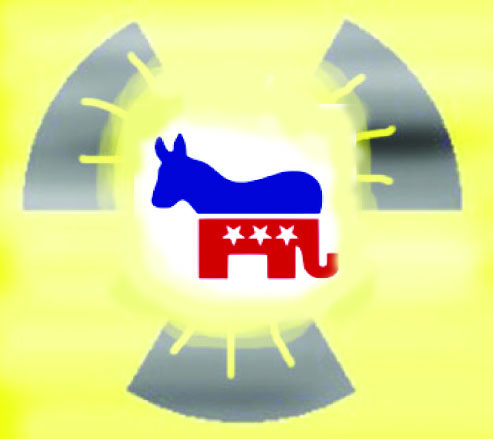
Apparently there is at least one issue BOTH parties in these divided states of America seem to wholeheartedly agree on. How perverse that it is support for the dying nuclear power industry that can only survive through massive government subsidies and a slick propaganda campaign designed to deceive the American public into believing it’s clean and safe.
Sharleen Leahey, by beyondnuclearinternational, https://beyondnuclearinternational.org/2026/07/05/flatteries-and-falsehoods/
Consider for a moment being a ‘fly on the wall’ silently viewing the goings-on among a bunch of NukeBros at a recent Holtec* Meetup. Andrew Zwicker, a New Jersey State Senator, is in attendance. Casually co-opting language from the environmental movement, a PR guy declares, “Our young people are increasingly embracing nuclear power as the key to a clean energy future!”
You have entered a room occupied by men who speak with forked tongues. No million dollar PR campaign can alter the awful truth: Nuclear power is not clean. It is not safe, not affordable, nor is it the solution to our climate crisis.
Nuclear power has shown itself over many decades to be a ticking time bomb. What the nuclear industry and its promoters do not want to discuss is the high-level radioactive waste generated by each and every nuclear reactor they plan to build. This waste has nowhere to go. It will be lethal for hundreds of thousands of years. The plain fact they cannot deny is that no permanent storage repository exists where high-level radioactive nuclear waste can be safely sequestered for thousands of generations into the future.
To State Senator Zwicker, also a Science Professor, I pose two simple questions: How can you ignore the mountain of scientific and historical evidence proving that nuclear power technology poses a grave danger to living beings and the environment? Why are you failing to “follow the science”?
Marie Curie was one of history’s most renowned scientists. Her groundbreaking discovery of radioactivity led to the invention of the first x-ray equipment for medical use. She personally saved the lives of many soldiers during WWI by enabling battlefield surgeons to locate and remove bullets and shrapnel from their wounded bodies. Tragically the radioactive elements Marie Curie utilized to save lives, eventually killed her.
The French Government buried Marie Curie with honors. They placed her remains in a lead coffin to protect the public and environment from her contaminated body. If Marie could see us now I imagine she’d be shocked that after almost one hundred years since her untimely death caused by radiation poisoning, our heedless political leaders are failing to protect us from its now well-documented deadly effects.
After the Three Mile Island nuclear reactor meltdown in 1979, the American public became alerted to the threat nuclear power posed. Armies of citizen activists mobilized to oppose the construction of new reactors. They organized grassroots alliances throughout the US to resist the power of the nuclear lobby. They educated the public through teach-ins, demonstrations and nonviolent civil disobedience.
Musicians including Bonnie Raitt, Jackson Browne and Bruce Springsteen formed Musicians United for Safe Energy (MUSE). They performed live concerts attended by thousands. Millions of Americans recognized that nuclear power poses a threat to the health of living beings now and to future generations not yet born. It had to be stopped. And it was.
Despite a massive cover-up by the industry and government agencies, after the accident at TMI no new nuclear plants were built in the U.S. until President Obama approved new funding in 2010.
Over six decades later our nuclear power nightmare is returning. It is being unleashed on us by an industry counting on the American public’s infamous historical amnesia. A so-called “nuclear renaissance” is being propelled by voracious energy consuming AI Data Centers. Public Citizen founder and long-time nuclear power critic Ralph Nader warns of dire consequences for our health, our environment and our economy if the “big fools” are allowed to push on.
After the TMI accident in 1979, two catastrophic nuclear reactor meltdowns at Chernobyl (1986) and Fukushima (2011) caused untold thousands of people (including children) to develop fatal cancers. Many villages in Ukraine, Belarus and Japan were evacuated, their residents forced to flee. Homes, businesses, farms, possessions and pets were abandoned. The extent of the devastation on the lives of people, and animals can never be fully known but authors, filmmakers and independent researchers still strive to tell their tragic stories.
In light of the dark history of nuclear power, you would think that our Governor and legislators representing the people of the State of New Jersey would decisively say “no” to this dangerous technology. You would be wrong. On April 8, 2026 Governor Mikie Sherrill signed Senate bill S3780 into law. This legislation overturned a 50-year moratorium on the construction of new nuclear power reactors in our State. The law was fast-tracked through committee hearings in both chambers of the Legislature in record time (less than a month total). Unanimous approval by both Republicans and Democrats ensued.
Though each and every one of our elected State officials solemnly swore an oath to protect their constituents, it’s plain to see that in this case party bosses, corporate lobbyists and resident pay-to-players are calling the shots. Yet I refuse to believe that objections to nuclear power by voters and grassroots activists can continue to be ignored. The people who live here, work here, raise children and grandchildren here, pay utility bills and taxes here (and the salaries of our elected officials), are the ones who will ultimately bear the risks of increased radioactivity. The struggle to protect our air, water, land and the health of our families and neighbors (including our wildlife), make it increasingly urgent that the voices of residents who oppose the funding, building and siting of new nuclear reactors here in our State be heard and heeded.
Apparently there is at least one issue BOTH parties in these divided states of America seem to wholeheartedly agree on. How perverse that it is support for the dying nuclear power industry that can only survive through massive government subsidies and a slick propaganda campaign designed to deceive the American public into believing it’s clean and safe. It’s time for taxpayers and ratepayers everywhere to demand that the officials we voted into office prioritize our health and safety and that of our environment (including our dwindling wildlife population), over the profits and agendas of the morbidly wealthy .001%!
NJ Governor Mikie Sherrill appointed a paid Holtec Lobbyist to sit on her newly created Nuclear Task Force.
This is NOT what Democracy looks like!
*Holtec claims to specialize in nuclear waste management and reactor decommissioning. They are based in Camden, NJ. If the CEO gets his way, Holtec is poised to construct NJ’s new crop of nuclear reactors known as SMRs (Small Modular Reactors). Holtec is the very same company now being sued by New York State’s Governor Hochul and Environmental groups to stop Holtec’s horrifying plan to dump over one million gallons of radioactive wastewater into the Hudson River. The contaminated water resulted from Holtec’s ongoing decommissioning of the now shuttered Indian Point Nuclear Power Plant. The notorious plant was forced to close after years of unrelenting grassroots activism and lawsuits by NY residents.
Sharleen Leahey is a peace and justice activist and writer. She can be reached at: women4justicecoalition@gmail.com
Japan begins 21st release of Fukushima nuclear-contaminated wastewater into ocean

TOKYO, July 6 (Xinhua) Zhang Kaiwei, Liang Jun)– https://en.people.cn/n3/2026/0706/c90000-20474742.html
Japan on Monday began a new round of discharge of nuclear-contaminated wastewater from the crippled Fukushima Daiichi Nuclear Power Plant into the sea, marking the 21st such release since the controversial operation began in 2023.
The discharge started at 11:41 a.m. local time. According to the plant’s operator, Tokyo Electric Power Company Holdings (TEPCO), the latest round, scheduled to continue through July 24, will release about 7,800 tonnes of wastewater into the ocean, containing approximately 1.3 trillion becquerels of radioactive tritium.
Struck by a 9-magnitude earthquake and the ensuing tsunami on March 11, 2011, the Fukushima nuclear plant suffered core meltdowns that released radiation, resulting in a level-7 nuclear accident, the highest on the International Nuclear and Radiological Event Scale.
Despite concerns and opposition from the international community, Japan unilaterally launched the discharge of nuclear-contaminated water from the Fukushima Daiichi plant into the ocean in August 2023. So far, TEPCO has completed 20 rounds of discharges, and around 157,000 tonnes of wastewater have been released into the sea.
MSP says ‘no’ to nuclear power plant as UK Government eyes Fife
4th July, By Hannah Emma Shedden, https://www.thenational.scot/news/26253439.msp-says-no-nuclear-power-plant-uk-government-eyes-fife/
FIFE has been revealed as a potential site for a nuclear power plant in a new UK Government report – but a local MSP says it “wouldn’t go down well” with communities.
The document, titled ‘Potential future nuclear power plant siting in Scotland ‘, published on Tuesday, June 30, was penned by both the Department for Energy Security and Net Zero and Great British Energy – Nuclear.
Ordered by Ed Miliband, the document’s scope was to offer “technical advice” on potential future sites.
In a section called “Land Areas of Interest”, Fife was identified as one of the areas across eastern Scotland which could be eyed up for new development by the UK Government.
The report read: “The northern shore of the Firth of Forth benefits from a strong industrial heritage, existing brownfield land, good transport connections and historic use of river water for power station cooling.
“The presence of previous energy generation sites and proximity to major industrial hubs supports technical suitability.”
SNP MSP for Cowdenbeath, David Barratt said: “The document implies quite heavily, I would say, about nuclear power at Longannet. It’s talking about a site on the north side of the Forth, in close proximity to areas of flood risk and oil and gas.
“The SNP’s position aligns, from my perspective, closely with what communities think. I don’t think if you went to any community and asked them whether they like a nuclear power station next door, I struggle to imagine any in Fife, or along the Forth shore, would say yes please.
“I don’t think that would go down well at all with communities (near Longannet) who have put up with enough environmental consequences of that site. Scotland is blessed with an abundance of renewable sources, and we don’t require nuclear.”
The new report picks out six areas in total that the government sees as ripe for the development of nuclear sites.
Torness Nuclear Power Plant in East Lothian, which is scheduled to end operations in 2030, Dounreay Nuclear site in Caithness, and Hunterston Nuclear Power Plant and the surrounding coast in North Ayrshire.
Both Dounreay and Hunterston are currently being decommissioned.
As well as the Forth, it selected two other larger areas, such as the south bank of the Forth in Stirling and the Aberdeenshire and Angus coast.
Overall, it came to the conclusion that “Scotland has land areas with high potential for new nuclear development”.
But the Scottish Government have pushed back, claiming that the report was put together “secretly” and that the push for nuclear energy “ignored the hard economic and environmental facts”.
They went on to cite financial inefficiency, longitude of developments, and a “deadly legacy of radioactive waste”.
On next steps, the document added: “Should the policy position of the Scottish Government change, specific local considerations and uncertainties notwithstanding, several significant land areas appear to offer suitable terrain, ready access to a source of cooling water, transport access by road, rail and sea as well as access to a skilled workforce, indicating a new nuclear power plant could be hosted.”
But the Scottish Government said: “Scotland does not need dangerous, extortionate nuclear white elephants built in our communities against our will. The Scottish Parliament has already passed an SNP motion demanding that power over our energy resources be fully devolved to Holyrood.”
More U.S. Troops Are Refusing to Fight—and Reviving a Tradition of Patriotic Dissent
SCHEERPOST, July 4, 2026, Joshua Scheer
As Americans mark the Fourth of July with official celebrations of military power and national triumph, another vision of patriotism is emerging from those who have worn the uniform themselves. In this interview, Army veteran and Center on Conscience & War Executive Director Mike Prysner discusses the growing number of active-duty troops seeking conscientious objector status, the moral questions confronting service members, and why veterans and military families are organizing a “Freedom Over Fascism” march in Philadelphia. At a moment when dissent within the ranks is reaching levels not seen since the post-9/11 era, Prysner argues that some of the strongest opposition to endless war is now coming from those asked to fight it.
As we reflect on the words of Ron Kovic this Fourth of July, it is worth remembering that his courage did not end when he returned home from Vietnam. Kovic inspired generations of veterans to speak out, challenge militarism, and redefine patriotism as a commitment to peace, justice, and democracy.
As America Celebrates 250 Years, More U.S. Troops Are Refusing to Fight
Over the years, ScheerPost has highlighted the voices of veterans who have challenged the assumptions of endless war and reminded us that service to one’s country does not end with military duty. Among the most important of those voices is U.S. Army veteran Mike Prysner, whose work carries forward a long tradition of principled dissent.
In this timely conversation with BreakThrough News, Prysner discusses the growing number of active-duty service members seeking conscientious objector status, the profound moral questions confronting today’s military, and why more U.S. troops are refusing to fight than at any point since the years following September 11. At a moment when official America 250 celebrations emphasize military spectacle and displays of national power, Prysner offers a powerful counternarrative—one rooted in conscience, accountability, and the belief that patriotism demands more than unquestioning obedience.
As Ron Kovic has reminded us throughout his life, the deepest form of patriotism is not blind loyalty to government but the courage to follow one’s conscience, even when doing so comes at great personal cost. Mike Prysner’s work is a powerful reminder that Kovic’s legacy lives on in a new generation of veterans and active-duty service members determined to place humanity before war and conscience before conformity.
Every Fourth of July, Americans are encouraged to celebrate freedom with fireworks, military flyovers, patriotic speeches, and declarations of national greatness. This year’s Independence Day carries even greater symbolism as the nation marks the 250th anniversary of its founding. Yet beneath the official celebrations, another story is unfolding—one that receives far less attention but may ultimately say more about the state of American democracy than any parade ever could.
Across the United States, an increasing number of active-duty service members are refusing to participate in war.
That growing resistance was the focus of a recent conversation with Mike Prysner, a U.S. Army veteran and executive director of the Center on Conscience and War. Speaking with BreakThrough News ahead of a July Fourth mobilization in Philadelphia, Prysner described what he says is an unprecedented surge in military personnel seeking conscientious objector status following the Trump administration’s expanding military operations abroad.
The trend represents something larger than individual acts of dissent. It reflects a growing moral crisis within the armed forces themselves.
That growing resistance was the focus of a recent conversation with Mike Prysner, a U.S. Army veteran and executive director of the Center on Conscience and War. Speaking with BreakThrough News ahead of a July Fourth mobilization in Philadelphia, Prysner described what he says is an unprecedented surge in military personnel seeking conscientious objector status following the Trump administration’s expanding military operations abroad.
The trend represents something larger than individual acts of dissent. It reflects a growing moral crisis within the armed forces themselves.
That growing resistance was the focus of a recent conversation with Mike Prysner, a U.S. Army veteran and executive director of the Center on Conscience and War. Speaking with BreakThrough News ahead of a July Fourth mobilization in Philadelphia, Prysner described what he says is an unprecedented surge in military personnel seeking conscientious objector status following the Trump administration’s expanding military operations abroad.
The trend represents something larger than individual acts of dissent. It reflects a growing moral crisis within the armed forces themselves.
Resistance From Inside the Military
Public opposition to war is nothing new. From Vietnam to Iraq, Americans have repeatedly questioned military interventions that stretched on for years with enormous human costs.
What is different today, according to Prysner, is where some of that opposition is emerging.
Rather than coming solely from veterans after they return home, increasing numbers of active-duty personnel are questioning their missions while still in uniform. Some are filing for conscientious objector status before completing their service. Others are reaching out for legal assistance after witnessing events they say fundamentally changed their understanding of what they were being asked to do.
Prysner says his organization experienced its largest increase in conscientious objector cases since the attacks of September 11, with the surge accelerating after the recent war with Iran. For many service members, individual incidents became moral breaking points that transformed private doubts into action.
Those stories challenge a common assumption that military personnel universally support the policies they are ordered to carry out.
Instead, they suggest that many wrestle deeply with questions of ethics, legality, and personal responsibility.
Patriotism Beyond Obedience
The timing of this movement is particularly striking.
While official America 250 events emphasize military strength, national pride, and displays of power, veterans and military families are organizing an alternative gathering in Philadelphia—the birthplace of the United States—to argue that patriotism should not be measured by unquestioning obedience to government policy.
Their message is not that America should abandon its ideals, but that it should strive to fulfill them.
Participants are calling for an end to endless wars, greater investment in communities at home, protection of civil liberties, and opposition to the growing militarization of domestic politics. Veterans, active-duty personnel, military families, and peace organizations will march together under the belief that defending democracy sometimes means challenging those who claim to speak in its name.
It is a reminder that throughout American history, some of the country’s strongest critics have also been among its most devoted citizens.
A Long Tradition of Military Dissent……………………………………..
…………………………………………………………………………….https://scheerpost.com/2026/07/04/more-u-s-troops-are-refusing-to-fight-and-reviving-a-tradition-of-patriotic-dissent/
Changes to radiation protection in the USA -could have been worse but are still bad.

Tony Webb 2 July 26
The US NRC has now released its proposed revisions to radiation protection standards
mandated by President Trump’s 2025 Directive (EO14300). It could have been worse. The
proposals do not completely abandon the established principle that there is no safe level of
exposure in favour of the contested view that low level exposures are ‘beneficial’. They do
not propose raising the existing permissible limits on exposure for workers and the public.
They do however abandon other important principles such as that all exposures should be
kept as low as reasonably achievable (ALARA) and give the nuclear industry flexible options
for a whole range of ‘operating procedures’ that can be used to control and limit exposures
– all overtly designed to ease the regulatory burden on the industry.
While repeatedly claiming that existing standards are already “conservative” these US
regulations already permit higher exposures than recommended internationally. The US 5
Rem (50 mSv ) occupational exposure limit is 2.5 times greater than the internationally
recommended limit used in most countries. Far from placing the proposals in the context of
the scientific evidence the proposals refer only to the outdated and flawed Life-span studies
of the Japanese bomb survivors who received high doses over short time periods rather
than studies of populations receiving low doses over longer time periods. In the whole 180-
page document outlining the proposed new regs I could not find a single mention of the
INWORKS studies of European and US nuclear plant workers that show the current
international standards underestimate the current internationally accepted level of
radiation-induced cancer risks used to set occupational exposure limits.
There is also no
mention of the increased risks for cardio-vascular diseases and dementia faced by such
workers and no mention of the studies of populations living close to nuclear plants that
show higher cancer rates – increasing the closer people live to these facilities. Buried in the
detail where devils usually hide there are also proposals that would weaken the so called
‘planned special exposures’ limits – the carve out that is used in the USA and elsewhere to
permit hiring of casual workers as ‘radiation sponges’ for the radiation-dirty jobs in annual
shutdown maintenance and clean-up operations for nuclear power plants. A closer reading
will probably reveal a more concerns but overall, the NRC proposals represent a significant
weakening of US standards that need to be opposed both within the USA and globally lest
they lead to weakening of standards or operating procedures for protection in other
countries. Other countries have reason to worry that joint operations with the USA (like the
Australian AUKUS nuclear submarine deal) and shared technologies that use these weaker
NRC standards as the basis for their design will be used as a backdoor for relaxation of
protection standards worldwide. US groups and others interested have 45 days to register
objections with the NRC to this latest Trump Dictated obscenity. Comments must be
submitted electronically using https://www.regulations.gov
On the positive side the legitimate concerns raised by these US proposals provide unions,
public health and environment groups in all countries with a ‘calling card’ to raise the demand with our national protection agencies for improved regulations for occupational
and public exposures in line with the available scientific evidence that shows current
standards need to be significantly tightened.
US moves to eliminate longtime radiation safety principle for nuclear power
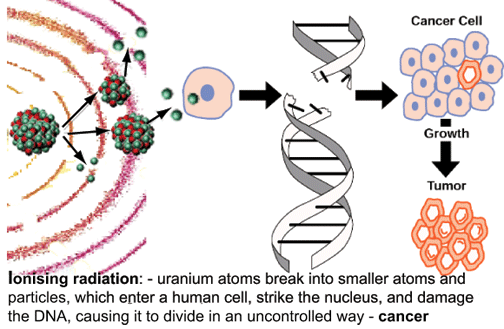
“the change could ultimately make it so that currently low doses of radiation that workers and the public are exposed to “could increase really all the way up to regulatory limits without any sanction from the NRC.”
by Rachel Frazin – 07/02/26, https://thehill.com/policy/energy-environment/5951671-nuclear-power-radiation-exposure-nrc/
The federal government is proposing to overhaul radiation safety regulations for nuclear power, including by eliminating a long-term principle for nuclear safety.
The Nuclear Regulatory Commission (NRC) this week proposed to get rid of the requirement for nuclear plants to ensure that radiation exposure is “as low as is reasonably achievable.”
Proponents of the change say just using radiation dose limits is less subjective than going by the “as low as is reasonably achievable” principle — and that it led to overly conservative protections that stifled the nuclear industry.
Supporters of the current language, however, say that having the “as low as reasonably achievable” principle, also known as ALARA, in place ensures that nuclear plants take all measures possible to reduce exposure for workers and the general public.
NRC Chair Ho Nieh said in a statement that the agency is “raising the standard for regulatory clarity, not lowering the standard for safety.”
“Our radiation dose limits remain unchanged — what we’re eliminating is unnecessary ambiguity,” he said.
But critics say that eliminating ALARA means getting rid of a key incentive for energy companies to keep radiation levels as low as possible — and could mean more cancer cases.
“Facility owners felt like … ALARA was forcing them to go well below the allowable radiation limits and spend a lot of money to do that,” said Edwin Lyman, director of nuclear power safety at the Union of Concerned Scientists.
Lyman warned that the change could ultimately make it so that currently low doses of radiation that workers and the public are exposed to “could increase really all the way up to regulatory limits without any sanction from the NRC.”
He said this could include by having employees work longer shifts and therefore getting more radiation exposure.
Overall, he said, “this is opening the door for sloppier practices” and “worse management.”
In addition to axing ALARA, the NRC is proposing other changes, including loosening emissions limits for radioactive material.
It said that under one of the rules it is proposing to change, current regulations would allow for an estimated four excess cases of fatal cancer for every 10,000 people exposed to the maximum allowable radiation for 70 years. It said that the change it is making would allow this number to go up to nine cases for every 10,000 people.
It also proposed increasing how much radiation caregivers for people who receive radiation treatment can be exposed to.
The agency said that all of the changes it is proposing would save the industry about $9.53 million per year.
The moves come as the Trump administration has been pushing for the U.S. to build more nuclear power. Last year, an executive order from President Trump set the goal of quadrupling the nation’s nuclear power capacity by 2050.
It also directed the NRC to reconsider its use of ALARA and to speed up approvals for nuclear reactor licenses.
While the NRC is technically an independent agency, it is made up of three Republicans and two Democrats.
Last year, the White House fired a Democrat from the commission, which at the time, had a 3-2 Democratic majority. On Monday, the Supreme Court ruled the White House can conduct such firings.
Lithuania to lift ban on nukes, president says
The country’s constitution bans nuclear weapons and foreign military bases, but its parliamentary leaders have agreed that this provision is now “outdated.”
July 2, 2026 , By Jonas Loesel, https://www.politico.eu/article/lithuanias-leaders-want-lift-ban-nukes-president-says/
Lithuanian President Gitanas Nausėda said Thursday that there was “practically unanimous” support among party leaders for ending the country’s ban on nuclear weapons.
“Opinions were practically unanimous. Almost all parliamentary faction leaders expressed the view that Article 137 has become obsolete and should not merely be amended but removed,” Nausėda told reporters, referring to the section of Lithuania’s constitution that bans nuclear weapons and foreign military bases.
Speaking after meeting with parliamentary faction leaders, Nausėda indicated that the legislature would soon look to amend the legislation. Vilnius, a staunch ally of Ukraine, has previously indicated interest in hosting U.S. nuclear weapons as it looks for deterrents against neighboring Russia.
Lithuania joined NATO in 2004, and Nausėda said the country’s parliamentary leaders did not want to be in a “gray zone” within the military alliance as one of the only countries that continues to ban nuclear weapons. Finland repealed a similar ban last June.
“Today, 35 years later, the situation is different. As NATO members, we have the right, the duty, and the desire to be full and equal members of NATO. The primary means of deterrence is nuclear deterrence,” said Juozas Olekas, the speaker of Lithuania’s parliament.
The Financial Times previously reported that the U.S. had discussed deploying nuclear warheads to countries on NATO’s eastern flank. U.S. nuclear weapons are currently stored on military bases in the U.K., Germany, Italy, Turkey, Belgium and the Netherlands.
Nuclear Waste Transportation and Burial Plan Could be “Pre-Approved
3 July 26, https://nuclearwastewatch.weebly.com/
NUCLEAR WASTE ACTION ALERT! On June 24th three federal Ministers lined up to announce that it had referred three projects to the Major Project Office to consider the potential “listing” of the NWMO DGR under the Build Canada Act (aka Bill C-5). That’s a bit cryptic, but what it means is that these projects – if listed – would in essence be pre-approved. As the Minsters’ statement put it, this would mean “shifting Canada’s regulatory focus from ‘whether’ … to ‘how.”
Shockingly, one of these projects is the extremely controversial plan to transport, process, bury and abandon all of Canada’s high-level nuclear waste at the Revell site in northwestern Ontario. The project is the subject of broad opposition and is in the early stage of an impact assessment. It’s unprecedented – there are no other operating deep geological repositories for nuclear fuel waste anywhere in the world – and the plan is still largely conceptual, with many parts of the operation not yet designed. If ever there was a project that needs a rigorous review it is this one. The plan includes 2-3 trucks per day hauling the waste for thousands of kilometres and radioactive waste that will remain hazardous for one million years. Does this sound like a project that should be handed over to the rubber-stamp department?
The federal government is not inviting public comment. Take one minute to send your message today. Go to tinyurl.com/MessageMPs.
The Nuclear Fist: Five Federal Initiatives Pushing and Promoting Nuclear Power
There are currently five federal nuclear related initiatives / announcements: “Getting Major Projects Built in Canada – Discussion Paper on Proposed Legislative, Regulatory, and Policy Reforms” announced May 8th with the deadline now extended to July 22; the electricity strategy “Powering Canada Strong: A National Strategy for an Electrified Canadian Economy” which was announced May 14 with comment invited but no deadline; the Standing Committee on Natural Resources and the Environment electrification study with the deadline – and the study – now extended to mid-September; the Nuclear Energy Strategy for Canada announced June 22 with no comment invited and so no deadline for comment, and the June 24 announcement of the potential “listing” of the NWMO DGR under the Build Canada Act (aka Bill C-5), also no public comment period.
The federal government has unleashed a “discussion paper” outlining the next rush to dismantle what remains of environmental assessment. Top target: independent assessment of nuclear projects, which the paper proposes would be handed over to the Canadian Nuclear Safety Commission. The deadline for comment has been extended to July 22. It’s expected that new legislation will follow quickly. Read more HERE. |
Gaza: How We’re Learning to see the AI-Driven Genocide
“Indeed, this is the first genocide in history where artificial intelligence has been deployed as a primary tool for slaughter and devastation. Furthermore, this genocide is backed by a dedicated propaganda apparatus designed to instantly rationalize every atrocity.“
June 28, 2026, https://scheerpost.com/2026/06/28/gaza-how-were-learning-to-see-the-ai-driven-genocide/
People can be consciously aware of atrocities without experiencing the moral outrage those horrors warrant. This emotional detachment is particularly pronounced when atrocities target “those who are different,” occur in seemingly “remote” lands, or repeat so frequently that they dissolve into a familiar, predictable monotony. Psychological frameworks explain this affective insularity through cognitive biases like the “just-world fallacy,” which blocks empathy in otherwise deserving cases to protect one’s own psychological comfort. Alternatively, it manifests as victim-blaming to rationalize aligning with the oppressor, or as compliance with propaganda narratives designed to dehumanize victims and render them unworthy of concern.
The rendering of atrocities into something ordinary through repetitive exposure systematically erodes the human capacity for a fittingly shocked response. This was vividly demonstrated as Israeli forces systematically targeted hospitals across the Gaza Strip one after another, until such strikes became routine footnotes in daily news cycles. A similar desensitization occurred regarding the targeted attacks on United Nations facilities. Once an initial war crime is permitted to pass, its predictable repetition fosters a form of emotional conditioning among the public—even alongside the abstract knowledge that a grave violation is occurring. The global public has grown accustomed to watching high-rise residential blocks collapse in seconds under Israeli bombardment. Consequently, this recurring crime no longer registers as an anomaly, so long as it remains confined to Gaza.
This shift can be measured by comparing the fierce global condemnation that followed the May 15, 2021, destruction of Gaza City’s 11-story al-Jalaa Tower with the relative apathy with which the systematic destruction of Gaza’s remaining residential high-rises through a series of Israeli airstrikes was met in September 2025. Breaking free from this paralyzing sense of desensitisation is a profound challenge if our world is to avoid acclimatizing to atrocities in the twenty-first century.
Another critical dilemma is that our perception of the gravity of such brutality can be disrupted when they are executed through modern, highly sophisticated tools.
“Human horror is easily triggered by the primal image of a vicious killer in ragged clothes holding a blood-dripping blade over a helpless victim. Yet, that killer becomes entirely invisible when stationed in a distant control room, calmly orchestrating mass slaughter against innocent civilians in Gaza by pressing glowing buttons while sipping American coffee in front of a screen—a method inherently more efficient than a primitive blade.“
This dilemma deepens when the act of killing is fully outsourced to technology, such as unmanned drones or autonomous AI-driven targeting systems, both of which the Israeli occupation military relied upon to perpetrate genocidal atrocities in Gaza. While this modern machinery is faster, deadlier, and vastly more devastating than primitive butchery, it acts as a powerful buffer, inducing a profound emotional numbness toward the horrors being inflicted.
Modern brutality often wears friendly masks that shield the observer from immediate shock or revulsion. It does not slit children’s throats with knives; instead, it obliterates their bodies entirely. At times, children literally vaporize under the impact of advanced, multi-ton munitions dropped onto impoverished refugee camps. The viewer is ultimately presented with nothing but a massive crater, concealing the gruesome details of mass slaughter and vast destruction. Despite this, numerous Israeli officers and soldiers have refused to suppress their appetite for hunting humans, abusing captives, and indulging in primal cruelties—frequently filming their actions to boast about them on social media.
It is vital to recognize how this genocide has operated on a scale that completely caught contemporary generations off guard. Many believed that such staggering atrocities belonged strictly to a black-and-white past, assuming that fascism and war crimes would only reappear alongside the vintage, recognizable imagery of defunct regimes. The human psyche was unprepared to comprehend that a twenty-first-century genocide could be so highly organized, technologically advanced, and meticulously targeted.
“Indeed, this is the first genocide in history where artificial intelligence has been deployed as a primary tool for slaughter and devastation. Furthermore, this genocide is backed by a dedicated propaganda apparatus designed to instantly rationalize every atrocity.“
It deploys tightly woven narratives delivered by leaders, spokespersons, and commentators skilled in rhetorical evasion and body language, all working in tandem to divert global attention away from the killing fields of the Gaza Strip.
Awakening the human conscience to the reality of the horrific genocide perpetrated in the Gaza Strip for at least two years demands an unrelenting effort to expose its chapters, re-open its cases, and launch intensive, coordinated initiatives. These efforts must elevate field testimonies and documented facts from independent international reports into the active domain of human awareness. It is only fair to acknowledge that significant journalistic, creative, and grassroots efforts have been made worldwide in this regard, but the sheer duration of this genocide demands increasingly creative and unyielding approaches.
Consider the profound impact of reimagining the scenes of genocide, ethnic cleansing, total destruction, and manufactured starvation through diverse literary, artistic, and cinematic works. Such creative interventions can produce world-class, brilliant pieces, even if Hollywood and mainstream institutions maintain their traditional indifference toward Palestine. Imagine visual works depicting this modern genocide in stark black-and-white, a stylistic choice that emotionally and intellectually links Gaza to past mass killings and crimes against humanity already solidified in the global conscience. This framing positions Gaza’s horrors as a logical continuation of historical brutality, which they undeniably are. This approach has already been successfully championed by highly conscious grassroots movements. For instance, in the Basque Region of Spain, highly artistic public demonstrations have repeatedly linked the atrocities in Gaza to the horrors of Guernica, famously immortalized by Pablo Picasso in 1937. Such initiatives are indispensable to confronting and exposing the deep-seated tendency of genocide denial pushed by prominent global leaders and elites.
“Humanizing the victims is an indispensable entry point; they must be given recognizable faces, familiar names, and stories to be told. This begins by invoking individuals like the child Hind Rajab, the academic and poet Refaat Alareer, or the abducted physician Hussam Abu Safiye, among countl“
We must unearth the latent human symbolism embedded within this landscape of tragedy and profound moral fortitude. We also need the symbolism of the place itself. The crowded sites of destruction and resilience throughout Gaza must move the human conscience through uncovering of stories currently buried beneath the rubble.”
Presenting these faces, names, and details with the dignity they deserve is capable of stirring a global sense of shared humanity and moral alignment with those targeted by this genocide—an atrocity the world has watched live on mobile screens for at least two full years. We must collectively internalize that the displaced, starving child is everyone’s child. The grandmother whose frail body was crushed beneath collapsing walls, left trapped until her final breath, is everyone’s grandmother. The same holds true for the mothers, the sick, and the disabled. It is no exaggeration to recognize that the victims are us. An assault on them is an assault on the very fabric of human life and dignity. The dismantling of international law and universal values means that every one of us is directly affected by these horrific violations, regardless of how they are spun by sophisticated propaganda or sustained through international complicity. Transforming an overwhelming statistical body of victims into deeply personal stories and recognizable symbols is an urgent necessity if we are to escape the trap of statistical reductionism, which reduces human beings to mere numbers devoid of feeling.
Awakening this human consciousness is the ultimate key to compelling individuals worldwide to honour their ethical commitments, translating empty slogans into concrete action. It is the catalyst needed to pressure the enablers of genocide and challenge those political discourses that insult public intelligence and moral decency. When these deeper human impulses are awakened, people will naturally discover their roles in confronting this pervasive injustice and aggression. This emotional awakening will pave the way for sustained mobilization, converting raw sentiment into tangible pressure, accountability, and justice—ensuring that the horrific genocide against the Palestinian people in Gaza remains at the centre of global consciousness for generations to come.
US looking at easing restrictions on radiation exposure at the nation’s nuclear power plants
“This will only increase the disease burden at a time when cancer rates are already rising among younger people,”
The proposal would eliminate a standard to keep radiation exposure ‘as low as reasonably achievable’
The Independent, Rachel Dobkin in New YorkThursday 02 July 2026
Federal regulators are looking at easing restrictions on radiation exposure at the nation’s nuclear power plants.
The Nuclear Regulatory Commission, an independent agency aimed at ensuring the safe use of radioactive materials, proposed Wednesday eliminating a standard to keep radiation exposure “as low as is reasonably achievable,” also called ALARA.
ALARA is based on the linear no-threshold model, which presumes that any dose of radiation carries a proportional risk of harm.
The commission said in a press release that the proposal would introduce changes, including a graded approach to radiation dose management “based on risk and operational circumstances” and expanding options for managing workplace radiation exposure.
The Independent has reached out to the Nuclear Regulatory Commission for comment.
The changes could save the nuclear industry about $9.53 million a year, according to documents from the Nuclear Regulatory Commission obtained by The Hill.
Edwin Lyman, a physicist and nuclear safety advocate at the Union of Concerned Scientists, told Reuters, “In eliminating its use of the ALARA principle, the agency’s sweeping new proposed rule would allow nuclear facility workers and the general public to be exposed to higher levels of cancer-causing radiation just to save the nuclear industry money.”
“This will only increase the disease burden at a time when cancer rates are already rising among younger people,” Lyman said.
The number of new cancer cases increased among people under age 50 from 2010 through 2019, according to researchers at the National Institutes of Health.
The Nuclear Regulatory Commission noted in documents that the proposal would address part of President Donald Trump’s executive order to reform the agency. https://www.the-independent.com/news/world/americas/us-politics/nuclear-plants-radiation-exposure-rules-b3007995.html
US nuclear power regulator proposes changing rule protecting people from radiation
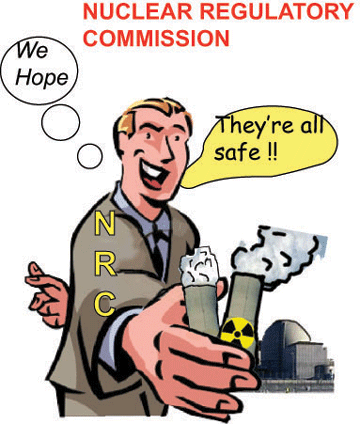
in eliminating its use of the As Low as Reasonably Achievable (ALARA) principle, the agency’s sweeping new proposed rule would allow nuclear facility workers and the general public to be exposed to higher levels of cancer-causing radiation just to save the nuclear industry money
By Timothy Gardner, July 2, 2026, https://www.reuters.com/legal/government/us-nuclear-power-regulator-proposes-changing-rule-protecting-people-radiation-2026-07-01/
Summary
- Proposal would eliminate the ALARA radiation protection standard and set objective dose limits
- NRC to take public comments on radiation rule for 45 days
- NRC Chairman Ho Nieh said change could help speed development of new reactors
WASHINGTON, July 1 (Reuters) – The U.S. nuclear power regulator on Wednesday proposed changes to a rule protecting people from radiation, the latest proposal pushed by the Trump administration to change or soften rules to speed development and cut costs for new atomic reactors.
President Donald Trump signed executive orders in 2025 seeking to speed up permitting of reactors and to overhaul the Nuclear Regulatory Commission and directing the Energy and Defense departments to work together to build nuclear plants on federal lands. Trump wants to quadruple U.S. nuclear power capacity by 2050 to meet power demands that are rising due to data centers, electric vehicles and crypto-currencies.
The Nuclear Regulatory Commission proposal eliminates a radiation protection standard called As Low as Reasonably Achievable, or ALARA, with objective dose limits for radiation. “This rulemaking is raising the bar on clarity in our regulations,” Ho Nieh, the NRC chairman, told reporters. “It is not lowering the bar on our safety standards.”
The industry has long argued that ALARA is tied to a model known as Linear No-Threshold that holds that any dose of radiation, no matter how small, carries cancer risks and that complying with ALARA is costly, time consuming, and full of uncertainties.
The proposed changes include adopting a graded approach to radiation dose management based on risk and operational circumstances. It also allows nuclear power plant operators greater flexibility to use “modern methods for evaluating radiation doses to workers and the public.”
Nieh said he does not anticipate that current nuclear reactors will make major changes due to the changed rule if finalized. But he said it could help speed development of new reactors.
“Now they have a very clear picture of what the requirements for radiation protection are going to look like, that will inform how they build and design their reactor, in terms of the shielding and the materials that they’re using,” Nieh told reporters.
Edwin Lyman, a physicist and nuclear safety advocate at the Union of Concerned Scientists, said the NRC has correctly reaffirmed the scientific consensus that there is no safe level of radiation exposure and that the cancer risk is proportional to the dose.
“However, in eliminating its use of the ALARA principle, the agency’s sweeping new proposed rule would allow nuclear facility workers and the general public to be exposed to higher levels of cancer-causing radiation just to save the nuclear industry money.”Nieh said he does not anticipate that current nuclear reactors will make major changes due to the changed rule if finalized. But he said it could help speed development of new reactors.
“Now they have a very clear picture of what the requirements for radiation protection are going to look like, that will inform how they build and design their reactor, in terms of the shielding and the materials that they’re using,” Nieh told reporters.
Edwin Lyman, a physicist and nuclear safety advocate at the Union of Concerned Scientists, said the NRC has correctly reaffirmed the scientific consensus that there is no safe level of radiation exposure and that the cancer risk is proportional to the dose.
“However, in eliminating its use of the ALARA principle, the agency’s sweeping new proposed rule would allow nuclear facility workers and the general public to be exposed to higher levels of cancer-causing radiation just to save the nuclear industry money.”
“This will only increase the disease burden at a time when cancer rates are already rising among younger people,” Lyman said.
Last month, the NRC proposed rule changes including changing a rule on security standards at nuclear power plants that UCS said would “dramatically weaken measures that protect their facilities from terrorist attacks.” Another rule proposed on Wednesday would make sweeping changes to reactor licensing including streamlining the construction of new reactors.
The NRC will take public comments on the radiation rule for 45 days before the rule is finalized.
New nuclear plants a difficult option for Switzerland

04/07/2026 By Le News
Switzerland does not need new nuclear power stations to complete the energy transition, according to a report by 19 energy specialists from ETH Zurich and the Paul Scherrer Institute (PSI), the country’s leading nuclear-research centre. They conclude that a system based on hydropower and solar energy, supplemented by wind power and electricity storage, can provide a secure supply without building new reactors.
…………….. For new nuclear plants to become commercially viable, several conditions would need to be met. The technology would require substantial government support, as other low-carbon energy sources already receive. Investors would also need state guarantees to cover the financial risks. Above all, construction costs would have to fall well below those of recently completed projects in France and Finland, both of which suffered major delays and cost overruns.
The report reinforces conclusions reached in two other recent assessments: a review by the Swiss Academies of Sciences published last year and an analysis by the energy company Axpo earlier this year. All three conclude that new nuclear power is technically possible but highly uncertain. The main obstacles are economic rather than technological. Any serious accident abroad, similar to the Fukushima disaster, could also rapidly alter the political climate.
The studies also agree that Switzerland has credible alternatives. Expanding solar generation is generally regarded as quicker, cheaper and politically easier than building new reactors. Continued investment in battery and other storage technologies could increasingly offset the intermittent nature of renewable electricity generation.
The debate is therefore less about whether nuclear power is technically feasible than whether it represents the most practical route to decarbonisation. The Federal Council and a majority in Parliament have recently backed lifting the ban on new nuclear power stations. Because the change would almost certainly face a referendum, the final decision is likely to rest with Swiss voters.
The three reports are also sceptical about the prospects for so-called Generation IV reactors. Advocates argue that these designs will be safer, cheaper and produce less radioactive waste. But for now those claims remain largely theoretical. Axpo, together with most of the scientists involved in the latest studies, concludes that such reactors are unlikely to make a meaningful contribution to Switzerland’s electricity supply before 2050. https://lenews.ch/2026/07/04/new-nuclear-plants-a-difficult-option-for-switzerland/
The Gaza Ethnic Cleansing Agenda Continues To Roll Forward
Caitlin Johnstone, Jul 03, 2026, https://www.caitlinjohnst.one/p/the-gaza-ethnic-cleansing-agenda?utm_source=post-email-title&publication_id=82124&post_id=204779474&utm_campaign=email-post-title&isFreemail=true&r=1ise1&triedRedirect=true&utm_medium=email
As both US and Israeli leaders openly contemplate attacking Iran again, it’s easy for the world to miss the fact that the genocidal alliance has also dramatically reinvigorated its ethnic cleansing agendas in Gaza.
The Adelson-owned pro-Netanyahu outlet Israel Hayom reports that in the coming weeks the so-called “Board of Peace” overseeing life in the Gaza Strip is planning to relocate Palestinians to “humanitarian shelters” that are not under Hamas control.
Israel Hayom reports that an area near the destroyed city of Rafah is the first location where such camps will be set up. This is noteworthy because one year ago defense minister Israel Katz stated that there was a plan to construct a “humanitarian city” on the ruins of Rafah, where “the emigration plan” for the Palestinians would then be implemented, adding that Benjamin Netanyahu was working on finding foreign nations to accept the population of Gaza.
It’s hard to ignore the similarities. Both accounts even state that the plan is to police the displaced Palestinians using an international force. The 2026 Israel Hayom report states that the camps will be overseen by “multinational forces under the Board of Peace’s management”, and Israel Katz stated in 2025 that Israel is seeking international partners to manage the zone.
So to be clear, in July of last year Israeli officials were publicly stating that they were going to build a “humanitarian city” on the ruins of Rafah to house the Palestinians under international supervision while working to relocate them from their homeland to other countries, and in July of this year we learn that we will soon see Palestinians in Gaza relocated to “humanitarian shelters” near Rafah overseen by international forces.
So it sounds like the same plan. If it is, then it’s a plan for ethnic cleansing.
Israel has already expanded its control over Gaza from 53 percent to 70 percent of the Strip, concentrating the survivors of the genocide into a mere 30 percent of the Palestinian territory. And now, according to Israeli Energy Minister Eli Cohen, the plan is to expand control to 100 percent.
Israel National News quotes Cohen as saying during a recent radio interview that “our control of the territory will only continue to expand until we reach 100%,” adding, “two months ago we controlled 53% of the Strip, about a month ago around 60%, and today we’re approaching 70% of the Strip’s area.”
This comes amid other reports we discussed recently which strongly indicate that the Trumpanyahu administration is renewing its push to remove all Palestinians from the Gaza Strip. The other day we learned from the Israeli press that Israel’s national security agencies had been instructed to rebrand the ethnic cleansing plan as a “plan for free movement” in order to mitigate international resistance to the agenda. A few days before that, we learned that Israel’s new national security chief had convened a meeting with officials from the IDF and Shin Bet to discuss the plan to displace the Palestinians of Gaza to other countries.
Again, Israel’s mass atrocities in Gaza have always been about ethnic cleansing from the very beginning. Within days of Israel’s assault on Gaza in October 2023, Israel’s Intelligence Ministry was circulating a plan for the entire population of Gaza to be moved to the Sinai Peninsula in Egypt, and an Israeli think tank had drawn up a strategy for the “relocation and final settlement of the entire Gaza population.”
The goal has always been to remove the Palestinians from Gaza so their territory can be taken from them. This was never anything other than a blatant Israeli land grab. They’ve been framing it as a “war” so that after they seize and colonize Gaza they can say “the Arabs fought a war and lost, they deserved to lose territory” like they always do, but it was never actually a war.
Calling the Gaza genocide a “war” is like seeing a man beating up a toddler and calling it a “fight”. It’s one of the world’s most sophisticated military forces raining explosives on an area packed full of children with the backing of the most powerful empire that has ever existed, opposed only by a few thousand guys running around in sandals with homemade rockets and ancient Kalashnikovs.
That’s not a war. It’s an ethnic cleansing operation. That’s all this has ever been.
The Golden Rule and Crew are ready – Summer 2026 voyage

The VFP Golden Rule Committee plans to bring the Golden Rule to 12 ports-of-call this summer. However, weather on the Pacific coast has been wild this season. After arriving in Fort Bragg, we are waiting for a huge, strong storm to let up a bit before proceeding south.
An optimistic schedule is set out below – note that the order of stops and dates for San Diego, Ensenada, and Oceanside all depend on when the storm breaks. And the rest of the schedule may also shift and a stop or two canceled – stay tuned on our website and eNews, which will be posted as soon as we successfully leave Fort Bragg.
Please see vfpgoldenruleproject.org for the latest schedule.
Locate the Golden Rule with our Tracker.
See live videos from the boat on Facebook: GoldenRulePeaceBoat
Follow us on Instagram goldenrulepeaceboat
We look forward to presentations, peace picnics, concerts, film screenings, city council resolutions, press conferences, Peace Flotillas, “open boat” tours, and taking people sailing!
If you live in or near any of these coastal cities, we encourage you to help organize events and publicity. If you will be visiting the California coast this summer, please plan to join us.
1 This Month


PLEASE OPPOSE HR 8255 AND S.3639 – bills would accelerate satellite deployment, with no environmental review or safeguards – https://ncstd5li.quorum.us/campaign/169331/
To see nuclear-related stories in greater depth and intensity – go to https://nuclearinformation.wordpress.com
-
Archives
- September 2026 (194)
- August 2026 (330)
- July 2026 (355)
- June 2026 (287)
- May 2026 (306)
- April 2026 (356)
- March 2026 (251)
- February 2026 (267)
- January 2026 (308)
- December 2025 (358)
- November 2025 (359)
- October 2025 (375)
-
Categories
- 1
- 1 NUCLEAR ISSUES
- business and costs
- climate change
- culture and arts
- ENERGY
- environment
- health
- history
- indigenous issues
- Legal
- marketing of nuclear
- media
- opposition to nuclear
- PERSONAL STORIES
- politics
- politics international
- Religion and ethics
- safety
- secrets,lies and civil liberties
- spinbuster
- technology
- Uranium
- wastes
- weapons and war
- Women
- 2 WORLD
- ACTION
- AFRICA
- Atrocities
- AUSTRALIA
- Christina's notes
- Christina's themes
- culture and arts
- Events
- Fuk 2022
- Fuk 2023
- Fukushima 2017
- Fukushima 2018
- fukushima 2019
- Fukushima 2020
- Fukushima 2021
- general
- global warming
- Humour (God we need it)
- Nuclear
- RARE EARTHS
- Reference
- resources – print
- Resources -audiovicual
- Weekly Newsletter
- World
- World Nuclear
- YouTube
-
RSS
Entries RSS
Comments RSS
 nuclear-news