Climate change: six positive news stories you probably missed this year.
The Conversation 28th Dec 2018
Renewable energy is being set up faster than ever; Chernobyl fights against
climate change; A new mobilising force for climate action; Global economic
growth may have peaked; Glimmer of hope in emissions reduction; Local
community energy is doing well.
https://theconversation.com/climate-change-six-positive-news-stories-you-probably-missed-this-year-108785
Solar power for 97 Spanish grand hotels

 Observer 30th Dec 2018 Spain’s state-owned chain of paradores, the grand hotels often housed in ancient castles and monasteries, has announced that all 97 of its establishments will use only electricity from renewable sources from the start of the new year.
The 90-year-old chain said the decision to switch to green electricity had been made for both environmental and symbolic
reasons. “Paradores is a company that supports sustainable tourism in every sense of the word,” said its chair, Óscar López Águeda. “What’s more, as a public company, we also want to set an example when it comes to investments that encourage energy saving and responsible consumption.”
https://www.theguardian.com/world/2018/dec/30/spain-paradores-solar-power-pledge
The South Carolina Office of Regulatory Staff wants regulators to declare SCE&G lied about nuclear project
 SC utility watchdog wants regulators to declare SCE&G lied about nuclear project, The State, BY TOM BARTON AND AVERY G. WILKS, DECEMBER 28, 2018, COLUMBIA, S.C. South Carolina’s utility watchdog has asked the S.C. Public Service Commission reconsider its decision not to rule that SCE&G intentionally misled regulators years ago about its doomed nuclear plant construction project. The S.C. Office of Regulatory Staff filed a petition late Friday asking the PSC for an explicit finding that SCE&G imprudently moved ahead with construction of the V.C. Summer Nuclear Station expansion in March 2015 despite warnings about the project’s cost and flaws. Earlier this month, the PSC issued a ruling allowing Virginia-based Dominion Energy to buy SCE&G’s parent company, SCANA, and slash SCE&G’s nuclear-bloated electric rates by about $22 a month. But after some internal debate, the PSC stopped short of calling out SCE&G for withholding important information to win rate-hike cases and keep the foundering project alive. Regulatory Staff wrote Friday “it is beyond dispute that SCE&G failed to disclose any iteration of the Bechtel Report to ORS or the Commission.” The agency said the “Commission cannot side-step the issue of prudence or imprudence” but instead must “make a clear finding” that SCE&G could have acted to anticipate, avoid or minimize nuclear construction costs. Regulatory Staff Director Nanette Edwards said such a finding is needed “to restore public trust and hold the utility accountable.” A SCANA spokesman said the utility would need to review the petition and would not comment Friday night. “The commission’s thoughtful, well-reasoned order speaks for itself,” Dominion Energy spokesman Ryan Frazier said. Ratepayers have paid more than $2 billion in higher power bills for the unfinished reactors in Fairfield County. And SCE&G’s roughly 730,000 customers will pay another $2.3 billion for the failed project over the next 20 years under the approved Dominion deal. Regulatory Staff also want the PSC to clarify that Dominion must track and pass down to customers all of its savings from the recent federal tax cuts. It also is pushing the PSC to lower slightly how much profit Dominion can earn while paying down the nuclear debt, and return close to $400 million previously collected from customers for costs that are now disallowed. Regulatory Staff wrote that it wants the PSC to impose conditions requiring a review prior to any possible expansion by Dominion’s of the Atlantic Coast Pipeline into South Carolina. ……… The PSC has 20 days to grant or refuse Regulatory Staff’s request. https://www.thestate.com/news/politics-government/article223663510.html |
Scientists support feasibility of 100%renewable-electricity systems, refute the nuclear lobby’s “Burden of Proof” paper

Christina’s note: “Burden of Proof”comes from a very small, but very vocal, Australian pro nuclear shill.
 Response to ‘Burden of proof: A comprehensive review of
 the feasibility of 100% renewable-electricity systems’ Science Direct Volume 92, September 2018, Pages 834-847 lT.W.BrownabT.Bischof-NiemzcK.BlokdC.BreyereH.LundfB.V.Mathieseng https://doi.org/10.1016/j.rser.2018.04.113
Highlights
- •We respond to a recent article that is critical of the feasibility of 100% renewable-electricity systems.
- •Based on a literature review we show that none of the issues raised in the article are critical for feasibility or viability.
- •Each issue can be addressed at low economic cost, while not affecting the main conclusions of the reviewed studies.
- •We highlight methodological problems with the choice and evaluation of the feasibility criteria.
- •We provide further evidence for the feasibility and viability of renewables-based systems.
-
Abstract
A recent article ‘Burden of proof: A comprehensive review of the feasibility of 100% renewable-electricity systems’ claims that many studies of 100% renewable electricity systems do not demonstrate sufficient technical feasibility, according to the criteria of the article’s authors (henceforth ‘the authors’). Here we analyse the authors’ methodology and find it problematic. The feasibility criteria chosen by the authors are important, but are also easily addressed at low economic cost, while not affecting the main conclusions of the reviewed studies and certainly not affecting their technical feasibility. A more thorough review reveals that all of the issues have already been addressed in the engineering and modelling literature. Nuclear power, which the authors have evaluated positively elsewhere, faces other, genuine feasibility problems, such as the finiteness of uranium resources and a reliance on unproven technologies in the medium- to long-term. Energy systems based on renewables, on the other hand, are not only feasible, but already economically viable and decreasing in cost every year…………..
-
5. Conclusions
In ‘Burden of proof: A comprehensive review of the feasibility of 100% renewable-electricity systems’ [73] the authors called into question the feasibility of highly renewable scenarios. To assess a selection of relevant studies, they chose feasibility criteria that are important, but not critical for either the feasibility or viability of the studies. We have shown here that all the issues can be addressed at low economic cost. Worst-case, conservative technology choices (such as dispatchable capacity for the peak load, grid expansion and synchronous compensators for ancillary services) are not only technically feasible, but also have costs which are a magnitude smaller than the total system costs. More cost-effective solutions that use variable renewable generators intelligently are also available. The viability of these solutions justifies the focus of many studies on reducing the main costs of bulk energy generation.
As a result, we conclude that the 100% renewable energy scenarios proposed in the literature are not just feasible, but also viable. As we demonstrated in Section 4.4, 100% renewable systems that meet the energy needs of all citizens at all times are cost-competitive with fossil-fuel-based systems, even before externalities such as global warming, water usage and environmental pollution are taken into account.
The authors claim that a 100% renewable world will require a ‘re-invention’ of the power system; we have shown here that this claim is exaggerated: only a directed evolution of the current system is required to guarantee affordability, reliability and sustainability. https://www.sciencedirect.com/science/article/pii/S1364032118303307
Regulators File Complaint Against Holtec about its nuclear waste casks
Regulators File Complaint Against Maker Of Nuclear Fuel Cask https://www.wamc.org/post/regulators-file-complaint-against-maker-nuclear-fuel-cask By PAT BRADLEY • DEC 29, 2018 The Nuclear Regulatory Commission has filed a complaint against the manufacturer of casks used at the closed Vermont Yankee nuclear power plant.
NRC spokesman Neil Sheehan tells the Brattleboro Reformer that Holtec International adopted a new design for its steel and concrete casks without a written evaluation, violating federal safety regulations. Officials say the company made changes after it discovered a loose bolt at San Onofre nuclear power plant in California.
Holtec said Friday that the NRC has confirmed the safety of the canisters. It says it doesn’t agree with the severity level of the apparent violation.
The casks are used at other nuclear plants to store spent fuel.
Last month, regulators approved the sale of Vermont Yankee to NorthStar. The company plans to start decommissioning the plant no later than 2021.
Desperate effort to find a buyer for the Santee Cooper after its nuclear fiasco
 Inside the hurried effort to find a buyer for Santee Cooper, Herald Sun, BY AVERY G. WILKS, DECEMBER 30, 2018 , COLUMBIA, SC
A day before state regulators approved Dominion Energy’s bid to buy SCANA Corp., representatives from at least six firms gathered in a secret meeting in North Charleston to discuss a possible solution to the other half of South Carolina’s $9 billion nuclear construction fiasco.
The gathering revolved around the possible sale of Santee Cooper, the state-owned utility that racked up more than $4 billion in debt before abandoning a joint effort with SCANA to expand a nuclear power plant in Fairfield County.
ICF International — a Virginia-based firm hired by the General Assembly — hosted the invitation-only meeting as part of a hurried, ongoing effort to solicit and study bids from some of the largest names in the utility industry.
There to ask questions about Santee Cooper’s assets and operations — and to scout out the competition — were two dozen legal and financial experts representing Charlotte-based Duke Energy, Florida-based NextEra Energy, Virginia-based Dominion, Greenville-based Pacolet Milliken Enterprises, New York-based LS Power and South Carolina’s electric cooperatives — who together buy three-fifths of Santee Cooper’s electricity.
SCANA’s chapter of the V.C. Summer Nuclear Station debacle is winding down with the Cayce-based company’s impending sale to Dominion. But 17 months after the project’s collapse, the buzz surrounding Santee Cooper’s future is only now ramping up.
This summer, S.C. lawmakers slashed the nuclear-bloated electric rates for customers of SCANA’s electric subsidiary, SCE&G. That $22-a-month rate cut was made permanent by state regulators earlier this month.
Now, the nearly 2 million S.C. residents who get their power from Santee Cooper — either directly or through one of the state’s 20 electric co-ops — are wondering whether they will get a rate cut, too. That will be one of the biggest questions facing the General Assembly when it reconvenes in Columbia in January.
……….. The presentation on Santee Cooper’s assets and operations, and a question-and-answer period were scheduled to last all day. But with each of the bidders hesitant to ask a question that could tip their hands, the event wrapped up about lunchtime instead, sources said.
ICF declined to comment through a public relations agency.
State Rep. Murrell Smith, the Sumter Republican who co-chairs the Legislature’s Santee Cooper sale study committee, told The State in a recent interview he is confident in the timeline set for the process.
ICF told Smith’s committee there would be enough time for “meaningful and thorough bids,” particularly since potential buyers have known for more than a year that Santee Cooper could be on the auction block, he said.
Those bids are due Jan. 14. https://www.heraldsun.com/news/state/south-carolina/article223631625.html
Russian commentator Yakovenko says “Putinism is 21st century fascism with nuclear weapons”
Putinism is 21st century fascism with nuclear weapons, Yakovenko says https://www.stopfake.org/en/putinism-is-21st-century-fascism-with-nuclear-weapons-yakovenko-says/ This article represents personal opinions of the author. Stopfake editors may not share this opinion. By Paul Goble, Window on Eurasia, 30 Dec 18
Los Alamos National Lab’s plan for deep nuclear tunnelling underground or undersea
|
America’s Mad Scientists Wanted to Use Nuclear Power to Create Tunnels in a Shocking Way, |
|
Connecticut Fund for the Environment criticise inclusion of nuclear power in State’s energy portfolio
 Connecticut commits to nuclear power, ending debate over Millstone’s future, By STEPHEN SINGER, The state’s portfolio of energy used by utilities and sold to consumers and businesses will include power from Millstone and the Seabrook Station nuclear power plant in New Hampshire……….
 |
ReplyForward
|
The world has a window of about 12 years left – to act on climate change

The Story of Sustainability in 2018: “We Have About 12 Years Left” Harvard Business Review 27th Dec 2018 Andrew Winston, – We have about 12 years left. That’s the clear message from a monumental study from the Intergovernmental Panel on Climate Change (IPCC).
To avoid some of the most devastating impacts of climate change, the world must slash carbon emissions by 45% by 2030, and completely decarbonize by 2050 (while, in the meantime, emissions are still rising).
The IPCC looked at the difference between the world “only” warming two degrees Celsius (3.8°F) — the agreed upon goal at global climate summits in Copenhagen and Paris — or holding warming to just 1.5 degrees. Even the latter, they say, will require a monumental effort “unprecedented in terms of scale.”
We face serious problems either way, but every half degree matters a great deal in human, planetary, and economic losses.
It wasn’t just the IPCC that told a stark story. Thirteen U.S. government agencies issued the U.S. National Climate Assessment, which concluded that climate change could knock at least 10% off of GDP. Other studies tell us that sea
level rise is going to be worse than we thought, Antarctica is melting three times faster than a decade ago, and Greenland is losing ice quickly as well. If both those ice sheets go, sea level rise could reach 200-plus feet, resulting in utter devastation, including the loss of the entire Atlantic seaboard (Boston, New York, D.C., etc.), all of Florida, London,
Stockholm, Denmark, Paraguay, and land now inhabited by more than 1 billion Asians). https://hbr.org/2018/12/the-story-of-sustainability-in-2018-we-have-about-12-years-left
Chinese city residents protest over plans for nuclear research plant
 Local suspicions over Changsha plant heightened by failure to officially announce the plans until one day before public consultation process was due to end, SCMP, Mandy Zuo, 28 Dec 18, Dozens of residents in a city in central China have staged a protest over plans to build a nuclear research institute near their homes.
The protesters fear that radioactive materials used at the planned facility in Changsha, the capital of Hunan province, will pose a health risk.
The institute behind the project did not officially release their plans on Tuesday – after work had began on the site and one day before the public consultation period was supposed to end.
An environmental impact assessment into the project said No 230 Research Institute, a branch of the China National Nuclear Corporation, had acquired a space of over 20,000 square metres near a densely populated area to expand its offices and laboratories at the site, which will be dedicated to the geological exploration of uranium.
Although the facility is not intended to handle refined uranium, and scientists say that unprocessed material does not emit harmful levels of radiation, residents have expressed concerns about the possible health risks and have called for building work to be halted.
Their concerns were heightened by the failure to carry out an assessment of the radiological hazards and the decision to announce the plans a day before the consultation period was due to end.
Wu Xiaosha, one of the protesters, said people were also angry that the project is already being built without approval.
“The environmental impact assessment report lied about the population in the area – it said there are only 40,000 people in the area, but actually it’s nearly 250,000,” said Wu.
Yang Wenqiang, an official from the Changsha Urban Rural Planning Bureau, refused to comment on the matter, saying the government was holding an emergency meeting and would release a statement later……
Environmental concerns have fuelled a growing number of protests in China in recent years as public awareness of the possible health risks increases.
The Chinese Academy of Social Sciences reported that half of protests with more than 10,000 participants between 2001 and 2013 were sparked by concerns about pollution. https://www.scmp.com/news/china/society/article/2179905/chinese-city-residents-protest-over-plans-nuclear-research-plant
USA’s Nuclear Materials and Equipment Corporation (NUMEC) a front for Israeli weapons smuggling, and a danger to 1000s of Americans

 FBI and CIA’s ‘Duty To Warn’ Victims of Israeli Nuclear Smuggling https://original.antiwar.com/smith-grant/2018/12/26/fbi-and-cias-duty-to-warn-victims-of-israeli-nuclear-smuggling/
$500 million Pennsylvania NUMEC toxic cleanup restarts December 27, 2018 In 2015 the intelligence community acknowledged that it had a “duty to warn” U.S. persons of impending threats of “serious bodily injury.” The objective of that “duty” – which has many loopholes – is to compel intelligence agencies to warn individuals or organizations of threats so they can take evasive measures. It affirms a moral obligation intelligence agencies have to those funding – willingly or not – their operations. The duty to warn demands they no longer stand idly by – or worse attempt to exploit credible threats to Americans – as leverage or for other, secret intelligence purposes.Last fall the US Army Corps of Engineers announced it was finally ready to resume a $500 million toxic waste cleanup of the Nuclear Materials and Equipment Corporation (NUMEC) dump. An earlier attempt at the Pennsylvania site to excavate was stopped after the discovery of unexpected materials. NUMEC’s plant sites in Apollo and Parks Township have long been the subject of litigation over wrongful mass deaths and illnesses caused by toxic pollution.
NUMEC was launched and managed by Zalman Shapiro, a nuclear chemist credited with solving engineering issues for naval nuclear propulsion in the 1950s. His partner, David Luzer Lowenthal was a smuggler with murky ties to Israeli intelligence and industrialist. Luzer organized the emergence of NUMEC from a complicated merger and acquired facilities for NUMEC in a defunct steel mill in the middle of Apollo, Pennsylvania. The Zionist Organization of America, originally chartered to “do any and all things that may be necessary” to support Israel, supplied three of NUMEC’s executives. Zalman Shapiro, Pittsburgh region president of ZOA, Morton Chatkin and Ivan J. Novick who became ZOA’s national president.
Officially NUMEC was a startup supplier of highly-enriched fuel for the US Navy. But two Central Intelligence Agency officials claimed NUMEC’s true purpose was to amass and divert US government-owned highly enriched uranium into Israel’s nuclear weapons program. 300 kilograms of highly enriched uranium disappeared from NUMEC between 1957-1978, with most of it gone by 1966. Material stolen from NUMEC would have been the most likely source for Israel’s ability to ready nuclear weapons for use during the 1967 Six-Day War.
CIA Tel Aviv Station Chief John Hadden, who performed field operations to sample the environment around Dimona for highly enriched uranium – material Israel was incapable of producing on its own – claimed NUMEC was “an Israeli operation from the beginning.” CIA Directorate of Science and Technology Deputy Director Carl Duckett testified that “NUMEC material had been diverted by the Israelis and used in fabricating weapons.” There were other telltale signs.
Inside NUMEC’s underfunded, ramshackle facilities an Israeli scientist, Baruch Cinai, learned to handle samples of plutonium, a skill subsequently useful to plutonium production at Israel’s Dimona facility. Israeli covert operatives Raphael Eitan, Avraham Bendor and Ephraim Beigun all visited the facility at Shapiro’s invitation in 1968 undercover as various Israeli energy specialists, in the company of Avraham Hermoni, chief of Israel’s nuclear weapons development program. The FBI’s investigation of NUMEC-related activities ultimately shook loose eyewitness testimony that Shapiro was collaborating in the illicit diversion of highly enriched uranium from NUMEC’s U.S.-government owned stockpile to Israel. Under increasing pressure, NUMEC’s regulator, the Atomic Energy Commission, subsequently engineered NUMEC’s corporate buyout and the exit of its management team to save face, after many years of denial and providing easily refuted excuses for NUMECs extreme and inexplicable material “losses.”
That NUMEC was a front operation, following in the footsteps of Israel’s 1940s-era conventional weapons smuggling operations from the US such as Martech, Service Airways, and the Sonneborn Institute, is well-known by the FBI and CIA. Both have released extensive archives of intelligence reports and surveillance photographs of Israeli conventional weapons smuggling from the United States through overseas networks. But both FBI and CIA have fought attempts at full disclosure of clandestine Israeli nuclear weapons related activities in the US, ostensibly because such smuggling has been unpunished and unabated. It is also US policy, under penalty of prosecution, that no federal agency may admit that Israel has nuclear weapons or release information about its program.
A February 2015 lawsuit seeking all of the CIA’s “thousands” of files about NUMEC was ended when the presiding judge refused to allow adding the US Department of Justice – which has worn many hats in the NUMEC affair – as an additional defendant. However some CIA documents were released during the court battle, revealing how the CIA had refused to cooperate with two separate FBI investigations of NUMEC, preferring to cover up damning information obtained from clandestine CIA operations in Israel confirming the diversion.
Documents grudgingly released by the FBI so far reveal the intelligence community likely knows that cost-cutting at NUMEC to achieve its smuggling aims was what made it such a toxic polluter. On May 5, 1969, Shapiro discussed a major toxic spill caused by such shortcuts, most likely with David Lowenthal, since the acquisition of other US companies was also part of the conversation. Shapiro ordered NUMEC workers – who often worked with no protective gear of any kind – to dampen down the spill with picks and shovels to avoid the spread of toxic dust and rain runoff carrying away the waste. Shapiro’s call was wiretapped by the FBI.
The full phone call summary reveals how Shapiro – who commuted every day from Pittsburgh – considered NUMEC workers as mostly replaceable and expendable.
“It’s not only a bad spill but ‘actually they are operating outside compliance.’ They had the drums all together. They have about 200 drums and estimate that about six a day will corrode through. The trouble lay with a fluoride which was put in to help the decay, and this was not checked. CENSORED said they are also about $230,000 over on their construction costs for the scrap plant. Z [Zalman Shapiro] said if they could get other people, there would be a lot of firing.”
NUMEC workers and town residents, exposed to radiation levels hundreds of times higher than health standards allowed, continue to suffer fallout and death from NUMEC. In addition to residents, the US Army Corps of Engineer contractors restarting the cleanup could benefit greatly from knowing what material is likely present – as well as what is not – at the site. Residents and the cleanup crew would also benefit from knowing of any intelligence on the potential threat that materials stolen decades ago might be returned or buried under cover of the cleanup at the site for crews to “find.”
Legal precedents suggest such toxic exposure as occurs at NUMEC could amount to “oppression, fraud, or malice” and be sufficient for victims to recover damages from polluters. However, neither the CIA nor the FBI have met their current obligations under “duty to warn” to officially alert the victims of NUMEC and contractors precisely what dangers they are still facing as the cleanup recommences.
Such overdue disclosures could also allow NUMEC’s victims to pursue claims against the perpetrator and beneficiary of the fraud and pollution – the Israeli government. Evidence stored away in FBI and CIA files could fully reveal ZOA’s NUMEC involvement. If ZOA did more than unwittingly provide key members of management, ZOA’s $40 – plus million in current assets could go a long way toward compensating the long-suffering Pennsylvania victims of Israeli nuclear smuggling and partially shift the burden of paying to clean up after NUMEC away from American taxpayers.
Grant F. Smith is the author of the book Divert! NUMEC, Zalman Shapiro and the diversion of US weapons-grade uranium into the Israeli nuclear weapons program. He is director of the Institute for Research: Middle Eastern Policy in Washington, D.C. and plaintiff in the 2015 lawsuit calling on the CIA to release all NUMEC-related files.
Disputes between Democrats and Republicans over nuclear weapons policy and procurement –
 Nuclear Winter Is Coming: Nuclear ‘War’ To Hit Washington In 2019, Investor’s Business Daily , GILLIAN RICH, 12/18/2018
During the Obama administration, a deal was brokered under which Republicans supported the New START treaty to reduce nuclear weapons while Democrats backed the modernization of the U.S.’ nuclear arsenal, he said.
All-out partisan warfare on the issue would come at a bad time for the Pentagon. In 2017, the Congressional Budget Office put the price tag of sustaining and modernizing the full nuclear triad of land-, air- and sea-based weapons at $1.2 trillion in constant dollars through 2046.
But, like other things that happened under Obama, the Republican-Democratic deal on nuclear weapons is starting to unravel under Trump.
Nuclear Weapons Treaties
In early December, the Trump administration gave Russia 60 days to come into compliance with the INF treaty or the U.S. will leave.
Trump’s threat raises questions about whether he will renew the New START treaty, which expires in 2021. Without the arms-control treaties, Democrats could block the funding of nuclear weapons in the 2020 budget with their new majority in the House.
“They can’t build a consensus to do something new or different — the Senate or president might not go along — but they can stop things from happening,” Tom Collina, director of policy at the Ploughshares Fund, which is focused on reducing nuclear weapons. “The power of ‘no’ is a significant force.”……….
Nuclear Weapons That May Go Boom Or Bust
To modernize the air-based leg of the nuclear weapons triad, the Air Force awarded the B-21 contract to Northrop Grumman (NOC) in 2015 to replace Cold War-era Boeing (BA) B-52s. The eventual procurement price tag is estimated at $80 billion.
Cancian believes that this new stealth bomber will survive upcoming procurement battles because of its ability to deliver conventional munitions as well.
New Columbia-class ballistic missile submarines will modernize the sea-based leg of the nuclear triad and replace Ohio-class “boomers.” General Dynamics’ (GD) Electric Boat is building them with total acquisition costs expected to hit $128 billion.
Cancian also believes that the Columbia-class submarine program will continue, saying ballistic subs are most likely to survive a nuclear attack because they are hidden underwater.
Then there are two missile programs without contract awards yet that have been more controversial. Lockheed and Raytheon (RTN) are competing for the Long-Range Standoff weapon (LRSO), a nuclear cruise missile to be launched from strategic bombers.
Northrop and Boeing are competing to build the Ground-Based Strategic Deterrent (GBSD) program to replace Boeing’s aging land-based Minuteman III intercontinental ballistic missile system.
Former Defense Secretary William Perry and retired Gen. James Cartwright, former vice chair of the Joint Chiefs, argued last year that ICBMs and nuclear cruise missiles carry greater risks of accidentally setting off a nuclear war because they can’t be recalled once launched.
Canceling them would also save billions of dollars that could be used for other pressing national security needs, they said. ………
High Anxiety Over Low-Yield Nuclear Weapons
The U.S. already has about 500 low-yield airdropped nuclear weapons in its arsenal. And Smith is extremely critical of the low-yield warheads for Lockheed’s Trident D5 submarine-launched ballistic missile.
“It makes no sense for us to build low-yield nuclear weapons,” Smith said at a Ploughshares conference in November. “It brings us no advantage and it is dangerously escalating. It just begins a new nuclear arms race with people just building nuclear weapons all across the board in a way that I think places us at greater danger.”……….
Pentagon Budget Uncertainty
Amid the policy and procurement debates, another source of uncertainty on defense spending is coming from Trump himself.
He blasted the current $716 billion Pentagon budget, tweeting earlier this month that it was “crazy.” But days later he reportedly said he wanted to give the Pentagon $750 billion, above the $733 billion the DOD requested…….https://www.investors.com/news/nuclear-weapons-upgrades-nuclear-treaties-inf-new-start/
Will Nuclear Advocates Undermine the Green New Deal?
The draft proposal has ignited tremendous grassroots enthusiasm, with massively favorable poll readings, even among some Republicans. Substantial grassroots pressure has grown on presumptive House Speaker Nancy Pelosi to form a Green New Deal Committee chaired by Ocasio-Cortez.
But on December 20, the Democratic leadership announced it will not support a separate House Committee on the deal. Instead, it will proceed with a panel on climate change, to be chaired by Florida Representative Kathy Castor, who has taken substantial funding from the fossil fuel industry. It remains unclear whether Ocasio-Cortez will even get a seat on the committee.
But the grassroots push for a Green New Deal is clearly not going to go away. The youthful Sunrise Movement has vowed to fight for it, along with a wide range of others, including Senator Bernie Sanders, Independent of Vermont, a likely 2020 presidential contender………..
nuclear reactors do emit trace quantities of radioactive Carbon-14. The fuel rods that power reactor are produced with significant carbon in mining, milling, and enrichment. They pump huge quantities of waste heatdirectly into the eco-sphere, operating far less efficiently even than coal burners. They yield large quantities of radioactive waste, directly related to nuke weapons production. And five of them (Chernobyl 4 and Fukushima 1-2-3-4) have blown up.
Reactor enthusiasts like Senator Barrasso invariably conjure visions of a “new generation” of small, modular nukes, and other techno-variants like molten salt and thorium, alleged to be safe, cleaner and cheaper that the current fleet. But there are few tangible indications such alternative reactors can come on line anytime soon, or beat the price of wind and solar, which continue to plummet. The criticism that renewables are intermittent is also losing its sting as large-scale battery arrays are also dropping in price while rising in efficiency and capacity………..
outspoken peace groups like Code Pink are eager to move the money out of the military and into the social/infrastructure programs that can rebuild the nation. High-profile campaigns led by activists Jodie Evans and Medea Benjamin were integral to the shocking defection of seven Republican Senators to deny the Trump Administration funding to support the Saudi war in Yemen.
Activists must now argue that the trillion-plus dollars we spend annually on arming the Empire should instead fund those wind turbines and solar panels at the heart of the Green New Deal. https://progressive.org/dispatches/the-green-new-deal-promises-peace-and-progress-181227/
North Koreans very proud of ” nuclear weapons program completion”
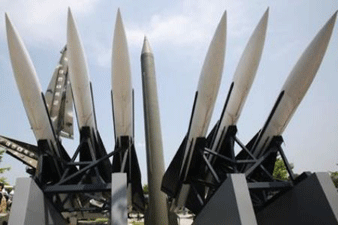
 [Photo] North Korea marks one-year anniversary of alleged nuclear weapons program completion, Daily NK, By Mun Dong Hui, 28 Dec 18,
1 This Month
Tell Congress: Prevent Nuclear Catastrophe in Iran

Tell Congress: Prevent Nuclear Catastrophe in Iran

Read the Public Inquiry Report, the Commissioners’ report, Surrendering Australia: The AUKUS Deception is available to download for free at aukuspublicinquiry.com. Or just watch the replay of the National Press Club Luncheon.


Shut down the radiation-damaged Heysham nuclear reactors now
To see nuclear-related stories in greater depth and intensity – go to https://nuclearinformation.wordpress.com

Say No to NASA’s Reckless Nuclear Reactor on the Moon
Say No to NASA’s Reckless Nuclear Reactor on the Moon
-
Archives
- November 2026 (246)
- October 2026 (302)
- September 2026 (339)
- August 2026 (330)
- July 2026 (355)
- June 2026 (287)
- May 2026 (306)
- April 2026 (356)
- March 2026 (251)
- February 2026 (267)
- January 2026 (308)
- December 2025 (358)
-
Categories
- 1
- 1 NUCLEAR ISSUES
- business and costs
- climate change
- culture and arts
- ENERGY
- environment
- health
- history
- indigenous issues
- Legal
- marketing of nuclear
- media
- opposition to nuclear
- PERSONAL STORIES
- politics
- politics international
- Religion and ethics
- safety
- secrets,lies and civil liberties
- spinbuster
- technology
- Uranium
- wastes
- weapons and war
- Women
- 2 WORLD
- ACTION
- AFRICA
- Atrocities
- AUSTRALIA
- Christina's notes
- Christina's themes
- culture and arts
- Events
- Fuk 2022
- Fuk 2023
- Fukushima 2017
- Fukushima 2018
- fukushima 2019
- Fukushima 2020
- Fukushima 2021
- general
- global warming
- Humour (God we need it)
- Nuclear
- RARE EARTHS
- Reference
- resources – print
- Resources -audiovicual
- Weekly Newsletter
- World
- World Nuclear
- YouTube
-
RSS
Entries RSS
Comments RSS

