Major financial group in Japan bans lending to those developing, making or possessing nuclear weapons

 Resona bans lending to those developing, making or possessing nuclear weapons https://mainichi.jp/english/articles/20190107/p2a/00m/0bu/024000c, January 7, 2019 (Mainichi Japan) TOKYO — Resona Holdings Inc., a major financial group in Japan, has announced a policy of not extending loans to borrowers that are involved in the development, production or possession of nuclear weapons.
The statement, the first of its kind by a major Japanese banking institution, came amid similar moves by an increasing number of European banks and institutional investors following the adoption at the United Nations of the Treaty on the Prohibition of Nuclear Weapons in 2017.
Whether other Japanese corporations will follow Resona’s action is a focus of attention for the future. There were other lenders banning loans for the production of nuclear weapons, but the Resona policy prohibits any loans to such companies even when such transactions are for non-nuclear related purposes.
The new posture was incorporated in a document titled “Efforts toward socially responsible investment and loans,” which was announced in November last year. According to the paper, Resona refuses to lend to those that are associated with the development, production or possession of weapons of mass destruction, such as nuclear, chemical and biological weapons, or inhuman weaponry including antipersonnel mines and cluster munitions.
Entities that can be subject to relevant restrictions or sanctions, or even those with the potential to be hit with such punitive measures, will be rejected as borrowers, the document says.
An official with Resona, which has never lent to companies making nuclear weapons, explained that the banking group decided to introduce the policy “because we thought it important for providers of funds to make such efforts toward a sustainable society.”
According to the Dutch nongovernmental organization PAX, 63 financial institutions had similar lending policies as of October 2017, an increase of nine from the previous year.
A Mainichi Shimbun poll of four Japanese mega banks — Mitsubishi UFJ Financial Group, Sumitomo Mitsui Financial Group, Mizuho Financial Group and Sumitomo Mitsui Trust Holdings — as well as four major life insurance companies — Nippon, Dai-ichi, Meiji Yasuda and Sumitomo — found that all of the eight companies and groups have policies to refrain from lending and investment over inhuman weapons. Yet the entities did not specify the production of nuclear weapons as a condition to disengage from borrowers.
Officials at Sumitomo Mitsui and Mizuho replied that their companies ban loans to be used in the production of nuclear weapons, while a Mitsubishi UFJ official explained that the company is “making careful judgment in each transaction.”
(Japanese original by Satoko Takeshita, Business News Department)
The debate should now be over: climate change is upon us
 Are we clear about climate change? https://newpittsburghcourieronline.com/2019/01/06/are-we-clear-about-climate-change/
Let’s start with the hurricanes. Florence and Michael have brought tremendous and near apocalyptic damage to the regions that they hit. Entire towns have been wiped out. Looking at pictures of the Florida panhandle in the aftermath of Hurricane Michael brought to mind pictures of areas that had been devastated by carpet bombing.
The warnings, in connection with both hurricanes, were very ominous. The strength of the hurricanes before they hit, with Florence initially off the charts and with Michael the strongest on record to hit the panhandle, should have led even the dimmest light in the room to glow brightly. Something is definitely wrong. Scientists explained this in the immediate aftermath of Michael: yes, they said, there is a direct connection between climate change and the increased intensity and unpredictability of hurricanes. There, it’s been stated.
There were also two reports. The first was from the Trump administration itself, and one, from what I can figure, they did not want the public to see. In essence the report indicated that the Administration expects the temperature of planet Earth to jump 6-7 degrees by the 22nd century. Ironically, they also conclude that nothing can be done, therefore, there is no point in increased regulations on the greenhouse gases that promote climate change! Did I hear that right?
The conclusion that we should take from all of this is that the debate is finally over. There is clear and verifiable evidence of climate change underway and the direct relationship of human activity to this phenomenon. For those who raise the point that there has been climate change in the past and that this is natural, guess again. Yes, there has been climate change and it has taken place over hundreds of years. There is no precedent for what we are currently experiencing. This is something new and it is dangerous. And it is something that may envelope humanity in our current life-times, not to mention the life-times of our children.
China reportedly tests powerful non-nuclear weapon
China has tested one of the most powerful non-nuclear weapons in existence, according to state media. Video released by the Xinhua news agency shows the testing of the massive bomb, dubbed the Chinese ‘Mother of All Bombs’.
Extreme weather shuts down Dounreay nuclear site: all 1,200 staff have been evacuated
 Dounreay nuclear site closed due to high winds https://www.energyvoice.com/otherenergy/nuclear/190151/dounreay-nuclear-site-closed-due-to-high-winds/ David McPhee, 7 Jan 19The Dounreay nuclear site has been closed due to extremely high winds, according to a spokeswoman.
The site was officially closed at 1pm after the bosses took advice from the Met Office.
All 1,200 staff have been evacuated after winds had battered the nuclear site for a couple of hours.
A spokeswoman for Dounreay Site Restoration (DSRL) said “the safety of staff was paramount”, adding that DSRL “take their lead from the Met Office, resulting in us officially closing the site at 1pm this afternoon.”
DSRL are decommissioning the site at a cost of £2.32 billion. – 07/01/2019
Unusual damage to UK nuclear submarine
|
Nuclear patrol submarine returns to base with ‘unusual’ amount of damage, Telegraph UK defence correspondent, 6 JANUARY 2019 One of Britain’s nuclear deterrent submarines has suffered an “unusual” amount of damage as pictures emerge of HMS Vengeance returning from patrol with around 30 per cent of her sonar panels missing.
The ballistic missile submarine returned last week from her latest three-month patrol. As the nuclear-armed vessel surfaced near the Faslane naval base on the Clyde it was obvious the expected level of wear and tear had been exceeded by up to three times the usual amount.Britain’s ballistic missile submarines are covered with sonar panels – specially designed acoustic shields to mask any sound from inside the submarine and absorb the sound waves of an active sonar emitted by another vessel looking…(subscribers only) https://www.telegraph.co.uk/news/2019/01/06/nuclear-patrol-submarine-suffers-unusual-amount-damage-government/ |
|
Japanese gov’t plan to export nuclear power technology to Turkey floundering


Doomsday clock at a record danger level, but there is hope in The U.N. Nuclear Ban Treaty
 The Nuclear Ban Treaty was adopted by two-thirds of U.N. members in July 2017. By year’s end, 69 states had signed and 19 had ratified it. It will come into effect after 50 ratifications. There are reasonable prospects of this happening in 2019, at which point there will be two international treaties for setting global nuclear policy directions and norms. All nine nuclear-armed states and allies sheltering under their nuclear umbrella had strenuously opposed the treaty. Yet once in force, it will form part of the new international institutional reality.
There are signs of discomfort in some umbrella states at having been exposed as lip-service adherents of the cause of nuclear disarmament. The Norwegian sovereign wealth fund and the largest Dutch pension fund have decided not to invest in nuclear-weapon-producing companies. The Australian Labor Party conference in December unanimously approved a resolution committing a future Labor government to sign and ratify the ban treaty.
Nuclear arms: A year of living dangerously https://www.japantimes.co.jp/opinion/2019/01/06/commentary/world-commentary/nuclear-arms-year-living-dangerously/#.XDJWi9IzbGg BY RAMESH THAKUR, JAN 6, 2019 CANBERRA – Last January, the Doomsday Clock was moved to two minutes to midnight — the closest it has ever been, matching the acute sense of crisis of 1953. The primary explanation for the heightened threat alert was disturbing developments in the nuclear realm.
There was little improvement during 2018. There is no sign that New START, which regulates U.S. and Russian strategic force numbers and deployments, might be extended by five years to 2026. China is upgrading its considerably smaller nuclear arsenal. India and Pakistan are enlarging, modernizing and upgrading stockpiles, while investing in battlefield tactical nuclear weapons (Pakistan) and systems to counter them (India).
U.S. President Donald Trump’s disdain for international institutions and rules established him as the disrupter in chief of the global nuclear order. U.S. nuclear policies reflect and fuel the fraying regimes, provoking countermeasures by adversaries, sowing doubts in allies and stiffening support among the non-nuclear states for banning the bomb. Expanding U.S. and Russian nuclear weapon developments and deployments lead to the normalization of the discourse of nuclear weapon use. They also embolden calls for nuclear-weapon acquisition by some others. Continue reading
UK govt now prevents any one local council from pulling out of plans for a vast underground nuclear waste dump in Cumbria
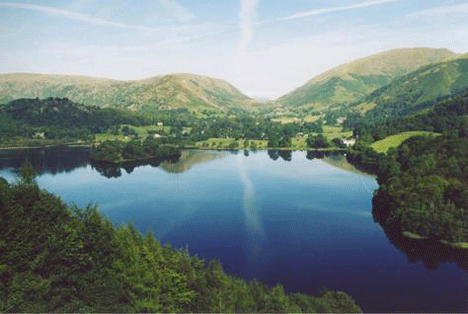
Times 5th Jan 2019 A million tonnes of nuclear waste could be buried under the Lake District after the government removed the right of county councils to veto plans for a vast underground dump.
The £19 billion “geological disposal facility” will have an underground area of up to 20 square kilometres, with radioactive waste stored in vaults at depths of between 200m and 1km.
Copeland borough council in Cumbria — the home of Sellafield, where most of Britain’s nuclear waste is stored — had wanted to be considered for the dump because it would create thousands of highly paid jobs and require local investment. But in 2013 Cumbria county council vetoed the idea.
Now the Department for Business, Energy and Industrial Strategy has published a plan for “the long-term management of higher activity radioactive waste” that prevents any one council in areas with two tiers of local government from pulling out of discussions on hosting the dump. Both councils can choose to withdraw but “no single principal local authority
will be able to unilaterally invoke the right”.
https://www.thetimes.co.uk/article/radioactive-waste-could-be-buried-under-lake-district-rqxpm9pjw
Longtime NBC News reporter slams Pro-War Posture of Corporate Media
 Veteran NBC Reporter Rips Pro-War Posture of Corporate Media in Scathing Resignation Letter
“That a network insider has blown the whistle on how all this works, and how MSNBC and NBC have become Ground Zero for these political pathologies of militarism and servitude to security state agencies, while not surprising, is nonetheless momentous, Portside, January 5, 2019 Jessica Corbett COMMON DREAMS
In a biting resignation letter published in full by CNN on Wednesday, longtime NBC News reporter, commentator, and military analyst William “Bill” Arkin blasted the corporate media network for embracing U.S. “national security leaders and generals” while “ignoring the empirical truth of what they have wrought: There is not one country in the Middle East that is safer today than it was 18 years ago. Indeed the world becomes ever more polarized and dangerous.”
Reflecting on his past couple of decades working with the network—in addition to writing books and columns for major newspapers and serving as as military adviser to human rights and environmental groups—Arkin laments: “My expertise, though seeming to be all the more central to the challenges and dangers we face, also seems to be less valued at the moment. And I find myself completely out of [sync] with the network, being neither a day-to-day reporter nor interested in the Trump circus.”
Noting in his 2,228-word memo that “the world and the state of journalism [are] in tandem crisis,” Arkin delivers a scathing critique of how NBC has responded to the foreign policy of President Donald Trump—whom he calls “an ignorant and incompetent impostor”—asserting that “in many ways NBC just began emulating the national security state itself—busy and profitable. No wars won but the ball is kept in play.”
However, Arkin also delivers a broader condemnation of the network’s coverage of the so-called War on Terror in the nearly 18 years since 9/11, and how it has helped produce a scenario in which “perpetual war has become accepted as a given in our lives.” He writes:
Seeking refuge in its political horse race roots, NBC (and others) meanwhile report the story of war as one of Rumsfeld vs. the Generals, as Wolfowitz vs. Shinseki, as the CIA vs. Cheney, as the bad torturers vs. the more refined, about numbers of troops and number of deaths, and even then Obama vs. the Congress, poor Obama who couldn’t close Guantanamo or reduce nuclear weapons or stand up to Putin because it was just so difficult. We have contributed to turning the world national security into this sort of political story. I find it disheartening that we do not report the failures of the generals and national security leaders. I find it shocking that we essentially condone continued American bumbling in the Middle East and now Africa through our ho-hum reporting………..
The letter was welcomed by many critics of corporate media and American militarism—including The Intercept‘s Glenn Greenwald, who praised Arkin’s “scathing and unflinching” passages describing NBC and MSNBC “as pro-war propaganda outlets who exist to do little more than amplify and serve the security state agencies that are most devoted to opposing Trump, including their mindless opposition to Trump’s attempts (with whatever motives) to roll back some of the excesses of imperialism, aggression, and U.S. involvement in Endless War, as well as to sacrifice all journalistic standards and skepticism about generals and the U.S. war machine if doing so interferes in their monomaniacal mission of denouncing Trump.”
While pointing out that the pro-war posture of American corporate media network “has long been obvious, and deeply disturbing,” Greenwald notes, “Still, that a network insider has blown the whistle on how all this works, and how MSNBC and NBC have become Ground Zero for these political pathologies of militarism and servitude to security state agencies, while not surprising, is nonetheless momentous given how detailed and emphatic he is in his condemnations.”
Here is the full text of Arkin’s resignation letter, as reported by CNN and confirmed by NBC:……. https://portside.org/2019-01-05/veteran-nbc-reporter-rips-pro-war-posture-corporate-media-scathing-resignation-letter
President Vladimir Putin’s new secret weapon -NUCLEAR drone which sends 1,640ft high WAVES
WHY RUSSIA’S ‘POSEIDON’ UNMANNED UNDERWATER DRONE IS A DOOMSDAY WEAPON
Russia boasts of ‘impossible to detect’ NUCLEAR drone which sends 1,640ft high WAVES https://www.dailystar.co.uk/news/world-news/751603/russia-news-vladimir-putin-underwater-drone-nuclear-war-world-war-3
RUSSIAN ministry of defence officials have hinted that a new underwater nuclear warhead-carrying drone is impossible to detect. By Douglas Patient / 5th January 2019 Dubbed President Vladimir Putin‘s new secret weapon – it’s even more deadly than originally thought according to Russia. The navy will be armed with Poseydon drones as soon as 2027.
It carries nuclear warheads and was created in order to obliterate enemy ports. But being equipped with warheads of 100 megatons, it can also be used against coastal cities.
Attacks would involve detonating the warhead underwater, creating huge tidal waves up to 1,640ft high.
At the same time it would contaminate enemy territory with radiation.
Unlike conventional nuclear weapons it would also be immune to being hit by missiles, lasers and railguns.
The concept of the strategic underwater drone named Poseydon was first put forward in 2015 and mentioned by Putin in March last year during his state-of-the-nation speech.
It was initially believed that the Poseydon will be able to travel up to 70 knots, which is about 80mph, while underwater.
But now it has been confirmed that the sample actually be capable of travelling as fast as 125mph (more than 110 knots).
In an official statement ministry said: “The drone will travel to its destination at a speed of 200 kph (125mph) and a depth of 1km (0.6 miles). The drone will be moving in a so-called ‘air-cavern’ (a process in which a steam filled bubble forms around the drone, which reduces the resistance of the water and allows it to move so fast).
“The drone will constantly be performing different manoeuvres and will not stay on one trajectory, which together with its high speed will make it impossible to intercept.”
Officials also released a video showing the computer presentation of Poseydon drones from the Russian Ministry of Defence.
This comes as Russia said it was developing a drone sub that has an underwater rifle to fire at enemy divers.
Uranium mining brings disease, deaths, deformities to Jharkhand, India
Cancers, Abortions, Deformed Children are the High Cost of ‘Clean’ Nuclear Energy in Jharkhand https://www.thecitizen.in/index.php/en/NewsDetail/index/9/15948/Cancers-Abortions-Deformed-Children-are-the-High-Cost-of-Clean-Nuclear-Energy-in-Jharkhand – AMLAN HOME CHOWDHURY | 6 JANUARY, 2019
By 2050 the government intends to meet 25% of its electricity needs from nuclear power JADUGUDA, JHARKHAND: Nestled in the mountainous district of East Singhbhum, this tiny dot on India’s vast map has become a virtual cancer ward for its residents, following years of dangerous radiation being emitted from uranium mines and tailing ponds in the area.
Jaduguda (or Jadugora) made its tryst with the hazardous byproducts of ‘clean’ nuclear power just 20 years after independence, when the country launched its nuclear programme.
Meeting 25 percent of India’s uranium needs, the town is in the news again as the Uranium Corporation of India Limited (UCIL) recently announced that it would soon resume its excavation operations here, following the renewal of its land lease for another 50 years.
Will Jaduguda’s residents still be able to live there 50 years from now?
As part of its indigenous nuclear power programme, India aims to generate 14.6 GWe (gigawatts electrical) of power through nuclear reactors in the next seven years – and 63 GWe by 2032.
By 2050 the Indian government intends to meet 25% of its electricity needs from uranium-based nuclear power, as against 5% at present.
This ambition, however, may annihilate a large number of Adivasi citizens resident in Jaduguda – from the Ho, Birhore, Santhal, Kora, Beiga, Munda, Malpahari and Mahali communities – who already are paying very dearly for uranium mining.
Due to the dangerous fallout of radiation, they are suffering from a plethora of clinical problems which were unheard of in the area before the public sector UCIL began excavating uranium ores in 1967.
People in the area suffer disproportionately from congenital deformities, sterility, spontaneous abortions, cancers and a plethora of other serious diseases known to be caused by radiation and industrial pollution.
Despite the low risk and damage done by wind and solar renewable energy generation, large, destructive hydel projects and nuclear reactors with highly toxic byproducts continue to be a part of India’s energy generation plans – not to mention the use of fossil fuels which continues unabated.
Jaduguda’s residents inhale toxic air. They drink poisoned water. They consume vegetables and cereals laced with radioactive iodine. They are exposed to radiation 24×7.
As you enter the hamlets located around UCIL’s mines and tailing ponds, where radioactive elements are dumped, the gory sight of deformed children playing innocently with their homemade toys meets your eyes.
The culprit is uranium, the highly radioactive mineral used in making nuclear warheads and for generating electricity.
Uranium is a sleeping monster. An estimated 99.28% of mined uranium ore is effectively waste – referred as tailings. These wastes are very highly radioactive with a centuries’ long half life.
In India the process of neutralising the toxicity of tailings is still done in a rudimentary manner, with simple lime, with the wastes carried through pipes to tailing ponds.
Radioactive elements also leak out of the tailing ponds and enter the earth and water during floods, affecting people, livestock, rivers, forests and agricultural produce in and around Jaduguda.
Yellowcake or urania, processed from uranium, is the lifeblood of any nuclear programme. Jaduguda uranium ore can be enriched to 0.065-grade, making it highly valuable for nuclear power generation. The yellowcake produced Jaduguda is sent to nine nuclear reactors in India.
To obtain about 65 grams of usable uranium, UCIL needs to mine, grind and process 1000 tonnes of uranium ore. The waste is thrown into the tailing ponds.
As mentioned these tailings undergo radioactive decay to produce other radioactive substances, such as radium-226 which in turn produces radon-222 gas, a highly toxic cancer-causing gas, which emits high-energy alpha and gamma particles that can shred genetic material in our cells, leading to cancer and other illnesses.
For instance, radon-222 gas damages the air passages in our lungs. It remains radioactive for 1,600 years.
The ores go through several process of purification. At each and every process, the ores emit radiation and other carcinogens.
Since the mining is carried out at depths as great as 880 metres, the miners also endanger their lives.
As long as uranium remains buried deep inside the earth, it does not pose any danger to living beings. But the moment it is brought out to the surface of the earth and ground, levels of radioactivity become hazardous in the ways described above.
Inside the Cancer Ward
According to an official estimate by the Union Ministry of Social Justice and Empowerment, nearly 3 percent of Indians suffer from physical disabilities, with congenital deformity being one of them.
In Jaduguda the rate is 50 percent higher, at 4.49 percent.
Cases of impotency, frequent abortions, infant mortality, Down’s syndrome, cancers, thalassemia and other serious diseases have made Jaduguda their home.
Some 9,000 people here – almost a quarter of the population – are suffering from congenital deformities, leukemia, and various forms of cancer. Cancer deaths are commonplace here, and do not surprise locals at all now.
Brave environmental journalists face increasing threats and dangers
Journalists reporting on the environment faced increased dangers in 2018, Monga Bay, by Kaamil Ahmed on 4 January 2019
- Journalists describe some of the threats and dangers they faced in 2018.
- These range from intimidation to legal threats to outright violence.
- At least 10 journalists covering the environment were killed between 2010 and 2016, according to Reporters without Borders — all but two of them in Asia.
A pair of “French spies” had infiltrated India by sea to commit a “treasonous conspiracy,” an Indian minister claimed in late November. In reality, they were two visiting journalists, and their mission was an investigation into allegations of illegal sand mining in the southern state of Tamil Nadu. They had merely tried and failed to visit the site of a major mining company through legal means.
Their presence set off alarm bells among some connected to the industry, and the fallout has been significant. It’s included a police investigation, a politically fueled propaganda campaign, and the arrests of two local translators who had been working for them.
This heavy-handed response is familiar to Indian journalist Sandhya Ravishankar, who has reported on sand mining since 2013 and found that her probing into allegations of major business interests damaging the local environment has resulted in stalking and various types of harassment – some of it reportedly directed by the head of one of the mining companies.
“I got rape threats, my bike was vandalized, the miner has openly admitted that there are five detective agencies trailing me wherever I go, CCTV visuals of me having coffee with a source at a cafe have been made public,” Ravishankar said, adding that she also discovered government documents showing “officials have colluded to slander me.”
Ravishankar’s case is just one example of the growing dangers for journalists reporting environmental stories. Even as environmental journalism becomes increasingly important in the face of destructive business and political interests and practices, the inherent safety risks remain.
There are also the more routine challenges of accessing crucial information and convincing editors and readers of their importance.
“Journalists I’ve interviewed have been arrested, sued, fired, threatened, harassed, interrogated by police, interrogated by the military, physically assaulted and a number of them have been killed while covering logging, mining, development,” said journalism professor Eric Freedman in an interview. Freedman is the Knight Chair in Environmental Journalism and director of the Knight Center for Environmental Journalism at Michigan State University.
Freedman said environmental journalism came with its own set of challenges, many of which evolve with the story.
“Environmental controversies frequently involve power, political and economic power,” he said. “They involve money, whether mines or fracking or hydropower.
“Covering these kinds of beats, particularly in areas where journalists are not respected and protected takes a great deal of courage and bravery.”…………https://news.mongabay.com/2019/01/journalists-reporting-on-the-environment-faced-increased-dangers-in-2018/
Climate change brings a boom in jellyfish, and a threat to nuclear reactors

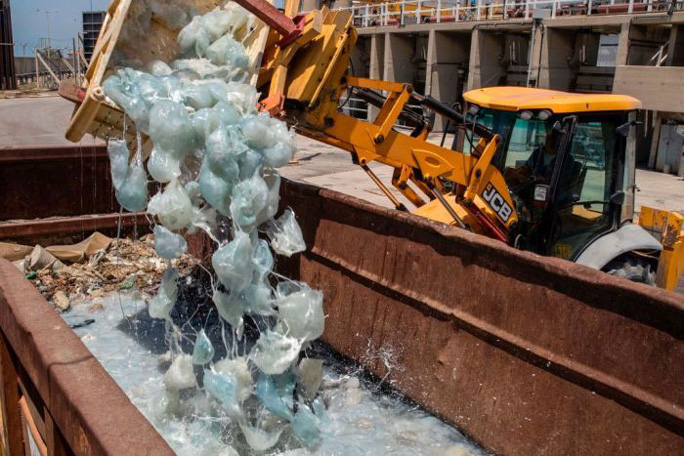
Jellyfish are causing mayhem as pollution, climate change see numbers boom, ABC, RN By Hong Jiang and Sasha Fegan for Late Night Live 6 Jan 19 Jellyfish have been around for at least 500 million years — they’re older than dinosaurs and even trees.Science writer Juli Berwald calls them “ghosts from the true garden of Eden”.
“An intelligence of a sort has allowed them to make it through the millennia,” she says.
And they’re not going anywhere.
In fact, the brainless, spineless, eyeless, bloodless creatures are booming in numbers — and causing mayhem around the world. Their propensity to breed fast and prolifically means jellyfish can disrupt ocean ecosystems in a flash.
And their effects aren’t contained to the sea.
In places like Sweden, Israel, the US and the Philippines, power plants have been affected by blooms of jellyfish.
“So many jellyfish were swept into the power system … that it shut down the power system through much of this one island in the Philippines,” Ms Berwald says. People thought that perhaps there was a coup going on, but there wasn’t, it was just the jellyfish.”
Jellyfish have also caused plants to shut down in Japan.
“One jellyfish scientist from Japan told me that the first threat to the electric system in Japan is earthquakes, but the second is jellyfish,” Berwald says.
“We are dealing with a ubiquitous creature.”
A human cause
Some scientists think jellyfish numbers are increasing as the climate changes — the creatures reproduce well in warmer waters.
Jellyfish also fare better than many other sea creatures in polluted waters, as they don’t need much oxygen.
Berwald says that can give them the upper hand over predators.
“They can sort of slip into polluted waters, into low oxygen waters, and hide from predation there better than a fish that has a higher oxygen demand,” she says…….. https://www.abc.net.au/news/2019-01-06/the-magic-and-mayhem-of-jellyfish/10377112
Donald Trump should negotiate with Kim Jong-un, who may be willing to limit nuclear production capability
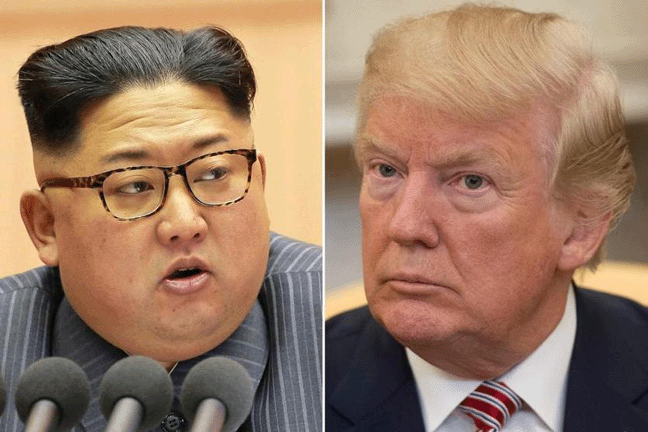 North Korea may be willing to begin denuclearization, and Donald Trump should make a deal. https://www.usatoday.com/story/opinion/2019/01/04/kim-jong-un-north-korea-donald-trump-denuclearization-offer-column/2473360002/
Kim Jon-Un indicated he would put nuclear production capability on the table as a bargaining chip, and Donald Trump should make that deal.
In his traditional New Year’s Day speech earlier this week, North Korean strongman leader Kim Jong-Un has just made an offer that, if serious, could present an opportunity for President Donald Trump to reach a historic breakthrough in the nuclear crisis on the Korean peninsula and record his greatest foreign-policy accomplishment as president.
Kim’s speech was not all sweetness and light. He warned that his patience is not infinite, and that in the absence of diplomatic progress, his country may resort to more confrontational tactics. Little has happened since the famous Singapore summit back in June between Kim and Trump; we seem no closer to a deal on North Korea’s threatening military capabilities now than we did six months ago. Meanwhile, Kim clearly resents and suffers from the tough international sanctions that the Trump administration has convinced the United Nations to impose these last two years, after North Korea’s big missile and nuclear tests of 2017. The latest statistics show that, despite sanctions evasion in multiple quarters, North Korean trade was down as much as half in 2018 compared to the year before.
But Kim held out an olive branch nonetheless. He seems to want a deal, and seems interested in another summit. He was much more specific than ever before about what he might offer in the course of such a tete-a-tete with Trump. So far, North Korea has only offered to place a moratorium on future nuclear and long-range missile tests, which has been a welcome development, but has only talked vaguely about “denuclearization” and has not stopped making more bombs. Now, apparently, Kim would put nuclear production capability on the table as a bargaining chip.
North Korea experts like Jonathan Pollack and Jung Pak have documented how unlikely Kim would be to give up all his nuclear bombs (U.S. intelligence estimates he has as many as 60 by now). They represent the collective accomplishments of a program that Kim’s grandfather and father prioritized when they led North Korea, so giving up all those bombs quickly would almost seem to dishonor the memory and legacy of his forefathers. And perhaps even more importantly, Kim as well as his generals remember the one cardinal mistake Saddam Hussein, Mohammar Quadhafi, and the Taliban all committed — leaving themselves vulnerable in war against the United States because of the lack of a nuclear deterrent. For Kim to give up the bomb, he would need a great deal of confidence that relations will remain peaceful.
There is an opportunity to compromise, relax
Yet there is still a big opportunity for compromise, if Kim is serious about ending production of more bombs. North Korea could stop expanding its nuclear arsenal, and we could relax, then lift some of the sanctions imposed on North Korea over the years, especially the U.N. sanctions that have really cut into North Korean trade with China and South Korea in the last couple years. The goal of complete denuclearization could await another day.
With this approach, the United States would keep enough sanctions in place to stay true to its principle that North Korea cannot be accepted as a nuclear-weapons state; before being fully welcomed into the community of nations, it will in fact have to honor its obligations under the Nuclear Non-Proliferation Treaty and give up all its bombs. Yet as a practical matter, that second stage of nuclear talks can wait for a number of months or years. That is ok. The world will be much safer if North Korea stops enlarging and improving its nuclear and long-range missile arsenals that could threaten not only South Korea and Japan (and the almost 300,000 Americans living in those two countries combined), but also eventually North America.
Trump should take what he can get for now
The real challenge is likely to be verification. We know where some, but not all, of North Korea’s nuclear infrastructure is located. As such, international inspectors would have to be allowed to return not only to the Yongbyon location where they have been before, and where North Korea has operated a nuclear reactor to make plutonium as well as centrifuges to enrich uranium. They would also need some degree of free reign to explore other suspicious sites around the country. On the one hand, this would not be an arrangement unique to North Korea; similar provisions are part of the Iran nuclear deal, for example. On the other hand, North Korea has shown extreme nervousness about such inspections in the past.
Another possible problem: John Bolton, Trump’s national security advisor, and Secretary of State Mike Pompeo may consider a deal that only freezes, rather than eliminates, North Korea’s nuclear arsenal inadequate for purposes of American and allied security. But they should reassess, or Trump should overrule them.
This compromise deal would go further than the Iran deal, in fact, if North Korea were willing to see its nuclear production facilities dismantled permanently. Yes, Kim would keep his nukes for a while. But he would have powerful economic and military reasons to behave himself. In this case, taking half a loaf is far more realistic than hoping for a complete denuclearization accord that just isn’t in the cards anytime soon. We should immediately engage in serious talks to see just how serious Kim really is about this intriguing and promising offer.
Michael O’Hanlon is director of research for the foreign policy program at the Brookings Institution. Follow him on Twitter: @MichaelEOHanlon
Renewables beating coal energy in Germany
The shift marks progress as Europe’s biggest economy aims for renewables to provide 65 percent of its energy by 2030 in a costly transition as it abandons nuclear power by 2022 and is devising plans for an orderly long-term exit from coal.
The research from the Fraunhofer organisation of applied science showed that output of solar, wind, biomass and hydroelectric generation units rose 4.3 percent last year to produce 219 terawatt hours (TWh) of electricity. That was out of a total national power production of 542 TWh derived from both green and fossil fuels, of which coal burning accounted for 38 percent.
Green energy’s share of Germany’s power production has risen from 38.2 percent in 2017 and just 19.1 percent in 2010.
Bruno Burger, author of the Fraunhofer study, said it was set to stay above 40 percent this year.
“We will not fall below the 40 percent in 2019 because more renewable installations are being built and weather patterns will not change that dramatically,” he said……….https://www.weforum.org/agenda/2019/01/renewables-overtake-coal-as-germanys-main-energy-source?utm_source=Facebook%20Videos&utm_medium=Facebook%20Video
1 This Month
Tell Congress: Prevent Nuclear Catastrophe in Iran

Tell Congress: Prevent Nuclear Catastrophe in Iran

Read the Public Inquiry Report, the Commissioners’ report, Surrendering Australia: The AUKUS Deception is available to download for free at aukuspublicinquiry.com. Or just watch the replay of the National Press Club Luncheon.


Shut down the radiation-damaged Heysham nuclear reactors now
To see nuclear-related stories in greater depth and intensity – go to https://nuclearinformation.wordpress.com

Say No to NASA’s Reckless Nuclear Reactor on the Moon
Say No to NASA’s Reckless Nuclear Reactor on the Moon
-
Archives
- November 2026 (238)
- October 2026 (302)
- September 2026 (339)
- August 2026 (330)
- July 2026 (355)
- June 2026 (287)
- May 2026 (306)
- April 2026 (356)
- March 2026 (251)
- February 2026 (267)
- January 2026 (308)
- December 2025 (358)
-
Categories
- 1
- 1 NUCLEAR ISSUES
- business and costs
- climate change
- culture and arts
- ENERGY
- environment
- health
- history
- indigenous issues
- Legal
- marketing of nuclear
- media
- opposition to nuclear
- PERSONAL STORIES
- politics
- politics international
- Religion and ethics
- safety
- secrets,lies and civil liberties
- spinbuster
- technology
- Uranium
- wastes
- weapons and war
- Women
- 2 WORLD
- ACTION
- AFRICA
- Atrocities
- AUSTRALIA
- Christina's notes
- Christina's themes
- culture and arts
- Events
- Fuk 2022
- Fuk 2023
- Fukushima 2017
- Fukushima 2018
- fukushima 2019
- Fukushima 2020
- Fukushima 2021
- general
- global warming
- Humour (God we need it)
- Nuclear
- RARE EARTHS
- Reference
- resources – print
- Resources -audiovicual
- Weekly Newsletter
- World
- World Nuclear
- YouTube
-
RSS
Entries RSS
Comments RSS

