Uranium mining brings disease, deaths, deformities to Jharkhand, India
Cancers, Abortions, Deformed Children are the High Cost of ‘Clean’ Nuclear Energy in Jharkhand https://www.thecitizen.in/index.php/en/NewsDetail/index/9/15948/Cancers-Abortions-Deformed-Children-are-the-High-Cost-of-Clean-Nuclear-Energy-in-Jharkhand – AMLAN HOME CHOWDHURY | 6 JANUARY, 2019
By 2050 the government intends to meet 25% of its electricity needs from nuclear power JADUGUDA, JHARKHAND: Nestled in the mountainous district of East Singhbhum, this tiny dot on India’s vast map has become a virtual cancer ward for its residents, following years of dangerous radiation being emitted from uranium mines and tailing ponds in the area.
Jaduguda (or Jadugora) made its tryst with the hazardous byproducts of ‘clean’ nuclear power just 20 years after independence, when the country launched its nuclear programme.
Meeting 25 percent of India’s uranium needs, the town is in the news again as the Uranium Corporation of India Limited (UCIL) recently announced that it would soon resume its excavation operations here, following the renewal of its land lease for another 50 years.
Will Jaduguda’s residents still be able to live there 50 years from now?
As part of its indigenous nuclear power programme, India aims to generate 14.6 GWe (gigawatts electrical) of power through nuclear reactors in the next seven years – and 63 GWe by 2032.
By 2050 the Indian government intends to meet 25% of its electricity needs from uranium-based nuclear power, as against 5% at present.
This ambition, however, may annihilate a large number of Adivasi citizens resident in Jaduguda – from the Ho, Birhore, Santhal, Kora, Beiga, Munda, Malpahari and Mahali communities – who already are paying very dearly for uranium mining.
Due to the dangerous fallout of radiation, they are suffering from a plethora of clinical problems which were unheard of in the area before the public sector UCIL began excavating uranium ores in 1967.
People in the area suffer disproportionately from congenital deformities, sterility, spontaneous abortions, cancers and a plethora of other serious diseases known to be caused by radiation and industrial pollution.
Despite the low risk and damage done by wind and solar renewable energy generation, large, destructive hydel projects and nuclear reactors with highly toxic byproducts continue to be a part of India’s energy generation plans – not to mention the use of fossil fuels which continues unabated.
Jaduguda’s residents inhale toxic air. They drink poisoned water. They consume vegetables and cereals laced with radioactive iodine. They are exposed to radiation 24×7.
As you enter the hamlets located around UCIL’s mines and tailing ponds, where radioactive elements are dumped, the gory sight of deformed children playing innocently with their homemade toys meets your eyes.
The culprit is uranium, the highly radioactive mineral used in making nuclear warheads and for generating electricity.
Uranium is a sleeping monster. An estimated 99.28% of mined uranium ore is effectively waste – referred as tailings. These wastes are very highly radioactive with a centuries’ long half life.
In India the process of neutralising the toxicity of tailings is still done in a rudimentary manner, with simple lime, with the wastes carried through pipes to tailing ponds.
Radioactive elements also leak out of the tailing ponds and enter the earth and water during floods, affecting people, livestock, rivers, forests and agricultural produce in and around Jaduguda.
Yellowcake or urania, processed from uranium, is the lifeblood of any nuclear programme. Jaduguda uranium ore can be enriched to 0.065-grade, making it highly valuable for nuclear power generation. The yellowcake produced Jaduguda is sent to nine nuclear reactors in India.
To obtain about 65 grams of usable uranium, UCIL needs to mine, grind and process 1000 tonnes of uranium ore. The waste is thrown into the tailing ponds.
As mentioned these tailings undergo radioactive decay to produce other radioactive substances, such as radium-226 which in turn produces radon-222 gas, a highly toxic cancer-causing gas, which emits high-energy alpha and gamma particles that can shred genetic material in our cells, leading to cancer and other illnesses.
For instance, radon-222 gas damages the air passages in our lungs. It remains radioactive for 1,600 years.
The ores go through several process of purification. At each and every process, the ores emit radiation and other carcinogens.
Since the mining is carried out at depths as great as 880 metres, the miners also endanger their lives.
As long as uranium remains buried deep inside the earth, it does not pose any danger to living beings. But the moment it is brought out to the surface of the earth and ground, levels of radioactivity become hazardous in the ways described above.
Inside the Cancer Ward
According to an official estimate by the Union Ministry of Social Justice and Empowerment, nearly 3 percent of Indians suffer from physical disabilities, with congenital deformity being one of them.
In Jaduguda the rate is 50 percent higher, at 4.49 percent.
Cases of impotency, frequent abortions, infant mortality, Down’s syndrome, cancers, thalassemia and other serious diseases have made Jaduguda their home.
Some 9,000 people here – almost a quarter of the population – are suffering from congenital deformities, leukemia, and various forms of cancer. Cancer deaths are commonplace here, and do not surprise locals at all now.
Brave environmental journalists face increasing threats and dangers
Journalists reporting on the environment faced increased dangers in 2018, Monga Bay, by Kaamil Ahmed on 4 January 2019
- Journalists describe some of the threats and dangers they faced in 2018.
- These range from intimidation to legal threats to outright violence.
- At least 10 journalists covering the environment were killed between 2010 and 2016, according to Reporters without Borders — all but two of them in Asia.
A pair of “French spies” had infiltrated India by sea to commit a “treasonous conspiracy,” an Indian minister claimed in late November. In reality, they were two visiting journalists, and their mission was an investigation into allegations of illegal sand mining in the southern state of Tamil Nadu. They had merely tried and failed to visit the site of a major mining company through legal means.
Their presence set off alarm bells among some connected to the industry, and the fallout has been significant. It’s included a police investigation, a politically fueled propaganda campaign, and the arrests of two local translators who had been working for them.
This heavy-handed response is familiar to Indian journalist Sandhya Ravishankar, who has reported on sand mining since 2013 and found that her probing into allegations of major business interests damaging the local environment has resulted in stalking and various types of harassment – some of it reportedly directed by the head of one of the mining companies.
“I got rape threats, my bike was vandalized, the miner has openly admitted that there are five detective agencies trailing me wherever I go, CCTV visuals of me having coffee with a source at a cafe have been made public,” Ravishankar said, adding that she also discovered government documents showing “officials have colluded to slander me.”
Ravishankar’s case is just one example of the growing dangers for journalists reporting environmental stories. Even as environmental journalism becomes increasingly important in the face of destructive business and political interests and practices, the inherent safety risks remain.
There are also the more routine challenges of accessing crucial information and convincing editors and readers of their importance.
“Journalists I’ve interviewed have been arrested, sued, fired, threatened, harassed, interrogated by police, interrogated by the military, physically assaulted and a number of them have been killed while covering logging, mining, development,” said journalism professor Eric Freedman in an interview. Freedman is the Knight Chair in Environmental Journalism and director of the Knight Center for Environmental Journalism at Michigan State University.
Freedman said environmental journalism came with its own set of challenges, many of which evolve with the story.
“Environmental controversies frequently involve power, political and economic power,” he said. “They involve money, whether mines or fracking or hydropower.
“Covering these kinds of beats, particularly in areas where journalists are not respected and protected takes a great deal of courage and bravery.”…………https://news.mongabay.com/2019/01/journalists-reporting-on-the-environment-faced-increased-dangers-in-2018/
Climate change brings a boom in jellyfish, and a threat to nuclear reactors

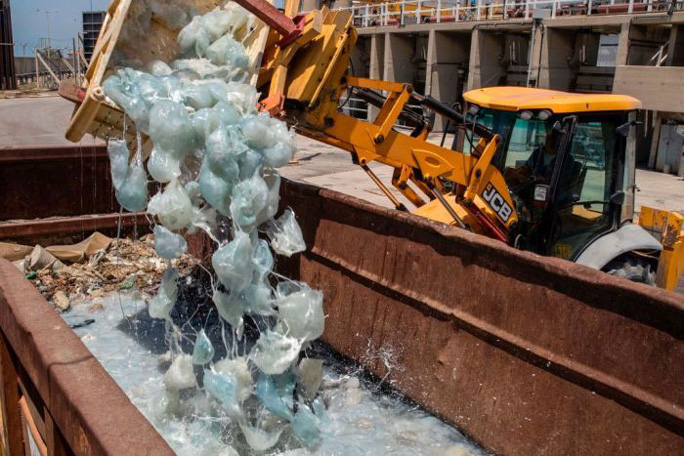
Jellyfish are causing mayhem as pollution, climate change see numbers boom, ABC, RN By Hong Jiang and Sasha Fegan for Late Night Live 6 Jan 19 Jellyfish have been around for at least 500 million years — they’re older than dinosaurs and even trees.Science writer Juli Berwald calls them “ghosts from the true garden of Eden”.
“An intelligence of a sort has allowed them to make it through the millennia,” she says.
And they’re not going anywhere.
In fact, the brainless, spineless, eyeless, bloodless creatures are booming in numbers — and causing mayhem around the world. Their propensity to breed fast and prolifically means jellyfish can disrupt ocean ecosystems in a flash.
And their effects aren’t contained to the sea.
In places like Sweden, Israel, the US and the Philippines, power plants have been affected by blooms of jellyfish.
“So many jellyfish were swept into the power system … that it shut down the power system through much of this one island in the Philippines,” Ms Berwald says. People thought that perhaps there was a coup going on, but there wasn’t, it was just the jellyfish.”
Jellyfish have also caused plants to shut down in Japan.
“One jellyfish scientist from Japan told me that the first threat to the electric system in Japan is earthquakes, but the second is jellyfish,” Berwald says.
“We are dealing with a ubiquitous creature.”
A human cause
Some scientists think jellyfish numbers are increasing as the climate changes — the creatures reproduce well in warmer waters.
Jellyfish also fare better than many other sea creatures in polluted waters, as they don’t need much oxygen.
Berwald says that can give them the upper hand over predators.
“They can sort of slip into polluted waters, into low oxygen waters, and hide from predation there better than a fish that has a higher oxygen demand,” she says…….. https://www.abc.net.au/news/2019-01-06/the-magic-and-mayhem-of-jellyfish/10377112
Donald Trump should negotiate with Kim Jong-un, who may be willing to limit nuclear production capability
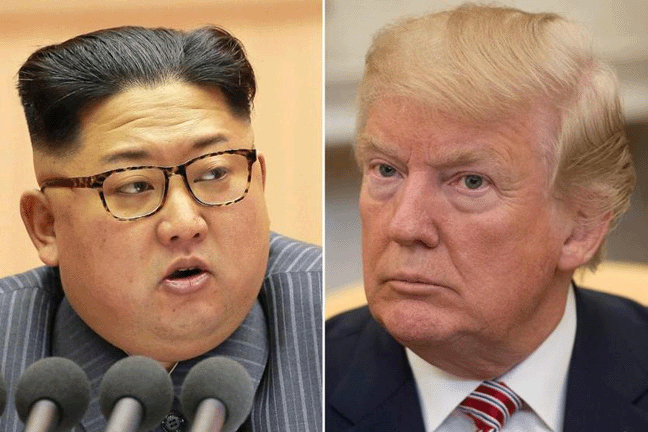 North Korea may be willing to begin denuclearization, and Donald Trump should make a deal. https://www.usatoday.com/story/opinion/2019/01/04/kim-jong-un-north-korea-donald-trump-denuclearization-offer-column/2473360002/
Kim Jon-Un indicated he would put nuclear production capability on the table as a bargaining chip, and Donald Trump should make that deal.
In his traditional New Year’s Day speech earlier this week, North Korean strongman leader Kim Jong-Un has just made an offer that, if serious, could present an opportunity for President Donald Trump to reach a historic breakthrough in the nuclear crisis on the Korean peninsula and record his greatest foreign-policy accomplishment as president.
Kim’s speech was not all sweetness and light. He warned that his patience is not infinite, and that in the absence of diplomatic progress, his country may resort to more confrontational tactics. Little has happened since the famous Singapore summit back in June between Kim and Trump; we seem no closer to a deal on North Korea’s threatening military capabilities now than we did six months ago. Meanwhile, Kim clearly resents and suffers from the tough international sanctions that the Trump administration has convinced the United Nations to impose these last two years, after North Korea’s big missile and nuclear tests of 2017. The latest statistics show that, despite sanctions evasion in multiple quarters, North Korean trade was down as much as half in 2018 compared to the year before.
But Kim held out an olive branch nonetheless. He seems to want a deal, and seems interested in another summit. He was much more specific than ever before about what he might offer in the course of such a tete-a-tete with Trump. So far, North Korea has only offered to place a moratorium on future nuclear and long-range missile tests, which has been a welcome development, but has only talked vaguely about “denuclearization” and has not stopped making more bombs. Now, apparently, Kim would put nuclear production capability on the table as a bargaining chip.
North Korea experts like Jonathan Pollack and Jung Pak have documented how unlikely Kim would be to give up all his nuclear bombs (U.S. intelligence estimates he has as many as 60 by now). They represent the collective accomplishments of a program that Kim’s grandfather and father prioritized when they led North Korea, so giving up all those bombs quickly would almost seem to dishonor the memory and legacy of his forefathers. And perhaps even more importantly, Kim as well as his generals remember the one cardinal mistake Saddam Hussein, Mohammar Quadhafi, and the Taliban all committed — leaving themselves vulnerable in war against the United States because of the lack of a nuclear deterrent. For Kim to give up the bomb, he would need a great deal of confidence that relations will remain peaceful.
There is an opportunity to compromise, relax
Yet there is still a big opportunity for compromise, if Kim is serious about ending production of more bombs. North Korea could stop expanding its nuclear arsenal, and we could relax, then lift some of the sanctions imposed on North Korea over the years, especially the U.N. sanctions that have really cut into North Korean trade with China and South Korea in the last couple years. The goal of complete denuclearization could await another day.
With this approach, the United States would keep enough sanctions in place to stay true to its principle that North Korea cannot be accepted as a nuclear-weapons state; before being fully welcomed into the community of nations, it will in fact have to honor its obligations under the Nuclear Non-Proliferation Treaty and give up all its bombs. Yet as a practical matter, that second stage of nuclear talks can wait for a number of months or years. That is ok. The world will be much safer if North Korea stops enlarging and improving its nuclear and long-range missile arsenals that could threaten not only South Korea and Japan (and the almost 300,000 Americans living in those two countries combined), but also eventually North America.
Trump should take what he can get for now
The real challenge is likely to be verification. We know where some, but not all, of North Korea’s nuclear infrastructure is located. As such, international inspectors would have to be allowed to return not only to the Yongbyon location where they have been before, and where North Korea has operated a nuclear reactor to make plutonium as well as centrifuges to enrich uranium. They would also need some degree of free reign to explore other suspicious sites around the country. On the one hand, this would not be an arrangement unique to North Korea; similar provisions are part of the Iran nuclear deal, for example. On the other hand, North Korea has shown extreme nervousness about such inspections in the past.
Another possible problem: John Bolton, Trump’s national security advisor, and Secretary of State Mike Pompeo may consider a deal that only freezes, rather than eliminates, North Korea’s nuclear arsenal inadequate for purposes of American and allied security. But they should reassess, or Trump should overrule them.
This compromise deal would go further than the Iran deal, in fact, if North Korea were willing to see its nuclear production facilities dismantled permanently. Yes, Kim would keep his nukes for a while. But he would have powerful economic and military reasons to behave himself. In this case, taking half a loaf is far more realistic than hoping for a complete denuclearization accord that just isn’t in the cards anytime soon. We should immediately engage in serious talks to see just how serious Kim really is about this intriguing and promising offer.
Michael O’Hanlon is director of research for the foreign policy program at the Brookings Institution. Follow him on Twitter: @MichaelEOHanlon
Renewables beating coal energy in Germany
The shift marks progress as Europe’s biggest economy aims for renewables to provide 65 percent of its energy by 2030 in a costly transition as it abandons nuclear power by 2022 and is devising plans for an orderly long-term exit from coal.
The research from the Fraunhofer organisation of applied science showed that output of solar, wind, biomass and hydroelectric generation units rose 4.3 percent last year to produce 219 terawatt hours (TWh) of electricity. That was out of a total national power production of 542 TWh derived from both green and fossil fuels, of which coal burning accounted for 38 percent.
Green energy’s share of Germany’s power production has risen from 38.2 percent in 2017 and just 19.1 percent in 2010.
Bruno Burger, author of the Fraunhofer study, said it was set to stay above 40 percent this year.
“We will not fall below the 40 percent in 2019 because more renewable installations are being built and weather patterns will not change that dramatically,” he said……….https://www.weforum.org/agenda/2019/01/renewables-overtake-coal-as-germanys-main-energy-source?utm_source=Facebook%20Videos&utm_medium=Facebook%20Video
Chinese state media boasts nuclear weapons escalation, in response to Trump
New Mexico could get more nuclear waste, and perhaps high level nuclear waste
 More nuclear waste could come to New Mexico, Santa Fe New Mexican, By Rebecca Moss | rmoss@sfnewmexican.co, Jan 5, 2019
UK’s legal battle over botched handling of the Magnox nuclear decommissioning contract.
 Former chiefs of UK’s nuclear body launch legal action over Magnox fiasco http://www.cityam.com/271148/former-chiefs-uks-nuclear-body-launch-legal-action-over, Jessica Clark, 5 Jan 19,
Closer inspection of Peach Bottom nuclear plant following violation notice
 Peach Bottom nuclear plant issued violation notice, will come under closer scrutiny from regulators https://lancasteronline.com/news/local/peach-bottom-nuclear-plant-issued-violation-notice-will-come-under/article_a147a194-105e-11e9-8b99-a32817bc8be2.htmlAD CRABLE | Staff Writer, Jan 4, 2019
Historical cooling periods are still playing out in the deep Pacific
https://www.eurekalert.org/pub_releases/2019-01/hjap-hcp010419.php– 4 Jan 19, Whereas most of the ocean is responding to modern warming, the deep Pacific may be cooling, HARVARD JOHN A. PAULSON SCHOOL OF ENGINEERING AND APPLIED SCIENCES The ocean has a long memory. When the water in today’s deep Pacific Ocean last saw sunlight, Charlemagne was the Holy Roman Emperor, the Song Dynasty ruled China and Oxford University had just held its very first class. During that time, between the 9th and 12th centuries, the earth’s climate was generally warmer before the cold of the Little Ice Age settled in around the 16th century. Now, ocean surface temperatures are back on the rise but the question is, do the deepest parts of the ocean know that?
Researchers from the Woods Hole Oceanographic Institution and Harvard University have found that the deep Pacific Ocean lags a few centuries behind in terms of temperature and is still adjusting to the advent of the Little Ice Age. Whereas most of the ocean is responding to modern warming, the deep Pacific may be cooling.
The research is published in Science.
“Climate varies across all timescales,” said Peter Huybers, Professor of Earth and Planetary Sciences in the Department of Earth and Planetary Sciences and of Environmental Science and Engineering at the Harvard John A. Paulson School of Engineering and Applied Sciences and co-author of the paper. “Some regional warming and cooling patterns, like the Little Ice Age and the Medieval Warm Period, are well known. Our goal was to develop a model of how the interior properties of the ocean respond to changes in surface climate.”
What that model showed was surprising.
“If the surface ocean was generally cooling for the better part of the last millennium, those parts of the ocean most isolated from modern warming may still be cooling,” said Jake Gebbie, a physical oceanographer at Woods Hole Oceanographic Institution and lead author of the study.
The model is a simplification of the actual ocean. To test the prediction, Gebbie and Huybers compared the cooling trend found in the model to ocean temperature measurements taken by scientists aboard the HMS Challenger in the 1870s and modern observations from the World Ocean Circulation Experiment of the 1990s.
The HMS Challenger, a three-masted wooden sailing ship originally designed as a British warship, was used for the first modern scientific expedition to explore the world’s ocean and seafloor. During the expedition from 1872 to 1876, thermometers were lowered into the ocean depths and more than 5,000 temperature measurements were logged.
“We screened this historical data for outliers and considered a variety of corrections associated with pressure effects on the thermometer and stretching of the hemp rope used for lowering thermometers,” said Huybers.
The researchers then compared the HMS Challenger data to the modern observations and found warming in most parts of the global ocean, as would be expected due to the warming planet over the 20th Century, but cooling in the deep Pacific at a depth of around two kilometers depth.
“The close correspondence between the predictions and observed trends gave us confidence that this is a real phenomenon,” said Gebbie.
These findings imply that variations in surface climate that predate the onset of modern warming still influence how much the climate is heating up today. Previous estimates of how much heat the Earth had absorbed during the last century assumed an ocean that started out in equilibrium at the beginning of the Industrial Revolution. But Gebbie and Huybers estimate that the deep Pacific cooling trend leads to a downward revision of heat absorbed over the 20th century by about 30 percent.
“Part of the heat needed to bring the ocean into equilibrium with an atmosphere having more greenhouse gases was apparently already present in the deep Pacific,” said Huybers. “These findings increase the impetus for understanding the causes of the Medieval Warm Period and Little Ice Age as a way for better understanding modern warming trends.”
###
This research was funded by the James E. and Barbara V. Moltz Fellowship and National Science Foundation grants OCE-1357121 and OCE-1558939
Putin puts shipping safety regulation in the Arctic into the hands of the nuclear industry!
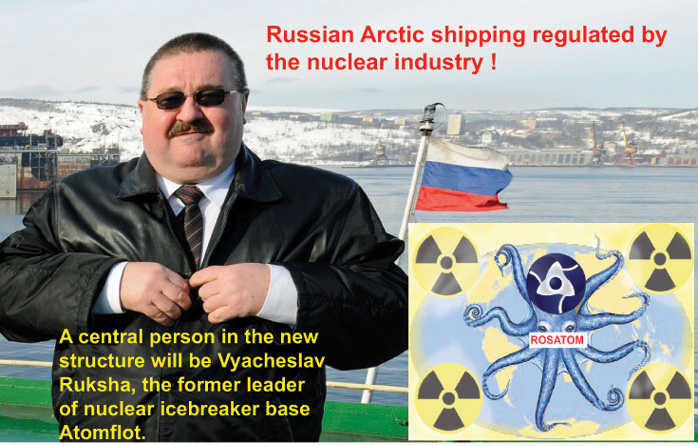
It’s a law – Russian Arctic shipping to be regulated by Rosatom https://thebarentsobserver.com/en/arctic/2019/01/its-law-russian-arctic-shipping-be-regulated-rosatom
President Putin signs the bill that makes the country’s state nuclear power company top regulator of the Northern Sea Route.By Atle Staalesen, January 02, 2019
Rosatom has officially been granted the leading role in the development of the vast Russian Arctic. The company that employs more than 250,000 people and engages in a multitude of activities related to nuclear power development and production is now formally Russia’s management authority for the Northern Sea Route.
The law was adopted by the State Duma on the 11th December and on the 28th signed by Vladimir Putin.
The new legislation comes as Russian Arctic shipping is on rapid increase. In 2018, about 18 million tons of goods was transported on the sea route, an increase of almost 70 percent from 2017. And more is to come. According to Vladimir Putin so-called May Decrees, the top national priorities, shipping on the Northern Sea Route is to reach 80 million tons already by year 2024.
Rosatom’s new powers in the Arctic include development and operational responsibilities for shipping, as well as infrastructure and sea ports along the northern Russian coast.
The responsibilities of the Northern Sea Route Administration, that until now has operated under the Ministry of Transport, will now be transferred to Rosatom.
It was Putin himself who in early 2017 made clear that a coordinating government agency for the Northern Sea Route was needed. A battle between Rosatom and the Ministry of Transport followed. In December 2017, it became clear that the nuclear power company had won that fight.
A central person in the new structure will be Vyacheslav Ruksha, the former leader of nuclear icebreaker base Atomflot.
The nuclear power company has since 2008 operated the fleet of nuclear-power icebreakers. Currently, five icebreakers are based in Atomflot, Murmansk, and several more ships are under construction, including four powerful LK-60 vessels.
Rosatom is also in the planning process of the «Lider», the 120 MW capacity super-powerful ship that can break through two meter thick ice at an unprecedented 10-12 knot speed.
Japan losing hope for having a nuclear export industry
 Japanese gov’t plan to export nuclear power technology floundering, January 4, 2019 (Mainichi Japan) (Japanese original by Takayuki Hakamada and Ryo Yanagisawa, Business News Department) TOKYO — The Japanese government’s strategy to export nuclear power technology has run aground amid rising safety costs and deteriorating prospects for project profitability. While the government has aimed to maintain the country’s nuclear technology and expert resources through construction of atomic reactors abroad amid stalled nuclear plant development at home, its projects with Turkey and Britain have both hit snags.
“The Turkish government is in the midst of evaluating the project. I believe it will respond to us in some way or other,” said Shunichi Miyanaga, president of Mitsubishi Heavy Industries Ltd., in mid-December about a plan to build a nuclear power plant in Sinop, northern Turkey. Miyanaga’s comment suggested that the fate of the project had been left up to the Turkish government.
At the end of July last year, Mitsubishi Heavy told the Turkish government that the cost of the project would total somewhere around 5 trillion yen, more than doubling from the original estimate of roughly 2.1 trillion yen. As the plan envisages recovering the costs through profits from power generation at the nuclear facility, it would not become profitable unless Turkey purchases the generated electricity at a higher price than originally expected. If Turkey does not comply with the increased burden, Japan would withdraw from the plan.
The nuclear plant project was pitched by Prime Minister Shinzo Abe to then Turkish Prime Minister Recep Tayyip Erdogan in 2013. At the time, Abe vowed at a press conference in Ankara, “We will share our experiences and lessons from the (2011) disaster at the nuclear plant (run by the Tokyo Electric Power Co. in Fukushima) with the rest of the world, and will strive to contribute to enhancing the safety of nuclear power generation.”
However, the catastrophe prompted the international community to turn a wary eye toward nuclear power, leaving the costs for safety measures at nuclear plants to swell. The steep fall in the Turkish lira over the past year by more than 30 percent also added to the project’s deteriorating profitability.
Under these circumstances, Tokyo plans to propose to Ankara that it would provide comprehensive energy cooperation in such spheres as coal-fired thermal power generation and liquefied natural gas, in place of the atomic plant project. Because the nuclear power project is based on an agreement struck by both leaders, such a proposal by Tokyo could face a backlash from Ankara, but Japan’s focus is already shifting to how to withdraw from the project without undermining bilateral diplomatic ties with Turkey.
Meanwhile, a nuclear plant construction project undertaken by Hitachi Ltd. on the Isle of Anglesey in central Britain has also run into rough waters, after the project’s costs soared to approximately 3 trillion yen, about 1.5 times the initial estimate.
n May last year, Hitachi Chairman Hiroaki Nakanishi held talks with British Prime Minister Theresa May, where the latter agreed to expand her government’s support for the project. However, British citizens have been wary of the scheme out of concern that it could lead to rising electricity bills should Japan’s request to raise the sale price of electricity be accepted.
As the May administration is suffering from sagging approval ratings amid turmoil over Britain’s exit from the European Union, it is becoming increasingly difficult for London to comply with an increased burden. At home, Japanese companies are also becoming more reluctant to invest in the project out of fears of poor profitability and accident risks. Given the circumstances, Tokyo is also likely to exit the project.
The Abe administration has made the export of nuclear power technology a pillar of its growth strategy, but to little avail thus far. While the government intends to pursue measures to counter China and Russia’s aggressive drive to export nuclear plants by stepping up financial support for partner countries and through other measures, such a strategy may end up bringing more harm than good………..
a senior official of an economy-related government body said, “It is difficult for Japanese manufacturers, which can’t even build nuclear plants in their own country, to win confidence (abroad),” suggesting that the government’s strategy to export nuclear power technology in itself is unreasonable.
https://mainichi.jp/english/articles/20190104/p2a/00m/0bu/030000c
Donald Trump and Kim Jong-un actually getting nowhere in nuclear diplomacy
Kim and Trump Back at Square 1: If U.S. Keeps Sanctions, North Will Keep Nuclear Program, NYT, By David E. Sanger, Jan. 1, 2019
Nearly two years into his presidency and more than six months after his historic summit meeting with Kim Jong-un of North Korea, President Trump finds himself essentially back where he was at the beginning in achieving the ambitious goal of getting Mr. Kim to relinquish his nuclear arsenal.
That was the essential message of Mr. Kim’s annual New Year’s televised speech, where he reiterated that international sanctions must be lifted before North Korea will give up a single weapon, dismantle a single missile site or stop producing nuclear material.
The list of recent North Korean demands was a clear indicator of how the summit meeting in Singapore last June altered the optics of the relationship more than the reality. Those demands were very familiar from past confrontations: that all joint military training between the United States and South Korea be stopped, that American nuclear and military capability within easy reach of the North be withdrawn, and that a peace treaty ending the Korean War be completed.
“It’s fair to say that not much has changed, although we now have more clarity regarding North Korea’s bottom line,’’ Evans J.R. Revere, a veteran American diplomat and former president of the Korea Society, wrote in an email.
“Pyongyang refused to accept the United States’ definition of ‘denuclearization’ in Singapore,’’ he wrote. To the United States, that means the North gives up its entire nuclear arsenal; in the North’s view, it includes a reciprocal pullback of any American ability to threaten it with nuclear weapons. “The two competing visions of denuclearization have not changed since then.”
o Mr. Trump and Mike Pompeo, the secretary of state, who is supposed to turn Mr. Trump’s enthusiasms into diplomatic achievements, dispute such conclusions. They note that the tone of one of the world’s fiercest armed standoffs has improved. It has, and both leaders say they want to meet again.
……….By some measures there has been modest progress. It has been 13 months since the North tested a nuclear weapon or a long-range missile, a change that Mr. Trump and Mr. Pompeo cite as the first fruits of what some officials now concede will be a long diplomatic push.
Relations between the two Koreas are warming, though there is considerable evidence that Mr. Kim sees his outreach to President Moon Jae-in of South Korea as a way to split the United States from its longtime ally.
But Mr. Trump’s strategic goal, from the moment he vowed to “solve” the North Korea problem rather than repeat the mistakes of past presidents, has been to end the North Korean nuclear and missile threat, not suspend it in place.
Mr. Trump dispatched his first secretary of state, Rex W. Tillerson, to Seoul in March 2017 to declare that a mere nuclear freeze would not be enough. Back then, Mr. Tillerson declared there would be no negotiations, and certainly no lifting of sanctions, until the North’s dismantling had begun. A nuclear freeze would essentially enshrine “a comprehensive set of capabilities,” he argued.
The decision Mr. Trump must make now is whether to backtrack on the objective of zero North Korean nuclear weapons even if that means accepting the North as a nuclear-armed state, as the United States has done with Pakistan, India and Israel. https://www.nytimes.com/2019/01/01/world/asia/kim-trump-nuclear.html
Between USA’s John Bolton, and Russia’s nuclear hawks – the fragmentation of nuclear arms control spells global danger
 Fragmenting nuclear arms controls leave world in a more dangerous place https://www.theguardian.com/world/2019/jan/03/fragmenting-nuclear-arms-controls-leave-world-in-a-more-dangerous-place Andrew Roth in Moscow 3 Jan 2019 US could withdraw from a second treaty while Vladimir Putin’s Russia promises a new generation of nuclear weapons The decision on whether or not to destroy the world came down to a humble Soviet duty officer early one morning in 1983. Stanislav Petrov was told by his computer that the United States had launched at least five intercontinental ballistic missiles at the Soviet Union, and that they would strike in just 25 minutes.Rather than send the alarm up the chain of command, the lieutenant colonel did nothing and averted a nuclear clash over what turned out to be a systems malfunction. For his troubles, Petrov was reprimanded for failing to keep careful notes during the incident and left the service the following year. He died at 77 just last year, on the cusp of the collapse of the architecture that has governed nuclear arms control for the last two generations. Potential nuclear clashes may seem the stuff of Cold War lore, but the framework to prevent them is recent and increasingly endangered.
The next pillar to fall could be the New Start treaty, signed by Barack Obama and Dmitri Medvedev in 2010, which reduced strategic missile launchers by half. That treaty will expire in 2021 unless it is extended, and President Trump has called it a “bad deal” in a telephone call with Vladimir Putin. Russia’s foreign minister has said he believes the United States is “preparing the soil to dismantle this deal.” Putin also threatened the United States with a new line of nuclear-capable weapons earlier this year, blaming the United States’ decision to exit the 1972 anti-ballistic missile treaty for a new arms race. His state of the nation speech, usually a staid affair, was accompanied by a low-resolution animation of a nuclear-powered cruise missile sailing from the Atlantic Ocean, around Cape Horn and then northward toward California. “You didn’t listen to our country then,” Putin said of the US leaving the ABM in 2001. “Listen to us now.” Taken together, these treaties are the bulk of the nuclear arms control framework that the United States and Russia inherited from the Cold War or have developed since. Experts from both sides note that the treaties weren’t perfect but warn that brokering deals is far more difficult than breaking them. The probability of an arms buildup is growing. “The INF decision and failure to get into real discussions about extending New START has us sleepwalking into a new nuclear arms race,” said Richard Burt, a former ambassador who served as chief negotiator for the United States on the Strategic Arms Reduction Treaty, during an Atlantic Council event earlier this year. Viktor Yesin, the former chief of staff of the Russian Federation Strategic Missile Force, said that the US decision to exit the INF was largely with an eye to military developments in China and other countries not bound by the treaty. But the decision could lead to deployments of missiles in Europe, he said, unless the United States and Russia take steps to avoid it. Only “political measures” could avert “the worst outcome for Russia and Europe in the development of a ‘missile crisis,’ which will unavoidably arise after the United States exits the INF,” he said. Those warnings appear to be apt. A leaked memo published by the Washington Post showed that Bolton had ordered the Pentagon to “develop and deploy ground-launched missiles at the earliest possible date.” The order was tabled only after European allies intervened to prevent an immediate US pullout from the INF. Washington has issued Moscow a 60-day ultimatum, after which it will exit the treaty. Russia, which has not admitted to violating the treaty, has signalled it won’t change its behaviour. The driving force behind the pullout is seen as Bolton, who has spoken fervently against similar arms control treaties and presided over the demolition of both the anti-ballistic missile treaty in 2001 and now the INF. Determined individuals can change the course of history. In 1983, Petrov’s decision not to alert his superiors came down to a “funny feeling in my gut.” Now, Bolton appears resolved to finally see a United States released from the bonds of missile treaties and nuclear arms control. |
|

New nuclear technology is NOT a solution to climate change
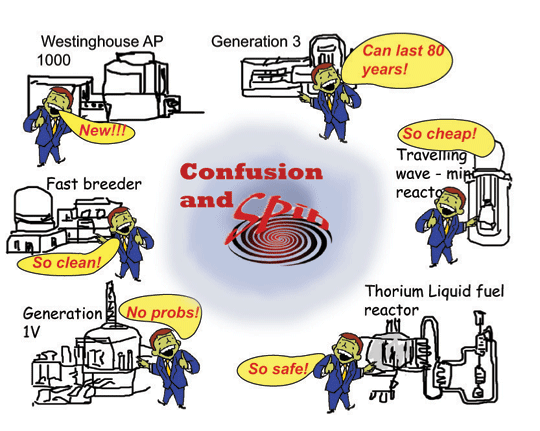 Debate Continues: Can New Technology Save
 Nuclear Power? Power, 01/01/2019 | Kennedy Maize.………Are advanced nuclear reactor designs the answer to the decades-long doldrums for nuclear power? For the U.S., a National Academy of Sciences (NAS) panel led by long-time nuclear advocate M. Granger Morgan of Carnegie Mellon University, issued a pessimistic report last July—US nuclear power: The vanishing low-carbon wedge.
The academy’s report found, “While advanced reactor designs are sometimes held up as a potential solution to nuclear power’s challenges, our assessment of the advanced fission enterprise suggests that no US design will be commercialized before midcentury.” That’s a chilling indictment for all advanced LWRs. The crux of the Morgan report is an assessment that the economic hurdles for nuclear in the U.S. are insurmountable.………
Peter Bradford, a veteran electric utility regulator and nuclear skeptic who served on the U.S. Nuclear Regulatory Commission (NRC) from 1977 to 1982, agrees that nuclear power in the U.S. is priced out of the market. “Even if, for once, they could contain or level out the costs,” he told POWER, “new nuclear is so far outside the competitive range. They have to cut costs and they can’t cut costs without building a bunch [of reactors]. That really isn’t in the cards.”
Nor does Bradford see new nuclear as a way to combat global warming. “Even if it is scaled up much faster than anything now in prospect, it cannot provide more than 10% to 15% of the greenhouse gas displacement that is likely to be needed by mid-century. Not only can nuclear power not stop global warming, it is probably not even an essential part of the solution to global warming,” he wrote in 2006. Since then, he argues, the declining costs of renewables and energy efficiency swamp nuclear economics even further.
While advocates call for setting a price on carbon to reward carbon-free generation, Bradford said that is a weak reed. “At any given level” of carbon prices, he said, “it is going to wind up benefiting renewables and storage,” not nuclear. A reasonable carbon price, he argued, “might not be enough to keep existing plants running.”
 SMRs to the Rescue?….

while smaller nuclear reactors are an appealing technological approach to keeping nuclear in the generating mix, they come with their own set of problems.
On closer inspection, said the NAS panel, “Our results reveal that while one light water SMR module would indeed cost much less than a large LWR, it is highly likely that the cost per unit of power will be higher. In other words, light water SMRs do make nuclear power more affordable but not necessarily more economically competitive for power generation.”
Given the “economic premium” of SMRs, along with “the considerable regulatory burden associated with any nuclear reactor, we do not see a clear path forward for the United States to deploy sufficient numbers of SMRs in the electric power sector to make a significant contribution to greenhouse gas mitigation by the middle of this century,” the report says. Economist Kee echoed that conclusion. When it comes to SMRs, he said there “is a lot of work to do and not much time to do it.”
SMRs also face a challenge of demonstrating their viability: Making an economic or climate impact requires many reactors. Neil Alexander, a Canadian nuclear consultant, wrote recently, “Everything about SMRs such as the cost of construction, availability of fuel, cost of shared services, availability of trained operators, and cost of research needed to resolve emerging challenges, only work economically when the unit is in a fleet. A FOAK [first-of-a-kind] cannot stand alone and the barrier to entry that the industry faces is more akin to the ‘First Dozen of a Kind.’ ”
Portland, Oregon-based NuScale appears to be the leader in developing SMR technology (Figure 4 on original). It is taking Alexander’s advice. NuScale has a customer for a 12-unit (720-MW) station: Utah Associated Municipal Power System (UAMPS), which has a site at the Department of Energy’s (DOE’s) Idaho National Laboratory (INL). UAMPS will own the project and Energy Northwest, a municipal joint action agency that operates the Columbia nuclear station near Richland, Washington, will run the plant. Columbia is a 1,100-MW boiling water reactor.
NuScale recently selected BWX Technologies (BWXT) of Lynchburg, Virginia, to begin engineering work leading up to the manufacture of the 60-MW NuScale reactors. BWXT, created after reactor builder Babcock & Wilcox (B&W) emerged from bankruptcy in 2006, has deep experience in the U.S. naval reactor program. NuScale has received a commitment of some $200 million from the DOE. Global engineering firm Fluor Corp. is the majority investor in NuScale.
Ironically, BWXT was the early leader in the SMR race, with its 195-MW mPower pressurized water reactor design. After spending some $400 million on the mPower venture (including $100 million from the DOE), B&W declared it officially dead in March 2017. Rod Adams, who worked on the project for B&W, had this epitaph for the mPower project, “There was simply too much work left to do, too much money left to invest, and an insufficient level of interest in the product to allow continued expenditures to clear corporate decision hurdles.”
NuScale still has a long way to go to demonstrate the validity of its SMR. The company said it expects the Nuclear Regulatory Commission (NRC) will approve the NuScale reactor design in September 2020. UAMPS will also have to get NRC approval for a combined construction and operating license for the site at INL. Nonetheless, NuScale’s optimistic schedule projects commercial operation “by the mid-2020s.”
Past experience suggests that nuclear construction schedules are made to be broken. SMRs pose unique challenges to federal regulators, both in the reactor designs and in operational issues such as staffing levels and communications among 12 discrete units, particularly if they are used to follow load. Additionally, power prices in the Western U.S. are already low and natural gas is driving them lower.
Recognizing the challenges to deploying SMRs, the DOE in November issued a report suggesting state standards and incentives, modeled on those boosting renewables, be applied to SMR technology. But, as POWER reported, “To make a meaningful impact, nearly $10 billion in incentives would be needed to deploy 6 GW of SMR capacity by 2035.”
Beyond the LWR?
Several efforts are in place to replace conventional LWRs with other approaches to splitting atoms to generate power. Admittedly longshots, these build-on technologies go back to the early days of civilian nuclear power, and were previously abandoned in favor of the proven LWR designs.
The highest profile of the LWR apostates is TerraPower, based in Bellevue, Washington, and backed by Microsoft founder and multi-billionaire Bill Gates. [ Ed note: TerraPower has now abandoned this joint project with China] Founded in 2006, TerraPower is working on a liquid-sodium-cooled breeder-burner machine that can run on uranium waste, while it generates power and plutonium, with the plutonium used to generate more power, all in a continuous process.
Liquid sodium has advantages over pressurized water as a coolant, including better heat transfer. It also does not act as a moderator to slow neutrons, which allows for breeding plutonium. Sodium coolant has its own set of problems. Sodium catches fire when exposed to oxygen so coolant leaks can be devastating, as has happened in the past.
Nuclear power father Adm. Hyman Rickover, after a bad experience with the Seawolf-class submarine sodium-cooled reactor—the second subs to use LWR technology after the USS Nautilus—commented that sodium-cooled systems were “expensive to build, complex to operate, susceptible to prolonged shutdown as a result of even minor malfunctions, and difficult and time-consuming to repair.” TerraPower hopes to have commercial machines operating in the late 2020s, but industry insiders have reported that the company’s prototype reactor being built in China has experienced major problems.
Another approach to bypass LWRs is the molten salt reactor, long a favorite of nuclear pioneer Alvin Weinberg. A Canadian firm, Terrestrial Energy, is pushing a 190-MW SMR design using the technology Weinberg developed at Oak Ridge National Lab in the mid-1960s. Molten salt technology operates at close to atmospheric temperature and combines the fuel and the coolant. Terrestrial plans to use the technology to power an SMR, with a target date for the late 2020s. Molten salt poses new engineering challenges for nuclear reactors. One nuclear observer commented, “I prefer solid fuel” to the liquid fuel-coolant in the molten salt reactor.
Finally, developers are looking at abandoning uranium as the primary nuclear fuel. Instead, the idea is to use thorium, one of the most-common elements on the planet. Thorium is a slightly radioactive metal. But thorium is not fissile—able to undergo nuclear fission—so it has to be irradiated with enriched uranium in order to be transmuted into fissile U-233.
Thorium’s chief attribute is that the fuel is so plentiful. Terrestrial Energy has shown interest in using thorium in its molten salt reactors, along with low-enriched uranium that is used in the design it is pursuing in Canada. Skeptics suggest that thorium is an answer in search of a question, given the easy availability of uranium, particularly in seawater. Uranium shortages, forecast in the 1960s when advocates first suggested using thorium, have never materialized.
The Union of Concerned Scientists (UCS) is currently wrapping up a study of the new, non-LWR reactor designs. Physicist Ed Lyman, a veteran UCS staffer, told POWER, “Our overall conclusion is that vendors, DOE, and advocates are greatly exaggerating the benefits” of the technologies. “The whole landscape is not compelling. We question whether the best direction for nuclear power is to go off on these more exotic tangents,” rather than focus on making LWRs cheaper and safer. “That’s potentially a better near term” investment, he said.
The original generations of civilian nuclear power failed to live up to their promises. The U.S. nuclear industry stalled in the mid-1970s and has not recovered, despite repeated government and industry attempts at a restart.
Gen III reactors were aimed at overcoming the perceived safety and economic shortcomings of the original machines. As those new designs appear to be falling short, attention has shifted to SMRs or new approaches that abandon traditional light-water technology. Whether they will live up to their billing remains a serious, open question. ■
—Kennedy Maize is a long-time energy journalist and frequent contributor to POWER. https://www.powermag.com/debate-continues-can-new-technology-save-nuclear-power/?pagenum=1
1 This Month
Tell Congress: Prevent Nuclear Catastrophe in Iran

Tell Congress: Prevent Nuclear Catastrophe in Iran

Read the Public Inquiry Report, the Commissioners’ report, Surrendering Australia: The AUKUS Deception is available to download for free at aukuspublicinquiry.com. Or just watch the replay of the National Press Club Luncheon.


Shut down the radiation-damaged Heysham nuclear reactors now
To see nuclear-related stories in greater depth and intensity – go to https://nuclearinformation.wordpress.com

Say No to NASA’s Reckless Nuclear Reactor on the Moon
Say No to NASA’s Reckless Nuclear Reactor on the Moon
-
Archives
- November 2026 (246)
- October 2026 (302)
- September 2026 (339)
- August 2026 (330)
- July 2026 (355)
- June 2026 (287)
- May 2026 (306)
- April 2026 (356)
- March 2026 (251)
- February 2026 (267)
- January 2026 (308)
- December 2025 (358)
-
Categories
- 1
- 1 NUCLEAR ISSUES
- business and costs
- climate change
- culture and arts
- ENERGY
- environment
- health
- history
- indigenous issues
- Legal
- marketing of nuclear
- media
- opposition to nuclear
- PERSONAL STORIES
- politics
- politics international
- Religion and ethics
- safety
- secrets,lies and civil liberties
- spinbuster
- technology
- Uranium
- wastes
- weapons and war
- Women
- 2 WORLD
- ACTION
- AFRICA
- Atrocities
- AUSTRALIA
- Christina's notes
- Christina's themes
- culture and arts
- Events
- Fuk 2022
- Fuk 2023
- Fukushima 2017
- Fukushima 2018
- fukushima 2019
- Fukushima 2020
- Fukushima 2021
- general
- global warming
- Humour (God we need it)
- Nuclear
- RARE EARTHS
- Reference
- resources – print
- Resources -audiovicual
- Weekly Newsletter
- World
- World Nuclear
- YouTube
-
RSS
Entries RSS
Comments RSS

