Concern over Chalk River Nuclear Site’s radioactive wastes
How safe is the Ottawa River from nuclear waste? Canada’s National Observer April 8th 2019 “……..Canada’s first nuclear reactor began operating at Chalk River, about 160 kilometres northwest of Ottawa. Since 1944, the facility has served as Canada’s major nuclear science hub. Researchers at CRL have studied reactors, nuclear energy and weaponry and produced medical isotopes for patients around the world.
“It is crucial to protect the drinking water source of over two million people,” says Ottawa Riverkeeper, a full-time, non-profit organization that serves as a public advocate for the watershed and is a key intervenor in the environmental assessment of the waste proposal.
The Chalk River site resembles an old university campus. It’s cut out of a thick and isolating forest spanning about 10,000 acres, with neatly trimmed patches of grass, and a regimented mix of large brick and smaller white structures.
The facilities owned by Canadian Nuclear Laboratories (CNL) are about seven kilometres from the gate at the border of Chalk River, a community of fewer than 1,100 residents, some of whom work at the lab which has about 2,800 employees.
Signs on a chain link fence and tree trunks along the perimeter indicate the grounds are protected by armed officers. Surveillance cameras cast a visual blanket over the road to the security clearance booth and over much of the site.
Chalk River Laboratories has for decades faced questions over the way it deals with its radioactive waste. Environmentalists have decried the facility for discharging waste into the river and for leaks. CNL says its methods for treating waste are sound and the regular liquid effluent discharges into the river have no significant public health or environmental impact on drinking water. It reports a steady evolution of environmental stewardship.
Fresh concern erupted after CNL announced detailed plans to build a nuclear disposal facility to permanently house one million cubic metres of radioactive waste — about 400 Olympic-sized swimming pools worth.
In May 2016, the Canadian Nuclear Safety Commission launched the environmental assessment process for the disposal project with an initial call for public comment.
Environmentalists and concerned citizens questioned how nuclear waste can remain securely contained for hundreds of years, and how it might endanger water quality if any leaks.
The waste has accumulated over decades of Chalk River’s operations. It includes low-level material, such as equipment from operations that has been irradiated and buildings that housed the reactors, and intermediate-level waste, such as filters used to purify reactor water systems and reactor core components. The irradiated material sits anywhere from a few metres to a few kilometres from the Ottawa River. ……..
Canadian Nuclear Laboratories (CNL) promotes itself as a global leader in developing applications for nuclear technology through research, engineering and waste management services.
It is a subsidiary of Atomic Energy of Canada Limited (AECL), a federal Crown corporation, and operated by the Canadian National Energy Alliance, a private consortium. Its operations are licensed by the Canadian Nuclear Safety Commission, the nation’s nuclear regulator.
What do water quality tests near Chalk River say?
Some nearby residents and environmental groups have argued that, while CNL says it is committed to safeguarding the health of the Ottawa River during the decommissioning process, questions remain about the lab’s ability to safely dispose of radioactive waste.
The lab’s history is peppered with minor leaks and malfunctions – and a few major ones. Critics worry that the organization’s confidence in the safety of decommissioning efforts is misplaced.
For instance, critics claim the lab is not fully transparent about its water quality testing methods and has not properly informed the public on plans for permanent storage and disposal of the radioactive material.
Ottawa resident Ole Hendrickson is a member of the Concerned Citizens of Renfrew County and Area, an Ottawa-based environmental activist group whose volunteers have worked for the clean-up and prevention of radioactive pollution from the nuclear industry in the Ottawa Valley for more than 40 years. He’s also a member of CRL’s environmental stewardship council, which convenes company officials, community representatives and other stakeholders several times a year to discuss updates from the lab.
Hendrickson said in an interview that CNL is stingy about providing environmental monitoring data, and that many of the documents with information on testing he has received through access to information requests include significant redactions.
Yet authorities in nearby towns appear unconcerned.
Brenda Royce works at the Ontario Clean Water Agency in Petawawa, about 20 kilometres downstream from Chalk River. It is a provincial Crown agency that the town contracts to do its water quality testing and water system maintenance.
In addition, Royce said her office collects a water sample from the Ottawa River at Petawawa every day for CNL to conduct its own tests. But the office does not get the results of the tests back from the private lab.
Every year, Petawawa’s water agency publishes its own report on the town’s drinking water quality and treatment system. The agency’s report includes testing for many chemicals — including uranium — but not for the two main radionuclides that might be discharged from Chalk River Laboratories operations: tritium and strontium. “It’s just what we do,” Royce said, adding she has never been curious to see results on radioactive waste in the water system.
Petawawa’s director of public works said he has never met with Chalk River officials over potential water quality hazards in the area……..
In 2012, the site’s former Crown operator contracted Université Laval to conduct independent environmental tests of the water, air and vegetation around Chalk River Laboratories and the municipalities of Petawawa and Pembroke, just south of the facility, which would be most directly affected by any potential nuclear contamination in the river. The results for 2012, 2013 and 2015 have been posted on the nuclear industry regulator’s website, and results for 2018 will be published. As of yet, no tests returned results that were expected to cause adverse health effects.
Canada’s Nuclear Safety Commission did not provide data or respond to technical questions before publication and was not available for an interview.
Test results from 2015 show levels of radioactive isotopes present in the river, such as strontium and tritium, were far below the threshold that would affect human health.
Health Canada guidelines state the maximum concentrations of strontium and tritium in drinking water are seven milligrams per litre, and 7,000 becquerels per litre, respectively.
Independent tests for strontium and tritium in the Ottawa River at Rolphton, Petawawa, and Pembroke were conducted specifically for this story. The results found strontium and tritium were not at dangerous levels in the water, as of November 2018. All indicated waste levels in the river were similar to results found by researchers from Université Laval in 2015, and reported last year by the lab itself.
While some local opponents believe there is no safe dose of radiation or safe level of radioactive waste, CNL says it abides by the standards set by the Canadian Nuclear Safety Commission and the International Atomic Energy Agency, a United Nations body.
Members of CNL’s team acknowledge there are differences in international standards when it comes to certain substances, including tritium and strontium………..
When it comes to its own environmental monitoring, CNL releases a monthly performance report that indicates routine groundwater sampling at 170 locations across the site. The report does not include detailed results for the specific radioactive substances tested.
The Ontario Ministry of Environment conducts water quality tests at Petawawa every year and has never shown any concern over potential nuclear material in the water. As part of its Nuclear Reactor Surveillance Program, the Ontario Ministry of Labour published reports in 2011 and 2012 that show very low tritium levels in Ottawa’s water. No further reports have been published since.
This publication contacted recently elected municipal and provincial representatives, and the local federal politician whose seat will be up for election in 2019.
None of the representatives for the Chalk River area commented on the proposed waste facility or its possible impact on water quality. Renfrew-Nippising-Pembroke MPP John Yakabuski did not provide an interview. The area’s federal MP, Cheryl Gallant, was not available. Laurentian Hills mayor John Reinwald, the chief administrative officer and all council members did not respond to interview requests………..https://www.nationalobserver.com/2019/04/08/features/how-safe-ottawa-river-nuclear-waste
Satellite images reveal that Saudi Arabia has almost completed its first nuclear reactor site
Saudi Arabia has almost completed its first nuclear reactor site, satellite images reveal
Saudi Arabia’s latest construction is raising eyebrows in the West, with these new satellite images sparking fears about the kingdom’s quest for power. News.com.au, Gavin Fernando, @gavindfernando, 8 Apr 19
Saudi Arabia has nearly completed construction of its first nuclear reactor, sparking fears about the country’s quest for nuclear power.
New satellite images, first published by Bloomberg, show construction on the building site has made significant process over the past three months.
The three images below [on original] show the rapid developments on the site between April 2017 and today.
The images show the construction of a 10-metre high steel vessel, which would contain nuclear fuel, and construction work on the surrounding concrete building.
The facility is located in the southwest corner of the King Abdulaziz City for Science and Technology in Riyadh.
………Robert Kelley, a nuclear expert and veteran of the US Department of Energy, said the reactor could be completed in “nine months to a year”.
He said the construction appears to be small in size and intended for research and training purposes.
Mr Kelley also said that, before the kingdom can insert nuclear fuel into the reactor, it would have to abide by international agreements.
He said it had been surprising to him “how non-transparent” the kingdom had been in the process of building the reactor and “how they seem very cavalier about modifying their arrangements with the IAEA”.
Mr Kelley was referring to agreements the kingdom has signed. The kingdom agreed to the Nuclear Nonproliferation Treaty three decades ago. In 2005, it signed an agreement with the IAEA known as the “small quantities protocol” that allowed countries with negligible nuclear programs to be exempt from regular inspections or nuclear monitoring.
However, once nuclear fuel was brought into the country to operate this small reactor, inspections by the IAEA would be required, Mr Kelley added.
…….. He said the Saudi reactor was being built by the Argentinian government-owned company INVAP. Before Argentina brings nuclear fuel to Saudi Arabia for the reactor, the IAEA agreement in place that exempts Saudi Arabia from inspections would need to be rescinded, Mr Kelley said.
“I think it’s a 100 per cent certainty that Argentina is not going to supply uranium fuel to a country that doesn’t have a safeguards agreement in force,” he added.
………. the kingdom has previously pushed back against agreeing to US standards that would block two paths to potentially making fissile material for nuclear weapons.
Last Friday, US Secretary of State Mike Pompeo was adamant that it was unacceptable for Saudi Arabia to become a nuclear power.
“We will not permit that to happen. We will not permit that to happen anywhere in the world,” he told CBS. “The President understands the threat of proliferation. We will never write a $150 million check to the Saudis and hand them over the capacity to threaten Israel and the United States with nuclear weapons, never.”
The publication of the satellite images follows a struggle between the Trump administration and Congress over the sale of nuclear technology to Riyadh.
Last month, The Daily Beast revealed the US Department of Energy had approved six authorisations for US companies that were looking to conduct nuclear-related work in the Middle Eastern kingdom.
The approvals, known as Part 810 authorisations, would allow companies to do preliminary work on nuclear power ahead of any deal but not ship equipment that would go into a plant………https://www.news.com.au/finance/work/leaders/saudi-arabia-has-almost-completed-its-first-nuclear-reactor-site-satellite-images-reveal/news-story/64346c4fbf0906ee7c2ddb3b95541c4d
Many obstacles to small modular nuclear reactors, but U.S. Nuclear Regulatory Commission recommends them, anyway
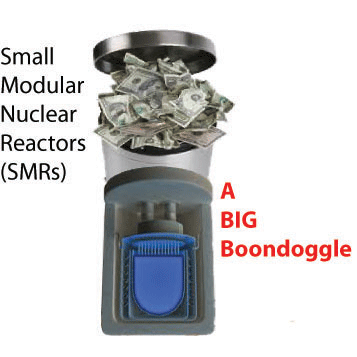 NRC recommends issuing early site permit for Clinch River Nuclear Site, OAK RIDGE TODAY, APRIL 8, 2019BY The U.S. Nuclear Regulatory Commission has issued a final environmental impact statement, and the staff has recommended, based upon the environmental review, issuing an early site permit for the Clinch River Nuclear Site in west Oak Ridge, where two or more small modular nuclear reactors could be built.The final environmental impact statement, or EIS, was issued by the NRC on April 3. A notice of the EIS and the staff’s recommendation were published in the Federal Register on Monday, April 8.
The 935-acre Clinch River Nuclear Site is located in Roane County along the Clinch River……….
An early site permit is the NRC’s approval of a site for one or more nuclear power facilities. It does not authorize the actual construction and operation of a new nuclear power plant. That requires a construction permit and an operating license, or a combined license. ………
The Clinch River Nuclear Site could be used to demonstrate small modular reactors with a maximum total electrical output of 800 megawatts………
Now that the final EIS has been published, there will be a mandatory hearing with the NRC after a final safety evaluation report is issued. The NRC expects that report to be published in June. The five-member commission will make a decision after the hearing about whether to issue the early site permit.
A contested hearing could be held by the Atomic Safety and Licensing Board panel if a member of the public or an organization successfully files a petition that raises safety or environmental concerns about granting the site a permit, the NRC said.
The NRC said an authorization for the construction or operation of new nuclear units at the Clinch River site is not being sought at this time.
The potential timing of any reactors being built at the site is not clear. Among other things, TVA doesn’t control the reactor certification process.
“There are currently no certified small modular reactor designs available, but TVA will continue working to ensure we are ready to fully evaluate them when they are available,” Hopson said.
Financial considerations would have to be evaluated, and the TVA board of directors would have the final decision “based on what they believe will be in the best interest of the people of the Tennessee Valley,” Hopson said.
Since a design hasn’t been certified for a small modular reactor, TVA used what is known as a “plant parameter envelope” as a surrogate for a nuclear power plant and its facilities when applying for the early site permit. The “plant parameter envelope” estimated the potential environmental impacts of building and operating two or more small modular reactors at the site. TVA used information from four small modular reactor vendors to develop the “plant parameter envelope.”
A reader has asked why TVA might consider adding new generating capacity at the Clinch River site even as it plans to retire coal-fired units like the Bull Run Fossil Plant in Claxton, citing flat or declining demand………https://oakridgetoday.com/2019/04/08/nrc-recommends-issuing-early-site-permit-clinch-river-nuclear-site/
Standing in the Fire With Young Climate Activists,
 Barbara Cecil, Truthout, 8 Apr 19, A global student uprising is underway, with youth worldwide demanding that adults face the climate crisis head on. They need a strong foundation in themselves and adult partnership for the challenges ahead.
Sixteen-year-old Swedish climate activist Greta Thunberg became one of the most well-recognized faces of this movement following her speech before world leaders at a UN climate conference in Poland in December 2018, when she said, “Since our leaders are behaving like children, we will have to take the responsibility they should have taken long ago.”
Youth leaders like Thunberg are rising up across the globe. I had the privilege of working with a group of them from the United World College of the Atlantic in early March this year when I co-led a retreat in the U.K. with 17- and 18-year-olds. There were six adults in the retreat as well as students from 11 countries. All of the students had been on the front lines of the most recent strike; all of them carry deep questions about their futures. A young woman from the Netherlands named Maura Van der Ark — whom I had met in the Amazon Rainforest two summers ago, as Truthout reporter Dahr Jamail and I conducted research for his book, The End of Ice — had organized the retreat to help fellow students find a solid footing in these times.
These young people were exhausted from overwork, highly pressured to succeed by society’s standards, confused about their pathways into the future, and angry at their planetary inheritance. They were harboring a severe need to slow down, be themselves, reflect, and connect deeply with the Earth, with one another and with supportive, understanding adults. My experiences with them left a deep impression on me…….. https://truthout.org/articles/standing-in-the-fire-with-young-climate-activists/
UK Nuclear workers vote to strike over pay
Nuclear workers vote to strike over pay, David McPhee, https://www.energyvoice.com/other-news/196648/nuclear-workers-vote-to-strike-over-pay/ Workers including security guards at an airport and nuclear site have voted to take industrial action in separate disputes over pay and other issues.
Members of the Unite union employed by Mitie at London City Airport and the
Sellafield reprocessing site in Cumbria voted heavily in favour of action.
Security guards, catering staff and other workers at Sellafied will stage a series of strikes from April 19 to 29 and from May 4 to 13 as well as banning overtime.
Unite said its members at the airport, including security guards and staff helping passengers with mobility issues, will also be taking industrial action.
Unite regional officer Michelle Cook said: “Mitie is treating its workforce with complete contempt. Workers are being subjected to low pay and third rate conditions.
“Mitie is drinking in the last chance saloon and if it wants to avoid industrial action they need to immediately enter into meaningful negotiations and properly address the workers concerns.”
EU seeks design bids for storage plant for Georgia’s nuclear waste
OSLO (Reuters) – Sweden’s radiation safety authority launched a tender on Monday for the design of a nuclear storage and processing plant for Georgia’s Soviet-era radioactive waste.
The authority, SSM, is the coordinator of a European Union storage project activated after Georgia finished locating the waste. The country will receive 10 million Swedish crowns ($1.08 million) for two years for collaborating.
The tender closes on May 10, said SSM.
Austrians protest against the completion of Mochovce again
Slovak Spectator, 8 Apr 19,But both the operator of the nuclear power plant and the Slovak regulator consider it scaremongering. The Austrians have objected to the third and fourth blocks of the Mochovce nuclear power plant, situated in Nitra Region, once again.
Global 2000, an Austrian environmental organisation, has claimed that the massive 1.5-metre-wide containment of the new reactor in Mochovce is not safe enough since it was drilled through and technologies were anchored in it, referring to an anonymous source. They pointed to the weakened stability of the building and damaged hermetic chambers that are expected to stop the potential leak of radioactive substances in case of an accident, the SITA newswire reported…….
The company called the statement of the Austrian organisation misleading and false. …… https://spectator.sme.sk/c/22094308/austrians-protest-against-the-completion-of-mochovce-again.html
UK’s National Grid prepares for 100 per cent renewable energy by 2025.
to the Australian Energy Market Operator, says it is preparing to change
its systems so it can operate the electricity grid with 100 per cent
renewable energy by 2025.
transition to renewables, but the progress in other countries is usually
overlooked.
out coal completely by 2025 and the grid operator says it needs to develop
a system in which it doesn’t need coal or gas back-up. The document
identifies the areas where traditional generation has delivered services
such as inertia, frequency control and voltage, which will now have to come
from wind and solar, plus various storage technologies and other “demand
side” options. This will require a re-design of the markets to better
represent the new technologies and the passing of the old ones. It has now
set a work plan that sets various deadlines in coming years, and tenders
for providers of new technologies.
https://reneweconomy.com.au/uks-national-grid-operator-gets-ready-for-100-renewables-by-2025/
SCANA ends internal investigation into failed nuclear reactor project
SCANA ends internal investigation
https://www.counton2.com/news/south-carolina-news/scana-ends-internal-investigation-into-f
Jail for hospital manager who took $10 million bribe from SNC Lavalin.
Former hospital manager who took $10 million bribe to favour SNC Lavalin bid sentenced to 39 months in prison https://business.financialpost.com/news/fp-street/ex-manager-sentenced-to-39-months-prison-in-hospital-corruption-fraud?fbclid=IwAR35AX1LrS6gLpVV1uHbnxVV1YmiImTnfFhjQHKAlpUe_n_4VInQAx9ksv4#comments-area 8 Apr 19, MONTREAL — A former hospital manager who pocketed a $10-million bribe in return for helping SNC-Lavalin win a Montreal hospital-building contract has been sentenced to 39 months in prison.
Quebec court Judge Claude Leblond sentenced Yanai Elbaz today in Montreal in a case that has been described as the greatest corruption fraud in Canadian history.
The judge rejected an argument from the McGill University Health Centre, which claimed it was entitled to compensation as a victim of the fraud. He ruled the question should be dealt with through civil proceedings.
In an agreed statement of facts tied to Elbaz’s plea, the former MUHC manager admitted to giving privileged information to engineering firm SNC-Lavalin to help its submission for the contract to build a massive hospital complex in west-end Montreal.
Elbaz, who has been detained since his Nov. 26 guilty plea, also admitted to denigrating SNC’s competitors in front of the hospital’s selection committee.
Elbaz and Arthur Porter, the ex-CEO of the MUHC who died a fugitive in Panamanian custody in 2015, received a total of $22.5 million to rig the bidding process to favour SNC-Lavalin, the statement of facts said.
KEPCO to ship MOX nuclear fuel assemblies from France in 2020
 A worker shows mixed oxide (MOX) fuel assemblies, which are the same type as those to be transported to Japan, in Marcoule, France, on March 14.
March 31, 2019
MARCOULE, France–Kansai Electric Power Co. (KEPCO) plans to transport 32 plutonium-uranium mixed oxide (MOX) fuel assemblies from France to Japan in 2020 at the earliest to help reduce its stockpile overseas.
KEPCO plans to use the MOX fuel in the No. 3 and the No. 4 reactors of its Takahama nuclear power plant in Fukui Prefecture, which would reduce its plutonium overseas by about one ton from the current 11 tons.
The MOX fuel was produced in France using plutonium extracted from spent nuclear fuel generated in Japanese nuclear power plants.
KEPCO, based in Osaka, had asked French nuclear fuel company Orano (formerly Areva) to reprocess the spent nuclear fuel and extract plutonium from it.
The plans were revealed to The Asahi Shimbun by an Orano executive.
In July 2018, the Japanese government announced a goal of decreasing the total volume of plutonium, which is stockpiled in Japan and overseas by Japanese companies, from the current 47 tons.
Japanese companies must reduce their plutonium stockpiles before a reprocessing facility in Rokkasho, Aomori Prefecture, starts operations in 2021 to extract plutonium.
In 2017, Orano concluded a contract with KEPCO to produce 32 MOX fuel assemblies.
Under the contract, Orano has extracted plutonium from spent nuclear fuel, which was transported from Japan, in its reprocessing plant in La Hague in northern France.
The French company plans to transport the plutonium to its facility in Marcoule, southern France, within 2019 to start production of MOX fuel.
Then, the MOX fuel will be transported from a port in Cherbourg, northern France, to the Takahama nuclear power plant in Japan on a sea route in 2020 at the earliest.
Since the 1970s, Japanese electric power companies have entrusted British and French firms to reprocess their spent nuclear fuel to promote nuclear fuel recycling.
Currently, MOX fuel is used in four reactors in Japan: the No. 3 and the No. 4 reactors of the Takahama plant; the No. 3 reactor of the Genkai nuclear power plant operated by Kyushu Electric Power Co.; and the No. 3 reactor of the Ikata nuclear power plant run by Shikoku Electric Power Co.
However, MOX fuel must be used at 16 to 18 reactors to steadily decrease the plutonium stockpile of Japanese companies overseas and up to seven tons of plutonium to be extracted at the Rokkasho facility a year.
If Japan’s stockpile of plutonium, which can be used as a raw material for nuclear weapons, increases, the country could be criticized by the international society.
Since 2018, the Japanese government has asked electric power companies to offer their plutonium to each other to decrease their stockpiles, particularly those overseas.
In the future, the three electric power companies of Kansai, Kyushu and Shikoku that are using MOX fuel could obtain plutonium from Tokyo Electric Power Co. and Chubu Electric Power Co., both of which can’t reduce their stockpiles as their reactors are idled.
“In order to decrease stockpiles, it is most efficient to burn MOX fuel at Japanese nuclear power plants,” said Orano CEO Philippe Knoche.
The risk of nuclear war between India and Pakistan: it’s been a close call

South Asia’s nuclear-armed neighbors pull back from the abyss…barely
 India and Pakistan have created the most perilous place on Earth. Salon DILIP HIRO, APRIL 7, 2019 This piece originally appeared on TomDispatch.
It’s still the most dangerous border on Earth. Yet compared to the recent tweets of President Donald Trump, it remains a marginal news story. That doesn’t for a moment diminish the chance that the globe’s first (and possibly ultimate) nuclear conflagration could break out along that 480-mile border known as the Line of Control (and, given the history that surrounds it, that phrase should indeed be capitalized). The casus belli would undoubtedly be the more than seven-decades-old clash between India and Pakistan over the contested territory of Kashmir. Like a volcano, this unresolved dispute rumbles periodically — as it did only weeks ago — threatening to spew its white-hot lava to devastating effect not just in the region but potentially globally as well.
The trigger for renewed rumbling is always a sensational terrorist attack by a Pakistani militant group on an Indian target. That propels the India’s leadership to a moral high ground. From there, bitter condemnations of Pakistan are coupled with the promise of airstrikes on the training camps of the culprit terrorist organizations operating from the Pakistan-controlled part of Kashmir. As a result, the already simmering relations between the two nuclear-armed neighbors are quickly raised to a boiling point. This, in turn, prompts the United States to intervene and pressure Pakistan to shut down those violent jihadist groups. To placate Washington, the Pakistani government goes through the ritual of issuing banning orders on those groups, but in practice, any change is minimal.
And in the background always lurks the possibility that a war between the two neighbors could lead to a devastating nuclear exchange. Which means that it’s time to examine how and why, by arraying hundreds of thousands of troops along that Line of Control, India and Pakistan have created the most perilous place on Earth.
How It All Began Continue reading
The persecution of Julian Assange: what this has to do with psychology, and with the use of torture
John Pilger speaks out for Julian Assange
an example of the sensitive, clandestine, real-world CIA psychology deployed against ‘terrorists’ and enemies of the state, as Julian Assange and Wikileaks have been branded.
In this case, the adversary in the US crosshairs has been not only Julian Assange and Wikileaks, but the global populations that Wikileaks seeks to inform. It is our own vulnerabilities – the vulnerabilities in the information processing systems of all human beings – that have been leveraged and exploited in order to undermine and discredit Wikileaks.
The fundamental psychological task is to render truth suspicious and deceit reassuring, war criminals virtuous and their critics corrupt, pacifism threatening and violence comforting, abuse of power righteous and resistance reprobate, torture forgivable and whistleblowing a crime, censorship a bastion of democracy and free speech a menace to be overcome. Much as George Orwell foresaw.
In order to justify the psychological war on Wikileaks, US powerbrokers have branded Wikileaks and Assange “anti-American” “terrorists”, a “non-state hostile intelligence service” and “enemy combatants”. Bolstered by these factually indefensible slurs, Julian Assange now faces imminent extradition to the United States to face secret charges, most likely for 2010 scoops exposing US war crimes in Iraq and Afghanistan.
Peace is bad. War is good. Truth is dangerous. Censorship will set you free. These are the positions underpinning the war on Wikileaks.
 The Psychology Of Getting Julian Assange, Part 1: What’s Torture Got To Do With It? https://newmatilda.com/2019/02/19/psychology-getting-julian-assange-part-1-whats-torture-got/ Dr Lissa Johnson on February 19, 2019
“…. Assange faces extradition to the United States and secret charges for his publishing activities should he step outside the Ecuadorian Embassy in London. This cross-border, extraterritorial persecution threatens not only Assange’s health, and possibly his life according to a recent UN statement, but poses grave legal risks both to journalism and dissent…..
The Australian rallies join a growing international chorus of organisations and individuals sounding increasingly urgent alarms over Julian Assange’s plight, and its implications for freedom of speech and democratic rights.
Late last year, as secret US charges against Julian Assange surfaced, and the threat of his imminent extradition to the US loomed, the United Nations Working Group on Arbitrary Detention (UNWGAD) issued a strongly worded statement to the UK Government, having previously ruled twice that Assange is being arbitrarily detained in the Ecuadorian Embassy in London.
In its statement, the UNWGAD demanded that the UK abide by its “binding” legal obligations and “immediately” secure freedom for Julian Assange. The UN reminded the UK Government that “human rights treaty law is binding law, it is not discretionary law. It is not some passing fancy”.
The same fears prompted 33 EU parliamentarians to write a similarly strongly worded letter to the British Prime Minister, the Ecuadorian President and the UN Secretary General on December 10th, condemning the “very serious and egregious violations of human rights in the heart of Europe.” They called for Assange’s “immediate release, together with his safe passage to a safe country.”
Two German MPs followed with a visit to the Ecuadorian Embassy on December 20th, at which they denounced the violation of Assange’s “fundamental rights” and expressed their “demand that this case has to be solved: that no publisher, no editor, no journalist is detained because of publishing the truth”.
The politicians’ and UN statements added to previous condemnations of Assange’s persecution from Human Rights Watch, Amnesty International, the American Civil Liberties Union, the Committee to Protect Journalists, and a former senior lawyer for the UNHCR and UN Expert on the Promotion of International Order.
All of these leading legal and human rights authorities have been making essentially the same fundamental point: that Julian Assange is being persecuted for publishing truth in the public interest, placing public interest journalism itself at risk, along with freedom of speech and other democratic and human rights principles.
It is the same fundamental point made by several speakers at an earlier Australian rally to free Julian Assange, held in Sydney in June last year. John Pilger spoke at that rally also.
Pilger’s important 2018 speech, however, like the rally itself, was subject to a near total, if not total, mainstream media blackout. So if you missed it, that may be why. And if you haven’t followed the US war on Wikileaks from the outset, as I hadn’t when I attended last year’s rally, Pilger’s speech is a powerful way to bring yourself up to speed. Continue reading
Hanford nuclear mess; the clean-up is delayed by the Trump administration
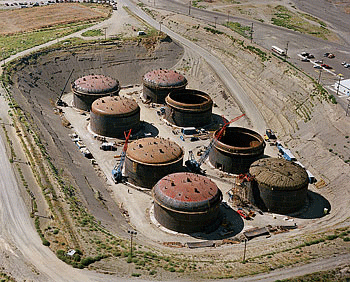
The U.S. Department of Energy recently proposed hundreds of millions of dollars in budget cuts for cleaning up the vast Hanford Nuclear Reservation in southeastern Washington, even though the estimated cost of the cleanup has at least tripled and could reach more than $600 billion.
“That’s a huge, huge cost increase,” said Tom Carpenter, director of the watchdog group Hanford Challenge.
At a hearing in Washington, D.C., last week, Democratic Sen. Patty Murray questioned Energy Secretary Rick Perry’s assertion that his agency can meet a legally binding cleanup schedule despite the proposed budget cuts. Much of the site’s aging infrastructure is deteriorating, including underground waste storage tanks and tunnels.
The Energy Department issued a report in January that raised the remaining cost of Hanford’s environmental cleanup to between $323 billion and $677 billion, with the work lasting until 2079 or 2102, depending on which estimate proves true. That is much higher than the previous estimate of $107 billion in costs to complete the cleanup by 2066.
That is “a pretty shocking number,” Perry told members of the House Appropriations Committee last month.
Shortly after the higher estimates were revealed, the Trump administration proposed a $416 million cut in its budget for Hanford that would reduce it from about $2.5 billion for the fiscal year ending Sept. 30 to $2.1 billion for the next fiscal year that starts Oct. 1.
Republican U.S. Rep. Dan Newhouse, whose district encompasses the site, said the administration’s “budget request numbers would fall short of fulfilling the federal government’s obligation to clean up the Hanford site.”
U.S. Sen. Ron Wyden, an Oregon Democrat, estimated it will take 300 years to clean up the site under the Trump administration’s proposed budget.
“Trump’s combination of bad math and shifty wordplay adds up to tragicomic incompetence,” said Wyden, a frequent critic of efforts to clean up the site.
Washington state officials have said the federal government has not provided enough funding to meet annual cleanup costs. They have suggested that least $3 billion annually is needed.
“We believe that the lack of adequate funding translates into a longer, more drawn-out cleanup, and that in turn is a significant factor in the increased cost of the total cleanup,” said Alex Smith, manager of nuclear waste programs for the Washington Department of Ecology.
Hanford was created by the Manhattan Project during World War II as the nation raced to build atomic bombs. The plutonium for the atomic bomb dropped on Nagasaki, Japan, at the end of the war was made at the site, which then produced about 70% of the plutonium for the U.S. Cold War arsenal.
1 This Month
Tell Congress: Prevent Nuclear Catastrophe in Iran

Tell Congress: Prevent Nuclear Catastrophe in Iran

Read the Public Inquiry Report, the Commissioners’ report, Surrendering Australia: The AUKUS Deception is available to download for free at aukuspublicinquiry.com. Or just watch the replay of the National Press Club Luncheon.


Shut down the radiation-damaged Heysham nuclear reactors now
To see nuclear-related stories in greater depth and intensity – go to https://nuclearinformation.wordpress.com

Say No to NASA’s Reckless Nuclear Reactor on the Moon
Say No to NASA’s Reckless Nuclear Reactor on the Moon
-
Archives
- November 2026 (215)
- October 2026 (302)
- September 2026 (339)
- August 2026 (330)
- July 2026 (355)
- June 2026 (287)
- May 2026 (306)
- April 2026 (356)
- March 2026 (251)
- February 2026 (267)
- January 2026 (308)
- December 2025 (358)
-
Categories
- 1
- 1 NUCLEAR ISSUES
- business and costs
- climate change
- culture and arts
- ENERGY
- environment
- health
- history
- indigenous issues
- Legal
- marketing of nuclear
- media
- opposition to nuclear
- PERSONAL STORIES
- politics
- politics international
- Religion and ethics
- safety
- secrets,lies and civil liberties
- spinbuster
- technology
- Uranium
- wastes
- weapons and war
- Women
- 2 WORLD
- ACTION
- AFRICA
- Atrocities
- AUSTRALIA
- Christina's notes
- Christina's themes
- culture and arts
- Events
- Fuk 2022
- Fuk 2023
- Fukushima 2017
- Fukushima 2018
- fukushima 2019
- Fukushima 2020
- Fukushima 2021
- general
- global warming
- Humour (God we need it)
- Nuclear
- RARE EARTHS
- Reference
- resources – print
- Resources -audiovicual
- Weekly Newsletter
- World
- World Nuclear
- YouTube
-
RSS
Entries RSS
Comments RSS

