Saudi Arabia moves forward on developing a nuclear industry
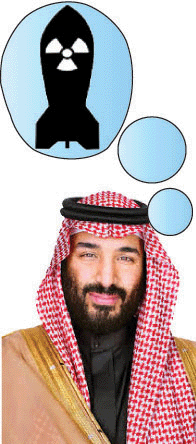 Saudi plans to invite bids for nuclear power project in 2020 https://gulfbusiness.com/saudi-plans-invite-bids-nuclear-power-project-2020/ 7 Apr 19, The world’s top oil exporter wants to diversify its energy mix Saudi Arabia plans to issue a multi-billion-dollar tender in 2020 to construct its first two nuclear power reactors and is discussing the project with U.S. and other potential suppliers, three sources familiar with the plans said.The world’s top oil exporter wants to diversify its energy mix, adding nuclear power so it can free up more crude for export. But the plans are facing Washington’s scrutiny because of potential military uses for the technology.
Saudi Arabia, which aims to mine for uranium, says its plans are peaceful. But Crown Prince Mohammed bin Salman said in 2018 the kingdom would develop nuclear arms if Iran did.
U.S., Russian, South Korean, Chinese and French firms are in talks with Riyadh to supply reactors, a promising deal for an industry recovering from the 2011 Fukushima nuclear disaster.
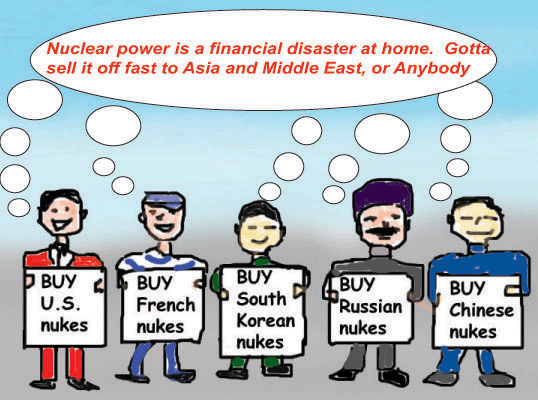
“Saudi Arabia is continuing to make very deliberate steps forward although at a slower pace than originally expected,” one of the sources familiar with the plans told Reuters.
Saudi officials previously said they aimed to select a vendor in late 2018, which then slipped to 2019. The sources said the tender would now be issued in 2020.
Two sources said the project was proceeding slowly partly because the kingdom was still in discussions with all potential suppliers rather than narrowing them down to a short list.
The plans have also been delayed by strained ties with Washington, which criticised Riyadh after the murder of Saudi journalist Jamal Khashoggi in the kingdom’s Istanbul consulate in October, a source familiar with the talks said.
Riyadh needs to sign an accord on the peaceful use of nuclear technology with Washington to secure the transfer of U.S. nuclear equipment and expertise, under the U.S. Atomic Energy Act. U.S. Energy Secretary Rick Perry said last week that the negotiations which began in 2012 were continuing.
The source said Washington has also been seeking to convince Riyadh to sign the International Atomic Energy Agency’s Additional Protocol on extra safeguards for verifying nuclear technology is used for peaceful applications. The kingdom has so far resisted, the source added.
The fate of these negotiations could determine whether Riyadh reaches a deal with U.S. firms, the source said.
WORKSHOPS
Saudi Arabia, which sent a “request for information” (RFI) to nuclear vendors in 2017, is holding workshops with vendors from five nations as part of the pre-tender process, one source said, adding that this was expected to last 12 to 15 months.
The King Abdullah City for Atomic and Renewable Energy (KACARE), tasked with developing the nuclear programme, has brought in an executive from oil giant Saudi Aramco to help manage the pre-tender consultancy process, two sources said.
The Energy Ministry, overseeing the project, and the kingdom’s international press office did not respond to Reuters requests for comment.
KACARE has in the past said the kingdom was considering building 17.6 gigawatts of nuclear capacity by 2032, requiring about 16 reactors. But the sources said the focus for now was on the first two reactors and a potentially smaller programme.
Neighbouring UAE is building a nuclear power plant, the first in a Gulf Arab state. Iran, across the Gulf, has a nuclear plant in operation and has been locked in a row over its nuclear ambitions with the United States.
Saudi Arabia, which has long vied with Iran for regional influence, has said it will not sign any deal with the United States that deprives the kingdom of the possibility of enriching uranium or reprocessing spent fuel in the future, both potential paths to a bomb.
South Korea’s state-owned Korea Electric Power Corp (KEPCO), Russian state nuclear group Rosatom, French utility EDF, state-run China National Nuclear Corp and U.S. Westinghouse have expressed interest in the Saudi project.
Absolute stalemate in nuclear negotiations, but Trump says that his relationship with Kim Jong-un is“very good,”
 Trump says his relationship with Kim remains ‘very good’ amid nuclear stalemate, US President Donald Trump made the statement during the Republican Jewish Coalition’s annual meeting. Asia News Network, by The Korea Herald, pril 8, 2019 US President Donald Trump said on Saturday (US time) that his relationship with North Korean leader Kim Jong-un remains “very good,” conveying his hopes of drawing Kim back to the negotiation table.His remarks come amid a stalemate between the two countries following the breakdown of the two leaders’ second summit in Hanoi, Vietnam, in late February. The deal breakers concerned denuclearization and economic sanctions.
“We’re getting along with North Korea. We’ll see how it works out, but we have a good relationship. Don’t forget, I have a very good relationship with Kim Jong-un,” Trump said during a speech at the Republican Jewish Coalition’s 2019 spring leadership meeting in Las Vegas………..
After their summit ended without an agreement, media reports revealed that the US had delivered a draft of an agreement demanding that Pyongyang transfer all its nuclear weapons and nuclear materials to the US.
According to Japan’s Yomiuri Shimbun on Sunday, the draft agreement consisted of five main points — two demands for the communist regime and three compensatory items.
In the document, the US defined denuclearization for the North as shipping out all its nuclear weapons and dismantling all related facilities, according to the Japanese daily, which cited as its sources officials from the US, South Korea and Japan.
The US draft sought to ban all future nuclear activities by Pyongyang and to conduct inspections to verify its nuclear disarmament process. There was also a plan to excavate the remains of US soldiers in North Korea.
In return, Washington reportedly offered to declare an official end to the 1950-53 Korean War — which came to a halt with only an armistice — and to establish joint liaison offices and provide economic support to the communist regime.
On Friday, US Secretary of State Mike Pompeo said he is “confident” that there will be a third summit between Trump and Kim, though he did not provide a clear date or a location.
n a televised interview with “CBS This Morning,” based in the US, Pompeo also said the Trump administration is “convinced” that Pyongyang is “determined as well” to achieve denuclearization.
Pompeo noted, however, that the administration remains “incredibly clear” that economic sanctions on the North “will not be lifted until our ultimate objective is achieved.”
Since the February summit, Pyongyang has expressed dissatisfaction toward Washington via its state news agency and its Foreign Ministry.
With Pyongyang’s Supreme People’s Assembly due to hold its first meeting on Thursday since a recent election, eyes are on whether the North Korean leader will mention denuclearization talks in his policy speech.
Pompeo said the US side will “closely watch” to see what Kim says, but that it does not expect any great surprises.
The North’s parliamentary session will coincide with the summit expected to take place in Washington between Trump and South Korean President Moon Jae-in. https://asianews.network/2019/04/08/trump-says-his-relationship-with-kim-remains-very-good-amid-nuclear-stalemate/
Climate change is getting REALLY serious – could produce Financial Crisis
-
Regional Fed paper says carbon tax could address the threat
-
The Fed doesn’t have tools to confront the crisis, paper says
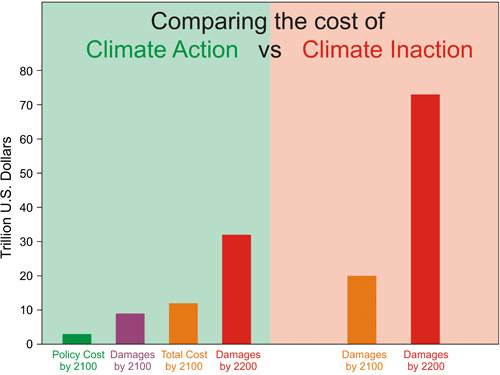
Climate change is becoming increasingly relevant to central bankers because losses from natural disasters that are magnified by higher temperatures and elevated sea levels could spark a financial crisis, a Federal Reserve Bank of San Francisco researcher found.
“Climate-related financial risks could affect the economy through elevated credit spreads, greater precautionary saving, and, in the extreme, a financial crisis,’’ Glenn Rudebusch, the San Francisco Fed’s executive vice president for research, wrote in a paper published Monday.
“There could also be direct effects in the form of larger and more frequent macroeconomic shocks associated with the infrastructure damage, agricultural losses, and commodity price spikes caused by the droughts, floods, and hurricanes amplified by climate change,’’ according to Rudebusch, who is also a senior policy adviser at the reserve bank.
While the Fed’s primary policy tools — short-term interest rates and large-scale asset purchases — aren’t designed to address phenomenon like global warming, policy makers may need to take climate-related damages into account when considering the long-term economic outlook, the researcher wrote. “Many central banks already include climate change in their assessments of future economic and financial risks when setting monetary and financial supervisory policy,” he wrote.
‘Fair Question’
Fed Chairman Jerome Powell told legislators in February it was a “fair question’’ to ask how the central bank would evaluate the economic impact of climate change and promised to look into it.
Rudebusch, whose bank operates as part of the Fed system but isn’t directed by Powell, suggested lawmakers could promote a transition to cleaner technologies by imposing a carbon tax, which is a fee on emissions. Former Fed chairmen Alan Greenspan and Paul Volcker in January endorsed a plan to tax emissions and distribute the revenue to U.S. households.
Some pressure is mounting in Congress to take aim at climate change, with House Speaker Nancy Pelosi pledging to take up climate legislation. That effort may not go far in the current political environment, as Republicans control the Senate and the White House. President Donald Trump said during the campaign he opposed taxing emissions and has expressed skepticism that humans contribute to global warming.
60 years and $1.2 billion to dismantle Three Mile Island nuclear reactor
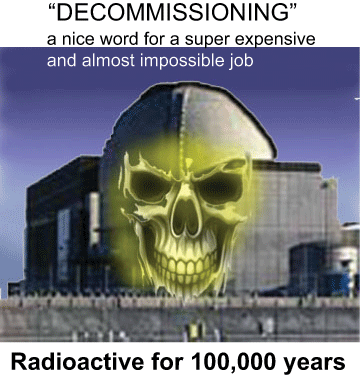 Three Mile Island nuclear reactor dismantling could take six decades, more than $1 billion, The Inquirer, by Andrew Maykuth, Exelon Generation, which plans to shut down Three Mile Island Unit 1 nuclear reactor in September unless Pennsylvania lawmakers come to its rescue, says it would take nearly 60 years and $1.2 billion to completely decommission the Dauphin County site.
The company, in a report filed Friday with federal regulators, said it plans to remove Unit 1′s nuclear fuel from the reactor immediately after shutdown. The uranium fuel-rod assemblies would cool in spent fuel pools for three years until they are moved to above-ground sealed canisters in 2022.
But the reactor’s cooling towers and other large components would remain standing until 2074, according to Exelon’s Post-Shutdown Decommissioning Activities Report, filed Friday with the Nuclear Regulatory Commission. All radioactive material would be safely stored or removed from the site by 2078.
Plant operators are required to submit a decommissioning plan within two years of shutdown, but the timing of the report provided Exelon with an opportunity to refocus public attention on pending Pennsylvania legislation that would provide ratepayer subsidies to nuclear power producers. Exelon says it is prematurely shutting down Unit 1 because it is losing money.
Exelon’s critics objected to the announcement, saying the choice to decommission the reactor site over the long term rather than pursue an accelerated decontamination schedule is an attempt to increase pressure on Pennsylvania policymakers to enact a proposed $500 million nuclear industry rescue and keep TMI open.
“This is a veiled extortion attempt,” said Eric Epstein, chairman of Three Mile Island Alert, a Harrisburg nuclear watchdog group.
Epstein feared that Exelon’s prolonged decommissioning schedule would delay the completion of cleanup of the damaged TMI Unit 2, which was permanently shut down in 1979 after America’s worst commercial nuclear accident. FirstEnergy Corp., which owns Unit 2, has said it plans to coordinate the final cleanup of its dormant reactor with Exelon’s decommissioning of Unit 1.
“Exelon is retreating from a timely cleanup of TMI-1, and this announcement means the damaged reactor — TMI-2 — will not be cleaned up until almost 100 years after the meltdown,” Epstein said.
Neil Sheehan, an NRC spokesperson, said the timeline for the final cleanup of the damaged reactor needs to be sorted out in light of Exelon’s announcement……….
Under federal regulations, plant operators have 60 years to clean up a site after a plant closes. The long-term decommissioning method called SAFSTOR allows radioactive levels to decline for decades before workers have to dismantle contaminated components. It also allows time for underfinanced trust funds to accumulate more value, said Sheehan.
The advantage of the more rapid decontamination strategy is that it allows the owner to employ workers experienced with the plant. It also makes the site available for reuse sooner. “For the community, they get the site cleaned up much more quickly,” said Sheehan.
Exelon said that the 837-megawatt reactor, which employs nearly 700 people, would reduce the staffing level to 300 after shutdown. A skeleton workforce of 50 would remain in place after 2022 to secure the site and the 1,200 tons of spent fuel stored in special steel casks.
Exelon, the nation’s largest nuclear energy producer, initially chose the long-term SAFSTOR method of decommissioning for its Oyster Creek Generating Station in New Jersey, which closed last year. But in July it announced it will transfer ownership to Holtec International, which plans to decommission the Ocean County site in eight years.
Exelon’s opponents in the contentious Pennsylvania legislative battle over a nuclear rescue on Friday complained that the company is profitable, but has successfully pressured Illinois, New York, and New Jersey to approve subsidies to keep unprofitable reactors afloat.
“Today’s announcement by Fortune 100 company Exelon is following the playbook they’ve used in other states to extract multimillion-dollar handouts that have led to skyrocketing electric bills for families, businesses, and school districts,” said the Pennsylvania Energy Consumer Alliance, a trade group of large industrial and commercial electric customers.
“As stated in Exelon’s own news release, decommissioning TMI will take years and require hundreds of jobs,” the organization said in a statement. “And the radioactive material they have generated will be stored on site through 2078 and beyond.” https://www.philly.com/business/energy/three-mile-island-nuclear-reactor-decommissioning-plan-exelon-years-20190405.html
Japan Business Federation, Keidanren, wants maximum service life of nuclear power plants extended to over 60 years
 Keidanren wants maximum service life of nuclear power plants extended to over 60 years https://www.japantimes.co.jp/news/2019/04/06/business/keidanren-wants-lifetime-nuclear-power-plants-extended-60-years/#.XKpkBtIzbGg Keidanren will ask the government to consider extending the maximum service life of nuclear power plants beyond the current 60 years, informed sources have said.
Keidanren, also known as the Japan Business Federation, will also request that periods in which nuclear plant operations are halted be excluded from their operating life spans, the sources said Friday.
The requests will be announced by Chairman Hiroaki Nakanishi, also chairman of Hitachi Ltd., at a news conference Monday.
Keidanren, the country’s biggest business lobby, regards nuclear power as an energy source essential for the country to move toward the decarbonization of the power sector.
In the requests, Keidanren will stress that the use of existing nuclear power facilities that have been confirmed safe is important, according to the sources.
Japan effectively limits the service life of nuclear plants to 40 years. Under the current rule, the period may be extended by up to 20 years if state approval is given.
Ukraine’s President Poroshenko issues nuclear decree, demands new reactors be built
Poroshenko appears committed to having the new reactors approved and built as soon as possible. The decree highlights Poroshenko’s resolve to ease financial burdens on ….. (subscribers only) https://www.kyivpost.com/business/poroshenko-issues-nuclear-decree-demands-new-reactors-be-built.html
It’s likely that Flamanville nuclear reactor will be delayed yet again, with discussion on how to fix faulty welds

ICIS 5th April 2019 The commissioning of France’s long-overdue 1.65GW Flamanville 3 nuclear project could face  further delays, according to industry stakeholders. A group of experts from French nuclear authority ASN, nuclear safety institute IRSN and utility EDF are set to meet on 9 April to discuss what to do about the welds of the plant’s EPR reactor, IRSN’s director Jean Cristophe-Niel said at a conference in Paris on Thursday.
At the meeting ASN could communicate to EDF whether it would want the welds to be entirely rebuilt or just repaired. If ASN does order the welds to be rebuilt this could significantly delay the commissioning of the plant which was previously set for winter 2019-2020.
The project has already faced delays spanning seven years. ASN will have to communicate its final decision on
Flamanville’s welds in May. The director of energy think-tank WISE-paris Yves Marignac also said at the conference that it was possible Flamanville 3 would be delayed further with no clear timeframe in sight. A number of
traders present at the conference said they were not surprised by this possibility given the project’s track record.
New Ohio Bill to promote nuclear energy, exclude wind and solar
 Ohio bill would create ‘clean air’ fund to benefit nuclear, excluding wind and solar, ENERGY NEWS NETWORK, April 5, 2019
The draft legislation would create a new surcharge, with proceeds distributed to power plants that “make a significant contribution toward minimizing emissions.”
Legislation to subsidize two FirstEnergy Solutions nuclear power plants in Ohio is about to surface in the Ohio House.
Republican majority leaders have been circulating a proposal that would add up to $300 million annually to electric bills across the state, creating a state “clean air program” with grants administered by political appointees.
About $180 million would be earmarked for the FirstEnergy Solutions nuclear power plants, say analysts who have looked at the legislation. The remaining $120 million could be used to prop up other companies — though it appears those companies would not be owners of wind and solar farms.
The draft legislation, obtained by the Energy News Network, would add a $2.50 per month surcharge to every residential customer’s bill, a $20 per month surcharge to every commercial customer’s bill and a $250 monthly charge to every industrial customer’s bill.
The legislation would also eliminate existing surcharges that commercial and residential customers pay to support energy efficiency and peak reduction programs created by the utilities. Industrial customers can already opt out of these programs.
Customers who want to continue supporting the efficiency programs — on top of the new “clean air” charges — would have to notify the Public Utilities Commission of Ohio in writing.
The statewide aspect of the new proposal is a new twist to create a nuclear subsidy. Two previous legislative bailout efforts limited a nuclear surcharge to Ohio customers in FirstEnergy territory.
The draft legislation, now in its fifth revision according to its title page, doesn’t actually mention the word “nuclear” in its language.
Instead the bill would create the Ohio Clean Air Program, echoing the carbon-free argument that FirstEnergy Solutions lobbyists have been using to describe their nuclear power plants….
The funds generated by the new surcharge would not go directly to a utility or to the state’s general fund. Instead they would flow into a clean air fund to bankroll what the legislation calls the Ohio Clean Air Program.
The Ohio Air Quality Development Authority, whose members are political appointees, would run the program and designate which power plants are a “clean air resource.”
Only power plants designated as a clean air resource would be eligible for grants. Wind and solar installations that receive state tax exemptions and production tax credits would not qualify under the terms of the new legislation………
The development of the bailout legislation parallels an effort by FirstEnergy Solutions to emerge from a federal bankruptcy court debt-free and prepared to reverse its planned shutdowns of the Davis-Besse nuclear plant just east of Toledo and the Perry nuclear power plant northeast of Cleveland — if it can win a subsidy from Ohio lawmakers. FirstEnergy Solutions is running a similar legislative effort in Pennsylvania, where it owns a twin reactor plant near Pittsburgh.
Bankruptcy Judge Alan Koschik of the Northern District of Ohio on Thursday dealt a significant blow to the company’s plans to quickly get out of bankruptcy. He rejected a provision that would have indemnified FirstEnergy Crop., parent of FirstEnergy Solutions, against future costs for environmental cleanup of its former power plant sites. FirstEnergy Solutions said it would revise its plan.
EDITOR’S NOTE: This story has been updated to clarify that existing surcharges for clean energy and efficiency would be eliminated, not just made optional.
https://energynews.us/2019/04/05/midwest/ohio-bill-would-create-clean-air-fund-to-benefit-nuclear-excluding-wind-and-solar/
Democratic presidential candidate Tulsi Gabbard slams decision to sell Saudi Arabia nuclear weapons tech

 ‘How does this serve US interests?’ Gabbard slams decision to sell Saudi Arabia nuclear weapons tech https://www.rt.com/usa/455279-gabbard-saudi-arabia-extremism-isis/ 2 Apr, 2019 Tulsi Gabbard has slammed the US for allowing firms to sell Saudi Arabia nuclear tech despite its history of exporting extremism which inspires Islamic State (IS, formerly ISIS) and Al-Qaeda, which she says the Kingdom supports.
The Hawaiian congresswoman and Democratic presidential candidate took aim at the Kingdom’s history of extremism in a Twitter video that criticized Energy Secretary Rick Perry’s secret authorizations, to six US companies, allowing for the sale of nuclear power technology and assistance to Saudi Arabia, as Reuters revealed last week. Gabbard said the move is “both mind-blowing and inexplicable.”
Saudi Arabia is the “primary exporter of jihadist ideology, Wahhabi Salafist ideology that is the motivation and inspiration for terrorist groups like ISIS and al Qaeda – groups that the Saudis both directly and indirectly support,” Gabbard said.
The kingdom has been tied to Al-Qaeda and extremism in the past, with 15 of the 19 9/11 hijackers coming from Saudi Arabia, according to the CIA. In 2015, one of the alleged hijackers, Zacarias Moussaoui, claimed several members of the Saudi royal family had been listed as Al-Qaeda donors in the database he worked on under orders of Osama bin Laden, US media reported.
WikiLeaks cables from the US State Department from 2009 revealed“donors in Saudi Arabia constitute the most significant source of funding to Sunni terrorist groups worldwide.” In a 2014 email, published by WikiLeaks, then-Secretary of State Hillary Clinton said Saudi Arabia was “providing clandestine financial and logistic support to ISIL and other radical Sunni groups in the region.” It has also supplied weapons to IS in Syria.
Saudi Arabia is reportedly planning to create at least two nuclear power plants, but many are concerned that’s a precursor to developing nuclear weapons, which would further destabilize the region. It was also reported, last year, that Israel was selling Saudi Arabia nuclear secrets
Trump’s protecting of coal or nuclear plants with further subsidies will generate no public benefit.
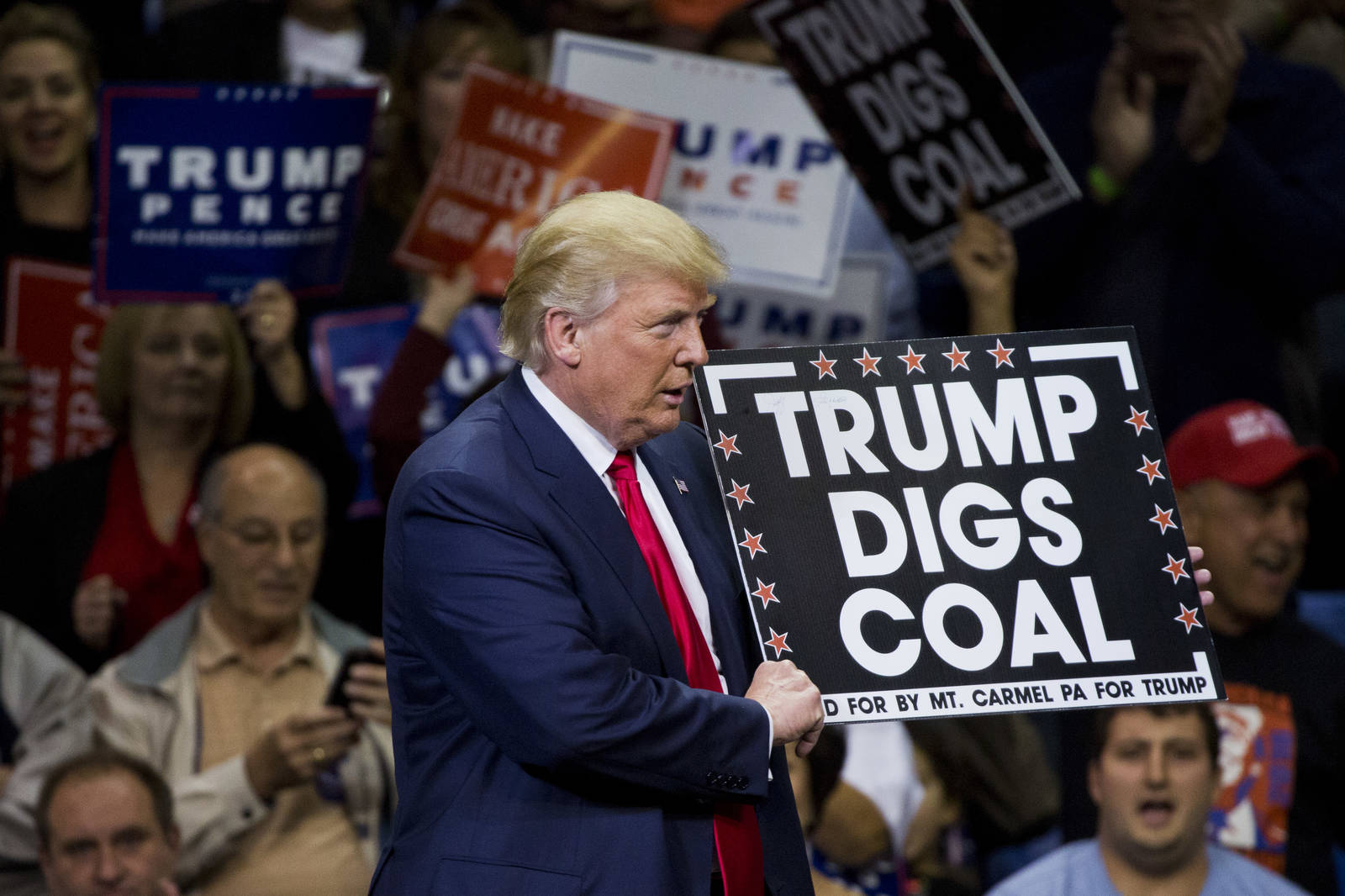 Trump administration should forget subsidies for coal, nuclear energy, The Hill, BY JARED WHITLEY, 04/06/19 “……… Energy Secretary Rick Perry recently visited the Vogtle nuclear power plant in eastern Georgia, where he announced that the administration would provide an additional $3.7 billion in loan guarantees to support construction of two reactors. The move leaves the government guaranteeing a full $12 billion of the project’s financing.
The Trump administration appears unwilling to let the market determine the optimal energy mix in this country. In the past two years, it has attempted to prop up failing nuclear and coal-fired power plants several times, offering up various rationales for doing so. Last year it suggestedthese fuel sources were more resistant to cyber threats, an unsure claim. The administration also put forth the argument that subsidizing coal and nuclear plants is necessary for reasons of national security, but the majority of our nation’s natural gas supply is sourced from domestic producers.
Most recently, the administration introduced language in the Economic Report of the President outlining a potential vehicle for a federal bailout. The report discussed a “voluntary reserve program” that would serve to “promote the grid’s resilience.” While all sources would be eligible to be part of a reserve, unsurprisingly the report specifically mentions nuclear and coal plants as assets that could be shown preferentially treatment given they provide alleged “greater resilience benefits.” It is little more than a solution to a problem that doesn’t exist.
The best response from this, or any, administration to the changing mix of energy prices would be benign neglect. Protecting coal or nuclear plants with further subsidies will generate no public benefit.
Russia keen to market nuclear reactors to Kazakhstan
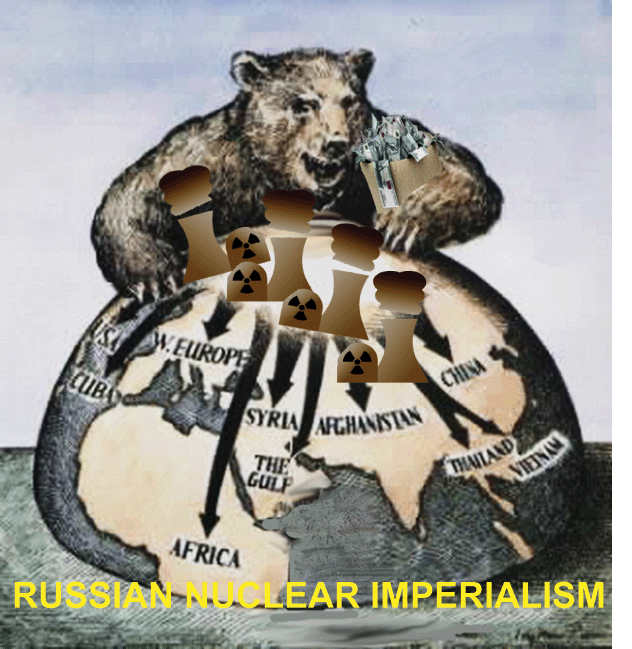 Putin Offers Russian Help To Build Kazakh Nuclear Plant, April 06, 2019 Radio Free Europe, By Bruce Pannier ,
President Vladimir Putin proposed Russian help to build such a plant when he met with Kazakhstan’s new president, Qasym-Zhomart Toqaev, in Moscow on April 3.
A day later, Deputy Kazakh Energy Minister Magzum Mirzagaliev said there was no “concrete decision” to construct a nuclear power plant in Kazakhstan, but he also revealed that officials have already chosen a site for such a project near the town of Ulken, in the southeastern Almaty Province.
Both Russia and Kazakhstan have agreements with many nations about cooperation in civilian atomic-energy use, but the Kazakh-Russian nuclear relationship is probably the most complicated of all.
Putin’s overture to Toqaev was far from the first time Moscow has offered help building a nuclear plant in Kazakhstan, though it was interesting that Putin decided to publicly repeat the proposal to Toqaev, who only became Kazakhstan’s president on March 20 and was making his first official visit abroad in that capacity.
No wonder Kazakhstan’s Energy Ministry released a public statement on April 4 assuring the public would be consulted about building any such plant until “after public hearings and consent from local executive bodies on the territory where construction of an [nuclear power plant] is possibly planned.”
‘Russian Technology’
On April 3, Russian media carried the headline Putin Offers Toqaev The Construction Of An NPP In Kazakhstan Using Russian Technology. Putin was quoted as saying the two countries would be moving to a new form of cooperation.
By “Russian technology,” Putin presumably means Rosatom, Russia’s state nuclear company.
Rosatom does the same thing. The company boasts a $100 billion portfolio, and its website says it has 36 nuclear reactor projects in 12 countries — in places like Bangladesh, Egypt, India, Belarus, Iran, Turkey, Hungary, and China. Rosatom submits bids for every nuclear-power-plant contract worldwide. And Rosatom also has nuclear cooperation agreements with countries in South America, Africa, Asia, and Europe.
The cost of a nuclear power plant starts at around $8 billion, and that is in cases where there is only one reactor, such as Rosatom’s VVER-1000. During Putin’s visit to India in October, Rosatom signed a contract to construct six VVER reactors at a new site in India, in addition to the four other reactors Rosatom is already contracted to build at India’s Kudankulum site. Two VVER reactors are already in operation there.
Russian financial institutions usually loan most, or nearly all, of the money to those countries for the construction of such plants, and Russian nuclear-fuel provider TVEL frequently receives the contract for fuel supplies.
Kazakhstan would be a different sort of customer for Rosatom. It has been the world’s leading uranium producer and exporter since 2009. And Kazakhstan does more than just extract uranium. State company Kazatomprom has worked for years, and is now able to take uranium through all the cycles, from raw uranium to nuclear fuel. From 2007 to 2017, Kazatomprom owned a 10-percent stake in Westinghouse.
So Kazakhstan has a large domestic source of uranium and can produce its own nuclear fuel; and Kazatomprom has nuclear technicians trained mostly by Russia but also some trained in Japan, France, and other countries.
Russia and Kazakhstan cooperate to mine uranium in Kazakhstan. Putin mentioned “six Russian-Kazakh enterprises for extracting and enriching uranium.”
Kazatomprom exported nearly 15,290 tons of uranium in 2018, and about 17 percent of that went to Russia.
Kazakhstan and Russia established the International Uranium Enrichment Center in Angarsk in 2007. As its name suggests, the center will provide low-enriched uranium (LEU) to interested parties. The center has been internationally hailed as ensuring a steady supply of uranium for nuclear reactors while not transferring the technology to enrich uranium.
The International Atomic Energy Agency (IAEA) and Kazakhstan’s government also established an LEU bank at Kazakhstan’s Ulba Metallurgical Plant in Oskemen, “a physical reserve of up to 90 metric tons of low enriched uranium suitable to make fuel for a typical light water reactor.”
The IAEA and Russia have an agreement on transporting the uranium to the LEU bank in Oskemen.
The April 4 statement from Kazakhstan’s Energy Ministry said nuclear-power-plant technologies from five countries, “including Rosatom,” were being studied. But the ministry also said other projects were being reviewed, such as more gas-fired plants, hydropower projects, and coal-fired thermal plants.
Proposed Locations
Russian news agency Interfax noted in its report that Russian Ambassador to Kazakhstan Aleksei Boroodavkin said in February, “We are hopeful that a decision will be taken soon for the construction of an atomic power station that we hope Rosatom will construct.”………. https://www.rferl.org/a/kazakhstan-putin-offers-russian-nuclear-plant-help/29865177.html
Wind power restricted in Ohio, while nuclear plants could get subsidy
Nuclear bailout plan should fix wind-farm restrictions https://www.crainscleveland.com/letters-editor/letter-editor-nuclear-bailout-plan-should-fix-wind-farm-restrictions Paul Dvorak, Strongsville, 7 Apr 19, The March 25 article “Bailout chances may be good for FES plants” discussed how a bailout might fix the crumbling Davis-Besse and Perry nuclear plants. One proposal, the article tells, would add $5 per month to the bill of Ohio ratepayers for an unspecified period, or about $300 million per year.
By itself, this is not a good solution to the problem because, aside from being crony capitalism, it just rewards the mismanagement of plant owner FirstEnergy Solutions. Still, it just might get a green light from the Ohio Legislature because FirstEnergy has greased the skids for its passage with generous donations to the re-election of key legislative members. Verify that for yourself at www.votesmart.org.
The Union of Concerned Scientists also voiced objections to the bailout on five grounds: 1) Safety — Davis-Besse, says UCS, has one of the worst safety records in the United States. 2) Transparency — Demonstrate a need for economic support. 3) Flexibility — Financial support should be temporary and adjustable. 4) Strengthened renewable-energy and efficiency standards — FirstEnergy has worked for the opposite. 5) A commitment to impacted communities.
Wind power has the lowest production cost of any generation method, can lower electric bills and make Ohio look like a modern state looking to a bright future. We ignore this reality to our economic peril.
Reflective roofs can reduce overheating in cities and save lives during heatwaves
https://www.eurekalert.org/pub_releases/2019-04/uoo-rrc040519.php UNIVERSITY OF OXFORD, 5 Apr 19, A new modelling study from the University of Oxford and collaborators has estimated how changing the reflectivity of roofs can help keep cities cooler during heatwaves and reduce heat-rated mortality rates.
Cities are generally a few degrees warmer than the countryside, due to the urban heat island effect. This effect is caused partly by a lack of moisture and vegetation in cities compared with rural landscapes, and because urban building materials store up heat. During heatwaves, daytime temperatures can get dangerously high in cities, leading to serious health effects and increasing mortality risk.
The idea of ‘cool’ roofs is to make roof surfaces more reflective to sunlight (for example by painting roofs a lighter colour) thereby reducing local temperatures.
Scientists used a regional weather model to look at how temperatures changed across the study city of Birmingham and the West Midlands, depending on the extent of cool roof deployment. They looked at the hot summers of 2003 and 2006, and found that the intensity of the urban heat island (the urban-rural temperature difference) reached up to 9oC for Birmingham city.
Previous work has shown that the extra heat associated with the urban heat island is responsible for around 40-50% of heat related mortality in the West Midlands during heatwaves.
This latest study, published in Environment International, suggests that implementing cool roofs across the city can reduce peak daytime local temperatures by up to 3oC during a heatwave. This reduction in temperature could potentially offset around 25% of the heat-related mortality associated with the urban heat island during a heatwave.
The urban heat island effect is most pronounced at night time, because urban materials slowly release their stored heat overnight, however, the biggest benefits of cool roofs were seen to be during the hottest part of the day where sunlight was reflected away. The type of building made a difference too: modifying only half of all the industrial and commercial buildings had the same impact on lowering temperatures as modifying all the high-intensity residential buildings.
Co-author Dr Clare Heaviside, of the University of Oxford’s Environmental Change Institute comments: “Climate change and increasing urbanisation mean that future populations are likely to be at increased risk of overheating in cities, although building and city scale interventions have the potential to reduce this risk.
“Modelling studies like this one can help to determine the most effective methods to implement in order to reduce health risks in our cities in the future.”
Doubts on safety of Sweden’s copper canisters for radioactive wastes
“Still no problem” The power industry’s nuclear waste company On April 4,
SKB expressed its opinion to the government with a supplement to, in the
first place, certain that the copper canister will function as intended in
the planned final repository for spent nuclear fuel in Forsmark.
the same claim that the court rejected in its opinion to the government on
January 23, 2018. In a first analysis, the environmental organizations’
nuclear waste review has concluded that the compilation is very weak and
does not show that the court’s concerns are unfounded. It is now important
that the Swedish Radiation Safety Authority performs a renewed thorough and
unconditional review of both the old and the new data.
http://www.mkg.se/skb-yttrar-sig-till-regeringen-om-kopparkorrosion-fortfarande-inget-problem
Tensions in volatile Middle East region, as Saudi nuclear program accelerates
New satellite imagery shows that construction on an experimental reactor is making “expeditious” progress — just three months after the Kingdom announced plans to build it, according to former director for nuclear inspections at the International Atomic Energy Agency (IAEA), Robert Kelley.
Kelley estimated that the reactor could be completed in “nine months to a year.”
The Kingdom has been open about its nuclear program with the IAEA, which sent a team to Saudi Arabia last July to check on building plans. It has repeatedly pledged that the program is peaceful. But Crown Prince Mohammed bin Salman said last year that “without a doubt if Iran developed a nuclear bomb, we will follow suit as soon as possible.”
Also raising concern among industry experts and some in Congress is the Saudi insistence that it should be allowed to produce its own nuclear fuel, rather than import it under strict conditions.
In an interview last year, Saudi Energy Minister Khalid al Falih said: “It’s not natural for us to bring enriched uranium from a foreign country to fuel our reactors,” citing the country’s uranium reserves.
Vision 2030
Saudi Arabia went public with its nuclear ambitions nine years ago, but the plans have gone into overdrive as part of the Crown Prince’s “Vision 2030” — a strategy to wean Saudi Arabia off its reliance on oil and diversify both the economy and its energy mix……….
The IAEA sent a team to Saudi Arabia in July last year to review the development of its nuclear power infrastructure. That mission concluded that the Kingdom is “well placed to finalize its plans for construction of its first nuclear power plant” through partnerships with countries that have nuclear power industries.
In a visit to Riyadh in January, Mikhail Chudakov, IAEA Deputy Director General, confirmed Saudi Arabia had “made significant progress in the development of its nuclear power infrastructure.”
But when the Saudis want to move to the next stage — fueling the reactor at King Abdulaziz City and any commercial plants — they will have to submit to more intrusive IAEA involvement.
“They’ve been exempt for 30 years since they signed a non-proliferation treaty,” said Kelley. “Now they’re going to have to make some serious paperwork and agree to inspections,” if they want to acquire nuclear fuel.
US concerns
Skepticism in the US Congress over whether Saudi Arabia can be a trusted partner has grown since the gruesome murder of journalist Jamal Khashoggi in Istanbul last year. That’s now manifested itself in critical scrutiny of the Saudi nuclear program — and especially whether the Trump Administration is doing enough to ensure non-proliferation…….
US concerns
Skepticism in the US Congress over whether Saudi Arabia can be a trusted partner has grown since the gruesome murder of journalist Jamal Khashoggi in Istanbul last year. That’s now manifested itself in critical scrutiny of the Saudi nuclear program — and especially whether the Trump Administration is doing enough to ensure non-proliferation.
Asked whether it was acceptable for Saudi Arabia to become a nuclear power, US Secretary of State Mike Pompeo was unequivocal in a TV interview on Friday.
“We will not permit that to happen. We will not permit that to happen anywhere in the world,” Pompeo told CBS. “The President understands the threat of proliferation. We will never write a $150 million check to the Saudis and hand them over the capacity to threaten Israel and the United States with nuclear weapons, never.”
A bipartisan resolution introduced in the Senate in February demanded that the use of any US nuclear power technology in Saudi Arabia must be accompanied by safeguards to ensure Saudi Arabia cannot enrich uranium or reprocess spent fuel.
“The last thing America should do is inadvertently help develop nuclear weapons for a bad actor on the world stage,” said Democratic Senator Jeff Merkley, one of the resolution’s sponsors………
Iran claims that the Trump Administration plans to sell Saudi Arabia nuclear technology without sufficient safeguards. “First a dismembered journalist; now illicit sale of nuclear technology to Saudi Arabia fully expose #USHypocrisy,” Foreign Minister Javad Zarif tweeted in February.
And in March, Ali Shamkhani, secretary of Iran’s Supreme National Security Council, accused unnamed regional states of developing “suspicious nuclear projects,” which would force Tehran to revise its defense strategy. Quoted by Iranian news agencies, Shamkhani said such plans would “force us to revise our strategy.”
Whatever Saudi Arabia’s energy strategy, and however sincere its pledge that it has no wish to develop nuclear weapons, the mere existence of a nuclear program is bound to inflame tensions across the Gulf. https://www.clickorlando.com/news/international/saudi-nuclear-program-accelerates-raising-tensions-in-volatile-region
1 This Month
Tell Congress: Prevent Nuclear Catastrophe in Iran

Tell Congress: Prevent Nuclear Catastrophe in Iran

Read the Public Inquiry Report, the Commissioners’ report, Surrendering Australia: The AUKUS Deception is available to download for free at aukuspublicinquiry.com. Or just watch the replay of the National Press Club Luncheon.


Shut down the radiation-damaged Heysham nuclear reactors now
To see nuclear-related stories in greater depth and intensity – go to https://nuclearinformation.wordpress.com

Say No to NASA’s Reckless Nuclear Reactor on the Moon
Say No to NASA’s Reckless Nuclear Reactor on the Moon
-
Archives
- November 2026 (215)
- October 2026 (302)
- September 2026 (339)
- August 2026 (330)
- July 2026 (355)
- June 2026 (287)
- May 2026 (306)
- April 2026 (356)
- March 2026 (251)
- February 2026 (267)
- January 2026 (308)
- December 2025 (358)
-
Categories
- 1
- 1 NUCLEAR ISSUES
- business and costs
- climate change
- culture and arts
- ENERGY
- environment
- health
- history
- indigenous issues
- Legal
- marketing of nuclear
- media
- opposition to nuclear
- PERSONAL STORIES
- politics
- politics international
- Religion and ethics
- safety
- secrets,lies and civil liberties
- spinbuster
- technology
- Uranium
- wastes
- weapons and war
- Women
- 2 WORLD
- ACTION
- AFRICA
- Atrocities
- AUSTRALIA
- Christina's notes
- Christina's themes
- culture and arts
- Events
- Fuk 2022
- Fuk 2023
- Fukushima 2017
- Fukushima 2018
- fukushima 2019
- Fukushima 2020
- Fukushima 2021
- general
- global warming
- Humour (God we need it)
- Nuclear
- RARE EARTHS
- Reference
- resources – print
- Resources -audiovicual
- Weekly Newsletter
- World
- World Nuclear
- YouTube
-
RSS
Entries RSS
Comments RSS

