Nuclear energy and Price Anderson Act – too risky for insurance companies – just too dangerous

Should the U.S. Revive Nuclear Energy?, NYT Len Charlap, 10 Apr 19, Princeton, N.J. I will support nuclear power the day after the Price-Anderson Nuclear Industries Indemnity Act is repealed. If insurance company actuaries consider nuclear power to be so dangerous that they cannot compute premiums that the industry can afford, then that industry is not economically viable. If the government (i.e., taxpayers) has to cover the industry with catastrophic insurance, then the government should own the reactors and provide nonprofit energy.
We were lucky at Three Mile Island. We were minutes away from a complete meltdown that given the plant’s location would have killed thousands and done billions in damage. Investigations of Three Mile Island showed that, like the Deepwater Horizon disaster, extremely dangerous processes cannot be allowed to remain in control of people whose first responsibility is profit or return to shareholders…. https://www.nytimes.com/2019/04/09/opinion/letters/nuclear-energy.html
Indian Point nuclear station shut down for nearly two weeks: electricity maintained by gas and renewables
|
Behind the scenes, though, something occurred that made all that possible. In the days after Indian Point powered down — a rare occurrence prompted by a malfunction in one reactor and scheduled spring maintenance in the other — the state’s electric grid pivoted. With an assist from the grid’s overseers, the state’s energy resources shifted in a way that could offer a preview of what’s to come in the years ahead when Indian Point is scheduled to shut down for good…….. Nuclear power generated by three upstate plants decreased to 2,711 megawatts on March 18 from 4,240 megawatts on March 13, the data show. On just two of the seven days, the contribution from solar and wind power was more than 1,000 megawatts. “Natural gas is filling the gap,” said Darren Suarez, who keeps track of the state’s daily energy mix for the Business Council of New York state. “It’s the largest dispatchable resource that’s available at that point in time and we’d expect it to fill the gap.”…… those who monitor the state’s fuel mix say Indian Point’s shutdown provided a rare opportunity for a glimpse at what lies ahead unless renewable sources of power gain a larger percentage of the state’s energy mix. A snapshot in time taken from NYISO’s real-time dashboard, which is updated every five minutes, offers some insight into the state’s current fuel mix. For example, on April 1, wind and solar contributed about 6.5 percent of the state’s energy mix while another renewable, hydropower, was at 28.43 percent, NYISO data show. New York has the largest hydroelectric plant east of the Rockies in Niagara Falls……. Transmission of power problemGrid watchers say in order to add more renewables to the downstate grid, the state will need to resolve a transmission bottleneck that prevents upstate power from getting down into the Lower Hudson Valley and points south……… https://www.poughkeepsiejournal.com/story/news/2019/04/10/indian-point-shutdown-natural-gas-filled-nuclear-energy-gap/3417635002/ |
|

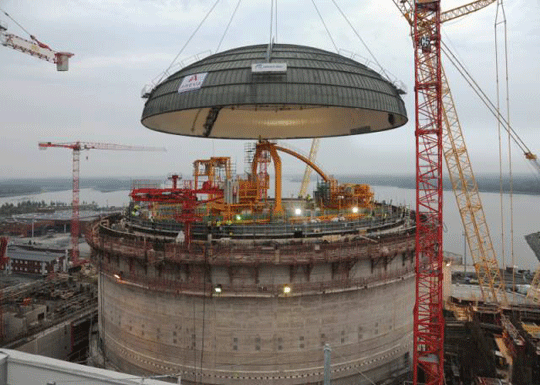
Finland’s Olkiluoto 3 nuclear reactor – another delay after delays
|
* Likely to delay planned January 2020 start-up * Project already more than 10 years behind schedule – The start-up of Finland’s long-delayed Olkiluoto 3 nuclear reactor is likely to be pushed back by at least another two months, its project director said on Wednesday. The reactor in western Finland, built by a consortium of France’s Areva and Germany’s Siemens, is already more than a decade behind schedule and had been due to start producing electricity in January 2020. However, operator Teollisuuden Voima (TVO) said that modification work during the first quarter had not progressed according to schedule. This means the loading of nuclear fuel into the reactor will now be pushed back by at least two months, to August from June, it added. “This new schedule review informed by the plant supplier is disappointing of course,” it said in a statement. Changes to automated systems had been made and needed to be checked, which took longer than expected, said project director Jouni Silvennoinen. He told Reuters the fuelling delay would likely postpone the start-up of regular electricity production by an equal number of months. Prior to Wednesday, the most recent delay to the project was announced in November 2018, as a result of which TVO was entitled to a payment of 18 million euros ($20 million) from Areva. Silvennoinen said the financial impact of the new delay would be clarified when the plant eventually started producing electricity regularly. |
|
SNC-Lavalin nuclear contracts at risk if it’s convicted
https://www.hilltimes.com/2019/04/10/snc-lavalin-nuclear-contracts-at-risk-if-its-convicted/195245
Pompeo avoids questions on ending waivers permitting Iran’s ongoing nuclear work
|
Pompeo Won’t Commit to Shutting Down Iran’s Contested Nuclear Work
Pompeo avoids questions on ending waivers permitting Iran’s ongoing nuclear work Washington Free Beacon, BY: April 10, 2019 Secretary of State Mike Pompeo would not commit to ending a series of waivers issued by the Trump administration that have permitted Iran to engage in some its most contested nuclear work, including at a secretive military site that once housed the Islamic Republic’s nuclear weapons program. In an exchange with Sen. Ted Cruz (R., Texas), Pompeo declined to commit to canceling the disputed waivers, which have sparked an inter-administration battle, as first reported by the Washington Free Beacon. The issue of these waivers—which have been granted to Iran so that it can continue its lucrative oil trade, as well as nuclear research work—has generated a growing rift between Iran hawks on Capitol Hill and within the administration and Pompeo’s State Department. Sources have identified those in the State Department as the reason several policies that have kept the landmark Iran nuclear deal on life support have continued, despite President Donald Trump’s decision to walk away from the pact. Cruz and other Iran policy hawks have gone on record in recent weeks, including in interviews with the Free Beacon, to demand that Pompeo stop issuing both the oil and nuclear waivers. Multiple sources inside and outside the administration have described to the Free Beacon a widening fight between those U.S. officials who aim to keep the nuclear deal alive and those who see an opportunity to tighten the noose on Tehran and potentially collapse its hardline ruling regime……. The issue of these waivers—which have been granted to Iran so that it can continue its lucrative oil trade, as well as nuclear research work—has generated a growing rift between Iran hawks on Capitol Hill and within the administration and Pompeo’s State Department. Sources have identified those in the State Department as the reason several policies that have kept the landmark Iran nuclear deal on life support have continued, despite President Donald Trump’s decision to walk away from the pact…….. https://freebeacon.com/national-security/pompeo-wont-commit-to-shutting-down-irans-contested-nuclear-work/ |
|
Mesothelioma Compensation Center to the rescue of nuclear workers affected by mesothelioma
Mesothelioma Compensation Center Now Offers to Make Certain That a Nuclear Power Worker with Mesothelioma or Asbestos Exposure Lung Cancer Gets Accelerated Compensation with The Help of Attorney Erik Karst and His Colleagues at Karst von Oiste, Mesothelioma Compensation Center
PR NewswireApr 10, 2019, NEW YORK, The Mesothelioma Compensation Center is incredibly passionate about making certain that a person who was exposed to asbestos at any type of nuclear power plant and now has mesothelioma or asbestos exposure lung cancer receives the very best possible financial compensation. The group recommends the law firm of Karst von Oiste to assist people like this because they so much experience with power plants and asbestos exposure that would have occurred at these types of facilities as they would like to discuss at 800-714-0303. www.karstvonoiste.com
Rather than offering a free book about mesothelioma or asbestos exposure lung cancer the Mesothelioma Compensation Center offers direct access to attorney Erik Karst the founding partner of the law firm Karst von Oiste. The law firm of Karst von Oiste is one of the nation’s leading legal experts on mesothelioma or asbestos exposure lung cancer.
If the family of a nuclear power worker or a Navy Veteran who was exposed to asbestos on a nuclear submarine or aircraft carrier is concerned about compensation, they are urged to call the Mesothelioma Compensation Center anytime at 800-714-0303 for direct access to attorney Erik Karst for answers to questions about compensation and or how the compensation process works. http://MesotheliomaCompensationCenter.Com……
Rather than offering a free book about mesothelioma or asbestos exposure lung cancer the Mesothelioma Compensation Center offers direct access to attorney Erik Karst the founding partner of the law firm Karst von Oiste. The law firm of Karst von Oiste is one of the nation’s leading legal experts on mesothelioma or asbestos exposure lung cancer.
If the family of a nuclear power worker or a Navy Veteran who was exposed to asbestos on a nuclear submarine or aircraft carrier is concerned about compensation, they are urged to call the Mesothelioma Compensation Center anytime at 800-714-0303 for direct access to attorney Erik Karst for answers to questions about compensation and or how the compensation process works. http://MesotheliomaCompensationCenter.Com https://www.prnewswire.com/news-releases/mesothelioma-compensation-center-now-offers-to-make-certain-that-a-nuclear-power-worker-with-mesothelioma-or-asbestos-exposure-lung-cancer-gets-accelerated-compensation-with-th
China opens fourth border crossing with North Korea, complete with radiation detectors
Japan Times AFP-JIJI, APR 10, 2019
BEIJING – A Chinese city has opened a new border crossing with North Korea — fitted with radiation detectors — even as talks between Washington and Pyongyang have languished over disagreements for nuclear sanctions relief………
The crossing also has a nuclear radiation detection gate, the city said. China has long been worried about any fallout from North Korea’s nuclear activities and Jilin was rocked by an earthquake after a massive bomb test across the border in September 2017. ….. https://www.japantimes.co.jp/news/2019/04/10/asia-pacific/china-opens-fourth-border-crossing-north-korea-complete-radiation-detectors/#.XK6MiFUzbGg
General Electric avoids class action from Japanese homeowners and businesses affected by the 2011 Fukushima nuclear disaster
|
GE ducks lawsuit over Fukushima disaster https://www.reuters.com/article/generalelectric-fukushima-lawsuit/ge-ducks-lawsuit-over-fukushima-disaster-idUSL1N21R1REDena Aubin, 10 Apr 19A federal judge in Boston has dismissed a proposed class action against General Electric Co by Japanese homeowners and businesses affected by the 2011 Fukushima nuclear disaster, ruling that Japan is a better forum for the lawsuit.
In a decision on Monday, U.S. District Judge Patti Saris said a trial in the United States would burden the court, raise complex questions about nuclear plant design in Japan and require the translation of reams of documents into English. To read the full story on WestlawNext Practitioner Insights, click here: bit.ly/2KxaQxQ
|
|
The growing threat of nuclear confrontation
“Storm clouds are gathering”: Nuclear expert warns of new arms race
A New Nuclear Arms Race: As NATO Marks 70th Anniversary, Threat of Nuclear Confrontation Grows
JOE CIRINCIONE: We’re cursed in this discussion by a very narrow definition of national security. We’ve all come to accept that national security equals military forces and weapons, when, in fact, as you point out, a national security is more often determined by the health and welfare of its citizenry, the system of justice, whether citizens feel that they’re engaged in the country and have a role in the governance of that country. And spending on military is just one small part of national security, but this has become the test of whether a country is carrying its fair burden. So, burden sharing with NATO countries has been an issue in this town for decades. Republicans and Democrats have both harped on it, because it’s kind of an easy way for them to show that they’re tough, that they’re strong.
But let’s put this in perspective. What are we talking about here? The world as a whole, every year, spends about $1.7 trillion on military weapons and forces. One-point-seven. The United States and our NATO allies account for $1 trillion of that. So more than half of all global spending is spent by the United States and our NATO allies. The NATO allies alone account for about $240 billion. That’s what they spend. What are they spending it to guard against? Well, if you think that Russia is the main threat, Russia only spends about $66 billion every year on defense. In fact, its spending dropped by 20% between 2016 and 2017, the last year we have figures for. So, its spending is going down.
So why this demand for the NATO allies to spend more, when they’re beset with all kinds of problems that have nothing to do with military, all kinds of internal, economic, immigration problems, social justice problems, health and welfare problems? Why? Well, one, it’s simple. The 2% solution, it’s a simple mantra that is repeated. And, two, this directly benefits military contractors.
Who makes the money off of this? Well, most of the money that we spend in this country on defense, and that the Europeans spend, go to a relative handful of defense contractors: Boeing, Lockheed Martin, Northrop Grumman, Raytheon, etc. And they lobby incessantly for these kind of increases, in Washington, in NATO headquarters, in the capitals of Europe.
And now we have the absurd situation where a 31-year veteran of Boeing, a corporate executive, Patrick Shanahan, is the acting secretary of defense. I mean, this is such an obvious conflict of interest, you would think that people would say, “Well, no, you can’t do that.” But, of course, this is Trump’s Washington, where oil industry executives are running the EPA, and pharmaceutical companies run the FDA, so it’s become accepted. But it’s not right. It’s not fair. And it distorts us.
And it’s dangerous. Just one last fact: If you take Trump at his word that he wants them to contribute 4%, well, that means you want Europe to double their defense spending, from about $230 billion to $460 billion. For what? To do what? What does this go towards? We’ve lost track of the real security needs we face, and we’ve become obsessed with spending more and more on military weapons that in fact have only a minor role to play in the national security of a country.-year veteran of Boeing, a corporate executive, Patrick Shanahan, is the acting secretary of defense. I mean, this is such an obvious conflict of interest, you would think that people would say, “Well, no, you can’t do that.” But, of course, this is Trump’s Washington, where oil industry executives are running the EPA, and pharmaceutical companies run the FDA, so it’s become accepted. But it’s not right. It’s not fair. And it distorts us.
And it’s dangerous. Just one last fact: If you take Trump at his word that he wants them to contribute 4%, well, that means you want Europe to double their defense spending, from about $230 billion to $460 billion. For what? To do what? What does this go towards? We’ve lost track of the real security needs we face, and we’ve become obsessed with spending more and more on military weapons that in fact have only a minor role to play in the national security of a country…….
AMY GOODMAN: Joe, you’ve written several books, one of them Nuclear Nightmares: Securing the World Before It Is Too Late, and Bomb Scare: The History and Future of Nuclear Weapons. Do you think it’s too late? And what do you think needs to happen?
JOE CIRINCIONE: All the arrows are pointing in the wrong direction, so nuclear storm clouds are gathering. For example, John Bolton, the national security adviser, has been very successful in sabotaging talks with North Korea. The one benefit of the Trump presidency might be that he could negotiate a solid deal with Kim Jong-un. It now appears, according to reports this week, that at the Hanoi summit John Bolton sabotaged those talks by presenting a list of unacceptable demands, an all-or-nothing offer to the North Koreans that caused them to call off the talks.
He has killed the Intermediate Nuclear Forces Treaty. This is a Ronald Reagan treaty, that successfully pulled out and destroyed 3,000 nuclear weapons from Europe. You may have been covering this in the ’80s, Amy. When we were pouring nuclear weapons into Europe, massive demonstrations. The biggest rift in the NATO alliance until this point was that crisis. Ronald Reagan and Mikhail Gorbachev negotiated a treaty. Bolton never liked it. He killed it.
And why did he kill it? He used the excuse of a Russian violation, which I believe is real but the kind of thing that can be fixed within the treaty framework. And what—but why did they kill it? Because there are elements in the U.S. military and the defense industry that want to build new nuclear weapons that were prohibited by that treaty, to deploy against China and to put into Europe.
So, weeks after we announced we were withdrawing from the treaty, it was revealed that the Department of Defense is starting manufacturing, research and development and production of a new ground-launched cruise missile, a so-called GLCM. You may remember this phrase from the ’80s. It was GLCMs and Pershing IIs that we were pouring into Europe. And so, Secretary General Stoltenberg sought to assure the Congress that NATO would not accept a new intermediate nuclear forces nuclear weapon in Europe.
So Bolton is doing this a little cleverly. It’s like a Trojan horse. It’s going to be a conventionally armed ground-launched cruise missile, a conventionally armed GLCM, that will go into Europe, perhaps in the next couple of years. But, of course, you can easily swap out the conventional warhead for a nuclear warhead. So I think they’re planning to put these weapons in to avoid the kind of mass demonstrations, and later, possibly, equip them with nuclear weapons.
This is the kind of Cold War policy that we thought was behind us. We thought the arms race was over. It’s not over. We are in a new arms race. Every single nuclear-armed country is building new nuclear weapons and heading towards a confrontation point. You’ve got to be a real optimist to think that you can keep thousands of nuclear weapons in fallible human hands indefinitely and something terrible is not going to happen. I am very worried about the direction of the arms race, the direction of our policies.
AMY GOODMAN: Joe Cirincione, president of Ploughshares Fund, author of Nuclear Nightmares: Securing the World Before It Is Too Late and Bomb Scare: The History and Future of Nuclear Weapons. To see Part 1 of our interview, go to democracynow.org. This is Democracy Now!
https://www.democracynow.org/2019/4/8/trump_calls_for_growing_nato_budgets
Melting glaciers causing sea levels to rise at ever greater rates
 https://www.eurekalert.org/pub_releases/2019-04/uoz-mgc040419.php
Glaciers have lost more than 9,000 billion tons (that is 9 625 000 000 000 tons) of ice between 1961 and 2016, which has resulted in global sea levels increasing by 27 millimeters in this period. The largest contributors were glaciers in Alaska, followed by the melting ice fields in Patagonia and glaciers in the Arctic regions. Glaciers in the European Alps, the Caucasus and New Zealand were also subject to significant ice loss; however, due to their relatively small glacierized areas they played only a minor role when it comes to the rising global sea levels.
Combination of field observations and satellite measurements
For the new study, the international research team combined glaciological field observations with geodetic satellite measurements. The latter digitally measure the surface of the Earth, providing data on ice thickness changes at different points in time. The researchers were thus able to reconstruct changes in the ice thickness of more than 19,000 glaciers worldwide. This was also possible thanks to the comprehensive database compiled by the World Glacier Monitoring Service from its worldwide network of observers, to which the researchers added their own satellite analyses. “By combining these two measurement methods and having the new comprehensive dataset, we can estimate how much ice has been lost each year in all mountain regions since the 1960s,” explains Michael Zemp, who led the study. “The glaciological measurements made in the field provide the annual fluctuations, while the satellite data allows us to determine overall ice loss over several years or decades.”
335 billion tons of ice lost each year
The global mass loss of glacier ice has increased significantly in the last 30 years and currently amounts to 335 billion tons of lost ice each year. This corresponds to an increase in sea levels of almost 1 millimeter per year. “Globally, we lose about three times the ice volume stored in the entirety of the European Alps – every single year!” says glaciologist Zemp. The melted ice of glaciers therefore accounts for 25 to 30 percent of the current increase in global sea levels. This ice loss of all glaciers roughly corresponds to the mass loss of Greenland’s Ice Sheet, and clearly exceeds that of the Antarctic.
“Northern Canada has warmed and will continue to warm at more than double the global rate.”
 Canada Warming Twice as Fast as World, Report Warns https://www.usnews.com/news/best-countries/articles/2019-04-05/global-warming-is-twice-as-fast-in-canada-as-rest-of-the-world-report-says?int=98f508
Many environmental effects being seen in the country are ‘effectively irreversible, say authors of study.
The North American nation is warming on average at twice the rate of the rest of the world, according to a new scientific report produced by the Environment and Climate Change Canada, the national government agency responsible for coordinating the country’s environmental policies. The average temperature in Canada today is 1.7 degrees Celsius (3 degrees Fahrenheit) higher than 70 years ago, according to the report. By comparison, the average global temperature increase during the same period is 0.8 degrees Celsius.
Both past and future warming in Canada is, on average, about double the magnitude of global warming,” say the authors of the report. “Northern Canada has warmed and will continue to warm at more than double the global rate.”
Additionally, the warming produced from carbon dioxide emissions from human activity is “effectively irreversible,” the report’s authors warn.
Among some of the report’s major findings:
- Changes in temperature already show in various areas of the country and scientists say they will only intensify.
- Precipitation is projected to increase, on average, yet summer rainfall may decrease in particular regions.
- The Canadian Arctic and Atlantic Oceans have been the most impacted, with both experiencing “longer and more widespread sea-ice-free conditions”, the report says.
- The availability of freshwater is changing, the report says, with the risk of water supply shortages expected to increase in the summer.
The magnitude of climate change in high versus low emission scenarios paint two future scenarios for the country, according to the scientists. If large and rapid warming occurs, Canada’s climate with be severely affected as greenhouse gas emissions will grow. Limited warming may only occur, the report notes, if Canada and the rest of the world work on eliminating carbon emissions early in the second half of the century and on substantially lowering other greenhouse gases
Research for the report began in February 2017 and draws “primarily from existing sources of information that have been peer-reviewed and are publicly available,” the authors say.
The report’s authors also say human influence on climate change is clear. “It is likely that more than half of the observed warming in Canada is due to the influence of human activities.”
Earlier this year a global survey of people in 26 countries named climate change as the greatest threat to international security.
Australian rare earths processing company Lynas is rebuked by Malaysian environmental and consumer groups

Lynas is being unscientific, not SAM or CAP https://www.malaysiakini.com/letters/471173 SM Mohamed Idris 6 Apr 2019 Sahabat Alam Malaysia (SAM) and the Consumers Association of Penang (CAP) refer to the letter by Lynas Malaysia reported in Malaysiakini on 5 April 2019, which says that our recent statements about the plant’s wastes are “false and ignore scientific fact.”
The controversy is over the definition of wastes from the Lynas’ water leach purification (WLP) process, which contains thorium and uranium.
Lynas claims that the wastes are naturally-occurring radioactive material (called NORM), while we claim that the wastes are not naturally-occurring, but have been technologically-enhanced and should be called technologically-enhanced naturally-occurring radioactive material known as TENORM.
Citing “two eminent scientists”, Lynas states as fact that “the small amount of thorium and uranium in the WLP generated are not man-made but naturally occurring radionuclides found in soil, water and in food.”
Lynas is clearly distorting the facts.
First of all, the thorium and uranium containing wastes generated by Lynas are not found to naturally occur in the Gebeng area, where the plant is located. On the contrary, the raw material which is processed by the Lynas plant is lanthanide concentrate that contains the thorium, uranium and the rare-earth.
This raw material is processed and imported from the Mount Weld mine in Australia and is brought to Malaysia. It is then subject to further processing in Gebeng by Lynas.
Therefore, how can it be said that say that the thorium and uranium are naturally occurring in the soil, water and in food when they were not there before in the Gebeng area, if not for the Lynas operations?
Moreover, what is even more significant is that we are talking about the generation of an accumulated amount of more than 450,000 metric tonnes of radioactive wastes from the Lynas operations thus far. To call this naturally-occurring radioactive material is indeed unscientific.
Secondly, the wastes that Lynas has generated from the WLP process clearly falls within the definition of TENORM, as defined by the US Environmental Protection Agency (USEPA) as: “Naturally occurring radioactive materials that have been concentrated or exposed to the accessible environment as a result of human activities such as manufacturing, mineral extraction, or water processing.”
Kings Bay Plowshares: Peace Activists Face 25 Years for Action at U.S. Nuclear Submarine Base
NY Radiation Specialists Unveils State-of-the-Art Linear Accelerator at NYCBS
NY Radiation Specialists Unveils State-of-the-Art Linear Accelerator at NYCBS benzinga, 8 Apr 19, Port Jefferson Station, NY, April 08, 2019 –(PR.com)– On Tuesday, March 25, New York Radiation Specialists unveiled its brand new Varian Halcyon Linear Accelerator, at New York Cancer & Blood Specialists’ Eastchester Center for Cancer Care. The “NYCBS” Eastchester location is a multi-lingual facility located at 2330 Eastchester Road in the Bronx, just minutes from the Pelham Parkway. The Halcyon makes the NYCBS Eastchester Center for Cancer Care the most state-of-the-art radiation site in the region.
Concern in both Democrats and Republicans about Hanford nuclear waste, as costs escalate, and Trump administration cuts back the budget
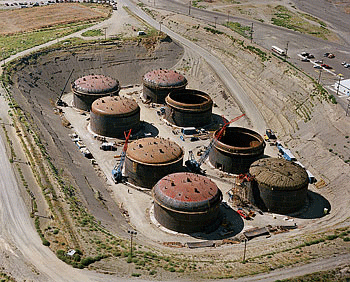 The Columbian 6th April 2019 The slow pace of cleaning up the nation’s largest cache of radioactive
waste left over from the production of nuclear weapons is frustrating state
officials from both major political parties, who blame the Trump
administration for not doing more.
The U.S. Department of Energy recently
proposed hundreds of millions of dollars in budget cuts for cleaning up the
vast Hanford Nuclear Reservation in southeastern Washington, even though
the estimated cost of the cleanup has at least tripled and could reach more
than $600 billion.
“That’s a huge, huge cost increase,” said Tom
Carpenter, director of the watchdog group Hanford Challenge. At a hearing
in Washington, D.C., last week, Democratic Sen. Patty Murray questioned
Energy Secretary Rick Perry’s assertion that his agency can still meet a
legally-binding cleanup schedule despite the proposed budget cuts. Much of
the site’s aging infrastructure is deteriorating, including underground
waste storage tanks and tunnels.
1 This Month
Tell Congress: Prevent Nuclear Catastrophe in Iran

Tell Congress: Prevent Nuclear Catastrophe in Iran

Read the Public Inquiry Report, the Commissioners’ report, Surrendering Australia: The AUKUS Deception is available to download for free at aukuspublicinquiry.com. Or just watch the replay of the National Press Club Luncheon.


Shut down the radiation-damaged Heysham nuclear reactors now
To see nuclear-related stories in greater depth and intensity – go to https://nuclearinformation.wordpress.com

Say No to NASA’s Reckless Nuclear Reactor on the Moon
Say No to NASA’s Reckless Nuclear Reactor on the Moon
-
Archives
- November 2026 (215)
- October 2026 (302)
- September 2026 (339)
- August 2026 (330)
- July 2026 (355)
- June 2026 (287)
- May 2026 (306)
- April 2026 (356)
- March 2026 (251)
- February 2026 (267)
- January 2026 (308)
- December 2025 (358)
-
Categories
- 1
- 1 NUCLEAR ISSUES
- business and costs
- climate change
- culture and arts
- ENERGY
- environment
- health
- history
- indigenous issues
- Legal
- marketing of nuclear
- media
- opposition to nuclear
- PERSONAL STORIES
- politics
- politics international
- Religion and ethics
- safety
- secrets,lies and civil liberties
- spinbuster
- technology
- Uranium
- wastes
- weapons and war
- Women
- 2 WORLD
- ACTION
- AFRICA
- Atrocities
- AUSTRALIA
- Christina's notes
- Christina's themes
- culture and arts
- Events
- Fuk 2022
- Fuk 2023
- Fukushima 2017
- Fukushima 2018
- fukushima 2019
- Fukushima 2020
- Fukushima 2021
- general
- global warming
- Humour (God we need it)
- Nuclear
- RARE EARTHS
- Reference
- resources – print
- Resources -audiovicual
- Weekly Newsletter
- World
- World Nuclear
- YouTube
-
RSS
Entries RSS
Comments RSS

