Journalist Glenn Greenwald defends Assange
Journalist Glenn Greenwald defends Assange: The Hill, Julia Manchester 24 Apr 19, ‘Things that journalists do every single day’ Journalist Glenn Greenwald on Monday defended WikiLeaks founder Julian Assange after he was charged by the Justice Department earlier this month for allegedly conspiring to hack a government computer in connection with the organization’s release of sensitive government files in 2010.
“So much of what’s in the indictment, encouraging a source to get more documents, helping a source cover her tracks in order not to be detected, are things that journalists do every single day,” Greenwald, co-founding editor at The Intercept, told hosts Krystal Ball and Buck Sexton in an appearance on Hill.TV.
“You can say journalists don’t typically help a source hack into a password in order to get you know, a better way of hiding her identity, but helping a source avoid detection is definitely something journalists are not just entitled to do, but obligated to do,” he continued. ……https://thehill.com/hilltv/rising/439992-greenwald-defends-assange-these-are-things-that-journalists-do-every-single-day
Planning application for Wylfa nuclear plant examined, despite project halt due to lack of investment
Officials will rule on a development consent order (DCO) application for
the project in three months. If the Planning Inspectorate approves the DCO,
the project must also be approved by business secretary Greg Clark before
it can go ahead. Introduced in 2008, DCOs are designed to streamline
construction planning for projects designated as nationally significant by
rolling other individual consents such as planning permission, listed
building consent and compulsory purchase orders into one. The decision to
continue with the DCO application for Wylfa comes despite work on the site
remaining suspended – work was stopped in January when Hitachi struggled
to secure additional private investment in the project.
Wastes from other nuclear stations could be dumped at Hinkley Point A

 Somerset Live 23rd April 2019 Fears ‘skips of nuclear waste’ could be transported through Bridgwater to be stored at Hinkley Point A. Dozens of skips full of nuclear waste could
soon be transported through Bridgwater from other parts of the UK. Magnox
Ltd currently operates the Hinkley Point A site near Stogursey, which
includes a small area where nuclear waste is stored before being moved
elsewhere for processing. Currently, only waste which is generated on the
Hinkley site can legally be stored there. But the company is putting
forward plans to allow waste from other nuclear power stations to be
transported to Hinkley by road – via Bridgwater.
https://www.somersetlive.co.uk/news/somerset-news/fears-skips-nuclear-waste-could-2788091
Chelsea Manning is denied bail, by U.S. appeals court
U.S. appeals court denies Manning’s bail request, upholds contempt finding, Sarah N. Lynch, 24 Apr 19, WASHINGTON (Reuters) – Former U.S. Army intelligence analyst Chelsea Manning will remain in jail after a federal appeals court on Monday denied her request to be released on bail, and upheld a lower court’s decision to hold Manning in civil contempt for refusing to testify before a grand jury.
The ruling is a blow to Manning, who has been detained since March after she declined to answer questions in connection with the government’s long-running investigation into Wikileaks and its founder Julian Assange.
In a comment released by a spokesman, Manning said that while disappointing, the appeals court ruling will still allow her to “raise issues as the government continues to abuse the grand jury process.”
“I don’t have anything to contribute to this, or any other grand jury,” Manning added.
Assange was arrested on April 11 at Ecuador’s Embassy in London, after U.S. prosecutors in the Eastern District of Virginia unsealed a criminal case against him alleging he conspired with Manning to commit computer intrusion.
The Justice Department said Assange was arrested under an extradition treaty between the United States and Britain.
……Manning has tried to fight the grand jury subpoena in the Assange case, citing her First, Fourth and Sixth Amendment rights under the Constitution.
Manning’s lawyer, Moira Meltzer-Cohen, suggested prosecutors were abusing “grand jury power,” and that “the likely purpose of her subpoena is to help the prosecutor preview and undermine her potential testimony as a defense witness for a pending trial.”
Her lawyers have also argued that the courtroom was improperly sealed during substantial portions of the hearing.https://www.reuters.com/article/us-usa-manning/us-appeals-court-denies-mannings-bail-request-upholds-contempt-finding-idUSKCN1RY14O
New report warns that world is dangerously close to increased use of nuclear weapons
 World dangerously close to increased use of nuclear weapons, British politicians warn http://www.xinhuanet.com/english/2019-04/24/c_138005576.htm LONDON, April 24 (Xinhua) — The threat of nuclear weapons being used through misunderstanding or miscalculation has risen, a committee of British politicians warned Wednesday.
In a new report, the International Relations Committee of the House of Lords called on the British government to encourage greater dialogue between all nuclear possessor states about nuclear risk to reduce global tensions. Their report, “Rising nuclear risk, disarmament and the Nuclear Non-Proliferation Treaty,” has been published just days before states convene for the Preparatory Committee for the 2020 Review Conference of the Parties to the Treaty on the Non-Proliferation of Nuclear Weapons (NPT), which is scheduled to hold its third session from April 29 to May 10 at United Nations Headquarters in New York. Committee Chairman Lord Howell said: “We are now dangerously close to a world without arms control agreements, paving the way for a new arms race and for increased risk of nuclear weapons use. “Disintegrating relationships between nuclear possessor states, new capabilities and technologies, mixed with a lack of communication and understanding, mean that the risk of nuclear weapons being used is greater now than it has been since the Cold War.” Howell said the UN conference next week is an opportunity to push for more efficient dialogue and transparency between nuclear possessor states to show a demonstrable commitment to disarmament. “We urge the (British) government to take our serious concerns into consideration, and use the Preparatory Committee to address them,” he added. n its conclusions, the committee says its main concerns are that misunderstanding, miscalculation or mistakes could lead to the use of nuclear weapons. “There is a lack of understanding between nuclear possessor states on their respective nuclear doctrines and declaratory policies, for example what the response would be to a cyber-attack on a country’s nuclear command and control system,” the report says. It adds that global nuclear non-proliferation efforts have been undermined by the U.S. decision to withdraw from the Iran nuclear deal. |
|
India’s irresponsible behaviour in its pursuit of nuclear weapons supremacy
Indian Irresponsible Behavior as Nuclear Power, Modern Diplomacy, 23 Apr 19, South Asia is termed as one of the volatile regions of the world, where nuclear brinkmanship is probable because of the longstanding historical animosity between India and Pakistan. The onus of instability and volatility in the region rests with India’s inspiration for regional hegemon, which seeks domination through coercion and use of power. Its ambitions to join global cartels such as Nuclear Suppliers Group (NSG) without meeting the criteria is self-explanatory of its coercive yet illegitimate policies.
How a nuclear apocalypse could be launched: how a president’s power to do this could be restrained
|
PRESSING THE BUTTON: HOW NUCLEAR-ARMED COUNTRIES PLAN TO LAUNCH ARMAGEDDON (AND WHAT TO DO ABOUT THE U.S.) War on the Rocks, By ANDY CHOW 24 Apr 19, “What would happen if the president of the U.S.A. went stark-raving mad?”That question appeared on the cover of Fletcher Knebel’s bestselling 1965 novel, Night of Camp David. Knebel, who also wrote Seven Days in May, described a president succumbing to paranoia as those around him struggled to keep him from starting a nuclear war. For obvious reasons, the book was re-released in 2018 in a new edition.
The presidency of Donald Trump has renewed a lingering debate about how much of the terrible responsibility to inflict large-scale nuclear destruction nuclear-armed countries should invest in a single person. The question is not only about Trump, of course. He is a member of a club that also includes Russia’s Vladimir Putin, China’s Xi Jinping and North Korea’s Kim Jong Un — “Rocketman” himself. It is a club that is far more exclusive than the Mar-a-Lago. The terms of this debate are well-known and relate to the specific requirements of nuclear deterrence. On the one hand, there is a broad desire to retain political control over the use of nuclear weapons and to ensure that nuclear weapons are never used by accident or by an unauthorized person. On the other hand, it is typically thought that the credibility of deterrence relies on the certainty of retaliation under all circumstances, even in difficult ones, such as in response to a surprise attack. These twin goals are in tension, a situation that Peter Feaver famously termed the “always/never” dilemma — the weapons should “always” launch when ordered by a legitimate authority, but “never” if no legal order has been given. Each nuclear-armed state has struck a slightly different balance at different points in time, with states shifting “back and forth between delegative and assertive postures” depending on the importance placed on the urgency of response and the general state of civil-military relations and domestic politics. A preference for “always” — certainty that any lawful launch order will be executed — may lead a state to accept a greater risk that nuclear weapons could be used without proper authorization. The preference for “always” could, in extreme cases, lead to so-called “dead hand” systems that would ensure the launch of nuclear-armed missiles even if political leaders were dead. A common procedure to manage the always/never dilemma is to require two or more persons at various links in the chain of command to agree on a step involving nuclear weapons (the so-called “two-man” rule.) The two-person rule may differ greatly in practice across states……. Neither of us is terribly convinced by recent proposals from Congress to insert itself into the process and usurp, in part, the president’s authority to order a nuclear strike. The president is the commander in chief. Once Congress appropriates the funds for military forces, it has little to say about how these forces might be used beyond the power to declare war. Congress has consistently avoided even this responsibility, as the failure to revise the 2001 Authorization for the Use of Military Force demonstrates. Nevertheless, Congress could attempt to compel the president, time and circumstances permitting, to confer with at least the vice president, secretary of defense, and the chairman of the Joint Chiefs of Staff regarding any decision to use nuclear weapons and especially a decision to initiate the use of nuclear weapons. These individuals need not be given a veto in the process, but each must be offered a chance to give advice. There would be little downside to such an approach. In our work, we find no evidence that states requiring a collective decision are seen by potential adversaries as less credible than single-person models that favor speed and legitimacy. In NATO, the collective use of nuclear weapons requires consensus of all members of the North Atlantic Council, although the United States, the United Kingdom, and France retain the ability to use nuclear weapons on their own. Whatever doubts we might have about the certainty of retaliation in the most extreme scenarios, those doubts pale in comparison to the ones we have about the wisdom of allowing a single individual unfettered authority to order the use of nuclear weapons. Jeffrey Lewis is a scholar at the Middlebury Institute of International Studies at Monterey. Bruno Tertrais is Deputy Director at the Fondation pour la recherche stratégique in Paris. https://warontherocks.com/2019/04/pressing-the-button-how-nuclear-armed-countries-plan-to-launch-armageddon-and-what-to-do-about-the-u-s/ |
In USA most men support nuclear power, but most women do not.
Americans love clean energy. Do they care if it includes nuclear?
A new poll gets deep into voter preferences on climate policy. VOX, By Nuclear power: The numbers on nuclear power are fascinatingly all over the place. More Republicans than Democrats support it, and more Democrats than Republicans oppose, but not by a ton in either case. The biggest split was not by party but by gender, with 62 percent of men somewhat or strongly supporting it and just 32 percent of women. ……. https://www.vox.com/energy-and-environment/2019/4/23/18507297/nuclear-energy-renewables-voters-poll
Germany launches public meetings, in search of nuclear waste repository solution
Public info event kicks off search for nuclear waste repository https://www.cleanenergywire.org/news/public-info-event-kicks-search-nuclear-waste-repository
A dangerous mix – LSD drugs and sailors on nuclear aircraft carriers
This can’t be good.
A sailor assigned to the nuclear reactor department aboard the USS Ronald Reagan admitted to bringing LSD aboard the aircraft carrier, Navy Times reports.
In a copy of a plea deal obtained by Navy Times, Machinist’s Mate (Nuclear Power) 3rd Class Philip S. Colegrove said he “wrongfully” brought the powerful hallucinogen aboard the Reagan while docked at various ports across Japan, as though there’s a right way to bring acid into the heart of a nuclear-powered warship.
The recent guilty pleas from Colegove and Electrician’s Mate (Nuclear Power) 2nd Class Sean M. Gevero bring the total number of Reagan nuclear reactor sailors disciplined in connection to “LSD abuse” aboard the Reagan to four, per Navy Times. A fifth is currently awaiting an Article 32 hearing
Ten other sailors, all from the same department, already faced administrative discipline last year for possessing and distributing LSD in connection to a drug ring aboard the nuclear aircraft carrier
The prevalence of LSD in a critical nuclear-related facility is surprisingly not confined to the Navy: In May 2018, 14 airmen from the Air Force security units at F.E. Warren Air Force Base in Wyoming tasked with safeguarding nuclear missile silos were disciplined for dropping acid between shifts.
But the fact that these LSD rings popped up in the first place isn’t surprising at all. As I previously wrote, the middle of nowhere is the same kind of boring and awful whether it’s patrolling the Pacific or guarding nuclear silos in America’s heartland.
Anyway, if anyone has any insights into the right way to bring LSD into your (potentially radioactive) place of work, give me a shout — for, uh, science.
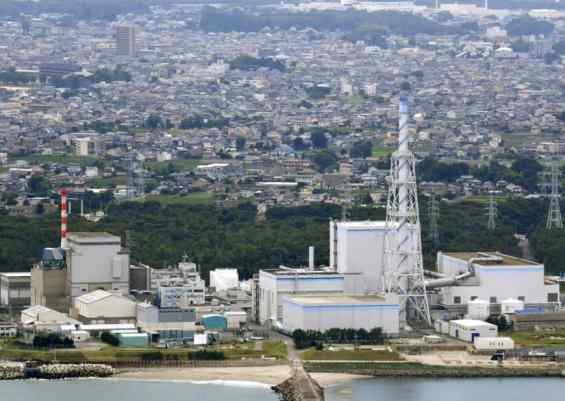
Japan Atomic Power considers launching unit that specializes in scrapping nuclear plants
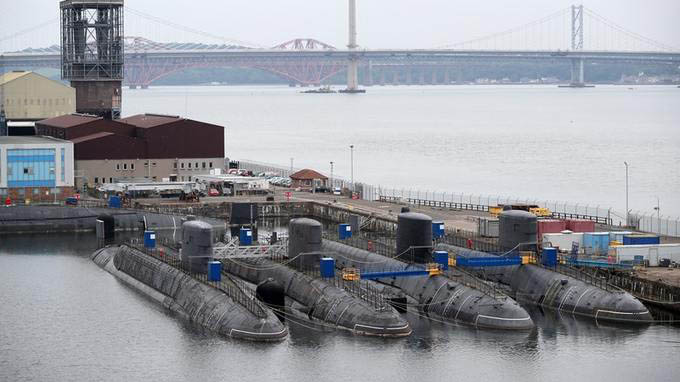
UK is stuck with 20 dead nuclear submarines – what to do with them?
|
How do you scrap a nuclear submarine? https://www.chemistryworld.com/news/how-do-you-scrap-a-nuclear-submarine/3010405.article, The UK is facing a £7.5 billion bill to dismantle its 20 defunct vessels
What is a nuclear submarine?A ‘nuclear’ submarine can refer to a submarine that carries nuclear warheads, one that is powered using nuclear energy, or both. In the UK, the Vanguard, Astute and Trafalgar class submarines are all powered using a nuclear reactor, but only the four Vanguard class submarines carry nuclear warheads – Astute and Trafalgar submarines are ‘hunter-killers’ designed to sink other ships. The UK’s current fleet relies on a reactor typically seen in power stations across the world – the pressurised water reactor (PWR). These compact power plants produce vast amounts of heat through the splitting of uranium-235 (235U). This fissile isotope exists in very small quantities (less than 1%) in natural uranium, which mainly consists of uranium-238 (238U). To use it as fuel, the 235U is increased relative to the 238U in a process known as enrichment. In the PWR, waste fission products are made, such as caesium, xenon and krypton, as neutrons split the 235U fuel, with 238U also absorbing neutrons to form plutonium. These fission products can damage the ceramic fuel and reduce the reactor’s efficiency. The vessel that contains this whole process is also bombarded with high levels of radiation over its operational life. What happens to a nuclear submarine once it is removed from service?Once a nuclear-powered submarine is decommissioned, it is placed into long-term storage. Only after monitoring the vessel will engineers begin to defuel and dismantle it. However, over the past four decades, this second part hasn’t happened in the UK.
Since 1980, the UK Ministry of Defence has taken 20 nuclear-powered submarines out of service. Of these 20 subs, the UK has not fully disposed any of them and nine still contain highly radioactive nuclear fuel. The vessels have languished at dockyards in Plymouth and Rosyth.
This is not a sustainable solution, but it is in stark contrast with other countries’ past policies. During the Cold War, the Soviet Union dumped 19 ships containing nuclear waste in the Kara Sea, as well as 14 reactors and the K-27 nuclear submarine. With such vessels continuing to rust on the seabed, there are concerns these sites could harbour a potential environmental crisis. However, the subs stored in the UK are constantly monitored in a controlled environment. Although a far cry from the Arctic submarine graveyards, the UK fleet still lies exposed to salty water, with the vessels rusting in the dockyards.
Why are the submarines still in storage?It is an incredibly complex situation, but the government stopped defueling its disbanded fleet back in 2004. The UK’s nuclear regulator deemed that the facilities were not up to standards, and the UK has been working to improve them ever since. Mired in delays and inflating budgets, the defueling may not restart until 2023 – the original start date was 2012. Even when the subs are ready for their next voyage through the disposal process, it is a journey fraught with complexity.
What is the plan for the nuclear waste?Once defueling starts, the sub will be moved to a ‘reactor access house’ on rails. In this facility, engineers will remove the spent nuclear fuel from the sub, which contains various actinides and radionuclides. The fuel is highly radioactive and generates heat, so needs to be cooled in water before any further work can begin. To cool the fuel rods, the waste is sent to a specialised plant at Sellafield, where it is stored in vast water ponds. The water acts as both an efficient coolant and radiation barrier. Historically, this spent fuel would have then been recycled to form new nuclear fuel.
During reprocessing, the fissile uranium and plutonium is separated through solvent extraction, before converting the remaining liquid waste into a glass for long-term storage. However, it is now unclear whether this will still happen. It is more likely that the spent nuclear fuel will be stored indefinitely after cooling. The current UK strategy is to bury this waste in a highly-engineered geological disposal facility, which would see more than 650,000m3 of waste stored in an underground cavern, according to recent government estimates. But plans are still ongoing and a facility is yet to be built.
What happens to the submarine after defueling?After defueling, the sub will return to the ‘wet’ dock for another period of storage and monitoring. Following this, the submarine is dismantled. Components such as pipes and pumps exposed to radiation are taken away and the reactor vessel removed. However, engineers do not simply remove the reactor. In many countries, the reactor is lifted out with the two empty compartments either side of it and then sealed off to minimise the risk of exposure. After removing this ‘three-compartment unit’, the submarine is cast off for its final voyage to a commercial shipyard for recycling. But it will be a costly endeavour. The UK may face costs of up to £7.5bn if it wants to take the entire fleet through this voyage of defueling and disposal. It remains unclear whether the plans will stay on course, but the defence department has committed to dismantling the fleet ‘as soon as reasonably practicable’.
|
|
|
In Ratnagiri’s Jaitapur, Fishermen Vehemently Oppose Nuclear Plant.
In Ratnagiri’s Jaitapur, Fishermen Vehemently Oppose Nuclear Plant. The Wire, 22 Apr 19
In Maharashtra’s Ratnagiri, the Sadak se Sansad team finds out why farmers are opposing the world’s largest nuclear power plant. In this special story from the Ratnagiri Lok Sabha constituency in Maharashtra, we speak to fishermen who have been protesting against the Jaitapur nuclear power project for over a decade. They say that the project will adversely affect their ecology and threaten their livelihoods. If completed, the plant will be the largest nuclear power generating station in the world. https://thewire.in/video/watch-in-ratnagiris-jaitapur-fishermen-vehemently-oppose-nuclear-plant
Nuclear reactors at risk from flooding due to climate change

Flooding linked to climate change puts beaches, nuclear plants at risk https://www.axios.com/climate-change-flooding-waikiki-beach-nuclear-plants-f2c4da7b-0155-4749-a47d-2e606066ee52.html 22 Apr 19, An increasing risk of flooding across the U.S. from climate change has caused lawmakers — from Hawaii to the East Coast — to consider new measures to protect at-risk areas.
The big picture: The risks span from the nation’s natural jewels to some of its most important infrastructure. Rising sea levels mean that Hawaii’s Waikiki Beach could be underwater within the next 15 to 20 years — and an increasing number of U.S. nuclear plants were never designed to handle the flood risk from climate change.
- State lawmakers are considering spending millions for a coastline protection program aimed at defending the city from regular tidal inundations, AP reports.
- 54 of the 60 nuclear plants in the U.S. aren’t prepared for the flood risks expected due to climate change “Nineteen face three or more threats that they weren’t designed to handle,” Bloomberg reports.
PM Narendra Mo di , at election rallies, repeatedly boasts of India’s nuclear weapons
|
At Indian General Election Rallies, Modi Beats the Nuclear Drums
The Indian prime minister touts New Delhi’s nuclear capabilities. The Diplomat |
|
1 This Month
Tell Congress: Prevent Nuclear Catastrophe in Iran

Tell Congress: Prevent Nuclear Catastrophe in Iran

Read the Public Inquiry Report, the Commissioners’ report, Surrendering Australia: The AUKUS Deception is available to download for free at aukuspublicinquiry.com. Or just watch the replay of the National Press Club Luncheon.


Shut down the radiation-damaged Heysham nuclear reactors now
To see nuclear-related stories in greater depth and intensity – go to https://nuclearinformation.wordpress.com

Say No to NASA’s Reckless Nuclear Reactor on the Moon
Say No to NASA’s Reckless Nuclear Reactor on the Moon
-
Archives
- November 2026 (215)
- October 2026 (302)
- September 2026 (339)
- August 2026 (330)
- July 2026 (355)
- June 2026 (287)
- May 2026 (306)
- April 2026 (356)
- March 2026 (251)
- February 2026 (267)
- January 2026 (308)
- December 2025 (358)
-
Categories
- 1
- 1 NUCLEAR ISSUES
- business and costs
- climate change
- culture and arts
- ENERGY
- environment
- health
- history
- indigenous issues
- Legal
- marketing of nuclear
- media
- opposition to nuclear
- PERSONAL STORIES
- politics
- politics international
- Religion and ethics
- safety
- secrets,lies and civil liberties
- spinbuster
- technology
- Uranium
- wastes
- weapons and war
- Women
- 2 WORLD
- ACTION
- AFRICA
- Atrocities
- AUSTRALIA
- Christina's notes
- Christina's themes
- culture and arts
- Events
- Fuk 2022
- Fuk 2023
- Fukushima 2017
- Fukushima 2018
- fukushima 2019
- Fukushima 2020
- Fukushima 2021
- general
- global warming
- Humour (God we need it)
- Nuclear
- RARE EARTHS
- Reference
- resources – print
- Resources -audiovicual
- Weekly Newsletter
- World
- World Nuclear
- YouTube
-
RSS
Entries RSS
Comments RSS

