Problems and many outages at India’s Kudankulam nuclear power plant
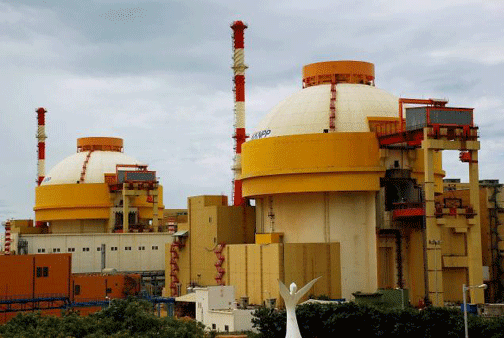
Frequent outages at Kudankulam plant unusual, trying to fix it: Dept of Atomic Energy
This is the first acknowledgement from a government authority and comes months after the issue of frequent power outages was flagged by Poovulagin Nanbargal. The NEWS Minute, TNM Staff
Local residents still waiting for old Santa Susana Field Laboratory to be cleaned up
 As hikers head to Santa Susana Field Lab, residents rally for a cleanup , Daily News, By OLGA GRIGORYANTS | ogrigoryants@scng.com | Los Angeles Daily News April 19, 2019 An Earth Day nature walk sponsored by Boeing Co. near the old Santa Susana Field Laboratory is drawing the scorn of local residents, who say the walk is part of an effort to gloss over the lack of a cleanup in the area after years of Cold War contamination from the rocket engine testing.
The walk includes a tour of the former field laboratory and the landscape around it in a region that includes massive sandstone rock formations, expansive views and oak trees nestled in the hills above the west edge of the San Fernando Valley……
a group of residents and activists plan to show up in the area Saturday to continue efforts calling for a long-promised clean up of contamination at the site that dates back to the Cold War, and to research and testing on the Mercury and Apollo missions. ….
The lab appeared on the map in the 1940s, and about two decades later it became the site of a partial meltdown accident that left the area polluted with radioactive and chemical contamination.
The United States Department of Energy and NASA signed an agreement in 2010, promising to remove all contamination from the site by 2017. The state’s Department of Toxic Substance Control, or DTSC, asked Boeing, which owns a portion of the area, to commit to its own cleanup. https://www.dailynews.com/2019/04/19/as-hikers-head-to-santa-susana-field-lab-residents-rally-for-a-cleanup/
Netherlands’ creative solar power initiative – archipelago of islands made up of sun-tracking solar panels
Guardian 21st April 2019 Dutch engineers are building what will be the world’s largest archipelago of islands made up of sun-tracking solar panels. Growing resistance to the
construction of wind turbines or fields of solar panels on land has led the
renewable energy industry to look for alternative options. Large islands of
solar panels are under construction or already in place in reservoirs and
lakes across the Netherlands, China, the UK and Japan. In a development
that is to become the largest of its type in the world, construction will
begin this year on 15 solar islands on the Andijk reservoir in north
Holland. The islands, containing 73,500 panels, will have the
sunflower-like ability to move to face the light.
Why the USA media covers climate change so poorly
 Why is the US news media so bad at covering climate change? Guardian, Kyle Pope and Mark Hertsgaard, 23 Apr 2019
The US news media devotes startlingly little time to climate change – how can newsrooms cover it in ways that will finally resonate with their audiences?
This article is excerpted from a piece published by Columbia Journalism Reviewand the Nation. The Guardian is partnering with CJR and the Nation on a 30 April conference aimed at reframing the way journalists cover climate change.More information about the conference, including a link to RSVP, is here.
Last summer, during the deadliest wildfire season in California’s history, MSNBC’s Chris Hayes got into a revealing Twitter discussion about why US television doesn’t much cover climate change. Elon Green, an editor at Longform, had tweeted, “Sure would be nice if our news networks – the only outlets that can force change in this country – would cover it with commensurate urgency.” Hayes (who is an editor at large for the Nation) replied that his program had tried. Which was true: in 2016, All In With Chris Hayes spent an entire week highlighting the impact of climate change in the US as part of a look at the issues that Hillary Clinton and Donald Trump were ignoring. The problem, Hayes tweeted, was that “every single time we’ve covered [climate change] it’s been a palpable ratings killer. So the incentives are not great.”
The Twittersphere pounced. “TV used to be obligated to put on programming for the public good even if it didn’t get good ratings. What happened to that?” asked @JThomasAlbert. @GalJaya said, “Your ‘ratings killer’ argument against covering #climatechange is the reverse of that used during the 2016 primary when corporate media justified gifting Trump $5 billion in free air time because ‘it was good for ratings,’ with disastrous results for the nation.”
When @mikebaird17 urged Hayes to invite Katharine Hayhoe of Texas Tech University, one of the best climate science communicators around, on to his show, she tweeted that All In had canceled on her twice – once when “I was literally in the studio w[ith] the earpiece in my ear” – and so she wouldn’t waste any more time on it.
“Wait, we did that?” Hayes tweeted back. “I’m very very sorry that happened.”
This spring Hayes redeemed himself, airing perhaps the best coverage on American television yet of the Green New Deal. All In devoted its entire 29 March broadcast to analyzing the congressional resolution, co-sponsored by Representative Alexandria Ocasio-Cortez and Senator Ed Markey, which outlines a plan to mobilize the United States to stave off climate disaster and, in the process, create millions of green jobs. In a shrewd answer to the ratings challenge, Hayes booked Ocasio-Cortez, the most charismatic US politician of the moment, for the entire hour.
Yet at a time when civilization is accelerating toward disaster, climate silence continues to reign across the bulk of the US news media. Especially on television, where most Americans still get their news, the brutal demands of ratings and money work against adequate coverage of the biggest story of our time. Many newspapers, too, are failing the climate test. Last October, the scientists of the United Nations’ Intergovernmental Panel on Climate Change (IPCC) released a landmark report, warning that humanity had a mere 12 years to radically slash greenhouse gas emissions or face a calamitous future in which hundreds of millions of people worldwide would go hungry or homeless or worse. Only 22 of the 50 biggest newspapers in the United States covered that report.
Instead of sleepwalking us toward disaster, the US news media need to remember their Paul Revere responsibilities – to awaken, inform and rouse the people to action. To that end, the Nation and CJR are launching Covering Climate Change: A New Playbook for a 1.5-Degree World, a project aimed at dramatically improving US media coverage of the climate crisis. When the IPCC scientists issued their 12-year warning, they said that limiting temperature rise to 1.5C would require radically transforming energy, agriculture, transportation, construction and other core sectors of the global economy. Our project is grounded in the conviction that the news sector must be transformed just as radically.
The project will launch on 30 April with a conference at the Columbia Journalism School – a working forum where journalists will gather to start charting a new course. We envision this event as the beginning of a conversation that America’s journalists and news organizations must have with one another, as well as with the public we are supposed to be serving, about how to cover this rapidly uncoiling emergency. Judging by the climate coverage to date, most of the US news media still don’t grasp the seriousness of this issue. There is a runaway train racing toward us, and its name is climate change. That is not alarmism; it is scientific fact. We as a civilization urgently need to slow that train down and help as many people off the tracks as possible. It’s an enormous challenge, and if we don’t get it right, nothing else will matter. The US mainstream news media, unlike major news outlets in Europe and independent media in the US, have played a big part in getting it wrong for many years. It’s past time to make amends.
If 1.5C is the new limit for a habitable planet, how can newsrooms tell that story in ways that will finally resonate with their audiences? And given journalism’s deeply troubled business model, how can such coverage be paid for? Some preliminary suggestions. (You can read this story in its entirety at Columbia Journalism Review or The Nation.)
Don’t blame the audience, and listen to the kids. The onus is on news organizations to craft the story in ways that will demand the attention of readers and viewers. The specifics of how to do this will vary depending on whether a given outlet works in text, radio, TV or some other medium and whether it is commercially or publicly funded, but the core challenge is the same.
A majority of Americans are interested in climate change and want to hear what can be done about it. This is especially true of the younger people that news organizations covet as an audience. Even most young Republicans want climate action. And no one is speaking with more clarity now than Greta Thunberg, Alexandria Villaseñor and the other teenagers who have rallied hundreds of thousands of people into the streets worldwide for the School Strike 4 Climate demonstrations.
Establish a diverse climate desk, but don’t silo climate coverage. ……
Learn the science…….
Don’t internalize the spin. ……
Lose the Beltway mindset. …..
Help the heartland…….
Cover the solutions. ,,,,
Don’t be afraid to point fingers. ….
If American journalism doesn’t get the climate story right – and soon – no other story will matter. The news media’s past climate failures can be redeemed only by an immediate shift to more high-profile, inclusive and fearless coverage. Our #CoveringClimateNow project calls on all journalists and news outlets to join the conversation about how to make that happen. As the nation’s founders envisioned long ago, the role of a free press is to inform the people and hold the powerful accountable. These days, our collective survival demands nothing less. https://www.theguardian.com/environment/2019/apr/22/why-is-the-us-news-media-so-bad-at-covering-climate-change
ANOTHER FEDERAL JUDGE RULES THE TRUMP ADMINISTRATION ILLEGALLY ROLLED BACK CRITICAL ENVIRONMENTAL PROTECTIONS
 ON EVE OF EARTH DAY, ANOTHER FEDERAL JUDGE RULES THE TRUMP ADMINISTRATION ILLEGALLY ROLLED BACK CRITICAL ENVIRONMENTAL PROTECTIONS https://www.atg.wa.gov/news/news-releases/eve-earth-day-another-federal-judge-rules-trump-administration-illegally-rolled Apr 21 2019
AG Ferguson’s 20th legal victory against Trump Administration
OLYMPIA — Attorney General Bob Ferguson released the following statement today after a federal judge in Montana ruled that the Trump Administration illegally revoked an Obama-era moratorium on new coal leases on federal lands, and must comply with a federal law requiring environmental analysis before leasing coal-mining rights on public lands:
“It’s fitting that on the eve of Earth Day, another federal judge slaps down the Trump Administration’s illegal effort to roll back basic environmental protections,” said Ferguson. “The Trump Administration illegally revoked the Obama-era moratorium on leasing public lands for coal-mining even though its Interior Department admitted it did not fully understand the societal and environmental impacts of extraction. This ruling sends a clear message that the federal government cannot take an action that impacts our environment without careful review and deliberation – which, to be polite, is not a strong suit of The Trump Administration.”
Case background
In May 2017, Ferguson filed a federal lawsuit against the U.S. Department of the Interior and the Bureau of Land Management over a program to lease coal mining rights on public land, which contributes to significant coal-train traffic through the state of Washington. The lawsuit challenged then-Secretary Ryan Zinke’s decision to restart the federal coal-leasing program without supplementing or replacing its nearly 40-year-old environmental study.
The lawsuit was jointly filed by California, New Mexico, New York and Washington in the U.S. District Court for the District of Montana, Great Falls Division.
Coal from federal leases following Zinke’s order would be transported by rail across Washington. In particular, coal from the Powder River Basin is shipped to or through the state. According to the Washington Department of Transportation, the baseline number of trains in 2015 numbered 70 per day on some track segments in the state, including multiple coal trains. Diesel exhaust and coal dust from uncovered coal train cars can negatively affect air quality.
Washington has a further interest in the effects of increased coal production and consumption on climate change. Washington experiences many negative effects of climate change, including rising ambient temperatures, a diminished and unpredictable snowpack necessary for water consumption and hydropower generation, and ocean warming and acidification, which is harmful to Washington’s shellfishery.
The AGO’s Counsel for Environmental Protection is handling the case for Washington.
Attorney General Ferguson created the Counsel for Environmental Protection in 2016 to protect our environment and the safety and health of all Washingtonians.
Ferguson has filed 35 lawsuits against the Trump Administration and has not lost a case. Ferguson now has 20 legal victories against the Trump Administration. Eleven of those cases are finished and cannot be appealed. The Trump Administration has or may appeal the other nine, which include lawsuits involving Dreamers and 3D-printed guns. After more than two years of litigation, no court to rule on the merits of the Attorney General’s arguments in a lawsuit against the Trump Administration has ruled against the office.
-30-
The Office of the Attorney General is the chief legal office for the state of Washington with attorneys and staff in 27 divisions across the state providing legal services to roughly 200 state agencies, boards and commissions. Visit www.atg.wa.gov to learn more.
Contacts:
Brionna Aho, Communications Director, (360) 753-2727; Brionna.aho@atg.wa.gov
Pumped storage hydro could fill nuclear nuclear energy gap
 Pumped storage hydro could fill nuclear nuclear energy gap https://www.thenational.scot/news/17588663.pumped-storage-hydro-could-fill-nuclear-nuclear-energy-gap/, A SCOTTISH company has called for the UK Government to put pumped storage hydro (PSH) at the heart of its strategy to meet the challenge of providing a secure, low-carbon electricity supply in the coming decades. |
|
Pennsylvania considers subsidising so-called “clean” nuclear energy
|
Pennsylvania decides whether to subsidize nuclear energy as “clean” https://thebulletin.org/2019/04/pennsylvania-decides-whether-to-subsidize-nuclear-energy-as-clean/
By Heather Wuest, April 22, 2019 To drive growth in its clean energy market and combat climate change, Pennsylvania adopted the Alternative Energy Portfolio Standards Act in 2004.This requires energy companies to buy specific percentages of their total electricity from clean energy sources. The requirements started small but are designed to increase over time. There are now 16 different clean energy choices for electric utilities to choose from in Pennsylvania. But new legislation would include a 17th clean generation option—nuclear power. Bills introduced in the state’s House and Senate are intended to prevent the retirement of the Three Mile Island nuclear plant outside Harrisburg and the Beaver Valley plant near Pittsburgh. Both plants are set for closure because they cannot compete on price with electricity from natural gas-fired power plants and renewable energy sources. Adding nuclear to the clean energy list would not be a simple or inexpensive process. Pennsylvania energy consumers would have to pay hundreds of millions in subsidies to make the nuclear plants economically viable. It’s a process that other energy generators and the manufacturing sector worry will distort Pennsylvania’s energy market. But the nuclear industry supports roughly 16,000 industry jobs and generates 93 percent of the electricity produced in the state by sources that don’t emit carbon dioxide in the process. Pennsylvania is hardly alone in its quest to buy clean energy; many other states are implementing plans that require energy companies to purchase set amounts so-called “carbon-free” electricity. In some states, nuclear is subsidized as a “green” energy source; in others, it is not. In Pennsylvania, it may be. The battle over that issue will play out in the state Legislature between now and early June, when the owner of the Three Mile Island plant is expected to decide whether to refuel or close it. |
|
|
Together Against Sizewell C (TASC) feeling encouraged: public opinion turning against Sizewell nuclear project
Suffolk coast have been “exposed as entirely inadequate” – and believe it cannot be built.
way on its Hinkley Point C new build and plans for the Suffolk project are
progressing well.
recent plans shown in the company’s stage three consultation for Sizewell C
have been “exposed as entirely inadequate”. He said: “Since the
delivery of a 1,500-signature petition to the Leader of Suffolk County
Council, we have seen a surge in support for our position of outright
opposition to Sizewell, local artists and actors voicing their concerns and
the RSPB warning that the most important bird reserve in the country,
Minsmere, is potentially threatened by the Sizewell development.
the hurdles to building such a complicated and dangerous plant in such a
confined and remote area will be recognised as overwhelming and terminal.
to the sheer scale of the environmental and infrastructure changes the
plant will require and they are becoming more and more vocal in opposition.
It is very encouraging.” TASC has voiced concerns over the suitability of
the Sizewell site, claiming it is too small for the proposed development,
potential loss of SSSI, visual intrusion, noise and light pollution and the
negative impact it will have on the Suffolk Coast and Heaths AONB and
Heritage Coast.
clearly demonstrates three things: we require much more information from
EDF before we can fully appreciate the impact of their plans; even on the
information available, it is clear that the dis-benefits associated with
Sizewell C far outweigh the putative benefits, and EDF must plan for a
fourth round of consultation.”
https://www.eadt.co.uk/news/tasc-pete-wilkinson-szc-cannot-be-built-1-6009732
The burning question – our climate crisis is NOW!
In the past 3 months, I brought you the science of climate change direct from specialists publishing top papers. To draw it together, we need a generalist with climate expertise. We need Paul Beckwith. Paul has two Masters degrees. He often teaches climate science at the University of Ottawa. But his tireless effort to teach extends to the Internet. On You tube, Paul Beckwith is by far the biggest teacher of climate science to the world via You tube.
KEY INDICATORS OF ARCTIC CLIMATE CHANGE
We have a new paper, published April 8th by scientists in Alaska and Denmark. The title is “Key Indicators of Arctic Climate Change: 1971–2017”. Lead author Jason Box said “The Arctic system is trending away from its 20th century state and into an unprecedented state, with implications not only within but beyond the Arctic.”
Those scientists seemed surprised that temperature was the “smoking gun” for all the changes in the Arctic. (That seems obvious to me, what about you?) On the other hand, the fastest moving ice body on Greenland, The Jakobshavn glacier, has not only slowed down but is gaining ice mass. Paul says that is a temporary phenomenon, and who knows – maybe the glacier as it moved got snagged on some land way down below.
THE LINGERING COLD BLOB IN EASTERN NORTH AMERICA
Could that slowdown in part of Greenland be connected to the long-lasting cold and snow in the North East, including in Paul’s hometown in Ottawa? Paul says he had “a glacier” of ice remaining in his front yard, and we talk about the cold blob of air hovering over eastern North America, punctuated by storms. Here’s his video on that.
Chat on Persistent Cold Blob over North America
The public is so focused on global warming, it is pretty hard to convince people that a depressing cold winter could also be influenced by climate change. Nobody wants to go protest in the cold, but when it’s hot, they want to go outside and enjoy themselves. So far, there doesn’t seem to be a good time to protest. Were there climate school strikes in Ottawa or in Quebec?
Some people think Paul is a radical climate scientist. But really the whole upper echelon of climate research institutes are now radical about climate change. They are practically screaming out warnings of disaster, and we talk about some of those in this interview. But despite Paul’s efforts and mine, the public still isn’t engaged. People fly all over the place, and dream about their next pickup truck with a big gas engine. It is an addictive dream. Do you expect a rapid awakening, or more years of deadly greenhouse gas emissions?
We just had another freak April storm where the temperature was expected to drop 60 degrees in Denver, going from 70 or 80 Fahrenheit to blizzards. Yet another very heavy snow storm hit Montana and Nebraska in April. They are calling it a “bomb cyclone“.
Then we had flooding in the mid-west of the U.S., right in key food production areas. I think that was a major event with long-lasting consequences. Mainstream the media forgot that story already. Of course, Paul Beckwith has a new video about that.
Why is weather in the Northern Hemisphere so weird?
SIMULTANEOUS HEAT WAVES – NEW INTERVIEW COMING UP!
I want to tell listeners about brand new science, still awaiting publication. It announces a new phenomenon in the world: simultaneous heat waves across the planet. Martha Vogel, a climate researcher from ETH Zurich, just presented the findings at a European Geosciences Union press conference in Vienna in the first week of April. Studying heat waves from 1958 to 2018, they discovered that only since 2010 has modern planet Earth experienced multiple extreme heat waves at the same time. For example extreme heat in the Mediterranean might also strike in the Arctic and Russia or North America at the same time. Transcontinental heat: that has terrible implications for food production and a lot more.
My interview with scientist Martha Vogel should be next week on Radio Ecoshock
THE NEW 2018 CLIMATE REPORT FROM THE WORLD METEOROLOGICAL ORGANIZATION (WMO)
Paul discusses this report in two videos, starting with this one State of the Climate: NOT Good at All
You can read that full report “WMO Statement on the State of the Global Climate in 2018” as a .pdf online here.
According to the WMO, in 2018 the heat content of the upper levels of the ocean were the highest ever recorded. That is so dangerous!
People get confused about the difference between ocean HEAT absorption (which is 93%) to greenhouse gas absorption by the sea, (which is 25%). Since 93% of our excess heat goes into the ocean, that means only 7% is causing the disruption we are feeling now! If the ocean takes less carbon dioxide, as scientists predict, then not only will there be more greenhouse gases, but those gases will remain longer, and become a larger share of our actual emissions in the atmosphere. If so, we have to cut off fossil fuels and other greenhouse sources pretty well immediately. Strange to say, but our industrial culture may depend on ocean chemistry and ocean physics.
In a BBC article about the World Meteorological Report for 2018, Australian climate scientist and Professor Samantha Hepburn said:
“We know that if the current trajectory for greenhouse gas concentrations continues, temperatures may increase by 3 – 5 degrees C compared to pre-industrial levels by the end of the century and we have already reached 1 degree.”
Three to five degrees C of warming is utter disaster!
SEA ICE AT BOTH POLES DECLINING
Paul Beckwith says Sea ice may be in that critical slowing down of phase-state before a collapse of sea ice. And for our southern listeners, there has been a huge fall in Antarctic sea ice. Just a few years ago it was still expanding…. https://www.ecoshock.org/2019/04/the-burning-question.html
Japan Atomic Power looks to big business cleaning up dead nuclear plants

Japan Atomic Power considers launching unit that specializes in scrapping nuclear plants https://www.japantimes.co.jp/news/2019/04/16/national/japan-atomic-power-considers-launching-unit-specializes-scrapping-nuclear-plants/#.XLzjyDAzbGg KYODO, APR 16, 2019
Japan Atomic Power Co. is considering setting up a subsidiary specializing in the scrapping of retired nuclear reactors at domestic power plants, sources close to the matter said Tuesday.
Japan Atomic Power, a wholesaler of electricity generated at its nuclear plants, is planning to have U.S. nuclear waste firm EnergySolutions Inc. invest in the reactor decommissioning service unit, which would be the first of its kind in Japan, the sources said.
The Tokyo-based electricity wholesaler, whose shareholders are major domestic power companies, will make a final decision by the end of this year, they said.
The plan is to support power companies’ scrapping of retired reactors using Japan Atomic Power’s expertise in decontaminating and dismantling work, in which it has been engaged in since before the 2011 nuclear disaster at Tokyo Electric Power Company Holdings Inc.’s Fukushima No. 1 complex, according to the sources.
The plan comes as a series of nuclear reactor decommissioning is expected at power companies in the country. Since stringent safety rules were introduced after the Fukushima disaster, 11 reactors, excluding those at the two Fukushima plants of Tepco, are slated to be scrapped.
Nuclear reactors are allowed to run for 40 years in Japan. Their operation can be extended for 20 years, but operators will need costly safety enhancement measures to clear the Nuclear Regulation Authority’s screening.
Decommissioning a reactor with an output capacity of 1 million kilowatts is said to take about 30 years and cost around ¥50 billion. Typically, some 500,000 tons of waste result from scrapping such a reactor, and 2 percent of the waste is radioactive.
Japan Atomic Power first engaged in decommissioning a commercial reactor in 2001 at its Tokai plant in eastern Japan. It has been conducting decommissioning work at its Tsuruga nuclear power plant in western Japan since 2017.
It is also providing support to Tepco for the decommissioning of reactors at the Fukushima No. 1 plant.
EnergySolutions, founded in 2006, has engaged in scrapping five reactors in the United States.
Japan Atomic Energy and EnergySolutions have had previous business ties, and the Japanese company has sent some employees to the Zion nuclear station in Illinois, where the U.S. partner has been conducting decommissioning work since 2010.
Nearly 1000 climate protestors arrested in London – and Extinction Rebellion is changing tack
|
Extinction Rebellion: The People Risking Their Freedom For Climate Change | HuffPost Reports: UK Extinction Rebellion arrests close to 1,000 as protesters ‘pause rebellion’ ITV 21 Apr 19 Climate change protesters who have stopped traffic in a series of peaceful demonstrations across London will “pause” their rebellion in a bid to achieve their political aims, as the arrest total nears 1,000.Extinction Rebellion (XR) have announced they are switching disruptive tactics for political negotiations as they enter a second week of campaigning to have the Government declare a climate emergency. The number of people arrested in connection with the protests has hit 963 and 40 people have been charged. Continue reading |
We will never stop fighting’: Greta Thunberg joins London climate protest
Humanity is at a crossroads, Greta Thunberg tells Extinction Rebellion, Guardian, Vikram Dodd , Damien Gayleand Mattha Busby 22 Apr 2019
Swedish climate activist’s speech comes amid police action to clear protesters from Waterloo Bridge, Governments will no longer be able ignore the impending climate and ecological crisis, Greta Thunberg, the teenage climate activist, has told Extinction Rebellion protesters gathered at Marble Arch in London.
In a speech on Sunday night where she took aim at politicians who have for too long been able to satisfy demands for action with “beautiful words and promises”, the Swedish 16-year-old said humanity was sitting at a crossroads, but that those gathered had chosen which path they wish to take…….
Her speech came amid police efforts to forcibly clear Extinction Rebellion protesters from Waterloo Bridge as the group debated whether to continue its campaign of mass civil disobedience. Police said on Sunday night they had cleared all the protesters from Parliament Square ……. https://www.theguardian.com/environment/2019/apr/21/extinction-rebellion-london-protesters-offer-pause-climate-action
Britain’s Nuclear Free Local Authorities (NFLA) notes that over 70 Welsh councils formally reject hosting nuclear waste dump
 NFLA 18th April 2019 The Nuclear Free Local Authorities (NFLA) notes that over 70 Welsh unitary, county, city, town and community councils have passed resolutions formally opposing taking any interest in hosting a deep underground radioactive waste repository.
The figure was noted at a joint meeting in Menai Bridge organised by the NFLA Welsh Forum in conjunction with the groups PAWB, CADNO and CND Cymru. At a presentation provided by the NFLA Secretary, he noted that there had been real anger and frustration raised across Welsh and Northern Irish Councils in particular to the request made by the UK
Government for considering hosting a large deep underground repository to store over 60 years of higher activity radioactive waste, as well as possibly additional waste should new nuclear power stations ever be built.
Even in England, a number of nuclear site Councils have indicated their public opposition to hosting a repository. NFLA have noted some of these issues in its response to RWM regarding its consultation on how any proposed sites will be evaluated.
Britain’s slow path to zero carbon emissions
Extinction Rebellion: what pushes people to drastic action on climate change?
Slow burn? The long road to a zero-emissions UK, Guardian, Robin McKie, Observer science editor, Sun 21 Apr 2019
Extinction Rebellion protesters want a carbon-free UK by 2025. But can the financial and political hurdles be overcome?
Many experts disagree, however. They argue that such an imminent target is completely impractical. “Yes, you could decarbonise Britain by 2025 but the cost of implementing such vast changes at that speed would be massive and hugely unpopular,” says Lord Turner, former chairman of the climate change committee.
Most expect the climate change committee will plump for 2050 as Britain’s ideal decarbonisation date. “2050 is do-able and desirable and would have an insignificant overall cost to the economy,” states Turner, who is now chairman of the Energy Transitions Commission. According to this scenario, developed nations, including Britain, would aim to achieve zero-emissions status by 2050 and then use the decarbonising technologies they have developed to achieve this goal – hydrogen plants, carbon dioxide storage vaults and advanced renewable generators – to help developing nations halt their greenhouse gas emissions by 2060.
And the change has already been reflected in Britain’s power statistics. In 2013, 62.5% of UK electricity was generated by oil, coal and gas stations, while renewable provided only 14.5%. In 2018, the figure for oil, coal and gas had been reduced to 44% while renewables were generating 31.7%. It is a distinct improvement – though we have yet to be given a date when engineers expect the last UK fossil-fuelled power plant to produce its final watts of electricity and to emit its last puffs of carbon dioxide
“Decarbonising UK power production is going well,” says George Day, head of policy for the technology and innovation centre Energy Systems Catapult. “There is a clear path forward.” But as he points out, there are many other sources of carbon dioxide in the UK. “The next big challenge will be heating. Gas boilers are major carbon emitters and dealing with them is going to be very difficult.”
According to Day, about 90% of British people have gas boilers in their homes, most having been fitted relatively recently …
………In the end, it will simply not be possible to reduce Britain’s fossil-fuel emissions to zero, say scientists. To compensate, we will have to take carbon dioxide back out of the atmosphere. “That is the logical, inevitable consequence of trying to achieve zero net emissions in this country,” argues Corinne Le Quéré, of the University of East Anglia. “If you are looking for any net zero target then you have to remove carbon dioxide from the atmosphere.”
This can be done in three ways: naturally, by planting trees and shrubs that absorb carbon dioxide. Or artificially – on a larger scale – the gas can be removed as it is produced at a factory or power station that burns trees for energy.
Or it can be removed by huge numbers of man-made air filters, known as direct air capture. The carbon dioxide can be liquefied and stored underground in underground caverns, or old, depleted gas fields under the North Sea. This is known as carbon capture utilisation and underground storage (CCUS).
“In the end, your choice of replanting or of building underground storage facilities depends on how much carbon you will need to remove,” says Le Quéré. “Most calculations suggest Britain will need to take quite a lot of carbon dioxide out of the atmosphere to keep its net emissions at zero.”……….
UK carbon emissions have fallen for the sixth year running
This need for speed is shared by many other parts of the zero-emissions programme, as we have seen. It may seem odd given it is unlikely it will reach its conclusion for another three decades. Nevertheless, scientists are adamant that even if choose 2050 for our decarbonisation date, we need to act now.
This urgency of the task is emphasized by Joeri Rogelj at Imperial College London. “If the world limits emissions of carbon dioxide to no more than 420 billion tonnes this century, we will have a two in three chance of keeping global warming down to around 1.5C.
“However, if we go above to 580 billion tonnes then our chances will be reduced to 50-50. The problem is that in 2017 alone, a total of 42 billion tonnes of carbon dioxide was emitted in a single year. By that calculation, we clearly do not have a lot of time to waste.”https://www.theguardian.com/environment/2019/apr/21/long-road-to-zero-emissions-uk
1 This Month
Tell Congress: Prevent Nuclear Catastrophe in Iran

Tell Congress: Prevent Nuclear Catastrophe in Iran

Read the Public Inquiry Report, the Commissioners’ report, Surrendering Australia: The AUKUS Deception is available to download for free at aukuspublicinquiry.com. Or just watch the replay of the National Press Club Luncheon.


Shut down the radiation-damaged Heysham nuclear reactors now
To see nuclear-related stories in greater depth and intensity – go to https://nuclearinformation.wordpress.com

Say No to NASA’s Reckless Nuclear Reactor on the Moon
Say No to NASA’s Reckless Nuclear Reactor on the Moon
-
Archives
- November 2026 (215)
- October 2026 (302)
- September 2026 (339)
- August 2026 (330)
- July 2026 (355)
- June 2026 (287)
- May 2026 (306)
- April 2026 (356)
- March 2026 (251)
- February 2026 (267)
- January 2026 (308)
- December 2025 (358)
-
Categories
- 1
- 1 NUCLEAR ISSUES
- business and costs
- climate change
- culture and arts
- ENERGY
- environment
- health
- history
- indigenous issues
- Legal
- marketing of nuclear
- media
- opposition to nuclear
- PERSONAL STORIES
- politics
- politics international
- Religion and ethics
- safety
- secrets,lies and civil liberties
- spinbuster
- technology
- Uranium
- wastes
- weapons and war
- Women
- 2 WORLD
- ACTION
- AFRICA
- Atrocities
- AUSTRALIA
- Christina's notes
- Christina's themes
- culture and arts
- Events
- Fuk 2022
- Fuk 2023
- Fukushima 2017
- Fukushima 2018
- fukushima 2019
- Fukushima 2020
- Fukushima 2021
- general
- global warming
- Humour (God we need it)
- Nuclear
- RARE EARTHS
- Reference
- resources – print
- Resources -audiovicual
- Weekly Newsletter
- World
- World Nuclear
- YouTube
-
RSS
Entries RSS
Comments RSS

