nuclear-news

The News That Matters about the Nuclear Industry Fukushima Chernobyl Mayak Three Mile Island Atomic Testing Radiation Isotope

  • Home
  • 1 This Month
  • ACTION !
  • Disclaimer
  • Links
  • PAGES on NUCLEAR ISSUES

USA’s Dept of Energy fails to provide adequate funding for Hanford nuclear clean-up

Hanford Cleanup Plans at Serious Risk, Advisory Board Says  https://www.exchangemonitor.com/hanford-cleanup-plans-serious-risk-advisory-board-says/

BY EXCHANGEMONITOR, 26 Apr 19, Cleanup plans for the Hanford Site in Washington state, along with remediation milestones established under the Tri-Party Agreement, are in “serious jeopardy,” the Hanford Advisory Board said Wednesday in its annual budget advice letter to the Department of Energy.

“The HAB views the combined lack of compliant budget appropriations, the unanticipated problems at Hanford, and the extreme increase in estimated funding levels identified in the lifecycle cost report with great concern,” the board told DOE. Those factors will result in cleanup taking longer and costing more, putting workers, the environment, and the public at increased risk, the letter says.

“They will also result in additional discussion about reducing standards or potentially conducting a lesser quality cleanup,” according to the board.

Unanticipated problems in work at the former plutonium production complex have included the spread of radioactive contamination at the Plutonium Finishing Plant demolition in 2017 and the May 2017 collapse of the older of two PUREX Plant radioactive waste storage tunnels.

The Energy Department has addressed the issues, but the costs and schedule impacts from these and other unanticipated setbacks could compound the challenge of meeting milestones set under the legally binding Tri-Party Agreement on Hanford cleanup, the budget letter said.

The latest Hanford Lifecycle Scope, Schedule and Cost Report, released in January, “is particularly concerning,” the board said. It put the remaining cost of Hanford cleanup and the initiation of long-term stewardship at $323 billion to $677 billion, and said work could continue beyond this century. The amount of funding needed annually would increase to $4 billion starting in fiscal 2020 and later could peak as high as $16 billion in 2088 under the worst-case scenario.

“Receiving appropriation for even the low-range annual funding estimates will be extremely challenging, thereby putting the cleanup mission in further jeopardy,” the letter said.

For fiscal 2020, which begins Oct. 1, DOE is seeking $2.1 billion for the two offices at Hanford. That would be a $400 million reduction from current funding levels.

April 27, 2019 Posted by Christina Macpherson | politics, USA, wastes | Leave a comment

Safety and language problems, as Tepco plans to bring in foreign workers for Fukushima clean-up

Editorial: Safety, language measures needed for foreigners to work at Fukushima plant https://mainichi.jp/english/articles/20190424/p2a/00m/0na/004000c 24 Apr 19, Tokyo Electric Power Co. (TEPCO) is preparing to bring in foreign workers with special technical skills to join decommissioning work on the disaster-stricken Fukushima Daiichi nuclear plant.

At present, an average of 4,000 employees of TEPCO and cooperating firms work at the facility every day. Laws and regulations stipulate that workers’ radiation exposure must be limited to 50 millisieverts in a single year, and 100 millisieverts over five years. No one is allowed to stay at the plant once they hit one of these caps, so waves of new employees must be brought in to maintain worker numbers.

Decommissioning the Daiichi plant, which suffered a triple core meltdown in the wake of the March 2011 Great East Japan Earthquake and tsunami, is expected to take 30 to 40 years. Whether the companies involved can sustain sufficient staffing levels will be one factor that determines the success or failure of the project.

When it comes to tapping foreign labor to make up the required numbers, the Justice Ministry — which has jurisdiction over Japan’s immigration system — has already declined to approve sending foreign technical intern trainees to work at the plant. One of the core tenets of the foreign technical trainee program is that the job placements must provide the trainees with skills they can use in their home countries, and working to decommission a devastated nuclear plant did not fit the bill.

TEPCO is now turning its eyes to foreign workers with Category 1 work visas, one of the new residency statuses launched on April 1 and aimed at those with certain skills and experience. Technical trainees with three years’ experience in Japan can obtain this visa without a skills exam.

However, there is a real risk of radiation exposure at the Daiichi plant, and the terminology used on-site is highly technical, making for a difficult environment. TEPCO and its partners must not treat the new foreign worker system as an employee pool they can simply dip into.

The workers’ Japanese level is particularly a cause for worry. To obtain a Category 1 visa, applicants must speak Japanese at only a “daily conversational” level. However, anyone working at the Daiichi site must understand a slew of technical terms related to radiation and other facets of the decommissioning process, meaning a very high level of Japanese is absolutely indispensable. If foreign employees begin working there without having learned the necessary terminology, we believe there is a real risk they could be ordered to do jobs that exposed them to radiation.

TEPCO has said it is up to its project partners whether they employ Category 1 foreign workers. In fact, the majority of people at Fukushima Daiichi are employed by one of the firms that make up the layers upon layers of subcontractors working on the decommissioning. Nevertheless, as the company heading the project, TECPO has a responsibility to oversee the conditions of every worker, right down to the bottom of the pyramid.

Furthermore, if a foreign worker has been exposed to radiation overseas, that dose must be added to their sievert count at the plant. However, it is up to the worker to report any previous radiation exposure, which can make it difficult to properly track and manage their doses.

If a worker develops a radiation-related illness after returning to their home country, will they be able to smoothly apply for workers’ accident compensation? This is also a serious worry.

If Japan is to accept foreign workers to help decommission the Fukushima Daiichi plant, it is absolutely essential to create the appropriate environment, including measures to boost their Japanese skills and strengthen radiation exposure management.

April 25, 2019 Posted by Christina Macpherson | Fukushima continuing | Leave a comment

New report – half a million species for extinction within a few decades

A million species face extinction due to humans, UN report finds  https://www.heraldscotland.com/news/17592216.a-million-species-face-extinction-due-to-humans-un-report-finds/  By Phil Miller, Arts Correspondent, 24 Apr 19, UP to a million species face extinction due to the actions of humanity, a new UN report finds.

The Agence France-Presse agency, based in Paris, has seen the draft of a report which catalogues how “humanity has undermined the natural resources upon which its very survival depends.”

These include accelerating loss of clean air, drinkable water, carbon dioxide-absorbing forests, pollinating insects, protein-rich fish and storm-blocking mangroves.

The report, which says these issues are as important as climate change, is due to be officially published in early May.The 44-page Summary for Policy Makers distills a 1,800-page UN assessment of scientific literature on the state of nature

Robert Watson, chair of the UN-mandated body that compiled the report, said: “We need to recognise that climate change and loss of nature are equally important, not just for the environment, but as development and economic issues as well.

“The way we produce our food and energy is undermining the regulating services that we get from Nature.”

The report says deforestation and agriculture, including livestock production, account for about a quarter of greenhouse gas emissions, and have wreaked havoc on natural ecosystems as well.

The Intergovernmental Science-Policy Platform on Biodiversity and Ecosystem Services (IPBES) report warns of “an imminent rapid acceleration in the global rate of species extinction.”

The pace of loss “is already tens to hundreds of times higher than it has been, on average, over the last 10 million years.

“Half-a-million to a million species are projected to be threatened with extinction, many within decades.”

Scientists estimate that Earth is today home to some eight million distinct species, a majority of them insects.

Other findings in the report are that three-quarters of land surfaces, 40 percent of the marine environment, and 50 percent of inland waterways across the globe have been “severely altered”.

It says that many of the areas where nature’s contribution to human wellbeing will be most severely compromised are home to indigenous peoples and the world’s poorest communities that are also vulnerable to climate change.

It also says that subsidies to fisheries, industrial agriculture, livestock raising, forestry, mining and the production of biofuel or fossil fuel energy encourage “waste, inefficiency and over-consumption.”

April 25, 2019 Posted by Christina Macpherson | 2 WORLD, environment | Leave a comment

$70 trillion cost predicted, as Arctic permafrost thaws

Melting permafrost in Arctic will have $70tn climate impact – study  https://www.theguardian.com/environment/2019/apr/23/melting-permafrost-in-arctic-will-have-70tn-climate-impact-study  Jonathan Watts, Global environment editor  @jonathanwatts, 23 Apr 2019 

Study shows how destabilised natural systems will worsen man-made problem The release of methane and carbon dioxide from thawing permafrost will accelerate global warming and add up to $70tn (£54tn) to the world’s climate bill, according to the most advanced study yet of the economic consequences of a melting Arctic.

If countries fail to improve on their Paris agreement commitments, this feedback mechanism, combined with a loss of heat-deflecting white ice, will cause a near 5% amplification of global warming and its associated costs, says the paper, which was published on Tuesday in Nature Communications.

The authors say their study is the first to calculate the economic impact of permafrost melt and reduced albedo – a measure of how much light that hits a surface is reflected without being absorbed – based on the most advanced computer models of what is likely to happen in the Arctic as temperatures rise. It shows how destabilised natural systems will worsen the problem caused by man-made emissions, making it more difficult and expensive to solve.

They assessed known stocks of frozen organic matter in the ground up to 3 metres deep at multiple points across the Arctic. These were run through the world’s most advanced simulation software in the US and at the UK Met Office to predict how much gas will be released at different levels of warming. Even with supercomputers, the number crunching took weeks because the vast geography and complex climate interactions of the Arctic throw up multiple variables. The researchers then applied previous economic impact models to assess the likely costs.

It would also add to global inequalitybecause most of the economic burden – equivalent to almost the entire world’s current annual GDP – is likely to be borne by countries in warmer poorer regions such as India and Africa, which are most vulnerable to a rise in temperatures.

It would also add to global inequality because most of the economic burden – equivalent to almost the entire world’s current annual GDP – is likely to be borne by countries in warmer poorer regions such as India and Africa, which are most vulnerable to a rise in temperatures.

April 25, 2019 Posted by Christina Macpherson | ARCTIC, climate change | Leave a comment

India, Ghana, Japan, Columbia, New Zealand, Ireland, Australia, Belgium, South Africa, Extinction Rebellion climate activists speak out

From India to Ireland: a week of Extinction Rebellion actions

Activists tell us why they have taken part in the protest group’s international rebellion week   https://www.theguardian.com/environment/2019/apr/24/from-india-to-ireland-a-week-of-extinction-rebellion-actions, Jessie McDonald and Guardian readers, 24 Apr 2019

India – ‘A Hindi translation of Greta Thunberg’s speech was read out’

I am part of XR [Extinction Rebellion] Bhopal. The group is still in a very early phase and is working mostly on educating people about climate issues. On the evening of 15 April 2019 some school students and local activists gathered at Bhopal’s upper lake in solidarity with XR international rebellion week. There were speeches, dancing and music. A participant also read out a Hindi translation of Greta Thunberg’s speech to a large crowd.

According to some scientific reports, we might already have crossed major planetary tipping points and are already on the verge of imminent collapse by the end of the century. A more conservative assessment places that threshold 10 to 20 years away. Meanwhile, the impacts of warming and ecological collapse will continue to escalate. In India, natural gas extraction and coal-based power plants are expanding and there has been a massive increase in internal aviation transport. We need to transform or move beyond these suicidal institutions and many individuals and groups are already working on it, including our small group in XR Bhopal.   I hope we will be able to sow the seeds of new institutions to support or replace the collapsing ones – without which there is no chance of maintaining a zero-emission world and no chance of avoiding extinction.

What XR has achieved would have been almost impossible to imagine this time last year. It has brought people on to the streets for the first time and in large numbers. It has done so because of the clarity of its message. I hope many more people continue to join in and for this to continue and grow, both in size and political imagination, nationally in India and internationally.
Sarthak Tomar, law student and activist, Bhopal, India

Ghana – ‘We want people to see the looming danger of climate change’

For the past six years we have been resisting environmental damage locally and trying to compel the government to act. We have been doing this single-handedly – there’s been no international support. We have been looking for solidarity. Luckily we linked with Extinction Rebellion in October 2018 and started the west Africa group covering Ghana, Nigeria, Benin, Côte d’Ivoire, Burkina Faso and Togo almost immediately after XR launched in the UK.

We started holding placards at the lorry stations. Then we went to churches. Then we went to market squares. We also go to schools. On 27 February 2018 an honourable chief of Kwashieman township, just outside Accra, declared a pan-African state of climate change emergency at an event and asked us to all join hands together in one love of ubuntunkonso, which means peaceful grassroots resistance.

We had a huge rally on 20 April in Agormanya market, near Accra, for market women. The women spoke about environmental issues – such as the pollution of Lake Volta [one of the world’s largest man-made lakes], which provides drinking water and livelihoods. Environmental issues affect women and children the most here and the market women are especially vulnerable as they can sell affected produce and rely on it to make a living. The area is quite environmentally friendly so people want to resist and air their grievances because they feel the government is not doing anything about it.

Because of the reactionary violence here, we cannot hit the streets like you are doing in the UK. It is risky and dangerous. If we did the same thing the government could clamp down on us, so we have to limit the size of our XR group and do smaller activities like holding placards at the lorry stations. We are calling on the international community to rally support for us. Our experience of XR is so far, so good! Our counterparts in London are doing their best to ensure that we are supported.

As part of the international rebellion week we served the parliamentary committee on science and technology in Ghana with a letter, asking to meet them. We want them to account for the state of the carbon footprint of Ghana. They haven’t responded yet. We also approached the UN office in Accra – they also did not respond. We asked our counterparts in London to put pressure on the Ghana government and some XR activists in London went to the Ghana high commission there to ask them to pay attention to what we are doing.

We want the president of Ghana to ensure a peaceful environment for activists to hit the streets. We want a dialogue. That is all we are seeking, we want them to act now and tell our people the truth about the climate. The majority of people don’t know about the problem and we want them to see the looming danger of climate change. It’s about time that the government educated the people on this and did something before it gets worse.

We have a huge community support base across west Africa, but because of the reactionary atmosphere we have to approach the situation carefully. Which is why not many people are involved – the number is small. But I can assure you that when we can hit the streets peacefully, we will be a bigger number than in London.

Mawuse Yao Agorkor, 39, grassroots social activist, Accra, Ghana

Japan – ‘The strikes in London are making people want to take action here too’

I was born and raised in Tokyo, but I lived in the UK for three years while I went to university where I studied conservation biology and ecology. I saw pictures of the rebellion day in London in November 2018 on social media and wished I could have been there to share the anger and passion with the protesters.

Conversations around topics such as climate change, biodiversity loss, and human rights are almost non-existent in Japan. People who talk about such topics are considered ishiki takai, which means something along the lines of “highly conscious” but with a negative connotation. It saddens me that many people, especially my age, are unaware of what is happening to our environment and in our social system. Our future depends on these things, yet we are passive.

Our group is still in its infancy – we have not had much action so far. From 15–19 April we had two to five people gather in the Shibuya district, the centre of youth culture in Tokyo, to hold some signs and try to get talking to the Japanese public (massive shout out to Peter and Jessica, who were there every day with me!). We stood behind a famous statue in the hope of photobombing tourists (both Japanese and foreign). A few people got extremely annoyed at us, but we were also able to have conversations with a couple of Japanese people.

Our Facebook group was created in December and has reached 116 members, of which 70 have joined this past week. It is obvious that the strikes in London are sparking emotion and making people want to take action here in Japan too. We are rapidly trying to get an organised system so that we can plan actions efficiently.

However, our major issue is that we are mostly foreigners living in Japan and we have almost no Japanese members. In order for XR Japan to work in Japan, we need to turn it into a movement run by Japanese people for Japanese people. In the future, I hope XR Japan can normalise speaking up and demanding change and action.

Emma Suzuki, 23, intern at an NGO in Tokyo, Japan

Colombia – ‘Social and environmental activities in Latin America are high-risk’

I live on a farm near Medellín with my wife. There I take care of my patients and we keep an orchard and take care of a goat.As lifelong environmental activists, my wife and I have worked with groups to defend the jungle and rivers in my country against the threat of large mining companies, the predatory action of the dams, the logging of forests and the constant cover-up of politicians.

When the Extinction Rebellion collective emerged in London in November 2018, we decided to join the international cause with a group of environmentalist friends. Our programme of action is inscribed within the framework of the struggles of the Latin American peoples against the neoliberal system that, by stimulating an irrational and excessive consumption, has been destroying the natural resources indispensable for the survival of our species. Meanwhile, a small group of politicians, managers and bankers accumulates exorbitant profits manifested in an offensive ostentation of wealth.

Social and environmental activities in Latin America are high-risk. Only this year, so many leaders have been killed in Colombia by paramilitary forces, who protect the unpunished actions of politicians, landowners and mining companies.

So far, the work carried out by Extinction Rebellion Colombia has involved workshops on direct non-violent action, participation in marches and protests by other social and environmental groups, a symbolic action of planting trees in a forest reserve near Medellín, and supporting the FridaysForFuture protests in Medellín and Cali.

We think that the scarce mobilisation of the public in Colombia around the climate crisis is due to the phenomenon of “the frog in the boiling pot”. When you put a frog in boiling water, the animal rages furiously to escape a fiery end. But if you put the frog in cold water and slowly increase the temperature of the water, the frog will cook almost without realising it. The Colombian people – terrified by the criminalisation of social protest, anaesthetised by the media and managed by economic groups that dominate the country – ignore the crisis.

We joined the global XR movement with the conviction that only a global mass movement can stop the unhealthy actions of the capitalist system against life on the planet.
Roberto Arias, 62, physician and surgeon, Medellín, Colombia

New Zealand – ‘Multi-corporates have laid waste to our Shire just like Saruman did to Hobbiton’

I’ve been an environmental scientist for 20 years, living on Wellington’s beautiful south coast, and am the Wellington XR spokesperson

We have actions planned almost every day during the rebellion week. Out of respect to the victims of the Christchurch shooting, most of our actions will be minimally disruptive yet poignant and engaging nonetheless.

On 17 April we poured sour milk on the steps of the parliament building here in Wellington while dressed as cows. In New Zealand we call milk “white gold” because it is our biggest export, but intensive dairy farming has a sour side – it has led to us having some of the world’s worst rates of extinction, water quality and habitat and biodiversity loss. Another report on the state of our environment has just come out, and it is worse than ever before. It is like reading a Stephen King novel. Us Kiwis love our country and our natural environment and we are insanely proud of it, yet we seem to be largely oblivious that multi-corporates have laid waste to our Shire just like Saruman did to Hobbiton.

Our style is typically Kiwi – it’s about having fun, while being poignant. We have our own approach: what works for Extinction Rebellion in the UK may not work in exactly the same way here. It’s of utmost importance, for example, that we honour the Te Tiriti o Waitangi – the agreement between Māori chiefs and the crown signed in 1840 – and draw on the Māori concept of kaitiakitanga, the idea of guardianship and conservation of the natural world.

I run a global research collaboration helping organisations change the behaviour of hard-to-reach energy users. It’s not about making individuals feel guilty or scared, but effecting systematic change. It’s a social justice issue as well as an environmental issue – a lot of the current language around solutions is very white middle-class so my work is about making sure no one feels forgotten or excluded.

As a coral reef ecologist, everything I love and have studied and wanted to protect all my life is dying in front of our very eyes. I can barely cope with the grief of the Great Barrier Reef – which I was so privileged to research – going extinct in my lifetime.

Extinction Rebellion is the last hope for this dying planet. That is why we are involved, because we know that science and facts did not save the Great Barrier Reef, nor the majority of our rivers here in New Zealand. Only a huge number of people willing to hold their governments, corporations and media accountable can create the system change we so desperately need. This is why I am a “rebel for life” and this is what I want Extinction Rebellion to achieve: a new eco-socialist way of life where all people and other species have the same right to live peacefully, to have clean water, land and air, and where the short-term greed of the few does not dictate the survival of all.
Dr Sea, 43, environmental scientist, Wellington, New Zealand

Ireland – ‘It’s time to fight back’

I’m a member of the steering committee that set up the Extinction Rebellion Ireland group at a public meeting in November 2018.

We organised our first major event to mark World Wildlife Day on 3 March 2019. We carried a coffin through Dublin city centre and gave it a mock funeral outside St Stephen’s Green shopping centre. The weather was appalling but around 300 people still turned out.

We held a day of rebellion on 19 April where we occupied a bridge in central Dublin and demanded the Irish government take urgent steps to reduce greenhouse gas emissions. Ireland has missed all of its legally binding EU emission targets and it’s time to fight back.

I was arrested this week in London while protesting in Oxford Circus and spent the day in custody. The police treated us very well – most of them are as concerned about climate change as we are. I had a conversation with one of them for about an hour, he’d studied climate change at uni and was sympathetic to our aims.

During my PhD I travelled the world hearing from scientists about the latest climate science and how we were headed for catastrophe. As a result, I travelled to the 15th UN conference of the parties in Copenhagen to urge world leaders to take effective action while there is still time. While peacefully protesting we were kettled and arrested. I felt like nothing was ever going to change. Then 10 years later I saw Extinction Rebellion occupy the bridges in London and thought “Finally! We’re rising up!” and I simply had to join in.

Extinction Rebellion uses non-violent civil disobedience, which history shows to be the most effective way to achieve change. They are using the tactics most likely to make a difference.
Ciarán Ó Carroll, 31, works for a financial services company in Dublin, Ireland

Australia – ‘It’s not a “hippie” thing, it’s a survival thing’

I’m an active member of Extinction Rebellion South Australia, predominately in the arts group, and initiated the #climateactionrocks action.

On 14 April we placed approximately 400 rocks painted in bright colours with non-toxic paint around the Adelaide central business district. The rocks had the Extinction Rebellion logo and the hashtag #climateactionrocks on them. We painted climate change facts on the larger rocks. This was done in the hopes of raising awareness, and generating conversation and interest around climate change issues.

I hope people may start looking into the threats of climate change and perhaps start taking action to let our governments and politicians know that even if they are not taking climate change seriously, we are.

Fear moved me to action – a fear for every living thing on this extraordinarily intricate and amazing planet we call home. Fear for all the animal and plant species that are facing extinction (or have already succumbed to it) at the hands of “human progression”. Fear that my children and their children may not even have a future to look forward to at all. The loss of our natural world terrifies me and saddens me immensely. We must change our future to a regenerative and sustainable one for the human race to survive. It’s not a “hippie” thing, it’s a survival thing!

My hopes are that Extinction Rebellion gains the momentum and people power required to force governments worldwide to take climate change seriously and start telling the truth about how scary the consequences of climate change will be if we continue with business as usual and do nothing. I believe that because XR is a global movement with new groups forming all over the world and joining forces, world leaders will have to address our demands and make the changes required to save our planet and all its inhabitants.
Ness Snedden, 49, farm worker, the Fleurieu, Australia

Belgium – ‘We want Europe to respect the Paris agreements’

I’m part of the communication group of Extinction Rebellion, Belgium. We planned a few different events during the week. The kick-off action took place on 15 April: a group of people gathered in front of the European commission building in Brussels at 8am to form the Extinction Rebellion logo and read a declaration of climate and ecological emergency. A second group swarmed the Schuman roundabout near the commission building and disturbed traffic. They laid down on the street until the police arrived and took them away. During this action we were targeting the European Union in particular and its decarbonisation plan, which we find insufficient. We want Europe to put in place a truly ambitious policy, respecting the Paris agreements.

In Belgium, the mobilisation for ambitious climate measures has reached an historic level, yet many politicians continue to deny our movement and some even despise us. The mobilisation of young people has been incredible, we have never seen so many people take part in climate marches. But again, we have not yet achieved anything. Personally, I think we absolutely must move on to more disruptive modes of action in order to change things.

XR goes beyond simply criticising the existing economic and political system. The movement also wants to propose a new model of society: a more egalitarian, more horizontal, less alienating society. The preservation of biodiversity and the limitation of global warming can only be achieved through a radical overhaul of the economy. What I find relevant and realistic in the Extinction Rebellion demands is that members are well aware that this radical change in the economic system can only happen with a change in the political system towards a more direct democracy. This allows for a convergence of struggles: the members of Extinction Rebellion have clearly understood that climate justice goes hand in hand with social justice.
Jean Sobczak, 24, sociology master’s graduate, Brussels

South Africa – ‘A huge public awareness drive is necessary’

A number of people in South Africa joined XR on the international portal in October last year, many of us after reading a George Monbiot article in the Guardian – none of us knew each other beforehand. The group have remained in close contact since, although actions in Cape Town and Johannesburg/Pretoria have been independent thus far. Through the national XR website I was contacted by Otti Neser in Pretoria. The two of us opened an XR stall at a large market in February which drew other isolated XR enthusiasts in and a network quickly started growing. We hosted the school strike for climate in Pretoria in front of the Union Buildings, the seat of national government, on 15 March, giving the children all the limelight. This enjoyed coverage by a dozen media groups, national and international. On the same day, the Cape Town XR group plus fridaysforfuture.org.za and various NGOs like 350 and Greenpeace hosted the school strike for climate as well – 2,000 children took part.

On 15 April the Cape Town branch of XR South Africa handed a document with its demands to the premier of the Western Cape province, Helen Zille. The Gauteng branch (incorporating Johannesburg and Pretoria, now known as Tshwane) assembled in front of the Gauteng provincial legislature in Johannesburg and publicly declared rebellion against inaction on the climate crisis by national and local governments.

A huge public awareness drive is necessary to build the movement in South Africa. We plan to organise flash mobs in shopping malls as well as other actions to raise public awareness and are engaging with our media in South Africa to encourage them to cover the climate crisis. Once we have sufficient numbers, we will start more direct actions until local and national governments start responding appropriately. My hope for the world is that we will unite across all boundaries, like never before, and start healing the web of life on a scale that will see us through this crisis.
Chris Engelbrecht, 60, university professor, Johannesburg, South Africa

April 25, 2019 Posted by Christina Macpherson | 2 WORLD, climate change | Leave a comment

Russia urges for six-part talks as the practical way to deal with North Korea

Kremlin: Six-party talks only efficient way to tackle nuclear North Korea https://www.reuters.com/article/us-northkorea-russia-kremlin/kremlin-six-party-talks-only-efficient-way-to-tackle-nuclear-north-korea-idUSKCN1S01BNMOSCOW (Reuters) Writing by Anton Kolodyazhnyy; Editing by Maria Kiselyova – 24 Apr 19,The Kremlin said on Wednesday that six-party talks, which are currently stalled, were the only efficient way of addressing the de-nuclearisation of the Korean peninsula, but all other efforts also merited support.

North Korean leader Kim Jong Un arrived in the Russian city of Vladivostok on Wednesday for a summit he is likely to use to seek support from Russian President Vladimir Putin while Pyongyang’s nuclear talks with Washington are in limbo.

“There are no other efficient international mechanisms at the moment,” Kremlin spokesman Dmitry Peskov said.

“But, on the other hand, efforts are being made by other countries. Here all efforts merit support as long as they really aim at de-nuclearisation and resolving the problem of the two Koreas,” he told reporters.

April 25, 2019 Posted by Christina Macpherson | North Korea, politics international, Russia | Leave a comment

Japan’s nuclear regular demands safety steps, or reactors must close down

Japan to shut down nuclear plants if counterterror steps not taken in time, Japan Times, KYODO, AFP-JIJI, REUTERS, APR 24, 2019

Japan’s nuclear regulator decided Wednesday not to let power companies operate reactors if they fail to install sufficient counterterrorism measures by specified deadlines.

The decision by the Nuclear Regulation Authority came after three utilities that operate five nuclear plants in western and southwestern Japan requested that their deadlines be extended as they expect delays in completing counterterrorism steps required under stricter regulations introduced in 2013 following the Fukushima nuclear crisis.

Kyushu Electric Power Co., Kansai Electric Power Co. and Shikoku Electric Power Co. had sought to postpone their five-year deadlines by one to three years, citing reasons such as the need to carry out massive construction work.

The three companies told the NRA that the measures would not be on time at 10 of their reactors, according to documents published on the regulator’s website.

But the regulator has declined their requests for extensions.

The power plant operators are required to build facilities that can keep reactors cool via remote control and prevent the massive release of radioactive materials if the units are the target of a terrorist attack, such as from planes being flown into them.

Nuclear plant operators need to set up such facilities within five years of the nuclear safety watchdog approving detailed construction plans for the plants.

But several firms have warned they will not meet these criteria. The NRA said after a meeting earlier Wednesday it would no longer push back the deadline as it has done in the past.

“There is no need to extend the deadline, and nuclear facilities have to stop operations if the operators fail to meet it,” an NRA official said.

He added that several other reactors were also at risk of being shut down………  https://www.japantimes.co.jp/news/2019/04/24/business/corporate-business/japan-halt-nuclear-plants-operations-anti-terrorism-steps-not-taken-time/#.XMDXGDAzbGg

April 25, 2019 Posted by Christina Macpherson | Japan, safety | Leave a comment

Turkish nuclear power project looks like being shelved


Clouds gather over Turkey’s nuclear ambitions 
 Pantelis Oikonomou is a former nuclear inspector at the International Atomic Energy Agency. The article is an excerpt from his upcoming book “Global Nuclear Threat” (published by Sideris).   In early December 2018, five years after Turkey and Japan signed a bilateral agreement concerning the construction of four nuclear reactors in the city of Sinop on the Black Sea, the project looks like it might be shelved. According to foreign news agencies, the Japanese-French consortium is set to abandon the project.The consortium says that delays in launching construction have more than doubled the estimated costs. Tougher international safety measures that came into force following the Fukushima nuclear disaster in 2011 have reportedly inflated the bill from 20 billion to 44 billion dollars. Turkey’s economic problems and the significant plunge of the Turkish lira also played a role.

It should be noted that the Turkey-Japan deal and the Turkey-Russia agreement for the construction of the Akkuyu power station in the southern province of Mersin both contain controversial clauses (articles 8 and 12 respectively) giving Ankara access to enriched uranium and plutonium. Both nuclear materials are, under certain conditions, required to build nuclear weapons. According to a senior official in the Japanese Foreign Ministry, Article 8 was included on Turkey’s persistent request.

In early December 2018, five years after Turkey and Japan signed a bilateral agreement concerning the construction of four nuclear reactors in the city of Sinop on the Black Sea, the project looks like it might be shelved. According to foreign news agencies, the Japanese-French consortium is set to abandon the project.

The consortium says that delays in launching construction have more than doubled the estimated costs. Tougher international safety measures that came into force following the Fukushima nuclear disaster in 2011 have reportedly inflated the bill from 20 billion to 44 billion dollars. Turkey’s economic problems and the significant plunge of the Turkish lira also played a role.

It should be noted that the Turkey-Japan deal and the Turkey-Russia agreement for the construction of the Akkuyu power station in the southern province of Mersin both contain controversial clauses (articles 8 and 12 respectively) giving Ankara access to enriched uranium and plutonium. Both nuclear materials are, under certain conditions, required to build nuclear weapons. According to a senior official in the Japanese Foreign Ministry, Article 8 was included on Turkey’s persistent request.

Pantelis Oikonomou is a former nuclear inspector at the International Atomic Energy Agency. The article is an excerpt from his upcoming book “Global Nuclear Threat” (published by Sideris).  

April 25, 2019 Posted by Christina Macpherson | business and costs, politics, Turkey | Leave a comment

Teenage climate activist Greta Thunberg addresses UK Parliament

BBC 23rd April 2019 Teenage activist Greta Thunberg has described the UK’s response to climate change as “beyond absurd”. In a speech to MPs, the Swedish 16-year-old
criticised the UK for supporting new exploitation of fossil fuels and
exaggerating cuts to carbon emissions. She was invited to Westminster after
inspiring the school climate strikes movement. Environment Secretary
Michael Gove said “we have not done nearly enough”. In her speech in
Parliament on Tuesday, Miss Thunberg said the UK was supporting shale gas
fracking, greater exploitation of North Sea oil and gas fields and
expanding airports. “This ongoing irresponsible behaviour will no doubt be
remembered in history as one of the greatest failures of humankind,” she
said. She also described the UK’s carbon emissions reduction as the result
of “very creative” accounting. The country’s reported 37% reduction in
emissions since 1990 was only 10% when aviation, shipping, imports and
exports were counted, she said. Miss Thunberg said her generation’s future
had been “stolen” so that “a small number of people could make unimaginable
amounts of money”.

https://www.bbc.co.uk/news/uk-48017083

Times 24th April 2019 Mr Gove responded with praise. “As I listened to you I felt great
admiration but also a sense of responsibility and guilt because I recognise
I am of your parents’ generation. I recognise we have not done nearly
enough to deal with the problem of climate change,” he said. “Suddenly,
thanks to the leadership of Greta and others, it has become inescapable
that we have to act . . . Greta, your voice has been heard and we are all
responsible for making sure that we listen and we respond and that we
change.”

https://www.thetimes.co.uk/article/e43d91d8-660e-11e9-adc2-05e1b87efaea

April 25, 2019 Posted by Christina Macpherson | climate change, UK | Leave a comment

Decommissioning contracts announced for Dounreay nuclear site in Scotland.
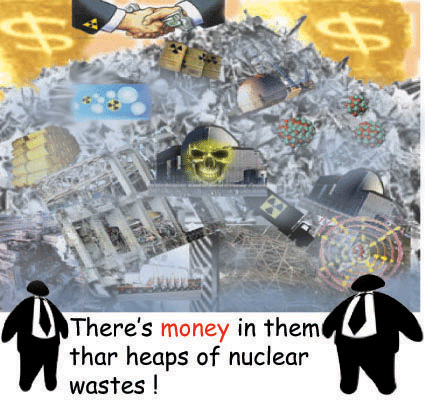
£400m decommissioning contract winners for Scotland nuclear site revealed, Infrastructure Intelligence  Ryan Tute, 24 Apr 19, Dozens of companies and their supply chains have been announced as winners for six decommissioning framework contracts, worth up to £400m, at the Dounreay nuclear site in Scotland.

Dounreay Site Restoration Limited (DSRL), was the site of Britain’s former centre of nuclear fast reactor research and development for 60 years and is set to be demolished and cleaned up.

Initially for up to four years with the possibility of extensions of up to an additional three years, winners will take work at the site, delivered on behalf of the Nuclear Decommissioning Authority (NDA). ……

Full list of winners:

  • AECOM E&C UK; MW Hargreaves; Kier Infrastructure and Overseas; Morson Projects; NIS; NSG Environmental; Squibb Group; Westinghouse Electrical Company UK
  • Dounreay Decommissioning Framework (DDF) Alliance; Cavendish Nuclear; BAM Nuttall; KDC Contractors; JGC Engineering and Technical Services
  • Dounreay Wood Alliance (DWA); Wood; Aquila Nuclear Engineering; GD Energy Services; Orano Projects
  • Jacobs UK; Atkins
  • Nuclear Decommissioning Ltd (NDL); James Fisher Nuclear; REACT Engineering; Shepley Engineers; WYG Engineering; JBV Demolition; RPS Consulting Services
  • Nuvia; Graham Construction; Oxford Technologies; Thompson of Prudhoe    http://www.infrastructure-intelligence.com/article/apr-2019/%C2%A3400m-decommissioning-contract-winners-scotland-nuclear-site-revealed

April 25, 2019 Posted by Christina Macpherson | UK, wastes | Leave a comment

End of nuclear cooperation waivers could quietly kill Iran deal

Forget oil sanctions, end of nuclear cooperation waivers could quietly kill Iran deal https://www.al-monitor.com/pulse/originals/2019/04/iran-jcpoa-nuclear-deal-sanctions-waivers-trump-arak-fordow.html    Esfandyar Batmanghelidj April 24, 2019   Much of the current debate on the Donald Trump administration’s “maximum pressure campaign” against Iran concerns its decision not to extend waivers allowing eight nations – including China, India and Turkey – to import limited amounts of Iranian oil. However, it is the possible revocation of waivers that allow the remaining parties to the deal signed in 2015 to engage in civil nuclear cooperation with Iran — with the aim of reducing the proliferation risks of the Iranian nuclear program — that poses the greatest threat to the future of the nuclear deal.

US national security adviser John Bolton and a group of hawkish lawmakers in Congress are agitating for the Trump administration to cancel three key waivers issued in November 2018, when the United States reimposed secondary sanctions on Iran. These waivers pertain to technical work on Iran’s civil nuclear program required under the terms of the Joint Comprehensive Plan of Action (JCPOA) and cover activities at three sites: Fordow, Arak and Bushehr. The aim of this cooperation is to jointly work toward significantly reducing proliferation risks.

In Arak, a waiver is necessary to enable Iran to redesign its heavy water research reactor in order to “support peaceful nuclear research and radioisotope production for medical and industrial purposes.” The proposed redesigned Arak reactor would vastly cut the potential for a plutonium path to the bomb. The underground uranium enrichment facility of Fordow is being converted into a “nuclear, physics and technology center.” The aim here is to keep uranium enrichment literally closer to the surface and thus more vulnerable in case of an Iranian dash for the bomb. At Bushehr, the site of a Russian-built nuclear power plant that became operational in 2011, the waiver is necessary to allow Iran to continue to purchase the fuel it needs to run the reactor and produce electricity.

A decision to revoke the waivers for civil nuclear cooperation would constitute perhaps the most direct US assault on the JCPOA to date. For this reason, Secretary of State Mike Pompeo and other figures in the Trump administration, worried about political blowback, have been arguing for their continuation, with European governments lobbying the United States aggressively on the issue. Note, however, that even with the present waivers in place, it is apparent that implementation of the nuclear cooperation has been faltering. Revocation of the waivers would have further and grave consequences for the future of the JCPOA.

April 25, 2019 Posted by Christina Macpherson | EUROPE, Iran, politics international, USA | Leave a comment

Narendra Modi using threat of nuclear bombing Pakistan, as an election campaign tactic

Dear Mr. Modi, A Nuclear Bomb Is Not A Campaign Prop,   https://www.newsclick.in/narendra-modi-nuclear-bomb-diwali-pakistan   In a campaign speech in Rajasthan on April 22, prime minister Narendra Modi casually threatened Pakistan with the use of nuclear bombs, saying India’s nuclear arsenal has not been saved for Diwali. Newsclick Team, 24 Apr 2019   

In a campaign speech in Rajasthan on April 22, prime minister Narendra Modi casually threatened Pakistan with the use of nuclear bombs, saying India’s nuclear arsenal has not been saved for Diwali. Another world leader, US president Donald Trump has been just as cavalier with mentioning nuclear weapons to make threats in the past.  Have these two national leaders forgotten the kind of devastation a nuclear weapon can cause?

April 25, 2019 Posted by Christina Macpherson | India, politics | Leave a comment

Russia’s attitude to North Korea’s nuclear weapons

What Russia thinks about North Korea’s nuclear weapons, Bulletin of the Atomic Scientists, By Anastasia Barannikova, April 24, 2019, North Korean leader Kim Jong Un arrived in Russia today for a meeting with President Vladimir Putin…..  Despite Russia’s past vote in favor of sanctions on Kim’s regime, Moscow has many reasons not to lean too hard on Kim over nuclear disarmament…………

Russia wants a stable North more than a non-nuclear North. Although, Russia continues to officially oppose North Korea’s nuclear status on the basis of its strict interpretation of the NPT, experts already speak about “nuclear emancipation” for the North, meaning recognition of its status as a lesser nuclear state. These ideas coincide with an idea some Chinese scholars have developed whereby North Korea would reduce its nuclear arsenal but keep some weapons as a deterrent. From Russia’s perspective, nuclear weapons now guarantee the security of the North Korean regime. The weapons can prevent attempts at violent regime change by external force. Through them, North Korean leadership has the independence to make changes within its borders. That’s good for Russia.

Many Russian analysts consider North Korea’s nuclear program to be defensive. Looking at the North’s nuclear doctrine, it seems likely the country wouldn’t use its nuclear weapons against a country that isn’t planning an attack. While little is known about Russia’s military planning beyond its publicly available doctrines, the specifics of the bilateral relations it holds with the North may guarantee that Russia has no plans to attack its neighbor.

……….The security of Kim’s regime, in turn, guarantees stability near Russia’s eastern borders. For Russia, a stable North Korean regime guarantees the absence of refugees flows, a normal feature of conflict zones, but also prevents US troops from deploying in a potentially disintegrating North. And with its nuclear weapons as diplomatic leverage, North Korea can maintain some independence from China. Thus, Moscow views Kim’s stability as providing something of a buffer between Russia and China.

Do North Korean nuclear weapons pose a threat to Russia? From Moscow’s perspective, the Korean Peninsula and Northeast Asia are relatively stable and don’t pose any immediate threats to security. Relations between Russia and North Korea are neutral, if not friendly. North Korean leadership appreciates Russia’s cautious, slow approach to the relationship, in contrast to China’s activist take on issues on the Korean Peninsula. Russia’s emphasis on the need to respect state sovereignty as a fundamental principle of international relations further lubricates the bilateral relationship: Russia avoids any attempt to interfere in the internal affairs of the North, so Pyongyang does not consider Russia as an external threat.

Many Russian analysts consider North Korea’s nuclear program to be defensive. Looking at the North’s nuclear doctrine, it seems likely the country wouldn’t use its nuclear weapons against a country that isn’t planning an attack. While little is known about Russia’s military planning beyond its publicly available doctrines, the specifics of the bilateral relations it holds with the North may guarantee that Russia has no plans to attack its neighbor.

But there is one scenario whereby North Korea’s nuclear weapons could threaten Russia. If Kim launches missiles against the United States, experts say they’ll fly over Russian territory. A US anti-missile response could, thus, risk a war between Russia and the United States. But Russian experts don’t believe that North Korea would ever attack the United States; they consider Kim Jong Un too rational for that. ………https://thebulletin.org/2019/04/what-russia-thinks-about-north-koreas-nuclear-weapons/

April 25, 2019 Posted by Christina Macpherson | North Korea, politics international, Russia | Leave a comment

Campaign for Nuclear Disarmament (CND) holds public meeting in Burnley

Organisation that has called for nuclear weapons to be banned for six decades holds public meeting in Burnley,  23 Apr 19,  https://www.burnleyexpress.net/news/organisation-that-has-called-for-nuclear-weapons-to-be-banned-for-six-decades-holds-public-meeting-in-burnley-1-9730392An organisation that has existed for 62 years and campaigns to ban nuclear weapons held a public meeting in Burnley.And the strong message that came forward from the meeting of the East Lancashire branch of the Campaign for Nuclear Disarmament was that the public should be made more aware of the humanitarian consequences of a deliberate or accidental detonation of nuclear weapons as well as the dangers that the population of UK are exposed to by the government persisting in maintaining and developing them.

Under the theme Britain Can Say NO to Nukes the meeting was held in the Central Methodist Church Hall with main guest speaker Rebecca Johnson, who is CND vice president and co chairman of International Campaign to Ban Nuclear Weapons which, in 2017 won the Nobel Peace Prize.
Rebecca took the Nobel medal, affectionately known as ‘Alfred’ along to the meeting for people to have the opportunity to see it.

Between her international anti-nuclear commitments , Rebecca is currently acting as a legal observer in the XR demonstrations in London where over two hundred people have been arrested for committing acts of non-violent direct action.

Rebecca showed a short film about the horrific humanitarian consequences of the use of nuclear weapons before going on to describe how, over a number of years, the nations of the world that do not have nuclear weapons have come together to negotiate the Treaty on the Prohibition of Nuclear Weapons.

It was adopted by the United Nations in July 2017 by 122 nations of the UN General Assembly.

Currently 70 nations have signed the Treaty and 22 have ratified it. Once 50 countries have ratified it, then it will become part of International law, like the laws against other WMD’s -chemical weapons, cluster bombs and landmines. It is expected that this could happen sometime next year.

April 25, 2019 Posted by Christina Macpherson | opposition to nuclear, UK | Leave a comment

Despite World Trade Association ruling, Japan still asks S. Korea to lift ban on Fukushima seafood

Japan asks S. Korea to lift Fukushima seafood ban despite WTO ruling  April 23, 2019 (Mainichi Japan) TOKYO(Kyodo) — Japan on Tuesday urged South Korea to lift import restrictions on Japanese seafood introduced in the wake of the 2011 Fukushima nuclear disaster, even after the World Trade Organization ruled in favor of Seoul over the issue……

Seoul imposed a ban on some types of seafood products from eight prefectures, including Aomori, Fukushima, and Chiba, in the wake of the 2011 reactor core meltdowns at the Fukushima Daiichi nuclear power plant triggered by a powerful earthquake and tsunami.

It expanded the ban in September 2013 to include all seafood products from the eight prefectures, and added a requirement that Japanese companies attach safety certificates when any traces of radiation are found in seafood from other regions.

In August 2015, Tokyo filed a complaint with the WTO against the restrictions, which it considers unfair discrimination, and an initial ruling by a dispute settlement panel sided with Japan. South Korea appealed the decision, however, and the WTO’s appellate body, the highest judicial entity of its dispute ettlement mechanism, ultimately ruled in Seoul’s favor on April 11…….. https://mainichi.jp/english/articles/20190423/p2g/00m/0na/059000c

April 25, 2019 Posted by Christina Macpherson | Japan, politics international, South Korea | Leave a comment

« Previous Entries     Next Entries »

1 This Month

Tell Congress: Prevent Nuclear Catastrophe in Iran

Tell Congress: Prevent Nuclear Catastrophe in Iran

Read the Public Inquiry Report, the Commissioners’ report, Surrendering Australia: The AUKUS Deception is available to download for free at aukuspublicinquiry.com. Or just watch the replay of the National Press Club Luncheon.


​

Shut down the radiation-damaged Heysham nuclear reactors now

To see nuclear-related stories in greater depth and intensity – go to https://nuclearinformation.wordpress.com

Say No to NASA’s Reckless Nuclear Reactor on the Moon

Say No to NASA’s Reckless Nuclear Reactor on the Moon

  • Categories

    • 1
      • Arclight's Vision
    • 1 NUCLEAR ISSUES
      • business and costs
        • employment
        • marketing
      • climate change
      • culture and arts
      • ENERGY
        • renewable
          • decentralised
          • energy storage
      • environment
        • oceans
        • water
      • health
        • children
        • psychology – mental health
        • radiation
        • social effects
        • women
      • history
      • indigenous issues
      • Legal
        • deaths by radiation
        • legal
      • marketing of nuclear
      • media
        • investigative journalism
        • Wikileaks
      • opposition to nuclear
      • PERSONAL STORIES
      • politics
        • psychology and culture
          • Trump – personality
        • public opinion
        • USA election 2024
        • USA elections 2016
      • politics international
      • Religion and ethics
      • safety
        • incidents
      • secrets,lies and civil liberties
        • civil liberties
      • spinbuster
        • Education
      • technology
        • reprocessing
        • Small Modular Nuclear Reactors
        • space travel
      • Uranium
      • wastes
        • – plutonium
        • decommission reactor
      • weapons and war
        • Atrocities
        • depleted uranium
      • Women
    • 2 WORLD
      • ANTARCTICA
      • ARCTIC
      • ASIA
        • Burma
        • China
        • India
        • Indonesia
        • Japan
          • – Fukushima 2011
          • Fukushima 2012
          • Fukushima 2013
          • Fukushima 2014
          • Fukushima 2015
          • Fukushima 2016
          • Fukushima continuing
        • Malaysia
        • Mongolia
        • North Korea
        • Pakistan
        • South Korea
        • Taiwan
        • Turkey
        • Vietnam
      • EUROPE
        • Belarus
        • Bulgaria
        • Denmark
        • Finland
        • France
        • Germany
        • Greece
        • Ireland
        • Italy
        • Kazakhstan
        • Kyrgyzstan
        • Russia
        • Spain
        • Sweden
        • Switzerland
        • UK
        • Ukraine
      • MIDDLE EAST
        • Afghanistan
        • Egypt
        • Gaza
        • Iran
        • Iraq
        • Israel
        • Jordan
        • Libya
        • Saudi Arabia
        • Syria
        • Turkey
        • United Arab Emirates
      • NORTH AMERICA
        • Canada
        • USA
          • election USA 2020
      • OCEANIA
        • New Zealand
        • Philippines
      • SOUTH AMERICA
        • Brazil
    • ACTION
    • AFRICA
      • Kenya
      • Malawi
      • Mali
      • Namibia
      • Niger
      • Nigeria
      • Somalia
      • South Africa
    • Atrocities
    • AUSTRALIA
    • Christina's notes
    • Christina's themes
    • culture and arts
    • Events
    • Fuk 2022
    • Fuk 2023
    • Fukushima 2017
    • Fukushima 2018
    • fukushima 2019
    • Fukushima 2020
    • Fukushima 2021
    • general
    • global warming
    • Humour (God we need it)
    • Nuclear
    • RARE EARTHS
      • thorium
    • Reference
      • Reference archives
    • resources – print
    • Resources -audiovicual
    • Weekly Newsletter
    • World
    • World Nuclear
    • YouTube
  • Pages

    • 1 This Month
    • ACTION !
    • Disclaimer
    • Links
    • PAGES on NUCLEAR ISSUES
      • audio-visual news
      • Anti Nuclear, Clean Energy Movement
        • Anti Nuclear movement – a success story
          • – 2013 – the struggle for a nuclear-free, liveable world
          • – 2013: the battle to expose nuclear lies about ionising radiation
            • Speakers at Fukushima Symposium March 2013
            • Symposium 2013 Ian Fairlie
      • Civil Liberties
        • – Civil liberties – China and USA
      • Climate change
      • Climate Change
      • Economics
        • – Employment
        • – Marketing nuclear power
        • – Marketing Nuclear Power Internationally
        • nuclear ‘renaissance’?
        • Nuclear energy – the sick man of the corporate world
      • Energy
        • – Solar energy
      • Environment
        • – Nuclear Power and the Tragedy of the Commons
        • – Water
      • Health
        • Birth Defects in the Chernobyl Radiation Affected Region.
      • History
        • Nuclear History – the forgotten disasters
      • Indigenous issues
      • Ionising radiation
        • – Ionising radiation – medical
        • Fukushima FACT SHEET
      • Media
        • Nuclear Power and Media 2012
      • Nuclear Power and the Consumer Society – theme for December 2012
      • Peace and nuclear disarmament
        • Peace on a Nuclear Free Earth
      • Politics
        • – Politics USA
      • Public opinion
      • Religion and ethics
        • -Ethics of nuclear power
      • Resources – print
      • Safety
      • Secrets and lies
        • – NUCLEAR LIES – theme for January 2012
        • – Nuclear Secrets and Lies
      • Spinbuster
        • 2013 nuclear spin – all about FEAR -theme for June
        • Spinbuster 1
      • Technology
        • TECHNOLOGY Challenges
      • Wastes
        • NUCLEAR WASTES – theme for October 2012
        • – Plutonium
      • Weapons and war
      • Women
  • Archives

    • November 2026 (215)
    • October 2026 (302)
    • September 2026 (339)
    • August 2026 (330)
    • July 2026 (355)
    • June 2026 (287)
    • May 2026 (306)
    • April 2026 (356)
    • March 2026 (251)
    • February 2026 (267)
    • January 2026 (308)
    • December 2025 (358)
  • Categories

    • 1
      • Arclight's Vision
    • 1 NUCLEAR ISSUES
      • business and costs
        • employment
        • marketing
      • climate change
      • culture and arts
      • ENERGY
        • renewable
          • decentralised
          • energy storage
      • environment
        • oceans
        • water
      • health
        • children
        • psychology – mental health
        • radiation
        • social effects
        • women
      • history
      • indigenous issues
      • Legal
        • deaths by radiation
        • legal
      • marketing of nuclear
      • media
        • investigative journalism
        • Wikileaks
      • opposition to nuclear
      • PERSONAL STORIES
      • politics
        • psychology and culture
          • Trump – personality
        • public opinion
        • USA election 2024
        • USA elections 2016
      • politics international
      • Religion and ethics
      • safety
        • incidents
      • secrets,lies and civil liberties
        • civil liberties
      • spinbuster
        • Education
      • technology
        • reprocessing
        • Small Modular Nuclear Reactors
        • space travel
      • Uranium
      • wastes
        • – plutonium
        • decommission reactor
      • weapons and war
        • Atrocities
        • depleted uranium
      • Women
    • 2 WORLD
      • ANTARCTICA
      • ARCTIC
      • ASIA
        • Burma
        • China
        • India
        • Indonesia
        • Japan
          • – Fukushima 2011
          • Fukushima 2012
          • Fukushima 2013
          • Fukushima 2014
          • Fukushima 2015
          • Fukushima 2016
          • Fukushima continuing
        • Malaysia
        • Mongolia
        • North Korea
        • Pakistan
        • South Korea
        • Taiwan
        • Turkey
        • Vietnam
      • EUROPE
        • Belarus
        • Bulgaria
        • Denmark
        • Finland
        • France
        • Germany
        • Greece
        • Ireland
        • Italy
        • Kazakhstan
        • Kyrgyzstan
        • Russia
        • Spain
        • Sweden
        • Switzerland
        • UK
        • Ukraine
      • MIDDLE EAST
        • Afghanistan
        • Egypt
        • Gaza
        • Iran
        • Iraq
        • Israel
        • Jordan
        • Libya
        • Saudi Arabia
        • Syria
        • Turkey
        • United Arab Emirates
      • NORTH AMERICA
        • Canada
        • USA
          • election USA 2020
      • OCEANIA
        • New Zealand
        • Philippines
      • SOUTH AMERICA
        • Brazil
    • ACTION
    • AFRICA
      • Kenya
      • Malawi
      • Mali
      • Namibia
      • Niger
      • Nigeria
      • Somalia
      • South Africa
    • Atrocities
    • AUSTRALIA
    • Christina's notes
    • Christina's themes
    • culture and arts
    • Events
    • Fuk 2022
    • Fuk 2023
    • Fukushima 2017
    • Fukushima 2018
    • fukushima 2019
    • Fukushima 2020
    • Fukushima 2021
    • general
    • global warming
    • Humour (God we need it)
    • Nuclear
    • RARE EARTHS
      • thorium
    • Reference
      • Reference archives
    • resources – print
    • Resources -audiovicual
    • Weekly Newsletter
    • World
    • World Nuclear
    • YouTube
  • RSS

    Entries RSS
    Comments RSS

Site info

nuclear-news
Create a free website or blog at WordPress.com.
Privacy & Cookies: This site uses cookies. By continuing to use this website, you agree to their use.
To find out more, including how to control cookies, see here: Cookie Policy
  • Subscribe Subscribed
    nuclear-news
    Join 2,034 other subscribers

    Have a WordPress.com account? Log in now.

  • nuclear-news
    View site in Reader
    Manage subscriptionsSign upLog in
    Report this content
    Collapse this bar
Loading Comments...