Times 30th July 2019New nuclear power plants should be funded through general taxation instead of piling the costs on to consumers, a leading union has said. The GMB said
that the government’s proposed regulated asset base funding model for
further reactors was “acceptable”, but that the costs should be paid “from
a progressive general taxation system”. Last week The Times reported leaked
government analysis that up to 40 gigawatts of either nuclear power or
carbon capture and storage plants was needed by 2050 to meet “net zero”
emissions targets. That equates to 12 Hinkley Point plants. Under the
regulated asset base model, developers would receive a regulated return
while the plant was under construction, cutting their financing costs. It
would still be funded on bills, exposing consumers to cost overruns.
Voices of Fukushima power plant explosion victims strengthen call to ban nuclear energy
By Rachel Farmer, Anglican Communion News
July 28, 2019
Japanese parish priests shared stories of suffering from victims of the Fukushima nuclear disaster at a May 2019 International Forum for a Nuclear-Free World held in Sendai, Japan. A joint statement from the forum, issued in July 2019, strengthens the call for a worldwide ban on nuclear energy and encourage churches to join in the campaign.
The statement – Affirming the Preciousness of Life, in Order that Life may be Lived – For a World Free of Nuclear Power – noted that “We believe that it is highly important that this issue of nuclear power generation be considered from the perspective of the dignity of life.” The statement went on to point out the dangers of continued radioactive waste production and the connection between nuclear power and nuclear weapons — “two sides of a single coin.” It recommended that “No longer should we continue as a society with the economic priority of reliance upon nuclear power generation.”
The forum, organised by the Nippon Sei Ko Kai (NSKK) – the Anglican Communion in Japan – follows the NSKKs General Synod resolution in 2012 calling for an end to nuclear power plants and activities to help the world go nuclear free.
The disaster in 2011 followed a massive earthquake and tsunami which caused a number of explosions in the town’s coastal nuclear power station and led to widespread radioactive contamination and serious health and environmental effects. The Chair of the forum’s organising committee, Kiyosumi Hasegawa, said: “We have yet to see an end to the damage done to the people and natural environment by the meltdown of TEPCO’s Fukushima Daiichi Nuclear Power Plant. I do think this man-made disaster will haunt countless people for years to come. We still see numerous people who wish to go back to their hometowns but are unable to. We also have people who have given up on ever going home.”
One pastor, Dr Naoya Kawakami, whose church was affected by the tsunami and is the General Secretary of the Sendai Christian Alliance Disaster Relief Network, Touhoku HELP, explained how he had supported sufferers in the aftermath and heard from priests supporting the survivors. He said: “I have been more than 700 times to meet with more than 180 mothers and about 20 fathers, all of whom have seen abnormalities in their children since 2011. . . Thyroid cancer has been found in more than 273 children and many mothers are in deep anxiety.
“The more the situation worsens, the more pastors become aware of their important role. The role is to witness . . . pastors who have stayed in Fukushima with the ‘voiceless survivors’ are showing us the church as the body of Jesus’s resurrection, with wounds and weakness . . . sufferers are usually in voiceless agony and most people never hear them.”
The forum was attended by bishops, clergy and lay representatives from each diocese, together with representatives from the US-based Episcopal Church, USPG, the Episcopal Church of the Philippines, the Diocese of Taiwan, the Anglican Church of Korea, and also ecumenical guests. International experts took part, along with local clergy who shared individual stories from those directly affected by the disaster.
Keynote lecturer Prof Dr Miranda Schreurs, from the Technische Universität München in Germany, launched the forum at Tohoku Diocese’s Cathedral, Sendai Christ Church. The professor currently serves as a member of the Ethic Commission for Safe Energy Supply and significantly influenced Germany’s nuclear free energy policy. Other speakers included the Bishop of Taiwan, David Jun Hsin Lai, and Amos Kim Kisuk from the Anglican Church of Korea.
During the week delegates from outside Japan visited sites and towns near the nuclear power plant. They also visited St John’s Church Isoyama and “Inori no Ie” (House of Prayer) in Shinchi, Fukushima, to offer prayers for all the victims of the disaster.
The NSKK Partners-in-Mission Secretary, Paul Tolhurst, said the visit to Fukushima had brought home the reality of the situation for local people. “Driving past the power station and seeing the ghost town around us as the Geiger counter reading kept going up is something I won’t forget”, he said. “It was like the town time forgot – they still seem to be living the incident, while the rest of Japan has moved on.”
Arguing for an end to nuclear power, NSKK priest John Makito Aizawa said: “Both religiously and ethically, we cannot allow nuclear power plants to continue running. They produce deadly waste, which we have no way of processing into something safe.
“More than 100,000 years are necessary for the radiation of such deadly waste to diminish to the level that it was in the original uranium. This alone is a strong enough reason to prohibit nuclear power plants. Insistence on restarting nuclear power plants seems to come from the insistence on getting more and more money and profit.”
He added: “I am no scientist or engineer of nuclear power generation. I am no expert. Still, as Christians, and to live as humans, I am certain this is an issue we cannot afford to ignore.”
The report authors argue that new technology for nuclear plants won’t solve the underlying economic difficulties: “Those in favor of nuclear energy like to point out the ongoing technological developments that could lead to it growing more efficient in the future.
“They include ‘fourth generation’ nuclear power plants and mini-nuclear power plants (small modular reactors, SMRs). Anything but new, both concepts have their roots in the early phase of nuclear power in the 1950s. Then as now, there was no hope that the technologies would become economical and established.”
Kate Hudson, CND general secretary, said:
“The history of nuclear power is seven decades of economic ruin and environmental catastrophe. Toshiba’s decision last year to abandon plans to build a reactor at Moorside in Cumbria and Hitachi’s suspension of work this year on the Wylfa Newydd plant in Anglesey simply reflect the economic reality that this report sets out.
“Nuclear power isn’t only expensive, it creates an unsolvable waste problem, and as the TV drama Chernobyl so graphically reveals, nuclear accidents create human misery and environmental destruction.
“Our new Prime Minister should learn these lessons and adopt a fresh approach to energy that centres on clean and economically viable renewable technology.”
The experts say the cloud of radiation detected over Europe in late September 2017 could only have been caused by a nuclear fuel-reprocessing accident at the Mayak Production Association, a nuclear facility in the Chelyabinsk region of the Ural Mountains in Russia, sometime between noon on Sept. 26 and noon on Sept. 27.
The lead author of the new research, nuclear chemist Georg Steinhauser of Leibniz University in Hanover, Germany, said that more than 1,300 atmospheric measurements from around the world showed that between 250 and 400 terabecquerels of radioactive ruthenium-106 had been released during that time.
Ruthenium-106 is a radioactive isotope of ruthenium, meaning that it has a different number of neutrons in its nucleus than the naturally occurring element has. The isotope can be produced as a byproduct during nuclear fission of uranium-235 atoms.
Although the resulting cloud of nuclear radiation was diluted enough that it caused no harm to people beneath it, the total radioactivity was between 30 and 100 times the level of radiation released after the Fukushima accident in Japan in 2011, Steinhauser told Live Science.
The cloud of radiation in September 2017 was detected in central and eastern Europe, Asia, the Arabian Peninsula and even the Caribbean.
Only radioactive ruthenium-106 — a byproduct of nuclear fission, with a half-life of 374 days — was detected in the cloud — Steinhauser said.
During the reprocessing of nuclear fuel — when radioactive plutonium and uranium are separated from spent nuclear fuel from nuclear power reactors — ruthenium-106 is typically separated out and placed into long-term storage with other radioactive waste byproducts, he said.
That meant that any massive release of ruthenium could only come from an accident during nuclear fuel reprocessing; and the Mayak facility was one of only a few places in the world that carries out that sort of reprocessing, he said.
Advanced meteorological studies made as part of this new research showed that the radiation cloud could only have come from the Mayak facility in Russia. “They have done a very thorough analysis and they have pinned down Mayak — there is no doubt about it,” he said.
In the 1957 accident, known as the Kyshtym disaster after a nearby town, a tank of liquid nuclear waste at the Mayak facility exploded, spreading radioactive particles over the site and causing a radioactive plume of smoke that stretched for hundreds of miles.
Nuclear accident
The study showed that the 2017 accident at Mayak was unlikely to have been caused by a relatively simple release of radioactive gas, Steinhauser said. Rather, a fire, or even an explosion, might have exposed workers at the plant to harmful levels of radiation, he added.
Russia has not acknowledged that any accident occurred at the Mayak facility, maybe because plutonium is made there for thermonuclear weapons. However, Russia had established a commission to investigate the radioactive cloud, Steinhauser said.
The Russian commission ruled that there was not enough evidence to determine if a nuclear accident was responsible for the cloud. But Steinhauser and his team hope it may look again at this decision in the light of the new research.
“They came to the conclusion that they need more data,” he said. “And so we feel like, okay, now you can have all of our data — but we would like to see yours as well.”
Any information from Russia about an accident at the Mayak facility would help scientists refine their research, instead of having to rely only on measurements of radioactivity from around the world, Steinhauser said.
The international team of scientists involved are keenly interested in learning more about its causes. “When everybody else is concerned, we are almost cheering for joy, because we have something to measure,” he said. “But it is our responsibility to learn from this accident. This is not about blaming Russia, but it is about learning our lessons,” he said.
Robots come to the rescue after Fukushima Daiichi nuclear disaster, CBS News, CORRESPONDENTLesley Stahl, Produced by Richard Bonin and Ayesha Siddiqi , 28 July 19
Eight years after a powerful earthquake and tsunami caused a massive nuclear meltdown in the Daiichi Power Plant, Lesley Stahl reports on the unprecedented cleanup effort
More than eight years have passed since a monster earthquake and tsunami struck Northeast Japan and triggered what became, after Chernobyl, the worst nuclear disaster in history at the Fukushima Daiichi Nuclear Power Plant.
As we first reported last fall, when three of the plant’s six reactors melted down, hot fuel turned to molten lava and burned through steel walls and concrete floors. To this day, no one knows exactly where inside the reactor buildings the fuel is. And it is so deadly, no human can go inside to look for it. So the Japanese company that owns the crippled plant has turned to robots.
There are four-legged robots, robots that climb stairs and even robots that can swim into reactors flooded with water. They’re equipped with 3D scanners, sensors and cameras that map the terrain, measure radiation levels and look for the missing fuel.
This is part of a massive clean up that’s expected to cost nearly $200 billion and take decades.
Lesley Stahl: Has anything like this cleanup, in terms of the scope, ever happened before?
Lake Barrett: No, this is a unique situation here. It’s never happened in human history. It’s a challenge we’ve never had before………..
Lesley Stahl: Why not just bury this place? Why not do what they did at Chernobyl? Just cover it up, bury it, and just leave it here all– you know, enclosed?
Lake Barrett: Number one this is right next to the sea. We’re 100 yards from the ocean. We have typhoons here in Japan. This is also a high earthquake zone. And there’s gonna be future earthquakes. So these are unknowns that the Japanese and no one wants to deal with………
Lesley Stahl: How many tons of radioactive waste was developed here?
Lake Barrett: Probably 500 to 1,000 tons in each building.
Lesley Stahl: So how long will it be lethal?
Lake Barrett: It will be lethal for thousands of years.
Lesley Stahl: What we’re talking about really is three meltdowns?
Lake Barrett: Yes. It was truly Hell on Earth.
No one is gonna send a worker in there because they’d be overexposed in just a matter of seconds.”
The meltdowns triggered huge explosions that sent plumes of radioactive debris into the atmosphere, forcing the evacuation of everyone within a 12-mile radius – about 160,000 people in all. Weeks later, TEPCO officials engaged in so-called kowtow diplomacy – allowing townspeople to berate them as they prostrated themselves in apology.
Thousands of workers were sent to the countryside to decontaminate everything touched by radiation including digging up dirt and putting it in bags – lots of bags.
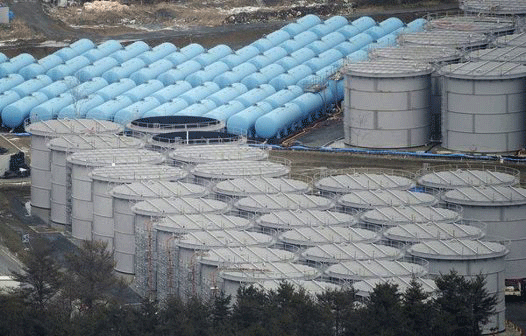
At the plant they’re capturing contaminated groundwater, about 150 tons a day, and storing it in tanks, as far as the eye can see.
Lake Barrett: Water is always the major challenge here. And it’s going to remain a major challenge until the entire cores are removed.
The closer workers get to the reactors, the more protective gear they have to wear, as we discovered………..
In the years since the accident, much of the damage to the building has been repaired.
But it’s still dangerous to spend a lot of time here. We could stay only 15 minutes.
Lesley Stahl: There’s this number I’ve been seeing, 566.
Lake Barrett: Right. That’s telling you the radiation level that we’re in. It’s fairly high here. That’s why we’re gonna be here a short time.
Lesley Stahl: How close are you and I, right this minute, to the core?
Lake Barrett: The– the melted cores are about 70 feet that way.
Lesley Stahl: Seventy from here–
Lake Barrett: From here.
Lesley Stahl: –is the melted core?
Lake Barrett: Correct, that’s right over in here. We don’t know quite where other than it fell down into the floor.
Lesley Stahl: So if you sent a worker in right now to find it, how long would they survive?
Lake Barrett: No one is gonna send a worker in there because they’d be overexposed in just a matter of seconds.
Enter the robots.
Lesley Stahl: This is the robot research center.
Dr. Kuniaki Kawabata: Yes. This is for remote control technology development.
In 2016, the Japanese government opened this $100 million research center near the plant where a new generation of robots is being developed by teams of engineers and scientists from the nation’s top universities and tech companies………
But even with all the high-tech training and know-how, the robots have run into problems. For the early models, it was the intense levels of radiation – that fried their electronics and cameras.
Lake Barrett: Their lifetime was hours. We hoped it would be days, but it was for hours………
when Scorpion went inside, it hit some debris and got stuck after traveling less than 10 feet. ……
Finally, in 2017, the swimming robot [Little Sunfish] made its foray into the heart of the reactor. ………. It beamed back images reveali ng clumps of debris, fuel rods, half-destroyed equipment and murky glimpses of what looks like solidified lava — the first signs, TEPCO officials say, of the missing fuel.
Lake Barrett: These robotic steps so far have been significant steps. But it is only a small step on a very, very long journey.
Lesley Stahl: This is gonna take you said decades with an “S.” How many decades?
Lake Barrett: We don’t know for sure. The goal here is 40– 30– 40 years. You know, I personally think it may be even 50– 60, but it’s–
Fukushima residents look for Olympic PR boost, Kyodo News, By Jim Allen, 29 July 19, – Two softball games and one baseball game in Fukushima next summer may be little more than an 2020 Olympic cameo, but local fans are thrilled to have them, largely in the hopes they will give their prefecture a badly needed public relations boost.
………… Tokyo Olympic organizers have dubbed the games “the Reconstruction Olympics.”
In addition to the games in Fukushima, Miyagi Stadium will be one of the Olympic soccer venues, while all three prefectures will be focal points of the Olympic torch relay — which officially starts in Fukushima.
……….. Even eight years later, Fukushima suffers from the suspicion that food from the prefecture might be contaminated. And locals see the Olympics as an opportunity to show off their region the way they see it. ………
Iwamura said that consumers outside Fukushima have second thoughts about the safety of the food raised there and local farmers cannot get fair value for their products. But he said the Olympics are a golden opportunity to change peoples’ perceptions of Fukushima.
“For us baseball people here, we want to make the baseball and softball games held here a success,” Iwamura said. “If we can be wildly enthusiastic about them and show that to the people coming from abroad, then they will tell others that Fukushima is safe, that the people here are living good lives.”……..
Iwamura expressed optimism for next year and for the future.
More than eight years after one of the worst nuclear disasters in history, towns around Japan’s nuclear power plant struggle to rebuild, 2019 Jul 28, BYBrit McCandless Farmer
The streets are motionless. Items hang untouched on clotheslines, bleached by the sun. A clock shows 2:46, and it always will. More than eight years after an earthquake and tsunami caused a meltdown at a nuclear power plant in Japan’s Fukushima prefecture, surrounding towns are still frozen in time.
“At the moment, there are huge areas that are still ghost towns,” correspondent Lesley Stahl told 60 Minutes Overtime in the video above. “People can come back into some of the areas because they have been decontaminated. But people are afraid to go back home.”
In March 2011, meltdowns at the Fukushima Daiichi nuclear power plant triggered huge explosions that sent plumes of radioactive debris into the atmosphere. Wind then carried that debris, contaminating all the towns in its path. The government evacuated more than 150,000 people.
Today, residents of those towns are reluctant to return, even as the Japanese government works to assure the towns’ safety.
“They’ve sent millions of workers out to literally wipe down rails, power hose leaves on trees, clean the tops of houses, dig up all the topsoil from a tree, a garden bed,” said 60 Minutes associate producer Ayesha Siddiqi. “It’s so detailed. Every single last crevice of the town will be cleaned up somehow.”
A lot of residents have moved homes—and moved on, rebuilding their lives elsewhere. Others are afraid of returning to an area that had been covered with radioactive particles. Still, some people are starting to filter back in.
“This is their home, had always been their home,” Stahl said. “But I don’t know if they’ll ever restore the surrounding towns and have really whole, healthy communities.”
To watch Lesley Stahl’s report on how robots have finally found the reactors’ melted uranium fuel, click here.
Toxic water level at Fukushima plant still not under control, THE ASAHI SHIMBUN, July 28, 2019 Almost six years after Prime Minister Shinzo Abe famously declared the contaminated water problem at the Fukushima No. 1 nuclear plant “under control,” today it remains anything but.
Tokyo Electric Power Co. (TEPCO) continues to face difficulties in dealing with water contaminated with radioactive substances at its crippled plant.
About 18,000 tons of highly contaminated water remain accumulated in reactor buildings and other places.
Abe made the declaration in September 2013 while Tokyo was bidding to win the 2020 Summer Games.
In reality, however, the situation is not under control even now.
In a meeting of the Nuclear Regulation Authority (NRA) in June, one of its members, Nobuhiko Ban, told TEPCO officials, “I want you to show whether you have a prospect (for the reduction of contaminated water) or you have given up.”
The water level did not fall as planned in an area of a basement floor at the No. 3 reactor building for two months. Asked why the level did not drop, TEPCO officials offered only vague explanations in the meeting. Ban made the remark out of irritation.
Highly contaminated water that has accumulated in reactor buildings and turbine buildings is a major concern at the Fukushima plant. In addition to water that was used to cool melted nuclear fuel at the No. 1, No. 2 and No. 3 reactors, groundwater also has flowed into those buildings through cracks.
The concentration of radioactive substances in the highly contaminated water is about 100 million times that of the contaminated water that has been processed and stored in tanks………
Eight years since the nuclear accident occurred, the volume of highly contaminated water in the buildings has fallen to 18,000 tons. TEPCO aims to reduce the volume further to 6,000 tons by the end of fiscal 2020.
However, work to decrease the water has not progressed as expected.
As for the area in the basement of the No. 3 reactor building, it is known that water used to cool melted nuclear fuel is flowing into the area. But why the water level does not drop only in that area is not known.
If the water level in the building remains high, highly contaminated water there could leak into the ground through cracks when the groundwater level outside the building drops. If the leaks occur, the entire effort to decrease the amount of highly contaminated water will be stalled.
The NRA is also requiring TEPCO to take anti-tsunami measures because if a huge tsunami engulfs the buildings again, it could send highly contaminated water pouring into the sea
EXPLAINER: The Letters of Last Resort – Boris Johnson’s secret instructions on nuclear action, There are, at most, nine countries on earth with nuclear weapons. Joe, 28 July 19
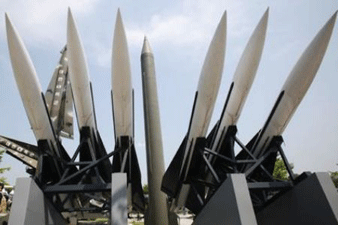
Before today, two of those arsenals were in the hands of Donald Trump and Kim Jong-un. As of today, they have been joined by Boris Johnson.
Among the very first things that will happen as Johnson begins is premiership, is a briefing from the Chief of the Defence Staff, who will tell him exactly the kind of devastation and death a nuclear Trident missile would cause. Johnson will then be tasked with composing the “letters of last resort.”
The letters of last resort are an almost mythical device, the kind of thing that would make more sense in a Tom Clancy novel than they do in real life. But they are real, and they are terrifying.
They are four letters, each one issued to the commanding officers of each of the United Kingdom’s four nuclear-capable ballistic missile submarines. They are only to be opened under one specific circumstance: the destruction of the government of Britain through a major, likely nuclear, bombing campaign.
The letters are only to be opened under the assumption that the Prime Minister and any designated deputies are dead, and that it is up to the UK’s military submarines to respond.
Typically, the UK has one of these submarines patrolling at any given time, armed with 40 of its 120 operational nuclear warheads. The other three subs are based in Faslane naval base in Scotland.
And right now, those letters are being written by Boris Johnson. Cool.
Four possible directives are known:
That the UK should retaliate.
That the UK should not retaliate, and should retreat to a commonwealth nation.
That the commanding officer should use their own judgment.
Place the submarines under the command of an allied country, such as the United States.
It is very possible, however, that a PM will be much more specific than this.
When quizzed on the matter of their own letters by the BBC, former Prime Ministers John Major, Tony Blair and Gordon Brown all revealed that they had included a caveat that under no circumstances should civilians be targeted with nuclear weapons.
Independent 27th July 2019 Extreme global temperatures are pushing the human body “close to thermal limits”, according to a climate scientist. Record-breaking heat has swept
through Europe this week with temperatures topping 40C in a number of
countries.
Telegraph 27th July 2019An unprecedented outbreak of wildfires in the Arctic has sent smoke across Eurasia and released more carbon dioxide in two months than the Czech
Republic or Belgium does in a year.
As 44C heatwaves struck Europe,
scientists observed more than 100 long-lasting, intense fires in the Arctic
in June, the hottest month on record, and are seeing even more in July,
according to Mark Parrington of the European Centre for Medium-Range
Weather Forecasts.
Mostly in Alaska and Russia, the infernos have
collectively released more than 120 million tonnes of CO2, more than the
annual output of most countries. It is the most carbon emitted since
satellite monitoring began in the early 2000s. This will further exacerbate
climate change and has sent smoke pouring toward more populated parts of
the world. Pollutants can persist more than a month in the atmosphere and
spread thousands of kilometres.
But is interim storage really interim?……. the communities that give the OK to build an interim storage facility may end up having the waste stuck in their backyards for decades to come.
“Until there is an idea of a long-term repository,” said Maria Korsnick, CEO of the Nuclear Energy Institute, at a recent Senate hearing, “anybody that raises their hands for that consolidated interim storage [site] is, de facto, the long-term” site.
Finding a repository for San Onofre plant’s nuclear waste is a difficult task L A Times,ROB NIKOLEWSKI
JULY 27, 2019, SAN DIEGO — Earlier this month, Southern California Edison — the operators of the now-shuttered San Onofre nuclear power plant — resumed transferring heavy canisters filled with spent fuel assemblies from wet storage pools to a newly constructed dry storage facility on the plant’s premises. Continue reading →
EDF Energy’s deal to build Hinkley Point C, Britain’s first new nuclear power plant in a generation, has been dubbed the world’s most expensive power plant of all time, a “white elephant” in a changing energy landscape, and a risky and expensive gamble withtaxpayers’ money.
There was little chance that a deal so politically unpalatable could be repeated for EDF’s follow-on project at Sizewell B. Instead, officials returned to the drawing board to re-engineer a multibillion-pound funding framework that could help lower the eye-watering costs of constructing a nuclear reactor.
The £20bn Hinkley Point C project will cost energy bill payers £92.50 for every megawatt-hour of electricity it produces for 35 years. It is a price well above both the UK’s wholesale energy price of around £55 a megawatt-hour, and the new breed of offshore wind farms.
The new funding model promises to cut the cost of building a new nuclear plant by a fifth – but this, too, comes at a cost. The government’s plans to make nuclear affordable means Britons will twice shoulder the risk of building new nuclear reactors.
First, by paying upfront for the reactors through energy bills to help fund their construction. Second, by taking on the cost of any overruns or construction delays through a taxpayer guarantee. The public purse would also compensate nuclear investors if the project were scrapped.
It is the same model used to fund London’s £4.2bn super-sewer project, the Thames Tideway tunnel, which has drawn criticism for raising water bills while investors reap financial rewards.
By shifting the risk from private investors to taxpayers, nuclear developers will be able to borrow money at cheaper rates, which will lead to lower bills for consumers.
On paper, the proposal is a better deal than Hinkley, but it’s far from perfect.
The National Infrastructure Commission has taken a dim view of the model. “This makes projects appear cheaper as consumers are effectively financing the projects at zero interest. At least some of the risk associated with construction costs also sit with consumers, a further hidden cost, since consumers are not paid to hold these risks in the way investors would be,” it said.
In addition, the sums hold true only if the project remains on schedule and on budget for the decade it takes to construct a nuclear plant. There are worryingly few examples where this has been the case; EDF Energy’s forerunner to the Hinkley project, at Flamanville in Normandy, is expected to cost four times original estimates. It was expected to begin generating electricity in 2012, but is now expected to start up in 2022.
he French energy giant has said the lessons learned from Flamanville mean Hinkley Point will avoid a similar fate. Sizewell will be at an even greater advantage because it will use the same UK workers once Hinkley is complete.
Why take the risk at all, though?
“If ministers want affordable and clean energy, the fastest, safest and cheapest way to do that is to boost renewables like wind and solar,” said Doug Parr, chief scientist at Greenpeace.
There have been major advances in flexible renewable energy technologies in recent years, but ministers retain an appetite for the “firm” low-carbon electricity generated by nuclear reactors despite the financial hurdles to building them.
The UK’s energy landscape is littered with stalled nuclear plant projects which have so far failed to make a financial case. Already half the projects proposed three years ago have foundered.
But the government’s commitment to a new atomic era is still the most reliable element of its nuclear programme to date.
Eastern Europe’s Love Affair With Nuclear Is Hitting the Rocks
Countries in the former Soviet bloc are desperately trying to upgrade facilities but are squeezed by time and money. Bloomberg, By James M Gomezand Zoltan Simon, July 28, 2019Zoltan Gorog is ready for the Russian invasion. The real estate agent in the Hungarian town of Paks has added Cyrillic to the blue and white sign hanging above his offices. He’s set up empty desks for when he needs to expand to cope with the surge in business.
Iran intends to restart activities at Arak heavy water nuclear reactor,CNBC, JUL 28 2019
Heavy water can be employed in reactors to produce plutonium, a fuel used in nuclear warheads.
In May Iran announced planned measures to breach the nuclear agreement with major world powers following the U.S. withdrawal from deal……..
On July 3, President Hassan Rouhani said Tehran would increase its uranium enrichment levels and start to revive its Arak heavy-water reactor after July 7 if the nations in the nuclear pact did not protect trade with Iran promised under the deal but blocked by the U.S. sanctions.
Foreign forces would stoke regional tension: Rouhani
The presence of foreign forces would be the main source of tension in the Gulf, said on Sunday in a meeting with Oman’s foreign minister in Tehran, according to the official presidency website……….
Tell Congress: Prevent Nuclear Catastrophe in Iran
Read the Public Inquiry Report, the Commissioners’ report, Surrendering Australia: The AUKUS Deception is available to download for free at aukuspublicinquiry.com. Or just watch the replay of the National Press Club Luncheon.


 In addition to the games in Fukushima, Miyagi Stadium will be one of the Olympic soccer venues, while all three prefectures will be focal points of the Olympic torch relay — which officially starts in Fukushima.