Russia’s deadly explosion in August has awakened Russians to the nuclear danger
|
Blast, Radiation Unnerve Russians Living Near Test Site Deadly August explosion during missile trial was wake-up call; ‘We’re worried it could happen again’ WSJ, By Ann M. Simmons The Wall Street Journal, Sept. 25, 2019 SEVERODVINSK, Russia—For decades, the Russian military conducted trials at a restricted site near this northern city, testing missiles that Moscow loaded onto Cold War-era submarines. Residents paid little heed for years. That changed on Aug. 8, when an explosion during a missile test killed at least seven people and caused radiation levels to spike in the area around Severodvinsk. U.S. officials said the explosion confirmed that Russia is endeavoring to develop high-grade specialized nuclear weapons, as Moscow makes fresh efforts to produce a new generation of arms capable of overcoming U.S. defense systems. University student Alexandra Volkova closed all her windows when she heard about the blast hours after it occurred, but is afraid she acted too late. “I’m not sure if I have been exposed to radiation,” the 22-year-old said. “I’m not sure whether it’s a serious problem. I’m not sure whether I should have taken some iodide.”……… Russian President Vladimir Putin said the incident occurred during the test of a “promising weapons system” and praised the personnel who perished as national heroes.
The demise in August of the 1987 Intermediate-range Nuclear Forces Treaty lifted decades-old constraints on Russia and the U.S. on developing nuclear and conventional ground-based ballistic and cruise missiles with ranges of 300 to 3,400 miles.
It is now unclear whether a parallel accord, New START, which limits U.S. and Russian long-range nuclear arms, will be renewed when it expires in 2021. The Kremlin hasn’t named the weapon that was being tested in the explosion in an area called Nyonoksa, which a CIA report declassified in 2013 described as a prominent weapons testing site. Experts believe the explosion resulted from Russia’s failed test of its nuclear-powered Burevestnik missile, known as Skyfall, which it started developing in the 2000s. Mr. Putin unveiled the weapon last year in a slick animated video, showcasing a guided missile gliding untracked over oceans and circumventing air-defense systems. The Kremlin has described the missile as virtually unstoppable, with potentially unlimited range and an unpredictable flight pattern. Little is publicly known about it. Matt Korda, a research associate for the Nuclear Information Project at the Federation of American Scientists in Washington, said it wouldn’t be an overstatement to describe it as “a kind of flying Chernobyl,” referring to the 1986 nuclear accident at this Soviet nuclear power plant.
If completed, Skyfall would be an “unshielded nuclear reactor that’s essentially just flying around pumping out radiation,” Mr. Korda said. The accident sowed concerns among residents around Severodvinsk, home to a naval base and around 183,000 people. “As far as we knew, there was never any nuclear testing here and there had never been any accidents with radiation involved,” said Oleg Mandrykin, a businessman and environmental activist in the city. “People died because of this explosion, because of high exposure to radiation,” he said. “Now people here are worried because they just don’t understand what happened.” Russian authorities’ Soviet-era style secrecy in the aftermath of the explosion exacerbated fears. A notice on the Severodvinsk city website announcing a spike in radiation levels following the blast was quickly deleted. An initial order for residents of Nyonoksa to evacuate was canceled. And at least four Russian monitoring stations designed to detect nuclear radiation were switched off soon after the blast, the Comprehensive Nuclear-Test-Ban Treaty Organization said. Authorities in Severodvinsk, where foreigners still need official permission to visit, didn’t respond to requests for comment on the statements following the incident and accusations that officials are deceiving the public about the severity of the radiation and the current risk. https://www.wsj.com/articles/blast-radiation-unnerve-russians-living-near-test-site-11569403801
|
|
|
Nuclear power’s future is threatened by a mix of solar, wind and batteries
 A mix of solar, wind and batteries threatens the future of nuclear power, Stars and Stripes By WILL WADE | Bloomberg September 28, 2019
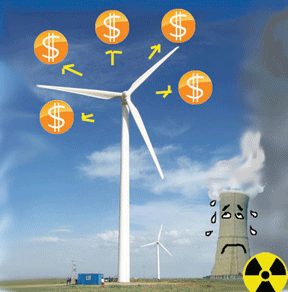
The natural gas boom is killing America’s nuclear industry. Wind and solar may finish the job…….
Battery prices have plunged 85% from 2010 through 2018, and huge storage plants are planned in California and Arizona. Meanwhile, science is advancing on new technology — including chemical alternatives to lithium-ion systems — with the potential to supply power for 100 hours straight, sun or no sun.
“All signs point to the acceleration of renewable energy that can out-compete nuclear and fossil fuels,” said Jodie Van Horn, director of the Sierra Club’s Ready for 100 campaign, a group seeking a grid powered solely by renewables.
The drive for grids that are 100% emissions-free is being pushed by a growing number of U.S. states citing increasingly aggressive time frames. In July, New York mandated that 70% of the state’s power come from renewables by 2030, and 100% by 2040. Seven other states, including California, have similar mandates, and Virginia’s governor this month announced an executive order calling for 100% clean energy there by 2050. ….
By 2050, BNEF expects renewables to account for 48% of the U.S. power system, paired with multiple types of supplemental, peaking plants that can supply electricity when needed…… Meanwhile, over the same period, nuclear will wane, as high costs force most reactors to just shut down.
The U.S. isn’t the only place where the nuclear industry is struggling. Some nations that rely heavily on the technology, including France and Sweden, are reducing nuclear’s load as old reactors retire, and diversifying into cheaper solar and wind power. ……
The first modular nuclear reactors in the U.S. aren’t set to go into service until 2026, and the salt technologies are still largely in the research stage. At the same time, installed capacity of nuclear in the U.S. is forecast to fall to 6 gigawatts by 2050, down from 101 gigawatts now, according to BloombergNEF. ……. https://www.stripes.com/news/us/a-mix-of-solar-wind-and-batteries-threatens-the-future-of-nuclear-power-1.600949
Nuclear weapons an unacceptable danger to humanity – U.N.Secretary-General António Guterres
 Elimination of nuclear weapons ‘only real way’ to allay fear of a constant threat, Guterres insists, https://news.un.org/en/story/2019/09/1047712 Progress made in reducing the danger posed by nuclear arsenals has not only come to a halt, “it is going in reverse”, and any use of a nuclear weapon in the future would ignite “a humanitarian catastrophe.” Secretary-General António Guterres surveyed the state of the disarmament debate during a high-level meeting of the 74th Session of the UN General Assembly on Thursday, coinciding with the commemoration of the International Day for the Total Elimination of Nuclear Weapons. “A qualitative nuclear arms race is underway”,’ he warned, and rising tensions, mistrust between nuclear-armed States, and muddy rhetoric about the utility of nuclear weapons are some of the factors to blame. Although atomic weapons have only been used twice, by the United States in 1945, around 14,500 remain in the world today, with over 2,000 nuclear tests conducted to date according to the UN’s disarmament wing (UNODA) . “The elimination of nuclear weapons has been the United Nations’ highest disarmament priority from day one,” Mr. Guterres said in his opening remarks. “We strive for a world free of nuclear weapons because we know these weapons pose a unique and potentially existential threat to our planet.” Born at a time of heightened distrust, the United Nations must do everything to ensure that the tragedy suffered by the people of Hiroshima and Nagasaki never happens again, President of the General Assembly, Tijanai Mihammad-Bande reminded delegates in attendance. Remembering such devastation “makes it crucial” that everything that can be done, is done, to ensure this moment in history “was the last time such weapons are deployed,” he said. “‘Never again,’ must remain our main refrain” he urged. Last year the Secretary-General launched a new disarmament agenda with a clear implementation plan; a complement to the cornerstone Treaty on the Non-Proliferation of Nuclear Weapons (NPT) which entered into force in 1970, with a total of 191 States joining – more than any other arms limitation agreement. The UN’s disarmament plan supports a number of other treaties with the aim of exterminating nuclear proliferation and testing, including the Treaty on the Prohibition of Nuclear Weapons (TPNW), and the Comprehensive Nuclear-test-Ban Treaty (CTBT). The Secretary-General urged all State Parties to collaborate at the upcoming 2020 Review of the NPT to further ensure its fundamental goals are met. “Failure to do so will only further undermine the regime,” he warned. “Nuclear weapons present an unacceptable danger to humanity. Let us not forget that the only real way to eliminate the threat of nuclear weapons is to eliminate nuclear weapons themselves,” Mr. Guterres maintained. |
|
Dispute between Japan and South Korea, over radiation levels in Fukushima food exports
|
Japan embassy in Seoul posts radiation data amid escalating row, Straits Times TOKYO (REUTERS) 29 Sept 19, – Japan’s embassy in South Korea has begun posting data on its website to show there is little difference in radiation levels between the two countries, in its latest retort in a diplomatic and trade row rooted in wartime history.South Korea said last month that it will double the radiation testing of some Japanese food exports due to potential contamination from the tsunami-damaged Fukushima nuclear plant.
The embassy said the radiation reading in Seoul as of last Friday (Sept 27) was 0.12 microsieverts per hour, around the same as 0.135 in Fukushima City, and higher than Tokyo’s 0.036. It will update the data every day the embassy is open, it said……. https://www.straitstimes.com/asia/east-asia/japan-embassy-in-seoul-posts-radiation-data-amid-escalating-row |
|
Pacific Island nations urge action on climate change at UN
Pacific Island nations urge action on climate change at UN, Pacific leaders want to remind the world what’s at stake for the most vulnerable – low lying nations – if nothing is done to combat climate change. (video) https://www.sbs.com.au/news/pacific-island-nations-urge-action-on-climate-change-at-un
Global nuclear industry quietly fizzling out
|
An “undeclared phaseout” of the nuclear industry https://thebulletin.org/2019/09/an-undeclared-phaseout-of-the-nuclear-industry/
By Dawn Stover, September 25, 2019 The number of nuclear reactors operating worldwide has increased significantly over the past year, according to the latest World Nuclear Industry Status Report. Nevertheless, says Mycle Schneider, the project coordinator and publisher of the 323-page report released yesterday at the Central European University in Budapest, nuclear energy is growing too slowly to guarantee its survival. “The world is experiencing an undeclared ‘organic’ nuclear phaseout,” Schneider says. Nine new reactors started up in 2018, and four more came online during the first half of 2019, a modest upturn mostly driven by China. However, the total number of reactors worldwide, 417, falls short of the historic peak of 438 reactors in 2002—and the number of reactors under construction is now declining. The new report calculates that the building rate would have to roughly triple over the coming decade just to maintain the current number of reactors as aging units retire. The average nuclear reactor is now more than 30 years old. The status report, which each year offers an independent assessment of the nuclear industry, has in recent years also analyzed the potential for nuclear power to mitigate climate change. There, too, nuclear power comes up short. Some of the more optimistic scenarios for limiting global warming to 1.5 degrees Celsius rely on a rapid expansion of nuclear power. At a time when the industry is facing major economic challenges, that seems increasingly unlikely. Editor’s note: The Global Nuclear Power Database—an interactive visualization of world nuclear power reactor construction from 1951 to Jan. 1, 2017—can be found here. |
|
Britain’s nuclear power future might be ended, with Hinkley Point C’s escalating costs

EDF Energy says that “challenging ground conditions” mean costs could be £2.9 billion higher, taking the total bill to £22.9 billion. This might seem only of interest to EDF shareholders, given the controversial subsidy deal for the plant means consumers are protected from cost overruns.
But the potential significance of this is much bigger – it could cast a cloud over the UK’s hopes of a new wave of nuclear power plants. Ministers want more nuclear power in the energy mix alongside renewables, to meet carbon targets and provide continuous electricity supply.
Two Japanese companies have already pulled out of plans to build new nuclear plants in the UK, leaving EDF Energy’s designs for a second one at Sizewell in Suffolk as the main option. But the government’s proposed financial model for Sizewell C is very different to the one agreed for Hinkley. Unlike that deal, the “regulated asset base” (RAB) model under consultation for future plants would see consumers paying through energy bills while power stations are still being built.
The main trade-off with the RAB deal was that loading more construction risk onto consumers should make it cheaper to raise funds and therefore cheaper electricity, says Jonathan Marshall at non-profit the Energy and Climate Intelligence Unit.
But the more delays and over-runs there are, it will add to concerns that consumers will be left to pick up an ever-increasing bill, he says. “Consumer groups and others that are against the new framework are going to point to the delays at Hinkley as evidence that billpayers will be liable to pay more than planned to bring new power stations online.”……
What are the alternatives? Some nuclear proponents think small modular reactors could do the job. But the technology for commercial ones is still years off and analysis suggests they could even be more costly than conventional large ones……. https://www.newscientist.com/article/2217725-could-rising-costs-at-hinkley-point-c-end-the-uks-nuclear-ambitions/
Weapons proliferation risk of nuclear power in space
“There’s a lot of opposition in Congress and in nonprofit groups to any further use of highly-enriched uranium,” Kuperman tells us. “So if NASA wants to use highly-enriched uranium for this space reactor, it might provoke opposition to space reactors in general.
“NASA is introducing political risks to its plan by going this highly-enriched uranium route,” he adds.
The Trump administration ordered NASA in August to craft guidelines for safely using nuclear reactors on Mars or the moon. NASA is also moving ahead with its nuclear power ambitions under it’s Kilopower project to build a highly-enriched uranium reactor that could deliver 10 kilowatts of electrical power continuously for at least 10 years. The space agency launched a study in fiscal 2019 with the Department of Energy to determine how both low and highly-enriched uranium could meet different needs. But the agency “has not made a final decision on highly-enriched uranium versus low-enriched uranium for surface power,” according to NASA spokeswoman Clare Skelly……… https://www.politico.com/story/2019/09/27/nuclear-power-nasa-mars-alan-kuperman-q-and-a-1510896
Nuclear energy too slow, too expensive to save climate: report
 Nuclear energy too slow, too expensive to save climate: report https://uk.reuters.com/article/us-energy-nuclearpower-idUKKBN1W909J, Marton Dunai, Geert De Clercq, BUDAPEST/PARIS, 26 Sept 19 (Reuters) – Nuclear power is losing ground to renewables in terms of both cost and capacity as its reactors are increasingly seen as less economical and slower to reverse carbon emissions, an industry report said.
In mid-2019, new wind and solar generators competed efficiently against even existing nuclear power plants in cost terms, and grew generating capacity faster than any other power type, the annual World Nuclear Industry Status Report (WNISR) showed.
“Stabilizing the climate is urgent, nuclear power is slow,” said Mycle Schneider, lead author of the report. “It meets no technical or operational need that low-carbon competitors cannot meet better, cheaper and faster.”
The report estimates that since 2009 the average construction time for reactors worldwide was just under 10 years, well above the estimate given by industry body the World Nuclear Association (WNA) of between 5 and 8.5 years.
The extra time that nuclear plants take to build has major implications for climate goals, as existing fossil-fueled plants continue to emit CO2 while awaiting substitution.
“To protect the climate, we must abate the most carbon at the least cost and in the least time,” Schneider said.
The WNA said in an emailed statement that studies have shown that nuclear energy has a proven track record in providing new generation faster than other low-carbon options, and added that in many countries nuclear generation provides on average more low-carbon power per year than solar or wind.
It said that reactor construction times can be as short as four years when several reactors are built in sequence.
Nuclear is also much more expensive, the WNISR report said.
The cost of generating solar power ranges from $36 to $44 per megawatt hour (MWh), the WNISR said, while onshore wind power comes in at $29–$56 per MWh. Nuclear energy costs between $112 and $189.
Over the past decade, the WNISR estimates levelized costs – which compare the total lifetime cost of building and running a plant to lifetime output – for utility-scale solar have dropped by 88% and for wind by 69%.
For nuclear, they have increased by 23%, it said.
Capital flows reflect that trend. In 2018, China invested $91 billion in renewables but just $6.5 billion in nuclear.
In the United States, renewable capacity is expected to grow by 45 GW in the next three years, while nuclear and coal are set to retire a net 24 GW.
China, still the world’s most aggressive nuclear builder, has added nearly 40 reactors to its grid over the last decade, but its nuclear output was still a third lower than its wind generation.
Although several new nuclear plants are under construction, no new project has started in China since 2016.
Global nuclear operating capacity has increased 3.4% in the past year to 370 gigawatts, a new historic maximum, but with renewable capacity growing quickly, the share of nuclear in the world’s gross power generation has stayed at just over 10%.
In the decade to 2030, 188 new reactors would have to be connected to the grid to maintain the status quo, which is more than three times the rate achieved over the past decade, the WNISR estimates.
In May, the International Energy Agency warned reut.rs/2mqcG8j that a steep decline in nuclear capacity will threaten climate goals, as advanced economies could lose 25% of their nuclear capacity by 2025.
Reporting by Marton Dunai in Budapest and Geert De Clercq in Paris; Editing by Jan Harvey and Emelia Sithole-Matarise
Koizumi hopes son will push for abandonment of nuclear power

New minister prioritizes Fukushima decommission

Disputing colleague, new Japan minister calls no-nukes policy ‘unrealistic’

Climate Action summit: Greta Thunberg rips into leaders over ‘mass extinction’
Climate Action summit: Greta Thunberg rips into leaders over ‘mass extinction’ https://www.news.com.au/technology/environment/climate-change/climate-action-summit-greta-thunberg-rips-into-leaders-over-mass-extinction/news-story/2c8d4aac13cb60507a41b48c2ef3d8f2
A teen has ripped into world leaders at a UN summit and stared down US President Donald Trump as they crossed paths in a surprise encounter.
Megan Palin@megan_palinA schoolgirl has stared down Donald Trump during a chance encounter in New York before she went on to give the world’s most powerful leaders a sensational serve.
Climate activist Greta Thunberg, 16, crossed paths with the US President in the United Nations foyer on Monday. She was there to speak at the Climate Action Summit.
Mr Trump – who has denied climate change, called it a Chinese hoax and repealed US carbon-reduction policies – was not scheduled to attend but made the surprise visit before leaving to attend a religious freedoms meeting.
Video footage of the frosty exchange shows Mr Trump appearing to ignore Ms Thunberg as he walks straight past her with his entourage. She can be seen with her eyes fixed on him, holding her steely gaze as he moves through the corridor.
Later, Ms Thunberg made an emotional appeal at the summit in which she chided the leaders with the repeated phrase, “How dare you”.Heads of state from around the world, including French President Emmanuel Macron and German Chancellor Angela Merkel, have descended on the Big Apple this week to make new pledges to curb global-warming emissions.
Ms Thunberg accused them of ignoring 30 years of “crystal clear” science behind the climate crisis, saying: “We are in the beginning of a mass extinction and all you can talk about is money and fairy tales of eternal economic growth — how dare you.”
The Swedish schoolgirl, who travelled from Europe to New York for the summit on a zero-emissions sailboat, first came to worldwide attention when she started a lone protest outside her country’s parliament more than a year ago. It was that very decision which culminated in Friday’s global climate strikes.
“This is all wrong. I shouldn’t be up here,” she told the international heads of state.
“I should be back in school on the other side of the ocean.
“Yet you have come to us young people for hope. How dare you. You have stolen my dreams and my childhood with your empty words, and yet I’m one of the lucky ones. People are suffering. People are dying. Entire ecosystems are collapsing.
“You say you hear us, and that you understand the urgency…I do not want to believe that. “Because if you really understood the situation, and still kept on failing to act, then you would be evil. And that I refuse to believe.”
She told the UN that even the strictest emission cuts being talked about only gives the world a 50 per cent chance of limiting future warming to another 0.4C from now, which is a global goal. Those odds are not good enough, she said.
“We will not let you get away with this,” Ms Thunberg continued. “Right now is where we draw the line.”
Following Ms Thunberg’s speech, she and 15 other children filed a complaint with the UN alleging that five of the world’s major economies have violated their human rights by not taking adequate action to stop the unfolding climate crisis.
The 2019 Climate Action Summit kicked off at the UN on Monday, where world leaders gathered to discuss serious strategies to mitigate climate change. Representatives of participating nations were told by UN Secretary General Antonio Guterres to come up with “concrete, realistic plans” to further their commitments to reducing greenhouse gas emissions and get to net zero emissions by 2050.
Leader after leader told the UN that they will do more to prevent a warming world from reaching even more dangerous levels. But as they made their pledges, they conceded it was not enough.
Sixty-six countries have promised to have more ambitious climate goals and 30 swore to be carbon neutral by midcentury, said Chilean President Sebastian Pinera Echenique, who is hosting the next climate negotiations later this year. Heads of nations such as Finland and Germany promised to ban coal within a decade. Several also mentioned goals of climate neutrality — when a country is not adding more heat-trapping carbon to the air than is being removed by plants and perhaps technology — by 2050.
Mr Trump dropped by, listened to German Chancellor Angela Merkel make detailed pledges, including going coal-free, and left without saying anything.
The US did not ask to have someone speak at the summit, UN officials said. And the UN Secretary-General had told countries they couldn’t be on the agenda without making bold new proposals. Even though there was no speech by Mr Trump, he was repeatedly referenced.
In a none-too-subtle gibe at Mr Trump’s plans to withdraw the US from the 2015 Paris climate agreement, Chinese state councillor Wang Yi said countries “must honour our commitments and follow through on the Paris Agreement”.
“The withdrawal of certain parties will not shake the collective goal of the world community,” Mr Wang said to applause.
Former New York City Mayor Michael Bloomberg, the UN’s special climate envoy, thanked Mr Trump for stopping by, adding that it might prove useful “when you formulate climate policy”, drawing laughter and applause on the floor of the General Assembly.
Hilda Heine, president of the Marshall Islands, said she represented “the most climate vulnerable people on Earth”.
Her tiny country has increased its emission cut proposals in a way that would limit warming to that tight goal of 1.5C since pre-industrial times. “We are now calling on others to join us,” Ms Heine said.
UN Secretary-general Antonio Guterres opened the summit Monday by saying: “Earth is issuing a chilling cry: Stop.” “Time is running out,” Mr Guterres said. “But it is not too late. megan.palin@news.com.au | @Megan_Palin
Climate change makes nuclear waste even more of a deadly threat
Can Nuclear Power’s Deadly Waste Be Contained in a Warming World? PART OF THE SERIES Covering Climate Now, Truthout. Karen Charman 23 Sept 19, ‘…………Nuclear Energy Is Not “Clean”
Ever since the nuclear industry became a global pariah following Three Mile Island and the much more severe accident at Chernobyl in 1986, it has been desperately trying to make a comeback.
In the late 1980s, then-chairman of the International Atomic Energy Agency Hans Blix began touting the idea that nuclear power should play a significant role in combating climate change because it does not release carbon while generating electricity, a position he continues to promote.
Several prominent advocates for addressing the climate crisis have taken up this call, some of the latest being Democratic presidential hopefuls Cory Booker and Andrew Yang.
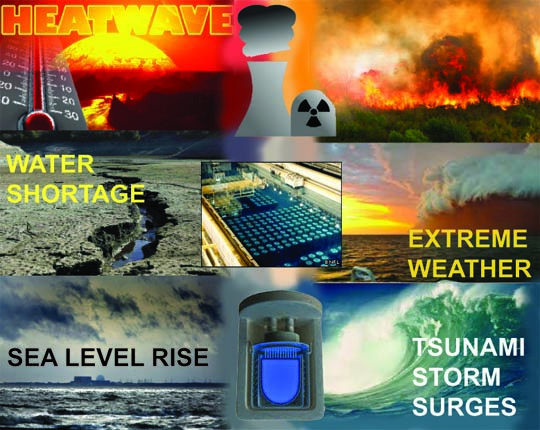
……… Because of the huge volume of deadly poisons that the nuclear fission process creates, nuclear reactors need an uninterrupted electricity supply to run the cooling systems that keep the reactors from melting down, a requirement that may be increasingly difficult to guarantee in a world of climate-fueled megastorms and other disasters.
The ongoing accident at the Fukushima Daiichi plant in Japan following the 9.0 earthquake and tsunami in March 2011 demonstrates the vulnerability of nuclear power plants to such disasters.
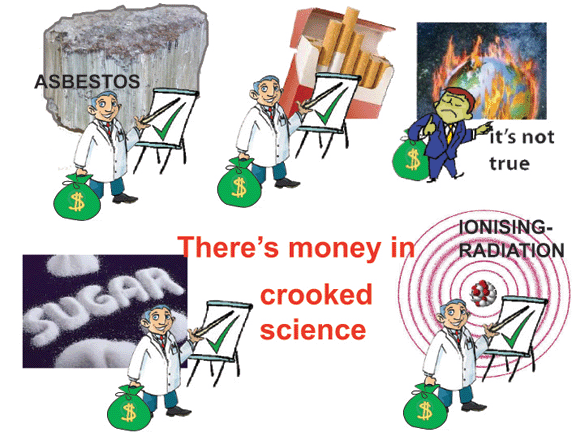 Nuclear boosters have been remarkably successful in ignoring and erasing the health effects of radiation exposure, enabling them to downplay the impacts of serious accidents. In truth, reactor meltdowns, depending on where they occur, can kill and injure enormous numbers of people and contaminate the air, water, land and food supply over thousands of miles with radiation. A 1982 study by the Sandia National Laboratory, one of the labs run by the U.S. Department of Energy, calculated deaths and injuries within a year of a core meltdown and subsequent cancer deaths at 76 different nuclear power plant sites, many of which were only proposed at that time. According to this study, the Salem nuclear plant outside Philadelphia could kill 100,000 people within a year, result in 40,000 subsequent cancer deaths and give another 70,000-75,000 people a range of radiation-related injuries. A 1997 report by Brookhaven National Laboratory on the potential consequences of a spent fuel accident also forecasted large numbers of fatalities.
Fission 101
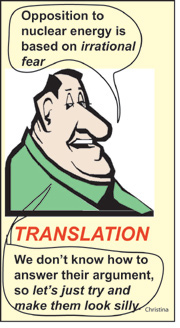 The risks of radiation exposure are downplayed and easily dismissed as “irrational fear” because the physics and chemistry of the fission process and the radioactive elements it produces are complex and not understood by the general public and also because, except in cases of acute radiation poisoning, radiation is invisible.
Radioactive fission products are “variant forms of the ordinary chemicals which are the building blocks of all material and living things,” explains Dr. Rosalie Bertell in her book, No Immediate Danger: Prognosis for a Radioactive Earth. The difference is that stable, non-radioactive atoms have an equal number of protons and electrons.
Nuclear fission creates an imbalance between protons and electrons, producing enormous quantities of hundreds of different radioactive elements — the high-level waste and activation products — all of which seek to return to a stable state. These unstable atoms become stable by knocking out the extra particles fission created, a process she says takes hundreds of thousands of years.
“Every such release of energy is an explosion on the microscopic level,” Bertell says. Radiation exposure is particularly damaging to the structure of cells, which is why it is necessary to keep these radioactive elements, known as radionuclides or radioisotopes, out of the bodies of humans, other living beings and the environment.
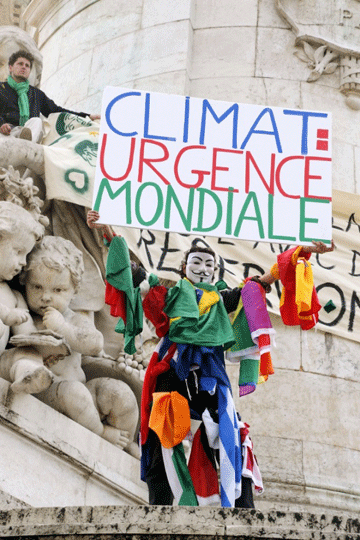 As climate models have long predicted, our warming world is now experiencing much larger and stronger storms with significantly more rainfall in the Earth’s wetter areas and more sustained and severe drought and wildfires in the drier regions. In 2019, the hottest June on record triggered an unprecedented fire season in the Arctic, with over 100 intense fires. The summer of 2019 also saw 55 billion tons of water melt off Greenland’s ice sheet in just five days, a rate scientists hadn’t expected for 50 years.
A month before the massive ice loss in Greenland, scientists predicted sea levels could rise 6.5 feet by the end of the century, submerging nearly 700,000 square miles of land.
Most nuclear power plants are located beside rivers, lakes, dams or oceans because they need a continuous source of water to cool the reactors. In August 2018, Ensia reported that at least 100 nuclear power plants built a few meters above sea level in the U.S., Europe and Asia would likely experience flooding due to sea level rise and storm surges.
Though nuclear reactors vary in generating capacity, 1,000 megawatts is common. A reactor of that size contains 100 metric tons of enriched uranium fuel, roughly a third of which needs to be replaced with fresh fuel each year. According to radioactive waste expert Dr. Marvin Resnikoff, the spent fuel, also known as high-level waste, becomes 2.5 million times more radioactive after undergoing nuclear fission in the reactor core.
 In a May 2011 report, Institute for Policy Studies (IPS) senior scholar Robert Alvarez, a top official at the U.S. Department of Energy from 1993 to 1999, described the danger of high-level waste this way: “Spent fuel rods give off about 1 million rems (10,000 sieverts) of radiation per hour at a distance of one foot — enough radiation to kill people in a matter of seconds.”
The intense radioactivity the fission process creates is why reactor cores are surrounded by five-feet thick reinforced concrete containment structures and spent fuel must be shielded by at least 20 feet of water in pools for several years after it leaves the reactor.
As of September 2019, 444 nuclear reactors are operating in the world, with 54 under construction, 111 planned and 330 more proposed.https://truthout.org/articles/can-nuclear-powers-deadly-waste-be-contained-in-a-warming-world/?eType=EmailBlastContent&eId=a5fbaf3b-857d-46f7-9571-6774775ad709
Iran prepared to make a new nuclear agreement with Trump
 Iran’s Zarif raises the prospect of a new nuclear agreement with Trump https://edition.cnn.com/2019/09/23/middleeast/zarif-us-talks-intl/index.html, By Tamara Qiblawi, September 23, 2019 Iran’s foreign minister outlines proposal for a new deal. New York (CNN)Iran’s foreign minister has raised the prospect of a new agreement with the United States that would see permanent sanctions relief exchanged for Tehran’s permanent denuclearization.
1 This Month
19 November – Webinar – The Reality of Reprocessing
Time: 11:00 AM Pacific Time (US & Canada) / 2:00 PM Eastern / 7:00 PM UK / 8:00 PM CET
Register for the Zoom Event Here

Tell Congress: Prevent Nuclear Catastrophe in Iran

Tell Congress: Prevent Nuclear Catastrophe in Iran

Read the Public Inquiry Report, the Commissioners’ report, Surrendering Australia: The AUKUS Deception is available to download for free at aukuspublicinquiry.com. Or just watch the replay of the National Press Club Luncheon.


Shut down the radiation-damaged Heysham nuclear reactors now
To see nuclear-related stories in greater depth and intensity – go to https://nuclearinformation.wordpress.com

Say No to NASA’s Reckless Nuclear Reactor on the Moon
Say No to NASA’s Reckless Nuclear Reactor on the Moon
-
Archives
- November 2026 (190)
- October 2026 (302)
- September 2026 (339)
- August 2026 (330)
- July 2026 (355)
- June 2026 (287)
- May 2026 (306)
- April 2026 (356)
- March 2026 (251)
- February 2026 (267)
- January 2026 (308)
- December 2025 (358)
-
Categories
- 1
- 1 NUCLEAR ISSUES
- business and costs
- climate change
- culture and arts
- ENERGY
- environment
- health
- history
- indigenous issues
- Legal
- marketing of nuclear
- media
- opposition to nuclear
- PERSONAL STORIES
- politics
- politics international
- Religion and ethics
- safety
- secrets,lies and civil liberties
- spinbuster
- technology
- Uranium
- wastes
- weapons and war
- Women
- 2 WORLD
- ACTION
- AFRICA
- Atrocities
- AUSTRALIA
- Christina's notes
- Christina's themes
- culture and arts
- Events
- Fuk 2022
- Fuk 2023
- Fukushima 2017
- Fukushima 2018
- fukushima 2019
- Fukushima 2020
- Fukushima 2021
- general
- global warming
- Humour (God we need it)
- Nuclear
- RARE EARTHS
- Reference
- resources – print
- Resources -audiovicual
- Weekly Newsletter
- World
- World Nuclear
- YouTube
-
RSS
Entries RSS
Comments RSS

